Tag: Japan

  • Amazon to invest in Japanese beauty retailer Istyle

    Amazon to invest in Japanese beauty retailer Istyle

    Amazon.com will invest in istyle, the company behind the @cosme review and retail site, gaining access to the Japanese beauty product vendor’s trove of user reviews.

    Under the agreement announced Monday, istyle will issue 2.5 billion yen ($18.7 million) in convertible bonds as well as 11.5 billion yen in warrants to Amazon on Sept. 6. If these convertible bonds and warrants are turned into stock, Amazon would become the top shareholder with a 36.95% stake.

    Amazon will open a dedicated page, tentatively named @cosme Shopping, on its site, where istyle will provide the latest on beauty products to the e-retailer’s members and sell cosmetics from a wide range of brands.

    Istyle has been pushing to merge online and offline sales, setting up a brick-and-mortar store in Tokyo’s Harajusku district. Going forward, Amazon and istyle could collaborate in operating stores using digital tech. The partnership could boost Amazon’s presence in the cosmetic market, where drugs stores and department stores are also formidable players.

    Istyle will also issue convertible bonds to investors including leading trading house Mitsui & Co.

    Mitsui plans to position the cosmetics business as one of its key growth fields and wants “to broaden access to istyle’s customers and manufacturers,” according to a spokesperson. It intends to leverage its sales network to offer Japanese-made cosmetics in overseas markets.

  • High Taxes Are Driving a Crypto Exodus in Japan

    Japan’s cryptocurrency industry is undergoing a wave of exits to friendlier markets due to the high corporate tax rate.

    At least 20 firms are choosing to establish their crypto business elsewhere and leave Japan, said Sota Watanabe, chief executive of digital infrastructure developer Stake Technologies, in an interview with Bloomberg.

    Crypto firms have been exiting Japan in recent years due to pressure from high taxes including a corporate tax rate of about 30 percent and an individual tax rate of up to 55 percent for crypto gains.

    In an effort to maintain the competitiveness of crypto in Japan, two of the top industry bodies – the Japan Cryptoasset Business Association and the Japan Virtual and Crypto assets Exchange Association – are reportedly submitting a proposal to the financial regulator for tax changes.

    According to a separate report citing a memo, the two groups planned to ask the government to stop taxing paper gains for crypto holdings held by companies for purposes other than short-term trading. The lobby groups also propose a uniform 20 percent income tax on individual investors’ crypto gains, instead of the current arrangement with rates as high as 55 percent.

    According to Watanabe, Japan is lagging behind in the global tech race while a growing number of governments elsewhere are ramping up efforts to woo crypto firms.

    Japan is an impossible place to do business,» he said. «The global battle for a Web 3.0 hegemony is underway, and yet, Japan isn’t even at the start line.

    Stake Technologies relocated to Singapore in 2020 over tax pressures but Watanabe hopes to return to his home country of Japan, assuming that the government will yield to industry calls and lower corporate taxes on crypto next year. He also noted that it may take a few more years before the tax rate for individual investors is reduced.

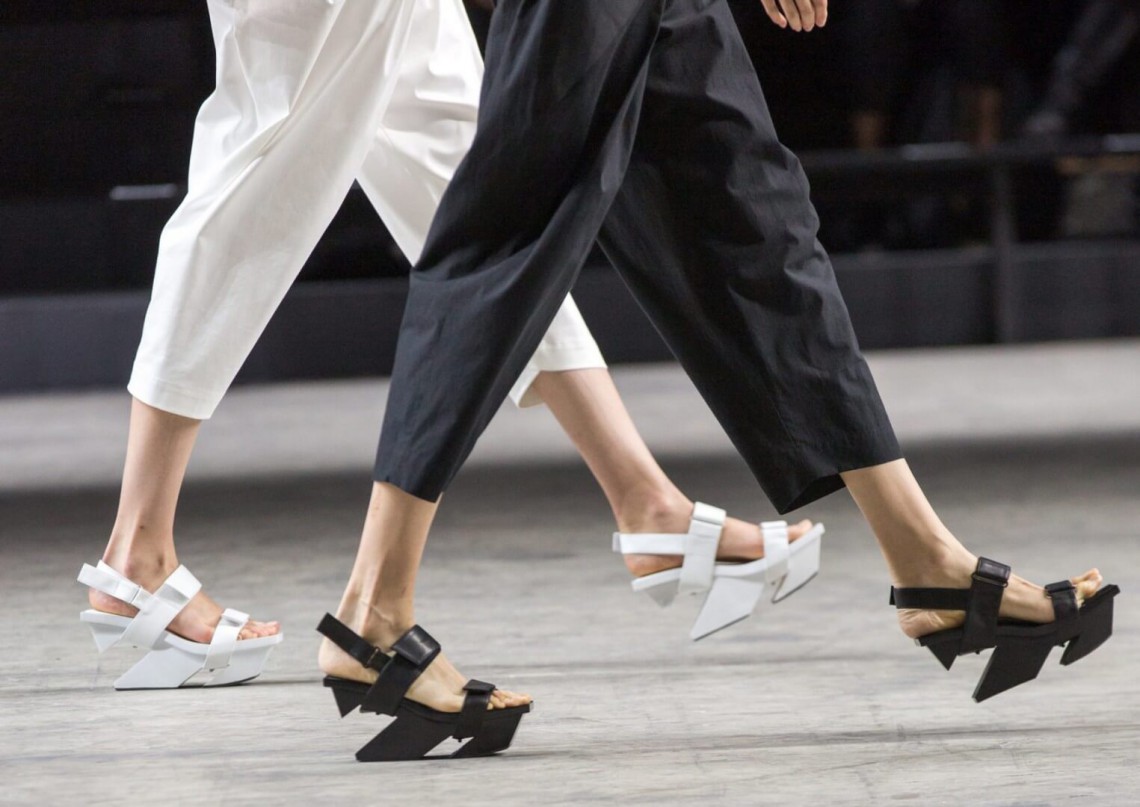
  • Japanese designer Issey Miyake dies, at 84

    Japanese designer Issey Miyake dies, at 84

    The Japanese fashion designer Issey Miyake, renowned for his innovative pleated clothing and for producing 100 mock turtlenecks for the Apple co-founder Steve Jobs, has died of liver cancer in a hospital in Tokyo. He was 84.

    The Issey Miyake Group released a short statement about his work saying: “Miyake’s dynamic spirit was driven by a relentless curiosity and desire to convey joy through the medium of design.” It stated that “as per Mr Miyake’s wishes, there will be no funeral or memorial service”.

    Much like Andy Warhol, Miyake was interested in the overlap between art and design, and fashion. Throughout his 52-year career, the designer maintained an “anti-trend” stance, always referring to his designs as “clothing” rather than “fashion”.

    “I am most interested in people and the human form,” Miyake told the New York Times in 2014. “Clothing is the closest thing to all humans.”

    Perhaps best known for designing the polyester-cotton mock turtlenecks indelibly linked with Steve Jobs, it is believed he produced 100 at less than $200 each. Designed to alleviate “decision fatigue”, along with Jobs’ Levi’s 501s and New Balance 991s, the tops became shorthand for late 90s Silicon Valley uniform, based on the idea that busy people’s minds are on more important things than picking out ties.

    Born in Hiroshima in 1938, Miyake studied graphic design at the Tama Art University in Tokyo. But piqued by the crossover between disciplines, he pivoted to fashion and moved to Paris to become an apprentice to Guy Laroche and eventually work for Hubert de Givenchy around the time Audrey Hepburn was wearing his dresses.

    After witnessing the 1968 student protests, Miyake became disenchanted by an industry designed to dress only the wealthy. It was this interest in fashion as art and function, democratic but aesthetically pleasing, which led him to establish the Miyake Design Studio in 1970, and show his first very wearable collection in New York in 1971. One of his earliest pieces was a jersey body, hand-painted using traditional Japanese tattoo techniques.

    A keen sportsman, function became the linchpin of Miyake’s work. His most famous and most affordable clothes, the Pleats Please line, was launched in 1993 as a retort to the price and unwearability of high-end fashion.

    Featuring capes and trousers, and flowing sleeveless tabards made from heat-treated polyester to create permanent pleats, the clothes never creased, could be machine washed and be rolled instead of folded. The line remains one of the first and best examples of gender-free clothing and still fetches hundreds of pounds on resale sites.

    It was Miyake’s cynicism about the fashion industry, in particular the speed at which it produced, that gave his designs such longevity in reputation and design. In an interview with the Village Voice in 1983, Miyake outlined his opposition to the fashion cycle: “I want my customer to be able to wear a sweater I designed 10 years ago with this year’s pants.”

    Mikyake saw technology as a solution to the problem of overproduction, with one such solution the late 90’s “One Piece of Cloth” idea (later known as A-POC) which pioneered the idea of making clothes out of a single tube of fabric, cutting down and waste and showing exactly what could be done with a knitting machine, a computer and the right knowhow.

    Many of his designs are in museums, including the Museum of Modern Art’s permanent collection. In 2010, he received the Order of Culture in 2010 and in 2016 was decorated as a Commandeur de l’Ordre National de la Légion d’honneur.

    Loth to give interviews, Miyake had a pronounced limp – a result of surviving the 1945 atomic bomb dropped on his home town of Hiroshima when he was seven. Three years later, his mother died of radiation exposure.

    In a rare 2009 op-ed for the New York Times, Miyake recounted just how much that day, and his mother’s subsequent death, informed his creativity. “I have tried, albeit unsuccessfully, to put them behind me, preferring to think of things that can be created, not destroyed, and that bring beauty and joy. I gravitated toward the field of clothing design, partly because it is a creative format that is modern and optimistic.

    “I did not want to be labeled ‘the designer who survived the atomic bomb’.”

  • Japanese retailer Yoshitsu buys Tokyo Lifestyle

    Japanese retailer Yoshitsu buys Tokyo Lifestyle

    Yoshitsu Co., Ltd (“Yoshitsu” or the “Company”) (Nasdaq: TKLF), a retailer and wholesaler of Japanese beauty and health products, as well as other products in Japan, today announced that on July 20, 2022, the Company entered into a definitive agreement (the “Agreement”) with All Seas Global Limited to acquire 100% equity interests in Tokyo Lifestyle Limited (“TL”), a company principally engaged in the import and retail of Japanese beauty and cosmetic products in Hong Kong and engaged in the live e-commerce business through its wholly-owned subsidiary, Shenzhen Qingzhiliangpin Network Technology Co., Ltd. (“SQNT”). This acquisition is a critical initiative of the Company’s business strategy to boost the Company’s business expansion in the Southeast Asia market and advance the digital transformation of live streaming e-commerce in its retail business.

    Pursuant to the Agreement, Yoshitsu agrees to acquire 100% of the equity interests in TL in consideration of the sum of JPY392,000,000 in cash (approximately US$2,805,192), subject to certain terms. The transaction contemplated by the Agreement was approved by the Company’s board of directors at a meeting on June 27, 2022, with the closing expected to occur by the end of July 2022.

    Mr. Mei Kanayama, the Principal Executive Officer of Yoshitsu, commented, “We are extremely pleased to take another initiative in Yoshitsu’s global business expansion. The capabilities of TL and SQNT and our expansion and digital transformation strategy are well matched. With the acquisition of TL, we expect to improve our operational efficiency and establish a solid foundation in Hong Kong to develop the Southeast Asian market further and strengthen our brand awareness in the region. SQNT is dedicated to cultivating key opinion leaders (“KOLs”), who are frequently approached by brands in the hopes that these KOLs will actively promote their products via online channels. The foregoing strategy is expected to improve our customers’ shopping experience and meet new market demands. We expect the acquisition of TL to strengthen our position in the marketplace and deliver higher value to our shareholders.”

  • Uniqlo owner to raise prices on fleece products due to weak yen

    Uniqlo owner to raise prices on fleece products due to weak yen

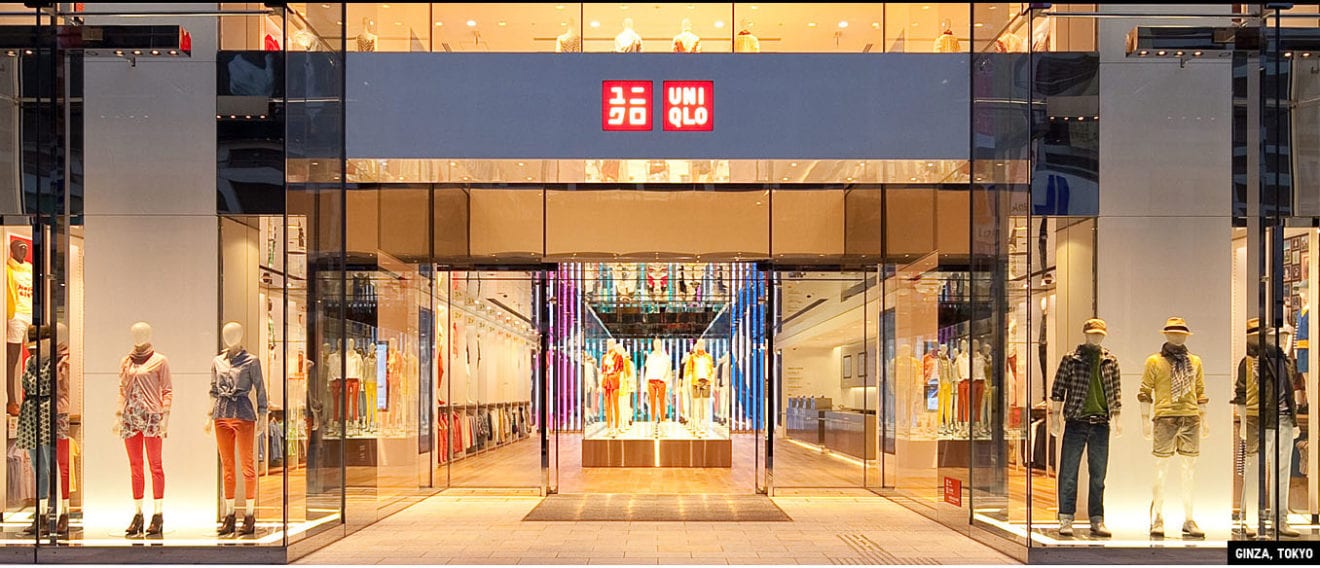
    The owner of Japanese clothing brand Uniqlo said on Tuesday it will raise prices on some goods this fall, reflecting increasing cost pressures from the weak yen and logistical hurdles.

    Prices on fleece goods and down jackets in the fall/winter product lines will go up by 1,000 yen (US$7.54), a spokesperson confirmed, after an earlier report by the Jiji news service. The company is also increasing the use of recycled polyester in its fleece products to keep costs down.

    Consumer prices are surging in Japan after decades of deflation, driven by the yen’s drop to a 20-year low against the dollar and soaring energy costs.

    Fast Retailing has competed on low-cost basics like socks and underwear for decades, but its executives have warned recently that rising production costs would necessitate price hikes.

    Founder Tadashi Yanai in April railed against the decline in Japan’s currency, saying there was “absolutely no merit” in a weak yen.

  • Starbucks Japan opens new store focused on coffee grounds circularity

    Starbucks Japan opens new store focused on coffee grounds circularity

    Starbucks has announced a first look into a new drive-thru store, opening on 1 June within a bustling rest stop in Togane City, Japan. The store is the second in Japan to be certified under the Greener Stores Framework, aimed at accelerating the transformation of retail towards lower-impact stores that achieve reductions in carbon emissions, water usage and landfill waste.

    The store plays a key role in a community collaboration between Starbucks Japan, Togane City and Sanyu Plant Service Corporation, a local manufacturer, which aims to promote circularity and reduce waste, while making a positive impact for the local community. As part of the collaboration, used coffee grounds from the new store will be recycled into cattle feed, and through Starbucks coffee grounds circularity loop, milk from participating dairies is then used to create handcrafted beverages at around 200 Starbucks stores across the Kanto and Kansai areas, including the new drive-thru. In addition, other food waste from the store will be turned into compost to grow produce directly at the rest stop in Togane City, in cooperation with Chiba Prefectural University of Agriculture.

    Designed inside and out to reflect the area’s proud local industry, the store features local Sambu cedar and Japanese yew trees, the official trees of Togane City. As part of Starbucks’ global efforts to reduce carbon by 50% by 2030, the store is powered by solar panels on the roof and locally-generated renewable energy. The solar system will include batteries that can provide backup power in the event of an outage.

    Connection with the community is also central to the new store’s operation and design. “I believe that even if the actions of each of us are small, each step we take will become a path leading to the future,” says Ayumi, store manager. “Starting with what we can do, we would like to build the future together with the community.”

  • Subaru Is Building A Dedicated EV Plant In Japan

    Subaru Is Building A Dedicated EV Plant In Japan

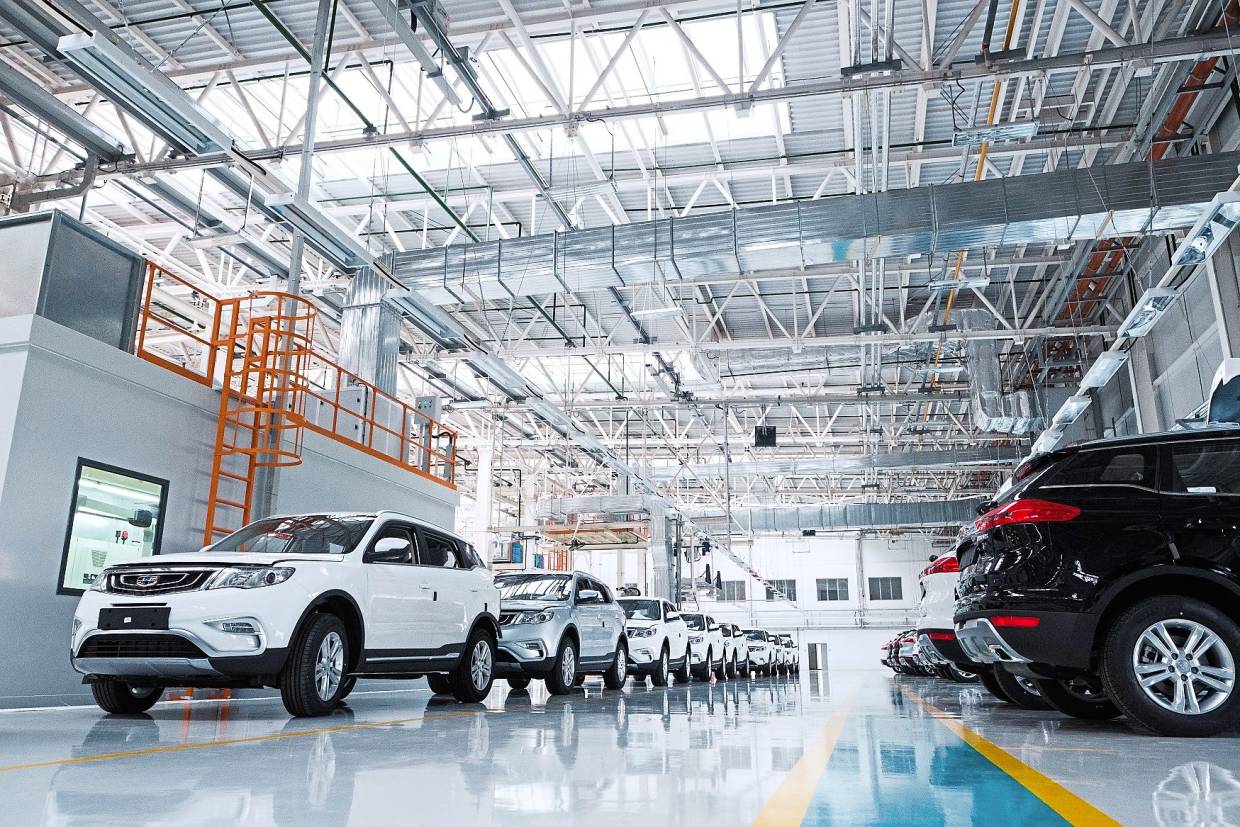
    Subaru is another Japanese automotive player which is suddenly turning turtle and announcing massive investments in electric powertrains. It has announced plans to build a dedicated EV assembly plant in 2027 as a part of a multi-billion dollar investment toward electrification in the next 5 years. Its CEO Tomomi Nakamura has outlined a plan which was announced on May 12 when it announced its earnings.

    Its 2023 Solterra EV will be made at Toyota’s Motomachi assembly plant in Japan which is the same plant where Toyota is making its first EV the bZ4X. But in the future, the plan for Subaru is to make its EVs in-house.

    Nakamura has said that initially, Subaru will make its EVs in a mixed production scenario with internal combustion engine vehicles in its Yajima plant in Japan in the mid-2020s. But from 2027, the EVs will be made at a dedicated factory on the site of the Oizumi plant which is currently making engines and transmissions.

    “Two or three years ago, U.S. retailers were not asking about EVs at all. But in this last year, it’s suddenly increased,” said Nakamura indicating that this transformation is being driven by the US market.

    Subaru has announced an investment of $2.05 billion. It expects 40 per cent of its global sales to come from EVs and hybrids by 2030. The Solterra EV will be the first model which starts at $44,995 in the US and will also be eligible for the $7,500 tax credit and other state incentives.

  • Vietnamese NFT game big in Japan

    Vietnamese NFT game big in Japan

    Titan Hunters, a non-fungible token game developed in Vietnam, is currently the 21st most downloaded adventure game on iOS in Japan. It has been downloaded over 100,000 times on Android devices.

    It has also gained social media attention and was among the top mentioned topics on Twitter at the end of last month and early this month. Popular Japanese gamer Lucian said it attracts players because of its ease of access. Titan Hunters was launched at the end of March.

    Unlike other NFT games, it is free, and those who want to play to earn need to link the game with their e-wallet. Japan has among the largest number of players and developers of electronic games globally. At 70 million players, the game has a quarter of the numbers Sony, Nintendo and Sega do.

    Titan Hunters CEO Vu Duy Tiep said Japan is a market with high competition and players there are “pretty picky.” The game has been downloaded 150,000 times across all platforms with around 50,000 active players daily, 75 percent of them in Japan, he said.

    “We aim to reach the European and U.S. markets next.”

    In Vietnam, some players have been complaining that the game has bugs and their gameplay experience is not “smooth.”

    Axie Infinity was the first NFT game developed in Vietnam to become internationally popular.

  • Japanese brands top auto imports in Vietnam

    Japanese brands top auto imports in Vietnam

    Japanese brands, including Toyota and Mitsubishi, were the biggest sellers among imported cars in Q1. Toyota sold 11,661 completely built units, while Mitsubishi imported 7,797.

    They were followed by Honda, Mazda and Suzuki. Last year, Toyota, Mitsubishi and Suzuki sold the most imported cars, with Toyota alone selling more than half of all imported cars.

    Fifteen out of 17 models Toyota sells are imported from Indonesia, Thailand and Japan. The sedan Vios and SUV Innova are assembled locally, while the SUV Fortuner is both assembled and imported.

    Mitsubishi also imports most of its models, with the popular MPV Xpander, imported from Indonesia, accounting for 53 percent of its total imports sold last year.

    The remaining models, like the pickup truck Triton and sedan Attrage, are imported from Thailand.

    Suzuki and Isuzu also import from Thailand and Indonesia.

    Nearly 7,000 Mazda cars, distributed by Truong Hai Auto Corporation, were imported from Thailand last year. This accounted for 26 percent of total Mazda sales in Vietnam.

    Honda has its two main models City and CR-V assembled locally and imports the rest.

    Ford has recently started assembling its pickup truck Ranger model in Vietnam while the other models SUV Everest and SUV Explorer are imported from Thailand and the U.S. respectively.

    Some luxury brands like Volkswagen, Audi and BWM only import completely built units.

    Kia, Hyundai and VinFast only assemble.

  • Uniqlo owner sees big profit drop in China due to Covid restrictions

    Uniqlo owner sees big profit drop in China due to Covid restrictions

    Clothing brand Uniqlo’s Japanese owner said on Thursday its China operation would report a large profit decline in the current fiscal year owing to the country’s Covid-19 restrictions.

    Fast Retailing < is a bellwether for how major global retailers are being impacted by Covid-related shutdowns in China, one of the biggest growth markets for many Western brands.

    China is Fast Retailing’s biggest foreign market, with 863 stores on the mainland and almost 90 outlets in Shanghai, where stringent lockdown measures, introduced in late March, remain in place to contain the country’s worst outbreak of the pandemic.

    The fast fashion retailer said it expects revenue declines and a large drop in profit in its Greater China segment in the second half and for the whole of fiscal 2022 due to Covid restrictions.

    Sales in Greater China region which includes Hong Kong and Taiwan struggled in March, as up to 133 stores were temporarily shut down.

    Fast Retailing has more Uniqlo stores in China than in its home market of Japan. It opened a flagship store in Beijing in November, its third megastore in mainland China, and plans to open 100 locations in the country each year going forward.

    The weakening yen and higher costs for raw materials and shipping have forced Fast Retailing to consider price hikes, a major shift for a company that has long competed on the inexpensiveness of basic items like socks and underwear.

    The company reported a record half-year profit on Thursday, buoyed by sales growth in North America, Europe, and other parts of Asia, while revenue and profit declined in China.

    Operating profit climbed 18 per cent to 189 billion yen ($1.51 billion) in the six months through February from a year earlier.

    The company maintained its full-year profit forecast at 270 billion yen. That compares with a consensus forecast for a

  • Uniqlo owner sees big profit drop in China due to Covid restrictions

    Uniqlo owner sees big profit drop in China due to Covid restrictions

    The owner of Japanese clothing brand Uniqlo on Thursday flagged a big profit drop in China due to COVID-19 restrictions, while its chief executive sounded alarm about the weakening yen’s potential to drive up costs.

    Fast Retailing is a rare bellwether for both global retailers in China, its biggest foreign market, and consumer demand in Japan, where it has carved out a dominant position by offering casual clothing to famously price-conscious shoppers.

    It and other multi-national retailers are now being forced to deal with lockdown measures in China. Fast Retailing has 863 stores on the mainland and almost 90 outlets in Shanghai, where strict measures, introduced in late March, remain in place to contain the country’s worst outbreak of the pandemic.

    McDonald’s and Starbucks, which each have dozens of outlets in Shanghai, have also been impacted as has production for retailers such as H&M, and Nike.

    Fast Retailing said it expects revenue declines and a large drop in profit in its Greater China segment in the second half and for the whole of fiscal 2022 due to COVID restrictions.

    Sales in the Greater China region, which includes Hong Kong and Taiwan, were hit in March, as up to 133 stores were temporarily shut.

    It has more Uniqlo stores in China than in Japan. It opened a flagship store in Beijing in November, and plans to open in 100 locations in the country each year.

    Separately, luxury brand Hermes said it had a strong start of the year in China until the beginning of March and is confident stores closed in Shanghai will reopen quickly.

    But the weakening yen and higher costs have forced Fast Retailing to consider price rises, a major shift for a company that has long competed on price.

    “There’s absolutely no merit to a weak yen,” Chief Executive Tadashi Yanai told reporters.

    “Japan is engaged in the business of importing raw materials from all over the world, processing them, adding value to them, and selling them. In this context, there is no advantage if the value of a country’s currency weakens.”

    The yen has been hammered this year, falling to the weakest level in almost 20 years against the dollar. For many Japanese companies that manufacture offshore – like Fast Retailing – the weak yen is less of a benefit than for traditional exporters.

    The company reported a record half-year profit on Thursday, buoyed by sales growth in North America, Europe, and other parts of Asia, while revenue and profit declined in Japan and China.

    Operating profit climbed 18% to 189 billion yen ($1.51 billion) in the six months through February from a year earlier.

    The company maintained its full-year profit forecast at 270 billion yen. That compares with a consensus forecast for annual profit to total 278 billion yen, according to a Refinitiv poll of 11 analysts.

    The Ukraine crisis has created another headwind, leading the company to close its 50 stores in Russia, after it initially resisted calls to exit the market along with other major brands.

    Prior to the earnings release, shares in Fast Retailing closed up 2.1%, versus a 1.2% gain in the broader market.

  • Uniqlo launches online alteration service

    Uniqlo launches online alteration service

    Fashion is a great tool of self-expression, but it’s not always accessible for people with disabilities, illnesses, and injuries. Since a lot of clothes can be hard to put on when your mobility is limited, there are very few clothes available, and a lot of disabled people, especially in Japan, have a hard time finding clothing that’s easy to wear but also stylish.

    That’s why former Uniqlo employee Teppei Maeda started clothing alterations service Kiyasuku, which translates as “easy to put on” or “easy to wear.” After discussing clothing options for people with disabilities with a hearing-impaired coworker, Maeda decided to interview hundreds of people to learn more. That’s how he found out that the biggest fashion challenge for people with disabilities is that there just aren’t enough types of clothes they can wear.

    So Maeda began to think about what he could do to help, and that’s how Kiyasuku, Japan’s first-ever online tailoring service specifically for individuals with disabilities, was born. The company offers to modify the parts of clothes that make them difficult to put on. For example, they can alter T-shirts and sweatshirts so that they open up in the front, and remove zippers and buttons and replace them with velcro. They can work with all kinds of garments, from casual wear to outerwear. That’s a service that’s hard to find.

    The order process is also extremely easy and all done online. Once you have an item of clothing you want to be altered, you access the website, indicate what alterations you want, and choose your tailor. After a digital meeting with the tailor through the website, you send off your clothes via the post, and they’ll fix it up for you and send it back.

    The staff at Kiyasuku are highly dedicated to the cause with an earnest desire to help people in need, so you can rest assured that your clothing will be well taken care of. One member is even the parent of a child with a disability, who learned to sew by altering clothes for their child.

    Kiyasuku sounds like a great service that lets people wear clothes they want to wear, not just because it’s something they’ll be able to wear. Want to wear the latest Pokemon graphic tees from UNIQLO, but can’t pull them over your head? Want to be comfy and stylish at home with hakama pajamas but find them tricky to get on? Or have you always wanted to go gothic lolita but never thought you could be able to put all the different pieces together? Kiyasuku can probably help.

  • Nestle opens $90 million pet food plant expansion at Blayney

    Nestle opens $90 million pet food plant expansion at Blayney

    With the last two years seeing more people adopting pets, the Purina factory is now set to meet the growing demand for wet cat food in Australia and beyond thanks to the newly installed state-of-the-art high-speed manufacturing technology.

    As well, the Purina team has expanded to meet the increased demand, with 20 new jobs now created on site, creating cat favorites such as Felix, Fancy Feast, Pro Plan and Purina One.

    Nestlé Blayney Factory Manager Charlene De Wit said the new facility is a testament to Nestlé’s commitment to local manufacturing and support for the Central West community.

    “We are proud to produce quality Purina pet food for our much-loved furry friends across Australia and around the region, right here in Blayney.

    “Our expanded facilities will allow us to scale up production of single-serve wet cat food by over 120% – as well as the dry cat and dog food we already produce,” Ms De Wit said.

    The opening brings Nestlé’s total investment in the factory to more than $200 million over the past 10 years, as the business has increased production and developed new capabilities. The wet cat food facility, opened in late 2014, was developed to create premium products with the taste profile cats prefer, and the simplicity their owners prefer.

    The expansion will position Nestlé Purina as a key regional supplier, with both wet and dry pet food exported from Blayney to New Zealand, Thailand and Japan.

    The new facilities will also see a significant quantity of local ingredients used in production. More than 85% of raw materials used at the Nestlé Blayney factory will be sourced locally, including meats and grains.

    Ms De Wit continued, “We have an incredibly dedicated and highly skilled team here at Blayney. By bringing leading technology to our factory and continuing to use high quality ingredients in our product, we are even more confident that we will continue to enrich the lives of pets and the people who love them for years to come.”

    The Nestlé factory in Blayney began operations in 1989, and now features world-class facilities to manufacture brands such as Felix, Fancy Feast, Pro Plan, Supercoat and Purina One.

  • Canada Goose ramps up Japan expansion with Sazaby League

    Canada Goose ramps up Japan expansion with Sazaby League

    Canada Goose Holdings Inc. (“Canada Goose” or the “Company”) and longstanding partner Sazaby League Ltd. (“Sazaby League”) have entered into an agreement to create the joint venture Canada Goose Japan, with plans to accelerate DTC expansion, including stores.

    This agreement will replace an exclusive national distributor arrangement between Sazaby League and Canada Goose. Commencing in April, the existing distribution will be assumed by the joint venture, of which each partner will own 50 per cent. Current distribution includes a permanent Canada Goose retail store in Tokyo, a national e-Commerce site, as well as wholesale points of distribution across the country. The new operating model is expected to significantly increase revenue and gross profit per unit from the existing business. Canada Goose Japan is also expected to generate C$60m – C$65m in total revenue in fiscal 2023, which is roughly double the contribution from this market in fiscal 2022.

    “Japan is one of the world’s largest and most influential luxury markets and has long been an important consumer market for Canada Goose,” said Dani Reiss, President & CEO, Canada Goose. “This new agreement sets the stage for the acceleration of our growth in Japan, across both DTC and wholesale. We are excited to expand our existing operations with Sazaby League and know their successful history building strong consumer brands in the market will help drive us forward.”

    “We are proud to partner with Canada Goose and to be part of their continued growth in Japan,” said Yoji Hirai, CEO of Canada Goose Japan. “Canada Goose is a global performance luxury lifestyle brand, known for their unparallel product and industry-leading sustainability commitme

  • UBS Exiting Mitsubishi Venture in Japan

    UBS Exiting Mitsubishi Venture in Japan

    Switzerland’s largest bank is selling its joint real estate venture with Mitsubishi to an investment firm.

    UBS announced it is exiting a 20-year joint real estate venture in Japan, agreeing with its partner Mitsubishi to sell its Mitsubishi Corp.-UBS Realty Inc. (MC-USBR) to investment firm KKR, UBS said in a statement released Thursday.

    UBS said it expects to book a gain in asset management and a CET1 capital increase of $900 million upon finalization of the transaction which is expected to be in April of this year.

    The joint venture between Mitsubishi and UBS Asset Management Real Estate & Private Markets was formed in 2000 and has since grown into one of the largest real estate asset management companies in Japan.

    MC-UBSR manages two Tokyo Stock Exchange-listed J-REITs, the Japan Metropolitan Fund Investment Corporation (JMF) and the Industrial & Infrastructure Fund Investment Corporation (IIF), with assets under management of around $15 billion.

    The sale does not mean that UBS is exiting the Japanese real estate market, UBS Asset Management President Suni Harford said.

    The Japanese market remains a cornerstone of our Real Estate & Private Markets business in Asia Pacific, and we remain focused on serving the needs of our clients and capturing growth opportunities in this strategically important region. Through our rapidly growing real estate investment unit, UBS Japan Advisors, we will continue to advise our clients on Japanese property investments, Harford said.

    UBS’s  said that its asset and wealth management divisions along investment banking businesses operating in Japan are not affected by the sale