Tag: Japan

  • Japanese beer brand Yebisu launches in Australia

    Japanese beer brand Yebisu launches in Australia

    Premium Japanese beer label Yebisu Premium Beer has been launched in Australia, through Coopers Brewery.

    Coopers will be the exclusive distributor of Yebisu under its partnership with Sapporo. The beer is now available in packs of four 350ml cans from First Choice Liquor stores and selected Liquorland and Vintage Cellars outlets nationally. It will join the shelves of independent retailers and on-premise locations from early next month.

    Founded in Tokyo in 1890, Yebisu (which is pronounced ‘Ebis’ in English), has drawn the praise of beer drinkers both domestically and internationally, with awards including the gold prize at the Paris Expo in 1900. It is brewed exclusively in Japan.

    Yebisu brand manager with Coopers Brewery, Chris Levey, said Japanese beer is proving popular with Australian consumers.

    Sapporo Premium Beer achieved double-digit volume growth in the year to August.

    “Yebisu is a symbol of Japan’s unwavering commitment to quality and craft, meeting the intersection of Australian drinkers’ desire for exploration and discovery and their attraction to true originals and authenticity,” he said.

    “We expect the introduction of Yebisu will drive further interest in the Japanese beer segment, appealing to a broad range of discerning beer drinkers seeking discovery, quality and authenticity, and a richer, more rewarding flavor experience.”

  • LGT Opens Private Banking Office in Japan

    LGT Opens Private Banking Office in Japan

    Liechtenstein-headquartered LGT opened a new wealth management office in Tokyo as part of its efforts to capture opportunities in Japan’s private banking market.

    Following regulatory approvals, LGT has opened a new office in the Okura Prestige Tower located in Tokyo’s business district, according to a statement.

    The unit will aim to provide bespoke wealth management solutions to clients in Japan with a local team made up of over 35 experienced professionals.

    Earlier this year, 25-year industry veteran Yoshitaka Nagakura was named market head for Japan and will now be appointed as chairman and chief executive for LGT’s Japan private banking unit, reporting directly to APAC private banking CEO Dr. Henri Leimer.

    He joined from Credit Suisse where around two dozen other private bankers were reportedly also in the process of shifting over to LGT in Japan.

    We are delighted to be expanding our Asia Pacific footprint with the opening of our Tokyo office, said LGT chairman H.S.H. Prince Max von und zu Liechtenstein in the statement. We have a deep commitment to responsible investing and we see tremendous opportunities to share LGT’s experience in long-term, sustainable investments and wealth management with Japanese clients.

  • Muji launches fresh food concept store with JD

    Muji launches fresh food concept store with JD

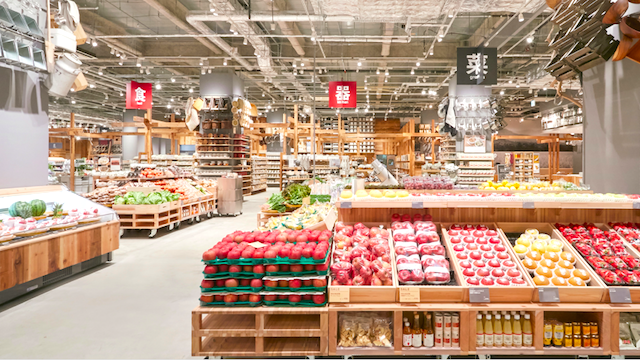
    Japanese retail giant, Muji, has forayed into the fresh food industry with the launch of a food complex in collaboration with JD’s Seven Fresh in Shanghai.

    Operated by both companies, the complex is located inside Ruihongtiandi shopping mall and spans 400sqm, housing a Muji store and fresh food supermarket, Seven Fresh, which is also the chain’s first presence in the city.

    Unlike Muji’s usual stores, the 1208sqm Muji store in the complex offers an expanded selection of food products, including ramen, oatmeal, frozen food, ice cream and pizza. Its fashion brands, Muji Labo and Muji Walker, are also available in the store.

    The Seven Fresh store features an omnichannel concept with both online and offline services, and customers can have their online orders delivered in as soon as 30 minutes.

    The store-in-store concept is not the first collaboration of the two companies: last year, Muji launched a new format MUJIcom, at JD headquarters in Beijing, providing employees selected products such as daily necessities and food, including lunch boxes featuring simple meals.

  • Blockchain game development booms as Vietnamese gamers make their play

    Blockchain game development booms as Vietnamese gamers make their play

    Vietnamese companies are racing to develop blockchain games and mobilize millions of dollars from foreign investors as they seek to make their place in the new industry.

    After the monster-combat game Axie Infinity became the most valuable non-fungible token (NFT) game in the world this year, at least six more games developed by Vietnamese companies have been launched.

    Sipher, a multiplayer online battle arena game, recently raised $6.8 million from investors in the U.S. and South Korea.

    Faraland, a multiplayer role-playing game, had earlier received $2.4 million from investors, while another game, HeroVerse, got $1.7 million.

    Other notable projects include My Defit Pet, MeebMaster and Theta Arena.

    Vietnamese have gained prominence in the blockchain game industry with Axie Infinity, followed by many other projects that have raised millions of dollars, said Phan Tung, co-founder of Faraland.

    Thao Trang, chief marketing officer at Project SEED, a game platform powered by blockchain technology, said global industry insiders see Vietnam as a blockchain ecosystem, not just separate projects.

    The country has a large number of smartphone game players with 57 percent of 68 million smartphone users spending an average of 3.9 hours a day gaming, according to market research company App Annie.

    It is also ranked second in Southeast Asia in mobile game downloads with 22 percent of market, behind Indonesia at 38 percent.

    “Blockchain has opened the door for new business and revenue for game companies. They should take this advantage of this to expand globally,” said Lynn Hoang, national director of cryptocurrency exchange Binance Vietnam.

    However, blockchain game developers in the country face many challenges, especially in recruiting people with adequate skills. There is a shortage of suitable candidates, companies say.

    Trang said that her company usually found people who are either good at blockchain or game technology and had to train them to acquire other skillsets.

    “Conflicts between the two groups are common. Blockchain changes every day and developers have to on their toes all the time, ready to respond to market reactions.”

    Another difficulty is market pressure, which pushes developers to launch their products early, compromising quality.

    Nguyen Thanh Trung, one of the founders of Axie Infinity, said that blockchain game has moved beyond the stage of discovering whether making something possible or not, to how good a creation can be.

    Pham Anh Tuan, a game developer with 10 years in the industry, said that blockchain games could remain popular for at least another 10-20 years.

    The blockchain industry is set to see the entrance of many traditional game giants, he said.

    Technologies like virtual reality and augmented reality will be utilized to create a metaverse, he added.

  • Vietnam supplier resumption to reboot Japan auto industry

    Vietnam supplier resumption to reboot Japan auto industry

    The resumption of auto part factories in Vietnam is set to contribute to the recovery of Japanese automakers struggling with a supply shortage due to Covid-19.

    The three Vietnam factories of Japan’s Furukawa Electric, which make wire harnesses for cars, are expected to soon return to full capacity.

    Factory floors “have returned to a position where they can respond to requests from a client,” Furukawa Electric President Keiichi Kobayashi said.

    The fourth Covid-19 wave has forced most southern companies to operate under restrictions, but since October, utilization rates at all three factories in Ho Chi Minh City and Ben Tre Province have been recovering steadily.

    Vietnam was the source of about 40 percent of Japan’s wire harness imports last year, with pandemic restrictions having forced Toyota Motor and seven other Japanese automakers to cut September production in half compared to a year earlier.

    Yazaki and Sumitomo Electric Industries also restoring production at their Vietnamese plants could further help support a production comeback in Japan’s auto sector.

  • FamilyMart Malaysia launches ‘Food Superstores’ format

    FamilyMart Malaysia launches ‘Food Superstores’ format

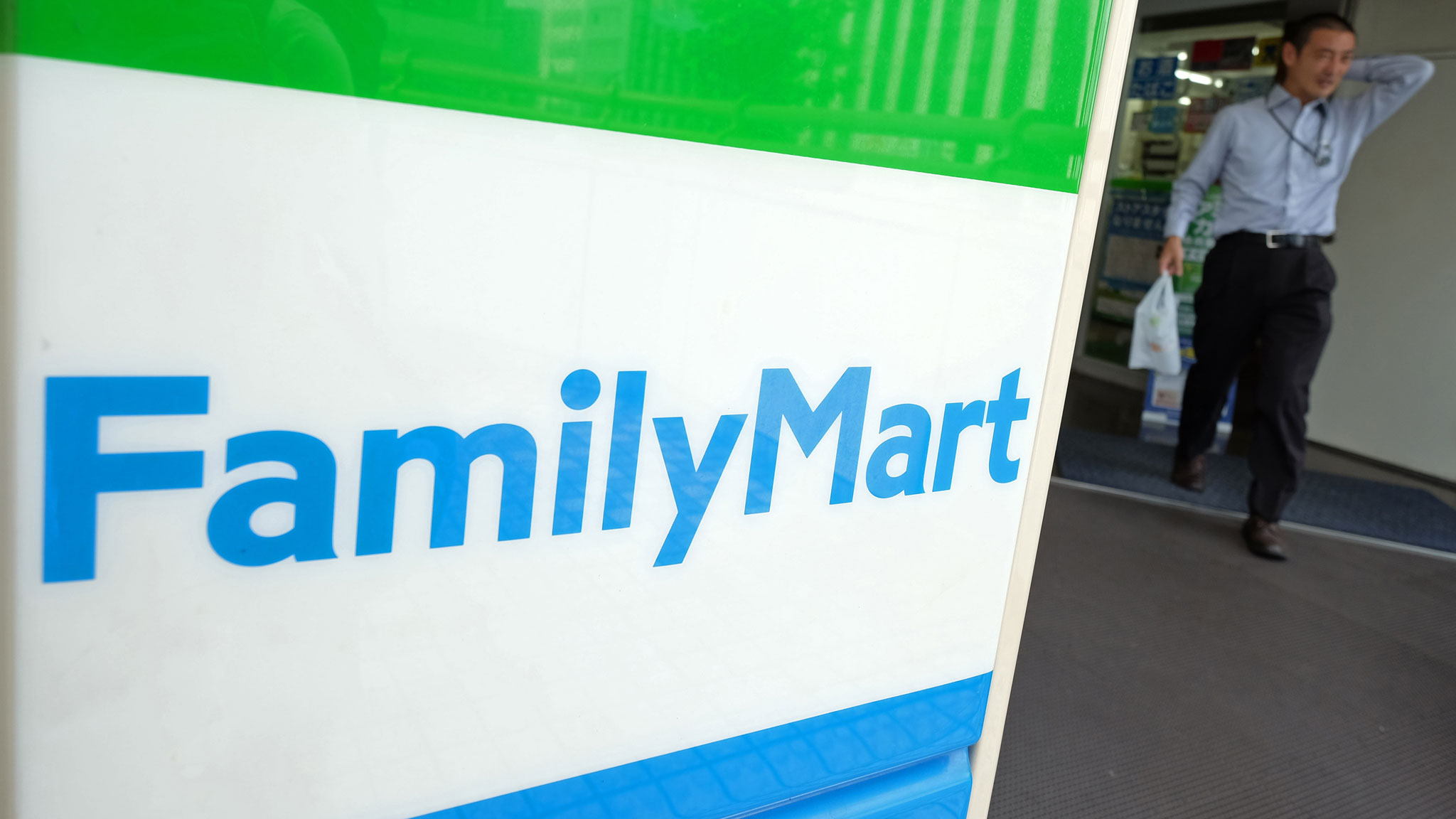
    Japan’s FamilyMart is making strong inroads into Malaysia, offering a new concept in retail with the focus on fresh food, ruffling the convenience store sector which has been largely dominated by 7-Eleven and MyNews.

    The world’s second-largest convenience store chain after 7-Eleven has redefined the concept and has gained more foot traffic to its Japanese-style konbini since it opened its first outlet in Malaysia in 2016.

    QL Resources Bhd — the franchise holder of the FamilyMart chain in Malaysia — has been expanding the footprint of the stores which offer fresh foods, snack bars, meal stations and various products from Japan.

    “FamilyMart has changed the convenience store landscape in Malaysia. It has created a need for fast and fresh food in a convenience store where consumers previously go to these stores for, perhaps, fast-moving consumer goods,” TA Securities Holdings Bhd analyst Jeff Lye Zhen Xiong told The Malaysian Reserve.

    Lye said FamilyMart’s business model has taken off quite well and has enabled the company to record a higher gross margin.

    FamilyMart delivers an authentic Japanese konbini experience by integrating fresh food, services and daily goods in one brightly-lit outlet.

    The Japanese convenience stores offer a wide variety of ready-to-eat (RTE) and microwavable meals from sandwiches, coffee and softserve ice-cream to steamed snacks, oden, onigiri and bento.

    FamilyMart’s central kitchen operator QL Kitchen Sdn Bhd received halal certification from the Department of Islamic Development Malaysia in May.

    In-store services include FamiPay for paying bills; FamiLoad for phone top-ups and gaming needs; FamiCashless and FamiLounge, a sit-in area that is equipped with WiFi, USB charging docks and toilet amenities.

    “In terms of trend, there are more convenience stores in the likes of 7-Eleven and MyNews popping up and going for more fresh food,” Lye said.

    In early October, MyNews Holdings Bhd and partners, Ryoyu Baking Co Ltd and Gourmet Kineya Co Ltd, launched their Japanese-inspired food production centre (FPC) in Kota Damansara, Selangor.

    The RM100 million facility, which operates under its subsidiaries, MyNews Ryoyupan Sdn Bhd and MyNews Kineya Sdn Bhd, will supply MyNews outlets across the Klang Valley with a wide array of RTE food.

    7-Eleven Malaysia Holdings Bhd, which is owned by Berjaya Retail Bhd, has been rolling out the latest generation store format in the past few years. It has expanded its services to defend its leading position in the convenience store space.

    Petronas Dagangan Bhd’s Kedai Mesra has also upped its game with more staple fresh food offerings while having more Tealive outlets in its stores following collaboration with Loob Holding Sdn Bhd.

    7-Eleven remains the largest convenience store chain in Malaysia with more than 2,300 stores nationwide, far ahead of MyNews at over 400 stores and FamilyMart at about 150.

    Last year, 7-Eleven has lowered its target of new store opening to 100 from 200.

    MyNews is expected to open at least 90 new outlets in the financial year 2019, while FamilyMart has targeted to have 300 stores by March 2022.

    Lye said 7-Eleven has embarked on new strategies to boost footfall including weekly or monthly promotional campaigns on cheapest items.

    Overall, he said locations and rental prices are contributing factors to the performance of a convenience store, on top of product offering.

    “FamilyMart stores are located in a very strategic place. The stores are new and consumers can expect a certain standard of quality,” he added.

    The convenience store market is worth billions of ringgit in transactions value and FamilyMart is taking the fight for a bigger slice of the pie.

  • Noodle Shop Tamjai SamGor Mixian to launch in Japan

    Noodle Shop Tamjai SamGor Mixian to launch in Japan

    Hong Kong noodle chain Tamjai SamGor Mixian is to expand its international reach with its Japanese debut early next year.

    Marking the brand’s second overseas entry after Singapore, the Japan launch follows its IPO in Hong Kong last week, the proceeds of which will be used to fund its global expansion plan, including its launch in Japan and Australia. The noodle chain aims to double its store network to 330 by 2024, with 25 new Japanese stores and 15 restaurants in Australia.

    “With the support of its major shareholders, Tridor Holdings, Tam Jai International has laid a solid foundation for further overseas expansion,” said Darren Lau, CEO of Tam Jai International. “We will continue to deliver the taste of Tamjai and our unique food culture not only in Japan but all over the world.”

    Beside its signature dishes, the Japan restaurants will also feature toppings dedicated to Japanese customers.

    “We hope that many people in Japan will know the charm of Tamjai SamGor Mixian and develop it as a store that can be used on a daily basis,” said Takaya Awata, President and CEO of Toridoll Holdings Corporation, parent company of Tam Jai International.

  • Shiseido sees ‘turning point’ ahead in tourism sales

    Shiseido sees ‘turning point’ ahead in tourism sales

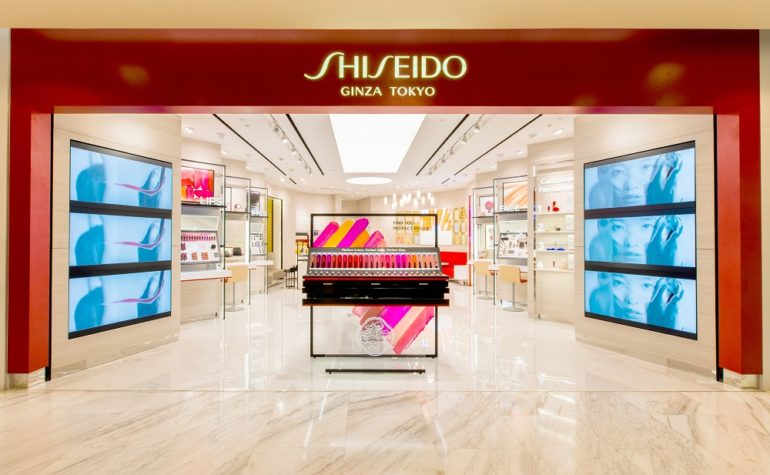
    The chief executive of Japanese cosmetics giant Shiseido Co believes inbound tourism will return next year as the pandemic abates, beginning a gradual recovery in sales of high-end goods to travelers.

    A halt in tourism amid the COVID-19 pandemic has cut off sales to Chinese visitors, a critical segment in years past. China may start to ease travel curbs after hosting the Winter Games in Beijing, and a reciprocal opening in Japan would start a “welcome back” of tourist shoppers, Chief Executive Masahiko Uotani said.

    “Next summer will be a turning point,” he said in an interview.

    Like other companies in the luxury sector, Shiseido has been hit hard by COVID-19 related lockdowns that shuttered department stores and airport shops. Operating profit plunged 87% to 15 billion yen ($131.7 million) in the year through December 2020. The company is expecting a partial recovery to 27 billion yen this year.

    Shiseido is aiming to reach 15% operating margin by 2023 and become the global leader in skincare by 2030. To get there, the company is divesting of some lower-priced brands.

    In February, it announced the sale of skincare and shampoo brands to private equity firm CVC Capital Partners for 160 billion yen. Shiseido said in August it would sell three make-up brands for $700 billion to U.S.-based investor Advent International.

    “When we made the plan last year, no one thought that the corona situation in Japan would last this long,” Uotani said. “If economic activity in Japan reaches the level of Europe and the U.S., I think the cosmetics industry will recover all at once.”

    “What I’m hoping for is the spring of next year,” he added.

    On mainland China, there are signs of economic slowdown and concerns of tighter regulation, but the market remains an attractive overseas market.

  • Hyundai Motor Aims To Develop Chips

    Hyundai Motor Aims To Develop Chips

    Hyundai Motor’s global chief operating officer said on Wednesday the South Korean automaker wants to develop its own chips to reduce reliance on chipmakers. A global shortage of semiconductors, triggered partly by surging demand for laptops and other electronic products during the pandemic, has shuttered some auto production lines globally this year. Hyundai temporarily suspended some factories, but the company’s global COO Jose Munoz told reporters the worst has passed for the industry chip shortage, adding Hyundai had the “toughest months” in August and September.

    “The (chip) industry is reacting very, very fast,” Munoz said, adding Intel is investing a lot of money to expand capacity. “But also in our case, we want to be able to develop our own chips within the group, so we are a little bit less dependent in a potential situation like this,” he said. “This takes a lot of investment and time, but this is something we’re working on.”

    He said the company’s parts affiliate Hyundai Mobis would play a key role in the in-house development plan. He also said Hyundai Motor aims to deliver vehicles at the level of its original business plan in the fourth quarter, and offset some of its production losses next year.

    Along with Toyota and Tesla, Hyundai is among a handful of automakers that increased global sales despite the chip shortage. Hyundai decided not to cut orders during the pandemic, after seeing the Asian markets recover more strongly than expected, Munoz said. Munoz, president of Hyundai Motor North America, said the company is on track to produce electric cars in the United States in 2022, and is looking into both enhancing its existing factory in Alabama and increasing its production capacity.

    He said the U.S. government needs to extend a proposed $4,500 tax credit incentive to U.S. electric vehicles made at non-union factories as well as union ones. “American workers are the same,” he said. “We would like this to be equal for all.” U.S. factories of Tesla and foreign automakers such as Hyundai and Toyota Motor are not unionized.

  • SES partners Softbank to deliver live sporting events into Japan

    SES partners Softbank to deliver live sporting events into Japan

    Japanese sports fans will be able to enjoy more premium sports content as SoftBank Corp. (SoftBank), a leading telecom carrier in Japan, has partnered with SES for the aggregation and delivery of live sporting events to its corporate customers, such as TV stations and video distribution companies, SES announced.

    Under the new agreement, SES, via its diverse global infrastructure of multi-orbit satellite fleets and fibre network, will aggregate content and deliver it directly to SoftBank. In providing this service, SES will use more than 300 downlink antennas located around the world, including those in its new Stockley Park facility in London, as well as its own fibre network with connections to other major fibre hubs. In addition, SES will establish a new link to SoftBank’s fibre network.

    “Whether viewed on mobile devices or broadcast TV, tennis, football, golf, and other live sports are some of our most popular content that we see a growing demand for,” said Norioki Sekiguchi, Vice President, Global Business Division at SoftBank Corp. “With its diverse global infrastructure and access to a variety of sports content, SES is in a unique position to help us deliver a wide range of sports content in very high quality to our corporate customers in Japan.”

    “We are delighted to join forces with SoftBank, the first provider we are interconnecting and partnering with in Japan, with a common goal to bring engaging content to sports fans across the country,” said Ed Cox, Vice President, Sales North America and Sports & Events at SES. “Providing content feeds solely using fibre networks is great testament to SES’s ability to adapt and leverage our hybrid distribution services in the most effective way possible to meet our partner’s needs.”

  • Germany’s Metro chain withdrawing from Japan

    Germany’s Metro chain withdrawing from Japan

    Metro aims to cease the operative business by the end of October 2021, whereby all 10 stores and the delivery business will be closed. The company has thoroughly analysed alternative options but sees no path to profitable growth and a leading wholesale position in the Japanese market. The exit of METRO Japan business will lead to one-off costs in Q4 2020/21 and one-time free cash flow gains through asset sales over the next 2 years. The recurring annual impact is positive on both P&L and cash flow. METRO Japan will make every effort to assist its employees through the transition in a fair manner and act fully in line with employer practice standards.

    “In each market it is operating in, METRO aims to achieve a leading market position as food wholesaler. METRO Japan has been under pressure for quite some time. We finally made the decision that we do not see the opportunity to achieve the necessary scale in Japan and thus to reach our profitability targets and sustainable growth in sales. Hence, we have concluded that METRO Japan is not a strategic fit for the company’s long-term objectives,” explains Dr Steffen Greubel, CEO of METRO AG. “On behalf of our Management Board I want to extend my sincere appreciation to our Japanese colleagues for their diligent work, enduring passion and commitment in serving our customer over the past 20 years.”

    With 10 wholesale stores all situated in the Greater Tokyo area, METRO Japan has been serving predominantly professional customers in the hospitality sector for the last 20 years. However, an unfavorable market position coupled with increasingly competitive landscape limited the company’s growth potential and weighted on profitability. METRO Japan has undertaken numerous attempts such as adjusting store formats, improving the assortment and expanding the delivery business to reposition the business. These attempts didn’t show reasonable results due to lack of scale and highly competitive market characteristics.

    METRO Japan will cease its business operations by October 2021, while the real estate portfolio in Japan will be sold. The portfolio includes 6 owned land plots with stores and 3 locations with long-term leases. As the result of this transaction, METRO expects a recurring uplift of approx. €15 million in FCF1 and up to €5 million in EBITDA. The company expects a negative one-off impact of between €30 million and €50 million on EBITDA in Q4 FY20/21. Overall, the proceeds from selling the real estate are expected to clearly surpass the one-off cash-outs for the wind-down, making the transaction cash-positive.

    The Japanese operations of Classic Fine Foods (CFF), the foodservice distribution specialist of METRO, are not affected by this decision, CFF will continue to operate in Japan.

  • Inside Blue Bottle Coffee’s trendy new Osaka store

    Inside Blue Bottle Coffee’s trendy new Osaka store

    lue Bottle Coffee, the Nestle-owned American coffee chain, has entered Osaka with a trendy look designed by Tokyo-based studio, I In.

    Customers entering the store are welcomed by an open space filled with the essence of warm wood and bright light through floor-to-ceiling glass windows. In contrast with the wooden floor, the barista’s drip station is made of hairline polished stainless steel, resembling a stage.

    “I thought it would be great if the store could make the series of things that the barista makes and give to customers the most shining, so I lit up the area of ​​the drip station where the barista stands and made it shine like a stage,” said Yohei Terui, founding partner at I In, who is also in charge of designing the store.

    Throughout the cafe, special blue glass, inspired by Blue Bottle’s signature colour, is used to highlight the brand’s message. A coffee-coloured spherical glass chandelier is installed throughout the atrium at the staircase area leading to the second floor.

    Different from the ground floor, the upper floor is dominated by white-coloured materials. Centrestage is a special area stimulating the five senses of visitors. Customers sitting in this area will encounter a sensory experience where music and images, created in collaboration with Panoramatiks, ‘fall’ from the ceiling.

    “It is not just a concept, but a place that really stimulates the five senses of humans,” the design studio described.

  • Japan’s retail sales extend gains but Covid-19 challenges persist

    Japan’s retail sales extend gains but Covid-19 challenges persist

    Japan’s retail sales rose for a fifth straight month in July, beating expectations as the consumer sector continued its recovery, although a coronavirus resurgence has cast doubts over the spending outlook.

    A surge in Delta variant cases this month forced the government to widen state of emergency restrictions, which are now threatening to hurt consumer spending and derail a fragile economic recovery.

    Retail sales advanced 2.4% in July from the same month a year earlier, government data showed on Monday, slightly faster than economists’ median forecast for a 2.1% rise in a Reuters poll. It followed a 0.1% increase in June.

    “The recent strength in retail sales is unlikely to last,” Marcel Thieliant, Senior Japan Economist at Capital Economics, said in a note.

    “The severe Delta wave now hitting the country coupled with an ever-expanding list of prefectures under states of emergency resulted in a renewed weakening in consumption this quarter,” Thieliant said.

    The better-than-expected rise in retail sales in July came as authorities struggled to get a defiant public to heed stay-at-home restrictions in major cities like Tokyo, which hosted the Olympics during the month.

    The trade ministry data found strong demand for a variety of items such as cars, clothing, general merchandise, and food while fuel was helped by higher petrol prices.

    Small retail establishments like convenience stores and drug stores saw the biggest sales growth from a year earlier.

    However, growth was also flattered by the comparison with last year’s steep slide, when consumer demand was hurt by the coronavirus pandemic.

    Compared with the previous month, retail sales gained a seasonally adjusted 1.1% as consumption continued the surprising growth seen in the second quarter, helped by the Tokyo Olympics.

    The world’s third-largest economy grew at a better-than-expected rate in the April-June quarter, thanks largely to private consumption, which makes up more than half of the country’s gross domestic product.

    But rebounding consumer activity poses a challenge to policymakers as the more contagious Delta variant of COVID-19 upends the nation’s healthcare system, with state of emergency curbs now covering nearly 80% of Japan’s population.

    “People’s mobility has been decreasing, and consumption may peak out in August,” said Atsushi Takeda, chief economist at Itochu Economic Research Institute, noting that the downward trend could drag until September.

  • Starbucks plans to reduce food waste in Japan

    Starbucks plans to reduce food waste in Japan

    Starbucks today announced a new program to reduce food waste at select Starbucks stores across Japan.

    To ensure unsold food does not go to waste, participating stores have the option of marking down select bakery products by 20% several hours prior to closing.

    As part of Starbucks ongoing commitment to fight against hunger, the company will donate part of the revenue of these discounted sales to Musubie, a local non-profit which provides meals for children across Japan.

  • UBS Launches Wealth Management JV in Japan

    UBS Launches Wealth Management JV in Japan

    UBS and Sumitomo Mitsui Trust further their two-year alliance with the latest launch of a wealth management joint venture in Japan.

    UBS and Sumitomo Mitsui Trust Holdings (SMTH) has launched operations under joint venture UBS SuMi TRUST Wealth Management, according to a statement, across Japan in Tokyo, Osaka and Nagoya.

    The new company is the first in Japan to offer global securities and wealth management capabilities paired with custody, real estate, inheritance, and wealth transfer expertise of a Japanese trust banking group, UBS said.

    UBS and SMTH first announced the establishment of a wealth management alliance in June 2019.

    Soon thereafter, the two groups established a consultation and event organizing company to identify prospective new clients and began cross-selling each other’s products into their respective client bases.

    We knew that with a powerful partner specialized in this unique trust banking market, we could multiply the success we have already achieved organically,» said Victor Chang, UBS SuMi TRUST Wealth Management’s president and representatives director as well as the Japan head of wealth management. «No other wealth manager in Japan boasts the same breadth and depth of our services, not to mention global reach.