Retail News CRM

Tag: Japan

  • Japan’s retail sales fall for third straight month

    Japan’s retail sales fall for third straight month

    Japanese retail sales fell for the third straight month in February as households kept a lid on expenditure amid the coronavirus emergency, underscoring the fragile nature of the economy’s recovery from last year’s slump.

    Analysts expect Japan’s economy sharply contracted in the first quarter, as lacklustre consumer spending and weakening exports create challenges for policymakers who have already rolled out massive stimulus.

    Retail sales lost 1.5% in February from a year earlier, government data showed on Tuesday, a smaller fall than the median market forecast for a 2.8% drop.

    But it marked the third straight month of declines following January’s 2.4% fall and a 0.2% drop in December.

    “That the coronavirus isn’t subsiding is a major reason to worry about a delay of an economic recovery,” said Atsushi Takeda, chief economist at Itochu Economic Research Institute.

    “Clothes aren’t selling because people aren’t going out,” he said. “People are not really returning to commercial facilities, the trend is for them to go shopping at supermarkets in their neighbourhoods.”
    The broader decline in retail sales was driven by falls in spending on items such as clothing, toiletries and general merchandise, the data showed.

    Compared with the previous month, retail sales rose 3.1% on a seasonally adjusted basis.

    Separate data showed the nationwide seasonally adjusted unemployment rate was steady at 2.9%, lower than the median forecast of 3.0%.

    There were 1.09 jobs per applicant in February, down from the previous month’s 1.10, labour ministry data showed.

    The world’s third-largest economy is set to contract by an annualised 6.0% in the current quarter, which would be the first decline in three quarters partly due to sagging consumer spending, according to the latest Reuters poll data.

    Some analysts are worried that a longer contraction in household spending and weakening exports raise the prospect of a slower economic recovery than initially thought.

  • Starbucks opens with new Japanese store design

    Starbucks opens with new Japanese store design

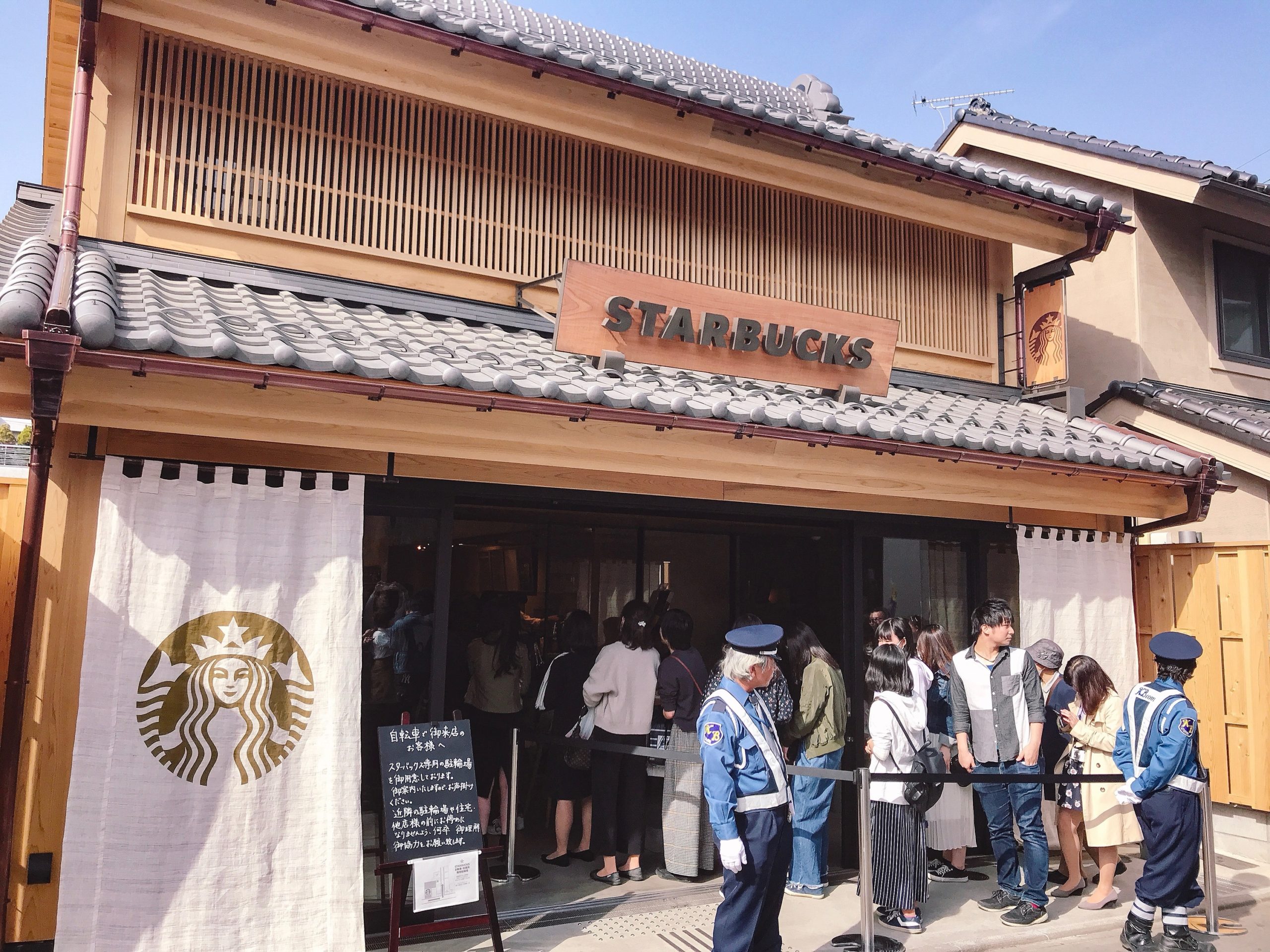
    There are several unique and beautiful Starbucks stores in Japan including the traditional Machiya style store in Kyoto and the Edo-style wooden house store in Kawagoe City, and they have been popular tourist attractions nowadays.

    In 2020 spring, Starbucks Japan opened another unique branch, featuring the tiled roof traditional Japanese house with historic stone lanterns. The “Starbucks Coffee Shinshu Zenkoji Nakamise Street Store” opened in March 2020 as the first regional landmark store in Koshinetsu Region, situated on the Nakamise Street, an approach/shopping street leading to Shinshu Zenkoji Temple in Nagano Prefecture.

    The store is set in the historical district near the magnificent temple, and feature very unique and fascinating architectural design with motifs of a traditional Japanese house.

    5 types of Nagano wood are used for the interior that warmly welcomes visitors and express the connection to the local community. The 2nd floor presents the beauty of the lights and shades of Japanese houses with Shoji (wooden-framed paper window) and skylights delivering gentle light to the space.

    In addition, there are several historical essences that present good old Japan such as stone lanterns and wooden beams. At this new Starbucks store, visitors can spend a little bit more quality and luxurious time while enjoying aromatic coffee!

  • Need for high-speed rail arguments continue unabated

    Need for high-speed rail arguments continue unabated

    More than 10 years after they were first proposed, high-speed railroad plans remain mired in concerns and disagreement over speeds and cost.

    Three high-speed routes are currently under study or have been proposed: north-south, Ho Chi Minh City-Can Tho and Hanoi-Lang Son.

    A final report by consultancy consortium CCTDI-TRICC-TEDI, comprising three Vietnamese construction firms, on the master plan for railroad development for 2021-30 sets out two options.

    The more ambitious one envisages the completion of phased investment for two north-south high-speed railways, Hanoi-Vinh and HCMC-Nha Trang by 2030.

    The two railways have a total length of 651 km and might cost VND561 trillion ($24.18 billion) to be built.

    The other is to complete them by 2032 at a cost of VND375 trillion. The consultants forecast a maximum of 14 million passengers using the high-speed trains annually at that time.

    They expect an average of 44.7 million passengers using north-south railroads annually by 2050.

    An expert who asked not to named said however that these options are “overly optimistic,” if not downright unfeasible.

    He said 10 years would not be enough to complete these projects, considering the approvals that need to obtained at various levels, the money that needs to be raised and carrying out the work.

    There is also a continuing debate on whether the trains should run at 200 kph as proposed by the Ministry of Planning and Investment and some experts or 350 kph as suggested by the Ministry of Transport and the consultants.

    That may prolong the time required for getting National Assembly approval.

    Dang Huy Dong, director of the Planning and Development Institute, said building infrastructure for trains running at 350kph would be prohibitively expensive, and the resultant high fares would also make the entire thing unviable.

    It is economically efficient to have passenger trains running at a speed of 150kph and freight trains at 100kph, he told local media.

    The State Appraisal Council is in the process of identifying an agency that would assess the feasibility of the various options for the north-south routes.

    Recently the Lang Son Province people’s committee proposed building the Hanoi-Dong Dang high-speed rail starting in 2030, saying is necessary to enhance rail transport between ASEAN countries and China. The proposed route will go on up to Nanning in Guangxi, China.

    Earlier this year the Ministry of Transport ordered the Railway Project Management Board to complete a pre-feasibility study on the HCMC-Can Tho link by 2022.

    The South Construction Technology Science Institute wants high-speed trains on the route with a 1.43-meter double track serving both passenger and freight trains traveling at 200 kph and 100 kph.

    It expected it to cost around $10 billion.

    A Ministry of Transport official said the route might be necessary, but many issues need to be sorted out first. For instance, the 150-km distance might not be ideal for a high-speed train, he said.

    Vu Anh Minh, chairman of Vietnam Railways, said flying from Hanoi to HCMC takes around five hours in all while a high-speed train traveling at 300 kph would take six hours.

    “Considering the nature and geography of Vietnam, the development of a high-speed network is imperative, and we are losing socioeconomic development opportunities every day without it.”

  • Qualcomm supports SoftBank’s fastest-ever 5G mmWave in Japan

    Qualcomm supports SoftBank’s fastest-ever 5G mmWave in Japan

    Qualcomm Technologies, Inc. announced that SoftBank Corp. has launched its 5G millimeter (mmWave) service in Japan – using devices based on Qualcomm® Snapdragon™ 5G Mobile Platforms and Modem-RF Systems. 5G mmWave allows Japanese users to enjoy the fastest possible multi-Gigabit download speeds in the country. Along with the launch, SoftBank is making the “Pocket WiFi 5G A004ZT” 5G mmWave mobile hotspot available for sale. All initial 5G mmWave-compatible mobile devices in SoftBank’s portfolio, including soon-to-be announced 5G smartphones, are expected to be powered by Qualcomm Technologies’ 5G mmWave products.

    The deployment of 5G mmWave is critical to unleashing the full potential of 5G and addressing the massive increase in mobile data demand. 5G mmWave allows leading operators such as SoftBank to take advantage of the large amount of spectrum resources available in higher bands, enabling them to deliver the world’s fastest multi-gigabit cellular speeds and low latency connectivity.

    5G mmWave is also a cost-effective way for mobile operators to increase the network capacity needed to meet the increasing demand for data in dense urban, fixed wireless access and enterprise environments – with savings up to 35% in total cost of ownership compared to sole use of sub-6 GHz bands.

    “5G mmWave is critical for mobile operators to stay competitive and to realize the full potential of 5G to transform many industries,” said Francesco Grilli, vice president, product management, Qualcomm Technologies, Inc. “Japan is at the forefront in deploying the most advanced 5G technologies such as mmWave, and we are honored by working with SoftBank to bring the fastest mobile experiences to Japanese consumers and businesses.”

    “SoftBank is pleased to collaborate with Qualcomm Technologies and use its leading 5G mmWave technology to offer world-class 5G service to our subscribers,” said Keigo Sugano, senior vice president, head of product division, SoftBank Corp. “We look forward to continuing our long-standing collaboration with Qualcomm Technologies to support Japan’s growth and leadership using the most advanced wireless innovations.”

    This announcement follows SoftBank’s commercial launch of 5G Sub-6 GHz service with smartphones powered by Snapdragon 5G Mobile Platforms in March 2020. The commercial launch of 5G mmWave significantly strengthens SoftBank’s 5G network capabilities, with more mmWave capable mobile devices to be launched going forward.

  • Japan’s malls and restaurants brace for Olympics without foreigners

    Japan’s malls and restaurants brace for Olympics without foreigners

    Shopping malls and restaurants in Japan will miss out on a business boom, as Tokyo expects to hold the Olympics without overseas spectators, dealing another blow to industries already on the ropes from the coronavirus.

    In the years leading up to the Games, developers have poured tens of billions of yen into shopping and dining complexes to serve an influx of foreigners, with major investments made in Tokyo’s central Shibuya district, iconic for its scramble crossing.

    But the number of foreign visitors has dropped from nearly 32 million in 2019 to almost zero, causing the government to halt a spending survey that showed their consumption that year was worth 4.5 trillion yen.

    Now Tokyo 2020’s expected decision to block foreigners from attending the Games means a boost the service sector was counting on to recover lockdown-related losses will not materialize.

    “There was so much development, with new buildings being constructed, but people aren’t coming at all,” said Ryota Himeno, an analyst at JP Morgan Securities Japan.

    Up to eight million tourists visited Shibuya’s bustling clubs and cafes in 2019, and ward chief Ken Hasebe expected 10 million in 2020 before the coronavirus scuppered those plans.

    Himeno says that projected growth prompted developers to spend more than 300 billion yen in the district, which is also home to some venues from the 1964 Olympics.

    The most imposing of the new developments is Shibuya Scramble Square, a 230-meter glass tower that has come to dominate the skyline since opening in 2019.

    Its developer, Tokyu Corp, spent 110 billion yen on projects in Shibuya in the three years through 2020.

    “Our financial results are unfortunately expected to fall into the red in the current period,” said Tokyu’s Ryosuke Toura, with hotel businesses taking the biggest hit, followed by railways and retail.

    Across the Shibuya station, at Masaka, a vegan restaurant inside Parco department store, which reopened after years of renovation in time for the Olympics, foreign tourists used to make up as much as half of the clientele.

    Manager Yuta Namekawa is now pinning his hopes on growing awareness of vegan food among locals, thanks in part to people watching documentaries about the meat industry on Netflix.

    “Part of the reason why the restaurant was opened was because of the Olympics, so it’s quite worrisome if that isn’t happening,” he said. “It can’t be helped.”

  • Burberry Japan opening a virtual showroom in partnership with Elle

    Burberry Japan opening a virtual showroom in partnership with Elle

    The virtual and interactive experience will replicate the brand’s flapship Ginza store and will serve as a space to present its Spring/Summer 2021 collection. Customers will be able to purchase items from the collection by selecting the digital items in store for one month, beginning from March 19. The experience will live exclusively on Elle Japan and Ellegirl Digital Japan’s websites.

    Burberry is among the leading luxury players to have invested in digital innovation to merge digital and physical store spaces, with Louis Vuitton and Gucci also joining the market. As part of the new experience, Burberry has also collaborated with actress Elaiza Ikeda to create five styling videos that will appear throughout the virtual store and assist customer’s shopping experience.

  • Rakuten to boost mobile activities with $2.2 billion capital injection

    Rakuten to boost mobile activities with $2.2 billion capital injection

    Japanese e-commerce and tech company Rakuten has sold a 13% share amounting to $2.2 billion to Japan Post, Tencent and Walmart. Japan Post will invest $1.4 billion into Rakuten, thereby owning 8.3% of the company’s total share to become its fourth-largest investor. Tencent will invest $0.6 billion to own 3.6% of the company’s total share, while Walmart will invest $0.15 billion to own a 0.9% share.

    Japan Post’s investment in Rakuten is aimed at strengthening ties between the two Groups and maximizing synergies by leveraging the resources and expertise of both Groups. The alliance will branch into mobile, logistics and digital transformation, with consideration to enter into financial services and e-commerce together.

    There are plans to create shared logistics centers, seeking new collaborations and initiatives between the pair to expand usage of Rakuten Fulfillment Centers and Japan Post’s “Yu-Pack” parcels.

    For the mobile sector, Rakuten will tap onto Japan Post’s nationwide chain of post offices to create customer counters to accept new signup applications for Rakuten Mobile’s marketing campaigns. Meanwhile, Rakuten Group will dispatch specialists to Japan Post to bolster its digital transformation plans.

    Last week, Rakuten Mobile announced that the total number of applications for its UN-LIMIT service plan launched on 8 April 2020 has surpassed 3 million. This week, Rakuten Mobile announced the signing of a Memorandum of Understanding with Airspan Networks for the latter to offer its complete vRAN hardware and software platform OpenRANGE on the Rakuten Communications Platform (RCP).

  • Japan Car Makers Scramble To Assess Impact Of Renesas Auto Chip-Plant Fire

    Japan Car Makers Scramble To Assess Impact Of Renesas Auto Chip-Plant Fire

    Toyota, Nissan, Honda and other Japanese automakers scrambled on Monday to assess the production impact of a fire at a Renesas Electronics automotive chip plant that could aggravate a global semiconductor shortage. “We are gathering information and trying to see if this will affect us or not,” a Honda spokesman said. Other car makers including Toyota and Nissan said they too were assessing the situation. The effect on car makers could spread beyond Japan to other auto companies in Europe and the United States because Renesas has around a 30% global share of micro control unit chips used in cars.

    Renesas said it will take at least a month to restart production on a 300mm wafer line at its Naka plant in northeast Japan after an electrical fault caused machinery to catch fire on Friday and poured smoke into the sensitive clean room.

    Two-thirds of production at the affected line is automotive chips. The company also has a 200mm wafer line at the Naka plant, which has not been affected. Concerns on the impact of the fire on production sent auto shares sliding in Tokyo on Monday, with the big three, Toyota, Honda and Nissan, down more than 2% by the midday break. Renesas shares tumbled as much as 5.5% and were down 3.9% midday. The benchmark Topix index shed 1.1%.

    “It will probably take more than a month to return to normal supply. Given that, even Toyota will face very unstable production in April and May,” said Seiji Sugiura, senior analyst at Tokai Tokyo Research Institute. “I think Honda, Nissan and other makers will also be facing a difficult situation.”

    Semiconductors such as those made by Renesas are used extensively in cars, including to monitor engine performance, manage steering or automatic windows, and in sensors used in parking and entertainment systems.

    Nissan and Honda had already been forced to scale back production plans because of the chip shortage resulting from burgeoning demand from consumer electronic makers and an unexpected rebound in car sales from a slump during the early months of the coronavirus pandemic. Toyota, which ensured parts suppliers had enough stocks of chips, has fared better so far.

    “It could take three months or even half a year for a full recovery,” said Akira Minamikawa, analyst at technology research company Omdia. “This has happened when chip stockpiles are low, so the impact is going to be significant,” he added.

    Renesas said it customers, which are mostly automotive parts makers rather than the car companies, will begin to see chip shipments fall in around a month. The company declined to say which machine caught fire because of the electrical fault or which company made it. The Japanese government promised help for the auto industry.

    “We will firmly try to help the Naka factory achieve swift restoration by helping it quickly acquire alternative manufacturing equipment,” Chief Cabinet Secretary Katsunobu Kato told a regular news conference on Monday.

    The latest incident at the Naka facility comes after an earthquake last month shut down production for three days and forced Renesas to further deplete chip stocks to keep up with orders. The plant was closed for three months in 2011 following the deadly earthquake that devastated Japan’s northeast coast.

  • Japan’s Lixil adopts DTC model in Singapore retail store launch

    Japan’s Lixil adopts DTC model in Singapore retail store launch

    LIXIL, maker of pioneering water and housing products, today announced the launch of its flagship showroom in Singapore. Located at a heritage shophouse unit at 24 Mohd Sultan Road, the 6,000 square feet store is in the heart of Singapore’s prime lifestyle district. Bringing multiple LIXIL brands under one roof, the store offers a wide range of sustainable living solutions, meaningful design, and cutting-edge hygiene technology.

    The launch of the store comes at a time when the COVID-19 pandemic and the planet’s health have put issues such as sanitation and hygiene at the forefront of consumer minds. Besides offering LIXIL’s unique hygiene technology through the store, LIXIL is also leveraging on its industry-leading experience with a direct-to-consumer business approach and unparalleled retail concept to offer a full bathroom product line-up to reach more consumer segments. The showroom will feature products from GROHE and American Standard, with plans to include INAX, the Japanese brand that manufactures innovative sanitaryware and artistic ceramic tiles.

    Satoshi Konagai, Leader, LIXIL Water Technology-Asia Pacific, said, “We are very happy to inaugurate our flagship showroom and hope to provide the best solutions for their living and working spaces. The customer and retail experience have always been very important to us at LIXIL and we are constantly looking for ways to maximize the value for our consumers.”

    He further added, “Today the world is more concerned than ever about hygiene. Singapore’s recent commitment on sustainability and its exemplary handling of the pandemic showcases a rising awareness on these global issues, and we believe there is a growing demand for solutions to address them. Homeowners expect proven solutions that offer peace of mind. Our technologies such as Touchless faucets and flushing systems, Easy to clean solutions, Double Vortex flushing system, HygieneRim technology and Aqua Ceramic can help to provide the ‘optimum hygiene’ to our discerning consumers.

    Also, in a time where people are unable to travel and spend more time at home, they want to be able to feel relaxed and enjoy a spa-like experience right in their own home. Here our solutions like GROHE F-Digital Deluxe, GROHE SmartControl, GROHE Sensia Arena shower toilet can provide a home spa experience to consumers by bringing the enjoyment of water to them.”

    Built on the brand’s core pillars of hygiene, sustainability, and innovative design, LIXIL’s flagship showroom in Singapore takes an experiential approach at showcasing its award-winning water technology and living solutions.

    Some of the key highlights that consumers can expect to see in the store:

    • Cutting-edge technologies in interior design, such as the GROHE F-Digital Deluxe Spa System which consists of a shower system with lights, steam and sound, controlled by an app; as well as GROHE Sensia Arena shower toilet, one of LIXIL’s most internationally awarded product.
    • LIXIL’s first 3D metal-printed faucet, the GROHE Allure Brilliant Icon 3D faucet retailing at S$34,234.24.
    • Kitchen solutions, such as the GROHE Zedra SmartControl which features our “push-and-turn technology”, as well as GROHE Blue, the brand’s sustainable living water filter system and faucet.
    • American Standard’s elegant hygiene products such as its Line Sensor Technology Faucet, the elegant Acacia SupaSleek Collection, and its Signature Collection — featuring its cutting-edge HygieneClean System for toilets, with its Double Vortex flushing technology, anti-stain Aqua Ceramic material, anti-bacterial ComfortClean technology and rimless Hygiene Rim design.
    • FREE 360-degree virtual bathroom design and proprietary LIXIL’s rendering service CustoMySpace, allowing visitors to shortlist their favourite products and render them in 3D in a virtual bathroom setting for them to bring their ideas to life.
  • Hermes opens giant store in Tokyo’s ritzy Omotesando

    Hermes opens giant store in Tokyo’s ritzy Omotesando

    Hermès is delighted to announce the opening of a new address in Tokyo’s Omotesando district on 28th February 2021. This new 488 square-meter home will be the house’s first free-standing store in Tokyo since the opening of Maison Hermès Ginza in 2001. A beautiful boulevard leading to Meiji Shrine, Omotesando Avenue is today lined on both sides with high-end boutiques and zelkova trees.

    Its intricate back streets are home to Tokyo’s vibrant street culture, attracting designers and artists from all around the world. It is here, on one of the city’s unique streets, adjacent to Shibuya and Harajuku, that the new Hermès store comes to life. The store’s distinctive façade opens directly onto Omotesando Avenue and incorporates the historic stone wall of one of the area’s most notable buildings, which has been preserved by the Parisian architecture agency RDAI.

    The façade is given a contemporary look with a copper-toned stainless-steel grid, adding depth and light to the exterior, just as light and shadows intermingle in a bamboo grove. Upon entering, visitors are greeted by the Ex-Libris in mosaic, inspired by the Hermès Faubourg SaintHonoré store in Paris. On the right side, they can peruse the colorful women’s silk collections, including the new carré Duo Cosmique designed by Kohei Kyomori, and presented exclusively here.

    The window display is also specially designed by this young Japanese artist to celebrate the opening. Further on, fashion jewellery, beauty, and perfume, including the latest men’s fragrance H24 are elegantly displayed. In the beauty corner, the Rouge Hermès lipstick collection will wait to encounter new customers from mid-April. On the left side of the entrance, home collections including tableware and men’s silk are introduced. A leather section at the back of the store welcomes bags, small leather goods, and equestrian collections.

    Walls are covered in wood paneling and bamboo marquetry, accented by fluid curves, and a selection of women’s shoes is displayed on wooden shelves extending from one of the large pillars. The floor is covered with two shades of greenstone, sourced in Asia and laid in a pattern resembling Japanese tatami mats. Custom rugs with a hue reminiscent of forest moss lend a softness to space. Behind the staircase is a refined area for watches and jewelry.

    Finally, customers can pause at a wide table, and enjoy books and a Leporello of unique drawings by French artist François Houtin, displayed in a specially made curved frame. As customers ascend the stairs, they will discover another piece of art, created by Japanese contemporary bamboo artist Shoryu Honda. Inspired by the shape of clouds and infinite Moebius strips, the bamboo sculpture is an example of the sophistication of Japan’s world-class modern bamboo artistry. The sweeping staircase is one of the most striking architectural elements of the store.

    The organic shapes of its vertical columns resemble tree branches, while the stairs call to mind pale green stepping stones. Light filters down from the upper level to the ground floor, just as sunlight glistens between the branches of a forest and invites customers upstairs to dive into the women’s and men’s universes. On the second floor, mobile partitions create an intimate space for each métier while giving the illusion of transparency. There are large fitting rooms for both men and women, with the former designed in order to incorporate made-to-measure orders in the future.

    Among the selection of special objects created for this opening are a skateboard and a surfboard, both revisited in a special edition with Jan Bajtlik’s design Cheval de Fête, and uniquely numbered Mega Chariot carrés and ties by Daiske Nomura. A newly unveiled Hermès bike made of ash wood will also be presented for the occasion. Paying tribute to local artists, materials, and know-how, this new store is a testimony to Hermès’ strong relationship with Japan and invites local customers and new visitors into a discovery of the house’s creativity and fine craftsmanship in a harmonious and warm environment.

  • US luxury jeweller Hoorsenbuhs opens first overseas store in Japan

    US luxury jeweller Hoorsenbuhs opens first overseas store in Japan

    Los Angeles-based fine jewelry and lifestyle brand Hoorsenbuhs opened its first overseas store at the Ginza Six mall in Tokyo, Japan on Friday, March 5th.

    The 1,050 square foot space in Tokyo comes to life through the eyes of founder Robert Keith. For the store, Keith designed custom chairs, tables, lights, and jewelry cases featuring the brand’s signature tri-link chain motif. Artist Damien Hirst is among the brand’s most notable collectors and collaborators. Celebrity fans of the largely-unisex handmade jewelry collection include Brad Pitt, Gwyneth Paltrow, and Lenny Kravitz.

    To celebrate the opening, the brand will offer exclusive, one-of-a-kind pieces of jewelry, apparel, eyewear, and lifestyle goods at the new boutique.

    “We’ve built a very strong and successful retail business in Japan, since our first partnership in 2011, including Ron Herman, Umeda Hankyu, and Isetan,” said Kether Parker, brand director. “The opening of our first Hoorsenbuhs store at G6 will be a destination for our extremely loyal customer base to discover and immerse themselves in all things Hoorsenbuhs.”

  • Cybersecurity Startup Plots APAC Expansion

    Cybersecurity Startup Plots APAC Expansion

    London-based cloud-native application security startup Snyk is eyeing Asia Pacific and Japan, following a breakout year in 2020.

    Snyk has announced plans to expand in Singapore, India, Japan, Korea, Australia, and New Zealand, and has appointed vice president of APJ sales Shaun McLagan to lead and build out dedicated teams in the region, the firm announced in a blog post on Thursday.

    The appointment comes as Snyk announced its latest $300 million Series E funding, led by new partners – Singapore state investor Temasek and Geodesic Capital, a venture capital firm that specializes in helping technology companies expand into Asia.

    The startup cited an explosion of digital transformation initiatives across the region and a greater need for security among companies. Its customers include Revolut and Volt Bank.

    With an estimated 27 million software developers worldwide today, and the strongest growth for developers expected in Asia Pacific specifically, Snyk collectively recognizes that there has never been a better time to serve this market, Peter McKay, Snyk CEO said.

    Founded in 2015, the company had a breakout year in 2020, recording a 200 percent year-over-year increase in revenue and making strategic acquisitions of DeepCode and Manifold.

    With the new funding round, the company has now raised $470 million to date, bringing the company valuation to US$4.7 billion, quadrupling it since the beginning of 2020.

  • Japan’s venture capitalist invests $700,000 in Vietnamese media start-up

    Japan’s venture capitalist invests $700,000 in Vietnamese media start-up

    Japan’s venture capital firm Genesia Ventures led the seed funding round of Vietnam based media startup Vietcetera with the investment of $700,000.

    The deal, finalized during the first quarter of 2020, is being made public after Vietcetera received its digital media license from the government, Bloomberg quoted its co-founder and CEO, Hao Tran, as saying.
    Silicon Valley-based Hustle Fund Management also took part in the seed funding.

    Vietcetera expects to complete its Series A funding of at least several million dollars in the first half of 2021, Tran said.

    Vietcetera is a digital media company targeting the nation’s growing middle class, based in HCMC. It provides Vietnamese and English content ranging from general business articles to lifestyle stories and podcasts.

    Tran said the funds will support expansion of its data science platform, accelerate product development and expand market share. Vietcetera’s website last year grew its readership by 700 percent, he added.

    Vietnam’s online media market is expected to reach $7 billion in 2025 from $3.3 billion in 2020, while its e-commerce market is projected to grow to $29 billion in 2025, according to a report by Google, Singaporean investment firm Temasek and American consulting company Bain & Company.

    Its e-economy is forecast to increase to $52 billion in value in 2025 from $14 billion last year, with e-commerce at $29 billion, according to the report.

    There were 72 million social media users in Vietnam in January 2021, according to the “Digital 2021: Vietnam” report compiled by strategic marketing consultancy Kepios Pte, social media management firm Hootsuite Media Inc. and social media marketing firm We Are Social Ltd.

    YouTube is the most popular social media platform with 92 percent of internet users aged 16-64, the report said. Facebook and local social network Zalo, owned by Vietnam’s VNG Corp., attracted 91.7 percent and 76.5 percent of users, respectively.

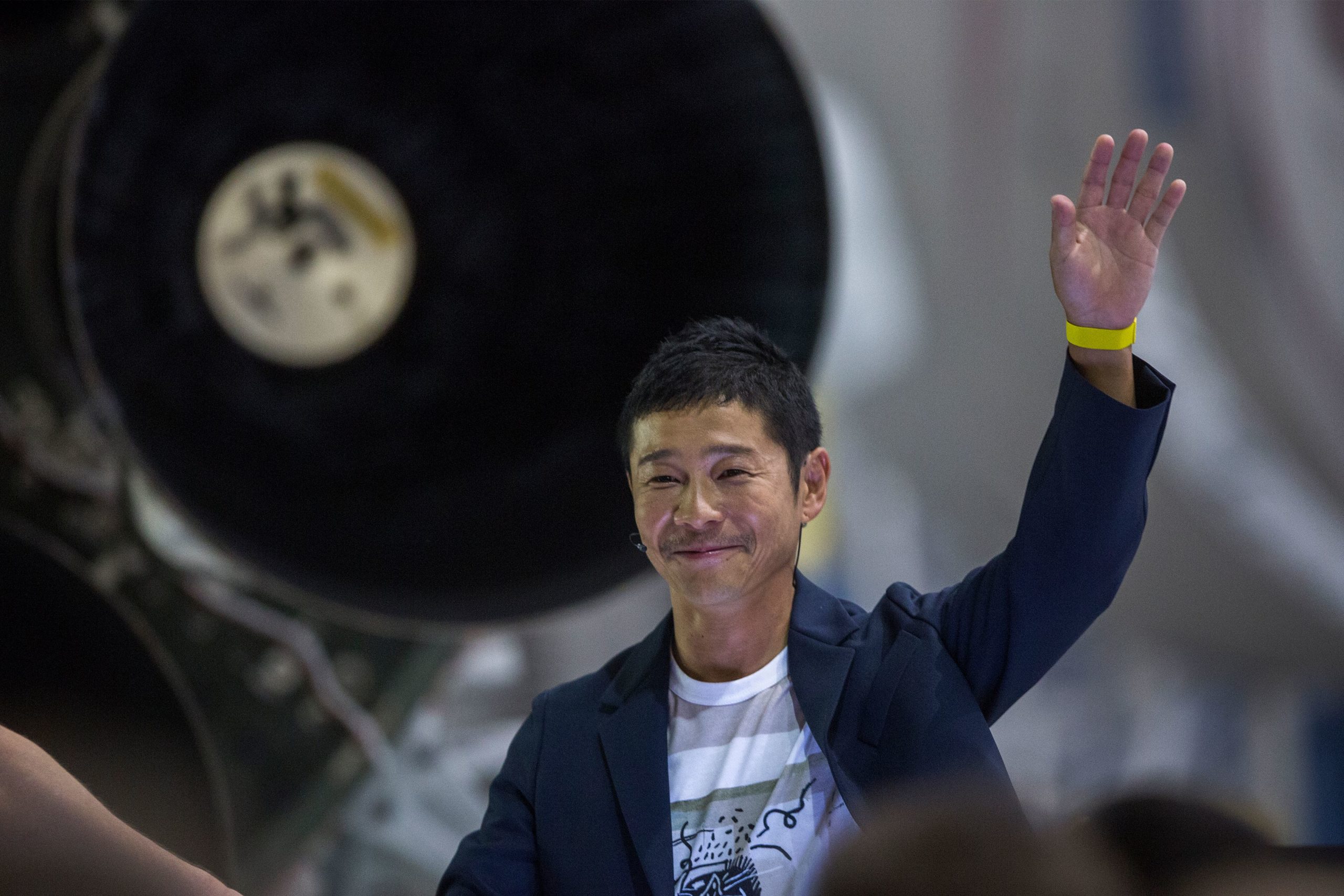
  • Japan Billionaire Launches Recruitment for Moon Travel

    Japan Billionaire Launches Recruitment for Moon Travel

    Japnese billionaire entrepreneur Maezawa Yusaku is once again tapping into the public sphere to further his personal pursuits, this time for the recruitment of co-travelers in a trip around the moon.

    Eight crew members will be chosen for a private SpaceX flight around the moon in 2023, according to the founder of Japanese digital retail giant Zozo in a video posted on Twitter.

    Including Maezawa himself, the six-day trip will involve 10 to 12 people in total. Screening of applicants kicks off on March 21 with the final interviews and medical check targeted for May.

    According to Maezawa, the crew members will be selected based on how they use the trip to «push the envelope» in their respective fields and their willingness to support fellow crew members.

    Maezawa added that he was looking for people of all backgrounds and that that he hoped they would make the trip «fun» together.

    This is not the first time that the high-profiled Maezawa has attracted public interest.

    Last year, he randomly selected 1,000 of his Twitter followers to donate more than $9,000 each to test for actual boosts in happiness from monetary gains. In 2017, he paid $110.5 million for 1982 Jean-Michel Basquiat painting Untitled – an amount that broke his last record set in May 2016 for a mother untitled Basquiat valued at $57 million.

  • Japan’s J.Front starting with fashion subscription service

    Japan’s J.Front starting with fashion subscription service

    Japanese department-store operator J.Front is to introduce a fashion subscription rental service.

    According to Nikkei Asia, J.Font’s new service will offer a monthly rental option with fee starting from US$103, featuring high-end women’s apparel from local and international brands. The subscription service is expected to attract 30,000 customers and generate more than US$56 million within five years.

    Managed by Daimaru Matsuzakaya Department Stores, the service will initially feature about 50 labels, ranging from Japan’s Epoca, Adopre to Marni of Italy and France’s See By Chloe. The monthly subscription service will allow customers to rent up to three high-end fashion items and have them delivered to their doors.

    By launching the rental service, J.Front Retailing aims to recover its customer base since the Covid-19 pandemic has caused significant lost sales for the retailer.

    Subscription services have become a growing sector in Japan’s retail industry as customers are now more conscious about product waste. According to Yano Research Institute, the domestic market for subscription services is expected to exceed more than US$11 billion by the year ending March 2025.