Tag: Japan

  • Smith & Wollensky restaurants going global

    Smith & Wollensky restaurants going global

    US steakhouse Smith & Wollensky, famously described by the New York Times as “the steakhouse to end all arguments”, is expanding its global presence, setting its sights initially on such cities as Bangkok, Hong Kong, Seoul, Singapore, Taipei and Tokyo, as well as Dubai and Mexico City.

    This follows Irish investment company Danu Partners acquiring Smith & Wollensky Restaurant Group (SWRG) from Bunker Hill Capital this year. Its first overseas restaurant was opened in London.

    “Our teams in the US and London have worked closely together to build a robust infrastructure, and this is a perfect platform on which to build a global business,” says Leonard Ryan of Danu Partners. Joining the team will be international development executive Oliver Munday, who in the past 20 years has worked at growing US restaurant brands internationally.

    “Having completed transactions in more than 30 countries with multiple restaurant brands including Hard Rock, Margaritaville and Planet Hollywood, Oliver brings the contacts and expertise needed to allow us to reach our full potential on the international stage,” says SWRG president/CEO Michael Feighery .

    “Smith & Wollensky occupies a special place among the great US fine-dining restaurant brands, and there is global demand for such a classic American steakhouse experience,” says Munday. “We will be entertaining only a handful of select markets … but interest is already strong.”

    Since Danu Partners bought Smith & Wollensky it has embarked upon a program of reinvestment, which as well as expansion includes upgrades of its restaurants in the US.

    Established in 1977 with its headquarters in Boston, Smith & Wollensky Restaurant Group has seven locations in the US. The restaurant has received such accolades as the Grand Award of Excellence from Wine Spectator and an Award of Excellence from Distinguished Restaurants of North America.

    An investment holding company based in Dublin, Danu Investment Partners was founded in 2009 and covers a range of business sectors, with a focus on the hospitality sector.

  • Forbes Japan names Auto-cybersecurity Start-Up Trillium the ‘RISING STAR’ Startup

    Forbes Japan names Auto-cybersecurity Start-Up Trillium the ‘RISING STAR’ Startup

    Forbes Japan, the Tokyo-based edition of Forbes, one of the world’s most authoritative business news medias, celebrated entrepreneurs and Start-ups today at the Annual “JAPAN’S STARTUP” Awards, and the winner of the ‘RISING STAR’ STARTUP OF THE YEAR 2017 Award – Trillium Inc, a Tokyo-based Start-up that has developed a robust, comprehensive cybersecurity solution for the automotive industry.

    The Awards promote start-ups ready to create a ‘New Japan’ – leading the Japanese economy into the next age through innovation and entrepreneurial efforts. Finalists for the ‘RISING STAR’ 2017 were selected by the Forbes Japan editorial team with input from online readers. The winning Start-ups will be featured in the magazine’s Jan 2017 edition, which will appear on Nov 25.

    David Uze, Trillium CEO, an American who has lived in Japan for over 25 years, hopes Trillium can make a valuable contribution to his adopted country. “As autos and electronics are the bedrock of Japan’s prosperity, we believe our cybersecurity solution can help ensure the nation’s economic future. And we are grateful to Forbes Japan for recognizing the importance of our work.”

    “This is another indication that Trillium is on track to emerge as that rarest of creatures, a ‘Made-in-Japan Innovator,’” said Uze. “For automakers, cybersecurity is a mission as urgent as ending hydrocarbon use. Plans for innovation across-the-board depend on digitizing tomorrow’s cars: in emissions, safety, autonomous drive, driving dynamics and infotainment. But until they find an adaptive, multi-layered solution to cyber threats, all plans could come screeching to a halt with one devastating hack. The industry doesn’t yet have a solution – but we do, and we’re ready to go.”

    Trillium’s ‘Made-in-Japan solution’ strongly secures all three key ‘cyber-threat domains’ in the car with a software-based approach that is compatible with any architecture or operating system. More than just robust and comprehensive, it can be implemented for as little as 1/20th the cost of competing solutions – most of which are still under development.

    “Meanwhile, our multi-layered solution is at an advanced stage,” Uze said. “We have moved into the real-world testing phase via partnerships with a legendary Japanese Super GT racing team and a leading maker of automotive semiconductors. And we are now in discussions with a wide range of automakers and tier-one component suppliers. We’re ready to implement whenever they are.”

    Trillium Inc. was founded in 2014 with a team of executives and engineers from Japan, Europe and the U.S. with extensive experience in relevant fields, backed by lead investment from Global Brain Corp, a Tokyo-based venture capitalist.

  • Rakuten opens flagship store on South Korea’s e-marketplace 11STREET

    Rakuten opens flagship store on South Korea’s e-marketplace 11STREET

    Japan’s e-commerce giant Rakuten Inc. has opened an online flagship store on 11STREET, one of South Korea’s leading online marketplaces.

    It said store aims to provide South Korean consumers with popular Japanese merchandise and
    will feature a variety of fashion goods, beauty, and sports products.

    “11STREET is a vibrant and innovative online marketplace and we’re excited to be partnering with them on this new cross-border initiative,” said Ryoji Yasutome, Vice Senior Manager Cross Border Trading at Rakuten.

    The South Korean e-marketplace has a global network of 260,000 sellers, small merchants, brand names, department stores and supermarket chains serving 23 million registered members in the home market and abroad.

    Shoppers reportedly spend $6 billion annually on its sites.

    “Korean consumer demand for high quality Japanese and international goods continues to grow at a double figure rate,” said Joon Young Park, Senior VP at 11STREET. “Through our partnership with Rakuten, we are able to offer our customers a more exciting cross-border shopping experience with a larger selection of popular products from Japan.”

    Moving forward, Rakuten will introduce products to 11STREET customers from categories such as health, living, kitchen, and hobby items and will continue to expand the product line-up over the coming months.

    The two companies said they will also jointly provide support services to participating merchants such as translation, listings, merchandising advice, shipping and customer support.

  • CapitaLand Mall Asia Showtime in Cannes

    CapitaLand Mall Asia Showtime in Cannes

    Targeting global retailers who are looking to Asia to chart growth, CapitaLand Mall Asia has its biggest presence ever at international retail event Mapic in Cannes, France.

    It is the fifth consecutive year CapitaLand has exhibited at Mapic, one of the world’s largest events matching developers with retailers. It runs over three days this week.

    Crowds at CapitaLand's booth at MAPIC

    CapitaLand is preparing to open eight malls in three Asian countries next year with a combined retail gross floor area (GFA) of nearly 1 million sqm, the group’s largest-ever retail offering in a single year.

    Of the eight malls, six are retail components of integrated developments in China and the others are stand-alone malls in India and Malaysia. They are Raffles City Changning, CapitaLand’s second Raffles City project in Shanghai; LuOne, also in Shanghai; Raffles City Shenzhen; Raffles City Hangzhou; Suzhou Center Mall (pictured); CapitaMall Westgate in Wuhan; Melawati Mall in Kuala Lumpur; and Forum Mall in Mysore.

    Raffles City Changning

    Raffles City Changning


    Ready catchments

    CapitaLand Mall Asia CEO Jason Leow says the opening of the malls underscores the group’s strength in connecting retailers to ready catchments of shoppers.

    At September 30, 76 per cent of CapitaLand’s assets contributed to recurring income, of which shopping malls and integrated developments form the bulk, says Leow.

    “Our 103 malls in Singapore, China, India, Japan and Malaysia provide brands with access to about 3 billion consumers in these five markets combined.”

    He says Mapic is an excellent platform for CapitaLand to boost its brand visibility and strengthen its retailer network.

    Mr Jason Leow with retailers at MAPIC

    Its presence at the trade show has been enhanced by one of its joint ventures being nominated for the Mapic Awards. Listed for Best Futura Shopping Centre Award, Jewel Changi Airport was developed by Jewel Changi Airport Trustee – a JV between Changi Airport Group and CapitaLand Mall Asia – as a mixed-use complex featuring lifestyle offerings including a five-storey indoor garden, play attractions, shopping and dining options, a hotel, and airport services.

    It is scheduled to open next year. The Futura award recognises retail developments with outstanding architectural qualities and strong, original concepts.

    Jewel Changi Airport is the only Singapore entry among 50 projects shortlisted across 12 categories at the Mapic Awards, with the results to be announced at a gala dinner.

    CapitaLand Mall Asia CapitaLand Mall Asia, a wholly owned subsidiary of real-estate company CapitaLand, is one of the largest shopping mall developers, owners and managers in Asia by total property value of assets and geographic reach.

  • With close to 55%, Japan has highest mobile commerce transactions

    With close to 55%, Japan has highest mobile commerce transactions

    Mobile commerce conversion rates are highest in Japan, the U.K and South Korea for Q2 2016 states the State of Mobile Commerce Report released by performance marketing technology company, Criteo. The company claims to have studied 1.7 billion transactions across desktop and mobile sites worth $720 billion in annual sales, covering over 3,300 online retail businesses for this report.

    Global numbers

    • Mobile Vs Desktop: With close to 55% of its retail commerce transactions done through mobile phones, Japan tops the list of countries in the world with the highest mobile retail commerce transactions for Q2 2016 followed by United Kingdom and South Korea with a little over 50% and 48% of its retail commerce transactions, respectively.
    • Smartphone Vs Tablet: For the first time, smartphones have superseded tablets delivering majority of the mobile commerce transactions. South Korea recorded over 95% of its mobile retail commerce transactions were done through smartphones while Japan and Brazil recorded close to 90% and over 80% of its mobile retail ecommerce transactions through smartphones, respectively.
    • Apps Vs Mobile Web: According to the report, apps convert 3x more than mobile website in Q2 2016. Globally, 54% of the transactions were driven through mobile apps while 46% of the transactions were driven by mobile web in Q2 2016.
    • According to the report, new app users are twice as likely to return within 30 days vs. mobile web users.
    • Average order value higher on apps vs mobile web: $127 seems to be the average order value on apps compared to $91 and $100 on mobile web and desktops respectively.
    • Apps’ conversion rates highest: The conversion rate for transactions is highest on mobile apps (3x) followed by desktop (2x) while mobile web is the lowest.
    • Mobile-friendly websites aid higher transactions: According to the report, countries with mobile-friendly websites seem to have the greatest share of mobile transactions. With close to 90% mobile-friendly websites, Japan has over 50% mobile transactions followed by U.K with little over 85% mobile-friendly websites and nearly 50% mobile transactions. In the third place, with over 95% mobile-friendly websites, South Korea has close to 50% mobile transactions.
    • Leading retailers vs Emerging retailers: The report also notes that leading retailers that succeed retaining users and attracting views drive 39% more mobile web conversions more than emerging retailers. The report defines leading retailers as mobile app that attract more products browsed per user than lower tiers while emerging retailers are mobile-commerce enabled apps that are accessible via at least one operating system.

    U.S Market

    • In Q2 2016, Android has a market share of 68% superseding iOS (31%) although iOS continues to generate the maximum number of mobile commerce transactions done on smartphones with 14.6% compared to Android devices (8.8%).
    • In the same quarter, 70% of mobile commerce transactions were done on smartphones compared while the remaining was done on tablets.
    • Contributing over 40% to mobile commerce transactions in the U.S, fashion and luxury retail is the category with the highest number of transactions in the quarter followed by Mass Merchants (close to 40%) and Health & Beauty (30%).
  • Japan factory output and retail sales flat in September

    Japan factory output and retail sales flat in September

    Japan’s factory output and retail sales were flat last month, data showed Monday, painting a bleak picture for the world’s number three economy as the central bank kicks off a policy meeting.

    The lukewarm readings come on the heels of disappointing inflation figures last week and point to a tepid expansion in July-September economic growth, analysts said.

    Japan’s third-quarter growth figures are due later this month.

    The government data on Monday showed Japan’s industrial output for September was unchanged from the previous month, weighed by slower production of certain electronic components, according to the ministry of economy, trade and industry.

    That was well short of a market forecast for a 0.9-percent rise after an on-month expansion in August.

    Retail sales were also unchanged, missing forecasts of a 0.2-percent rise.

    The Bank of Japan kicked off a two-day meeting with a policy announcement expected on Tuesday.

    The BOJ has repeatedly pledged to continue monetary easing as needed until inflation reaches a two percent target, a cornerstone of Prime Minister Shinzo Abe’s economic revival policy.

    More than three years on, however, doubts are growing over Abe’s faltering bid to kickstart growth and conquer a long battle against deflation.

    Japan’s economy contracted in the last three months of 2015, before bouncing back in January-March with a 0.5 percent rise on-quarter and then a 0.2 percent expansion in April-June.

  • Asia Pacific leads for mobile cross-border shopping

    Asia Pacific leads for mobile cross-border shopping

    Asia Pacific leads the world in mobile cross-border shopping, according to the third PayPal Annual Global Report, released in conjunction with global market research company Ipsos.

    With its investigation of the online domestic and cross-border shopping habits of more than 28,000 consumers in 32 countries, the report reveals international opportunities for merchants.

    Of the Asia Pacific shoppers interviewed, 68 per cent said they had made a cross-border purchase by smartphone in the past 12 months.

    There has been a marked shift to mobile purchasing in China, with an average of 35 per cent of cross-border purchases being made on a smartphone this year compared to 27 per cent last year.

    Fewer than 15 per cent of shoppers in both western and eastern European as well as North America, however, used a smartphone for cross-border purchases.

    Meanwhile, their online spending will increase in the next 12 months according to 64 per cent of internet users in China, 39 per cent in Russia and 26 per cent in the UK. This is primarily driven by convenience (76 per cent), changes in disposable income (30 per cent), faster shipping (35 per cent) and cheaper shipping (27 per cent).

    “Selling internationally is a substantial opportunity for merchants around the globe to grow their business,” says PayPal director of global initiatives Melissa O’Malley. “We’ve seen our cross-border volume grow 38 per cent in the past two years, from $14 billion in the third quarter of 2014 to $19 billion in the same quarter this year.

    Merchant benefits

    “PayPal’s mobile payment volume is also up 56 per cent over last year, so we see the direct benefits merchants can reap by optimising their mobile shopping offerings.”

    For the first time in the survey’s three years, China is the most popular online cross-border shopping destination – 21 per cent of online shoppers interviewed claimed to have shopped from Chinese websites in the past 12 months, followed by the US (17 per cent) and the UK (13 per cent).

    What is attractive about cross-border shopping? Of the global consumers in the survey, 76 per cent cited better prices, while 65 per cent said they could buy items not available in their own country.

    Factors that would make online shoppers more likely to buy from a website in another country include free shipping (46 per cent of respondents) and secure payment system (44 per cent).

    In 24 of the 32 countries surveyed, PayPal is most used for payments. Key factors for choosing particular payment methods include security (53 per cent of respondents), convenience (44 per cent) and acceptance by retailers (41 per cent).

    Of the shoppers using PayPal, 44 per cent say it is their preference as they do not need to share financial details with the seller.

    On behalf of PayPal, Ipsos interviewed a representative quota sample of about 800 to 2000 (28,012 in total) adults who use an internet-enabled device in each of 32 countries, including China, India, Japan, Singapore and Thailand. Interviews were conducted online between late August and early October.

  • DoCoMo achieves 11.29Gbps in 5G trial

    DoCoMo achieves 11.29Gbps in 5G trial

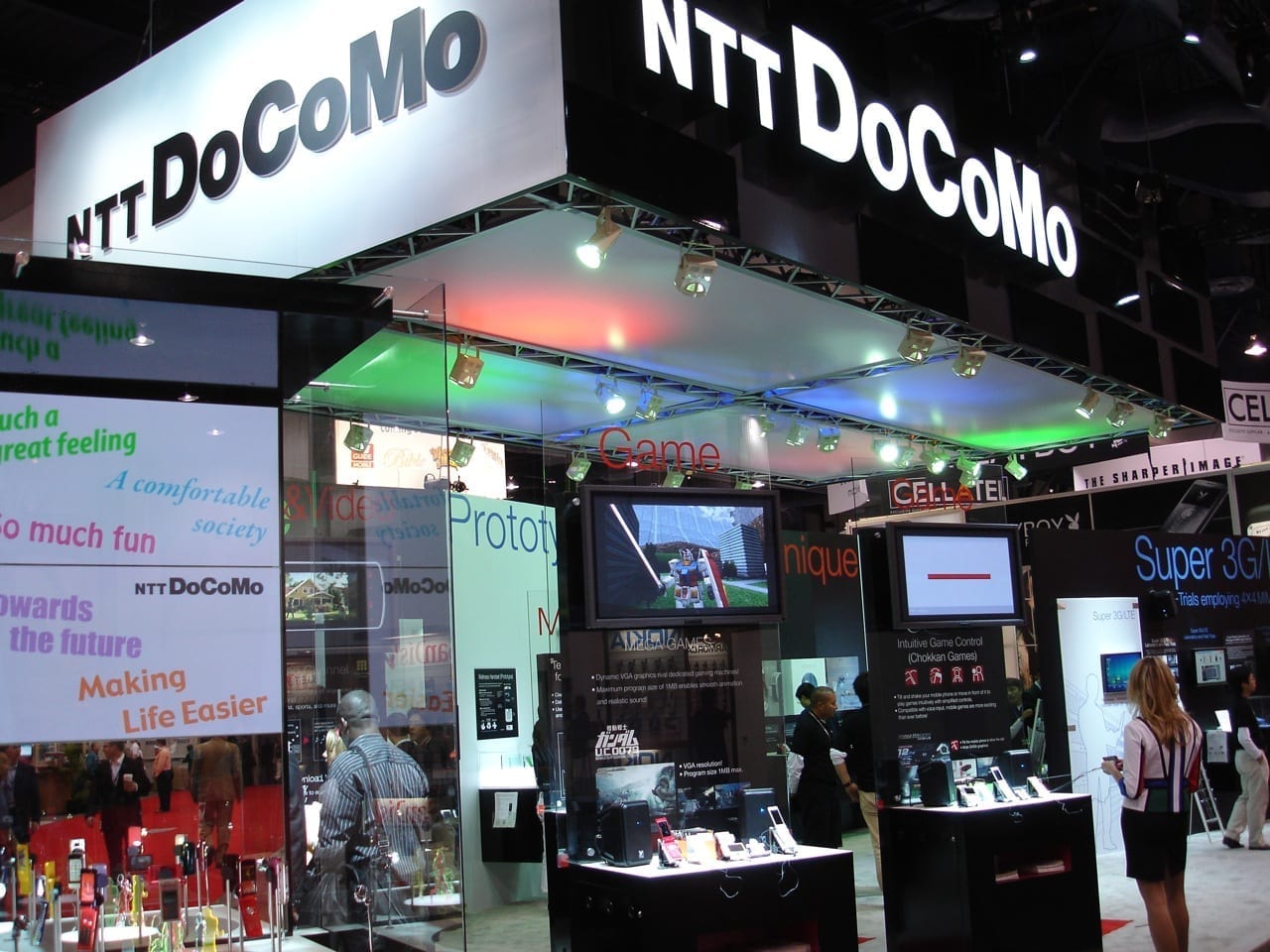
    NTT DoCoMo and Huawei have achieved a peak speed of 11.29Gbps during a 5G large-scale field trial in the 4.5-GHz band.

    The companies tested a 3GPP 5G New Radio compliant numerology and frame structure using macro cell coverage in a real-world scenario in Yokohama’s busy Minato Mirai 21 commercial district.

    The trial also achieved a sub-0.5ms one way user plane latency. The macro cell was made up of one base station compatible with the 4.5-GHz band and 200 MHz bandwidth, as well as 64 transceivers and 23 user equipment devices.

    According to the test, 11.29Gbps of user throughput was achieved in 24 layers, with each UE receiving two layers. Peak spectrum efficiency reached 79.82bps/Hz/cell.

    “Our success in 5G large-scale field trial in the 4.5 GHz band has brought the whole industry one step closer to 5G commercialization by 2020,” commented Takehiro Nakamura, DoCoMo’s VP and 5G Laboratory managing director.

    “DoCoMo and Huawei have been expanding their collaboration on 5G from R&D to international spectrum harmonization initiatives for 5G since December 2014. Together with Huawei, we will continue to promote 5G both from technical and ecosystem perspective.”

  • Mazda Unveils the All-New CX-5

    Mazda Unveils the All-New CX-5

    Mazda Motor Corporation today unveiled the all-new Mazda CX-5 crossover SUV. The fully redesigned model, which refines every element of Mazda’s design and technology to offer new dimensions of driving pleasure, will be launched in Japan in February before being rolled out to global markets.

    The slogan for development of the all-new CX-5 was “an SUV all customers will enjoy,” and Mazda aimed to add a new dimension by offering driving pleasure that everyone on board can enjoy—not just the driver. The model is engineered in line with human sensibilities to deliver responsive performance that conforms to the driver’s expectations. It also prioritizes passenger comfort, with a quiet cabin and pleasant ride feel, and adopts G-Vectoring Control, the first of the SKYACTIV-VEHICLE DYNAMICS vehicle motion control technologies. Designed under the KODO—Soul of Motion design theme, the exterior is both bold and sensual, and the interior has been crafted to give occupants a pleasant feeling. The body color lineup includes the newly developed Soul Red Crystal, which highlights the beauty and quality of Mazda’s KODO designs.

    The powertrain lineup comprises the SKYACTIV-G 2.0 and 2.5 gasoline, and SKYACTIV-D 2.2 diesel engines. All three options offer powerful, linear driving performance and outstanding environmental performance.

    The all-new CX-5 will be on display at the Los Angeles Auto Show, open to the public Nov. 18-27.

    Launched in 2012, the CX-5 was the first new-generation model featuring SKYACTIV technology2 and KODO design. It has since grown into a core model that is sold in over 120 countries and accounts for approximately one quarter of Mazda’s global sales volume.3 It has won around 90 awards worldwide, including 2012-2013 Japan Car of the Year.4

    By providing driving pleasure to everybody who drives or rides in one of its vehicles, Mazda aims to enrich people’s lives and become a brand with which customers feel an emotional connection.

  • Salvatore Ferragamo Japan re-opens flagship

    Salvatore Ferragamo Japan re-opens flagship

    Italian luxury house Salvatore Ferragamo Japan has re-opened its wholly renovated and extended Tokyo flagship store, at Chuo-dori, Ginza.

    Salvatore Ferragamo Japan - Ginza 1

    Covering 600 sqm, the new store is now Salvatore Ferragamo’s largest in Japan. Extending over three floors, it carries the label’s full range of men’s and women’s collections: ready-to-wear apparel, handbags, footwear, leather goods, silk accessories, eyewear, fragrances, watches and jewellery.

    Salvatore Ferragamo Japan - Ginza 3


    Each floor comprises interconnected rooms creating a domestic feel. They are furnished with a blend of Italian design classics and references to period design from the 1930s to the 1950s. The decor is an Italian-style showcase, from Gio Ponti furniture to period Venetian glass vases, from sofas and chairs from Italy to handmade rugs, together with Venetian stucco and travertine marble. LED illumination highlights the products on display.

  • Shiseido profits leap 135 per cent

    Shiseido profits leap 135 per cent

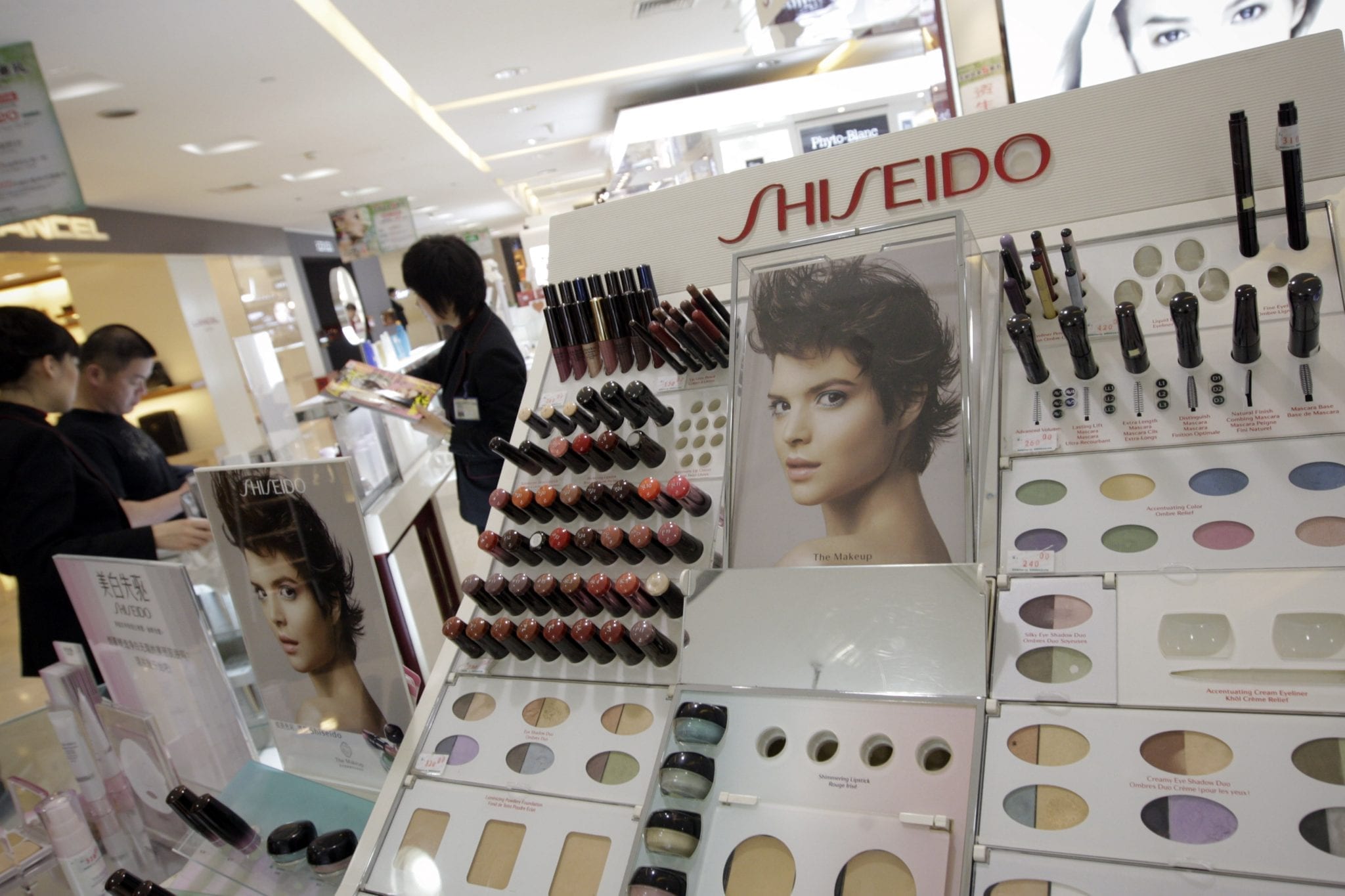
    Shiseido profits for its latest nine months more than doubled over the same period last year.

    ‘New income’ leaped 135 per cent to a record ¥37.2 billion (US$345.8 million) for the nine months to September 30. The cosmetics company attributes this to several factors including an increase in operating income, the sale of intellectual property rights associated with the Jean Paul Gaultier brand, and gain from the sale of its Kamakura factory site.

    Shiseido’s operating income increased 17.1 per cent year on year to ¥38.7 billion. As well as “substantial” grown in its home market, it also had higher sales in Chinai and in travel retail.

    However, sales fell in the Americas, Asia-Pacific, Europe, the Middle East and Africa.

    The company still expects its full-year net profits to grow by 1.8 per cent to Y30 billion with a significant year-on-year decrease in operating income in the fourth quarter.

  • Lawson China launching rewards points

    Lawson China launching rewards points

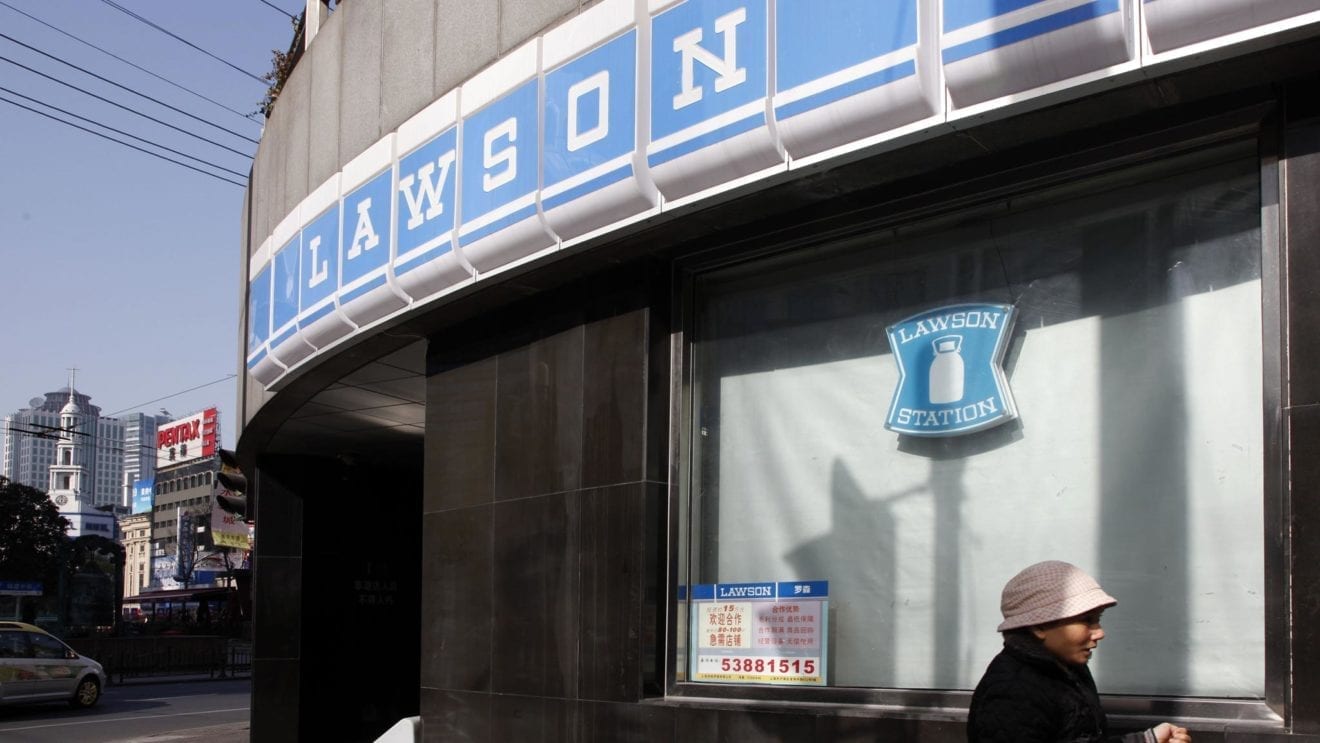
    From next month, Japan’s Lawson China convenience store group will offer rewards points to shoppers at its outlets.

    Points will be administered through the brand’s smartphone app, which already provides product information and discount coupons.

    Each yuan spent is expected to earn shoppers 10 reward points, exchangeable for store credit, likely at the rate of 1000 points for 1 yuan (US15 cents).

    Lawson has invested around $900,000 in Yoren, the Hong Kong-based developer of its app. As well as the points system, the duo has teamed up to analyse users’ purchases so the retailer can design sales campaigns and develop products.

    Lawson is considering similar efforts in other foreign markets. The group’s overseas network exceeds 1000 stores, including locations in Beijing, Dalian, Shanghai and Wuhan, and is rapidly expanding in China via franchise deals, particularly in Shanghai where there are more than 300,000 registered users of its app.

    Lawson will work with trading house Mitsubishi Corporation, which plans to become the retailer’s parent in January, to pursue a goal of having between 3000 and 5000 overseas stores by 2020.

  • Village for Cafe Amazon’s Japan launch

    Village for Cafe Amazon’s Japan launch

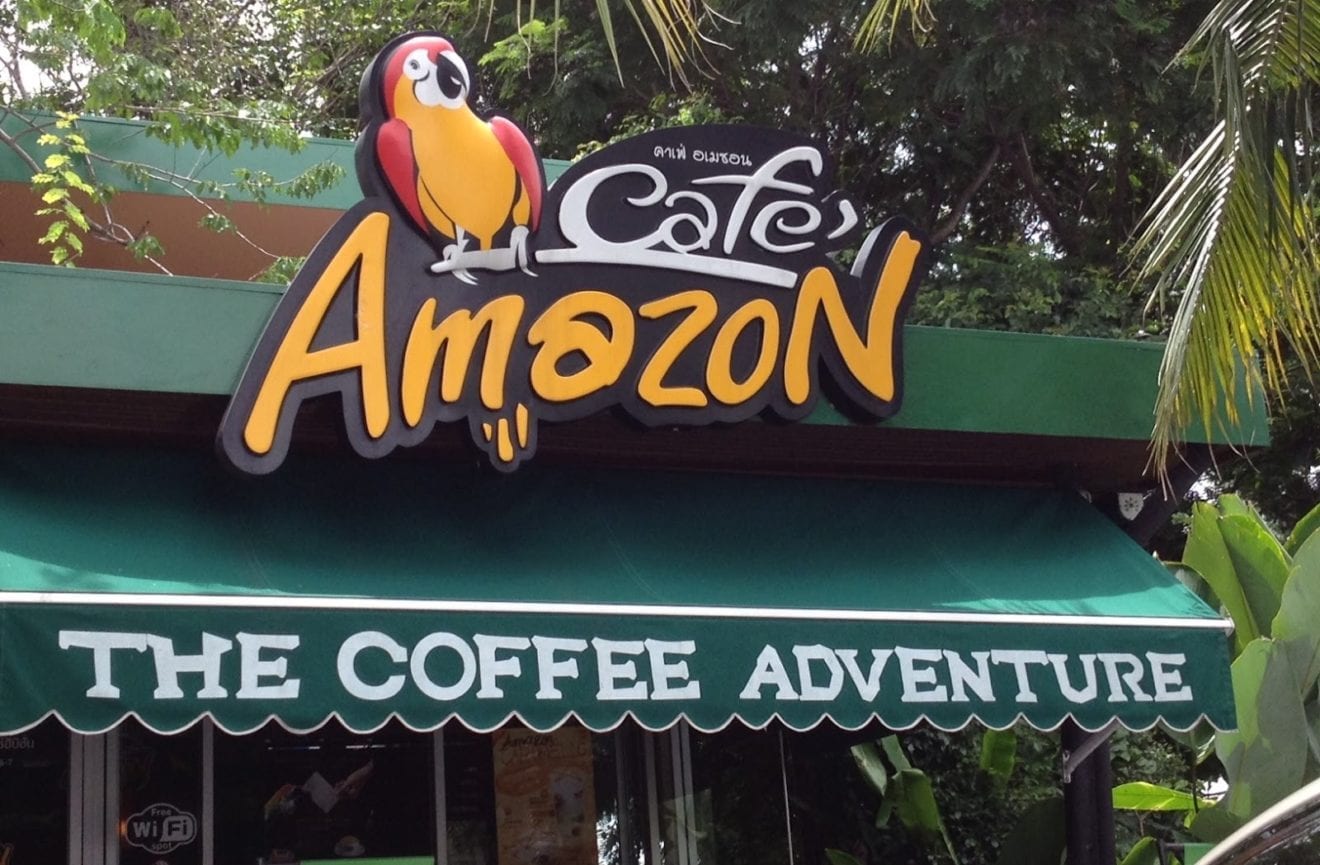
    Rather than a big city, Thai coffee-shop chain Cafe Amazon has chosen a village for its launch into Japan.

    More than 200km from Tokyo, Kawauchi in the Fukushima prefecture has fewer than 2000 residents, and the community is still struggling to recover from the 2011 nuclear disaster.

    Cafe Amazon Japan store

    Kawauchi is about 25km away from the Fukushima Daiichi nuclear power plant, which had meltdowns after the earthquake and tsunami on March 11, 2011. The village was temporarily evacuated, with about 30 per cent of the registered population of 2700 yet to return.

    However, Thai state oil and gas company PTT, which owns the Cafe Amazon chain, believes that starting out in such a location could help to raise brand awareness.

    PTT president/chief executive Kevin Vongvanich, who travelled from Bangkok to attend the Kawauchi shop’s opening ceremony, says the company hopes to open other branches across Japan.

    Cafe Amazon Japan open

    He says one of PTT’s objectives in Kawauchi is to gather consumer feedback. “We have a special coffee designed for the Japanese – a bit lighter than coffee in Thailand. The testing will provide us with information so we can adapt our coffee to suit Japanese tastes.”

    Cafe Amazon is using the same Thai beans it offers in its 1600 domestic outlets. A basic cup of coffee in Kawauchi sells for 250 yen (US$2.30), and the 60-seat shop resembles a wooden house, with customers being asked to leave their shoes at the entrance.

    Japanese building materials maker Codomo Energy, which has a factory in Kawauchi, has the Cafe Amazon franchise for Japan, and the partners plan to open several more branches next year, starting in Osaka.

    For Kawauchi, the cafe represents a rare investment from outside the community. At the opening ceremony, Mayor Yuko Endo said he hoped more outsiders would visit the village because of the cafe.

  • Japan still deeply tied to Indonesia

    Japan still deeply tied to Indonesia

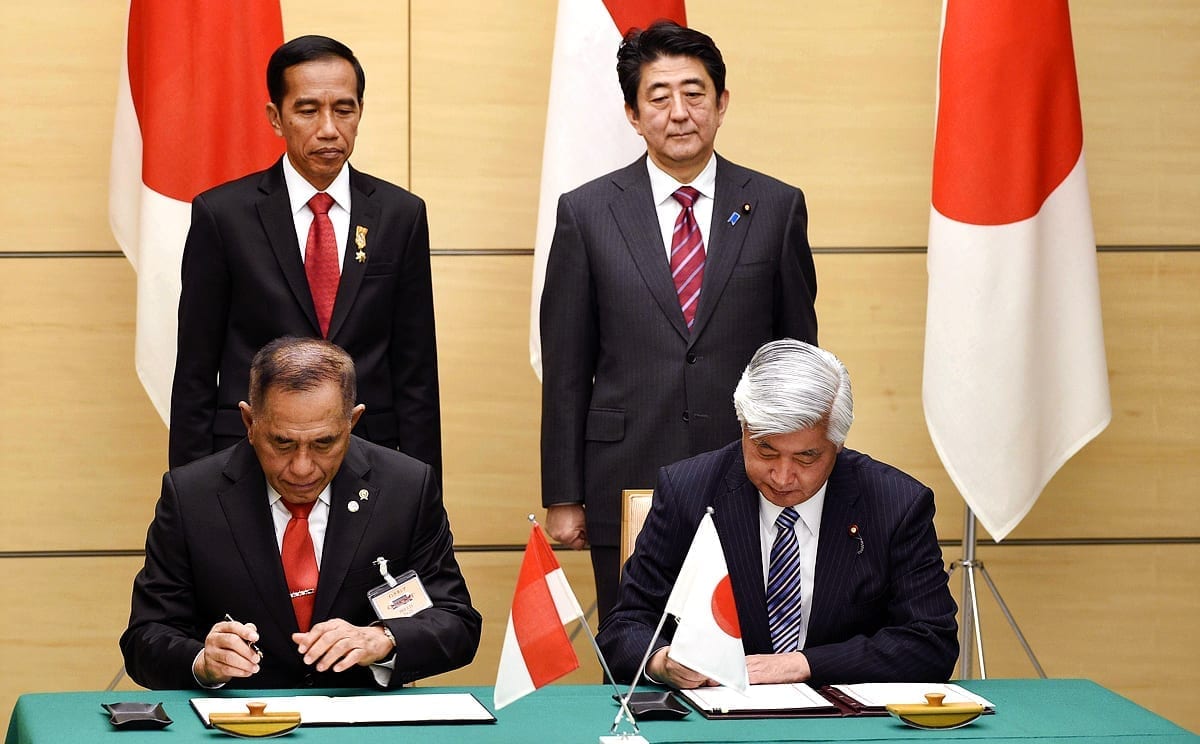
    Despite the seemingly robust investment coming from China, the government claims it has not forgotten Japan and stresses that its foreign investment and trade policies are not all about China.

    China beat Japan to secure the contract for Indonesia’s first high-speed railway project connecting Jakarta and Bandung in West Java. Furthermore, President Joko “Jokowi” Widodo has met with Chinese President Xi Jinping five times since the former was elected president in late 2014.

    Meanwhile, Jack Ma, founder and chairman of Chinese e-commerce giant Alibaba Group, previously agreed to become Indonesia’s e-commerce advisor and may continue to do so.

    This series of events, and several others, may suggest that Indonesia has shifted its economic orientation more toward China, the world’s second largest economy, from its “traditional” partners, including Japan.

    The government, however, strongly dismisses this notion. “There is a perception that we have only made deals with China recently,” Coordinating Maritime Affairs Minister Luhut Binsar Pandjaitan said after a meeting at his office recently.

    “But investments from Japan are still larger than those from China,” he added, trying to reassure those concerned that Japan remained Indonesia’s priority partner.

    Japanese investments are indeed larger than China’s and the amount of foreign direct investment (FDI) from Japan to Indonesia is set to reach between US$3.5 billion to $4 billion by the end of the year, according to the Japan International Cooperation Agency (JICA).

    Nonetheless, data from the Investment Coordinating Board (BKPM) show that Japan and China do appear to be locked in a tight race.

    While Japan has consistently put itself on the list of top three foreign investors and places in second position as of September, China has crept up over the past two years and has entered the big league as well.

    China even trailed behind Japan at number three in terms of realized foreign investment in the first nine months of 2016.

    The government, however, is inching closer to signing major agreements with Japan, a move that will strengthen the latter’s investment dominance.

    The agreements will see Indonesia reach financial closure from Japan for the deep-sea port development project in Patimban, West Java, in early 2017.

    The project is among various national strategic projects that will generate more ease in the distribution of goods shipped into the country.

    As much as US$1.7 billion in foreign loans are expected to be channeled into the project and the Indonesian government will also provide an additional $595 million to finance it.

    The Patimban Port will be located about 70 kilometers from the Karawang Industrial Estate in West Java.

    It will have a container capacity of 1.5 million 20-foot equivalent units (TEUs) once it is partly completed by 2019 and then 7.5 million TEUs by 2027, which is half the capacity of Tanjung Priok Port in Jakarta.

    Luhut said Japan would be involved in managing Patimban once it was completed, which is a plus in the government’s view as the Japanese are expected to transfer their knowledge in port management to their Indonesian counterparts.

    Luhut said the government would expedite the settlement for all administrative problems in the project, including ones related to spatial planning (RTRW) within the next two weeks.

    During that two-week period, the government will also formulate a financing scheme for another strategic project, a railway line connecting Jakarta to Surabaya in East Java.

    The government recently offered Japan the opportunity to take part in the railway project, estimated to cost Rp 102 trillion (US$7.64 billion). However, other countries will participate as well in the bidding process, including rival China, thus opening up the possibility of another round of heated competition.

    “There’s a preference for Japan to be chosen for the railway project,” Transportation Minister Budi Karya Sumadi said. Budi added, however, that Japan would still have to meet all the requirements set by the government.

    The new railway line will enable trains to run at 165 kilometers per hour and will shorten the travel time between Jakarta and Surabaya to around six hours from the current time of 13 hours. The project is slated to begin construction by the end of 2017 and is expected to be completed by late 2019.


  • DoCoMo to trial 5G self-driving vehicle monitoring

    DoCoMo to trial 5G self-driving vehicle monitoring

    Japanese operator NTT DoCoMo and mobile portal and online service provider DeNA Co have teamed up to trial a 5G communications system for remote monitoring of autonomous vehicles.

    The trial will involve connecting a vehicle and a remote center via a 5G network capable of data rates beyond 10Gbps.

    For the initial trial, high-resolution video images captured with HD cameras mounted on the vehicle will be transferred to the monitoring center in real time, to allow the center to check for any driving irregularities and assist passengers when needed.

    The trial will be demonstrated at the DoCoMo R&D Open House 2017, which will take place at the DoCoMo R&D Center in the Yokosuka Research Park near Yokohama on November 17-18.

    For the event, DeNA’s Robot Shuttle driverless bus will be used to showcase the transmission of live video from a connected vehicle via a demonstration 5G network.

    The collaboration is combining DoCoMo’s 5G technologies and DeNA’s experience building services for connected vehicles. DoCoMo is closely involved in the development of LTE and 5G systems for vehicle-to-everything communications.