Tag: Korea

  • North Korea’s KCTV said to launch streaming service

    North Korea’s KCTV said to launch streaming service

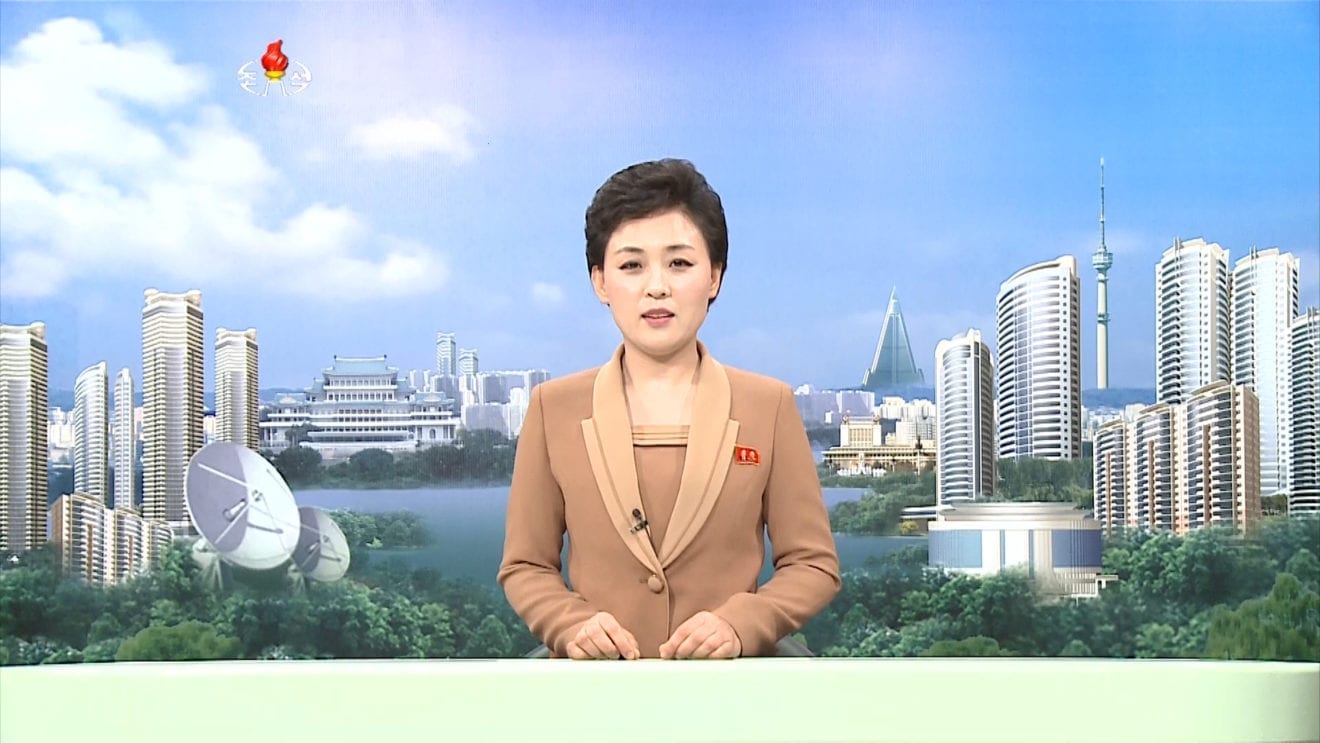
    An unlikely new player has reportedly entered into the video streaming business, according to reports – North Korean state broadcaster KCTV.

    BBC News notes that the broadcaster’s new set-top-box, Manbang, has been called North Korea’s version of Netflix in some reports.

    Manbang is said to connect to the North Korean intranet and allow viewers to watch documentaries on demand and five TV channels.

    While KCTV claims that consumer demand for the price is high, connectivity in North Korea remains at very low levels.

    This is not the first time that North Korea, notorious for keeping a tight grip on the control of information entering into and coming out of the country, has been found been developing its own limited versions of popular internet services.

    In May, researchers found a rudimentary social network, resembling a crude version of Facebook, designed for users of North Korea’s intranet. But this was quickly pulled down after pranksters started creating spoof profiles, including one for Kim Jong-Un.

  • Private-label deal for E-mart Korea

    Private-label deal for E-mart Korea

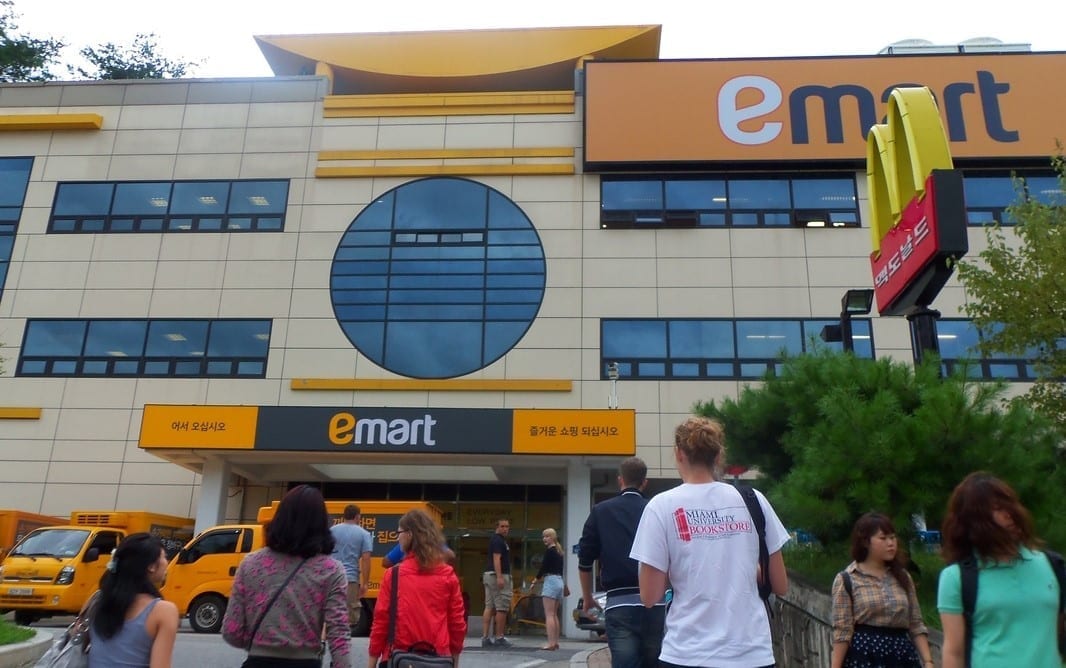
    Discount seller E-mart Korea has signed an agreement to supply its private-label items to Metro China.

    It is introducing four items from its No Brand range, to be sold from next month. It is the first time for E-mart to export to an overseas offline store.

    E-mart’s private-label products already sell in Mongolia and Vietnam. Sales of its No Brand range at its Ulaanbaatar branch, which opened last month, have already reached 600 million won (US$533,000), accounting for about 7 per cent of total sales. No Brand contributed 3 per cent of sales at its Vietnamese outlet, which opened in December.

    Introduced in April last year with nine items, No Brand now has more than 300 products, from butter cookies to car window wipers, and posted 63.8 billion won turnover in the first half of this year.

    Metro is a German retailer that is the third-largest franchise globally following Walmart and Carrefour. It has more than 2200 outlets in 33 countries, with 88 in China.

  • Korean fashion brands in Zalora pop-up

    Korean fashion brands in Zalora pop-up

    South Korean fashion brands are featuring in an online pop-up store on regional sites of online fashion portal Zalora.

    It’s all part of a concerted bid to expand recognition of Korean fashion bards across the broader Asia-Pacific region.

    Launched in Singapore, the Premium Korean Fashion pop-up shop is open until October in Zalora sites in Singapore, Malaysia, Indonesia, the Philippines, Hong Kong and Taiwan, according to the officials at the Korea Trade-Investment Promotion Agency (Kotra) and the Korea Fashion Association.

    Seventeen South Korean designer brands, which have been recognised for their competitiveness both at home and abroad, are showcasing their products on the pop-up store.

    A launch ceremony was attended by some 80 Southeast Asian fashion journalists and so-called power bloggers. It marks South Korea’s first marketing activity targeting the entire Southeast Asian region.
    At the event, Giulio Xiloyannis said there is growing interest in Korean fashion in Southeast Asia and that the opening of the pop-up store is not only a new attempt but also an important event for Zalora.

    A Kotra official said the trade agency will step up efforts to gain access to major online portals in an effort to make inroads into regional markets.

    “Southeast Asia is emerging as the next eCommerce market after China as youths account for a large portion of its population and regional economies are growing at a fast pace,” Lee Byung-woo, head of Kotra’s office in Kuala Lumpur. “Efforts will be made to help Korean brands gain a foothold there.”

  • From loss to profit for Parkson Retail Asia

    From loss to profit for Parkson Retail Asia

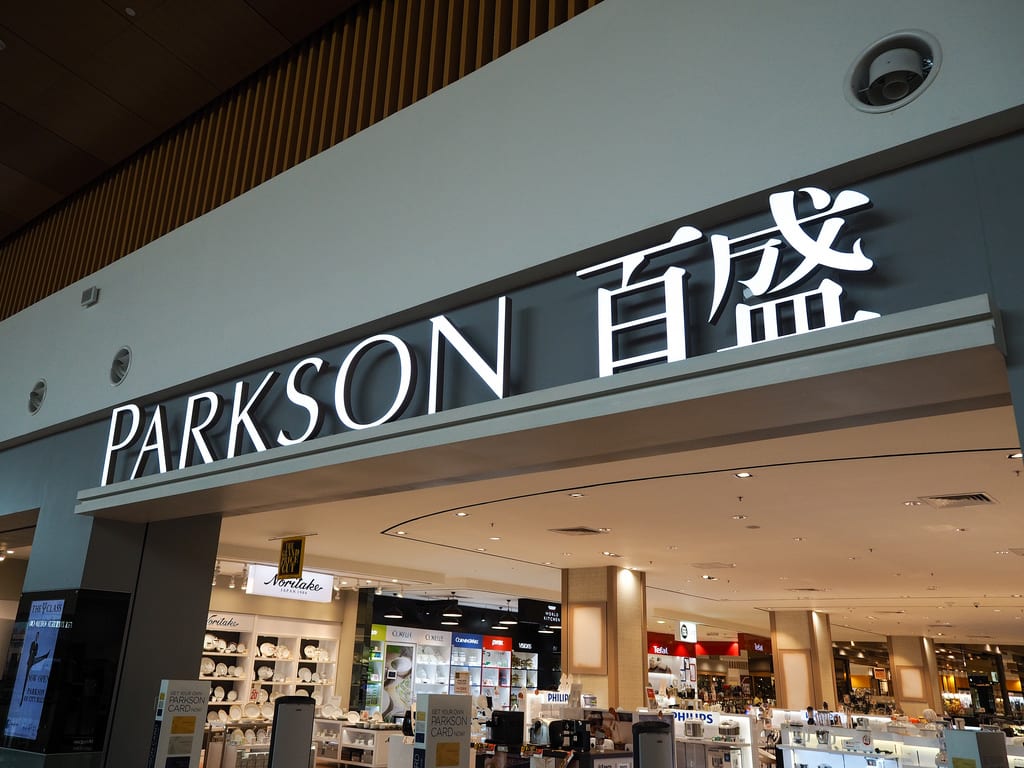
    Department store Parkson Retail Asia has managed a turnaround with profit before tax (PBT) of S$35 million (US$25.8 million) for the year ended June 30, compared to a pre-tax loss of $40.6 million the previous year.

    Profit was boosted by gain from a partial disposal of equity interest in Parkson Hanoi (PHCL) of $45.6 million. A subsidiary of the group, PHCL is now an associate company.

    On a same-store basis, PBT for the year fell by 46.9 per cent year-on-year to $17.4 million.

    For Malaysia, PBT declined by 28.9 per cent through negative same-store sales of -6.5 per cent and weak local currency; Vietnam had a pre-tax loss of $0.5 million with -2.9 per cent same-store sales; there was a pre-tax loss of $3.2 million in Indonesia; while Myanmar’s results were affected by uncertainty arising from redevelopment plans for the FMI Centre where the store is located.

    For the group’s fourth quarter, same-store sales grew 21.5 per cent in Malaysia, attributed to early festive buying arising from a shift in the Hari Raya calendar as well as the same quarter last year being hit by low sales following the introduction of the Goods & Services Tax.

    New concepts

    New concepts have been initiated, such as introducing Korean apparel, affordable private labels, and specialty shoe stores.

    “We have been consolidating our department store space by identifying non-performing stores with the view to closure upon tenancy expiry,” says Parkson.

    In Myanmar, the group had a 25 per cent decline in same-store sales, affected by plans to close the FMI Centre, while Vietnam had a 4.1 per cent decline for the quarter, with the discretionary retail environment difficult amid an increasingly crowded retail scene.

    Indonesia was more positive with 7.3 per cent growth in same-store sales, mainly because of early festive buying as a result of a shift in the Lebaran calendar.

    Overall, gross sales proceeds (GSP) and revenue for the quarter grew by 9.8 per cent and 10.9 per cent respectively to $232.1 million and $93.9 million. However, GSP and revenue declined by 10.2 and 9.4 per cent respectively to $967.7 million and $388.4 million.

    The group’s pre-tax loss for the quarter was $13.4 million. Contributing factors included impairment on fixed assets for two loss-making stores of $5.4 million, impairment on prepaid rental and rental deposit of $3.3 million, provision on deposit for a managed store in Ho Chi Minh City of $2.2 million, and the initial loss-making periods associated with new stores and businesses.

  • Galaxy Note 7 most costly in Europe, cheapest in Korea

    Galaxy Note 7 most costly in Europe, cheapest in Korea

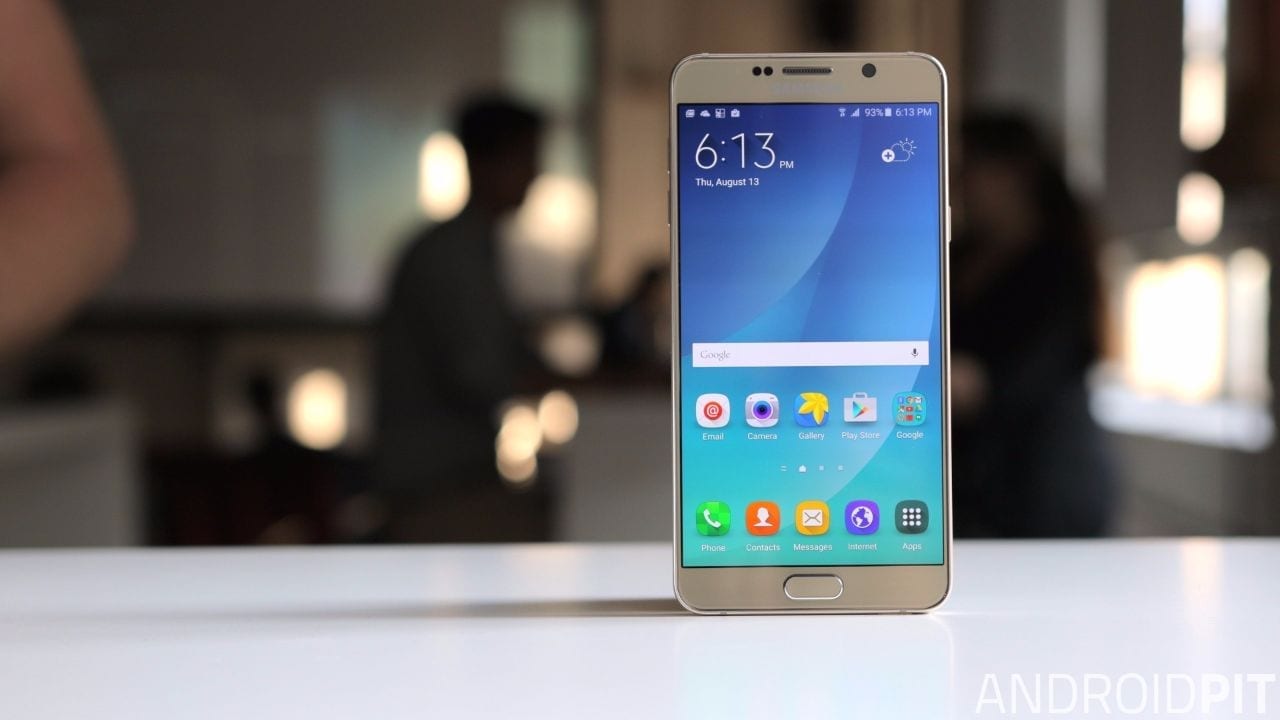
    Samsung Electronics’ Galaxy Note 7, which was launched Friday globally, is the most expensive in Europe and cheapest in South Korea, according to the tech firms’ online stores Friday.

    The new phablet costs around 1.06 million won ($948) in Germany, 1.07 million won in France and Spain and 1.09 million won in the UK, according to Samsung’s online stores, reports the Korea Herald.  The prices set for European consumers are around 70,000 won to 100,000 won higher than the price set for Korean consumers. The Galaxy Note 7 is being sold for 988,900 won here, along with freebies such as the Gear Fit 2.

    “Prices in Europe are normally set higher than in other regions, considering higher consumer prices in the region,” Samsung’s official said, adding, “The prices are not entirely set by Samsung but with local mobile carriers.”

  • Tesla opens website for online reservations in Korea

    Tesla opens website for online reservations in Korea

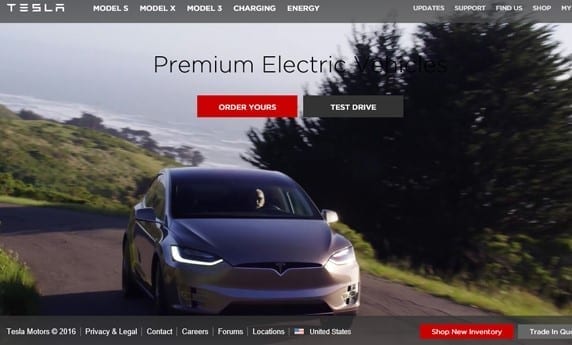
    Tesla Motors has begun taking online reservations in Korea for its electric cars, Model S, Model X, and Model 3, the company said Friday.

    With a deposit of 2 million won ($1,800) for the Model S, 5 million won for Model X and 1 million won for model 3, customers can make a reservation, it said in the first statement released for Korean press.

    “Korean customers have already shown a great interest in Tesla through reservations for Model 3,” it said. The model 3 is a Tesla electric vehicle that will be available starting at $35,000 in 2017.

    Test drives of the Model S in Korea will be available at its retail stores and events at the end of this year, the US carmaker said, without naming the location of stores. The model X will be showcased at the beginning of 2017, it added.

  • Nissan seeks to boost South Korean output on post-Brexit yen surge

    Nissan seeks to boost South Korean output on post-Brexit yen surge

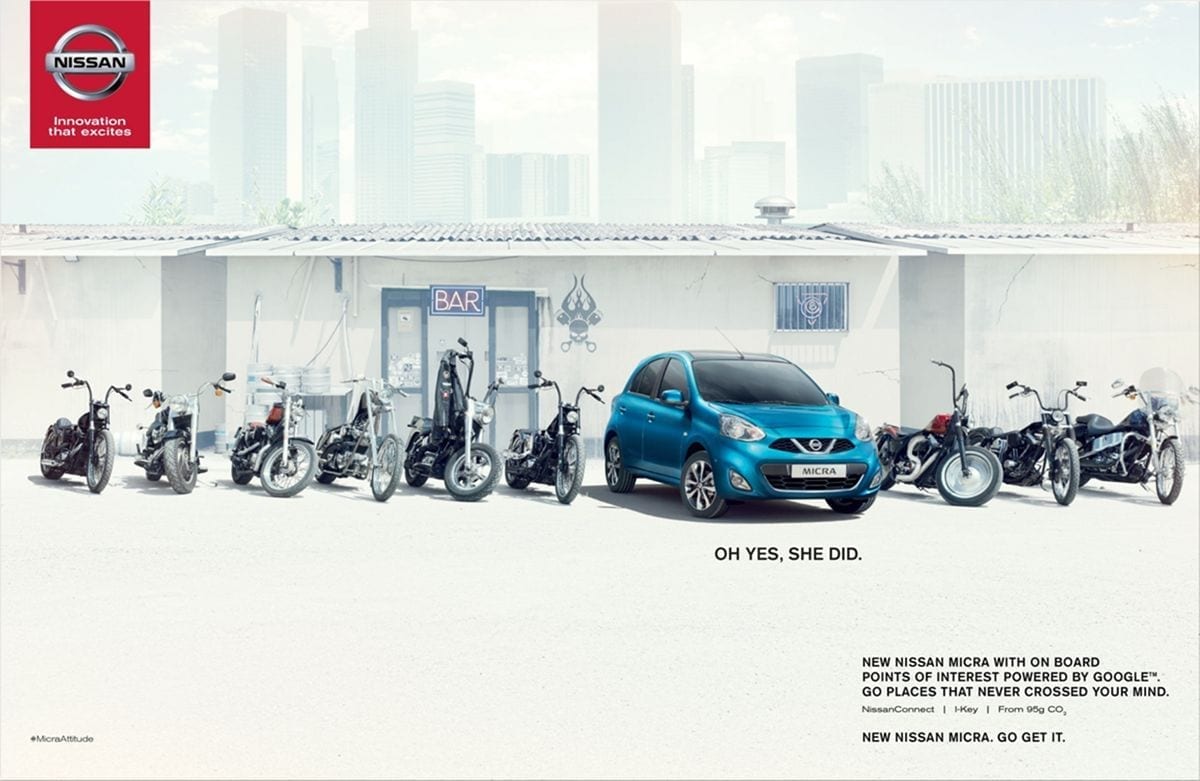
    Nissan Motor wants to increase the output of its Rogue model at Renault’s factory in South Korea this year, as a stronger yen makes exports from Japan less competitive, a Renault executive told Reuters.

    The yen has jumped 20 percent against the dollar this year in the wake of Britain’s decision to leave the European Union, pressuring Japanese exporters. The South Korean won rose 7.4 percent against the dollar this year.

    “We have got a request to boost Rogue production by 8,000 vehicles this year,” Renault Samsung Motor Chief Executive Officer Park Dong-hoon told Reuters, adding that the company was reviewing whether it would be able to meet the additional demand.

    He added that Nissan Motor previously targeted output of 125,000 Rogue vehicles in South Korea this year.

    Rogue is Nissan Motor’s top-selling sport utility vehicle in the United States, with sales jumping 14 percent to 182,181 from January to July this year from a year earlier.

    Nissan Motor currently produces Rogues in South Korea, Japan and the United States.

  • 7-Eleven Hits Milestone of 60000 Stores in 17 Countries

    7-Eleven Hits Milestone of 60000 Stores in 17 Countries

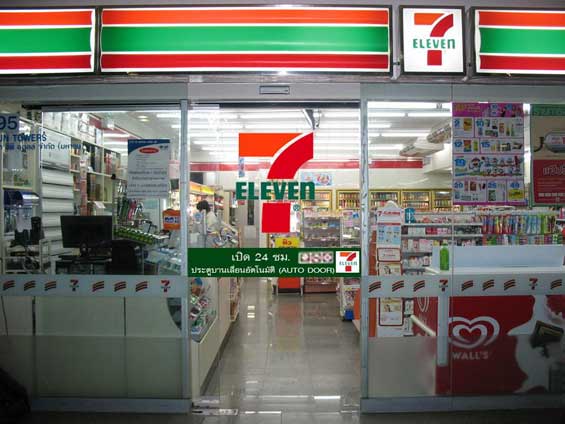
    7-Eleven Inc., the largest convenience retail chain in the world, keeps getting bigger with the opening of its 60,000th global store.

    The Irving-based company traces its roots to the 1927 opening of Southland Ice Co. in Oak Cliff, Texas. In 1946, with stores open from 7 a.m. to 11 p.m., the name was changed to 7-Eleven. Stores started staying open around the clock in 1971.

    7-Eleven moved into Canada in 1969 and into Mexico in 1971 as part of joint ventures. In 1974, the retail chain expanded into Japan with Seven-Eleven Japan, which became the parent company in November 2005.

    7-Eleven now has stores in Thailand, Taiwan, South Korea, China, Malaysia, Singapore, Philippines, Australia, Sweden, Norway, Denmark, Hong Kong, Macau, Indonesia and UAE through area license and master franchise agreements.

    The first 7-Eleven store in Vietnam is expected to open next spring, which will extend the retailer’s operations to 18 countries.

    “The 7-Eleven story is amazing and inspiring; we started as a small local ice house and have grown over the years store by store, community by community, and country by country into an iconic global brand,” said Joe DePinto, 7-Eleven Inc. president and CEO. “We will continue to grow by staying focused on the constantly changing convenience needs of our customers and by staying committed to the communities we serve.”

    Last year, 7-Eleven opened one store every 2.5 hours, for approximately 4,000 stores.

    The company currently has the most stores in Japan (18,860), followed by Thailand (9,278), the United States (8,378), South Korea (8,238) and Taiwan (5,057).

    Other milestones in 7-Eleven’s history include:

    • 1927: First store
    • 1952: 100th store
    • 1963: 1,000th store
    • 1984: 10,000th store
    • 2003: 25,000th store
    • 2010: 40,000th store
  • Naughty Cat Vietnam makes Saigon debut

    Naughty Cat Vietnam makes Saigon debut

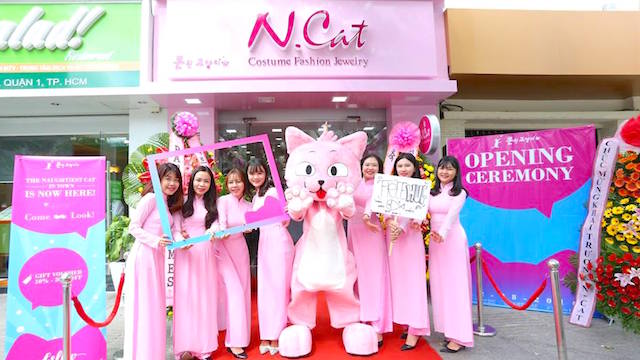
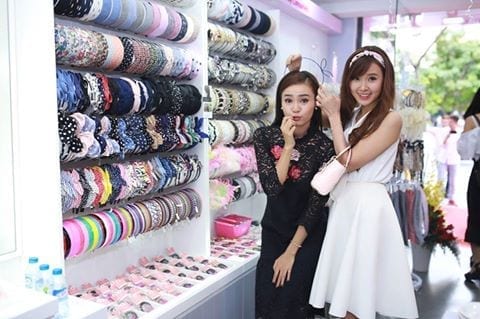
    Leading Korean accessories chain Naughty Cat has opened its first Vietnam store on Nguyen Hue St in the city centre.

    Naughty Cat Vietnam is located at 47 Nguyen Hue street, D1. The store hopes to cash in on the crowded ‘walking street’ as well as the growing influence of the Hallyu wave in Vietnam.

    To mark the launch, the brand invited Vietnamese models and actresses to the store to demonstrate how fashionable girls will be when wearing these accessories.

    naughty cat

    Customers might be overwhelmed by thousands of items from headbands, hair clips, wigs, gloves and socks to earrings, necklaces, bracelets and even cell phone plugs. Naughty Cat – or N.Cat for short – has collections for men as well.

    After 23 years in the industry, N.Cat knows how to vary its collections to serve different fashion styles, and maintain quality and affordable prices. Globally, it introduces more than 5000 items every month to maintain customer interest and encourage repeat store visits.

    Founded in 1991, N. Cat Accessories had 110 franchised stores in Korea, Europe, America and Asia at the end of 2015.

  • Convenience stores make inroads into North Korea

    Convenience stores make inroads into North Korea

    An increasing number of convenience stores, similar to those in South Korea, have been appearing in North Korea, especially in the border areas with China, a U.S.-based media report said Tuesday.

    Citing a Chinese source who frequently visits the North for trade, Radio Free Asia (RFA) said the number of 24-hour convenience stores have steadily increased in the border cities of Musan and Hoeryong, North Hamgyong Province.

    The Chinese source said that the convenience stores are small scale businesses that can be started with 20,000 Chinese yuan (US$3,000).

    According to the Chinese trader, the stores initially opened to sell leftover goods of Chinese traders in the North, but they have now transformed into the around-the-clock operations.

    The RFA said that the retail stores sell liquor, cigarettes, groceries and household items, such as nail clippers, adding that these stores are now spreading out to such large cities as Rason, Hamhung and even the capital city of Pyongyang.

    Related to the rise of convenience stores, a North Korean female defector who settled in South Korea last year said there are five such convenience stores in Musan County alone.

    The woman said these stores pay some 300 yuan to the North Korean state organizations per month. They also give bribes to security officials.

  • Heat Wave Boosts Retail Sales

    Heat Wave Boosts Retail Sales

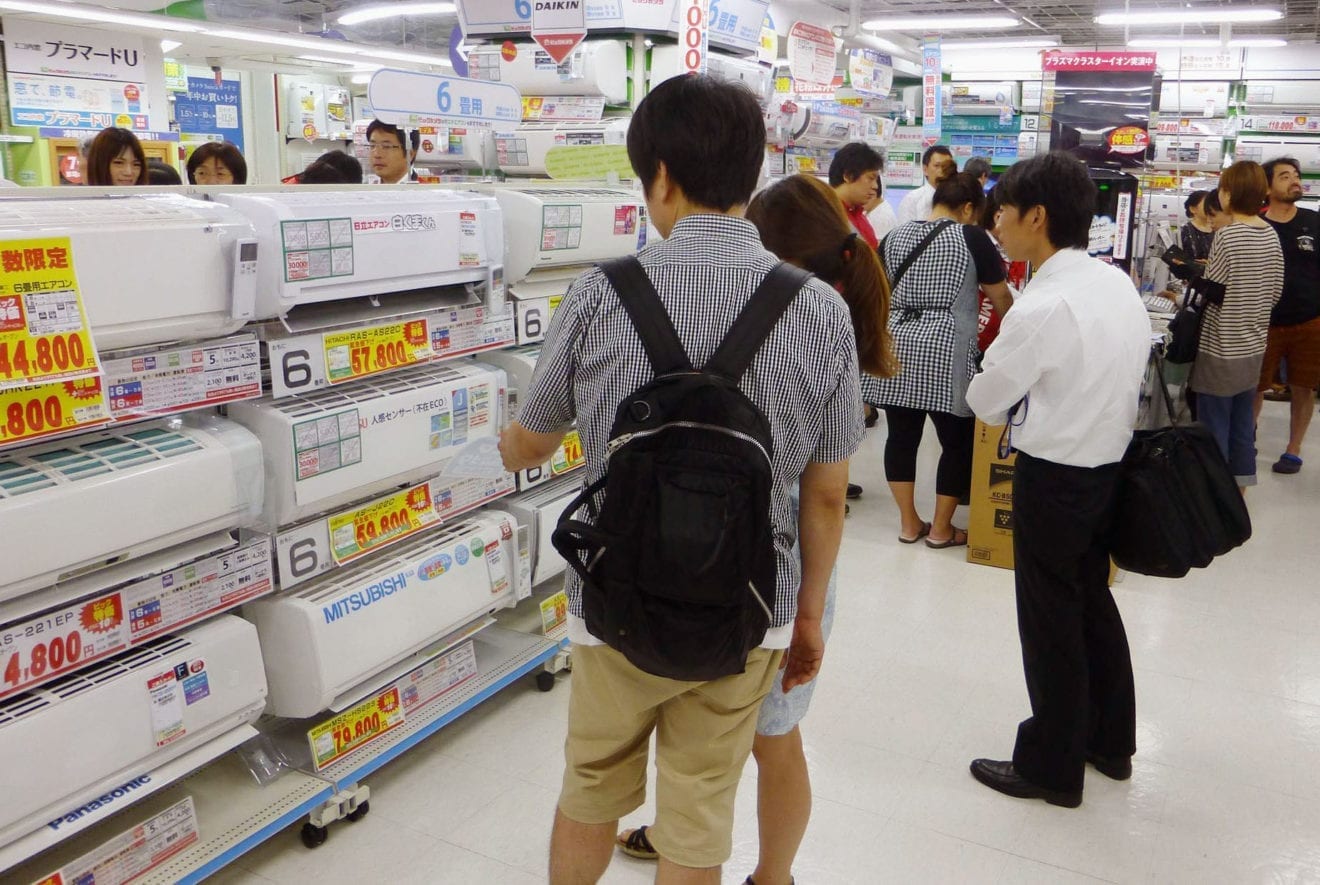
    A prolonged heat wave in South Korea is boosting sales of local retailers, cafes, hotels and theaters as people flock to those air-conditioned places to get relief, industry sources said Tuesday.

    The entire country has been hit by the scorching weather for the past two weeks, with daytime highs soaring above 35 degrees in Seoul and most other regions and the mercury staying above 25 C even at night.

    According to Lotte Department Store, its same-store sales climbed 4.1 percent between July 25 and Sunday from the corresponding period a year earlier.

    Sales of consumer electronics products rose by the highest rate of 24.5 percent, with those at food courts expanding 14.1 percent.

    “Sales of air conditioners and electric fans recorded a strong on-year increase, leading the overall gain in shipments of home appliances,” a Lotte Department Store official said.

    Discount giant E-Mart estimated its July sales have gone up 8 percent from the same month a year ago. In the first seven days of this month, sales of air conditioners soared 53 percent on-year with peaches and other fruits also chalking up brisk sales.

    The heat wave also comes as a boon to Seoul’s luxury hotels with swimming pools as an increasing number of people spend their summer vacations there instead of going to the beach or other places.

    Lotte Hotel Seoul, one of the country’s best luxury hotels, said sales of its “summer package” doubled between July 25 and Sunday from the same period a year earlier. The Plaza Hotel Seoul also posted a 40 percent surge in sales of its summer package.

    In addition, coffee shops and cinemas have enjoyed booming trade for the past several weeks as more people visited them to seek relief from the searing heat, according to the sources. “More people are expected to flock to air-conditioned places to cool off as the heat wave is forecast to last for some time,” an industry official said.

    The Korea Meteorological Administration forecast the heat wave gripping the country is likely to continue till mid-August with daytime highs hovering around 35 C.

  • South Korean e-commerce site ‘Ticket Monster’ starts luxury car sales

    South Korean e-commerce site ‘Ticket Monster’ starts luxury car sales

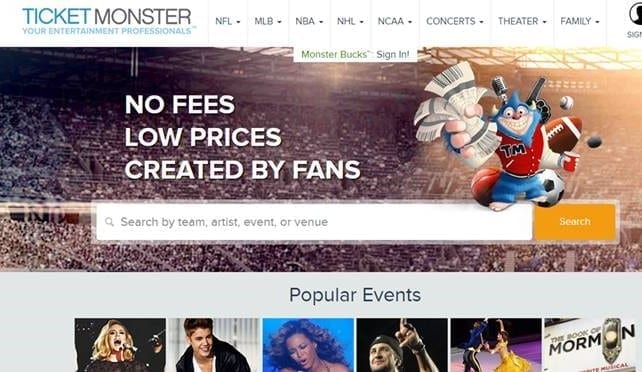
    South Korea’s major e-commerce site, Ticket Monster on Monday said it has started sales of British luxury car brand Jaguar. Ticket Monster put on sales of 20 Jaguar XE Portfolios and R-Sports on Monday morning, marking them down 7 million won (US$6,317) from the regular retail prices to 48.1 million won and 46 million won, respectively. The two models were sold out in three hours, the company said.

    Ticket Monster said it could sell all of the vehicles on the first day because it offered the best available price and even promised a refund if it was not the cheapest.

    “Although new cars have been sold by overseas online shopping malls, it is the first time that a Korean e-commerce site sells new cars online,” a company official said. Consumers made a one-time payment on the website and will take over the vehicles from designated dealers or visit dealer shops, officials said. Ticket Monster said the latest move was aimed at changing customers’ expectations and leading the new trend in the highly competitive market.

    “The sales of imported cars is part of Ticket Monster’s efforts to change the retail paradigm,” Ha Sung-won, the chief operating officer of Ticket Monster, said.

  • Politics could add to forces working against Korean cosmetics industry

    Politics could add to forces working against Korean cosmetics industry

    Last week the Korean government announced plan to impose duty free limits to stop third party sales of cosmetics in China, and now, in an unrelated move, the China government’s threats to retaliate over Korea’s deployment of new military defence technology seems to be adding to investor fears.

    Korea has taken a decision to deploy a Terminal High Altitude Area Defence (THAAD) battery, which some experts believe is one of the reasons why investors a dumping shares in Korean companies, a sector that is heavily reliant on exports to China.

    Raising the bar on visas and sanitary regulations

    In the first move, perceived to be a retaliatory step by China authorities, officials recently closed a visa agency catering to Koreans, something that will make it harder for Korean companies to obtain multiple entry visas for doing business in China.

    On top of this, the China trade authorities have also stepped up sanitary regulations governing Korean beauty products, a move that is also likely to put a damper on exports of certain products and make the whole process more difficult.

    “Cosmetics and entertainment stocks have plummeted as China has begun taking steps against Korean companies and individuals doing business on the mainland,” said Daniel Cho, head of research at Daishin Securities, speaking to the Korean Times.

    “The recent decline was largely engineered by the potential THAAD backlash.”

    Those duty free regulations

    Simultaneously, speculation has been growing about the impact of proposed duty free regulations, which are being drawn up to protect the industry, but some experts say this has already had an impact on investors and the value of shares in the country’s big beauty players.

    Last week the Korean customs authorities notified all Korean duty-free retail operators, which include three major operators, that each customer would be limited to buy no more than 50 cosmetic and fragrance products.

    The main objective behind the clamp down is to cut out on the emerging market for cosmetics then be sold on to third-party brokers, and then resold on to other retail channels.

    News of the limit was leaked on the previous Friday and when the Korean Stock Exchange re-opened for trading on Monday, stock prices dropped significantly, with Amore Pacific share prices falling over 2% and LG Household & Health falling 6%.

    In the last few years the rise and rise of Korean cosmetics companies has been attributed to a huge appetite from the China market, but with prices of the products being much higher in China, consumers have taken to shopping holidays in Korea to stock up.

    China drives duty-free cosmetics sales

    Sales of Korean cosmetics have been boosted by chic advertising campaigns, Korean pop and a product innovation pipeline that boasts some of the most cutting edge products available anywhere in the world.

    A large part of this success has been the huge influx of tourism from China, many of whom are going on ‘shopping holidays’ with the main aim of buying up their favourite Korean cosmetic products at a cheaper price than they would pay in China.

    Current figures show that cosmetics make up the lion’s share of Korea’s largest duty free retail chain, Lotte, accounting for 58.9% of sales in the first quarter of this year, and that 70.8% of the company’s overall sales came from Chinese visitors. This up from 63.3% compared to the previous year.
  • Lacoste Korea upgrades boutique

    Lacoste Korea upgrades boutique

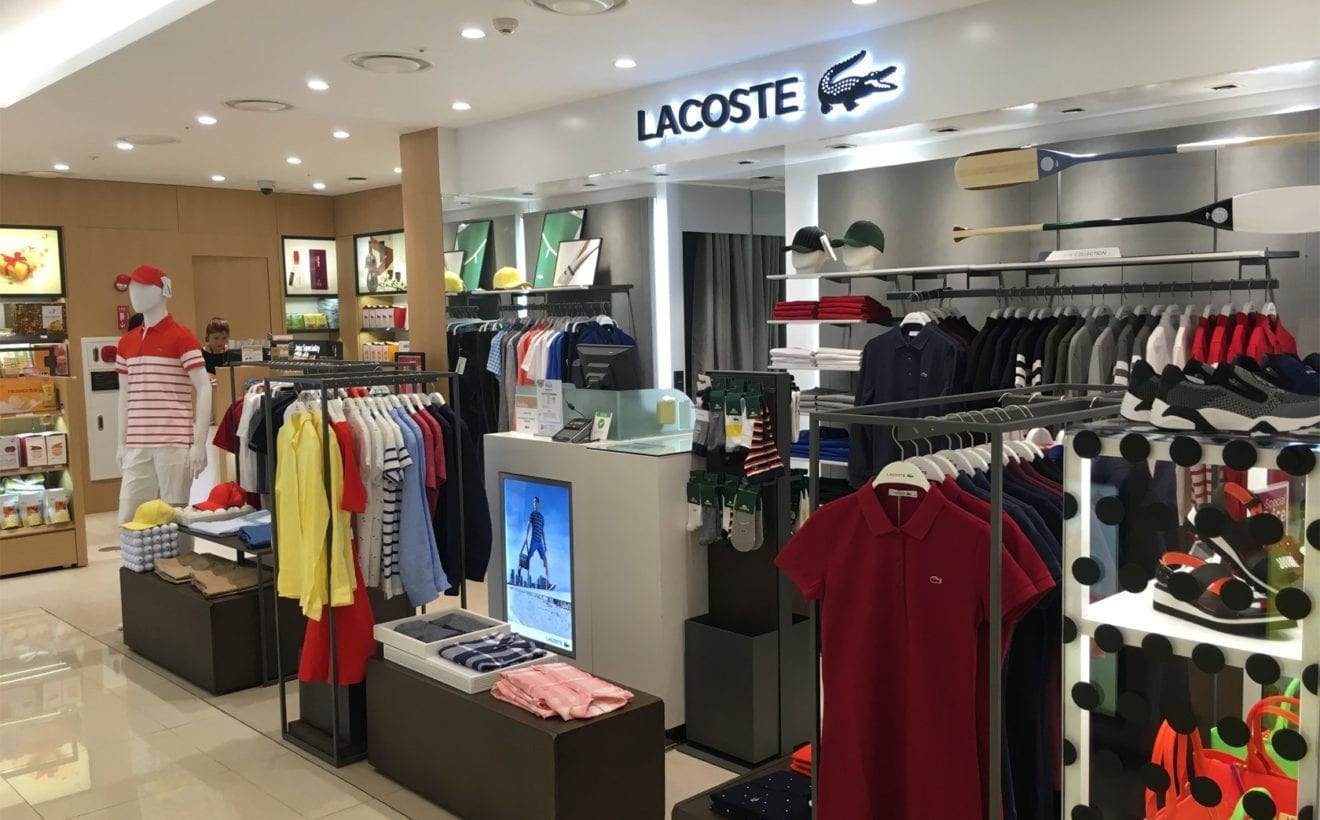
    Fashion apparel brand Lacoste Korea has renovated its boutique unit inside the Shilla Jeju Duty Free store, showcasing its “standard premium” concept.

    The retail space is on the fourth floor of the store on Jeju Island, close to Jeju International Airport. The store offers more than 300 brands.

    Lacoste says Korea is a key market for its travel-retail business.

  • Retail giants seek to cash in on hallyu

    Retail giants seek to cash in on hallyu

    The leading retailers in Korea are seeking to cash in on the global popularity of hallyu by sealing strategic tie-ups with entertainment companies to sell exclusive merchandise.

    Products bearing the images of popular K-pop artists and actors have largely been available only online. However, the success of a small store at Lotte Department Store’s Young Plaza in Myeong-dong, Seoul, appears to have caught the fancy of the retailer.

    The store dedicated to K-pop stars saw sales grow fivefold this year, half of which were accounted for by Chinese customers.

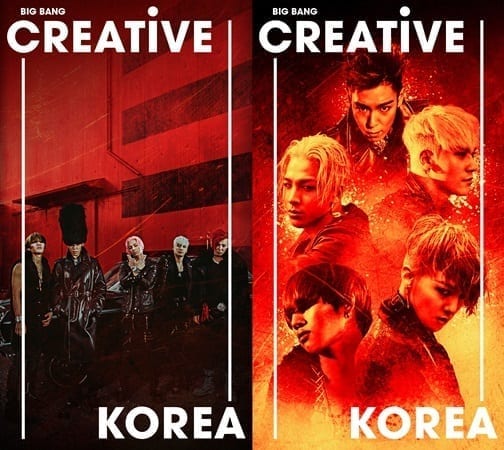
    This has prompted Lotte to join hands with YG Entertainment — home to some of the biggest K-pop acts such as Psy, Big Bang and 2NE1, as well as actors and actresses — to open a larger store on Aug. 12 where fans can now touch and try the goods before they pull out their credit cards.

    Big Bang.

    Lotte will offer officially endorsed celebrities goods available in over 100 categories, ranging from the mandatory clothing and stuffed toys to scented candles and cosmetics.

    Earlier in March, Korea’s top retail chain E-mart teamed up with SM Entertainment to introduce its private brand products bearing the name and face of its artists such as EXO Sonjjajang and Shiny Sparkling Water.

    Meanwhile, the two entertainment giants are also tapping into the restaurant business. SM is running tapas restaurant SMT Seoul in Cheongdam-dong, while YG opened YG Republique in Myeong-dong and Yeouido.

    By the end of this year, both will expand out of the country: SM will branch out into Tokyo and Los Angeles while YG will branch out in LA and Bangkok.