Tag: Korea

  • Tesla may open first dealership in Korea

    Tesla may open first dealership in Korea

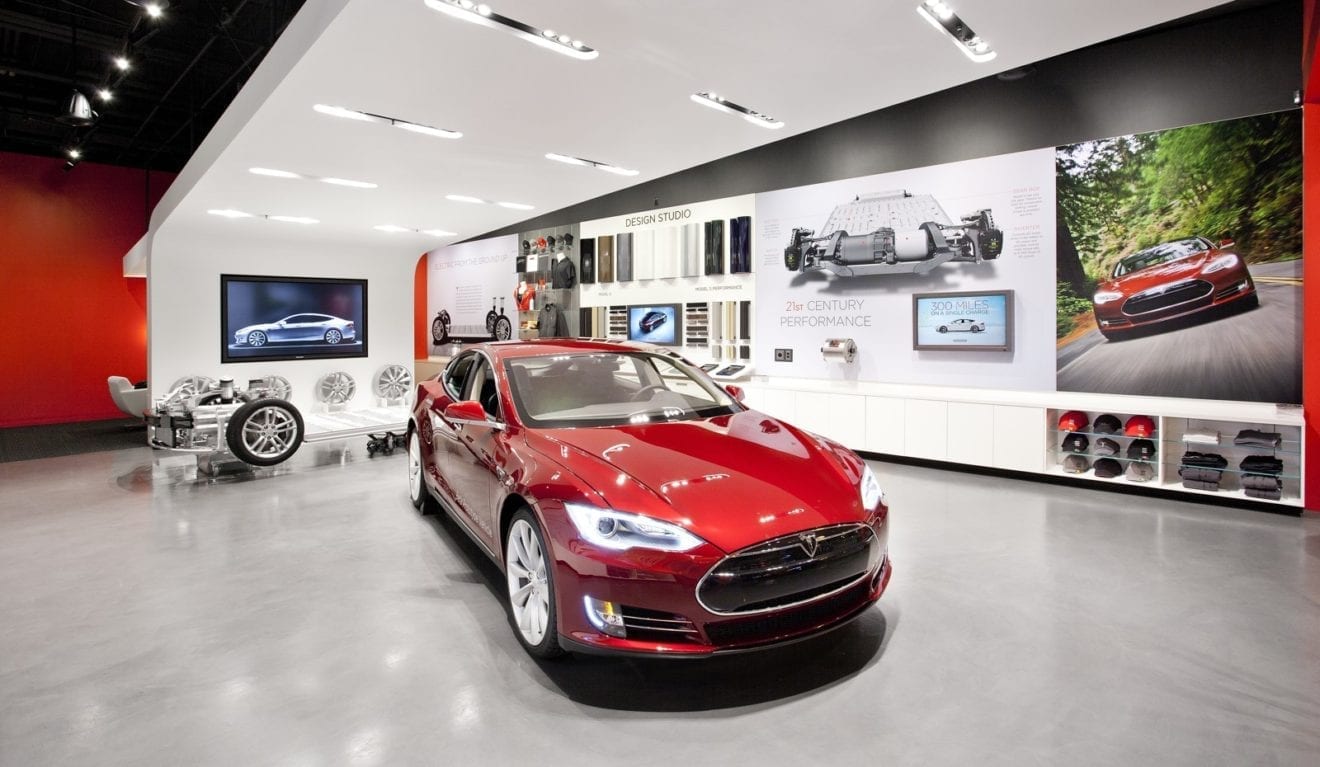
    Tesla Motors, the Silicon Valley-grown electric vehicle manufacturer, may open its first Korea dealership in a Shinsegae Group shopping complex within this year.

    “The talks are positive, for sure, but the final confirmation has yet to be reached,” said a Shinsegae Group spokesperson.

    “If the final confirmation is made, Shinsegae Property, which is pursuing the deal with Tesla, will give us notice,” he added.

    According to industry sources Thursday, if negotiations succeed, Tesla will open its first Korean dealership in Shinsegae’s Starfield Hanam shopping complex in Gyeonggi as early as November. The complex is a 30-minute drive from Seoul’s Gangnam District.

    Tesla CEO Elon Musk also confirmed Seoul as one of his next targets along with Taipei and Mexico City for the company’s high-end electric vehicles.

    “We are also accelerating store openings and plan to add a new retail location every four days on average during the remainder of Q3 and through Q4,” said Musk in an earnings report distributed Wednesday.

    “We are adding stores in new population-dense markets like Taipei, Seoul, and Mexico City, while also adding stores in our most mature markets like California,” he added.

    Scheduled to open early next month, Starfield Hanam is Shinsegae Group Vice Chairman Chung Yong-jin’s ambitious project to make a retail complex that includes not only shopping venues but all sorts of entertainment- and leisure-related facilities such as a waterpark, cinema and aquarium. Korea doesn’t have such a complex.

    In addition to offering some 750 retail brands, the complex will also house Asia’s first BMW dealership that handles both the original BMW and Mini vehicles. Luxury motorcycle brand Harley Davidson will have a store that displays not only vehicles but also its clothes and accessories lines.

    Since last December, Tesla has been gearing up to enter Korea by registering the corporate name Tesla Korea Limited and sending out job advertisements for car dealers and mechanics.

    Korea’s retail giants have been sending out feelers to the prestige car company, counting on its attractiveness to the general public.
    Lotte World Mall in Jamsil District, eastern Seoul was considered a candidate to house a Tesla shop, but the negotiation fell apart early this year.

    Opening an independent dealership in Gangnam District was raised as another possible choice and Tesla is still reported to be considering that option.

    Tesla is known for a unique way of directly operating and managing its branches, instead of franchising dealerships as most carmakers do.

    Its first New York showroom, which Musk located in the funky Red Hook neighborhood of Brooklyn earlier this year, symbolizes the concept. It shows that a Tesla shop is not exclusively for car shoppers but is open to anyone interested in futuristic car technology. That also explains why many Tesla dealerships are in U.S. shopping malls.

    “The quality of our new locations is also improving as many shopping malls now consider us the new standard for an anchor tenant based on the amount of foot traffic that we draw and our very high revenue per square foot,” said Musk in the earnings report released Wednesday.

    If Shinsegae’s negotiations with Tesla succeed, its shop in Starfield Hanam will operate as a display until the Korean government allows the luxury electric vehicles on Korean roads

    In the meantime, Tesla’s second quarter earnings announced on Wednesday fell short of analysts’ expectations. It posted a $293 million net loss in the second quarter, a more than 60 percent drop compared to last year’s Q2 operating loss of $184 million.
     

  • South Korea suspends sales of most Volkswagen models

    South Korea suspends sales of most Volkswagen models

    South Korea on Tuesday suspended sales of most Volkswagen AG (VOWG_p.DE) models in a fresh blow to the German automaker as it struggles to overcome the global repercussions of its emissions-test cheating sandal and rebuild its tattered image.

    The government revoked certification for 80 model variants of VW, Audi and Bentley vehicles, and fined Volkswagen 17.8 billion won ($16.06 million) for allegedly forging documents on emissions or noise-level tests.

    The move could slam the brakes on sales for Europe’s biggest automaker in the Asian market, where its local unit had more than tripled revenue to 2.82 trillion won over the past five years before becoming mired in the emissions scandal.

    Volkswagen described the ruling as “most severe” and said it would consider a legal challenge.

    In all, 209,000 VW vehicles have been de-certified in South Korea, mainly over emissions-related problems, since November – or 68 percent of the vehicles the automaker had sold in the country since 2007, the environment ministry said.

    While South Korea is a relatively small market for Volkswagen, it is a major market for its luxury marques Audi and Bentley and one of the fastest-growing markets for all brands.

    It could take more than three months for the affected brands to be back on showroom floors, officials said.

    “It usually takes three months for vehicle certification, but this may take longer for Volkswagen, as we will take thorough steps,” environment ministry director Hong Dong-gon told reporters.

    Any delay in recalls previously ordered over emissions test manipulation could be met with an order for VW to exchange those vehicles for other models, Hong added.

    LEGAL ACTION

    In a letter to customers posted on its South Korean homepage, Volkswagen said it would consider requesting an “injunction of execution”.

    It also could take legal action against the government’s decision “if this will help recover our company’s business reputation and benefit our consumers, dealers and other partners,” it added.

    Volkswagen voluntarily halted sales of most of its models in South Korea from July 25, ahead of the government’s decision.

    The company reported a 12 percent drop in quarterly profit at its main passenger car division last week, showing the challenges it still faces since admitting in September to using software to falsify pollution tests on some diesel cars.

    In addition to billions of dollars in costs related to the scandal, it is also tangled in legal action in the United States, Germany, South Korea and elsewhere.

    South Korea has taken a particularly tough line, with prosecutors raiding Volkswagen’s Seoul offices and arresting an executive in June.

  • Starbucks Korea offering workers education

    Starbucks Korea offering workers education

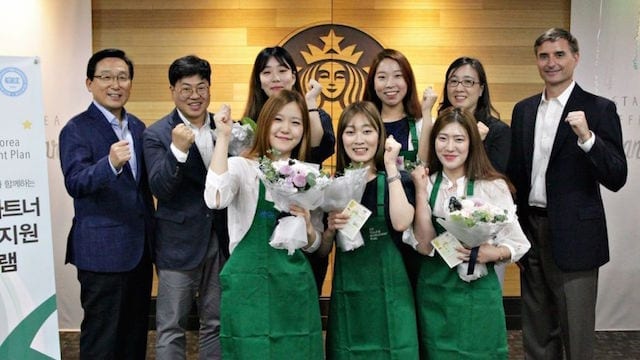
    Starbucks Korea employees are being offered a chance to achieve their academic goals.

    The company has introduced a college achievement plan to enable employees (termed “partners”) to finish four-year college degrees. Already, 146 have enrolled at Hanyang Cyber University.

    “At the core of our success are our partners who deliver an unparalleled Starbucks experience, and we are pleased to help them achieve their academic dreams,” says CEO Seock-koo Lee. “The college achievement plan gives partners the chance to earn their degree without the financial burden.”

    starbucks scholar

    Hanyang Cyber University offers 36 majors ranging from liberal arts to business management. Barista training is also included. As all regular classes and tests are delivered online, students can focus on their jobs as well as their studies without having to attend a physical school.

    “The Starbucks mission of inspiring and nurturing the human spirit resonates with our goal of providing young talent with access to higher education for their pathway to success,” says the university’s office of admissions dean Seungyeon Han.

    Employees applying for the program need to provide their study plans and complete aptitude tests. Once admitted, they can choose any major, even if unrelated to their work.

    Starbucks Korea estimates that more than 1000 employees will be able to earn bachelor’s degrees by 2020. Along with the university, it plans to recruit up to 300 students each school year. Those who achieve a grade point average of B or higher will be entitled to a Starbucks scholarship covering full tuition.

    Employees who receive the scholarship are not obligated to work for Starbucks after graduation.

    The program is similar to the Starbucks college achievement plan in the US, introduced in 2014. It allows eligible employees to earn their bachelor’s degree with full tuition reimbursement through Arizona State University’s online degree program.

  • Shopping by mobile devices rises

    Shopping by mobile devices rises

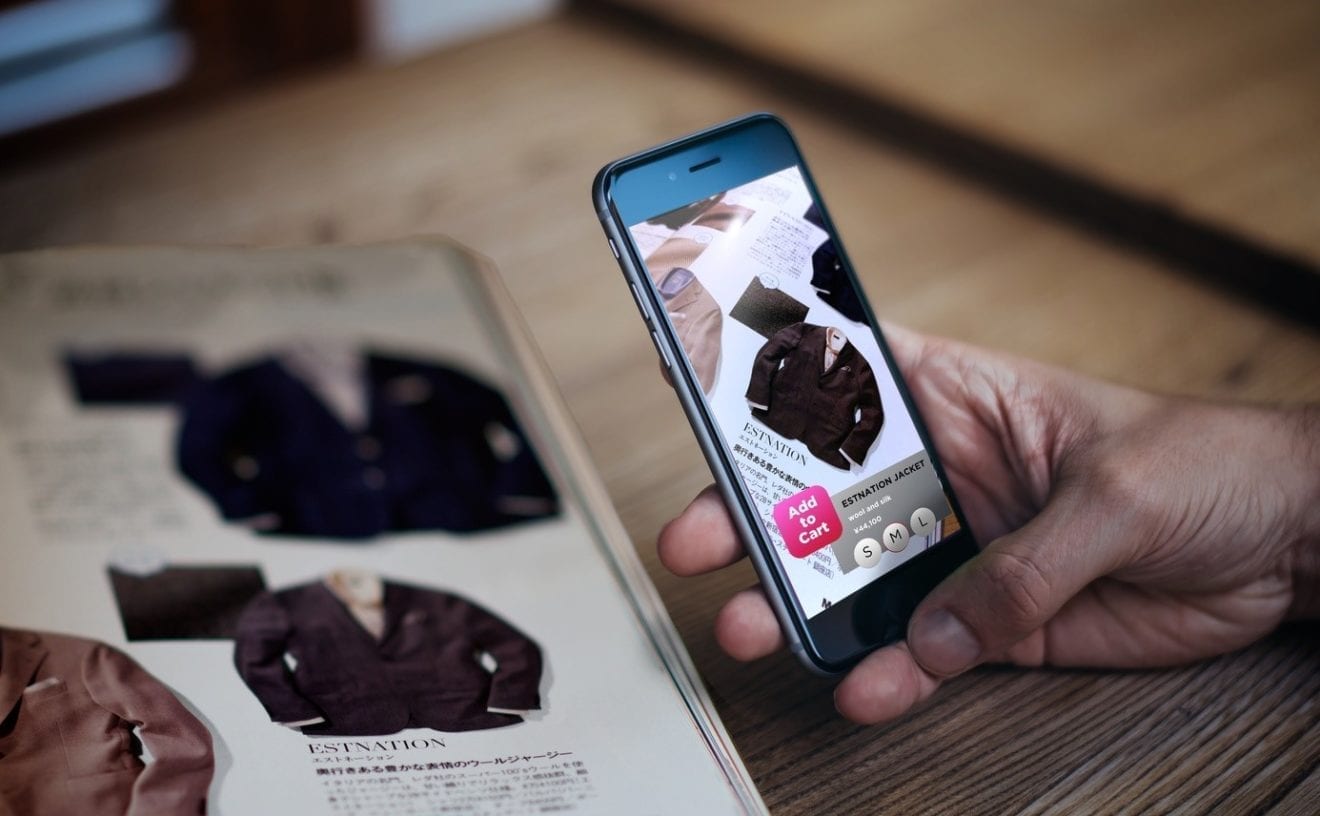
    More shoppers are using smartphones and tablets to do business with Korean online retailers – both Koreans and foreigners.

    Chinese shoppers – particularly those who have visited Korea and fallen in love with its products – have been a particular boon to the online shopping business.

    According to Statistics Korea, online shopping transactions rose 18.8 percent in June compared to a year ago, hitting 5.18 trillion won ($4.64 billion). Mobile shopping via mobile devices surged 34.4 percent during the same period, and accounted for 51.2 percent of total online shopping, or 2.65 trillion won.

    “Mobile payment services have improved recently so more customers are using mobile devices compared to the past,” said an official from Statistics Korea.

    Mobile device transactions accounted for only 29 percent of all online transactions in April 2014. The figure topped 40 percent early last year and surpassed 50 percent in December. It continues to grow.

    Even though transactions rose from a year ago, they dropped from the previous month. Online shopping transactions dropped 0.3 percent in June compared to May and mobile shopping fell 2.2 percent during the same period.

    By sector, people purchased more cosmetics and travel services online, while the figure for food, including agricultural produce, livestock and fishery products fell.

    People spent 52.1 percent more on cosmetics in June compared to the previous year, and the figure for travel services increased by 42.3 percent.

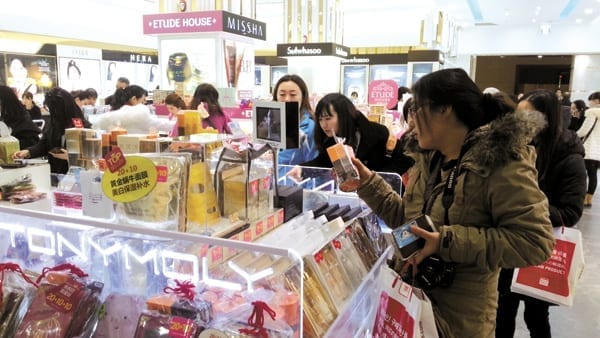
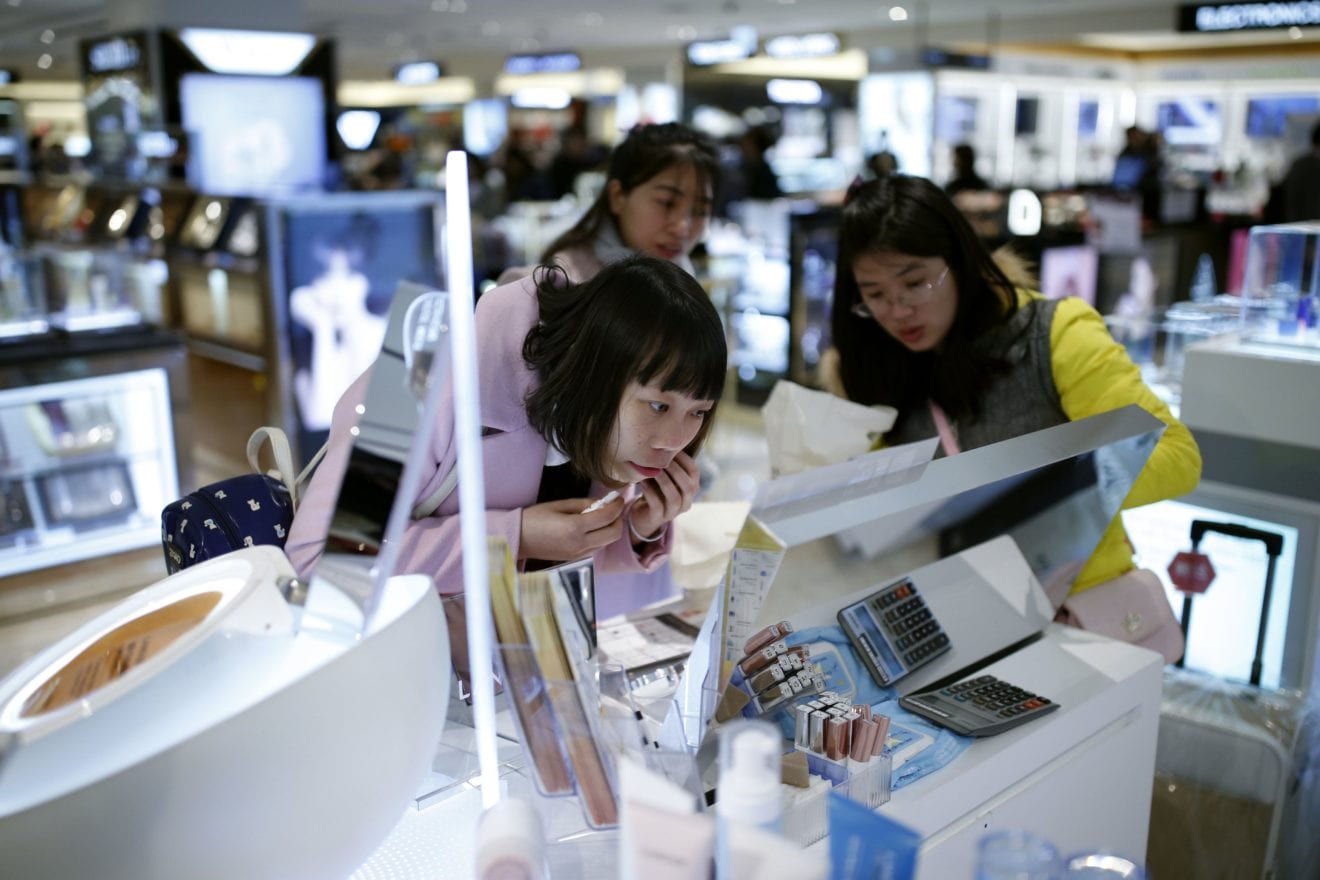
    “The number of Chinese tourists visiting Korea rose in general, and they were interested in buying cosmetics at both brick-and-mortar stores and online retail shops,” an official at Statistics Korea said.

    According to Statistics Korea, Chinese tourists visiting Korea rose 201 percent from 223,000 in June 2015 to 671,000 in June 2016. The outbreak of Middle East respiratory syndrome (MERS) lowered the number of tourists last year. The first MERS fatality in Korea occurred on June 2, 2015.

    “More Chinese entered Korea and this also helped travel services transactions grow,” said an official at the agency.

    Statistics Korea surveyed a total of 983 online retailers for its data.

    Meanwhile, foreigners buying Korean goods rose 83 percent year-on-year in the second quarter of this year compared to the previous year, hitting 497.4 billion won.

    Koreans buying goods through foreign online retailers increased by 5 percent during the same period, recording 411.8 billion won.

    Chinese purchasing goods through Korean online retailers jumped 103.1 percent year on year in the second quarter of this year to record 373.2 billion won. The figure for Japan rose 72.1 percent and the European Union (EU) countries increased by 95.7 percent.

    “Cosmetics were the most popular products for foreigners and they accounted for 67 percent of total transactions by foreigners,” said Sohn Eun-rak, a director at the statistics agency.

    Americans purchasing goods through Korean retailers were the highest at 266.9 billion won in the second quarter, followed by the EU (79.2 billion won) and China (33.2 billion won)

    The most popular items that Koreans bought from foreign online retailers were clothes and fashion-related goods. Koreans bought 149.4 billion won worth of fashion related goods from foreign online retailers in the second quarter of this year, down 1.6 percent compared to the previous year.

    BY KIM YOUNG-NAM

  • Chinese tourists cancel trips to South Korea after THAAD

    Chinese tourists cancel trips to South Korea after THAAD

    Analysts warn of possible blow to tourism, retail industry

    A number of Chinese tourists are cancelling trips to South Korea in the wake of the country’s decision to deploy a missile defense system, a trend which experts say might lead to a blow to South Korea’s tourism industry if it continues, as the sector depends heavily on visitors from China.

    A Beijing while-collar worker surnamed Wang who planned to travel to South Korea in August told the Global Times that although she has already placed a non-refundable payment on a hotel, she was cancelling because of THAAD.

    “After all, there are still a number of travel destinations where I can go,” Wang said.

    Travel agencies in China and South Korea have also noticed the trend.

    Xu Xiaolei, manager of marketing at China’s CYTS Tours Holding Co, said that there have been a handful of clients who cancelled their bookings on a South Korea tour recently.

    “Also, compared with last year, the recruitment process for tours to South Korea during the Golden Week three-day holiday has been slow.” Xu told the Global Times on Monday.

    South Korean tourism industry officials, along with officials from travel agencies that specialize in hosting Chinese tourists in the country, have said that there are “a rising number of Chinese tourists cancelling reservations for August,” according to report on koreabizwire.com.

    The most recent cancellation was for the Chimaek festival, an annual celebration of fried chicken and beer that began on July 27 in Daegu, a city in southeastern South Korea.

    To attract Chinese tourists, the committee came up with a scheduled program in May and organized a train for incoming tourists from Seoul to Daegu, Korea JoongAng Daily reported on July 25.

    The number of Chinese tourists who signed up for the organized tour was 500 by early July, the report noted.

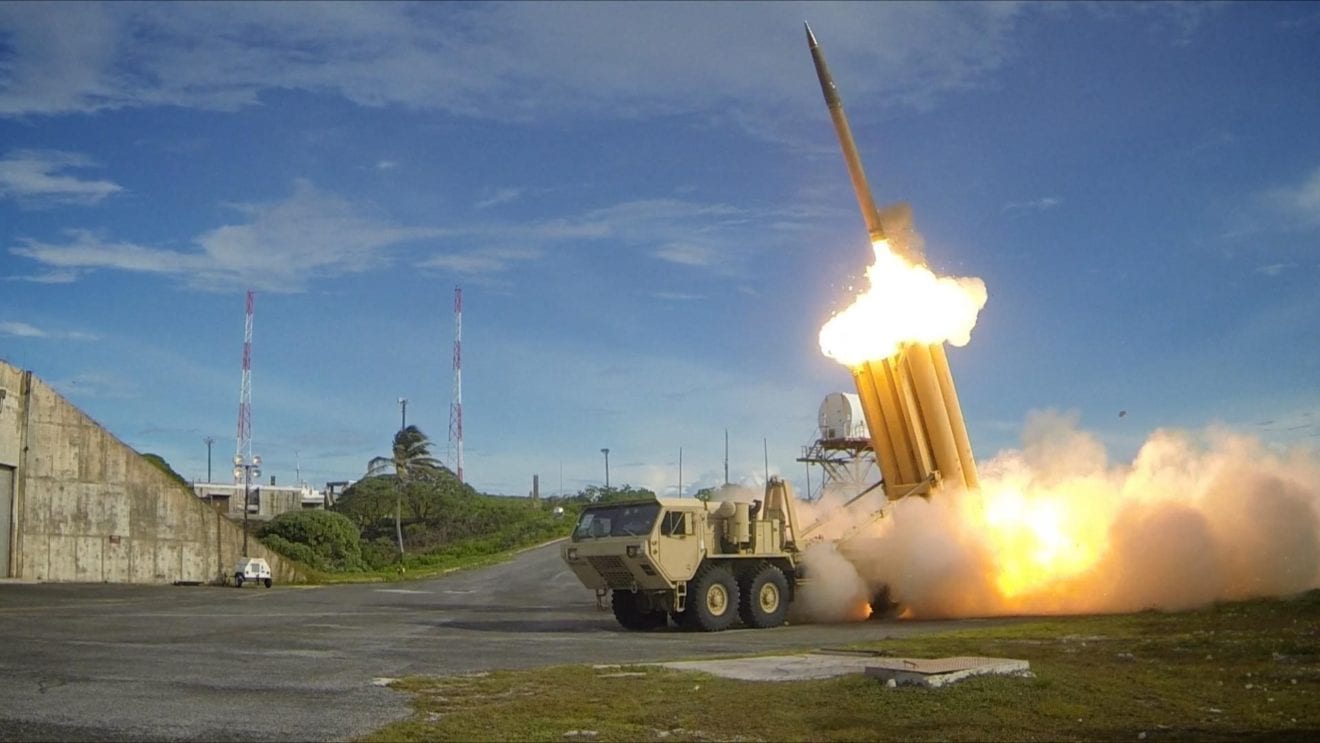
    But in the two weeks since South Korea announced the deployment of the Terminal High Altitude Area Defense (THAAD) anti-missile system, which has received intense backlash among the Chinese public, over 60 percent of the bookings have been cancelled, said the report. As a result, the committee has decided to offer a sightseeing bus instead of the originally planned train.

    Several days ago, Daegu’s 23-year-old sister city in China, Qingdao, East China’s Shandong Province, said it would not be participating in the festival due to “inappropriate timing,” the report noted, citing a Daegu city official.

    The Qingdao government also called off plans for a Daegu government exchange visit to the Qingdao Beer Festival, which started on July 29, amid public outcry to boycott South Korean products, the official said.

    Heavy reliance on Chinese tourists

    Recent years have witnessed a soaring number of Chinese tourists visiting South Korea.

    The number of Chinese arrivals grew 29.4 percent year-on-year to 3.82 million in the first six months of 2016, accounting for 48.8 percent of the country’s foreign visitors, the Korea Tourism Organization data showed.

    Wei Changren, CEO of Beijing-based Jinlu Consulting, told the Global Times on Monday that South Korea’s tourism and travel retail sector rely heavily on visitors from China.

    In the first half of 2016, an estimated 65 percent of the sales volume of Samsung Group’s Shilla Hotel and Resort, the country’s second largest duty free shop, was generated by Chinese visitors, up 45 percentage points over the same period last year.

    “About 70 percent of Chinese tourists travel to South Korea to shop. But average spending by Chinese tourists has decreased recently,” Zhu Zhengyu, an industry analyst with Enfodesk told the Global Times on Monday. “If the number of Chinese visitors continues to drop, the retail industry in South Korea will suffer.”

    Zhu’s opinion is echoed in a report published by Samsung Securities, which reveals that if the number of Chinese visitors shrinks by 1 percent, the operating profit of Shilla Hotel and Resort could fall by 2.6 percent.

    “Besides, considering the size of China’s economy and population, no other country can fill the vacancy if Chinese visitors go away,” Zhu said.

  • Korean Government to Develop ‘Bojeong-dong Café Street’ in Indonesia

    Korean Government to Develop ‘Bojeong-dong Café Street’ in Indonesia

    The Small and Medium Business Administration (SMBA) announced its plans on August 3 to develop a small business K-town in Indonesia modeled after “Bojeong-dong Café Street” as a means of supporting the small business’ overseas expansion.

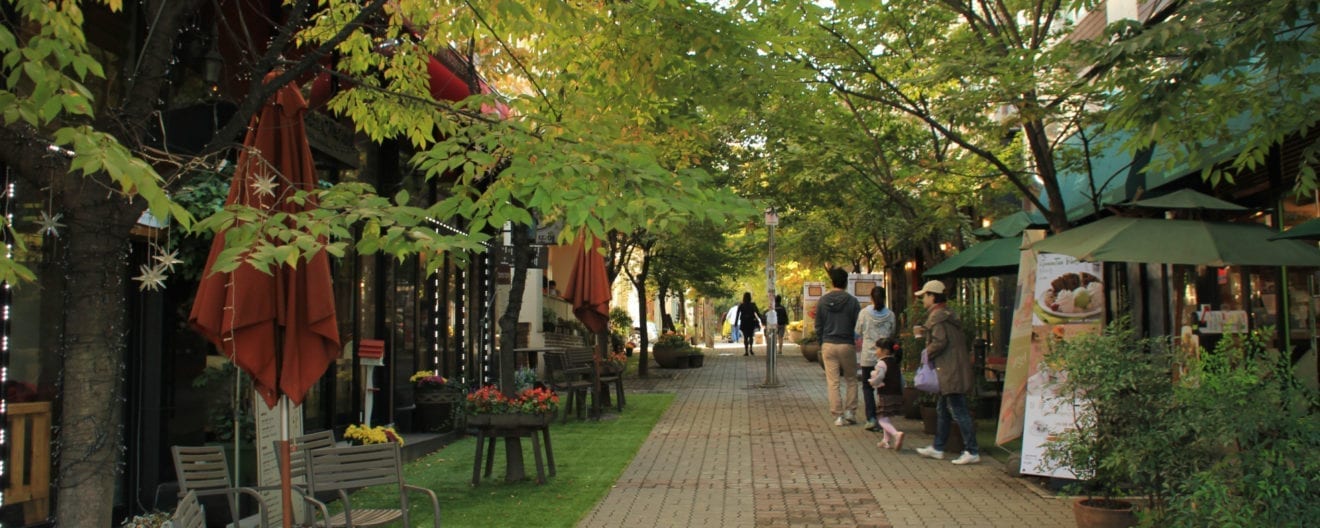
    The café street developed spontaneously from the mid 2000’s in the Bojeong-dong café street. Currently, total 126 stores are operating in the area of 22,000 ㎡, and small theme streets are developed in every eight alleys.

    Additionally, the SMBA announced its policy to co-operate K-culture and other by developing “small business K-town” in the peripheral region of Jakarta, around at the end of year 2018,

    For the policy, the SMBA proceeded a field investigation with Small Business Association, International Council for Small Business (ICBS Korea), Small Enterprise and Market Service (SEMAS), etc., and the Indonesian Government also has expressed a will to support the project.

    Joo Young-sup, administrator of the SMBA said, “The ultimate goal is to produce 1,000 successful similar cases until year 2020 by pushing ahead of the small business’ overseas expansion policy.”

    Categories:

  • Revenues up, profit down for Shilla Duty Free

    Revenues up, profit down for Shilla Duty Free

    The Shilla Duty Free has posted a 29 per cent year-on-year rise in second-quarter revenues for its Korean downtown stores, rebounding from the MERS-ravaged tourism sector at the same time last year.

    Downtown store revenue climbed to KW538.2 billion (US$473.6 million) for the quarter, with growth outstripping the 23.5 per cent increase in the total Korean duty-free market, especially with higher competition after the government issued more licences last year.

    However, Korean airport sales fell 19.2 per cent to KW198 billion, driven by a downturn in Incheon International Airport revenues because of reduced floor space.

    Overseas duty-free revenues (mainly Singapore’s Changi Airport and Macau International Airport) rose by 16.3 per cent year-on-year to KW121.3 billion. However, Shilla posted a KW12.3 billion operating loss on its overseas stores, mainly because of the high cost of entry at Changi. This hit overall profits, which fell 51.4 per cent to KW15.4 billion. Even the Korean downtown business fell 39 per cent to KW27.7 billion.

    A factor in that decline has been the rocketing costs of commissions to Chinese travel retail agents – up from between 7 and 100 per cent to around 23 per cent, according to The Moodie Davitt Report.

    The Shilla Duty Free is the key revenue and profits contributor to parent Hotel Shilla, whose consolidated revenues rose 13 per cent year-on-year to KW954.1 billion, while operating profits fell 36.04 per cent to KW18.7 billion.

  • Hong Kong gets early taste of Hanwoo, Korean beef that rivals Kobe

    Hong Kong gets early taste of Hanwoo, Korean beef that rivals Kobe

    Since late last year, premium Korean beef, called Hanwoo, has been making its way onto menus in some Hong Kong restaurants, as the city is one of the first places allowed to import it. Hanwoo refers to cattle indigenous to Korea which are raised only in the country, unlike wagyu (Japanese beef), which is bred in countries outside Japan, including Australia and the United States.

    One of its biggest fans is Korean-American chef Judy Joo, whose restaurant Jinjuu in Lan Kwai Fong was one of the first in Hong Kong to serve it.

    “It’s similar to Kobe beef and wagyu, and there are different types of Hanwoo, depending on which farm you go to,” she says. “It’s basically coveted for its high marbling. Wagyu and Hanwoo of the same grade look similar. But Hanwoo has a rich texture and is deeply marbled so it has a sweeter taste.”

    She has visited farms that raise Hanwoo cattle, and reports the animals are “raised like humans”. “Some farmers give them beer,” Joo adds.

    Each farmer has his own secret recipe for the cattle’s feed mixture, which for the most part is made up of barley and mixed grains. Joo says many farmers include fermented pine needles in the feed.

    “It’s a healthy way for the cattle to get probiotics so they don’t need hormones,” she explains. “It’s a more organic way to raise them, and they don’t need to inject as much medicine so they are more healthy.”

    In addition to the organic approach to feeding Hanwoo cattle, Joo says they are free-range, grazing on grass, though there isn’t much land for pasture, as 70 per cent of Korea’s geography is mountainous. Joo says the central and southern parts of Korea are where cattle farms are located, with each one typically raising about 40 cattle at a time.

    She says the best cuts of Hanwoo beef are rib-eye, fillet and sirloin, and adds it can be more expensive than wagyu. Her restaurant recently introduced steak boards featuring Hanwoo and USDA beef that diners can cook on sizzling hot stones. The 200-gram marinated sirloin bulgogi is HK$680 and is grade 9, the highest quality available.

    But when it comes to taste, the chef-owner says it’s about personal preference. “Hanwoo beef is very popular in Korea and people can’t get enough of it. You just need to try it.”

    Elite Fresh Food Company is the first firm in Hong Kong to import Hanwoo beef. Associate director Andrew Lee Chi-ho says the company was in talks with officials in Korea for more than two years before it was allowed to bring the first shipment into Hong Kong last December.

    “It’s a very special breed because it takes a long time to get consistent cattle,” he explains. “It takes five to 10 generations, 15 to 30 years, to get consistent marbling, flavour and good structure.”

    Lee says until recently Korean beef was rarely exported because there is so much demand for it domestically. As a result, Hong Kong importers like himself have to pay a premium to buy Hanwoo beef.

    We can only get the parts that don’t sell well in Korea … But this works out for the Hong Kong market because those cuts are popular here

    Andrew Lee

    “We can only get the parts that don’t sell well in Korea [where they prefer short ribs], like rib-eye and sirloin. But this works out for the Hong Kong market because those cuts are popular here.”

    He says the cost of Hanwoo beef is about the same as Japanese-raised wagyu, selling at about HK$240 per 100 grams retail. When it comes to taste, Lee also seems partial to Korean beef.

    “They are two different products. Wagyu has highly intense marbling that is very fatty and melts in the mouth, but is oily and lacks a strong beef flavour. Hanwoo is very tender, has good marbling and has more beef flavour. It also has a wider application for other cuisines because of this,” Lee explains.

    For example, steaks are usually grilled to medium rare or medium for optimum taste. But Lee claims Hanwoo beef can even be cooked well done and it still tastes good. “Wagyu beef has a ratio of 70 per cent fat and 30 per cent meat, whereas with Hanwoo it’s about 50-50 or 60-40. American beef is more lean, with a maximum of 15 to 20 per cent fat.”

    Lee reports Elite Fresh Food’s first shipment of Hanwoo beef to Hong Kong totalled 700kg. Now it ships twice a month, bringing in 1.5 tonnes to 1.7 tonnes a month. It’s not a lot when you compare it to the seven to nine tonnes of wagyu the company imports each month.

    The Steak House Winebar + Grill at the InterContinental Hong Kong recently featured Hanwoo beef on its menu. Restaurant manager Franco Leung Wai-keung agrees with Lee’s assessment of Korean beef, saying that when the rib-eye or striploin is chargrilled, the fat drips off and tastes less oily than wagyu.

    “It’s in between wagyu [grade] A5 and US beef, but they don’t have as strong a beef taste as Hanwoo,” he says.

    Leung says overall feedback during a recent two-month promotion was mostly positive. He says the restaurant is already planning to put the premium Korean beef back on the menu soon.

    “They taste the quality,” he reports, adding Hanwoo is best complemented with more acidic Italian or Spanish wines.

    At the nearby Oyster & Wine Bar at the Sheraton Hong Kong Hotel & Towers, chef de cuisine Oscar Chow Kwok-ho says he first tried Hanwoo on a trip to Korea two years ago during a cooking competition.

    Chow says locals took him to a store that served the premium beef and he was deeply impressed by the taste and texture. He finally managed to get Hanwoo on the menu in February, and diners can have a starter of Hanwoo beef carpaccio, then a main course of either chargrilled sirloin or rib-eye.

    He reports that his guests enjoyed the Korean beef, as it is rare in the Hong Kong market. He says the price in the restaurant is reasonable when compared to other premium beef (HK$1,100 for Hanwoo versus HK$1,300 for wagyu).

    Six places in Hong Kong to get your hands on Hanwoo beef

    Oyster & Wine Bar

    18/F, Sheraton Hong Kong Hotel & Towers, 20 Nathan Road, Tsim Sha Tsui, tel: 2369 1111 ext 3145

    Mr Steak Café

    Shop 702, 7/F, New Town Plaza Phase 1, 18 Sha Tin Centre Street, Sha Tin, tel: 2691 6263

    Shop G03A, Maritime Square, 33 Tsing King Road, Tsing Yi, tel: 2449 9945

    Myung Ga

    Shop 2702, 27/F, iSquare, 63 Nathan Road, Tsim Sha Tsui, tel: 2369 1177

    Shop 1, 13/F, World Trade Centre, 280 Gloucester Road, Causeway Bay, tel: 2882 5056

    Jinjuu

    UG/F, California Tower, 32 D’Aguilar Street, Lan Kwai Fong, tel: 3755 4868


  • Korean retail sales rise

    Korean retail sales rise

    Korea retail sales rose in June according to government data measuring major department stores and discount chains.

    The government said the year-on-year increase was fuelled by more holidays.

    The combined sales of three department stores – Hyundai, Lotte and Shinsegae – increased 11.8 per cent on-year in June, while those of major discount retailers – E-Mart, Lotte Mart and Home Plus – edged up 0.9 per cent during the same period, according to the data compiled by the Ministry of Trade, Industry and Energy.

    The ministry said sales went up as the number of holidays increased by one day from a year earlier.

    Sales at convenience stores jumped 18 per cent on-year last month, boosted by “a dramatic rise in food sales”, mostly of instant food. Convenience stores have retained double-digit growth rates since the last quarter of 2014 amid rising single-person households.

    The number of single-person households was estimated at 5.06 million in 2015, 7.7 times higher than the 661,000 households of 1985, according to the report by the state-run Korea Institute for Health and Social Affairs.

    Meanwhile, sales at hypermarkets, mostly run by large retailers, slid 7.8 per cent on-year.


  • ‘Pokemon Go’ boosts local businesses in Sokcho

    ‘Pokemon Go’ boosts local businesses in Sokcho

    South Korean retailers are capitalizing on the explosive popularity of Nintendo’s augmented-reality mobile game “Pokemon Go” with new products and services targeting local Pokemon game enthusiasts and fans.

    From a sudden rise in consumer spending at select Pokemon-appearing cities in Korea to the launch of Pokemon-inspired hotels, tour packages and goods, the smash-hit game appears to be leaving a notable imprint on the local retail sector.

    Pikachu is surrounded by children during a Pokemon festival in Tokyo on July 18

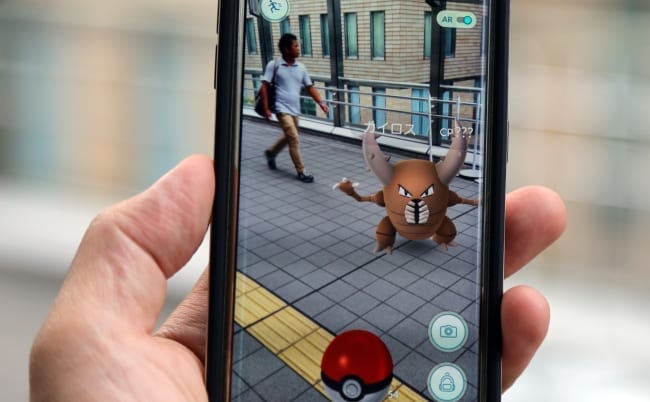
    “Pokemon Go,” produced jointly by Nintendo and U.S.-based Google spinoff Niantic, Inc., is a GPS-based mobile game that has users running through real-life locations to discover and collect virtual monsters, such as the all-famous Pikachu, via their smartphones.

    Though the game has yet to officially launch in Korea, it has been operational in parts of the country, including Sokcho of Gangwon Province since mid-July and most recently parts of Ulsan and Busan, where the game’s GPS signal is active due to technical glitches.

    Eager to play, thousands of avid Pokemon fans here have been flocking to such locations in the past few weeks, boosting business at local retailers in the region and prompting online retailers to introduce an array of Pokemon-inspired products.

    A sign welcoming Pokémon Go players hangs inside at a convenience store inside Sokcho, Gangwon Province, one of the few cities in Korea where the mobile game is active.

    Among the biggest beneficiaries are convenience stores in Sokcho which have been enjoying a sudden sales boom thanks to peaking demand for cell phone battery charging services as well as portable battery chargers.

    CU, the nation’s top convenience store operated by BGF Retail, said its outlets in Sokcho saw their sales from July 11-17 almost double compared to the previous week, thanks to the legions of “Pokemon Go” players in the area.

    During the period, sales of “battery charging” services at CU stores in Sokcho rose by 388 percent from the week before while sales of small electronic devices including portable batteries and earphones rose by 82.4 percent, BGF Retail said.

    A smartphone case featuring Pikachu on sale at Gmarket (Gmarket)

    Game players in Sokcho have been frequenting convenience stores in the area to rest and stock up on necessities such as ice, ice cream and water to fight the summer heat as well, boosting the stores’ daily sales, a CU official said.

    Joining other smaller businesses which have embraced unique forms of “Pokemon Go” marketing, discount supermarket chain E-mart’s Sokcho branch said it has begun offering free ice water to “Pokemon Go” players who capture a Pokemon on its premises.

    Targeting Sokcho-bound travelers, scores of mobile-commerce companies including Ticket Monster, 11st Street, Gmarket and Auction began organizing day-trip bus services from Seoul to Sokcho starting from July 12.

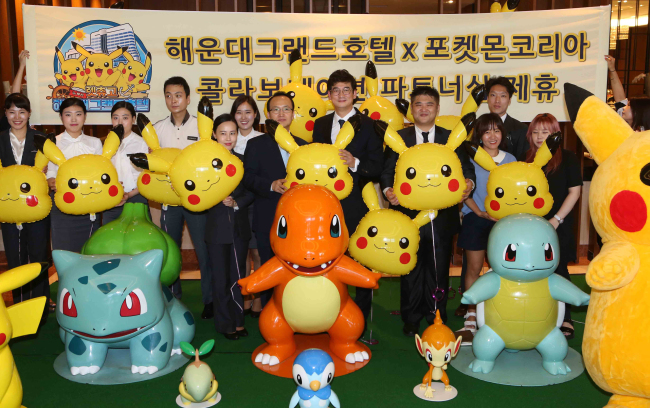
    The Haeundae Grand Hotel in Busan and Pokémon Korea celebrate their partnership during a ceremony held at the hotel on July 21. The hotel is offering diverse Pokémon-themed rooms, merchandise and eateries this summer as part of its joint promotion with Pokémon Korea.

    Meanwhile in Busan, the beachside Haeundae Grand Hotel has partnered with Pokemon Korea Co., in charge of all Pokemon merchandising in Korea, to offer specialized Pokemon-themed rooms, merchandise and eateries that tug at the hearts of local fans.

    Reflecting Pokemon’s resurgent appeal, sales of Pokemon-related toys, stationery and mobile accessories have surged as well. 11st Street saw sales of Pokemon items during July 11-17 rise by 57 percent compared to the previous week while Ticket Monster said sales of such products rose by 211 percent during the same time frame.

    Online retailer 11st Street is even holding a promotional event inspired by “Pokemon Go” — dubbed the “11Mon Go,” in which users can find and collect “11Mon” character while shopping on the website. Those who collect all the characters are eligible for prizes including round-trip bus tickets from Seoul to Sokcho, according to 11st Street.

  • ‘Pokemon Go’ catapults c-store sales in Korea

    ‘Pokemon Go’ catapults c-store sales in Korea

    Convenience stores in some areas in South Korea are enjoying a boom in sales brought by the latest mobile game craze ‘Pokemon Go’.

    ‘Pokémon Go’, an augmented reality app developed by Niantic, requires players to walk around and catch creatures called Pokémon using one’s smartphone.

    The hit game is not yet available in the country but a technical glitch made it accessible in a few locations such as Sokcho, Ulsan, and Busan driving people to flock to these areas, according to The Korea Herald.

    Top South Korean c-store operator CU reported that its outlets in Sokcho saw a jump in sales notably in battery charging services which rose by 388 percent and mobile accessories such as portable batteries and earphones by 82.4 percent.

    A rise in demand for ice cream and cold beverages due to summer heat has also been seen so the Sokcho branch of retail chain E-mart offers free ice water, as part of its marketing campaign, to ‘Pokémon Go’ players who can catch Pokémon creatures on its premises.

    Travel agencies, hotels, and retailers selling Pokémon merchandise are also cashing in on the game phenomenon.

  • JDC picks up gold award for effective marketing

    JDC picks up gold award for effective marketing

    The government-owned Jeju Free International City Development Center (JDC) – parent company of Jeju Duty Free – has won a Gold Prize at the recent Asia Tourism Marketing Festival, for its success in attracting Chinese visitors through its highly effective marketing efforts.

    JDC subsidiary, Jeju Duty Free operates at Jeju International Airport, the second largest airport in South Korea, behind Incheon International Airport.

    The company offers liquor and tobacco, perfume and cosmetics, watches, luggage and leathergoods, accessories, sunglasses, confectionery, ginseng, stationery and toys. Apparently Jeju Duty Free lists over 10,000 items in total from 190 different brands.

    The JDC entity aims to promote tourism, elevate the public image of Jeju and attact both domestic and foreign investment for business, public relations and marketing activities.

    JDC-Asia-Tourism-Festival-Awards

    JDC executives receive the gold prize for the company’s effective marketing efforts.

    Operating according to the South Korean government’s Special Act on Jeju Free International City, the corporation is affiliated with the Ministry of Construction and Transportation.

    On 11 June, JDC picked up the gold prize at the Asia Tourism Marketing Festival.

    JDC says that the company’s duty free shops make a concerted effort to offer customers a variety of activities and promotions, every season which has seen Jeju Duty Free obtain a high evaluation by ATMF.

    Attracting Chinese visitors to Jeju and into its duty free shops is of paramount importance to JDC, a Marketing Manager said.

    Jeju International Airport already benefits from healthy passenger traffic and in fact in the past has suffered from congestion, which has prevented some retail expansion.

    According to Korea Airports Corporation (KAC), JDC’s Domestic Terminal store, which covers almost 3,000sq m, recorded sales of KRW.338bn ($310m) in 2013.


  • Shilla Duty Free downtown and off-shore stores contradiction performance

    Shilla Duty Free downtown and off-shore stores contradiction performance

    The Shilla Duty Free posted a +29.0% year-on-year rise in second-quarter revenues for its Korean downtown duty free operations, reflecting a strong rebound from the MERS-ravaged corresponding period last year.

    Downtown store revenue climbed to KW538.2 billion (US$473.6 million) for the quarter, with growth outstripping the +23.5% increase in the total Korean duty free market (see Mirae Asset Daewoo chart below) for the period – encouraging news for Shilla given the increase in competitors following last year’s government licence additions.

    However, Korean airport sales fell -19.2% to KW198 billion (US$174.2 million), driven by a downturn in Incheon International Airport revenues caused by reduced floor space in the wake of last year’s tender results.

    Overseas duty free revenues (principally Singapore Changi Airport and Macau International Airport) rose by +16.3% year-on-year to KW121.3 billion (US$106.7 million). More pertinently, however, Shilla posted a KW12.3 billion (US$10.8 million) operating loss on those operations, reflecting in particular the high cost of entry at Changi.

    The offshore losses put a big dent in The Shilla Duty Free’s overall operating profits, which fell -51.4% to KW15.4 billion (US$13.6 million). Even profits on the more lucrative Korean downtown business fell sharply, down -39.0% to KW27.7 billion (US$24.4 million).

    A key factor in that decline has been, as we reported recently, the rocketing costs of commissions to Chinese travel retail agents – up from between 7% and 100% to around 23% since the advent of new duty free retailers last year. As one leading luxury brand executive told The Moodie Davitt Report recently, “The real winner in Korean duty free is the Chinese travel agent.” These numbers bear out that view.

    shilla July 2016 2

    shilla July 2016 3

    shilla July 2016 6The Shilla Duty Free is the key revenue and profits contributor to parent Hotel Shilla, whose consolidated revenues rose +13% year-on-year to KW954.1 billion (US$839.6 million), while operating profits tumbled -36.04% to KW18.7 billion (US$16.5 million).

    Group operating profit margin was 2.0%; with travel retail overall at 1.8%, Korean travel retail at 3.8% (6.1% downtown) and offshore duty free operations -10.1%.

    shilla_changi_opening_10feb2015_shilla5

    The Shilla Duty Free’s overseas airport operations once more posted heavy losses. The major problem lay with the heavy concession fees at Singapore Changi Airport (above). Pictured below is Shilla’s smaller operation at Macau International Airport, a joint venture with Hong Kong’s Sky Connection.

    NWS_Holdings_shop_0216_600_2MIXED REACTION FROM ANALYSTS

    MIRAE ASSET DAEWOO : Regina Hahm, Equity Analyst (Cosmetics, Hotels & Leisure, Fashion) at Mirae Asset Daewoo Research Center, said: “2Q earnings were way weaker than the market estimates.

    “However, I do think that it is positive that Shilla has further strengthened its existence in the market. It seems pretty apparent that group tourists have been absorbed by the Jangchung store [Shilla’s flagship Seoul shop -Ed], especially since the absence of Lotte World and WalkerHill.”

    In a review of Hotel Shilla’s results, Ms Hahm noted: “The domestic duty free business, which was hurt by the impact of MERS, resumed robust growth. Revenue from the downtown duty-free operation [of Shilla] climbed +29.0% YoY to KW538.2 billion during the quarter, meeting our expectation (+27.7% YoY). In the corresponding period, the overall duty free market saw revenue growth of 23.5% YoY, even as new entrants began full-fledged operations.

    “We think this shows the performance gap between major duty free players and less competitive, new players is widening further, which is natural given the importance of scale effects, the quality of sourced products, as well as experience in the duty free industry.

    Looking forward to Q3, typically a peak season for both inbound and outbound tourism demand, Ms Hahm foresees strong growth potential in Shilla’s duty free business, particularly given the low base line from the MERS-hit comparative quarter in 2016.

    She commented: “Airport revenue is likely to turn around in 3Q16, aided by the dissipation of high base effects.”

    Commenting on the group share price, she concluded: “Hotel Shilla shares have long been weighed down by a series of negatives, such as controversies over domestic duty free industry policies, the loss of licences by a few major players, and MERS.

    “In 2H, with the performance gap between new entrants and major existing players widening further, we expect Hotel Shilla to solidify its position as a leading player. Also, in our view, the stock could see a re-rating, given peak-season effects and strengthened market dominance.”

    Accordingly, Mirae Asset Daewoo maintained its ‘Buy’ rating on Hotel Shilla with a target price of KW110,000 (currently US$96.80), the stock brokerage and investment bank company’s top pick in tourism. By mid-afternoon today (26 July) it was trading at KW61,700, off by -0.80%.

    NOMURA: Analysts Cara Song and Jiun Im took a very different view, downgrading the stock from a buy to a reduce, and cutting their target price from KRW100,000 a share to just KRW47,000.

    In comments quoted by Barron’s Asia, they noted: “Operating profit margins at the domestic downtown duty free stores (Hotel Shilla’s sole profitable business) declined sharply to 6.1% in 2Q16 (vs. 8.8% in 1Q16, 10.3% in FY15). The company attributed this to a bigger contribution from lower-margin group tourists (from 70% in FY15 to 85% in 2Q16).

    “Considering that it is easier to attract group tourists than individual travellers by: 1) paying higher sales incentives to travel agencies; 2) more aggressive price promotions, Hotel Shilla’s customer mix has deteriorated, in our view.”

    HDC_Shilla_600_004 (1)

    Shilla IPark duty free is a stunning addition to Korea’s travel retail landscape. But Shilla’s overall reliance on group tourists, as opposed to higher-spending FIT customers, concerns Nomura.

    The analysts were particularly alarmed by the airport losses in Singapore, commenting: “Contrary to company guidance, Changi Airport DFS continued to struggle, with persistent losses in 2Q16. With the [Korean] government’s plan to issue additional DFS licences in 4Q16F, the DFS business environment could be dampened further.

    “Reflecting this, we cut our net profit estimate by 49.5%/36.5% respectively for FY16F/17F. Our FY16F/ 17F net profit estimates are c.33% lower than Street expectations (Fig.11).”

    Nomura also suggested there could be an added hit to earnings if Hotel Shilla’s planned part-acquisition of Miami-based DFASS Group in the third quarter falls through. The Moodie Davitt Report understands that constructive dialogue continues on that deal, though it is still some way from closing.

    shilla July 2016 1


    shilla July 2016 4

    shilla July 2016 5


  • Indonesian coffee showcase to open in Seoul

    Indonesian coffee showcase to open in Seoul

    Indonesia has high hopes of carving out a share of the crowded Korean domestic cafe scene and coffee market.

    A cafe specialising in artisanal Indonesian coffee is planned to open soon on the Bojeong-dong Cafe Street in Seoul. It will sell ground coffee and coffee beans from different regions in Indonesia, according to the Southeast Asian nation’s small and medium enterprises minister Anak Agung Gede Puspayoga.

    “As one of the top coffee consumers in the world, South Korea should buy more coffee from Indonesia,” he said.

    According to USDA data, South Korea’s coffee market is estimated at more than US$3 billion annually. Indonesia does not believe it is getting its fair share.

    The planned Indonesian coffee cafe will initially sell coffee beans grown in three cities: Temanggung in Central Java, Denpasar in Bali and Bandung in West Java, including Priyangan coffee, Indonesia’s version of kopi Luwak, the famed civet coffee, and Temanggung, its Arabica and Robusta coffee.

    The shop is part of a partnership hatched between the Korea Federation of Micro Enterprise, or KFME – which represents South Korea’s 7 million small businesses – and the non-profit International Council of Small Business.

    The partnership will also see prominent Korean bakeries provide training for Indonesian bakers.

  • Boots to launch in south korea

    Boots to launch in south korea

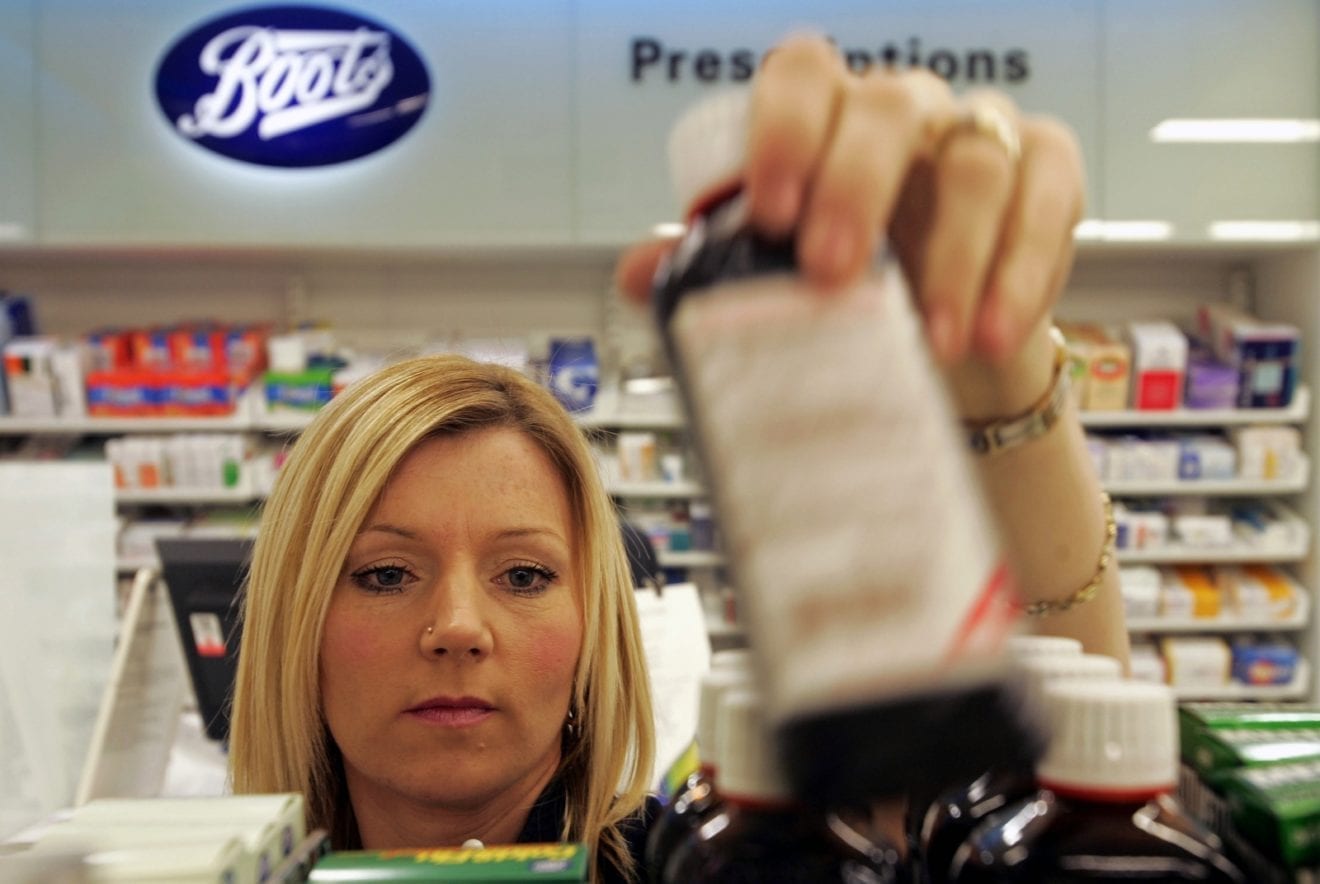
    Walgreens Boots Alliance, Inc. (Nasdaq: WBA), the first global pharmacy-led, health and wellbeing enterprise, today announced that it has signed an agreement to form a franchise partnership with Emart Company Ltd (a member of Shinsegae Group), South Korea’s number one hypermarket retailer. Together, they will create a Boots branded pharmacy-led, health and beauty retail franchise in South Korea.

    Under the terms of the agreement, Boots branded stores will be opened in shopping malls, on high streets and within the outbound areas of Shinsegae department stores and Emart hypermarkets. The Boots stores will each feature an independent pharmacy and a range of Boots owned products and ‘exclusive to Boots’ brands as well as leading Korean brands.

    “South Korea is considered a leading market for skincare and cosmetics products in Asia today.  We believe there is a significant opportunity to extend the reach of Boots own brands into this market and are thrilled to be doing so with Emart,” said Ornella Barra Co-Chief Operating Officer of Walgreens Boots Alliance. “Emart is the preeminent retailer in South Korea and their strong experience as well as their marketing expertise gives us great confidence in the long-term potential of this partnership.”

    “We are delighted to have the opportunity to introduce the Boots brand, and offer pharmacy care as well as acting as a beauty and healthcare destination by also offering a wide range of both Korean and Boots product brands.” said Gab-Soo, Lee, CEO of Emart Inc.

    The first stores are expected to open before the end of the first half of calendar year 2017 and will include Boots highly regarded and exclusive No7 and Soap & Glory products.