Tag: Korea

  • The next Korea’s largest retail multiplex

    The next Korea’s largest retail multiplex

    Shinsegae Group will open a multiplex shopping mall in Hanam in South Korea’s Gyeonggi province, around September.

    It says it will be the country’s biggest shopping multiplex with a dining area bigger than the Olympic stadium in Seoul. It will have four storeys above ground and another four below.

    As well as luxury brands, the mega-mall will even have vehicle showrooms including BMW, Hyundai and Harley Davidson.

    A Shinsegae department store and wholesale retailer E-mart Traders will bookend the mall.

    On the rooftop will be outdoor swimming pools and spas, while the fourth floor will feature a sports area with badminton, basketball and tennis courts.

    Shinsegae CEO Chung Yong-jin says the mall will be the culmination of the group’s retail know-how.

  • South Korea Industrial Production Gains 2.5% In May

    South Korea Industrial Production Gains 2.5% In May

    Industrial output in South Korea climbed 2.5 percent on month in May, Statistics Korea said on Thursday.

    That beat forecasts for a flat reading following the 0.8 percent decline in April.

    On a yearly basis, industrial production climbed 4.3 percent – topping expectations for a fall of 1.0 percent following the 0.8 percent increase in the previous month.

    The all-industry activity index was up 1.7 percent on month and 4.8 percent on year. The Manufacturing Production Index added 2.6 percent on month and 4.5 percent on year.

    The Producer’s Shipment Index gained 1.0 percent on month and 3.7 percent on year. The Producer’s Inventory Index added 0.3 percent on month and 0.5 percent on year. The Production Capacity Index was flat on month and gained 0.5 percent on year.

    The Index of Capacity Utilization Rate collected 2.1 percent on month in May and 0.7 percent on year. The Manufacturing Average Capacity Utilization Rate was 72.8 percent, up 1.5 percentage point from the previous month. The Index of Services climbed 0.1 percent on month and 3.4 percent on year.

    The Retail Sales Index added 0.6 percent on month in May and 5.1 percent on year. The Equipment Investment Index was flat on month and climbed 2.9 percent on year.

    The Domestic Machinery Shipment Index added 0.2 percent on year. The value of Domestic Machinery Orders Received in May gained 0.6 percent on year. The value of construction completed at constant prices added 2.9 percent on month and 20.2 percent on year. The value of Construction Orders Received at current prices tumbled 25.5 percent on year.

    The Composite Coincident Index added 0.4 percent on month. The Cyclical Component of Composite Coincident Index, which reflects current economic situations, added 0.2 points from the previous month.

    The Composite Leading Index in May added 0.3 percent on month. The Cyclical Component of Composite Leading Index, which predicts the turning point in business cycle, was flat on month.

    Also on Thursday, the bureau said that retail sales added 0.6 percent on month in May and gained 5.1 percent on year.

    That follows the 0.5 percent monthly decline and the 4.2 percent yearly gain in April.

  • Sungjoo Group seeks to make MCM ‘new school luxury’ brand

    Sungjoo Group seeks to make MCM ‘new school luxury’ brand

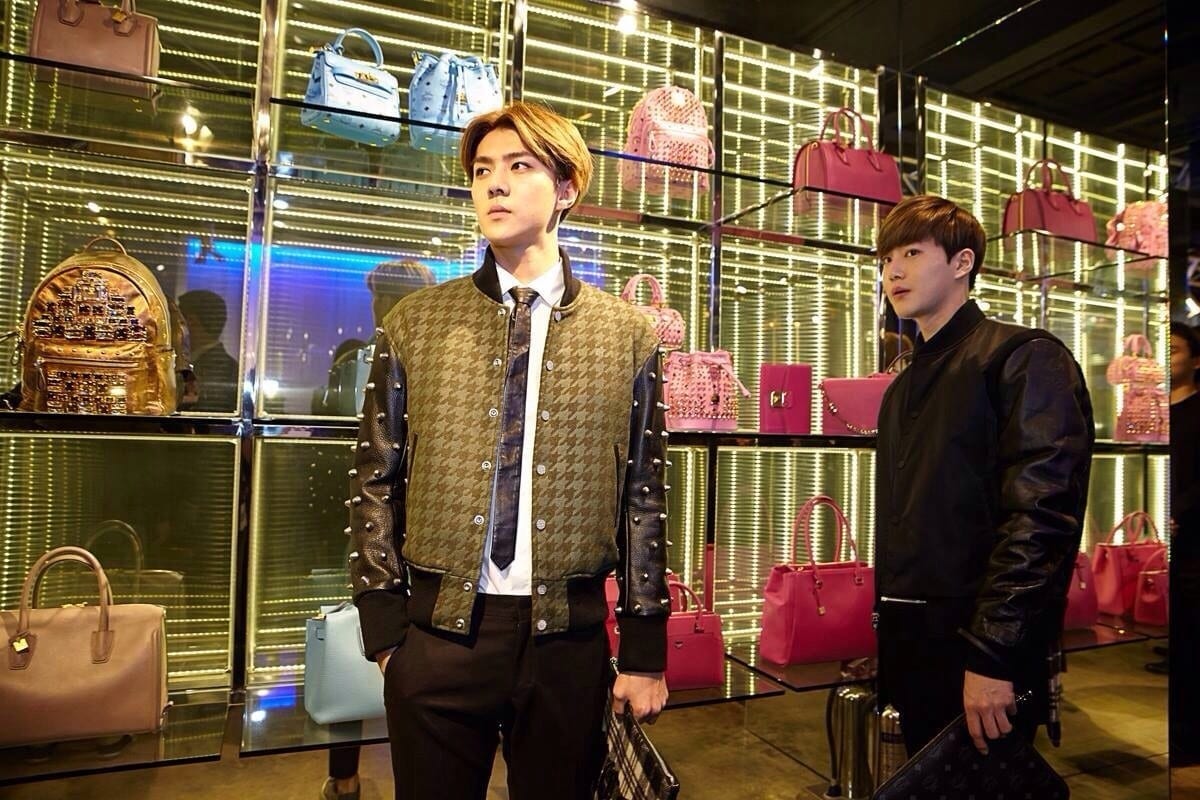
    South Korean fashion giant Sungjoo Corp., which owns and runs German luxury bag brand MCM, on Friday said it will adopt the latest technology to create an innovative fashion code and lead the new luxury trend.

    “We will combine technology and fashion to create the new framework in the luxury market,” Sungjoo Group said in the newly published book, titled “The Story of Sungjoo.”

    Sungjoo Group is a fashion retail group that operates franchise stores for leading British retail group Marks & Spencer, Yves Saint Laurent and Gucci in South Korea. It acquired Germany luxury leather goods brand MCM in 2005.

    “We will make MCM the ‘new school luxury’ that caters to various lifestyles and brings changes, not just making luxury products appealing to a small number of affluent customers,” it said.

    As part of efforts, MCM will present “wearable luxury” by collaborating with mobile devices and offer product information on smartphone applications.

    Celebrating the 25th anniversary of its foundation this year, Sungjoo Corp. said it aims to increase the number of MCM stores to 700 across the world and generate 2 trillion won (US$1.7 billion) in sales by 2020.

    When Kim Sung-joo first founded Sunjoo Group as a rare female entrepreneur of the country at the time, few would have expected the small firm could join the world’s top 50 fashion groups.

    Born into a prosperous family in South Korea in 1956, the youngest of six children is in all senses a maverick in her own family and the nation’s male-dominated business circle.

    Her father is Kim Soo-keon, the founder of Daesung Industrial Corp., a Korean conglomerate whose businesses range from energy and auto parts to oil and industrial gas.

    Graduating from Yonsei University, Kim defied her father’s demands not to enter business, and instead, went abroad to study at Amherst College in Massachusetts and the London School of Economics.

    Then while continuing her studies at Harvard University, she met a Canadian classmate and married him. Her furious parents disowned her, and she had to drop out of school and work at Bloomingdales in New York to support herself.

    After her apprenticeships in the luxury American department store, she came back to Korea and founded her own fashion business in 1991.

    As she couldn’t get any financial support from her father, Kim had to start her own business from scratch in a small office in Seoul.

    Witnessing changing consumption trends in South Korea in the 1990s, Kim believed that importing foreign luxury brands to the local market could be a good business venture and won franchise rights for British retail group Marks & Spencer, Yves Saint Laurent and Gucci. In years, Korea became the world’s fifth-largest market for Gucci.

    But the company had to streamline its business in the aftermath of the 1997 Asian financial crisis, which made royalty fees skyrocket and put icy water on consumer sentiment.

    After managing to stay afloat during the tough years, Sungjoo Corp., which had the licensing rights of German craft handbag maker MCM, decided to take over the then-struggling company in 2005.

    Under Kim’s leadership, Sungjoo Corp. resuscitated MCM’s slumping business with a series of innovative products and new way of marketing strategies targeting younger customers.

    Breaking the prejudice that practical backpacks can’t be part of luxury, MCM released unisex backpacks and big bags that have space for laptops. They turned out to be a big hit among younger customers and became signature items for the brand.

    Kim also started to open flagship stores in Europe, the United States and Asia, rapidly expanding the number of stores in China. Now, MCM sells in 30 nations, and China is one of its biggest markets.

    The spirited female entrepreneur, who always sticks to a signature short cut, bold eye makeup and red lipstick, has built her wealth from scratch, but monetary success is not her ultimate goal.

    The dedicated Christian always stresses that her employees “succeed to serve, not serve to succeed,” the book quoted her saying, presenting the 60-year-old CEO’s thick, wrinkled hands as a gesture of her support on the last page.

  • South Korea to Launch Nationwide Shopping Festival in Fall

    South Korea to Launch Nationwide Shopping Festival in Fall

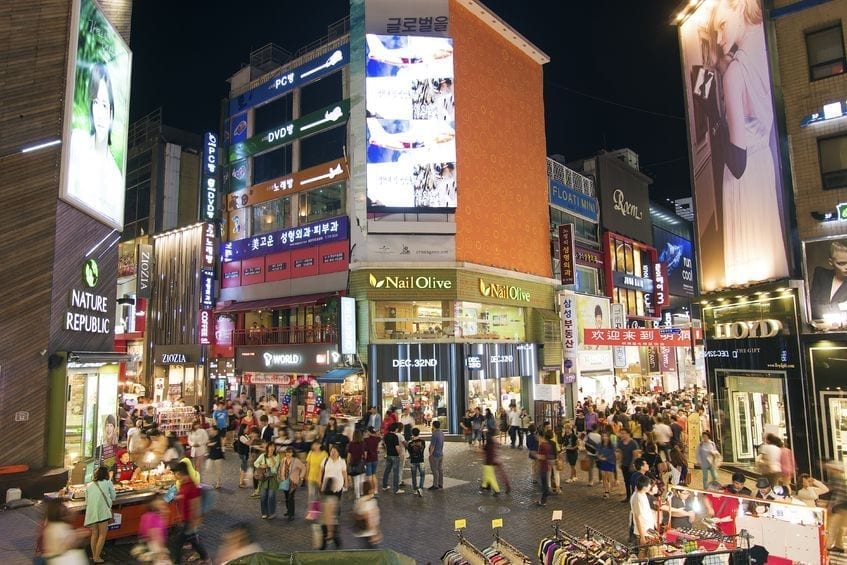
    South Korea will hold a nationwide shopping festival involving major retailers, manufacturers and traditional markets in the fall to draw foreign travelers and jack up lackluster domestic consumption, the government said Tuesday. 

    The Ministry of Trade, Industry and Energy and the Ministry of Culture, Sports and Tourism jointly formed a task force to create the massive shopping campaign, called “Korea Sale FESTA,” scheduled from Sept. 29 to Oct. 31. 

    “The government consulted with major manufacturers in consumer electronics, clothing, cosmetics and food industries, and they were positive about offering discounts on various items,” the ministries said in a release. “As Korea Sale FESTA is prepared well in advance, more manufacturers are expected to participate in this year’s event.” 

    The ministries separately held discount events last year as part of efforts to prop up the national economy hit hard by the Middle East Respiratory Syndrome outbreak last May.

    The culture ministry initiated a shopping festival called “Korea Grand Sale” from early September to mid-October during which retailers knocked down prices to woo back both domestic consumers and Chinese travelers during the long-haul national holiday. 

    Less than a month later, the trade ministry held another nationwide shopping campaign, called “Korea’s Black Friday,” during the first two weeks of October, to stimulate stagnant domestic consumption. 

    As last year’s discount campaign was criticized for hasty preparations and limited participation by retailers, the government formed a joint task force with industry officials this year to negotiate with retailers and manufacturers and offer shoppers better deals. 

    The culture ministry plans to provide support by hosting cultural and entertainment events with K-pop stars to attract foreign travelers, while the trade ministry will push for trade fairs and exhibitions to create a synergy effect. 

    The government will start promotion at home and abroad starting from late July and work with provincial governments and related organizations to link with local festivals during the period. 

    “We will combine shopping, tourism and culture to promote Korean culture and create a festive mood to bring in domestic and international consumers,” the ministries said.


  • Vietnam shopping center linked to Lotte’s slush fund scandal

    Vietnam shopping center linked to Lotte’s slush fund scandal

    South Korea’s Lotte Group has come under suspicion of using a shell company that owns a mega mall in Vietnam to funnel money into a possible slush fund.

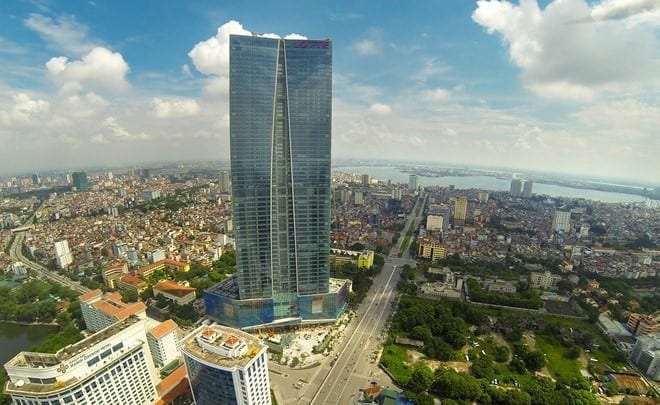
    Luxembourg-incorporated Coralis SA, the company in question, developed Lotte Center Hanoi at a cost of around US$400 million. The 65-story shopping and leisure complex was opened in September 2014.

    It recorded a net loss of 55.1 billion won ($47.31 million) last year, raising a suspicion that the conglomerate was exaggerating its losses to hide money, according to the report, citing sources from a Korean prosecutor’s office.

    According to another theory, Lotte Engineering & Construction, the project’s contractor, may have overcharged the developer to hide funds, The Korea Herald said.

    Coralis SA had been used for offshore tax evasion by Kim Seon-yong, the third son of former Daewoo Group chairman Kim Woo-jung, before being acquired by Lotte Asset Development in 2009 at 69.7 billion won ($59.86 million), according to The Korea Herald.

    Lotte Asset Development later sold a stake of 45 percent in the company each to Lotte Shopping and Hotel Lotte, it said.

    Lotte has denied the allegations, saying it bought Coralis SA to acquire the right to do business and lease land in Vietnam and that such practice is adopted by most companies when they invest overseas.

    The report came as South Korea’s fifth-largest conglomerate was facing an ongoing investigation for alleged corruption, illegal intragroup deals and embezzlement, according to Korean media.

    In Vietnam, Lotte has invested over $2 billion into more than 20 subsidiaries which operate in a wide range of sectors from retail to real estate. 

  • South Korea’s Woori Bank to form Vietnam unit by July

    South Korea’s Woori Bank to form Vietnam unit by July

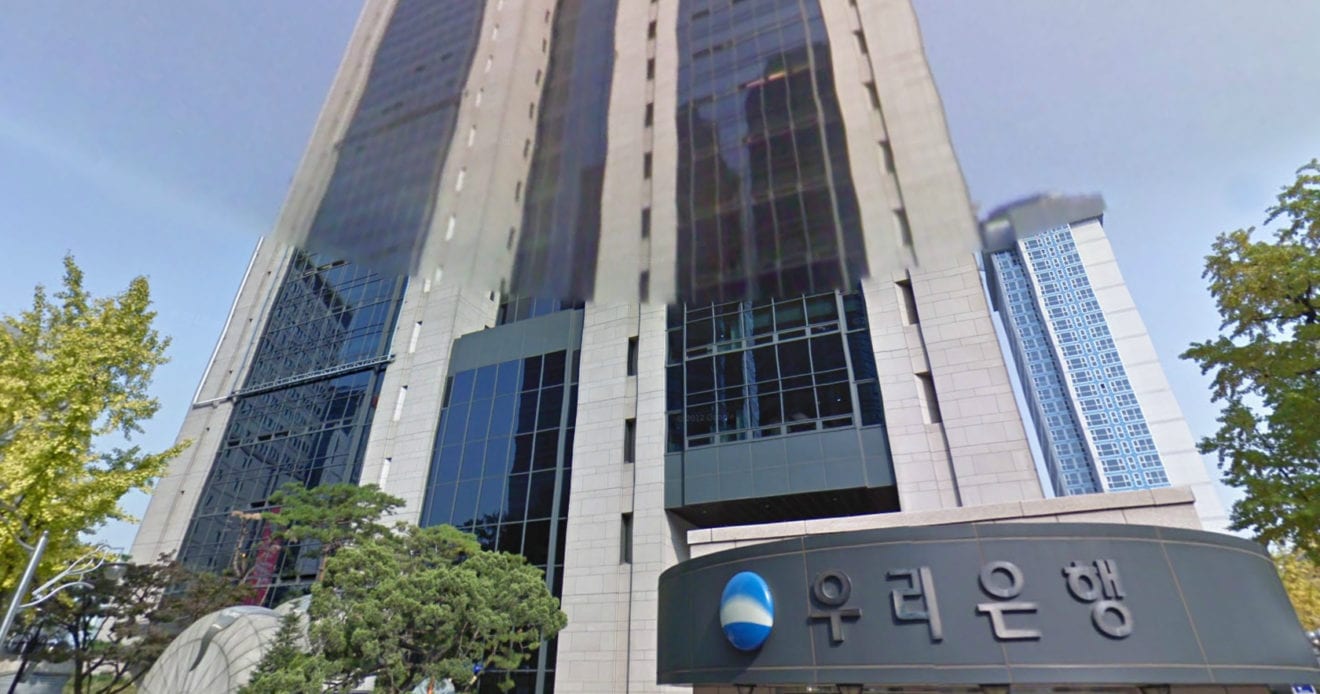
    South Korea’s Woori Bank expects to establish a Vietnam unit this month or in July, a bank official said on Tuesday, as part of the lender’s plans to expand its network in the expanding market of Southeast Asia.

    Woori Bank, South Korea’s largest bank in terms of consolidated assets as of the end of March, is awaiting approval from relevant authorities to established a wholly-owned unit in Vietnam, the official said.

    A Vietnamese banking source said the State Bank of Vietnam, the country’s central bank, was expected to grant a licence for the South Korean lender shortly.

    South Korea is now the biggest foreign investor in Vietnam, with large investments placed to turn it into a Southeast Asian production hub by Samsung Electronics Co Ltd and LG Electronics Inc.

    Other major Korean companies in Vietnam include Kumho Construction, Posco group, Hanjin Logistics and Kumho Tire.

    A free trade agreement between South Korea and Vietnam that came into effect last December gives more incentives for Korean firms to invest.

    Woori Bank’s Vietnam unit, once licensed, would most likely be a vehicle to expand South Korean investment in a country where it has been limited to operating two branches. Other competitors include HSBC, ANZ, Standard Chartered Bank as well as Shinhan Bank.

    With the expected approval, Woori Bank would seek to strengthen its localised service to Vietnamese retail customers through channels including its mobile banking platform Wibee Bank and chat app Wibee Talk.

  • Insect restaurant educating Korean palates

    Insect restaurant educating Korean palates

    Food researcher and marketing expert Kim Young-wook is helping educate South Korean palates with the country’s first insect restaurant, Papillon’s Kitchen in Seoul, with a menu including cookies, sandwiches and pasta.

    “The biggest challenge has been the ‘disgusting factor’ that is deeply lodged in people’s psyche,” says Kim, head of the Korean Edible Insect Laboratory. “They don’t even try it if any food looks unpalatable at first glance.

    “But once you make it look good and explain the nutritional value of insects, people would think differently – one reason we have focused our attention on developing food-processing technology.

    Kitchen Papillon 1His one-table restaurant is named after the 1973 US moviePapillon, in which an inmate in solitary confinement in a remote French prison eats cockroaches and centipedes to survive. The establishment is like a laboratory where Kim and his employees – mostly his pupils – devise ways to broaden the appeal of insects as food.

    Rather than focus on their ingredients, such as mealworms, silkworms and crickets, Kim has been promoting his food products as “low-carbon and high-protein”.

    The larval form of the darkling beetle, mealworms are powdered and used to make pasta, deep-fried rice balls, soup, macaroons, ice cream and sauces.

    Kim has taken his concept beyond Korea, last month participating in Eating Insects Detroit, the first US conference dedicated to edible insects.

    Meanwhile, Edible Inc, a food-tech startup in Seoul, has a coffee shop featuring the “mealworm 500 shake”, named for its key ingredient and the number of insects involved. The shop also has cookies and energy bars made from silkworms and grasshoppers.

    CEO Ryu Si-doo opened his company with the ambition of giving customers a “fresh and intriguing” experience and help them change their prejudices against food made of insects.

    In a report this year, the Korea Rural Economic Institute (KREI) estimated the size of the market for insects at 313.9 billion won (US$264 million) last year, up 90 per cent from 168 billion won in 2011. The government seeks to increase the size to 500 billion won by 2020.

  • New Hotels Keep Popping Up in Korea’s Most Celebrated Beachfront Community

    New Hotels Keep Popping Up in Korea’s Most Celebrated Beachfront Community

    Busan’s Haeundae district is best known for its beach that attracts millions of visitors each summer. But it’s also a major MICE (meetings, incentives, conferences, and exhibitions) center, with the Busan Exhibition and Convention Center (BEXCO),and hosts major annual events such as the Busan International Film Festival. Under these conditions, competition between hotels is higher than ever.

    In 2019, Haeundae will welcome another global hotel franchise unit, Sheraton, which will be operated by Starwood Hotels & Resorts Worldwide. Starwood currently owns 11 brands including Sheraton and Westin, and operates over 1,300 hotels in some 100 countries. The new 260-room hotel will be located between two major beaches in Busan, Haeundae and Songjeong.

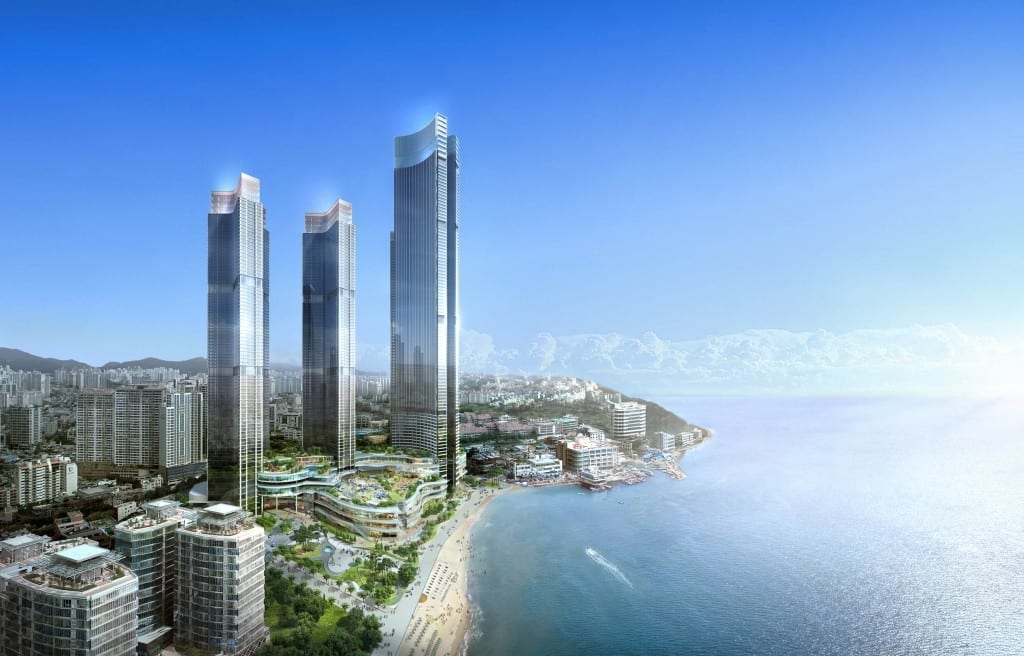
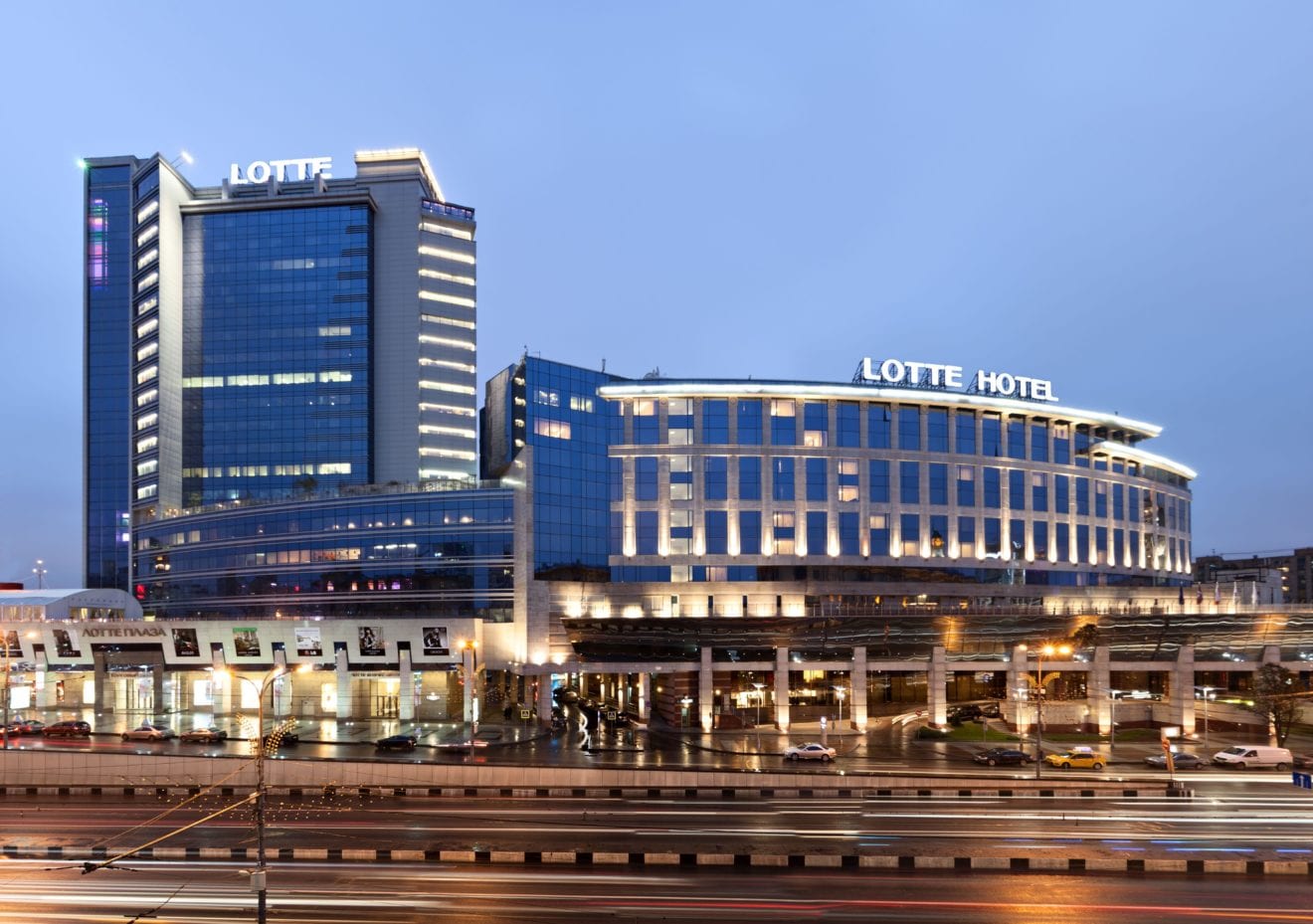
    Lotte Hotel has recently finalized plans to operate a luxury hotel inside the LCT Landmark Tower. The 101-storey tower, which is also located by Haeundae beach, is expected to be completed in 2019.Busan’s Haeundae district is best known for its beach that attracts millions of visitors each summer. (image: Wikimedia)

    Korean retail giant Shinsegae is in the middle of the planning process to build a hotel that offers a somewhat differentiated service by connecting services with shopping. The hotel will be built across from the company’s Centum City store, which is the largest department store in the world. 

    A Japanese company, Sega Sammy Holdings, has also established plans to build a luxury hotel (312 rooms) and a business hotel (470 rooms) on the opposite side of BEXCO. 

    Hotel Shilla, a Samsung subsidiary that operates hotels and duty-free shops, is building a 406-room business hotel, which is expected to open in 2017.

    Lotte Hotel has recently finalized plans to operate a luxury hotel inside the LCT Landmark Tower. The 101-storey tower, which is also located by Haeundae beach, is expected to be completed in 2019. (image: LCT)

    Amid such changes in the area, some businesses welcome the new development plans, while there are those that suffer from the increasing availability of new accommodations. 

    “The hotel market in Haeundae has reached its saturation point, and we have been struggling with our operations,” said an official from one of the hotels in Haeundae. “The government should limit the number of hotel approvals in the area.” 

    “We need a large number of hotels to host large-scale events,” said a MICE industry affiliate. “It’s too early to say that the hotel market in Haeundae is over-saturated. We need more hotels for the continued growth of the MICE industry.”


  • H&M collaborates with Caitlyn Jenner for its newest athleisure range

    H&M collaborates with Caitlyn Jenner for its newest athleisure range

    A new H&M athleisure wear range is to be launched in July, developed with input from the Swedish Olympic team and fronted by personalities including Caitlyn Jenner.

    The launch of For Every Victory makes H&M one of the first major multinational fashion brands to make a serious foray into the booming athleisure wear market, to date dominated by fast-growing specialist brands including Lululemon, UnderArmour and 2XU.

    H&M -For Every Victory

    H&M For Every Victory – described by the H&M as “high fashion performance sportswear made to inspire” has been developed with input from the Swedish Olympic team, and the campaign is fronted by inspirational personalities who have all achieved their own victories, whether in sport or life.

    H&M -For Every Victory 1

    The athletes advised on design, performance and wearability. H&M also designed outfits for the Swedish Olympic and Paralympic team for Rio 2016, including the opening ceremony uniform, selected competition pieces and the prize ceremony outfits.

    “This is a collection about performance with great style and the input of the Swedish Olympic team has been invaluable in the creation process,” said Pernilla Wohlfahrt, design and creative director at H&M. “The result is high fashion technical sports pieces for everyone to wear.”

    The For Every Victory collection has a similar visual expression and technical knowledge to the Swedish Olympic team collection, with its own colour palette in black, grey, dusty pink and gold. It is centered on performance T-shirts, running shorts and leggings, as well as sports bras for women.

    H&M -For Every Victory 3

    The quick-drying, breathable materials help to optimise performance and recycled polyesters prove that high-function sportswear can also be conscious and more sustainable − all showing that there’s no compromise on either fashion or performance.

    H&M -Olympic collection

    Among the personalities fronting the new range are Caitlyn Jenner with her Olympic gold medal in the decathlon; Chelsea Werner, a gymnast who has never let Down Syndrome halt her progress; surfer Mike Coots who still takes to his board even though he lost his leg in a shark attack and boxer Namibia Flores who has fought against prejudice to pursue her dreams.

    The new range and brand will be launched globally on July 21.

  • South Korea prosecutors raid more Lotte Group firms

    South Korea prosecutors raid more Lotte Group firms

    South Korean prosecutors carried out further raids on businesses of the Lotte Group, a sprawling conglomerate at the centre of a bribery probe.

    At least 10 divisions were raided including its chemical and confectionery businesses, a spokesman said.

    The raids come after police swooped on the group’s headquarters on Friday.

    This caused the company to pull out of a stock market share sale worth as much as $4.5bn (£3bn).

    The allegations and police action also led Korea’s fifth largest conglomerate to pull out of bidding for the US chemicals company.

    Shares in both the chemical and confectionery group have fallen sharply since Friday’s raid.

    Bid withdrawn

    People familiar with the matter told Reuters that Friday’s raids, which involved about 200 prosecutors and investigators, were part of an investigation into a possible slush fund, although the Seoul prosecutors office could not be reached for comment.

    Lotte’s offer of shares to the public, known as an initial public offering, had been intended in part to simplify the ownership structure and improve corporate governance at the group.

    This followed a bitter feud over succession among the founding Shin family last year drew wide public criticism.

    The group has more than 90 firms in sectors as diverse as beer, hotels and chemicals, and annual revenues of around $60bn, according to the Korea Fair Trade Commission.

  • Benetton Group takes control of Korean operations

    Benetton Group takes control of Korean operations

    In the midst of reorganisation to improve competitiveness, Benetton group has decided to take back its distribution arm in South Korea. Both Benetton brands and Sisley have for a long time been represented in the country via a 50/50 joint venture with a local distributor. The Italian group announced this week it now owns 100% of this structure with the latter becoming one of its subsidiaries.


    Hyung Rae Cho, CEO of the newly created Korean subsidiary – Benetton.

    South Korea is a very important country to the group, since it is the second export market for Benetton after India and the top export country for Sisley. The group’s annual brand sales are estimated at 150 millions euros in the region across 300 points of sale.

    It’s a strategic market too, influential in the Asian region as whole, becoming a sort of base camp for the Italian group.

    Benetton wants to continue in the right direction after taking back the distribution reigns. It revealed it has appointed the country manager of the former structure, Hyung Rae Cho, to the role of CEO of the newly created Korean subsidiary.

  • Samsung to launch cheapest smartphone Galaxy On7 in Korea

    Samsung to launch cheapest smartphone Galaxy On7 in Korea

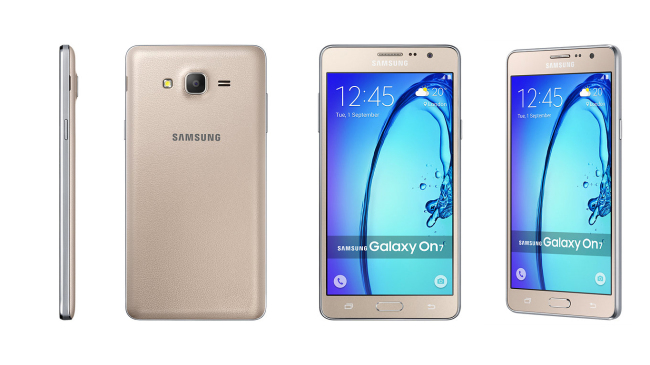
    Samsung Electronics is expected to launch another budget smartphone Galaxy On7 in Korea in the coming weeks via SK Telecom, sources said on June 15.

    The model is the Korean tech giant’s cheapest smartphone that is sold at 10,190 rupees ($153) exclusively in India currently.

    Launched in November, the phone features a 5.5-inch HD Display, a 13 million pixel rear camera, a 5 million pixel front camera and a 3000mAh battery.

    Samsung’s cheapest smartphone Galaxy On7

    Sources said the Korean version could upgrade some features, with its retail price being slightly raised.

    In Korea, Samsung’s cheapest smartphone is Galaxy J3 with a price tag of 231,000 won ($196).

  • eBay Korea Partners With GS25 to Offer Online-Offline Services

    eBay Korea Partners With GS25 to Offer Online-Offline Services

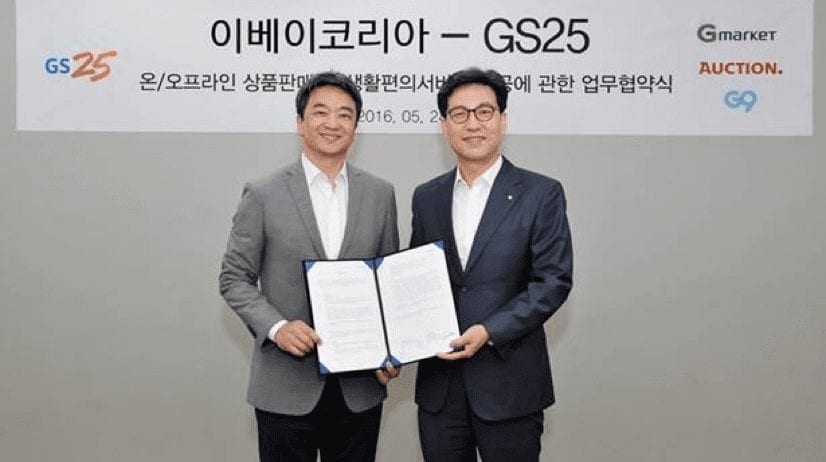
    eBay Korea has joined forces with nationwide convenience store chain GS25 to offer consumers a combined online-offline sales service.

    The partnership will see the launch of the “Smile Box” service, in which deliveries are made to an unmanned box for single-person households and female customers. The service is available 24 hours a day, and customers will be able to receive their deliveries ordered online from Gmarket, Auction and G9 at their nearest GS25 store.

    The service will begin in August with a trial installation of Smile Boxes across 50 GS25 stores in Seoul, with the plan to gradually expand it nationwide. The boxes will be installed in areas with a high number of deliveries (determined through analysis of Gmarket and Auction delivery information) that have a large concentration of single-person households.

    This “customer-centric endeavour is the future for online and mobile shopping,” said an eBay Korea representative. “We hope to build an enhanced, more convenient shopping environment for our customers.”

  • Drone deliveries now possible in Korea

    Drone deliveries now possible in Korea

    Flying drones for business will become legal in South Korea from next month, allowing the possibility of drone deliveries.

    Laws about drone flights have been revised by the Ministry of Land, Infrastructure and Transport. Previously, aeronautical laws permitted only a limited number of businesses to use drones for work related to agriculture, photography and surveys.

    Now businesses will be able to use drones so long as their use does not pose harm to public safety, lives, property or national interests such as security and defence.

    Also modified is the stipulation for drones not needing approval and inspection from “below dead weight of 12kg” to “below maximum take-off weight of 25kg”.

    Drones that are flown at the same location will need only one approval for a maximum of six months. Within certain limits, flying drones out of sight and night flights will also be allowed.

    These amendments will allow business owners to grow their businesses through drone deliveries.

    Original reporting by Korea Bizwire.

  • Will Lotte Chairman Shin Dong-bin be questioned?

    Will Lotte Chairman Shin Dong-bin be questioned?

    A series of prosecution probes on alleged embezzlement and malpractice in subsidiaries of Korea’s retail giant Lotte Group hints that the nation’s fifth-largest family-controlled conglomerate’s chairman Shin Dong-bin may be questioned as well.A high-ranking official at Seoul Central District Prosecutor’s Office didn’t rule out the possibility that prosecutors may issue an arrest warrant; however, the time hasn’t ripened yet.

    “In prior cases such as SK and Hyosung, prosecution summoned a number of company officials and tracked the flow of funds to secure solid evidence before questioning group owners. I think it is too early to discuss whether or when to call Lotte chairman Shin,” a senior prosecutor told The Korea Times by telephone, Sunday.

    Key Lotte Group affiliates were being probed over their role to create a slush fund to bribe influential local politicians in return for winning advantages to push ahead the group’s fancy business projects and for massive accounting fraud.

    Prosecutors raided offices of Lotte Group, which were immediately reported to the chairman. Prosecutors issued an international travel ban on Shin’s confidants in what officials say is a preemptive measure before questioning the chairman.

    The official said Lotte’s senior executives “intentionally and systematically” destroyed evidence ahead of the raids, raising possibilities that the chairman was earlier informed of these actions.

    “Lotte Group attempted to destroy and hide related documents and evidence when it underwent a tax audit last year,” he said. “We confirmed that the group did the same this time but were able to secure most of the hidden documents.”

    Shin’s house was also raided while he was in the U.S. for business. The chairman is expected to be questioned by prosecutors upon his return to Korea, but some say it’s still uncertain whether the chairman will return next week, as scheduled.

    “The chairman will be notified of developments of the probe by prosecutors and his return date will be fixed according to the situation. The country’s top law firm Kim & Chang supports Shin,” said an official who is involved with the issue, by telephone.

    Prosecutors believe Chairman Shin has connections with his older sister Shin Young-ja, who allegedly coordinated bribery with failed business tycoon and lobbyist Nature Republic CEO Jung Woon-ho. Young-ja was said to take bribes from Jung in return for granting approval for Nature Republic to open its brand shops at Lotte Free Duty stores.

    No way out

    Due to growing uncertainties about the chairman’s destiny, Lotte’s key business plans have been stalled.
    In a statement, Lotte Chemical, the group’s key petrochemical affiliate, said it dropped its ambitious bid to purchase U.S. company Axiall. Lotte Chemical said the decision was mostly due to possibilities that the group may fall into managerial vacuum.
    More importantly, analysts say Lotte Group’s plan to put the Lotte Hotel for the listing in Korea, which has been slated for next month, may be delayed as the investigation is expected to be widen, hurting investor sentiment.

    The listing of Hotel Lotte is one of the reform pledges that Lotte Chairman Shin has made as part of his efforts to improve its corporate image overall.

    “It’s almost impossible to finalize the IPO by July. I don’t even think Lotte Hotel will be able to be listed this year. The initial IPO price for the hotel will be discounted further given the current market situation,” said a local analyst asking not to be identified.

    Meanwhile, the succession feud, which had seemed to come to an end, is seen to enter a second round with the latest prosecutors’ investigation as Shin’s older brother Shin Dong-joo preparing a fresh attack against the Lotte chairman over his alleged misconduct.

    Analysts say the latest probes are believed to hurt the credibility of Chairman Shin as group leader, and Dong-joo may bring up the issue at the shareholders’ meeting of Tokyo-based Lotte Holdings next week, which controls the group both in Korea and Japan.