Tag: Korea

  • Hyundai Motor net profit plummets 67%

    Hyundai Motor net profit plummets 67%

    Hyundai Motor’s operating profit plummeted 76 percent on-year in the third quarter as a recall in the U.S. and sluggish growth in major markets hurt the automaker’s bottom line. Korea’s No. 1 carmaker by sales announced Thursday that it posted 289 billion won in operating profit in the July-Sept. period.

    Its net profit was 306 billion won, down 67.4 percent on-year.

    “To fortify quality control, Hyundai Motor rolled out a recall related to airbags and engines which resulted in a 500 billion won one-time cost realized in the Q3 report,” said a Hyundai Motor official.

    Operating costs totaled 3.4 trillion won in the third quarter, according to the carmaker, which is 8.6 percent more than during the same period last year.

    Despite good sales in Europe and emerging markets like Brazil and Russia, low demand in the U.S. and China dragged down overall sales. It sold 1.12 million units globally in the third quarter, 0.5 percent less than during the same period last year.

    The domestic market got a bost from the new Santa Fe SUV, but a decreased number of operating days at dealerships resulted in Hyundai Motor selling just 171,443 units, a 1.4 percent drop compared to last year. Chinese sales dropped by 3.7 percent on-year, selling 181,000 units. Sales in the U.S. dropped by 4.1 percent on-year to 302,000 units.

    Hyundai Motor expects profitability to improve in the fourth quarter and going into next year with the launch of new SUV models and a reduction in costs.

    “In the fourth quarter, the new Santa Fe SUV and an upgraded Tucson SUV will launch in the U.S.,” said a Hyundai Motor official.

    “The implementation of a new platform starting next year will help reduce costs and raise efficiency as well.”

    Hyundai Motor shares fell by 5.98 percent to 110,000 won on Thursday as of press time.
  • The Face Shop loses trademark battle with Louis Vuitton

    The Face Shop loses trademark battle with Louis Vuitton

    Korean cosmetics firm The Face Shop has lost a trademark infringement case filed against it by French luxury brand Louis Vuitton. The infringement case relates to Face Shop’s collaboration with American brand My Other Bag, known for its parodies of luxury products. LV has unsuccessfully pursued My Other Bag for damages in American courts.

    Seoul’s Central District Court has ruled The Face Shop to cease trading in products featuring Louis Vuitton designs and pay KRW50 million (US$44,080) in fines.

    The Face Shop failed in its defense that their products were a parody due to the low market profile of My Other Bag in Korea and the difference in how The Face Shop used LV designs compared with My Other Bag’s parody products.

  • Asia-Pacific telcos to face slower revenue growth: Moody’s

    Asia-Pacific telcos to face slower revenue growth: Moody’s

    Moody’s Investors Service expects stronger competition for the Asia Pacific (APAC) telecommunications sector and stronger commoditisation, and slower revenue growth for companies across 11 markets in the region, including Malaysia. The other markets are Hong Kong, India, Indonesia, Japan, Korea, the Philippines and Singapore.

    The rating agency’s report entitled “Telecommunications – APAC: 2019 Outlook” noted that while slower overall revenue growth will be evident in all 11 markets, the emerging market is expected to see a more pronounced slowdown with revenue growth to fall to 3-3.5% in 2019 versus the 3.9% in 2017.

    “Comparing overall revenue growth across APAC with GDP (gross domestic product) growth, Moody’s says that companies as a whole will show modest revenue growth of 2-2.2%, with such growth lagging average GDP growth of about 4.6% for the region,” said Moody’s vice-president and senior analyst Nidhi Dhruv.

    Meanwhile, new entrants are expected to intensify competition in Singapore, Japan and Australia.

    High shareholder returns and capital expenditure levels will continue to temper free cash flow generation, which will consequently make companies to look into diversifying revenue as traditional telecommunications revenues contract. This will eventually lead to more cross-industry partnerships.

    Additionally, while 4G will remain the dominant technology used by telecommunications companies in APAC, 5G will gain some traction in 2019-20.

    Japan, Korea and Australia are expected to lead the region in rolling out 5G services in 2019.

    Nevertheless, Moody has given a stable outlook for the sector in APAC 2019, with companies in the region likely to show relatively stable leverage and debt levels over the next 12-18 months.
    Moreover, while liquidity is weakening, it remains supported by the companies’ access to the banks and bond market at current levels.

  • Fair to screen startup hosted by LG

    Fair to screen startup hosted by LG

    Technology-related subsidiaries of LG hosted a fair on Monday in which 20 local start-ups presented their cutting-edge developments in areas such as autopilot technologies, artificial intelligence and big data. The small firms are seeking partnerships with and support from the fourth-largest conglomerate in Korea.

    LG picked the start-ups jointly with the Korea International Trade Association (KITA), hoping to revitalize local start-up ecosystem.

    The conglomerate is providing a venue for the fledgling firms to mingle with their larger counterparts and find new business opportunities.

    LG subsidiaries participating in the event include LG Electronics, LG Display, LG Innotek, LG Chem, LG U+ and LG CNS.

    Executives and researchers from those companies as well as KITA CEO Kim Young-ju paid a visit to the start-up fair, which took place at the LG Science Park in Magok, western Seoul, and had a closer look at technologies and services featured.

    Funnel, for instance, has developed a voice-recognition system that automatically collects information from television broadcasts. The resulting database can be used for artificial-intelligence smart speakers and voice-command chat bots.

    Venta VR owns a technology that is able to tape high-resolution 3D videos and calibrate the video images afterwards in a way that enhances the level of immersion and minimizes visual fatigue.

    LG will offer some of the participating start-ups office and research space inside the LG Science Park as well as technology-related consulting and funds.

    Companies under the LG umbrella have been increasing support for start-ups.

    LG Electronics is backing four start-ups that are in the web operating system business, whereas LG CNS and LG Display have been running their own programs.

    LG-led tech fairs aimed at locating and supporting promising local start-ups have been held in the United States, Germany, Israel and Russia.

    With a German start-up discovered during a tech fair in Europe, LG developed a linear compressor technology for refrigerators.

    LG says it will apply the cooperation system it developed overseas to Korean start-ups and smaller companies.

    “Future cooperation with start-ups will propel their global outreach,” said an executive at the LG Science Park.

  • SK Group continues to focus on social value

    SK Group continues to focus on social value

    SK Group is reevaluating its business models in a bid to ensure that all of its affiliates create social value along with economic value. SK Chairman Chey Tae-won and the heads of all SK affiliates discussed ways to renew their business models so that doing business leads to increasing benefits for the public as well as SK shareholders and employees during a three-day meeting on Jeju Island that ended Friday.

    “Creating social value is a way to earn strong trust from our customers and society,” Chey said. “By social value, I mean increasing the benefits of all stakeholders in our business including our customers, shareholders and employees.”

    Chey then ordered the chief executives to think over whether there was any part of their business that they are tricked into believing is sustainable.

    “Rethinking business models that you believe are sustainable is the beginning of a deep change that we are trying to accomplish,” the chairman added.

    SK has been making small steps into realizing Chey’s vision from earlier this year. The group’s oil refining arm SK Energy opened up the idle space at its gas stations so a logistics start-up can move in and use the space as storage.

    However, many other SK affiliates still need to come up with ideas to create social value.

    To renew business models, the CEOs agreed that sharing data and resources between SK affiliates is crucial. The heads also said that all members of SK should be a part of the movement for the vision to materialize.

    The chief executives first decided to improve human resources management policies and the research and development system. Details of the discussion weren’t revealed, but Chey ordered the chief executives to rethink the work environment for employees and to bolster R&D capabilities.

    As SK has businesses in a range of industries, the group is also thinking about business convergence among affiliates.

  • LG Chem to build China facility

    LG Chem to build China facility

    LG Chem said Tuesday that it will invest 2.1 trillion won ($1.8 billion) by 2023 to build electric vehicle batteries in China in the latest move to meet growing demand for batteries for zero-emissions cars. Korea’s top chemical company said it has broken ground on a three-story plant on the 198,300-square-meter (49 acre) site in Nanjing in southeastern China.

    The plant is set to roll out electric vehicle batteries that can power more than 500,000 electric vehicles. The first phase of production is set to begin late next year.

    An electric vehicle equipped with LG Chem batteries can travel about 320 kilometers (198 miles) on a single charge, according to LG Chem.

    LG Chem Vice Chairman and CEO Park Jin-soo said the second plant in China will allow the company to better meet rapidly growing global demand.

    LG Chem has another electric vehicle battery plant in Nanjing. It also operates electric vehicle battery plants in Korea, the United States and Poland.

    The electric vehicle battery market has been on the rise as automakers around the world race to go electric due to tightened regulations on greenhouse gas emissions, which scientists say are to blame for global warming.

    Currently, LG Chem is a key supplier of batteries to U.S. auto giant General Motors, Volvo and Renault, as well as Korea’s largest carmaker, Hyundai Motor, and its smaller affiliate, Kia Motors.

  • Samsung offers laptop with millennial style

    Samsung offers laptop with millennial style

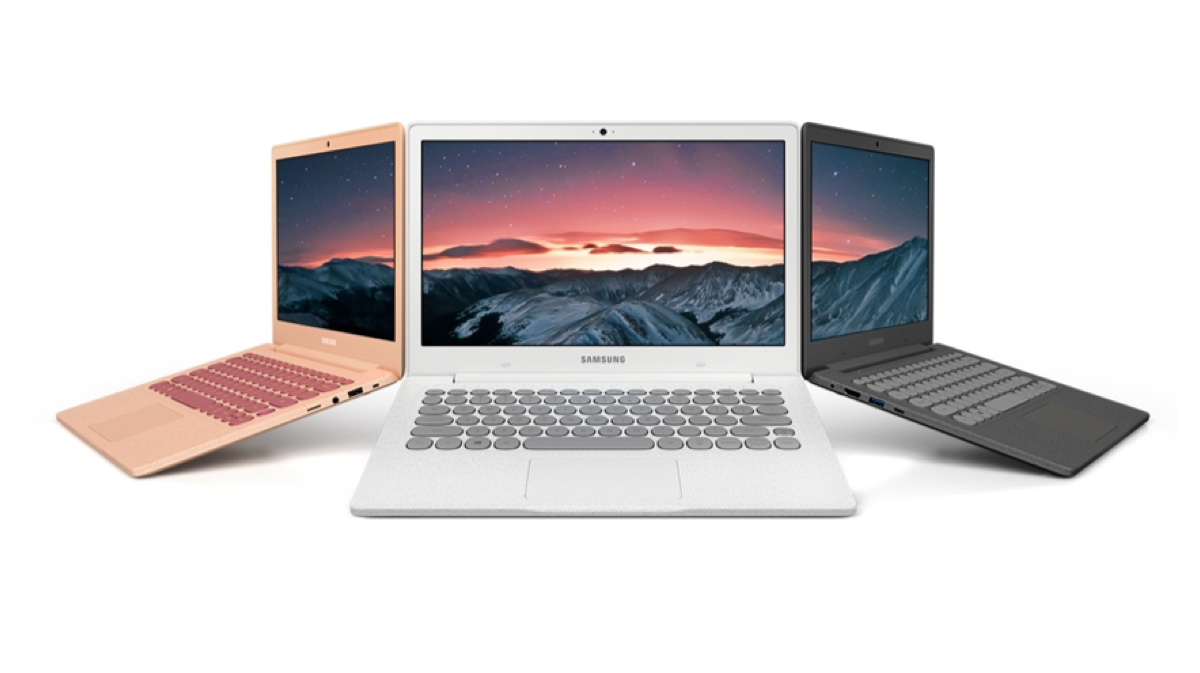
    Samsung Electronics introduced on Monday a laptop it believes will appeal to millennials.  The 13.3-inch computer, the Samsung Notebook Flash, has rounded key caps reminiscent of old typewriters. Its palm rest has a coarse fabric, not conventional metal, which feels comparatively warm, Samsung explained.  The new device is based on the Windows 10 operating system.

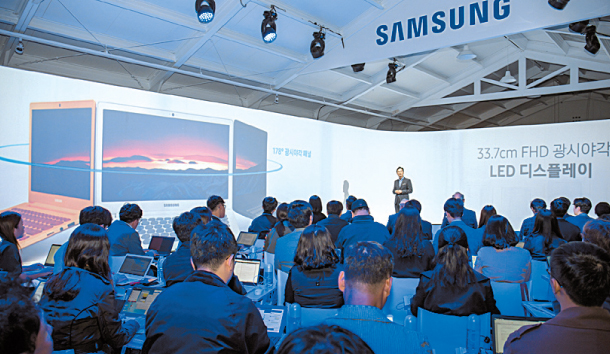
    “We worked with Samsung Design Europe to come up with a refined European model that millennials would want,” said Lee Min-chul, managing director of the company’s PC business unit at a launch event in northern Seoul on Monday.

    The laptop comes in three cover designs: linen white, twill charcoal and soft coral. It is powered by Intel’s latest gigabit WiFi chip, rated for download speeds of up to 1.7 gigabytes per second – a speed that Lee says is currently the fastest.

    The laptop supports universal flash storage, a flash storage that achieves five times the reading speeds of MicroSD technology.

    Fingerprint login capabilities and a secret folder, in which the user can save important files, contribute to a high level of security.

    But at 1.37 kilograms (three pounds), the new device is relatively heavy, weighing much more than typical one kilogram ultra-light laptops.

    For Samsung, a top global vendor of smartphones, semiconductors and TVs, laptops are a weak spot.

    The tech giant ranks behind the six largest players – HP, Lenovo, Dell, Apple, Asus and Acer. Those six have about 89 percent of the global market, according to TrendForce in a February report.

    Samsung, LG and others make up the remaining 11 percent.

    Samsung currently retails laptops only in Korea, the United States, China and Brazil. A full 45 percent of all laptops sold globally are sold in these markets.

    Samsung’s annual shipment of laptops totals about 3.2 million units, according to the company.

    The target for Flash laptop sales in the four target markets is one million units.

    Despite its minimal global presence, Samsung is committed to the laptop business, said Lee, citing the device’s “connectivity” with other devices.

    “PCs are central when it comes to IT devices they support – such as monitors, printers and even mobile phones,” Lee said.

    Laptops have been evolving in different ways in recent years, and Samsung wants to develop hybrid products, including laptops with foldable displays.

    “But it’s not only about hardware. It’s important to provide new usability,” he added.

    Coming in two storage sizes – 64 gigabytes and 128 gigabytes – the Flash laptop carries a price tag of 810,000 won ($717).

    But a model specifically designed for wireless operator KT can be purchased for 8,000 won per month on a 36-month subscription with KT’s internet service and the Olleh internet protocol TV.

  • New fashion inspiration for young South Koreans

    New fashion inspiration for young South Koreans

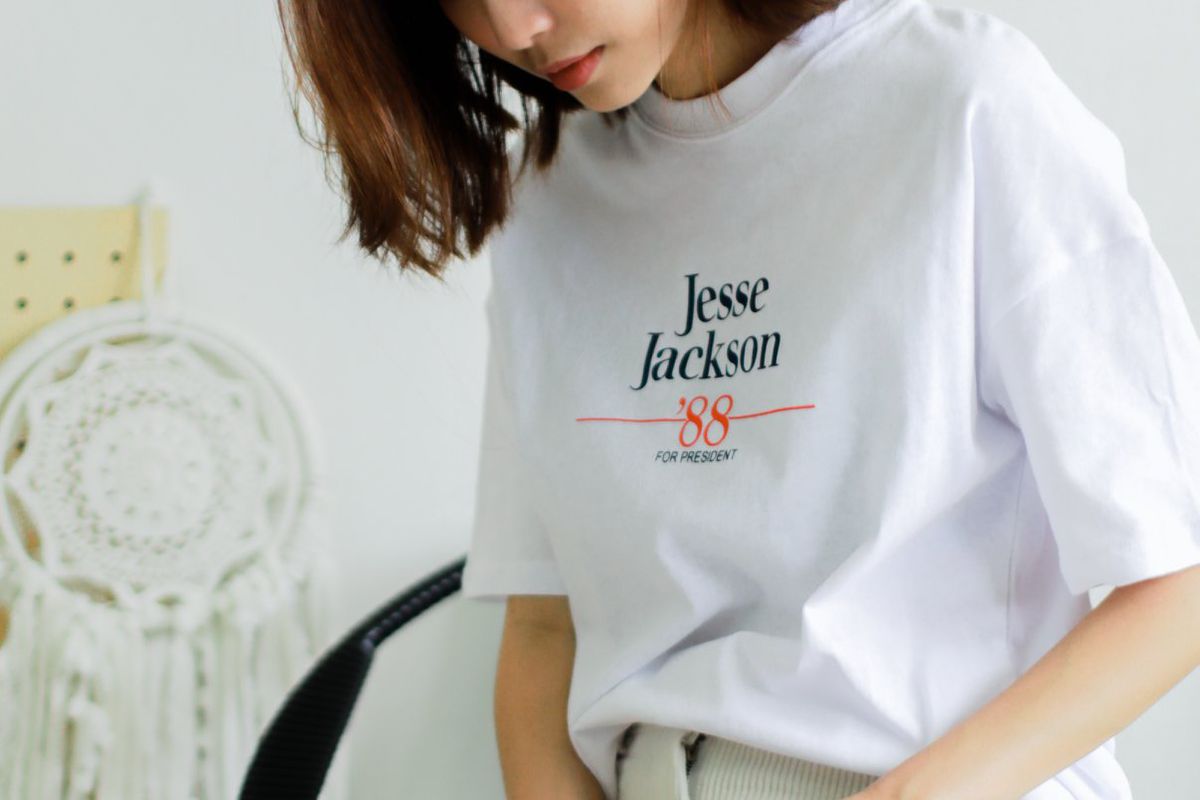
    Among young South Koreans, civic rights activist and Democratic presidential nominee Jesse Jackson’s 1988 campaign T-shirts and French fashion brand Balenciaga’s Bernie Sanders-inspired caps are some of the hottest fashion items at the moment. “What size is it?” “Has it been sold yet?” Comments like these quickly appear when well-kept secondhand Bernie Sanders caps are put up for sale in online communities, as a brand new one could cost nearly US$310.

    Celebrities like actor Ha Yeon-soo and singer HyunA have been seen sporting the Balenciaga cap, the design of which has been inspired by US politician Bernie Sanders’ 2016 presidential campaign logo.

    The Jesse Jackson-inspired T-shirts appear within reach for a wider demographic, as they are sold at a much cheaper price, ranging between 10,000 and 20,000 won.

    Other than being seen as fashionable, the two items share another thing in common. They are both inspired by progressive US presidential campaigns from the past, yet their origins receive little to no attention from South Korean consumers.

    The comments from major Web portal Naver speak volumes.

    “It hugs my body perfectly,” one comment about Jesse Jackson T-shirts read, while another said, “It goes well with my denim.”

    YouTuber Seni, who specializes in makeup and fashion, did a video on a hip-hop festival look in September, which she complete with the Bernie Sanders-inspired Balenciaga cap.

    During the video, the YouTuber got ready for a music festival but the background knowledge behind the cap’s design did not take center stage.

    Online fashion retailer Yuiiyuii, which sells Jesse Jackson T-shirts, says it’s mostly the design of the shirt that has gained popularity despite its originally political nature.

    “Not just Jesse Jackson but other T-shirts with similar fonts and colors gained popularity beginning around last summer.”

    While the two figures once contended for the leadership of the United States, their profile in Korea is not as strong as other US political figures such as President Obama and former Democratic presidential nominee Hillary Clinton.

    On a rare occasion in September, Jesse Jackson met with President Moon Jae-in during his visit to New York to attend the United Nations General Assembly.

    During the meeting, Jackson praised Moon’s North Korea policy and called the South Korean president a “breath of fresh air,” adding Moon was following in the footsteps of South African President Nelson Mandela and South Korean President Kim Dae-jung.

  • Amorepacific Group to expand in Australia

    Amorepacific Group to expand in Australia

    Amorepacific Group, the L’Oreal of Korea, is ramping up its presence in the Australian and New Zealand markets, as demand for Korean beauty products remains unabated. Over the last several months, the company has set up a head office in Melbourne under the direction of country manager Caroline Dunlop, launched its global luxury brands Amorepacific and Laneige at Mecca Cosmetica and Sephora, respectively, and opened two bricks-and-mortar stores under the banner of its popular natural beauty brand Innisfree in Melbourne. A third Innisfree store is due to open before the end of the year.

    Amorepacific Group said it will continue to further ramp up its expansion into the Oceania region after having closely studying the Australia and New Zealand beauty markets and their customers for several years. The company noted that Australia ranks among the the top five countries in the world for average cosmetics spending per person.

    “Australian and New Zealand customers are beauty conscious; taking great interest in global beauty trends and cosmetic ingredients. They also put a significant amount of time and effort into taking care of and protecting their skin against environmental factors in the region. In addition, their preference for natural makeup and healthy skin has led to a growing interest in K-beauty,” the group said in a statement.

    Amorepacific is far from the only beauty retailer moving to capitalise on the booming beauty sector, but it may be better equipped than most to do so. The company is Korea’s oldest and largest beauty business, recording around US$6 billion ($8.5 billion) in annual sales, and has a physical presence in Asia, North America, Europe and Oceania.

    “I am so pleased to introduce Amorepacific Group’s global brands … to Australia and New Zealand this year,” Dunlop said.

    “These much-loved brands have enthralled customers around the world, and K-beauty has grown into a beauty category in its own right. As a K-beauty leader, Amorepacific Group is driving innovative beauty trends globally. Through Amorepacific Group, customers will be able to experience and benefit from the long-established expertise and true essence of Asian Beauty.”

  • Hyundai brings wearable robotics to factories

    Hyundai brings wearable robotics to factories

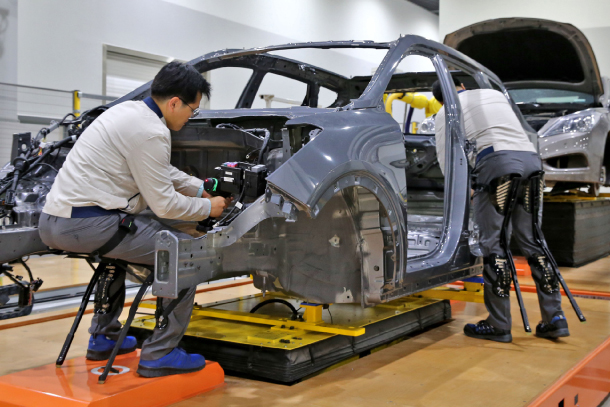
    The Hyundai Motor Group will expand the use of wearable robots at its facilities as it works to make robotics a major source of revenue, the company said Monday. Since September, Korea’s largest automaker has been testing the Hyundai Chairless Exoskeleton (H-CEX) at its North American factory. The H-CEX is an assistive robot for workers who have to stay in a seated position throughout the day. By the end of this year, the carmaker will introduce the Hyundai Vest Exoskeleton (H-VEX) at the same facility.

    The H-CEX, the first wearable developed by Hyundai for use at production sites, reduces the use of waist and lower body muscles by 80 percent, reducing the fatigue that results from being in the same seated position for a long period of time, Hyundai said in statement. The soon-to-be introduced H-VEX exoskeleton is for workers in jobs that require a lot of arm lifting. The machine vest will support the upper body and protect neck and shoulder muscles.

    “By expanding test applications, we hope to prove the technological effectiveness of our wearable robots,” Hyundai said in statement.

    The two exoskeletons were developed by Hyundai’s robotics team, established in May after the company named robotics as one of its five pillars for the future.

    The team is preparing to launch other robots focusing on three main areas: wearables, service robots and mobility robots.

    Hyundai is gearing up to test a hotel robot capable of providing room service and guiding guests. It will be introduced at the Haevichi Hotel & Resort on Jeju Island and at the Rolling Hills Hotel in Hwaseong, Gyeonggi, from the end of this year.

    A car-selling robot with natural language conversation capabilities and artificial intelligence will be prototyped by early next year. By 2020, the automaker plans to introduce a robot that can autonomously charge electric vehicles at charging stations.

    “We believe that robotics could be a solution not only for mobility but also for production in areas suffering from population decline,” a spokesperson for Hyundai said. “We plan to make notable achievements in robotics using technological data we have accumulated while developing autonomous cars.”

    Hyundai is not the only automobile maker bringing exoskeletons to assembly lines. U.S. automaker Ford has tested EksoVest, an upper-body assisting wearable jointly developed with Ekso Bionics. It was introduced at two U.S. factories in November last year. Ford announced in August a plan to bring the robot to 15 plants globally.

    German automakers BMW and Audi are also developing wearable aids for factory workers.

    According to market tracker BIS, the world’s wearable robot market is due to grow by 50 times from $96 million in 2016 to $4.65 billion by 2026.

  • Kakao’s blockchain gets 9 development partners

    Kakao’s blockchain gets 9 development partners

    Nine companies have agreed to develop apps for Kakao’s new Klaytn blockchain system. The public platform was developed by Ground X, Kakao’s blockchain subsidiary. It was offered on Oct. 8 on a test basis, or testnet. Kakao, Korea’s largest messenger app company, announced the introduction on Monday.

    The companies building the apps are from a wide range of industries from gaming to health care. They are planning to use Klaytn for the development and operation of dApps, or decentralized applications.

    Service operators are attracted to dApps because of their decentralized nature, transparency and ability to incentivize users through in-app rewards.

    Wemade Tree, a subsidiary of game developer Wemade Entertainment, is one of the Klatyn partners. Wemade said it wants to use blockchain because it allows for smooth and speedy operations. Wemade’s games, including its popular Legend of Mir massively multiplayer online role-playing games (Mmorpg) series, have over 200 million accumulated users.

    Piction Network, which helps web comic and novel creators retain ownership over their works while making them available for users, has also partnered with Klaytn. Piction Network plans to provide its Klaytn-powered network to webtoon platform Battle Comics, which currently has over a million active users.

    A blockchain-based food data project called Hint Chain, operated by Vital Hint, has also announced a plan to utilize Klaytn. Vital Hint first gained popularity for providing recipe recommendations through apps like Foodiest. Hint Chain goes one step further and analyzes individual tastes and eating habits. Hint Chain plans to use Klaytn to help consumers manage their eating and purchasing habits, and make this information available to restaurants, convenience stores, supermarkets and hospitals.

    Other notable industry partners include Nabu Studio, a sports simulation game developer, Airbloc, a data marketplace for businesses interested in gathering personal information for research and advertising, and Humanscape, a data marketplace specifically dealing with health information related to rare and incurable illnesses.

    Cosmochain, another partner, is a beauty information platform that incentivizes users to provide feedback on cosmetics products.

    VETTA is a crowdfunding platform for games selected by GTR, a game accelerator. Rayon connects borrowers and lenders.

    “It’s important to prove the value and utility of blockchain in order for the technology to commercialize,” said Han Jae-sun, chief executive of Ground X. “We will soon gradually begin presenting high-quality services that we worked on together with partners.”

    After the selected partners complete a test run, Klaytn plans to launch in the first quarter of 2019. Until the official release, Klaytn will continue forming new partnerships with qualified companies.

    “Service providers and developers interested in using Klaytn’s testnet can still register on the official Klaytn homepage,” said a Kakao spokesperson.

  • Lotte pledges 50 trillion won investment

    Lotte pledges 50 trillion won investment

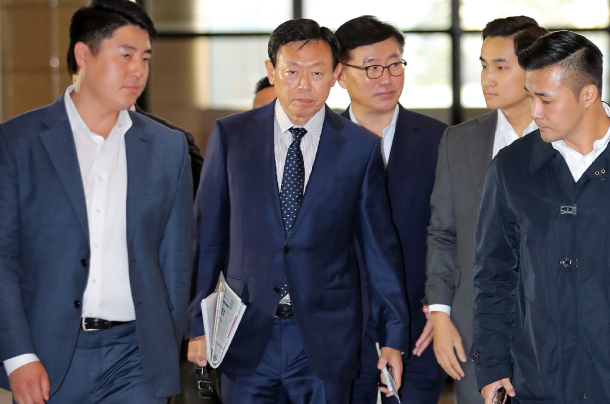
    Lotte Group announced Tuesday a major investment plan to spend 50 trillion won ($43.9 billion) and hire 70,000 workers over the next five years. “The plan comes in order to normalize management activities, obtain a competitive edge for future growth and contribute to vitalizing the local economy,” Lotte said in a statement.

    The announcement comes on the heels of similar plans announced by other conglomerates like LG, Shinsegae and Samsung. Lotte couldn’t join that wave because Chairman Shin Dong-bin was sentenced to 30 months in prison last February for bribing former President Park Geun-hye. On Oct. 5, the Seoul High Court replaced the prison sentence with four years of probation, and Shin returned to work three days later.

    Lotte announced an investment plan of 40 trillion won in 2016. But most of the investments couldn’t be executed after the group was badly affected by the deployment of a U.S. antimissile system in Korea in 2017 on a golf course formerly owned by the group and a Chinese boycott against Lotte that followed. Shin’s imprisonment earlier this year also got in the way.

    Execution of the 50-trillion-won plan will start next year. A 12 trillion won budget is planned for 2019, a record for the conglomerate.

    The two sectors that will receive the greatest attention are chemicals and retail. Some 40 percent of the investments will be in chemicals and 25 percent in retail. Lotte grew to its current size thanks to food and retail, but in recent years, the company has been active in developing the chemical business.

    For chemicals, investments will focus on expanding local and overseas manufacturing facilities. The group currently has factories in three locations in Korea, which Lotte said will be expanded.

    Investments in overseas facilities will also be made to expand the company’s businesses abroad. Lotte Chemical has a $4-billion project in Indonesia that was put on hold when Shin was jailed. A source at Lotte said, with Shin back in the saddle, resuming the project won’t take long.

    The main goal for investments in retail is improving the infrastructure for e-commerce. Lotte said in a statement it plans to establish logistics and computing infrastructure to offer a more convenient experience for shoppers online and off.

    Tech development and enhancing the level of digitalization is a long-term goal across the conglomerate’s affiliates. For example, Lotte wants to apply tech to its food business: Artificial intelligence technology is underway to be used for trend analysis and to suggest new products.

    Indonesia and Vietnam will be two foreign markets Lotte’s affiliates will focus on. The company once had a huge footprint in China, but Beijing unofficially retaliated against Lotte after the deployment of the antimissile system in Korea. The company added in the statement that it would continue discovering new markets.

    The goal for new jobs in 2019 is 13,000, which is 10 percent higher than what Lotte plans to hire this year. Many hires will be in the e-commerce sector.

  • Positive trend for South Korean duty free sales

    Positive trend for South Korean duty free sales

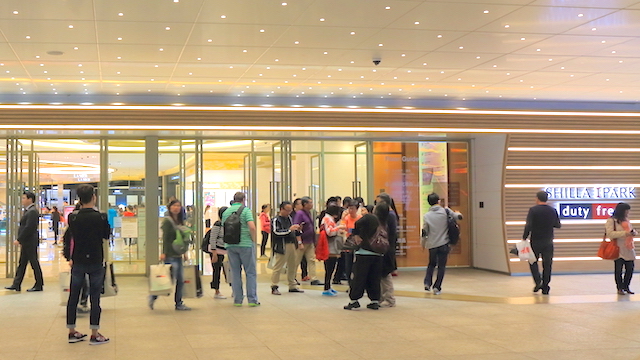
    South Korean duty free sales in the first nine months of 2018 have exceeded total sales for 2017. Sales hit an all-time high of US$12.9 billion between January and September, according to Korea Duty Free Shops Association. That figure exceeds the US$12.8 billion recorded for full year 2017.

    The performance comes despite a significant fall in the number of Chinese tourists to South Korea since the THAAD dispute erupted in early 2017, with a number of restrictions imposed by the Chinese government including a ban on group tours.

    As reported, the latest Korea Tourism Organization (KTO) figures showed that Chinese arrivals were up just +6.5 percent year-on-year (to 3,059,075) in the first eight months of 2018, reflecting a very tough first quarter before Korean-Chinese relations improved as the THAAD dispute eased.

    In the first eight months of 2016 – long before the THAAD crisis began– some 5,608,046 Chinese arrived in South Korea. That figure is +83% higher than the 2018 performance over the same timeframe, highlighting the scale of the drop in Chinese tourist numbers.

    A key factor driving sales is the daigou phenomenon.

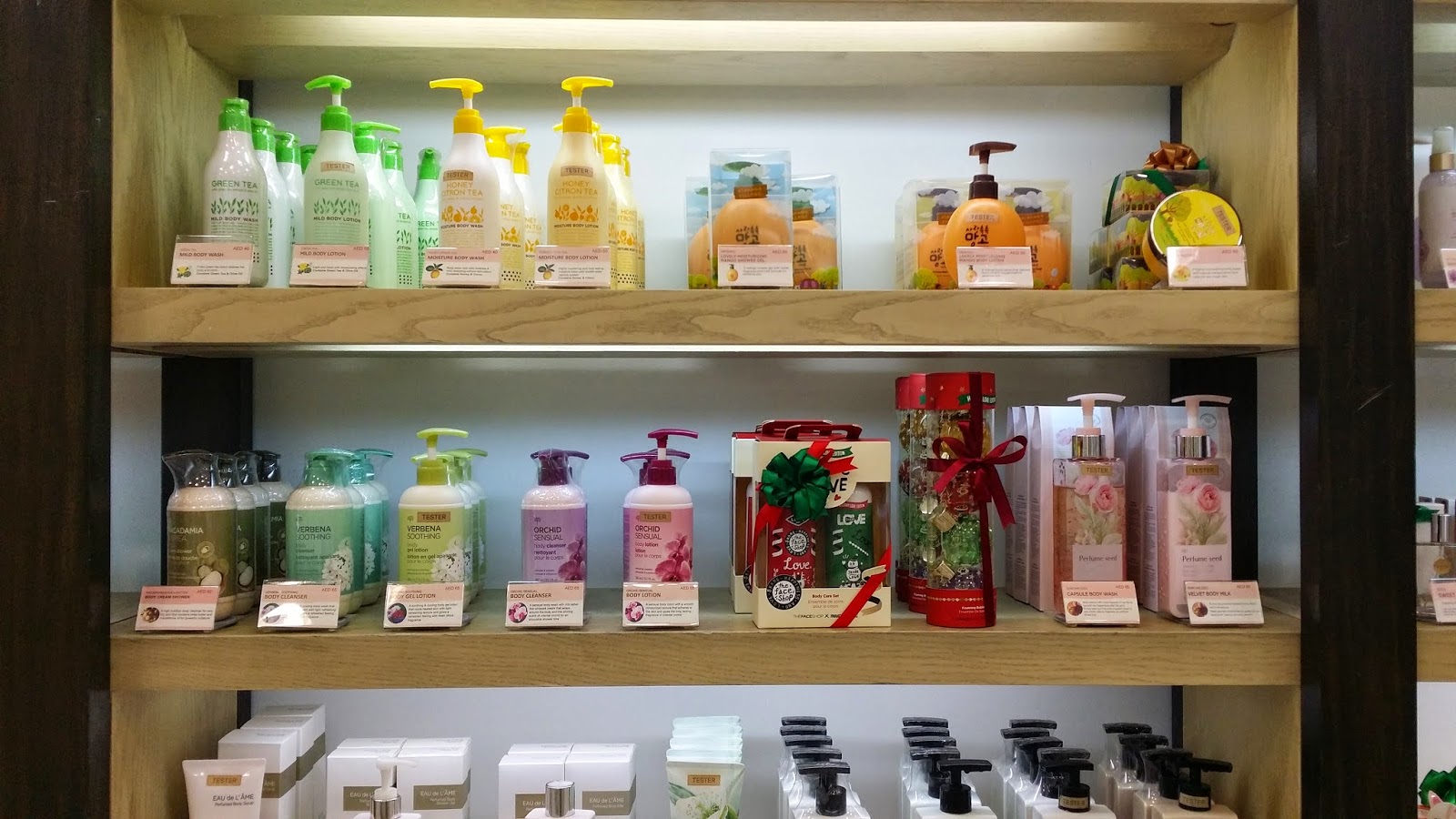
    Daigou (also known as ‘shuttle traders’ in South Korea) buy goods abroad (predominantly cosmetics but also a wide range of accessories and other premium and luxury goods, as well as commodity items such as milk powder) and resell them (often through well-organised networks) on the Mainland.

    As reported though, a Chinese government crackdown on returning daigou shoppers after the Golden Week holiday (1-7 October) has raised serious questions about the future of a sector that has buoyed Asia Pacific travel retail in recent times.

    Many South Korean retailers expect China to continue to ease economic and travel restrictions, including a full lifting of the ban on group tours in the near future.

    The return of group tours would be a significant boost – and could mean the pendulum swings back from individual shuttle traders to large group tours and traditional FIT business in terms of being the key driver of duty free sales.

  • Coffee shop in South Korea start closing down

    Coffee shop in South Korea start closing down

    South Korea’s once burgeoning franchised coffee shop market has reached saturation point – and the fallout has become extreme. According to a report, one in 10 South Korea coffee shops closed their doors last year – the equivalent of more than 1000 stores.

    Lee Kyung-hee of the Korea Business Strategy Institute described the situation as “a coffee war”.

    “While restaurants and even convenience stores are adding coffee on the menu to sell, the coffee war is intensifying as now even offices own espresso machines,” he said.

    Citing local corporate tracker CEO Score, the paper reported that the number of franchisees in Korea hit 87,540 as of the end of last year, based on a list of 118 franchise brands registered with the Korea Franchise Association.

    Of those, 11,198 were coffee and beverage stores, representing the third largest sector of the South Korean franchise market behind convenience stores and fried chicken restaurants.

    South Korea coffee franchises are being hit by convenience stores developing takeaway coffee services at prices as low as 1000 won (US90 cents) in the case of 7-Eleven, or about a quarter of the price of a Starbucks coffee. The country’s 1000+ Starbucks stores are not included in the data because they are company owned.

    Local chains have been cutting store networks and staff numbers to remain competitive.

    Seven-year-old chain Cafe Droptop, which has 240 stores, has cut its employee count by about one fifth. Caffe Bene applied for court protection from bankruptcy early this year having struggled in both its home market and abroad and is closing domestic stores.

  • Alipay will be available in Seoul taxis via kakao pay beginning January 2019

    Alipay will be available in Seoul taxis via kakao pay beginning January 2019

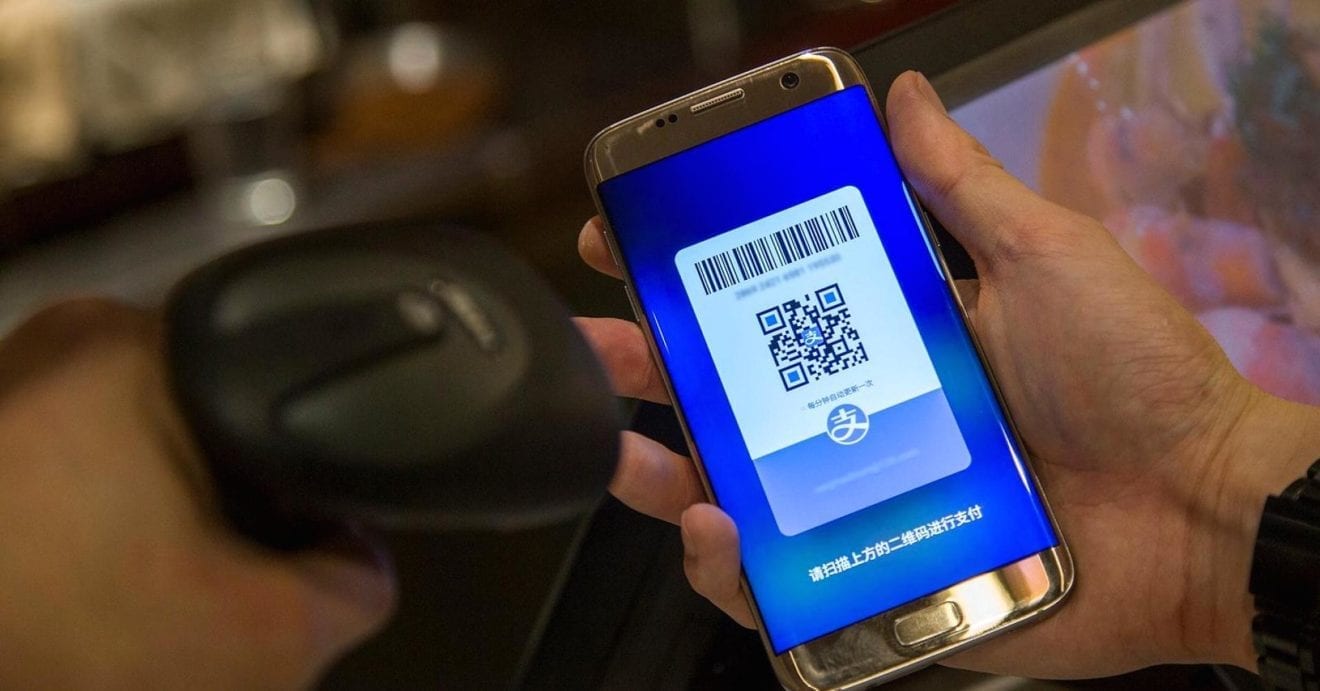
    Following the introduction of QR-code payment in more than 71,000 taxis in Seoul, all taxis in Seoul will accept Alipay beginning in January 2019. Alipay, the world’s largest online and mobile payment platform, operated by Ant Financial Services Group, can be used by Chinese tourists to pay for taxis in Seoul via its strategic partner kakaopay, which acts as system integrator. In the near future, local users will also be able to pay taxi fare via kakaopay.

    Alipay has been collaborating with kakaopay, a Korean mobile payment service, to further promote mobile payment services in the country. Last year, Ant Financial Services Group formed a strategic partnership with kakaopay. Since then, both Alipay and kakaopay have been working to integrate with all partner merchants in Korea. Earlier, Alipay enabled its payment service for taxis in the Pyeongchang and Gangneung areas where the Winter Olympics were hosted in February.

    Presently, Alipay is accepted by taxis in more than 15 countries and regions for Chinese users around the world, including China, Korea, Singapore, Malaysia, the U.S., Italy and Australia. Alipay is now available in more than 90% of taxis in primary and secondary cities in China. In addition, 75% of taxis in Singapore accept Alipay, providing a convenient payment method for Chinese tourists.