Tag: Korea

  • BMW expands recall on fire risk to 1.6 million diesel vehicles

    BMW expands recall on fire risk to 1.6 million diesel vehicles

    BMW is recalling about 1.6 million diesel cars to fix a potential fire hazard in their engines, expanding repairs from just under half a million vehicles in Europe and Asia. The voluntary service action follows a BMW investigation that found coolant could leak from the car’s exhaust recirculation unit. The defect can lead to sparks while driving and cause fires in “in extreme cases,” the automaker said Tuesday in a statement.

    South Korea’s government, after reports of 40 fires this year, asked drivers to keep vehicles off roads until undergoing checks. Police also raided the automaker’s office in Seoul to probe the safety issue, after videos of cars engulfed by fire went viral.

    The vehicles affected — diesels with four- and six-cylinder engines — were produced between 2010 and 2017, BMW said.

    After the initial recall announced in August, BMW’s internal investigation found more vehicles with similar technical setups. The company said it will replace the components as necessary.

    BMW last month cut its profit forecast, blaming an increase in warranty provisions alongside trade tensions and pricing pressure.

  • Korean companies in China becoming less optimistic

    Korean companies in China becoming less optimistic

    Korean companies operating in China are less optimistic about business conditions in the fourth quarter of this year, as the Chinese economy is cooling amid a trade spat with the United States, a survey showed Sunday. According to the Korea Institute for Industrial Economics and Trade (KIET), its business survey index (BSI) stood at 103 for the October-December period, down 12 points from the previous quarter.

    A BSI reading above 100 means optimists outnumber pessimists. The BSI for the sales outlook was also still over 100, but came in at 117, down 8 from a quarter ago.

    By sector, electronics, electric and retail were more pessimistic about the fourth quarter, while automaking and textiles remained bullish over business conditions in China.

    Last week, China reported its weakest quarterly growth since the first quarter of 2009, during the global financial crisis.

  • An Overview of E-commerce in South East Asian Countries

    An Overview of E-commerce in South East Asian Countries

    Electric commerce or e-commerce is the activity of buying and selling online. Typical e-commerce transaction includes purchase of online books, music purchase and purchase and sales of many other items.  Three known major areas of e-commerce include online retailing, electric market and online auction. Technologies such as mobile commerce, internet market, electronic funds transfer, and electronic data interchange (EDI), online transaction process and many others.

    The practice of e-commerce in Southeast Asia started during the dot.com era in the 90’s just like in many parts of the world. The dot.com era refers to the period where companies started using doing for most of their businesses on the internet, usually through a website that uses the popular domain “.com”. During the dot com era southeastern Asia mainly purchased items from American and European companies that would be delivered in their countries. During this era companies with electronic commerce had shown great prospect with their fast growth and promising profits. Companies’ stock prices skyrocketed and Asia was pretty happy because the rise had resulted to a bubbling economy through electronic commerce.

    Asia then began to attract nearly half of the total capital inflow from developing countries appealing them with high interest rates. Countries like Malaysia, Singapore, Thailand and Indonesia experienced an increase in their GDP rates. Around the year 2000, the e-commerce market was mainly involved in a business to business (B2B) transaction due to customers mistrust after going through the 1997’s financial crises and the bubble burst in southeast Asia – bubble burst is often identified only in retrospect once a sudden drop in price has occurred – The burst is usually profitable for buyers and not sellers. In the 90’s a lot came up as hindrances to the upspring of electronic commerce

    – In those days, aside mistrust e-companies had other issues of which Southeast Asian countries were also affected. As a result of its structural shortcomings, a much more diverse range of payment solutions have become common in the region. The average internet penetration around southeastern Asia with the exception of Singapore was 38% while leading countries have an internet penetration of 70-80%, this made cash on delivery offered by 80% of the players in both Vietnam and Philippines, though bank transfer is another very popular payment method across the SEA. With each of the countries having 94%, 86% and 79% of merchants in Indonesia, Vietnam and Thailand respectively offering it.

    – In addition to a lack of uniformity in payment methods, there is also significant market fragmentation the Southeast Asian consumers have so many platforms to choose for their daily need.

    – Culture also was an inhibiting factor –the influence of Traditions in the Asian region overtime had made people have low trust in bank system and electronic payment, for example; credit card owners and other means used in payment other than in cash is small – government in those times pushed for a cashless policy in their society by trying to implement laws to suit online transactions.

    – Fraud and high level of corruption was another setback to the growth of electronic commerce in the region.

    The prospects and thrive; the battle for supremacy

    The gold rush in the online ecommerce of the as left traditional offline retailers in the Asia region like Thailand and Indonesia scramble for an online business move.

    Over the years until this day the massive growth in e-commerce around southeastern Asian has attracted big name investors into the region. In 2016 the release of the Google Temasek SEA Economy spotlight highlighted Southeast Asia as the world’s fastest growing internet region.  With an existing internet user of 260M which was projected to grow to 480m users by 2020. In the research they predicted that southeast Asia’s internet economy will grow to 200B by 2025 and that $40 – 50bn in investment will be required over a decade to achieve that goal, fast tracking to 2017 they observed that the southeast Asia’s internet user base continues to grow rapidly. there will be 330m monthly active internet users by end of 2017 adding over 70m new users since 2015 13% CAGR.  They estimate that Southeast Asia’s internet economy will reach $50b in 2017, meaning it will Grow at a rate of 27% CAGR outpacing their 20% 10year CAGR projection.

    Asia as a continent had an increase in of around 4.5  billion in the GMV ( gross  merchandise value ) of first hand goods and has had a 41% compound annual growth rate ( CAGR ) in the past couple of years- 2015 to 2017- as given by Google –Temasek’s economy southeastern spotlight 2017 report. The Temasek report went further to predict that CAGR will rise from $5.5bn of 2015 to $88bn by 2026. 2017 witnessed events which proved high results are expected from the e-market in southeastern Asia.  The explosive growth in E commerce as lured china’s two e-commerce giants Alibaba and sd.com to the southeast online market. Amazon much awaited  recent entrance into the E-market of a southeastern nation ( Singapore to be specific) to fast track its online market expansion in southeast Asia also proved there was an attractive raw material in the cyber space of the region.

    The record breaking 1billion dollar sales of shares of Lazadas to Alibaba with alibaba also putting its grip on Tokopedia; arguably a future competitor in Indonesia. The resilience of another China based heavy weight company; Tencent. Tencent has also kicked start investments in companies like SEA (previously Garena) predominantly a gaming powerhouse that runs Shopee, Go-jek, Traveloka, Tiki.nn and Pomelo. The US based KKR  in a bid not to be left out of this massive growth phase through emerald media put US$65million into e-commerce arms dealer Acommerce. This trends of acquiring more shares and grabbing more local companies across the Asian borders by these online giants  is expected in coming years as all stated above points to the fact that the riches in online space of these Asian nations is worth risking for.

    Currently, predictions have given that the home based Asian companies will have to pick sides with either of or stand their ground against the foreign forces from both the western and eastern part of the world.  Predictions went further  to specify that  foreign based companies like Alibaba, Amazon and Tencent is  likely to have a bloodbath battle for the monopoly of the regions  electronic commerce  or share the  Asian online customers, some term this head to head of the western state and eastern state as the clash of the online titans.  It is hope that this clash will result to a much needed gold-shed To Help in the growth of the developing region

    Joe Tsai, Alibaba vice chairman, in speaking with Retail News was quoted as saying “is there a land grab right now for these kind of assets? I think in the land grab they [Tencent] are following us. They are seeing that we have positioned ourselves very well, and they are sort of playing a catch up game. So what we want to do is to work with local entrepreneurs. ”

    Experienced, grown and growing

    Marc woo, Google head of ecommerce , travel and financial services was quoted to have said “Asia pacific (APAC) accounted for 40% of global ecommerce sales in the 1st quarter in 2017, but vast majority of those sales went to larger or more mature markets in the region, particularly china, but also japan, Australia, South Korea, and India. That leaves Southeast Asia as the next frontier for ecommerce in the region.  “

    A steady increase in the advantages of electronic commerce in the region resulted to a 50% growth last year and now totals 200 million individuals across southeastern Asian’s top six economies. The southeastern Asian nation Singapore takes a top spot in Asia with an average of 14.04 sessions per person per year visiting amazon.com. It is rumored and expected that by the end of the year the ecommerce companies should erect physical stores in their resident southeastern nations. This will make a great boost in the economy of this regions.  This huge development in ecommerce have led southeast Asian governments to launch a bid to introduce taxes on ecommerce sales as they look to claim their dollar-and-cents take from one of their most promising engine towards  economic and  financial buoyancy.

    This though might increase the cost price of goods and services offered by the online companies but cannot override nor underestimate its advantage as compared to import and shipping processes. Taxing online sales will align practice with those of world leading countries. It puts online retailers on a leveled playing ground with brick-and-mortar counterpart. This growing market has also initiated an online network process between the Chinese and the Asian region as Alibaba is working to set up a digital free-trade zone in Malaysia and has signed a memorandum of understanding with the government of the Asian country and the authorities of china to simplify cross-border trade between the two regions.

    If this deal falls through under the current government of china a long term mutual profit making relationship is expected to last for a very long time between the Asian nations and the Chinese government  giving that  the china parliament are rumored to have kick started plans in keeping their president more longer in office than usual.  The critical factors responsible or observed to needed for the spontaneous growth of ecommerce in the southeastern region of the continent are

    • A growing middle class – knowing that the middle class contains the highest number of mobile phone users and also the highest number of common goods purchasing.
    • Rapidly expanding internet access are positive indicators for fast paced e commerce growth in coming years. Internet access needs to be at its best for the effective running of electric commerce in a state

    The middle class population of the Asian region is expected to reach a 400million in 2020 from its 190 million of 2012, according to Nielsen project.

    Internet access in the region as not only being expanding at a high pace but has also improved strongly over the years like stated in the research of Google Temasek SEA economy spotlight report stated above.

    The electric commerce has also shown to be of disadvantage though not significant as compared to the many fruit yielded by the online market.

    • The desire for local business owners and the nation’s mobile phone user population to switch online results to more cases of fraud because this system isn’t used to them.
    • Competition between locals and foreigners which should encourage an healthy business environment is not observed as the big guns will slowly silently phase out the local brands
    • The preference of foreign products to locally made products by locals isn’t favorable for the country’s economy.
    • Owing to the creation of a good relationship with certain world leading countries, good tides with others could be altered.
    • If not properly monitored, foreign companies might have a full grip of the southeastern nation economy.

    One major benefit that has been observed to have taken the front line in the advantage of electronic commerce in the southeastern Asian region is the quest for each nation to outperform each other. Especially between Thailand, Vietnam and Indonesia, this healthy beef has led to varying developments in these nations as none wants to be left behind in the development and modernization of their country. These alongside the introduction of big time investors, the rise in economy growth, job creation in nations, strengthening diplomatic tides and many other advantages.

    Stakeholders and experts have advised to government of these Asian nations to support the region to grow by fixing reasonable tax levies in other not to discourage foreign and local investors, encourage a competitive market, improve online network and provide adequate education to ease communication with foreign partners. With the huge wealth emanating from the electric commerce sector, if properly managed these nations can get a massive boost in their nations wealth and reputation. The potentials possessed to build a nations revenue by employing electric commerce cannot and should not be undermined.


     

  • Samsung works with Dutch on blockchain

    Samsung works with Dutch on blockchain

    Samsung SDS said on Sunday it signed a partnership with two Dutch entities, ABN AMRO and the Port of Rotterdam, to use blockchain technologies for logistics. The IT solutions and logistics arm of Samsung will link its Nexledger blockchain product with ABN AMRO’s Corda platform by February. In doing so, it will verify whether the system is compatible with other blockchain systems.

    ABN AMRO’s system is designed mainly for financial transactions.

    Blockchain technologies, which allow for the validation of data without central management, will be used for the paperless administration of container financing and logistics, the Samsung SDS pilot project integrating container payments, administration and physical transportation.

    At present, the various processes in the handling of containers utilize separate circuits.

    “The project came after Europe took note of Korean marine logistics blockchain services,” said Kim Hyung-tae, vice president and general manager of the smart logistics unit at Samsung SDS. “It will help our global blockchain business expand and improve our competitiveness.”

    Last year, Samsung SDS led a consortium to conduct tests on blockchain-powered storage in marine transport. The consortium included companies and government bodies.

    “The ultimate goal is to reach an open, independent and global platform that operates from the perspective of shippers,” said Daphne de Kluis, ABN AMRO’s CEO of commercial banking. “This will make the logistics chain more transparent and efficient, and millions of euros can be saved in the long term.”

    According to the bank, the hope is to create an entirely new industry standard.

    “The transportation, monitoring and financing of freight and services should be just as easy as ordering a book online,” said Port of Rotterdam in a release.

    The pilot with the Dutch companies starts in January, and the results will be announced in February.

    The cooperative network will become open to other parties, according to ABN Amro and Port of Rotterdam.

  • LG hosts fair to identify promising start-ups

    LG hosts fair to identify promising start-ups

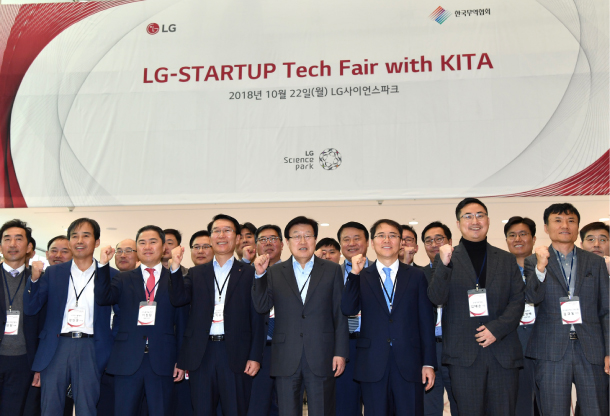
    Technology-related subsidiaries of LG hosted a fair on Monday in which 20 local start-ups presented their cutting-edge developments in areas such as autopilot technologies, artificial intelligence and big data. The small firms are seeking partnerships with and support from the fourth-largest conglomerate in Korea.

    LG picked the start-ups jointly with the Korea International Trade Association (KITA), hoping to revitalize local start-up ecosystem.

    The conglomerate is providing a venue for the fledgling firms to mingle with their larger counterparts and find new business opportunities.

    LG subsidiaries participating in the event include LG Electronics, LG Display, LG Innotek, LG Chem, LG U+ and LG CNS.

    Executives and researchers from those companies as well as KITA CEO Kim Young-ju paid a visit to the start-up fair, which took place at the LG Science Park in Magok, western Seoul, and had a closer look at technologies and services featured.

    Funnel, for instance, has developed a voice-recognition system that automatically collects information from television broadcasts. The resulting database can be used for artificial-intelligence smart speakers and voice-command chat bots.

    Venta VR owns a technology that is able to tape high-resolution 3D videos and calibrate the video images afterwards in a way that enhances the level of immersion and minimizes visual fatigue.

    LG will offer some of the participating start-ups office and research space inside the LG Science Park as well as technology-related consulting and funds.

    Companies under the LG umbrella have been increasing support for start-ups.

    LG Electronics is backing four start-ups that are in the web operating system business, whereas LG CNS and LG Display have been running their own programs.

    LG-led tech fairs aimed at locating and supporting promising local start-ups have been held in the United States, Germany, Israel and Russia.

    With a German start-up discovered during a tech fair in Europe, LG developed a linear compressor technology for refrigerators.

    LG says it will apply the cooperation system it developed overseas to Korean start-ups and smaller companies.

    “Future cooperation with start-ups will propel their global outreach,” said an executive at the LG Science Park.

  • GM Korea votes to spin off R&D unit

    GM Korea votes to spin off R&D unit

    A GM Korea shareholders’ meeting Friday decided to spin off its R&D and design department, reigniting conflict with its labor union and the state-owned Korea Development Bank (KDB), the automaker’s second-largest stakeholder.  “The plan to establish a dedicated engineering unit, GM Technical Center Korea, was approved during the shareholders meeting,” GM Korea said in a statement.

    However, the decision is guaranteed to be controversial since KDB, which owns 17-percent of GM Korea, intended to vote against the spinning off of R&D and design unit from production but missed the shareholders’ meeting.

    “We received notification of the shareholders’ meeting, but the decision was made in our absence,” an official at the KDB bank said. “We were not able to exercise our veto rights since we weren’t there.”

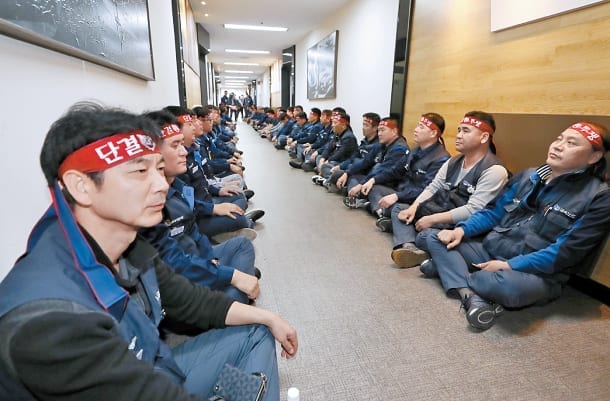
    GM Korea’s unionized workers occupy the hallway leading to the GM Korea chief executive’s office at the company’s headquarters in Bupyeong District, Incheon, on Friday in an effort to stop a shareholders’ meeting from taking place

    It’s not clear why KDB representatives didn’t attend. KDB said it will be looking into the legality of the meeting.

    On Thursday, KDB released a statement saying it would ask GM Korea’s management to explain fully its decision to spin off the R&D and design center and decide whether to exercise its veto rights.

    The statement was released after a court in Incheon rejected KDB’s request for an injunction to stop the shareholders’ meeting.

    “Although we respect the judgment of the Incheon court, we have deep concerns about GM Korea’s push to spin off [R&D and design] without sufficient explanation or agreement from the interested parties during the shareholders’ meeting,” the bank said in the statement.

    GM Korea’s union claims the spin-off is the first step in a long-term plan to completely halt domestic production.

    KDB has the right to nullify any GM Korea decision to sell more than 20 percent of its total assets, which is supposed to prevent the U.S. automaker from pulling out of Korea or restructuring without the consent of the bank.

    That right, which expired in October 2017, was reinstated after GM and the Korean government reached an agreement in April.

    However, it’s not clear whether that veto right can be applied to spinning off units within GM Korea. There’s even arguments that the newly forming center may not account for 20 percent of the automaker’s total assets.

    The union tried to stop the shareholders’ meeting by occupying a hall leading to GM Korea CEO Kaher Kazem’s office in Bupyeong District, Incheon. The union earlier this week voted in favor of a walkout that will likely take place next week.

    A crisis that led to the shutdown of one of GM Korea’s four plants in Korea in May seemed to have been solved when GM and the Korean government reached an agreement after long negotiations to inject $7.15 billion into the struggling automaker. GM agreed on covering $6.4 billion while KDB put up $750 million. GM agreed to keep the local unit going for at least 10 years.

    But in July, GM Korea announced the spinning off of its R&D center, which will turn Korea into its global strategic development and design center for next generation models.

    Meanwhile, production of compact vehicles will end in 2022 and factories will concentrate on SUVs.

    “The establishment of a dedicated GM Korea Technical Center is an important development in continuing our organization,” said GM Korea CEO Kazem in a letter sent to employees on Monday, adding that the new center would help to “more effectively respond to and secure and execute global engineering projects.”

  • SK Group continues to focus on social value

    SK Group continues to focus on social value

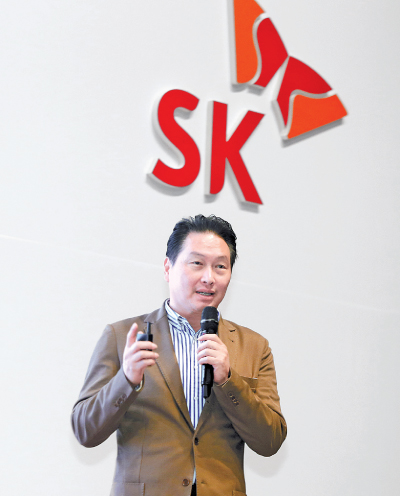
    SK Group is reevaluating its business models in a bid to ensure that all of its affiliates create social value along with economic value. SK Chairman Chey Tae-won and the heads of all SK affiliates discussed ways to renew their business models so that doing business leads to increasing benefits for the public as well as SK shareholders and employees during a three-day meeting on Jeju Island that ended Friday.

    “Creating social value is a way to earn strong trust from our customers and society,” Chey said. “By social value, I mean increasing the benefits of all stakeholders in our business including our customers, shareholders and employees.”

    Chey then ordered the chief executives to think over whether there was any part of their business that they are tricked into believing is sustainable.

    “Rethinking business models that you believe are sustainable is the beginning of a deep change that we are trying to accomplish,” the chairman added.

    SK has been making small steps into realizing Chey’s vision from earlier this year. The group’s oil refining arm SK Energy opened up the idle space at its gas stations so a logistics start-up can move in and use the space as storage.

    However, many other SK affiliates still need to come up with ideas to create social value.

    To renew business models, the CEOs agreed that sharing data and resources between SK affiliates is crucial. The heads also said that all members of SK should be a part of the movement for the vision to materialize.

    The chief executives first decided to improve human resources management policies and the research and development system. Details of the discussion weren’t revealed, but Chey ordered the chief executives to rethink the work environment for employees and to bolster R&D capabilities.

    As SK has businesses in a range of industries, the group is also thinking about business convergence among affiliates.

  • KT’s Kids’ Land is now available on the move

    KT’s Kids’ Land is now available on the move

    KT’s Kids’ Land will soon be available on the move, as the mobile carrier tries to take on YouTube Kids by moving its popular child-friendly content service to smartphones.
    Kids’ Land, which launched in May on KT’s internet-protocol TVs, is now used by 3.6 million customers, according to KT. By creating a mobile app that is connected with the IPTV, the carrier said that kids will now be able to enjoy their favorite content anywhere they want.

    New content was also been added to the service, now upgraded to Kids’ Land 2.0, on Tuesday. While most of the content on the original Kids’ Land was for children, the new version comes with new videos dedicated to parenting, made for KT in cooperation with Dr. Oh Eun-young, a famous figure in the field of child care in Korea.

    Oh’s content will cover 10 big topics in parenting, spanning about 50 video clips, so that parents can easily learn how to behave with their children in specific situations, like when they won’t sleep.

    “There is so much, in fact, too much information on parenting that parents these days can’t really tell between reliable content and those that are not,” Oh said. “KT’s platform offers curated and reliable content that parents can always turn to.”

    Kang In-sik, vice president of the media content department at KT, said KT will be working to provide more original content to beat competition from other platform providers like YouTube. KT is currently contacting experts to make videos specifically targeting infants as well as the elderly and those hoping to learn a new language.

    The new Kids’ Land app will be ad-free and filter out harmful content for children.

  • Kakao starts carpool recruitment

    Kakao starts carpool recruitment

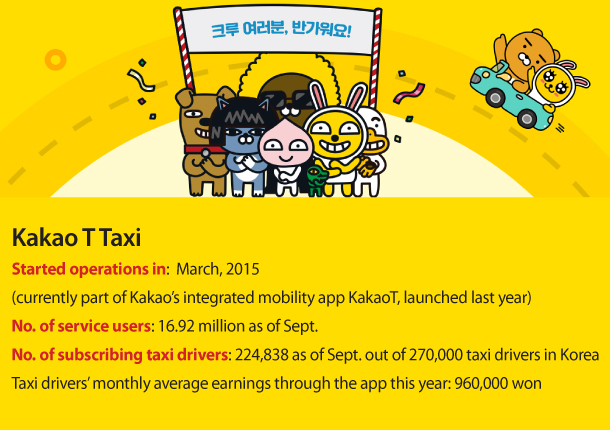
    Kakao Mobility has opened recruitment for its carpool app, infuriating taxi drivers who are vehemently opposed to the move. According to the mobility company that operates taxi-hailing app Kakao T, recruiting drivers is one of the crucial steps in preparation for the launch of its carpool service. The hiring process opened on Tuesday with the launch of a driver registration app, dubbed Kakao T Carpool for crews.

    Kakao Mobility was quick to point out that recruitment does not mean it will immediately launch a carpool app, adding that there is no set date for release. Instead, Kakao is looking to move drivers registered on Luxi to the new Kakao app, although this process will mean that it has a pool of drivers readily available, allowing it to immediately launch the app whenever it wants.

    Kakao Mobility has actually been attempting to launch its own carpool service since it acquired Luxi for 25.2 billion won ($22.4 million) in February. At the time, the company made it clear that it would only use the carpool service to cover shortages in taxis during peak hours, “within the legal boundaries.”

    Kakao’s statement did little to appease taxi drivers back in February, and they’re not any happier with the service now. Korea’s taxi drivers are fiercely opposed to ride-sharing apps, which they consider an unlicensed threat to business.

    This is the main reason why popular international ride-hailing companies like Uber are illegal in Korea under Article 81 of the Passenger Transport Service Act, which says that personal vehicles cannot be exploited for business purposes.

    Carpooling services, however, have been operating by taking advantage of a loophole that says that carpooling during commuting hours is permitted. Still, the vagueness of the term “commuting hours” has caused conflicts between carpool service providers and taxi drivers.

    Taxi drivers argue that Kakao is taking work away from them. As Kakao operates Kakao T, which thousands of taxi drivers rely on for work, the feeling of betrayal is even stronger.

    “It feels as if we are being backstabbed by Kakao, who we have been thinking of as a business partner,” said a spokesperson from the Korea National Joint Conference of Taxi Association, a group representing over 100,000 corporate taxi drivers nationwide, in a phone call Tuesday. “I can’t believe Kakao is making this announcement without delivering any message to drivers who have been holding a series of rallies against the company’s plan to start the carpool business.”

    The drivers held two rallies in Pangyo, Gyeonggi, where the Kakao Mobility office is located, on Oct. 4 and 11. About 500 people gathered at the second rally from four taxi driver unions, including the Korea National Joint Conference of Taxi Association. Tomorrow, a bigger protest is due to take place in Gwanghwamun Square in central Seoul at 2 p.m.

    To participate in tomorrow’s rally, about 4,000 drivers from Incheon, about half the city’s taxis, are expected to walk out, according to Incheon’s taxi association. About 2,000 taxis in Jeonju, the capital city of North Jeolla, are also due to stop operations for the rally, according to the city’s government.

    Some other cities are also facing similar problems as taxi drivers say they will leave for the rally.

    Despite the controversy, Kakao Mobility maintained Tuesday that carpool apps could be a great complementary service for taxis, citing data that on Sept. 20 there were 205,000 calls for taxis on the Kakao app from 8 a.m. to 9 a.m., but only 37,000 taxis were available.

  • Spotlight on ASEAN for Korean retail, beauty and entertainment biz

    Spotlight on ASEAN for Korean retail, beauty and entertainment biz

    With Southeast Asia becoming the center stage for South Korean businesses in expanding their global presence, retail conglomerates like Lotte, Shinsegae and CJ have been successfully tapping into the markets. Lotte Group has focused its investments on its retail arm Lotte Shopping’s entrance to the Indonesian market. According to the company, the Indonesia market accounts for 17 percent of total sales earned from overseas Lotte Group businesses.

    Lotte Mart, a discount chain operated by Lotte Shopping, currently runs 46 stores in 25 cities in Indonesia. These stores raked in 1.1 trillion won (US$971 million) in sales as of the end of last year.

    By 2020, the company aims to open 36 more stores in 10 additional Indonesia cities.

    Following a successful entrance in the Indonesian market, Lotte Shopping now targets large-scale investment in Vietnam.

    The company will inject 330 billion won to complete the construction of Lotte Mall Hanoi by 2020.

    Shinsegae Group has been also speeding up its expansion into countries in the Southeast Asia.

    In 2015, Shinsegae’s discount chain operator E-mart opened a two-story mall located in the heart of Ho Chi Minh City at Go Vap District, one of the most developed and densely populated areas in the capital.

    The Go Vap branch marks E-mart’s first overseas store since the brand redirected its focus to the Southeast Asian market in 2011 after officially exiting the Chinese market.

    For over the next three years, E-mart will invest 549 billion won to open four more stores in Vietnam by 2020.

    The second outlet in Ho Chi Minh will open in the first half of next year, the group said.

    Singapore is another crucial country — geographically and economically — for the groups.

    SPC Group opened the first Paris Baguette store in Singapore in 2012. Now nine outlets are operated there, including one at Changi Airport.

    The group said its Singaporean branch Paris Baguette Singapore PTE marked a 12 percent increase in sales from 12.9 billion won in 2015 to 14.4 billion won in 2016.

    SPC Group said it has taken care to localize its services as much as possible to meet the needs and lifestyle of Singaporean consumers.

    Entertainment businesses have also penetrated Southeast Asian markets.

    CJ ENM, a merged corporation of CJ O Shopping and CJ E&M that officially launched in July, will open Asia’s largest virtual commerce content production center in Ho Chi Minh City, Vietnam, targeting audiences in Southeast Asian countries.

    The center, called DADA Studio Vietnam, will create and distribute at least 1,000 pieces of virtual commerce content from early next year.

    Focusing on making use of the low-cost production system and high efficiency of the talent pool in Vietnam, CJ ENM said its attempt to operate a content hub abroad would lead to boosted content sales from the global market.

    “CJ O Shopping and CJ E&M had already witnessed the possibility of the v-commerce content business through our DADA Studio and online creators’ platform DIA TV. To dominate the expanding global content market, a merger of the two CJ companies will show the synergized effect of CJ’s digital content and channel operation,” said Kim Do-han, a director at CJ O Shopping.

    Following the K-pop boom and popularity of Korean style makeup trends, Amorepacific opened an outlet of its high-end makeup and skin care brand Hera this year at the Takashimaya Department store in the heart of Singapore’s shopping district.

    “Targeting the Singaporean market is important with the K-pop and Korean culture wave’s sensational influence to surrounding countries. Hera’s trendy brand image will suit well with Singapore consumers’ taste,” said Na Jung-kyun, head of Amorepacific’s Southeast Asian region division.

  • Lotte Duty Free’s expanded flagship Seoul store with focus on K brand

    Lotte Duty Free’s expanded flagship Seoul store with focus on K brand

    Lotte Duty Free has opened a new 519 square meters area at its flagship store in Myeong-dong, Seoul, with a strong emphasis on promoting small and medium-sized Korean brands. A highlight of the zone, located in the store’s Star Avenue, is ‘Blooming Beauty’, a shop-in-shop that houses around 130 brands, 60 of them small, emerging brands and 30 of them independently owned. These include the Marvel collection from The Face Shop, Medicube, Miba, Cosmetea, Wakemake and others.

    The company said it was “upgrading its incubation programme” for smaller brands, and would support them by distribution through its online sales channel and at its downtown Seoul outlets.

    It said that these brands would “demonstrate their sales potential” in the new environment.

    The store, it added, “will enhance customer convenience through brand diversification and space expansion”.

    To celebrate the opening of the new Star Avenue area, Lotte Duty Free presented gifts from 20 brand partners in the Blooming Beauty zone to shoppers who spent more than US$1.

    There are also special discounts for local residents until the end of October, and discounted sales of KT&G’s new ‘heat not burn’ product Lil will be available until 22 November.

  • South Korea’s Diet Plan Company Launched

    South Korea’s Diet Plan Company Launched

    GLAM.D, healthy diet brand from South Korea, has launched three products in Singapore exclusively at Guardian. With the festive season approaching, it’s the time for feasting on Christmas goodies and even Chinese New Year treats. Amidst all that glorious food, GLAM.D drinks will come in handy so you can still look fabulous in your party outfit.

    The carb-blocking Weight Loss Drinks range includes lemon-flavored Easy Slim ($31 for box of 15), that is refreshing and easy to drink on a hot day, while the coffee-flavored Glam Café Original ($35 for box of 30) is perfect for coffee lovers.

    Both contain a key ingredient, Garcinia Cambogia Extract. Effective in blocking dietary carbohydrates from converting into body fat, they are suitable for the carb-heavy Singaporean diet.

    For snacking alternative, at only just 5 calories, maintain your daily calorie limits with water jelly treats from the Low Calorie Line. The 5Kcal Water Jelly ($3, available in apple, peach and mango flavours) drink contains fruit purée and natural sweeteners and is bursting with delicious fruity flavor.

    GLAM.D is available at over 50 Guardian stores islandwide, including Takashimaya, NEX, Jurong Point and Tampines Mall, as well as via Guardian SG Online.


  • Online printing startup Gogoprint raises $7.7m to prepare new markets

    Online printing startup Gogoprint raises $7.7m to prepare new markets

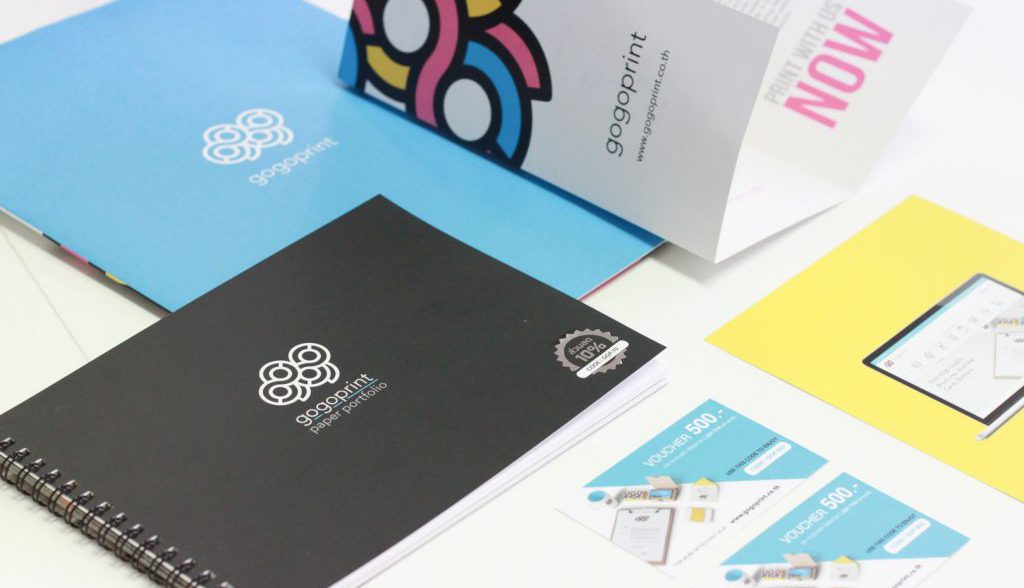
    Gogoprint, a startup that’s modernizing the printing industry, has raised US$7.7 million in series A funding to fuel its expansion into new markets like Australia, New Zealand, and South Korea in the next 12 months.

    Gogoprint is an online service for printing things like business cards, flyers, and leaflets. It uses algorithms that take into account parameters such as paper type, quantity, and delivery, and then aggregates those orders into a “print-run” or a batch of prints.

    This enables printers to make the most out of one printing sheet. Because each sheet carries fixed costs, maximizing it helps reduce prices and turnaround time for customers. It also allows printers to take in small orders from budget-conscious firms, instead of only focusing on large volume orders.

    Printers that partner with the company are able to tap new customers, helping offset the cost of any unused capacity.

    Gogoprint is active in four countries: Thailand, where it started, as well as Singapore, Malaysia, and Indonesia. In Indonesia, it faces competition from another online printing startup, Prinzio.

    To date, Gogoprint has experienced a 200 percent year-on-year growth in customer base, attracting more than 45,000 customers with over 250 million products printed. Its clients include Honda, Lazada, Lion Air, Yamaha, Singapore’s Nanyang Technological University, and Booking.com.

    Retail News reached out to the company for more financial details, but it declined to disclose figures.

    The series A round was led by its existing backer OPG (Online Printing Group), an investor and partner of Brazil-based Printi.

  • Korea’s Skinfood getting close to bankruptcy

    Korea’s Skinfood getting close to bankruptcy

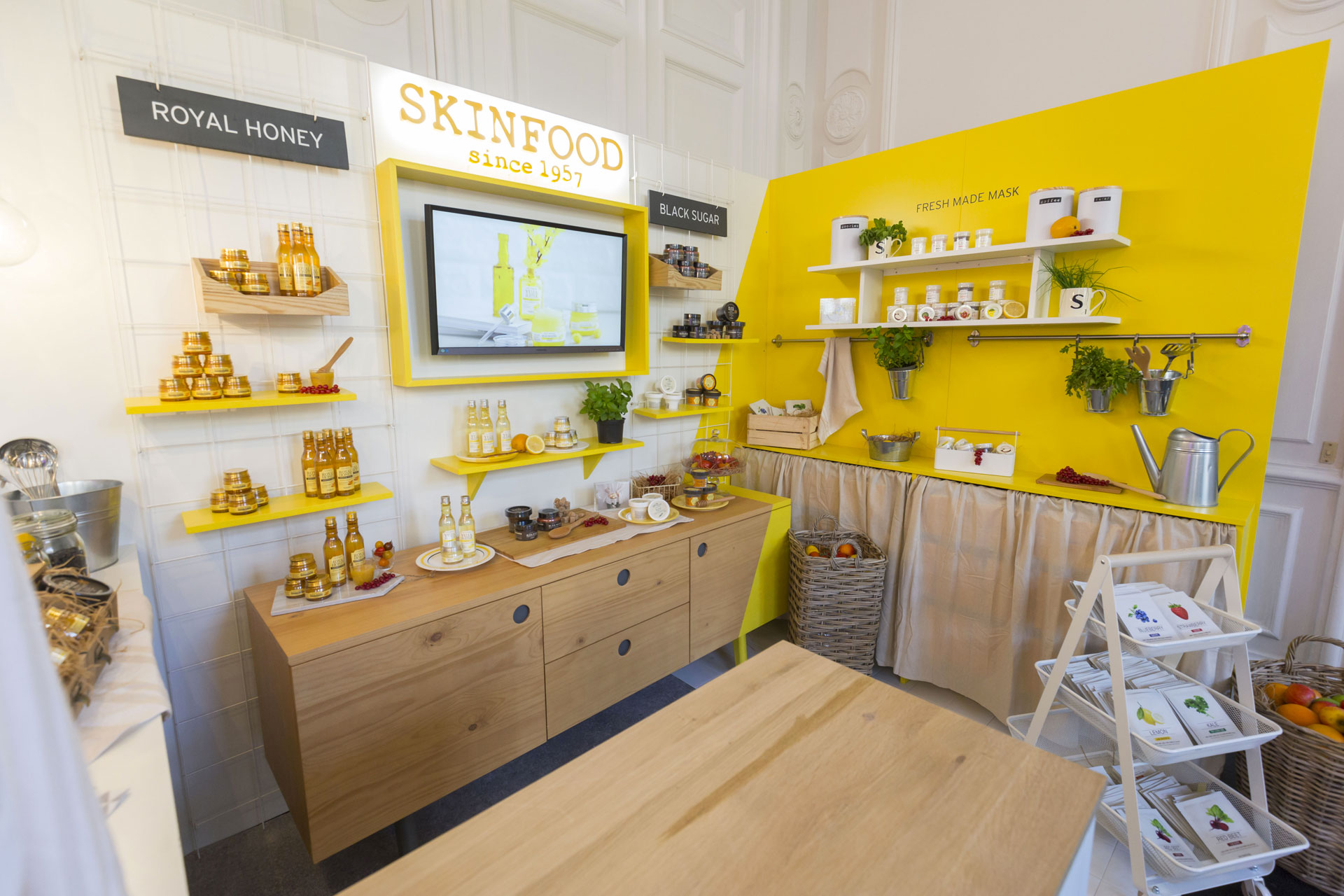
    South Korean cosmetics firm Skinfood has filed for court receivership after increasing financial losses.

    The company’s former popularity of a decade ago was hit by the 2015 Middle East Respiratory Syndrome (MERS) outbreak and diplomatic disputes between Seoul and Beijing, both events affecting the brand’s core overseas markets.

    A company spokesperson said: “We are having temporary difficulty in securing liquidity due to excessive debt. We sought the court restructuring as we thought settling the debt and promptly normalising management will benefit everyone, including the creditors.”

    The company has plans to sell off some of its overseas business rights and expand its online channels to improve its standing.

    Skinfood’s sales reached KRW126.9 billion (US$111.96 million) last year, a drop of 25 per cent from the year previous, with an operating loss of KRW98 billion ($86.46 million).

  • KT expands reach of AI-powered smart city solution to SEA

    KT expands reach of AI-powered smart city solution to SEA

    South Korea’s KT has announced plans to expand the reach of its self-developed AI technology with the launch of services for hotels and smart cities in Southeast Asia.

    The operator will introduce customized AI solutions for the market, starting with Vietnam.

    KT last month entered an agreement with Vietnam’s largest construction company Hoa Binh Construction Group (HBC) JVC for the provision of AI-powered hotel and apartment services in Southeast Asia. The partners have also agreed to subsequently co-operate on smart building and city projects in major metros in the region.

    KT used its platform to launch the first hotel in South Korea to offer AI-assisted room services in July – a Novotel Ambassador hotel in Seoul – and plans to open three more smart hotels across Seoul by 2020.

    The company’s hotel AI service platform is a customization of KT’s GiGA Genie AI powered smart home media hub, which launched in 2017 and now has more than 1 million subscribers in South Korea.

    “It’s a big first step for KT’s AI platform to reach out to the world, thanks to the partnership with HBC,” KT marketing group senior vice president Lee Pil-Jai said. “With great success in South Korea, we will step up efforts to localize our AI hotel service and smart city solutions for Southeast Asia and beyond.”