Tag: Korea

  • Weaker Q2 earnings expected for major carriers

    Weaker Q2 earnings expected for major carriers

    Two of Korea’s three major telecom carriers are presumed to have posted weaker earnings for the April-June period from a year earlier, industry watchers said Sunday, apparently on increased mobile user discounts and changed financial reporting standards.

    According to the data compiled by market tracker FnGuide, SK Telecom, the country’s largest telecom network operator, is expected to report 366.2 billion won ($328 million) in operating profit in the second quarter, down 13.5 percent on-year. Its sales are forecast to decrease 1.6 percent to 4.278 trillion won.

    KT likely posted an operating profit of 387.8 billion won, down 13.3 percent, with sales largely unchanged at 5.87 trillion won.

    The operating profit of the third carrier and the smallest, LG U+ is forecast to grow 3.7 percent to 215.7 billion won on 3.04 trillion won in sales, up 1 percent.

    Analysts said the cut in SK Telecom’s and KT’s revenues is attributable to the increased number of users who signed up for monthly discounts of 25 percent.

    Smartphone users here are allowed to choose between a one-off discount and the sharp monthly cut in rates. The government policy aims to provide more affordable telecom services for local households and ban mobile network operators from rolling out excessive discounts on devices to lure each other’s clients.

  • Samsung Pay no longer on cheaper phones

    Samsung Pay no longer on cheaper phones

    Samsung Electronics recently stopped embedding its mobile payment system, Samsung Pay, in budget smartphones, industry watchers said Sunday, apparently to save costs by excluding the feature, which has been less popular among teens and senior users.

    Among 10 smartphones released by Samsung Electronics in Korea this year, only three – the Galaxy S9, Galaxy S9 Plus and Galaxy A8 – supported Samsung Pay. Other models with prices lower than 700,000 won ($628) did not come with the payment tool.

    In contrast, the Galaxy J5 and J7 smartphones, released last year with prices below 400,000 won, had the Samsung Pay program.

    Samsung Pay is a mobile payment tool that works on traditional credit card machines based on magnetic secure transmission (MST) technology and also supports the near field communication (NFC) technology.

    Industry watchers said Samsung apparently sought to cut production costs of budget smartphones, which mainly target teens and senior users who are less familiar with mobile-based credit card payment systems.

  • New York brand Theory opens a flagship store in Seoul

    New York brand Theory opens a flagship store in Seoul

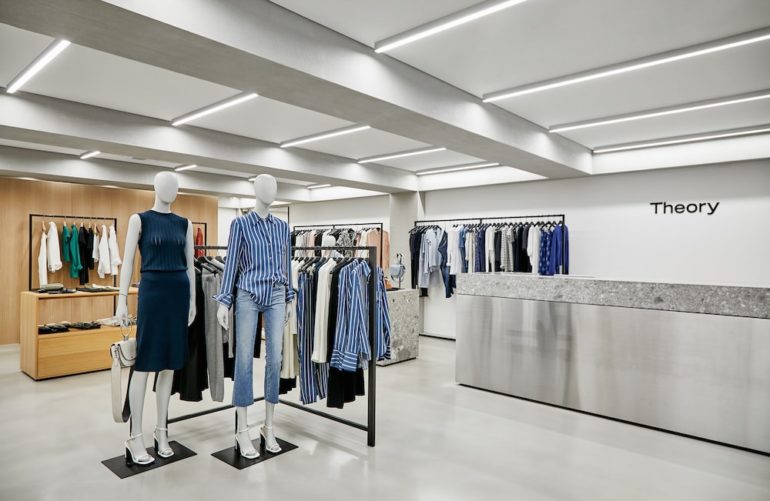
    New York contemporary brand Theory opened a flagship store in Hannam-dong, Yongsan-gu on 4th July.

    The company plans to establish a new “trendy place” in Hannam-dong to enhance brand-customer interaction and raise brand awareness.

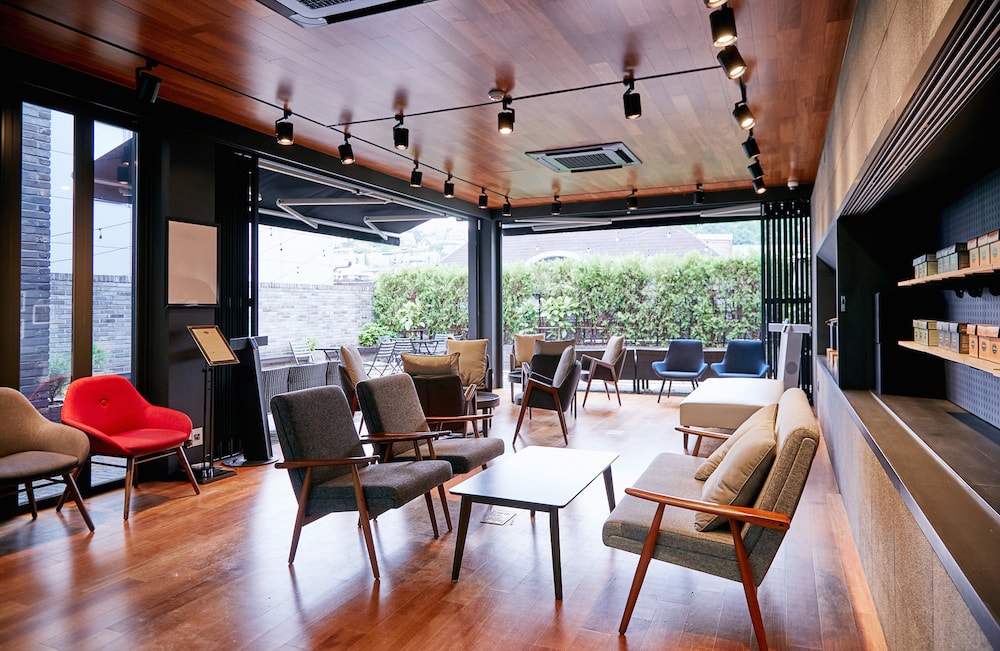
    The Theory Flagship Store is a five-story building with a total area of 743 square meters (about 225 pyeong), which offers fashion, music, and café in one place, and features a modern and minimalist brand identity.

    On the basement, there are several collections which rotate from time to time.

    On the first floor, it showcases a ‘Theory 2.0’, featuring a young sensibility as well as trendy men’s and women’s casuals and denim.

    On the second and third floor, there is a 100 seats performance hall called Stradeum run by iriver so that customers can experience classic, jazz.

    Through collaboration with iriver, Theory flagship store is planning to offer a unique customer experience through movies and music performances, but also professional lectures and mentoring programs.

    On the fourth floor, Steven Smith’s pop-up cafe and and iriver’s professional audio player Astell & Kern is set up as a space for listening, creating a trendy space where fashion and music coexist.

    “We have opened a flagship store in Hannam-dong, a young and trendy place, in order to solidify the brand identity.” said Park Young-mi, brand manager of Theory. “We are trying to provide differentiated brand experiences to young customers who are pursuing culture and lifestyle as well as fashion.

  • Givenchy Beauty debuts in Korea with Hyundai

    Givenchy Beauty debuts in Korea with Hyundai

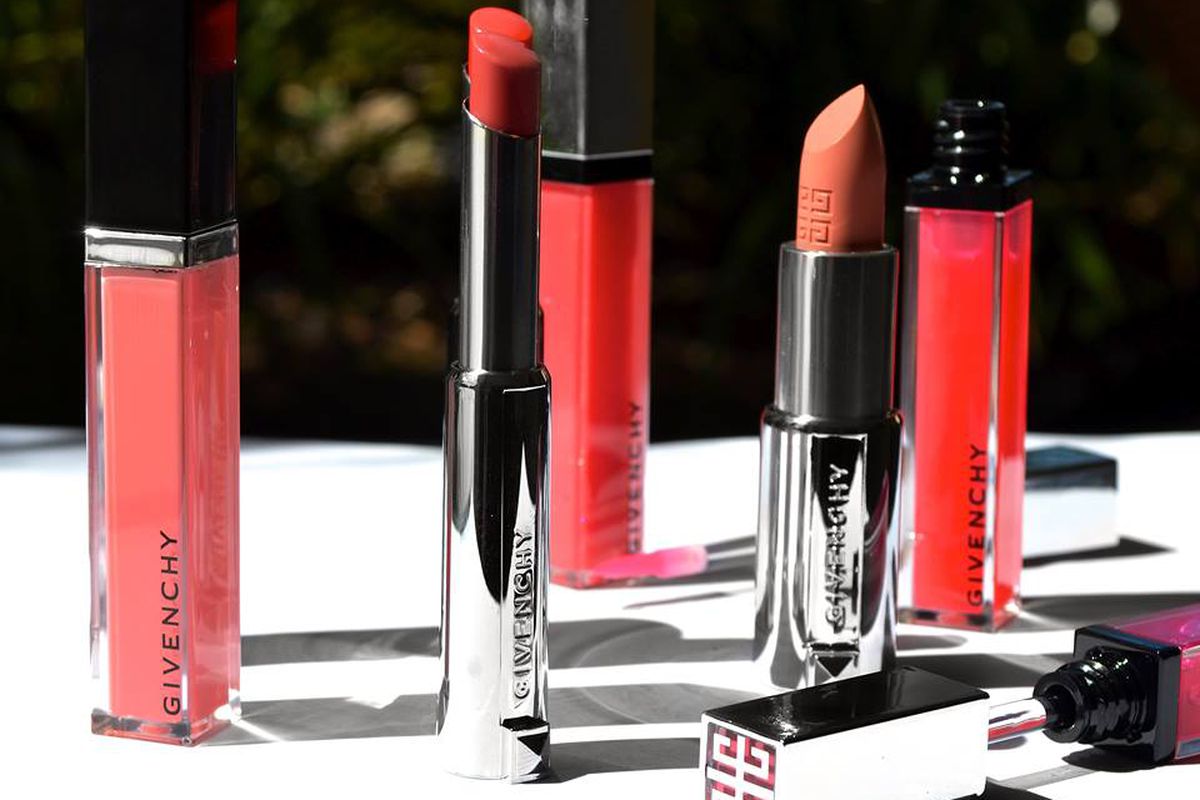
    Givenchy Beauty will open its first South Korean store this month.

    The cosmetics and skin-care line of the French luxury fashion house Givenchy has taken space in the Hyundai Department Store in the trendy southern Seoul district of Apgujeong.

    The first store will open on July 31 and a second, at another Hyundai Department store in Sinchon, northern Seoul, will open next month.

    With the huge growth of the Korean beauty industry over recent years, Givenchy Beauty believes its broad range of makeup, skincare and perfume products will appeal to local women comfortable spending on premium solutions.

    Once the Givenchy Beauty stores are open, Hyundai Department Store will become the first Korean retailer to host stores from five global premium beauty brands, the others being Dior, YSL, Chanel and Tom Ford.

  • S. Korea firms diversify exports to India

    S. Korea firms diversify exports to India

    South Korean companies are pumping up their efforts to diversify export items to India as they seek to tap deeper into Asia’s third-largest economy, industry sources said Friday.

    So far, South Korean companies have focused on such manufacturing sectors as autos, chemicals, electronics, steel and machinery, but their recent push represents a strategy of finding new growth engines in India with great growth potential.

    Leading the pack are South Korean food companies and fruit growers, which are eager to discover new revenue sources in the fast-growing economy with a population of 1.3 billion, the world’s second-largest after China.

    In March, Ottogi Co., South Korea’s second-largest maker of instant noodles called “ramyeon,” started exporting a veggie noodle product to India, targeting Indian vegetarians who make up nearly 30 percent of the country’s population.

    Years earlier, South Korean instant noodle makers tried to make forays into the Indian market, but they fell by the wayside due to strict labeling rules and other regulations.

    Ottogi, however, had carried out a thorough survey of Indians’ tastes and the country’s food laws since 2016, with its latest veggie ramyeon obtaining a certificate from the food safety regulator here.
    The veggie noodle product is currently on sale not only at large stores in New Delhi and Mumbai but also at restaurants frequented by Indians, according to Ottogi.

    “India is expected to grow into an instant noodle market worth 1 trillion won ($890 million) by 2020. Initially, Ottogi aims to export 10 billion won worth of ramyeon to India by that year,” a company official said.

    Instant noodles are not the only product of note. South Korea has also recently succeeded in exporting pears to India.

    According to the local daily Economic Times, the Indian government recently gave the go-ahead to imports of South Korean pears and other fruits. South Korean pears will be sold to consumers after being treated in low temperatures and fumigated.

    “Pears will become the first South Korean fruit imported into India. The move will give more options to Indian consumers,” a local food industry source said.

    India imported $15.2 million worth of pears between April 2017 and February 2018, mainly from the United States, the Commonwealth of Independent States and South Africa.

    In addition, Lotte Confectionery Co., a key food unit of South Korean retail giant Lotte Group, currently operates a factory in Noida, northern India.

    Orion Corp.’s Choco Pie cake and other South Korean food products are also popular among Indian consumers. Choco Pie — an individually-wrapped, chocolate-covered, marshmallow-filled snack cake — sells in other foreign countries, including China and Russia.

    On top of South Korean foodmakers’ push into the subcontinent, companies already operating in India are redoubling efforts to upgrade their businesses by exploring new areas and taking other measures, the New Delhi office of the Korea Trade-Investment Promotion Agency (KOTRA) said.

    “Automakers are shifting their focus to electric cars, while manufacturers of electronics and electric goods are seeking localization of parts production in a departure from complete knock-down (CKD) kits,” a KOTRA official said.

    According to informed sources, shipbuilding and startups have emerged as promising industrial sectors as the Indian government has put forward a set of measures to boost those areas.

    Despite India’s support measures, South Korean companies are still confronted with a poor environment for corporate establishment and living in the country, they added.

  • E-Mart to have electric car charging at all stores

    E-Mart to have electric car charging at all stores

    Korean hypermarket giant E-Mart plans to install electric car charging stations at all of its outlets nationwide by 2021.

    The company initiated formal service of nine electric car charging stations in four regions (Sokcho, Gangneung, Geomdan, and Gumi) this week.

    The stations can accommodate many cars at any given time. From October, E-Mart will be expanding the number of charging stations by 30 every year so that by 2021, the total number of stations within its overarching Shinsegae Group will reach 1100 including the 140-odd stations installed on the premises of its E-Mart stores.

    The multi-car charging stations will each accommodate 18 cars that can be fully charged within 40 minutes at 100kWh, making them the fastest chargers in the nation.

    A new payment system that automatically recognises the driver’s Hi Pass payment card number will make payment easy without requiring the driver to take out his or her credit card.

    E-Mart was the first retailer in the nation to build charging stations for electric cars. The company currently operates more than 110 charging stations with a total capacity of charging 200 electric cars.

  • Duty-free market still dominated by South Korea

    Duty-free market still dominated by South Korea

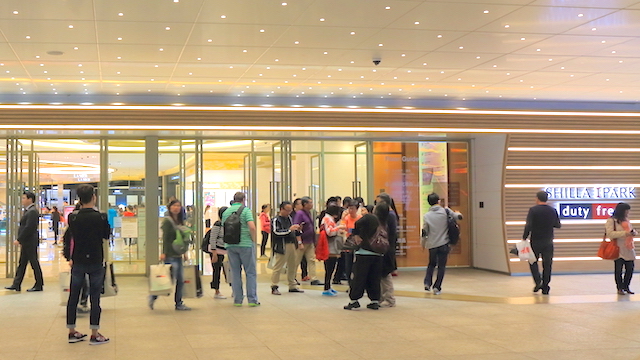
    South Korea has maintained a dominant share of the global duty-free market, despite its recent political turmoil.

    According to a GlobalData report, with a 22 per cent share of sales, South Korea is the world’s largest duty-free market, which reached a sales high of US$11.7 billion last year. The past two years have seen sales growth of 23.1 per cent annually in the sector.

    These sales figures were achieved against the context of the Terminal High Area Defense (THAAD) missile row between South Korea and China that halved the numbers of Chinese tourists visiting the country.

    Maureen Hinton, retail research director at the data and analytics company, said: “The deployment of the THAAD missile system in South Korea and the consequent ban on Chinese travelers visiting the country was potentially very significant. As the Chinese are the big spenders and a key driver of the market, a decline in sales should have been the outcome.”

    Despite this, Chinese shuttle traders, who on-sell high quantities of Korean duty-free products back in China, combined with international attention on the Seoul Winter Olympics, have been major factors in the country’s dominance of the market sector.

    Hinton added: “GlobalData forecasts that by 2022, South Korea will account for nearly a quarter of all duty free spending at 24.1 per cent of the global market. However, optimism about a new settled relationship with North Korea could drive its sales even higher if the border opens.”

  • Chinese and Russian business key to Lotte Duty Free’s success

    Surging Chinese and Russian visitor numbers suggest a strong future for Korean travel retail giant Lotte Duty Free’s new store at Cam Ranh International Airport in Nha Trang, opened on 30 June.

    As reported, Lotte Duty Free has been awarded an exclusive ten-year duty free concession. The contract to operate some 1,680sq m of departures and arrivals space runs until mid-2028.

    Lotte Duty Free CEO Jang Sun-wook opened the store in the airport’s new terminal on 30 June.

    The store sells a wide range of traditional duty free items, including cosmetics, fragrances, watches, fashion, liquor and tobacco. The departures shop, sited directly in front of the main gates, covers 1,507sq m and the arrivals store 173sq m. Key Korean brands include The History of Whoo and Sulwhasoo, while blockbuster international names include Saint Laurent, Dior and Jo Malone.

    It is Lotte Duty Free’s second operation in Vietnam after the retailer’s opening at Danang Airport on 1 November last year. The company expects to generate sales of around 700 billion won (US$625.3 million at current exchange rates).

    Cam Ranh International’s new two-storey terminal covers 50,000sq m. It is expected to handle up to 8 million outbound travellers by 2030.

    Nha Trang is the most popular tourist destination in central Vietnam. Some 2 million foreign tourists visited the area in 2017, a number set to rise by some 20 percent this year. Critically from a retail perspective, Chinese nationals comprise the largest visitor group with 58.9 percent of arrivals, ahead of Russians (27.4 percent). Koreans only make up around 2 percent of arrivals, but that number is expected to climb rapidly in the future as Jeju Air has added a new service to the city.

    Several mid-to-long-term infrastructure development projects are set to increase tourism. A new terminal is being built at the airport and more 4-5 star hotels are being added locally. Six shopping malls are in development while plans are well advanced for the area to develop an eco-tourism programme, including spa and craft village facilities, plus an international-class marina and resort.

    Lotte Duty Free said that corporate social responsibility will be key to its approach. For example, the company is cooperating with local authorities to help children receive surgery and other treatment at medical facilities in Danang. In October 2017, the company funded surgery for six Vietnamese children, and plans to continue the programme this year.

    During July, Vietnamese women from multicultural families are planning a one-off event to invite about 100 parents to the women’s homeland in Vietnam. Lotte Duty Free will help fund the programme.

    With plans to open further stores (including downtown) in Hanoi, Ho Chi Minh City and Danang, Lotte said it hopes to become Vietnam’s largest duty free brand within the next three years.

    Jang said the company aims to post a profitable return in year one. “We are especially focused on making a strong local social contribution,” he said. “I will do my best to create a strong brand.”

  • Korea’s cosmetics exports in January-May up 36.7 percent on year

    Korea’s cosmetics exports in January-May up 36.7 percent on year

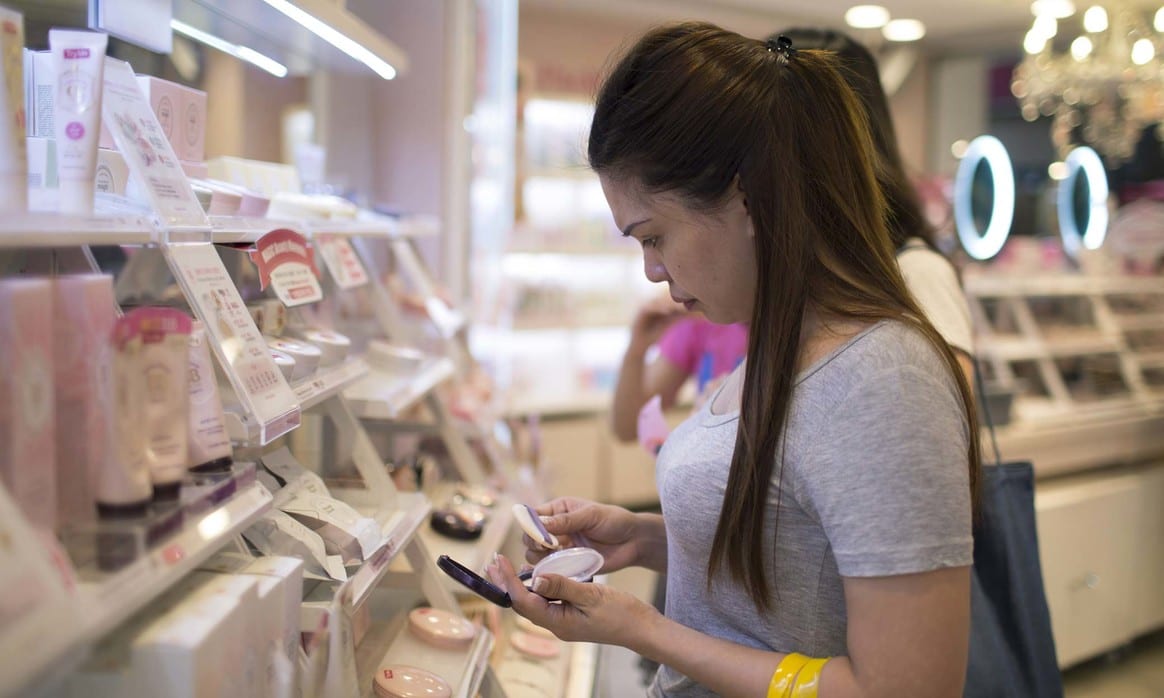
    South Korea’s beauty exports remain unfazed, gaining nearly 40 percent in the first five months of the year against a year-ago period.

    According to data released by the Korea Customs Service on 28 June, K-beauty exports between January and May this year amounted to US$2.06 million, up 36.7 percent against a year ago and showing little signs of softening.

    Last year, cosmetics exports reached an all-time high of US$3.92 billion, nearly quadrupling from US$1.05 billion in 2013 and overwhelming imports of US$1.17 billion.

    The bulk went to ethnic Chinese – 37.4 percent in the mainland and 24.6 percent in Hong Kong. Of the remainder, 9.4 percent was consumed by Americans, 5.0 percent by Japanese, and 3.4 percent Thais.

    Chinese have been the biggest non-Korean consumers of K-beauty products since 2000. Exports reached US$1.47 billion last year alone, also helped by a sales tax cut on cosmetics in China.

    Korean beauty products are rapidly gaining ground in Vietnam. Exports to Vietnam hit US$123 million last year, up a whopping 109.5 percent on year. Shipments to traditional beauty powerhouses of France and the United Kingdom have also been on a steady rise.

    Basic skin care products accounted for the largest 50.7 percent of the country’s total cosmetics exports last year while makeup products made up 9.5 percent, those for eye makeup 3.6 percent, and lipsticks 3.2 percent.

    The Korea Customs Service forecast cosmetics exports to extend strong growth this year, fueled by renewed popularity of K-pop and Korean entertainers.

  • Thailand’s Mistine launches in Korea

    Thailand’s Mistine launches in Korea

    Better Way Thailand, trading as cosmetics brand Mistine, is aiming to establish itself as an Asian brand by 2020.

    From this coming August, Mistine products will be exported for retail in Korea’s Incheon airport and in downtown Seoul, in the hope of attracting the destination’s annual 10 million Chinese visitors.

    Mistine already has a strong online presence in the Chinese mainland, where it is also available over the counter at Watsons health and beauty stores. It will launch its own flagship store in Beijing next year.

    These moves will constitute part of an effort to increase export volumes from 10 per cent to 20 per cent of its stock in the face of lagging demand at home.

    The company’s president Danai Derojanawong said Better Way needs to rely more on technology to make its logistics more efficient for customer satisfaction. “Direct sales may be disrupted by the rise of online shopping,” he said, “but we still believe they will not disappear from Thai society, because direct sales is a social business.”

    Currently 60 per cent of Mistine products are sold via direct sales, which Danai expects will drop to 30 per cent over the next five years.

    Danai said there is huge potential in the Chinese market. “We’ve only penetrated four cities, including Shanghai, Guangzhou and Shenzhen. We plan to expand our business into two new cities next year, Chengdu and Beijing. With those plans, we aim to enter the top five for regional colour beauty brands in Asia by 2020.”

    Mistine’s sales in China totalled THB3 billion (US$90.47 million) last year, and are expected to reach THB5 billion (US$150.78 million) this year.

  • Starbucks to increase number of cashless stores in Korea

    Starbucks to increase number of cashless stores in Korea

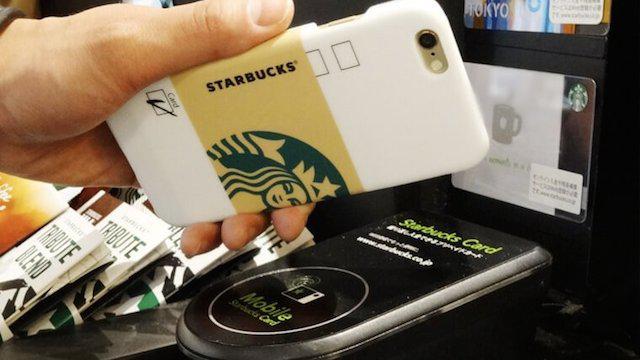
    Starbucks Coffee Korea Co. said Monday it will increase the number of cashless stores to over 100 across South Korea this month amid rising use of credit cards and mobile payment systems in the tech-savvy country.

    Earlier in April, the coffee giant began a test run of three cashless stores in major office districts in and around Seoul.

    The proportion of cash transactions at these stores has since dropped from 3 percent to 0.2 percent, according to the joint venture between Starbucks Coffee International Inc. and South Korean retail giant Shinsegae.

    The company will turn 100 more outlets into cashless stores from July 16 in addition to the three under the trial system.

    Starbucks said the decision is part of its broader digital innovation drive as cash payment has been constantly declining at stores in South Korea, from 31 percent of the total in 2010 to 15 percent in 2013 and 7 percent last year.

    “South Korea has a high utilization rate of credit cards and mobile payments. That coupled with the country’s well-established digital infrastructure enabled our latest expansion decision,” Starbucks Korea CEO Lee Seock-koo said in a statement.

    The total daily average amount of electronic financial transactions came to a record 581.53 billion won (US$521.6 million) in the first quarter of this year, up 13.2 percent from a quarter earlier, according to government data.

  • Weakening won poses new risks to Korean economy

    Weakening won poses new risks to Korean economy

    The weakening of the won in recent weeks carries both benefits and risks for the Korean economy that is being held back by a simultaneous downturn in investment, consumption and exports.

    Policymakers therefore face a thorny task to take proper steps in response to the weakening won that is set to have contradictory effects on the economy.

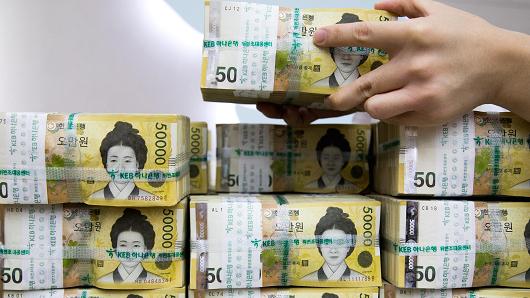
    The value of the Korean currency against the dollar fell to an eight-month low of 1,124.2 won per dollar in the Seoul foreign exchange market on June 28 before rising somewhat to 1,114.5 won the following day. Over the previous 14 trading days, the won lost its value against the greenback by 5.1 percent.

    Under usual conditions, the depreciation of the won can be seen as bringing more positive than negative effects to Korea’s export-dependent economy by enhancing the price competitiveness of the country’s exporters.

    What is concerning, analysts note, is the steep pace with which the won has been weakening.

    A comparison by Bloomberg of changes in the value of 20 major currencies against the dollar from May 31 to June 26 showed the won depreciated at the third-fastest pace of 3.32 percent.

    The Argentine peso and South African rand were the only two currencies that lost more value than the won. The Turkish lira and Brazilian real depreciated 1.91 percent and 2.05 percent, respectively, against the greenback.

    While the currency volatilities that hit most emerging economies earlier this year have lessened, the won is now in tune with the trend of depreciation against the dollar after remaining relatively strong partly due to reduced geopolitical risks on the Korean Peninsula.

    According to data from the Bank of Korea, day-to-day changes in the won-dollar exchange rate widened from an average 0.34 percent in May to an average 0.44 percent during the period of June 1-27.

    Analysts note a set of factors will likely precipitate the weakening of the won down the road, calling for measures to prevent a possible massive outflow of capital from the country.

    “The won could weaken to 1,150 won per dollar within the year, if the trade tensions between the US and China continue to intensify,” said Ha Kun-hyung, an economist at Shinhan Investment Corp.

    China’s move to devalue the yuan against the dollar to counter President Donald Trump’s trade pressure has served to push down the value of the won against the greenback in recent weeks. Experts note the local currency market is increasingly synchronized with the yuan’s movement as Korea depends on the Chinese market for nearly a quarter of its goods shipments abroad.

    Concerns are growing that the escalating trade friction between the world’s two-biggest economies will weigh on the country’s exports.

    According to government data released Sunday, Korea’s outbound shipments dropped 0.9 percent from a year earlier in June, marking the second monthly decrease this year following a 1.5 percent dip in April. A recent study by the Korea Institute for Industrial Economics and Trade forecast that the rate of on-year growth in the country’s exports would slide from 15.6 percent last year to 6 percent this year.

    The prospect of a slowdown in exports coupled with deteriorating profits of Korea’s major companies has prompted foreign investors to sell off Korean shares.

    Foreign investors have net-sold 3.8 trillion won ($3.4 billion) worth of Korean shares so far this year — nearly 1.6 trillion won in June alone.

    “One of the fundamental reasons for the capital outflow is the weakening of confidence in local companies’ long-term profitability,” said Lee Jae-man, an analyst at Hana Financial Investment.

    According to FnGuide, a financial information provider, the latest estimate of the combined operating profits of 132 major listed firms in the second quarter of the year reached 46.2 trillion won, down 8 percent from the 50.2 trillion won forecast at the start of the year.

    A widening gap between interest rates in Korea and the US may also add to accelerating the capital outflow.

    Policymakers seem ready to let the won continue to weaken.

    “At some point, measures may need to be taken to stabilize the market,” said a Finance Ministry official, asking not to be named. But he added it would not be worrisome that the value of the won might fall further below the current level.

    Pressured by the US and the International Monetary Fund, Seoul announced last month it would begin disclosing records on currency market interventions next year.

    It may well expect measures to push up the value of the won will not be subject to punitive action from the US, which has focused on curbing moves by trading partners to devalue their currencies to help bolster exports.

    What concerns policymakers is the possibility that the weakening won will be coupled with rising international oil prices to raise inflation. Korea’s consumer price hikes, which remained at 1 percent in January, reached 1.6 percent in April and 1.5 percent in May.

    The upward trend in prices may lead the BOK to increase its base rate, which has been held at 1.5 percent since November.

    The move may also be needed to narrow the rate gap with the US but would run the risk of further dampening domestic consumption and investment.

    According to recent data from Statistics Korea, the country’s retail sales and facility investment decreased 1 percent and 3.2 percent on-month in May, respectively, marking the second and third monthly decline in a row.

  • New VR amusement park for Korea

    New VR amusement park for Korea

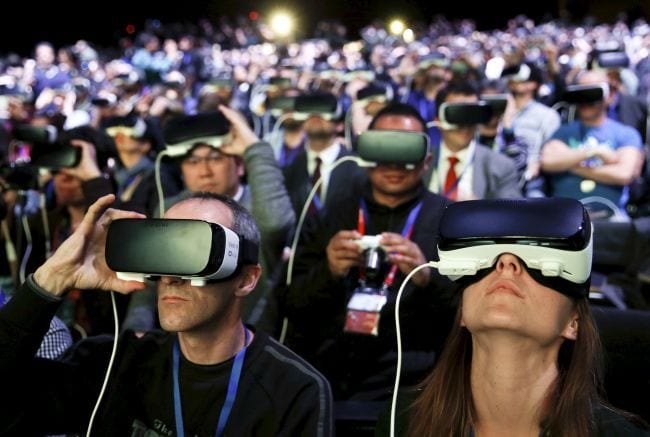
    As virtual reality becomes recognized as a viable film technology internationally, the Korean film industry is not hesitating to join the trend: film tech labs and visual effects houses are producing VR content more aggressively than ever, while major exhibitors are developing new technologies to screen this material.

    Until quite recently, VR content was rarely available in cinemas as most VR productions have been designed for theme parks and experiential games. But now South Korea is catching up the global trend – a movement in which VR animation such as Eugene Chung’s “Arden’s Wake” draw wide attention and leading film festivals launch competition sections specifically for VR films.

    South Korea has showcased quite a few notable VR film projects: in 2017, Gina Kim’s VR documentary “Bloodless” competed in the Venice film festival’s VR competition and won the best VR Story Award. Based on a true event in 1992, the film is about the murder of a Korean sex worker by an American soldier.

    More recently, VR romance drama “Stay With Me” opened in the immersive 4DX format at the CJ-CGV cinema chain. Directed by Bryan Ku, “Stay” revolves around the relationship between a boy who dreams of becoming a musician but is too afraid to go on stage, and a girl who aspires to become an actress.

    “When you think about VR, most of the time it would be either adventure, action or horror films,” Ku said at a press event for “Stay.” “I believe the greatest quality of VR lies in its capacity to let the audiences relate to the film emotionally, and romance drama is the genre that corresponds the most to this quality,” he continued.

    The world’s first film production that was both shot in VR and screened in 4DX format, “Stay” was specifically designed for 4DX screening from the beginning and was shot in 360 degrees, for which CGV’s 4DX effect team joined the project from the development stage.

    “4DX effects for VR should be different from those for other movies,” says Yoo Young-gun of CGV. “Visual elements are not enough to accomplish what VR is up to, which is to expand to a form of storytelling with its immersive characteristics maximized. With 4DX technology, the audiences can touch, smell and feel the films, meaning that virtual reality in its literal sense can be achieved.”

    CJ CGV is aiming to globally introduce 4DX VR by applying VR technology to its 500 4DX theaters across the world.

    “We are planning a VR add-on package, which allows exhibitors to show VR films, and are offering it to the 500 4DX theaters across the globe,” says Yoo.

    On the other hand, Lotte Cinema, South Korea’s second-largest exhibition chain, arranged a special program dedicated to VR content earlier this year. The program’s selection included Patrick Kwon’s “Nine Days,” South Korea’s first VR movie designed for theatrical release.

    “For this event we collaborated with Samsung and could use its HMDs and smartphones, but if we start regular VR screenings, it will be a lot costlier,” says Lotte’s Kang Seung-hyuk. “We will need to determine whether there’s enough content in VR that can cover these costs.”

    Since VR is still at an early stage and barely has a stable market, most VR productions rely on support funds. The Ministry of Culture, Sport and Tourism and institutes such as Korea Creative Content Agency and National IT Industry Promotion Industry are funding VR projects. Also, the Korean Academy of Film Arts launched a special course for VR production.

    At the same time, companies in the private sector are also making investments. Leading visual-effects house Dexter Studios is running a digital human virtual reality research lab and is working on a string of VR films that are set for theatrical releases at CGV within this year. The studio’s lineup includes sci-fi animation “From the Earth” and live-action horror picture “Trapped.”

  • Emart’s take on Don Quijote opens in COEX

    Emart’s take on Don Quijote opens in COEX

    Emart’s Pierrot Shopping store has opened inside Coex mall, in southern Seoul.

    Aiming to be a “Fun and Crazy” destination, the 2513sqm two-storey store targets consumers in their 20s and 30s with a diverse range of 40,000 products.

    On basement floor, there is a large collection of alcohol and snacks from Korean and foreign brands, along with wigs, costumes and a discreet space for ‘adult toys’.

    On the first floor, customers will find goods as diverse as leather bags from brands such as Prada and Fendi, fresh food, cordless vacuum cleaners, smoking pipes, fake eyelashes and pet food.

    One curious feature in the store is a smoking room which resembles the interior of a subway train. An information desk and electronic kiosks offer tax refunds for foreign customers.

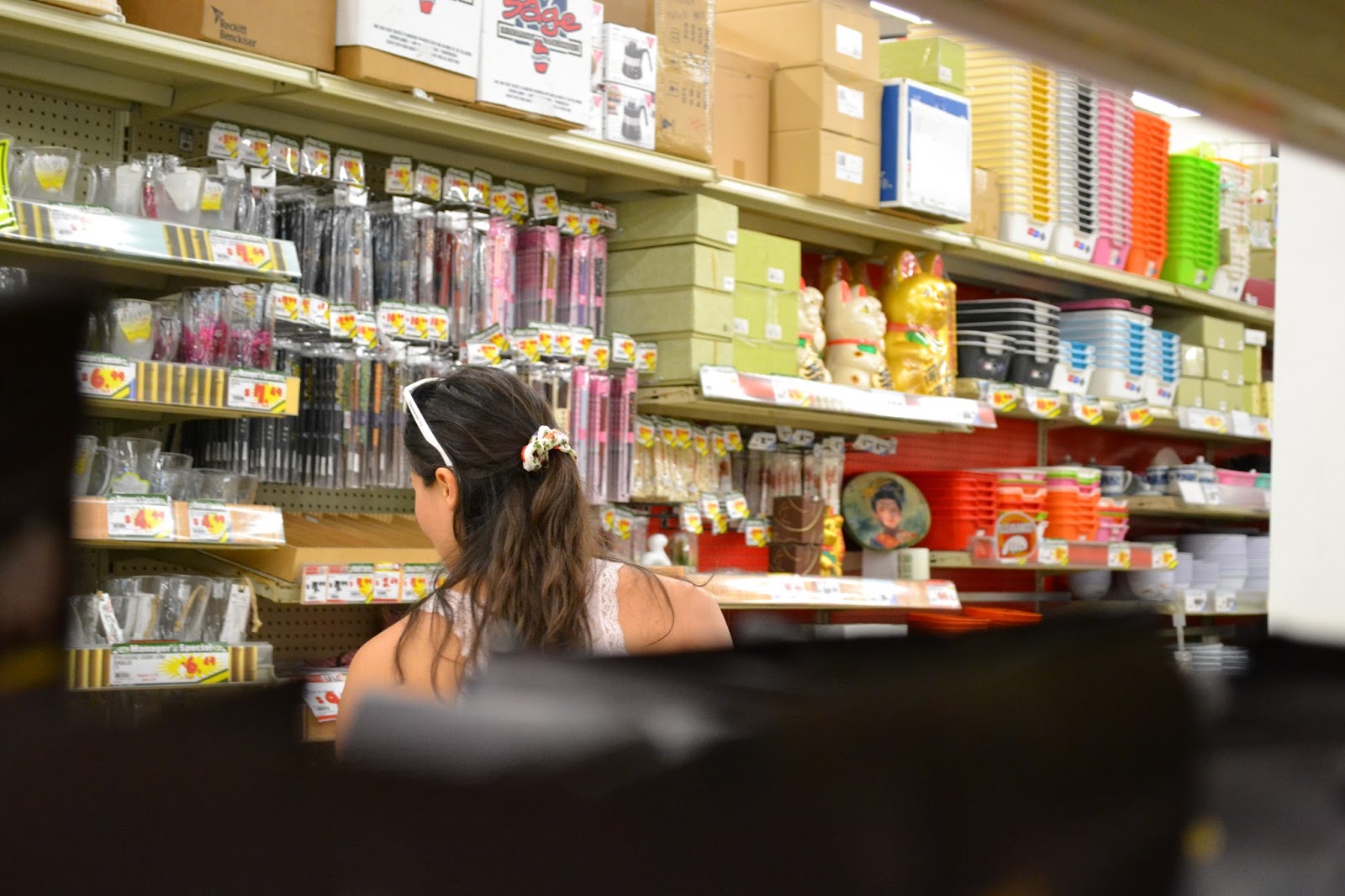
    A Korean version of Japanese Don Quijote chain, Pierrot Shopping store is designed “to be a place where young people can come to play and look around without a clear shopping purpose”.

    “You can come here to find relief from everyday stress, casually pick up things that look intriguing and buy them just because they’re affordable,” said Pierrot Shopping’s brand manager, Yoo Jin-cheol.

    While other large-scale retailers prioritise space and neatly arranged products so that consumers can easily find what they are looking for, at Pierrot Shopping the aisles are narrow and in some places it’s difficult for two people to pass.

    The staff wear uniforms with “I don’t know where that is either” printed on the back.

    Emart explained the intention was to make consumers venture more around the aisles, make unexpected discoveries and have a“fun experience”.

    Emart will open two more branches of Pierrot Shopping this year with smaller footprints than at Coex; at the Doota Mall and in Nonhyeon, in Gangnam District.

  • The Shilla officially launches Beauty&You

    The Shilla officially launches Beauty&You

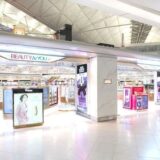
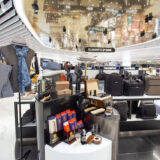
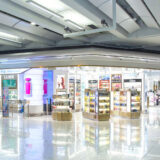
    Korean-headquartered travel retailer The Shilla has officially launched its Beauty&You concept stores in Hong Kong International Airport (HKIA) after a six-month soft launch.

    At the launch, Shilla Travel Retail Hong Kong MD Alice Woo said: “We hope to redefine the airport retail experience and customer journey with a comprehensive brand profile presented in an interactive and engaging environment. Our aim is to deliver the ultimate shopping experience to a diverse audience in one of the most robust travel markets in the world.”

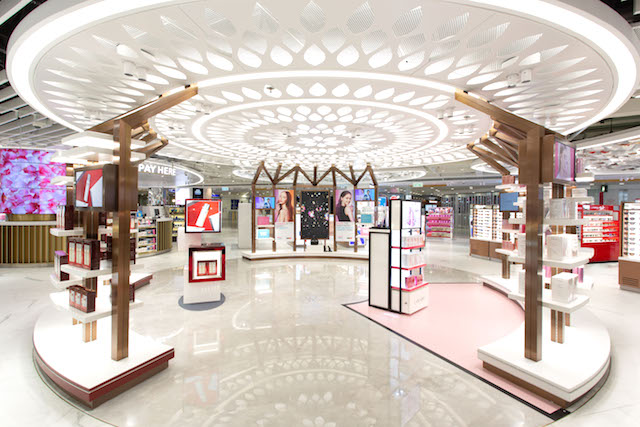
    In line with experiential retail trends, Beauty&You offers curated hospitality with high-end product offerings to attempt seamless retail experiences. In a statement, the company said the store is designed to provide “journeys of discovery” for every customer, with professional beauty and fashion advisors placed in engagement zones with both branded and unbranded counters, offering personalised recommendations.

    The retail space is not only designated as a shopping environment, but also for “retailtainment” where customers may explore their own beauty preferences by experimenting with combinations of multiple brands and experiences – involving digital elements such as virtual makeup apps and VR headsets, as well as instant photo printing and even a ‘lucky claw machine’.

    The store will stock around 200 brands, including premium labels not otherwise available at HKIA. These include David Beckham’s House 99; Korean & Japanese beauty brands The History of Whoo, su:m37o, Three, and ReFa; image-maker Nars; Italian-crafted luxury leather goods and accessory brands Bresciani, Maglia Francesco, Victrix; and accessory brands such as Alexander McQueen and Didier Dubot.

    To mark the official launch and the 20th Anniversary of HKIA, in-store promotions and discounts will be held throughout July.

    View the images of the newly launched villa below :