Tag: Korea

  • Cosmax opens factory in Thailand to tap market in Asean

    Cosmax opens factory in Thailand to tap market in Asean

    Cosmax’s manufacturing facilities in Thailand recently started up, the company said Monday, with the goal of tapping into Asean’s largest beauty market.

    An original design manufacturer for big-name beauty brands worldwide, the company announced that the 9,000-square-meter (836-square-foot) facility in Bangplee, Thailand, started running on Wednesday.

    With 150 employees, the facility has the capacity to produce 30 million units of skin care and cosmetics products per year.

    Cosmax set up an office in Thailand last year to tap into the beauty market of it and other neighboring countries in the Asean region.

    “Thailand has the biggest beauty market among Asean countries-it’s also an influential market that leads trends in the region,” said a Cosmax spokeswoman.

    Thailand is a rising target for global beauty brands. Johnson & Johnson, P&G and Unilever manufacture there. The research firm Euromonitor estimated the country’s beauty market at 5.6 billion won ($5.01 million) in 2016 and a Kotra report predicted it to reach 7.2 billion won in size by 2021.

    “Thailand has big market potential: It’s at the center of the hallyu wave and has a high level of interest in Korean cosmetics,” said Lee Geon-il, head of Cosmax’s Thailand corporation.

    “There’s also a wide perception that Korean beauty brands have good quality.”

    The spokeswoman added the company hopes to sign more deals with beauty companies in Thailand and other nearby countries.

    The Thai factory completes a two-track plan that Cosmax has for tackling the Asean beauty market. It already has one factory in Indonesia that manufactures halal-certified products.

    Combined, the two facilities will be able to make products for both Muslim and Buddhist populations in the Asean region.

    Cosmax now has six overseas factories in total, including the United States and China.

  • Naver to invest $134 million on overseas comics business

    Naver to invest $134 million on overseas comics business

    Korea’s top portal operator Naver said Monday it will invest 150 billion won in its online comic platform to better penetrate into overseas markets.

    Naver said it will make the investment through a paid-in capital increase program and acquire 300,000 additional shares in its wholly-owned affiliate, Naver Webtoon.

    Naver Webtoon said it plans to use the cash to expand its presence in foreign markets like the United States and Japan.

    The portal operator has been making various efforts to beef up its comic business, also investing some 60 billion won in January in its affiliate.

    Naver said it currently has some 5 million active users in the United States, claiming the investment will help Naver Webtoon achieve further growth going forward.

  • Woori Bank Korea changes its structure

    Woori Bank Korea changes its structure

    The board of Woori Bank approved a plan to convert the bank into a holding company, pushing up its shares on Wednesday.

    An announcement released late Tuesday said the country’s fourth largest bank would overhaul its structure to become an integrated financial service company with diverse non-banking affiliates.

    The holding company will have six affiliates: Woori Bank, Woori Credit Information, Woori Private Equity Asset Management, Woori FIS, Woori Finance Research Institute and Woori Fund Service.

    Woori Card and Woori Investment Bank will remain subsidiaries of the banking unit and may later be turned into separate affiliates under the new holding company, according to Woori Bank in a statement.

    A shareholder meeting will be held by the end of this year to approve the changes.

    “The plan will help boost competitiveness for Woori affiliates,” a source at Woori Bank said, “We will swiftly carry out the procedure.”

    Analysts said the change in corporate structure could increase the maximum amount of investment allowed by regulators to around 8 trillion won ($7.2 billion).

    Sohn Tae-seung, CEO of Woori Bank, has reiterated that the company is already looking to acquire non-banking companies like asset management and securities companies.

    Earlier this month, a local media outlet reported that Woori Bank plans to acquire Kyobo Securities, but Woori said that nothing has been decided.

    Samsung Securities was also among the potential targets cited by different reports, though Woori declined to confirm that.

    Investors welcomed the board’s decision on Wednesday, and shares of Woori Bank rose 5.88 percent to close at 17,100 won.

    “The decision to put the six Woori units under the holding company and keep Woori Card and Woori Investment Bank under Woori Bank will likely serve the interests of shareholders,” said Baek Doo-san, an analyst at Korea Investment & Securities.

    The plan to turn Woori Bank into a holding company accelerated after the Financial Services Commission, the country’s top financial regulator, said it would sell the government’s stake in the bank once the transformation is complete.

    The government holds 18.4 percent of Woori Bank through the state-owned Korea Deposit Insurance Corporation.

  • 11Street Shopping Mall to get US$449 million investment

    11Street Shopping Mall to get US$449 million investment

    South Korean mobile carrier SK Telecom has announced a US$449 million investment into a subsidiary’s e-commerce platform, 11Street Shopping Mall.

    In a decision yet to be approved by shareholders, SK will use the investment, sourced from the H&Q Korea private equity fund, to establish a new business entity. An SK spokesperson said that further reshuffling among its subsidiary firms will be aimed at seeking a new growth engine with a view to expanding its presence in the country’s online retail market.

    The move directly follows a joint venture set up earlier this month between an SK subsidiary and the country’s largest convenience store chain, CU.

    The improvements to 11Street’s operations will draw on artificial intelligence technologies, among other information and communications developments, to build new services – including improvements to its mobile payment system.

    A representative from SK Telecom said that the company’s new business structure is ready to promptly and flexibly respond to the fourth industrial revolution.

  • ‘Content marketing’ is definitely a game changer

    ‘Content marketing’ is definitely a game changer

    In a Red Bull video on the company’s YouTube channel, you don’t often see the drink itself. In a video entitled “Shaun White’s Private Pipe – Red Bull Project X,” American snowboarder Shaun White is transported to a half-pipe on snowy mountain via a helicopter. The helicopter has the Red Bull logo on its side, and as White does tricks on the half-pipe, a Red Bull flag waves in the background.

    The video, targeting extreme sports enthusiasts, promotes the Red Bull brand without actually showing a person sip out of a can.

    In marketing, that’s called content marketing. An advertiser must offer an advertisement that is essentially content attractive to a target audience. The brand gets its message across by offering something valuable – not just promoting itself.

    This has become a powerful type of marketing with the spread of smartphones and the rise of social media.

    According to a case study by Weidert Group, a marketing agency, Fisher Tank Company, which produces storage tanks, was able to expand its sales through what it described as an “inbound marketing” strategy: getting more people to visit its website by offering different types of content related to the company’s business.

    Robert Rose, chief strategist at Content Marketing Institute (CMI), whose list of consulting clients includes big names such as Dell, Microsoft and NASA, says that such a “disruptive” form of marketing is shifting the way companies around the globe do business, providing customers with new value and experiences – while also promoting a brand.

    Korean companies are not strangers to this model, Rose says.

    Viva Republica, developer of a P2P mobile payment platform Toss, is an example of a local company shaking up its industries, according to Ross, by providing experiences that customers have not seen before.

    Rose is visiting Korea to attend the Content Marketing Asia Forum, the first content marketing forum in the region, as the keynote speaker. The event, organized by CMI, will take place from June 27 to 29 under theme “Content Marking, the Game Changer of Business.”

  • Korea’s first Internet bank struggling to raise capital

    Korea’s first Internet bank struggling to raise capital

    K-Bank, the country’s first Internet-only bank, is struggling to raise the capital it needs to expand as profits remain elusive amid increasing costs, sources directly involved with the issue said.

    “K-Bank recently asked local private equity funds (PEFs) to participate in an additional rights offer because it wants to raise its capital to 500 billion won ($455 million) by the end of the year. However, investors have concerns about the bank’s future profitability given its weak growth in consumer loans and growing policy threats,” a local PEF source said.

    “It’s highly unlikely the bank can achieve its goal. One reason is it has too many shareholders. This can create additional administrative costs, which I believe is not good for K-Bank as it has to address many challenges as quickly as possible,” said the source.

    After a delay of one month, K-Bank’s shareholders approved in June a plan to raise 150 billion won via a rights offer. The bank was in discussions with new investors and PEFs to raise up to 300 billion won in an additional shares sale.

    Korea Telecom (KT), the country’s dominant fixed-line operator, is the largest shareholder of K-Bank with 18.01 percent, followed by Woori Bank with 12.97 percent, NH Investment with 10.10 percent, Hanwha Life with 8.13 percent, GS Retail with 8 percent, KG Inicis with 6.57 percent, Danal with 6.57 percent and 13 others owning the rest, according to the bank.

    New “digital banks” are widely expected to have an impact on its performance particularly by poaching customers and eroding margins across its retail segments.

    Consumers and industry watchers see evidence of these trends and some say they are happening faster than expected. A key question is services differentiation that haven’t been extensively explored because Internet banks charge lending rates comparable to existing banks, which offer mobile banking services 24 hours a day.

    “My question is how well K-Bank is positioned in terms of product differentiation. Differentiation will make its services much more attractive by contrasting its uniqueness with other competing services and products. K-Bank made an impressive start, however, it has to respond to lots of questions from shareholders and investors if it wants to attract more,” said another PEF source.

    K-Bank reported an 83.8 billion won net loss last year, according to data from the Korea Federation of Banks. The bank, which began operating in April of last year, has extended about 1.95 trillion won in loans as of May this year. But it reported an 8.6 billion won loss by exempting customers from commission fees to win more users.

    The PEF sources have asked the financial regulators to ease rules that bar non-financial companies from owning more than 10 percent of a bank.

    “This regulation limits the growth of internet-only banks. If the rule is eased, then the bank’s largest shareholder KT has no legal issues in participating in a large-scale share sale,” said the second source, adding it will be tough for K-Bank to change the industry dynamics and resolve?the broader industry’s woes.

  • Korea advances in the Asian entertainment market with 3D technology

    Korea advances in the Asian entertainment market with 3D technology

    Korea Creative Content Agency organised the 3D VFX pavilion at the recently concluded Asia TV Forum 2010 held in Singapore from 8-10 December, in hopes of promoting Korean 3D contents technology.

    The 3D VFX was further demonstrated at the 3D conference thus promoting not only the technology but also the so-called Korean Wave.

  • Japan’s ‘LB’ targets Korean market

    Japan’s ‘LB’ targets Korean market

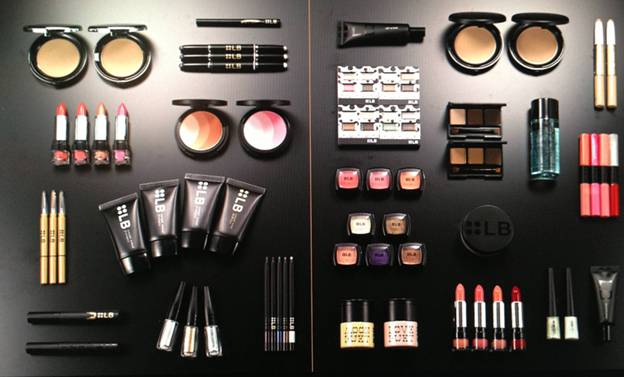
    Japanese makeup brand ‘LB’, known as Japan’s No. 1 eyeliner brand, entered Korean Market.

    LB was launched in the health and beauty store ‘LOHB’s’ in March 2018 and became immediately popular among Koreans.

    LB is sold in 14 countries including Japan, Taiwan, Hong Kong, Thailand, Vietnam, Singapore, Philippines, Australia, USA and China.

    LB is an abbreviation of LadyBird. It comes from an ancient European story about a LadyBird considered lucky. The brand name was chosen to suggest that luck will come when all women in the world use LB products.

    LB has already been recognized as a well-received brand from many beauty creators, including domestic and foreign influencers.

    It features a variety of trendy colors and a wide range of products that are easy to use for beginners. It mainlyprovides eyeliner, eyeshadow, blush, and lipsticks; all supplied at reasonable prices to target urban millennials.

    LB plans its full expansion in Korea by March 2019. The brand is also planning to open duty-free shops in Korea. In addition, through the make-up school run by Sosan Pacific, it will propose “LB style” and raise awareness.

    Representative of Soosan Pacific said: “we will actively promote the brand awareness of LB to consumers through diverse on-line and off line distribution.”

  • Biggest Zoo Coffee opens in Philippines

    Biggest Zoo Coffee opens in Philippines

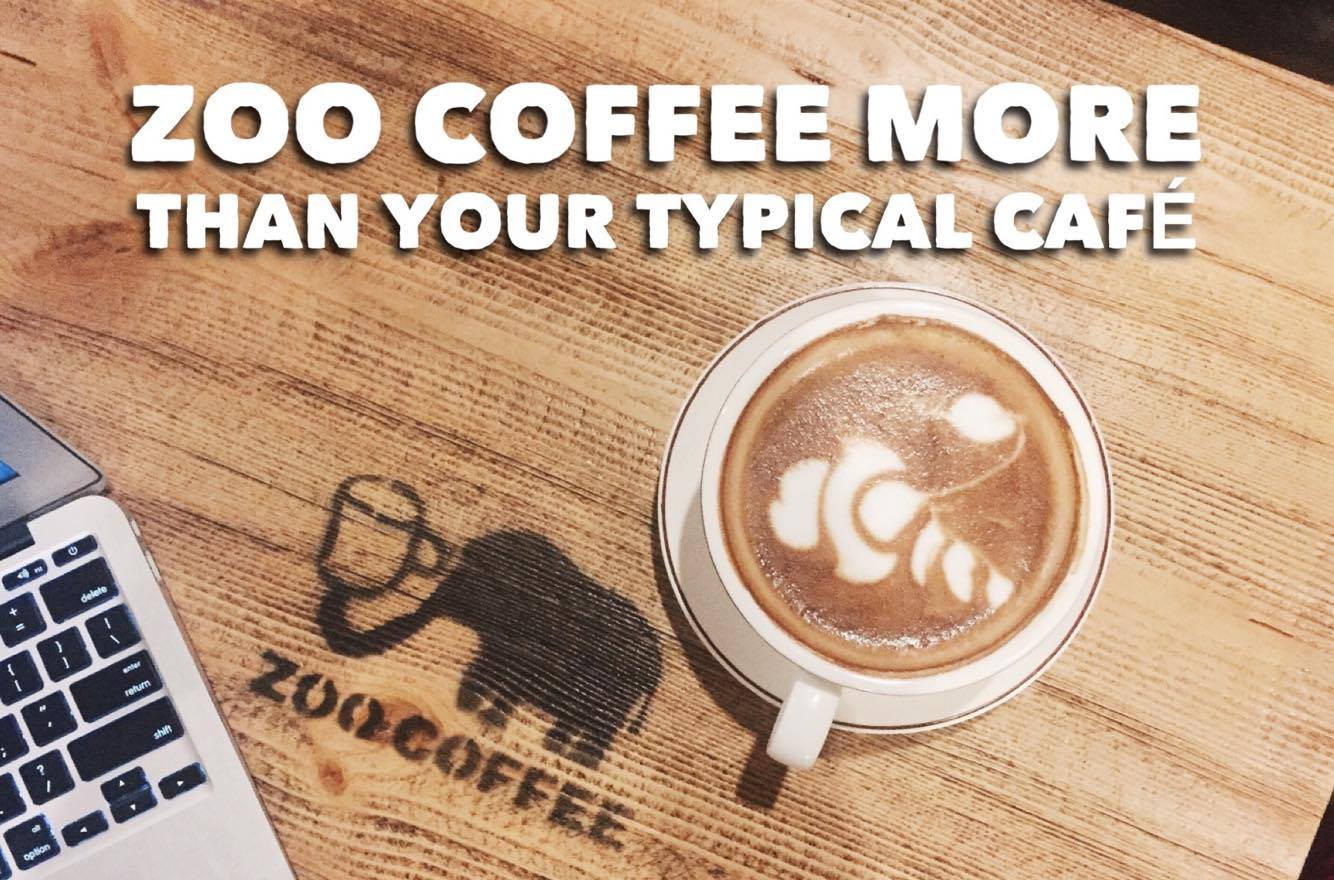
    Korean chain Zoo Coffee has launched its third and largest outlet in the Philippines, at Ayala Vertis North.

    Zoo Coffee stands out for its jungle-themed interiors and staff wearing safari costumes.

    The menu includes the popular Korean iced dessert bingsu, waffles, sandwiches, hotdogs, and cakes.

    Katrina Balolan told ABS-CBN News that the coffee chain plans to open two more branches within the year – at Robinsons Malls and another Ayala mall.

    The company is also opening a barista academy to train people, as well as upgrading its logistics and supply chain to support future store openings.

    Zoo Coffee opened its first branch in Philippines at Alphaland Makati Place in June 2016, followed by the second one at SM Megamall.

    Established in 2009, Zoo Coffee has 100 stores in its home country South Korea.

  • Hyundai presents Kelly Park and Démoo together

    Hyundai presents Kelly Park and Démoo together

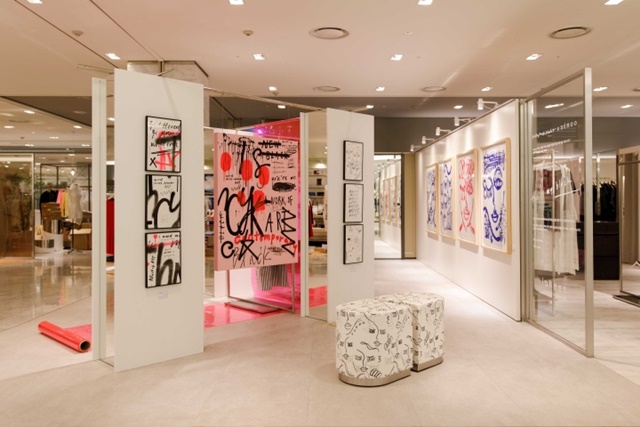
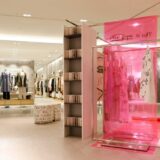
    Hyundai Department Store in Seoul has opened a shop-in-shop that brings together Kelly Park and Démoo in the first use of its new Artspace installation dedicated to brand and artist collaborations.

    Artspace, by multi-disciplinary design studio NBDC, is inspired by the temporary lifespans of pop-up shop formats and has been conceived to enhance the department store’s regular environment with conservatively-balanced experimental displays. Hyundai says the space attempts a convergence of artistic exhibition with the sale of product.

    The current Kelly Park x Démoo, themed “Expanding the Image”, showcases a range of offerings by both brands and is marked by the calligraphic visual styling of the Kelly Park Studio artworks on display, as well as the avant-garde Démoo fashions by designer Demi Choonmoo Park.

    The installation is built to resemble a gallery setting, allowing visitors to view artworks, fashions and patterned furniture pieces as they move through the exhibition.

    Gallery of the event can be viewed below (5 images) :

  • Memebox eyes to return the US after a year pending

    Memebox eyes to return the US after a year pending

    Memebox, a Korean beauty startup founded in 2012 as a subscription-box service, is relaunching its e-commerce business in the US after a year on hold.

    The company has remained active in Asian markets while awaiting its window to return to the US. Founder and CEO Dino Ha identified a rise in Asian beauty-brand awareness among American consumers as being the key factor in the relaunch.

    Memebox recently contracted with beauty retailer Sephora to launch a new line of cosmetics to come out this autumn. Its in-house brands are already available in the US on its new online platform, which has been reconfigured to include review and community features designed to bolster consumer education. The company’s community-building efforts to encourage sharing of product information have resulted in an increase in user engagement from three to 25 minutes spent on its platform.

    The firm maintains a database that lists the skin types, preferences and consumer trends of its 5 million active users. According to product manager Danielle Zhu, this is central to Memebox’s short product development cycle and trend-forecasting efforts.

    Memebox maintains a close relationship with social media influencers as a core strategy since first trading, and is now developing an affiliate program to encourage users to register as ambassadors of the brand. The program serves in part to address recent criticism accusing the firm of only targeting very light-skinned women, excluding many potential users with darker skin tones.

  • World Cup boosts South Korean convenience stores revenue

    World Cup boosts South Korean convenience stores revenue

    South Korean convenience stores saw their sales more than double in some categories as tens of thousands of South Koreans took to the streets to cheer on their national football team in the first game of its World Cup campaign.

    BGF Retail Co, which operates the country’s largest convenience store chain, CU, said sales of major products at its stores from 6pm Monday to midnight soared as South Korea faced Sweden in their 2018 FIFA World Cup Group F opener.

    Sales of beer surged 124.8 per cent, with revenue from ice cream and water jumping 121.9 per cent and 120.2 per cent, respectively, from the previous week.

    GS Retail Co, which operates GS25, said sales of beer skyrocketed 274.6 per cent on Monday compared with the same day the previous week.

    Police estimated some 17,000 fans joined the mass street cheering in Seoul’s Gwanghwamun Square. Another 6000 fans are estimated to have gathered at Seoul Plaza in front of City Hall.

    South Korea fell to Sweden 1-0. Its next game, against Mexico, will take place in Rostov-on-Don on Saturday.

  • Food companies enjoy the help of fashion

    Food companies enjoy the help of fashion

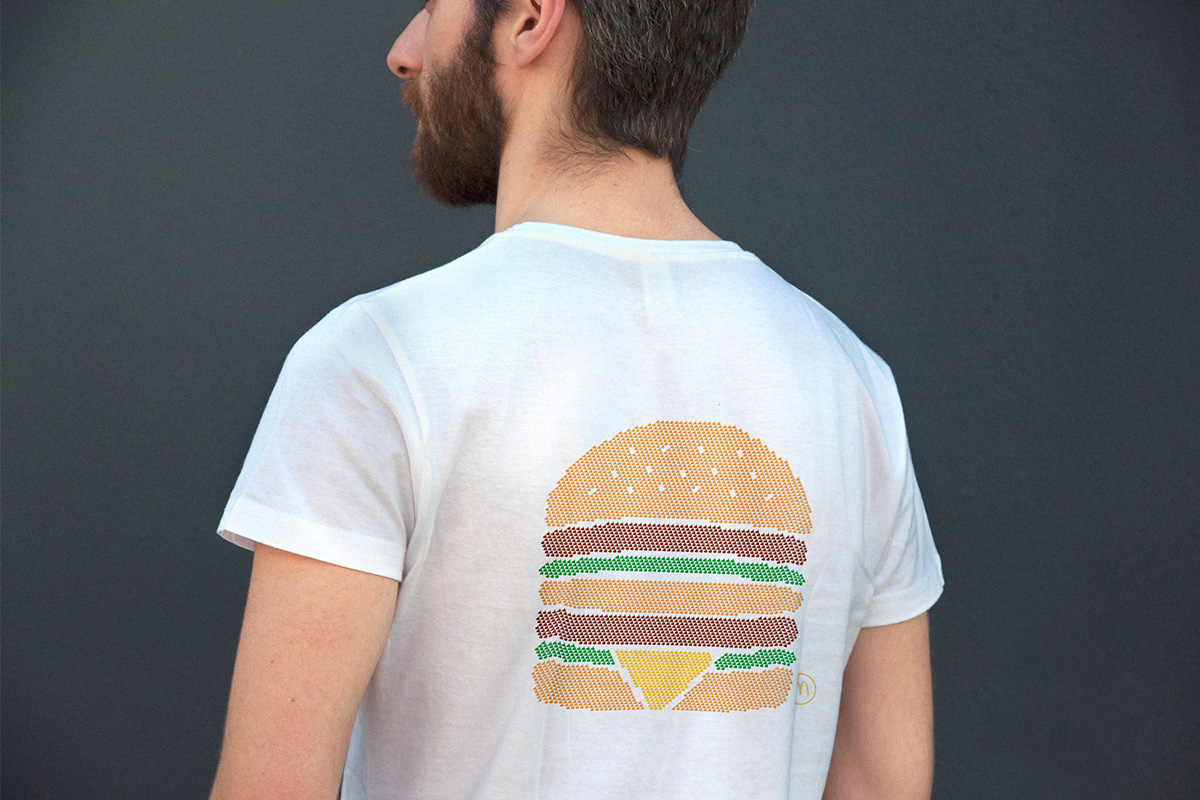
    As they wage a marketing war for consumers’ attention and appetites, food companies are increasingly teaming up with fashion brands, leading to a boom in “food merchandise.”

    Brands see the collaborations as an entertaining experience for customers that increases opportunities to create a synergistic marketing effects to increase sales.

    Quirky, humorous and sometimes odd marketing has often been a successful public relations strategy for food companies. The fashion foray is the latest such tactic, as it helps to draw customers with limited-time offerings, according to industry insiders.

    Local food giant SPC Group is one of the companies that has been experimenting with the food-fashion convergence.

    It has launched collaborative merchandise targeting young consumers in their 20s and 30s who want unique and eye-catching “Instagram-worthy” items.

    SPC Group, which operates the local unit of US burger chain Shake Shack, has teamed up with Case Study, a brand operated by Shinsegae Group’s premium fashion store Boon The Shop.

    It launched T-shirts, caps and bags printed with characters of the Shake Shack burger, fries and hot dog, designed by Case Study’s Creative Director Mike Sherman.

    All items sold out within days, according to SPC.

    “Collaborations between unexpected fields such as food and fashion usually bring positive feedback from consumers. Such creative brand experiences can provide an opportunity for a company to evoke a new brand image,” said an official in charge of brand marketing at a fashion company.

    Shake Shack has picked local sportswear brand Barrel as its next collaboration partner. From June, limited menu items such as Surf and Fries will be added, along with sales of Shake Shack-Barrel collaboration summer fashion items such as a beach towel and badge.

    “If it is a rare collaboration, the brand can quickly go viral on social media. This normally works as an opportunity for new brands to increase the level of awareness through collaboration marketing,” the official explained.

    Collaboration marketing is not an opportunity limited to “hip” companies.

    Dongwha Pharmaceutical, which has been selling indigestion drink Gas Whalmyungsu for 120 years, collaborated with global jeans brand Guess in May.

    The very first collaboration between a pharmaceutical company and a fashion brand quickly went viral. Some 4,000 T-shirts, jeans and denim bags bearing Gas Whalmyungsu’s signature folding fan logo sold out from Guess Korea’s online store within three days.

    “The millennial customers particularly enjoy our collaboration and buy items which are reasonably priced. They are limited editions, easy-going and can be used in everyday life,” said a Dongwha Pharmaceutical official. A Guess T-shirt with Gas Whalmyungsu’s logo sold for 28,000 won ($26) at Guess Korea’s online and offline stores.

    This was not the first collaboration project by Dongwha Pharmaceutical, which has been working since 2013 with non-food brands like Kakao Friends as well as TV series “Show Me the Money,” launching limited editions of Gas Whalmyungsu products to raise brand awareness among younger consumers.

    Customers these days prefer products that have a trendy first image as well as a sense of humor,” the official said.

    Coca-Cola’s recent collaboration with cosmetics brand The Face Shop also scored record sales, selling over 300,000 limited package cosmetics items such as Coca-Cola concept lipstick, foundation and eye shadow in 50 days from its launch.

    “Collaboration marketing often leads to increased product quality since two brands join to make synergy. Customer satisfaction is normally high as well. With brands from different categories breaking down the boundaries, companies should continue to research and develop creative products, moving away from an idea that collaboration marketing is a one-time campaign,” said an industry insider.


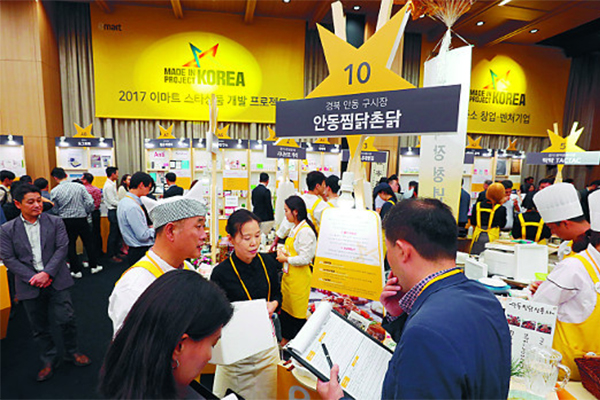
  • E-Mart to introduce Korean SMEs’ products in Singapore

    E-Mart to introduce Korean SMEs’ products in Singapore

    Korean retailer E-Mart starts selling products from 16 Korean SME companies in Singapore yesterday.

    The move is a part of E-Mart’s plan to take Korean brands into new markets, starting with the winners of the giant retailer’s SME-support project.

    The products include Mpac Plus waterproof cases for smartphones and JM Green’s  containers for storing food in a refrigerator.

    E-Mart will promote the products via both online and offline sales channels across Southeast Asia.

    From yesterday until July 22, the products will be sold on Singapore’s largest online shopping mall, Qoo10.

    Korea’s Small & Medium Business Corporation has teamed with I’m Startice to sell the products through offline channels as well. A pop-up store will open at Suntec City from July 2 to 8.

    E-Mart will also provide consulting services for local buyers that want to sell Korean SME products.

    This the third time that E-Mart, a subsidiary of Shinsegae Group, has organised such a project.

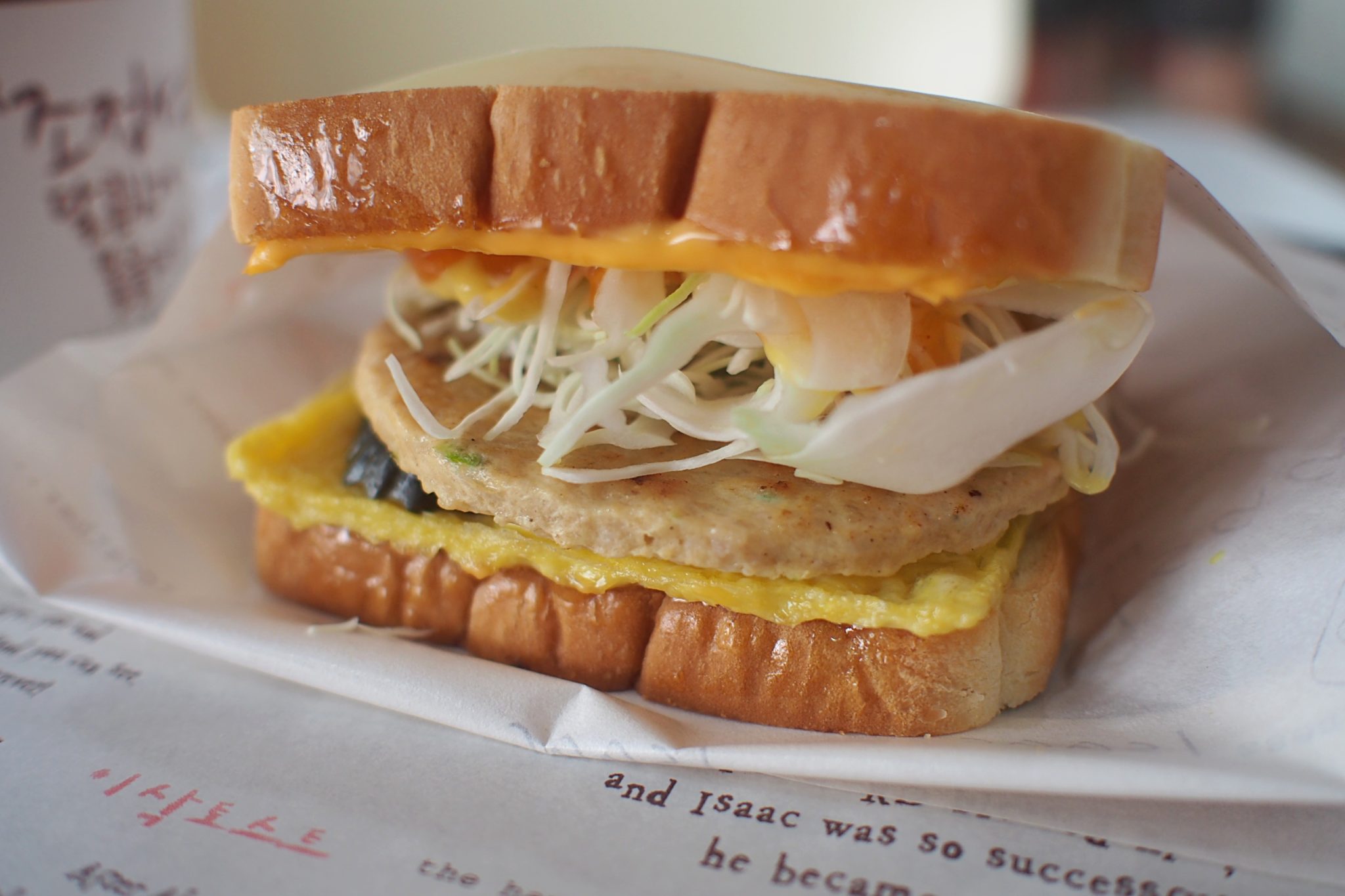
  • Korean sandwich chain Isaac setting up Business in Singapore

    Korean sandwich chain Isaac setting up Business in Singapore

    Korean sandwich chain Isaac will open its first store in Singapore next month.

    Over the last 15 years, Isaac has built a network of more than 700 stores across South Korea and expanded into Taiwan, Macau and – most recently – Malaysia, where it has a store across the causeway in Johor Bahru. Now it is heading further afield, with a takeaway store planned for Plaza Singapura’s basement 2.

    Isaac serves toasts with variations including the popular Korean dish bulgogi, steak ham, chicken, double cheese potato, shrimp and ham and cheese, with prices starting at S$2.85. It also serves juices and coffees.