Tag: Korea

  • South Korea’s service sector investment focused on wholesale, retail and restaurants

    South Korea’s service sector investment focused on wholesale, retail and restaurants

    South Korea’s investment in the service sector has been focused on low value-added areas, such as wholesale, retail and restaurants, official data showed Monday.

    The gross fixed capital formation for the service sector was tallied at 256.1 trillion won ($239.6 billion) in 2015, the findings by the Bank of Korea and the National Assembly Budget Office showed. This represents a solid 13.9 percent increase to 224.8 trillion won reported in 2006.

    The GFCF refers to the net increase in assets that takes into account both investments and deductions within a set period of time.

    The tally, however, showed investments in high value-added areas, such as cultural and education industries, backtracking.

    An injection of funds into this sector reached 18.1 trillion won in 2015, or a 69.2 percent spike from 10.7 trillion won tallied in 2006.From 2006 through 2015, when investment in the service sector shot up the steepest, investment was centered on restaurants and catering, as well as retail and wholesale.

    The increase rate is five times faster than gains for the entire service industry as a whole in the same time period.

    The central bank said the sharp rise has allowed restaurants and catering businesses, and retail and wholesale to make up 7.1 percent of all service sector investments in 2015 from 4.8 percent in 2006.

    On the other hand, investment in the cultural sector contracted 20.8 percent to 7.6 trillion won in 2015 from 9.6 trillion in 2006, with 15.2 percent drop being reported for education-related outlays in the same period.

    Hong Joon-pyo, a senior analyst at the Hyundai Research Institute , said areas where investment has focused on in recent years is closely associated with self-employed posts.

    “Many people who retire and do not have any skill sets often go into these businesses so there has been a natural rise in investment,” he said.

    The economist said that this trend has led to an over saturation of certain service sectors that has eaten into profits.

    Statistics Korea said operating profits of restaurants and catering industries stood at 13.4 percent in 2015 or down 9 percentage points from five years earlier, while numbers for retail and wholesale correspondingly stood at 5 percent or down 2 percentage points.

    The statistical office said this has led to such stores’ average survival rate three years after opening standing at an average of just 39.1 percent. Such dismal numbers are not conducive to sustainable growth for the economy as a whole.
  • Cryptocurrency Exchanges Investigated By South Korean Fair Trade Commission

    Cryptocurrency Exchanges Investigated By South Korean Fair Trade Commission

    The South Korean Fair Trade Commission (FTC) is reportedly investigating 13 major cryptocurrency exchanges in the country for violations of consumer laws, such as electronic commerce laws and contract laws. The investigations came after the bankruptcy announcement by cryptocurrency exchange Youbit after a major hack.

    The FTC said it will look into whether they should remain under the online retail business category, or fall under different category to enforce stronger measures. It will also check whether there is any unfairness among the terms and conditions used by the business operators and take action in accordance with relevant laws and regulations.

    The investigations is a follow-up on the government’s wide-ranging measures to curb cryptocurrency speculation and crimes. According to the government, previous inspections on crypto exchanges revealed that most of the companies (10 companies) demonstrated administrative and technical security procedures such as the installation and operation of access control devices and encryption measures of personal information. Overall, the measures were found to be inadequate.

    Last week, the Ministry of Science and Technology announced that Bithumb, Korbit, Coinone, and Upbit, which are among the 13 being investigated, are required to receive 2018 Information Security Management System (ISMS) certification, a system that certifies that the information protection system of companies with annual revenue of more than 10 billion won and average daily visitor of over 1 million is appropriate. They have also been urged to strengthen the security of their exchanges.

    Small and medium-sized crypto exchanges that are not required to meet this standard will be subject to the Personal Information Management System, an “autonomous certification system that assesses the comprehensive management system of collecting, using and destroying personal information of companies.” For these exchanges, the Korea Communications Commission (KCC) will be responsible, strengthening the protection of personal information. The Commission will also strictly enforce punitive fines and penalties for exchanges that violate related laws.

    The government also warned that cryptocurrency is not a “legal tender whose value is guaranteed by the central bank” and therefore its prices could fluctuate by a great deal and result in enormous losses.

  • Seaoil partners with Caltex Australia

    Seaoil partners with Caltex Australia

    Independent oil player Seaoil Philippines Inc. has taken in Caltex Australia Petroleum Pty Ltd. as long-term strategic partner for its expansion program.

    In a statement, Seaoil said it has signed a definitive agreement that forges a strategic partnership with Caltex Australia, which will acquire a 20 percent interest in the independent oil firm.

    “We have long sought for a strategic partner to complement our capabilities and competitive advantage, and we are optimistic that Caltex Australia, whose values we share and whose operations is like ours in complexity, can help accelerate our growth,” Seaoil chairman and founder Francis Yu said.

    The new strategic partnership will see Caltex Australia support Seaoil’s current growth strategy, which aims to double its retail network and terminal storage capacity over the next five years.

    Seaoil has over 400 stations nationwide located as far north as Aparri, all the way to the south in Sarangani.

    As part of the formation of the strategic partnership, Caltex Australia will supply fuel to Seaoil via Ampol, its fuel sourcing and shipping business in Singapore.

    Business ( Article MRec ), pagematch: 1, sectionmatch: 1

    “This is an exciting growth opportunity for Caltex Australia. The fact that Seaoil has chosen to enter this partnership with us is a testament to the skills and capabilities we have been building over many years in our company. It also demonstrates the value that can be created from our position as an independent fuel supplier in the Asia-Pacific region. We look forward to being part of Seaoil’s growth over the coming years,” Caltex Australia CEO Julian Segal said.

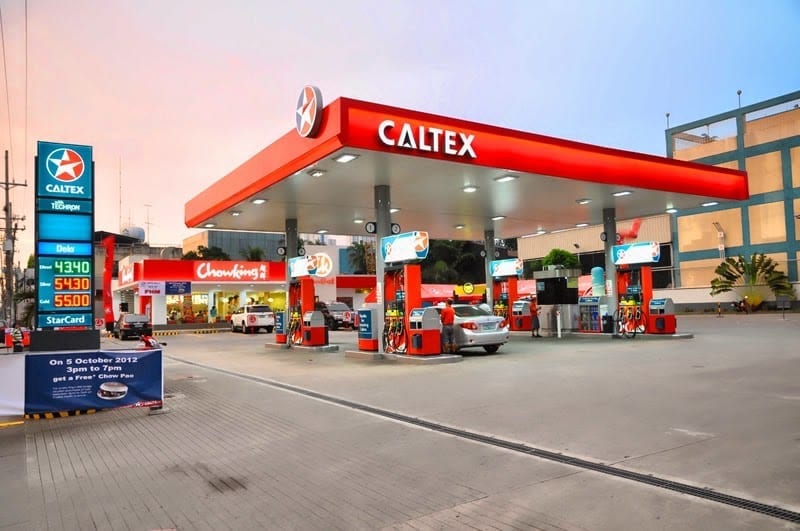
    Caltex Australia is a 100 percent publicly-owned company listed on the Australian Stock Exchange. It does not share any common ownership with the local Caltex brand, which is owned by Chevron Philippines Inc.

    In terms of size, Caltex Australia has a market capitalization of $6.5-7 billion, well above the combined market capitalization of Pilipinas Shell Petroleum Corp. and Petron Corp. by more than 70 percent.

    Caltex Australia supplies one-third of Australia’s transport fuel needs under the Caltex brand and has an extensive terminal and retail network including 76 depots, 12 terminals operated by Caltex, five major and bunker pipelines, nine airport jet fuel supply sites, and over 1,900 retail sites (including resellers and Australia’s largest retailer fuel network).

    In 2016, it sold over 16 billion liters of transport fuels and supply in excess of 70,000 commercial customers. It also has operations in New Zealand under the Gull brand and Singapore under the Ampol brand.

    In the Philippines, Seaoil has a six percent total market share and is a pioneer in alternative fuels like bioethanol gasoline and biodiesel.

    The company supplies approximately 1.5 billion liters annually through its vast network, its base fuels imported from select refineries in Japan, South Korea and Singapore and enhanced with STP additives. Seaoil conducts at least three daily checks on their fuels to check for consistency in purity and has experienced a 47 percent sales volume growth in the last three years.

    “This partnership will also mean exciting times for our employees, our franchisees, distributors and customers as we leverage our partner’s scale and expertise to provide high quality, affordable and accessible fuels and lubricants to the fast growing Philippine market.” Yu said.

  • Asia’s Most Overworked Country Pushes For Right To Rest

    Asia’s Most Overworked Country Pushes For Right To Rest

    President Moon Jae-in’s drive to give South Koreans their “right to rest” by slashing work hours is making little headway as lawmakers haggle over pay rates for weekends.

    While the long hours were once considered necessary to fuel rapid economic growth, the grind is now seen as the source of the country’s social problems, including low birth rate and productivity. South Koreans work 2,069 hours a year, the second-most among Organisation for Economic Co-operation and Development members after Mexico.

    With the changing societal attitude toward work, Korea’s ruling and opposition party lawmakers reached a tentative agreement in November to cap weekly hours at 52, down from 68, and give an extra 50 percent in pay for weekends. Moon, who pledged to cut hours during his presidential campaign last spring, said the change “is a task that should not be delayed any more.”

    But the agreement failed to reach the plenary session as some lawmakers and labor unions argued for doubling the extra pay for weekend work to 100%. The Korean Confederation of Trade Unions said in a statement that doubling pay for weekend work is necessary to reduce working on weekends, and an appropriate level of compensation for those who must do so.

    If lawmakers fail to revise the labor law by Dec. 23, which seems likely, parliament may not be able to pick it up again until February at the earliest. A prolonged debate could put Moon’s “right to rest” initiative on a permanent holding pattern as was seen with much of former President Park Geun-hye’s legislative agenda.

    Improve Productivity

    As lawmakers argue over weekend wages, some employers say that while they agree with the need to shorten working hours, the changes should be more gradual. Kim Young-vae, vice chairman of the Korea Employers Federation, said at a forum on Dec. 14 that the change should first be applied to bigger companies with more than 1,000 employees, and that a 60-hour cap should be allowed at companies that have reached agreement with their employees.

    “Shorter working hours are necessary for the sake of happiness, but it needs to be discussed along with ways to improve labor productivity,” said Kim Tai-gi, a professor of economics at Dankook University in Jukjeon, South Korea. “Without better productivity, it would have side effects like a decline in income for workers and an increased cost burden for employers.”

    Labor productivity, as measured by total working hours and per capita GDP, was $33 per hour for Korea in 2016, compared with $24 for Chile, $41.5 for Japan, $60 for France, and $63 for the U.S., according to OECD data.

    Not all workers welcome the move toward fewer hours.

    Shinsegae Group, South Korea’s retail giant, has announced it will reduce regular weekday working hours to 35 per week from 40 with no cut in wages from 2018. But some labor unions for Shinsegae’s discount store unit, E-mart, say it will only increase the burden on workers because they will be required to complete the same workload in fewer hours. They said that by 2020, the employees could also be paid less than others who are working longer hours and receiving the minimum 10,000 won per hour promised by President Moon during the campaign.

  • Pizza Maru opens at Northpoint City

    Pizza Maru opens at Northpoint City

    Korean chain Pizza Maru soft launches in Singapore today with its debut store at Northpoint City in Yishun.

    Pizza Maru is known for its patented green-tea wellbeing pizza dough, which is fermented for more than 48 hours with micro-algae chlorella as well as natural grains such as barley and flaxseed.

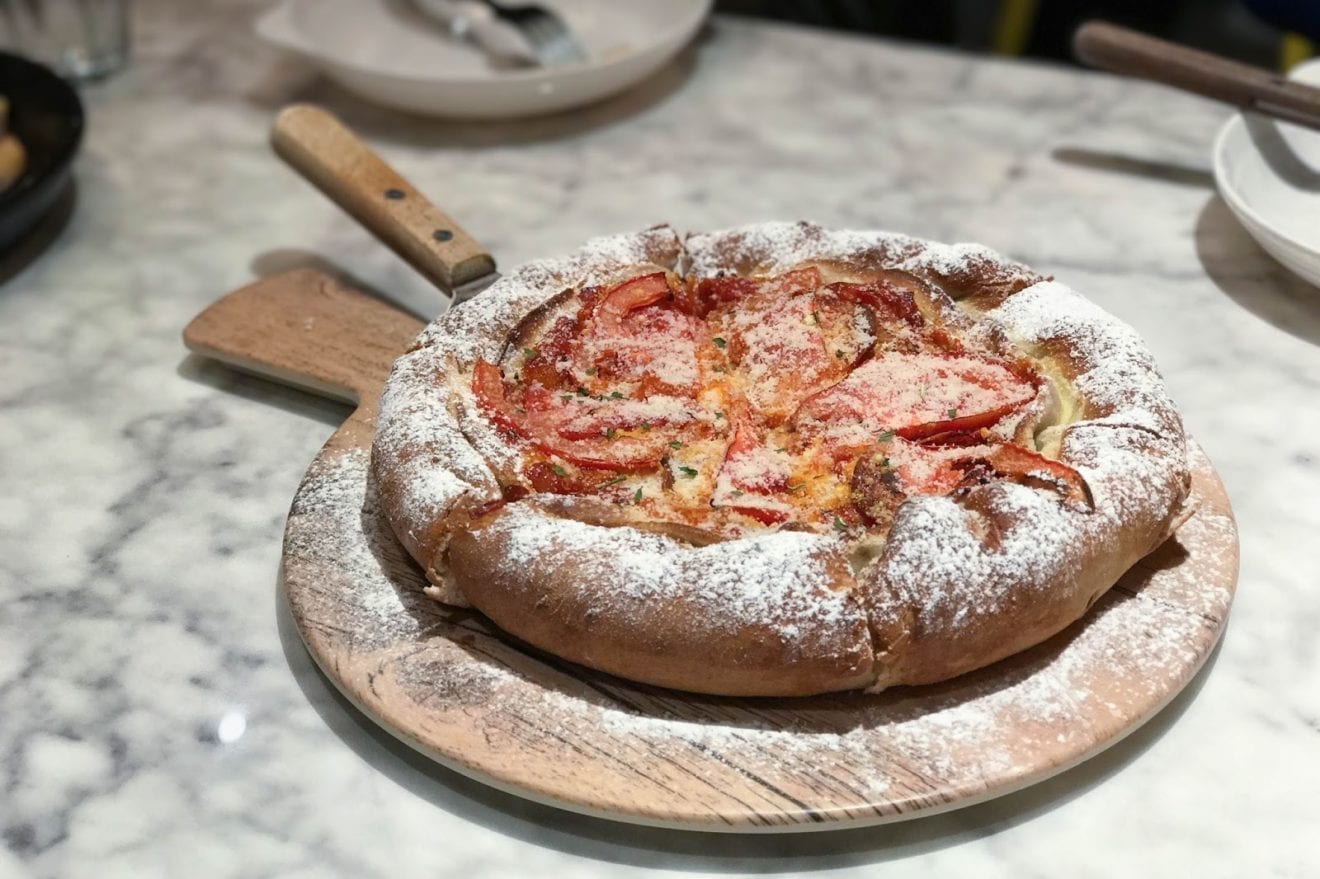
    One of its feature dishes is Real BBQ Chicago, a deep-dish pizza combining chicken leg pieces, potato cubes, roasted onions, tomatoes, mushrooms and cheeses blended with honey and barbecue sauce. The puffy crust is made from fibre-rich, antioxidant-packed black-rice dough.

    Korean fried chicken is also a staple of Pizza Maru, the star dish being the Supa Hot Tak Gangjeong with a choice of two levels of spiciness.

    Seating 80 diners, the restaurant will have its official grand opening on January 15.

  • Starbucks opens largest store yet in Korea

    Starbucks opens largest store yet in Korea

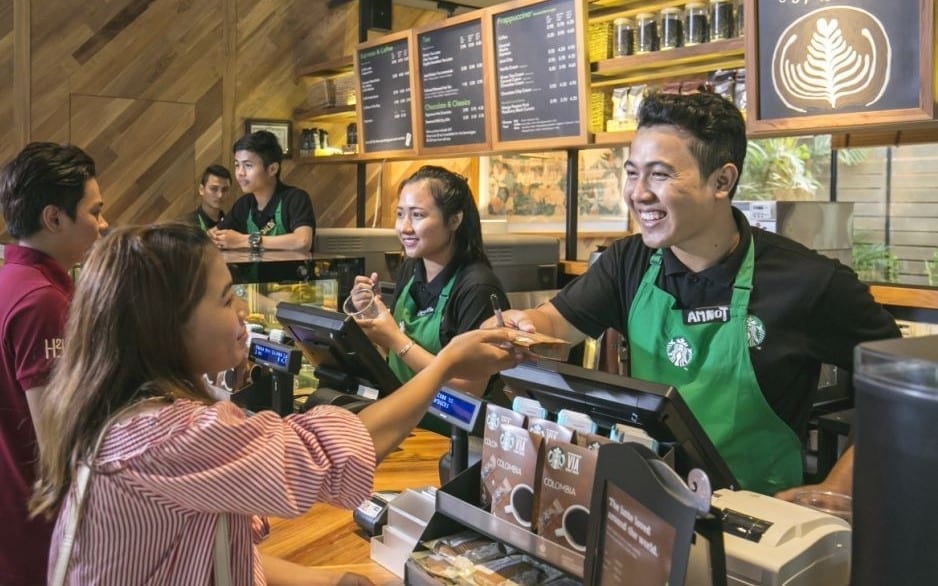
    Starbucks Korea opened its largest store yet in Seoul’s Jongno district today, in a move to solidify the brand’s already strong presence in an increasingly competitive market.

    The coffee shop, at Jongno Tower, covers 1097sqm on the first and second floors of the building – making it four times bigger than the chain’s typical 264sqm store size.

    The latest move by the US coffeehouse chain comes on the heels of low-cost coffeehouse Ediya Coffee’s decision to open a flagship store of a similar size last year in Gangnam District.

    A wide range of menu items and premium services to differentiate from other locations will be on offer, such as herbal teas ‘Teavana Blueberry Bliss’ and ‘Teavana Citrus Lavender Sage’, which will be available at four of the Teavana-inspired stores across the country including the Jongno location.

    Some 100 beverages and 60 bakery products will be available at the new location, 30 per cent more than the average number of items available at other stores.

    Siphon coffee makers will be used to brew some of the drinks at the new coffee shop, while an exclusive trial program available at the store’s community room will introduce some completely new offerings such as Origin Flight and Brew Comparison.

    In addition, seven types of rice products made in South Korea using Starbucks coffee grounds as a fertiliser will also be on sale, including beans & sweet potato rice chips.

    A large-scale artwork installed on one side of the store uses traditional Korean fabric to recreate the coffee chain’s signature Siren logo with a Korean touch, a fitting addition for Jongno District, a neighborhood boasting traditional venues such as Gyeongbokgung Palace and Insadong.

    Starbucks currently operates about 1100 stores across South Korea.

    Earlier this month, the American coffeehouse opened its largest store in the world in Shanghai, China

  • Japanese kidult toy brands to open Korean stores

    Japanese kidult toy brands to open Korean stores

    Several popular Japanese kidult toy brands catering to adult consumers are set to open their first stores in South Korea.

    According to Hyundai I-Park Mall, the renovated kidult select shop Toys & Hobby at its Yongsan location will reopen tomorrow with some of the most representative Japanese toy brands including Tamashii Nations, Animate, Nintendo, and Good Smile Company.

    Tamashii Nations is a high-end line from famous toy brand Bandai, which produces action figures modeled after well-known characters from anime series such as Gundam, Dragon Ball, and Doraemon.

    Most of the items sold by Tamashii Nations are known for being limited editions, and many of the high-end models including super alloy collectible action figures have been sold out in the past, signaling noteworthy support from a devoted anime fan base in South Korea.

    In the past, South Korean fans were only able to get ahold of a narrow range of items at Gundam Base stores. However, with the introduction of Tamashii Nations, fans will now have access to a much wider range of action figures without having to travel to Japan.

    Animate, which is Japan’s biggest anime products retailer with over 150 stores across the country, will open its very store in South Korea.

    Animate stores have been hailed as must-visit places in Japan for South Korea anime fans, and the first South Korea store will hope to live up to expectations by offering products inspired by a variety of both game and anime characters.

    Hyundai I-Park Mall has also said that other ‘kidult’ Japanese brands such as Nintendo, Good Smile Company, and King Kong Studio will open boutiques at the renovated Toys & Hobby store, which will host a total of 18 brands in its spacious 1650sqm.

    In addition, K-pop brand WithDrama, German toy brand Playmobil, drone shop Helsel, and popup store Dotorisup, which specialises in Studio Ghibli characters like My Neighbor Totoro, will welcome fans of all stripes and cultures.

    “Despite having a market nearly 10 times larger, it seems Japan still couldn’t overlook the potential and the growth of the South Korean kidult market in recent years,” said Han Hee-kwon, an official at Hyundai I-Park Mall, commenting on the Japanese companies’ foray into South Korea.

    “With the rise of single-person households and the strong purchasing power of consumers in their 30s and 40s, the kidult market is expected to continue its growth for some time,” Han added.

  • North Korea’s sole 3G player Koryolink said to shut down

    North Korea’s sole 3G player Koryolink said to shut down

    North Korea’s sole 3G operator Koryolink may have shut down operations as a result of international sanctions over the nation’s ongoing nuclear testing.

    Koryolink’s owner, Egypt’s Orascom Telecom is preparing to withdraw from the company as it faces mounting pressure from the US and UN Security Council to comply with the sanctions, according to a UPI report.

    The report itself cites a Japanese article that cites Japanese intelligence officials and unnamed industry sources. The sources say that Koryolink’s customers have been transferred to state-run GSM operator Byol.

    Orascom holds a 75% stake in Koryolink with the remaining 25% owned by the North Korean government. The operator reportedly racked up around 3.5 million customers. Orascom has revealed it invested around $250 million in its North Korean operations.

    While Orascom had hoped to continue its operations in North Korea within the framework of the international sanctions, the Japanese report suggests that the company has given up on these ambitions as a result of international pressure.

    But it adds that Orascom has yet to officially announce its withdrawal from the market due to needing more time to smoothly handle exit procedures.

    Orascom first entered the North Korean market in 2008, but has reportedly faced difficulty withdrawing its earnings from the operations as a result of the sanctions.

  • Shinhan Bank completes acquisition of ANZ’s retail biz in Vietnam

    Shinhan Bank completes acquisition of ANZ’s retail biz in Vietnam

    South Korea’s Shinhan Bank said Monday it has completed the acquisition of Australia & New Zealand (ANZ) Banking Group’s retail business in Vietnam.

    The acquisition helps Shinhan Bank increase its assets in Vietnam to US$3.3 billion and its number of Vietnamese customers to about 900,000, the bank said.

    Financial terms of the acquisition were not disclosed.

    In April, ANZ, Australia’s third-largest bank, agreed to sell its retail business in Vietnam to Shinhan Bank as part of its strategy to streamline its businesses in Asia.


  • Lotte Group boss facing jail terms

    Lotte Group boss facing jail terms

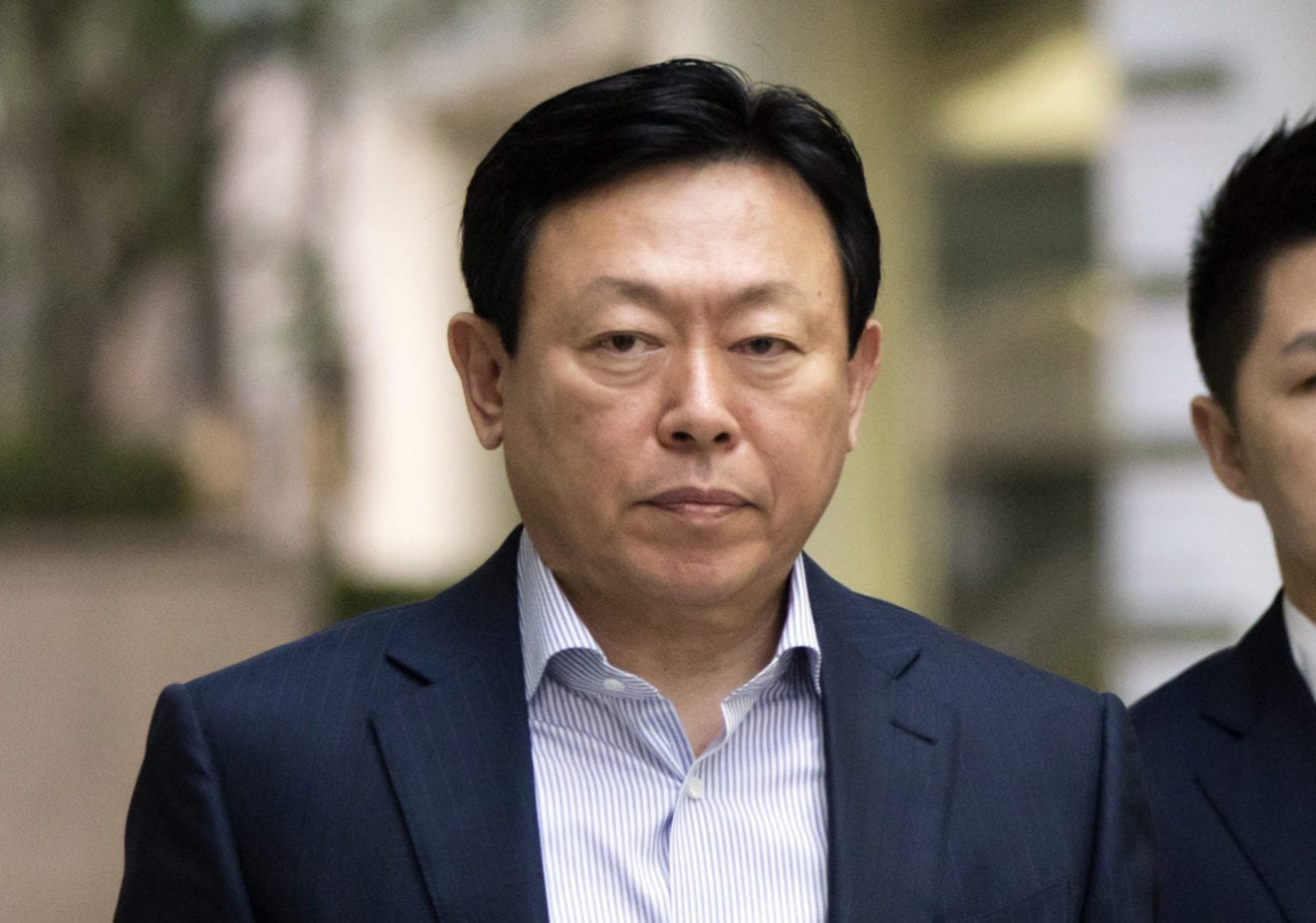
    In a new headache for South Korean retail giant Lotte Group, its boss faces jail terms over bribery and other charges.

    Chairman Shin Dong-bin has been accused of giving KW7 billion (US$6.4 million) in bribes to a foundation run by former President Park Geun-hye’s friend Choi Soon-il while seeking favours to win a government licence to run a duty-free business in Seoul.

    Prosecutors demanded a four-year jail term for Shin for the alleged bribery, while his lawyers have denied the accusation.

    Separately, prosecutors asked a court to hand down a 25-year prison term for Choi, who was at the centre of the corruption scandal that led to impeachment and arrest of Park.

    Seoul Central District Court will hand down its judgment on Shin on January 26. The court is also set to issue a separate sentence on Shin next Friday on charges of embezzlement and breach of trust.

    Prosecutors suspect Shin paid KW50 billion in wages to people who had never worked for its affiliates, and inflicted KW130 billion in losses on the business group’s subsidiaries by forcing them to cover the losses of other units. Prosecutors have demanded a 10-year jail term.

    “We will go through the remaining court procedures in a sincere manner,” says a Lotte official.

    Two months ago Lotte established the holding company Lotte Corp in a bid to solidify Shin’s leadership.

    Meanwhile, the group is said to have incurred about KW2 trillion in damages in recent months amid the Seoul-Beijing diplomatic spat over the deployment of a US missile defence system in South Korea.

  • Louis Vuitton adopts a new strategy in Korea

    Louis Vuitton adopts a new strategy in Korea

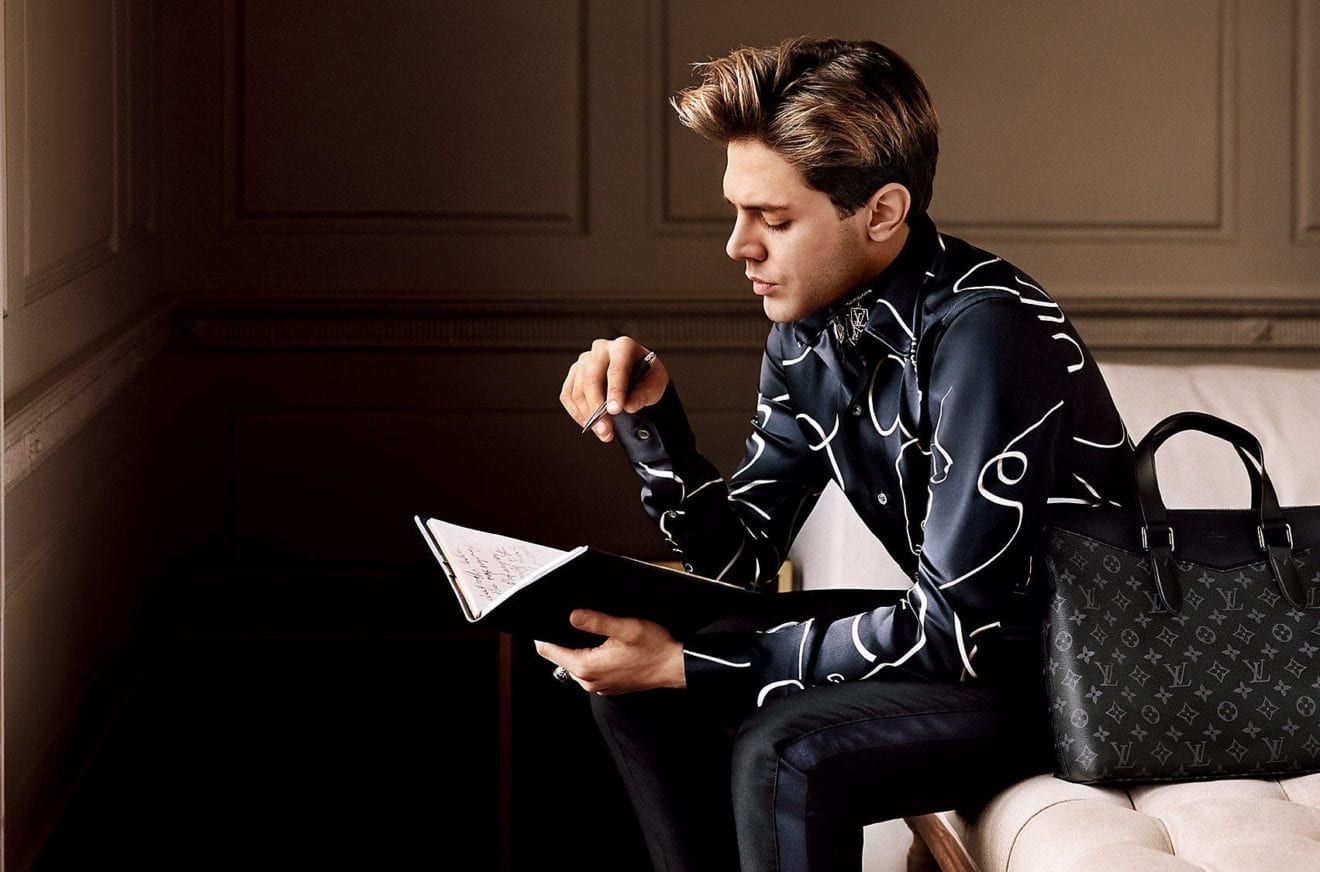
    Louis Vuitton has recently begun separating its men’s stores from women’s at major department stores in Korea.

    According to the French luxury brand on 11 December 2017, a Louis Vuitton store specializing in men’s fashion items was opened on the sixth floor of Shinsegae Department Store‘s main branch in Seoul last week. The department store will accommodate a renovated store featuring women’s collections as well on the ground floor next week.

    The international fashion house will also open a brand new store focusing on men’s collections at Galleria Department Store’s East Wing and a renewed women’s store in the store’s West Wing this month.

    Its Korean subsidiary said it divided the stores to offer clients a unique and personalized shopping experience.

    According to the company, separated Louis Vuitton stores can only be found at Saks Fifth Avenue in New York, Harrods in London, and Shin Kong Place in Beijing, as well as Shinsegae Department Store’s Gangnam branch having stores for women’s collections on its second floor, women’s shoes collections on the fourth floor and men’s collections on the sixth floor.

    Some observers regarded the company’s recent decision as a strategy to recover from its declining sales here by attracting male customers, who have emerged as big players in the nation’s luxury market.

    According to Reebonz Korea, a local subsidiary of the Singaporean-based online platform for luxury products, sales of men’s items rose 96 percent year-on-year in the first half. Sales of men’s luxury products have also increased in other online market places, such as Auction, Gmarket and 11st.

    Louis Vuitton and other global luxury brands are therefore making every effort to satisfy demand, so as to overcome slumps in sales. According to industry officials, Louis Vuitton’s sales growth has been decreasing at major department stores in Korea for years.

    Fendi, an Italian luxury fashion brand, also opened a store specializing in men’s items for the first time in Korea in September at Men’s Salon on the sixth floor of Shinsegae’s Gangnam store. Christian Louboutin, an international luxury brand known for high heels, revamped the first basement of a flagship store in Cheongdam-dong to sell men’s products.

    Given that Louis Vuitton has not unveiled its business performance in Korea, it is unknown exactly what its sales growth was after the latest renewal.

    However, sales of men’s items at Shinsegae’s Gangnam branch doubled after the renewal of Men’s Salon consisting of several luxury brands, such as Louis Vuitton, Berluti and Lardini. Among the brands, Louis Vuitton has maintained the top spot in terms of sales, according to industry officials.

    Thierry Marty, the CEO of Louis Vuitton Korea, said the luxury brand will push ahead with renewals at its nationwide stores to provide personalized services for customers, so the number of separated Louis Vuitton stores is expected to increase.

  • BAIC Motor looks to phase out conventional fuel cars by 2025

    BAIC Motor looks to phase out conventional fuel cars by 2025

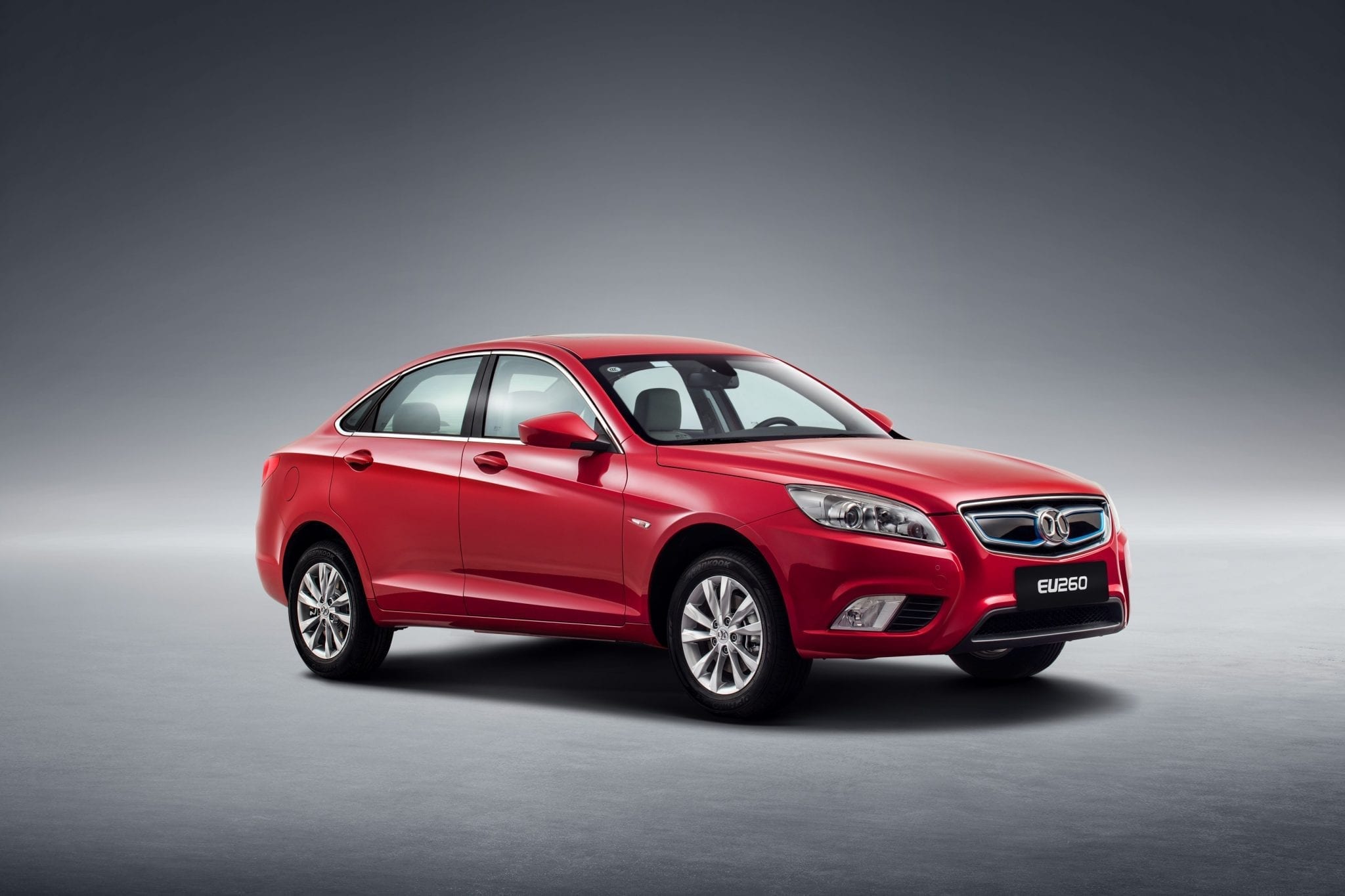
    Chinese carmaker BAIC Motor Corp aims to stop selling own-branded conventional fuel-powered cars by 2025, said on Tuesday, amid a major push by Beijing to shift automakers toward electric and plug-in hybrid cars.

    BAIC, which also makes vehicles in partnership with South Korean carmaker Hyundai Motor Co and Germany’s Daimler AG, plans to stop sales of conventional petrol engine cars first in Beijing and then nationwide.

    “Our goal is to stop sales of self-developed conventional fuel-powered cars in Beijing by 2020 and stop their production and sales nationwide by 2025,” the newspaper quoted BAIC Chairman Xu Heyi as saying at a launch event for a new energy car innovation center in Beijing.

    China has set strict quotas for electric and plug-in hybrid cars that come into play by 2019, shaking up domestic and international carmakers in the world’s largest auto market.

    Beijing wants so-called new-energy vehicles (NEVs) to make up at least a fifth of Chinese auto sales by 2025 to reduce air pollution and close a competitive gap between its newer domestic automakers and their global rivals.

    In October, domestic rival Chongqing Changan Automobile Co Ltd said it aimed to stop selling conventional combustion-engine cars from 2025, making it one of the first Chinese firms to commit to a total shift to NEVs.

    Earlier this year, China’s vice industry minister said the country had begun studying when to ban the production and sale of cars using traditional fuels, and predicted “turbulent times” for automakers as they were forced to adapt.

    BAIC Chairman Xu said in October the move to ban traditional petrol engine cars was “challenging” for the firm.

  • Handsome by Hyundai heading for China

    Handsome by Hyundai heading for China

    Handsome, the fashion unit of South Korean retailer Hyundai Department Store Group, has signed a deal to help accelerate its move into the Chinese consumer market.

    An agreement between its fashion label The Cashmere with Hong Kong’s retail/brand-management/distribution firm ImagineX Group involves supplying five coat styles to Club Monaco outlets in China.

    ImagineX represents such brands as DKNY, Jo Malone and Salvatore Ferragamo, and has more than 250 points of sale throughout Asia including Singapore and Taiwan.

    Thehandsome.com

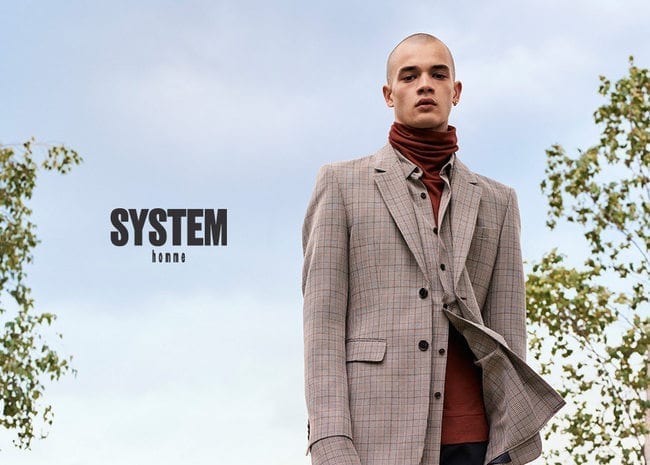
    Handsome has previously taken its System and System Homme brands abroad. It has also clinched a deal with Artifacts, a boutique store in Taiwan that has six outlets in Taipei and Taichung. Earlier this year, the two clothing labels were picked up by department stores and shopping malls in China as well as the Galeries Lafayette department store in Paris.

    Handsome entered the Chinese market early this year by partnering with Hangzhou Zhiheng Industrial.

    Founded in 1987, Handsome was bought by Hyundai Home Shopping Network in 2012. It owns a string of fashion labels including Mine, System and Time.

  • Line Friends to open Pop-Up stores in Seoul City

    Line Friends to open Pop-Up stores in Seoul City

    A Line Friends pop-up will open at luxury speciality store BoonTheShop in Seoul on Saturday.

    Running until January 14, the Korean character brand’s outlet will introduce its latest merchandise, BT21. The range includes dolls, cushions, fashion items, limited-edition postcards, posters and bag charms – all based on a set of characters created by K-pop boyband BTS and the Line Friends team.

    LINE FRIENDS

    The same line will also start selling at Line Friends’ New York flagship on the same day via a “BT21 Zone”, and at other stores in Hong Kong, Japan, Taiwan and Thailand, as well as online early next year.

    BT21 was initially launched as stickers on Line App with more than 17 million downloads and 200 million Twitter exposures. The first Line Friends’ collaboration with artists, the BT21 range joins signature characters such as Brown, Choco and Cony.

    LINE FRIENDS Unveils BT21 Merchandise at Its Flagship Store in New York (PRNewsfoto/LINE FRIENDS)

    Line Friends has 91 stores in 11 international markets.

  • More Chanel Flagship for Asian Shoppers

    More Chanel Flagship for Asian Shoppers

    Seoul will have one of six Chanel flagship stores being launched next year, with the brand also about to open in Beijing’s China World mall.

    “These will be either brand new stores or major re-openings, which will be very impactful,” says Chanel fashion and accessories divisions president Bruno Pavlovsky.

    On December 1, Chanel opened a second Tokyo flagship in Ginza following a three-year renovation by architect Peter Marino.

    Just before that, designer Karl Lagerfeld was in Chengdu, where Chanel reprised its Ancient Greek Goddess cruise collection, originally shown in Paris in May.

    “We scored 698 million hits from that show on WeChat and Weibo and so on,” says Pavlovsky. “That impact allows us to create an accessible dream: a chance to see and touch and understand what the brand is all about. That has nothing to do with customers – we don’t have 500 million customers in our boutiques.”

    He believes the key equation in luxury is balancing accessibility to the dream with exclusivity inside boutiques. This is why Chanel’s e-commerce is essentially limited to beauty and eyewear.

    “Chanel is not a click,” says Pavlovsky. “But when you think of a $5000 jacket or a $10,000 dress, the customer experience has to be more than just a click.”

    He says business in China has been boosted by the policy of global price harmonisation he started introducing in 2015. “We see more and more Chinese in China coming to our boutiques regularly.

    They don’t need to travel to Paris, New York or London to buy Chanel, and this is very important.”

    One vehicle to boost sales in China will be harnessing influencers, says Pavlovsky. “What is interesting about influencers in China is their point of view of the brand. Some are followed by 20 or 25 million people, which is quite impressive. And they are very clear that what their followers want from them is a point of view. We have to work with them not to dilute this kind of positioning.”