Tag: Korea

  • SK Telecom more than doubles Q2 profit

    SK Telecom more than doubles Q2 profit

    SK Telecom more than doubled its net profit during the second quarter due to factors including a record performance at chipmaker SK Hynix.

    The operator reported a net income of 620.5 billion won ($555.06 million), up 113.2% year-on-year. Revenue meanwhile grew 1.8% to 4.35 trillion won and operating income increased 3.9% to 423.3 billion won.

    But it was a challenging quarter for the operator’s core telecommunications business, with operting income on a non-consolidated basis falling 3.3% year-on-year to 462.3 billion won due to increased marketing expenses and depreciation costs from the 2.6-GHz spectrum acquired last year.

    Despite this non-consolidated revenue edged up slightly to 3.11 trillion won, due to increased mobile data usage and increased sales in new business areas including IoT solutions.

    Revenue from the SK Broadband division meanwhile increased 1.9% year-on-year to 730.1 billion won and the unit reported a record-high quarterly operating income of 31.6 billion won.

    Internet commerce arm SK Planet meanwhile posted a 5.4% increase in sales to 275 billion won, but still recorded an operating loss of 35.1 billion won.

    “Despite the challenges in the mobile telecommunications market, SK Telecom posted improved results due to the strengthened performance of its main subsidiaries,” SK Telecom CFO Ryu Young-sang commented.

    “SK Telecom will become a global leading ICT company by achieving meaningful growth in media and IoT, while maintaining leadership in the mobile network operations business.”

    The company is also planning to connect its AI platform to other services, including mobile services, media, commerce and its T Map mobile navigation service to generate differentiated big data it can use to provide customized products and services.

  • K-Style Lab launches second pop-up store

    K-Style Lab launches second pop-up store

    Premium multi-brand Korean fashion boutique K-Style Lab has opened its second Hong Kong pop-up store, in Hollywood Road in Central.

    ts K-Style Wardrobe pop-up presents edited collections of one-off pieces and lifestyle products from such Korean designers and brands as Baron Oh, Big Park by Park Your-Soo, Heich Es Heich by Han Sang-Hyuk, Jinteok and Nohke by Jung Mi-Sun.

    There are also newcomers Ara Cho (leather bags), Daze Dayz, Lash and Mirumbeau, which specialises in 3D paper-art lifestyle pieces inspired by Korean traditions and materials.

  • Lacoste opens a store at Lotte duty free World Tower

    Lacoste opens a store at Lotte duty free World Tower

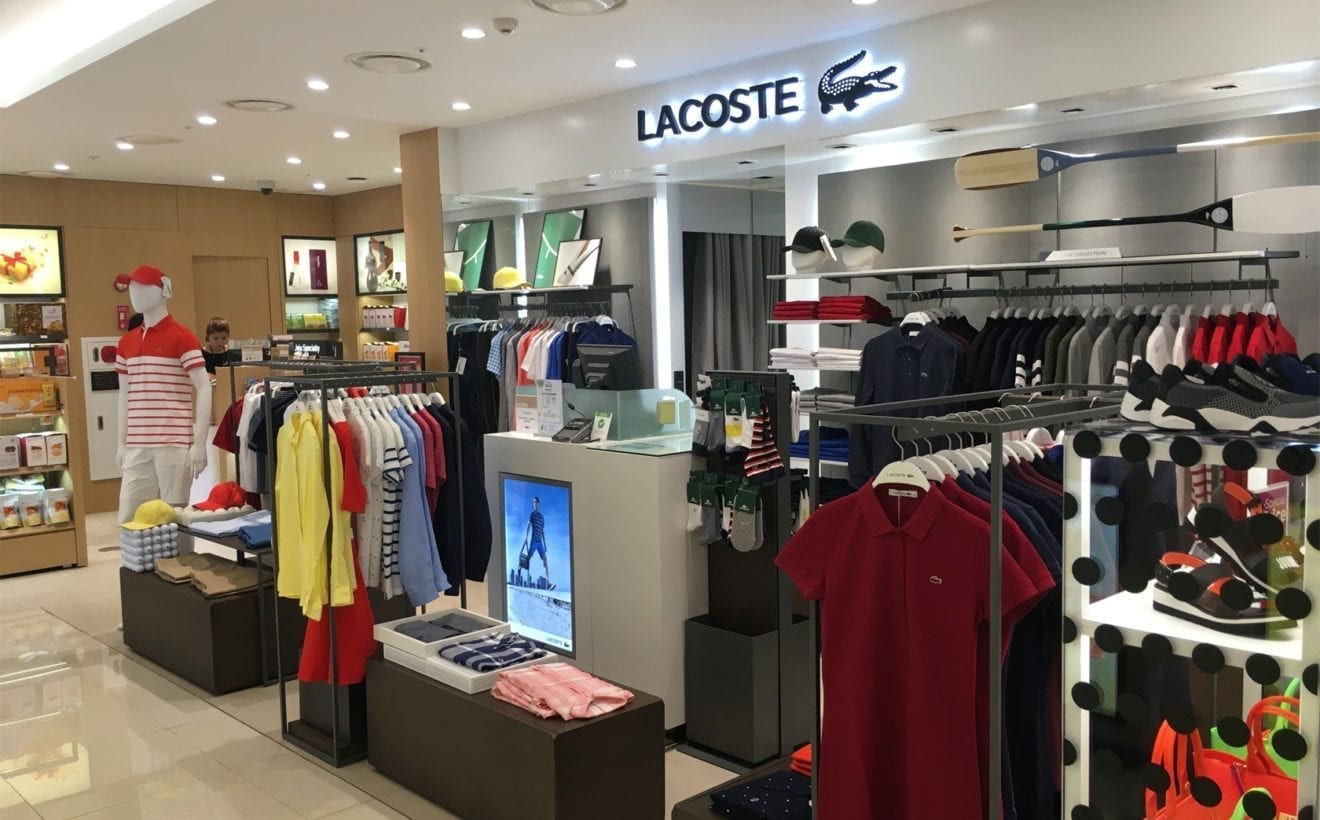
    Lacoste has bolstered its Asia Pacific presence with the opening of a 38 square meters store at Lotte Duty Free World Tower in Seoul.

    The new store reinforces Lacoste’s aim to strengthen and expand its presence in new geographical areas and find new ways of connecting with consumers before, during and after their trips.

    Lacoste CEO Asia Pacific & Global Travel Retail Jean-Louis Delamarre said: “We are thrilled to open this store in Lotte Duty Free World Tower.

    This opening in partnership with Lotte will allow us to further enhance our presence in Asia.”

    France’s premium casual brand Lacoste has been launching a ‘Life is a beautiful sport’ campaign based on the three values of authenticity, joy and elegance in the branding industry since 2014.

    Also in May, Novak Djokovic, world-renowned tennis player, was chosen as a brand new face to represent the brand. Lacoste selected Novak Djokovic as the new face of the brand to inherit the strength and fair play spirit that the brand has pursued since its founding.

    The comfortable elegance that Novak Djokovic shows and his unique play fit perfectly with the DNA of the brand, and it is raising expectations.Novak Djokovic has signed a five-year contract with Lacoste and will be active in and out of the court as an icon representing Lacoste’s brand.

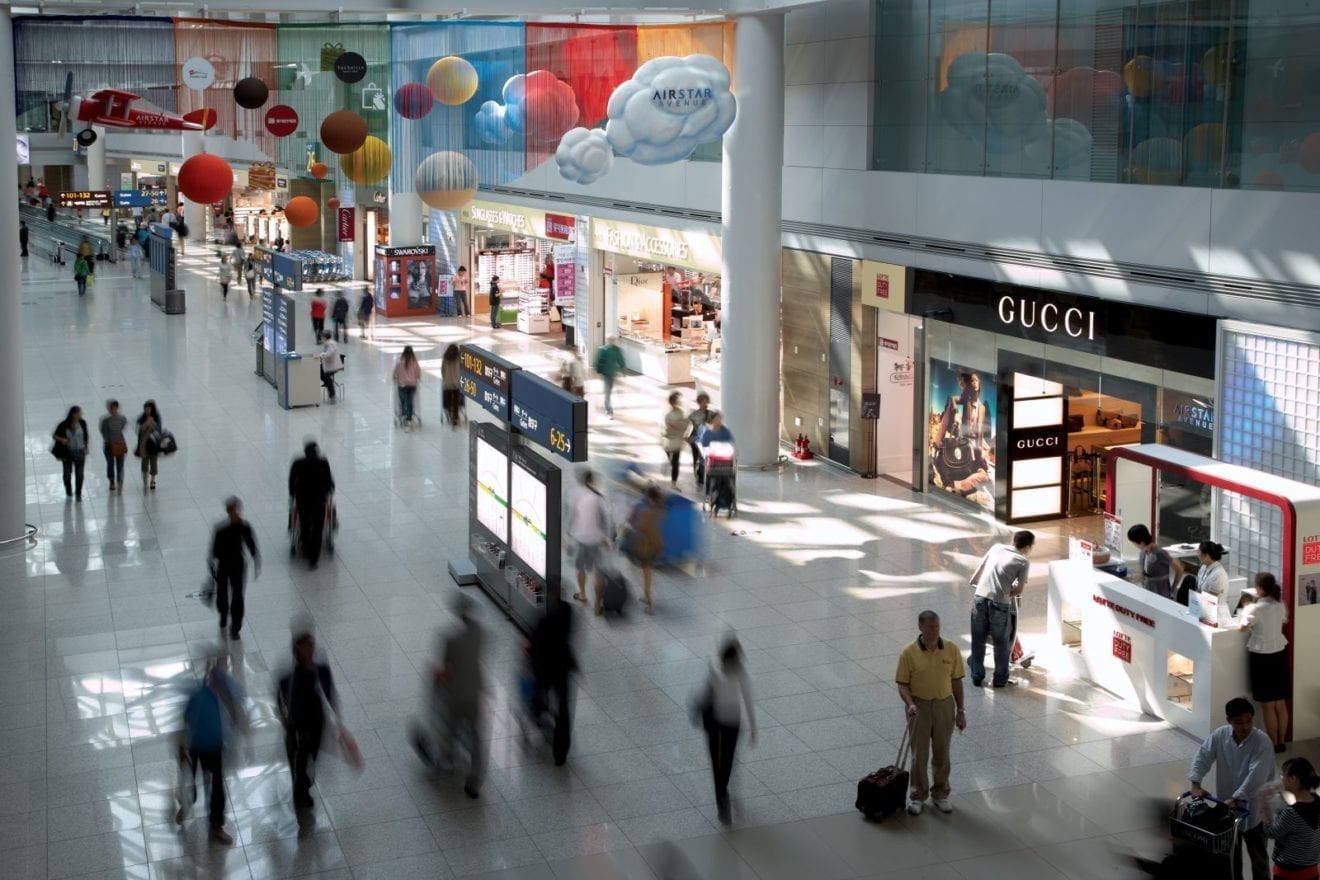
    Lacoste was created by René Lacoste in 1933, a tennis legend. Rena Lacoste, famous for his persistent and robust play, has had the nickname of a crocodile, which symbolizes his brand. Meanwhile, as reported, Lotte Duty Free partially reopened the store on 15 January, 193 days after it was forced to close on 26 June 2016, following its unsuccessful 2015 bid to retain its licence.

    The 17,334 square meters store is the second-biggest in Asia and the world’s third-largest. The new space is +52 percent bigger than the original 14,011sq m shop. The integrated retail offer connects the new World Tower space with the existing adjacent store in the Avenuel building.

  • South Korea tips fastest growth in three years in 2017

    South Korea tips fastest growth in three years in 2017

    The forecast for 2017 marks the strongest projected growth of the South Korean economy since GDP expanded by 3.3 percent in 2014. South Korea said Tuesday its economy is set to grow at its fastest rate in three years in 2017, on the back of strong exports and a $10 billion stimulus package aimed at creating jobs and bolstering welfare.

    South Korea has enjoyed a decades-long boom, but expansion has slowed more recently and economic and social frustrations were among the drivers of left-leaning President Moon Jae-In’s election in May.

    The finance ministry raised its forecast for Asia’s fourth-largest economy, saying gross domestic product was expected to expand by 3.0 percent — up 0.4 percentage points from an earlier projection in December.

    The forecast for 2017 marks the strongest projected growth of the South Korean economy since GDP expanded by 3.3 percent in 2014.

    Authorities also cited a recovery in the country’s exports for the improved outlook as the global economy rebounds.

    “We believe the 3.0 percent growth will be possible if the economy continues to undertake reforms for consumption-led growth,” deputy finance minister Lee Chan-Woo told reporters.

    The tweaked forecast comes after the government passed a giant stimulus package over the weekend promising 110,000 new jobs in response to record-high youth unemployment.

    Unemployment among under-30s hit 11.2 percent in April, more than double the rate for the entire working population.

    Economic frustrations were among the factors that fuelled mass anti-corruption protests that saw former president Park Geun-Hye impeached and arrested over corruption.

    Among the new jobs being targeted are firefighters, police, assistant teachers and social workers, while young job seekers, small businesses and tech startups will also be helped.

    Financial assistance will be increased for women on maternity leave, more daycare centers and nursing homes for the elderly are to be opened, and businesses hiring more full-time workers are to be given extra funding.

  • Challenges, but CapitaLand Mall Trust proves steady

    Challenges, but CapitaLand Mall Trust proves steady

    CapitaLand Mall Trust had net property income of S$117.5 million (US$86 million) for its second quarter to the end of last month – 1.2 per cent higher than the $116.1 million for the same period last year.

    “Notwithstanding the challenges in Singapore’s retail sector, the trust has produced yet another steady set of results,” says CEO Tony Tan of CapitaLand Mall Trust Management, which manages the trust.

    Its portfolio occupancy at June 30 was 98.6 per cent, outperforming the average market occupancy level, says Tan.

    During the quarter, a major asset-enhancement initiative was completed for Bukit Panjang Plaza, with the rooftop garden and level-four public library being expanded. Other improvements include new dual-file escalators and a skylight roof.

    At the end of April, Funan blazed a trail with the launch of its one-of-a-kind experiential show suite, a first for Singapore retail, says Tan. “Two months later, and with more than two years to go before its target opening, Funan’s retail component is already 30 per cent committed.”

    He says the decreases in gross revenue for the year’s first two quarters were mainly because of Funan as it closed in July last year for the redevelopment.

  • SK Telecom making quantum random number generator

    SK Telecom making quantum random number generator

    SK Telecom has developed a prototype of an ultra-compact quantum random number generator (QRNG) chip configured with entropy source and a deterministic random bit generator (DRBG).

    A QRNG generates true random numbers without any kind of pattern, meaning that it is ideal for use in cryptography.

    However, so far, the cost and size of QRNGs currently on market have prevented widespread adoption.

    With the successful development of an ultra-small QRNG chip measuring 5mm by 5mm, SK Telecom expects that it will soon be able to embed QRNG to a wide variety of IoT products, including autonomous vehicles, drones and smart devices, to dramatically enhance the level of security for IoT services.

    Although the price of each QRNG chip has not been set yet, the company said that it will be the lowest price ever for a QRNG.

    Meanwhile, SK Telecom is also developing a QRNG in the form of USB and PCIe. While the QRNG chip has to be embedded from the beginning of the product development, QRNG in the form of USB or PCIe can be simply connected to any product already on market to provide genuine randomness.

    “Understanding the importance of data and data security, SK Telecom has focused on developing quantum cryptography technologies to guarantee secure transmission of data in areas including artificial intelligence (AI), IoT and autonomous driving,” said Park Jin-hyo, SVP and head of Network R&D Center of SK Telecom.

    “We will continue to work with partners, both home and abroad, to accelerate the popularization of quantum cryptography and strengthen our presence in the global market,” said Park.

  • Korean online shopping growth surge as retail sales stumble

    Korean online shopping growth surge as retail sales stumble

    Online shopping is experiencing a growth surge, accounting for close to 20 percent of all retail sales in the first quarter of this year.

    Retail transactions in the three months to March totaled 96.56 trillion won (US$85.83 billion), a growth of 4.7 percent from the same period a year before, according to Statistics Korea. The sum of online shopping was 18.21 trillion won, or 19 percent of the total.

    This represents a 19.6 percent leap from the same quarter of the previous year and the largest total since related record keeping began in 2010.

    The ratio of online sales to all retail sales has grown in double digits every quarter since the fourth quarter of 2012, when it was 10.2 percent. It reached 17.7 percent in the last quarter of 2016.

    In monetary terms, the amount of transactions has also expanded by double digits, increasing the growth pace from 11.2 percent in the first quarter of 2013 to 23.2 percent in the third quarter of 2016. It fell to 19.6 percent in the first three months of this year.

    The mobile sector played a critical part in contributing to online shopping, accounting for 59 percent of the sales in March.
    “Mobile shopping has grown with the wide penetration of smartphones, and shopping malls have also been pushing their mobile platforms,” a Statistics Korea official said.

    Such high performance of online sectors contrasts with sluggish figures in the overall retail market. Retail sales gains that reached over 10 percent in the first two quarters of 2011 shrank to 0.6 percent by the second quarter of 2013. They bounced back somewhat to 3-5 percent last year.

    Sales at department store, the strongest source of offline shopping, have backtracked. The monetary amount of transactions fell 1.5 percent in January from a year before, 5.6 percent in February and 3.5 percent in March. The figures showed a decrease of 2.2 percent in April and 4.6 percent in May.

  • Crown Equipment Opens New Facility In South Korea

    Crown Equipment Opens New Facility In South Korea

    To continue to meet growing demand for its lift trucks and fleet management technology, Crown Equipment to upgrade its South Korean operations with a move to a larger facility in one of the country’s fastest growing logistics hubs.

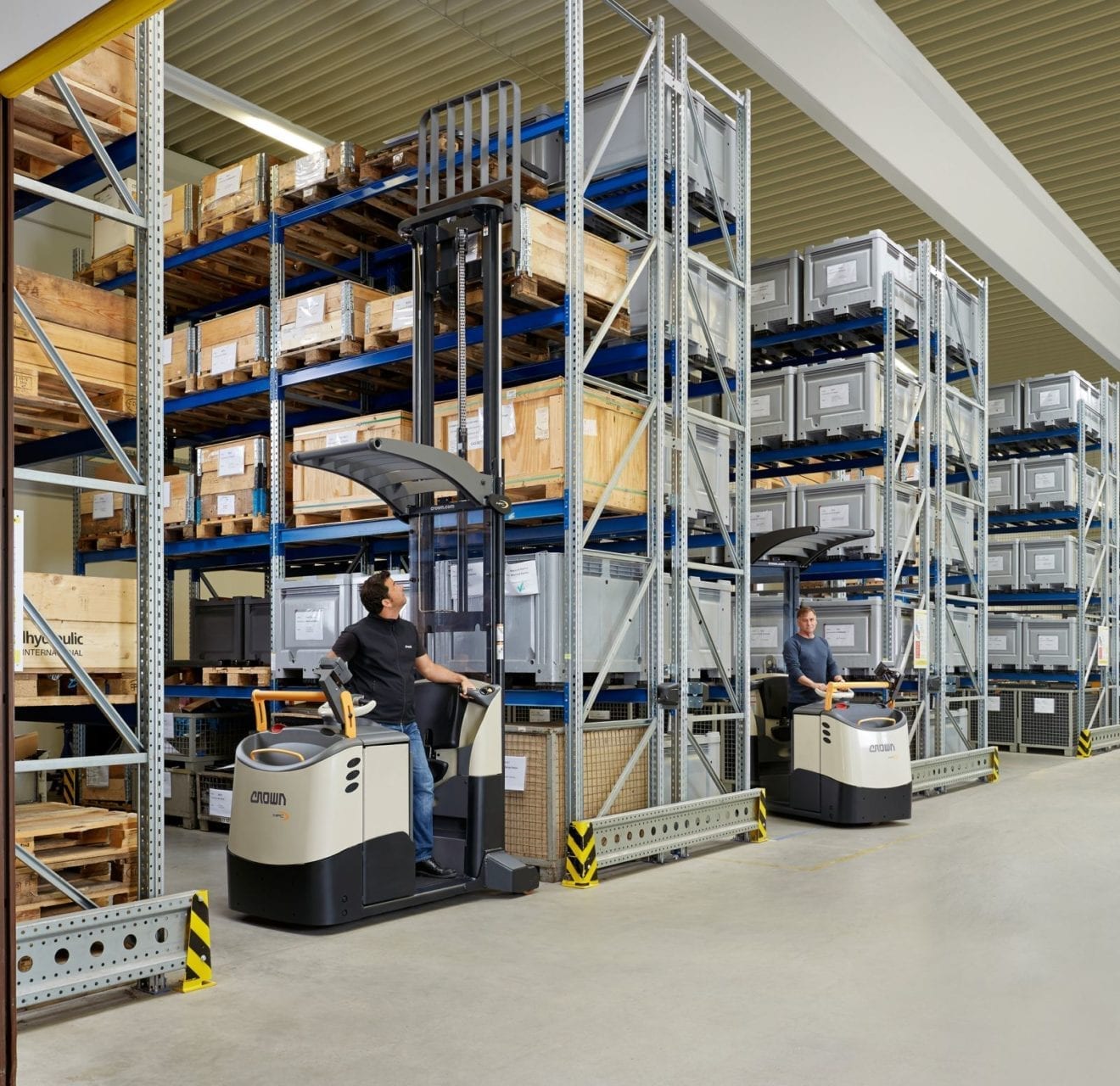
    Located in Icheon, Gyeonggi-do, the new facility supports Crown Korea’s experienced, factory-trained team of material handling specialists including the sales and service technicians and support staff who assist customers countrywide.

    The new branch is located for greater convenience and features larger sales and rental forklift fleets, better stock capacity and improved inventory management for faster parts turnaround.

    The Icheon facility is the third major demand-driven expansion in Asia for Crown in the last 12 months, following recently completed facilities in Johor, Malaysia and Rayong in Thailand.

    Crown Equipment managing director for Asia Pacific, Steven Hill, said the new facility was required due to steadily increasing customer numbers and geographical spread of demand for Crown’s innovative products and services.

    “The new branch is another example of Crown’s commitment to our growing number of South Korean customers in manufacturing, industrial, warehousing and logistics,” Mr Hill said.

    “It also demonstrates Crown’s ability to improve the customer experience through ongoing infrastructure development in the Asian market, which is bringing global technology to local business in Asia whilst expanding the customer support network.

    “Since we began operating in South Korea, Crown has delivered genuine cost savings, operational improvements and operator safety improvements to its customers, as well as growing employment opportunities.

    “The new facility also enables Crown to extend its already strong environmental credentials, which is in harmony with the sustainability focus of the Icheon area.

    Located in the region’s commercial Busan-Jeonju-Icheon ‘growth triangle’, Icheon is home to the port of Tanjug Pelepas, South Korea’s largest logistics complex, which supports the majority of the country’s resource refineries.

    The area is also at the junction of three major expressways servicing Jungbu, Gyeongbu and Yeongdong, for easy vehicle access.

  • Korean duty-free sales to see first drop in 14 years

    Korean duty-free sales to see first drop in 14 years

    “The Korean duty-free industry may see a drop in on-year annual sales in 2017, which would make it the first decline in 14 years, according to data from the customs regulator Sunday.”

    Since the outbreak of the Severe Acute Respiratory Syndrome virus in 2003, the duty-free industry had seen steadily rising sales until last year.

    Especially in 2016, sales had risen sharply to 12.3 trillion won (US$10.83 billion), breaking the 10 trillion-won mark thanks to the popularity of Korean music and dramas and heavy marketing aimed at the Chinese market by duty-free operators.

    However, those numbers had been heavily reliant on large tourist groups from China which were brought to downtown duty-free outlets by travel agencies. This demand spiraled down beginning in mid-March when Beijing imposed an unofficial ban on travel packages to Korea.

    The loss of inbound traffic from China took a heavy toll on duty-free operators such as Lotte Duty Free, who had previously pulled in up to 70 percent of its revenues from Chinese tourists.

    The blow was even harder for newer duty-free operators who do not have the brand power of industry leaders Lotte and Shilla, and are heavily dependent on tourist groups.

    Earlier this month, Hanwha Galleria announced that it would be returning its permit to operate a duty-free outlet at Jeju International Airport due to continued losses.

    The move followed months of repeated bidding for the fashion and accessories duty-free area of the second terminal at Incheon International Airport, which eventually went to Shinsegae DF after Incheon Airport agreed to lower the rent prices by 30 percent.

    Recent developments have indicated a sharp turn away from the optimism that had previously surrounded the duty-free industry, which had led to intense bidding wars between operators to win licenses for downtown outlets.

    Analyst Choi Min-ha wrote for Korea Investment & Securities that this year‘s annual sales for the duty-free sector was likely to reach around 10.5 trillion won, marking the first drop since the SARS crisis.

    “Although numbers of Koreans leaving the country are rising, they are not enough to make up for the losses from Chinese tourists,” Choi said.

  • Korea needs to draw long-term growth plan for startups

    Korea needs to draw long-term growth plan for startups

    Korea has leaped into being one of Asia’s leading economic powerhouses in less than a century after the post-war devastation back in the early 1950s.

    Many attribute the rapid growth to the nation’s tough working culture — represented by an obsession to generate short-term, outstanding outcomes mainly in the business circle.

    This has brought about such homegrown hardware titans as Samsung and LG whose history falls short of their overseas counterparts, but have become top-tier players.

    The hardware-driven growth, however, is still holding back the development of the local software industry, with the government putting little attention on the non-manufacturing yet crucial growth area.

    “Not a single Korean software company has achieved global success, compared with the hardware or manufacturing industry players,” Tiger Company CEO Kim Beom-jin said in an interview Sunday. The software startup — established in 2011 — is an enterprise-level social networking system provider here.

    He said the nation’s software market is not huge enough to grow into a sizable shape due to the small market size and weak infrastructure, so the government needs to implement specific measures for its long-term growth both in quality and quantity. The software market in the United States and China is 20 to 30 times bigger than that of Korea, he said.

    “It is also tough for us to tap directly into overseas markets, as we are no match for industry leaders there in terms of factors such as capital, workforce and marketing,” he said.

    Kim urged the government to support local software startups in particularly overseas networking and marketing activities.

    “Small startups with weak capital cannot have enough chances to contact overseas clients and promote products by participating in global exhibitions,” the chief executive said.

    The government has in recent years pushed for the development of the local software industry. For example, the Ministry of Science, ICT and Future Planning unveiled a plan last year to name and support 20 software-oriented universities by 2019.

    The move comes amid growing calls that the country should make more effort in software education to build an infrastructure for its long-term growth.

    This reflects that global information and communication giants such as Google and Facebook generate billions of dollars in profit with their software infrastructure. But even if the global tech paradigm has shifted into the software sector, the government has made little effort to catch up with the trend.

    “The small software market size is also blocking the government from making enough investments in software industry players,” he said. “Most state-run bodies have invested mainly in hardware and online to offline industry players here, paying little attention to their software counterparts.”

    “Local venture firms or small- and medium-sized firms can receive state-run research and development funding projects for as long as three years,” he said. “But the government needs to draw up concrete funding policies from a longer-term perspective, from product development to global expansion.”

  • South Korea leads APeJ by IoT readiness

    South Korea leads APeJ by IoT readiness

    South Korea, Singapore, New Zealand and Australia are the most IoT prepared countries for the IoT, according to IDC.

    The research firm’s Asia Pacific (excluding Japan) IoT Readiness Index  ranked 13 APeJ nations (mix of developed and developing) across 13 critical parameters such as economic stability, technology spends, innovation potential, etc. as articulated in the global G20 study.

    While globally United States, South Korea and United Kingdom led this model, in the region the top three countries are South Korea, Singapore and New Zealand respectively. These have the most efficiencies for nationwide IoT adoption across all criteria.

    APeJ comprises a significant portion of spend in the IDC IoT Spending guide. The regional economies provide a rich diversity and quality of overall economic stature, business readiness, and technological preparedness along with different levels of efficiencies that loT solutions can create.

    “Countries are keen to demonstrate their relative digital competitiveness, and as such are looking to The Internet of Things as one of those initiatives,” IDC associate vice president for the IoT in APeJ Hugh Ujhazy said.

    “Knowing where a country stands in the IoT index will help global and local IT vendors know what opportunities lie ahead of them as they line up their strategies at federal, local, and enterprise levels.”

  • Kmart slashes prices and looks abroad

    Kmart slashes prices and looks abroad

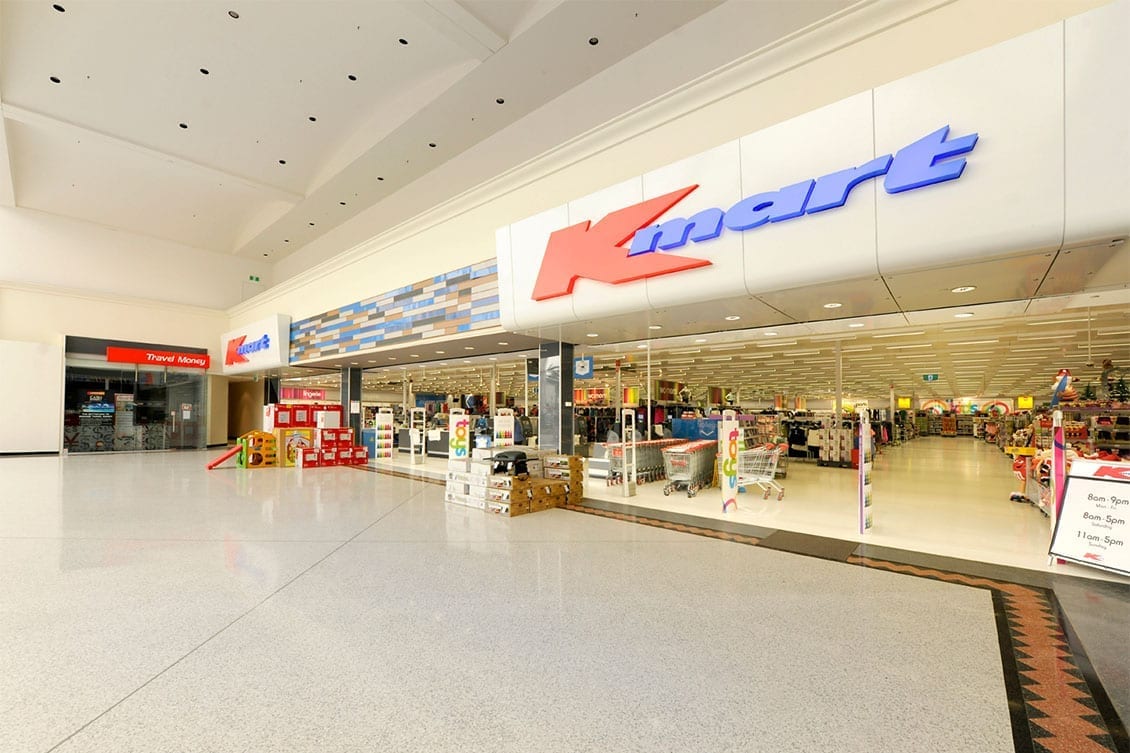
    Kmart CEO Ian Bailey is expecting increasingly cash-strapped consumers to show out in force for his latest round of price cuts, as the DDS chain looks to a customer-first strategy that widens its price differential with competitors.

    The discount department chain will slash prices by as much as 20 per cent on selected items across its entire range, with 320 products set to be reduced later this week.

    Speaking to us, Bailey said that the move was a reinvestment of cost savings, born from a shift in manufacturing from China to Indonesia, stressing that the cuts weren’t a threat to earnings and would drive sustainable profitability.

    “There’s a strong reaction from customers when we lower our prices, even if we’re already the lowest price on the market,” Bailey said.

    He explained that price investment was primarily for customers and was less about making a defensive play against competitors, but he told shareholders last week that the introduction of international players such as Amazon and Decathlon into the market has prompted Kmart to put “more energy” into assessing its customer offer.

    The plan, which will see key lines such as men’s and children’s tees reduced by 50 and 25 cents respectively, is not the first price cut for the discount department store in recent years and is likely not the last, so long as cost savings can continue to be leveraged, Bailey indicated.

    It’s part of a broader ambition flagged for the brand at Wesfarmers’ strategy day last week, to double annual sales to around $10 billion and lift earnings from $470 million to $1 billion.

    Bailey, who sees the target as an aspiration, said last week that the $80 billion market Kmart plays in is relatively static and that achieving Kmart’s goals would require taking market share from competitors.

    Kmart goes global

    Kmart is looking at alternative growth verticals to achieve its lofty goals, laying the groundwork on an international expansion that’s seen its products trialled in Thailand and India recently.

    Bailey has struck a deal with Southeast Asian retail giant Central Group to launch Kmart’s products in select Robinson Department Stores in Thailand, as concessions.

    While Wesfarmers aren’t interested in taking the Kmart brand overseas, partly due to confusion with the American owned Kmart, the conglomerate is interested in launching Kmart’s products in other countries, leveraging synergies with withstanding production.

    “We have this range of products that we design, develop and produce and then we only offer it to the population of Australia and New Zealand,” Bailey said.

    “Many of our competitors are global competitors who are [selling] across the world, so it’s a logical step for us to say, ‘how do we connect our product with customers elsewhere’.”

    Bailey laid out a 3-5 year timeframe for accelerating growth on the wholesale venture, where Kmart still controls replenishment, ranging and display.

    “The next two-years from here are really about learning, which is us working very closely with Robinsons and maybe a couple of others to really make sure we’ve got a model that works with the end-customer in Thailand or whichever other country we pick,” Bailey explained.

    Kmart doesn’t intend to open its own stores overseas at this stage, but Bailey has already outlined his desire to make wholesale a strong vertical for the business in the medium term.

    Analysts sceptical; Wesfarmers backs stores

    Back at home analysts remain unconvinced that Kmart can emerge unscathed from the entry of Amazon and other competitors, with widely reported Morgan Stanley research predicting that Kmart and Target could lose $201 million in earnings annually to Amazon by 2026.

    While Kmart’s focus on everyday low prices and direct sourcing has seen it emerge as the jewel in Wesfarmers’ Department Stores division in recent years —outpacing its struggling sister company Target with third quarter sales growth of 2.5 per cent this year— concerns remain over its ability to go toe-to-toe with the American e-commerce giant.

    Kmart’s online offer remains an identified point of weakness among some analysts, with delivery currently offered at 3-5 days for metro customers, slower than many domestic competitors and far behind Amazon’s next-day model, which it is looking to roll-out in Australia.

    Bailey said Kmart are working hard on the online side of the business and that a relatively seamless omnichannel strategy was a focus for the team. He doesn’t, however, intend to compete with Amazon or other pure play retailers on their core strengths.

    “We aren’t static in the online space, our offer will continue to improve, but if you compare us to an online pure play player like an Amazon that’s their core expertise and they’ll be very good at that,” Bailey said.

    “We’ve expressly not grown online at an incredible rate until we know we can do it with good economics,” he added.

    Bailey and Department Store CEO Guy Russo are backing Kmart’s network of 217 physical stores across the country in their bid to secure and expand market share, having recently completed a portfolio review that will increase the number of Kmart stores and decrease the number of Target stores.

    The move will see Kmart open between 8-10 stores a year alongside an estimated 35 refurbishments, which is part of a store renewal process to a new format that is currently two-thirds complete.

  • Chinese market no longer land of opportunity for Korean products

    Chinese market no longer land of opportunity for Korean products

    China’s consumer market that once offered vast opportunities for South Korean exporters has become less penetrable as Chinese firms make goods that compete with imports, industry data showed on July 14th.

    Samsung Electronics, which in 2012 ousted Apple Inc. to hold the top market share for smartphones in China, fell to eighth place in the first quarter of this year. Samsung’s market share in handsets hit 17.7 percent in 2012. It dropped to 4.9 percent in 2016. In the first quarter this year, its market share was a marginal 3.1 percent.

    China’s own brand Huawei raised its market portion from 9.9 percent to 18.9 percent over the past five years. Another local firm OPPO, who had no presence in 2012, soared to grab 18.7 percent during the period. Together with Vivo, the three are dominating the Chinese smartphone market.

    Industry officials say that data indicates THAAD may not be the only cause of falling South Korean exports to China as firms there are quickly catching up in technology and no longer relying on foreign products.

    South Korea’s auto exporters have also been nudged out by Chinese companies, data showed. Hyundai Motor and its sister firm Kia Motors reported their market share in China had been cut in half compared with five years ago.

    The carmakers said their numbers fell from 8.6 percent to 3.8 percent. They were routed by Chinese local labels, which claimed 46.1 percent of the market, followed by European (21.4 percent) and Japanese (17.6 percent) automakers.

  • Franchise brands increase by 9%

    Franchise brands increase by 9%

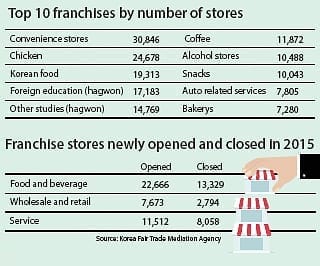
    The number of franchise brands and companies has increased by roughly 9 percent compared to last year, with over 5,000 franchise brands owned by 4,000 franchise companies now operating in Korea.

    But while an average of 115 new franchise stores have opened up every day since 2015, 66 per day have also been forced to close, indicating how fierce the competition is.

    These figures were announced by the Korea Fair Trade Mediation Agency on Wednesday. The agency’s primary goal was to provide a better understanding of the status quo in Korea’s franchise market, especially as the intense competition is increasingly becoming a major social and economic concern.

    Although the agency has previously released individual information on different franchise industries, this is the first time that an overall assessment has been made.

    Last year there were 5,273 franchise brands, with 429 new brands introduced in just one year – an 8.9 percent increase. The majority of the newly created brands, 76.2 percent, were food and beverage franchises.

    Service franchises, which includes education related businesses such as cram schools, preschools and children’s indoor playgrounds as well as sports, PC repair shops, lodging, laundry, drugstores and moving companies accounted for 17.9 percent, or 944 brands. Wholesale and retail franchises, which include convenience stores, clothing brands, cosmetics and health related franchises accounted for 5.9 percent, or 312.

    Within food and beverage franchises, Korean food businesses accounted for 1,261 brands, followed by fried chicken with 392. Coffee shops came in fifth with 325 brands. The number of franchise companies grew to 4,268, a 9.2 percent increase.

    As of 2015, the total number of franchise stores in the country amounted to 218,997 shops, which is a 5.2 percent increase year-on-year. By number of stores, convenience stores topped the list with 30,846 shops followed by chicken restaurants with 24,678.

    Convenience stores also turned out to be the first choice for many self-starters, as they don’t require any specific skills to run. In 2015 alone, 5,755 convenient stores opened, followed by 4,552 Korean restaurants and 3,988 chicken restaurants.

    On average franchise stores lasted for four years and eight months. Food franchises generally closed quicker than wholesale and retail franchises or service franchises. Wholesale and retail franchises stayed in business for six years and three months on average, while service franchises lasted five years and 10 months, and restaurant franchises lasted four years and three months.

    The study by the fair trade mediation agency came at a time when franchise businesses have been under heavy government scrutiny over the unfair business practices that have led to the arrest of Jung Woo-hyun, founder and chairman of Mr. Pizza.

    With more baby boomers retiring and young people struggling to find jobs, franchise businesses have become a major alternative for those seeking a new livelihood. However, because of the intense competition with similar stores popping up in the same neighborhoods, many have struggled to have ends meet, and in some cases, franchisees have ended up losing their life savings after investing in an unsuccessful business.

    “The competition in the chicken, snack and fast food market is fierce while the unfair business practices by franchise headquarters might have had some influence,” said Chang Choon-jae, the vice head of the mediation agency.

    The franchise industry has become such a concern that Fair Trade Commission Chairman Kim Sang-jo announced that he would prioritize the protection of small neighborhood businesses and uphold fair competition – including implementing penalties against unfair business practices by franchise headquarters – as his top priority.

    The study also showed that the oldest franchise brand is Lims Chicken. The chicken franchise started its business in July 1977 at the Shinsegae Department Store. Lotteria came in second with 36 years, another chicken franchise Pelicana came in third with 35 years and the bakery franchise Shilla Myunggua lasted 33 years.

    The franchise company that had the largest number of brands under its belt was Theborn Korea, which was founded by Korea’s celebrity chef Paik Jong-won. The franchise company owns 20 brands including coffee shops, Korean beef, bibimbap and udong franchises.

    Nolboo, a franchise that specializes in Korean cuisine including its signature dish budae jjigae, a stew made with instant noodles and other items including sausage and ham as well as dumplings, took second place after Theborn Korea with 13 brands.

    The franchise company that took the third spot by number of brands, however, wasn’t in the restaurant business. Soft Play Korea took the No.3 spot with 13 brands. The company specializes in indoor preschools and children’s playgrounds.

  • Amazon prepares to take on South Korean e-commerce

    Amazon prepares to take on South Korean e-commerce

    Amazon is preparing to expand competition in the Korean online retail market, as evidenced by a recent wave of advertisements for positions in its office in Seoul.

    In the last week alone, the e-commerce giant advertised for 49 full-time positions and internships in Seoul, many within Global Selling, Marketing, and Business Development.

    To date, Amazon’s business in South Korea has focused on cloud computing rather than online retail. AWS opened an office in Seoul in 2012 and began accumulating customers and formulating partnerships with a broad base of Korean companies, including Samsung, Nexon Gaming, and Mirae Investments.

    Amazon added an AWS region in Seoul in January 2016, to provide local customers with low-latency access to AWS infrastructure services.

    However, with the addition of employees in Global Selling and Marketing, it appears that Amazon is ready to expand its retail e-commerce footprint in the region as well.

    South Korea represents one of the biggest e-commerce markets worldwide, with an existing market of $19.12 billion in 2016 expected to grow to over $32 billion by 2021. This represents the highest e-commerce penetration in the APAC market, with 72% active online shopping reach.

    South Korea’s online shopping reach was second only to the UK in a recent survey, roughly similar to that of Germany. However, South Korea is expected to surpass both the UK and Germany in online sales over the course of the next two years.

    The current market leader is 11Street, a subsidiary of SK Telecom, followed closely by newcomer Coupang.com. However, Amazon is expected to have a disruptive effect on the South Korean market in part due to its global reach. Through Amazon, sellers whose current efforts are focused on the South Korean market will be able to access a global customer base for their products.

    The most popular online shopping categories in South Korea are online travel and reservation services, home electronics and appliances, and fashion and apparel. Amazon recently made major gains in online sales of home appliances and is on track to become the leading US online retailer of consumer apparel.