Tag: Korea

  • Korean retailer launches do-not-disturb shopping service

    Korean retailer launches do-not-disturb shopping service

    Lotte Department Store, one of South Korea’s country’s major department-store chain operators, will introduce a do-not-disturb shopping service it dubs ‘shop-alone’.

    Aimed at customers who do not wish to be approached by sales clerks and other employees – a bugbear of many consumers used to shopping in many Asian countries – has been inspired by the Covid-19 crisis and social-distancing practices.

    Customers will be able to shop alone without any offer of assistance from staff if they carry a ‘shop-alone’ sticker or bag ring available near stores’ information desks or escalators.

    The do-not-disturb shopping service is the brainchild of new, young staff born after the 1980s, and will be tested at Lotte Department Store’s flagship Young Plaza, and the company’s Jamsil branch starting today.

    For VIP customers, a personal-shopping consultant will be available for reservations, made via Lotte Department Store’s smartphone app, after they choose an item of interest.

  • Asia’s Retail Giant Lotte Shopping Unveils Tech-driven, Eco-friendly Strategy To Transform Customer Experience

    Asia’s Retail Giant Lotte Shopping Unveils Tech-driven, Eco-friendly Strategy To Transform Customer Experience

    With the fervor of the holiday shopping season fast approaching, retailers across Asia are gearing up for a bustling fourth quarter. Among them, Lotte Shopping, South Korea’s retail giant, is strategizing ways to capture consumer attention and boost sales. In a recent announcement, the company revealed its ambitious action plan to reinvent the customer experience across its stores.

    Innovation Takes Center Stage

    Lotte’s plan emphasizes deploying cutting-edge technology to enhance the shopping experience. From virtual reality interfaces to smart carts equipped with personalized recommendations, the company aims to merge the convenience of e-commerce with the tactile pleasure of brick-and-mortar shopping. Kim Yong-won, the Chief Executive Officer, expressed excitement about these innovations, hinting that technology could seamlessly blend shopping and entertainment.

    Focus on Sustainability

    Amid rising consumer interest in sustainable practices, Lotte Shopping also seeks to strengthen its commitment to eco-friendly operations. Initiatives include reducing plastic usage and increasing the availability of sustainable products. By aligning their strategy with environmental consciousness, Lotte hopes to resonate with a younger, eco-aware demographic eager for more responsible consumption choices.

    Enhancing Customer Loyalty

    As competition intensifies, retaining existing customers becomes vital. Lotte Shopping is ramping up its loyalty programs, offering exciting rewards and personalized experiences that encourage shoppers to return. The company plans to leverage data analytics to better understand customer preferences, ensuring that promotions and products are tailored to meet their unique desires.

    A sprinkle of ingenuity in retail is always welcome, and Lotte’s strategy shines like a beacon of creativity in a sea of sameness!

    Questions & Answers

    What is the main focus of Lotte Shopping’s new strategy?
    Lotte Shopping’s primary focus is to enhance the customer experience using innovative technology, sustainability initiatives, and improved loyalty programs.

    How will Lotte incorporate technology into its stores?
    The company plans to introduce virtual reality interfaces and smart carts that offer personalized shopping suggestions, thereby blending entertainment with convenience.

    Why is sustainability important to Lotte?
    Sustainability is crucial for Lotte as it aims to engage environmentally conscious consumers and adapt to the growing demand for responsible retail practices.

  • Farfetch Expands Into Korean Market Through Alliance With E-commerce Giant Coupang

    Farfetch Expands Into Korean Market Through Alliance With E-commerce Giant Coupang

    The premier luxury e-commerce platform, Farfetch, is set to broaden its business operations into the Korean market. This move is made possible through an alliance with Coupang, which is Korea’s principal e-commerce company.

    Facilitating International Fulfilment

    As part of the collaboration, Coupang will be managing all overseas fulfilment for Farfetch. On the domestic front, RLux, a high-end shopping application owned and operated by Coupang, will provide free delivery service for all items purchased within Korea.

    Enhancing Customer Convenience

    In a move aimed at improving customer convenience, Farfetch will integrate all customs duties and additional fees into the product prices. This means that customers will see the total cost upfront, making it easier for them to make informed buying decisions.

    Stephen Eggleston, Farfetch’s Chief Commercial Officer (CCO), expressed his enthusiasm for the expansion. He highlighted this as a special chance for brands in partnership with Farfetch to reach out to Korean luxury customers directly.

    Rescue from Financial Uncertainty

    In 2023, Farfetch found itself on the brink of bankruptcy. This financial calamity was averted when the company was acquired by Coupang.

    Diverse Brand Portfolio

    Now, Farfetch boasts a diverse portfolio of 1400 brands, boutiques and department stores. The company caters to customers in no less than 190 countries around the globe.

    Questions & Answers

    What new markets is Farfetch expanding into?
    Farfetch is broadening its business operations into the Korean market.

    Who will manage Farfetch’s overseas fulfilment in Korea?
    Coupang, Korea’s principal e-commerce company, will handle all overseas fulfilment for Farfetch.

    What measures is Farfetch taking to improve customer convenience in Korea?
    To enhance customer convenience in Korea, Farfetch will include all customs duties and additional fees in the product prices.

  • SK Telecom Achieves Milestone with Successful Disaggregated IPoDWDM Network Trial Completion

    SK Telecom Achieves Milestone with Successful Disaggregated IPoDWDM Network Trial Completion

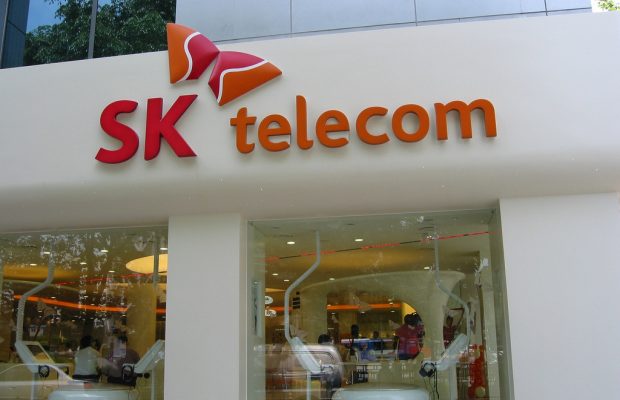
    SK Telecom (SKT) has ushered in a new era in network technology by completing a groundbreaking proof of concept (PoC) for a disaggregated IP over DWDM (IPoDWDM) solution. This accomplishment signals a significant leap in the operator’s quest for next-generation, high-performance network infrastructure, tailored for the digital age.

    Collaborative Innovation Drives Progress

    Partnering with technological heavyweights IP Infusion and Edgecore Networks, SKT is demonstrating its commitment to pioneering open, flexible, and cost-effective networking solutions. This trial showcases SKT’s proactive approach to advancing network technology, solidifying its position as a leader in the field.

    The PoC utilized the cutting-edge Innovative Optical and Wireless Network (IOWN®) All-Photonics Network (APN), seamlessly integrating IP Infusion’s OcNOS® with Edgecore’s whitebox hardware and 400G OpenZR+ optics from various vendors. This impressive setup showcased flawless interoperability among disaggregated systems and conventional equipment, emphasizing both the technical viability and commercial promise of open networking in long-distance, point-to-point (P2P) contexts.

    Smart Management for a Faster Future

    Central to the trial was SKT’s sophisticated Software-Defined Networking (SDN) Orchestrator, which furnished centralized, automated control and real-time monitoring of optical modules. Through this orchestrator, SKT adeptly managed key parameters including transmit power, line rates, and wavelengths, all while leveraging telemetry to monitor module performance and status. This innovative approach streamlined operations and bolstered network reliability — ensuring things ran more smoothly than a well-oiled machine.

    “This live trial with IP Infusion and Edgecore validates the viability of disaggregated solutions for our network,” said Takki Yu, Vice President and Head of Infra Tech at SKT. “Leveraging SKT’s advanced SDN Orchestrator, this successful PoC marks a significant step toward achieving cost efficiency and technical excellence in our IPoDWDM use case.”

    Future-Ready Networking

    This PoC is part of SKT’s broader strategy to modernize its network infrastructure through open, multi-vendor ecosystems. By adopting a disaggregated approach, SKT is simplifying its network architecture while ensuring high-speed performance—a combination that presents exciting possibilities for future innovations and swift service delivery.

    In the wake of this success, SKT plans to further enhance its SDN Orchestrator capabilities, aiming for deeper and more integrated management of optical modules. This commitment reinforces the company’s ambition to build flexible, scalable, and future-ready networks.

    With this triumphant PoC, SKT not only affirms its status as a trailblazer in network innovation across South Korea but also highlights how global tech collaborations can facilitate significant advancements in optical networking. So, who said the future of networking had to be boring?

    Questions & Answers

    What was the main focus of the proof of concept conducted by SK Telecom?
    The PoC primarily aimed to validate the effectiveness of disaggregated IP over DWDM networking solutions.

    Who were the key partners in this trial?
    SK Telecom collaborated with IP Infusion and Edgecore Networks to conduct this innovative trial.

    What are the implications of this successful PoC for SK Telecom’s future?
    The PoC sets the stage for enhanced network infrastructure, promising cost efficiency and greater flexibility while encouraging ongoing innovation and improved service delivery.

  • SK Telecom Innovates with Streamlined SIM Replacement Process: A Step Forward for Customers!

    SK Telecom Innovates with Streamlined SIM Replacement Process: A Step Forward for Customers!

    SK Telecom is taking bold steps to engage with government authorities about lifting the ban on new subscriber registrations, as the company approaches the completion of its ambitious universal subscriber identity module (USIM) replacement initiative following a significant cyber attack. With the clock ticking, the telecom giant is eager to reassure customers and shareholders alike.

    Customer Replacement Surge

    In a significant update, SK Telecom announced that over 6.18 million customers have successfully replaced their USIMs, with an impressive 150,000 swaps completed just yesterday. This progress has slashed the number of customers still awaiting their replacements down to 3.16 million.

    Restrictions in Place

    Since May 5, SK Telecom has been operating under administrative guidance from the Ministry of Science and ICT, resulting in a total suspension of new subscriptions and number transfers across more than 2,600 T World stores and online platforms nationwide. The ministry has clarified that this limitation will remain until the backlog of USIM replacements is fully resolved.

    Facing the Deadline

    Looking ahead, SK Telecom is targeting June 20 as the date for finalizing all outstanding USIM replacements. Text messages confirming reservations will be dispatched by June 16. However, roughly 440,000 customers have not yet visited a store to complete the process after receiving their notifications. Excluding these, an estimated 2.7 million customers are still actively waiting.

    Hope on the Horizon

    With the final stages of the free USIM replacement program underway, there is optimism that the suspension on new subscriptions could soon be lifted. Lim Bong-ho, head of the MNO Business Division at SK Telecom, revealed that the company is in active discussions with the government to not only lift the restrictions but also to establish compensation mechanisms and financial support for impacted distribution partners.

    The Cost of Recovery

    The financial outlay for issuing 20 million USIMs at no charge is projected to reach around KRW 150 billion. Each unit costs KRW 7,700, coupled with distribution and handling expenses of KRW 300-400 per unit.

    Investing in Cybersecurity

    In light of the cyber attack, SK Telecom is significantly boosting its investment in network security. Ryu Jeong-hwan, head of SK Telecom’s Network Infrastructure Center, confirmed plans to enhance both funding and personnel dedicated to security efforts, with specific numbers yet to materialize depending on the ongoing investigation’s findings.

    As SK Telecom navigates this challenging landscape, the question remains: will they turn this crisis into an opportunity for growth and innovation? Only time will tell!

    Questions & Answers

    What is the current status of USIM replacements at SK Telecom? Over 6.18 million customers have replaced their USIMs, with around 3.16 million still awaiting their new ones.

    When does SK Telecom expect to lift the ban on new subscriptions? The company is hopeful that the ban will be lifted soon after they complete all pending USIM replacements, which are expected by June 20.

    What steps is SK Telecom taking to improve network security after the cyber attack? SK Telecom plans to increase its budget and personnel dedicated to network security, although specific figures are still being determined pending investigation outcomes.

  • MBK plans to sell its troubled Korean supermarket chain Homeplus

    MBK plans to sell its troubled Korean supermarket chain Homeplus

    MBK Partners, a private equity firm primarily operating in Northeast Asia, recently announced plans to sell its struggling South Korean supermarket chain, Homeplus. This move aims to prevent the retailer from going under.

    In an attempt to keep the firm afloat amidst the ongoing pandemic and intensified competition from e-commerce platforms, MBK Partners initiated court-led restructuring of Homeplus, South Korea’s second-largest grocery retailer, back in March.

    MBK Partners revealed that a court-commissioned assessment showed that the firm’s liquidation value surpasses its going concern value. Therefore, the decision to sell seems to be a strategic move to salvage as much value as possible.

    The retail company is planning to issue new shares and find a buyer for them. In contrast, MBK Partners is considering cancelling the shares it currently holds, which are valued at 2.5 trillion Korean won (equivalent to US$1.83 billion).

    MBK Partners originally purchased Homeplus in 2015, buying it from British multinational company Tesco for a hefty sum of 4 billion pounds.

    Legal challenges have surfaced as South Korean prosecutors are investigating whether MBK Partners authorized Homeplus’s debt issue in 2025, despite having prior knowledge of the retailer’s potential credit downgrade. MBK has refuted these accusations.

    The investigation led to a foreign travel ban in May for MBK Partners Chairman, Kim Byung-ju.

    Questions & Answers

    Why is MBK Partners selling Homeplus?
    MBK Partners is planning to sell Homeplus to avoid its liquidation. The decision came after a court-commissioned review showed the company’s liquidation value to be higher than its going concern value.

    What legal challenges is MBK Partners currently facing?
    South Korean prosecutors are investigating if MBK Partners approved Homeplus’s debt issue in 2025, despite being aware of a possible credit downgrade. MBK has denied these allegations.

    What actions are being taken against the chairman of MBK Partners?
    As part of the ongoing investigation, a foreign travel ban was imposed on the chairman of MBK Partners, Kim Byung-ju, in May.

  • Pop Mart launches jewellery concept store

    Pop Mart launches jewellery concept store

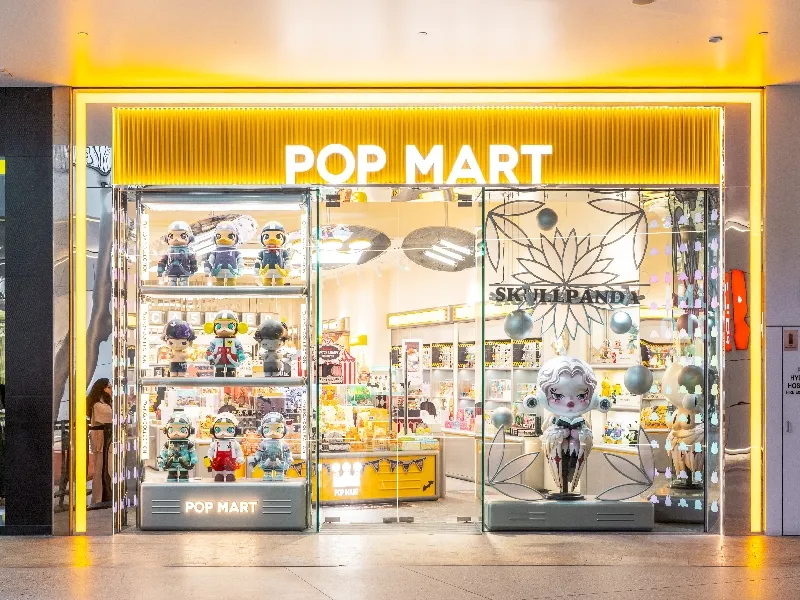
    Pop Mart, the renowned creator of the globally popular “blind box” toys featuring the unique and charming Labubu character, unveiled its debut jewellery store in Shanghai last Friday.

    The new concept store, known as Popop, offers a variety of accessories embellished with Pop Mart’s most popular characters, which include Labubu, Molly, and Skullpanda.

    Despite the ongoing property downturn and sluggish economic growth, Chinese consumer expenditure has remained somewhat muted. However, the demand for Pop Mart’s delightful yet economical toys continues to thrive both domestically and internationally, which has contributed to an over 200% rise in its share value so far this year.

    Zhang Zhanming, a 34-year-old investor who owns Pop Mart shares valued at 100 million yuan (US$13.92 million), made the journey from his home in Chongqing, a city in southwestern China, to witness the store’s launch. He wanted to evaluate the new storefront and consider whether to expand his investment in the company.

    Zhang expressed his belief that Pop Mart’s pricing strategy and target audience are a perfect match. He also expressed confidence in Pop Mart’s potential to evolve into China’s counterpart of Disney. He also predicted that the company, currently valued at US$45.65 billion, could potentially double its market capitalization.

    Pop Mart’s characters, along with a selection of Disney characters and others from the realms of anime, comics, and popular video games, are seen as exemplifying “emotional consumption”. This concept involves young consumers purchasing affordable luxury items that bring happiness into their lives.

    Fang Ke, a 35-year-old woman who will be celebrating her birthday this month, decided to indulge herself by purchasing a 699 yuan Labubu bracelet at the launch. She has been a long-time fan of Pop Mart, citing its visually appealing, brightly coloured products that also deliver a visual impact, a sentiment echoed by her daughter.

    At Popop, pricing begins at around 350 yuan for charms or a simple silver ring. Prices can climb up to 2699 yuan for necklaces decorated with metallic representations of the characters, with the majority of items priced under 1000 yuan.

    In a typical Pop Mart store, the famous “blind box” toys generally retail for a starting price of 69 yuan. However, consumers have demonstrated a willingness to spend more on limited-edition items.

    Earlier in the week, a human-sized Labubu figurine sold for a record-breaking 1.08 million yuan at a Beijing auction house, signifying the toy’s transition from a fad to a collector’s item.

    Questions & Answers

    What is the name of Pop Mart’s new jewellery store?
    The jewellery store is named Popop.

    Who is Zhang Zhanming?
    Zhang Zhanming is an investor who owns Pop Mart shares valued at 100 million yuan.

    What is the concept of “emotional consumption”?
    Emotional consumption refers to the trend of young consumers purchasing affordable luxury items that bring happiness into their lives, such as Pop Mart’s toys and accessories.

  • Korean shoppers buy more eco-produce, but prices remain a hurdle

    Korean shoppers buy more eco-produce, but prices remain a hurdle

    Increasingly, consumers in South Korea are choosing eco-friendly agricultural products, but a key obstacle to wider adoption remains: high prices. This was revealed in a recent government survey.

    The Ministry of Agriculture, Food and Rural Affairs disclosed that 76.8% of the participants in the survey reported having bought eco-friendly produce at least once over the previous year. This marks a slight growth, 0.6 percentage points, compared to 2024.

    The main reasons consumers gave for choosing eco-friendly produce were perceived safety (39.5%) and family health (31.1%). Environmental protection also influenced their decision (13.6%). Taste and quality were not as important, with only 4.8% and 3.1% naming these factors, respectively.

    Yet, the higher cost of such products remains a significant deterrent. Of those who did not buy eco-friendly products, 65.1% stated that the higher prices, in comparison to conventional alternatives, dissuaded them.

    The most commonly bought items were strawberries, tomatoes, mushrooms, and leafy vegetables. Most consumers (68.1%) made these purchases at large supermarket chains. However, online purchasing has been steadily increasing, particularly through early morning delivery services, making up over 35% of transactions in 2025.

    Even with the increased interest from consumers, the market experienced a drop in overall sales. In 2024, the number of online and offline retailers selling eco-friendly products increased to 6,099, yet total revenue decreased by 158.3 billion won to 2.04 trillion won. Certified organic product sales also fell by 81.3 billion won to 904.5 billion won. The majority of retailers blamed the decline on dampened consumer sentiment due to continuing economic uncertainty.

    As a countermeasure, the ministry plans to introduce initiatives such as production subsidies and promotional discounts to lower the cost of eco-friendly foods. “We are dedicated to reducing the price obstacle through consumer incentives and production support to expand the eco-friendly food market,” says Kim Jung-wook, Director of Agri-Food Innovation Policy at the ministry.

    Questions & Answers

    What are the primary reasons South Korean consumers choose eco-friendly produce?
    The main reasons are perceived safety and family health.

    Why do some consumers avoid buying eco-friendly products?
    High prices compared to conventional alternatives are the main deterrent.

    What steps is the Ministry of Agriculture, Food and Rural Affairs taking to support the eco-friendly food market?
    They are planning to introduce initiatives such as production subsidies and promotional discounts to make eco-friendly foods more affordable.

  • Korean beauty startups bet booming US demand outlasts tariff pain

    Korean beauty startups bet booming US demand outlasts tariff pain

    Following their impressive online achievements in the US, South Korean cosmetic start-ups are seeking to strengthen their physical presence in the world’s largest consumer market. These brands, including Tirtir, D’alba, Torriden and Beauty of Joseon, are currently in discussions with major retailers to make their products available on US shelves. The expectation is that the popularity and broad appeal of their products will outweigh any potential impact from tariffs.

    K-Beauty: Global Competitor

    Known for their high-quality products, competitive pricing, and clever marketing strategies, South Korean beauty products have successfully established a global presence. This success has been largely facilitated by the wider popularity of South Korea’s other cultural exports, including music, film, and television.

    According to Tirtir CEO An Byung-Jun, the increased interest in South Korean culture has paved the way for the country’s cosmetic industry, especially given the good quality of the products and their affordability compared to existing luxury brands such as L’Oreal or Estee Lauder.

    Tirtir’s reputation significantly increased last year due to the viral online success of its cushion foundation shades designed for dark skin. The company aims to double its US sales this year, with its products being made available in Ulta Beauty stores over the summer.

    US Expansion

    Major US retailers, including Sephora, Ulta Beauty, Costco, and Target, are currently in discussions with South Korean cosmetic brands about launching their products in physical stores. Industry experts believe Korean brands’ higher margin business models will allow them to withstand tariffs better than their competitors.

    South Korea became the world’s third-largest beauty product exporter in 2024, after France and the US. The majority of its cosmetic output, valued at $13 billion, is for export, with e-commerce sales driving most of this success.

    Challenges and Opportunities

    While tariffs pose a potential threat to South Korea’s beauty industry, the strong demand for their products is expected to mitigate some of this risk. Olive Young, South Korea’s leading beauty retailer, plans to establish its first US store in Los Angeles later this year.

    Despite concerns about tariffs, South Korean cosmetic brands are persisting with their US expansion plans. Brands such as D’alba, Torriden, and Beauty of Joseon are set to launch in Sephora stores over the summer.

    The Power of Social Media

    South Korea’s success in the cosmetic industry has been significantly bolstered by social media. Viral videos and influencer endorsements can transform a product into a global bestseller. However, industry experts caution that long-term success will require an increase in physical store sales.

    Despite rising competition and the emergence of cheaper alternatives, investors remain optimistic about South Korea’s potential in the cosmetic industry.

    Questions & Answers

    What has contributed to the success of South Korean beauty products in the global market?
    South Korean beauty products have risen in popularity due to their high quality, competitive pricing, and effective marketing strategies. They have also been boosted by the wider global interest in South Korean culture, including its music, film, and television.

    What is the current status of South Korean cosmetics in the US market?
    South Korean cosmetic start-ups are currently in discussions with major US retailers to launch their products in physical stores, following their successful online performance.

    What are the potential challenges for South Korean cosmetic brands in the US market?
    Potential challenges include tariffs and increasing competition. However, the strong demand for their products is expected to mitigate some of these concerns, and many brands have business models that allow them to withstand tariffs better than their competitors.

  • Pet care booms in Korea as seniors spend on furry friends

    Pet care booms in Korea as seniors spend on furry friends

    In the past three years, South Korea has seen a significant 30% increase in expenditures on pet care services and products. The most noteworthy growth is seen amongst consumers who are 60 years of age or older, a new report reveals.

    Analysis of Pet Spending Trends

    The report is based on an analysis of 24.85 million card transactions made by 3.54 million customers from 2021 to 2024. It shows a 39% increase in the number of consumers spending on pet-related goods and services, such as veterinary clinics and specialty pet stores, during this period.

    Veterinary services accounted for the lion’s share of the spending, comprising 75% of total pet-related expenditures. Comparatively, pet supply retailers accounted for 25% of the spending.

    Spending by Age Group

    The largest spending group was individuals in their 30s, accounting for 23% of pet-related spending. They were closely followed by those in their 20s and 40s who each accounted for 22% of the spending. Individuals in their 50s and those aged 60 and above represented 20% and 13% of the spending respectively.

    However, it’s noteworthy that the 60+ age group saw the highest increase in spending, going up by 60% from 2021. This includes a 77% increase in pet supply purchases and a 57% increase in veterinary costs.

    Online Shopping and Veterinary Services

    Online purchases also saw a significant boost, with 64% of pet products bought online in 2024, marking a 53% increase from three years earlier. Cat-related products experienced a notable 81% surge in online sales, surpassing the 49% increase in dog-related items.

    Veterinary clinics also increased in number, rising 24% from about 14,000 in 2021 to 17,000 in 2024. Spending was heavily concentrated among the larger providers, with the top 10% of clinics making up 68% of total revenue, up from 62% in 2021.

    “These figures underscore considerable shifts in consumer behavior, especially among older adults, and emphasize the growing dominance of online channels in the pet care market,” a spokesperson commented.

    Questions & Answers

    What accounted for the majority of pet-related expenditures in South Korea?
    In South Korea, the majority of pet-related expenditures were for veterinary services, which made up 75% of the total.

    Which age group had the highest growth in pet-related spending?
    The age group of 60 years and older saw the highest growth in pet-related spending, increasing by 60% since 2021.

    What rise did online purchases of pet products see between 2021 and 2024?
    Online purchases of pet products saw a significant rise between 2021 and 2024, with 64% of pet products being bought online in 2024, a 53% increase from three years earlier.

  • CJ Foods Expands Global Footprint with New Mandu Factory in Japan

    CJ Foods Expands Global Footprint with New Mandu Factory in Japan

    In an ambitious move to expand its culinary footprint, South Korea’s CJ Foods has announced a significant investment of approximately $73 million (KRW 100 billion) to establish a new mandu (Korean dumpling) factory in Chiba Prefecture, Japan. This state-of-the-art facility will cover 42,000 square meters and is equipped with cutting-edge production lines. Construction is on track to wrap up by July, with production slated to kick off in September.

    Strengthening Its Presence in Japan

    This initiative is designed to enhance CJ Foods’ presence in Japan’s lucrative frozen dumpling market, which boasts an impressive annual value of around $800 million (JPY 114 billion). The factory will be churning out popular items such as bibigo mandu, alongside innovative convenience products aimed at nationwide distribution.

    A Blossoming Market for Korean Cuisine

    Japan is a crucial market for CJ Foods, where beloved offerings like bibigo mandu and gimbap are already available at major retailers such as AEON, Costco, Amazon, and Rakuten. Notably, in 2023, bibigo gimbap sold 2.5 million units in Japan, showcasing the growing appetite for Korean cuisine.

    Global Expansion Plans

    But the excitement doesn’t stop in Japan. CJ Foods is also pushing the envelope with plans for a new factory in Hungary by late 2026 and a grand Asian food complex in South Dakota, USA, set to debut in 2027. Currently, the company operates 20 plants across the United States, four mandu factories in Japan, and production bases in Germany, Vietnam, and Australia.

    This expansion strategy underscores CJ Foods’ mission to elevate its global K-food business by boosting local production capacity and satisfying the surging demand for its delectable offerings. And with this rapid growth, one can’t help but wonder what tasty delights CJ Foods will dream up next!

    Questions & Answers

    • What type of products will the new factory in Japan produce? The factory will produce popular items like bibigo mandu and other convenience products for nationwide distribution.
    • When will production at the new factory begin? Production is expected to start in September, following the completion of construction in July.
    • Where else is CJ Foods expanding aside from Japan? CJ Foods is planning to open a new factory in Hungary by late 2026 and is developing a large Asian food complex in South Dakota, USA, projected to open in 2027.
  • Exploring Why Malaysians Lead Southeast Asia in Grocery Spending Trends

    Exploring Why Malaysians Lead Southeast Asia in Grocery Spending Trends

    Malaysians are savoring their culinary delights, with average annual food-at-home expenses hitting a notable US$1,940 per person in 2023, according to the U.S. Department of Agriculture (USDA). Following closely behind, Singaporeans spend about $1,831 per person, while other nations in the region like Thailand ($1,108), the Philippines ($1,070), and Cambodia ($898) show a stark contrast in expenditure levels, as reported by The Star. Notably, these figures haven’t been adjusted for inflation or varying costs of living across countries.

    Understanding High Grocery Bills

    Experts attribute Malaysia’s substantial household grocery spending to a mix of factors: rising input costs, a weakened Ringgit, low agricultural productivity, and a heavy reliance on food imports. Sunway University economics professor Yeah Kim Leng observed that despite Singapore boasting a far higher per capita income, its food-at-home spending has closely mirrored Malaysia’s, even dipping below it this year.

    KRI research associate Teoh Ai Ni shed light on the varying spending habits across the region. She pointed to data from the Household Expenditure Survey 2022, revealing that Malaysian households dedicate about 52% of their monthly food budget to meals at home, contrasting with Singapore’s 68% spent dining out. This appetite for home-cooked meals places a unique spin on Malaysia’s grocery landscape.

    Moreover, KRI fellow researcher Nik Syafiah Anis highlighted the vulnerability of Malaysia’s food sector due to its dependence on imports. She emphasized that this reliance, especially on imported animal feeds like corn and soymeal, adds to rising domestic food prices. Geopolitical tensions and unfavorable harvests on the global stage can further inflate feed costs, leading to pricier staples like chicken, eggs, fish, and meat.

    Teoh added that while Malaysians might spend more in dollar terms on groceries, the share of their income allocated to food is comparatively lower than in many regional counterparts. It appears that while we’re enjoying a tasty meal, the economy continues to stir up its own concoctions of challenges.

    And just when you think you’re spending too much on groceries, remember that you could be paying even more for your takeout!

    Questions & Answers

    What are the average food-at-home expenses for Malaysians in 2023?
    Malaysians spent an average of US$1,940 per person on food-at-home expenses in 2023.

    How do Malaysian food spending habits compare to those in Singapore?
    While Malaysia’s food-at-home expenditure is higher, Singaporeans allocate a greater portion of their food budgets to dining out, with 68% spent on meals away from home compared to Malaysia’s 52%.

    What factors contribute to the rising grocery costs in Malaysia?
    Factors include a reliance on food imports, rising input costs, a weakened Ringgit, and low farm productivity, all of which create pressure on domestic food prices.

  • CJ Olive Young Launches First Korean Snacks Store in Vibrant Busan

    CJ Olive Young Launches First Korean Snacks Store in Vibrant Busan

    Despite the challenging market conditions brought on by rising inflation and supply chain issues, retail giant Walmart continues to show stellar financial performance. In its latest quarterly report, the company announced a surprising 8% increase in revenue, amounting to $152.8 billion. This impressive result showcases Walmart’s ability to adapt in a shifting economic landscape.

    Online Sales Surge Amidst Inflation

    As inflation tightens consumers’ budgets, Walmart has successfully harnessed the power of online shopping. E-commerce sales skyrocketed by 30% in the last quarter alone, indicating that shoppers are increasingly turning to digital platforms for their needs. This uptick in online sales has positioned Walmart as a formidable contender against other retailers, particularly in the realm of fast delivery options and convenience.

    International Markets Fuel Growth

    Walmart’s international division also played a pivotal role in driving growth. With a notable increase of more than 10% in international revenue, the retailer is thriving in markets like Mexico and Canada. Walmart’s strategic focus on local sourcing and personalized services has resonated well with consumers overseas.

    Future Initiatives and Innovations

    Looking ahead, Walmart is keen on continuing its investment in technology, targeting a seamless shopping experience for both physical and online consumers. The company is enhancing its app features and expanding its fulfillment centers to better meet customer demand. Additionally, Walmart aims to introduce new product lines that cater to eco-conscious shoppers.

    In a market where survival often feels like a game of chess, Walmart seems to have the winning strategy. Who knew saving on toilet paper and chips could be such an economic powerhouse?

    Questions & Answers

    What were Walmart’s revenue figures for the last quarter?
    Walmart reported revenues of $152.8 billion, reflecting an 8% increase despite economic challenges.

    How much did e-commerce sales rise in the latest quarter?
    E-commerce sales surged by 30%, demonstrating a growing trend of customers shopping online.

    Which international markets are contributing to Walmart’s growth?
    Walmart’s international division saw more than a 10% increase in revenue, with Mexico and Canada being significant contributors.

  • K-Beauty Sector Bounces Back with $4.9M Funding Boost for Early 2025 Growth

    K-Beauty Sector Bounces Back with $4.9M Funding Boost for Early 2025 Growth

    The K-Beauty industry is experiencing a notable resurgence, with startups raising an impressive $4.9 million in funding during the first four months of 2025, as reported by Tracxn. This revival can largely be credited to the sector’s renowned high-quality products that boast innovative ingredients and unique formulations, all further fueled by the global phenomenon of Korean pop culture—think K-pop, K-dramas, and the vibrant realm of social media.

    In its glory days, the K-Beauty sector peaked in funding during 2016 and 2018, amassing $186 million and $148 million, respectively. However, last year marked a significant downturn; the sector hit rock bottom in 2024 with a meager $975,000 raised—the lowest in a decade and a staggering 90% decrease from the previous year. Notwithstanding this dip, the cumulative funding across 74 startups has reached a robust $453 million.

    South Korea reigns supreme in the K-Beauty market, having secured $250 million in funding, followed closely by the United States with $199 million, and India trailing with $4 million. Remarkably, over 55% of global K-Beauty investments have been funneled into South Korean enterprises.

    The last couple of years has been characterized by early-stage funding, with all financing in 2022, 2023, and so far in 2025 originating from this stage. Early-stage rounds have accounted for nearly 28% of total sector investments over the past five years. In contrast, late-stage funding, which once comprised 69% of the market, has gone dormant since 2019.

    Seed-stage deals have managed to raise $15.3 million so far, although 2024 was a slow year that only saw $957,000 in seed funding, and this year has yet to witness any new seed-stage deals. On the funding leaderboard, Memebox stands tall at $193 million, followed by GP Club with $67.5 million and Clio Professional with $50.1 million. In the funding categories, color cosmetics lead the charge with $245 million, followed by multi-category brands at $77 million, and skincare at $46.5 million.

    Mergers and acquisitions continue to shake up the market, with Klpartners’ $129 million acquisition of Manyo earlier this year and LG Household & Healthcare snatching up The Crème Shop in 2022 for $120 million. Notably, GP Club and Mediheal have both reached unicorn status, while APR emerged as the sole K-Beauty IPO in 2024.

    Prominent investors in the sector, such as Goodwater Capital, Pear VC, and Altos Ventures, have significantly influenced funding dynamics. The past two years have seen seed-stage activity driven primarily by 500 Global, Barlon Capital, and Blueprint, while early-stage rounds have been dominated by khfamily.kr, Company K Partners, and Smile Gate Investment.

    Could this be the comeback story of the year for K-Beauty? Grab your favorite face mask and stay tuned!

    Questions & Answers

    What was the total funding raised by the K-Beauty sector?
    The K-Beauty sector has amassed a total of $453 million across 74 startups.

    Which countries are leading in K-Beauty funding?
    South Korea leads with $250 million, followed by the U.S. at $199 million, and India at $4 million.

    What is the main type of funding seen in the K-Beauty sector recently?
    All funding for 2022, 2023, and the beginning of 2025 has come from early-stage rounds, making up nearly 28% of total investments in the last five years.

  • Korean retailers struggle amid sluggish demand

    Korean retailers struggle amid sluggish demand

    The initial quarter of 2025 has proven challenging for South Korea’s department store sector due to a slow down in local consumption that has greatly affected sales and profits. Lotte Department Store stood as the exception, recording a significant growth in profits, which has been attributed to excellent performance in overseas operations and effective internal restructure.

    Lotte Department Store’s Rise in Profits

    Lotte Department Store’s operating profit rose by 44.3% year-on-year, reaching 130 billion won in the first quarter, despite a minor decline of 1.1% in revenue to 806.3 billion won. The company attributes the profit surge to aggressive cost-efficiency measures, including shutting down underperforming stores and reinvesting in primary locations. Another contributing factor was the gain from its international business, which saw a 6.2% increase in revenue and bounced back into profitability.

    Struggles of Competitors

    Contrarily, competitors Shinsegae and Hyundai Department Store did not meet their projected performance. Shinsegae’s revenue fell by 0.8% to 659 billion won, with the operating profit decreasing by 5.1% to 107.9 billion won. Similarly, Hyundai reported a 0.8% drop in sales to 589 billion won and a 5.7% decline in operating income to 97.2 billion won.

    The downturn has been attributed to poor performance across nearly all product categories due to increasing consumer pessimism and colder-than-average winter, which negatively affected fashion sales – a category that typically makes up to 50% of annual department store revenue. According to one department store industry official, a combination of domestic and global challenges, including political instability due to emergency rule, increased trade uncertainty due to US tariff actions, and unpredictable weather conditions have all contributed to the downturn.

    E-Mart’s Successful First Quarter

    In the big-box retail sector, E-Mart led the market with an impressive first quarter. On a standalone basis, the company’s revenue grew by 10.1% year-on-year to 4.63 trillion won, while the operating profit shot up by 43.1% to 133.3 billion won, marking its best quarterly performance since 2018.

    The company’s executives credit the success to an increase in foot traffic at both its standard discount stores and warehouse-style Traders locations, indicating a resurgence in consumer interest in offline shopping despite the ongoing economic uncertainty.

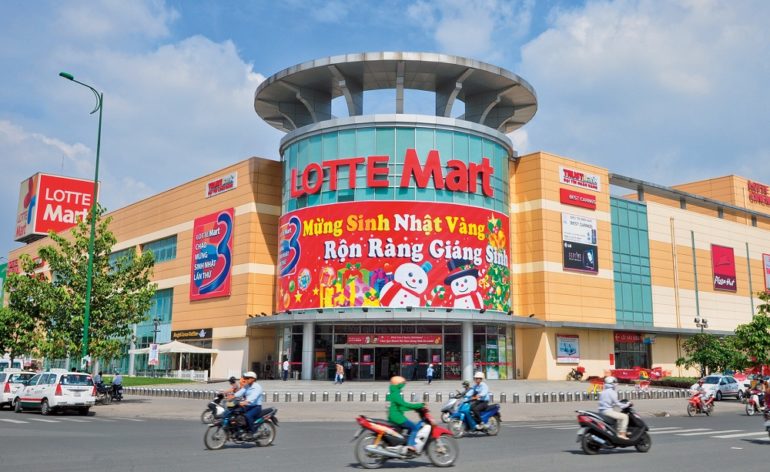
    In comparison, Lotte Mart saw a modest increase in revenue by 0.3% to 1.49 trillion won, while operating profit fell sharply by 34.8% to 28.1 billion won. After excluding overseas earnings, domestic operating profit sank 73.6% from a year earlier.

    Both E-Mart and Lotte Mart have adopted low-price strategies via centralised purchasing, but analysts have noted that E-Mart’s larger scale offers it a stronger advantage in passing savings onto consumers. E-Mart’s aggressive promotions were also identified as key factors contributing to its outperformance.

    Questions & Answers

    What led to the rise in Lotte Department Store’s profits?
    The surge in Lotte Department Store’s profits can be attributed to aggressive cost-efficiency measures and a strong performance from its international business.

    What factors contributed to the struggle of Shinsegae and Hyundai Department Store?
    Poor performance across nearly all product categories, increased consumer pessimism, colder-than-average winter, and various domestic and global challenges contributed to the struggle of these department stores.

    What factors influenced E-Mart’s successful first quarter?
    An increase in foot traffic at both its standard discount stores and warehouse-style Traders locations, along with aggressive promotions, contributed to E-Mart’s successful first quarter.