Tag: LVMH

  • LVMH invests into Stadium Goods

    LVMH invests into Stadium Goods

    LVMH, the parent company of brands including Louis Vuitton, Dior and CÉLINE, announced plans for its Luxury Ventures initiative in 2017 with the aim of acquiring minority stakes in emerging luxury brands.

    The latest brand to get backing from the programme is New York’s Stadium Goods.

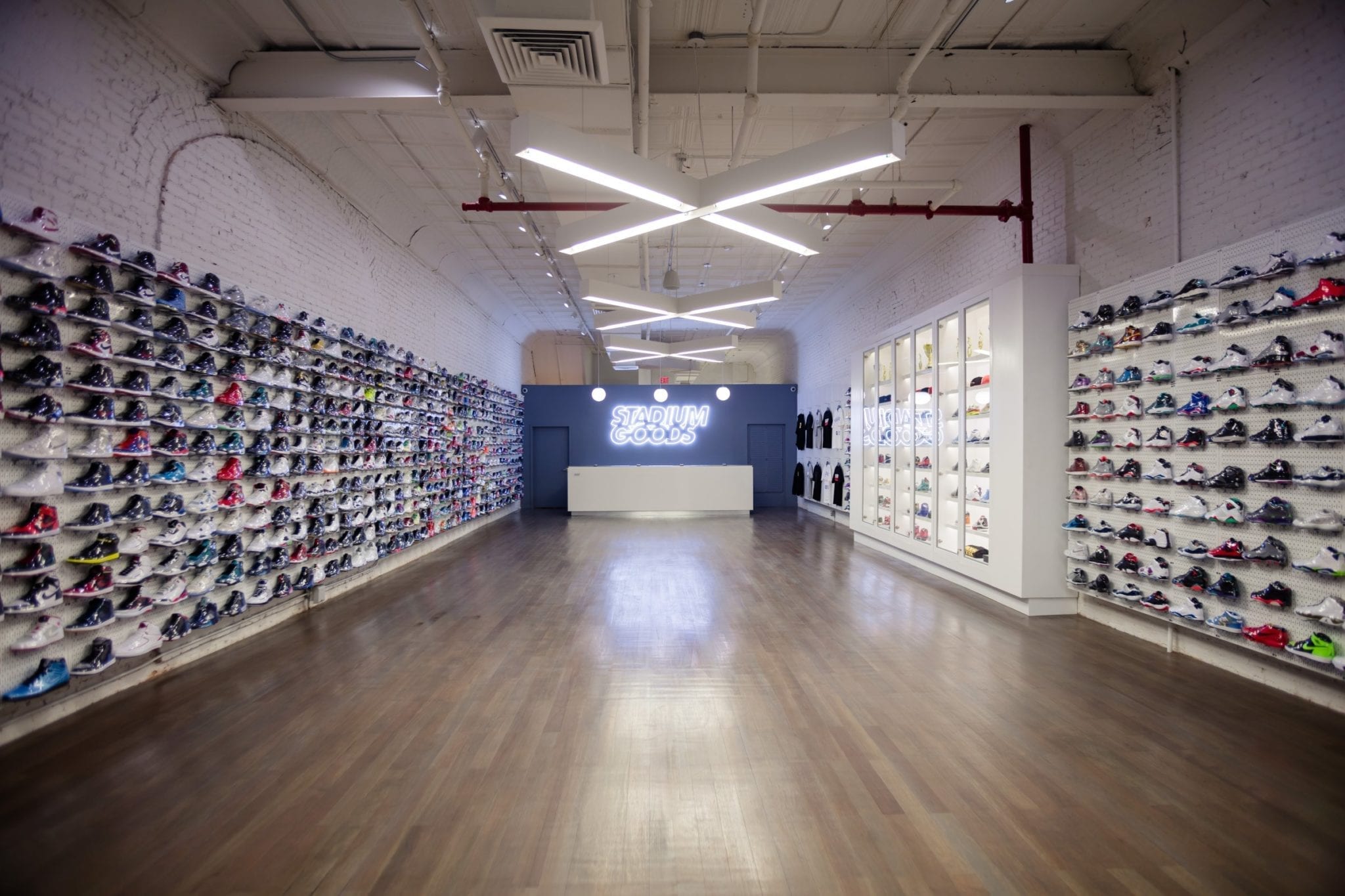
    As far as streetwear connoisseurs are concerned, New York City’s Stadium Goods is the pinnacle in the sneaker world.

    Details on what role LVMH Luxury Ventures will take in the reseller are unclear, although it is rumored that this backing could allow Stadium Goods to expand. The store — which is the location for most Sneaker Shopping episodes — has been open for just over two years and the team behind have previously said about potential plans to move into merch and open a second physical location.

    Back in 2017, prior to LVMH’s backing, Stadium Goods raised $4.6 million USD in equity funding and was predicted to gross more than $100 million USD in 2017.

  • Rimowa unveils new brand identity for its 120th anniversary

    Rimowa unveils new brand identity for its 120th anniversary

    A worker intently studies an aluminium suitcase on the assembly line at the Rimowa factory in Cologne. He opens and closes it repeatedly, lays it flat, pounds a hinge with his mallet, stands it on its wheels and starts over again. Until this bag is perfectly balanced, it will not leave the factory. Such labour-intensive quality has been in Rimowa’s DNA since Paul Morszeck founded it in Cologne in 1898.

    With its immediately recognisable aluminium cases and grooved design, Rimowa is a cult brand, the type that bonds owners in a kind of unspoken club.

    The German company turns 120 this year, but there will be no one special event, says Alexandre Arnault, the new 25-year-old CEO, who finds the idea of a party ‘outdated’. Rather, it will be a whole year of celebration, of taking a fresh look at the suitcase brand that pioneered aluminium and polycarbonate, and finding ‘a cool way to remind people who we are’.

    Tall, poised and impeccably dressed, fluent in French, English and German, Arnault is the third child of LVMH CEO Bernard Arnault and it was his idea that the luxury goods conglomerate acquire Rimowa. He had been using a matte black ‘Salsa’ model since age 17 or 18, when he moved to New York for an internship.

    ‘My family was not too happy when I travelled with it,’ he recalls. ‘But when they looked at it carefully, they understood the beauty of the product, the craft behind it.’ The family operation has high-profile luggage brands of its own, of course, but when Louis Vuitton started to modernize its suitcase line with lighter and four-wheeled models, Rimowa’s particular set of skills became clear.

    LVMH bought Rimowa in January 2017, after two years of negotiation, and Arnault was appointed CEO alongside Dieter Morszeck. He has been actively shepherding the brand ever since, with collaborations, new stores, a pop-up, and no sign of slowing down.
    ‘What I have learned from growing up in my family and seeing other CEOs is that you have to be involved in the product on every single level,’ he says.

    In June he hired Hector Muelas, formerly of Apple and DKNY, as Rimowa’s chief brand officer. Early this year they unveiled a new visual identity, a collaboration with Munich-based Bureau Borsche and London-based Commission Studio.

    The pill-shaped frame and rounded letters of the previous logo have been replaced with an understated design, with a refined sans serif font that ‘encapsulates the timeless and considered nature of the brand’, says Muelas. The colour blue has disappeared in favour of neutral shades – black, white and grey.

    The team also designed a new monogram inspired by Rimowa’s original from 1898. It features sharpened vertices like the spires of Cologne’s famous cathedral, intertwined with angular curves that mirror the industrial forms of contemporary Rimowa suitcases.

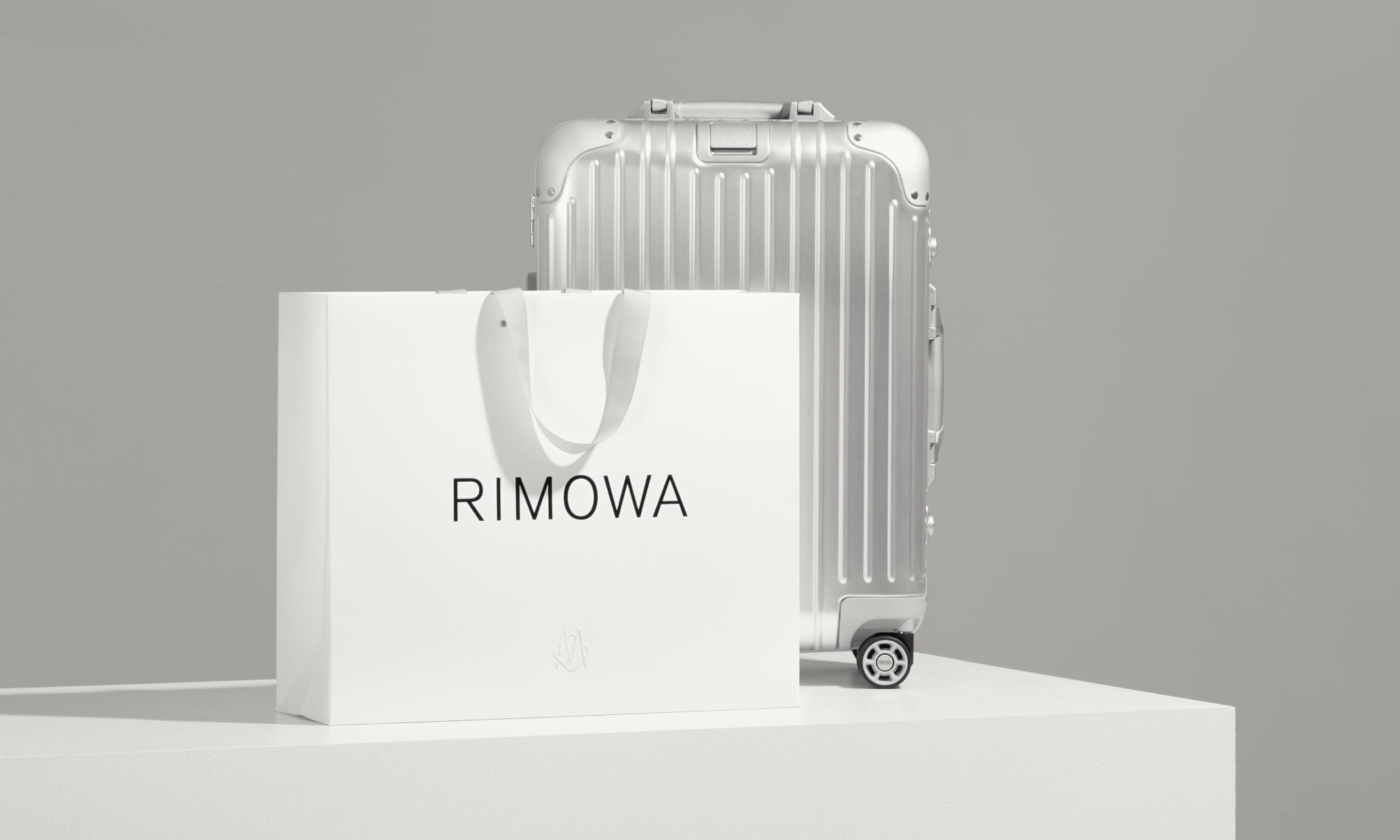
    Both the logo and monogram appear on a redesigned range of packaging. Once an afterthought, Rimowa’s packaging now aspires to be as pleasing as that of an iPhone.

    There are dust bags, shopping bags with straps held in place by rivets, and gift boxes for carry-ons. Demonstrating a price tag that slides out of a little folder, Muelas says, ‘With every single piece of design, we put a lot of consideration into how it would make people feel. When you buy Rimowa it’s a magic moment. It’s got to have a ritual.’

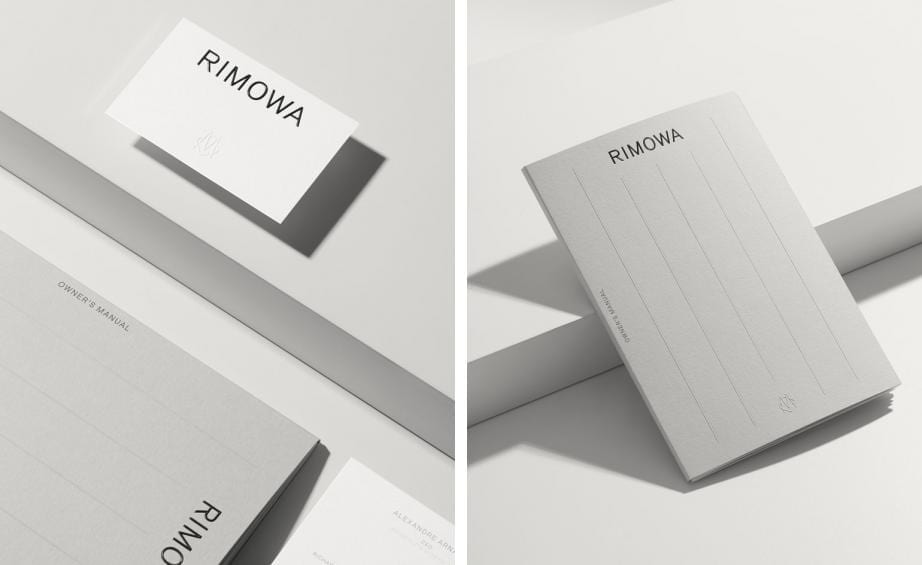
    Paper accessories such as an owner’s manual and notebooks are embossed with fine parallel lines to mirror the suitcases’ grooves. Geographic coordinates appear here and there, making oblique reference to meaningful locations for the company, such as the factory where each case was produced.

    The number of meaningful locations is increasing, as last year saw a slew of new store openings in cities such as Paris, Frankfurt and Tokyo. Arnault wants each one to give customers an experience, and he plans to hire in-country architects to design individual stores for different markets. Beyond suitcases, customers in larger cities will discover unique lifestyle products made by local talents especially for the brand. In Paris, for example, the new flagship is selling chocolate bars by Patrick Roger, available until mid-February.

    Arnault is also excited about the pop-up concept, having launched the company’s first in Beverly Hills last December, built to look like a luggage conveyor belt and selling products such as fresh juice and travel and design books, as well as aluminium pens by Kaweco and T-shirts by German brand Merz b Schwanen. ‘A pop-up in a new place for six months allows us to try a new store concept, a new design. If it works, great, we learn from it. If it doesn’t work, we also learn from it.’

    As for collaborations, Rimowa teamed up with Fendi for a limited-edition suitcase with a belt, leather handles and the double F logo melded onto the aluminium surface. Also launched last December, the cases came with a price tag of €1,700 and sold out within a week. While more such team-ups are on the horizon, Arnault is keeping the details to himself. What he does admit to is his dream collaboration, with Nasa. He plans to contact them soon.

    This goal reflects Arnault’s love of technology (he Is a graduate of Paris’ prestigious École Polytechnique). In 2016, Rimowa introduced electronic luggage tags, and the young CEO is considering what other digital innovations might add value for the customer. Nothing gimmicky, he insists. A suitcase with an integrated battery charger would be heavy and unnecessary, while one with its own scale seems practical.

    For the 80th anniversary of its signature aluminium suitcase last year, the house produced a fully digital campaign – portraits of Rimowa cases belonging to Karl Lagerfeld, Martha Stewart and the Italian chef Massimo Bottura, among others.

    Reached at his recent Gucci Garden restaurant opening in Florence, Bottura recalls, ‘I bought my first Rimowa after years of luggage envy, watching other travellers wheel their metal cases around with ease.

    In particular, I was fascinated by the Rimowa photography cases, these big aluminium boxes that protected fragile equipment. Finally, a wheel broke on a black plastic trolley I had and I bought a Rimowa silver bullet trolley at the airport to replace it. And that was the beginning of the obsession.’

    At a time when many brands talk about storytelling, suitcases are natural vehicles for it. ‘They’re travel companions,’ notes Muelas, witnesses to the experiences and memories that mark a journey. Indeed, when LVMH announced the acquisition, Arnault received notes from people around the world telling him their Rimowa stories.

    He says, ‘There’s an amount of love that exists out there for this product that I’ve rarely seen before, and I think it’s linked to this relationship of trust. Our suitcases are so robust that people trust us with their most personal belongings, their most valuable things.’
  • Bernard Arnault now richer than Mark Zuckerberg

    Bernard Arnault now richer than Mark Zuckerberg

    LVMH Moët Hennessy Louis Vuitton, the world’s leading luxury products group, announced record sales of 42.6 billion Euros in 2017, up 13% over the previous year, as all divisions turned in strong performances. Its net profit popped 29%.

    The news sent LVMH‘s stock up 5% on Friday. The biggest beneficiary of the announcement is LVMH’s longtime chairman and CEO Bernard Arnault, who owns more than 5% of LVMH’s stock. His fortune jumped $3.5 billion in just hours and was at $77.9 billion by noon on Friday.

    He is now the fifth richest person on the planet, up from number 11 last March when FORBES published our annual rankings of the World’s Billionaires. Since the list’s publication, his fortune has climbed more than $36 billion, helping him move ahead of Michael Bloomberg, Charles and David Koch, Larry Ellison and Carlos Slim. Today, he leaps ahead of Facebook’s Mark Zuckerberg.

    “The excellent performance, to which all our businesses contributed, is due in part to the buoyant environment but above all to the remarkable creative strength of our brands and their ability to constantly reinvent themselves,” said Arnault, in a released statement. “Continued innovation, entrepreneurial spirit and the quest for excellence: all Maisons continue to assert these core values while maintaining rigorous execution of their strategies on the ground.”

    The multi-billion dollar morning for Arnault is another chapter in what is turning out to be one of his best years yet.

    In April 2017, Arnault and his family announced a $13 billion deal to acquire Christian Dior and fold the fashion brand into LVMH. The move ends years of a convoluted, complicated cross holding structure between the two companies. The share price of Dior, in which Arnault now has a 97% stake and which represents the bulk of his fortune, has climbed nearly 38% since April and popped almost 5% on Friday.

    One of the world’s ultimate taste-makers, Arnault first got into the luxury goods business in 1984 when he bought Christian Dior. He has run LVMH, which owns 70 brands including Dom Perignon, Bulgari, Louis Vuitton, Sephora and Tag Heuer, since 1989.

  • LVMH hits up record revenue in 2017

    LVMH hits up record revenue in 2017

    It has been another record year for luxury products group LVMH Moet Hennessy Louis Vuitton.

    Revenue increased by 13 per cent year on year to reach €42.6 billion (US$52.9 billion), while organic revenue growth was 12 per cent.

    All business groups recorded double-digit organic growth with the exception of wines and spirits, where second-half growth was hit by supply constraints.

    Profit from recurring operations reached €8.2 billion, up 18 per cent. Operating margin reached 19.5 per cent, while the group share of net profit was €5.1 billion, growth of 29 per cent.

    Describing the performance as “excellent”, LVMH chairman/CEO Bernard Arnault says the record year was partly because of a buoyant environment but above all a result of the creative strength of the group’s brands “and their ability to constantly reinvent themselves”.

    Key highlights of last year listed by the group include:

    ● Record revenue and profit from recurring operations.

    ● Growth in Asia, Europe and the US.

    ● The success of both iconic and new products at Louis Vuitton, “whose profitability remains at an exceptional level”.

    ● The acquisition of Christian Dior Couture.

    ● Growth at Fendi and Loro Piana.

    ● The first year of integration of Rimowa luggage.

    ● Strong momentum at Parfums Christian Dior, driven by product innovation.

    ● An excellent year for Bulgari and good progress at Hublot and Tag Heuer.

    ● Growth at Sephora.

    ● Free cashflow of €4.7 billion, up 20 per cent.

    “Significant” growth in China helped Hennessy cognac volumes grow by 8 per cent, with 7.5 million cases shipped despite the second-half supply constraints.

    In fashion and leather goods, key events of the year were products arising from collaborations with artist Jeff Koons as well as the Supreme brand, the launch of the brand’s first smartwatch and the inauguration of the Maison Louis Vuitton Vendome in Paris.

    There was rapid growth in Asia for the perfumes and cosmetics segment, and growth was particularly strong in Asia for Bulgari. Asia again shone in the selective retailing group with Sephora continuing to gain market share.

    LVMH says the year was a positive turning point for DFS, with new stores in Cambodia and Italy continuing to grow sales.

    Despite unfavourable currencies and geopolitical uncertainties, LVMH says it is well equipped to continue its growth momentum across all business groups this year.

  • Affinity Equity to bid on Stylenanda

    Affinity Equity to bid on Stylenanda

    Hong Kong’s Affinity Equity Partners has joined a bidding scramble for Korean budget fashion and cosmetics brand Stylenanda.

    Also in the race are LVMH-backed L Catterton, L’Oreal and Shiseido, with the bid worth up to KW500 billion (US$467 million), insiders say.

    Parent company Nanda has received letters of intent from potential bidders, including a local department-store chain, to sell a stake of up to 70 per cent.

    Launched in 2005, Stylenanda saw its sales soar to KW170 billion last year. While it started as a fashion brand, it has lately been focusing more on its cosmetics business. Now more than half of its sales come from its budget cosmetics brand 3CE.

    For its fashion business, the firm is focusing more on upscale boutique shops.

    CEO Kim So-hee, who owns the company outright, in 2016 sought to sell a sizeable portion along with management rights. There were negotiations with such candidates as Hyundai Department Store and TPG, but these collapsed.

    Meanwhile, L Catterton has been buying stakes in Korean companies in recent years, including US$80 million in YG Entertainment, $50 million in cosmetics maker Clio, and US$230 million in eyewear brand Gentle Monster.

    Affinity has also been buying into Korean firms. In August it bought plastic container company Lock&Lock for KW629.3 billion.

  • Phoebe Philo Steps Down from Céline with No Plans to Join Another Brand

    Phoebe Philo Steps Down from Céline with No Plans to Join Another Brand

    Celine creative director Phoebe Philo has told her team she is leaving the French luxury leather brand after its autumn presentation.

    There were reports she could join her former chief executive Marco Gobbetti at Burberry when chief creative officer Christopher Bailey leaves at the end of March, but market sources say she has no plans to move immediately to another house and may simply take a break from fashion, reports BOF.

    “Working with Celine has been an exceptional experience for me these past 10 years,” says Philo.

    Bernard Arnault, chairman and CEO of LVMH, Celine’s parent company, describes Philo’s accomplishments as a “key chapter” for the brand with her minimalist designs and emphasis on tailoring. She was behind many of Celine’s hit bags, including the Phantom, Trapeze and Trio.

    The London-born designer won British Designer of the Year at the British Fashion Awards in 2010 for the second time, and the following year received the International Award at the CFDA Fashion Awards.

    Over the past decade, Celine’s annual sales grew from €200 million (US$236 million) to more than €700 million, analysts say (LVMH does not break out figures for the label).

    Philo studied with Stella McCartney at Central Saint Martins in the late 1990s, following the designer when she took over from Karl Lagerfeld as creative director at Chloe in 1997. After McCartney left to set up her own label, Philo was appointed as her replacement.

  • LVMH and Céline to launch e-commerce venture

    LVMH and Céline to launch e-commerce venture

    Céline, the only LVMH-owned fashion label without its own e-commerce business, will start offering online sales from a new website next week, two sources close to the matter said.

    The French brand joins a growing line of luxury goods players belatedly pushing into e-commerce, shrugging off long-held concerns such an avenue would hurt their image.

    Artistic director Phoebe Philo’s minimalist, avant-garde designs have turned Céline into one of fashion’s most sought-after labels over the past 10 years.

    Céline will test the water with its clothing collections, shoes and leather “it-bags” usually costing well over $2,000, one of the sources said.

    “The website will launch in France over the course of the coming week,” the source said, adding that the e-commerce business would then be rolled out to the rest of Europe and the United States in 2018.

    Owner LVMH, the world’s biggest luxury goods conglomerate, does not break down sales of individual brands, but analysts estimate Céline’s annual revenue at 700 million to 800 million euros (705.1 million pounds).

    Online sales of luxury goods are set to grow 24 percent in 2017 and make up close to 10 percent of the market, according to consultancy Bain. It forecasts they will represent 25 percent of all luxury sales by 2025.

    Online sales have helped fuel revenue growth at brands such as Kering-owned Gucci.

    Gucci and rival Louis Vuitton, an LVMH brand, launched new sites in China in recent months, while leather handbag specialist Hermes has recently revamped its online business. LVMH set up a multi-brand e-commerce website earlier this year.

    But France’s privately owned Chanel remains a major outlier. The label said last week it had no immediate plans to try to sell its famed tweed jackets or quilted leather bags online.

    LVMH recently denied an October report that Philo may be close to leaving Céline, though the news has fuelled speculation that she could be one of the favourites to replace Burberry’s departing designer Christopher Bailey.

  • L Catterton Asia to form JV sportswear

    L Catterton Asia to form JV sportswear

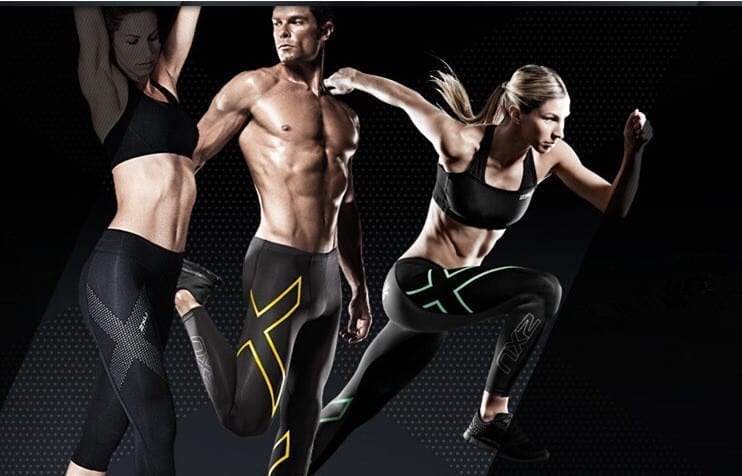
    LVMH-backed private-equity firm L Catterton Asia has launched a JV between two of its portfolio companies, Chinese menswear fashion group GXG, and Australian compression activewear company 2XU.

    The strategic partnership will enable both companies to capitalise on the growing fitness and sportswear market in China.

    Established in 2007, GXG has a portfolio of four brands – GXG, gxg.jeans, gxg.kids and Yatlas. Its lines are available in more than 2100 stores across China, as well as online through third-party platforms such as Tmall and VIPshop. Its e-commerce GMV is expected to surpass RMB2.5 billion (US$378.5 million) this year, an increase of more than 50 per cent over last year. The company also achieved record sales of RMB485 million in this year’s Tmall 11.11 shopping festival.

    Since acquiring a controlling stake in GXG last year, L Catterton Asia has been working with the company’s management team to expand into new categories. It has supported GXG by offering extra collaboration opportunities and helping with global expansion.

    “GXG and 2XU are led by seasoned management teams with deep understanding and complementary knowledge of the fashion and retail industries, and we look forward to continuing to work alongside and support both teams,” says L Catterton Asia chairman/managing partner Ravi Thakran.

    Founded in 2005, 2XU produces technical athletic wear that is endorsed by elite athletes internationally.

    “Since L Catterton Asia’s investment in 2013, 2XU has experienced significant growth and I am grateful for their partnership as we continue to expand into attractive markets around the world,” says 2XU CEO Paul Higgins.

    With more than $14 billion of equity capital across six fund strategies in 17 offices globally, L Catterton has a team of more than 140 investment and management professionals. L Catterton Asia (previously L Capital Asia) was launched in 2009 and manages more than $ 1.6 billion across two private equity funds, and more than $2 billion including co-investments. It has offices in Singapore and Mauritius, with a regional advisory presence in Hong Kong, Mumbai and Shanghai.

    L Catterton Asia draws on its strategic relationship with Groupe Arnault and LVMH across the investment process. Its investments include Jorya Group, Marubi, Pepe Jeans, Sasseur, Trendy International and YG Entertainment.

  • JD.com surprises with first profitable quarter

    JD.com surprises with first profitable quarter

    JD.com profit soared 50 per cent after a 39 per cent increase in sales during the Chinese online retailer’s latest quarter.

    Its unaudited results for the three months to the end of September show revenue of RMB83.7 billion (US$12.6 billion), with a record 50.3 per cent surge in gross profit to RMB13 billion. Non-GAAP gross profit was RMB12.8 billion, up 51.9 per cent.

    Active customer accounts increased by 34 per cent to 266.3 million in the 12 months to September 30.

    Chairman/CEO Richard Lio says the company is building robust product content and enhancing user engagement with innovative tools that enable brands to launch highly targeted online marketing programs.

    “The scale economies of our model are becoming clearer with every quarter,” says CFO Sidney Huang. “Looking ahead, we will continue to prioritise investments in technology and leading R&D talent as we execute on our vision to revolutionise China’s retail industry.”

    While releasing its third-quarter figures, JD.com also listed its latest business developments…

    In October, JD and Tencent expanded their partnership with the launch of a marketing initiative that integrates insights on consumer behaviour from Tencent’s social-media platforms with online and offline shopping data from JD and its brand partners. As well as enabling more precise target marketing, the move benefits consumers by offering them wider access to sales promotions and preferred discounts.

    Strategic partnerships

    During the past three months, JD.com also formed strategic partnerships with Baidu, iQIYI, NetEase, Sogou and Qihoo 360 with their big-data resources, massive user bases and AI algorithm technologies.

    JD also continued to strengthen its position among top-tier international brands, expanding its partnership with high-fashion brand Armani with the opening of official online stores for Armani Exchange and Emporio Armani.

    JD Worldwide also launched flagship stores for such companies as Reckitt Benckiser, Spectrum Brands and Tiger, while its new Toplife platform attracted marquee brands like Dyson, La Perla, Rimowa (LVMH) and Trussardi.

    During the quarter, JD Logistics test-launched an unmanned sorting centre, the first of its kind in the logistics industry. JD also signed agreements to lay the groundwork for the rollout of China’s largest drone network.

    In September, JD Logistics expanded its environmentally friendly logistics and packaging campaign, working with brands including  Johnson & Johnson, Kimberly-Clark, Lego, L’Oreal, P&G, Nestle, Unilever, Watsons and Wrigley. The aim is to minimise environmental impact by cutting back on packaging materials.

    Customer demand

    JD also enhanced its fresh product offerings during the quarter to meet customer demand. In July, it launched the Canadian Fresh Food Pavilion, the first country pavilion for fresh products on the JD.com platform. Live lobsters from Canada can now be delivered to customers’ doorsteps in China in as little as 48 hours. During JD’s Super Canadian Day, 140,000 lobsters were sold within 24 hours.

    In September, JD.com, JD Finance, Central Group and Provident Capital announced agreements to establish two JVs in Thailand covering e-commerce and fintech services, with an aggregate investment of $500 million. JD.com is providing its expertise in technology, e-commerce and logistics while Central Group is drawing on its retail store network, brand and merchant relationships, and retail behaviour insights from its loyalty program.

    In October, JD and Sam’s Club launched a promotion offering customers discounted bundled memberships for Sam’s Club and the JD Plus paid-for membership service.

    By the end of October, JD.com JV New Dada had partnered with 146 Walmart stores and 301 Yonghui stores, as well as many other supermarkets and grocery stores, to provide online fresh grocery shopping with one-hour home delivery.

    At the end of September, JD.com had 405 warehouses and provided scheduled delivery services in 250 Chinese cities. It had about 160,000 merchants on its online marketplace, and 137,975 full-time employees.

  • Sidney Toledano to Step Aside at Dior as LVMH Shakes Up Senior Ranks

    Sidney Toledano to Step Aside at Dior as LVMH Shakes Up Senior Ranks

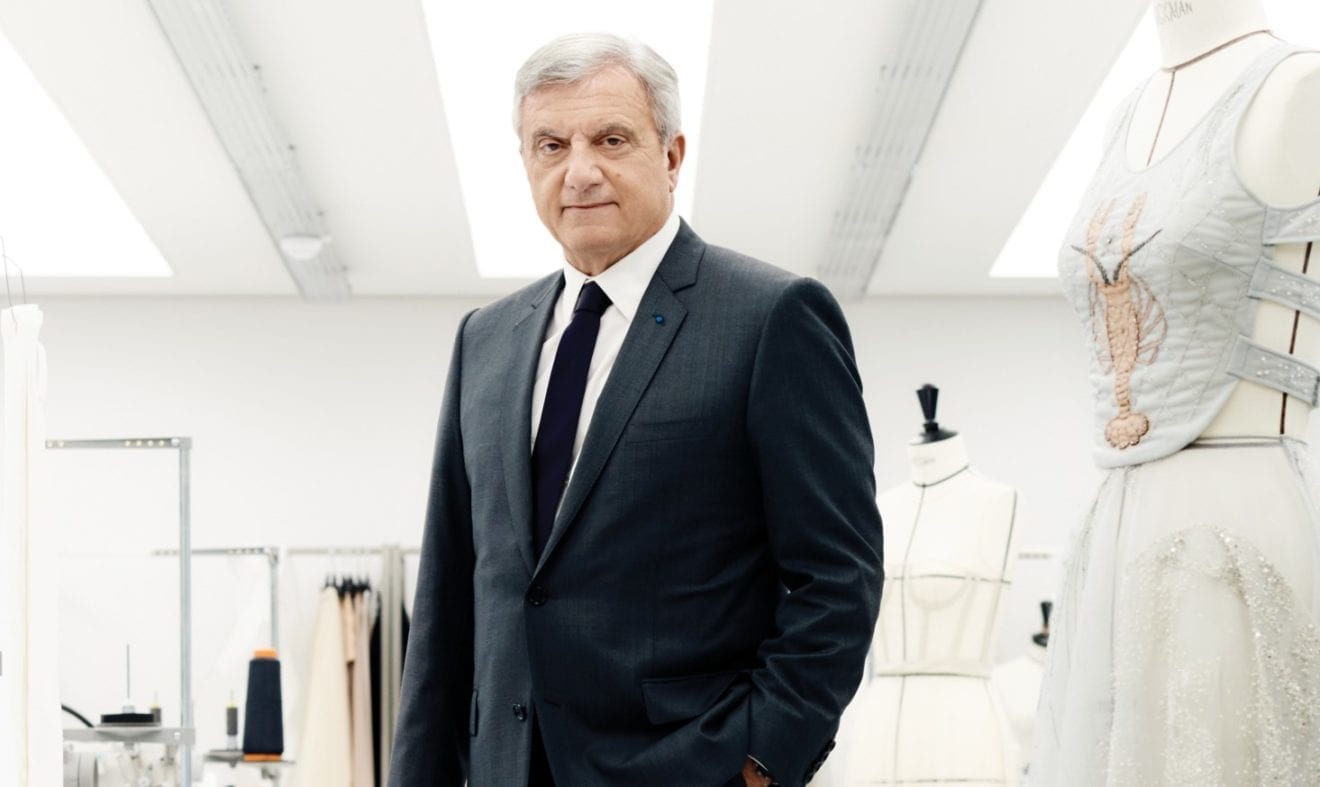
    Sidney Toledano plans to step aside after 20 years as chief executive of Christian Dior Couture as corporate parent LVMH Moët Hennessy Louis Vuitton seeks to inject new blood into its senior ranks.

    Wednesday’s announcement marks the end of an era at Dior, during which Mr. Toledano, 66 years old, turned the elite brand into a global fashion powerhouse with annual sales of more than EUR2 billion ($2.3 billion).

    Pietro Beccari, the current chief executive of Fendi, also part of LVMH, was named to replace Mr. Toledano. Mr. Beccari is highly regarded within LVMH for having engineered a turnaround at Fendi. Under his tenure, sales grew from an estimated EUR600 million to EUR1 billion.

    “Pietro has an excellent track record,” said Bernard Arnault, the French billionaire who is chief executive and controlling shareholder of LVMH.

    Mr. Arnault gave Mr. Toledano a new job as head of LVMH Fashion Group, which manages some of the brand’s smaller fashion labels including Celine, Givenchy and Marc Jacobs. Mr. Arnault suggested the move to Mr. Toledano, and he agreed, Mr. Toledano said. He will start the new role early next year.

    “He never imposed something on me,” Mr. Toledano said in an interview. “I said I want a new challenge.”

    Wednesday’s move is the first major shake-up at Dior since Mr. Arnault earlier this year spent EUR12 billion to unite the fashion house with LVMH. Previously, the Arnault family owned part of Dior through a holding company that also owned part of LVMH. But Dior the brand was independent from LVMH, even though the companies cooperated extensively under Mr. Arnault’s control.

    When Mr. Toledano took over at the brand in 1998, annual sales were around EUR200 million. He embarked on a store-building spree and expanded the business dramatically in Asia. He also anchored the company as designers came and went. He clashed with Hedi Slimane and fired John Galliano after the designer was recorded shouting anti-Semitic insults at a bar in Paris. Mr. Galliano apologized and said he was seeking help.

    The move elevates Mr. Beccari to one of the top spots in the fashion world and Mr. Arnault’s luxury empire. Dior’s sales have surged in recent years, propelled by strong demand in Asia. The brand, however, is significantly smaller than French rival Chanel and should have room to grow, says Luca Solca, analyst at Exane BNP Paribas.

    “The benchmark for Dior is Chanel,” Mr. Solca said. “It has a similar allure and sophistication and it’s coming from the same background, which is couture.”

    The move leaves a leadership hole at Fendi, which has become LVMH’s third-largest fashion brand after Louis Vuitton and Dior. Mr. Beccari helped turn around Fendi by boosting its digital-marketing efforts and introducing a line of new bags that could be accessorized with pompoms and shoulder straps.

    “The big thing will be how they’re going to replace Beccari,” Mr. Solca said. “Fendi needs to maintain its momentum.”

    Mr. Toledano will now devote his attention to smaller brands that collectively comprise a significant chunk of revenue for LVMH and are seen as growth opportunities for the company. The division also houses Marc Jacobs, which has been underperforming in recent years.

    “I will have to meet the team, talk with Marc, talk with the CEO,” Mr. Toledano said.

  • Sales drops for Louis Vuitton Korea

    Sales drops for Louis Vuitton Korea

    Louis Vuitton Korea has fallen behind its rivals, with sales dipping into minus territory this year, industry data shows.

    Sales at a leading department store for the international fashion house for the January-October period backtracked 5.3 per cent. Demand for Louis Vuitton products were down 2.1 per cent at another department store during the same period.

    Meanwhile, rivals Chanel and Hermes achieved double-digit sales during the same period. Chanel added 11.2 per cent and 13.7 per cent at the two department stores, while Hermes managed 16.5 per cent and 17.1 per cent growth, respectively.

    “The vast popularity of Louis Vuitton in the past and consequent sales have made the brand too common, taking away much of its cachet,” an unidentified retailer said. “The popularity of its monogram series fizzled out, and there was no succeeding product, which is another reason for the slump,” he said.

    Exact sales figures are not available for Louis Vuitton, after its local operator was turned into a privately-held company from a limited company in 2012 when its lack of social contribution compared to its dividend propensity became controversial. Privately-held firms do not have to disclose detailed corporate information, such as donations.

    A law was revised recently, however, requiring private companies to undergo external inspections and to disclose financial information, including sales, dividend rates and contributions.

  • Wines and spirits contribution to LVMH luxury business

    Wines and spirits contribution to LVMH luxury business

    It has been a bubbly nine months for the LVMH luxury business – with the exception of its wines and spirits division, which was hampered by supply constraints.

    Revenue grew by 14 per cent for the period to reach €30.1 billion (US$35.4 billion).

    With organic revenue growth of 12 per cent, the third quarter continues the trend for the year, says the group. The revenue increase was despite a negative currency impact of 5 per cent and a positive structural impact of 7 per cent, reflecting the integration of Christian Dior Couture.

    All business groups recorded double-digit organic growth, with the exception of wines and spirits where growth was 8 per cent. Champagne volumes were up 4 per cent, with particularly strong demand in Europe and Japan. Hennessy cognac had a volume increase of 9 per cent despite a third-quarter decline related to limited supply.

    LVMH’s selective retailing business group had organic revenue growth of 12 per cent. Online sales grew at a steady pace, and DFS had sustained growth, particularly in Hong Kong and Macau. The T Galleria store in Cambodia has also developed well, says the group.

    Organic growth of 14 per cent was recorded by the fashion and leather goods business group. It attributes this to innovation, such as the launch of Louis Vuitton’s first smartwatch.

    “The qualitative development of the distribution network continues, as illustrated by the opening of the Maison Louis Vuitton Vendome in Paris, which brings together under one roof all the savoir-faire of the maison,” says the group.

    Highlights during the period included Fendi opening stores in the US and Rimowa being consolidated. Donna Karan was sold at the end of last year.

    There was also 14 per organic growth in perfumes and cosmetics. Perfumes benefitted from the launch of the eau de parfum Miss Dior. Guerlain rolled out Mon Guerlain fragrance internationally, and Fenty Beauty by Rihanna had an “exceptional” start.

    Watches and jewellery had 13 per cent organic revenue growth, with Bulgari achieving “a remarkable performance” with the rapid growth of its signature jewellery collections Serpenti, Diva and B.Zero1.

  • Wines and spirits hiccup for LVMH luxury business

    Wines and spirits hiccup for LVMH luxury business

    It has been a bubbly nine months for the LVMH luxury business – with the exception of its wines and spirits division, which was hampered by supply constraints.

    Revenue grew by 14 per cent for the period to reach €30.1 billion (US$35.4 billion).

    With organic revenue growth of 12 per cent, the third quarter continues the trend for the year, says the group. The revenue increase was despite a negative currency impact of 5 per cent and a positive structural impact of 7 per cent, reflecting the integration of Christian Dior Couture.

    All business groups recorded double-digit organic growth, with the exception of wines and spirits where growth was 8 per cent. Champagne volumes were up 4 per cent, with particularly strong demand in Europe and Japan. Hennessy cognac had a volume increase of 9 per cent despite a third-quarter decline related to limited supply.

    LVMH’s selective retailing business group had organic revenue growth of 12 per cent. Online sales grew at a steady pace, and DFS had sustained growth, particularly in Hong Kong and Macau. The T Galleria store in Cambodia has also developed well, says the group.

    Organic growth of 14 per cent was recorded by the fashion and leather goods business group. It attributes this to innovation, such as the launch of Louis Vuitton’s first smartwatch.

    “The qualitative development of the distribution network continues, as illustrated by the opening of the Maison Louis Vuitton Vendome in Paris, which brings together under one roof all the savoir-faire of the maison,” says the group.

    Highlights during the period included Fendi opening stores in the US and Rimowa being consolidated. Donna Karan was sold at the end of last year.

    There was also 14 per organic growth in perfumes and cosmetics. Perfumes benefitted from the launch of the eau de parfum Miss Dior. Guerlain rolled out Mon Guerlain fragrance internationally, and Fenty Beauty by Rihanna had an “exceptional” start.

    Watches and jewellery had 13 per cent organic revenue growth, with Bulgari achieving “a remarkable performance” with the rapid growth of its signature jewellery collections Serpenti, Diva and B.Zero1.

  • LVMH’s Cha Ling opens first China store

    LVMH’s Cha Ling opens first China store

    Luxury high-end skincare brand Cha Ling has launched its first store in China, opening a flagship outlet in Shanghai.

    Cha Ling, which means ‘tea forest’ in Mandarin, is inspired by the rare Chinese Pu’er tea — a type of tea known for its anti-oxidant and anti-ageing properties

    The LVMH Group-owned cosmetic venture launched in Paris just 18 months ago, and is the brainchild of Guerlain president and CEO Laurent Boillot.

    The brand is created in the Guerlain labs in France, with ingredients from Yunnan where farmers harvest 500-year-old tea trees.

    Products include Pu’er-infused cleansing powder, serums, massage cream and a “steam tablet” for purifying pores. Prices range from $20 to $200.

    Cha Ling is also planning to expand to Beijing and Chengdu soon, according to local media reports. Meanwhile, following the move into China, other stores are slated to open in international markets.

    Cha Lang first launched in French department store Le Bon Marché in January 2016. In February 2016, it opened its first standalone in Hong Kong inside the Harbour City shopping mall.

    It now has a second Hong Kong location in Causeway Bay and plans to open a standalone Paris boutique this year.

  • LVMH global sales soar 15 per cent

    LVMH global sales soar 15 per cent

    LVMH global sales soared 15 per cent in the first half year, largely driven by strong sales in Asia and France.

    Revenue totalled  €19.7 billion in the first half of 2017, and profit from recurring operations was €3.64 billion, up by 23 per cent. The group’s operating margin reached 18.5 per cent, up 1 per cent.

    “LVMH has enjoyed an excellent first half, to which all our businesses contributed,” said Bernard Arnault, chairman and CEO.

    “In the current climate of geopolitical and economic instability, creativity and quality, the founding values of our group, have more than ever become benchmarks for all. The increasing digitalisation of our activities furthermore reinforces the quality of the experience we bring to our customers. In an environment that remains uncertain, we approach the second half of the year with caution.”

    Highlights of the first half of include:

    • Solid growth in the wines and spirits division, with sales up 10 per cent and improved momentum in China.
    • Sales up 14 per cent in the fashion and leather goods division, thanks to solid creative momentum at Louis Vuitton and further strengthening of other brands. “The momentum at Louis Vuitton, driven by its exceptional creativity, was demonstrated across all its product categories. The Cruise Collection presented at the Miho Museum in Kyoto, Japan, was a great illustration of this. The launch of new models resulting from the collaboration with the artist Jeff Koons and the cult New York skatewear brand, Supreme, were the highlights of the first half. Fendi continued its strong growth and enriched its leather goods lines, notably with the new Kan-I model. Loro Piana strengthened its presence in Asia with several openings. Céline, Loewe and Kenzo experienced good growth. Marc Jacobs strengthened its product offering and continued its restructuring. Other brands continued to grow. Rimowa, which joined the LVMH Group, is consolidated for the first time in the first half-year accounts.”
    • The perfumes and cosmetics business posted organic revenue growth of 12 per cent. “Christian Dior showed strong growth momentum, sustained by the vitality of its iconic fragrances J’adore and Miss Dior, the continued success of Sauvage and the performance of its latest makeup creations. Guerlain enjoyed a successful launch of its new perfume, Mon Guerlain, represented by Angelina Jolie. Parfums Givenchy experienced rapid growth in makeup, especially its line of lipsticks. Benefit continued to roll out its Brow Collection.”
    • In the watches and jewellery division, Bvlgari had a strong first half and the successful development of Tag Heuer’s core range had an impact, helping at 13 per cent overall increase in sales. “Bvlgari enjoyed an excellent first half and continued to gain market share. This dynamic is notable in both jewellery and watchmaking, especially in China and Europe, thanks to the success of the iconic Serpenti and B-Zero 1 lines and the new Octo Finissimo watch. Tag Heuer experienced solid revenue growth in a tough watch market. The new products created in its flagship Carrera, Aquaracer and Formula 1 collections were very successful and a new generation of the smartwatch was launched. Hublot continued its growth.
    • Strong growth Sephora and improved momentum of DFS in Asia, helped LVMH’s selective retailing business group achieve organic revenue growth of 12 per cent. “Sephora continued to make progress and reinforced its omnichannel strategy. While increasing its share of online sales, Sephora continued to invest in extending its network and renovating existing stores, particularly in New York and Dubai. Le Bon Marché developed a new online shopping experience by launching its digital platform 24 Sèvres. DFS experienced better momentum in Asia, while the T Galleria, which opened in 2016 in Cambodia and Italy, continued to develop.”