Tag: Malaysia

  • Kendall Jenner signed agreement with Penshoppe

    Kendall Jenner signed agreement with Penshoppe

    Global fashion retail brand Penshoppe has unveiled the latest addition to its roster of international ambassadors – 23-year-old world’s highest-paid supermodel and one of the most followed celebrities on social media, Kendall Jenner. The model initially appeared on Penshoppe’s DenimLab campaign in 2015, and is now headlining the brand’s Spring Summer 2019 Campaign with Zayn Malik, Paris Jackson, Nam Joo Hyuk and Sandara Park.

    “As we move from strength to strength, we couldn’t think of a better addition to our growing list of global ambassadors”, said Golden ABC’s VP for brand management Jeff Bascon. “It’s good to have you back, Kendall!”


    Penshoppe has more than 400 locations across Bahrain, Cambodia, Indonesia, Saudi Arabia, Myanmar, Thailand, Vietnam and the Philippines. The brand is available online in Singapore, Malaysia, Hong Kong, Taiwan and Indonesia.

  • Courts Asia continues negative trend as Malaysian sales tank

    Courts Asia continues negative trend as Malaysian sales tank

    Group sales fell 6.2 per cent to $175.3 million, largely due to a 22.2 per cent decline in Malaysian sales measured in ringgit with lower consumer demand for goods and services.  Singapore sales, which account for three-quarters of the business’ overall sales, slipped a negligible 0.7 per cent, while the company’s Indonesian woes continued. Although the market accounts for just 3.4 per cent of Courts Asia’s sales, revenue fell 7.3 per cent in local currency. Courts Asia is already taking steps to stem losses in Indonesia, recently announcing the closure of one of its megastores and the downsizing of another.

    Japanese electronics retailer Nojima Corp lodged a takeover bid for Courts Asia last month, conditional only on the formal acceptance by Courts Asia’s majority shareholder  Singapore Retail Group, which has already indicated its acceptance. The Japanese company plans a strategic review of the business and will consider delisting it.

    Meanwhile, Courts Asia says it will continue to endeavour to improve efficiencies in its Malaysian business to improve productivity and return to profit. Twelve underperforming stores have already been closed reducing the network to 54.

  • F&B outlets get bigger bite in shopping malls Malaysia

    F&B outlets get bigger bite in shopping malls Malaysia

    Shopping malls are now allocating a higher percentage of their tenant mix (more space) to food & beverage (F&B) retailers, partly because competition from online platforms has impacted other types of retailers such as fashion, according to a market research and consulting firm. “Traditionally, F&B made up less than 20% of a mall’s tenant mix, but can go up to 40% nowadays,” Stratos Consulting Group Sdn Bhd managing director Tina Leong said.

    She said with the tenant mix now consisting of more F&B, this means that malls will need to design or renovate in such a way as to cater to the specific technical requirements that F&B retailers have, for example provisions for water, grease traps, storage, waste disposal and daily delivery.

    “F&B as a segment itself has become the anchor for some malls,” said Leong.

    She said malls that have a high F&B tenant mix include the refurbished 3 Damansara (formerly Tropicana City Mall), which now has more F&B compared to before. Similarly, Paradigm Mall in Petaling Jaya has refurbished its lower ground floor, which now consists of more F&B than previously.

    Sunway Velocity Mall general manager centre management Danny Lee said F&B makes up 27% of the mall’s tenant mix currently, and that it is targeting to have F&B reach 30%.

    “Naturally, F&B is doing better compared to others,” Lee said.

    Meanwhile, Leong noted that having more or certain types of F&B can also be part of experiential retailing.

    “For example, people nowadays, especially millennials, appreciate and are willing to spend on meals or drinks with friends and family, within nicer ambience restaurants or cafes, due to the memorable experiences this create.”

    She said to continue to draw shoppers (rather than them shopping online), more shopping malls are looking at creating engaging “experiences” for their customers. Experiential shopping simply means making the physical act of spending money more than simply handing over cash in exchange for goods and services.

    “More grocery stores are incorporating food and wine bars where people can enjoy a meal or a drink as well as a social experience before or instead of shopping,” said Leong, adding that some retailers have also integrated augmented reality into their stores, for example Starbucks Reserve Roastery in Shanghai and US-based fashion brand Reformation.

    Examples of experiential shopping are malls that have attractively themed or landscaped spots on every floor, where one can stop to take photographs with their friends or family, such as Aeon Mall Kuching. Some community malls in Bangkok, Thailand, have incorporated spaces for pet parks, children’s sand pits and jogging tracks.

    “Another recently opened mall, Kiara 163 in Mont Kiara, has incorporated the ‘experiential’ element into their mall design, with a central garden and water features for people to relax. Apart from design features, other ways of creating memorable shopper experiences are through interesting or unique events, activities, decorations, pop-up stores, technological innovations and customer service,” explained Leong.

    She said some of the major major malls have been doing this all along, such as Suria KLCC and Pavilion Kuala Lumpur that usually have attractive and unique festive decorations.

    “What is different is that nowadays, the customer experience aspect is becoming a focal point. It has become more important as malls and retailers try to attract and retain shoppers in the midst of competing options such as online shopping,” said Leong.

  • Axiata’s share price falls 4.87% on RM2.16b tax bill

    Axiata’s share price falls 4.87% on RM2.16b tax bill

     Axiata Group Bhd’s share price fell 4.87% at mid-day after the group and its majority owned subsidiary Ncell Pte Ltd were ordered by the Nepal Supreme Court to pay capital gains tax of 61 billion Nepalese rupees (RM2.16 billion) for the Ncell buyout deal. At 12.30pm, Axiata was the eighth loser on Bursa Malaysia, trading at RM3.71 with 7.03 million shares changing hands.

    The Himalayan Times yesterday reported that Axiata had been hit with the tax bill, which excludes late fees and fines, for its US$1.36 billion purchase of Reynolds Holdings Ltd, which has 80% stake in Ncell, in 2015.

    The publication cited the Nepalese Large Taxpayers Office chief as saying it would only initiate the process of collecting the tax amount once it gets a copy of the tax verdict.

  • Axiata slides 5% in early morning trade on tax bill

    Axiata slides 5% in early morning trade on tax bill

    Axiata Group Bhd saw some selling pressure in early morning trade on news that it had been hit with a capital gains tax bill of RM2.16bil by the Nepalese Supreme Court. The stock lost as much as 20 sen or 5.1% in early morning trading on Friday to a low of RM3.70. At 9.30am, the counter was down 14 sen or 3.59% to RM3.76 a share on the back of 1.57 million shares traded.

    Analysts said the news report by the Himalayan Times yesterday came as a negative surprise, which may impact the group’s FY19E earnings forecasts.

    Kenanga research made no changes to its FY18-19E earnings forecast pending its upcoming 4Q18 results but lowered its target price to RM4.50 from RM4.60 previously.

    “All in, we are keeping our Outperform call for now in view of its relatively decent valuation (Forward EV/EBITDA of 7.2x vs. peers of 12-13x) coupled with a stronger Celcom and earnings recovery at XL.

    “Bargain-hunting opportunity could potentially arise on any share price weakness due to the recent hiccup. We advocate investors to start accumulating the share at c.RM3.70 level,” it said.

    PublicInvest research said its core earnings forecasts remain unchanged but headline profit could see a sharp decline if Axiata paid the capital gains tax in FY19F.

    “Although our core earnings forecasts and Neutral call remain unchanged, we believe share price would react negatively to this news due to uncertainties and the potential downside to headline profit,” it said.

    It maintained its target price at RM3.85.

    In its response to news reports, Axiata said in a statement that it is yet to receive the judgment and order of the Supreme Court and is yet to receive any details of the order.

    “Ncell, Reynolds, and Axiata UK were given the full clearance by the Large Tax Payers Office of Nepal [LTPO] of its obligations to withhold any CGT payment on behalf of the Seller in relation to the Transaction via the letter from LTPO dated 4 June 2017, following the full and final payment made by Ncell, albeit under protest on the basis that CGT is not applicable on offshore transactions and even if applicable, any shortfall on payment is the responsibility of the Seller,” it said.

    The group said it would provide further updates upon receiving the order of the Supreme Court.


  • Astro seen benefiting if Android box is banned

    Astro seen benefiting if Android box is banned

    Astro Malaysia Holdings Bhd is the clear winner if the government moves to ban the sale of Android set-top-boxes (STBs) in the country as this could possibly halt or slow down its declining subscriber base and lift its average revenue per user (ARPU), according to HLIB Research. It was reported that the government has set up a task force to consider banning the sale of Android STBs, mirroring Singapore’s move last month.

    The rapid sale of Android STBs in Malaysia has hampered the development of Pay-TV in the last two to three years, HLIB Research analyst Khairul Azizi Kairudin said in a note.

    He said this is evident by Astro’s declining premium subscribers who opted to shift to Android STBs and other digital platforms (both legal and illegal).

    “In Malaysia, Astro appears to be the most impacted player with the rapid sales of Android STBs as evident by its declining premium subscribers in the past three years. However, we note that Astro has managed to slow down the subscriber loss with NJOI,” he added.

    Nevertheless, he noted that despite the ban on Android STBs, Astro would still face competition from legal streaming platforms such as Netflix.

    While Singapore took three years to review the ban of Android STBs, which includes amending its Copyright Act, Khairul expects a shorter timeframe for Malaysia as media companies have mooted the idea in the past two years due to the disruptive impact.

    “We believe the government has started the discussions on the ban by setting up a task force to review the current law,” he said.

    Additionally, he said HLIB Research views Telekom Malaysia’s (TM) recent announcement that their latest Unifi package would not be bundled with Unifi TV subscription due to changing consumer trends as a positive for Astro as this could assist the latter to expand their subscriber base.

    Astro controlled 77% market share of Pay-TV market in Malaysia and the rest is controlled by TM through Unifi TV.

    Khairul said should the ban on Android STBs material, it would be a positive catalyst for the lacklustre media sector (especially for Astro) which is being hampered by the digital disruption.

    “For now, we maintain our ‘underweight’ rating on the media sector. Following the recent surge in Astro share price, we downgrade Astro from ‘buy’ to ‘hold’ with an unchanged target price of RM1.70.

    “Nevertheless, Astro’s earning prospect remain intact on the back of its stable advertising expenditure outlook and coupled with generous dividend payment of 5% yield,” he added.

  • Malaysian banks to maintain earnings potential this year

    Malaysian banks to maintain earnings potential this year

    Analysts believe that the banking sector will be able to maintain its earnings potential this year, as margin pressure is expected to ease and continued loans growth with stable asset quality. MIDF Research said while the industry’s loans growth moderated to 5.6% year-on-year (y-o-y) as at December 2018 due to moderation in business loans and loans for the purchase of residential properties, the growth was still slightly above its expectations.

    “As for CY19, we expect a moderation in loans growth to 4.7% y-o-y due to the high base effect. We also believe that deposits growth will moderate to 5.3% y-o-y due to lower growth in fixed deposits growth this year,” the research house said in a note.

    “This also means that there will be accretion in value for banks’ book value. Hence, we maintain our ‘positive’ view on the sector,” it added.

    Overall, MIDF Research said it is cautiously optimistic of the banking sector continuing its solid performance in 2019.

    Given the current market conditions, the research house said its top picks for the sector are Maybank, CIMB and Public Bank.

    In a separate note, AmBank Research said it expects that the foreign fund inflows into emerging markets would benefit the share prices of the liquid banking stocks as the US Fed rate hike is tapering off.

    Therefore, the research house said it maintained its “overweight” stance for the sector with “buy” calls on RHB Bank, Public Bank, Alliance Bank, BIMB Holdings, Maybank as well as MBSB. Its tops picks include Maybank, Public and RHB Bank.

    AmBank Research noted that Maybank’s earnings are well diversified and the bank is still recording positive JAWs (a technical term that denotes income growth exceeding that of expenses) with growth in total income outpacing expenses.

    It added that Maybank’s net interest margins could also improve further ahead with the lowering of its funding cost as the group releases the excess liquidity built-up in the first half of financial year 2018 (1HFY18).

    “Meanwhile, dividend yield for the stock continues to be attractive relative to peers with its high payout ratio while potentially offering investors higher returns with the reinvestment of their dividends into additional shares under the DRS (dividend reinvestment scheme),” it added.

  • RM25b export target for wood-based products achievable: Malaysian Council

    RM25b export target for wood-based products achievable: Malaysian Council

    The Malaysian Timber Council (MTC) remains optimistic that Malaysia will achieve its RM25 billion export target for wood-based products by 2020 despite a fragile global trade and economy caused by the US-China trade war. “We believe that the RM25 billion target is still achievable notwithstanding the potential headwinds that may come along the way, for instance Brexit, US-China trade war and other regional conflicts,” MTC CEO Richard said.

    “The good part about the timber and wood industry is that a lot of Malaysian businesses are very innovative, and they respond to changes quite quickly, in terms of adjusting to the changing needs and demands and also the challenges of the industry as well as economy,” he added.

    To recap, the Ministry of Plantation Industries and Commodities (MPIC) had in 2017 reduced the wood-based exports target from RM53 billion to RM25 billion due to shortage of raw materials.

    Yu said the RM25 billion target is more “realistic”, noting that the previous RM53 billion target was first formulated prior to the 2008 global financial crisis.

    “The planning and the formulation of the strategy was before that (the financial crisis). At that point of time, even in terms of the exchange rate was pretty favourable to us from ringgit terms perspective.

    “And looking at last year’s numbers, I think to get another incremental of about RM1 billion-RM2 billion for another three years should be quite realistic,” he added.

    The timber industry’s contributed RM23.2 billion to the government coffers in 2017, up 4.8% compared to last year’s figures.

    As at August 2018, the export figures had reached RM14.57 billion, in which the wooden furniture, plywood, sawn timber, fibreboard and builders’ joinery and carpentry are the main revenue generators for the sector.

    However, Yu noted that there is concern raised by the industry players on the potential Chinese products dumping.

    “That will obviously have an effect on our exports. But I believe the Ministry of International Trade and Industry is monitoring this issue closely,” he said.

    At present, Malaysia exports timber and timber-based products in over 160 countries.

    Moving forward, Yu said the country’s commitment in maintaining its forest cover at above 50% will ensure that the timber industry remains sustainable in the long-term.

    The MTC was established in January 1992 to facilitate the local industry players and promote the development and growth of the timber industry.

  • MAHB turned down our offer for mediation, says AirAsia

    MAHB turned down our offer for mediation, says AirAsia

    Air Asia has claimed that Malaysia Airports Holdings Berhad (MAHB) has turned down their offer of mediation, in a letter sent by the airport operator’s lawyers. The airline said that in an attempt to resolve the parties’ ongoing dispute over passenger service charges at  Kuala Lumpur International Airport 2 (klia2), they had proposed mediation to MAHB.

    “We regret that MAHB has refused AirAsia’s olive branch to resolve outstanding issues between us through mediation, particularly in light of MAHB’s recent statement that it is ‘optimistic that these matters can and will be resolved’,” said AirAsia Malaysia CEO Riad Asmat in a statement on Wednesday (Feb 6).

    “We will seek guidance from Malaysian Aviation Commission (Mavcom) on the next steps to address this situation. However, we reserve our rights to take all necessary actions to protect the interests of our guests and shareholders,” added Riad.

    Under the Malaysian Aviation Commission (Mavcom) Act 2015, MAHB and airline operators have an obligation to mediate any dispute, and legal action may only be used as a last resort when other efforts have failed.

    Last month, the budget airline sought more than RM400mil in counterclaims against MAHB in response to a suit filed by the airport operator last month over airport taxes.

    The counterclaims were for losses and damages experienced by AirAsia and its long-haul sister airline, Air Asia X Bhd, due to alleged operational disruptions at klia2, the airline had said.

    AirAsia claims that it agreed to move to klia2 after the government scrapped the initially approved plans for its own low-cost terminal in Labu, Negri Sembilan in 2008 following MAHB’s claim that it could build a similar terminal closer to KLIA with the same facilities and charges at the former Low-Cost Carrier Terminal (LCCT).

    The airport tax in klia2 was increased to RM73 from RM50 for non-Asean international passengers.

    Domestic passengers were not spared from the increase and now have to pay RM11, up from the previous RM6.


  • Oil prices edge lower, tightening supply outlook supports

    Oil prices edge lower, tightening supply outlook supports

    Crude oil prices edged lower on Monday after sharp gains during the previous session but were supported by expectations of shrinking supply and signs that China-US trade tensions could ease. International Brent crude oil futures on Monday were down 20 cents, or 0.32% at 0339 GMT to $62.54 a barrel, after closing up 3.14% in the previous session to their highest close since Nov 21.

    US West Texas Intermediate (WTI) futures were at $55.13 per barrel, down 13 cents, or 0.24%, from their last settlement. WTI settled 2.73% higher in the last session at its highest close since Nov 19.

    Output declines from the Organization of the Petroleum Exporting Countries (OPEC) as they make good on their pact to curb a supply overhang were compounded by falling US oil rig counts and sanctions on Venezuelan oil sales.

    “While Venezuela’s output reportedly rose last month, fresh US sanctions on the country could see 0.5 to 1% of global supply curtailed,” said Vivek Dhar, commodities analyst for Commonwealth Bank of Australia in a note on Monday.

    The sanctions will sharply limit oil transactions between Venezuela and other countries and are similar to those imposed on Iran last year, experts said after examining details posted by the Treasury Department.

    OPEC oil supply fell in January by the largest amount in two years despite sluggish production declines from Russia, according to a Reuters survey.

    However, Russian oil output in January missed the target for the output cuts, Energy Ministry data showed on Saturday. Production last month declined to 11.38 million barrels per day (bpd), but that was only down by 35,000 bpd from its October 2018 level that is the baseline for the pact.

    Russian Energy Minister Alexander Novak has said the country’s overall cuts from the October baseline would total 50,000 bpd in January. Russia has pledged to reduce oil output by 230,000 bpd from October.

    US energy firms last week cut the number of oil rigs operating to their lowest in eight months as some drillers followed through on plans to spend less on new wells this year.

    “The collapse in oil prices late last year has resulted in more cautious spending by US oil explorers,” said Dhar.

    Meanwhile, hopes for thawing China-US relations have also helped ease concerns over slowing economic growth.

    “While the US and China have yet to reach a deal, markets were buoyed by reports that they have made significant progress,” ANZ Bank said in a research note.

    US President Donald Trump last week said he would meet with Chinese President Xi Jinping, perhaps twice, in the coming weeks to try to seal a comprehensive trade deal with Beijing, but acknowledged it was not yet clear whether a deal could be reached.

  • Foreign buying on Bursa slows to RM146.8m last week

    Foreign buying on Bursa slows to RM146.8m last week

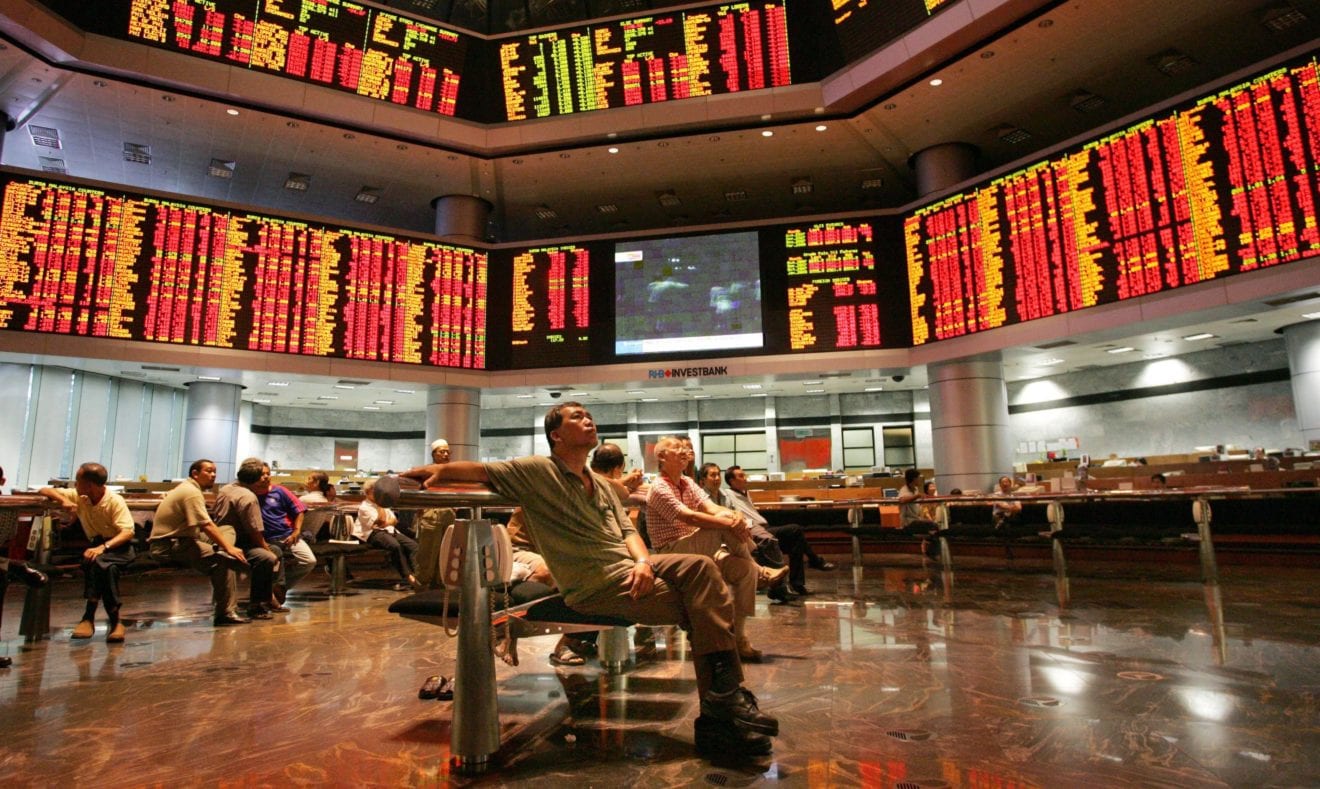
    Foreign funds snapped up RM146.8 million net of local equities last week during the holiday-shortened week. “Foreign funds resumed their entry into stocks listed on Bursa for the fourth consecutive week albeit at a slower pace compared to the preceding week,“ MIDF Research said in its weekly fund flow report.

    It said last Monday saw a moderate net inflow of foreign funds worth RM37.3 million, extending the daily buying streak to nine days. However, this foreign buying spree came to an end on the next day as international funds sold RM12.8 million net, coinciding with the local bourse’s 0.4% slide to settle at 1,690 points.

    Risk appetite was weak on Tuesday following the overnight 2.8% slump in Brent crude oil price combined with the anticipation ahead of the Sino-US trade negotiations.

    Notwithstanding this, offshore investors returned to Bursa on Wednesday at a tune of RM65.1 million net, the highest foreign net inflow during the week.

    The catalyst responsible for the boost of foreign net inflows on that day was 0.4% increase in Brent crude oil price as US President Donald Trump’s administration slaps sanctions on Venezuela’s state-owned oil company while Saudi Arabia had a deeper output cuts in January than initially pledged.

    The momentum of foreign net inflows continued on the last trading day of the week as foreign investors bought RM57.2 million net.

    “We opine that the sentiment was partially supported by the Malaysia’s exports in 2018 which grew by 6.7% to reach almost RM1 trillion. Meanwhile, the FBM KLCI was little changed, declining by less than 1% on Thursday ahead of the long weekend and festive season.”

    The month of January 2019 saw a foreign net inflow of RM1.03 billion or US$249.3 million, the first monthly net inflow since September last year.

    “In comparison with the three other Asean markets we monitor, Malaysia has the second lowest foreign net inflow while Indonesia leads,“ said MIDF.

    Foreign investors were the only group which saw a weekly increase in average daily traded value, jumping by 21.0% to remain above RM1 billion for the second week running.

  • Klang Valley malls performed slower last year due to competition

    Klang Valley malls performed slower last year due to competition

    Stronger performances from Gurney Plaza and East Coast Mall compensated for a lower contribution from CapitaLand Malaysia Mall Trust’s Klang Valley shopping malls last year. CapitaLand Malaysia Mall REIT Management (CMRM), which manages CapitaLand Malaysia Mall Trust (CMMT), released its results this week, revealing net property income of RM215 million (US$52.57 million) for the year. Its distributable income was RM161.3 million.

    “Gurney Plaza and East Coast Mall, which collectively accounted for about 68 per cent of CMMT’s net property income, continued their growth momentum last year,” said Low Peck Chen, CEO of CMRM. “This helped to moderate the lower contribution from our Klang Valley malls, which continued to be affected by increasing competition in the vicinity, as well as downtime for asset enhancement works and lower rents at Sungei Wang and The Mines.”

    During the final quarter of last year,  the company completed the asset enhancement works at Gurney Plaza’s Level 4 and improved the tenant mix at East Coast Mall’s ground floor. Tenants, several of them new to Penang and Kuantan, have progressively commenced operations at the newly renovated spaces.

    “We expect the completed asset enhancement initiatives at both malls to contribute positively to our performance going forward,” said Chen.

    In Kuala Lumpur, Sungei Wang’s reconfiguration of its annex is on track and new-to-market and novel experiential concepts will feature in the Jumpa lifestyle zone when it opens in the second half of this year.

    “We continue to refresh our tenant mix to meet the diverse needs of our shoppers, who can now find popular stores like Huawei, Sport Planet and Mr DIY at 3 Damansara, as well as home improvement store SSF and children activity centre Olympic Kids Club at The Mines,” said Chen. “At Sungei Wang, the newly renovated main anchor Giant will soon unveil a fresh concept to draw more shoppers.”

    David Wong, chairman of CMRM, said that against a backdrop of “increasing uncertainties in the global economy and concerns around the rising cost of living,” the company expects consumer and business sentiments to remain cautious this year.

    “Despite the challenging operating environment, we will continue to strengthen CMMT’s performance by proactively managing lease renewals and exploring opportunities in asset enhancement initiatives and acquisitions that will create value for our Unitholders.”

    CMMT is a shopping mall-focused Reit with five shopping malls: Gurney Plaza in Penang, a majority interest in Sungei Wang in Kuala Lumpur, 3 Damansara and Tropicana City Office Tower in Petaling Jaya, The Mines in Seri Kembangan and East Coast Mall in Kuantan, Pahang. The portfolio has a total net lettable area of more than 2.9 million sqft and was valued at RM4.1 billion at the end of last year.

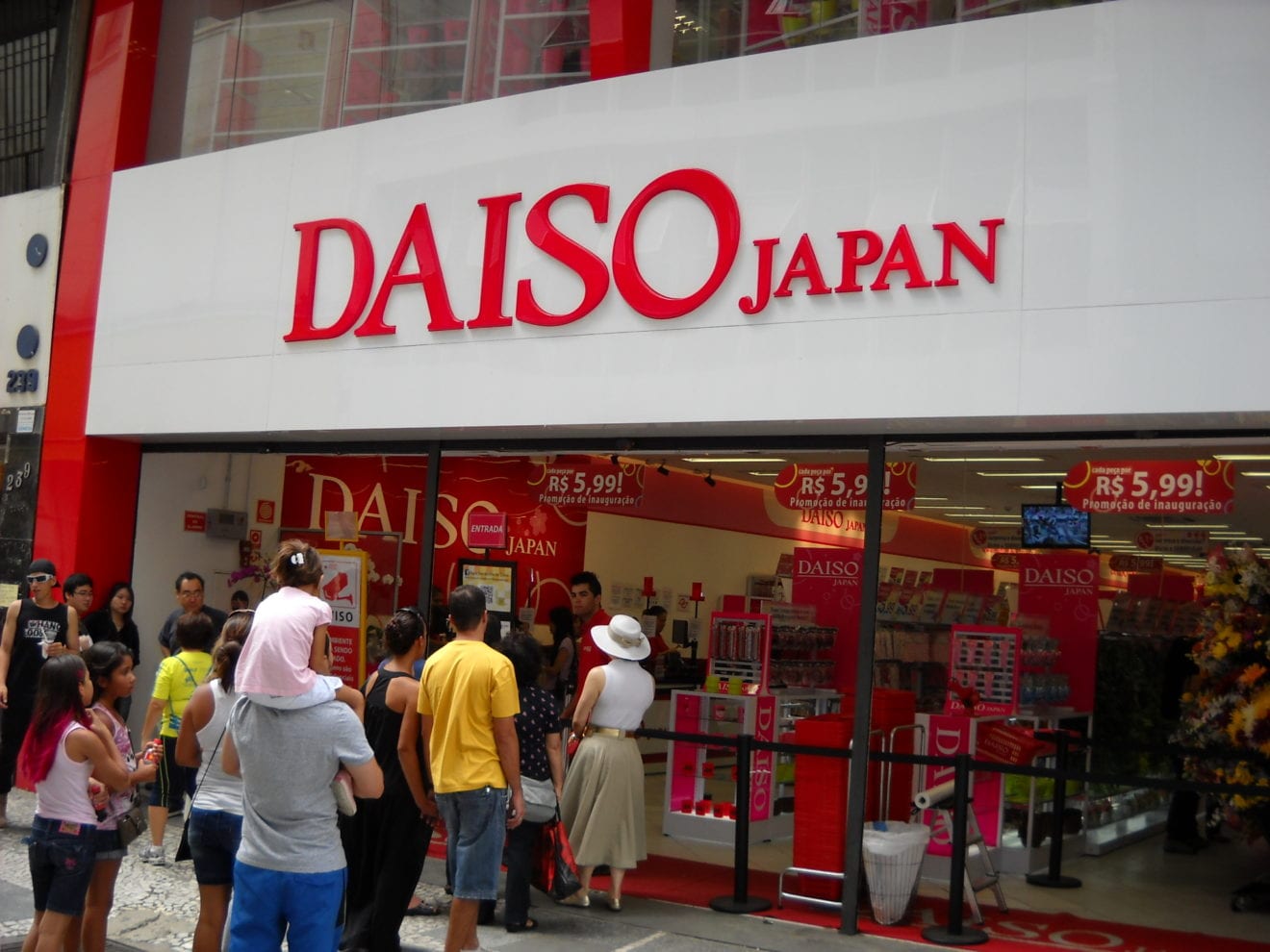
  • Daiso to set up regional distribution centre in Malaysia

    Daiso to set up regional distribution centre in Malaysia

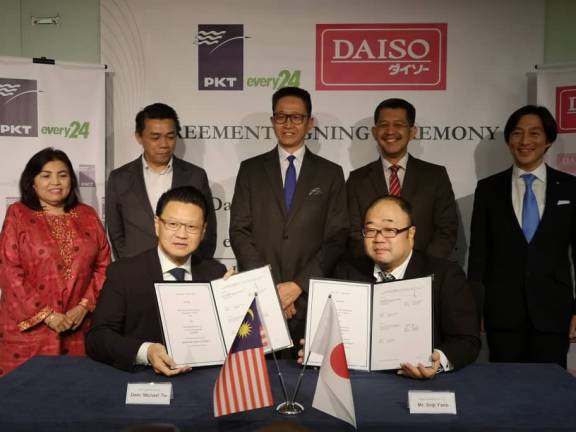
    PKT every24 Logistics Sdn Bhd (PKT) signed a service agreement with Daiso Industries Co Ltd (Daiso) to operate the latter’s regional distribution centre (RDC) located in Port Klang, commencing in the second quarter of this year. PKT is a joint venture company between PKT Logistics Group Sdn Bhd and Daisei every24 Co Ltd. Incorporated in February 2016, it was set up by both parties to explore joint business opportunities in Malaysia.

    PKT said in a statement, in order to serve Daiso in this RDC, it will be constructing a purpose-built warehouse at an estimated investment cost of RM250 million while creating 500 new jobs for the state of Selangor.

    PKT said it shall be providing Daiso haulage, freight forwarding and warehousing services for their transshipment and local cargo, reaching approximately several hundred containers per month.

    Meanwhile, Daiso president Seiji Yano said the group is confident that PKT will be a valuable logistics partner for the group to better serve its outlets and customers across the Middle East and Southeast Asia.

    “We are truly honored by Daiso’s confidence in Malaysia’s logistics capability but most importantly Daiso’s confidence in PKT to deliver quality logistics service to their outlets,” PKT chairman Datuk Wira Jalilah Baba said.

    Daiso is a specialty store retailer of private label products offering a vast lineup of up to 70,000 superior quality products.

    Headquartered in Hiroshima Japan, Daiso has more than 5,270 stores worldwide, served by 17 distribution centers located in Japan, China and Thailand.

  • Lazada to ramp up Southeast Asian grocery offering

    Lazada to ramp up Southeast Asian grocery offering

    Lazada Group has announced plans to ramp up its supermarket business in Southeast Asia as part of its strategy to become the region’s biggest e-commerce ecosystem. The supermarket transformation is being started off in Singapore, as homegrown online grocer RedMart is integrated into the Lazada platform on March 15 following its acquisition in 2016. Following the launch, shoppers will be able to buy groceries and fresh produce along with Lazada’s other product categories on the single platform, boosting the brand’s grocery and supermarket offering to more than 165,000 products.

    Elsewhere in the region, Lazada is looking to launch its grocery and supermarket business in at least one other city from the second half of 2019.

    The new moves are aimed at catering to the growing demand of supermarket shopping as consumers increasingly buy groceries online. The grocery market in Southeast Asia is expected to be worth US$309 billion by 2021, with shoppers filling their baskets online more than twice a month. In Singapore, seven in 10 people who buy their groceries online already do so on RedMart.

    “We want to drive the evolution of grocery shopping in the region by combining our unparalleled assortment of products and superior logistics network to transform the way customers get their daily essentials and fresh produce,” said Jing Yin, co-president of Lazada Group. “Most of us shop for groceries and other household items very frequently. This presents a unique opportunity for Lazada to be part of our daily lives.”

  • Vietnam per capita income matches Malaysia’s 20 years ago

    Vietnam per capita income matches Malaysia’s 20 years ago

    Vietnam’s recent economic achievements notwithstanding, much effort is needed for it to close the gap with other countries, a minister has said. Minister of Planning and Investment Nguyen Chi Dung said at a conference Wednesday that while Vietnam’s GDP per capita had surged by 27.4 times in the last 30 years to almost $2,590 last year, Malaysia had achieved this figure 20 years ago.

    Thailand had done so 15 years ago and Indonesia 10 years ago.

    The main limitations of its economy were low labor productivity, economic efficiency and competitiveness, and the country also faced the risk of being stuck in the middle-income trap.

    According to the 2018 Vietnam Annual Economic Report, average productivity per worker was VND60.73 million ($2,600) in 2017, lower than that of China, Japan, the Philippines, Thailand, and Cambodia.

    Currently the country also faced challenges like the U.S.-China trade war, the minister said.

    For these reasons, institutional reforms were necessary to achieve a more sustainable economy, he noted.

    Macroeconomic stability and high economic growth with innovation in science and technology were imperative.

    The private sector had to remain one of the pillars of the economy in future, Dung said. “If Vietnam doesn’t catch the 4.0 train, the gap between it with other countries will become wider. Vietnam needs to narrow that gap.”

    Vietnam’s GDP has grown at 6.8 percent a year on average for the last 20 years, and the economy has grown 39 fold in the period to $245 billion last year.

    Growth last year was 7.08 percent, the highest in a decade.