Tag: Malaysia

  • AirAsia targets 100 million passengers in 2019

    AirAsia targets 100 million passengers in 2019

    AirAsia Group is out to monetise its digital businesses and broaden the group’s digital footprint this year but has no plan to open more new airlines over the next three years. The airline wants to focus on growing its existing business especially in Indonesia and Philippines. “As 2019 approaches I would like to confirm that AirAsia will not be opening up any more new airlines for the next 3 years,’’ AirAsia Group chief executive officer Tan Sri Tony Fernandes (pic) said in his series of posts on Twitter yesterday.

    He added that “after Vietnam, we will focus on what we have. Focus this year is to make Indonesia and Philippines very profitable.’’

    There is where “all the major population and growing economies (are), coupled with two great countries (India and China) to enable us to cover the world,’’ he added.

    Fernandes added that he was confident the airline’s operations in India and Japan would be profitable in 2021.

    This year Fernandes is hoping that his airline group would be able to carry over 100 million passengers.

    When contacted he merely said it is “around there”.

    In the first nine months of 2018, the airline group carried 61.4 million passengers across its network. The target set for 2018 was 90 million passengers.

    “We are on track to achieve a group load factor target of 85%,’’ Fernandes had said earlier.

    With fuel prices falling, the airline also expects to maintain its cost this year and hopefully offers more low fares to travellers. It was reported that AirAsia group has hedged 48% for Brent at US$67.24 bbl for the first quarter (1Q19) and 27% for 2Q19 at US$65.40 bbl to manage volatility of fuel prices.

    Turning to the digital side of the business, Fernandes said in a tweet “this is the year people will begin to see our strength in digital’’.

    He would not go into details but earlier he has been talking about the BigPay app, which is a digital alternative to bank accounts and it comes with a card that allows users to use and spend it anywhere in the world.

    AirAsia Group has in mid-December completed the transfer of its non-digital businesses to Redbeat Ventures, its wholly owned subsidiary. The digital-related services include AirAsia BIG Loyalty, BigPay, travel360, ROKKI, Ourshop, RedCargo Logistics, RedBox Logistics, Vidi and RedTix.

    That is the first step towards monetising the digital business and allow AirAsia to broaden the digital footprint.

    In an announcement to Bursa Malaysia earlier, AirAsia deputy group CEO (digital, transformation and corporate services) Aireen Omar said that by placing the digital assets under Redbeat Ventures, they hope to more effectively expand and monetise the digital businesses and broaden AirAsia’s digital footprint.

    The vision for Redbeat Ventures was to connect with the start-up community globally through collaboration to foster entrepreneurship and stimulate market-driven innovation that would benefit not just AirAsia’s ecosystem but help lead the digital economy and lifestyle in Asean.

    Redbeat Ventures will work with tech start-ups and look out for investment opportunities in the high-tech and digital space to remain competitive and relevant in these rapidly changing commercial and technological environments.
     

  • Voon Seng Chuan is new AmBank Malaysia chairman

    Voon Seng Chuan is new AmBank Malaysia chairman

    AMMB Holdings Bhd has appointed Voon Seng Chuan (pic) as the new chairman of AmBank (M) Bhd with effect from Jan 1, 2019. “Voon, a Malaysian, aged 60, has been a member of the board of directors of AmBank since June 18, 2015. He is also a member of the board of directors of AMMB,” AMMB said in a stock exchange filing on its directorship/chairmanship transition plan.

    Voon replaces Tan Sri Azman Hashim, 79, who will be retiring from six entities in the AmBank group in stages over a two-year period announced last year.

  • Petronas buys 10% of Block 61 onshore Oman

    Petronas buys 10% of Block 61 onshore Oman

    Petroliam Nasional Bhd (Petronas), through its subsidiary, PC Oman Ventures Ltd (PCOVL) has acquired a 10% stake in Block 61, onshore Oman from Makarim Gas Development LLC (MGD), after the conditions for the completion of the transaction were fulfilled. MGD is a subsidiary of Oman Oil Company Exploration & Production LLC. Petronas said the completion of the transaction was formalised at an event held in Muscat, Oman on Dec 27.

    Following the deal, MGD’s stake in Block 61 will be reduced to 30%, while P Exploration (Epsilon) Ltd as the operator holds the remaining 60% stake.

    Petronas noted that the acquisition of Block 61 marks an important step in realising the group’s growth strategy in the upstream sector in the region and globally, as it aligns its activities to ensure sustainable energy supply.

  • Retailers, mall operators embrace high technology

    Retailers, mall operators embrace high technology

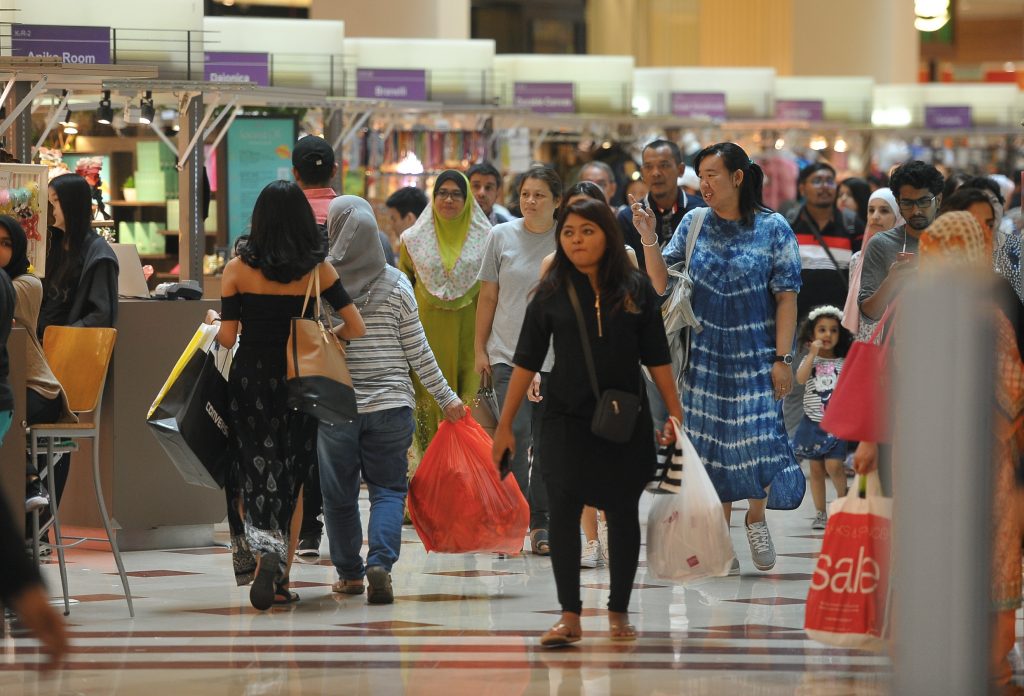
    Malaysian retailers and mall operators are jumping on the technology bandwagon, adopting technologies such as shopper tracking systems and facial recognition cameras, using data analytics to capture important shopper information. Sunway Velocity Mall general manager centre management Danny Lee said the mall completed the installation of its shopper tracking system in early December that identifies a unique ID of each mobile phone carried by shoppers, and is testing the system now.

    “It enables us to know how many times a person comes to the mall and where they go. At the same time it tells us the number of shoppers at the mall and is able to give us an accurate count of how many people visit the mall every week or month. This is phase one.

    “This will then later link into us getting data of who they are so that we can use that as an intelligence system to know our customers and to push promotion to them. For example, we’d be able to detect automatically if it’s your birthday today when you visit the mall, and if there’s a special promotion in certain outlets during your birthday, you’d get certain discounts. We’ll be working on that in phase two,” Lee said recently.

    “How the system works is that it will detect shoppers who carry smartphones. The shoppers’ travel history, traffic pattern will be recorded. Insights of shopper traffic flow in the mall, visit frequency (new traffic or returning traffic) and dwell time can be viewed on the online portal. There is also provision for integration with mobile application (to identify shopper profile to offer more personalised engagement), as well as additional reports based on user requirement.”

    Adding that it has a formula to include children and discount double counting, Lee said Sunway Pyramid had rolled out the shopper tracking system first, followed by Sunway Velocity.

    “It lets us know whether our campaign for a period of time is effective or not compared to other campaigns. In this mall (Sunway Velocity), we have 55-56 sensors throughout the mall. So it covers different zones and it can track where a person goes to, from one zone to another, and capture how many people are there. At what time, how many people are there in this atrium… we’re able to generate reports on that,” explained Lee.

    He revealed that the set-up costs for this system range from RM120,000 to RM150,000, with recurring costs of RM10,000 every month per mall.

    “Some malls have (this system) but not many have this in the Klang Valley, compared with malls in Singapore that have a lot more.”

    Meanwhile, MRCA Academy, the training arm of the Malaysia Retail Chain Association (MRCA), is promoting awareness on technology adoption, especially in the areas of facial recognition and data analytics, to help MRCA members be more efficient in running their retail businesses.

    MRCA Academy deputy chancellor Stan Singh-Jit, who is also National ICT Association of Malaysia councillor, said technology will be a catalyst that will help retailers grow their business and that it is a tool that retailers should take advantage of.

    Stan is the founder and principal consultant of Ironhorse Asia Sdn Bhd, which provides solutions for in-store point-of-sale requirement, head office merchandising needs, warehousing, supply chain management, web-store, internet business, social media consultation, maximising return on investment via customer analytics, harnessing on merchandising analytics, among others.

    He said while the recording of images is illegal due to the Personal Data Protection Act, there is another facial recognition technology that captures the identity of shoppers in a different way.

    “It tails the person… it tells you whether the shopper is a male or a female and gives you the person’s age group. If I have data today that tells me the people that come to my store, their age and gender groups, I’m able to do more of what I’m selling. This is an important factor that is missing in the retail scene.

    “Facial recognition can tell whether the person is a staff or supplier. If a customer walks past your store but doesn’t walk in, it can also tell you how many people didn’t come into your store. It’s a way to find out why people don’t come in. And if my store is here but you spend more time looking at the merchandise there, that tells me a story,” explained Stan.

    He said this method differs from a footfall counter machine, which counts every walk-in, walk-out and hence the latter may not produce accurate numbers.

    He disclosed that since this facial recognition technology is new, there are five proofs of concept for such technology in the Klang Valley at the moment, of which one is for a department store. He said that a camera may cost some RM130. A department store may have three to four floors and many cameras on each floor.

    “All good things about buying begins at the store and there are many touchpoints in the store. As a customer walks into the store, how do you capture those points… how do you prioritise the value…. we’re helping MRCA members to understand the technology and how they can use it,” he said.

  • Gas Malaysia ups natural gas tariff

    Gas Malaysia ups natural gas tariff

    Gas Malaysia Bhd has announced a higher average effective natural gas tariff for the non-power sector in Peninsular Malaysia at RM32.92 per MMBtu, which is 0.7% higher than the current RM32.69 per MMBtu. The revision will be effective from Jan 1, 2019 to June 30, 2019.

    The group told the stock exchange that the government has issued an instruction for the company to effect the natural gas tariff revision starting early next year.

    The average base tariff will be set at RM32.69 per MMBtu.

    Under the gas cost pass through (GCPT) mechanism, a surcharge of RM0.23 per MMBtu will apply to all tariff categories for the period beginning Jan 1 to June 30, 2019. This translates to an average effective tariff of RM32.92 per MMBtu.

    However, for Category A (Residential), the effective tariff rate fell 0.34% to RM23.72 from RM23.80 per MMBtu.

    Gas Malaysia said while the tariff revision has no material impact on its business operations, it is expected to contribute positively towards its financial position for the financial year ending Dec 31, 2019.

    To note, the government has prescribed the Incentive-Based Regulation (IBR) framework which sets the base tariff for a regulatory period of three years from January 2017 and allows changes in the gas costs to be passed through via the GCPT mechanism every six months.

    Gas Malaysia shares closed 0.74% or two sen lower at RM2.69 with 547,300 shares transacted.

  • Malaysia reviewing palm oil export duties

    Malaysia reviewing palm oil export duties

    Malaysia, the world’s second-largest palm oil producer, is reviewing the duty structure for its exports of the edible oil, according to its minister in charge of agriculture produced for export, to boost demand and reduce burgeoning stockpiles.

    “We are currently reviewing our present export duty structure to ensure a level playing field in the market,” said Primary Industries Minister Teresa Kok in an emailed response today to questions submitted earlier by Reuters.

    Palm oil producers in Southeast Asia have been grappling with slow exports as demand has waned on weaker currencies and higher import taxes. The demand slump has caused inventories in Malaysia to build to their highest in nearly 18 years while stockpiles in Indonesia, the world’s biggest palm producer, have also climbed.

    Palm oil prices fell to their lowest in three years earlier this month amid the demand slump, and were down 0.9% at RM2,108 a tonne today morning.

    Despite Malaysia cutting its export tax on crude palm oil to zero since September, industry participants say Indonesian palm is still more competitive as the country’s producers have sharply discounted their prices, causing Malaysia to actually increase imports from Indonesia. Production costs in Indonesia are also typically less than in Malaysia.

    Earlier this month, Indonesia also eased its rules on palm oil levies and derivative products to boost its exports.

    To counter the Indonesian import, Kok said the government is “currently encouraging our companies to use domestically produced palm oil to reduce the stockpile.”

    “By reducing imports, we could see a significant reduction in palm oil stocks in Malaysia and this would boost prices.”

    Prices next year are expected to be supported by demand from traditional markets as they replenish stocks, said Kok, adding that the implementation of a higher biodiesel mandate in 2019 will also help palm prices.

    Malaysia will raise the minimum bio-content in biodiesel to 10% for the transport sector and 7% for the industrial sector.

    Kok also said she expected production “in the region of 20 million tonnes” in 2019. The government last month forecast output of 20.5 million tonnes for 2019 and 19.8 million tonnes for this year.

  • AirAsia Malaysia sells Merah Aviation Asset for RM3.22b

    AirAsia Malaysia sells Merah Aviation Asset for RM3.22b

    AirAsia Group Bhd is disposing of its entire stake in Merah Aviation Asset Holding Ltd to AS Air Lease Holdings 5T DAC for US$768 million (RM3.22 billion). AS Air Lease is indirectly owned by Castlelake LP, a US-based global private investment firm and leader in aircraft ownership and servicing.

    AirAsia told Bura Malaysia that its indirect wholly-owned subsidiary Asia Aviation Capital Ltd (AACL) had entered into agreements to sell Merah Aviation, which will comprise 25 existing aircraft to be leased to AirAsia.

    Castlelake will also purchase from AACL a total of four new aircraft to be delivered in 2019 for a purchase consideration to be determined at a later date. The aircraft will be leased back to AirAsia and/or its affiliates.

    Merah Aviation is principally engaged in the owning, leasing and/or financing of aircraft.

    AirAsia said the transaction is subject to its shareholders’ approval and other relevant customary closing conditions, and is expected to be completed in the second quarter of 2019.

    Bulk of the proceeds will be used for the repayment of existing debt.

    AirAsia noted the proposed disposal is in line with the group’s strategy to focus on its core airline operations with an estimated net gain of about RM174.9 million.

    It will also allow the group to reduce its financial leverage as the gross gearing ratio is expected to fall from 0.53 times to 0.24 times.

    Castlelake specialises in providing creative, flexible capital solutions for its airline partners. Since its inception in 2005, Castlelake has invested in and managed more than 500 aircraft on behalf of its funds

    With the closing of this transaction, Castlelake’s current fleet will comprise more than 250 aircraft.

  • Malaysia’s economy likely to grow in Feb to April 2019

    Malaysia’s economy likely to grow in Feb to April 2019

    Malaysia’s economy is likely to grow in February to April 2019, according to the performance of Malaysian Economic Indicators: Leading, Coincident & Lagging Indexes for October 2018 that was released last monday. Chief statistician Malaysia Datuk Seri Dr Mohd Uzir Mahidin said the monthly change of Leading Index (LI) augmented in October 2018, registering a growth of 1.2% to attain 119.3 points from 117.9 points in the previous month, primarily due to the increase of real imports of other basic precious & other non-ferrous metals (0.4%).

    “The annual change of LI showed an improvement from negative 1.7% in September 2018 to negative 0.7% in October 2018. The composite of LI is designed to monitor the economic performance direction in an average of four to six months ahead,” he said in a statement.

    On the same note, he stated that the Coincident Index (CI), which reflects the current economic activity, rose 1.0% in October 2018. Two components that contributed significantly to the increase were volume index of retail trade (0.5%) and real contributions to EPF (0.2%). At the same time, the annual change of CI grew further to 3.9% in October 2018 as against 3.4% in the previous month.

  • Sunway Malaysia sells land, assets to Sunway REIT for RM550m

    Sunway Malaysia sells land, assets to Sunway REIT for RM550m

    Sunway Bhd is selling its land and assets to Sunway Real Estate Investment Trust (Sunway REIT) for RM550 million cash. Sunway said that its wholly owned subsidiary Sunway Destiny Sdn Bhd had on December 24 entered into a conditional sales and purchase agreement with RHB Trustees Bhd, being the trustee of Sunway REIT, for the proposed disposal.

    The exercise entails the disposal of three parcels of leasehold land in Sunway Town, Petaling Jaya, together with buildings comprising a five-storey academic block, a six-storey academic block, a 13-storey academic block as well as four blocks of five-storey walk up hostel apartment.

    Sunway said the proposed disposal will allow the group to unlock the value and realise its investment in the land and buildings, which will result in an improvement in the earnings per share of the Company by about 0.9 sen.

    Proceeds from the disposal will also lead to a net cash inflow of RM311.3 million for the group, with part of the proceeds will be utilised to repay existing bank borrowings, which is expected to reduce the group’s gearing and potentially save RM9.9 million of finance expense per annum.

  • Malaysia attracts RM139b investments in January to September

    Malaysia attracts RM139b investments in January to September

    Malaysia attracted a total of RM139.3 billion worth of investments in the manufacturing, services and primary sectors in the first nine months of 2018, up 18 per cent from RM118.1 billion approved in the same period last year. In a statement, Malaysian Investment Development Authority (Mida) said the total investments approved in January-September 2018 were from 3,243 projects, which are expected to generate 93,379 job opportunities for the country.

    “Approved foreign direct investments (FDI) increased by 109.7% to RM64.1 billion in January-September 2018 from RM30.5 billion in the same period last year, mainly driven by the manufacturing sector which recorded a strong increase of 249.4% in the period.

    “Approved FDI in the primary sector rose by 99.3% which indicated that investor confidence in Malaysia remains high despite the challenging global economic environment. Domestic investments led with RM75.2 billion, contributing 54% to the total approved investments in all three sectors,” it said.

    Mida said Malaysia continued to be a competitive location for manufacturing projects with a total of 468 projects worth RM59.1 billion approved in January-September 2018, compared with RM34.6 billion involving 463 projects in the corresponding period in 2017, representing an increase of 70.5% in capital investments.

    “Foreign investments approved in the manufacturing sector recorded a total of RM48.8 billion for January-September 2018, a rise of 249.4% from RM13.9 billion in the same period last year.

    “China accounted for RM15.6 billion or 32 per cent of total foreign investments, followed by Indonesia (18.4%), the Netherlands (17%), the US (6.3%), Korea (4.9%) and Japan (4.3%),” it added.

    For the services sector, Mida said approved investments amounted to RM69.9 billion compared with RM74.2 billion recorded in the corresponding period in 2017, consisting of 2,721 projects, which are expected to create 50,896 job opportunities.

    “Domestic investments made up the largest portion, recording RM60.4 billion or 86.4% of the total approved investments for the services sector during this period. The balance of RM9.5 billion were from foreign sources.

    “The services sub-sectors that showed increase in approved investments were healthcare, education, global establishments, real estate, and supporting services,” it added.

  • 7-Eleven Malaysia mulls float

    7-Eleven Malaysia mulls float

    The 7-Eleven Malaysia business may be floated. Malaysian businessman Tan Sri Vincent Tan is considering turning over his shareholding in convenience store operator 7-Eleven to his Berjaya Corp Bhd group. Maintaining that the share price of 7-Eleven is undervalued on Bursa Malaysia, Tan claims that the business, currently valued at RM1.43 billion (US$342 million) should be worth more than US$1 billion.

    The chain has 2250 locations within the territory, and according to Tan aims to open at least another 200 stores next year.

    “We are considering maybe sell all my 46 per cent shareholdings in 7-Eleven to BCorp, then let BCorp launch a General Offer (GO), but nothing is firmed yet,” he said.

    The businessman owns 48.33 per cent of Berjaya Corp, which is valued at around RM1.35 billion (US$323 million).

  • CGS-CIMB sees strong vehicle sales in December, raises 2018 TIV growth forecast

    CGS-CIMB sees strong vehicle sales in December, raises 2018 TIV growth forecast

    CGS-CIMB expects vehicle sales to be stronger in December and has raised its 2018 total industry volume (TIV) growth forecast from 2.5% to 4% on the back of stronger-than-expected TIV year-to-date. “We expect stronger sales in December in view of year-end promotions and multiple new models that were recently launched. For example, Proton launched its first SUV, the X70 on Dec 12 and we learned that it has started delivery to showrooms. Proton has so far received encouraging bookings of over 12,000 units since the end of November,” it said in its sector note today.

    On Wednesday, the Malaysian Automotive Association (MAA) announced that TIV grew 2.1% month-on-month to 48,282 units in November due to higher passenger vehicles (PV) sold. Perodua and Mazda recorded 8% and 14% month-on-month growth respectively.

    For the 11 months ended November, TIV rose 5.5% year-on-year to 550,526 units due to stronger PV and commercial vehicles (CV) demand on the back of the tax holiday period. PV and CV recorded healthy 5% and 8% year-on-year sales growth respectively during the period.

    For 2019, it expects resilient sales in PV on the back of new model launches in the passenger car and SUV segments from Perodua, Proton, Honda and Toyota but overall, TIV delivery is expected to be flat next year.

    “We project a 10% sector net profit growth in 2019, driven by positive earnings growth from all companies, led by Sime Darby. However, we see downside risk to earnings from the depreciation in ringgit versus US dollar and Japanese yen, as this will increase the distributors’ costs of imported complete knocked-down kits and complete built units,” it said.

    Bermaz Auto Bhd (BAuto) is CGS-CIMB’s top pick, in view of the company’s undemanding valuation, attractive yield and proxy to export sales growth. It has an “add” rating on the stock with a target price of RM2.65.

    “We expect BAuto to deliver robust sales volume in FY19-20, driven by the popular Mazda CX-5 and upcoming new model launches of Mazda 3 and CX-8,” it added.

  • Aeon Credit posts better earnings in third quarter

    Aeon Credit posts better earnings in third quarter

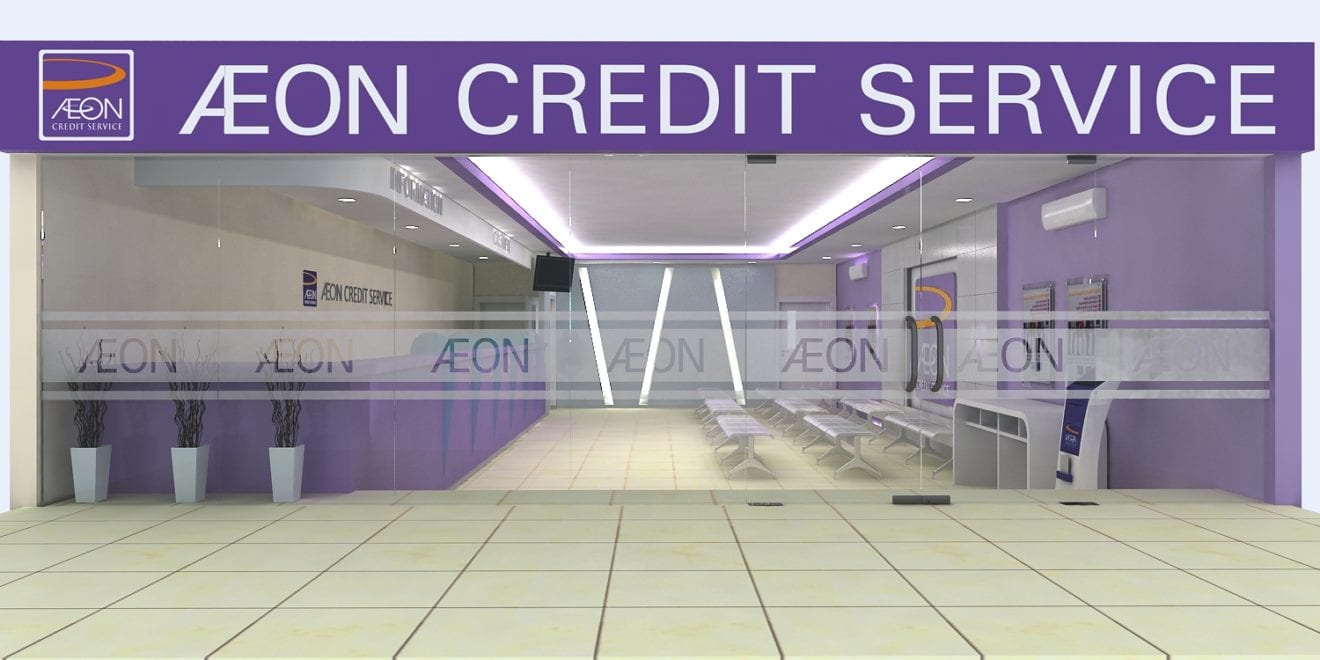
    Aeon Credit Service (M) Bhd’s net profit for the third quarter ended Nov 30, increased 23.5% to RM87.14 million from RM70.55 million a year ago, attributed to lower impairment loss on financing receivables. Revenue for the period increased 11.6% to RM348.5 million from RM312.35 million.

    For the nine-month period, the group reported a 22.62% rise in net profit to RM267.01 million from RM217.75 million. Revenue was up by 8.7% to RM1.01 billion from RM925.95 million.

    Aeon Credit told Bursa Malaysia that its gross financing receivables as at Nov 30 was RM8.31 billion, representing an increase of 15.41% from RM7.2 billion a year ago. Meanwhile, net financing receivables after impairment was RM7.74 billion compared with RM7.03 billion a year ago.

    Its non-performing loan ratio stood at 2.05% as at Nov 30, 2018 versus 2.48% as at Nov 30, 2017.

    Total transaction and financing volume in the current quarter and nine months ended Nov 30 increased by 49.5% to RM1.5 billion and by 26.4% to RM3.9 billion respectively.

  • 7-Eleven Malaysia eyes 200 new stores next year

    7-Eleven Malaysia eyes 200 new stores next year

    7-Eleven Malaysia Holdings Bhd is looking to expand the number of the convenience store chain outlets by at least 200 new stores next year. In 2017, 7-Eleven Malaysia opened 126 new stores. Berjaya Corp founder and executive chairman Tan Sri Vincent Tan Chee Yioun said 7-Eleven Malaysia is also looking at increasing the number of franchisees for stores in Malaysia, along with the expansion in the number of outlets.

    7-Eleven Malaysia is the largest standalone convenience store chain nationwide with more than 2,250 outlets across the country.

    Its wholly owned subsidiary 7-Eleven Malaysia Sdn Bhd today entered into a memorandum of agreement with Pertubuhan Tindakan Pejuang Wanita Dalam Sosial, Ekonomi, Rumahtangga Dan Ilmu (Tiangseri Malaysia) to provide an opportunity to those interested to be franchisees to enter the ecosystem.

    Tiangseri is commissioned to recruit and recommend up to 50 potential franchisees to 7-Eleven Malaysia in the next 12 months.

    This programme also bodes well with the company’s target of increasing the number of franchisees. The first store under the programme is expected to be opened next month.

    7-Eleven Malaysia CEO Colin Harvey said the franchising programme through Tiangseri will see both partners leveraging on each other’s unique strengths and experience in retail and grassroots franchise recruitment.

    “We are fully focused on this collaboration as we believe franchising is an integral part of our long-term corporate strategy of giving back to the local community that we operate in, as it will both provide and create important life and management skills in future entrepreneurs as well as providing more job opportunities to our local workforce.”

    Harvey noted there are many potential locations for expansion, for instance in Sabah and around the Klang Valley. Meanwhile, Tiangseri president Mastura said the collaboration has already started generating interest from interested parties.

    Tiangseri will also be aiding potential franchisees in securing funding at a preferential rate from agencies such as Perbadanan Usahawan Nasional Bhd and Majlis Amanah Rakyat, among others.

  • LOL launches digitally customisable fashion platform Cozmic Lab

    LOL launches digitally customisable fashion platform Cozmic Lab

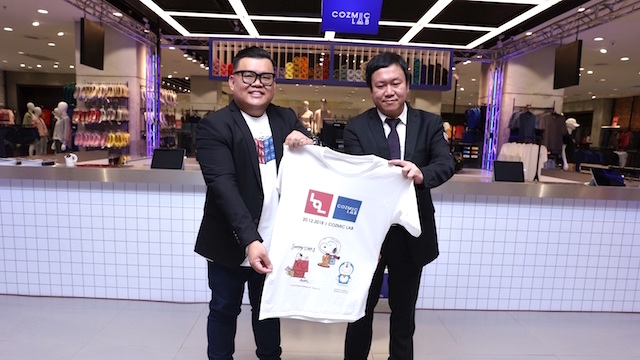
    Malaysian apparel brand LOL has launched an innovation platform called Cozmic Lab. The concept is a collaboration between LOL and Brother, an international printing and imaging technology brand. “Moving beyond the ready-to-wear apparels, Cozmic Lab offers customers an exciting, cost-efficient and environmentally friendly avenue to co-create or customise their own apparel,” said Joey Chong Yan Kit, CEO of Super Gem Resources, the parent of LOL.

    Using digital technology, customers are able to select the apparel’s design, quality, quantity, types and location to collect the final product. And budding entrepreneurs are invited to create their own fashion products using Cozmic Lab.

    “We are bringing a unique blend of fashion and technology to LOL fans,” said Chong.

    “Blending fashion and technology is a global trend and being a fashion-forward brand, LOL believes that Cosmic Lab is a powerful way for us to connect to our customers and engage them through a distinct, innovative and customisable way to shop and experience our brand.

    “Cozmic Lab is also revolutionising the way fashion retail brands do business; we are inviting other entrepreneurs to use the platform to create their very own range of products,” Chong added.

    Exclusive collaborations

    Cozmic Lab has a series of designer and international brand collaborations to enable customers to create apparel unlike anything currently available at LOL. Iconic characters and brands like Doraemon, Peanuts, Sega’s Sonic and Nasa will be among more than 200 visuals customers can choose from – and people can also upload their own creation.

    The Brother digital garment printer takes just one minute to print one item of apparel. Selected footwear and accessories can be custom printed as well.

    Cozmic Lab is available now at the LOL store in IOI City Mall in Putrajaya, and will be opening at LOL stores in Sunway Pyramid, Sunway Velocity, Berjaya Times Square and Paradigm Mall Johor Bahru, this month.

    Fast-growing LOL was founded in November 2015 as a joint venture between Superb Apparel Supply and Parkson Retail Asia. In June this year, the founders acquired Parkson’s 70 per cent stake in the company.

    Currently, LOL has more than 200 employees and 15 stores across Malaysia, including 10 in the Klang Valley, two in Johor Bahru, two in Sarawak and one in Melaka. It plans to open five more next year, most in the Klang Valley.