Tag: Malaysia

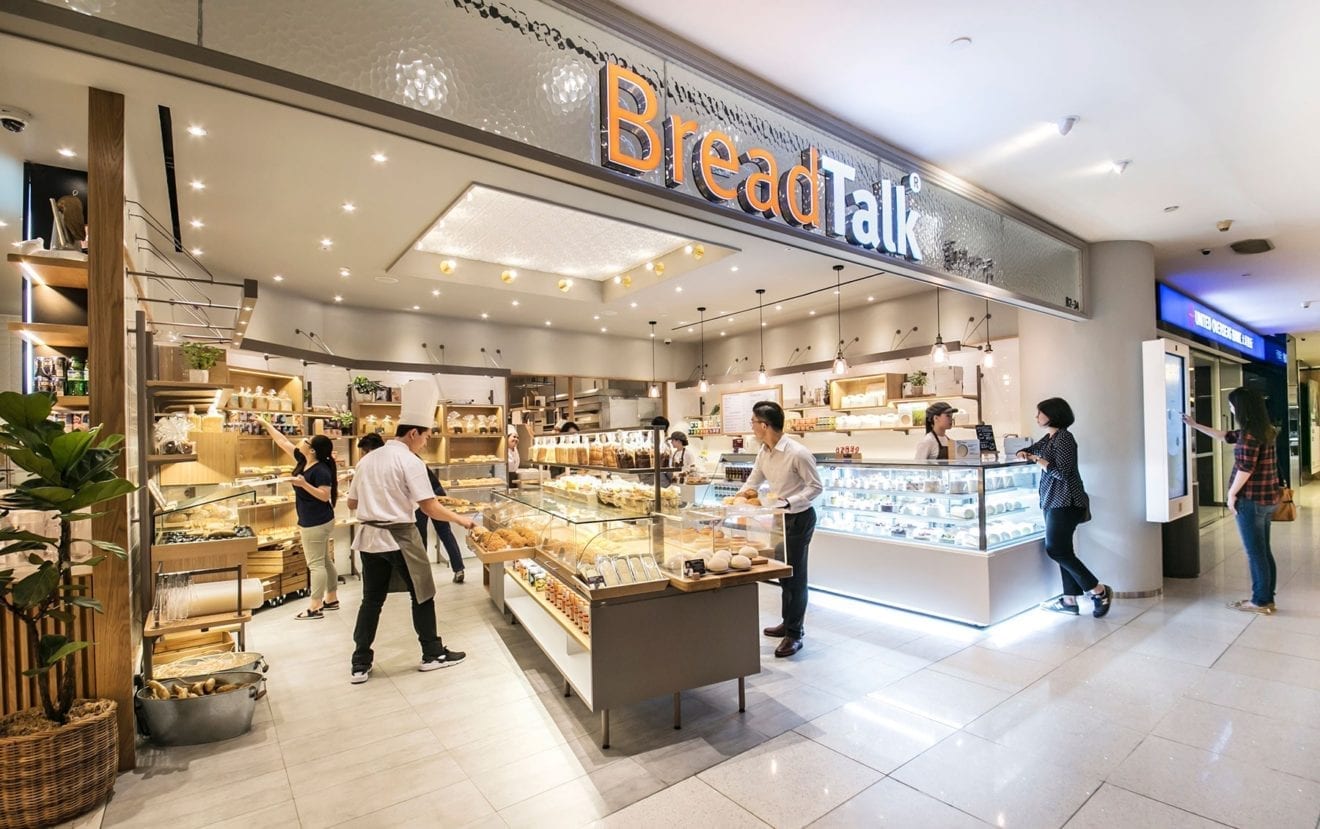
  • BreadTalk Opens New Concept Store In KL

    BreadTalk Opens New Concept Store In KL

    Boutique bakery franchise BreadTalk Malaysia has opened a new concept store in Kuala Lumpur’s Avenue K Shopping Mall. The new outlet is situated opposite the KLCC LRT station and is offering a promotional tote bag to early customers spending more than RM20. It opens from 8 am to 10 pm daily.

    BreadTalk Malaysia is preparing to launch several more concept stores in other Kuala Lumpur locations, including KLIA2, before opening a flagship at Star Boulevard on Jalan Yap Kwan Seng next year.

    The Singaporean brand has spread throughout Asia and the Middle East since opening in 2000, basing its products on premium ingredients such as Japanese-milled flour and New Zealand butter.

  • Malaysia Aviation appoints Philip See as Firefly CEO, as Ong out

    Malaysia Aviation appoints Philip See as Firefly CEO, as Ong out

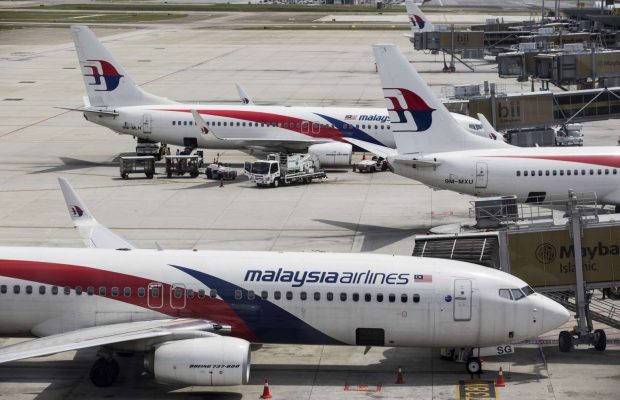
    Malaysia Aviation Group (MAG) has appointed Philip See as the new CEO of Firefly, effective Jan 1, 2019. Philip will replace Ignatius Ong who joined Malaysia Airlines as group chief revenue officer in June 2018. Ignatius has been double-hatting as CEO of Firefly and group chief revenue officer.

    Philip, whose appointment was announced internally earlier, is currently the Head of Strategy and Network for Malaysia Airlines, reporting directly to the group CEO. He joined the airline in 2015 from consulting firm McKinsey & Company, where he was an associate.

    He is however, no stranger to the group having previously served in the Turnaround Management Office (TMO) in Malaysia Airlines, back in 2004. Under the TMO he was responsible for implementing the Business Turnaround Plan and consequently the Business Transformation Plan. Philip left the airline in 2010 and rejoined Malaysia Airlines in 2015 as a Network Planner.

    In his role as group chief revenue officer, Ignatius oversees Sales and Revenue Management for the entire group. Ignatius has almost 15 years of professional experience in the aviation industry and is no stranger to revenue management having previously covered route and revenue under the then Turnaround Management Office. He has also headed the whole portfolio of Sales, Distribution and Marketing under the Project Management Department of Malaysia Airlines.

    Other changes in the management also include Ibrahim Mohamed Salleh as CEO of MABKargo effective Sept 1, 2018 and Hazman Hilmi Sallahuddin as CEO of Project Amal effective Oct 1, 2018.

    Ibrahim has over 20 years of experience in various fields within Cargo Handling with the company. Prior to his appointment as CEO MABKargo, he was COO of PT Jasa Angkasa Semesta (a subsidiary of SATS Limited, Singapore).

    Hazman was with Khazanah Nasional Bhd where he served in various roles across the organisation. This included Senior Vice President of Khazanah Europe Investment Limited based in London.

    Malaysia Aviation Group CEO Izham Ismail said, ”I am confident that the new leadership will bring new energy and purpose to the business. The diversity of our new leaders, their backgrounds and experience will help us reach our goals as a group.”

  • Malaysia’s Central Bank confident of 4.8% GDP growth in 2018

    Malaysia’s Central Bank confident of 4.8% GDP growth in 2018

    Economists have mixed views on Malaysia’s full-year gross domestic product (GDP) growth despite the central bank’s confidence the economy will expand 4.8% this year. Sunway University Business School’s Professor of Economics Dr Yeah Kim Leng expects GDP growth for 2018 to come in at 4.7% to 4.8% while growth in 2019 could be better than this year if there is sustained global demand.

    “For 2019, GDP (growth) would be closer to 5%. It may exceed that if the global economy holds up, in terms of lessening trade tension and strengthening of China’s economy,” he said.

    However, Inter-Pacific Securities Sdn Bhd head of research Pong Teng Siew said this year’s GDP growth is unlikely to hit 4.8%, as the quarterly expansions have been on the decline.

    “We had 5.4%, 4.5% and 4.4% for the first three quarters (respectively) this year. It would require substantially stronger growth than what we saw in Q3 to hit 4.8% full-year growth,” he said.

    The Malaysian economy grew by 4.4% in the third quarter, Bank Negara Malaysia (BNM) announced on Friday.

    Pong said the final quarter of the year does not have the tail wind that would boost consumption and expects full-year growth to come in at 4.5% to 4.6%.

    “For 2019, it is quite a challenge to forecast due to global growth slowing. We face headwinds from global growth as we are an export dependent economy. Net exports from goods and services are fluctuating,” he added.

    Pong expects GDP growth in 2019 to be similar to 2018’s, due to the unpredictability of global trade.

    Commenting on the economic performance in Q3, Yeah said it was softer than expected, which weighed down on growth momentum.

    “In the third quarter, services (sector) was good, largely due to private consumption. Growth was largely driven by the services and manufacturing sectors. As long as we can sustain the current growth momentum, a lower oil price will not affect GDP growth,” he said.

    On the supply shocks that affected growth in the first nine months, Yeah said the situation is likely to improve as the unscheduled maintenance shutdowns are over, with less disruption and gradual rebound projected.

    Pong, who expected Q3 GDP growth of 4%, said the 4.4% achieved was better than projected in view of the high base of 6.2% a year ago.

    “In Q3, the challenge was the high base in Q3 last year, when we achieved GDP growth of 6.2%. It is difficult to achieve strong year-on-year growth. Many expected Q3 to be strong due to consumption spending following the removal of Goods and Services Tax (GST).

    Retail numbers were stronger than what I expected. Consumption was stronger, therefore services was stronger,” he said.

    He noted that private consumption was stronger at 9% in Q3 (8% in Q2), which is a rare occurrence, while public consumption was also stronger at 5.2% (3.1% in Q2).

    Both Yeah and Pong cautioned that the softening in the plantation sector, especially palm oil prices, could affect smallholders’ income, which would in turn affect consumer spending.

    “If commodity prices fall, it will hit GDP. If CPO (crude palm oil) continues to be weak, it will have a negative impact on consumption. In particular, CPO and rubber. As it is now, commodity prices are weak and are still falling,” said Pong.

    However, Yeah said the impact on consumer spending would not be that large in view of the government’s spending and policies that remain supportive of consumption.

    At a media briefing last Friday, BNM governor Datuk Nor Shamsiah Mohd Yunus said private consumption expanded strongly during the quarter following the zerorisation of GST.

    “On the supply side, the services and manufacturing sectors supported growth, while the mining sector continued to be affected by production shocks.”

    She said growth could have been 0.5 to 0.7 percentage point higher in the absence of commodity shocks, as 17% of the economy (agriculture, mining and quarrying) contracted by 1.3%.

    Nonetheless, Nor Shamsiah believes the economy is on track to register a growth of 4.8% for 2018, supported by private sector activity with gradual recovery in commodity production lending support to growth.
  • Malaysia’s October vehicle sales up 0.5% to 47,273 units in Oct

    Malaysia’s October vehicle sales up 0.5% to 47,273 units in Oct

    Vehicle sales in October 2018 were up marginally 0.5% to 47,273 units from 47,041 units in the same month a year ago, according to the Malaysian Automotive Association (MAA). However, MAA said the sales volume in October 2018 was 51% higher than September 2018, due to availability of stocks replacing the depleted post-zero Goods and Services Tax (GST) period.

    In addition, it said year-to-date, the total industry volume (TIV) was 6% higher than the similar corresponding period in 2017.

    The sales volume for November 2018 is expected to be slightly better than October 2018 on the back of new model launches and aggressive year-end promotional campaigns, it added.

  • Sabah to produce more sustainable palm oil

    Sabah to produce more sustainable palm oil

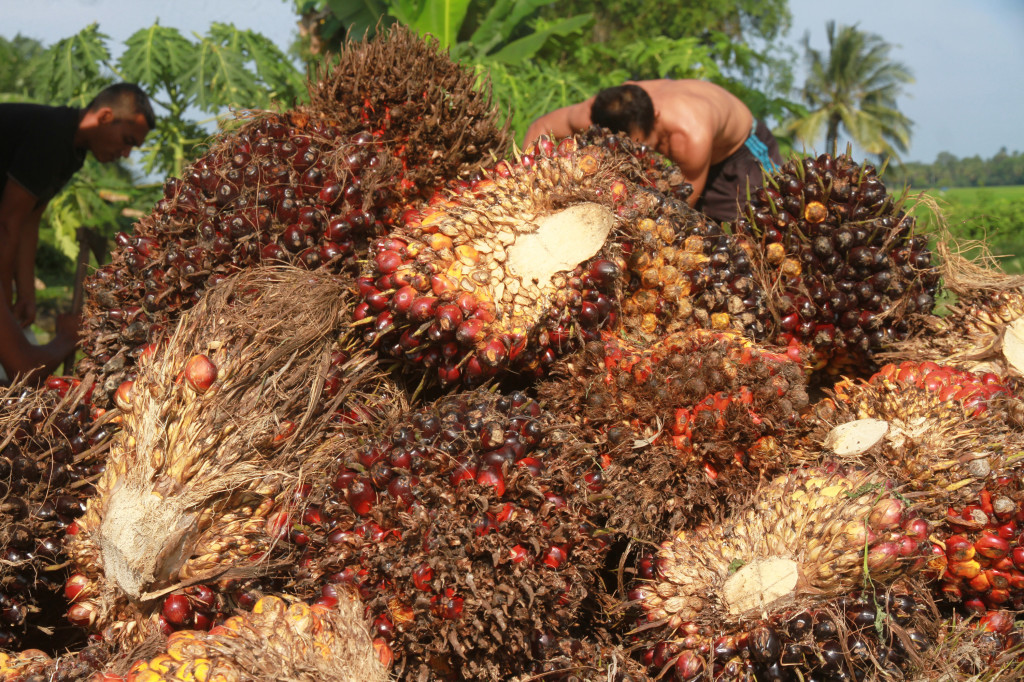
    Deputy Chief Minister of Sabah Datuk Seri Wilfred Madius Tangau said during his closing address at the 16th Annual Roundtable of Sustainable Palm Oil Conference today, the state is committed to having more palm oil produce to achieve both the Roundtable of the Sustainable Palm Oil (RSPO) and the local Malaysian Sustainable Palm Oil (MSPO), concurrently.

    In 2017, Sabah produced more than 5.2 million metric tons (MT) of crude palm oil (CPO) accounting for more than 30% of total Malaysian palm oil produced.

    Between January and October this year, Sabah produced some 1.55 million MT of CPO of which 28% were certified.

    About 400,000ha of plantations are RSPO certified, of which 3,960ha belonged to smallholders. Sabah has some 623 small players.

    “Therefore Sabah can play an important role in the sustainable palm oil industry. Sabah is one of the largest producer of RSPO certified palm oil,” said Tangau.

    On assisting smallholders in the state, he said while incentives such as grants for planting comes from the federal government, land titles fall under the state government’s purview.

    On the government’s move to make MSPO certification mandatory by end of 2019, Tangau welcomed the move.

    “We will assist in whatever (way) we can. I’m happy the federal government is spending money to do that, but whether we achieve that target, is another story,” he added.

    Sabah saw an economic growth of 8% last year and palm oil has played a part in it. Tangau said one of the biggest challenge in this country is the high dependence on foreign labour as it is difficult to get locals to work in plantations.

    The state government is also looking towards stepping up downstream activities instead of just being active exporters of CPO.

    On another note, RSPO co-chairman Datuk Carl Bek-Nielsen said the challenge lies on bridging the gap between supply and demand of sustainable palm oil as the uptake for certified palm oil globally stood only at 65%.

    “This is as disappointing as wet gunpowder and it sends a discouraging, hypocritical message of “do as I say but not as I do. And I will be clear, the growers expect action and whilst the grower fraternity has just shown a willingness to change, to innovate, to now halt deforestation, to now stop any new plantings on peat soils, they also expect that the NGOs, CGM, retailers alike, including the Secretariat of RSPO now direct just as much attention and energy towards improving uptake and not just pursuing higher standards for the growers,” he said in his closing remark.

  • Tomei Malaysia sells skincare, cosmetics distribution business

    Tomei Malaysia sells skincare, cosmetics distribution business

    Tomei Consolidated Bhd’s wholly owned subsidiary Flawless Skin Care Sdn Bhd (FSC) today sold its business of distributing the skincare and cosmetic products of “The history of Whoo” and “belif” as a going concern for RM8.97 million.

    FSC, whose principal activity is retailing of skin care and cosmetic products, this week entered into an asset purchase agreement with LG Household & Health Care Malaysia Sdn Bhd for the exercise.

    LG is a company incorporated in Malaysia with its principal activities in the area of skin care and cosmetic products.

    FSC agrees to sell and LG, relying on the several representations, warranties and undertakings contained in the agreement, agreed to purchase free from all encumbrances the whole of the business as a going concern.

    “The disposal would enable Tomei to utilise its resources and focus on the core businesses of the group in the gold and jewellery business,” it said.

  • Courts Asia shows negative number after Malaysian woes

    Courts Asia shows negative number after Malaysian woes

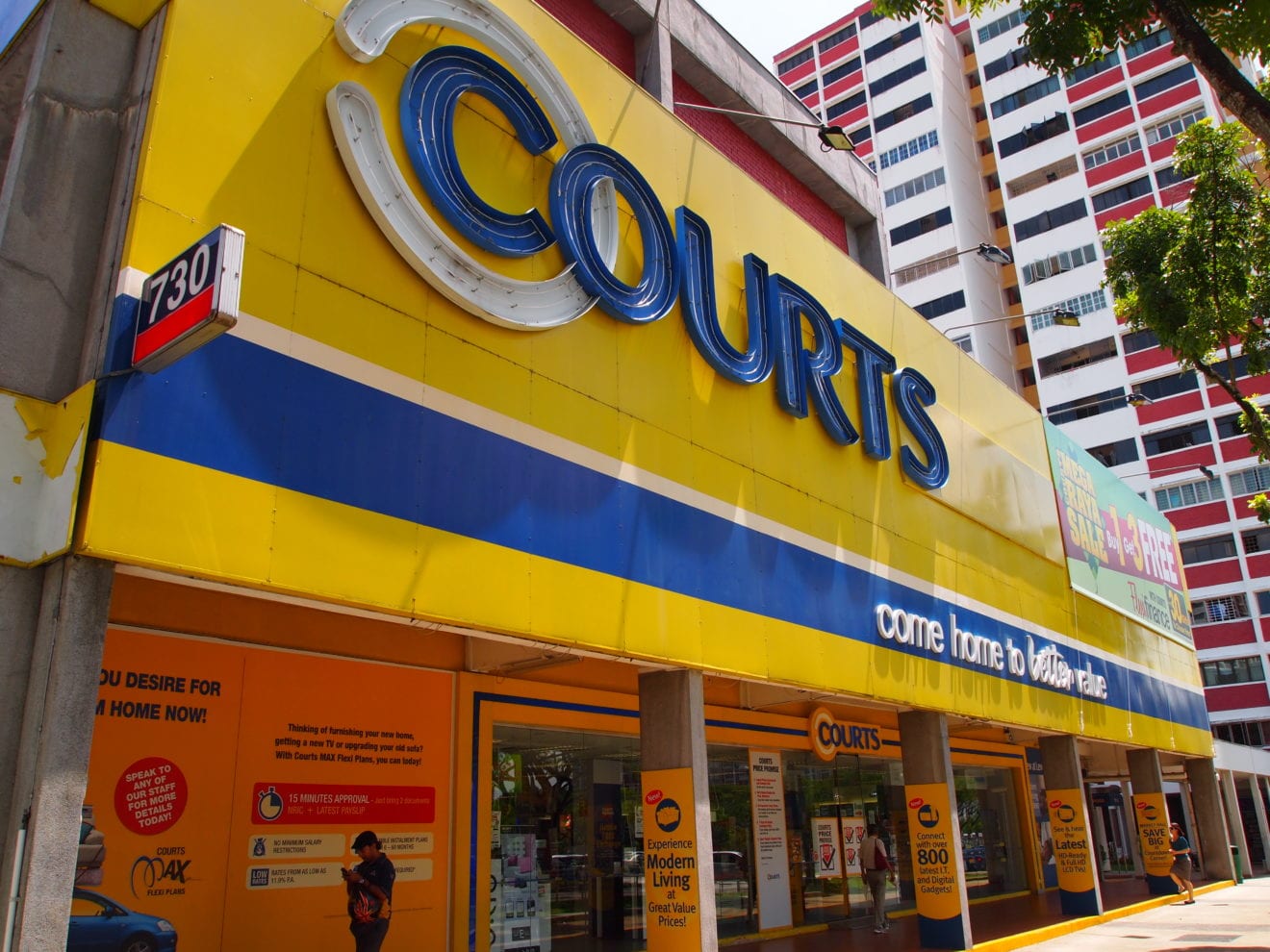
    Singaporean electronics and furniture retailer Courts Asia has posted a net loss of SG$3.1 million (US$2.25 million) in its second quarter.

    The result is a reversal of a net profit of $1.5 million (US$1.09 million) during the same period last year.

    Courts Asia said in a statement that Malaysia revenue came under pressure after the introduction of the Consumer Protection (Credit Sale) Regulations 2017 which saw consumer interest rates capped at 15 per cent per annum from January. However, ongoing transformation work with a persistent focus on cost and productivity efficiencies in Malaysia reaped results, with Malaysia’s PBT crossing into positive terrain after two consecutive quarters of loss.”

    Group CEO Terence Donald O’Connor said: “We are encouraged by the early signs of stabilisation in the Malaysia business. We have closed 10 underperforming stores since the start of our financial year in April and continue to review our store network performance. Impairment loss on trade receivables charged to the profit and loss statement has also been on a declining trend from the fourth quarter ended March.”

    The Singapore firm recorded $3.4 million profit before tax after starting out on its store transformation process, up from $3 million last year. It renovated its Ang Mo Kio outlet last month.

  • Maybank Asset Management sees AUM expanding US$50m in next 2 years

    Maybank Asset Management sees AUM expanding US$50m in next 2 years

    Maybank Asset Management Group (MAMG) expects its assets under management (AUM) to increase between US$30 million (RM126 million) to US$50 million (RM209 million) in the next two years, following its collaboration with Schroder Investment Management (Singapore) Ltd to co-develop investment solutions for sophisticated investors.

    As of end September 2018, MAMG’s AUM stood at RM33.7 billion.

    MAMG and Schroders Singapore announced their first long-term strategic partnership with the launch of two discretionary portfolios, namely Global High Dividend Equity Portfolio and Global High Conviction Portfolio.

    These solutions will be managed by Maybank Asset Management (MAM) Malaysia, a unit of MAMG, with Schroders Singapore as the investment adviser.

    “This is a very targeted high net worth segment so we are leveraging on Maybank private banking customers,” MAMG CEO Badrul Hisyam said.

    “The (market) sentiment right now is quite weak generally, unless the sentiment improves, then we would see better response to this kind of product,” Badrul added, revealing that at least three more products would be available under this collaboration in financial year 2019.

    “By integrating our strength in local wealth management with their global investment capabilities, the resulting synergy will allow us to deepen our foothold in the Malaysian wealth market, through dedicated offerings designed to achieve investors’ desired outcomes.

    “We recognise the growing demand for sophisticated, outcome-oriented global investment solutions, particularly among the high net worth community. We are therefore committed to delivering a range of global investment strategies to cater to their evolving financial needs,” he noted.

    Meanwhile, Schroders Singapore country head Susan Soh said as part of the continuing partnership, both companies would undertake further collaboration projects to co-develop solutions across other asset classes, including Shariah-compliant investment and private assets.

    “We believe our ability to combine the key tenets of asset management and wealth management offers differentiated value proposition to MAM Malaysia’s clients,“ Soh said.

    According to Badrul, the Shariah-compliant investment is expected to be available to the market by third quarter of 2019.

  • Coach enters KL’s SkyAvenue Genting

    Coach enters KL’s SkyAvenue Genting

    U.S. luggage, leather goods and accessories maker Coach has unveiled a new Malaysian boutique at Kuala Lumpur’s SkyAvenue, Genting Highlands. Located inside the Malaysia capital’s innovative shopping precinct on Level 2, Coach’s SkyAvenue store spans approximately 2,002 square-feet and stocks the New York brand’s ready-to-wear collections for both women and men, as well as its iconic hand bags, small leather goods, footwear, accessories and jewellery.

    Coach Creative Director Stuart Vevers in partnership with William Sofield, designer and president of Studio Sofield, were the talent behind the store layout.

    Embellished in modern luxury, as seen in the leather and natural wood finishes that reflect the sophisticated yet playfulness of Coach, the Kuala Lumpur store boasts custom-made cabinets – made from natural and ebonised ash.

    Other texture and material plays come via the use of blackened steel, vintage bronze and wood trimmings.

    Customers will also appreciate the pinewood floor, made of custom wool carpeting, and the tasteful mid-century furniture.

    The new Kuala Lumpur store even has a ‘Craftsmanship Bar’, offering personalised monogramming in addition to leather care and cleaning.

    With more than 100 retail options, SkyAvenue is one of Kuala Lumpur’s most unique shopping experiences.

    The mall is located 6,000 feet above sea level, and is home to a huge range of retail and F&B establishments spanning across five floors. The opening comes at a time when Coach is focusing on Asia, namely China.

    Last week, the New York brand revealed it will stage its next Pre-Fall 2019 runway show in Shanghai, in celebration of the brand’s 15th anniversary.

    Titled “Coach Lights Up Shanghai,” the collection of ready-to-wear, sneakers and accessories is scheduled to show December 8, and will be the first show of its kind that Coach has done outside of New York.

    Global sales at Coach, which makes up over 70% parent company Tapestry’s sales, rose 4% in the three months ended September 29.

    For the quarter period, Tapestry net sales rose to $1.38 billion. Net income was $122.3 million, compared with a loss of $17.7 million a year earlier.

  • Furla opens largest Malaysian store

    Furla opens largest Malaysian store

    Italian luxury label Furla has launched its largest store in Malaysia. The new 1290sqft boutique in Kuala Lumpur’s Suria KLCC has been lavishly decked out in rosewood and Italian travertine marble alongside opalescent glass and champagne gold finishing on product displays. Several local celebrities were spotted in attendance at the store’s launch.

    The brand’s new range is now featured in store, including the Furla Cometa quilted camera bag and the Cometa tote. Furla is also offering its Cruise 2019 fur-free collection.

  • Vietnam ratifies Asia-Pacific trade pact

    Vietnam ratifies Asia-Pacific trade pact

    Vietnam became the seventh country to ratify the Comprehensive and Progressive Agreement for Trans-Pacific Partnership (CPTPP) Monday afternoon. With its ratification, the National Assembly (NA) has assigned the task of reviewing related bills and legal enactments to the Government, the Supreme People’s Court, the Supreme People’s Procuracy and other relevant bodies.

    Once reviewed, the government agencies shall request that competent authorities amend, supplement or enact new laws in a timely manner to ensure uniformity and adherence to the roadmap for implementing commitments contained in the CPTPP.

    The Prime Minister will be responsible for approving and directing the relevant central or local agencies in implementing the CPTPP pact.

    The CPTPP is a major trade pact between Vietnam and 10 other countries that seeks to boost trade by reducing tariffs.

    Speaking at a recent NA session, Deputy Prime Minister Pham Binh Minh said that the CPTPP “will benefit Vietnam overall.”

    Because the trade pact will cover 13.5 percent of global GDP, Vietnam’s GDP will be able to grow by 1.32 percent, and its exports 4.04 percent by 2035, he added, citing a report by the Ministry of Planning and Investment.

    However, the Deputy PM also enumerated challenges that Vietnam would face when joining the CPTPP.

    Domestic products such as pork and chicken might face strong competition from imported products. Other products that can have trouble competing include paper, steel and cars, Minh said.

    The other six countries to ratify the pact are Australia, New Zealand, Canada, Japan, Mexico and Singapore.

    The four countries still to ratify it are Brunei, Chile, Malaysia and Peru.

    Originally a 12-member agreement known as the Trans-Pacific Partnership (TPP), the pact was thrown into limbo when U.S. President Donald Trump withdrew his country from the deal in January 2017.

    Following the U.S. withdrawal, the remaining 11 countries renegotiated parts of the TPP, removing some of Washington’s demands. In March, they signed the revised CPTPP, also known as TPP-11.

  • Big C to open in Malaysia

    Big C to open in Malaysia

    Thai Hypermarket Big C appears to be preparing to enter Malaysia. According to several websites, Fraser and Neave, a subsidiary of billionaire Charoen Sirivadhanabhakdi’s TCC Group, is in the process of completing local regulatory requirements through Ministry of International Trade and Industry to prepare for the launch of Big C Malaysia.

    The target opening date has not been confirmed.

    However, the first Big C Malaysia Supercentre is expected to be located in Kedah in northwest Malaysia, near the Thai border.

    Big C currently operates in Thailand, Vietnam and Laos.

    Many Malaysians reportedly cross the border into Thailand to shop at the Big C hypermarket in Hat Yai, in Thailand’s south, giving the company confidence its offer would be popular among residents of its neighbouring country.

  • Moody’s downgrades Petronas LNG’s ratings outlook to negative

    Moody’s downgrades Petronas LNG’s ratings outlook to negative

    Moody’s Investors Service has downgraded Petronas LNG Ltd’s (PLL) ratings outlook to “negative” from “stable”, following the same outlook revision for its parent company Petroliam Nasional Bhd’s (Petronas) yesterday. At the same time, the rating agency has affirmed PLL’s A3 foreign and local currency issuer ratings.

    Moody’s said the changes reflects its negative outlook on Petronas’ ratings and its expectation of PLL’s continued strong support from and linkages with its ultimate parent.

    PLL is 100%-owned by Petronas, which is in turn wholly-owned by the government.

    Moody’s said given the negative ratings outlook, a ratings upgrade is unlikely and it will revise PLL’s ratings outlook to stable from negative only if Petronas’ ratings outlook is stabilised.

    It said that PLL’s ratings will be downgraded if: Petronas’ rating is downgraded; there is a decrease in Petronas’ ownership of PLL; there is a reduction in Petronas’ supervision of and operational and financial support to PLL; or there is a material increase in PLL’s risk appetite.

    PLL’s ratings were assigned using a top down approach by evaluating the company’s full ownership by Petronas, its strong operational and financial integration with Petronas, and the willingness and ability of Petronas to extend support to PLL in an event of distress.

    Meanwhile, Moody’s assistant vice president and analyst Rachel Chua said PLL’s A3 ratings are positioned two notches below the A1 ratings of its ultimate parent.

    She noted that PLL enjoys ongoing liquidity support from Petronas and it can draw from Petronas’ umbrella credit facility for liquidity management, adding Petronas has continued to support PLL financially through cash injections of almost $400 million over the past three years.

    “Petronas’ support for PLL extends beyond financial assistance. Petronas also provides PLL with significant management support and oversight, including monthly reporting on risk and governance to a committee chaired by Petronas.

    “PLL also has an integrated treasury function with Petronas, where its cash is held centrally by Petronas and cash flow requirements are shared with its parent,” she added.

  • Indonesia Will Not Cut Export Levy on Palm Oil: Minister

    Indonesia Will Not Cut Export Levy on Palm Oil: Minister

    Indonesia has decided not to make any changes to export levies on palm oil, Coordinating Economic Affairs Minister Darmin Nasution said on Thursday. “Even though we have had discussions on the issue, we prefer not to change the policy on this area. There is no change,” Darmin said at a press briefing in Kuala Lumpur.

    “In the long term, I cannot confirm, but in the short term there is no change,” he said.

    Darmin said at an industry conference in Bali last week that Indonesia was considering a move to reduce the levy.

    Indonesia, the world’s top producer and exporter of the edible oil, currently slaps a levy of $50 per metric ton on crude palm oil, and a range of $20-$40 for refined palm products.

    The Indonesian Palm Oil Association (Gapki) said last month that it had proposed cutting the palm oil export levy by $20 per ton until prices of the vegetable oil reach $700 per ton.

    The government’s reference price for crude palm oil has stayed below $750 per ton for over a year.

    Speaking in Kuala Lumpur, Darmin said Indonesia decided against the cut in export levy as such a move would result in lower prices that would benefit consuming countries, not exporters.

    The minister has in the past said Indonesia was considering reducing the levy to boost exports, which would then reduce stockpiles, but he said on Thursday that this would be achieved by boosting the use of biodiesel.

    “Our policy is to increase the utilization of biodiesel, so of course, it takes time but I believe the result will be there in six months,” Darmin said.

  • ShopBack: More people aware of 11.11 this year

    ShopBack: More people aware of 11.11 this year

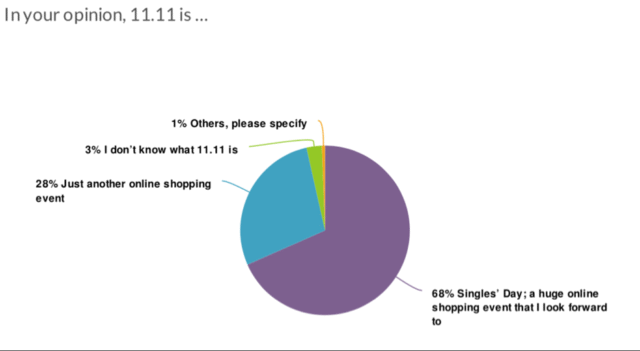
    Leading Cashback platform ShopBack conducted a survey recently and found the awareness level towards 11.11 Singles’ Day among Malaysian online shoppers has grown to 96% this year, from 69% in 2016. “In a 2016 survey to 2,000 Malaysian online shoppers, 69% answered they know what Singles’ Day is and 31% said they don’t. This year, 96% answered it is a huge online event (68%) or just another online shopping event (28%); only 3% from 2,000 respondents said they don’t know what 11.11 is, and 1% indicated that day has other meanings to them. This is an approximately 40% increase compared to 2016,” Alvin Gill, Country General Manager of ShopBack Malaysia says.

    According to Alvin, Alibaba’s investment in Lazada and massive promotions rolled out via multiple online and offline channels, as well as education efforts done by reward partners throughout the years likely contributed to the awareness growth. “Alibaba’s Taobao and Tmall have been collaborating with ShopBack on a regional level to boost market performance via cash rewards and multimedia educational efforts since 2014, of which include multi-lingual contents, digital and on-ground marketing exposures, as well as customer service support to encourage purchases through either Taobao, Tmall or Lazada’s Taobao collection, whichever suits their needs,” he adds.

    “While it is encouraging that a majority of them are looking forward to 11.11, online sellers should also target those who feel 11.11 is ‘just another shopping event’ via better product and promotional strategy. 98% of respondents said they are willing to make more purchases if the products they need are available with greater offers online. The top three offers that would encourage them to spend are high product discounts, free shipping/delivery, and promo codes/coupon,” Alvin points out.

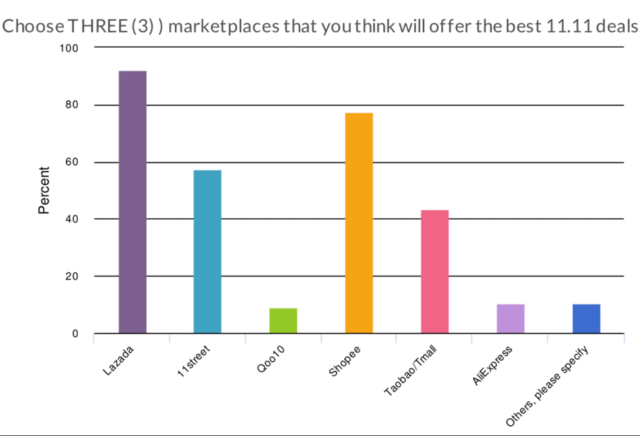
    When asked to choose three online marketplaces that they feel would provide the best 11.11 deals this year, Lazada emerged as the top choice, followed by Shopee and 11street.

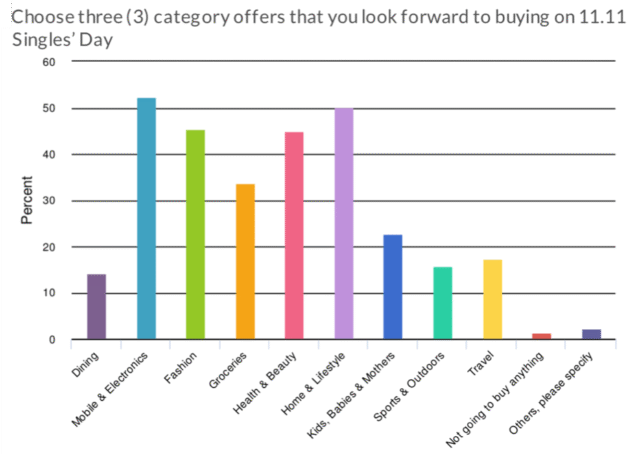
    The survey also reveals that online shoppers prefer their shopping to be affordable, fast and safe. “Mobile & Electronics emerges as the most popular category for 11.11 without surprise; the second is Home & Lifestyle which suggests shoppers could be looking for items to make over their living spaces before the New Year, followed by Fashion as well as Health & Beauty.”

    The 2018 ShopBack 11.11 online shopping survey covered views from 2,000 of ShopBack’s active online shoppers, of which 98.7% are aged 21 years old and above and around 85% have RM2,000 monthly income and above. 68.1% of the survey respondents use credit/debit card to make online payments while 25.4% select online banking as the preferred method, followed by cash on delivery 3.3%, Paypal 2.8%, and others 1.3%.

    “We witnessed 10 times more than usual web traffic directed to our partner’s sites on 11.11 in 2017, more than RM6 million worth of transactions were made through our platform and over RM200,000 cashback saved by using ShopBack. Together with our partner merchants, ShopBack Malaysia has tailor-made the 2018’s 11.11 campaign according to shopper’s needs and we aim to break the record by doubling our performance as well as cashback number this year,” Alvin says.

    Currently, more than 1 million Malaysians are using ShopBack for their daily purchases. The company works with online sites like Lazada, 11street, Taobao, Tmall, Booking.com, Expedia, Traveloka, ZALORA, Hermo, etc to give up to 30% cashback as a loyalty reward to online shoppers. Besides Malaysia, ShopBack also operates in Singapore, Indonesia, Philippines, Thailand, Taiwan and Australia. Over RM25 million worth of cashback has been given to its Malaysian users thus far. The cashback savings can be transferred out to a user’s bank account upon validation.