Tag: Malaysia

  • AirAsia X load factor, passengers up in Q3

    AirAsia X load factor, passengers up in Q3

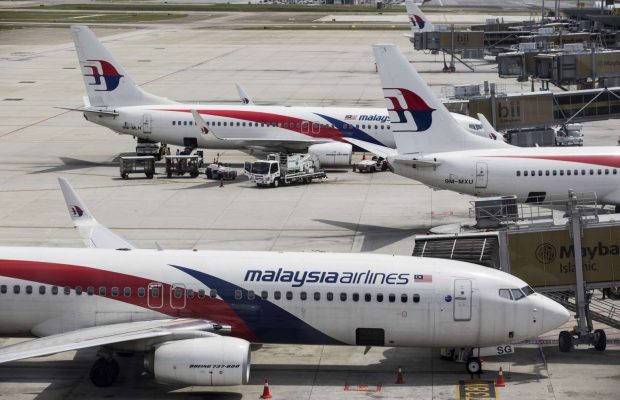
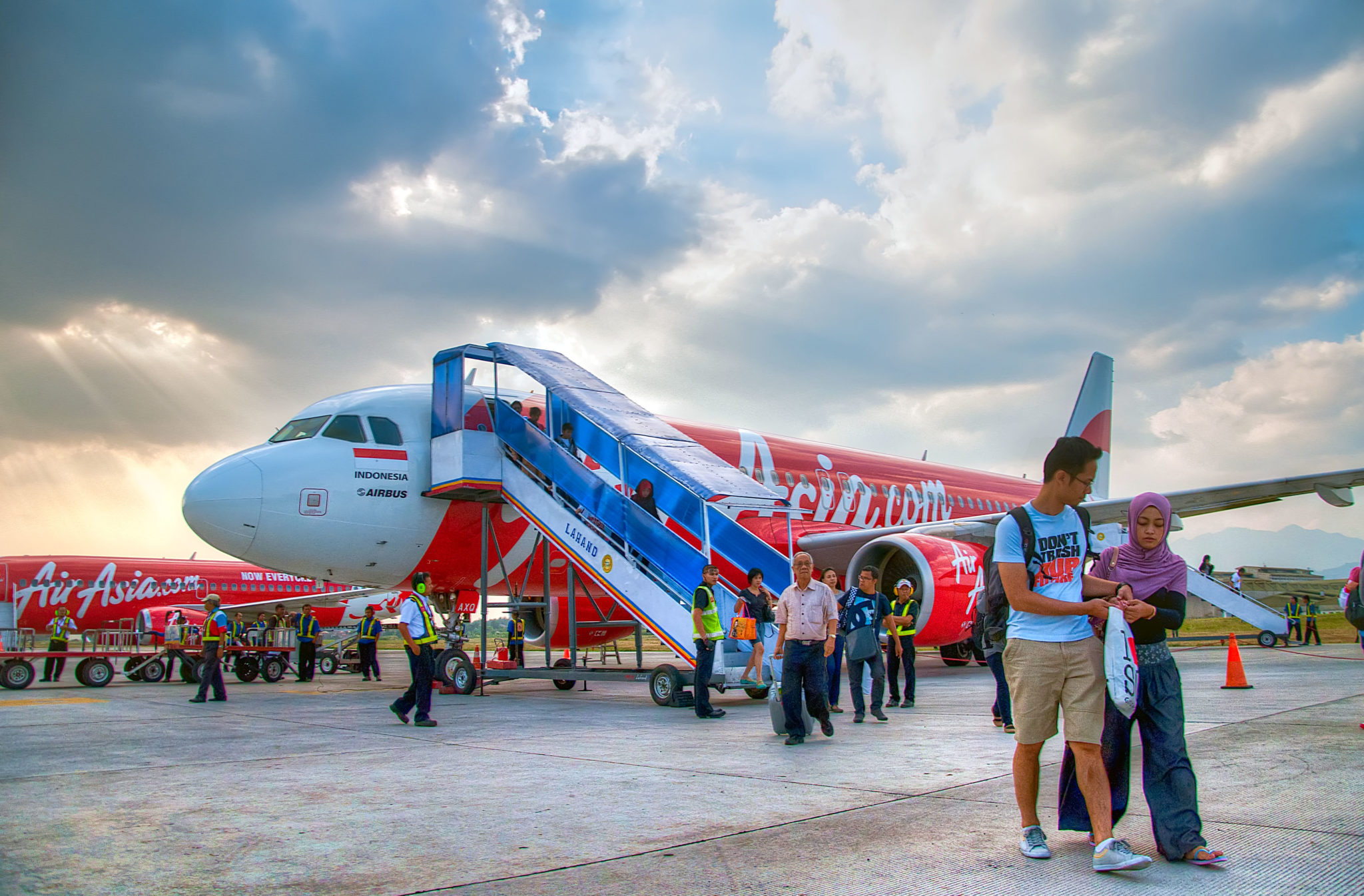
    AirAsia X Bhd reported a 1% growth in the number of passengers carried to 1.51 million for the third quarter of 2018 against 1.50 million in the same period last year.

    Its load factor was also 1 percentage point higher at 80% from 79%, according to the long-haul low-cost carrier’s statement.

    However, AirAsia X Malaysia’s available seat kilometres (ASK) capacity fell 4% to 8.81 billion due to redeployment of capacity to the North Asia region following capacity management in Australia in February 2018 and termination of services to Teheran.

    The fleet size of AirAsia X Malaysia remains at 22 Airbus A330s as at end-September 2018.

    AirAsia X said during the quarter under review, there was a seasonal increase in frequency to selected destinations in Australia (Melbourne, Perth and Sydney) in July, due to term holidays there, while frequency to Honolulu, Hawaii, was ramped up to daily flights due to stronger demand.

    In August, AirAsia X Malaysia commenced flights to Amritsar, its third city in India, and, in September, terminated flights to Maldives and transferred Kaohsiung to AirAsia Malaysia.

    Of the associates, AirAsia X Thailand registered a load factor of 87% and carried a total of 492,205 passengers in Q3, which was a substantial increase of 36% from the previous corresponding period.

    Meanwhile, AirAsia X Indonesia’s load factor stood at 80% with 108,700 passengers being carried in Q3.


  • Asia-Pacific telcos to face slower revenue growth: Moody’s

    Asia-Pacific telcos to face slower revenue growth: Moody’s

    Moody’s Investors Service expects stronger competition for the Asia Pacific (APAC) telecommunications sector and stronger commoditisation, and slower revenue growth for companies across 11 markets in the region, including Malaysia. The other markets are Hong Kong, India, Indonesia, Japan, Korea, the Philippines and Singapore.

    The rating agency’s report entitled “Telecommunications – APAC: 2019 Outlook” noted that while slower overall revenue growth will be evident in all 11 markets, the emerging market is expected to see a more pronounced slowdown with revenue growth to fall to 3-3.5% in 2019 versus the 3.9% in 2017.

    “Comparing overall revenue growth across APAC with GDP (gross domestic product) growth, Moody’s says that companies as a whole will show modest revenue growth of 2-2.2%, with such growth lagging average GDP growth of about 4.6% for the region,” said Moody’s vice-president and senior analyst Nidhi Dhruv.

    Meanwhile, new entrants are expected to intensify competition in Singapore, Japan and Australia.

    High shareholder returns and capital expenditure levels will continue to temper free cash flow generation, which will consequently make companies to look into diversifying revenue as traditional telecommunications revenues contract. This will eventually lead to more cross-industry partnerships.

    Additionally, while 4G will remain the dominant technology used by telecommunications companies in APAC, 5G will gain some traction in 2019-20.

    Japan, Korea and Australia are expected to lead the region in rolling out 5G services in 2019.

    Nevertheless, Moody has given a stable outlook for the sector in APAC 2019, with companies in the region likely to show relatively stable leverage and debt levels over the next 12-18 months.
    Moreover, while liquidity is weakening, it remains supported by the companies’ access to the banks and bond market at current levels.

  • Bank Negara to extend observation period for net stable funding ratio by a year to 2020

    Bank Negara to extend observation period for net stable funding ratio by a year to 2020

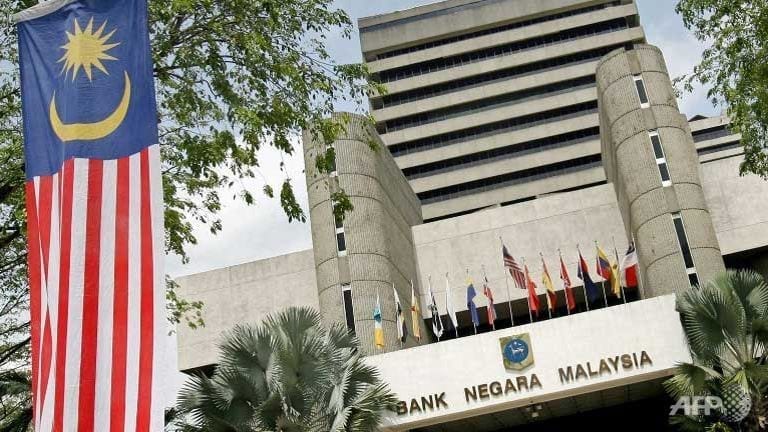
    Bank Negara Malaysia (BNM) is looking to extend the observation period for the net stable funding ratio (NSFR) in Malaysia for a year to 2020. NSFR is a liquidity standard which comes under the Basel III international regulatory reforms. It refers to requirements for banks to have in place a certain percentage of stable sources of funding, such as commercial papers that have more than a year’s maturity and retail deposits, to support their asset portfolios in the longer term.

    The initial deadline proposed by the Basel committee for the NSFR standard of above 100% was Jan 1, 2018. It was then deferred to Jan 1, 2019.

    Speaking at BNM’s Financial Stability Conference, governor Datuk Nor Shamsiah Mohd Yunus said the extension takes into account the intention to conduct further on-site assessments to validate the maturity and robustness of the liquidity and funding practices of banks, and uneven progress in implementation at the global level.

    “The bank remains committed to implementing the NSFR requirements as part of overall liquidity standards applicable to licensed banks in Malaysia.”

    She added that currently all banks maintain adequate liquidity buffers against short-term liquidity stress, and the vast majority of banks already report NSFR levels above the minimum 100% based on observation data.

    On another note, Nor Shamsiah said the challenge now is when a crisis is going to strike and how it will spread.

    In navigating an uncertain future, she suggested four strategic priorities for financial stability authorities.

    First, authorities need to remain vigilant as emerging economies face mounting pressures that continue to see more volatile capital flows. Second, authorities must continue to develop and deepen their understanding of risk transmission.

    Third, authorities must have a broad policy toolkit for responding to financial stability risks. Fourth, authorities need to increase policy agility as every crisis or financial stability issue is different, and each requires a different policy response.

  • Malaysia to have first Victoria’s Secret Lingerie Store

    Malaysia to have first Victoria’s Secret Lingerie Store

    The first full-range Victoria’s Secret Malaysia store has opened. Located in Mid Valley Megamall, the boutique has been launched by the US brand’s regional partner Valiram Group, which is also behind Victoria’s Secret stores in Macau, Bali and Singapore, (but not Hong Kong and Mainland China). It is reportedly planning more stores in Jakarta, Bangkok and Melbourne, Australia.

    The Kuala Lumpur store takes up 8233sqft, and has dedicated space for diffusion lines Pink and Victoria Sport, as well as the beauty products and perfume ranges stocked in earlier Victoria’s Secret stores in Malaysia.

    Many celebrities attended a formal opening earlier this month and social media key influencers including Joi Lynn have been photographed at the store.

  • CIMB chairman appointed new chairman

    CIMB chairman appointed new chairman

    CIMB Group Holdings Bhd has received Bank Negara Malaysia’s approval for the appointment of Datuk Mohd Nasir Ahmad as the group chairman. He will succeed Datuk Seri Nazir Razak, who is stepping down earlier.

    On Sept 24, Nazir announced his intention to retire from his position as the group chairman and all other positions within the CIMB group of companies by year-end.

    Nazir had served CIMB for 29 years since 1989, including as group CEO for 15 years and as group chairman since 2014. Under his leadership, CIMB grew from a fledgling corporate finance franchise into a top Malaysian investment bank, and was later transformed into a leading universal bank in Asean.

    Meanwhile, Mohd Nasir has been a member of the group’s board of directors (BOD) since 2015, and its senior independent director since April 2016.

    As part of this appointment, he will relinquish his positions as senior independent director and chairman of the audit committee. However, he will remain as a member of the group BOD’s audit committee, risk committee and group nomination & remuneration committee.

    Mohd Nasir is a chartered accountant by training and a fellow of the Association of Chartered Certified Accountants (ACCA), UK. He is also a council member of the ACCA Global Council. He has 39 years of corporate experience through companies such as Tenaga Nasional Bhd, including in CEO positions at Syarikat Permodalan Kebangsaan Bhd and Perbadanan Usahawan Nasional Bhd. He is the group chairman of Media Prima Bhd, as well as an independent director of CIMB Bank Bhd, SIRIM Bhd and Sistem Televisyen Malaysia Bhd.

    “I am delighted that following the Sept 24 announcement of my intention to retire, the board has been able to appoint my successor quickly from within the group board, and someone capable of taking over immediately. I am, therefore, relinquishing all my positions in the CIMB group with effect from today. Naturally, I will make myself available to assist the new chairman in any way to ensure a smooth transition,” Nazir said in a statement on Mohd Nasir’s appointment.

    CIMB group’s BOD and chairperson of group nomination & remuneration committee Teoh Su Yin said Mohd Nasir’s substantial corporate experience in various capacities and leadership roles, coupled with his three-year directorship on the CIMB group board, will provide valuable guidance and continuity during this time of transition and CIMB’s continued evolution.

    “The board looks forward to his stewardship as the group shapes its next mid-term growth strategy. The board would also like to record its appreciation to Nazir under whose tenure CIMB grew and became a leading Asean financial institution, and we wish him all the very best for the future.”

    CIMB group CEO Tengku Zafrul Aziz said the group looks forward to being guided by Mohd Nasir as it starts executing its next mid-term growth plan in 2019, which will focus on, among others, the people, customers, digital and sustainability.

  • Five Things to Check Before Taking Personal Loan

    Five Things to Check Before Taking Personal Loan

    Personal loan helps everyone in an unexpected financial crisis. Whether it’s an unforeseen expense during a wedding or renovating your home, emergency medical needs, restructuring your debts, starting a small business, etc., a personal loan can help you with immediate resources.

    Here is a list of five things to check before you avail of a personal loan –

    Interest rate offered

    The interest rate can vary depending on your creditworthiness. In addition, interest rates must be reviewed and compared with those of another institution before applying for loans, since interest rates usually vary due to several factors including competition among lenders. In this case, you can benefit from a loan at lesser interest.

    Since personal loans do not carry any security they attract high interest rates. Since there is no guarantee of repayment and nor does the lender have any asset in his possession to sell off the rate of interest is unusually high. As a customer you have to find a loan with lower interest rate to benefit

    Loan tenure

    Make sure that the tenure of the loan is acceptable to you. Loans with very short or long tenure can cause financial loss. You must always select a tenure that is suitable to your needs. A very long tenure would mean low EMI but also you must remember that you will be paying interest for a longer period. Thus your total outflow of interest will be more. Short tenure would mean rapid payback of principal which reduces total interest but makes the EMI expensive. The mean between these two would be best.

    Eligibility

    For being able to receive a personal loan you would have to check your eligibility to receive such a loan. Most banks and financial institutions have a web page with loan eligibility calculator. The amount of personal loan which can be given to you depends on the applicant’s income, age, credit score and other outstanding debts. If the loan is at all provided the loan amount and tenure of loan would depend on the above factors too. These factors vary widely between different financial institutions and it is quite possible that another bank will accept someone who has been refused earlier.

    Capacity to pay back

    It is always best to think calmly about your ability to repay. What is the EMI that you can afford depending on your income and monthly expenses and other commitments. The bank that is providing you with the loan will also carry out similar due diligence. It is of utmost importance that a borrower has sufficient funds to repay the monthly installments.

    Applicable penalties

    Lenders usually charge a fee if there is pre-payment. It is because early repayment prevents the bank from earning interest which they had expected as an income. One must always find a bank with least rate of prepayment penalties. Also watch out for exorbitant processing fees and late payment fines.

    Conclusion

    Take a personal loan only if it is absolutely needed for an emergency. It makes no sense to go on a vacation by paying exorbitant interest rates. Use personal loans judiciously and pay them back as soon as possible.

    Since a personal loan is associated with high interest rates, it is always advisable to obtain a personal loan only if you need money urgently and do not want to provide other assets as collateral. Personal loans are not secured, which means that nothing has been given as collateral.


  • Malaysia’s TM hires four new board members

    Malaysia’s TM hires four new board members

    Telekom Malaysia (TM) has appointed four new directors to the company’s board, following the resignation of David Benello as an independent non-executive director. The new directors are Dato’ Asri Hamidin @ Hamidon, Dato’ Mohd Naim Daruwish, Hisham Zainal Mokhtar and Saheran Suhendran.

    Asri Hamidin is appointed as a non-independence non-executive director representing the special shareholder, Minister of Finance (Inc) on the board.

    Mohd Naim has been made a non-independent non-executive director representing the interests of the Employees Provident Fund (EPF) which is a major shareholder of the Malaysian incumbent.

    Asri is currently the deputy secretary general (investment) at the Ministry of Finance, while Mohd Naim is currently the deputy chief executive (operations) of EPF.

    Hisham and Saheran were appointed as the independent non-executive directors.

    Hisham is currently a director in the group MD’s office at Malaysian Industrial Development Finance Bhd, while Saheran is currently a consultant at Messrs Chua Associates.

    All the board appointment took effect on October 3.

    TM also announced that Farid Basir has joined the telco as its new chief human capital officer (CHCO). Farid, taking over the position previously covered by Suhaimi Sulong as the acting CHCO since early this year, assumed his new role on October 1.

    Prior to his appointment, Farid was the CHCO at Bank Rakyat for almost three years.

    Cisco names Herman Lam as MD for HK & Macau

    Cisco has appointed Herman Lam as managing director for Hong Kong and Macau.

    The company has also announced that Barbara Chiu, vice president of Hong Kong, Macau and Taiwan, will retire by end of October.

    Cisco said Lam brings to the table over 25 years of experience in IT industry combined with a wealth of leadership and management experience gained with leading technology firms.

    Prior to joining Cisco, Lam’s previous stints include CEO of Hong Kong Cyberport Management Company, and general manager of Microsoft Hong Kong.

    Commenting on the appointment, Cisco Greater China chief executive officer Hera Siu said Lam’s “unique blend of experience and knowledge, complemented by extraordinary vision and operational expertise within large organizations,” will bring valuable insights to the company.

    “I also want to thank Barbara, who has had an immeasurable impact on Cisco’s success and express my utmost appreciation for her devotion and leadership during the past 12 years,” Siu noted.

    21Vianet appoints Wing-Dar Ker as DYXnet Group’s CEO

    Chinese carrier-neutral network service provider DYXnet Group has announced that Wing-Dar Ker has been appointed as the company’s new CEO.

    He takes over the position from company founder and CEO Lap Man, who will continue to serve the group as adviser.

    The appointment was made by 21Vianet Group, parent company of DYXnet Group and one of China’s carriers and cloud-neutral internet data center service providers.

    Wing is also president of Shanghai Blue Cloud Technologies Co Ltd, 21Vianet Group’s other wholly-owned subsidiary.

    The move is aimed at facilitating greater collaboration between DYXnet Group and Blue Cloud, while exploring and capitalizing on synergies, 21Vianet said.

  • Sunway Malls wins best in Asia award

    Sunway Malls wins best in Asia award

    Sunway Malls has been recognised as one of Malaysia’s best companies to work for in Asia. HR Asia, Asia’s most authoritative publication for senior HR professionals – created the HR Asia Best Companies to Work for in Asia platform, where best practices and inner workings of companies are investigated to understand what distinguishes them from the rest. The Awards covered 12 markets across the region, and culminated with an award ceremony recently to celebrate the winners.

    Sunway Malls’ vision is “to create experiences that enrich lives” and this vision is extended to our external stakeholders and our employees. Sunway has 4 core values as the guiding factors to our vision; Integrity, Humility, Excellence and Togetherness. Through constant innovation and brain storms, the company take into account the employees’ needs and aim to provide to our best of ability.

    Their first mall, Sunway Pyramid is 21 this year. Sunway Carnival, opened in 2007, is undergoing expansion, Sunway Giza is our friendly community mall opened in 2009 whilst their newer malls are Sunway Putra Mall and Sunway Velocity Mall. To date, Sunway has amassed 54 renowned international and national awards.

  • An Overview of E-commerce in South East Asian Countries

    An Overview of E-commerce in South East Asian Countries

    Electric commerce or e-commerce is the activity of buying and selling online. Typical e-commerce transaction includes purchase of online books, music purchase and purchase and sales of many other items.  Three known major areas of e-commerce include online retailing, electric market and online auction. Technologies such as mobile commerce, internet market, electronic funds transfer, and electronic data interchange (EDI), online transaction process and many others.

    The practice of e-commerce in Southeast Asia started during the dot.com era in the 90’s just like in many parts of the world. The dot.com era refers to the period where companies started using doing for most of their businesses on the internet, usually through a website that uses the popular domain “.com”. During the dot com era southeastern Asia mainly purchased items from American and European companies that would be delivered in their countries. During this era companies with electronic commerce had shown great prospect with their fast growth and promising profits. Companies’ stock prices skyrocketed and Asia was pretty happy because the rise had resulted to a bubbling economy through electronic commerce.

    Asia then began to attract nearly half of the total capital inflow from developing countries appealing them with high interest rates. Countries like Malaysia, Singapore, Thailand and Indonesia experienced an increase in their GDP rates. Around the year 2000, the e-commerce market was mainly involved in a business to business (B2B) transaction due to customers mistrust after going through the 1997’s financial crises and the bubble burst in southeast Asia – bubble burst is often identified only in retrospect once a sudden drop in price has occurred – The burst is usually profitable for buyers and not sellers. In the 90’s a lot came up as hindrances to the upspring of electronic commerce

    – In those days, aside mistrust e-companies had other issues of which Southeast Asian countries were also affected. As a result of its structural shortcomings, a much more diverse range of payment solutions have become common in the region. The average internet penetration around southeastern Asia with the exception of Singapore was 38% while leading countries have an internet penetration of 70-80%, this made cash on delivery offered by 80% of the players in both Vietnam and Philippines, though bank transfer is another very popular payment method across the SEA. With each of the countries having 94%, 86% and 79% of merchants in Indonesia, Vietnam and Thailand respectively offering it.

    – In addition to a lack of uniformity in payment methods, there is also significant market fragmentation the Southeast Asian consumers have so many platforms to choose for their daily need.

    – Culture also was an inhibiting factor –the influence of Traditions in the Asian region overtime had made people have low trust in bank system and electronic payment, for example; credit card owners and other means used in payment other than in cash is small – government in those times pushed for a cashless policy in their society by trying to implement laws to suit online transactions.

    – Fraud and high level of corruption was another setback to the growth of electronic commerce in the region.

    The prospects and thrive; the battle for supremacy

    The gold rush in the online ecommerce of the as left traditional offline retailers in the Asia region like Thailand and Indonesia scramble for an online business move.

    Over the years until this day the massive growth in e-commerce around southeastern Asian has attracted big name investors into the region. In 2016 the release of the Google Temasek SEA Economy spotlight highlighted Southeast Asia as the world’s fastest growing internet region.  With an existing internet user of 260M which was projected to grow to 480m users by 2020. In the research they predicted that southeast Asia’s internet economy will grow to 200B by 2025 and that $40 – 50bn in investment will be required over a decade to achieve that goal, fast tracking to 2017 they observed that the southeast Asia’s internet user base continues to grow rapidly. there will be 330m monthly active internet users by end of 2017 adding over 70m new users since 2015 13% CAGR.  They estimate that Southeast Asia’s internet economy will reach $50b in 2017, meaning it will Grow at a rate of 27% CAGR outpacing their 20% 10year CAGR projection.

    Asia as a continent had an increase in of around 4.5  billion in the GMV ( gross  merchandise value ) of first hand goods and has had a 41% compound annual growth rate ( CAGR ) in the past couple of years- 2015 to 2017- as given by Google –Temasek’s economy southeastern spotlight 2017 report. The Temasek report went further to predict that CAGR will rise from $5.5bn of 2015 to $88bn by 2026. 2017 witnessed events which proved high results are expected from the e-market in southeastern Asia.  The explosive growth in E commerce as lured china’s two e-commerce giants Alibaba and sd.com to the southeast online market. Amazon much awaited  recent entrance into the E-market of a southeastern nation ( Singapore to be specific) to fast track its online market expansion in southeast Asia also proved there was an attractive raw material in the cyber space of the region.

    The record breaking 1billion dollar sales of shares of Lazadas to Alibaba with alibaba also putting its grip on Tokopedia; arguably a future competitor in Indonesia. The resilience of another China based heavy weight company; Tencent. Tencent has also kicked start investments in companies like SEA (previously Garena) predominantly a gaming powerhouse that runs Shopee, Go-jek, Traveloka, Tiki.nn and Pomelo. The US based KKR  in a bid not to be left out of this massive growth phase through emerald media put US$65million into e-commerce arms dealer Acommerce. This trends of acquiring more shares and grabbing more local companies across the Asian borders by these online giants  is expected in coming years as all stated above points to the fact that the riches in online space of these Asian nations is worth risking for.

    Currently, predictions have given that the home based Asian companies will have to pick sides with either of or stand their ground against the foreign forces from both the western and eastern part of the world.  Predictions went further  to specify that  foreign based companies like Alibaba, Amazon and Tencent is  likely to have a bloodbath battle for the monopoly of the regions  electronic commerce  or share the  Asian online customers, some term this head to head of the western state and eastern state as the clash of the online titans.  It is hope that this clash will result to a much needed gold-shed To Help in the growth of the developing region

    Joe Tsai, Alibaba vice chairman, in speaking with Retail News was quoted as saying “is there a land grab right now for these kind of assets? I think in the land grab they [Tencent] are following us. They are seeing that we have positioned ourselves very well, and they are sort of playing a catch up game. So what we want to do is to work with local entrepreneurs. ”

    Experienced, grown and growing

    Marc woo, Google head of ecommerce , travel and financial services was quoted to have said “Asia pacific (APAC) accounted for 40% of global ecommerce sales in the 1st quarter in 2017, but vast majority of those sales went to larger or more mature markets in the region, particularly china, but also japan, Australia, South Korea, and India. That leaves Southeast Asia as the next frontier for ecommerce in the region.  “

    A steady increase in the advantages of electronic commerce in the region resulted to a 50% growth last year and now totals 200 million individuals across southeastern Asian’s top six economies. The southeastern Asian nation Singapore takes a top spot in Asia with an average of 14.04 sessions per person per year visiting amazon.com. It is rumored and expected that by the end of the year the ecommerce companies should erect physical stores in their resident southeastern nations. This will make a great boost in the economy of this regions.  This huge development in ecommerce have led southeast Asian governments to launch a bid to introduce taxes on ecommerce sales as they look to claim their dollar-and-cents take from one of their most promising engine towards  economic and  financial buoyancy.

    This though might increase the cost price of goods and services offered by the online companies but cannot override nor underestimate its advantage as compared to import and shipping processes. Taxing online sales will align practice with those of world leading countries. It puts online retailers on a leveled playing ground with brick-and-mortar counterpart. This growing market has also initiated an online network process between the Chinese and the Asian region as Alibaba is working to set up a digital free-trade zone in Malaysia and has signed a memorandum of understanding with the government of the Asian country and the authorities of china to simplify cross-border trade between the two regions.

    If this deal falls through under the current government of china a long term mutual profit making relationship is expected to last for a very long time between the Asian nations and the Chinese government  giving that  the china parliament are rumored to have kick started plans in keeping their president more longer in office than usual.  The critical factors responsible or observed to needed for the spontaneous growth of ecommerce in the southeastern region of the continent are

    • A growing middle class – knowing that the middle class contains the highest number of mobile phone users and also the highest number of common goods purchasing.
    • Rapidly expanding internet access are positive indicators for fast paced e commerce growth in coming years. Internet access needs to be at its best for the effective running of electric commerce in a state

    The middle class population of the Asian region is expected to reach a 400million in 2020 from its 190 million of 2012, according to Nielsen project.

    Internet access in the region as not only being expanding at a high pace but has also improved strongly over the years like stated in the research of Google Temasek SEA economy spotlight report stated above.

    The electric commerce has also shown to be of disadvantage though not significant as compared to the many fruit yielded by the online market.

    • The desire for local business owners and the nation’s mobile phone user population to switch online results to more cases of fraud because this system isn’t used to them.
    • Competition between locals and foreigners which should encourage an healthy business environment is not observed as the big guns will slowly silently phase out the local brands
    • The preference of foreign products to locally made products by locals isn’t favorable for the country’s economy.
    • Owing to the creation of a good relationship with certain world leading countries, good tides with others could be altered.
    • If not properly monitored, foreign companies might have a full grip of the southeastern nation economy.

    One major benefit that has been observed to have taken the front line in the advantage of electronic commerce in the southeastern Asian region is the quest for each nation to outperform each other. Especially between Thailand, Vietnam and Indonesia, this healthy beef has led to varying developments in these nations as none wants to be left behind in the development and modernization of their country. These alongside the introduction of big time investors, the rise in economy growth, job creation in nations, strengthening diplomatic tides and many other advantages.

    Stakeholders and experts have advised to government of these Asian nations to support the region to grow by fixing reasonable tax levies in other not to discourage foreign and local investors, encourage a competitive market, improve online network and provide adequate education to ease communication with foreign partners. With the huge wealth emanating from the electric commerce sector, if properly managed these nations can get a massive boost in their nations wealth and reputation. The potentials possessed to build a nations revenue by employing electric commerce cannot and should not be undermined.

     

  • Nazir Razak steps down as CIMB chairman, succeeded by Mohd Nasir Ahmad

    Nazir Razak steps down as CIMB chairman, succeeded by Mohd Nasir Ahmad

    CIMB Group Holdings Bhd has received Bank Negara Malaysia’s approval for the appointment of Datuk Mohd Nasir Ahmad as the group chairman effective tomorrow. He will succeed Datuk Seri Nazir Razak, who is stepping down last week.

    On Sept 24, Nazir announced his intention to retire from his position as the group chairman and all other positions within the CIMB group of companies by year-end.

    Nazir had served CIMB for 29 years since 1989, including as group CEO for 15 years and as group chairman since 2014. Under his leadership, CIMB grew from a fledgling corporate finance franchise into a top Malaysian investment bank, and was later transformed into a leading universal bank in Asean.

    Meanwhile, Mohd Nasir has been a member of the group’s board of directors (BOD) since 2015, and its senior independent director since April 2016.

    As part of this appointment, he will relinquish his positions as senior independent director and chairman of the audit committee. However, he will remain as a member of the group BOD’s audit committee, risk committee and group nomination & remuneration committee.

    Mohd Nasir is a chartered accountant by training and a fellow of the Association of Chartered Certified Accountants (ACCA), UK. He is also a council member of the ACCA Global Council. He has 39 years of corporate experience through companies such as Tenaga Nasional Bhd, including in CEO positions at Syarikat Permodalan Kebangsaan Bhd and Perbadanan Usahawan Nasional Bhd. He is the group chairman of Media Prima Bhd, as well as an independent director of CIMB Bank Bhd, SIRIM Bhd and Sistem Televisyen Malaysia Bhd.

    “I am delighted that following the Sept 24 announcement of my intention to retire, the board has been able to appoint my successor quickly from within the group board, and someone capable of taking over immediately. I am, therefore, relinquishing all my positions in the CIMB group with effect from today. Naturally, I will make myself available to assist the new chairman in any way to ensure a smooth transition,” Nazir said in a statement on Mohd Nasir’s appointment.

    CIMB group’s BOD and chairperson of group nomination & remuneration committee Teoh Su Yin said Mohd Nasir’s substantial corporate experience in various capacities and leadership roles, coupled with his three-year directorship on the CIMB group board, will provide valuable guidance and continuity during this time of transition and CIMB’s continued evolution.

    “The board looks forward to his stewardship as the group shapes its next mid-term growth strategy. The board would also like to record its appreciation to Nazir under whose tenure CIMB grew and became a leading Asean financial institution, and we wish him all the very best for the future.”

    CIMB group CEO Tengku Zafrul Aziz said the group looks forward to being guided by Mohd Nasir as it starts executing its next mid-term growth plan in 2019, which will focus on, among others, the people, customers, digital and sustainability.

  • First Victoria’s Secret Lingerie Store to open in Malaysia

    First Victoria’s Secret Lingerie Store to open in Malaysia

    The first full-range Victoria’s Secret Malaysia store has opened. Located in Mid Valley Megamall, the boutique has been launched by the US brand’s regional partner Valiram Group, which is also behind Victoria’s Secret stores in Macau, Bali and Singapore, (but not Hong Kong and Mainland China). It is reportedly planning more stores in Jakarta, Bangkok and Melbourne, Australia.

    The Kuala Lumpur store takes up 8233sqft, and has dedicated space for diffusion lines Pink and Victoria Sport, as well as the beauty products and perfume ranges stocked in earlier Victoria’s Secret stores in Malaysia.

    Many celebrities attended a formal opening earlier this month and social media key influencers including Joi Lynn have been photographed at the store.

  • Malaysia, Japan in talks on Asian aircraft project

    Malaysia, Japan in talks on Asian aircraft project

    Malaysia is in discussions with the Japanese government for an Asian aircraft project, which is still at the ideation stage, with Malaysia looking at possibly supplying components. Entrepreneur Development Minister Datuk Seri Mohd Redzuan Yusof said the idea, envisioned to be like Airbus, for an Asian aircraft came from the Japanese government.

    “They (Japanese government) invited us to consider participating in the Asian aircraft project in view that we have the base here in relation to what we do to support the global aircraft industry, namely CTRM (Composites Technology Research Malaysia Sdn Bhd) is supplying tier 2 (aerospace parts) to Airbus. That will become our base to open up more if the ideation from Japan do materialise in the near future,” he told a press conference at the Malaysian Economic Summit 2018 today.

    He said it has not prepared the framework of its understanding between the various countries in Asia for the project, given that there is only an ideation coined.

    Adding that it has yet to have the first meeting, he hopes the next engagement will be held in late November in Japan.

    “I interacted with the Japanese counterpart. They coined the idea of having an Asian aircraft using the entrepreneurship kind of approach to develop this vendor (system), which is already in the industry, expand their capacity and capability, reaching certain level then combining our resources and technology to realise (this project).”

    Meanwhile, he said the Ministry of Entrepreneur Development (MED) is reviewing all the policies and initiatives regarding the development of entrepreneurs and SMEs with the intent to make it more holistic, integrated and targeted.

    Mohd Redzuan said it is the ministry’s mission to widen and coordinate entrepreneurial activities to be more targeted, inclusive, encompassing all segments of society including the B40s and M40s.

    “MED will focus among others on providing proper training and facilitation for entrepreneurs based on industry needs such as business advisory, loans and funding to stimulate the interest of potential and new entrepreneurs to establish their own startups. At the same time, assistance will be extended to them to ensure growth and sustainability of their businesses,” he said.

    He said it is the mandate of MED to provide support and facilitation to local entrepreneurs so that they may move forward and withstand the competition and challenges of the global market.

  • Malaysia to focus more on pollution charge on single-use plastics by 2021

    Malaysia to focus more on pollution charge on single-use plastics by 2021

    The government is working towards implementing a pollution charge for single-use plastics which will be imposed on fixed premises at a rate of 20 sen or higher, to be determined by state governments through local councils. They include premises such as hypermarkets, supermarkets, department stores, convenience stores, fast food restaurants, petrol station convenience store, chain stores and pharmacies.

    Minister of Energy, Science, Technology and Climate Change Yeo Bee Yin said the federal government is giving state governments the liberty to determine the rate, and to decide the implementation time frame between 2019 until 2021, marking the first phase of the Roadmap Towards Zero Single-Use Plastics 2018-2030, which was launched in conjunction with the Greentech & Eco Products Exhibition & Conference Malaysia (IGEM 2018) today.

    “We have already engaged with the ruling government states as well as the opposition states. Everyone has already agreed to the plan and said they want to do this as well together,” she said at the event.

    Yeo said the goal is to address the lack of uniformity in the use of single-use plastics with such initiatives already being in effect in some states and result in the improvement and increase in the production and use of bio-degradable bags.
    She believes the charges will not be passed on consumers but instead encourage a change in behaviour and lead to people eventually using shopping bags.

    Yeo said the money collected from the levy will be ploughed back for green initiatives, creating awareness and reusable shopping bags.

    Phase two of the roadmap which will go on between 2022 and 2025 may see the levy being extended to manufacturers and non-fixed premises.

    Meanwhile, the government has cancelled 155.7256 megawatts (MW) of renewable energy feed-in tariff (FiT) projects due to unfavourable response in September 2018 and instead opened up 114.5682 MW FiT projects for qualified applicants.

    Additionally, the Sustainable Energy Development Authority of Malaysia rolled out the country’s first solar photovoltaic (PV) monitoring system, which is a database connected to grid’s nationwide meant to monitor the performance of solar PVs on a real-time basis.

    Keeping up with that, the country’s first insurance plan for solar PVs was launched this week.

    The initiative is under Seda in collaboration with Allianz Malaysia Bhd and the Malaysian Photovoltaic Industry Association. This scheme is aimed at protecting residential solar PV users.

    On another note, the government will introduce Building Energy Intensity labelling as part of its efforts to promote voluntary adoption of energy efficiency in the building sector. This is along with a renewed push for the adoption of energy performance contracting for government buildings next year.

    Yeo said capital for the retrofitting projects will be derived from the private sector, with any cost savings derived to be shared between both parties.
    She said there can be savings if the government is able to save some 20% of its annual electricity costs. This in turn will translate into a return of investment and profit for investors.

  • Bank proposals value Uber at US$120b in possible IPO: Report

    Bank proposals value Uber at US$120b in possible IPO: Report

    Uber Technologies Inc could be valued at US$120 billion (RM498 billion) when it finally goes public next year according to recent proposals made by US banks, citing people familiar with the matter. The ride-hailing company’s most recent valuation was pegged at US$76 billion, following a US$500 million investment from Toyota Motor Corp in August.

    As reported in late September that Goldman Sachs and Morgan Stanley were in pole position to secure top roles in Uber IPO.

    Goldman Sachs and Morgan Stanley last month delivered the valuation proposals to Uber, the report said.

    Uber and smaller rival Lyft have been actively preparing to go public next year. While Lyft has hired IPO advisory firm Class V Group LLC, Uber is behind in its preparations.

    Uber hired Nelson Chai as its chief financial officer in August, filling a long-standing vacancy and clearing the way for its much-anticipated IPO.

  • Malaysia govt to introduce building energy intensity labelling this Saturday

    Malaysia govt to introduce building energy intensity labelling this Saturday

    The government will be introducing building energy intensity (BEI) labelling for buildings as part of its efforts to promote voluntary adoption of energy efficiency in the building sector. It is likely to start with government buildings for starters.

    The initiative will be launched at the energy efficiency town hall session to be held on Saturday.

    Energy, Science, Technology and Climate Change Minister Yeo Bee Yin said during her speech at the International Greentech & Eco Products Exhibition & Conference Malaysia (IGEM) that the initiative will entail the rating of buildings with between 1-5 stars for energy efficiency.

    “This is the first step where we want government buildings to be labelled between 1-5stars for energy efficiency,” she added.

    In addition, Yeo said the government will also be aggressively stepping up the adoption of energy performance contracting (EPC) for government buildings next year. The initiative was initiated in 2013.

    “There are about 5,000 government buildings in Malaysia. Just imagine how much money we can save by retro-fitting (these) buildings by making the building electricity efficient,” she noted.

    Malaysia’s energy consumption in buildings comprised 14% of total energy consumption and 52.4% of electricity consumption in 2016.

    Internationally, the building sector is regarded as one of the most cost-effective sectors to reduce energy consumption.