Tag: Marketing

  • Coca-Cola names new regional marketing VP

    Coca-Cola names new regional marketing VP

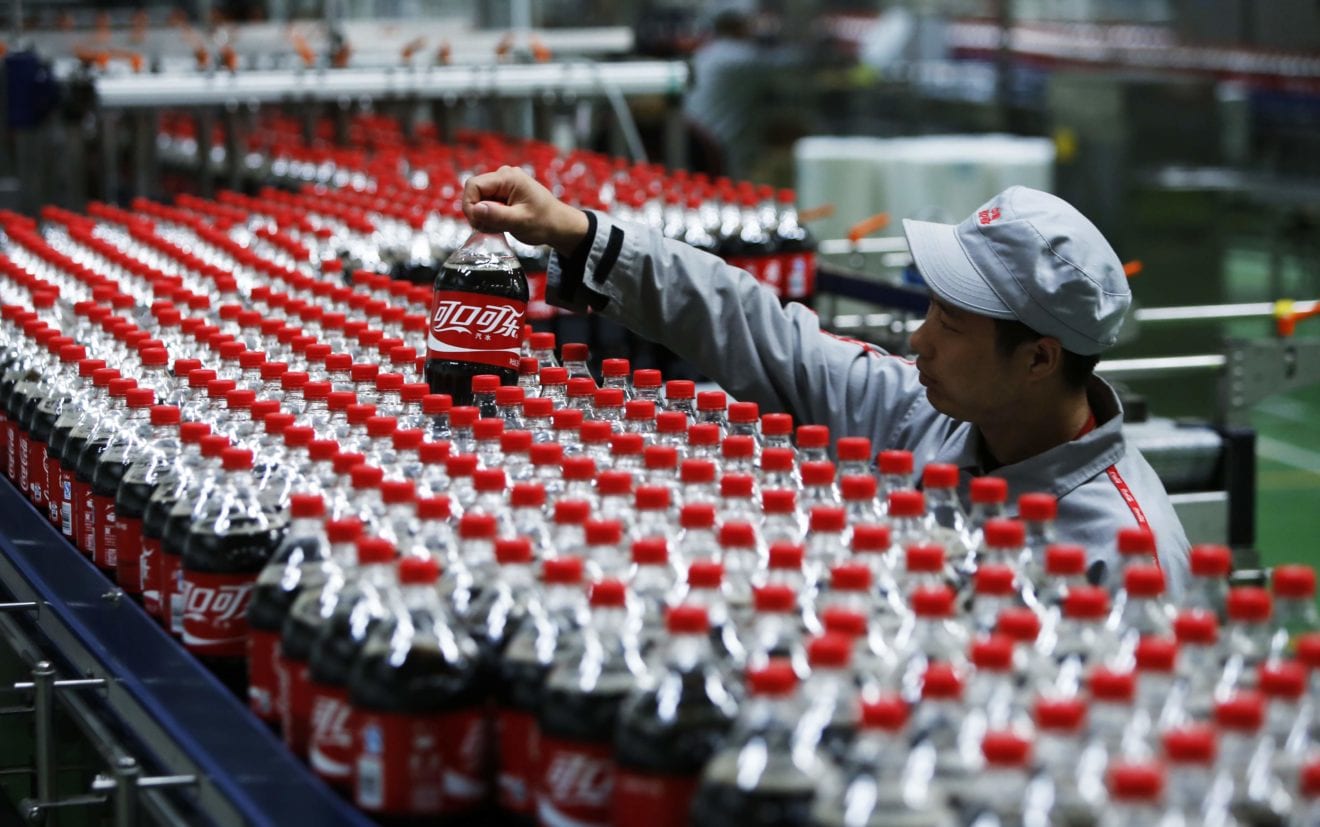
    Coca-Cola has appointed Matthias Blume as its new VP of marketing, ASEAN and South Pacific. Based in Singapore, Blume will lead the company’s marketing and brand initiatives across Southeast Asia, Australia, New Zealand, and the Pacific Islands and serve on the company’s senior leadership team in the region.

    He was most recently the frontline director for Coca-Cola’s ASEAN and South Pacific operating unit, based in Singapore. Previously, he was sparkling director for the company’s ASEAN business unit. According to the company, Blume has a detailed knowledge of the company’s business across the region and has driven growth and innovation across the company’s stills and sparkling beverage brands.

    He is also a strong supporter of integrating sustainability into the company’s portfolio of brands. Coca-Cola said Blume was “at the forefront” of the company’s introduction of a prominent “Recycle Me” call-out across all its packs as well as the move across Southeast Asia to switch its iconic Sprite brand to clear, transparent bottles which are easier to recycle. He has 24 years of international marketing experience including 21 years at Coca-Cola and three years at Danone. Blume has also held local, regional, and global roles in a range of markets across Asia, North America and Europe.

    “Blume brings a tremendous passion for marketing and people plus a superb knowledge of our bottling system,” said Claudia Lorenzo, president, Coca-Cola ASEAN and South Pacific, said. According to her, Blume also brings a combination of consumer centricity, marketing curiosity and business acumen – strengths that Coca-Cola needs and values deeply in our marketing organisation.

    Separately, on the public affairs and communications front, the company named Russell Mahoney its VP, public affairs, communications and sustainability in March. He now leads the team across ASEAN, Australia, New Zealand, and the South Pacific and looks to address “some big sustainability issues” in the company. Mahoney said in a LinkedIn post that he will be moving to Singapore in the coming months.

    With the metaverse being all the rage these days, Coca-Cola also launched a pixel-flavoured drink, the limited-edition Zero Sugar Byte, which will rolle out first in the metaverse before making its way into physical retail. Coca-Cola describes the Zero Sugar Byte as the first Coca-Cola flavour to be born in the metaverse, which will bring the flavour of pixels to life in a limited-edition beverage that transcends the digital and physical worlds. The Zero Sugar Byte is the company’s second release from its Coca-Cola creations hub, following its release of its Starlight “space-flavoured” Coke in March this year.


  • Investors warned about AI multilevel marketing schemes

    Investors warned about AI multilevel marketing schemes

    Multilevel marketing schemes (MLMs) calling for investment in artificial intelligence (AI) robots said to be capable of making money on their own are illegal, authorities have warned.

    The Vietnam Competition & Consumer Authority under the Ministry of Industry and Trade has put some AI robot related MLM websites and applications on a warning list, including snowai (snowaiapp.com, snowai.cc, snowai.net) and the inb.network (ai.marketing, and aimarketing).

    The websites claim that AI robots will conduct affiliate marketing on the Internet to advertise brands or carry out transactions on virtual and digital currency trading floors.

    Depending on investment packages involving AI robot rentals, investors can enjoy different kinds of commissions when orders are placed for branded products or transactions in virtual currencies are made. The income includes commission from investments made by subsequent investors in the multilevel marketing scheme.

    If investors pour money into such schemes, they face the risk of losing money because they have to hand in real money but their earnings are in virtual or digital money that are not officially recognized.

    The competition authority warned people not to invest in or develop AI robot related multilevel marketing schemes so as to avoid financial and legal losses.

    Doing business using the multilevel marketing mode without a license can fetch sentences of up to 5 years in prison under Vietnamese laws, the authority said.

  • Former Nike innovation chief joins speaker lineup for MarketingPulse 2021

    Former Nike innovation chief joins speaker lineup for MarketingPulse 2021

    A former senior Nike executive once named by Fast Company magazine as one of the most creative people in business, has been confirmed as a headline speaker at this month’s MarketingPulse 2021 virtual conference in Hong Kong.

    Greg Hoffman, global chief marketing officer at Nike from 2016-2018 before moving into the role of VP of global brand innovation until last year, now leads Modern Arena, a brand advisory group he founded for Fortune 500 brands, startups, and non-profit organizations.

    At MarketingPulse 2021, Asia’s premier marketing and branding conference, Hoffman will be drawing on his 27-year career with Nike to explain how innovation drives consumer experiences, envisioning the future of storytelling and the role of tomorrow’s CMOs.  Hoffman was a major strategic and creative influence for Nike at every major global sporting event, overseeing the launches of signature Nike products and innovations, and building the brands of its contracted athletes.

    A major part of Nike’s global marketing success was the strength of its experiential-anchored strategies which helped establish the iconic sportswear brand as one of the world’s pre-eminent storytellers. Hoffman was seen as a leading innovator in digital and physical brand experiences and broadly recognized for his role in the rise of marketing and design through that period.

    Under Hoffman’s leadership, Nike drove themes of equality, sustainability, and empowerment through sport. He was a member of the advisory board of the Nike Black Employee Network and as a member of the charitable Nike Foundation’s board.

    Another drawcard at MarketingPulse 2021 is Alves Huang, CEO, Qianxun (Hangzhou) Holdings, considered the current leading live-streaming e-commerce company in Mainland China.

    Huang founded Qianxun E-commerce in 2017 and in just four years his team has built the company into the country’s largest e-commerce live-streaming broadcasters. Among Qianxun’s successes was being recognized by Taobao Live as its number one e-commerce live-broadcasting agency, as manager of popular Taobao anchor Weiya Viya, who has more than 130 million fans on Chinese platforms.

    The company has long-term cooperative relations with more than 20,000 domestic and foreign brands and has already trained close to 40 anchors. At MarketingPulse 2021, Huang will explain the reasons why live-streaming e-commerce and short-video marketing is proving so successful in Mainland China.

    Putting purpose at the core

    Another high-profile speaker at MarketingPulse 2021 is Bryan Meehan, executive chair and CEO at Blue Bottle Coffee.

    A recent arrival to Hong Kong, Blue Bottle is a specialty coffee roaster and retailer headquartered in Oakland, California with cafes throughout the US, Japan and South Korea.

    Besides his passion for coffee, Meehan has always pursued a personal mission to do good for the environment. Both of his previous companies placed a premium on eco-consciousness – Fresh & Wild was one of the first organic food chains in the UK and Nude Skincare was an all-natural cosmetics business. While Blue Bottle maintains meticulous standards for roasting and brewing coffee (its Oakland location has a full lab to train new baristas), it is equally committed to sustainable business practices.

    At MarketingPulse 2021, Meehan will explain how to put purpose at the core of a business to connect brand values with today’s consumers, and share his success in marketing a globally renowned lifestyle coffee brand disrupting the industry.

    Register now to enjoy the privilege offer 55 percent discount (discount code: MPR02K5P) for Inside Retail readers.

  • Affiliate Marketing Tracking: Tools Overview

    Affiliate Marketing Tracking: Tools Overview

    Affiliate marketing is how a person, business, or organization can sell their products with different companies(affiliates) or persons for a commission. Affiliate marketing comes from Affinity marketing, which is gradually becoming a significant revenue source for various brands. Used by businesses to manage, track, and optimize their marketing activities, it involves sales monitoring, conversions, and clicks from affiliated websites to follow their affiliate’s performance. However, managing and tracking affiliates can be a nightmare for businesses. For utilizing the potential that affiliates bring, businesses must find reliable ways to track and channelize activities to the right channel.

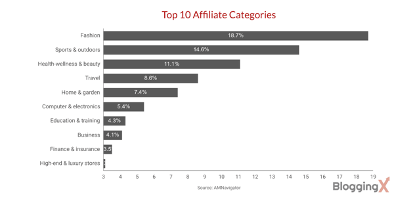
    Fashion is the most popular affiliate marketing category.

    Affiliate marketing tracking software is a tool that manages and optimizes tracking for affiliates. Depending on different business models, affiliate marketing tracking software manages, tracks, and promotes marketing activities accurately and timely. Affiliate marketing software is responsible for tracking the number of clicks, source of origination of URL, time and location of clicks, calculating cost accordingly and much more. Some of the essential features of tracking software are:

    • Real-Time Insights: A kind of dashboard that presents you with an accurate picture of clicks, sales, and leads coming from affiliates with granular tracking. From creating personalized alerts to a personal dashboard, you see what you want to see.
    • Seamless integration: With online activities getting into the limelight, seamless integration to various websites and apps play a crucial role. Performance centric APIs for both web and mobile should be capable enough of extracting data with accuracy.
    • Monitor and Management: Both organizations or individuals and their affiliates should be able to track campaign activities, including purchases and click made from affiliate links.
    • Precisely accurate: With a lot happening on GUI, especially in a small mobile screen, software should be capable of Optimizing traffic sources precisely identifying potential leads with quality to generate the highest revenue in real-time. AI integrated software provides comprehensive insights, the discovery of new affiliates, and increased scalability.
    • Safeguarding against Fraud: Quickly flagging abnormal behavior and checking fraud clicks/traffics in real-time, software should have a high-security standard to protect against fraud.

    Tracing Made Easy: Finding a suitable program for an organization can be a tricky task, and with an abundance of available tools providing similar functionalities, it’s like extracting droplets from the sea. However, based on the criteria, below are a few affiliating marketing tracking tools aiming to succeed soon.

    • EverFlow:Amplifying marketing performance, it’s a tool capable of transforming data into actions. With niche UI and effective data analyzing, it tracks partners the right way your business needs.
    • Voluum:A one-stop solution for all your marketing activities, it tracks everything in a single place. Voluum is an add tracker controlling different ad formats and your campaigns for optimization.
    • Post Affiliate Pro: A globally popular tool recognized as the face of affiliating marketing tracking. Known for accurate tracking and intuitive dashboards, it’s a tool managing commissions and campaigns with 170+ CMS & Payment gateways.
    • Cake: A multichannel marketing tool presenting a holistic view by collects, validates, and distributes leads in real-time. With a global presence in 50+ countries and 500+ advertisers, accurate measurement, data security, and excellent customer support are critical features of cake.
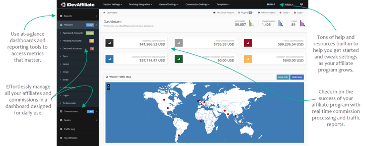
    • iDevAffiliate is one of the most user-friendly cloud-based software or self-hosted software available where people can create their affiliate programs and customize them. Mastering the art of tracking, feature-rich iDevAffiliate designed for both expert and novice users. It incorporates a built-in onboarding guide providing you a step by step guild alongside video tutorials. Becoming more and more popular every year, it has a bunch of features described below
    • Dashboard using graphs and color scheme to provide insights on lead tracking, reports, top affiliates, and commission.
    • Affiliated can integrate multiple social media accounts like Facebook, LinkedIn, Twitter, and Pinterest to build their social media presence.
    • Each product/service has a different commission, making it an outstanding tool for managing different profit margins or rewarding higher commissions on specific items.
    • With more than 175+ integration of built-in shopping carts, eCommerce platforms, direct payment providers, WordPress plugins, subscription systems, and lead or landing pages, you get everything set up for you in just a single click.
    • Unique coupon code tracking that allots affiliates their unique coupons to use in their marketing campaigns.

    iDevAffiliate

    Depending on your business model and program, one marketing affiliating tracking tool is perfect for your needs. However, easy of using software, accurate tracking, available features make one software more suitable for you. iDevAffiliates is one of the software that has many features on top of core features like SEO linking, localization tools, tier recruiting, fraud protection, etc., which make it value-added software for managing and streamlining your affiliate programs.

  • Guide to Market your Products in China

    Guide to Market your Products in China

    As the largest market in the world, China has a lot of potentials to offer for enterprises and brands to expand their businesses. Knowing the market will help you to better understand the consumer’s needs and to adjust your promotion accordingly.

    Unique market habits

    China is a huge market, and Chinese consumers’ preferences vary from a city to another.

    Doing in-depth researches about the demand of your products in the local market and provinces, will help you to know the local preferences and the way you should communicate.

    The growth in the Chinese market is undoubtly enormous, it is actually one of the only countries in the world to observe an economic recovery during the pandemic, which means that standing out among your competitors and getting recognized by the local market is getting harder and harder, as the competition to “seduce” Chinese customers is aggressive.

    China is in demand of new businesses and the country is moving forward fast. Provinces tend to specialize themselves and that key for Western brands who want to enter the market.

    For instance, Guangzhou is the kingdom of the manufacturing industry (textile, electronic, apparels, toys…), Shenzhen and Beijing invested in the IT, biomedicine and communications industries while Shanghai is specialized in the financial, petrochemicals, chemicals or pharmaceutical industries.

    Communication about your products

    Needless to say, that marketing your business on the internet is the first step of all when you want to make your way in the market. Chinese consumers are highly connected, 90% of the millennials are shopping online according to KPMG and, without a strong digital strategy, selling your products in China might be difficult.

    Search engine marketing in China is different than in the West, where Google is leading the industry. Baidu is the main search engine but other companies like Sogou, Haosou (360) and Shenma are emerging, each one of them offering advertising solutions to get exposure.

    Social media and communities are also trending and dozens of networks exist to target customers who have common interests, thanks to video, live-streaming and topic-based apps.

    Therefore, under the circumstance of intense sales environment, major merchants have gradually integrated social media and other scenes into their sale process, the key being to identify the right network used by potential customers.

    In China, the most common social media platforms that companies go to are WeChat, Youku (YouTube-like) and TikTok (DouYin is the local version of the app).

    • WeChat account page functions as a website where you can list your products, set up your customer service and even link purchases to your account, from which you can withdraw the earnings to your bank account.
    • Youku works like YouTube for advertisers and allows brands to place ads in popular videos and of course, to make videos.
    • Douyin is a platform where users can create and share videos publicly, but as for companies, they are also platforms where they can promote their businesses and products. They stand out because they offer a different way for users and brands to share in a more creative and lively way, thus, it reduces the resistance of consumers to promotions and advertisements that are being displayed on the platform.

    Other platforms exist. The key is to identify your target customers, to invest in the right channels and a digital agency specialized in the Chinese marketing can help to understand the differences between, WeChat, Weibo, Red, Douyin, Toutiao, Weitao, Kuaishou.

    Best practices to sell in China

    For companies that want to quickly market a new product in China, the goal is to combine the advantages of online marketing and rapid communication to carry out new product marketing planning.

    Meanwhile, offline promotion and demographic expansions cannot be ignored either.

    Identify a city where the market is relatively vacant and hire a professional business development team to expand your business is key to understand the local market.

    The product life cycle is becoming shorter and shorter, especially in China. Manufacturers are constantly introducing new styles and materials in order to continuously satisfy the desires of consumers, which also tend to bring the end prices down for some industries. Find the right positioning and being flexible are two important factors of success in China.

    Understanding the market and the customers, having a quality website in Chinese, adapting the communication to the local habits, using the Chinese social media and search engines are crucial to be more visible in the largest market in the world.

  • Long time Apple marketing chief Phil Schiller is replaced

    Long time Apple marketing chief Phil Schiller is replaced

    Apple has announced that its long-time marketing chief Phil Schiller is leaving his current position and is being replaced by Greg Joswiak. The 60-year old Schiller, whose exact title was Senior Vice President of Worldwide Marketing, joined Apple in 1987. In 1993 he left to join FirePower Systems and in 1995, he moved to Macromedia. He returned to Apple in 1997. He now becomes an Apple Fellow and will continue to run the App Store and Apple Events. Under his new position, he will continue to report to CEO Tim Cook.

    Speaking of Cook, Apple’s Chief Executive said, “Phil has helped make Apple the company it is today and his contributions are broad, vast, and run deep. In this new role, he will continue to provide the incredible thought partnership and guidance that have defined his decades at Apple. Joz’s many years of leadership in the Product Marketing organization make him perfectly suited to this new role and will ensure a seamless transition at a moment when the team is engaged in such important and exciting work. I’m thrilled that the whole executive team will benefit from his collaboration, ideas, and energy.”

    Schiller recently helped Apple plan and prepare for the virtual presentation of WWDC 2020. The Developers Conference was streamed online this year because of the coronavirus, and Apple put on an amazingly polished show. Schiller has seen just about everything during his years at Apple; he was featured prominently in many new product announcements even taking a phone call from Steve Jobs during the 2007 unveiling of the original iPhone.With Steve Jobs on medical leave in 2009, Schiller unveiled the iPhone 3GS. He also worked at Apple on marketing the of products like the iMac, MacBook, MacBook Pro, iPod, macOS and subsequent devices. He’s also credited with coming up with the click wheel interface used on the iPod.

    “It has been a dream come true for me to work at Apple, on so many products I love, with all of these great friends — Steve, Tim, and so many more,” Schiller said. “I first started at Apple when I was 27, this year I turned 60 and it is time for some planned changes in my life. I’ll keep working here as long as they will have me, I bleed six colors, but I also want to make some time in the years ahead for my family, friends, and a few personal projects I care deeply about.”

    Replacing Schiller as the SVP of Worldwide Marketing, as we mentioned at the beginning of this article, is Greg (Joz) Joswiak. During the past four years, he has been the vice president of Worldwide Product Marketing and has over 20 years of experience working at Apple handling product management and product marketing for several “breakthrough products including the original iPod and iPhone.” Apple says that he will be “responsible for Apple’s product management and product marketing, developer relations, market research, business management, as well as education, enterprise, and international marketing.”

    This should be an interesting time for Joswiak with Apple set to release four new iPhone models at the same time, all of them expected to connect to 5G signals for the first time. And Apple could be introducing its first Apple Glass headset, a completely new product, as soon as this year. Other rumored products that Joswiak could be in charge of marketing include wireless charging pad AirPower and Apple’s Ultra-wideband tracking system Apple Tags.

  • AirAsia picks creative agency in India

    AirAsia picks creative agency in India

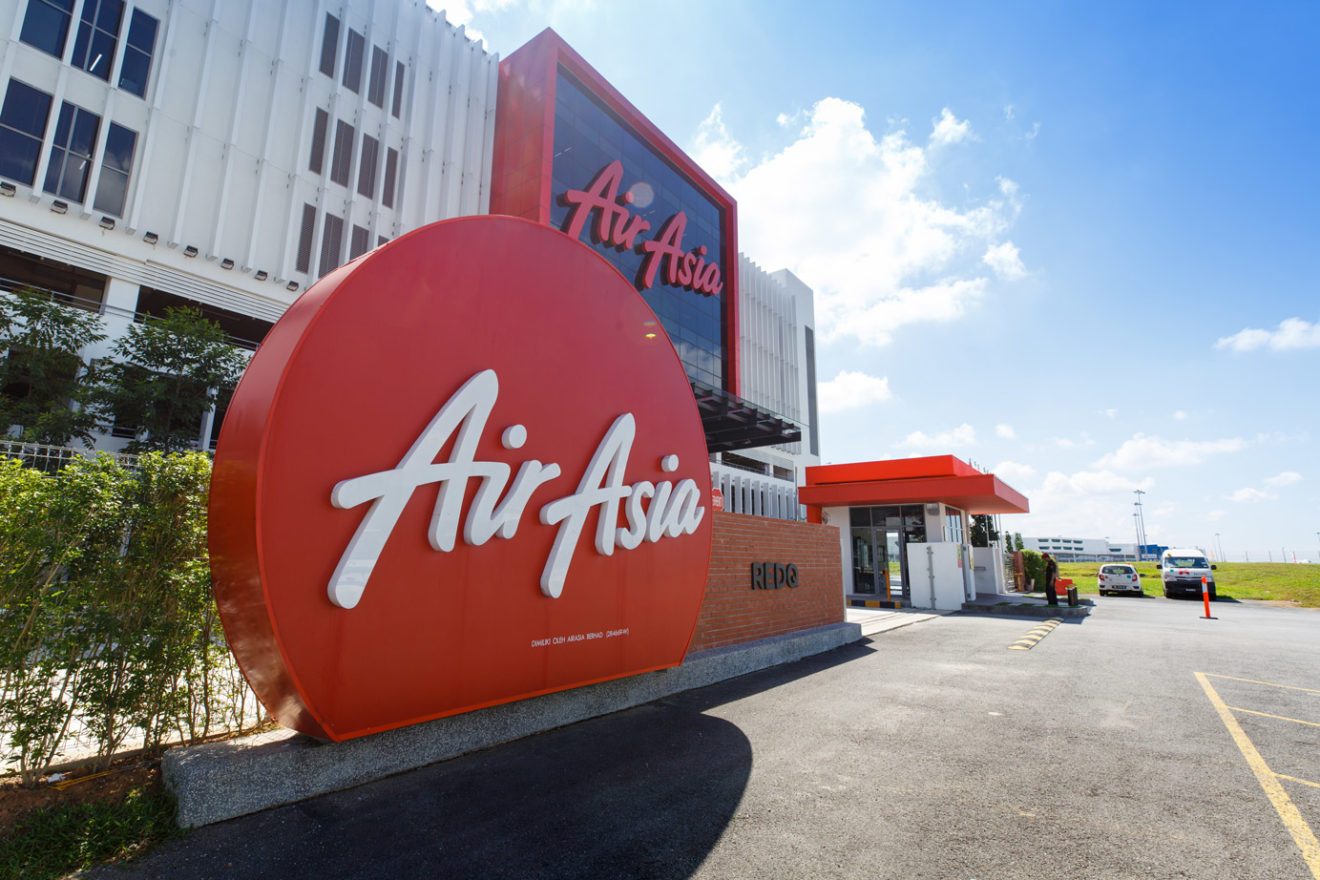
    AirAsia India has appointed Wunderman Thompson South Asia to manage creative duties following a pitch in 2019. The agency will be responsible for brand strategy and shaping the communications narrative in India, taking care of above-the-line and digital creative mandates.

    According to the press statement, Wunderman Thompson understood AirAsia India’s strategic and brand objectives and will be working on developing the brand’s strong and sustainable positioning that will cut across geographies, demographics, and mindsets and deliver differentiated content with incisive insights. A+M has reached out to Wunderman Thompson for additional information.

    AirAsia India is a joint venture between Tata Sons and AirAsia Investment. AirAsia India commenced operations on 12 June 2014 with Bengaluru as its primary hub. Its agenda is to drive salience across markets with customized content and clutter-breaking communication that inspires diverse audiences with its brand promise and the aspirational journey ahead.

    AirAsia India’s CMO Siddhartha Butalia said the agency approached the opportunity with strong strategic insights and compelling creative ideas that bring the emotion and inspiration back to travel. “We’re looking forward to partnering with them to drive consideration and relevance across the customer journey, take off to even greater heights and explore new territories,” Butalia added.

    Senior VP and managing partner at Wunderman Thompson, Kundan Joshee, said AirAsia has a unique value proposition and a distinct challenger brand spirit that makes it such a powerful brand.

    “Our job is to partner with AirAsia and bring alive its philosophy of service, efficiency and innovation. In today’s times, it’s essential for a brand to have multiple conversations with people across touchpoints and this gives us the opportunity to do new-age work and drive interesting conversations around the brand,” he said.

    Closer to home, AirAsia Group and Universal Music Group partnered last year to launch RedRecords, a new label partnership focused on signing, developing and breaking new Asian artists and elevating “A-pop” globally to new audiences throughout the region and around the world. RedRecords will focus on discovering and developing talent from Southeast Asia and throughout the wider continent and form a clear and unique sound that reflects the diverse and rich musical culture of the continent.

    The airline also announced last November that it is expanding its online offering to include flights on other airlines as it transforms airasia.com into Asia Pacific’s leading travel and lifestyle platform. This was done in partnership with leading travel technology company Kiwi.com. It also unveiled SNAP, a new name for flight + hotel packages on airasia.com offering the lowest guaranteed package prices in 2019.

  • How video can boost online shopping experiences

    How video can boost online shopping experiences

    By the end of 2019, there will be 20.3 million online shoppers. For e-commerce brands and retailers, that translates to an abundance of opportunities to engage with consumers – whether it be gaining new customers or building brand loyalty with existing.

    With the rise of social media, mobile usage, and third-party retail sites, it’s become even more critical to stand out to consumers, so retailers must ensure their products are portrayed in an engaging, attention-grabbing way.

    Leveraging video, retailers can merge the tangibility of offline shopping with the convenience of e-commerce, resulting in an experience that offers the best of both worlds while also allowing a brand to show their products in action.

    Visuals are More Influential

    80% of people remember what they see, so visuals have become a powerful tool in the world of e-commerce as consumers are much more keen to purchase a product after they’ve seen what it looks like in a real-life scenario.

    Video takes visual inspiration to the next level as it’s interactive, appealing, and it allows for a higher engagement rate with its viewers. It’s also changing the buyer’s journey as consumers can leverage videos in various ways when they’re considering what to buy; they can consume or share user-generated content, view influencer content, share product reviews and more. In fact, a study conducted by Brightcove last year found that 53% of adults engage with a brand after watching a video.

    Consumers spend countless hours browsing digital channels, so brands need to capitalize on this habit by communicating in a way that’s familiar to consumers, while simultaneously offering convenience and the opportunity to easily purchase the products they desire.

    Investing in Video

    To reap the benefits of this hyper-connected world, there are many types of video content that retailers can incorporate into their e-commerce strategies.

    ● Shoppable Videos: When a consumer desires a product, purchasing should be immediate and seamless. Shoppable videos offer calls-to-action and add-to-cart- functionality that turns inspiration into a sale within seconds. In fact, Endeavour Drinks Group (EDG) has seen 41% of its viewers add products to their cart as a result of interactive video.

    ● Live Videos: Live streamed videos offer a level of authenticity that pre-recorded videos cannot as they allow viewers to be in the moment with a brand. Whether it be a product announcement or a demo, live videos add an element of credibility and allow audiences to relate to a brand more closely.

    ● Product Demos: Demonstrating all that a product has to offer is critical to proving its value. Online electrical retailer AO uses video to give more insight into product descriptions, giving its customers the confidence they are making the right choice.

    When investing in a video strategy for e-commerce, it’s critical for brands to understand how it’s performing. Leveraging video analytics is key to evaluating metrics like view count, engagement scores, play rate, etc. so that retailers can understand what videos are driving ROI and which need improvement.

    Consumers today want an e-commerce experience that correlates to their everyday lives, and video gives them just that – an interactive, engaging experience that offers authenticity and an immediate path to purchase.

  • HSBC Singapore Adds Directors to Board

    HSBC Singapore Adds Directors to Board

    The two new board members will help the bank accelerate its business transformation in Singapore and deepen its foray into the digital space.

    HSBC Bank (Singapore), the local subsidiary of HSBC that includes retail banking and wealth management businesses, is adding Penny Goh and Josh Bottomley to its board of directors, the firm said in a press release on Wednesday.

    Goh is a co-chairman and senior partner of Allen & Gledhill, and leads the law firm’s corporate real estate practice. With the appointment, she will become a member of HSBC Singapore’s Audit and Risk committees. Bottomley is HSBC’s global head of Digital, Retail Banking and Wealth Management, a role he has held since May 2013. He has also held various senior appointments at Google and LexisNexis.

    HSBC said in June 2018 that Singapore was one of eight priority markets globally. In September 2018, HSBC Singapore said it would double the overall combined retail and private banking total wealth and hire more than 400 retail and private banking customer-facing employees over five years.

    Singapore is a growth market for HSBC and one where we want to build scale, and both appointments have a very strong and significant connection in support of delivering the strategy, Mukhtar Hussain, HSBC Singapore chairman and HSBC’s Asia Pacific head for Belt and Road Initiative, said about the appointments.

    Together, both will bring a very strong blend of experience, expertise and ambition in the oversight of HSBC’s Retail Banking and Wealth Management business in Singapore. Moreover, the appointment of such high-caliber individuals reflects the importance and rising prominence of the Singapore franchise for HSBC globally, Hussain added.

    Earlier this month, HSBC CEO John Flint, 51, announced his sudden departure after being at the helm for only 18 months, saying the bank needed a change at the top to address the «challenging global environment.» In the meantime, Noel Quinn, HSBC’s head of global commercial banking is holding the role of interim CEO.

  • Samsung angers its customers by advertising the Galaxy Note 10 line in the wrong place

    Samsung angers its customers by advertising the Galaxy Note 10 line in the wrong place

    You just can’t escape the Samsung Galaxy Note 10 and Galaxy Note 10+ anywhere after Samsung introduced the new line this past week. And that happens to be true especially if you use an older Samsung Galaxy handset model with Bixby, Samsung Pay and the Samsung Push Service that disseminates updates and notifications meant for Samsung phones only. As spotted by a number of Twitter users including XDA’s Max Weinbach, those using the aforementioned features are being spammed by Samsung with ads for the new Galaxy Note 10 line.

    Bixby implores users curious about the new phones to inquire about them. “Curious about the Note 10? Ask Bixby!” shouts the virtual digital assistant. A screenshot of Samsung Pay shows the mobile payment system offering users a closeup of the Note 10 at AT&T, T-Mobile, and Verizon. Needless to say, the response from Samsung users is not positive especially since many of those spammed have already pre-ordered one of the new phones. And the manufacturer is making it harder to disable the spam it delivers via Bixby by forcing users to go into the Bixby settings to disable marketing notifications. To do this, open Bixby and tap on the menu icon on the top right. Tap on Settings and turn ‘Marketing Notifications’ to off.

    We also have to wonder what Samsung is saying to those who shelled out big bucks for the Galaxy Note 9. What is the message here? Is it that the phone you shelled out $1,000 for last year is no longer capable of doing great things? We get that Samsung is proud of the new Note 10 line, but spamming its own customers seems more than a bit unsavory.
  • Versace apologises for the bold suggestion that Hong Kong is a country

    Versace apologises for the bold suggestion that Hong Kong is a country

    Italian luxury label Versace and its artistic director Donatella Versace apologized on Sunday after one of the company’s T-shirts was widely criticized on social media in China for identifying Hong Kong is a country.

    Versace, which was bought by US-based Capri Holdings in September, said on its Weibo account that it had made a mistake and as of July 24 had stopped selling and destroyed the T-shirts.

    The T-shirt, images of which were widely posted on Chinese social media, featured a list of “city-country” pairs, including “New York-USA” and “Beijing-China”. But it also described Hong Kong and Macau as “Hong Kong-Hong Kong and Macau-Macau.”

    The studio of Versace’s China brand ambassador Yang Mi, one of the country’s most well-known actresses, also said on its Weibo account that she was ending her contract with Versace over the issue.

    “China’s territorial integrity and sovereignty are sacred and inviolable at all times,” Jiaxing Media said in the statement.

    The ending of Yang’s relationship with Versace was one of the most viewed topics on Weibo on Sunday, attracting more than 640 million views.

    Milan-based Versace is the latest company to become entangled in political issues involving China, which since last year has increased its policing of how foreign firms describe Hong Kong and Macau, former European colonies that are now part of China but run largely autonomously.

    “Versace reiterates that we love China deeply, and resolutely respect China’s territory and national sovereignty,” the company said in a statement.

    Donatella Versace, sister of the fashion house’s late founder Gianni, issued a similar statement on her official Instagram account.

    “Never have I wanted to disrespect China’s National Sovereignty and this is why I wanted to personally apologize for such inaccuracy and for any distress that it might have caused,” she said.

  • Victoria’s Secret controversial marketing chief stops

    Victoria’s Secret controversial marketing chief stops

    Longtime Victoria’s Secret chief marketing officer Edward Razek will resign following months of negative PR centered on his comments about plus-size and transgender models in a Vogue interview.

    Edward Razek, who has personally selected the lingerie brand’s models for more than 15 years, said in the interview that such models had no place at Victoria’s Secret’s fashion shows, a remark well out of step with contemporary attitudes in the industry and among the general public.

    His departure came within days of Victoria’s Secret announcing its first steps toward inclusivity with the appointment of Brazilian transgender model Valentina Sampaio, (pictured above).

    “A few weeks ago, I shared with Les [Wexner, Victoria’s Secret owner L Brands’ CEO] my desire to retire sometime around mid-August,” said Edward Razek. “It was a tough conversation to have because, as some of you must know, we have shared so much together for so many years.”

    The departure comes at a point when more than 100 models have signed an open letter to Victoria’s Secret out of concern for the safety of women aspiring to model for the lingerie brand, following allegations of sexual misconduct directed at photographers who worked with the brand. The company has also been tainted by widespread media coverage of links between Wexner and disgraced sex offender Jeffrey Epstein, now in jail on charges relating to procuring sex with minors.

    “Corporations tend to treat the discovery of abuses as public-relations crises to be managed rather than human-rights violations to be remedied,” said founder and executive director of The Model Alliance Sara Ziff. “The Respect Program provides Victoria’s Secret an opportunity not only to right the wrongs of the past but also to work towards prevention.”

    Ed Wolf, L Brands’ senior VP of brand and creative, and Bob Campbell, VP of creative for Victoria’s Secret, will take over from Edward Razek until a permanent replacement is found.

  • AirAsia Wants Tools to Engage Customers Moving to Messaging Apps

    AirAsia Wants Tools to Engage Customers Moving to Messaging Apps

    Consumers now want to talk to businesses and find resolutions the way they talk to their friends and family, and this is pushing a big transition towards messaging channels, according to Adam Geneave, chief customer happiness officer for the low-cost Asian airline.

    The carrier added support for Tencent’s WeChat in China earlier this year and was seeing significant adoption for the platform, Geneave said in an interview. In fact, the messaging tool since had grown to become AirAsia’s biggest communication channel in the Chinese market, he noted.

    The airline’s engagement with customers through such channels played a key role in its business strategy as they enabled consumer queries to be addressed quickly, he said, and urged technology and other solutions providers to integrate messaging tools into their products.

    According to Geneave, AirAsia currently provides WeChat support via a plugin developed by Salesforce.com, which suite of products had been rolled out over the past year as part of the airline’s overhaul of its customer service infrastructure. These included Salesforce Sales Cloud, Marketing Cloud with Social Studio, Service Cloud, and Community Cloud.

    The deployment enabled AirAsia service agents across eight markets to access a unified view of customer cases from all communication channels, encompassing online, email, live chat, phone, and airport communications.

    With the transition into messaging evolving so rapidly, though, it has been difficult for the airliner and its technology partners to keep pace, Geneave said. For instance, support for Facebook’s WhatsApp still was lacking, he noted.

    “We have been very vocal in wanting such support, including for Line and KakaoTalk,” he said, noting that WhatsApp processed 65 billion messages a day worldwide and there were 1 billion active WeChat users. “The way people are interacting is changing.” He attributed AirAsia’s plans to close all its call centers this year in part as a response to this trend.

    The airline is estimated to fly 100 million passengers this year and 20 million of its service cases each year are facilitated on Salesforce platforms, which currently support more than 22,000 AirAsia employees in nine languages.

    The data that runs through these systems also allow the airline to deliver personalized experiences and facilitate better decision-making.

    Geneave explained that the different datasets were collated onto a single platform and managed at AirAsia’s command center. This was manned by duty managers who would track Salesforce dashboards to identify patterns that could affect its business and monitor tweets as well as other social media messages coming through on Social Studio.

    This provided valuable learnings about its customers and, with these insights, enabled his team to work on projects and improve processes and systems to further enhance customers’ engagement with AirAsia, he said.

    The ability to study the data and identify emerging trends also meant his team could be aware of service outages even before the IT team was alerted of it, he noted, adding that his team also tracked other relevant developments such as airports and other airlines that might and might not compete directly with AirAsia.

    The airline in January also introduced its artificial intelligence-powered (AI) chatbot, named AVA, which could handle eight languages including Bahasa Indonesia, Vietnamese, and Simplified Chinese.

    Geneave said the chatbot had been performing well and handled a significant chunk of queries coming through on its live chat. AVA also was deployed on the airline’s Facebook Messenger platform.

    Apart from operating on a strong knowledge base, he said the chatbot also continued to learn from conversations it had with customers. His team also trained it on a daily basis, he added.

    AVA’s deployment was critical to enable the airline to be more agile in the way it managed its customers, he said, noting that the chatbot could take on a significant volume and allow queries to be handled more quickly.

    Geneave also pointed to the emergence of AI and machine learning technologies as a crucial development as these would further enable AirAsia agents to react more quickly and identify trends that otherwise would have taken hours to analyse.

    Beyond customer services, too, it would give airlines the ability to save fuel – for example, by improving the way it scheduled crew rosters and managed its resources, he said.

  • Pomelo Purpose range now features recycled PET fabrics

    Pomelo Purpose range now features recycled PET fabrics

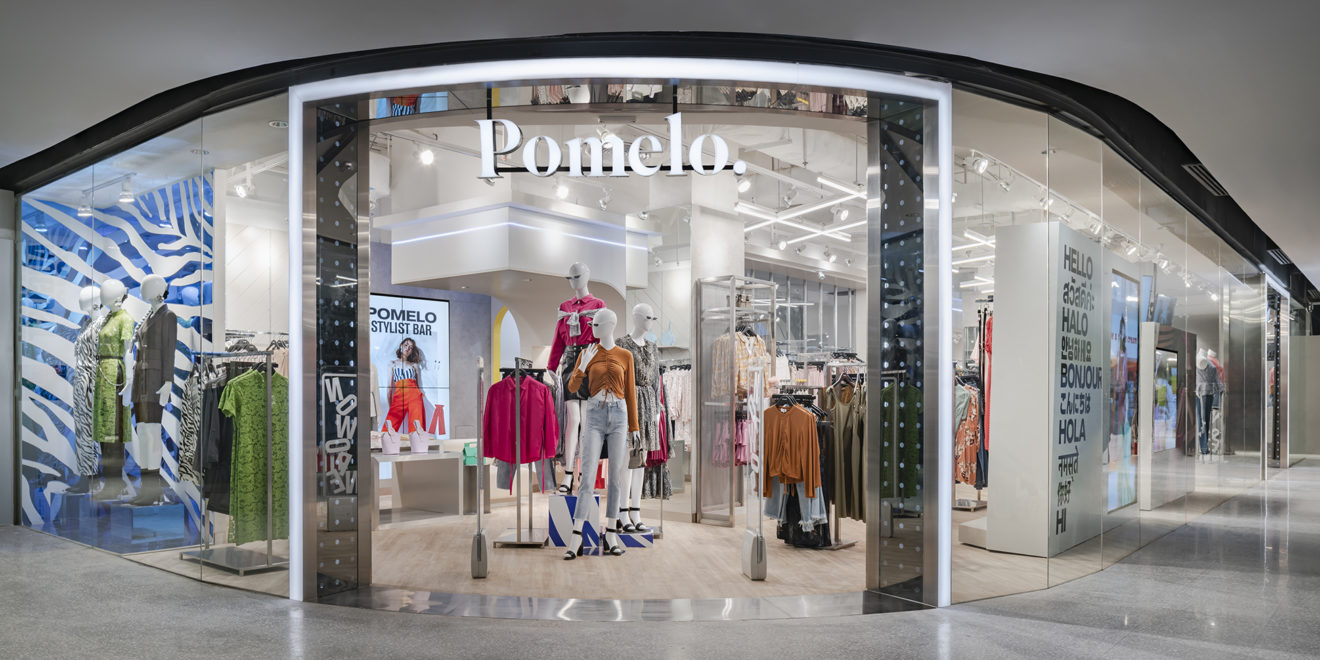
    Omnichannel fashion brand Pomelo has released a third collection for its permanent sustainable line Purpose.

    Seeking to lead the sustainability charge in the Southeast Asian fashion industry, the brand will be introducing Recycled PET (RPET) material to its Pomelo Purpose production processes for the first time.

    As with the brand’s previous Pomelo Purpose collection, which placed a focus on clothing made exclusively from organic fabrics, dyes and cruelty-free materials, this collection intentionally incorporates eco-friendly practices from within the supply chain. Aiming to bring awareness to the importance of building sustainable fashion futures, the latest addition to the Purpose line is produced using RPET material and organically-sourced fabrics including linen, cotton, and natural dye.

    RPET material, which is obtained from EcoMax, one of the few Asian suppliers of environmentally-friendly renewable fabric, is made from 100-per-cent post-consumer PET bottles that would otherwise enter landfills or pollute natural habitats. By incorporating RPET material into the production of Purpose pieces, Pomelo hopes to create higher-quality, lasting pieces that ease production pressures on finite natural resources.

    Pomelo is encouraging its customers to drop off used clothing at its select partnered locations and offline stores, including the newly-opened Singapore flagship store at 313@Somerset. Pomelo Purpose shoppers can also schedule free pick-ups by scanning a QR code stitched into their Purpose products. All collected clothing is then redistributed to underprivileged partner communities, organisations and charities in Thailand, Singapore and Indonesia.

    “Purpose by Pomelo has led the way for the fashion industry in the region to adopt environmentally-friendly practices through sustainable materials and processes,” said Pomelo CEO David Jou. “With this launch, we are hoping to make an even bigger impact by providing all Pomelo shoppers an opportunity to start their recycling journey using our free pick up service. We’re very excited to continue bringing innovation to this very important topic.”

    From now until September 5, all Pomelo online customers in Singapore, Thailand and Indonesia will be able to book a free pick-up for up to 3kg of used clothing via the Pomelo App. After the promotional period, free pick-ups will be limited to first-time Pomelo Purpose shoppers only.