Tag: New Zealand

  • Wendy’s New Zealand business up for sale after 34 years

    Wendy’s New Zealand business up for sale after 34 years

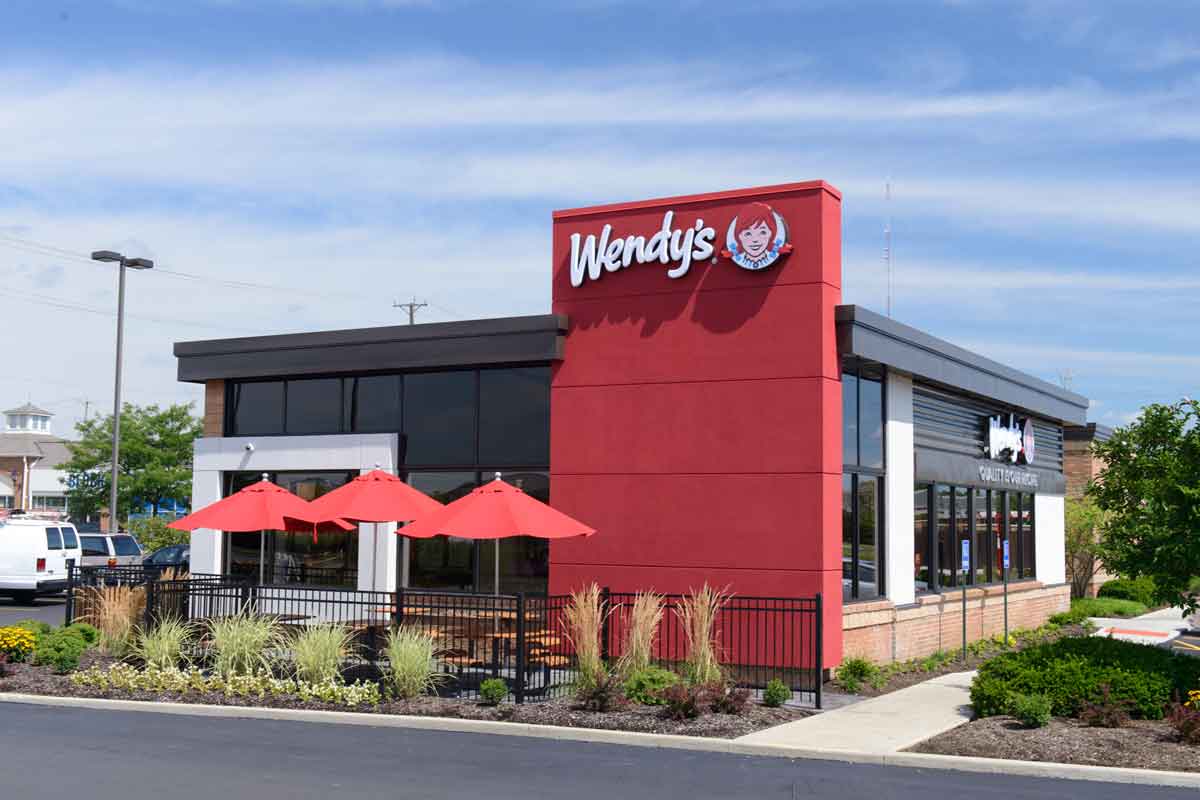
    Wendy’s NZ, the current master franchisee, owner and operator of all Wendy’s hamburger restaurants throughout New Zealand, is on the market for the first time in 34 years.

    The brand was brought here in 1988 when Danny and Dianne Lendich opened the first store in Te Atatu after a deal between the international franchisor and the original master licensee fell through. The Lendich family went on to develop 22 restaurants – 12 in Auckland, two in the South Island and eight throughout the North Island – all of which are company-owned and included in the sale. There are no sub-franchisees.

    With Danny and Dianne Lendich now in their 70s, their daughter and CEO of Wendy’s NZ Danielle Lendich, says business has never been better, but now is the right time for change.

    Internationally, the American burger brand has over 7,000 restaurants and is planning to accelerate global growth, opening over 90 new restaurants in the first quarter of 2022. The company says it is looking for a qualified franchisee who can help grow and scale the business throughout New Zealand. While sub-franchising is not specifically mentioned, it is a strategy Wendy’s uses in other countries.

    Traditionally, New Zealand has been an attractive market for international brands, with Carl’s Jr. and Wendy’s having both achieved world-record sales levels for opening weeks here. However, opportunities for franchisees have been limited, with both companies operating via national master licensees who have not sub-franchised. This has left the owner/operator burger market open to McDonald’s (which has over 170 restaurants here) and locally-developed gourmet burger franchises such as BurgerFuel and Burger Wisconsin.

    Record sales

    Danielle Lendich says that Wendy’s NZ is performing extremely well and is ready for growth.

    ‘Operations are strong across the country and we’re experiencing record sales. Even during the worst of Covid, there has been huge demand. Obviously there have been challenges, but it’s a testament to the team that we’ve been able to get though the disruption and emerge even stronger.’

    A family-owned business with deeply-rooted values and relationships, Wendy’s NZ has many staff and suppliers who have been with the company for decades, and suppliers of beef, sauces and fresh produce going back to year one,’ Danielle says.

    ‘We hope the new franchisee will operate with the same cores values and look after not just the business, but the wider Wendy’s family. The future is very bright at Wendy’s.’

    The sale of Wendy’s NZ / WendCo (NZ) Limited is being handled by Spencers Chartered Accountants & Advisers in New Zealand and internationally by partner Azure.

  • Cleanery, eco-cleaning start-up set for Australian launch

    Cleanery, eco-cleaning start-up set for Australian launch

    Cleanery, the innovative Kiwi eco-cleaning and personal care products company, has closed an oversubscribed Seed Round of $2.34 million.

    Kiwi eco-cleaning start-up attracts big name backers for Australasian growth

    Cleanery, the innovative Kiwi eco-cleaning and personal care products company, has closed an oversubscribed Seed Round of $2.34 million.

    The raise attracted significant interest from the New Zealand business community, including Peter Cullinane, Nicola O’Rourke, and Michael Stiassny (via their company Founders Advisory), Shane Bradley (formerly GrabOne), and Lance Wiggs, via the newly minted Climate Venture Capital Fund.

    The Climate Venture Capital Fund is the largest investor in this Seed Round. Also investing is Icehouse Ventures, Angel HQ, and friends and family who have supported the company from day one.

    “This is an exciting time for us,” says Cleanery co-founder Mark Sorensen. “The size of the investment is larger than we initially anticipated and the quality of the people backing us is incredible. To have the likes of Peter Cullinane who made such a success with Lewis Road Creamery, or the Climate VC Fund, which sees our emissions reduction potential, gives us real confidence.

    “The money raised will be used to deliver an exciting New Zealand and Australian marketing plan, a USA e-commerce pilot, and resourcing the business for rapid growth,” says Sorensen.

    After a successful launch supported by Farro in October 2021, the products are already loved by many New Zealanders, with a growing direct-to-consumer offer.

    Woolworth’s launch

    The successful Seed Round coincides with Cleanery’s launch into Australia with a national rollout in Woolworths supermarkets, starting this week.

    “We have great capacity in our Auckland factory – and so it’s all about growing market share. The products work exceptionally well, and we’ve been selling online and in select outlets since last year, so we know there’s demand. It’s now about getting scale, which Woolworths and other supermarkets will bring in spades.”

    Just add water!

    Cleanery’s patented technology is revolutionising the cleaning and personal care categories by removing the water and the plastic bottle and simply using a sachet.

    “There’s no point shipping water when we’ve all got perfectly good water in our taps at home. And we all know the problem caused by packaging waste – so let’s reuse what you’ve already got under the sink,” says co-founder Ellie Brade.

    Cleanery products come in a recyclable sachet that can be mixed with water in a bottle the company supplies – or one of your own.

    “We’ll even give you a sticker to put over the old label,” she says.

    Cleanery estimates its products reduce plastic by 99%. And by not shipping water Cleanery can fit the equivalent of over 200,000 bottles in one shipping container – up to 20 times more than traditional products and at a fraction of the weight.

    Cullinane likes the disruption

    The proposition was immediately attractive to Peter Cullinane, whose former company Lewis Road Creamery shook up the dairy aisle. “The cleaning and personal care products industry is very large and very much ready for a disruption,” he says. “Cleanery is such a simple proposition: it’s the cleaner we want, not the bottle. And it works. It really does.”

    Tests demonstrate how Cleanery’s products clean more effectively than other mainstream cleaning products – eco or otherwise – while still having a safe, natural, plant and mineral based formulation.

    “So you have a cleaner that works better than any other, has such an elegant packaging solution, costs less, and has impeccable environmental credentials. What’s not to like?” says Cullinane.

    Emissions saved

    Dr Jez Weston, a partner in the Climate VC Fund says Cleanery meets its strict criteria for emissions reductions.

    “Our mission is to fund high growth companies that deliver significant emissions reductions. Cleanery means you’re not making more single use plastic bottles and spray heads and it means you’re not hauling that weight of water around the world. Every household uses cleaning products, so the emissions savings are going to be substantial.”

    This is the second investment by Climate VC Fund. Rohan MacMahon, partner of the fund, says Cleanery’s environmental credibility is matched by a strong management team. “We have huge confidence in the technical and commercial talent that Mark has attracted.”

    Born on a beach

    The investment in Cleanery is sweet reward for Sorensen, whose journey to solving plastic pollution started aged 14.

    “When we launched the company, my mother dug out an old essay I’d written in Social Studies about the urgent need to address the problems with packaging. I’d forgotten I’d even written it. I got an A+ by the way.”

    The essay was forgotten but the sentiment remained and during a three-day tramp in New Zealand’s Far North in 2017, Sorensen was surprised to find plastic on the coastline. “Here I was on remote beaches in the most remote country on Earth and I was still finding plastic. I was really motivated to do something.”

    Having worked with many of New Zealand’s most exciting science and technology companies as an advisor, he was well placed to know how to start and who to call on. But the technical challenge proved immense. “it’s one thing to slap together something that looks and smells like a cleaner – to create something that actually does the job, and can truly replace mainstream products, is another thing altogether.”

    Through a series of collaborations and explorations, the initial chemistry was developed and the real work – scaling up a factory capable of producing these novel formulations – began.

    “The timing is right. Consumers want to address the problem. China has stopped taking our so-called ‘recycling’ and the government and industry realise they need to do something.

    “And Covid helped highlight the need for scalable, local, manufacturing. The decisions we made during early Covid lockdowns, when supply chains started looking dicey, are paying off as we are now in control of our destiny with our own plant based here in Auckland and can produce product at any volume.”

  • Cult skincare brand MooGoo launches into New Zealand

    Cult skincare brand MooGoo launches into New Zealand

    As of this month New Zealanders are now able to walk into pharmacies across the country and buy one of Australia’s most popular skincare lines, MooGoo, as the number of Kiwis with skin disorders is on the rise.

    New Zealand has one of the highest incidence of eczema in the world, with the skin condition now affecting one in three Kiwis, and around 15% of children.

    MooGoo CEO Melody Livingstone says the brand’s expansion into New Zealand was driven by strong interest from local customers.

    “Given the climate in New Zealand, with so many people suffering from skin conditions, we fast-tracked our entry,” says Ms Livingstone.

    “The climate is very similar to Ireland, which per capita is our biggest market outside of Australia,” she added.

    MooGoo has more than 45 natural products that help a range of skin problems, including eczema and psoriasis. All of them are now available online in New Zealand, and more than half the range will be stocked on shelves.

    In Australia demand for the products has skyrocketed, with the company seeing some 30% growth and it’s now stocked in just about every pharmacy across the country.

    “Consumers are becoming a lot more knowledgeable about product ingredients and are increasingly seeking natural and eco-friendly treatments and remedie,” explains Ms Livingstone.

    “There’s also been a lot of anxiety surrounding the pandemic, which seems to have caused an increase in eczema, psoriasis and other skin flare-ups.

    “We’re also hearing a lot of people talking about acne and perioral dermatitis, caused by heat, moisture, friction, trapped dirt and bacteria from wearing a mask for long periods of time and also suffering with painful cracked hands from continuous hand sanitising and washing.

    “The crazy weather conditions haven’t been helping either.”

    In Australia, MooGoo products are also used in neonatal, paediatric and oncology wards and in the UK the business is supported by the British equivalent of the Medicare – the NHS.

    “At MooGoo, our ingredient philosophy is simple – to make effective products with healthy ingredients for you, your loved ones and the environment,” adds Ms Livingstone.

    “We understand all consumption has an impact, and our goal has always been to minimise our impact on the environment.”

    MooGoo products can now be purchased at 58 New Zealand pharmacies and health stores, it is also available online at www.moogoo.com.au

  • Unilever’s new New Zealand chief finally takes his office

    Unilever’s new New Zealand chief finally takes his office

    Unilever New Zealand MD Cameron Heath will relocate to take up the new role with his team this month after nearly six months of managing the role remotely.

    His predecessor, Nick Bangs, will move to Sydney to take on the role of GM, home, beauty and personal care for Unilever Australia and New Zealand.

    Heath spent seven years working as GM Baltics with Unilever in Latvia and four years as marketing director food & beverages in Prague. Prior to that, he worked at Procter & Gamble for seven years, taking responsibility for customer development and category strategy roles, including time working in the New Zealand market.

    Heath said Unilever’s commitment aligns with his personal goal to care of the health of the planet and create a fairer, more diverse, and equitable world.

    “As one of the world’s largest producers of consumer goods, we have both a responsibility and an opportunity to do more good for our planet, not just less harm,” said Heath.

    With 15 years in the FMCG industry, Heath has experience in marketing and category management, so he understands and has awareness of the challenges that lie ahead for the consumer goods sector.

    “I understand first-hand the pressure retailers and consumers are facing as we deal with supply-chain disruption and increased cost of production across the board,” he added.

    Cameron Heath started his role remotely last November and will join his team in New Zealand this month.

  • Singapore sneaker reseller Ox Street to launch in Australia, NZ

    Singapore sneaker reseller Ox Street to launch in Australia, NZ

    Singapore-based online sneaker resale marketplace Ox Street is launching a trans-Tasman expansion, opening an e-commerce store in Australia.

    “Australia is a perfect fit for the community we want to build in the long-term,” said Gijs Verheijke, founder and CEO at Ox Street. “We see a big supply gap when it comes to Australian buyers having access to the most coveted sneakers, whether they’re hot new drops or all-time classics.”

    Verheijke said the company, which was acquired by Carousell last October, has already built a large network of resellers across Australia and New Zealand during the past few years. Ox Street said the emphasis is on enabling faster delivery times and greater access to supply in an industry dominated by US and European megabrands.

    The Australasian launch is part of Ox Street’s ambition to build a “global hub for sneakerheads,” Verheijke said. The company’s short term plan is to build brand equity and a large part of that is being trusted to robustly authenticate the products before they reach buyers.

    Founded in 2019, Ox Street operates across eight Southeast Asian countries, targeting Gen Y and Z investors, collectors and fashion-conscious consumers. The brand reported sales growth surging more than four-fold during the past year.

    As part of the Australia launch, Ox Street has partnered with Sneaker Freaker in an Instagram-based sneaker giveaway worth more than $2000.

  • Nestle opens $90 million pet food plant expansion at Blayney

    Nestle opens $90 million pet food plant expansion at Blayney

    With the last two years seeing more people adopting pets, the Purina factory is now set to meet the growing demand for wet cat food in Australia and beyond thanks to the newly installed state-of-the-art high-speed manufacturing technology.

    As well, the Purina team has expanded to meet the increased demand, with 20 new jobs now created on site, creating cat favorites such as Felix, Fancy Feast, Pro Plan and Purina One.

    Nestlé Blayney Factory Manager Charlene De Wit said the new facility is a testament to Nestlé’s commitment to local manufacturing and support for the Central West community.

    “We are proud to produce quality Purina pet food for our much-loved furry friends across Australia and around the region, right here in Blayney.

    “Our expanded facilities will allow us to scale up production of single-serve wet cat food by over 120% – as well as the dry cat and dog food we already produce,” Ms De Wit said.

    The opening brings Nestlé’s total investment in the factory to more than $200 million over the past 10 years, as the business has increased production and developed new capabilities. The wet cat food facility, opened in late 2014, was developed to create premium products with the taste profile cats prefer, and the simplicity their owners prefer.

    The expansion will position Nestlé Purina as a key regional supplier, with both wet and dry pet food exported from Blayney to New Zealand, Thailand and Japan.

    The new facilities will also see a significant quantity of local ingredients used in production. More than 85% of raw materials used at the Nestlé Blayney factory will be sourced locally, including meats and grains.

    Ms De Wit continued, “We have an incredibly dedicated and highly skilled team here at Blayney. By bringing leading technology to our factory and continuing to use high quality ingredients in our product, we are even more confident that we will continue to enrich the lives of pets and the people who love them for years to come.”

    The Nestlé factory in Blayney began operations in 1989, and now features world-class facilities to manufacture brands such as Felix, Fancy Feast, Pro Plan, Supercoat and Purina One.

  • Ferrero recalls some Kinder products in Australia, NZ ‘as a precaution’

    Ferrero recalls some Kinder products in Australia, NZ ‘as a precaution’

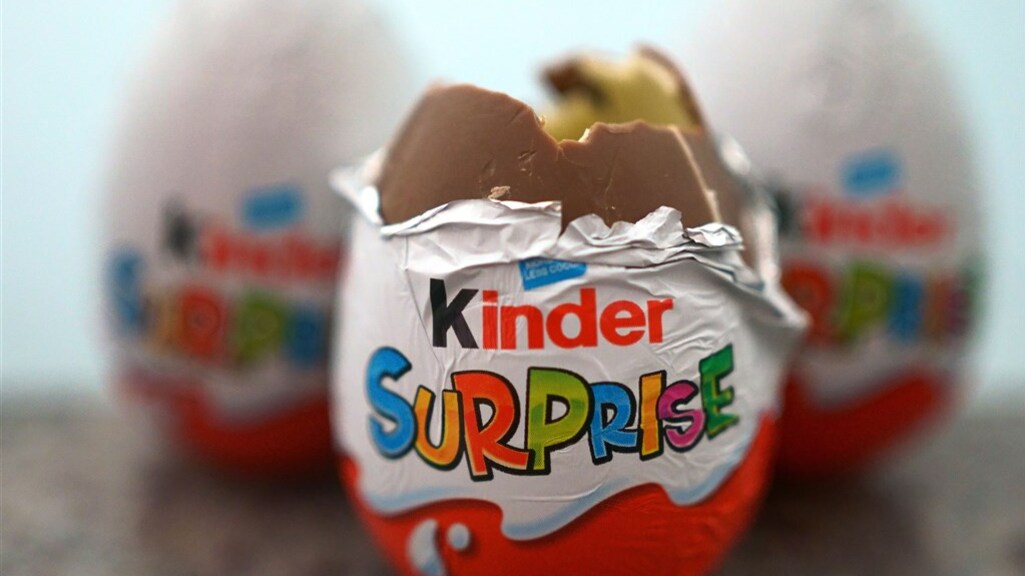
    Italian confectionery group Ferrero has recalled several children’s chocolate products in Australia, having already recalled products in multiple European countries earlier in the week. The recalled products could potentially be contaminated with salmonella, Food Standards Australia New Zealand (FSANZ) announced on Thursday. The chocolates, including some Kinder products, were sold in large supermarket chains such as Coles and Woolworths.

    “Consumers should not eat this product and should return the products to the place of purchase for a full refund,” the FSANZ said in a statement. Ferrero’s Australian arm is recalling Easter baskets and some Kinder chocolate eggs.

    The Kinder Surprise 20g single and three-pack eggs are not affected. The European Food Safety Authority (EFSA) and the European Centre for Disease Prevention and Control (ECDC) have launched investigations into the salmonella outbreak and plan to publish an assessment next week. So far, 105 confirmed cases and 29 suspected cases of salmonella, most of them in children under the age of 10, have been recorded in Europe, according to the authorities. Almost half of the salmonella infections were recorded in Britain, with the first case being detected as early as January 7.

    Other countries affected by the recall include Germany, Belgium, France, Ireland, Israel, Luxembourg, the Netherlands, Norway and Sweden.

  • Subway appoints new Australia and New Zealand chief

    Subway appoints new Australia and New Zealand chief

    He brings extensive experience from international companies to the new role.

    Subway has announced that Geoff Cockerill will be their Country Director for Australia and New Zealand starting on June 4.

    Cockerill brings extensive experience to his new role from a number of international companies such as Diageo and Kirin, and some global brands including Johnnie Walker, Smirnoff, and Corona.

    His background also includes a range of CEO, Executive General Manager and Managing Director roles for high-profile sporting, not-for-profit, and listed retail and consumer brand organizations, including franchising.

    “I’ve admired the success of the Subway® brand for many years, and couldn’t be more excited to join the team. I’m looking forward to helping continue achieve the speed to market needed to drive the business forward,” Cockerill said.

    Subway Vice President of International Ian Martin notes Cockerill’s track record in organizational change and culture, strong leadership, stakeholder engagement, and delivery of agreed results.

    “I’m delighted that an experienced leader like Geoff is going to be leading one of our most important global markets,” Martin said.

  • Sephora makes Vietnam debut

    Sephora makes Vietnam debut

    Beauty retailer Sephora has entered the Vietnamese market with a dedicated ecommerce store after an initial trial period of five months.

    Local customers can now buy directly from Sephora online, but there is no word yet on whether the global brand will open a physical store.

    About 90% of Vietnam’s cosmetics market is filled with foreign brands, led by South Korean products and followed by European and Japanese names. Market revenue, on the other hand, is pegged at US$514 million.

    Sephora enhanced its Asian presence in 2019 with debuts in South Korea, Hong Kong, and New Zealand. It now has 200 stores in 16 Asian countries.

  • Royal Enfield Classic 350 Launched In Australia, New Zealand

    Royal Enfield Classic 350 Launched In Australia, New Zealand

    Royal Enfield is expanding the presence of the new Classic 350 across the world, and the Asia Pacific region, and has now launched the all-new Classic 350 in Australia and New Zealand. The new model will be available in four variants, the Halcyon, Classic Signals, Classic Dark and Classic Chrome, each offering unique color options and styling options. In recent days, the Classic 350 has been launched in the UK, and the Philippines, and now the company has launched its most popular model in Australia and New Zealand.

    Pricing for the 2022 Royal Enfield Classic 350 range will start at AUD 7,990 (approximately ₹ 4.21 lakh) in Australia for the Halcyon series. The Signals series has been priced at AUD 8,290 (approximately ₹ 4.37 lakh), while the Dark Series and Chrome Series will be priced at AUD 8,690 (approximately ₹ 4.58 lakh) and AUD 8,790 (approximately ₹ 4.63 lakh) respectively.

    The all-new Classic 350 is the second model to be based on the same platform as the Meteor 350, with the two models sharing quite a few components, including the new J-series Royal Enfield 350 cc single-cylinder engine. The new-generation Classic 350 was launched in India last year, and gets a complete makeover, with a new, more modern engine, new chassis, updated suspension, new wheels, and brakes.

    The 349 cc, the single-cylinder engine makes 20.2 bhp at 6,100 rpm, and 27 Nm at 4,000 rpm. The compression ratio has changed to 9.5:1 on the new 350 cc SOHC engine from 8.5:1 on the UCE 350 engine. The cam gears have been replaced with a timing chain, along with the SOHC system, which results in less noise and more efficient valve timings. The chain primary drive has been replaced with gear primary drive, which reduces transmission losses, and the primary balancer shaft reduces vibrations on the engine.

    The legacy of the Classic dates back to 1948 with the Royal Enfield Model G2, the first to have swinging arm rear suspension on a full production motorcycle. The Model G2 served as a strong design inspiration for the hugely popular Classic 500 and Classic 350 launched in 2008. The Classic 350, in fact, went on to become the highest-selling Royal Enfield model since then, accounting for 70-80 percent of the brand’s sales over the past decade or so. Even now, the Classic 350 accounts for 60-70 percent of the brand’s overall sales, but so far, these numbers have been limited to the domestic market of India.

    In the 12 years since the modern Royal Enfield Classic was first launched, it has built a legacy of its own, selling over 3 million (30 lakh) motorcycles. The Classic has also emerged as the motorcycle that redefined the middleweight motorcycling space and spawned the revival of Royal Enfield. And this time around, with the new Classic 350, Royal Enfield is positioning it as a global product, hoping to repeat some of its commercial success around the world.

  • Restaurant Brands sales exceed $1 billion, despite Covid-19 impact

    Restaurant Brands sales exceed $1 billion, despite Covid-19 impact

    Restaurant Brands NZ Limited reported a 19.7% increase in sales for the year ended 31 December 2021, making total sales of NZ$1.06 billion in 2021. While same-store deals stayed strong in the period, nearly NZ$100 million of the rise in annual sales came from the extra 8 months of trading from the California acquisition.

    The Group released sales numbers for Q4 FY21 on Thursday, reporting total sales of NZ$284 million for the period (+5.5% on pcp). All regions posted positive same-store growth despite the present COVID-19 impact.

    The Group faced COVID-19 impact strongly despite several government curbs, challenging trading atmosphere and altering consumer habits. Subsequently, RBD’s annual sales numbers surpassed NZ$1 billion, setting a robust footing for further growth in sales in all its 4 regions.

    RBD-owned store numbers increased by 11 in Q4 compared to the same period in the previous year to 359. This was majorly due to the purchase of 5 KFC stores in Sydney in early 2021as well as the present construction of new Taco Bell shops in Australia and NZ.

    Restaurant Brands is due to announce its year-end trading results on 28 February 2022.

  • AuMake and Miniso to launch dual-branded stores in Sydney

    AuMake and Miniso to launch dual-branded stores in Sydney

    The specialist retailer in Australia and New Zealand, Aumake Limited shared on Thursday that it has entered into a distribution agreement with a Japanese-inspired lifestyle product retailer MINISO Master Franchisee Pty Ltd (MINIS0).

    As per the agreement, MINISO will provide operational support and products to three of Aumake’s physical stores initially, strategically picked for their high foot traffic locations and traction with Asian customers.

    The key terms of the distribution agreement include:

    • Initial physical stores are located in Chinatown, World Square CBD and Burwood in Sydney, NSW.
    • Physical stores to be dual-branded as Aumake and MINISO.
    • MINISO will pay Aumake a percentage of sales (GST incl.) in exchange for using Aumake’s premises to sell the products.

    Aumake’s deal with MINISO creates a significant revenue opportunity and subsequent reduction in overhead costs due to increased physical foot traffic, especially when the restrictions on international borders are likely to be eased for Asian tourists and international students in the coming weeks.

    In addition, the cooperation between the two companies will also provide Aumake with an opportunity to introduce and expand new skincare and cosmetic brands.

    Meanwhile, the stock AUK was spotted trading 10% higher at AU$0.016 per share at 2:00 PM AEDT.

  • New Zealand personal care brand Ethique concentrates on raising the bar

    New Zealand personal care brand Ethique concentrates on raising the bar

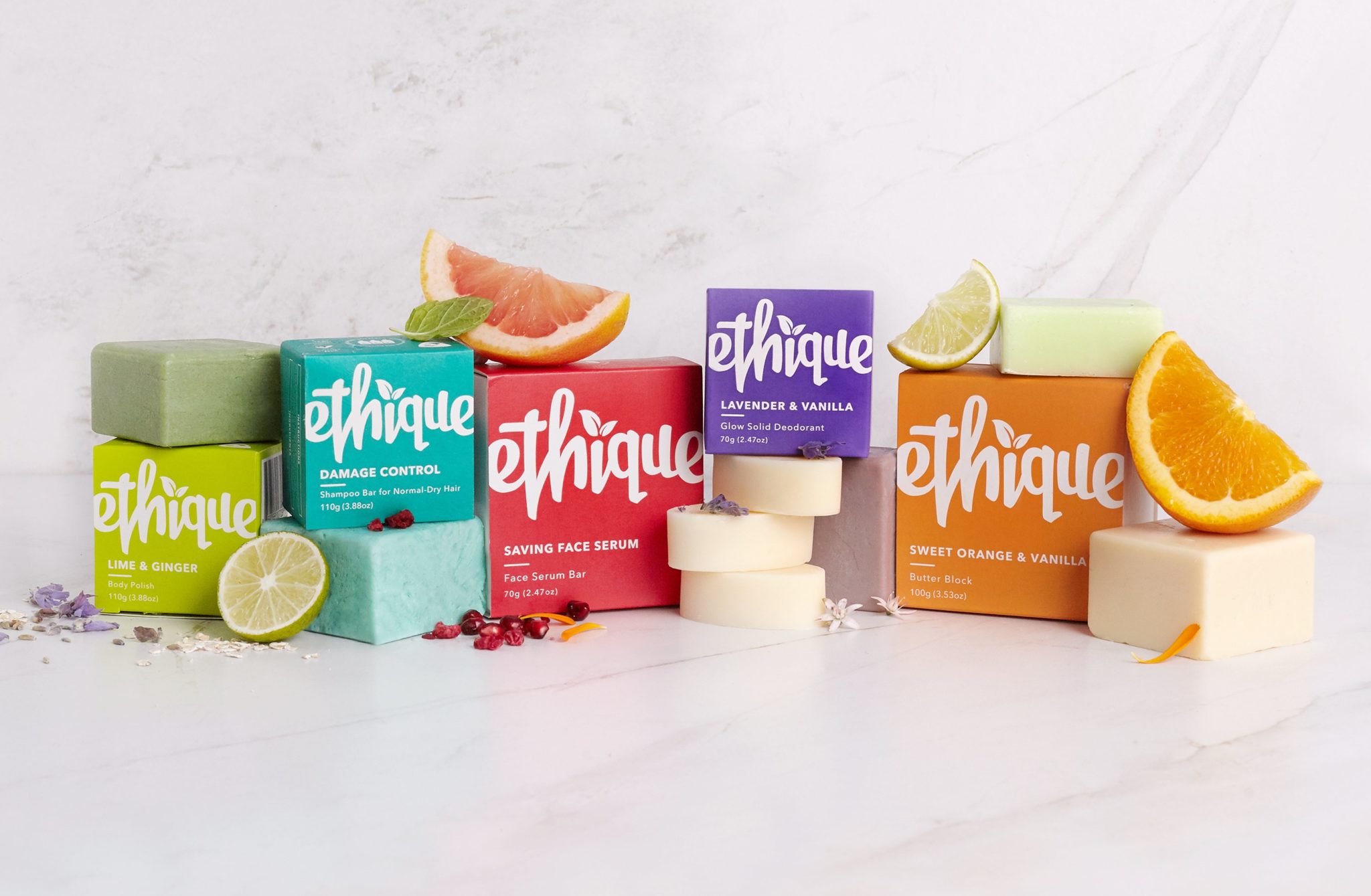
    Brianne West founded zero-waste beauty and lifestyle brand Ethique in her kitchen in Christchurch back in 2012, while completing her science degree. Since then, Ethique’s plastic-free products for face, hair, body, and home have prevented the manufacture and disposal of more than 11 million plastic containers worldwide, with a goal of 500 million by the end of 2030.

    But West didn’t start out having all the answers. So she started with questions.

    “I had absolutely no knowledge at all, I just did a lot of research. I’m a person who’s curious about pretty much everything,” West said. “The advantage of that is I’m very happy to spend hours of time searching Google or talking to people and really understanding more about products and materials.”

    West understands that it’s not always easy for brands to tell the wood from the trees when it comes to the sourcing of sustainable materials. This is why she says it’s so important to be curious, ask questions and, most importantly, ask for proof.

    “I’m lucky I’m a qualified scientist but [my advice is to] break something down to its component pieces to understand how that works, ask for proven or independent studies – that could be biodegradability or compostability studies if you’re looking at the packaging.”

    Of course, operating sustainability is not just about environmentally friendly packaging. As a certified B Corp, Ethique aims to operate sustainably and ethically in every single way.

    “Every decision we make, we factor in whether it’s fair and kind to the people we are dealing with and whether it’s detrimental to the environment. And if the answer is that it’s not ideal, then we don’t do it,” West said.

    “One example would be our fair trade policy. We ensure that with the ingredients we buy, people are paid fairly for them and they have ownership of the value chain. We try to work directly with people who produce it, so that they can get all the value out of their product.”

    Ethique also has a charitable program – donating 2 percent of sales to conservation, animal welfare, and environmental groups – and Living Wage certification for all teams.

    Crowdfunding and solid support

    Ethique was equity crowdfunded twice: first in 2015 with PledgeMe, which raised $200,000 in under 10 days; and two years later, when the brand was more established, raising half a million dollars in less than 90 minutes.

    “The key to crowdfunding is to tell a really compelling story and to get as many people interested before you actually launch. It needs to be something people can really get behind, be passionate about and want to see succeed,” West said. “Of course, you’ve also got to have really solid financials, make sure that what you’re saying is true so you are not misleading people.”

    With around 350 shareholders onboard, Ethique had a wide pool from which to get feedback on packaging and processes, but it did add to the pressure.

    “It was a massive support and a wonderful feeling having them there, but also I was acutely aware that I had a good chunk of people’s money resting on my shoulders and I never took that lightly.”

    In October 2020, Ethique completed “a very large investment phase” and was able to give back to those shareholders who had supported the business for so long.

    “Ninety-nine percent of those shareholders recognized the value of the shares and moved away with an enormous return,” West said. “Although they were sad to leave the company, they were very handsomely rewarded for their support of us, which is amazing. It was really cool to be able to pay off some of our shareholders’ mortgages, which was kind of the goal.”

    Ethique goes global

    Ethique is now in 24 markets globally, with 4500 stockists around the world. A 2016 article propelled the brand to new audiences and before long, Britney Spears and Ashton Kutcher were sharing the brand on their social media platforms.

    West has no idea how.

    “That was a total accident. I’ve no idea how they got hold of it. It was a total fluke!”

    Today, the US, UK, Australia, New Zealand, and Japan are Ethique’s top-performing markets. In some of these markets, the product range is adapted to better meet the needs of shoppers. In Japan, for example, sweet and citrus fragranced products are preferred over woody smells, West explained.

    Moving with the market

    While best known for products in bar form, Ethique is now experimenting with concentrates, as West believes that’s where the category is headed.

    “If I was to bet on a horse, it would be on concentrates, not refillable,” she said.

    Ethique now provides naturally derived and sustainably sourced active ingredients in a compostable cardboard box, and the customer adds water to create their own liquid product. There is a tutorial on the website to show customers how it’s done.

    “We’re targeting people who don’t use shampoo bars because we’ve already solved the problem there, and I don’t want to cannibalize those sales. We have found that people who’d like bars stay with bars, so this is for people who prefer a liquid product.”

    While Ethique might not be able to convince everybody that concentrates are the way forward, West believes they’re a more convenient solution for the customer. However, she is glad to see more sustainable choices on the market for consumers regardless.

    “Typically it’s very hard to create mass behavior change. If you can make a sustainable product convenient, then they pick up will be much quicker,” she said.

    “If you’re refilling dishwashing liquid, shampoo, conditioner, laundry detergent etc, you’ve got five or six bottles that you’ve got to carry around with you. It’s just not something a lot of people will do,” West explained. “I know a few retailers who find [refillables] very capital intensive and very messy, from a labor perspective, so there are some challenges.”

    Real change, not greenwashing

    As someone whose whole business proposition has been around sustainability from the get-go, West does find it frustrating to see so many businesses talk a lot about sustainability without making genuine change.

    “When businesses are greenwashing or completely misleading their consumers, if they put a tenth of the effort into actually doing something, they would genuinely start to change the world,” she said.

    But she does understand how difficult it is for bigger companies that have operated one way for so long to shift their core focus to sustainability.

    Her advice is: “If you are trying to retroactively put sustainability at the core of your business, do it one thing at a time, and do it properly.”

  • A2 Milk faces lawsuit over allegations of providing misleading forecasts

    A2 Milk faces lawsuit over allegations of providing misleading forecasts

    A2 Milk Co Ltd said on Wednesday Australian law firm Slater and Gordon has filed a class action lawsuit against the dairy firm on behalf of investors who bought its shares over a nine-month period when it issued multiple earnings downgrades.

    Shares of a2 Milk, which had plunged 62% during the nine-month period from August 2020 to May 2021, fell as much as 5.3% to NZ$6.450 following the news and were on track for their worst session in more than a month.

    The class action alleges that a2 Milk engaged in misleading or deceptive conduct in breach of the Corporations Act, and also breached continuous disclosure rules in posting four downgrades between September 2020 and May 2021, Slater and Gordon said in a statement.

    The downgrades came amid Australia’s souring ties with top trade partner China since 2018 and subsequent disruptions in the “daigou” channel, where Chinese shoppers buy products from outside China and resell it in the country. The channel accounts for a major portion of a2 Milk’s revenue.

    “There was a strong basis to allege that the company provided misleading guidance and was obliged to correct the market’s understanding of its financial position at a much earlier time,” Slater and Gordon Class Actions Practice Group Leader Kaitlin Ferris said.

    A2 Milk, which has lost nearly half its value since December, denied any liabilities and said it would “vigorously” defend the proceedings.

    The lawsuit, which was filed in the Supreme Court of Victoria, comes months after media reports concerning a potential class action by the law firm.

  • Auckland Airport to build outlet mall with 100+ stores

    Auckland Airport to build outlet mall with 100+ stores

    Auckland International Airport has posted an after-tax profit of $464.2m for the year to June 30, while also announcing plans to build a retail precinct with 100 stores that is expected to create 500 new jobs.

    Although its after-tax profit was up 139 percent on the previous year’s $194m profit, the airport made an underlying loss of $41.8m, its first full year underlying loss in history. The underlying loss was in line with the guidance the airport gave at the start of the year.

    The airport says underlying profit is how it measures its financial performance because it removes revaluation changes that can distort financial results or where one-off transactions, both positive and negative, can make it difficult to compare profits between years.

    The airport also recorded its lowest number of international arrivals and departures since 1972, with just 600,000 passengers, including transits, down 93 percent on the previous year.

    Total passenger numbers were 6.4 million, down 59 percent on the previous financial year.

    Shares in Auckland Airport closed at $7.10 on Wednesday. During New Zealand’s alert level 4 lockdown at the start of the Covid-19 pandemic, they dropped to about $5 per share.

    The new retail precinct would involve the development of a 23,000 square metre-plus outlet centre on undeveloped land at the north-eastern edge of the airport.

    “Premium and lifestyle brands” will be sold “at often heavily discounted prices”, the company said.

    The airport’s general manager of property and commercial Mark Thomson said there was a gap in the market for a purpose-built fashion outlet centre and the airport had been exploring the concept for several years.

    “It will be the first of its kind in New Zealand, offering an exciting new shopping experience for Kiwis and travellers arriving at and departing from the airport,” Thomson said.

    “Many New Zealanders will be familiar with visiting this type of bespoke fashion outlet shopping centre on trips overseas.”

    A start date for construction was not given.

    Thomson said development would be influenced by the strength of the retail market and the recovery of aviation.

    Auckland Airport chief executive Adrian Littlewood said the 2021 financial year had been a year like no other for the company, and it was giving permanent staff $1500 in airport shares to thank them for their efforts over the past year.

    “Covid-19 changed our business overnight bringing constant upheaval to almost every part of our operation,” Littlewood said.

    “But throughout all the uncertainty of the past 18 months, our team’s determination to get the job done and go the extra mile for New Zealand has never faltered.”

    The airport had taken steps to strengthen its financial position including reducing operating expenses, repaying $425m in US private placement borrowings, and getting bank approval to renew a $700m loan, he said.

    The airport last week said it would start work on a $1 billion-plus project to merge its domestic jet operations with its international terminal early next year as one of four anchor projects being advanced.

    Four major projects are still on hold including its expanded international airfield and taxiway capacity, new cargo precinct, new international arrivals area and a second runway.

    Auckland Airport held more conservative assumptions than those of the International Air Travel Association, which was forecasting global travel to fully recover and exceed pre-pandemic levels in 2023.

    Littlewood said a full recovery may take longer.

    “Our financial performance is strongly linked to passenger volumes, so our recovery will be greatly influenced by the return of domestic and international travel and changes in border settings.”

    There were encouraging signs with vaccination programs ramping up in New Zealand and around the world, he said.

    “But we expect to see further volatility in domestic and international travel in the short term, with the global aviation market gradually rebuilding in 2022.”

    Due to uncertainty in the market, Auckland Airport would not provide underlying earnings guidance for the 2022 financial year, Littlewood said.

    Investment in transport infrastructure projects and upgrades would continue and was expected to cost between $250m and $300m in the 2022 financial year.