Tag: Payment

  • YouTrip Takes Over Some Of EZ-Link Functions

    YouTrip Takes Over Some Of EZ-Link Functions

    Singapore’s first multi-currency mobile wallet with a prepaid Mastercard announced that it has secured a Principal Licence from Mastercard and will assume the primary role of the issuer and stored value facility holder of YouTrip accounts.

    The principal license will allow YouTrip to deliver improved and additional features directly to its users, as well as enable it to provide a more robust and dedicated payment security setup in anticipation of the new Payments Services Act.

    As the regional fintech space continues to develop dynamically, this license will provide the ideal springboard for the development and expansion plans we have in the pipeline, said Caecilia Chu, co-founder and CEO of YouTrip.

    Having partnered with Mastercard and EZ-Link to launch in Singapore in August 2018, YouTrip will be taking over the role of issuer and holder of stored value accounts from EZ-Link while continuing the current brand partnership.

    This is part of YouTrip’s wider ambitions to develop its platform and new features for its users, as it readies itself for expansion. Since YouTrip announced its record pre-Series A fundraiser earlier this year, it has doubled the number of app downloads to over 400,000 from 200,000 in May and grown its team beyond 100 people across its offices in Singapore and Hong Kong.

    YouTrip also recently obtained a remittance license from MAS to cater for future product development. This will be key to its expansion plans as more regulators identify fintech as a major growth area and introduce progressive policy measures to facilitate innovation and the broadening usage of such services.

  • South Korean convenience-store chain CU to accept cryptocurrency

    South Korean convenience-store chain CU to accept cryptocurrency

    Major South Korean convenience-store chain CU is preparing to accept payments in cryptocurrency.

    The chain, which operates more than 13,000 outlets in the country, will use the Chai payment system to trade in Terra, a won-backed stablecoin that has garnered investment from many large Korean firms.

    CU parent firm BGF Retail partnered with Chai earlier this week to allow buyers to pay by presenting a barcode from the Chai mobile app.

    Terra co-founder Do Kwon told CCN Korea that low-margin businesses struggle to accept volatile cryptocurrencies such as Bitcoin. In other regions, retailers often deal with exchanges to convert cryptocurrency payments to money on the spot.

    “Moving forward, Chai will continue to lessen the burden on franchisees and increase the merit of consumers through partnerships with various companies like CU convenience store with an on and offline infrastructure,” said Chai Corporation president Han Chang-joon in a statement translated by CCN.

  • Digital Payments to Cross $1 Trillion in Southeast Asia by 2025

    Digital Payments to Cross $1 Trillion in Southeast Asia by 2025

    Technology has made financial services more accessible to users in the region, and it is projected to expand further to reach 100 million Southeast Asians with limited access to financial services today, according to a report published by Google and partners.

    The adoption of digital payments in Southeast Asia has reached an inflection point and is expected to grow from $600 billion today to cross $1 trillion by 2025, according to the «e-Conomy Southeast Asia» report published on Thursday by Google, Temasek and Bain & Company.

    The surging levels of digital payments adoption and usage are in line with other Internet economy sectors such as ride-hailing and e-commerce, and will account for almost half of all money spent in the region by 2025, the report said. In addition, e-wallets are expected to grow even faster, from $22 billion in 2019 to $114 billion in 2025.

    Access to basic financial services remains poor because the adoption and usage of financial services business models enabled by technology are still limited in Southeast Asia, the report says. Only 104 million of the region’s 400 million adults are «banked,» meaning they have full access to financial services. There are 98 million underbanked – with a bank account but limited access to credit, investment and insurance. The remaining 198 million are «unbanked.» Small and medium enterprises also face large funding gaps.

    The report explained this as a result of high costs in a region lacking physical infrastructure, as well as the absence of public registers, identification systems and reliable credit information. In addition, tight regulations have stifled competition and innovation. However, it said that payments, remittance, lending, investment and insurance are ripe for transformation.

    For digital financial services to grow, governments and policymakers have an active role to play in providing supportive regulations. «The biggest drag on investment levels is the uncertainty surrounding regulations and the risk that entire business models may suddenly become unviable,» the report said.«e-Conomy Southeast Asia is a multi-year research program that looks at the internet economy in the region’s six largest markets: Indonesia, Malaysia, the Philippines, Vietnam, Thailand and Singapore. The report notes that the internet economy has, for the first time, crossed the $100 billion mark – a 39 percent increase from $72 billion in 2018.


  • Ingenico launches full suite of Chinese payment options for e-commerce players

    Ingenico launches full suite of Chinese payment options for e-commerce players

    Ingenico is one of the very first international payment service providers (PSP) to support all use cases for WeChat Pay, including the capability to integrate into WeChat Official Accounts and Mini-Programs. This is a crucial advantage that allows the 1.1 billion WeChat users to complete their purchase without leaving the WeChat environment.

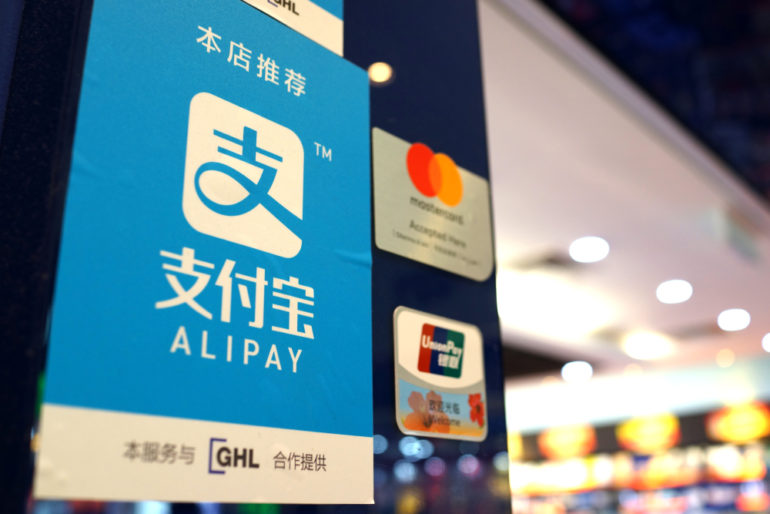
    Additionally, Ingenico offers an upgraded Alipay integration to its customers, enabling these businesses to reach the vast majority of online consumers in China, while also allowing them to offer real-time payments, both on desktop and mobile devices. Furthermore, Ingenico supports UnionPay’s (UPI) SecurePay and ExpressPay solutions as part of a comprehensive payment solution designed to cater to a greater range of local payment preferences in China. Through Ingenico, merchants can offer Chinese Yuan (CNY) to consumers via these payment methods, which is critical for conversion and customer experience.

    The new China is a huge opportunity for western businesses. It is the world’s largest and most dynamic e-commerce market and a pioneering force in a digital and mobile culture. In total, it has an internet penetration rate of 57%, representing 25% of internet users worldwide. However, it is a more challenging market to operate in than many others, as the unique domestic e-commerce ecosystem often demands specific solutions tailored to local preferences.

    “Our long-time presence and activity in China means that we are perfectly positioned to partner with merchants wanting to access the truly local consumer market. Our expertise here, combined with this new set of payment capabilities, will allow international merchants to reach Chinese consumers that were previously difficult to access,” explains Gabriel de Montessus, SVP Global Online (Retail BU) for Ingenico Group. “Our merchants will be able to offer all the relevant local Chinese payment methods in local currency denomination as part of their digital experience, which will help increase conversion.”

  • All 7-Eleven Philippines stores now sell Bitcoin

    All 7-Eleven Philippines stores now sell Bitcoin

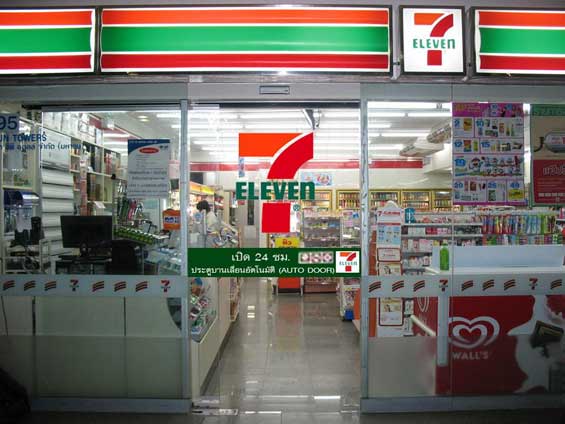
    Bitcoin purchasers can now buy the cryptocurrency in all 7-Eleven Philippines stores.

    The move has been introduced by Cryptocurrency investment app Abra in partnership with ECPay payments firm, making the coin available in more than 6000 locations in the territory. The purpose of the new strategy is to simplify access to Bitcoin investment.

    “Using new digital tools that open up financial access shouldn’t be hard,” said a spokesperson for the firm to Cointelegraph, “and they shouldn’t be complicated. Moving cash to crypto and other digital assets should be simple and fast. That’s why we are really excited to announce our new partnership.”

    Bitcoin purchase is being made available under the “Bills Payment” option at Cliqq ECPay kiosks in stores, or use the mobile app.

  • AirAsia’s BigPay Launches International Remittance Services

    AirAsia’s BigPay Launches International Remittance Services

    BigPay, the financial services venture by Malaysian low-cost carrier AirAsia, has announced the fixed-rate international remittance services across Southeast Asia.

    BigPay is rolling out cross-border transfers for its users to Singapore, Thailand, Indonesia and the Philippines. Such transfers can be done using its mobile application, and will be charged at a fixed rate for each corridor at competitive exchange rates, with no hidden fees or charges, the firm said in a press release.

    Technology can dramatically reduce the cost of remittance and we want to make it easy for people to move money abroad – whether it is sending money to family, friends or other overseas payments – without having to pay exorbitant exchange rates and transfer fees,» said CEO and co-founder Chris Davison.

    Davidson added that financial inclusion is a cornerstone of BigPay, and offering low-cost and accessible money transfers is part of its strategy to address this.

    BigPay was launched in 2018 by AirAsia as an e-wallet, hoping to leverage the low-cost carrier’s dominance in regional air travel in Southeast Asia. It promised to reduce the cost of air travel, including the cost of foreign transactions when traveling. A key differentiator is that it waives markups on foreign exchange, and other transactional fees charged by traditional debit and credit cards.

    Operating on a challenger bank model, BigPay has also tied up with MasterCard, which provides users access to 35 million merchants globally, and will soon venture into offering loans.

    BigPay has more than 750,000 users as of July 2019, and its transactional volume has been growing 20 percent month-on-month, which also said that BigPay plans to launch in Singapore by year-end.

  • Starbucks Japan lets customers pay with a pen

    Starbucks Japan lets customers pay with a pen

    Starbucks Japan has launched a new pen-shaped digital wallet called “Starbucks Touch The Pen” allowing customers to buy their coffee without taking out their wallets.

    The pen’s design resembles a drip coffee machine and comes in three colours – black, silver, and white. The new cashless-payment device is run by NFC (near-field communications) technology through FeliCa chip and contains “coffee brown” gel ink, meaning it works as a digital wallet and has the same function as a normal pen.

    Starbucks’ Touch The Pen will cost ¥4000 (US$37) including ¥1000 preloaded credit when it is available to purchase online next week.

    Before The Pen, the cafe chain had three other digital payment models including The Drip (a key fob), The Cup (a phone case) and The Hug (a keyring handbag).

  • Online payments for digital and physical goods hits record

    Online payments for digital and physical goods hits record

    New research shows the total transaction value of online remote payments for digital and physical goods will exceed US$6 trillion by 2024.

    The new findings are based on data from Juniper Research that predict the growth of 53 percent in the transaction values from this year’s figures. An analysis of the data is now published in the firm’s report Mobile & Online Remote Payments for Digital and Physical Goods: Opportunities, Pain Points & Competition 2019-2024.

    The report reveals that online sales will be dominated by physical goods, forecast to account for almost 80 percent of online retail purchases by 2024. It urges traditional retailers to provide omnichannel offerings to ensure services align with ever-increasing consumer expectations.

    According to the report, online remote payments for digital and physical goods will be driven by purchases made via mobile devices, with the number of smartphone buyers increasing by nearly 60 per cent between 2019 and 2024. Consequently, just 21 per cent of purchases will be made using PCs, laptops and connected TVs globally by 2024.

    The shift to mobile has impacted purchasing behaviour, with the average value of transactions expected to decline by 2024. Underpinning this growth, and the change in average transaction values, is the adoption of mobile ticketing – which is becoming increasingly remote and cashless..

    Juniper Research assessed the digital strategies of 25 leading brick-and-mortar retailers according to their levels of agility and innovation. The Home Depot ranked first, owing to its proactive e-commerce strategies and engagement with new technologies, such as augmented reality and analytics, to improve online consumer experiences.

    The Home Depot’s retail services are built on an omnichannel strategy; offering customers a comprehensive network of physical stores alongside robust online shopping experiences. Analytics is leveraged to adapt to evolving customer behaviours and AR technology to enable customers to visualise virtual products in the real world via their smartphones.“Brick-and-mortar retailers have to go beyond simple e-commerce to become digital-first companies,” said research author Morgane Kimmich. “Retailers must fundamentally embrace the digital era by optimizing data analytics and embracing new technologies; enabled by radical internal organisational change.”

  • New Zealand payment firms roll out new technology to reduce fraud

    New Zealand payment firms roll out new technology to reduce fraud

    Payment firms in New Zealand have committed to rolling out the new payment technology credential-on-file (COF) tokenization to strengthen e-commerce security and enhance conversion rates.

    Adyen, Bambora, Cybersource, Paystation by Trade Me and Windcave said they plan to introduce tokenization in the country, in partnership with Visa, which will not only reduce fraud but will also enhance conversion rates, resulting in savings for businesses and simpler payment experience for every-one that shops online.

    COF tokenization replaces card details such as account numbers and expiry dates with unique digital identifiers (‘tokens’) that are used for payment without exposing a cardholder’s sensitive information.

    Each token is merchant-specific, so it can only be used with the merchant where it is stored, removing any incentive for hackers to try to steal the account data and decreasing the risk of data breach attempts.

    Businesses usually store card numbers for direct debit, top-up, loyalty, subscription or account-based online shopping. This same technology is used to enable the various mobile wallets that are available to Kiwis today.

    Riaz Nasrabadi, Visa’s head of Product for New Zealand and the South Pacific, said this commitment to drive tokenization across the industry represents a win for New Zealand businesses, consumers, financial institutions and payments companies alike.

    “The technology enhances consumers’ experience, enables retailers to retain consumer loyalty and protects all businesses from fraud,” Nasrabadi said. “With the advent of open data and the creation of new experiences based on data, initiatives such as tokenization will ensure consumer data is protected and held securely.”

    According to Visa, in addition to enhancing security, COF tokenization enables businesses to have consumer payment details instantly refreshed when a card is lost, stolen or expires, meaning there is no need for the consumer to log in and update his or her details, or the business to lose out on that payment cycle.

    “This development will be welcomed by Kiwi consumers, with a YouGov survey finding that 44 percent identify updating pre-existing details with merchants and service providers among the most annoying consequences of losing a card or having it expire,” the company said.

    The automated process could also help prevent online merchants from missing out on subscription renewals, with 19 percent saying they would use the manual card update to try out an alternative, and 13 percent opting to stop using a service altogether.

    According to Visa, with tokenization in place protecting their card details, 37 percent of New Zealanders said they would be more likely to purchase from small retailers, 46 percent would be more trusting of online businesses, and 36 percent said they would buy from retailers they had not bought from in the past.

  • Nearly 70 Percent of Singaporeans Registered to National E-Payment System

    Nearly 70 Percent of Singaporeans Registered to National E-Payment System

    Singapore’s national e-payment system, «PayNow», currently boasts a nearly 70 percent penetration of the city-state’s population with monthly volumes exceeding S$1 billion, an MAS board member recently shared with parliament.

    Ong Ye Kung, minister of education and Monetary Authority of Singapore board member noted that take-up was «encouraging» with more than 65 percent of Singaporeans aged between 20 to 75 years old having already registered, representing 2.8 million accounts.

    Transaction volumes have also increased significantly. Two years ago, PayNow registered 150,000 transactions totaling S$24 million ($17 million) and in July this year, the figures rose to over 5 million and S$1 billion ($720 million), respectively.

    Despite PayNow’s success, Ong noted that Singapore made a conscious decision to keep the playing field open for all.

    «We made a deliberate decision not to have one player dominate the landscape and grow up very quickly,» he said, citing other channels like Apple or Google Pay.

    «Instead, we put in place the backbone infrastructure so that multiple providers can compete and innovate to increase consumer choice while encouraging interoperability. As a result, Singaporeans can now make e-payments in multiple ways which are simple, swift and secure.»

    Although corporate adoption has lagged its retail counterpart, Ong remains optimistic. Its corporate business currently serves entities representing half of the total unique entity number (UEN) issued in Singapore, an ID number required to interact with government agencies. It has 20 percent penetration rate of retail acceptance across hawker centers, supermarkets, healthcare and various F&B businesses.

    As a result, the ratio of cash and cheque’s relative usage to e-payments have decreased significantly. Cheques have fallen 8 percent per year over the past three years while the cash ratio dropped from 53 percent to 33 percent in the same period.

    When asked about pushing greater usage from banks, Ong agreed that the MAS should encourage the sector to promote PayNow corporates while also charging for cheques.

    «And I think having this carrot-and-stick, push-and-pull approach will continue to see higher take-up of pay now corporate,» he said.

  • Chinese shoppers can now use Alipay at the Mall of Asia

    Chinese shoppers can now use Alipay at the Mall of Asia

    Chinese consumers can now use Alipay at the Mall of Asia stores  thanks to a joint venture between Ant Financial Services and SM.

    Technology to allow retailers to accept Alipay has been installed at almost half the mall’s stores already, with the rest to follow within three to six months.

    Opening the way for Chinese to use Alipay at the Mall of Asia is aimed at attracting more tourists to the mall – as well as the increasing locally based Chinese population.

    “SM Mall of Asia is a must-visit shopping destination among tourists who enjoy the wide array of shopping and dining offerings and unique amenities,” said Cherry Huang, GM, cross-border business for South and Southeast Asia at Alipay.

    “We are happy to partner with SM Mall of Asia to deploy Alipay acceptance points in the mall for shoppers who are looking for the best of retail and lifestyle offerings and the same seamless shopping experiences that they enjoy at home. At the same time, we are very excited to help merchants in SM Mall of Asia connect with tourists before they’ve even arrived in the Philippines through our platform’s marketing capabilities.”

    Since Alipay entered the Philippines in 2017, the number of Alipay acceptance points has grown exponentially across retail, hospitality and entertainment attractions. Aside from Manila, Alipay acceptance points are available in six provinces frequented by Chinese tourists, including Cebu, Davao, Palawan and Boracay.

    According to the Philippines Department of Trade and Industry, international tourist arrivals to the Philippines rose by 7.7 per cent to 7.1 million visitors last year. China contributed 1.255 million of them, a growth rate of 30 per cent year on year.

    More than 3.12 million Chinese citizens have taken up residence in the Philippines since January 2016.

  • Digital Payment Provider QFPay Raises $20 Million

    Digital Payment Provider QFPay Raises $20 Million

    Major Asian digital payment tech firm QFPay has raised another $20 million from both existing investors and a new list of renowned names including Sequoia Capital and Rakuten.

    Sequoia Capital China, which has participated in all three funding rounds, joins Matrix Partners as returning investors. New investors also include Rakuten Capital, the VC arm of major Japanese internet service provider, Rakuten; MDI Ventures, the VC arm of Indonesia’s largest telecom, Telkom Indonesia; and VentureSouq, a Dubai-based VC firm specializing in tech startups.

    According to QFPay co-founder and CEO, Patrick Ngan, the value from new investors this round extends beyond just funding to matters such as market-specific strategic growth.

    We have been witnessing tremendous growth in digital payment adoptions across Asia and given the need for localized strategy and networks in each of the markets, having support from trusted strategic partners like MDI Ventures, Rakuten Capital and VentureSouq as your investors and advisors plays an important role in navigating through the complex business environments, he elaborated.

    Asia is currently the leader for digital payments driven by demand from the region’s largely unbanked population. The ASEAN region is a major contributor to the sector with the market expected to grow 25 percent CAGR till 2027 to reach $109 billion, according to a research report by Nomura. QFPay is well-positioned to capture some of this growth with presence in 13 markets in Asia and the Middle East including Cambodia, China, Hong Kong, Indonesia, Japan, Korea, Laos, Malaysia, Myanmar, Philippines, Singapore, Thailand and United Arab Emirates.

    We have built our track record, know-how and expertise in this industry since we launched in China which is dubbed as the birthplace of digital payment, added Tim Lee, co-founder and CEO of QFPay.

    We are excited to leverage what we have learned in the past seven years to help lead the cashless movement in the rest of Asia as demand for digital payment, particularly QR-code payment method, heats up in the region.

  • Swift Calls for Collaboration on Cross-Border Payments

    Swift Calls for Collaboration on Cross-Border Payments

    Cross-border payments challenges should not be solved with closed loop systems, global payments network Swift said in a call to the payments community, including market infrastructures, banks and fintechs.

    Its white paper, Payments: Looking to the Future,» lays out the financial services firm’s vision of cross-border payments as one that is «seamless and convenient as domestic ones: instant, accessible, ubiquitous, saying the increase in cross-border flows, new technology enabling improvements, and end-customers demanding a better customer experience as changes that are shaping the global payments industry.

    Innovations in domestic retail payments have transformed entire markets, and facilitating the exchange of value beyond tightly knit domestic, single-currency communities is inherently more complex for banks, the paper noted.

    Cooperation by all players in the community is important, because the openness and universality of the envisioned system are unique; the more widely adopted the convention for moving value, the easier the circulation of value – and the more the convention will be used. Banks are key in this, Swift said, asking for the widespread adoption of its global payments innovation (GPI) service.

    According to Swift, API technologies supporting open, agile architectures are supporting the revolution in international payments as they allow fintechs to offer value-add services and banks to differentiate themselves by layering services and products.

    Payments are not an end in themselves – they exist to enable investment, trade and commerce, Swift said.

    Swift launched its GPI service in 2017 to increase the speed, transparency and tracking of cross-border payments. It currently remains optional for banks but its ambition is to create a new standard in cross-border payments, and said it expects it to be the universal standard by 2020.

    In January, it accounted for 55 percent of cross-border payment instructions carried on the network, and about $300 billion in transfers daily.

  • Naver’s Latest Move and the Rise of New Payment Methods in Japan

    Naver’s Latest Move and the Rise of New Payment Methods in Japan

    Trends come and go in the retail world, but one which undoubtedly appears to be here to stay is the shift in how consumers now choose to pay for goods and services.

    Physical cash has played an important part in retail for decades, but a recent announcement involving South Korean internet firm Naver has put a spotlight on how new payment methods are becoming increasingly common in Japan.

    Mobile payments system

    Earlier this month it was confirmed that the company has launched a mobile payments system which can be used in Japanese stores. According to the Korea Herald, the Naver Pay service now features a tool known as Cross-Border, which allows people to make payments via a QR code on their smartphone or tablet.

    Naver Pay chief Choi Jin-woo told the media outlet that the move was the company’s “first step” into Japan and was based around providing a “convenient service” to customers wherever they are.

    While it is thought that the move will help Koreans travelling to the country, the announcement is also arguably another sign of the major changes being seen in how people pay for different items across the world.

    Going cashless

    A huge number of countries have embraced the idea of going cashless by using new payment methods, with the likes of Canada, Sweden and the UK thought to be among those leading the way.

    The types of services which have made the move possible include Google Pay, Apple Pay and, of course, the likes of PayPal. The latter is thought to have a total user base of 277 million accounts, with 255 million of those being consumers.

    Many businesses have worked hard to keep up with the consumer appetite for new payment options, and evidence of this can be seen in a range of sectors. For example, Amazon Pay allows people to use payment methods linked to their Amazon account to pay for services on other sites. In addition, this site offering Japanese NetBet casino games gives users a chance to make deposits via a range of means including Neteller, Skrill, Entropay and Trustly. Companies like Subway and Expedia have even flirted with cryptocurrency in the past too.

    Set for growth

    According to payment technology provider InComm, it is thought that around 20 per cent of all payments in Japan are currently made with methods other than cash, and it is thought that the government is keen to boost this further in the next six years. When did the organization reveal this? In an announcement that it had partnered with DFS to launch barcode payment solutions in the country.

    The world of payments is undoubtedly changing, and it will be fascinating to see whether all of the innovations emerging in Japan will ultimately mean the country rises up the rankings when it comes to going cashless. In addition, it will be vital that retailers can stay on top of these trends to ensure they can continue to meet consumer demand.

  • Six European Mobile Wallets and Alipay Collaborate to Promote Digital Payment Interoperability across Europe

    Six European Mobile Wallets and Alipay Collaborate to Promote Digital Payment Interoperability across Europe

    Six prominent mobile wallets across Europe, together with Alipay, announce today a collaboration to promote QR code-based digital payment interoperability for travelers both in Europe and from China.

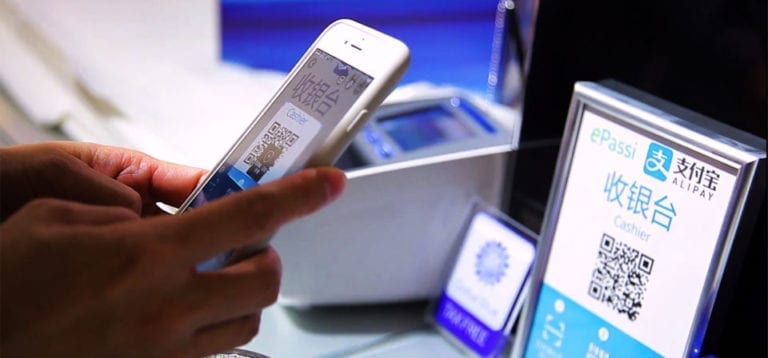
    Bluecode, ePassi, momo pocket, Pagaqui, Pivo, Vipps and Alipay are working towards adopting a unified QR code, marking a milestone in connecting Europe’s thriving yet fragmented mobile payment landscape. When fully realized, users of the six participating European digital wallets will be able to make QR code-based payments with their home apps to local merchants in 10 European countries where those apps are accepted. At the same time, merchants that already accept mobile payments via the six apps in their respective domestic markets will also be able to easily accept payments made by customers of the other countries covered by the collaboration. In addition, Alipay’s Chinese users can also make payments to merchants that accept these wallets.

    Helsinki-based ePassi and Oslo-based Vipps have started to prepare the roll-out of this QR code format for users across several Nordic countries, while the Spanish payment company MOMO, Portugal’s Pagaqui and Austria’s Bluecode intend to extend the collaboration further later this summer in their respective home markets. Built on the back of a similar partnership announced in December between two Nordic firms, Vipps and ePassi, and Hangzhou, China-based Alipay, this open-ended collaboration is expected to continue to expand into more European countries and companies in the future.

    The collaboration, the first of its kind in Europe, will bring together the six mobile wallet partners’ users, which are more than 5 million in total, and around 190,000 merchants in Europe, as well as a fast-growing number of travelers from China. In addition, as each of the participating firms grows the user base and merchant network, the growth is also beneficial to all of the collaborating firms’ merchants and users, respectively.

    The partnering firms have agreed to apply a compatible QR code format provided by Alipay, the world’s most-used app outside social apps. ePassi and Bluecode will offer technical services to the participating wallets to simplify the integration process among them.

    “With over 12 years’ experience, ePassi is already a mobile payments front-runner in QR code-based payments in the Nordic and selected European countries. We are proud and honored to be part of this unique collaboration of European payment wallets, and to support other partners with their integration as well,” said Risto Virkkala, CEO of ePassi.

    “It has always been our vison to enable European banks with a widely accepted European mobile payment offering”, said Christian Pirkner, CEO of Blue Code International. “As a payment solution provider, we naturally support this collaboration of European wallets agreeing on a technical format. Even more compelling that it is compatible with Asia’s leading lifestyle app Alipay.”

    The announcement came on the heels of Alipay activating the eight-year global partnership with UEFA in Porto, where the inaugural Nations League Final just concluded. “We feel honored to help promote a smart lifestyle and digital experiences in Europe, while continuing to connect more merchants with more Chinese tourists. We believe mobile payment is a universal language that can help connect people just as football does,” said Eric Jing, Chairman & CEO at Ant Financial.

    Alipay currently serves over 1 billion users with its Asia-based local e-wallets partners. Launched in 2004, Alipay has evolved from a digital wallet to a lifestyle enabler. Users can hail a taxi, book a hotel, buy movie tickets, pay utility bills, make appointments with doctors, or purchase wealth management products directly from within the app.

    In addition, Alipay’s technology is being used to enable over 200 Chinese financial institutions to improve efficiency and lower operational costs. Alipay’s in-store payment service covers over 50 markets across the world, and tax reimbursement via the app is supported in 35 markets.

    Nearly 60 per cent of overseas bricks-and-mortar merchants that adopted Alipay saw a subsequent growth in both foot traffic and revenue, according to a report by Nielsen earlier this year.

    “Momo were first to process payments via mobile devices in Spain six years ago, starting in Malaga. Since then, we’ve expanded to also help our merchants increase their sales by accepting QR payments from thousands of Chinese tourists via Alipay.” says Mariano de Mora, CEO of MOMO Group. “We are excited to see how this collaboration with other European payment wallets can bring millions of users to our merchant network here in Spain and offer our users hundreds of thousands of places to pay with their local momo app across Europe.”

    “This unique cooperation is a testament to how collaboration in Europe can simplify the market for businesses and users to create better outcome for everyone.” said Rune Garbog, CEO of Vipps. “We are extremely enthusiastic about new partners joining this collaboration, giving all our combined users broader possibilities for using their preferred mobile app also when travelling abroad.”

    “As a Portuguese company and a stakeholder in this project, Pagaqui rejoices in the choice of venue for this announcement, and is extremely proud to participate in such an ambitious and innovative undertaking”, says João Barros, CEO of Pagaqui. “As in football, European firms can be more successful when playing together as a team. This is a real game changer for businesses and users across Europe, and we are excited to see so many partners taking part in it.”

    Pivo, the largest mobile wallet in Finland with over 1 million registered users, is welcoming the collaboration and the benefits it will provide to all mobile wallet customers. “Interoperability will allow us to offer a simple and unified customer experience across services and points-of-sale internationally. The collaboration will create additional value for Pivo as a service platform, and it is a welcome initiative for the ecosystem and our customers,” said Masa Peura, CEO of Pivo.