Retail News CRM

Tag: payments

  • Mastercard to Enter China Payments Market

    Mastercard to Enter China Payments Market

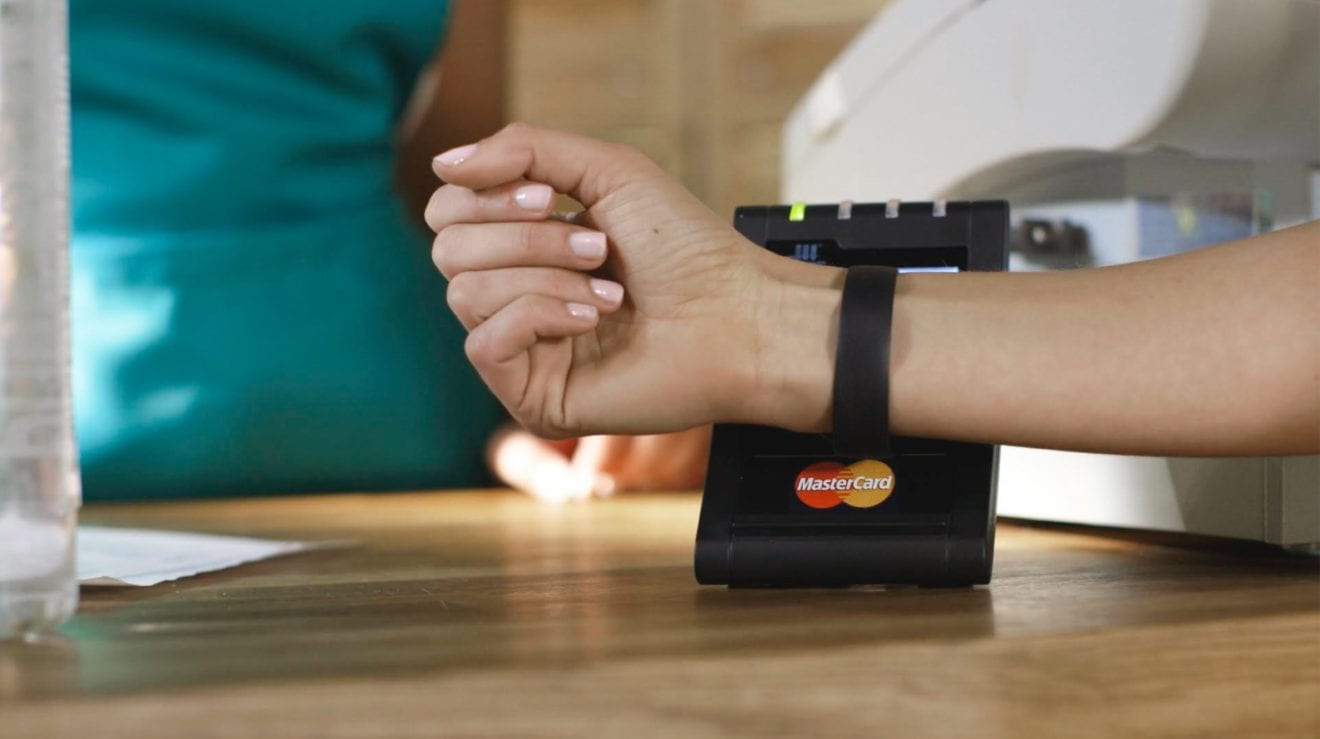
    Mastercard’s joint venture in China has been the green light given by the People’s Bank of China for it to begin formal preparations to set up a domestic bankcard clearing institution in China.

    Mastercard’s joint venture with NetsUnion Clearing will need to complete preparation work within a year, following its approval to begin operations in the country, China’s central bank said in a press statement on Tuesday.

    The approval of the preparation application of the bank card clearing institution of Wanshilian is another concrete reflection of China’s opening up of the financial industry and deepening financial supply-side reform, PBOC said in the statement.

    In 2015, China opened its bank card clearing market to foreign players but in practice has been slow to actually spur competition currently still dominated by state-owned UnionPay. The first foreign company to start preparations for the business was American Express in 2018 through a joint venture with Chines fintech firm LianLian.

    China is a vital market for us and we have reiterated our unwavering commitment to helping drive a safer, more inclusive and seamless payments ecosystem for Chinese consumers and businesses, Ajay Banga, president and CEO, Mastercard, said in a statement.

    China’s mobile payments market is worth some $27 trillion, according to iResearch.

    American Express is also close to receiving approval for its bank card clearing business in China. Earlier in January, the People’s Bank of China announced the acceptance of its application.
  • Malaysia’s E-Commerce Payments More Than Tripled

    Malaysia’s E-Commerce Payments More Than Tripled

    The e-commerce market in Malaysia is among the fastest-growing in Southeast Asia, with a total transaction value of MYR25.6bn (US$6.2bn) in 2019. This is expected to cross $11 billion in 2023, according to GlobalData.

    Rising Internet and smartphone penetration, growing middle-class population and increasing tech-savvy millennials, coupled with government initiatives, propelled the e-commerce market value to grow more than three times between 2015 and 2019, according to GlobalData’s latest report, Malaysia Cards & Payments: Opportunities and Risks to 2023.

    Total transaction value in the space is expected to grow at a compound annual growth rate (CAGR) of 15.9 percent to reach 46.3bn Malaysian Ringgit ($11.2 billion) in 2023, the firm adds.

    In addition to the increasing number of online shopping population, the government is also supporting the country’s e-commerce market with initiatives under its National eCommerce Strategic Roadmap (NESR), said Sowmya Kulkarni, Banking and Payments Senior Analyst at GlobalData.

    As part of the NESR, the government is putting concerted efforts to increase awareness among consumers and businesses, especially small and medium-sized enterprises (SMEs). The government launched the Digital Free Trade Zone in March 2017 with an aim to position Malaysia as one of the regional e-commerce hubs.

    Alternative payments are the most preferred mode of e-commerce purchases in Malaysia, accounting for 38.2 percent in 2019, closely followed by payment cards with 38 percent, based on GlobalData’s 2019 Banking and Payments Survey.

    With consumers gradually shifting from cash to electronic payments in Malaysia, the rise in online shopping will provide payment companies a significant growth opportunity in Malaysia, added Sowmya.

  • International merchants embracing Chinese mobile payments, says report

    International merchants embracing Chinese mobile payments, says report

    A new survey by Alipay and Nielsen has found overseas merchants are actively exploring digital operations via Chinese mobile payments to increase sales and customer traffic.

    The jointly released survey reveals the latest trends in Chinese outbound tourism and the consumption habits of Chinese travelers for the third consecutive year.

    The results were demonstrated by nearly eight out of 10 (78 percent) of UK merchants surveyed, saying they are likely to recommend Alipay to their peers, especially for using digital operations to improve efficiency and turnover.

    Surveying 4837 Chinese travelers and 547 overseas merchants, the report found that Chinese tourists’ usage of mobile payments while traveling overseas continues to increase, with Singapore, South Korea, Japan, Australia, France, Thailand, New Zealand, Canada, the UK, and the US ranked as the “top 10 countries where Chinese tourists love to use mobile payments in 2019.”

    In Singapore, an early adopter of Chinese mobile payment solutions, almost all merchants (97 percent) indicated steady improvement compared to the previous year in terms of mobile payment usage and the amount of mobile spending by Chinese tourists.

    “Chinese mobile payments engagement level and the depth of usage among Chinese tourists continued to increase, indicating a more in-depth development of Chinese mobile payment solutions globally,” said Nielsen China president Justin Sargent. “As such, overseas merchants are showing a more open attitude towards the application of Chinese mobile payment platforms and digital operations. More overseas merchants may deepen their use of Chinese mobile payment platforms to go digital.”

    Regions such as the UK are accelerating the acceptance of Chinese mobile payments. Overseas merchants are also going beyond payment to explore more digitalized solutions including digital marketing, with nearly 70 percent of UK merchants surveyed saying they have already used additional services other than payment in Alipay.

    The improved acceptance of mobile payment solutions has made it possible for Chinese tourists to bring less cash, with data showing that the amount of foreign currency exchanged by Chinese tourists before leaving for Europe last year fell by 16 percent.

    Last year, 100 per cent of Chinese tourists surveyed had Alipay on their mobile phones while traveling overseas. On average, Chinese tourists surveyed used Alipay in nearly four transactions during their most recent trip overseas.

  • Card Payments To Exceed One Billion In Hong Kong

    Card Payments To Exceed One Billion In Hong Kong

    Despite the dominance of cash, card payments volume in Hong Kong is expected to surpass one billion in 2020, says GlobalData.

    The convenience of electronic payments, robust payment infrastructure and the emergence of contactless payments are expected to drive the total number of card payments from 642.0 million in 2015 to 1 billion in 2020, according to GlobalData, a data and analytics company.

    Hong Kong’s high banked population, growing preference for contactless technology and, the growing e-commerce market will further support the use of payment cards over the next five years,” said Nikhil Reddy, Banking and Payments Analyst at GlobalData in a media statement on Monday.

    Hong Kong has a highly penetrated payment card market, with each individual holding more than three cards in 2019. The steady progress in the adoption and use of payment cards, plus the high penetration, are supported by the government and banks’ efforts to provide banking services even in remote areas.

    The expansion of banking infrastructure through the introduction of mobile banking branches, new physical bank branches and the establishment of virtual banks, were also factors.

    Hong Kong’s payment card market is mainly driven by credit and charge cards, which accounted for 67.9 percent of total card payment value in 2019, GlobalData’s Payment Cards Analytics reveals. The total card payment value in the country is forecast to increase from HK$43.3bn in 2019 to HK$59.6bn in 2023.

    The pricing benefits such as referral programs, installment facilities, cashback and discounts associated with credit and charge cards are some of the key reasons for their preference. In addition, these cards are increasingly preferred for online shopping and for transactions overseas.

  • Singapore Tops List For Mobile Payment Usage

    Singapore Tops List For Mobile Payment Usage

    Singapore is ranked global leader in mobile payment usage among Chinese tourists, fueled by the country’s maturity in mobile payment solutions, according to a joint report by Nielsen and Alipay. The availability of mobile payment is among the top three factors affecting Chinese tourists’ overseas shopping habits.

    The Southeast Asia region maintains its leadership in mobile payment usage among Chinese tourists, with Singapore and Thailand positioned at #1 and #6 in the global ranking, reflecting the region’s maturity in mobile payment solutions. Other countries on the list of «Top 10 countries where Chinese tourists love to use mobile payments» include South Korea, Japan, Australia, France, New Zealand, Canada, the UK, and the U.S.

    In Singapore, an early adopter of Chinese mobile payment solutions, almost all merchants (97 percent) indicated steady improvement compared to the previous year in terms of mobile payment usage and the amount of mobile spending by Chinese tourists. «Chinese mobile payment engagement level and the depth of usage among Chines tourists continued to increase…as such, overseas merchants are showing a more open attitude towards the application of Chinese mobile payment platforms and digital operations,” said Justin Sargent, President of Nielsen China in a media statement.

    These results are encouraging more overseas merchants to deepen the use of Chinese mobile payment platforms as they go digital. Nearly seven out of ten (66 percent) surveyed merchants in Singapore, South Korea, and the U.K. hope to carry out more digital store operations through Chinese mobile payment platforms and hope to further their promotional and marketing activities leveraging Chinese mobile payment platforms.

    «The trend of more overseas merchants going beyond payment to adopt more digitalized services is a promising one, as it helps brick-and-mortar businesses become better integrated with the digital economy while bringing more personalized experiences for consumers around the world,» said Angel Zhao, President of Ant Financial’s International Business Group. Slightly under two-thirds of merchants surveyed in Singapore, South Korea and the U.K. (63 percent) said that they are likely to recommend Chinese mobile payment systems to their industry peers.

    Surveying 4,837 Chinese travelers and 547 overseas merchants, the report provides a new look at the digitalization trend of the overseas retail sector at a time when online and offline businesses are increasingly merging and Chinese tourists are poised to have even more influence as they travel abroad.

    Destination related insights

    • Among all the countries surveyed, the usage of Chinese mobile payments in Singapore, South Korea, and Japan was highest, with Singapore in the leadership position.
    • 77% of Chinese tourists in Singapore use mobile payments for their transactions.
    • Total spending via mobile payment of Chinese tourists increased significantly in countries where Chinese mobile payment adoption is relatively mature.
    • In Singapore, Malaysia, Thailand, Japan, and South Korea, the usage rate of mobile payment among Chinese tourists was high, reaching 70% in both 2018 and 2019.
    • Correspondingly, the total amount spent by Chinese tourists increased by 14% in Singapore and Thailand and 23% in Japan and South Korea between 2018 and 2019.

    Merchant related insights

    • More overseas merchants intend to deepen the use of Chinese mobile payment platforms as they go digital.
    • 66% of surveyed merchants in Singapore, South Korea, and the UK hope to carry out more digital store operations through Chinese mobile payment
    • 66% hope to further their store’s promotional and marketing activities leveraging Chinese mobile payment platforms.
    • 97% of surveyed merchants in Singapore indicated steady improvement compared to the previous year in terms of mobile payment usage and the amount of mobile spending by Chinese customers.
    • 63% of surveyed merchants in Singapore, South Korea, and the U.K. said that they are likely to recommend Chinese mobile payment systems to their industry peers.

    Tourism-related insights

    • In 2019, destinations located a four-hour flight away such as Japan, South Korea, Thailand, and Singapore, remained the most popular choices for Chinese tourists.
    • In addition, the U.S., Australia, U.K., and Canada were also among the top 10 countries, which indicated that Chinese tourists were fairly keen on traveling to English-speaking countries.
    • Thailand and Singapore were among the Top 10 overseas destinations visited by Chinese tourists in 2019 and the Top 10 Countries for Overseas Travel Plans in 2020.
    • In 2019, compared with last year, Chinese tourists born in the 1990s spent nearly 12% more on a single overseas trip while those born in the 1980s spent 15% more. An underlying reason for the increased travel expenses may be the desire for a more in-depth experience of local cultures.
    • Top three factors affecting Chinese tourists’ overseas shopping habits are:
      • Payment methods accepted by the merchant (37%);
      • Product variety and quality (36%); and
      • Product price (36%)
  • 7-Eleven Singapore teams up with Pay2Home

    7-Eleven Singapore teams up with Pay2Home

    7-Eleven Singapore will collect cash payments for transactions initiated via home-grown financial-services company Pay2Home’s digital platform.

    Pay2Home is one of the growing group of fintech companies creating services for consumers who are unbanked, including hundreds of thousands of migrant workers who send funds back to their families in their home countries.

    Under the Pay2Home and 7-Eleven Singapore partnership, those without a bank account or debit card may now initiate a remittance transaction using the Pay2Home mobile app and pay instantly with a generated QR-code bill using cash at any 7-Eleven store. The funds are available for immediate delivery overseas.

    Pay2Home co-founder David Hulme says migrant workers in Singapore continue to transact primarily in cash.

    “Many are still paid in cash; they buy in cash, and their home countries are cash economies,” he says. “If you’re catering to a market that prefers cash and is more comfortable with cash, then as a FinTech company, our responsibility is to make sure that our digital services meet their needs. It’s about financial inclusion at their pace, not ours.”

    Steven Lye, MD of 7-Eleven Singapore, says partnering with Pay2Home is an example of the convenience-store chain’s efforts to differentiate itself and provide relevant services to the community at large.

    “With 400 7-Eleven stores Island-wide as additional payment touchpoints, Pay2Home’s underbanked customers can conveniently pay for their remittance transactions without having to queue at a conventional remittance counter.”

    Founded in 2001, Pay2Home was the first remittance company to receive regulatory approval to operate online and the first to pioneer purpose-built multilingual self-service Money Transfer Machines. It is the only full omnichannel remittance operator in the country.

  • DBS Launches QR-Based B2B Payments

    DBS Launches QR-Based B2B Payments

    DBS helps further propel Singapore’s cashless movement by introducing quick response code-based payments for the business-to-business segment.

    The bank hopes to boost payment speeds and is piloting the solution first in the F&B industry – a sector with limited penetration with nine out of 10 payments still being made through cash or bank transfers, according to a statement. The bank developed the solution after nearly 20 digital workshops with F&B businesses to identify bottlenecks in the payment process.

    In the new solution, which executes payments through its fund transfer service PayNow, users can consolidate multiple invoices per transaction and make full or partial payments for multiple invoices. This is also expected to effectively help improve credit terms due to the instantaneous and flexible nature of the process. The bank will roll out the new payment solution to the broader F&B ecosystem, logistics companies, and traders by the end of 2020.

    Aside from the retail segment, SMEs are expected to be a major growth driver for digital players in finance given a large gap between needs and demand.

    Many SMEs we speak to want to realize productivity gains by becoming more digital but don’t have the expertise or infrastructure to do so,» said Joyce Tee, group head of SME banking at DBS. «The lender is looking to understand SMEs’ pain points and then lay the foundation for enhanced payments capabilities one sector at a time.

    In November last year, Singaporean rival UOB also launched a payment solution aimed to capitalize on the cashless market for businesses. UOB’s Mcollect is a QR-based solution that enables instant payment and reconciliation to improve what it estimates is otherwise, on average, a four-day manual process.

  • Visa Buys Out Personal Finance Enabler In Billion-Dollar Deal

    Visa Buys Out Personal Finance Enabler In Billion-Dollar Deal

    Visa will be buying privately held financial technology startup Plaid in a $5.3 billion deal, according to a statement from the payments processor.

    Visa and rival Mastercard had invested in Plaid in a $250 million series C funding round in 2018 that reportedly valued the firm at $2.65 billion. Visa said it expects the deal to close in the next three to six months and benefit its adjusted earnings per share at the end of the third year.

    The purchase price is twice the final private valuation and Visa is funding the transaction from cash on hand and debt issuance.

    Plaid focuses on enabling consumers and businesses to interact with their bank accounts, check balances, and make payments through financial technology applications.

    Founded in 2013, its technology lets people link their bank accounts to mobile apps like Venmo. It links to over 11,000 financial institutions across the United States, Canada, and Europe.

  • WeChat Adds Diamond Purchase Traceability Feature

    WeChat Adds Diamond Purchase Traceability Feature

    Tencent partnered with Russian diamond miner ALROSA Group to offer an in-app blockchain-based feature that provides traceability for diamond purchases made through WeChat.

    WeChat adds a new capability for affluent users to access transparent information about the «origin, characteristics and ownership history» of diamonds purchased through the platform.

    In addition to ALROSA – which accounts for nearly one-third of global rough diamond production – UK-based tech firm Everledger was also part of the partnership, likely to power the blockchain technology the new feature leverages.

    Chinese diamond demand grew five percent to reach approximately $10 billion, according to De Beers’ Diamond Insight Report 2019. As a comparison, the U.S. market is currently at $36 billion.

  • Metcash shares hit by lost 7-Eleven deal

    Metcash shares hit by lost 7-Eleven deal

    Metcash shares have dropped more than 10 percent to a four-month low after 7-Eleven chose not to renew its contract with the wholesale food and beverage supplier when it expires in August.

    Metcash on Friday said its annual sales to 7-Eleven total about $800 million a year, mostly in lower-margin tobacco products.

    “Metcash was unable to reach an agreement with 7-Eleven on its supply requirements for the east coast, including delivery routes and scheduling,” the ASX-listed firm said.

    However, Metcash said it was still in talks to continue to supply 7-Eleven stores in WA.

    The blow is just the latest for Metcash, which in 2018 posted an impairment-driven loss of $149.5 million when Drakes Supermarkets declined to extend its SA contract after Metcash had announced plans to open a new purpose-built distribution center.

    At 1306 AEDT, Metcash shares were down 10.5 percent to $2.72.

  • Robocash Group reached the milestone of $ 500 million issued loans

    Robocash Group reached the milestone of $ 500 million issued loans

    Showing a 92% increase year-over-year in the volume of the issued loans in the first nine months in 2019, the company has targeted to hit $ 294 million by the end of the year. Meanwhile, the number of issued loans exceeded 6.5 million. With a preserved strong retention of customers, 75% of that amount has been obtained by repeated clients.
    In Q3 2019, mature companies of the group maintained their predominance in the overall loan portfolio. Thus, Russia had 63% of all loans issued, Kazakhstan – 15% and Spain – 4%. At the same time, the Asian markets that have been in focus for the group since 2017 grew their share from 16% in Q2 2019 up to 19%. Among the latter, the Philippines was leading with 15%.
    With the accelerated expansion, the number of customers of the group increased to 7.9 million. Following the huge demand for access to finance in the emerging markets, the highest dynamic was recorded in Asian countries. With a preserved upward trend in Q3 2019 in the Philippines (+16% QoQ), there was a significant increase in the number of served clients in Vietnam (+98%), Indonesia (+172%) and India (+333%).
    Commenting on the results, Sergey Sedov, Founder and Chief Executive Officer of Robocash Group noted, “Financial technologies are developing at a tremendous speed in Asia. Our case proves the need for relevant services. Take the recent estimate of Google & Temasek on digital lending in Southeast Asia: the loan book that is expected to grow from $23 billion in 2019 to $110 billion by 2025. These figures are not the limit. The growing use of digital solutions helps to narrow the gap in financial inclusion and benefits people in Asia already today. As a company, we are proud to be a part of that process and aspire to provide the fastest and most convenient access to finance no matter the country and any peculiarities.”
  • Payment Providers Could Shave $5 Billion From ASEAN Banks

    Payment Providers Could Shave $5 Billion From ASEAN Banks

    Banks in South-east Asia could miss out on as much as $5 billion, or 14.3 percent of their payments revenue by 2025, displaced by the growth of digital payments and competition from non-banks, according to a new report.

    As payments become more «instant, invisible and free, banks will face further pressure on income from card transactions and fees over the next six years. Free payments put 9.6 percent of payments revenue at risk in the region, according to professional services firm Accenture said in a report titled Banking Pulse Survey: Two Ways To Win.

    The world of instant, invisible and free payments is here to stay, squeezing margins further on a business that was already feeling a lot of pressure from new competition, particularly in South-east Asia with the proliferation of e-wallets,» said Divyesh Vithlani, who leads Accenture’s financial services practice in ASEAN. The survey polled 240 payments executives from the largest banks across 23 markets.

    Next, competition from non-banks in invisible payments, where payments are completed in a “virtual wallet” on a mobile app or device, will put 3.1 percent of bank revenues at risk, Accenture said. Card displacement by instant payments – an area where banks make little to no interest – is projected to put an additional 1.7 percent of payment revenues in jeopardy.

    Banks previously earned billions of dollars from some of these channels, and that’ll dry up eventually as competition heats up, so they’ll need to develop new digital business models to compete in this new era, said Vithlani.

    However, the industry is aware of the challenges posed by new technologies in payments. More than two-thirds (71 percent) of the banking executives polled in all markets agree that payments are becoming free. Nearly three-quarters (73 percent) believe that most payments are already invisible, or will become so over the next 12 months.

  • UOB Launches QR-Based Payment Collection Solution

    UOB Launches QR-Based Payment Collection Solution

    UOB attempts to help businesses accelerate payment collection and improve cash flow through its new QR-based solution.

    The bank launched the QR solution mCollect which allows businesses to collect payments from buyers through fund transfer service PayNow at the point of delivery.

    Businesses can provide their customers with a QR code generated by mCollect which can be scanned to make payment which then leads to immediate crediting and automatic reconciliation. According to UOB, cash flow management is one of the «perennial bugbears» for local SMEs due to issues like late payments, citing a four-day industry average when manually dealing with payments.

    While good progress has been made to encourage more cashless payments among businesses, there is still a gap when it comes to the collection process, specifically with cash-on-delivery payments,» said So Lay Hua, UOB’s head of group transaction banking and group wholesale banking.

    In addition to faster cash flow, the bank is also wary of the risks of handling physical cash, which continues to be a common practice. UOB noted that more than two-thirds of its corporate customers still receive cash payments from buyers, especially those that are smaller businesses most commonly in the wholesale, retail and services sector.

    We make hundreds of deliveries each day, said Steve Wong, CEO of Boong Group, a meet supplier and food processor firm that participated as a user of mCollect’s pilot. When collecting payment, which is often made in cash, our salespeople have to spend time verifying the amount and payee details and tallying the payments at the end of the day.

  • Apple Card users are getting a major iPhone-related perk

    Apple Card users are getting a major iPhone-related perk

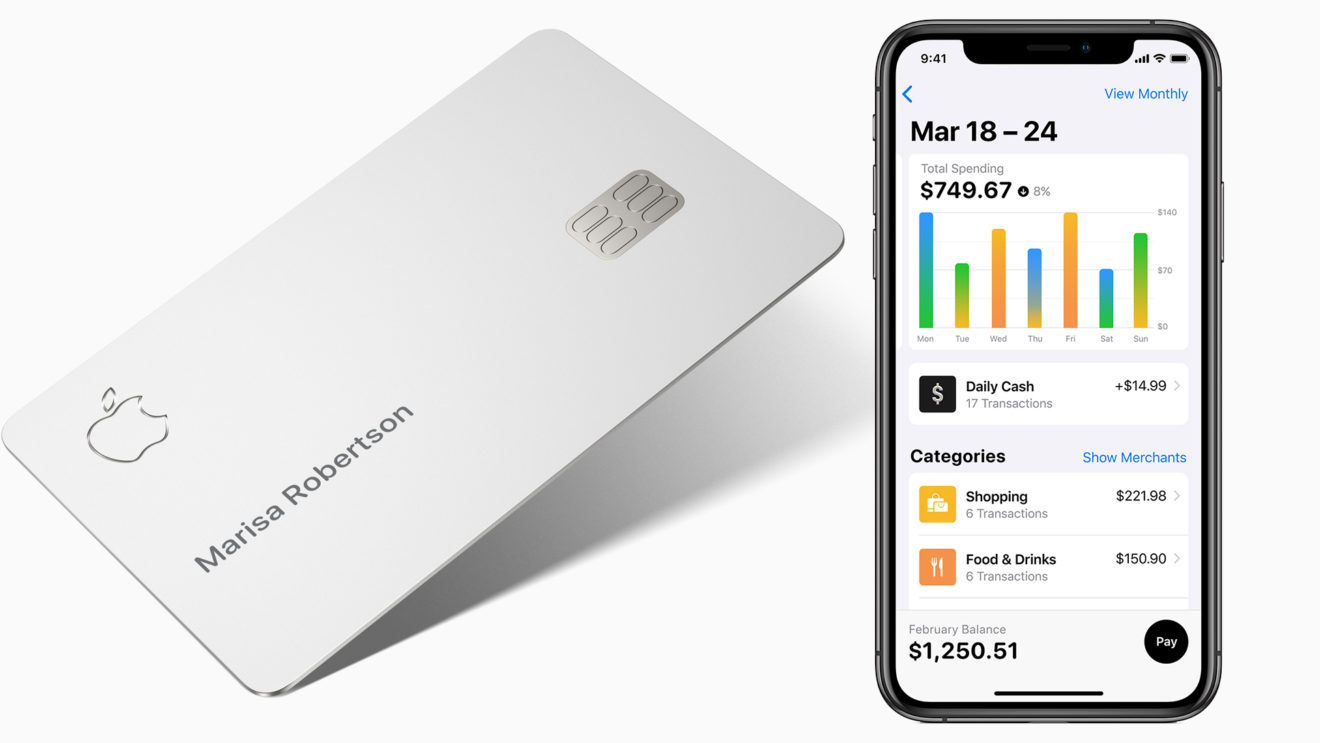
    Apple announced earlier today that’s it’s adding another benefit to the Apple Card starting this week, which is aimed to appeal to iPhone users. During its earnings call, Apple revealed a new program for Apple Card users that will allow them to buy or upgrade to a new iPhone much easier.

    Thanks to the new program, Apple Card owners will receive interest-free, 24-month financing on iPhone purchases. The new perk can be combined with the three percent cashback Apple Card users are getting on purchases from the company’s stores.

    The same offer is available through the iPhone Upgrade Program, so if you don’t have an Apple Card, that’s where you should look if you want to buy a new iPhone without having to pay for it upfront.

    The third option for Apple fans who just want to upgrade to a new iPhone is to take advantage of the company’s trade-in program, which will allow them to pay a lot less for a brand new model. And it looks like this is one of the options that many customers are taking advantage of, as CFO Luca Maestri said on the call. The number of iPhone trade-ins is more than five times higher than last year.

    The move is most likely another important step that brings Apple closer to the launch of the so-called “iPhone subscription,” which has been speculated for many years now. Tim Cook’s most recent comments certainly confirm Apple is considering such a service:

    We’re cognizant that there are lots of users out there that want a sort of a recurring payment like that and the receipt of new products on some sort of standard kind of basis, and we’re committed to make that easier to do than perhaps it is today.

    Although an “Apple Prime” doesn’t exist yet, Tim Cook’s statements suggest that if enough people are willing to pay every month for the privilege of having the latest iPhone, such a subscription service will eventually be made available.

  • OCBC Joins Singtel’s Mobile Payment Alliance

    OCBC Joins Singtel’s Mobile Payment Alliance

    OCBC became the first Singapore bank to join Singtel’s VIA mobile payment alliance, boosting the mobile operator’s regional payment network. Thailand’s Kasikornbank has also joined the alliance earlier.

    By the first quarter of 2020, OCBC Bank customers will be able to go cashless when they travel to Thailand or Japan. They will be able to make QR code payments at more than 1.7 million merchant partners on VIA’s network using the OCBC Pay Anyone app, in Singapore dollars and at competitive and transparent exchange rates.

    This long-term partnership with Singtel is another key milestone in our journey to drive digital payment adoption among our customers and address their digital payment needs. Customers will have the ability to travel overseas and use OCBC Pay Anyone at over 1.7 million merchants’ acceptance points, reducing their need to carry cash, said Ching Wei Hong, OCBC Bank’s Chief Operating Officer in a media statement on Monday.

    The partnership would help the bank’s customers eliminate the hassle of changing and carrying foreign currencies, said Arthur Lang, CEO of Singtel’s International Group.

    OCBC customers stand to enjoy the ease and familiarity of using their local app for cashless purchases when they travel, in turn boosting the customer base of our VIA merchants. Our partnership with OCBC comes from a shared vision to offer a seamless payment experience that caters to the needs of consumers and drive the growth momentum for cross-border mobile payments in Asia, said Lang.

    Currently, the OCBC Pay Anyone app enables OCBC Bank customers to make QR code payments to merchants, and peer-to-peer e-payments leveraging QR codes, any recipient’s Singapore mobile number or PayNow, directly from the customer’s bank account.

    From November 2019, OCBC Bank customers in Singapore who are Singtel Dash users will also be able to top up their Dash accounts quickly and seamlessly with OCBC Pay Anyone integrated on the Dash app. We look forward to deepening our collaboration with OCBC as we build the financial services ecosystem together, added Lang.

    Moving forward, Singtel and OCBC will also explore linking their rewards and merchant programs. The VIA alliance, which was launched in October 2018, aims to unify the region’s fragmented payment scene by creating an interoperable network in the Asia Pacific, both companies said.

    Currently counting AIS GLOBAL Pay and NETSTARS among its alliance members, VIA is expanding to include Thailand’s Kasikorn Bank’s K PLUS, Axiata Digital’s Boost Malaysia and Indonesia’s LinkAja. This will see the alliance grow to reach some 50 million consumers and 2.1 million merchants across Singapore, Thailand, Malaysia, Indonesia, and Japan.