Tag: payments

  • DBS launches digital payments Singapore pre-schools

    DBS launches digital payments Singapore pre-schools

    Singapore bank DBS has developed a mobile payment platform that aims to allow parents in Singapore to purchase uniforms, pay for field trips and sign up for extra-curricular classes for their pre-school children.

    DBS has partnered EduTech company, LittleLives, to enhance the latter’s app-based pre-school management system with real-time payment features. The app is used by one in three pre-schools in Singapore to update parents on their child’s development.

    In Singapore, the early childhood education sector is still dependent on cash despite school fees being paid via GIRO or Child Development Accounts (CDA). For example, when paying for excursions, school uniforms or learning resources, parents often make payments using cash or checks and the school then makes arrangements to pay third-party vendors.

    With payment functions built into the LittleLives app, pre-school operators can save up to 40 manhours per month on administrative tasks such as payments reconciliation, allowing them more time to engage with parents and their children. This addresses a recent DBS survey that revealed that one in four SMEs are looking to develop their digital business capabilities to improve productivity.

    The LittleLives app is used by over 750 pre-schools in Singapore. The app can now enable pre-schools to generate invoices and parents to make payments through PayNow and DBS PayLah. Receipts will be generated automatically after payments are made. With access to real-time payment reports such as daily settlement and auto-reconciliation, pre-schools can better manage their finances more accurately and securely.

    “Many young parents are time-strapped and juggling multiple responsibilities at work and at home. By enabling parents to conduct payments on the go, quickly and safely, they have more time to nurture and care for their children,” said Sun Ho (pictured, right), founder of LittleLives.

    “Partnering a powerhouse like DBS will help us create a super app that will transform how pre-schools are managed. LittleLives can then create an amazing childhood education experience for both children and parents,” she said.

    DBS and LittleLives have plans to roll out this payments gateway to other markets such as Brunei, Cambodia, China, Malaysia and Vietnam. This is made possible with DBS IDEAL RAPID, an API-enabled solution, that allows the bank and its partners to scale their services quickly and seamlessly.
  • Vodafone M-Pesa applies for license extension

    Vodafone M-Pesa applies for license extension

    Mobile payments company Vodafone M-Pesa has applied for an extension on its prepaid payment instrument license while it explores merging with an associate or third party company.

    Vodafone M-Pesa, which is wholly owned by India’s Vodafone Idea, is seeking an additional extension of its license from the Reserve Bank of India.

    The company will be required to pursue a merger due to regulations preventing one entity from having a payments banking business and prepaid payments business under separate entities.

    Due to the merger between Vodafone India and Idea Cellular, the combined Vodafone Idea currently has a 100% stake in Vodafone M-Pesa as well as a 49% shareholding in the Aditya Birla Idea Payments Bank Limited.

    The company has already negotiated multiple extensions to its prepaid payment instruments, but only on a temporary basis as the company pursues a solution to gain compliance with the regulations.

  • Vietnam cashless transactions among lowest in ASEAN

    Vietnam cashless transactions among lowest in ASEAN

    Cash transactions remain highly popular in Vietnam compared to other ASEAN countries as it has low banking penetration. A new Standard Chartered report says Vietnam has the lowest bank account ratio in six ASEAN countries at 30.8 percent of the population aged 15 and up.

    This ratio is 34.5 percent in the Philippines, 48.9 percent in Indonesia and 81.6 in Thailand. Credit card ownership in Vietnam accounts for only 4.1 percent of the population, compared to 9.8 percent in Thailand. The debit card ownership ratio, meanwhile, is 26.8 percent, lower than Indonesia at 30.9 percent and Malaysia at 73.8 percent.

    Only 3.5 percent of the Vietnamese population have a mobile money account, while this ratio is 10.9 in Malaysia.

    Even though the country’s e-commerce industry has been growing at a double-digit rate in recent years, 90.2 percent of online purchases are paid with cash, the report said. This ratio is highest, compared to only 47 percent in the Philippines where the percentage of the population with bank accounts is only slightly higher than that of Vietnam.

    “Although there is a rise in alternative electronic means of payments in the region, cash still dominates. Apart from Singapore, the more traditional means of banking and payments remain more popular for the rest of ASEAN,” the report said.

    The reasons for high cash usage, Standard Chartered said, is a lack of understanding of how digital payments methods work and how to start using them.

    Others included concerns over the confidentiality of financial records and the perception that cash is still the simplest and most straightforward payment method, the bank said.

    But there is still a lot of potential for cashless payment to grow in Vietnam, the report said, noting that with over 70 million mobile users and 64 million internet users, e-wallet payments are set to gain more traction in the coming time.

    There are over 20 e-wallet apps in Vietnam, while foreign operators such as Samsung Pay, Alipay, and Amazon have also entered the local market to tap the large potential, the report said.

    The value of e-wallets transactions in 2017 exceeded VND53 trillion ($2.2 billion), an increase of 64 percent from the previous year, according to the State Bank of Vietnam.

    The government is striving to increase cashless payment in the country. A resolution issued in January recommended that cashless transactions made viable for all urban household bill payments by the end of this year, prioritizing mobile payments and payment via card readers.

    Ho Chi Minh City this week has instructed all schools, hospitals and many others to accept non-cash payments.

  • Vietnam is fastest growing market for m-payments

    Vietnam is fastest growing market for m-payments

    Vietnam has seen the highest growth in mobile payments in the past year, according to the Global Consumer Insights Survey 2019 conducted by PwC.

    The survey, which covered more than 21,000 respondents from 27 territories, showed that the percentage of consumers using these services in Vietnam increased to 61%, up from 37% in 2018. The 24 percentage point increase was also the largest in the six Southeast Asian countries that took part in the survey.

    In Singapore, mobile payments climbed 12 percentage points from 34% in 2018 to 46% in 2019. Since the government began encouraging digital payments in late 2017, the latest results indicate a payoff in the efforts by the government and other mobile payments players.

    The rest of Southeast Asia also saw increases in mobile payments with Thailand up 19 percentage points to 67%, Malaysia up 17 percentage points to 40%, and Philippines up 14 percentage points to 45%, respectively. Indonesia reflected the slowest increase in the usage of mobile payments at just 9 percentage points to 47%.

    In the Middle East, which was the second fastest growing in mobile payments adoption globally after Vietnam, the percentage increased by 20 percentage points to 45%. China remains unchanged at 86%. Across all territories, 34% of consumers paid for purchases using mobile payments, up from 24% a year earlier.

    Buying through social media

    According to the survey, consumers in Asia are more socially engaged online than those in Europe and the Americas. Respondents in Thailand, Indonesia and Vietnam led the pack globally in making purchases directly through social media posts on platforms like Instagram and Facebook, with 50%, 49% and 48% of survey respondents indicating they do so, respectively.

    Globally, only 21% of respondents made purchases directly through social media. Among product and service categories, the survey found that social media is most likely to affect purchasing decisions related to fashion.

    Charles Loh, Southeast Asia Consumer and Industrial Products Consulting Leader, PwC, said: “Social media platforms are already mature in Southeast Asia. The trend in online shopping, moving forward, is the consolidation of e-commerce players with fewer big players providing that gateway. There seems to be a consolidator present in every market.”

    Voice technology

    In the survey, 9% of global consumers said they use voice technology to shop online weekly or more frequently. As shopping by voice continues to catch on, companies should be thinking beyond mobile to consider how voice technology in homes, cars, and elsewhere will affect customer experience. The bar for brand leadership will continue to shift as organizations launch increasingly consumer-friendly technologies.

    Charles Loh, Southeast Asia Consumer and Industrial Products Consulting Leader, PwC, said:

    “Voice technology is widely used in instant messaging communication platforms. It’s only a matter of time that we see adoption here in Southeast Asia”

    Shirish Jain, payments director, Strategy, said: “Asia remains the powerhouse in leading the customer shift to mobile payments with the report reflecting eight Asian nations in the top 10, and six are in Southeast Asia, as the results show. Vietnam, with its relatively low penetration in 2018, has registered the highest growth as mobile platforms demonstrate a significant increase in convenience over traditional means of commerce.

    “This contrasts with Singapore that also shows strong gains. However, the sophisticated and established traditional ecosystem, as well as abundant and potentially confusing number of choices in mobile payments can also slow down adoption.

    “This finding highlights a timely confluence of four principal factors: stages of economic growth cycles driving affluence and disposable income; the availability of platforms that address local demographic needs including support for cash-on-delivery; the lower cost for retailers and providers; and a marked increase in convenience.”

  • Relax, Eat and Enjoy Special Discounts with Mastercard

    Relax, Eat and Enjoy Special Discounts with Mastercard

    Want to stay away from the coming summer heat while filling yourself up with your favorite food and drinks? Satisfy your cravings in the comfort of your own home! You can now enjoy special offers and discounts when ordering from Deliveroo, with Mastercard!

    From May 1 to December 31, 2019, Mastercard cardholders can enjoy exclusive discounts when they order from the Deliveroo website or mobile app with their Mastercard cards.

    New Deliveroo Customers

    First-time Deliveroo customers can enjoy a HK$20 discount on their first three orders worth HK$100 or more (excluding delivery fees) when paying with Mastercard by simply registering and using the promo code “MC2019NEW” before checkout.

    Current Deliveroo Customers

    Current Deliveroo customers who use their Mastercard cards can enjoy a HK$25 discount twice a month on orders of HK$250 or more (excluding delivery fees)1 by applying the corresponding monthly promo codes2 before checkout. Order now to avail of this exclusive treat.

    Treat your taste buds and fill yourself up! Tap on your mobile phones or devices now with Mastercard!

  • Singapore Airlines Partners With Payments Platform

    Singapore Airlines Partners With Payments Platform

    Singapore Airlines has partnered with an Amsterdam-listed payments provider to optimize its payment processes. Payments platform Adyen will improve the experience of booking tickets online or in-app for Singapore Airlines’ customers. The payment platform also helps its customers improve authorization rates, provide flexibility on fraud risk management and richer data insights.

    «For Singapore Airlines, best-in-class customer service begins with the booking,» said Warren Hayashi, President of Adyen, Asia-Pacific. «At Adyen, we have seen that payments data can be the jet fuel that powers global expansion for airlines.  Payments data remains a valuable resource for companies who seek to understand their customers better and improve revenue,» Hayashi added.

    The partnership will center on Adyen’s solutions to optimize Singapore Airlines’ payments process. This includes the use of Adyen’s direct credit card acquiring capabilities which eliminates the need to run payments across multiple third-party platforms, increasing the airline’s payment authorization rate by leveraging on their solutions.

    Amsterdam-listed Adyen provides a modern end-to-end infrastructure connecting directly to Visa, Mastercard, and consumers’ globally preferred payment methods. It has offices across the world, serving customers such as Facebook, Uber, Spotify, Cathay Pacific, Grab, Klook, Lorna Jane, Freelancer.com, Kogan.com and Showpo.

  • US retailer removes Apple Pay support after two years

    US retailer removes Apple Pay support after two years

    JCPenney has finally released an official statement. This offers a technical explanation for the retailer’s decision to “suspend all contactless payment options until a later date.” While that suggests there’s a good chance Apple Pay support will be reactivated at some point in the future, JCPenney is also hinting at modest popularity for the digital wallet app in its stores, claiming the “vast majority” of shoppers continue to rely largely on “inserting or swiping their physical credit cards at point-of-sale terminals” to complete their transactions. Original article follows.

    While Apple is still selling plenty of iPhones, iPads, and smartwatches around the world, the tech giant’s “services” and software are suddenly growing at an unrivaled pace, generating revenues of nearly $11 billion between October and December 2018, up from $9.1 billion during the final three months of the previous year. Apple Pay, Apple Music, and the iOS App Store are by far the most successful and lucrative such services, at least until the Apple Arcade and TV+ platforms actually become available for end users.

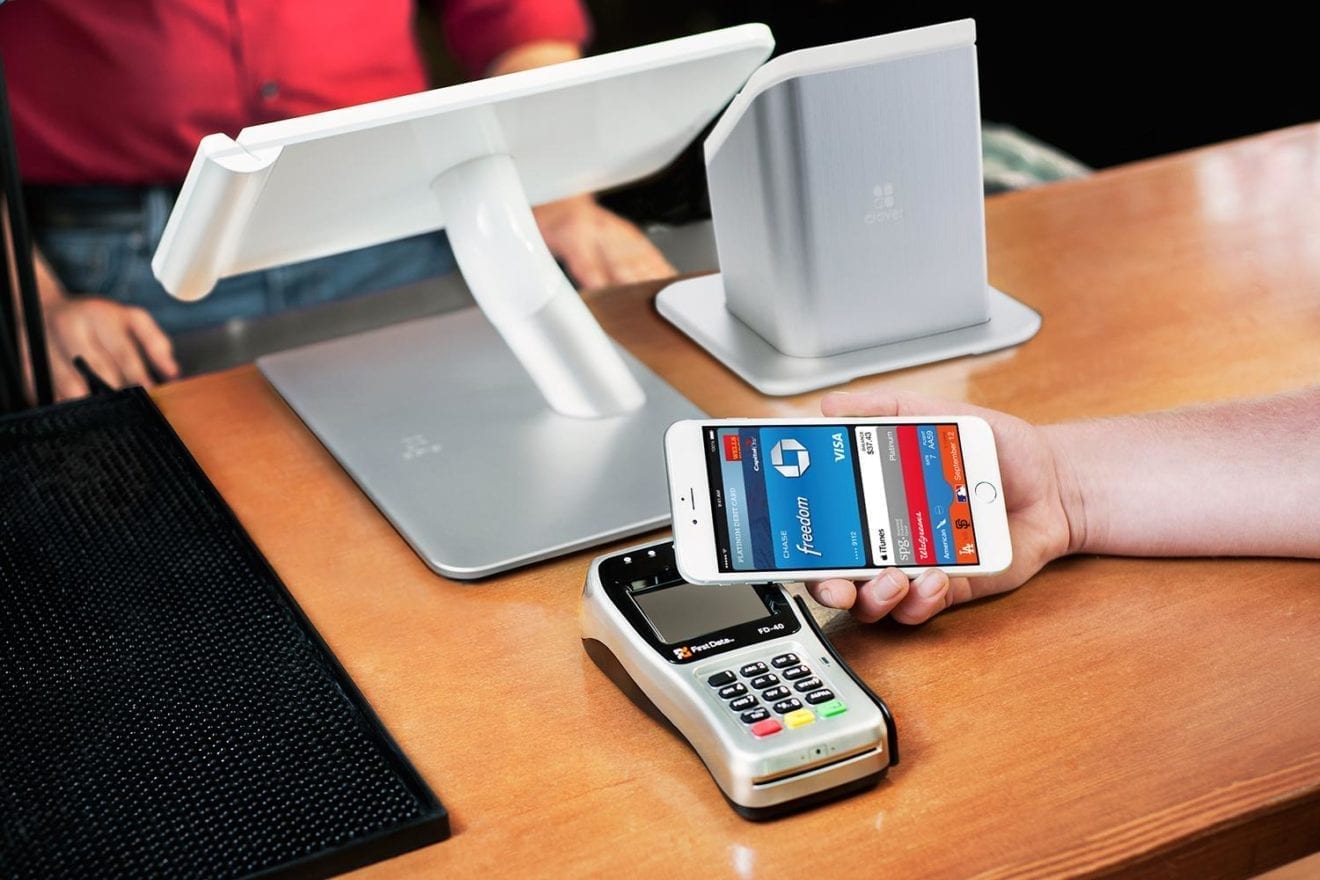
    Released less than five years ago, Apple Pay powered a mind-blowing 1.8 billion transactions in the last 90 calendar days of 2018, continuing its aggressive expansion stateside and worldwide with a long overdue debut in Germany, as well as major new partnerships with the likes of CVS, Target, and Taco Bell.

    Curiously enough, another big US retailer confirmed on Twitter over the weekend its “decision to remove Apple Pay for our stores.” JCPenney’s move is certainly unusual (if not unprecedented), as there are still a few holdouts in Apple’s race to US ubiquity, but we can’t really remember anyone that supported the digital wallet platform for a couple of years to then reconsider without offering any sort of justification.

    While not the earliest supporter of the increasingly popular app, JCPenney did embrace the service back in 2017, helping it reach 74 of the top 100 US retailers by revenue as of January 2019. That included Target and Taco Bell, so we’re guessing the count is now down to 73. That’s still an impressive number, as is the 70 percent touted by Tim Cook as the platform’s target for later this year as far as all US retailers are concerned.

    Hopefully, we’ll get an explanation from JCPenney soon as to what made the department store chain pull the plug on Apple Pay support in both its retail locations and iOS app.

  • Stripe readies local merchants selling to Europe fornew payment regulation

    Stripe readies local merchants selling to Europe fornew payment regulation

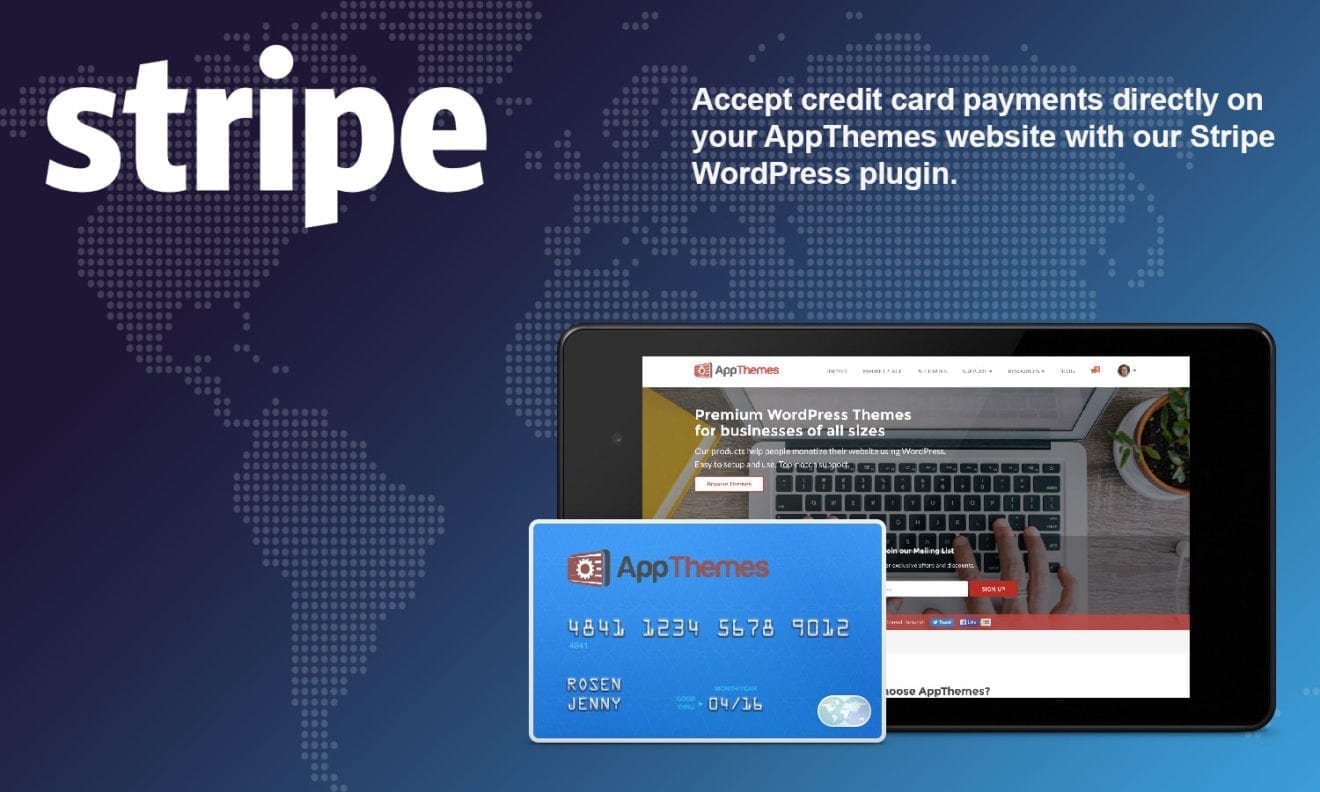
    Today payments infrastructure company Stripe announced a series of updates to its product stack for businesses operating in Europe, and acquired a Dublin-based tech company called Touchtech Payments.

    Strong Customer Authentication (SCA) is coming

    On September 14, 2019, SCA will come into force in Europe, radically changing the way people buy and sell online. More than 300 million European consumers will need to confirm their identity for the majority of their online purchases, using two of the following: something they know (e.g., a password), possess (e.g., a phone), or are (e.g., their fingerprint).

    Hundreds of thousands of online merchants in Europe —from retailers, to ridesharing companies, to crowdfunding services— will have to upgrade their payments set-up to prepare for the upcoming regulation. If they don’t, their transactions will be declined outright. When similar regulation was enforced in India in 2014, some businesses reported an overnight conversion drop of over 25%, due to the extra step in the payments experience. And while European regulators created a number of SCA exemptions for low-risk transactions (e.g., low value transactions, white-listing by end customers…), most merchants will simply not be able to leverage them on their own.

    “SCA is a ticking time bomb for the European payments industry. Merchants must deal with a complex set of changes to the payment flow that can have a disruptive impact on the customer experience. Yet, awareness among merchants is low”, said Ron van Wezel, Senior analyst at Aite Group. “Payment service providers are at a turning point. SCA is simply too complex for any merchant to manage on its own, including for large online businesses. Payments providers who can abstract away SCA complexity will have a significant advantage over their competitors.”

    New Stripe products to make SCA as seamless as possible for online businesses

    Today, Stripe is announcing new products and updates to help merchants implement the best SCA-ready authentication methods to their checkout page and dynamically trigger SCA when required:

    • The Payment Intents API: a new dynamic payments API that lets businesses design their own SCA-ready payment forms, and accept the best authentication methods (e.g. 3D Secure 2, Apple Pay, Google Pay) through a single integration.
    • Checkout: a pre-built payments page optimized for SCA, that merchants can integrate with just a few lines of code.
    • Billing: a suite of tools for subscription businesses, that identify which charges require SCA and send customizable emails to subscribers when additional authentication is needed.
    • Dynamic support for SCA exemptions on low-risk transactions (e.g., whitelisting, recurring transactions, low amount): behind the scenes, Stripe dynamically scans every transaction to trigger SCA only when required, protecting both users’ safety and merchants’ revenue.

    Stripe’s products are built with an uncertain future in mind. When new authentication requirements arise in Europe and elsewhere, Stripe will update its logic to protect merchants’ revenue against all odds, with few to no changes needed to their integration. To help merchants navigate the complexity of SCA, in addition to the new and updated integration products, Stripe is launching SCA guides, SCA-ready payments flow designs, SCA-ready API documentation, and SCA webinars, all of which can be found on the new SCA web page.

    An acquisition – Touchtech Payments – to accelerate SCA readiness for financial institutions

    Stripe also announced it has acquired Dublin-based Touchtech Payments—a software company that provides advanced SCA-ready authentication technology for some of Europe’s leading fintechs and challenger banks, like N26, Transferwise, and many others. By providing advanced authentication technology for credit card issuers, Touchtech Payments helps them offer better payments experiences for their customers, without having to choose between security and user experience.

    “On the modern internet, payments should be everything you’d expect: easy, secure, and fully compliant with the latest regulations. Unfortunately, these three attributes are often at odds with one another, making it nearly impossible for an individual business to keep pace with regulatory changes and build a great payments product experience for their customers,” said Will Gaybrick, Stripe’s Chief Product Officer. “Touchtech adds yet another layer to the economic infrastructure Stripe is building for the internet, which is designed to help businesses comply not only with SCA but also with the entire next generation of regional payment regulations.”

    As part of Stripe, Touchtech will continue to grow its products, working from Dublin.

  • Google Pay update brings Gmail integration

    Google Pay update brings Gmail integration

    Google is trying to build an entire ecosystem that will allow users to access any important information from just about every Google app. Gmail has been integrated with many other Google apps, but other developers noticed the benefits and added integration with the email app.

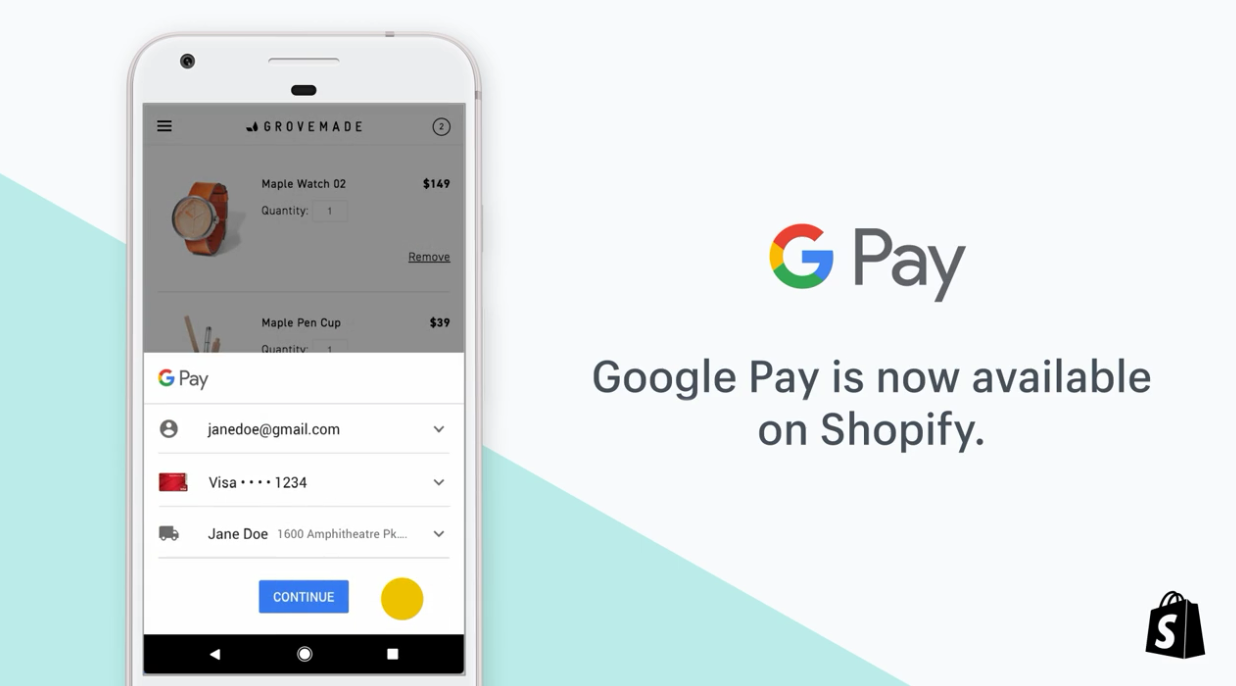
    The newest app that benefits from Gmail integration is Google Pay, which doesn’t come as a surprise since the changes were spotted a few months ago. Now, Google Pay has been updated with Gmail importing, which means that the mobile payment app will browse through your emails and add the relevant information to its system.

    For example, whenever you receive loyalty cards, movie tickets, and boarding passes in the Gmail inbox, they will be automatically added in Google Pay. Keep in mind though that if you delete the email containing the information, it will disappear from Google Pay as well.

    The improvement makes it easier to access loyalty cards, tickets, and more without having to go through your emails every time you want to know something about them. It’s also easier to find coupons and boarding passes that are being sent to your Gmail inbox and make use of them.

    It’s worth mentioning that the new Gmail import feature is disabled by default, so you’ll have to enable it in Google Pay by heading to Settings / General / Gmail Imports and using the toggle available after the latest update.

  • Google Pay update brings Gmail integration

    Google Pay update brings Gmail integration

    Google is trying to build an entire ecosystem that will allow users to access any important information from just about every Google app. Gmail has been integrated with many other Google apps, but other developers noticed the benefits and added integration with the email app.

    The newest app that benefits from Gmail integration is Google Pay, which doesn’t come as a surprise since the changes were spotted a few months ago. Now Google Pay has been updated with Gmail importing, which means that the mobile payment app will browse through your emails and add the relevant information to its system.

    For example, whenever you receive loyalty cards, movie tickets, and boarding passes in the Gmail inbox, they will be automatically added in Google Pay. Keep in mind though that if you delete the email containing the information, it will disappear from Google Pay as well.

    The improvement makes it easier to access loyalty cards, tickets, and more without having to go through your emails every time you want to know something about them. It’s also easier to find coupons and boarding passes that are being sent to your Gmail inbox and make use of them.

    It’s worth mentioning that the new Gmail import feature is disabled by default, so you’ll have to enable it in Google Pay by heading to Settings / General / Gmail Imports and using the toggle available after the latest update.

  • AlipayHK Collaborates with McDonald’s Hong Kong to Steer Digital Transformation

    AlipayHK Collaborates with McDonald’s Hong Kong to Steer Digital Transformation

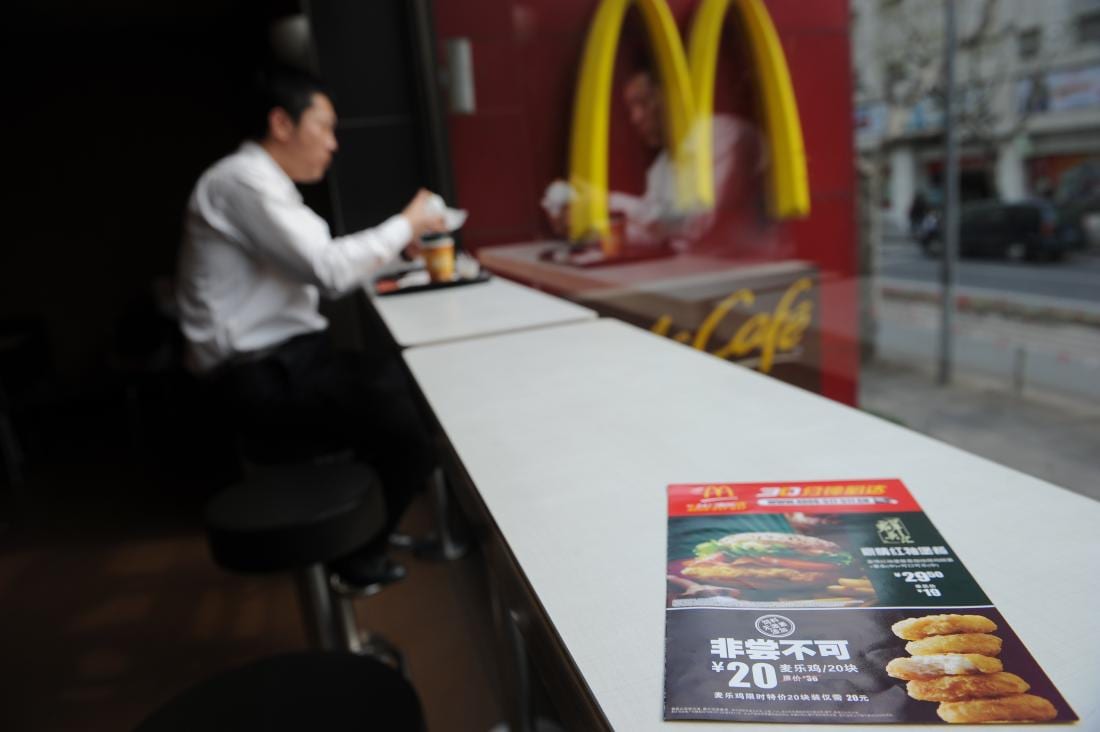
    With ubiquitous popularity on cashless payment services, AlipayHK has partnered with a plethora of merchants to engage users to harness the convenience of mobile payment. Today AlipayHK has collaborated with McDonald’s Hong Kong to steer profound digital transformation in catering industry – of which AlipayHK users can use the e-wallets to order gourmet food and pay in McDonald’s App on smartphones. Along with enhanced mobile ordering features in McDonald’s App, AlipayHK users can tap and swipe to enjoy “Exclusive rewards on delicacies”. Be familiar with QR code-based payment system to reap incredible rewards!

    First e-wallet integrated in McDonald’s App for mobile ordering and grab delicious deals

    With the advent of mobile payment services and big data analytics, restaurants are going full steam on digitalization craze. It is a prominent trend for the food and beverage sector to pursue digital transformation to boost operational efficiency, delivering customers seamless shopping and dining experience. Over the past year, AlipayHK has partnered with numerous merchants and restaurants to offer customers electronic coupons and stamps endlessly and to go green by using digital coupons. With McDonald’s launch of self-service ordering kiosks and mobile ordering, customers have appreciated the novelty and convenience of ordering scrumptious foods anywhere.

    It is an unrivalled convenience and unparalleled experience for AlipayHK customers to use the e-wallets integrated in McDonald’s App for placing orders.AlipayHK has strived to foster brand new consuming trend by embracing mobile wallet services – powered by futuristic technology – in Hongkongers’ daily lives. It has co-operated with McDonald’s to roll out “Exclusive rewards on delicacies” in McDoanld’s restaurants citywide, fostering mobile ordering and checkout as well as forging mobile payment as most preferred payment tool in Hong Kong.

    Ms. Jennifer Tan, Chief Executive Officer of Alipay Payment Services (HK) Limited, said, “AlipayHK expects that mobile payment services are geared to extensive and in-depth applications and development through the latest co-operation with McDonald’s Hong Kong. Currently, Alipay customers can use the e-wallets to make payment in nearly 10,000 restaurants. In collaboration with McDonald’s Hong Kong, AlipayHK hopes the initiative will help spearhead and incentivize more restaurants to engage in digital transformation in food and beverage sector. It will surely let customers gain bespoke experience and amazing convenience on mobile ordering and payment, turning the concept of smart living a reality.”

    Ms. Randy Lai, Chief Executive Officer of McDonald’s Hong Kong, said, “We have been committed to expanding our electronic payment platform to give customers’ unparalleled experience with McDonald’s in recent years. Since our collaboration with AlipayHK last year, customers have greatly enjoyed various special and incredible offers. To enhance co-operation, AlipayHK e-wallet is available in McDonald’s App for mobile ordering and payment from today, along with paying with credit cards and cash. I would like to express my sincere gratitude to AlipayHK for giving full support to McDonald’s Hong Kong and a wide array of exclusive offers to our customers. We will be dedicated to bringing our customers the next generation of premium restaurant experience.”

    AlipayHK debuts virtual KOL AliSa and leads Hong Kong people to immerse in smart living

    AlipayHK officially debuted its first beloved virtual KOL “AliSa” to bring Hong Kong people close together to explore future living. The well-loved virtual character AliSa literally means “happiness” and “pleasure” in Hebrew language. The beloved and delightful AliSa has truly lived up to make your life hassle free with cheers and fun everyday.

  • Liquid Group partners Changi Airport to roll out world’s first integrated QR Platform

    Liquid Group partners Changi Airport to roll out world’s first integrated QR Platform

    Liquid Group is pleased to announce today that it has entered into an agreement with Changi Airport Group to roll out the integrated acceptance of multiple major QR payment apps by merchants located across all four terminals at Changi Airport.

    The integrated payment platform by Liquid Group will allow retailers at Changi Airport to accept e-wallets such as GrabPay, Liquid Pay, Singtel Dash, Ezi Wallet and PayNow QR bank payment apps, as well as international payment app partners such as WeChat Pay, UnionPay and Alipay.

    Liquid Group’s payment platform will roll out a unified point-of-sales (POS) for QR payments that enable merchants to accept multiple local and international QR payment apps using a single device. Furthermore, with a standardized merchant workflow, participating Changi Airport retailers can accept multiple QR payment apps without additional infrastructure, integration or cashier training when Liquid Group and Changi Airport expand the network to include additional local, overseas and card scheme QR payment apps.

    The platform also enables Changi Airport to launch multiple marketing campaigns with participating payment apps without the need for additional cashier training or verification during checkout.  This provides for a frictionless user experience.

    “Changi Airport strives to continually enhance our passenger’s shopping experience. With the rise in QR payments, launching Liquid Group’s unified QR payment platform not only provides a frictionless payment experience, it will also provide more partnership opportunities with local and overseas e-wallet issuers. In addition, the unified QR payment platform will improve our tenant’s productivity in the areas of staff training, reporting and settlement for QR payments. We are pleased to partner Liquid Group to introduce this convenient payment option at Changi Airport.” – Ms Teo Chew Hoon, Group Senior Vice President at Changi Airport Group

    “Alipay welcomes this initiative and looks forward to further improving the user experience for our consumers at Changi Airport.” – Ms Cherry Huang, General Manager, Alipay South & South East Asia

    “At Grab, we are about providing real choices and more convenience to our customers. As travel gets bigger in Southeast Asia, we are pleased to have GrabPay accepted at all merchants in Changi Airport. Our users from across the region who are already using GrabPay to pay for their transport, food and other daily needs, can now enjoy the same seamless payment experience at the airport and have more opportunities to accumulate GrabRewards points for perks and benefits.” – Mr Gary Wong, Head of GrabPay Singapore

    Changi is the world’s seventh busiest airport for international traffic with over 65 million passenger movements. With the rapid proliferation of QR mobile payment apps across ASEAN, North Asia and South Asia, Liquid Group’s payment platform will enable Changi Airport to spearhead the seamless acceptance of such apps and offer deals to shoppers from different countries.  Retailers and consumers can look forward to an exciting and innovative e-payment journey ahead at Changi Airport.

    This is also in line with the Government’s Smart Nation objective to provide an open, accessible and interoperable national e-payment infrastructure, as well as the adoption of SGQR as the single, standardised QR code for e-payments in Singapore.

    “As one of the world’s leading airports, WeChat Pay is both excited and proud to be part of Changi Airport’s efforts to enhance its merchants’ payment experience. We believe this initiative will help Changi’s merchants gain greater access to the billion users that are active on the WeChat platform” – Team of WeChat Pay, Southeast Asia

    “We’re excited to have Dash accepted at the many merchants in Changi Airport, bringing even more dining and retail choices to our customers. This is an especially perfect fit for us, as we continue to expand our VIA cross-border mobile payment alliance and connect more merchants to travellers. Overseas customers that are part of VIA would be able to enjoy the ease, familiarity and convenience of using their local wallets at Changi Airport, greatly enhancing their retail experience.” – Mr Gilbert Chuah, Head of mCommerce at Singtel

    “The use of QR Code for payments is gaining momentum in Singapore and all across Asia. According to The Future of Payments Study conducted by UnionPay International and Nielsen last year, QR was the most widely-adopted mobile payment method among Singapore consumers, with two-thirds of Singaporeans having used it at least once in the past three months. With the integrated QR and Marketing Platform for merchants at all Changi Airport terminals, we believe that more travellers and Singaporeans alike will get to enjoy greater convenience and ease of payments with UnionPay QR Code, to further heighten their shopping experience at the world’s best airport.” – Mr Wenhui Yang, General Manager, UnionPay International South East Asia

    Jeremy Tan, Founder and CEO of Liquid Group, said: “Promoting the interoperability of mobile payment services is a fundamental part of advancing a cashless society. We are delighted to roll out the largest open QR payment platform at Changi Airport, which provides a unified point-of-sale for the wide range of QR payment apps available. Our vision is to expand this network across the region and create a cross-border platform to facilitate large-scale QR payment transactions and accelerate the adoption of QR payment apps.”

    The roll-out of the new payment platform will be in phases, with the first phase slated to commence in the 1st half of 2019.

  • M1 taps UOB for QR code payment

    M1 taps UOB for QR code payment

    Singapore operator M1 has partnered with the nation’s United Overseas Bank (UOB) to offer PayNow as a payment mode for M1 customers.

    Under the agreement, M1 customers can now make mobile payments for purchases via PayNow at all M1 Shop outlets, as well as make monthly bill payments via PayNow by scanning the QR Code on the bill.

    M1 is the first communications provider in Singapore to enable retail customers to make e-payments via PayNow, providing customers with an additional payment option, in addition to existing payment modes. UOB is the key provider of PayNow Corporate services to M1, and will help enable the safe and hassle-free scan-and-pay experience for M1’s customers.

    To pay for in-store purchases, customers need to scan a dynamic QR Code that is generated at the counter using the mobile banking application of any PayNow participating banks with QR scanning functionality. Customers can also use PayNow to pay for their monthly bills by scanning the dynamic QR code on their bill statement. Customers can complete the payment by confirming the transaction details that have been automatically filled in, such as the payment amount and recipient.

    “Today, about eight in 10 consumers in Singapore have adopted e-payments and PayNow is a very convenient e-payment platform which will enhance our customers’ payment experience. This new initiative is one of many, as part of our digitalization journey to deliver a seamless digital experience for our customers,” M1 CMO  P. Subramaniam said.

  • Vietnam tops world in growth of mobile payments

    Vietnam tops world in growth of mobile payments

    The number of Vietnamese people making mobile payments in stores this year has grown fastest globally by 24 percent. A survey by the audit, tax and consulting services provider PwC found 37 percent of the respondents making mobile payments in 2018, but it went to 61 percent this year, placing Vietnam fourth below China at 86 percent, Thailand at 67 percent and Hong Kong at 64 percent.

    In terms of growth, the Middle East ranked second at 20 percent, said the Global Consumer Insights Survey 2019, which polled 21,000 online consumers in 27 territories.

    “Mobile payment is becoming a new trend with the rise of technologies such as QR codes, contactless payments, and the tokenization of card information,” Nghiem Thanh Son, deputy director of the Department of Payments at the State Bank of Vietnam (SBV), had said earlier.

    The Vietnamese government is working to accelerate the use of cashless transactions. In a resolution released January, it tasked the central bank to come up with solutions that would promote the use of e-wallets, which allow users to deposit cash into their e-wallets without the need for a bank account.

    However, Vietnam is still far away from becoming a cashless society, given low financial literacy and the lack of an ecosystem, experts say.

    The use of cash in Vietnam remains high. World Bank’s statistics released last year showed that Vietnam had the lowest percentage of cashless transactions in the region with only 4.9 percent, while this value for China and Thailand were 26.1 percent and 59.7 percent respectively.

  • Vietnamese consumers embrace digital payments as a new way

    Vietnamese consumers embrace digital payments as a new way

    Vietnamese consumers are embracing digital payments as a faster and more convenient way to pay, with consumers using their credit and debit cards more often for in store and online purchases, according to figures released by Visa, the world’s leader in digital payments. The figures, which show year-on-year growth in consumer use of Visa products over the 2017 to 2018 calendar years, indicate a number of positive trends in the growth of digital payments.

    The total value of purchases made by Vietnamese consumers on their Visa credit and debit cards was up 37 per cent, while the number of transactions was up by 25 per cent. eCommerce in particular saw strong growth with the total value of purchases up by 40 per cent.

    “As the Vietnamese economy grows and becomes increasingly internationalised, commerce here will require ever faster, more efficient ways of paying.

    These recent figures from our network demonstrate clearly the fact that digital payments are now truly a part of day-to-day life for many Vietnamese consumers – regardless of whether they’re buying from an online retailer on the other side of the world, or simply paying for their groceries,” Dang Tuyet Dung, country manager for Visa Vietnam and Laos.

    This data is supported by findings from the 2018 Visa Consumer Payment Attitudes Study, which further reveals the extent to which digital payments are becoming a part of everyday life for Vietnamese consumers.

    The report, which specifically looked into consumer sentiment towards different forms of payment, found that Vietnamese consumers are carrying less cash, and half are using card and mobile payments at least two-to-three times a week.

    Seventy-three per cent of respondents are using credit and debit cards, up on 59 per cent from the year prior, while 82 per cent have tried making transactions on mobile phones.

    The research also found that the use of new payment technologies is picking up traction, with 44 per cent of the respondents indicating that they are now making payments in apps, while 32 per cent are using “contactless” payment technologies that allow to simply tap your card on the terminal to pay.

    Additionally, 19 per cent have used QR payments, where you use your phone to scan a unique merchant code that will transact money to the merchant’s account.

    “While digital payments are still in their relative youth in Vietnam, it’s been incredibly positive to see how consumers are embracing new payment technologies – it augurs well for these technologies in particular, and for digital payments more broadly,” Dung added.