Tag: payments

  • Afterpay starts cross-border payments

    Afterpay starts cross-border payments

    Buy now, pay later provider Afterpay is enabling shoppers to make cross-border payments through the service, following a successful trial.

    The feature means that businesses that offer Afterpay at checkout will now be able to offer the payment method to customers in other countries where Afterpay is active.

    The feature is initially limited to Australian and New Zealand businesses, where a combined 2.7 million people use Afterpay, but will eventually be extended to include businesses in the US and later the entire Afterpay network.

    “We are confident that [this] will add value to our retail partners, and open up the opportunity for them to seek and delight new customers from different countries,” Afterpay chief executive Nick Molnar said.

    “Customers will be able to pay directly in their currency and not be hit with any additional foreign exchange fees after the payment is processed.”

    The payment provider also will remove the complexity of foreign exchange, through a proprietary global payments solution that allows funds to be settled in their country of origin.

    Afterpay’s support for cross-border payments is expected to be a boon for online retailers looking to grow their sales outside of the domestic market.

  • Japan’s NETSTARS joins Singtel’s VIA alliance

    Japan’s NETSTARS joins Singtel’s VIA alliance

    Singtel‘s cross-border mobile payments alliance VIA has expanded into Japan through a partnership with Tokyo-bassed mobile payment technology NETSTARS.

    The addition of NETSTARS to the alliance will add 100,000 stores to the network’s current 1.6 million merchant partners in Asia.

    With the agreement, users of mobile wallets supported by VIA, including Singtel’s Dash and AIS Global Pay, will be able to use their respective wallets at merchants including airports, shopping malls, transportation modes and food and beverage outlets.

    Users will be able to pay instantly in their local currency with competitive foreign exchange rates in Japan.

    NETSTARS aims to grow its merchant base to 1 million stores throughout Japan by the end of next year

    As well as Dash and AIS Global Pay, Thailand’s Kasikornbank and Malaysia’s Boost will soon be adding their mobile wallets to the VIA alliance.

    Singtel Group plans to expand the VIA alliance to include other mobile regional associates including Airtel in India, Globe in the Philippines and Telkomsel in Indonesia, as well as more non-telco partners.

  • Credit cards declining, Australians switch to new methods

    Credit cards declining, Australians switch to new methods

    A new report from data and analytics firm ilion suggests there is a mass-shift underway in the way Australians finance their purchases.

    According to its inaugural credit card report released on Sunday, Australian consumers under the age of 30 hold over half of all buy now, pay later accounts but just 10 per cent of total credit cards.

    One reason for this may be that banks are traditionally reluctant to give credit cards to younger consumers, who they view as a “more risky demographic group”. This coincided with new, alternate payment methods.

    “With evolving forms of repayments offering consumers more choice in an increasingly fragmented and competitive credit system, Australia is at the tipping point of its credit card cycle,” illion chief executive Simon Bligh said.

    As the payments landscape changes, retailers need to consider whether they should offer alternate payment options, if they haven’t already.

    “Retailers will need to respond to shifts in how consumers want to purchase and pay off their goods and services over coming years, particularly as younger Australians enter adulthood and constitute a growing and more influential proportion of the spending population,” Bligh said.

    While a majority of under 30s still hold a credit card (57 per cent), the long term trend is exponentially changing in the favour of BNPL options.

    Source: illion

    As the ilion report highlights, however, those under the age of 30 are twice as likely as their parents to fall more than two months behind in credit card payments.

    “[This suggests] they have a greater difficulty balancing spending and debt, regardless of their credit limit,” Bligh said.

    “Likewise, the likelihood of failing to pay off credit card debt on time increases if consumers have more than one card, and increases again if those cards are with multiple banks.”

    According to a recent investigation into the BNPL industry by the Australian Securities and Investments Commission, one in six users of the services had become overdrawn, delayed a bill payment or borrowed additional money to overcome payment obligations.

    This stems from the fact that both BNPL and credit cards allow customers to buy something that may be out of their price range, and easily put themselves in a position of becoming unable to meet their repayments.

    “The exponential growth in this industry, along with the risks we have identified, means this will be remain an ongoing focus for ASIC,” ASIC commissioner Danielle Press said.

  • Abysmal start Zero Pay pilot in South Korean

    Abysmal start Zero Pay pilot in South Korean

    The Seoul city government’s smartphone-based payment-program pilot posted an abysmal track record in its first full month of service, data showed Wednesday.

    In a bid to help relieve small merchants of burdensome credit card fees, the municipality began the trial run of the “Zero Pay” service in late December, enabling users to pay for purchases card-free and receive tax benefits.

    About 8600 purchases totalling 199 million won (US$177,000) were settled via the Zero Pay system in January, according to the data provided to Rep. Kim Jong-seok of the main opposition Liberty Korea Party by the Financial Supervisory Service.

    The number of settlements came to a mere 0.0006 per cent of the 1.56 billion purchases made using credit, debit and prepaid cards, with the value reaching only 0.0003 per cent of the total 58.1 trillion won.

    As of the end of January, slightly over 46,600 small shops and businesses were taking part in the pilot payment service.

    Watchers attributed Zero Pay’s poor record to the small number of participating merchants and customers’ unwillingness to change their payment habits.

    Eleven commercial banks, including all major lenders, joined the test service, which the Seoul city government plans to formally launch after this month.

    Nine more banks are slated to take part in the Zero Pay system, and the municipality will recruit convenience stores and other franchise stores to join.

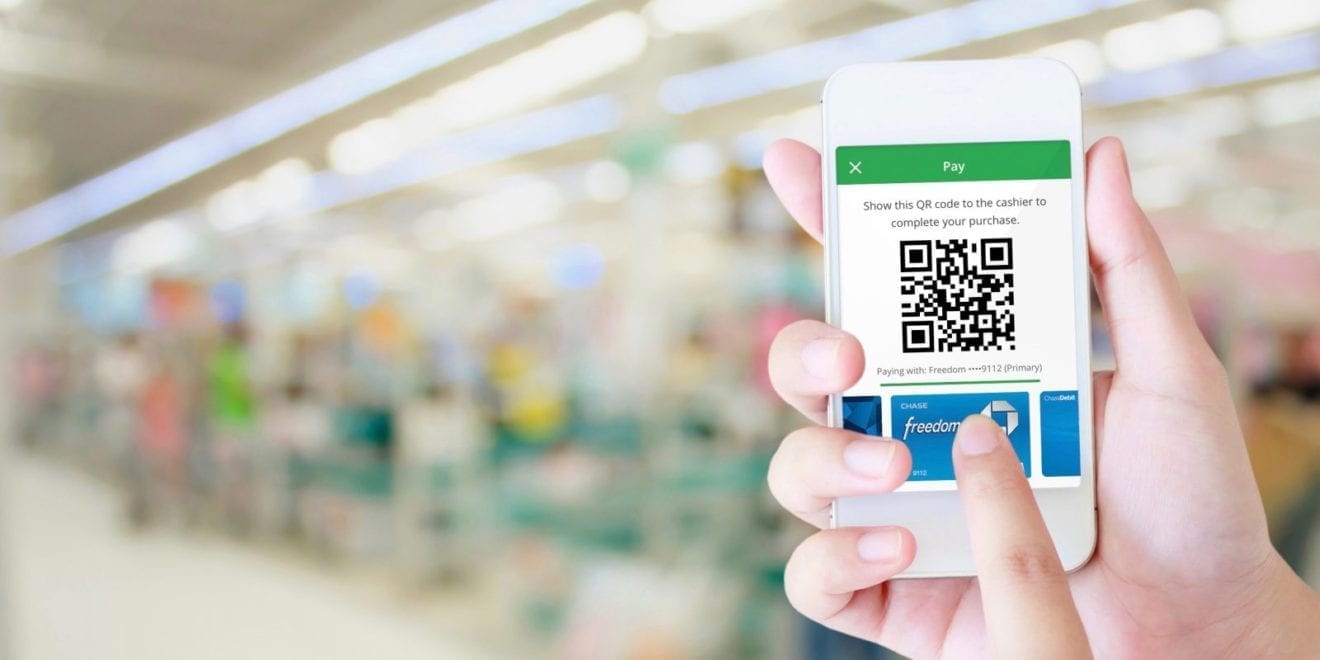
    Under the system, money is transferred from a consumer account to that of a merchant when the consumer scans the merchant’s QR code with a smartphone using the existing apps of commercial banks or online payment platforms.

    Following its formal launch, the central government plans to gradually expand the service to other parts of the country by offering tax breaks and eliminating related regulations.

  • HKT Payment adds marketplace to mobile wallet

    HKT Payment adds marketplace to mobile wallet

    HKT Payment has launched a new virtual store within its Tap & Go mobile wallet to allow customers to purchase online game virtual gift cards.

    The new Tap & Go Marketplace will offer a wide range of gift cards including Google Pay Gift Codes, PlayStation Network, Xbox and hvmod cards.

    Once payment is complete, a PIN will be instantly installed within the Tap & Go marketplace that can be easily redeemed on the respective online marketplace.

    “We are excited to launch the Tap & Go Marketplace and extend the service to better meet the needs of the game-savvy segment,” HKT Financial Services head Monita Leung said.

    “Not only does online purchase via Tap & Go Marketplace give customers full control over their spending and peace of mind with secure payments, but it also offers gamers greater convenience and a seamless experience.”

    The launch follows the introduction of the Faster Payment System in September that allows customers to instantly top up their mobile wallet.

    Leung said HKT Payment plans to continuously expand the gift card categories available over Marketplace to cover music, videos and software.

    HKT Payment secured Hong Kong’s second ever stored value facilities license in 2016.

  • Chinese QR payments booming

    Chinese QR payments booming

    Nuwemaru Street in Yeon-dong, Jeju City, was known as Baojian street until it was renamed in April. The street had been called Baojian from 2011 when the Chinese pharmaceutical company of the same name sent 12,000 employees to the southern tourist island as a reward.

    Despite the sharp drop of visitors since 2017 – when tensions between the two countries peaked with the deployment of a U.S. missile defense system – it still looks very much like Chinese territory today, with many store signs in Chinese.

    Upon closer examination of the shopfronts, Chinese QR codes are also evident.

    The QR codes for Chinese mobile payment services have gained popularity on the Korean tourist island over the last couple of years. Even a restaurant selling seollongtang – Korean beef-broth soup – in the middle of the street has a QR code for Chinese mobile payments.

    “Half the Chinese visitors use Alipay or WeChat pay,” said a store clerk of one of the cosmetic stores on the street.

    Currently 1,000 stores on Jeju accept Chinese QR mobile payments. The Jeju government said it was promoting the use of Chinese mobile payments in hopes of attracting more Chinese tourists.

    On Dec. 10, it signed a memorandum of understanding with the China’s Tencent, which operates WeChat, to attract more Chinese visitors to the island.

    One part of the agreement calls for tourism promotions on the WeChat platform, including discount events, while a blog will be run to introduce the island to potential visitors from China.

    The Jeju government and the tech company also agreed to share information on the consumption patterns of Chinese tourists who made payments through WeChat pay.

    Seven top officials from Tencent attended the signing ceremony, including company vice president Zhang Ying. During the ceremony, Zhang said that the only thing he carried with him when coming to Korea was his smartphone, demonstrating that he didn’t need cash or a credit card as long as he had WeChat Pay.

    “Once WeChat Pay is available at traditional markets in Jeju, it will be a great help in promoting traditional Korean culture and goods to Chinese tourists,” said Yoon Chang-ho, head of tourism and marketing at the Jeju government.

    According to convenience store CU, in the first half of 2018 87.2 percent of Chinese tourists used mobile payments when making electronic purchases at CU outlets in Korea. Only 12.8 percent used credit cards. In 2016, 65 percent used credit cards.

    Many institutions are accepting Chinese QR code mobile payments.

    Starting in September, Hanyang University will accept tuition fees via WeChat Pay. The program is being developed with Shinhan Bank. Roughly 900 or so convenience stores and restaurants at train stations in Korea have started accepting WeChat payments.

    One of the reasons Korean businesses are willing to accept mobile phone payment systems is because people tend to spend more when using them. When they buy something by simply waving their phone, they feel as though they are spending less.

    To make a payment, a customer places the store’s QR code – similar to a bar code – in front of their phone camera for 10 to 20 seconds.

    Chinese QR code mobile payment systems are not only used in Asian countries, such as Korea, Vietnam and Thailand. They are also being used in other places visited by Chinese tourists, such as the United States and Europe. These payment systems are even accepted at Amsterdam Airport Schiphol in the Netherlands.

    Roughly 78 percent of Chinese are said to use these payment systems, while only 21 percent use either credit cards or cash.

    While visiting a small restaurant in China late last year, President Moon Jae-in was surprised at the convenience of QR-code payments.

    One reason the QR-code payment system has rapidly grown in China is the country’s lack of a telecommunication infrastructure needed for credit-card processing. The QR code system doesn’t require a credit card terminal, which makes it cost effective and convenient.

    Although WeChat Pay joined the game late compared to Alibaba, it currently has 40 percent of the Chinese mobile-payment market, while Alipay has 54 percent. WeChat may overtake Alipay because of the popularity of its mobile messenger.

    Not all commercial districts in Korea accept the Chinese mobile payment systems. One such place is Myeong-dong, which attracts huge numbers of Chinese tourists. The street vendors in Myeong-dong only accept cash.

    Some critics question the growth of the Chinese payment systems. One concern is that since the networks are Chinese, it may be hard to track down the payment records, and that could lead to tax evasion.

    A person who has been installing Chinese mobile payment systems for years said this is not true as the payments made in Korean stores are deposited in local accounts, and the Korean stores have to report the payments to the Korean financial authorities.

    Loopholes do exist. If a Chinese company decides to open a branch and use a payment terminal from China, it would bypass the local institutions, making it difficult for Korean authorities to keep track of the payments.

    Because of such problems, the Vietnamese government in June banned the use of Alipay and WeChat Pay. It found that some money spent domestically by tourists did not go through local financial institutions.

    In 2016, the tax evasion question became an issue in Thailand as well. The Thai government at the time found that Chinese businesses were evading taxes through mobile payment systems. Several travel agencies were penalized.

    Some cases have been reported in Korea. In 2016, a plastic surgeon in Nonhyeon-dong, Gangnam, only accepted cash or credit cards from his Chinese patients, and the credit cards were processed using a Chinese terminal. More than 70 percent of the revenue was from Chinese patients. The hospital was found to have evaded more than 10 billion won ($8.9 million) in taxes.

    Overseas customers also present a problem. According to Korea Custom Service, more foreigners are buying goods directly from Korean online shopping malls. In 2013, 67,000 purchases were made in this way, but that figure has surged to more than 7 million.

    Chinese customers were the top purchasers and were especially big on Korean cosmetics. Last year about 2 trillion won worth of Korean cosmetics were purchased directly online by foreign buyers. That’s 10 times the 203.5 billion won worth of cosmetics purchased directly online in 2014.

    With the growing popularity of direct purchases, many online shopping malls have started accepting mobile payment systems. Since 2015, Alipay has been supporting Korean SME exporters in terms of payments and logistics.

    This could result in Korean exporters evading taxes.

    “There is major tax evasion going on with the significant increase of foreigners buying Korean goods directly online thanks to the Korean Wave,” said Lee Hye-hoon, then ruling Saenuri Party lawmaker, during the National Assembly’s audit on the Korean National Tax Service in October 2016. “We need to take action.”


  • 8 Easy Startup Ideas For Asia

    8 Easy Startup Ideas For Asia

    We live in the times of so many possibilities. Therefore starting a new business to earn some extra money could be very easy and done very quickly wherever you are – it could even be Asia. People are really into new technologies there at the moment, especially mobile payments through various apps, so you could use the benefits of  this trend for your business idea.

    If you love the idea of making some money on your own, here you’ll find some original ideas you could use for your startup and maybe even start today.

    Specialist Of Education Progress Tracking

    Every parent wants their kid to do well at school and gain the best education possible. That’s why there are so many freelance tutors that help kids and students learn the subjects that they are failing at.

    An education progress tracking will help you reach the best result possible. This is done by tracking the progress of your child and comparing it to other students who are moving up to a similar goal. For example, the same degree in business management or biotechnology. Many criteria need to be evaluated and compared, like grades, honors, certificates, additional skills, and so much more.

    Develop An App For Coworking

    Coworking apps are in demand both for teams in creative and non-creative agencies and also for study groups. Therefore if you are not completely new to coding, you could build an entire network where people could work together on a digital platform. Surely there are already some apps that allow you to share, comment files, and work on projects together, but you can always research your competitors and make an even better product. Simply detect what’s lacking in these apps.

    Print On Demand Business

    Print on demand businesses are getting really popular lately. That is because it doesn’t require any investments and therefore is a perfect startup idea for young people like students. The best part is that you don’t need to be responsible for keeping items in stock, producing it or putting logos on it.

    One of the most popular forms of print on demand business is selling t-shirts. All you’ll need to do is come up with the design. If you want to learn more about how to sell t shirts online – there are POD platforms like Printify that are very easy to use and offer you articles that help improve your business.

    App For Acting

    This could be a similar idea to SnapChat or Instagram Stories, but with a completely different concept. Friends would be able to create short videos with specific timing, for example, 20 seconds. And other friends would have to continue the story. After finishing a story, you could watch it as a single movie clip. To access a group, you should have a special code, link or different kind of key to access. Some groups could be open to everyone thought.

    Job Interviews On Video

    Image credit: Seth Doyle

    Wasting time always means wasting money. Companies and their hiring specialist waste tons of time trying to find the best candidates for one or another job position. It’s hard to imagine, how many time has been wasted on candidates that weren’t a good fit for the company.

    And you could be the one to offer these companies a solution and create a platform with already prepared video interviews. They would be short and very specific – candidates would be asked a few questions and answer it on camera. This could be a really good filter for the hiring specialists.

    Local Social Media Network

    Social media is extremely popular nowadays. But what if you were to create a new platform that would be based only on location? You would be capable of connecting with people, see events and other information related only to the place you are currently in. This would filter out a lot of unnecessary information that we see on our Facebook every day.

    Create An App For Recycling

    Image credit: Paula Brustur

    A lot of people today care about nature and recycling, but really lack knowledge about ecology and how it works. It’s hard to determine what is truly toxic for us and our environment and sometimes we just don’t know how to properly utilize specific products.

    If you were to create a recycling app, it could help people understand recycling more, especially with all the pollution is Asia. For example, if someone would be thinking how to recycle one or another item the right way, they could type the product in your apps search and quickly find an answer.

    Sell Your Own Crafts

    If you have some skills for crafting, you should know that it’s a very trendy thing to do at the moment. Especially things like handmade jewelry and gifts. You could sell your crafts on Etsy, but you can also create your own e-store. All you need is to buy a domain, choose the design and add all needed forms for orders and contacting.

    To save some money, don’t pay the programmers for creating the forms for you, simply use CaptainForm wordpress form plugin that will offer you all the forms your website might need.


  • H&M invests $20M in payments firm Klarna

    H&M invests $20M in payments firm Klarna

    Fast-fashion retailer H&M has taken an investment stake of less than 1% in Swedish fintech company Klarna for $20 million, reported the Financial Times reported. Beginning next year, Klarna will provide both in-store and online payment services for H&M, beginning with 14 European countries, including the U.K. and Sweden, according to a press release. The partnership could expand into the U.S. and Asia.

    By integrating payments across H&M’s channels, the goal is to provide customers “a seamless, personalized and engaging shopping experience,” the press release said. The new capabilities will involve frictionless mobile, in-store and online payments and will simplify deliveries and returns. It will also allow shoppers to determine when and how they pay, including try-before-you-buy services.

    The next generation of the H&M app and H&M Club loyalty and payment program will include these new features, the companies said.

    Facing a declining stock price and following a 10-quarter same-store sales slump, H&M has been moving aggressively throughout 2018 to bolster technology and merchandising. In March the company reported declining profits because of “weak sales development as well as higher markdowns,” but CEO Karl-Johan Persson predicted 25% sales growth for the rest of the year. The company has refocused on e-commerce and refined its merchandising mix and store count, even closing stores so as to expand on Alibaba’s Tmall.

    The company is using big data and artificial intelligence to customize the assortments in individual stores. H&M wants to reduce markdowns by using algorithms to analyze store receipts, returns and loyalty-card data, and is testing the technology in a Stockholm store. In August, it announced the roll-out of a new e-commerce site and mobile app, equipped with visual search capabilities specifically for the U.S. market. H&M is testing voice interactive mirrors at its New York City flagship store, which offer selfies, style advice and discounts via QR codes.

    The retailer is also investing in its supply chain by making it faster, more flexible and efficient through the use of proximity sourcing and automated warehouses. H&M plans to bring RFID to 1,800 stores in 2019. Earlier this year, it announced the launch of a new brand called Nyden aimed at Millennials and their increasing rejection of fast fashion. This follows the introduction last year of stores with a broader range of apparel for men, women and children branded as Arket. These stores also include home goods and some have cafes.

    H&M is investing in advanced technology that spans its online and offline channels, products and support services such as payments. Now it has invested in Klarna, which is known for a technology that allows customers to arrange for financing at the point of sale. For H&M, the retailer hopes the partnership will smooth out and streamline its payments options, delivery and return processes.

    “We want to make it possible for customers to move freely between the various channels and choose how they want to shop and experience our offering online and in-store,” H&M Head of Business Development Daniel Claesson said in the release. “This partnership will bring tailor-made payment solutions to our customers and accommodate evolving shopping patterns and needs.”

  • Security concerns inhibiting m-payment adoption in Hong Kong

    Security concerns inhibiting m-payment adoption in Hong Kong

    More than half (53%) of Hong Kong residents polled during a recent survey conducted by the Hong Kong Internet Registration Corporation (HKIRC) said concerns over cybersecurity and privacy risks are major barriers to greater adoption of mobile payments.

    Other barriers that have been cited in the survey include technical instability and the lack of support for mobile payment from most local merchants in the city

    In speaking about the survey, HKIRC deputy CEO Bonnie Chun allayed the primary fear of using mobile payment, pointing out that the government ‘has already put a lot of regulations in place to ensure the industry strictly follow their guidelines. We suggest the government promote its policies via different channels such as social media among others,” said Chun.

    She added that the government should keep on educating the public about the different ways of maintaining safe online hygiene such as changing one’s passwords regularly, using two-factor authentication, not using public Wi-Fi connections for making payment transaction and downloading mobile apps only from reliable sources.

    “Also, mobile payment providers should increase their transparency on how they handle personal data. They should try not to collect too much personal data during the registration process to increase users’ confidence.”

    Mobile payment gets a foothold in Hong Kong

    The survey polled 1,200 residents in the city between the ages of 18 and 65, who belong to various industry sectors.

    Survey results showed that mobile payment is now gaining a foothold in the city with 23% of respondents using mobile payment and is now in the top three payment methods in Hong Kong after credit cards (37%) and Octopus Card (25%).

    While 93% of respondents between the ages of 18 to 25 have used it before, a high percentage – 77% – of older respondents aged 56 to 67 have also used mobile payments.

    More than a quarter of respondents or 28% have been using mobile payments two to three times a week. About 88% of respondents use their mobile phone for transactions of less than HK$500 ($64).

    The survey showed that respondents want to be able to use mobile payment in three areas: public transport, government bills and clinic,

    “The future of mobile payment in Hong Kong is very positive. When we start using mobile payment in public transport, people will become more familiar with it and the adoption rate will increase,” Chun said

  • Singtel launches VIA cross-border mobile payment alliance

    Singtel launches VIA cross-border mobile payment alliance

    Singtel and Thai mobile affiliate AIS have jointly launched a cross-border mobile payment alliance known as VIA, introducing Singapore-Thailand cross border mobile payments in collaboration with Thailand’s Kasikornbank.

    Through the collaboration, Singtel and AIS will offer QR code based mobile payments through their respective mobile wallets – Singtel Dash, as well as AIS Global Pay and Rabbit Line Play.

    The service can be used at all merchants displaying the new VIA brand as well as the more than 1.6 million Kasikornbank merchants displaying the Thai QR Code.

    Singtel said the VIA Alliance in the first cross-border initiative to connect both telco and non-telco mobile wallets.

    The alliance will be progressively expanded to include more of Singtel’s regional associates, including Airtel in India, Globe Telecom and the Philippines and Telkomsel in Indonesia, as well as more non-telco partners such as China’s Ping An Insurance Group.

    “This is a game changer for the Singtel Group and the region. The VIA alliance is aimed at unifying Asia’s fragmented payments scene by connecting different mobile wallet systems across the region. As more people travel around the region, we want them to be able to enjoy the ease and familiarity of using their local mobile wallets abroad,” Singtel International CEO Arthur Lang said.

    “VIA will enhance the payment experience for millions of consumers including our Group’s customer base of more than 700 million. We see a tremendous opportunity to drive the adoption of mobile payments which supports ASEAN’s push towards financial inclusion and vision of a single digital market.”

  • EQUIP GLOBAL’S Accounts Payable & P2P Asia Summit Returns to Singapore in July!

    EQUIP GLOBAL’S Accounts Payable & P2P Asia Summit Returns to Singapore in July!

    The common issues found in most companies’ Accounts Payable & Purchasing departments are manual data entry, manual routing of invoices, a lack of visibility in the accounts payable & purchasing processes, and the challenges faced with the management of high volume of hardcopy invoices. Whilst P2P transformation and automation will alleviate a lot of challenges faced, there is still resistance in the adoption process and proven practices on how this can be best achieved.

    The 5th Accounts Payable and P2P Asia Summit returns to Singapore on 31st July to 3rd August 2018 with more strategic case studies specially designed for Heads, Senior Managers, Executives, Analyst in Accounts Payable, Purchasing, Procurement or Procure-to-Pay (P2P). The summit is a 4-day program that focuses on proven strategies in the design and implementation of P2P transformation and the alignment of various departments’ processes and policies to achieve better operational efficiency.

    Expect to hear case studies on how leading companies streamline processes, reduce costs of AP operations, best practices to digitize and automate AP processes so that they are fully integrated within the purchasing processes to help their organizations decrease the time needed for approval process and payment of invoices, eliminate overspend, avoid tax, fraud and regulatory accounts payable risks, transformation best practices and the key considerations and criteria companies should undertake to integrate automation.

    For more information, please visit our website or email us at enquiry@equip-global.com now!

  • National Payment Gateway could burden banks, consumers

    National Payment Gateway could burden banks, consumers

    The National Payment Gateway (GPN) may burden both consumers and banks as Bank Indonesia (BI) requires all bank customers to have at least one GPN card,  the University of Indonesia’s Institute for Economic and Social Research (LPEM UI) has said.

    LPEM UI researcher Chaikal Nuryakin said on Wednesday that based on BI’s target, following the issuance of Article 43 of BI Regulation No. 19/10/PADG/2017, 100 million GPN cards needed to be issued.

    “The problem is that the GPN cards cannot be used for transactions abroad. Some customers will have it but they leave it dormant while the administration cost will be incurred,” he said during a press conference in Jakarta.

    LPEM UI’s study found that at least 22.5 million cards out of 100 million would be dormant and that it would cost banks Rp 585 billion (US$41.54 million) to issue the 22.5 million cards.

    “It would be better if BI loosened the regulation so that GPN cards were optional. So it is up to customers whether or not they want to have it,” Chaikal said.

    This was because GPN cards could only be used for domestic transactions and could not be embedded with foreign switching companies such as Visa and Mastercard, he added.

  • Supernova selects Worldpay for cross-border payments in over 160 countries

    Supernova selects Worldpay for cross-border payments in over 160 countries

    Worldpay, Inc. a global leader in payments, has been selected by Supernova, a growing eCommerce company providing innovative health, beauty and fitness products, to help them improve user experience and drive global expansion across its four major brands: BodyBoss, Sand & Sky, SkinnyMint and Coco & Eve.

    To support its growth, Supernova needed an experienced partner to help it manage the complexities of trading cross-border and enhance fraud protection on high value products. Worldpay is helping Supernova by providing a single integration point for credit and debit cards, and other alternative payments; including online payment gateway; fraud, risk, and treasury management services.

    By using Worldpay’s payment pages, Supernova has access to the world’s most popular payment methods in over 30 languages – all of which may be used across multiple devices to increase online conversion. The innovative retailer now offers more than 10 popular alternative payment methods to its consumers, including Alipay, UnionPay, JCB, POLi, SOFORT, and iDEAL – with plans to switch on even more payment options in future.

    Since selecting Worldpay, the lifestyle brand has seen online conversion rates increase from 72% to 95%, along with a significant uplift in cross-border sales. This was achieved by matching the innovative retailer’s company presence in different markets, to Worldpay’s global network, allowing them to quickly and seamlessly route payment transactions across country borders.

    Alex Ostrowski, Co-founder at Supernova said, “We are an ambitious company firmly focused on providing the very best products and services to enhance the lives of our customers across the world. We needed a payments partner who would support our growth plans and understood our customers, who could deliver the best possible purchasing and aftercare experience, regardless of where they are shopping. Worldpay allows us to offer a growing number of emerging payment options, which helps our customers buy our products and allows us to provide a consistently personalised shopping experience in all the markets we operate in.”

    Phil Pomford, General Manager for Asia-Pac, Global Enterprise eCommerce at Worldpay said: “We are delighted to be working with Supernova, a fast growing and exciting lifestyle brand, to provide reliable and efficient cross-border online payments across its brand portfolio. Having a single payment provider makes international expansion quicker and simpler for global businesses, and the breadth of payment methods and currencies we offer removes the complexities of trading overseas. We look forward to continuing this partnership and supporting Supernova as the business goes from strength to strength.”

  • Most Yum payments via mobile now

    Most Yum payments via mobile now

    Mobile payments accounted for 56 per cent of Yum China Holdings first-quarter sales, up from 31 per cent 12 months earlier.

    Unaudited results for the period show the fast-food giant’s total revenues grew 15 per cent year over year to US$2.2 billion (6 per cent if foreign currency translation excluded). Total system sales grew 6 per cent, with 9 per cent growth at KFC partially offset by 1 per cent decline at Pizza Hut, excluding foreign exchange.

    Same-store sales grew 3 per cent, with an increase of 5 per cent at KFC partially offset by a 5 per cent drop at Pizza Hut, excluding foreign exchange.

    Restaurant margin was 17.9 per cent, compared with 20.4 per cent in the previous year.

    Operating profit grew 33 per cent to $395 million, while net income grew 41 per cent to $288 million.

    During the quarter, the company completed the acquisition of an extra 36 per cent equity interest in an unconsolidated affiliate, Wuxi KFC, for cash consideration of about $98 million, taking its stake to 83 per cent.

    Also during the quarter the group opened 203 restaurants, taking its total store count to 8112 across more than 1200 cities.

    Online delivery contributed 16 per cent to company sales, up from 13 per cent 12 months earlier. Delivery services are now available in 970 cities, up from 700.

    At the end of March, the KFC loyalty program had more than 120 million members while that for Pizza Hut had about 40 million members.

  • FavePay reaches 2 million customers

    FavePay reaches 2 million customers

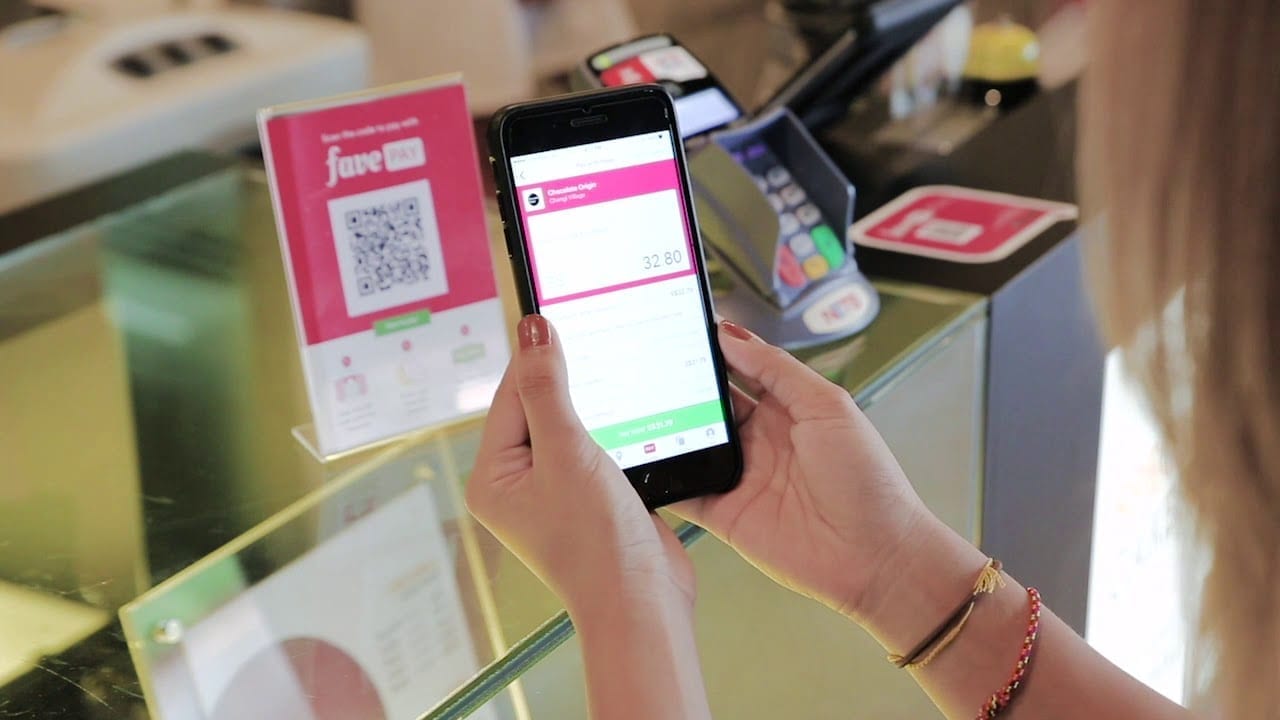
    Just eight months since its launch, mobile payment platform FavePay is now operational in more than 10 cities in three countries across Southeast Asia.

    FavePay aggregates multiple payment options from popular credit and debit cards such as Visa, MasterCard and American Express. With mobile-wallet providers coming on board soon, the platform simplifies what to retailers can seem a fragmented payments landscape.

    FavePay says it processed more than US$10 million in the first three months of this year – double the value of the preceding quarter – and it now has 2 million customers using its service at retail stores and restaurants, including Food Republic.

    Besides its payment-by-mobile functionality, FavePay can offer its customers discounts and cashback offers within the app.

    “With US$32 billion in mobile payments projected in Southeast Asia by 2021, we are excited to help build this cashless ecosystem together with other financial technology partners and banks to achieve the vision of a cashless Southeast Asia in the coming years,” says Fave founder Joel Neoh.

    “We are highly complementary to the mobile payment ecosystem by opening up immediate payment acceptance to thousands of restaurants and retail stores. We allow offline businesses to easily attract mobile customers and drive repeat visits, delivering a seamless experience that tech-savvy consumers across the board are looking for.”

    FavePay business partners include Subway Singapore, Tung Lok Group, Food Republic, Famous Amos, Haagen-Dazs, Starbucks Malaysia and Circle K Malaysia.

    “After looking at various cashless payment options available, we decided to partner with FavePay because of its established track record, extensive user database of over 2 million users and its robust technical architecture and speed of implementation,” says Raphael Chan, Subway Singapore’s country director. “Because of FavePay’s cashback function, Subway now has a fast and effective way to launch its consumer reward and retention program, at scale and quickly, too.”