Tag: Philippines

  • Thai Beauty Giant Konvy Makes Retail Debut in Philippines, Broadens Beauty Horizons with Global Brands

    Thai Beauty Giant Konvy Makes Retail Debut in Philippines, Broadens Beauty Horizons with Global Brands

    Thai-based beauty retailer, Konvy, has made its physical debut in the Philippines by opening its inaugural flagship store in Robinsons Galleria, Pasig City.

    Konvy established its roots in the beauty industry in 2012, initially operating as an e-commerce platform in Thailand. Over the years, the company has enhanced its business model to incorporate brick-and-mortar stores, in addition to their online presence.

    Konvy made its initial foray into the Philippine market in 2023 through renowned online platforms Lazada and Shopee. The company has been offering a range of health and beauty products tailored to meet the needs of local consumers.

    The Flagship Store

    The flagship store provides a carefully selected assortment of international beauty brands with a strong emphasis on products sourced from Thailand, Korea, China, and Japan.

    Prominent among the brands showcased in the store are 4U2, Srichand, Cathy Doll, Snail White, Oxecure, Baby Bright, BrowIt by Nongchat, and Snake Brand, among others.

    JC Chen, the Chief Commercial Officer of Konvy, expressed his enthusiasm about the company’s new venture in the Philippines. “The launch of our maiden flagship store in the Philippines marks an exciting milestone for Konvy Beauty as we aim to strengthen our footprint in the market,” said Chen.

    He added, “Our strategic collaboration with Robinsons Malls enables us to bring Konvy’s unique, discovery-driven beauty experience closer to Filipino shoppers.”

    The company announced that the store’s inauguration is a part of its more comprehensive expansion strategy in the country.

    Questions & Answers

    What is the business model of Konvy?
    Konvy operates a dual business model that combines both online operations and brick-and-mortar retail stores.

    Where has Konvy opened its first flagship store in the Philippines?
    Konvy has opened its first flagship store in the Philippines at Robinsons Galleria in Pasig City.

    What kind of products does Konvy offer in its stores?
    Konvy offers a wide variety of health and beauty products, specifically focusing on products from Thailand, Korea, China, and Japan. It features brands like 4U2, Srichand, Cathy Doll, Snail White, Oxecure, Baby Bright, BrowIt by Nongchat, and Snake Brand, amongst others.

  • Marks & Spencer Philippines on the Brink: Store Closures & Deep Discounts Signal Potential Exit

    Marks & Spencer Philippines on the Brink: Store Closures & Deep Discounts Signal Potential Exit

    The continued closure of stores and generous discounts across the Philippines have led to speculation about the sustainability of Marks & Spencer’s (M&S) local operations. This comes as the brand’s long-time franchise partner starts to shut down several outlets in the region.

    M&S has enjoyed a presence in the country for over thirty years through a partnership with the Rustan’s Group of Companies, which was bought by SSI Group last year. In recent times, several key M&S stores including those located at TriNoma, Robinsons Manila, Marquee Mall, and Ayala Center Cebu have ceased operations. Rumors also abound about the possible closure of the brand’s outlet at the SM Mall of Asia.

    The remaining outlets have resorted to hefty discounts of up to 60% and ‘buy-one-get-one-free’ deals as they attempt to clear stock. Specifically, at the Rockwell and Greenbelt stores, the variety of food for sale has dwindled, with empty refrigerators and shelves filled with repetitive products.

    The M&S Philippines website still promotes 13 branches across the country, which includes outlets in Davao and Laguna. This is a significant reduction from the over 20 stores that were operating at the height of the brand’s popularity in the country.

    This pattern of store closures and heavy discounting has led to conjecture from both customers and industry experts that M&S may be contemplating an exit from the Philippine market. Customer reactions, particularly online, have been largely negative, with many expressing disappointment over the potential loss of extended-size clothing ranges that are less commonly available in the local market.

    Meanwhile, M&S is in the process of revamping its international operations. In the UK, the retailer is planning to cut the number of its full-line stores from 229 to 180 via closures, conversion to food outlets, and relocation to other full-line stores.

    “We’re focusing on bigger, better partnerships, which enable us to bring the best of M&S to the world,” Mark Lemming, MD for international markets at M&S, noted. “As we continue to progress with our strategy, I remain confident in the medium and long-term opportunity for M&S to drive global growth.”

    Still, it’s unclear whether the Philippine store closures signal a decision from the franchise partner, the parent company, or both. SSI Group has yet to issue a public comment on the situation.

    Questions & Answers

    What has led to speculation about the future of M&S in the Philippines?
    Store closures and heavy discounting have sparked speculation about the sustainability of M&S’s operations in the country.

    What changes are being made to M&S’s international operations?
    The company is focusing on establishing larger, more effective partnerships to drive worldwide growth, alongside reducing the number of full-line stores in the UK.

    Who is responsible for the decision to close M&S stores in the Philippines?
    It is currently unclear whether the decision to close stores comes from the franchise partner, the parent company, or both. SSI Group, the franchise partner, has not yet publicly commented on the matter.

  • Hong Kong’s Tam Jai Mixian Makes a Splash in the Philippines with Innovative ‘Mala Tang’ Concept

    Hong Kong’s Tam Jai Mixian Makes a Splash in the Philippines with Innovative ‘Mala Tang’ Concept

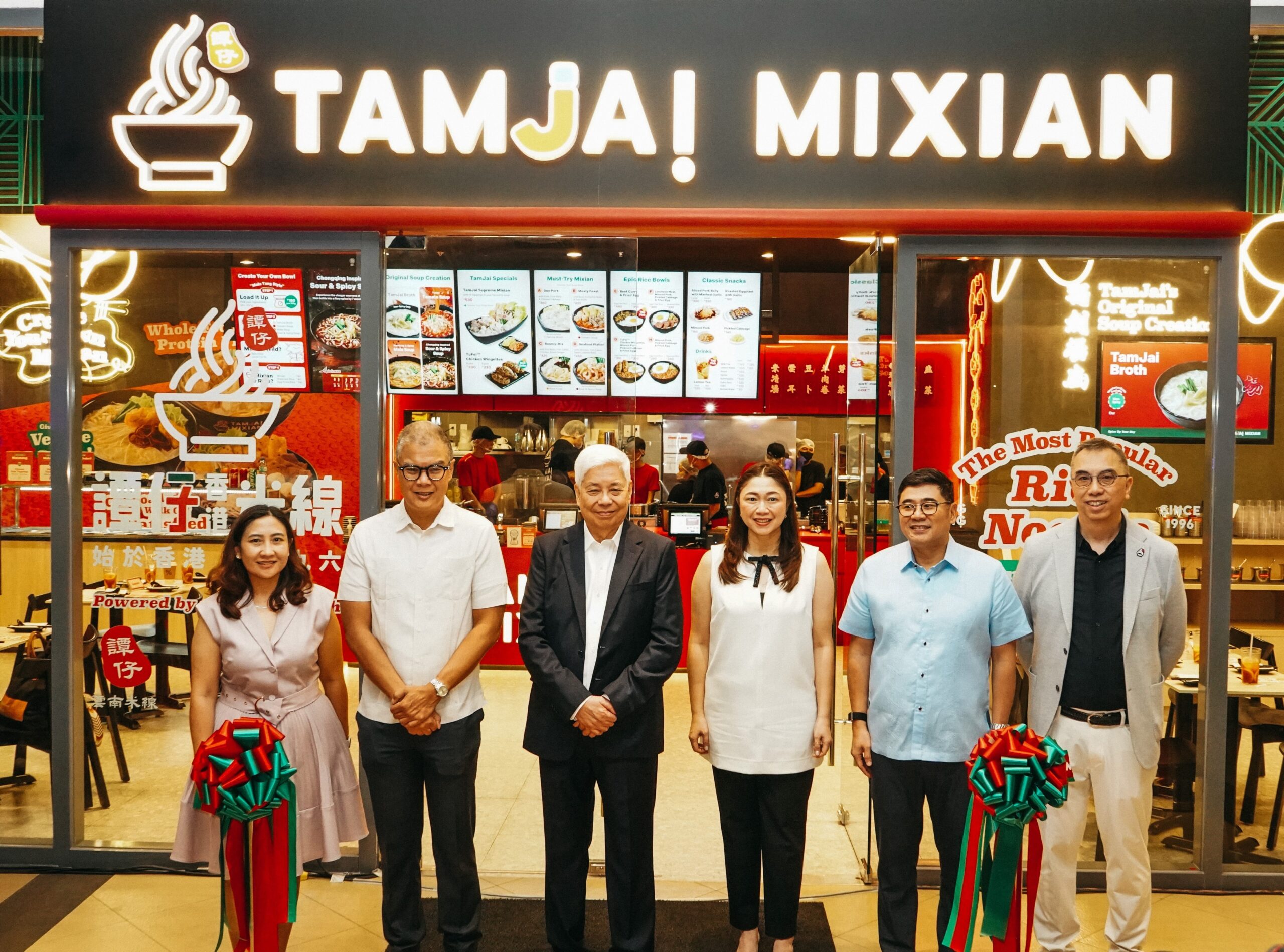
    Renowned Hong Kong-based noodle franchise, Tam Jai Mixian, has successfully expanded its operations to the Philippines, marking another key milestone in its regional growth strategy. This expansion was made possible through a franchise partnership with Suyen Corporation.

    Tam Jai Mixian’s new location is in the bustling Bonifacio Global City in Taguig, where it serves the brand’s signature soups, snacks, and rice bowls to the delight of local food enthusiasts. Aside from these classic offerings, this new location is also pioneering the brand’s ‘Mala Tang’ concept overseas for the first time. This innovative concept allows customers to personalize their meal by choosing their preferred soup base and spice level from Tam Jai’s 10-point scale.

    Daren Lau, the Chairman and CEO of Tam Jai International (TJI), expressed optimism about the brand’s debut in the Philippines. He emphasized that this new expansion not only strengthens the group’s regional influence but also enriches their already extensive restaurant network. Including this new location in the Philippines, Tam Jai boasts more than 250 stores spread across the Asia-Pacific region, spanning countries such as Hong Kong, Mainland China, Singapore, Japan, Australia, and Malaysia.

    Mr. Lau further indicated that the company is eager to continue its expansion efforts in key markets and grow TJI’s restaurant network. He credited the brand’s success in these ventures to its strategic partnerships with robust local partners, which have been instrumental in ensuring the successful establishment and growth of its branches in different regions.

    Questions & Answers

    What is unique about Tam Jai Mixian’s new location in the Philippines?
    It is the first overseas branch to introduce the brand’s ‘Mala Tang’ concept, which enables customers to customize their bowls by selecting a soup base and spice level from Tam Jai’s 10-point scale.

    How does the company view its expansion to the Philippines?
    The company regards its expansion into the Philippines as a key step in strengthening its regional presence and enriching its extensive restaurant network.

    What strategy does Tam Jai International (TJI) employ for its ongoing expansion?
    TJI has attributed its successful expansion to its partnerships with robust local partners, which have been vital in establishing and growing its restaurant network in key markets.

  • Salady, the Korean Salad Chain, Makes Fresh and Flavorful Debut in the Philippines

    Salady, the Korean Salad Chain, Makes Fresh and Flavorful Debut in the Philippines

    Salady, a popular salad chain from Korea, has recently inaugurated its first outlet in the Philippines. This strategic move was made possible through a master franchise agreement with a local partner, Palette Passion Inc.

    Salady has opted for a franchise-led model, which permits a more streamlined and efficient expansion of their brand. Instead of directly entering new markets, this model enables Salady to license out its brand, facilitating faster growth and brand recognition.

    Signature Offerings

    Salady’s menu merges the comfort of Korean-inspired food with the health benefits of salads and wraps. Their signature dishes include the Bulgogi Bibim Grain Bowl, Bulgogi Soba Bowl, and a range of Mexican-style wraps.

    In addition to their pre-set menu, Salady also offers customers the opportunity to customize their own bowls and wraps. A wide assortment of meats, sauces, and vegetables are available for patrons to select and create their unique culinary masterpiece.

    Expansion into the Southeast Asian Market

    Oh Se-deok, the head of Salady’s international business division, expressed that venturing into the Philippine market was a logical progression for the brand’s expansion in Southeast Asia.

    He noted, “The wellness dining market in the Philippines is witnessing exponential growth, primarily driven by a young and dynamic consumer base.”

    Se-deok further added that through collaboration with their local partner, the company aims to introduce premium ingredients and distinctive Korean-style healthy dining options. This initiative is expected to organically infuse Korean’s healthy food culture into everyday life around the globe.

    Questions & Answers

    What is Salady’s strategy for global expansion?
    Salady employs a franchise-led model for global expansion, allowing local partners to license its brand for new outlets rather than directly opening new stores in foreign markets.

    What does Salady’s menu offer?
    Salady offers Korean-inspired comfort food in the form of salads and wraps. Their menu includes signature dishes like the Bulgogi Bibim Grain Bowl and Bulgogi Soba Bowl. They also provide an option for customers to custom-make their own bowls and wraps.

    What is the driving force behind Salady’s expansion into the Philippines?
    The rapidly growing wellness dining market, propelled by a young and dynamic consumer base, makes the Philippines an attractive destination for Salady’s expansion in Southeast Asia.

  • Philippines Telecom and Pay-TV Eye $9.7B Revenue Boom by 2029, Fuelled by Mobile Data and Broadband Growth

    Philippines Telecom and Pay-TV Eye $9.7B Revenue Boom by 2029, Fuelled by Mobile Data and Broadband Growth

    The Philippines’ telecommunications and pay-TV service sectors are set to experience a surge in revenue, increasing from USD 8 billion in 2024 to an estimated USD 9.7 billion by 2029, representing a compound annual growth rate (CAGR) of 3.8%. The expected growth can be attributed to the expanding mobile data and fixed broadband service sectors.

    Mobile Voice Service Revenue Facing a Decline

    Despite the overall projected growth in the telecom industry, mobile voice services are anticipated to experience a decline in revenue. This is a result of a consistent drop in the average revenue per user (ARPU) levels of mobile voice services. Consumers are increasingly turning towards internet or application-based communication platforms, and operators are providing complimentary voice minutes in their service plans.

    Promising Growth in Mobile Data Service Sector

    The mobile data service sector, however, is expected to witness substantial growth, with an anticipated CAGR of 7.1% over the forecast period. This growth is driven by an increase in mobile internet subscriptions, especially the upswing in 5G subscriptions, which will significantly enhance mobile data ARPU levels.

    The adoption of 5G services is expected to escalate rapidly in the coming years, with 5G projected to become the dominant mobile technology generation by subscriber base in 2029. This growth surge in 5G adoption can be credited to the ongoing 5G network expansion initiatives by operators across the country.

    Fixed Communication Services Sector

    In the fixed communication services sector, revenue from fixed voice services is likely to reduce due to a decrease in circuit-switched subscriptions and a decline in fixed voice ARPU levels. However, the fixed broadband service revenue is projected to grow at a CAGR of 4.7% from 2024 to 2029. This growth can be linked to the rising adoption of higher ARPU fiber-to-the-home (FTTH) broadband services.

    The increased adoption of FTTH broadband services in the Philippines is a response to the growing demand for high-speed broadband services and the ongoing expansion of fiber network coverage by operators.

    Projected Growth in Pay-TV Services Revenue

    The revenue from pay-TV services in the country is also predicted to increase over the forecast period, backed by robust growth in IPTV subscriptions and a steady rise in DTH subscriptions.

    Leading Telecom Market Players

    In the mobile services sector, Globe Telecom and PLDT are expected to retain their market leader positions by subscription share throughout the forecast period. This is due to their concentrated efforts on mobile network expansion and modernization. PLDT will continue leading in the fixed broadband sector, largely driven by its extensive fiber network coverage and increasing FTTH subscriber base.

    Questions & Answers

    What is contributing to the growth in the Philippine telecommunications industry?
    The growth in the industry is primarily due to the expanding mobile data and fixed broadband service sectors.

    Why is the mobile voice services revenue expected to decline?
    The projected decline is a result of a consistent drop in mobile voice service ARPU levels as consumers increasingly prefer internet or application-based communication platforms.

    Which telecom operators are expected to remain market leaders in the Philippines?
    In the mobile services sector, Globe Telecom and PLDT are expected to maintain their market leader positions due to their focused efforts on mobile network expansion and modernization.

  • Jollibee Gears Up for US Listing: Spinning Off Global Operations in Strategic Business Split

    Jollibee Gears Up for US Listing: Spinning Off Global Operations in Strategic Business Split

    Jollibee Foods Corp, a major player in the foodservice industry, has announced its intention to separate its international operations from its existing company structure. This significant move involves setting up a new, independent entity, which will be listed on a U.S. securities exchange, according to the company’s recent disclosure to the Philippine Stock Exchange.

    Two Independent Entities with Distinct Goals

    The company’s local operations in the Philippines will continue to be listed on the local stock exchange. The strategic decision to bifurcate the business is aimed at forming two autonomous entities. Each will have its distinct strategic focus and investment profile, allowing each to operate more efficiently within its designated market.

    Following the announcement, Jollibee’s stock experienced an impressive 14.5% surge, marking its most significant one-day increase in over half a decade.

    Timeline and Shareholder Impact

    Jollibee has outlined a tentative timeline for executing the transaction, aiming for completion in late 2027. However, the finalization of this move is subject to various factors including market conditions, thorough due diligence, and gaining necessary regulatory approvals.

    The current shareholders of Jollibee will not be left in the lurch following this corporate restructuring. They will be given shares in the newly formed entity, which will be in line with their existing interest in the company. This distribution, though, will be subject to applicable taxes and legal compliances. The company has noted that this information is still preliminary and may be subject to changes.

    Global Presence

    Jollibee has a formidable global presence with over 10,000 stores spread across 33 countries. Its portfolio includes well-known brands such as Jollibee, Chowking, Smashburger, and Tim Ho Wan, among others.

    Questions & Answers

    When does Jollibee plan to execute this corporate restructuring?
    The company aims to complete the restructuring by late 2027, subject to market conditions and necessary regulatory approvals.

    What will happen to the current shareholders of Jollibee?
    Existing shareholders will receive shares in the newly formed company, which will be proportionate to their current interest in Jollibee, subject to applicable taxes and legal requirements.

    What impact will this restructuring have on Jollibee’s local operations?
    The restructuring is not expected to impact Jollibee’s local operations, which will continue to be listed on the Philippine Stock Exchange.

  • Globe and NCS Seal PHP 1.73B Joint Venture, Boosting Yondu’s Digital Services Capability in Asia Pacific

    Globe and NCS Seal PHP 1.73B Joint Venture, Boosting Yondu’s Digital Services Capability in Asia Pacific

    Globe Telecom Inc. has finalized its business arrangement with Singapore-based company, NCS Pte. Ltd., through their joint venture with Yondu Inc., valued at PHP 1.73 billion. This venture was first established on March 26, 2025, and was made public in a disclosure to the Philippine Stock Exchange by Globe.

    The Deal

    NCS, through its subsidiary NCSI Holdings Pte. Ltd, now holds a 51% majority stake in Yondu, leaving Globe with the remaining 49% shares. Concurrently, NCSI Philippines Inc. was acquired by Yondu from NCSI, making it a wholly-owned subsidiary. Yondu will be rebranded as NCS Philippines.

    Globe’s third-quarter financial report indicates the joint venture’s value sits at about PHP 1.73 billion, encompassing PHP 349.06 million in cash and cash equivalents. This figure is a 7.5% decrease from the initial estimate of PHP 1.87 billion in March 2023.

    Impact of The Joint Venture

    Post the completion of the joint venture, Globe’s President and CEO, Carl Raymond Cruz, expressed confidence in Yondu’s enhanced capability to offer superior solutions to customers. Cruz highlighted that the partnership will facilitate service expansion and help reach more customers across the Asia Pacific, leveraging NCS’s regional presence and partner networks.

    Yondu, functioning as Globe’s information and communications technology division, specializes in wireless products and digital services for clients. It concentrates on custom software development, managed security, e-commerce solutions, cloud services, and pre-built platforms. Joint venture partner NCS, owned by Singtel, views this venture as a crucial step in its regional expansion strategy.

    NCS’s CEO, Ng Kuo Pin, anticipates that the expanded team will enhance the company’s digital, cloud, and data services, including those employing artificial intelligence. The team’s size is expected to increase from roughly 150 employees last year to over 1,200.

    Expected Benefits

    In addition to regional expansion, Juan Carlo Puno, Globe’s Chief Finance Officer, stated that the joint venture will ensure more efficient capital use and provide consistent revenue growth support. He emphasized that the venture’s key objective is to create a platform with financial resilience that can deliver long-term shareholder value while ensuring investment capability for next-generation ICT solutions.

    From January to September 2025, Yondu’s non-telecom revenues were reported at PHP 1.7 billion by Globe, showing a 4% decrease from PHP 1.81 billion during the same months of 2024. During this same period, Globe’s total gross service revenues stood at PHP 121.7 billion, with net income falling to PHP 17.7 billion.

    Questions & Answers

    What is the objective of the joint venture between Globe Telecom and NCS?
    The joint venture aims to enhance Yondu’s ability to offer superior solutions to its customers and to expand services across the Asia Pacific region.

    How will the joint venture impact Yondu?
    Yondu will now become a wholly-owned subsidiary called NCS Philippines, and its workforce is expected to grow from about 150 employees to over 1,200.

    What financial impact is expected from this partnership?
    The partnership is anticipated to facilitate more efficient capital utilization, support consistent revenue growth, and offer long-term value to shareholders.

  • Rising to the Top: Clark International Airport Corporation Paves the Way for Next-Gen Logistics Hub in the Philippines

    Rising to the Top: Clark International Airport Corporation Paves the Way for Next-Gen Logistics Hub in the Philippines

    The Clark International Airport Corporation (CIAC) is taking decisive steps to establish the Clark Civil Aviation Complex (CAC) as the Philippines’ next central hub for cargo and logistics. This development is supported by the extensive redevelopment of the 2,367-hectare property, with CIAC rapidly improving infrastructure, managing the estate, and reforming policies to accommodate the increasing regional demand.

    Heading in a New Direction

    Joseph P. Alcazar, President and CEO of CIAC, states that the corporation has revised its strategy and has refocused on managing the estate and developing airport infrastructure. Their goal is to support the Clark International Airport (CRK) and convert the Clark Civil Aviation Complex into the Clark Aviation Capital.

    Within the first five months of 2025, the Clark International Airport (CRK) doubled its cargo throughput compared to the previous year, handling over 35,900 tonnes across more than 2,500 flights. Historically, CRK has been seen as a strategic alternative to the crowded gateways in Metro Manila. Now, CRK is utilising its prime location, extensive aviation estate, and updated infrastructure to further CIAC’s logistics vision.

    Geography and Policy: The Advantages of Clark

    Central Luzon is the location of CAC, providing it with direct access to major expressways, seaports, and the market in Metro Manila. This connectivity enables quick cargo movement with various transportation options.

    CAC, the largest aviation complex in the Philippines, is uniquely positioned, offering operational and tax advantages due to its status as one of the few freeport zones housing an international airport.

    Claude’s close proximity to the industrial corridors in Luzon and its uncongested airspace make it an ideal location for time-sensitive cargo, including e-commerce deliveries and Maintenance, Repair, and Overhaul (MRO) operations.

    Strengthening Connections

    To keep up with its expanding role in logistics, Clark is investing in long-term infrastructure that improves accessibility to key economic zones and trade routes.

    Cargo volumes have soared at Clark, with a 100% increase in the first five months of 2025, which builds on a 32% increase from 2024.

    Building Infrastructure and Future Hubs

    The progress is supported by a series of infrastructure projects led by CIAC, including a new air traffic control tower, upgraded airfield lighting systems, and radar installations.

    CIAC is also focusing on future growth areas such as temperature-sensitive cargo and e-commerce logistics. For instance, in 2024, CIAC signed a Memorandum of Understanding with Philippine Pharma Procurement, Inc. to explore the development of pharmaceutical logistics capabilities within the complex.

    Enhancing Resilience and Multimodal Mobility

    As part of its long-term strategy, CIAC is considering new infrastructure aimed at resilience and disaster readiness.

    CIAC is also developing plans for a Multimodal Mobility Hub, a compact, connected space that integrates various transport modes, improving urban access and logistics efficiency.

    Governance, Services, and Sustainability

    CIAC plays a crucial supporting role for estate locators and cargo operators, despite not directly operating cargo services.

    Policy reforms are helping to accelerate infrastructure development. The Public-Private Partnership (PPP) Code institutionalises best practices for private-sector participation and offers a transparent framework for implementing major projects.

    Sustainability remains at the forefront of CIAC’s long-term perspective. CIAC actively supports initiatives that promote sustainable aviation.

    Questions & Answers

    What is the strategic plan of CIAC for Clark International Airport?
    CIAC is focusing on improving infrastructure, managing the estate, and reforming policies to support Clark International Airport (CRK) and convert the Clark Civil Aviation Complex into the Clark Aviation Capital.

    Which areas is CIAC targeting for future growth?
    CIAC is exploring potential growth areas such as temperature-sensitive cargo and e-commerce logistics. The corporation is also planning to develop pharmaceutical logistics capabilities within the complex.

    How is CIAC working towards sustainability?
    CIAC actively supports initiatives that promote sustainable aviation. The corporation is planning infrastructure across Clark Aviation Capital that incorporates green building standards, efficient land use, and transport connectivity to reduce the carbon footprint of logistics operations.

  • Philippines Bolsters Domestic Sugar Industry with Extended Import Ban till December 2026

    Philippines Bolsters Domestic Sugar Industry with Extended Import Ban till December 2026

    The Philippine government has prolonged its prohibition on sugar imports until December 2026, given the strong domestic supply. This strategic decision is designed to provide ongoing support for local farmers and producers and maintain market stability.

    Decision Based on Sugar Production and Demand Outlook

    Agriculture Secretary Francisco Tiu Laurel stated that the decision to extend the ban was influenced by the present prospects for sugar production and consumer demand. The initial ban, which was implemented from mid-October 2025 until mid-2026, was deemed necessary due to the anticipated rise in domestic raw sugar production for the 2024-2025 crop year, as indicated by actual inventory data.

    Regulation of Molasses Imports

    In addition to the sugar import ban, the Department of Agriculture and the Sugar Regulatory Administration are in the process of establishing a long-overdue regulatory framework for the import of molasses. According to Tiu Laurel, this move will offer further protection to the domestic producers.

    Questions & Answers

    Why has the Philippine government decided to extend the sugar import ban?
    The ban has been extended in order to protect local farmers and producers and maintain market stability, given the strong domestic supply of sugar.

    What factors influenced this decision?
    The decision was based on the current outlook for sugar production and demand. An expected increase in domestic raw sugar output for the 2024–2025 crop year also contributed to this decision.

    What additional measures are being taken to protect domestic producers?
    The Department of Agriculture and the Sugar Regulatory Administration are preparing a regulatory framework for molasses imports. This move is intended to provide further protection to domestic producers.

  • Pop Mart Marks Entry into Philippines with First Permanent Toy Store in SM Megamall

    Pop Mart Marks Entry into Philippines with First Permanent Toy Store in SM Megamall

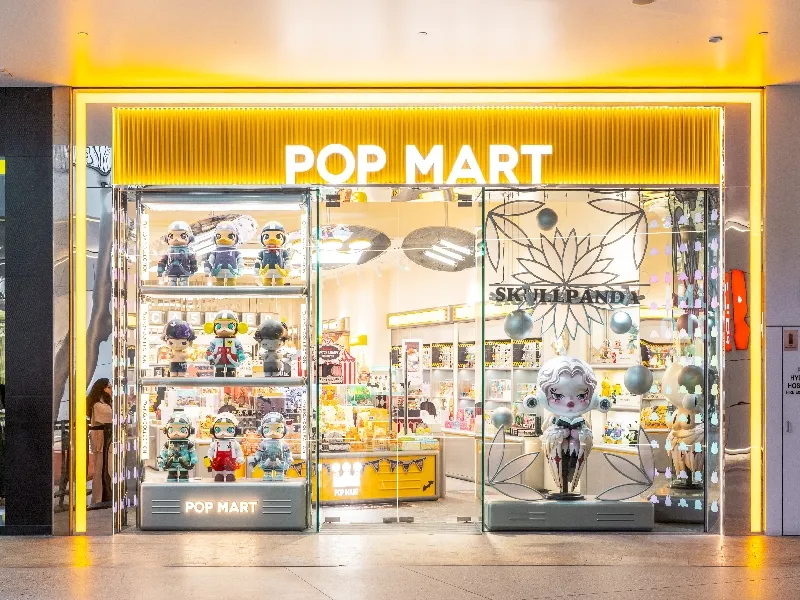
    Pop Mart, a Chinese retailer specializing in collectible toys, has established its first long-term retail store in the Philippines. This move comes after a succession of temporary pop-ups throughout Metro Manila, signalling a more robust presence in the local marketplace.

    The new store is situated in Ortigas’ SM Megamall, one of the busiest shopping destinations in the country, covering an area of 300 square meters. The retail space showcases Pop Mart’s primary product lines such as Labubu, Molly, Skullpanda, and Crybaby. In addition, the store offers a changing selection of limited-edition items.

    Prior to this, Pop Mart had made its initial mark in the country through various pop-up stores located in some of the country’s leading malls, such as SM Mall of Asia, SM Makati, and SM North Edsa.

    Pop Mart’s Philippine venture aligns with its continuing global expansion strategies. The company had previously expanded into the Middle East with its first store opening in October. This was closely followed by the inauguration of the company’s largest store in Japan in September.

    Questions & Answers

    What is Pop Mart’s specialization?
    Pop Mart is a Chinese retailer that specializes in the sale of collectible toys.

    Where is Pop Mart’s first permanent store in the Philippines located?
    The first permanent store of Pop Mart in the Philippines is located at SM Megamall in Ortigas, one of the busiest shopping centers in the country.

    What does the Philippine store offer?
    The Philippine store showcases Pop Mart’s primary product lines such as Labubu, Molly, Skullpanda, and Crybaby, as well as a revolving range of limited-edition releases.

  • Revolutionizing Connectivity in Southern Philippines: Globe’s Groundbreaking Mindanao Submarine Cable Project Begins 2026

    Revolutionizing Connectivity in Southern Philippines: Globe’s Groundbreaking Mindanao Submarine Cable Project Begins 2026

    Globe Telecom has announced plans to implement a new submarine cable system in Mindanao, set to begin in early 2026. This advancement highlights the ongoing commitment to strengthen network resilience and extend capacity in Southeast Asia’s archipelagic markets.

    Project Details

    The forthcoming project involves the installation of a 48-core, 175-kilometer submarine cable that will link Zamboanga to Isabela City in Basilan, with an extension to Sulu. According to Globe, the infrastructure will bolster both broadband and mobile services by incorporating submarine and inland cable systems, landing stations, fronthaul facilities, and core and access network nodes.

    Survey activities for the submarine cable are slated to commence in early 2026, with full construction anticipated by mid-2027. The operational hub in Isabela City is set to function as a regional aggregation point for high-capacity internet traffic. This will enhance redundancy and service stability in parts of Mindanao and the broader southern Philippines region.

    This innovative initiative aligns with the Philippine government’s National Broadband Plan. It reflects the concerted regional effort to extend digital infrastructure to remote and underserved communities, a persistent challenge for many ASEAN countries with dispersed island geographies.

    More than Infrastructure

    Carl Cruz, President and Chief Executive Officer of Globe Telecom, emphasized the significance of the project beyond its physical infrastructure. He stated, “This is more than infrastructure; it is a bridge to opportunity.” Cruz added that the average monthly data consumption has skyrocketed beyond 30 gigabytes per user, necessitating sustained investment in fiber and broadband networks to support digital services, small businesses, and economic participation.

    The Mindanao submarine cable is part of Globe’s broader network modernization program, which has already transitioned more than 600 towns across 70 provinces to full-fiber infrastructure. This shift from legacy copper networks has enhanced service reliability and reduced energy usage, aligning with regional operators’ sustainability goals.

    Impact on Communities

    Jowin Marquez, Senior Director and Territory Lead for Globe’s Network Technical Group, highlighted the transformative potential of reliable connectivity. He noted that it empowers communities with access to education, bolsters local businesses, and fosters greater participation in the digital economy.

    In the past three years, Globe has invested PHP 228 billion in capital expenditures and PHP 236 billion in operating expenses to fortify and future-proof its network. Its GFiber Prepaid service – a reloadable, no-contract broadband offering – experienced a 53% growth in early 2025. It currently serves approximately 400,000 households nationwide, contributing to Globe’s total broadband subscriber base of 1.83 million.

    Questions & Answers

    What is the purpose of Globe Telecom’s new submarine cable system?
    The new submarine cable system aims to strengthen network resilience and expand capacity in archipelagic markets, particularly in Mindanao, Philippines.

    What does the project entail?
    The project involves the deployment of a 48-core, 175-kilometer submarine cable connecting Zamboanga to Isabela City in Basilan, with an extension to Sulu. It will enhance both broadband and mobile services.

    How does this initiative align with broader efforts in the region?
    The project is consistent with the Philippine government’s National Broadband Plan and mirrors a wider regional effort to extend digital infrastructure to geographically isolated and underserved communities.

  • Sports Direct Makes Philippine Debut: UK Retail Giant Launches First Store in Manila Bay

    Sports Direct Makes Philippine Debut: UK Retail Giant Launches First Store in Manila Bay

    UK-based sports merchandise giant, Sports Direct, has marked its debut in the Philippine market through a collaboration with Map Active, a sports and lifestyle retailer.

    The Inaugural Store

    The first ever Sports Direct store, situated at Ayala Malls Manila Bay, boasts a large variety of sports clothing, shoes, gear, and accessories. The categories span from football, running, training, outdoor activities, and swimming, to racket sports such as badminton, pickleball, and tennis.

    The store will feature in-house brands such as Karrimor, Everlast, Lonsdale, Slazenger, and USA Pro. In addition, it also carries internationally renowned labels including Nike, Adidas, Skechers, New Balance, Converse, Lotto, Diadora, Airwalk, Ellesse, Speedo, Wilson, and Yonex.

    Map Active Philippines’ head of marketing, Bea Madrid, stated that Ayala Malls Manila Bay was a strategic choice for Sports Direct’s local launch.

    “We are continually supported here, and we appreciate the opportunity to collaborate and establish our brand in such a prime location to best cater to the market,” Madrid said.

    Future Expansion

    Sports Direct has ambitious plans for further expansion in the Philippines, with more store inaugurations planned for the forthcoming year. While the initial emphasis is on Metro Manila, the company is also considering expanding into regional markets.

    “This is just the beginning,” declared Anil. “Now that we have launched our first-ever store at Ayala Malls Manila Bay, we are excited about opening more outlets next year to engage with more communities and promote an active, healthy lifestyle nationwide.”

    Questions & Answers

    What is the range of sports categories covered by Sports Direct?
    Sports Direct offers a wide range of sports apparel, footwear, equipment, and accessories across various categories including football, running, training, outdoor activities, swimming, and racket sports such as badminton, pickleball, and tennis.

    What brands will be available at the Sports Direct store in the Philippines?
    The store will carry in-house brands like Karrimor, Everlast, Lonsdale, Slazenger, and USA Pro, and globally recognized labels such as Nike, Adidas, Skechers, New Balance, Converse, Lotto, Diadora, Airwalk, Ellesse, Speedo, Wilson, and Yonex.

    What is Sports Direct’s expansion plan in the Philippines?
    Sports Direct plans to open more stores in the Philippines next year, with a focus not only on Metro Manila but also on regional markets.

  • Riding the Retail Wave: SM Investments Sees Profit Surge Despite Weather Challenges

    Riding the Retail Wave: SM Investments Sees Profit Surge Despite Weather Challenges

    SM Investments, a conglomerate with operations in retail, banking, and property, experienced solid retail sales during the first three quarters of the year. These robust sales contributed to a consolidated net income of US$1.09 billion, a 6% rise compared to the same period in the previous year.

    The Impact of Weather Disruptions

    Despite significant weather disturbances in the Philippines, the company maintained steady performance. Frederic DyBuncio, President, and CEO of SM Investments remarked on the resilience of the company. He said, “In the face of adversities such as severe weather and flooding, our businesses have demonstrated sustained financial performance.”

    Income Breakdown

    Banking was the predominant contributor to SM Investments’ net income, accounting for 50% of the total. This was followed by property at 28%, retail at 15%, and portfolio investments at 7%.

    SM Retail’s Performance

    SM Retail disclosed a net income of $206.78 million, marginally lower than the $216.95 million recorded last year. Despite this slight dip, revenues grew by 5% to reach $5.39 billion. As a result, consolidated revenues climbed 4% to $8.17 billion.

    Consumer Behavior Shifts

    DyBuncio highlighted changes in consumer expenditure patterns as a factor impacting quarter-to-quarter comparisons. He explained that the earlier start of the school year in June shifted some expenditures from the third quarter to the second. Despite this shift, there was growth in niche retail spending, particularly in health and beauty, fashion, and kids categories. Essential spending also continued to bolster growth in food retail.

    Category Performance

    In terms of categories, department stores recorded a 3% revenue growth in fashion and children’s items. Food retail saw a 7% surge, largely attributable to store expansions. Specialty retail grew by 4%, driven mainly by increased demand in children’s and home categories.

    DyBuncio expressed confidence in the company’s outlook despite external challenges, declaring, “While external factors may impact the overall economic growth, we remain positive as we head into the fourth quarter.”

    Questions & Answers

    What was the significant factor contributing to SM Investments’ net income?
    Banking was the main contributor, accounting for 50% of the total net income.

    What consumer behavior change affected SM Investments’ quarterly comparison?
    The shift in school opening from the third to the second quarter caused some changes in consumer spending patterns.

    Which categories demonstrated notable growth in SM Investments’ retail sector?
    There was notable growth in specialty retail spending, particularly in health and beauty, fashion, and kids categories, as well as in food retail due to store expansions.

  • Revolutionizing Connectivity: Globe and Nokia Launch 5G mmWave for Enhanced Broadband Performance in the Philippines

    Revolutionizing Connectivity: Globe and Nokia Launch 5G mmWave for Enhanced Broadband Performance in the Philippines

    Globe has announced the successful completion of 5G mmWave trials using Nokia’s Fixed Wireless Access (FWA) technology alongside Wi-Fi 7 equipment. The trials achieved peak download speeds of up to 4.3 Gbps. According to the operator, this level of performance can bolster mission-critical services, optimize enterprise operations, and improve broadband connectivity for end-users.

    5G FWA Subscriptions Projected to Double by 2030

    Gerhard Tan, Senior Director and Head of Technology Strategy and Innovation at Globe, shared his perspective on the development. He emphasized the company’s forward-thinking approach and commitment to pushing connectivity boundaries. The successful implementation of the 5G mmWave and Wi-Fi 7 with the Philippine Marines demonstrates how advanced connectivity can revolutionize mission-critical operations. Moreover, this technology paves the way for a truly digital and interconnected Philippines.

    Field tests in Zamboanga City yielded consistent outcomes even in complex settings. The trial conducted at the Marine Battalion Landing Team-1 headquarters in Naval Station Rio Hondo clocked 4.3 Gbps at a distance of 2.1 kilometers. Another test site, approximately 9 kilometers away, registered speeds nearing 1 Gbps.

    The Philippine Marines are the inaugural users of the system, utilizing Globe’s 5G mmWave platform to fortify communications for national security and public service.

    Lt. Col. Nepthalie Papa, Commanding Officer of Marine Battalion Landing Team-1 of the Philippine Marines, expressed gratitude to Globe for their continued support in providing reliable communication solutions. Through Globe’s commitment to innovation, connectivity has been bolstered even in the most challenging environments.

    The Philippines’ Broadband Transformation: The Impact of Fiber and 5G FWA

    Globe has confirmed that 5G mmWave sites are now operational in Zamboanga City, Quezon City, and the Rizal province. The company plans to extend the deployment in response to increasing device compatibility.

    According to Globe, the expansion will support applications such as high-speed broadband in urban and rural areas, private 5G networks, industrial automation, and secure enterprise communications.

    Questions & Answers

    What was the result of Globe’s 5G mmWave trials using Nokia’s Fixed Wireless Access (FWA) technology?
    The trials achieved peak download speeds of up to 4.3 Gbps. Such performance can bolster mission-critical services, optimize enterprise operations, and improve broadband connectivity for end-users.

    Who are the inaugural users of the 5G mmWave platform?
    The Philippine Marines are the inaugural users of the system, utilizing Globe’s 5G mmWave platform to fortify communications for national security and public service.

    What applications will the expansion of the 5G mmWave sites support?
    The expansion will support applications such as high-speed broadband in urban and rural areas, private 5G networks, industrial automation, and secure enterprise communications.

  • Philippines’ Top Data Centers Unite to Boost Nation’s Rise as Southeast Asia’s Digital Powerhouse

    Philippines’ Top Data Centers Unite to Boost Nation’s Rise as Southeast Asia’s Digital Powerhouse

    The Philippines’ prominent data center operators have officially collaborated to establish the Data Center Operators of the Philippines (DCPH). This unified alliance aims to fortify the country’s standing as the upcoming digital hub of Southeast Asia.

    Forming a New Alliance

    This groundbreaking collaboration was solidified through a Memorandum of Understanding (MoU) which was signed by representatives from leading companies such as VITRO Inc., ST Telemedia Global Data Centres (Philippines), YCO Cloud, Digital Edge Philippines, Digital Halo, and A-FLOW. This last company is a joint venture between FLOW Digital Infrastructure and AyalaLand Logistics Holdings Corp. Collectively, these companies have a shared goal of enhancing the Philippines’ regional competitiveness in the global digital economy. This is achievable through the strengthening of data center infrastructure and industry collaboration.

    DCPH’s Role and Purpose

    The DCPH members, who represent an impressive combined 473 MW of IT power capacity, will act as a united voice for the Philippine data center industry. The alliance aims to encourage collaboration among key sectors to improve infrastructure and innovation. This includes collaborating with the power industry to ensure competitive rates and renewable energy access. Additionally, they aim to partner with telecommunications providers to enhance connectivity. They will also work with the Department of Information and Communications Technology (DICT) to advocate supportive policies, such as data localization. Another goal is to develop local talent and maintain industry growth in the face of increasing demand for hyperscale, AI, and other next-generation technologies.

    The Importance of Data Localization

    The group has highlighted that data localization is crucial for data processed and stored by the public sector. Keeping government data within the nation helps safeguard national security and protect citizen information. Countries such as Indonesia, Thailand, and Malaysia have already introduced robust data localization policies. These countries recognize citizen data as a strategic national asset that supports data sovereignty and economic growth. By implementing similar strategies, the Philippines can enhance infrastructure resilience, attract more cloud and AI investments, and position itself as a top-rated digital hub in the region. This would facilitate the smooth flow of data across borders to support the digital economy.

    Questions & Answers

    What is the goal of the Data Center Operators of the Philippines (DCPH)?
    The DCPH aims to bolster the Philippines’ regional competitiveness in the global digital economy by strengthening data center infrastructure and encouraging industry collaboration.

    What is the significance of data localization?
    Data localization is vital for ensuring the security of data processed and stored by the public sector. It safeguards national security and protects citizen information.

    How can the Philippines position itself as a leading digital hub in the region?
    By implementing robust data localization policies and developing local talent, the Philippines can attract greater investments in cloud and AI technologies. This would enhance infrastructure resilience and support the seamless flow of data across borders.