Retail News CRM

Tag: #phone

  • Mobile phone sales drive wireless power market

    Mobile phone sales drive wireless power market

    It used to be that wireless charging was a nice-to-have but not got-to-have feature. These days, however, high-end smartphones have started to pick up on the interest and including this as standard feature.

    So when IHS Markit made its forecasts of the wireless power market, the analyst made it clear that mobile phones were an important factor driving the growth in this segment in 2018, comprising 71% of all receiver units shipped.

    The latest IHS Markit Wireless Power Market Tracker report put annual unit shipments of wirelessly charged mobile phones up by nearly 40% in 2018, reaching 300 million units, mainly driven by flagship models. The growth is expected to build in the mid-range smartphone category, as mobile phone companies plan to extend the adoption of wireless charging in that price band.

    Fortified by the growth in the sales of wirelessly charged mobile phones, global shipments of wireless power receivers and transmitters across all applications and product segments grew by 37% in 2018 to 600 million units, compared to the previous year. Global shipments will continue to grow to approximately 2.1 billion units in 2023, according to HIS Markit.

    “Wireless power technology continues to evolve rapidly, with reach expanding beyond smartphones to wider applications and product segments,” said Dinesh Kithany, wireless power and power supplies analyst, IHS Markit. “Wireless power technology is also undergoing further sub-segmentation, with regard to wider power levels and distance range.”

    He noted that wireless charging feature is used as a market differentiator to promote flagship models. “For example, Huawei and Samsung both included some cool innovations in their smartphones, with features like reverse-charging, wireless power-sharing, multi-device charging and the introduction of NFC wireless charging,” Kithany said.

    Opportunity outside mobile

    Beyond the mobile ecosystem – which also includes smartwatches, wireless earphones, and wearables – wireless charging is expanding into computing devices, smart home devices, IoT sensors, medical devices, small home appliances, power tools, robots and drones, augmented reality and virtual reality devices, gaming applications, industrial sector, 5G applications, electric vehicles and public infrastructure.

    “This wireless charging expansion creates opportunities for emerging wireless power solutions such as high-frequency-based resonant and radio-frequency, infrared and other uncoupled solutions to gain entry into the overall wireless power market,” Kithany said.

    According to IHS Markit, the smart home devices market is an especially promising segment for wireless power, because of the opportunities it presents to manufacturers and the benefits that accrue to consumers. Led by smart speakers, the wireless charging enabled smart home market is expected to grow to more than 100 million units in 2028.

    “Smart thermostats, air-control devices, electronic door locks, garage-door systems, intruder alarms, video cameras, video doorbells and other smart home devices will follow,” Kithany said. “The IoT sensors market alone is expected to add more than one billion wireless charging devices to this market in the next five years.”

  • Microsoft does something Unexpected

    Microsoft does something Unexpected

    You didn’t have to be a techie, a fan boy or wealthy investor to enjoy the two-horse race last year between Apple and Amazon. Both companies were neck and neck in a race to be the first publicly traded U.S. firm to reach a trillion dollar valuation. Last August 2nd, Apple hit the milestone first, followed by Amazon almost exactly one month later. And that’s why it was such a surprise when Microsoft finished 2018 as the most valuable public company in the U.S.

    Even though Microsoft finished on top as last year ended, it was the beneficiary of a sharp market correction that took Apple and Amazon down 32% and 27% from their 2018 highs, respectively. But the software giant had never actually joined Apple and Amazon in the trillion dollar club; that is, until today. A positive earnings report released by the gang in Redmond after the market closed last night has propelled the stock sharply higher. This morning, Microsoft’s shares reached a high of $131.37 and at that point, the company was worth $1.007 trillion dollars.

    Microsoft investors have taken some profits, allowing the stock to drift back to $129.64 as we write this. That takes the company under the $1 trillion mark but doesn’t remove the accomplishment from the history books. Meanwhile, Apple and Amazon’s shares have recovered enough from last winter’s drubbing to make another run at a $1 trillion valuation. Apple, which reports earnings next week, is currently worth close to $975 billion. Amazon reports earnings later today and is currently worth $944 billion.

    While some might say that Microsoft has failed miserably in the mobile industry with Windows Mobile and Windows Phone, others might point out the success it has had with the Surface Pro high-end tablets. And more importantly for Microsoft, it owns a slew of Android-related patents that bring in a huge sum of money every year.

  • Sony’s days in the smartphone Industry are Ending

    Sony’s days in the smartphone Industry are Ending

    Sony has never been able to obtain success in the smartphone industry the way it once controlled the mp3 market, the video game console market, and the television market. Trying to differentiate itself, this year’s Xperia 1 flagship, unveiled at MWC in February, features a 6.5-inch 4K AMOLED display with a 21:9 aspect ratio. Despite what would appear to be a great screen for watching streaming video on, the pricing is sure to turn some away.

    For the second time in six years, a particular hedge fund is building up a stake in Sony hoping to influence its business decisions. Those familiar with the plans say that Third Point LLC, run by Daniel Loeb, is looking to implement its own turnaround strategy for Sony. Loeb’s fund reportedly has $14.5 billion in assets and is believed to be raising money ($500 million to $1 billion) for a fund dedicated to the purchase of more Sony shares.

    The parts of Sony that Third Point wants to take a hard look at include the semiconductor and insurance businesses and the movie studio, which some believe that Amazon and Netflix could be interested in. And while the report from Reuters doesn’t mention the mobile phone business, it most likely would be a division that Loeb would prefer to see Sony jettison. Last month, the company folded its mobile unit into the same business segment that includes its TV, camera and audio products. And a report published in March stated that by next year Sony will cut the head count in its smartphone division in half.

    Jefferies analyst Atul Goyal told clients in a note sent out last week that Sony needs to exit the mobile phone business. Sony will no doubt want to gauge the reception to the Xperia 1 before it decides whether or not to stop producing smartphones. But if Third Point LLC builds a big enough stake in Sony, the decision whether to cut its losses in the smartphone industry might be taken out of the company’s own hands.

  • Xiaomi just patented a weird-looking inverted Notch

    Xiaomi just patented a weird-looking inverted Notch

    Since notches first arrive back in 2017, smartphone brands have attempted a range of implementations ranging from wide ones to much subtler water drop alternatives. One thing that hasn’t been attempted, however, is an outward facing one. But Xiaomi’s latest patent suggests it could be working on one.

    In what is presumably an attempt at creating a low-cost smartphone that also presents a notchless display, Xiaomi’s latest patent envisions a smartphone that features minimal bezels and a rather large hump on the very top of the device. This looks exactly like an inverted notch and is home to the in-ear speaker and two selfie cameras.

    On more expensive devices such as the Xiaomi Mi Mix 3, the Chinese brand has chosen to implement a slider design that hides the front-facing cameras and allows for an all-screen design. However, this comes at an added cost that most likely wouldn’t be financially viable in the low-end segment. The company is also rumored to be working on two flagships with pop-up cameras but, once again, this is a costly feature.

    More often than not, patents are a good indication of what’s to come from smartphone brands in the future. But considering the very unusual design that is shown in the included sketches, it seems likely that this particular  patent will never result in a production device.

  • Microsoft to bring its best car racing game to Phones

    Microsoft to bring its best car racing game to Phones

    Microsoft has just announced that its best car racing franchise will make its debut on mobile later this year. The game is called Forza Street and seems to be part of Microsoft’s best-selling racing franchise, and, more importantly, will be free-to-play.

    As a matter of fact, Microsoft confirmed Forza Street is now available as a free-to-play title for Windows 10 users, so if you don’t want to wait for the mobile version, you can start playing right away after you download it from the Microsoft Store.

    Forza Street takes players to the streets of Miami where they can enter the ultimate street racing scene to win the car collection of their dreams. Simply pick an event, choose your car, and race for fame.The game allows players to collect and upgrade iconic cars, from classic to modern sport and retro supercars. Microsoft promises “streamlined controls,” but the best thing about Forza Street is that you’ll be able to race anytime, anywhere, assuming you have an Internet connection. You can even squeeze in a quick one-minute race while waiting for your bus, or get immersed in an endless story with multiple ways of achieving victory.

    It’s quite interesting to see Microsoft giving a damn about mobile gaming, not to mention that the Forza series includes some of the best arcade racing games of all time. Hopefully, Forza Street will follow in the footsteps of its predecessors – Forza Motorsport and Forza Horizon, and provide an immersive car racing experience.

  • iPhone XE might be the true compact Apple phone

    iPhone XE might be the true compact Apple phone

    The iPhone SE was originally launched over three years ago, and officially discontinued in 2018. With its 4-inch display, the SE was a tiny offshoot in a world of ever-increasing screen sizes. And even though it struck success on its own terms—perhaps relative to the size of its footprint, but success nonetheless—the iPhone SE never got a second chance.

    Rumors about a successor to Apple’s tiny iPhone have been floating around basically since the first model came out. Alleged factory drawings, screen protectors, and even cases from a major brand were leaked online, all suggesting that the launch of the iPhone SE 2 was just around the bend. Unfortunately for people who wanted a smaller phone, the bend came and went and there was no sign of the SE 2. In fact, it seemed, Apple had no intentions of reiterating the concept of an ultra-compact phone with high-end specs.

    There’s a new light of hope, however, as a new report claims that Apple is actually working on a spiritual successor to the SE, dubbed the iPhone XE. The publication claims that it has a source “closely associated with Foxconn’s manufacturing facility in India,” where it’s getting the information from.

    According to said source, the iPhone XE will feature an iPhone XS-style design with a 4.8-inch OLED display, topped of with a notch. It will also have Face ID, just like its larger brethren, but no glass back. Instead, the XE will reportedly sport an aluminum back (just like in the good ol’ days), which means no wireless charging.

    PC Tablet’s source further claims that the new ultra-compact iPhone model will sport a single main camera, equipped with a 12MP sensor and an f/1.8 lens. As far as internals go, the report says that the iPhone XE will be powered by Apple’s A12 Bionic chip, but provides no other details.

    Another interesting tidbit is that the report claims that the new iPhone model will be made made in India, at a manufacturing facility of Apple’s manufacturing partner, Wistron. Though we haven’t been able to confirm all the claims made in this report, the fact that it comes from an Indian publication, combined with the claim that the information is coming from a source in Foxconn’s manufacturing facility in India, as well as the plethora of rumors that Apple is considering to start flagship production in India, give some credibility to the report.

    If the iPhone XE is, indeed, a real project that’s slated for release later this year, then we should hear a lot more about it in the coming weeks and months. Until then, are you excited at the premise of a much smaller iPhone model, or are you just fine with what’s currently on offer? Tell us in the comments below!

  • Three new Snapdragon chips unveiled today

    Three new Snapdragon chips unveiled today

    Qualcomm unveiled today the Snapdragon 730, 730G and 665 Mobile Platforms. The chip maker says that the new chips are designed to offer customers “exciting experiences” in gaming, AI and performance. The first new devices to be powered by these chipsets will hit the market in the middle of 2019.

    The Snapdragon 730 is the first 7 series SoC from Qualcomm that brings certain features previously found only on the flagship 8 series chips. Replacing the Snapdragon 710, the new SoC comes with on-device AI to provide “intuitive image capture, exceptional gaming, and optimized performance.” The Snapdragon 730 is equipped with Qualcomm’s fourth generation multi-core Qualcomm AI Engine, twice as powerful as the previous generation’s AI Engine. It also includes the Qualcomm Spectra 350 image signal processor (ISP), found for the first time ever in a 7 series chip. The ISP provides four times the power savings as its predecessor and can support a triple-camera setup made up of telephoto, ultra-wide and portrait lenses. It will record 4K HDR video in Portrait mode.

    Made using the 8nm process, the Snapdragon 730 includes the Adreno 618 graphics processing unit (GPU) and a state-of-the-art graphics library that uses 20% less power than Open GL ES. This means that the chip will provide gamers with improved graphics and longer battery life. And with Qualcomm aptX Adaptive audio and Qualcomm Aqstic audio technology, gamers will be able to experience surround sound while playing mobile games.

    The new chip is Wi-Fi 6 ready, and with the Kryo 470 CPU on board, each core brings as much as a 35% improvement in performance. The Snapdragon X15 LTE Modem handles LTE download speeds as fast as 800Mbps.

    “With the introduction of the Snapdragon 730, 730G and 665 Mobile Platforms, we are bringing features such as sophisticated AI, exceptional gaming and advanced camera capabilities to a broad spectrum of devices at exceptional performance. Each iteration of Snapdragon drives immense innovation that will surpass customer expectations.”-Kedar Kondap, vice president, product management, Qualcomm Technologies, Inc.

    The Snapdragon 730G Mobile Platform is made for gaming phones, thus the “G” tacked on to the name of the chip. With an enhanced Adreno 618 GPU, graphics are rendered up to 15% faster than seen with the Snapdragon 730. Qualcomm met with some of the top mobile game developers to optimize the Snapdragon 730G. There is a Jank Reducer feature that removes up to 90% of janks with games running at 30fps. The chip also makes sure that players aren’t cheating, and the Wi-Fi latency manager keeps gameplay running smoothly. With over 1 billion different shades of color, games won’t only play better, they will look more realistic too.

    While the Snapdragon 730 and 730G will be used in handsets that are just not quite flagship material, the new Snapdragon 665 Mobile Platform is earmarked for pure mid-range models. But that doesn’t mean you won’t find some interesting features on the chip, like the third generation Qualcomm AI Engine. This provides twice the performance as the second generation AI engine. Speaking of AI, the Spectra 165 ISP found in the chipset includes AI capabilities. It also supports a triple camera setup made up of telephoto, wide-angle, and ultra-wide lenses. It also can handle images taken with today’s 48MP sensors.

    For gamers, the Snapdragon 665 SoC comes with the Adreno 610 GPU for “improved and longlasting gameplay.” The chip itself features four performance cores to handle the heavy-duty tasks, and four efficiency cores to take care of the light housekeeping. The Snapdragon 665 employs the Kryo 260 CPU and the Snapdragon X12 LTE Modem. The latter handles 4G LTE download speeds up to 600Mbps.

  • Samsung launches its first 5G smartphone

    Samsung launches its first 5G smartphone

    To coincide with Friday’s launch of commercial 5G services by South Korea’s major mobile operators, Samsung has launched its first 5G smartphone.

    The Samsung Galaxy S10 5G, which is currently exclusively available for purchase in South Korea, has been designed to support speeds of up to 2Gbps download and 150Mbps upload by taking advantage of 5G features including 4X4 MIMO and up to seven-carrier aggregation.

    The device also supports Wi-Fi speeds of up to 1.2Gbps symmetrical by incorporating the latest Wi-Fi standards.

    It sports a 6.7-inch dynamic AMOLED display with an edge-to-edge screen, a hexa camera equipped with a neural processing unit and a 4,500mAh battery with Fast Wireless Charging 2.0 capability.

    Samsung has meanwhile announced that its 5G multi-mode chipsets are now in mass production for premium mobile devices.

    The three chips in the Exynos range, including a single-chip tranceiver, modem and supply modualator solution, are capable of supporting 5G new radio sub-6 GHz spectrum and legacy radio access technologies.

    “Samsung has been an innovator in mobile communication technologies with a strong portfolio of market-proven solutions, and we are well-prepared to extend our leadership into 5G,” Samsung Electronics president of System LSI Business Inyup Kang said.

    “Our multi-mode solutions… will together enable powerful yet energy-efficient 5G performance along with the network versatility that allows users to stay connected wherever they are.”

  • Fitbit partners with Snapchat to make Apple Watch owners jealous

    Fitbit partners with Snapchat to make Apple Watch owners jealous

    Fitbit may have joined the “true” smartwatch game a bit late compared to Samsung or Apple, but after a somewhat slow start in this potential-brimming market, the Versa seems to have put the company on the right track. The world’s second-largest smartwatch vendor took quite a risk by developing its wearable software from scratch rather than adopting Google’s Wear OS, but this proprietary platform continues to grow at a healthy pace in terms of capabilities and ease of use.

    Of course, everyone needs high-profile partners to boost the appeal and trendiness of today’s wearable devices, and Fitbit’s newest ally in its fight against Apple and Samsung is as high-profile as they come. We’re talking about Snap, the company behind one of the world’s most popular social networks.

    Snapchat users who just so happen to own a Fitbit Versa, Versa Lite, or Ionic as well can now connect their Bitmoji account to their smartwatch to display their “personal emoji” on their wrist. For those unfamiliar with the Bitmoji app, we should probably mention the experience is very similar to what Apple offers with Memoji and Animoji on iPhones and Samsung’s own AR Emoji experiments for recent high-end Galaxy handsets.

    Obviously, the main difference is you can have fun with Bitmoji on both Android and iOS, as well as on Fitbit devices starting today. Your cartoon avatar will show up on the “first-ever” Bitmoji clock face (once you download it from the Fitbit App Gallery, that is), aiming to motivate you to be more active, help you create healthier habits, and celebrate personal achievements.

    While unlikely to be as expressive as its smartphone counterpart, your wrist Bitmoji promises to support more than 50 fun clock face variations, changing throughout your day to reflect your activity and progress towards your fitness goals. For instance, your personal emoji will wave hello to start your day, dance with your alarm clock to annoy help you wake up in a better mood, throw confetti after you hit your daily step objective, meditate when you’re totally relaxed and zen, carry an umbrella if there’s a chance of rain, and much more.

    That definitely sounds like something Apple Watch and Samsung Galaxy Watch owners could also appreciate, but for the time being, all we can do is wait and see if there are any Memoji or AR Emoji expansions planned for the near future.

  • Massive iPhone XR price cut in India

    Massive iPhone XR price cut in India

    While Apple continues to dominate the paramount US smartphone market in terms of both sales numbers and profits, the company’s trouble across two other key regions seems to be intensifying rather than ameliorating. Of course, the Cupertino-based tech giant is not sitting idly by as the likes of Huawei, Xiaomi, and even OnePlus are rendering its brand irrelevant in China and India, fighting back with long overdue price cuts.

    Following an unprecedented such move in the world’s largest smartphone market a few months back, Apple is reportedly discounting the iPhone XR in India right now by the equivalent of several hundred US dollars. Namely, a whopping $250 or so (17,000 rupees), which actually doesn’t make the company’s entry-level 2018 iPhone model quite as affordable as you might imagine.

    That’s because the iPhone XR was released in the region at a starting price of Rs. 76,900, equating to more than $1,100, which sounds ridiculous even by Apple’s standards. After the new discount is applied, the LCD-sporting 6.1-incher will cost Rs. 59,900 at authorized retail partners, which converts to $870 or so. That’s still more than what US buyers are typically charged, although the comparison is obviously not entirely fair.

    At the same time, it’s definitely worth pointing out that the Samsung Galaxy S10e starts at a lower recommended price of around 56,000 rupees ($810), no deals needed. As for the OnePlus 6T, which is one of the most popular “premium” handsets in India, it’s pretty obvious Apple has no intention to go as low as 38,000 rupees ($550) anytime soon.

    Still, this regional iPhone XR price cut could be the beginning of a beautiful global comeback for a company that must find ways to stop its recent sales decline. More iPhone discounts are likely to come to India in the near future as Apple ramps up local production of both lower-end and ultra-high-end models like the XS and XS Max. Speaking of, the iPhone XS Max continues to go for a preposterous $1,600 or so (Rs. 109,900) in a 64GB configuration. No wonder a measly 1.7 million iPhones were shipped in total in India last year.

  • The dying art of a good conversation

    The dying art of a good conversation

    What with Facetime, Skype, Whatsapp and Snapchat, for many people, face-to-face conversation is used less and less often.

    These apps allow us to converse with each other quickly and easily – overcoming distances, time zones and countries. We can even talk to virtual assistants such as Alexa, Cortana or Siri – commanding them to play our favourite songs, films, or tell us the weather forecast.

    Often these ways of communicating reduce the need to speak to another human being. This has led to some of the conversational snippets of our daily lives now taking place mainly via technological devices. So no longer do we need to talk with shop assistants, receptionists, bus drivers or even coworkers, we simply engage with a screen to communicate whatever it is we want to say.

    In fact, in these scenarios, we tend to only speak to other people when the digital technology does not operate successfully. For instance, human contact occurs when we call for an assistant to help us when an item is not recognised at the self-service checkout.

    And when we have the ability to connect so quickly and easily with others using technological devices and software applications it is easy to start to overlook the value of face-to-face conversation. It seems easier to text someone rather than meet with them.

    Bodily cues

    My research into digital technologies indicates that phrases such as “word of mouth” or “keeping in touch” point to the importance of face-to-face conversation. Indeed, face-to-face conversation can strengthen social ties: with our neighbours, friends, work colleagues and other people we encounter during our day.

    It acknowledges their existence, their humanness, in ways that instant messaging and texting do not. Face-to-face conversation is a rich experience that involves drawing on memories, making connections, making mental images, associations and choosing a response. Face-to-face conversation is also multisensory: it’s not just about sending or receiving pre-programmed trinkets such as likes, cartoon love hearts and grinning yellow emojis.

    When having a conversation using video you mainly see another person’s face only as a flat image on a screen. But when we have a face-to-face conversation in real life, we can look into someone’s eyes, reach out and touch them. We can also observe the other person’s body posture and the gestures they use when speaking – and interpret these accordingly. All these factors, contribute to the sensory intensity and depth of the face-to-face conversations we have in daily life.

    Speaking to machines

    Sherry Turkle, professor of social studies of science and technology, warns that when we first “speak through machines, [we] forget how essential face-to-face conversation is to our relationships, our creativity, and our capacity for empathy”. But then “we take a further step and speak not just through machines but to machines”.

    In many ways, our everyday lives now involve a blend of face-to-face and technologically mediated forms of communication. But in my teaching and research I explain how digital forms of communication can supplement, rather than replace face-to-face conversation.

    At the same time though, it is also important to acknowledge that some people value online communication because they can express themselves in ways they might find difficult through face-to-face conversation.

    Look up from your phone

    Gary Turk, is a spoken word poet whose poem Look Up illustrates what is at stake by becoming entranced by technological ways of communicating at the expense of connecting with others face-to-face.

    Turk’s poem draws attention to the rich, sensory aspects of face-to-face communication, valuing bodily presence in relation to friendship, companionship and intimacy. The central idea running through Turk’s evocative poem is that screen-based devices consume our attention while distancing us from the bodily sense of being with others.

    Ultimately the sound, touch, smell and observation of bodily cues we experience when having a face-to-face conversation cannot be fully replaced by our technological devices. Communicating and connecting with others through face-to-face discussion is valuable because it is not something that can be edited, paused or replayed.

    So next time you’re deciding between human or machine at the supermarket checkout or whether to get up from your desk and walk to another office to talk to a colleague – rather than sending them an email – it might be worth following Turk’s advice and engaging with the human rather than the screen.

  • Google will allow Pixel owners to customize the icons

    Google will allow Pixel owners to customize the icons

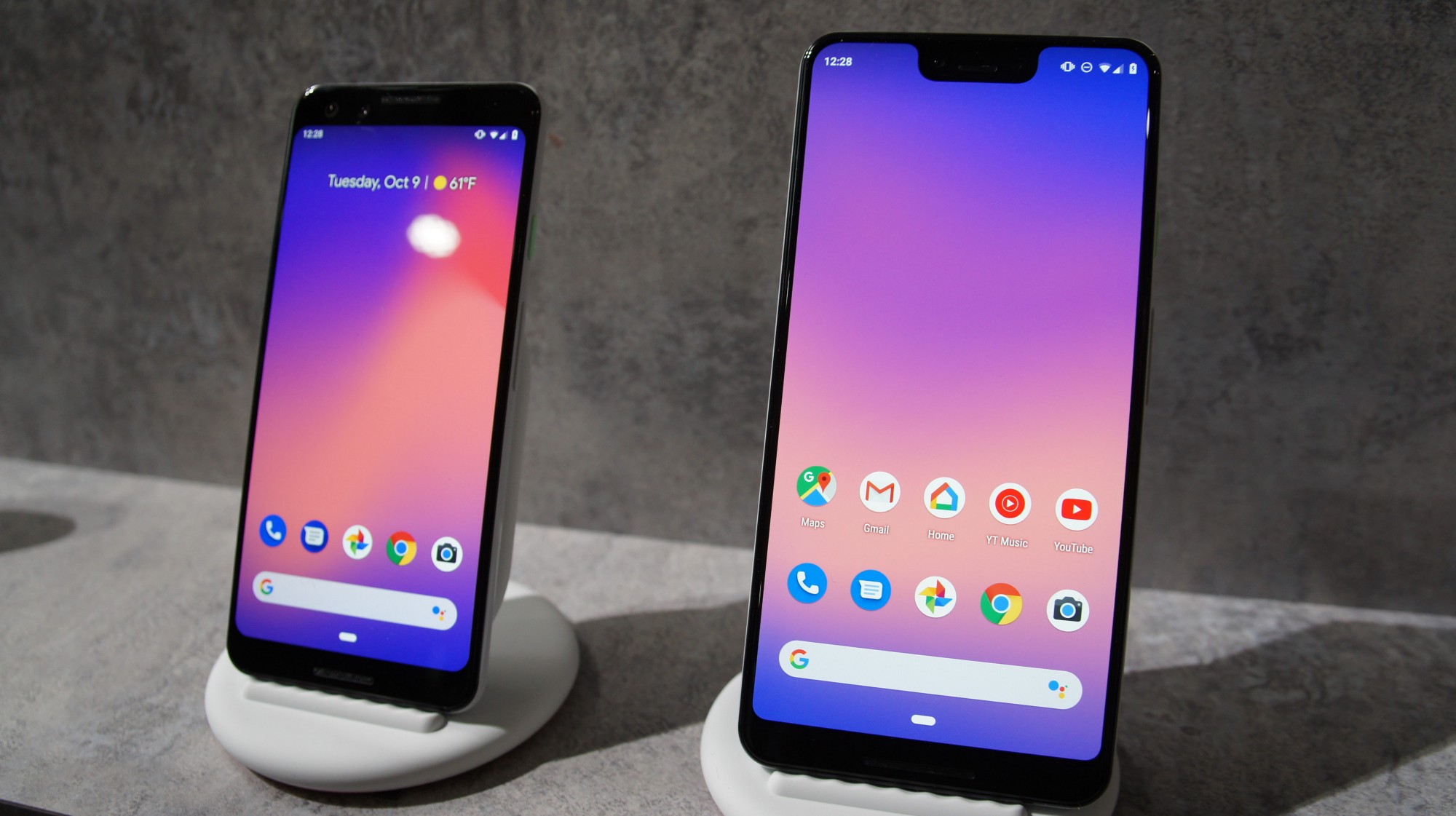
    It appears that Pixel users will soon get more customization options for their phones. XDA opened the product image for the Google Pixel 3 XL in the Android Q Beta 2 update revealing that a future app called Pixel Themes will eventually be listed in the Google Play Store. The themes will allow users to change the colors, icon shapes and fonts used on Pixel handsets.

    Right now, Pixel Themes is a “stub,” or an empty shell of an app already pre-installed in the Google Play Store. This is done so that when the time is right, the app can be instantly launched in the Play Store. There was some code found in the stub that contains previews of what each theme will look like. Three different themes were discovered:

    • Anthony: Rounded or Squircle shaped icons, Black accent, Rubik font.
    • Johanna: Filled icons, Green accent, Arvo and Lato font.
    • Reiko: Circular/Teardrop shaped icons, Purple accent, Arbutus font.

    These are the customization overlays that will be available from the Pixel Themes app

    When the app is ready to launch, you’ll find it in the Google Play Store right here. Until that day comes, clicking on this link will show you nothing more than an error message. And we would be remiss if we didn’t point out that Pixel Themes will use overlays to make the changes based on the theme selected. It also appears that Pixel users will get a small selection of new wallpapers to choose from once this app officially is released.

    With the app, users will be able to change icon shapes in additional locations related to the Settings, SystemUI, and Android framework. That can be seen from the image below.

  • Telcos to use AI to fight SMS fraud and drive A2P messaging revenue

    Telcos to use AI to fight SMS fraud and drive A2P messaging revenue

    Juniper Research is forecasting that total operator revenues from A2P (Application-to-Person) messaging services will reach $62 billion by 2023, up from $43 billion in 2019.  This represents a growth of 42% over the next 4 years.

    The research firm also claimed that revenue growth will be driven by operator efforts in mitigating messaging fraud over grey routes, alongside the emergence of rich-media messaging technologies including RCS (Rich Communications Suite).

    The Juniper research, A2P Messaging: SMS, RCS & OTT Business Messaging 2019-2023, also found that increased investment in SMS firewalls and AI (Artificial Intelligence) will drive down operator loss due to grey route SMS messages to $4 billion by 2023. This represents a fall from $10 billion in 2019, further contributing to operators’ messaging revenue growth over the next four years.

    Grey route SMS includes A2P messages disguised as P2P (Peer-to-Peer) traffic to exploit the lower costs compared to directly connected A2P SMS. Juniper estimates that 24% of A2P SMS messages will be delivered via grey routes in 2019, however efforts in improving SMS firewall capabilities will drive this down to below 10% by 2023.

    Meanwhile, RCS business messaging will account for under 10% of operators’ A2P messaging revenue by 2023. However, the research claimed that RCS business users will continue to use SMS for simple notifications, such as OTPs (One Time Passwords) owing to the low cost and simplicity. The research identified the integration of mobile payment capabilities directly into the RCS client to provide a differentiation point to SMS and increase RCS traffic.

    Research author Sam Barker added “RCS will provide operators with additional revenue opportunities beyond simple message termination. Operators must explore the advertising ecosystem and mobile payments over RCS to exploit their substantial subscriber bases to generate fresh revenue streams.”

  • Huawei says half of its flagships could have foldable displays by 2021

    Huawei says half of its flagships could have foldable displays by 2021

    Huawei is betting pretty heavily on foldable smartphones and in a recent interview the CEO of the company’s Consumer Business Group, Richard Yu, revealed Huawei’s short-term expectations for the new device format. Because the foldable segment is so new, Huawei’s primary focus at the moment is the recently-announced Mate X, which will go on sale in June. This device, as the company openly admits, is rather expensive but as foldable devices start to gain traction Huawei expects pricing to begin falling. In fact, in just two years’ time, Huawei’s foldable flagships should cost no more than regular smartphones.

    This gradual drop in price will also result in Huawei bringing more devices to the market and, by 2021, half of the smartphone giant’s flagship offerings could sport foldable displays, with one of these being a compact device that’s smaller than both the Huawei Mate X and Huawei P30 Pro.

    Obviously, foldable devices will become increasingly more important to Huawei in the years to come. The company does, however, recognize that not everyone will be interested in the new format and that some will prefer traditional smartphones. This would suggest that regular devices, like the ones in our hands today, will be sticking around for quite some time and are under no threat at the moment.

  • How to quickly turn your smartphone into a desktop PC

    How to quickly turn your smartphone into a desktop PC

    Today’s smartphones are incredibly powerful. From replying to emails, to checking out your daily feed on social media, and uploading the occasional selfie to share to the world, smartphones can do a bunch of imaginable things. They fit snuggly in our pockets, but don’t let their small and compact sizes fool you because they can do many things that our everyday laptops and desktops offer us.

    Quite simply, we all have portable mobile computing devices in the palm of our hands – capable of helping us to stay productive and get work done! As much as they’re endowed with incredible power, productivity can still sometimes be limited due to their diminutive sizes. Some smartphones, however, can even transform into versatile desktop PCs of sorts with the aid of some additional accessories. In order to achieve that, we’re going to dive into how you can achieve this possibility with your own smartphone, assuming it’s still a few years old at the most.

    Transforming the smartphone into a desktop PC naturally requires the following main components below to imitate the experience, which we’ll go through in detail below.

    Getting your smartphone to connect to a display

    With the smartphone acting as the brains behind the scenes, the components listed above help to reach the fundamental desktop PC experience. The external display is needed to give users a more pleasing viewing experience working on a desk or something, as opposed to trying to get stuff done on the tiny screens on our smartphones. Whether it’s an over-sized television, your traditional PC monitor, or one of those newer portable external displays, the most convenient way to connect your smartphone to them is by using a Chromecast if you own an Android smartphone (or Apple TV for iOS devices).

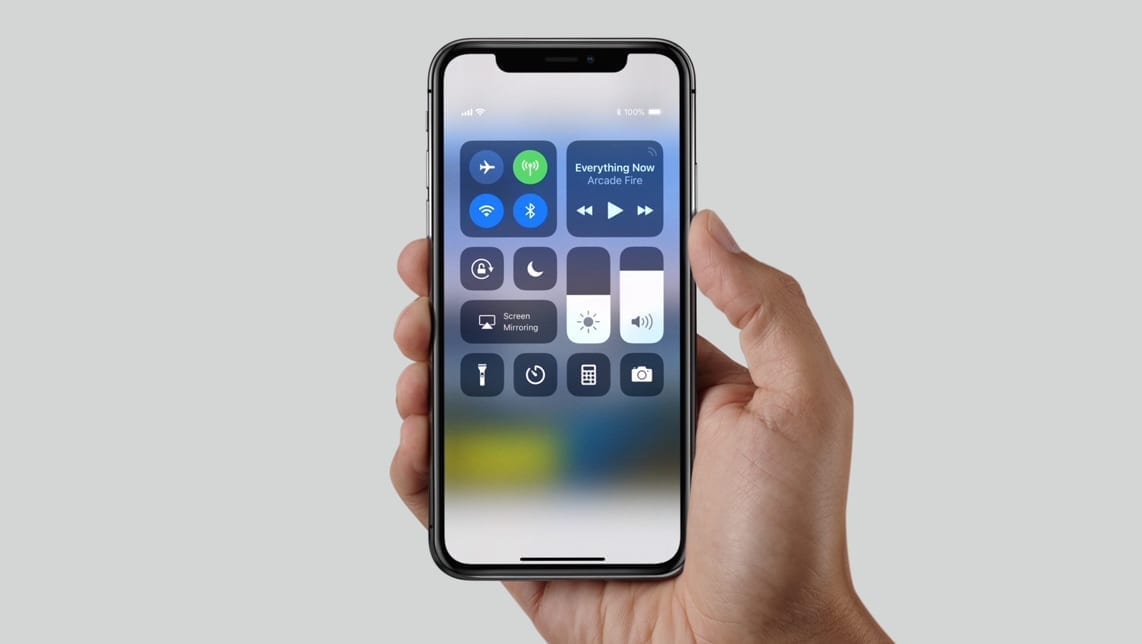
    Yes, a Chromecast is by far the simplest and most convenient solution, not only for the fact it’s a wireless solution, but because it’s the most compatible solution among Android smartphones. You can essentially use the screen mirroring function of Android to cast your phone’s screen to the connected external display/TV. Conversely, the process is pretty similar with iOS devices using an Apple TV. You’re simply leveraging AirPlay to achieve this, which is done by simply toggling on the Screen Mirroring function within Control Center.

    Once you’ve gotten everything connected and working properly, your smartphone’s display is being projected to your connected display. The only issue here is that latency can be hindered, so watching videos can be accompanied with choppy connections because of this. That’s the only downside, but the vast majority of Android smartphones are compatible to project their displays using a Chromecast.

    Wired connections: Direct with no latency, but not as convenient

    The single reason why going the wired route is more difficult than wireless is because of all the different ports found in smartphones. Even though the Lighting port is the single standard among iOS devices, Android smartphones have slowly transitioned from microUSB to the newer USB Type-C format. Due to these varying ports, getting a smartphone connected to a display may be trickier.

    In the case of Android smartphones with USB Type-C connections, you may still need to buy an adapter if your external display doesn’t feature USB Type-C ports. Alternatively, if you have one of those handy USB Type-C adapter hubs that may have come with a newer laptop, you could use that to connect to an external display using an HDMI connection.

    Now, the issue lies in the fact that not all smartphones offer the mirror display function using a wired connection. Phones like the LG V40, Google Pixel 3, and OnePlus 6T don’t work at all using this method. And even if you have older Android smartphones with microUSB ports, using an MHL adapter as the connector, doesn’t always work because they may not even be MHL-compatible.

    As for those with iOS devices, you have to give Apple credit for following one standard that applies to all of its devices. Using a Lighting to HDMI adapter, you can just about easily connect your iOS device to your television in a cinch! It’s really a testament to Apple’s effort to standardized things with its products. As the saying goes, “it just works.” And in this particular case for iOS devices, it does exactly that.

    Custom desktop experiences on some phones

    For some newer phones like the Samsung Galaxy S10 series or Huawei Mate 20 series, they have their own custom desktop experiences when they’re connected to an external display. Better yet, they don’t require any sort of special cable or dock to access. You simply connect them to your external display, and bam, you’ll be instantly transported to their respective desktop-like experience.

    Unlike the mirrored experience that most devices offer, these desktop-like experiences do a great job to emulate the feel of interacting with a real desktop operating system – much like having multiple windows running simultaneously. Huawei’s interpretation, in particular, seems like they’ve simply masked the traditional Windows experience. Still, it’s unbelievable that some of these smartphones are capable of offering these experiences. When they said that you have the power of a computer in the palm of your hands, they’re not kidding because some of them really do!

    Some smartphones even feature their very own custom desktop experiences, such as the case for some Huawei and Samsung smartphones. Shown here is the Huawei Mate 20 Pro and its EMUI 9.0 Desktop Mode.

    Connecting a mouse & keyboard

    In order to achieve that true desktop experience, the last pieces to the puzzle are connecting a mouse and keyboard into the mix. We’d recommend relying on Bluetooth enabled ones, just because connecting them is done much like any other Bluetooth accessory. Once they’re paired and connected, they’re pretty much good to go! For Android smartphones, the process in getting them connected is no different from laptops and desktops. However, you can’t connect any sort of mouse to an iPhone – it’s just not possible, but Bluetooth keyboards aren’t a problem.

    Conversely, if you still prefer going down the wired route, you’ll need to purchase additional adapters in order to achieve that – including a USB hub to connect both the mouse and keyboard simultaneously. Again, the process is pretty simple with Android smartphones, but there’s no way to use a wired keyboard or mouse with an iPhone. Therefore, if you’re an iPhone user, your only option is to use a Bluetooth keyboard.

    Real on-the-go mobile computing

    As we’ve shown, you can quickly and easily transform your smartphone into a versatile desktop PC! Even though this solution won’t totally replace the desktop experience, it’s an option worth checking out when the situation presents itself. If you’re on-the-go and really need to get some serious work done, you can even get yourself acquainted with a mobile setup that you can get up and running in a jiffy. Take a Bluetooth keyboard and mouse, along with one of those portable external displays, and you can basically get your desktop setup situated just about anywhere!

    All we’re trying to say here is that today’s smartphones are more advanced than ever before. The beauty in all of this is the heightened level of productivity that can now be achieved by our smartphones. We’re limited in our engagement when using the smartphone by itself, but with the addition of these peripherals and accessories to help them transform into desktop-like experiences, we can do even more in the same amount of time.