Retail News CRM

Tag: power

  • Electricity prices will rise

    Electricity prices will rise

    The Ministry of Industry and Trade is considering an electricity price hike following the huge loss reported by state utility Vietnam Electricity (EVN) for last year.

    “The rate and time of the increase will be considered carefully to safeguard the benefits of EVN, the public and businesses and control inflation,” Deputy Minister of Industry and Trade Do Thang Hai told VnExpress recently.

    The ministry said last week that EVN’s costs rose by 9.27% last year, and it caused a loss of VND36.29 trillion (US$1.55 billion).

    Deputy CEO of EVN, Nguyen Xuan Nam, said the huge loss puts the company in a difficult financial situation, and so it has sought a hike in tariffs this year.

    According to estimates by the Ministry of Finance, if power tariffs increase by 5% this year the consumer price index will see a 3.9% increase.

    Hikes of 7% and 8% will push the CPI up by 4.4% and 4.8%.

    The government targets containing inflation at 4.5%.

    The prices consumers pay have remained unchanged since March 2019.

  • Vietnam Electricity reports losses of $635 mln

    Vietnam Electricity reports losses of $635 mln

    Vietnam Electricity (EVN) posted losses of VND15.758 trillion ($635.4 million) between January and October, with higher fuel prices a major contributing factor.

    EVN said fluctuations in the world prices of coal, oil, and gas since the beginning of this year had caused its production costs and purchase prices of electricity it bought from other power plants to soar.

    According to its financial statements, EVN racked up after-tax losses of more than VND16.586 trillion ($668.79 million) in the first half of this year.

    With world prices of fuels in 2023 predicted to remain high, it would be hard for EVN to achieve good business results next year, the utility said. It estimates losses of VND31.36 trillion in 2022.

    According to a report by the Ministry of Industry and Trade, prices of input materials for electricity production have skyrocketed since the beginning of the year, with that of imported coal doubling to $304.8 per ton, so retail prices of electricity may increase shortly.

    The average retail price of electricity currently stands at VND1,864.44 (7.5 cents) per kWh, excluding value-added tax. In June, EVN said the year’s price should increase to VND1,915.59 (7.7 cents) per kWh.

  • Vietnam needs $8 bln-$14 bln power investment a year through 2030

    Vietnam needs $8 bln-$14 bln power investment a year through 2030

    Vietnam will need investment of between $8 billion and $14 billion a year through to 2030 to develop new power plants and expand its grid, its deputy industry minister said on Wednesday.

    Of the amount, 75% would be spent on new power plants, with priority given to renewable sources, and 25% on grid expansion, Deputy Minister of Industry and Trade Dang Hoang An said in a statement.

    He said the country will seek to raise funds from private investors for the new power projects, without elaborating.

    Vietnam, a regional manufacturing hub, needs to increase its installed power generation capacity by around 10% a year to support its fast-growing economy and population.

    An said Vietnam, which pledged last year to become carbon-neutral by 2050, will raise its offshore wind capacity to 7 gigawatts (GW) by 2030 and to 65 GW by 2045, while cutting the proportion of coal in its energy mix.

    “Vietnam will not add new coal-fired power plants to its master power development plan, and will only continue coal projects that are under construction until 2030,” An said.

    The ministry last month asked the government to remove future coal projects with a combined capacity of 14.12 GW from the master power development plan that is being drafted.

    Under the latest draft of the master power development plan, Vietnam’s total installed power generation capacity would be raised to 121 GW by 2030 and to 284 GW by 2045, from 76.6 GW at the end of last year, according to state media.

  • Northern power output rises to new peak

    Northern power output rises to new peak

    Power output in the northern region topped 22,800 megawatts at noon on Monday, 9 percent higher than last year’s peak, amid an ongoing heatwave.

    Hanoi and 14 provinces in the northern and central regions have been recording temperatures of up to 38 degrees Celsius (100 degrees Fahrenheit), and the heatwave is likely to continue for another day or two, according to the National Center for Hydro – Meteorological Forecasting.

    Some thermal power plants that have a combined output of 1,555 MW are reporting technical issues with turbines, according to national utility Vietnam Electricity (EVN).

    Hanoi and some other localities recorded a power outage for around two hours on July 4 due to high demand.

    EVN estimated earlier that the northern region would face a shortage of 1,500-2,400 MW during peak hours or extreme weather conditions this year.

    The state utility has called on people to reduce power usage from 11 a.m. to 2.30 p.m. and form 8 p.m. to 10 p.m.

    It also encouraged people to set their air-conditioner temperature at 27 degrees Celsius or higher and use it in combination with a fan.

  • Electricity consumption hits new record amid heatwave

    Electricity consumption hits new record amid heatwave

    Power consumption soared to an all-time high of 45,528 megawatts at noon Tuesday as people turned on air-conditioners and other devices to beat the searing heat.

    It was 6,000 MW higher than last week’s average, Nguyen Duc Ninh, director of the National Load Despatch Center, said at a conference Wednesday.

    The north led with demand of 22,330 MW.

    In Hanoi, consumption was 3 percent up on what was the fourth day of a heatwave.

    The temperature rose to 39 degrees Celsius on Tuesday, according to the National Center for Hydrometeorological Forecasting.

  • Vietnam leads region in power production

    Vietnam leads region in power production

    After adding 3,420 megawatts of power capacity last year, Vietnam now leads Southeast Asia with 76,620 MW.

    It represented a 9.8 percent increase in capacity, CEO of national utility Vietnam Electricity (EVN), Tran Dinh Nhan, said at a forum Friday.

    He however expressed concern that 27 percent of it is from renewable sources and this high ratio is causing difficulties in managing distribution.

    There were times last year when 60 percent of power generation were from renewable energy, but due to plunging demand because social distancing curbs to contain Covid-19, this led to an oversupply of power, he said.

    But EVN has forecast that in June, when temperatures peak, the north could see power shortages while the central and the southern regions might have oversupply.

    It expects power consumption to rise by 7.6 percent this year to 242.4 billion kilowatt-hours.

  • Wind power developers in central province rush construction to get incentive tariff

    Wind power developers in central province rush construction to get incentive tariff

    Wind power farms in the central province of Quang Tri are scrambling to complete construction to benefit from the 20-year incentive feed-in tariff available until October 31.

    Under the scorching sun 800 workers are quickly building a solar plant in Huong Hoa District, hoping to finish the work before the rains begin next month.

    Tai Tam – Hoang Hai will have 31 turbines, and the foundations have been completed for more than 20 of them. Five turbines are being installed, and the investors hope the farm will become operational by the end of October.

    Then it will be eligible for the incentive feed-in tariff of 9.8 U.S. cents per kilowatt-hour for offshore projects and 8.5 cents for onshore.

    Nguyen Van Nghi, deputy director of the project, said some households have built tall structures nearby hoping to get compensation to make way for the giant turbines.

    “We need to speed up transportation to complete the project by the end of October, but if we do not pay high compensation local residents refuse to let us transport the equipment through their land.

    So far around VND200 billion has been paid as compensation. The company is seeking help from authorities to get locals to remove their structures.

    At two other wind power plants nearby, Phong Huy and Phong Nguyen, the foundations are complete but only four out of 24 towers have been built.

    Nguyen Ngoc Tien, CEO of the projects, said he has increased the number of workers and even transports materials at night to finish the projects before the deadline.

    It would take five to six weeks to finish, he added.

    After that foreign experts will make any adjustments necessary before the plants can begin operations.

    But with travel restrictions causing delays, wind power plant developers want Quang Tri authorities to allow experts to quarantine on-site upon arrival and start working immediately.

    Quang Tri has 29 wind farms under construction with a total capacity of 1,117 megawatts and costing over VND30 trillion.

    It is estimated that 16 of them will become operational before October 3.

  • SGX RegCo to Expand Enforcement Powers

    SGX RegCo to Expand Enforcement Powers

    The wholly-owned subsidiary of bourse operator Singapore Exchange (SGX) said on Thursday it will broaden its range of enforcement powers and require issuers to implement a whistleblowing policy.

    The move follows a public consultation, in which market participants had broadly supported the changes to listing rules, Singapore Exchange Regulation (SGX RegCo) said in an announcement.

    This will pave the way for swifter enforcement outcomes and reinforce confidence in Singapore’s capital markets, act as a greater deterrent against malfeasance, and enhance the protection of investors, SGX said.

    From 1 August 2021, SGX will be able to issue a public reprimand and require an issuer to comply with specified conditions, which are non-appealable.

    It will also be able to prohibit an issuer from accessing the facilities of the market for a specified period or until the fulfillment of specified conditions, prohibit any issuer from appointing or reappointing a director or an executive officer for up to 3 years, and require a director or an executive officer to resign.

    More severe sanctions, such as fines, will continue to be reserved for the independent Listings Disciplinary Committee

    SGX RegCo will require all issuers to establish and maintain a whistleblowing policy where the identity of the whistleblower is kept confidential and the individual is protected from reprisal.

    Issuers will be required to state in their annual reports that such a policy is in place for financial years commencing from 1 January 2021, as well as an explanation of how they have complied with key requirements such as independent oversight of the policy and commitment to the protection of the identity of the whistleblower.

  • Laos to supply Vietnam power from Mitsubishi-built wind farm

    Laos to supply Vietnam power from Mitsubishi-built wind farm

    Japan’s Mitsubishi Corporation will develop Southeast Asia’s largest wind farm in Laos to supply electricity to Vietnam, where demand is expected to grow continuously.

    The 600-megawatt onshore project, the first wind farm in Laos, will be located in the southern provinces of Sekong and Attapeu, the company said in a statement.

    By installing a dedicated transmission line to Vietnam, power from the wind farm, which is set to begin commercial operations by 2023, will be sold to national utility Vietnam Electricity for 25 years.

    It is expected that Vietnam’s growing economy will have high demand for power, especially during the dry season, when hydropower generation is limited.

    The onshore wind farm is being developed as part of a memorandum of understanding on power interchange signed between the Vietnamese and Lao governments in October 2016.

    It is expected to be the first cross-border electricity interchange from wind power generation in Southeast Asia.

  • Marley Spoon commits to 100pc renewable power by end of 2022

    Marley Spoon commits to 100pc renewable power by end of 2022

    Marley Spoon Australia is joining the growing number of businesses committing to power their operations entirely by renewables, with the meal delivery kit aiming to make the switch by the end of 2022.

    The business achieved carbon neutrality earlier this year, and aims for the next five years to be focused on further reducing its carbon impact, as well as rethinking its packaging, sustainable sourcing, and food waste.

    “Taking action to minimize our impact on the planet cannot be delayed any longer,” said Marley Spoon Australia chief executive Rolf Weber.

    “At Marley Spoon, we are committed to significantly decreasing our carbon impact across our operations. Since our launch, we’ve tried to consciously grow without further increasing our footprint and are continuously implementing actions to measure, reduce and, where necessary, offset that footprint.”

    Moving forward, Marley Spoon will work with climate offset specialist ClimatePartner to further its sustainability efforts through projects such as planting trees in Venezuela and Uruguay, and that provide families in Zambia with clean-burning cookstoves. To date, the business has planted 44,000 trees and redistributed 4,000 cooktops.

    Marley Spoon is also working to ensure all of its packaging is ‘curbside recyclable’ by the end of 2025, in order to ensure all Australians have an equal opportunity to do the right thing when it comes to properly dispose of soft plastics.

    And, the business will instigate a ‘local first’ policy in regards to food sourcing, looking to work closer with local farmers and suppliers to ensure any new ingredients added are Australian-made or grown.

    “Being a sustainably conscious company is more than just recycling and reducing waste; being a sustainable business or organization is all about consistently improving,” Weber said.

    “Our business model already helps customers easily act sustainably through reducing food waste and working with sustainably-focused suppliers [but] as we grow we need to continue to ensure we’re delivering a product that not only fills a need in their lifestyle, but also allows them to easily live their lives sustainably.”

  • Vietnam to reduce thermal power production

    Vietnam to reduce thermal power production

    Vietnam targets reducing coal-fired power production by 6 percent this year to prioritize solar and wind energy even as it grapples with limited transmission capacity.

    This means a cut of 8 billion kilowatt-hours from a projected 126 billion kilowatt-hours of coal-fired power this year. National utility Vietnam Electricity (EVN) estimates total production from all sources at 260 billion kilowatt-hours.

    EVN has also suspended around 8,000 megawatts of hydropower plant capacity from 11 a.m. to 12 p.m. every day in the first four months of this year to prioritize solar power intake, which peaks at noon.

    However, reducing the intake from coal-fired and hydropower plants comes with consequences, with the rising frequency of turbine restarts increasing the risk of system failures.

    The number of restarts due to oversupply last year surged 2.6 times over 2019 to 192. In the first four months this year alone, there were 334 restarts.

    With these cuts, EVN seeks to prioritize solar and wind power intake and also wants to double their production from last year to 32 kilowatt-hours this year.

    Solar and wind power capacity is set to hit 20,000 megawatts this year, accounting for 30 percent of the total supply.

    But due to the limited capacity of the transmission lines, renewable energy only accounts for 12 percent of total production. The figure is set to rise to 17 percent in the next five years.

    The rest of the production comes from traditional sources like thermal power and hydropower.

    EVN has earlier said it will also cut 15-20 percent of solar and wind power capacity to reduce pressure on the national grid.

    “Cutting down renewable energy is something EVN does not desire because it hurts developers,” Nguyen Duc Ninh, director of the National Load Dispatch Center under EVN, said at a meeting Tuesday.

    The dilemma that Vietnam faces now, having an oversupply of renewable energy but limited transmission capacity, has happened because of poor management and planning, experts say.

    Tran Dinh Long, deputy chairman of the Vietnam Electrical Engineering Association (VEEA), said that the boom in solar power in recent years shows a lack of anticipation of the burden they would place on the national grid.

  • Samsung Vietnam proposes direct purchase of renewable energy

    Samsung Vietnam proposes direct purchase of renewable energy

    Electronics giant Samsung Vietnam has proposed that it joins a trial program to purchase power directly from renewable power plants instead of monopoly distributor Vietnam Electricity.

    Choi Joo Ho, CEO of Samsung Vietnam, submitted the proposal to the Ministry of Industry and Trade last week. He asked that the company participates in the Direct Power Purchase Agreements (DPPA) policy that is being studied for a three-year trial.

    Three to four other big companies also want to join the program, a person familiar with the matter told VnExpress.

    The program will allow manufacturing companies with a minimum of 22-kilovolts power lines to negotiate and buy directly from solar and wind power plants.

    In the first three years, when the policy will be trialed, the customer needs to buy at least 80 percent of the agreed amount of power.

    Solar and wind farms with a capacity of 30 megawatts or more can sign these agreements and need to begin commercial operation within nine months of joining the pilot program.

    The program with a total capacity of around 1,000 megawatts is set to start this year and run until 2023. At the end of the trial period, the ministry will review it and take a decision on making the arrangement permanent.

    The program is being considered amid the challenges solar power plants face in running at full capacity due to the limited capacity of the country’s transmission lines. Vietnam is set to cut up to 1.74 billion kilowatt-hours of renewable energy in the second half this year to deal with national grid overload, Vietnam Electricity, has announced.

  • One day we might use wireless 5G signals to provide power to electronic devices

    One day we might use wireless 5G signals to provide power to electronic devices

    We know that mmWave 5G spectrum delivers the fastest download data speed despite some drawbacks; these signals do not travel far, nor are they able to easily penetrate buildings. But what they can do is create energy that one day could replace batteries and other sources of power.

    Researchers at Georgia Tech have created a concept wireless power grid that runs on 5G mmWave frequencies. This is done via the use of a sticker-type device that captures the electromagnetic energy created by 5G base stations. Currently, this energy is being used to transfer data.

    Manos Tentzeris, Ph.D. is a professor of flexible electronics at Georgia Tech and he led the schools’ research team which created a specialized lens to capture the power generated by mmWave 5G signals. The Rotman lens “rectenna” is a small device that collects the energy sent out by 5G wireless networks. But one thing that is characteristic to 5G signals makes it perfect for powering an electricity grid and that is the ability to focus power.

    Georgia Tech alum Jimmy Hester is serving as a senior lab advisor to the group working on this development. Hester says that 5G base stations operate at high frequencies allowing them to “focalize power.” In other words, “What we’re talking about is more of an intentional energization of the devices, themselves, by focalizing the beam towards the device in order to turn it on and power it.”

    The key to this whole project is the Rotman lens, a flexible lens that helps collects energy from multiple directions. It is the same technology used in military surveillance systems that can identify targets in various directions without having to move the antennas. Aline Eid, a Ph.D. student and senior researcher says, “The same way the lens in your camera collects all of the light waves from any direction and combines it to one point…to create an image, that’s exactly how this lens works. The lens is like a tarantula … because a tarantula has six eyes, and our system can also look in six different directions.”

    With the Rotman lens, the field of view for the energy collecting “sticker” device increases from a 20-degree “pencil beam” to 120 degrees. This makes it easier to collect mmWave energy in the 28GHz band. Eid states that if you placed a sticker device on a drone, you would be able to collect energy from 5G base stations all over a city.

    Still, this system is in its early days and right now the rectenna stickers can collect only 6 microwatts of energy, enough to power up small IoT devices from a range of 180 meters (590.55 feet) away. In lab tests, the device has been able to collect 21 times that amount.

    Tentzeris says that his team is looking for funding and is especially interested in working with wireless carriers. This way the wireless providers can place the stickers throughout cities at the same time that they’re building out their 5G networks. Manos adds, “In the beginning of the 2000s, companies moved from voice to data. Now, using this technology, they can add power to data/communication as well.”

    Looking at the future, the rectenna sticker could end up embedded inside a wearable or stitched into clothing. As far as the financial aspects of producing the stickers is concerned, Tentzeris states that each unit costs only a few cents which means that money might not prevent this from becoming a legitimate method for delivering power.

    The Georgia Tech professor says, “Scalability was very important, you’re talking about billions of devices. You could have a great prototype working in the lab, but when somebody asks, ‘Can everybody use it?’ you need to be able to say yes.”

    Perhaps someday in the future, 5G signals will provide your phone with the power it needs to run all day-every day in addition to the connectivity these signals deliver.

  • Nuclear energy, an option for Vietnam in the long run

    Nuclear energy, an option for Vietnam in the long run

    Clean and reliable nuclear energy could help Vietnam meet its growing power demand over the long term and ensure its development is not derailed, experts say.

    Prof Sheldon Landsberger of the University of Texas at Austin, the U.S., an expert in nuclear and radiation engineering, said: “With a population of nearly 100 million people, Vietnam will need a lot of energy. The country has to figure out what is the best way of getting electricity.”

    It is crucial for Vietnam to sustain the growing standard of living of its people and have competitive industries, he said.

    While renewable energy sources such as solar and wind could be unreliable depending on the climate, nuclear plants could work 24 hours on all 365 days a year, he pointed out.

    It is a stable source like coal, and enables electricity storage as well, he said.

    However, unlike coal, nuclear energy is free from carbon emissions and does not pollute, he said.

    Talking about the status of nuclear energy around the world, he said it is “very mixed” with parts of Western Europe planning to continue with it but others phasing it out.

    The world would run out of coal and gas, maybe later this century, Landsberger said.

    “For that reason, Vietnam, like other countries, has to look not five or 10 years down the road but 30 or 40 years.”

    Dr. Steven Biegalski, nuclear and radiological engineering, and medical physics program chair, Georgia Institute of Technology, the U.S., said in his country nuclear power is still coming out on top today. Americans are seeing a significant reduction in using coal and natural gas, two main competitors of nuclear energy.

    Dr. Sama Bilbao y Leon, director-general, World Nuclear Association, said nuclear energy could help ensure not only the grid stability of a country but also produce heat used in industrial processes and transportation. With this, countries could decarbonize various sectors, she said.

    Vietnam could also use nuclear energy to produce fresh water, something that Middle Eastern countries are looking into, she said.

    Prof Ken-ichi Fukumoto of the Research Institute of Nuclear Engineering, University of Fukui, Japan, said nuclear power is a realistic solution for Vietnam to ensure power supply.

    In fact, despite the Fukushima accident in 2001, Japan still uses nuclear energy because it is reliable and reduces carbon dioxide emissions, he said. However, new plant development is now restricted as the public are concerned about their safety.

    Germany, despite abandoning nuclear power at home, buys nuclear power from neighbor France, he pointed out.

    Author of “A Question of Power: Electricity and the Wealth of Nations,” Robert Bryce, said Vietnam, like other developing countries in Asia, is seeing rapid growth in electricity demand and should include advanced nuclear reactors in plans to expand its electric grid.

    There are several challenges to building new nuclear reactors, including cost, the time required and fuel production and disposal, but if Vietnam is to help reduce global greenhouse gas emissions, it should include nuclear in its electricity portfolio, he said.

    Jennifer Gordon, a senior fellow at the Global Energy Center, Atlantic Council, the U.S., said it is now an important time for Vietnam to start discussions about investment in nuclear energy.

    In 2009 Vietnam had planned to build two nuclear power plants in the south-central province of Ninh Thuan at a cost of several billion dollars, but the National Assembly shot down the proposal in 2016 on cost grounds.

    Vietnam would not build old types of reactors if it is starting a nuclear program now, Gordon pointed out. To ensure safety, the newer types of reactors shut down automatically without human management, she said, citing the example of the sodium-cooled fast reactor.

    “Advanced reactors are in development that should be taken into account by Vietnam.”

    Landsberger said in Vietnam, nuclear energy could be a combination with wind, solar and tide.

    Vietnam should keep in mind that the climate is changing and so being dependent on renewable energies, including hydropower, would be shortsighted, he said, suggesting that Vietnam should consider a baseload, or the minimum amount of electric power delivered, of 30-40 percent from nuclear plants.

    South Korea and Japan are good examples of successful economies partly thanks to nuclear energy development, he said. They have steady electricity prices over long periods of time and do not have to rely on other countries, he pointed out. Vietnam should look at all areas of energy and choose the best path forward based on economics, he said.

    Speaking about costs, he said nuclear power would be expensive, but Vietnam should weigh all factors. For instance, people would have health expenses if the country has pollution (caused by fossil fuels), and Vietnam could get a lot of support as a developing country from the International Atomic Energy Agency.

    “Nuclear power is a very long-term plan.”

    Biegalski said there is a significant and earnest desire in the U.S. to look at the next generation of nuclear power technologies.

    He said he understood there is a fear in various countries after the accident in Fukushima, but when people look at the data they would see no one died as a result of the reactors, whereas the tsunami claimed 15,000 lives.

    Leon said small modular reactors offer an advantage since they are scalable.

    Fukumoto said it is desirable to examine the latest technologies if Vietnam is considering nuclear energy. Small modular reactors, which are being opted in the U.S, Canada and Japan, offer greater economic benefits and have higher safety standards including in the disposal of nuclear wastes and while decommissioning, he said.

    Bryce said nuclear energy is the safest form of electricity generation, adding that Vietnam, like other countries, would need to adhere to safety protocols around the handling of nuclear materials and operation of nuclear plants.

    Biegalski said Vietnam needs to build regulatory frameworks and develop a workforce before producing nuclear power. So it should start investing in training programs in universities, he said.

    “It is a long process; it is not like you can turn a switch and it happens today.”

    Landsberger said Vietnam needs to invest in nuclear engineering programs to train technicians, reactor operators, regulators, and environmental scientists. It should have an open discussion about the public health benefits of nuclear power compared to burning fossil fuels, he said.

    Fukumoto expressed optimism that Vietnam and Japan could begin cooperation in training that had been discussed before when the projects in Ninh Thuan Province were under consideration.

    It is necessary for the Vietnamese government and other related stakeholders to have a deep understanding of nuclear power generation and Japan’s experience, he said.

    Leon said when a country wishes to develop nuclear energy, there is a lot of international support and co-operation, and newcomers could learn best practices from other countries that have effective nuclear power programs.

    Leon said if people in Vietnam and other countries feel uncomfortable about using nuclear energy after the Fukushima accident, it is completely reasonable.

    So, if the Vietnamese government is looking at nuclear energy, the first thing that needs to be done is talking to the public, making sure people understand the facts about nuclear energy, she said.

    “There should be a consensus on how Vietnam wants to move forward with different energy choices.”
  • Vietnam’s largest wind power plant enters operation

    Vietnam’s largest wind power plant enters operation

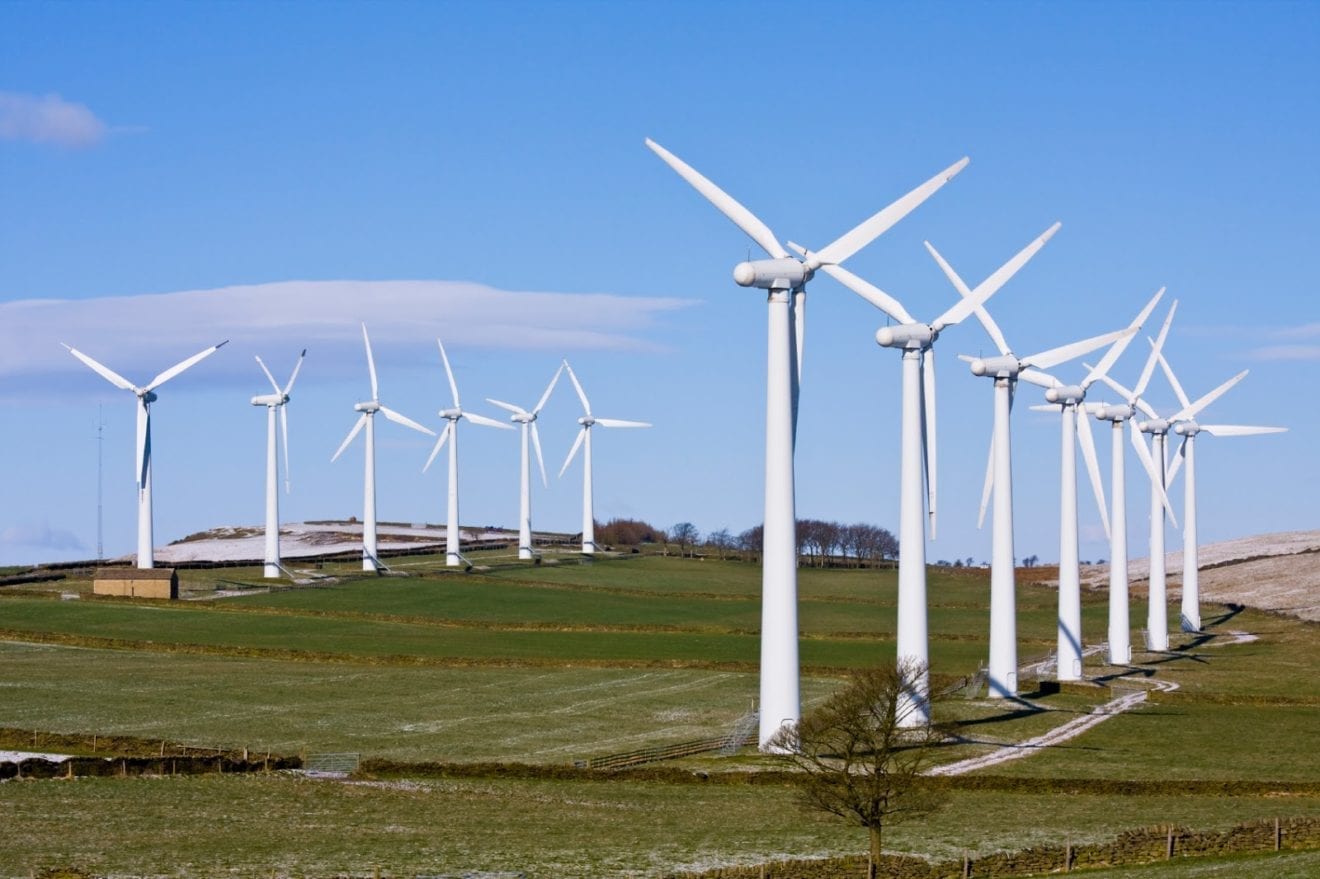
    HCMC-based energy firm Trungnam Group Friday has put its wind power plant in central Ninh Thuan Province into operation, considered the country’s largest to date.

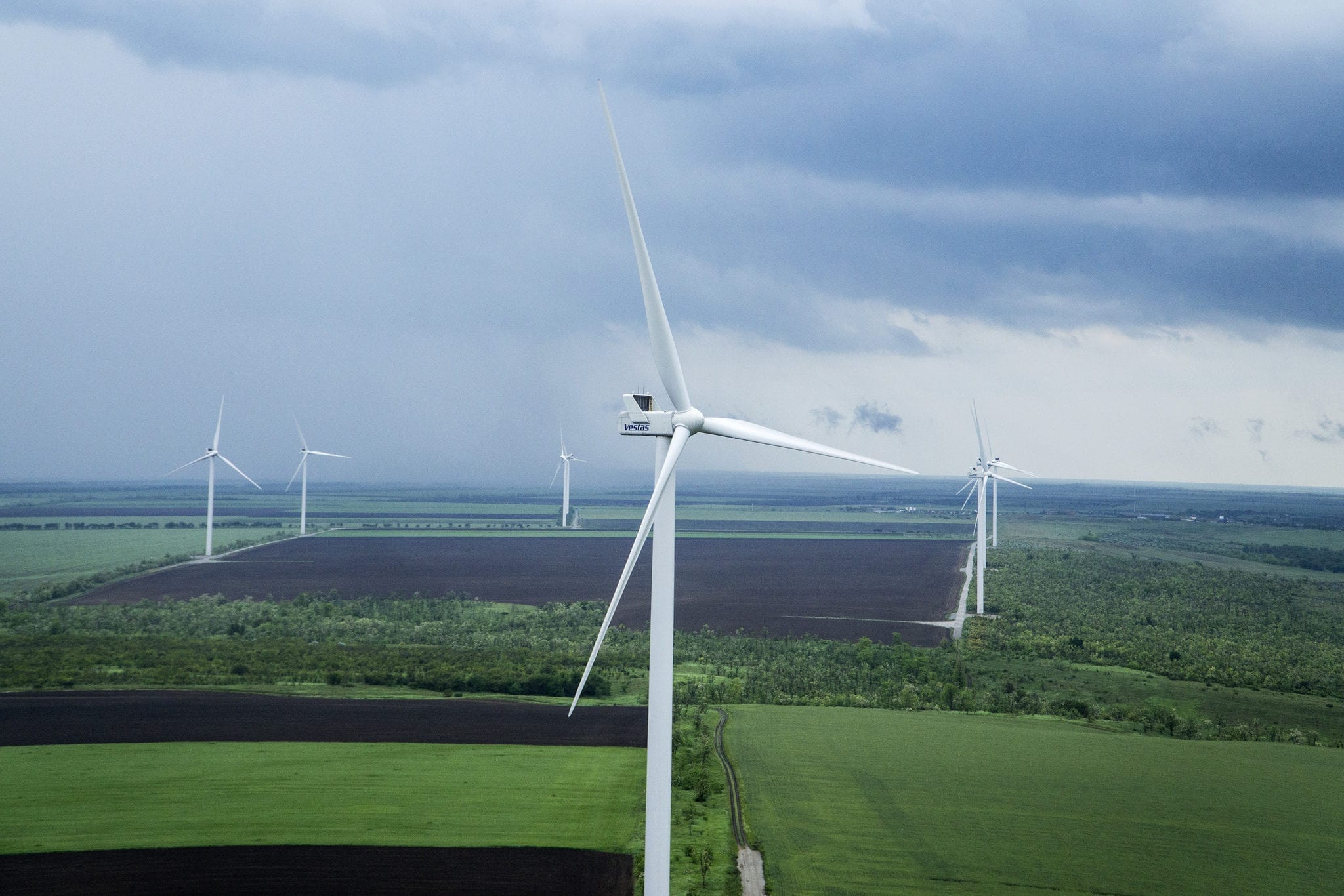
    The plant, which spreads over an area of 900 hectares in Thuan Bac District, has 45 turbines with a total capacity of 151.95 megawatts that costs VND4 trillion ($173.4 million), the Government portal reported.

    The wind power plant is combined with a 204 MW solar power plant to form the solar-wind farm complex considered the largest in Southeast Asia. The complex will supply a total 950 million kWh per year for the country’s grid.

    The private energy company has added a total 1,064 MW to the national grid comprising hydropower, solar and wind power. It plans to have a renewable output of nearly 10,000 MW by 2027.

    Tran Quoc Nam, chairman of Ninh Thuan, said the province is now taking the lead with 32 solar power projects with a total capacity of 2,257 MW, and three wind power projects with an accumulative capacity of 329 MW.

    Vietnam has great potential for renewable energy with its long coastline and 2,700 hours of sunshine a year on average.

    Solar power currently accounts for just 0.01 percent of the country’s total power output, but the government plans to increase the ratio to 3.3 percent by 2030 and 20 percent by 2050.

    Vietnam aims to produce 10.7 percent of its electricity from renewable energy sources by 2030, mainly through solar and wind power projects.