Retail News CRM

Tag: power

  • Spending power to back China’s growth in 2017

    Spending power to back China’s growth in 2017

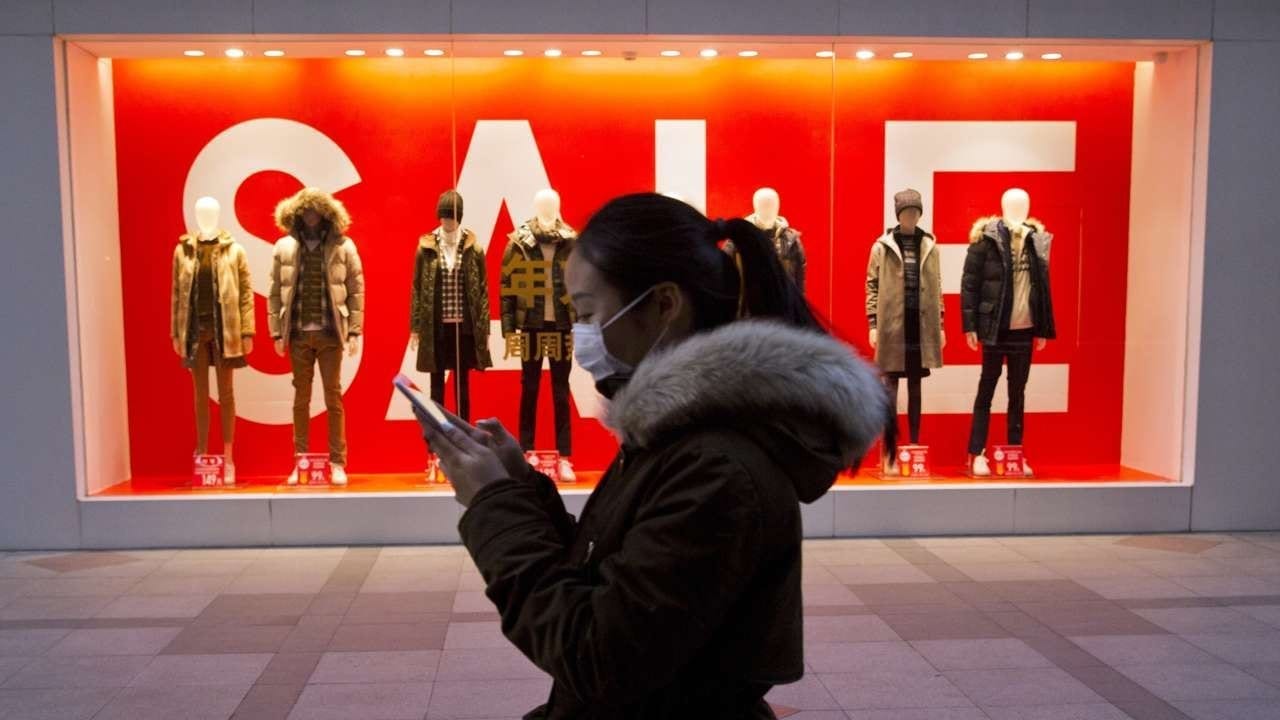
    Consumer spending will continue to grow at a healthy pace in 2017 as the country moves quickly toward a consumption-driven economy, analysts have said.

    Market observers estimated the country’s consumption will grow at an annual rate of 10 percent in 2016 and 2017, a key driver of overall growth eclipsing investment and exports.

    Consumption has played an increasingly important role in stabilizing the world’s second-largest economy, with its contribution to GDP growth up from 50.2 percent in 2014 to 71 percent in the first three quarters of 2016.

    Li Yang, an expert with the Chinese Academy of Social Sciences, expected retail sales in China to increase by 10 percent to reach 33.1 trillion yuan in 2016. Consumption will contribute 73 percent of GDP growth, the highest level since 2001.

    Consumption data in the fourth quarter of 2016 is slated to be released on Friday.

    China has embarked on a historic rebalancing from exports and investment to consumption in order to boost the economy’s potential amid volatile global conditions.

    China’s fast-growing middle class has become a key driver of consumption growth as they seek more expensive and premium brands and spend more on high-quality goods and services.

    According to research by the Economist Intelligence Unit (EIU), a think tank, the proportion of the population earning upper-middle and high incomes in China will expand from 10 percent to 35 percent by 2030.

    Gao Yuwei, an analyst with Bank of China’s research department, estimated retail sales will grow at around 10.2 percent in 2017, with spending on healthcare, telecommunications and high-end products rising rapidly.

    To encourage the spending potential of wealthy families, Chinese authorities are considering reducing tariffs of imported goods, which typically cater to the demands of the upper-middle class.

    In the past, Chinese consumers tended to buy foreign premium brands overseas to avoid high customs duties, which usually account for at least 15 percent of the full price.

    The Ministry of Commerce is creating policy to further reduce import tariffs for high-end consumer goods, expand categories of duty-free products, and open more duty-free malls to guide consumption back to China.

    With consumption becoming a key engine of growth, experts warned the slowing growth of personal income could restrain spending power.

    China’s economy grew 6.7 percent in the first three quarters of 2016. Analysts have forecast China’s 2016 annual growth to remain at 6.7 percent, significantly faster than the growth rate of other major world economies.
  • Power tariff likely to keep unchanged this year

    Power tariff likely to keep unchanged this year

    The Ministry of Industry and Trade (MoIT) has not yet decided to adjust power tariffs this year and has been calculating basic prices, the ministry yesterday announced at an electricity production cost conference in Hà Nội.

    The ministry said that EVN is required to build a basic price for the year of 2017 based on calculation of 2015 and estimates of 2016.

    Concerning those numbers, Electricity of Việt Nam’s (EVN) 2015 power turnover reached more than VNĐ234.3 trillion (US$10.32 billion) or equivalent to electricity retail price of VNĐ1,630 per kWh.

    Turnover from activities relating to power production and trading in 2015 was VNĐ2.5 trillion.

    According to Deloitte Việt Nam’s independent audit report, the losses which have not been calculated into EVN’s electricity production and trading in 2015 were up to VNĐ8.5 trillion. The losses came from the foreign exchange rate differences throughout the group’s wholly invested companies. Its foreign exchange rate difference at companies which EVN holding shares was over VNĐ1.3 trillion.

    EVN in 2015 therefore posted a slight loss in power production and continued to sell electricity lower than the production cost.

    Nguyễn Anh Tuấn, director of the ministry’s Electricity Regulatory Authority, said that in 2015 the prices of main fuels including coal, oil and gas affected the electricity production. The Ministry of Science and Technology in the same year promulgated a decision to increase gas prices sold to electricity production by 2 per cent while keeping coal prices stable.

    “The important factor in 2015 was that hydropower plants did not reach the set productivity due to unfavourable hydrological conditions. The power output from hydropower plants was reduced and EVN had to mobilise electricity from coal-fired and gas-power plants. This affected to production costs,” Tuấn added.

    He added that according to current regulations, construction costs of villas and tennis courts have not been calculated into power production cost. The construction has come from the EVN’s welfare fund, of which, turnover from EVN’s financial activities was around VNĐ1.01 trillion and those from its corporations was VNĐ194.3 billion. Turnover from dividend and profit was VNĐ60.95 billion.

    He said the losses from the foreign exchange difference would be gradually accounted into power tariffs.

    Đinh Quang Tri, EVN’s deputy general director said in 2015 that the group has itself avoided roughly VNĐ3.5 trillion in foreign exchange difference losses thanks to maximising costs and increasing profit. The remaining losses will be gradually accounted for.

    “Normally, the foreign exchange difference losses must be accounted in a year according to the accounting mechanism. However, the EVN asked the ministry and finance ministry to gradually handle the losses over five years due to its special characteristics. If the loss was accounted all at once, power tariffs would surge. The losses would be taken into account of power tariff or reducing production costs,” Tri said.

    “The ministry would review the basic prices. If there is a change of input prices such as fuel, foreign exchange and rates of power resources higher than 7 per cent, the power tariff would be adjusted,” he added.

  • Customised price plans for electricity in the pipeline

    Customised price plans for electricity in the pipeline

    Consumers can look forward to shopping for electricity the way they choose a phone plan. Electricity retailers are preparing a buffet of options for consumers, as the Energy Market Authority (EMA) plans to fully open up the electricity retail market to competition in the second half of 2018.

    For the eco-conscious, there will be plans that guarantee a portion of energy consumed will be linked to renewable energy, such as solar power. And those who work in the day could sign up for options that allow them to take advantage of lower electricity tariffs at night.

    Electricity is cheaper at night as there is lower demand for it.

    Those who are home all day could in turn benefit from schemes that offer varying tariffs for different periods of the day, allowing them to choose to run home appliances when electricity prices are lower.

    There will even be short-term trial packages to entice consumers who are resistant to change.

    “In the initial stage, many consumers will be sceptical about switching for various reasons, like reliability, security and so on,” said electricity retailer iSwitch.

    “iSwitch is planning to roll out price plans, such as short-term trial packages, to increase their confidence in switching,” it said.

    These are just some of the customised price plans that small energy users, such as households and small businesses, could benefit from.

    Currently, only 33,000 commercial and industrial consumers with an average monthly electricity consumption of at least 2MWh – which amounts to a monthly electricity bill of about $450 – are taking advantage of this flexibility. But the remaining 1.3 million consumers, mainly households, will get to benefit with the change, EMA said.

    During this year’s Singapore International Energy Week, which starts today, participants are expected to discuss issues such as green energy and the implications of low energy prices.

    There were just seven electricity retailers in 2013. This has increased to 20, EMA told The Straits Times.

    Industry players say market liberalisation will benefit consumers.

    “Not only will it lead to better value and services (for customers), but it also gives them the opportunity to achieve their other objectives, such as environmental protection in purchasing green energy,” said a spokesman for retailer PacificLight.

    Customers may also enjoy lower tariffs.

    Mr Vijay Sirse, chief executive of Red Dot Power, said: “It is expected that every household will potentially save anything from 10 per cent to 20 per cent of its monthly electricity bill.”

    Associate Professor of Marketing (Education) Seshan Ramaswami, from the Singapore Management University, noted that while it is difficult to say whether prices will definitely go down, customers could benefit in other ways.

    For instance, retailers could try to differentiate themselves by offering bundled or value-added services – such as installing smart home systems or giving discounts on energy-saving appliances.

    Housewife Mastzainah Jalil, 45, likes the idea of being able to time the use of her appliances to when electricity tariffs are the lowest.

    Assistant manager Daniel Govindan, 28, prefers a price plan which incorporates renewable energy and a smart system that sends alerts when energy-intensive appliances are in use when electricity tariffs are high.

    He said: “Renewable energy is the way to go. I think clean air is a public good. So less fossil fuels, more clean air.”

  • OpenHydro eyes 300 MW of tidal power projects in Indonesia

    OpenHydro eyes 300 MW of tidal power projects in Indonesia

    OpenHydro, the tidal turbines business of French naval defence group DCNS, will seek to deploy 300 MW of tidal energy capacity in Indonesia by 2023 under a new partnership with local sector player PT AIR.

    OpenHydro said this week it has entered into a memorandum of understanding (MoU) with PT AIR to create an alliance aimed at driving forward the development of a tidal energy industry in Indonesia. The two companies have been working together over the past 18 months and during that time have identified at least 10 locations suitable for commercial-scale projects.

    The pair expect to start with a tidal energy array of up to 10 MW, for which a site will be selected over the coming months. The pilot system is planned for deployment in 2019. It will use European equipment provided by DCNS and its unit, plus locally manufactured content.

    OpenHydro noted that local industrial facility options have been identified and will be assessed by the partners.

    “The nature of the equipment involved in tidal energy projects results in a high level of local manufacturing content,” commented Thierry Kalanquin, chairman of OpenHydro and vice president of energy at DCNS.

  • Sunseap Group launches SAVE Campaign

    Sunseap Group launches SAVE Campaign

    Sunseap unveiled its first marketing campaign simply titled, “SAVE” in line with the company’s launch of their clean energy retail offering. Sunseap conducted extensive surveys, and “SAVE” reflects the insights of many individuals’ and corporations’ desire to help protect the environment and fight climate change and save in the process of doing so – a mind-set that is aligned at the very core with the company’s ethos.

    The heavy reliance on the burning of fossil fuels has led to the rise in carbon dioxide levels and global warming. While many businesses wish do their part to save the environment for future generations and at the same time, save on electrical bills or upfront cost, many do not find ready solutions.

    More, recently, listed corporations have also been mandated by Singapore Exchange (SGX) to publish sustainability reports by 2017/2018.

    Frank Phuan, Managing Director of Sunseap Group, explained, “Sunseap’s SAVE campaign will make clean energy more accessible to everyone. Regardless of which industry the business lies in or whichever energy retailer the business is buying power from, anyone can utilize clean energy readily at competitive prices without any upfront costs. Building owners can save electricity bills via an on-site power purchase agreement (PPA) with Sunseap and the solar systems can be installed on the rooftop to provide competitively priced clean energy in the day.”

    Kicking off as one of the early adopters of the SAVE Campaign is Panasonic Appliances Refrigeration Devices Singapore (Panasonic), where Sunseap has installed a 2.4 MW system, spanning more than 20,000 square meters of rooftop area.

    In order to put the size of this project into perspective, the 2.4 MWp system is able to power close to 7,000 HDB households with its annual energy generation capacity of more than 3 Gigawatt hours (GWh). As a huge power consumer with operations running 24 hours all year round, Panasonic is able to offset close to 10 per cent of its peak energy needs. At the same time, this project will further demonstrate Panasonic’s commitment towards environmental sustainability. Sunseap hopes this project to be the first of many other collaborations with Panasonic to come.

    Atsunao Terasaki, Managing Director, Panasonic Appliances Refrigeration Devices Singapore, said, “This is the first time Panasonic is participating in a solar leasing agreement with a clean energy provider. Our partnership with Sunseap reflects the company’s commitment in integrating environmental sustainability with business growth. With the government’s vision to utilise solar energy to power 5% of Singapore’s peak electricity demand by 2020, we hope this will encourage more businesses and industries to adopt solar.”

    Other than Panasonic, Housing Development Board (HDB), Singapore American School, ABB, Sakae Holdings and Jurong Port are just some names that have taken that step to save the environment with Sunseap.

    Through the SAVE campaign, Sunseap hopes to create awareness of the cost efficiencies of solar energy in Singapore and invoke action to revolutionize the local energy supply to help SAVE the environment, reduce carbon footprint and electrical bills at the same time

    Lawrence Wu, Director of Sunseap Group, “Sunseap’s unique proposition of providing clean energy accumulated from rooftop farms scattered across the island will continue allow clients to enjoy the benefits of renewable energy even without installing solar energy systems on limited roof spaces and in a country where land is extremely scarce and precious. Sunseap can now potentially offset 100% of anyone’s electricity carbon footprint – something deemed impossible in the past. This is made possible with Sunseap clean energy retail offering.”

    The journey of Solarizing Singapore is being catalyzed by Sunseap as it has installed solar systems on building rooftops and this is fast reaching the thousandth mark, and in doing so the power grid is being “greenified” as there is a large amount of clean energy being fed into the grid. As a Market Participant Retailer (MPR) authorised by Energy Market Authority (EMA) and registered with the Energy Market Company (EMC), Sunseap is able to resell the clean energy generated via their off-site generation solar plants to contestable consumers who are interested procuring electricity from a clean energy producer.

    Deploying a 1 MW solar system (estimated one football field area) is equivalent to reducing 500 tons of carbon emission or planting 20,000 trees in Singapore each year. As such, Sunseap’s 80MW of contracted capacity translates to helping SAVE Singapore 400,000 tons of carbon emission annually, savings for it’s clients and is equivalent to planting 1.6 million trees each year.

    The SAVE campaign by Sunseap is timely as a key meeting dubbed COP21, held in Paris in early December 2015, will see the world’s leaders congregate for “a new international agreement on the climate, applicable to all countries, with the aim of keeping global warming below 2 degrees Celsius.”

  • Russia, Indonesia sign deal for peaceful use of nuclear power

    Russia, Indonesia sign deal for peaceful use of nuclear power

    Indonesia’s National Nuclear Energy Agency (BATAN) and Russia’s State Nuclear Energy Corporation Rosatom have signed a memorandum of understanding (MoU) on development of peaceful use of nuclear energy.The two organisations signed the MoU at the ATOMEXPO, an international conference and exhibition of nuclear energy being held here, on Monday.The MoU, signed by Djarot Sulistio Wisnubroto, the chairman of BATAN and Kirill Komarov, the first deputy CEO for corporate development and international business of Rosatom, aims at strengthening the cooperation between Indonesia and Russia for peaceful use of nuclear energy.

    It also confirms the intentions of the two parties to cooperate in implementing programme to create and develop the national nuclear energy sector of Indonesia.”We fully support the strong commitment of BATAN to the development of nuclear technologies in Indonesia. Nuclear energy is viable option for this country, and Rosatom is already cooperating closely with BATAN in the project to design and construct an experimental reactor.”There are many other areas available for the further partnership, and the signed document gives a solid platform needed to bring these opportunities into life”, said Komarov at the MoU signing ceremony.

    According to the MoU, Rosatom and BATAN will intensify interactions on possibility to implement the Russian nuclear power plant projects in Indonesia.In April, BATAN declared RENUKO, the Russian-Indonesian consortium with participation of Rosatom subsidiaries, a winner of the tender for the conceptual design of a 10 MW multipurpose experimental high-temperature gas-cooled reactor in Indonesia.