Retail News CRM

Tag: power

  • New AirPower image found on Apple’s website

    New AirPower image found on Apple’s website

    It’s been over one year and a half since Apple first announced AirPower, the infamous wireless charging pad which still hasn’t been released, despite the promise of a launch during 2018. Reports and rumors about the status of AirPower have been floating around for months, with many now speculating that Apple will announce it sometime this week. Rather unsurprisingly, Apple has made no official statement on the matter, but now a new finding on the company’s website suggests AirPower could be just around the corner.

    The new AirPower image on Apple’s website

    Yesterday, when Apple updated the AirPods page on its website following the announcement of an improved pair, the company proceeded to remove all references to AirPower – it even removed the old marketing image showing AirPower charging an iPhone X and a pair of AirPods.  A replacement image is yet to be added to the page, but as it turns out, there is actually a new, never-before-seen official AirPower image hidden within the source code of Apple’s Australian website.

    Overall, the new press image is pretty similar to the original. This time around, though, Apple has replaced the iPhone X with a newer iPhone XS. Another tiny detail which has changed is the device owner’s name – it was previously Sam but is now David. Presumably, this new AirPower image will be used once the charging pad is officially introduced. The expectation was that it’d debut today, but Apple appears to have paused its announcements for the time.

    When will Apple actually release AirPower?

    At this rate, it’s unclear when Apple will announce its highly-anticipated wireless charger. There do, however, appear to be three options. The first option, and one which could be considered wishful thinking, is an announcement tomorrow. Apple successfully created hype earlier this week with iPad, iMac, and AirPods announcements on Monday, Tuesday, and Wednesday respectively. Then, earlier today a number of iPad Air and iPad Mini reviews dropped, hogging the limelight for the day. In order to complete the week, Apple could schedule an AirPower unveiling for tomorrow, guaranteeing itself another day in the headlines

    The second option is an announcement at Monday’s event. This is certainly possible but does seem pretty unlikely at this point. The focus of next week’s press event is Apple’s upcoming subscription services, and by announcing its newest hardware products this week, the company has successfully removed any potential distractions from the big day. But AirPower, rather naturally, would prove to be a pretty big one.

    The last option is an announcement later this year. When exactly remains a bit of a mystery, but the company could either launch it at WWDC or at its iPhone event in September, or choose to release it quietly on any given day.

    What key features will AirPower offer?

    In terms of what AirPower actually has to offer – aside from its integration within Apple’s ecosystem – the charging mat should offer the ability to wirelessly charge up to three devices simultaneously.

    This means that keen Apple users out there looking to purchase the charging pad will be able to charge their iPhone 8 (or newer) alongside an Apple Watch Series 3 (or newer) and a pair of AirPods – as long as the new wireless charging case has been purchased.

    As for pricing, no official details have been provided yet. However, rumors do point towards a retail price in the region of $150, although this is pure speculation at the moment and the final price could be either higher or lower.

  • Motorola is taking pre-orders on the phone it says will last up to three days

    Motorola is taking pre-orders on the phone it says will last up to three days

    If a huge battery is the most important feature you want on a new smartphone, you are in luck. Motorola has started accepting pre-orders for the Moto G7 Power. The phone’s claim to fame is the 5000mAh battery that Motorola says will keep the phone running as long as three days on a single charge. Hence, the use of the word “Power” in the phone’s name. With Turbo Charge, you’ll get up to 9 hours of battery life in just 15 minutes. The device is priced at $249.99.

    The Moto G7 Power comes equipped with a 6.2-inch LCD panel carrying a resolution of 720 x 1570 (HD+) and an aspect ratio of 19.63:9. The Snapdragon 632 Mobile Platform is under the hood along with 3GB of RAM and 32GB of native storage. A 512GB capacity microSD slot is available for those seeking additional storage. A 12MP camera adorns the back of the device (f/2.0 aperture) and there is a front-facing 8MP selfie camera. The phone is protected from spills, light rain and sweat thanks to P2i’s nano coating process.

    The Moto G7 Power is available in Marine Blue, and is priced at $249.99. If you finance the purchase, you’ll make 24 monthly payments of less than $11 each. And if you live in the states, the handset is compatible with each of the four major U.S. carriers including Verizon, AT&T, T-Mobile and Sprint. Pre-order the Moto G7 Power directly from Motorola, and you will get a $20 coupon to use on a future Motorola.com purchase.

    The Moto G7 Power is expected to be released on March 22nd.

  • Petronas starts trial runs at crude distillation unit for Rapid

    Petronas starts trial runs at crude distillation unit for Rapid

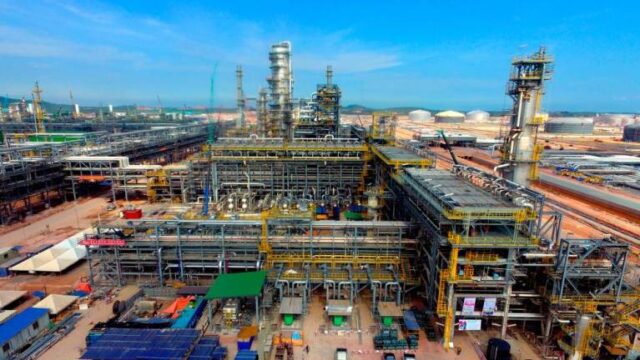
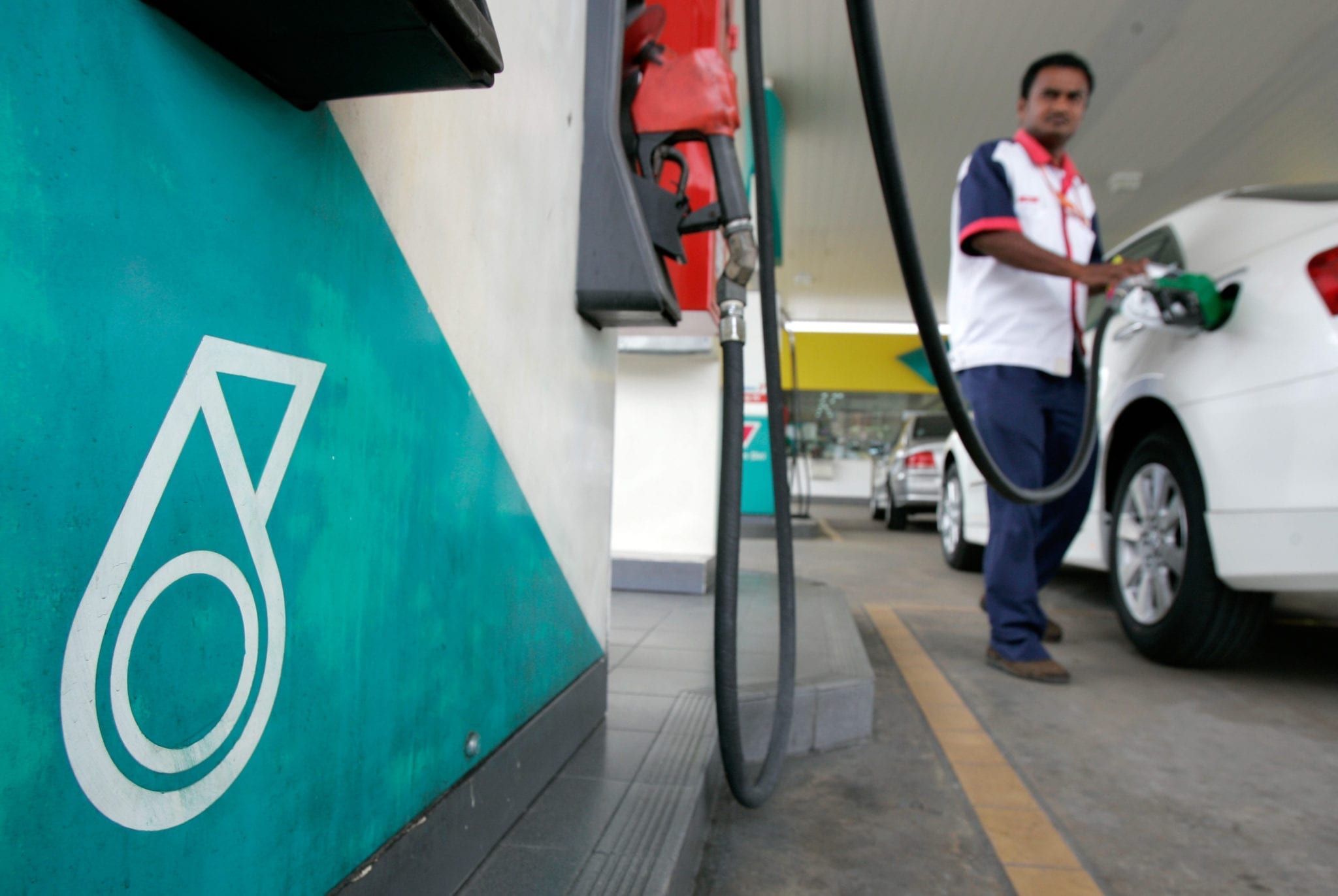
    Malaysian state oil company Petroliam Nasional Bhd (Petronas) started trial runs at the crude distillation unit (CDU) for a joint-venture refinery with Saudi Aramco in Malaysia last week, two sources with knowledge of the matter said this week. The move marks a major milestone for the US$2.7 billion (RM11 billion) project known as Rapid – or Refinery and Petrochemical Integrated Development – in Pengerang, Johor. The test runs put the project on track for commercial operation in 2019.

    The company also received its second cargo of 2 million barrels of Saudi crude last week, according to the sources and data on Refinitiv Eikon.

    Petronas could not be immediately reached for comment.

    Rapid consists of a 300,000-barrel-per-day (bpd) refinery and secondary refining units that will allow the companies to produce refined oil products that meet Euro 5 fuel specifications. The refinery is linked to a petrochemical complex with a capacity of 7.7 million tonnes a year.

    The first crude oil cargo for Rapid was offloaded at Pengerang in September.

    The refinery is one of four new complexes in Asia that represent a combined processing capacity of nearly 1.3 million bpd scheduled to start up from late 2018 to 2019.

    Another of the four complexes, a 400,000 bpd refinery, owned by Hengli Petrochemical in Dalian in northeast China, started trial runs in December.

    These plants will increase Asia’s crude demand while adding to fuel output in the region.

  • Vietnam’s PV Power to list with billion-dollar market cap

    Vietnam’s PV Power to list with billion-dollar market cap

    PV Power, the country’s second largest power producer, will list on the Ho Chi Minh bourse this month with a market capitalization of $1.5 billion. The Ho Chi Minh Stock Exchange (HoSE) has approved that the firm lists 2.34 billion shares (trading code POW) on January 14 at VND14,900 (64 cents) per share. This would bring the market capitalization of PV Power to VND34.9 trillion ($1.5 billion).

    PV Power finished its last transaction on UPCoM, the market for unlisted public companies, on December 27 at VND16,000 (69 cents) per share.

    PV Power was established in 2007 with 100 percent capital from the state. The company finished equitization in the middle of last year with a charter capital of VND23.42 trillion ($1 billion).

    State-owned oil and gas giant PetroVietnam remains PV Power’s largest stakeholder, with 79.94 percent of its charter capital. Foreign investors currently own 14.3 percent. The company is subject to a foreign ownership cap of 49 percent.

    PV Power produces and sells electricity. It also imports and distributes coal and operates five electricity plants. It is the second largest power producer in the country after national utility Vietnam Electricity.

    In the 2016-2018 period, PV Power’s revenues were VND28-30 trillion ($1.2-1.29 billion), 96 percent of which came from selling electricity.

    As of September 30, 2018, its total asset value was VND61.4 trillion ($2.64 billion) and its equity was VND26.55 trillion ($1.14 billion).

    Its dividend rate for last year is expected to be 3 percent and is set at 6 percent this year.

  • Vietnam eyes green power, not to sacrifice environment for growth

    Vietnam eyes green power, not to sacrifice environment for growth

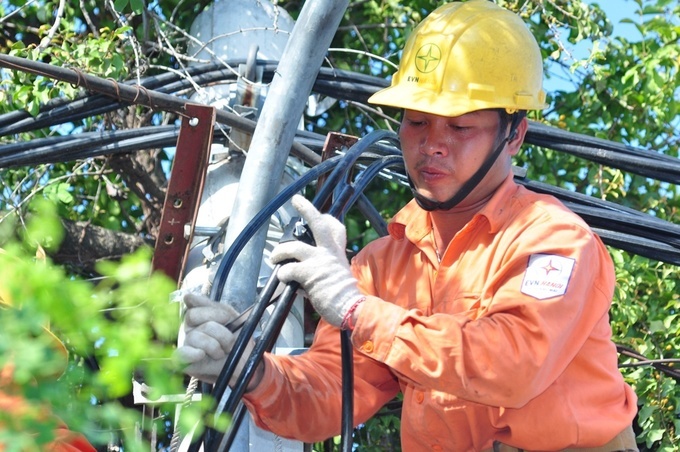
    The government Thursday reaffirmed Vietnam’s desire for a greener energy mix amid the risk of a power deficiency. Environment-friendly coal- and gas-fueled and renewable power plants would make up the mix. While Vietnam faces “obvious risks of an energy shortage in the coming years … it will not sacrifice the environment for economic growth,” Deputy Prime Minister Trinh Dinh Dung said in a meeting with the state-run Vietnam Electricity (EVN), the country’s largest power producer and monopoly distributor.

    Coal-fired power is vital to energy security, but “it must be clean,” he noted. Dung asked EVN to pioneer the use of modern technologies to reduce the environmental footprint of new coal-fired plants and handle the cinder and ash at existing plants.

    The country faces difficulty in increasing power generation since it has decided to put nuclear power on hold, many coal-fired plants are behind schedule and renewables could not be developed on a large scale due to “high costs” and transmission limitations.

    “Hydro power currently meets 40 percent of the country’s demand, but additional supply is almost impossible.

    “Our hydro power plant reservoirs, especially in the central region, are facing a serious water shortage, supply of coal for power development is erratic and gas supply is waning while power station projects for new supplies are being implemented slowly,” the deputy prime minister said.

    Dung said “EVN must also focus on investing in transmission systems to bolster the development of renewables.”

    The inadequate transmission system is now a bottleneck slowing down wind and power projects though a dramatically rising number of investors have shown interest in such projects following the recent increase in feed-in-tariffs (FITs).

    Dung also instructed the Ministry of Industry and Trade to hasten studies for the country’s investment in coal transshipment ports and regasification terminals to support development of gas-fuelled power, and quickly complete negotiations to buy power from overseas.

    He also asked EVN and other investors to speed up the delayed construction of major projects like Nhon Trach 3-4, O Mon 3-4, Tan Phuoc, Long Phuc 2-3, Quang Trach, and Quynh Lap.

    Vietnamese firms lack the resources for major projects while foreign loans are difficult to get due to government guarantee-related issues.

    The regional imbalance in power supply and demand is also a challenge. While the southern region accounts for more than half the demand (the north nearly 40 percent and the central region nearly 10 percent), power is being generated mainly in the north and central region (about 60 percent).

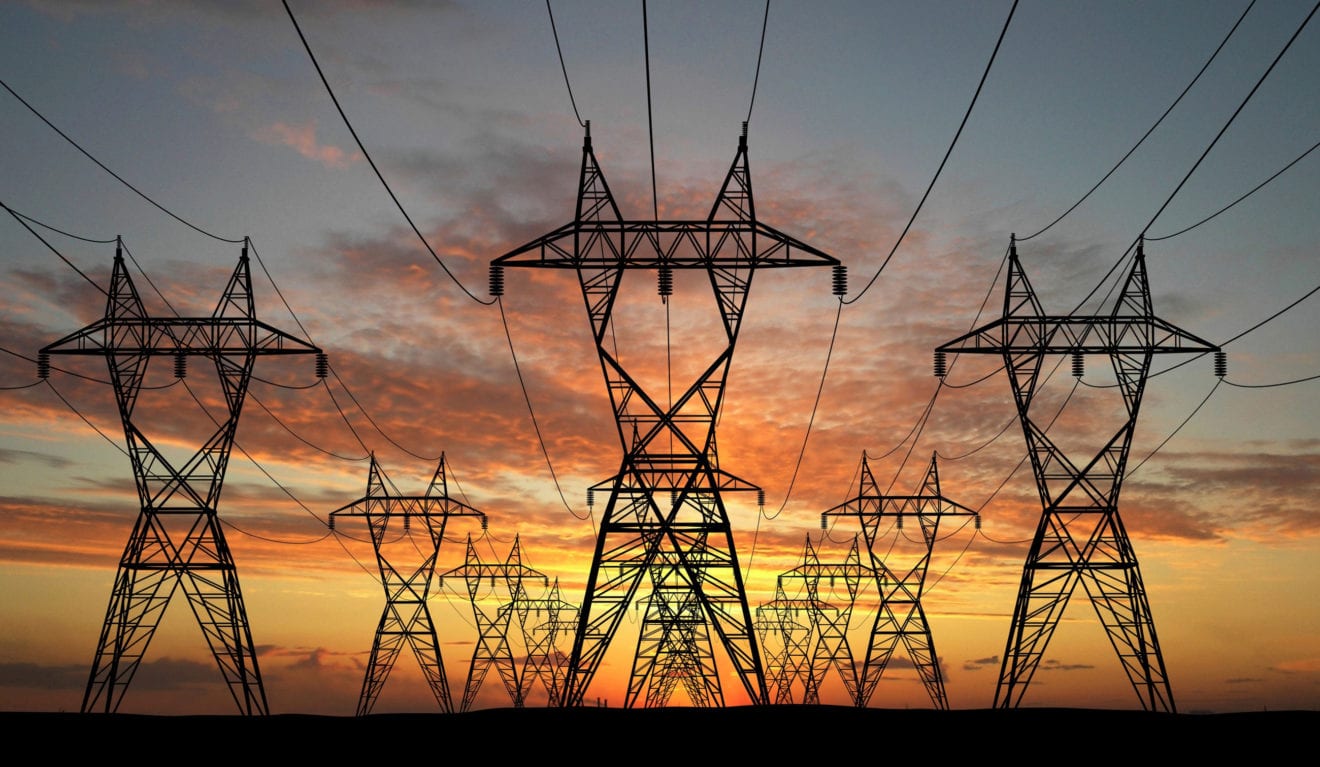
    To make it worse, the installation of transmission lines, both the main grid and branches, has been slow and failed to keep up with the pace of power generation, while negotiations to buy electricity from other countries have been going at a snail’s pace.

    The installed power capacity is around 48,000 MW. Under the revised Power Development Plan VII, a total of 60,000 MW is expected to be generated by 2020, with coal-fired plants accounting for 42.7 percent followed by hydropower (30.1 percent), gas-fired plants (14.9 percent), and renewables (9.9 percent).

    By 2030, the capacity will jump to 129,500 MW, with the ratios of coal and gas-fired power remaining almost unchanged, but renewables doubling to 21 percent.

  • Samsung Heavy lands $189 million LNG carrier deal

    Samsung Heavy lands $189 million LNG carrier deal

    Samsung Heavy Industries said Monday that it has clinched a deal worth 210 billion won ($189 million) to build a liquefied natural gas (LNG) carrier. The contract, with a European shipper, calls for Samsung Heavy to deliver the vessel by March 2021, the company said in a regulatory filing.

    With the latest contract, Samsung Heavy has clinched deals valued at a combined $6.3 billion so far this year to build 49 ships, including 18 LNG carriers and 13 container vessels.

  • Vietnam’s wind power tariffs attractive, but concern rises

    Vietnam’s wind power tariffs attractive, but concern rises

    Vietnam’s new feed-in tariffs are attracting great interest in wind power, but investors are concerned about grid connection and purchase agreements. The new feed-in tariffs (FIT) are expected to be attractive to domestic and foreign investors, Tommaso Rovatti Studihard, South East Asia sales director for wind power developer Vestas Asia Pacific said.

    The government recently approved tariff revisions under Decision 39 on support mechanisms for the development of wind power.

    The decision, effective from November 1 this year, raises the tariffs from 7.8 US cents per kWh to 8.5 US cents for onshore and 9.8 US cents for offshore generation respectively.

    “Electricity demand will grow at an estimated 8 – 10 percent a year from now to 2030. This represents realistic opportunities for investors,” Studihard said.

    Conjecturing that the national plan envisages adding 1,000 MW of wind power by 2020 and 6,000 MW by 2030, he said the targets are achievable.

    “Vestas is excited about the Vietnamese market, probably this is the most promising market in the Asian region with very good wind resources,” he said.

    Vestas has so far put three wind power projects into operation in Vietnam and plans to have another project come online by 2019 and “do a lot more in the future.”

    Studihard noted that over the next three to five years there are huge opportunities in Vietnam to have some gigawatts of wind power, but the bankability of the power purchase agreement (PPA) remains an issue with many investors, especially international investors, and banks finding it a little difficult to be comfortable with.

    There are no clear termination and force majeure clauses in the PPA, which hinders the attraction of foreign investment, especially from banks and credit institutions, he explained.

    “One more problem is Vietnam’s weak grid capacity, which would become a bottleneck for developing wind and other renewables. The grid needs to be upgraded to tap the great potential Vietnam has for offerable, sustainable and reliable wind power.”

    Bui Van Thinh, CEO of the Thuan Binh Wind Power JSC (TBW), said having gained success in developing the 24MW Phu Lac wind power project in the central province of Binh Thuan, TBW is completing procedures to start construction of a 30MW wind power project in neighboring Ninh Thuan Province.

    But the weak grid capacity is the biggest challenge to expanding renewables like wind and solar power, he said.

    The transmission line near Phu Lac site could handle 100MW, compatible with two 50MW wind power projects.

    Overload capacity is imminent once a solar power project connects with the transmission line, Thinh noted, citing the concerning fact that there are eight solar power projects in the locality approved to connect with the grid.

    “The government should instruct the state-run Electricity of Vietnam (EVN) to install transmission lines to cope with the renewable power projects across the country, especially those in Ninh Thuan and Binh Thuan.”

    Ninh Thuan and Binh Thuan are central provinces that have the greatest potential for renewable energy in the country.

    While 2,000 MW of solar power are proposed to be generated in Ninh Thuan, the local transmission line can only handle a few hundred megawatts. Thus, 110 kV or 220 kV transmission lines need to be installed before pushing the power to the 500kV transmission line and sending it to Ho Chi Minh City or Danang City, Thinh added.

    Nguyen Van Thanh, deputy head of the Ministry of Industry and Trade’s Electricity and Renewable Energy Authority, said demand for energy, wind power in particular, has been growing rapidly.

    The need for ensuring energy security but also sustainable development has changed Vietnam from an energy seller to buyer, with the country’s dependence on imported energy sources also rising, he said.

    Vietnam also faces a shortage of primary energy, with coal imports posing many risks related to supply, price and transportation, he noted.

    “Given that, efficient exploitation of new and renewable sources would play a key role in the country’s socio-economic development, energy security and sustainable development.

    “The country is working diligently to draft policies for the efficient and economical use of energy, diversification of energy sources and increasing application of new and eco-friendly technologies,” Thanh added.

    Under the revised Power Development Plan VII, power stations in the country are expected to generate a total of 60,000 MW by 2020. Of these, coal-fired stations would make the largest proportion of 42.7 percent, followed by hydropower (30.1 percent), gas-fired plants (14.9 percent) and renewable energy sources (9.9 percent).

    By 2030, the total capacity would soar to 129,500 MW, with coal and gas-fired plants accounting for 42.6 percent and 14.7 percent respectively, similar to the figures set for 2020. But the ratio of renewable energy sources is set to double to 21 percent by then.

  • Vietnam must avoid power cuts next year: PM

    Vietnam must avoid power cuts next year: PM

    Prime Minister Vietnam Nguyen Xuan Phuc has ordered agencies to ensure that the country won’t suffer power shortages in 2019. The Prime Minister has communicated this to relevant agencies several times, Mai Tien Dung, Minister and Chairman of the Government Office, said at the government’s regular press conference on Monday.

    The communiqués have instructed the agencies to ensure that there’s no electricity shortage for both industrial and domestic uses, emphasizing they would be held responsible for failures, Dung said.

    The PM has also tasked relevant agencies with definitively resolving the ongoing issue of coal shortage for thermal power plants, which Vietnam Electricity (EVN) has warned could lead to power cuts early next year.

    The national power utility said in a recent report to Deputy Prime Minister Trinh Dinh Dung that the country will need over 54 million tons of coal for electricity production next year, of which 43.4 million tons will come from domestic production and 10.68 million tons will be imported.

    But the country’s only two suppliers, Vietnam National Coal-Mineral Industries Corporation (Vinacomin) and the North-Eastern Company (NECO) under the Ministry of Defense, will only be able to produce 37.21 million tons of coal next year, 6.19 million tons lower than estimated demand, EVN said.

    Speaking at the press conference, Deputy Minister of Industry and Trade Do Thang Hai said a total of four different electricity supply plans have been drafted, all of which designed to ensure there would be no power shortages next year.

    However, in certain cases, Vietnam would still need to produce 2-7 billion kWh of electricity from expensive oil-powered generators.

    “If we want to have enough electricity then we must increase the production of electricity by oil, which would be more expensive,” he said, asking consumers to make plans to save electricity.

    Regarding the issue of coal shortage, Hai asserted that Vinacomin and NECO have both supplied enough coal for thermal power plants as committed.

    “The two major coal suppliers have tried their best. If coal from domestic sources is not enough to supply [thermal power plants] then we will import more,” he said.

    The deputy minister also said a scenario for regulating electricity prices next year would be reported to the government later this month.

    “The electricity price for next year is being carefully considered and the scenario is being built in accordance with regulations, including factoring in the effect on inflation,” he said.

    Vietnam currently relies largely on hydropower and thermal power plants for its electricity needs. However, its hydropower potential is almost fully exploited and its oil and gas reserves are running low.

    Thermal energy is expected to account for over 48 percent of the country’s power production next year.

    Vietnam, one of Asia’s fastest-growing economies, has been struggling to develop its energy industry, and its heavy reliance on non renewable sources could prove problematic in the future, experts say.

    World Bank country director for Vietnam Ousmane Dione said at a recent forum that Vietnam will need to raise up $150 billion by 2030 to develop its energy sector; that electricity demand in the country will grow by about 8 percent a year for the next decade.

  • Vietnam to experience power cuts early 2019

    Vietnam to experience power cuts early 2019

    The ongoing coal shortage could lead to power cuts in Vietnam early next year, Vietnam Electricity (EVN) has warned. The national power utility said in a recent report to Deputy Prime Minister Trinh Dinh Dung that the country will need over 54 million tons of coal for electricity production next year, of which 43.4 million tons will come from domestic production and 10.68 million tons will be imported.

    But the country’s only two suppliers, Vietnam National Coal-Mineral Industries Corporation (Vinacomin) and the North-Eastern Company (NECO) under the Ministry of Defense, will only be able to produce 37.21 million tons of coal next year, 6.19 million tons lower than estimated demand, EVN said.

    “The lack of coal will lead to a shutdown of thermal power plants, seriously affecting the national power grid and EVN might have to cut electricity in the first months of 2019,” it added.

    EVN estimated that power generation will be reduced by 2,300 MW, which is the average electricity consumption of 13 central provinces.

    EVN said that Vinacomin and NECO had promised to provide enough coal for plants this year, but the amount provided by Vinacomin until this month was 690,000 tons lower than contracted.

    The power utility estimates that the country will need 2.55 million tons of coal of electricity in December, but the two coal producers plan to deliver only 2.05 million tons, which is 500,000 tons short.

    Due to the coal shortage, the Quang Ninh Thermal Power Company has shut down two out of four turbines since November 17.

    The Hai Phong Thermal Power Company shut down one turbine on November 22, and the Nghi Son Thermal Power Plant  reduced its two turbines to minimum operation the same day. The Ninh Binh Thermal Power Company is running low on inventory.

    Vietnam currently relies largely on hydropower and thermal power plants for its electricity needs. However, its hydropower potential is almost fully exploited and its oil and gas reserves are running low. Thermal energy is expected to account for over 48 percent of the country’s power production next year.

    Vietnam, one of Asia’s fastest-growing economies, has been struggling to develop its energy industry.

    World Bank country director for Vietnam Ousmane Dione said at a forum Monday that Vietnam will need to raise up $150 billion by 2030 to develop its energy sector.

    Dione added that electricity demand in the country will grow by about 8 percent a year for the next decade, as reported.

  • PetroVietnam says Tokyo Gas may help with power plant project in Vietnam

    PetroVietnam says Tokyo Gas may help with power plant project in Vietnam

    Tokyo Gas is interested in cooperating with Vietnam’s PetroVietnam Power Corp (PV Power) to develop a natural gas-fired power project in the Southeast Asian country. On Friday, PV Power’s parent said that Tokyo Gas wants to help secure long-term liquefied natural gas supplies and funds for the construction of the Nhon Trach 3 & 4 power plants in the southern province of Dong Nai, state-run Vietnam Oil and Gas Group said in a statement on its website.

    Tokyo Gas did not immediately respond to a request for comment made via its website.

    The statement follows a meeting between senior executives from PV Power and Tokyo Gas in Hanoi this week, PV Power said.

    The two plants, with a combined capacity of 1,500 megawatts, would be operational from 2020, according to PV Power.

  • Vietnam to hike power prices in 2019

    Vietnam to hike power prices in 2019

    Deputy Minister of Industry and Trade Do Thang Hai said Friday that national utility Vietnam Electricity (EVN) might need to cover an incurred cost of VND20.73 trillion ($892.18 million) between 2018 and 2019.

    This include incurred costs of VND5.48 trillion ($235.92 million) this year and projected costs of VND15.25 trillion ($668 million) next year, Hai said.

    Incurred cost this year includes exchange rate differences in 2017 of VND3.07 trillion ($132.13 million), payment for water resources exploitation, VND502 billion ($21.6 million) and higher gas prices VND1.91 billion ($82.18 million).

    Projected incurred costs next year are based on exchange rate differences this year of VND3.51 trillion ($151.28 million), exchange rate differences 2015 scheduled to be paid next year, VND734 billion ($31.58 million), payment for water resources exploitation, VND502 billion ($21.6 million), and increase in gas costs, VND10.5 trillion ($451.79 million).

    Hai said EVN would review its electricity production costs last year in collaboration with government bodies to see if it was lower than current prices and would report to authorities for directions on adjusting next year’s prices.

    In July, Prime Minister Nguyen Xuan Phuc had banned any increase in electricity prices and medical fees for the rest of the year, aiming to keep the inflation rate below 4 percent and achieve a GDP growth of 6.7 percent in 2018.

    Inflation was at 3.57 percent in the first nine months of this year.

    The most recent power price increase in Vietnam was last December, when it rose 6.08 percent to VND1,720.65 (currently 7.4 cents) per kWh.

    EVN had a revenue of VND293.18 trillion ($12.61 billion) last year, with VND289.25 ($12.44 billion) from electricity sales, an increase of 8.94 percent from the previous year.

  • Largest Chinese firm to invest in power plants in Indonesia

    Largest Chinese firm to invest in power plants in Indonesia

    The largest Chinese power company “China Huadian Corporation” has the opportunity to invest in power plants in Indonesia. “The Chinese firm wants to invest in our power plants. I have suggested that it should find a good local partner,” Energy and Mineral Resources Minister Ignatius Jonan informed us in Beijing on Thursday night.

    According to Jonan, China Huadian Corporation is the largest power company in China, and its assets are about twice that of Indonesias state electricity company (PLN). Jonan said that with regard to investment matters, his ministry will not discriminate investors based on certain countries.

    “We do not differentiate, whether it is China, Japan, or any other country. What matters is that we are fit with it; that is all,” he said after the Eighth Ministerial Conference on Clean Energy (CEM8).

    One of the opportunities offered to China Huadian is the construction of power plants in the governments 35 thousand-megawatt power plant program.

    “This is in accordance with the directives of Joko Widodo during the OBOR Conference (One Belt, One Road), which encouraged Chinese investment in Indonesia. I am following up on it,” Jonan, who is a former minister of transportation, stated.

    Jonan made assurance that next year, all residents of the island of Sumba, East Nusa Tenggara, will have access to electricity.

    “Coincidentally, with the development of a steam power plant, Sumba may perhaps get an additional 50 megawatts of electricity,” the minister, who was accompanied by Indonesian Ambassador to China Soegeng Rahardjo, noted.

    The annual CEM event, held in Beijing, was attended by ministers and high-level officials from 24 countries.

    At the eighth CEM, Jonan got the opportunity to hold a bilateral meeting with China, as the host.

    On the occasion, Minister Jonan also encouraged several Chinese companies to increase their investment in the oil and gas sector in Indonesia.

    “Some Chinese oil and gas companies have been investing in Indonesia for the past 15 years, but the number is still small and needs to be increased,” Jonan added.

    He said that unlike Chinese companies, oil and gas companies from the US have been investing in Indonesia for quite a long time.

    “Chevron, which was known as Caltex in the past, and Exxon have been operating in Riau for about 100 years with a very big investment,” Jonan pointed out.

    In addition to working sessions for energy ministers and other high-level policymakers, CEM8 featured a public-private action summit with keynote speakers, thematic panel discussions, and opportunities for high-profile announcements of ambitious clean energy efforts.

    It also included a two-day technology exhibition demonstrating breakthrough clean energy technologies, products, and business models; and an Innovation Theater showcasing potentially game-changing clean energy innovations and inspirations.

  • Vietnam urged to reduce power losses

    Vietnam urged to reduce power losses

    The electricity industry must improve its management and technology to reduce losses in the transmission grid as well as eradicate power stealing, which are very serious in rural and remote areas, delegates heard at a seminar in Con Dao Island in the southern province of Ba Ria – Vung Tau.

    Viet Nam is ranked 88th of 137 nations for power loss, with 8.95 per cent of power lost in the transmission process, according to the International Energy Agency.

    “Upgrading technology for the transmission grid and increasing awareness in rural and remote residents about power stealing are two urgent jobs,” Nguyen Tan Nghiep from the Southern Power Association told the Sai Gon Giai Phong (Liberated Sai Gon) newspaper.

    The Viet Nam Electricity Group (EVN) has set the goal to reduce power loss from 8.95 per cent to 6.5 per cent by 2020 by applying new technical and operational solutions as well as building new electricity plants and transmission grids.

    During 2016-20, EVN has invested in 13 electricity projects with total capacity of 6,989 MW.

    By ensuring electricity supply, power won’t need to be transmitted far distances and it will help reduce losses.

    For the transmission grid, a 500kV and 220kV grid in Ha Noi, HCM City and other big and industrial cities and provinces will be developed with modern technology to limit power loss.

    Lack of supply

    By 2020, hydropower, renewable and thermal power by gas will only provide 48.3 per cent of power demand and fall to 39.9 per cent by 2030, but power demand is expected to increase 9 – 10 per cent each year during 2016 -2030.

    Furthermore, a nuclear power plant in the central province of Ninh Thuan has been stopped by the Government, therefore, coal thermal power must be considered for economic efficiency and environmental pollution.

    “In the context of a 50 per cent shortage of power, proper power supply must be carefully chosen,” Dr Tran Trong Quyet, vice chairman of the Southern Power Association, said.

    He pointed out that renewable power would ensure environmental protection, but it would require a huge initial investment.

    “Coal thermal power will require a lot of land, is a big problem for environmental pollution and is a large expenditure, but it still plays a very important role in ensuring national power security,” he added.

    To limit the impact of coal thermal power, Quyet warned that modern technology to deal with coal slag and ensure coal supply must be done carefully.

  • Indonesia-Denmark launch wind power map

    Indonesia-Denmark launch wind power map

    The Energy and Mineral Resources Ministry and Denmark’s Development Cooperation Ministry launched on Tuesday a map pinpointing the wind power potential for electrification in Indonesia.

    Denmark Development Cooperation Minister Ulla Tørnæs said this was part of a six-month cooperative engagement between the two governments, during which they exchanged their experiences in developing renewable energy sources for electrification.

    “Today, we are launching a new wind map that shows the vast potential for utilizing wind in Indonesia,” Tørnæs said in her opening speech at the Energy and Mineral Resources Ministry in Central Jakarta on Tuesday.

    “A number of visits to Denmark by Indonesian officials over the past six months has deepened the discussion and insight into waste-to-energy solutions, the use of biomass and how to accommodate fluctuating markets.”

    The map displays the hot spots for wind power potential in Indonesia. It is expected to help the government and investors decide the best locations to develop wind turbines.

    The map was also launched alongside a book titled Integration of Wind Energy in Power Systems, which will serve as a guide for policymaking and the integration of electricity into state-owned electricity firm PLN’s existing system. The book was written based on Denmark’s experiences in wind power development.

  • HCM City start-up launches power management software

    HCM City start-up launches power management software

    The Vietnam High Efficiency Software Corporation (VHES) on Thursday launched its Head End System (HES) software to be used to manage the city’s smart electricity grid.

    The software, which uses Vietnamese-made chips, is intermediate software that VHES developed based on the Integrated Circuit Design Research and Education Center’s research project.

    VHES is the first high-tech start-up developed under the HCM City Integrated Circuit Development Programme.

    Speaking at the launch ceremony, Nguyễn Văn Lý, deputy general director of the HCM City Power Corporation, said the corporation would modernise the city’s grid from now to 2020, including building a smart grid, an automated electrically operating system, and an electrical measurement system with remote data collection.

    Trần Vĩnh Tuyến, deputy chairman of the city’s People’s Committee and head of the steering board of the Integrated Circuit Development Programme, said that smart management would create a safe and stable power supply.