Retail News CRM

Tag: power

  • Facebook just made the world a better place: 100% renewable energy

    Facebook just made the world a better place: 100% renewable energy

    It’s a big day in the book of the Earth! Facebook has officially reached the goal of one-hundred-percent renewable energy for its global operations. The social media giant might have come under fire for security issues and political scandals, but we’ll give it to them on this one.

    According to the company’s own news channel, the journey was gradual. It started back in 2011 with a ‘wind project’ in Iowa, and about ten years later, it has come full circle. At least as far as Facebook’s own operations are concerned, they are now operating with net-zero emissions!

    We recognize the urgency of climate change. We know the next ten years will be the defining time for a reduction in greenhouse gas emissions and that we have a role to play in this effort—both as a platform that connects people to information and as a global company that supports climate action.

    Mark Zuckerberg and the company have already set another goal for a more sustainable future. The social media platform aims to bring emissions down to zero, but this time across its entire value chain, including suppliers, business travel, and employee commuting. This goal has been given a due date of 2030. The part about zero-emission employee commuting, for one, sounds particularly interesting. We’re wondering how exactly they plan to do that; are they going to give away Teslas? Bicycles? Or maybe accommodate employees so they never have to leave the office? Theirs is indeed a very ambitious goal, but also very ambiguous—we call it “ambiguities.” Try saying it out loud!

    The transition will be handled by their Responsible Supply Chain Program, which works to discover innovative ways for making operations greener. Whatever they have in mind, we are curious to see how it turns out. If you are too, Facebook’s team has released a video dedicated to the long journey from 2011 to today. Take a look for yourself:

    As reported by Facebook’s Director of Renewable Energy, Urvi Parekh, the company’s goal for 100% renewable energy was set back in 2018.

    We couldn’t help but notice that this timeframe coincides with Apple’s move towards greener operation. Back in April 2018, the company from Cupertino announced that their global facilities were finally powered with one-hundred-percent clean energy.

    Whether Facebook took inspiration from Apple or not, we applaud their commitment. Google and Amazon have also taken steps in that direction, and we’d be happy to see more tech corporations follow suit.

  • Vietnam plans more solar, wind power cuts

    Vietnam plans more solar, wind power cuts

    Vietnam is set to cut up to 1.74 billion kilowatt-hours of renewable energy in the second half this year to deal with national grid overload.

    A plan proposed by the National Load Dispatch Center (NLDC), under the national utility Vietnam Electricity (EVN) intends to cut 180 million kilowatt-hours per month in the third quarter and 350-400 million kilowatt-hours per month in the last quarter.

    This time frame corresponds with the expected third and further quarter annual flooding in the northern, and central-southern regions, respectively, when hydropower power supply would increase.

    The proposed amount of 1.74 billion kilowatt-hours is 34 percent higher than EVN’s previous plan to cut 1.3 billion kilowatt-hours of renewable energy this year.Cutting solar and wind power has been the go-to solution for EVN since last year, after a surge in the number of such plants strained the national grid.

    As solar power plants depend on the number of sunshine hours during the day, authorities still have to rely on traditional sources such as coal, gas and hydropower to ensure grid stability.

    This is why solar power, whose output could fluctuate by up to thousands of megawatts in seconds depending on the intensity of sunlight, is the first to be cut when there is an overload.

    Another reason for the output cut is slower growth in consumption. Last year, due to Covid-19 impacts, demand grew by less than 2.5 percent compared to 10 percent in previous years.

    The cuts have hurt renewable energy developers. A leader of a solar power company in the central province of Ninh Thuan, who asked not be identified, said his plant has seen output cut since the end of last year.

    The company has to bear losses of hundreds of million Vietnamese dong (VND100 million = $4,300) each month, not to mention suffer interest payment to banks, he added.

    The Phu Lac Wind Power Plant in the central province of Binh Thuan is also suffering output cuts.

    The plant’s CEO, Bui Van Thinh, said both developers and EVN were victims in this situation as the number of new plants exceed the government’s original plan, while there is a lack of synchronization in source and transmission investment.

    The transmission line has reached its max capacity as dozens of plants come online, he said, adding: “Our revenues have plunged and the situation is tense.”

    Although energy authorities had earlier warned of power shortages this year, the boom in renewable power development has in reality created an oversupply, creating problems for EVN.

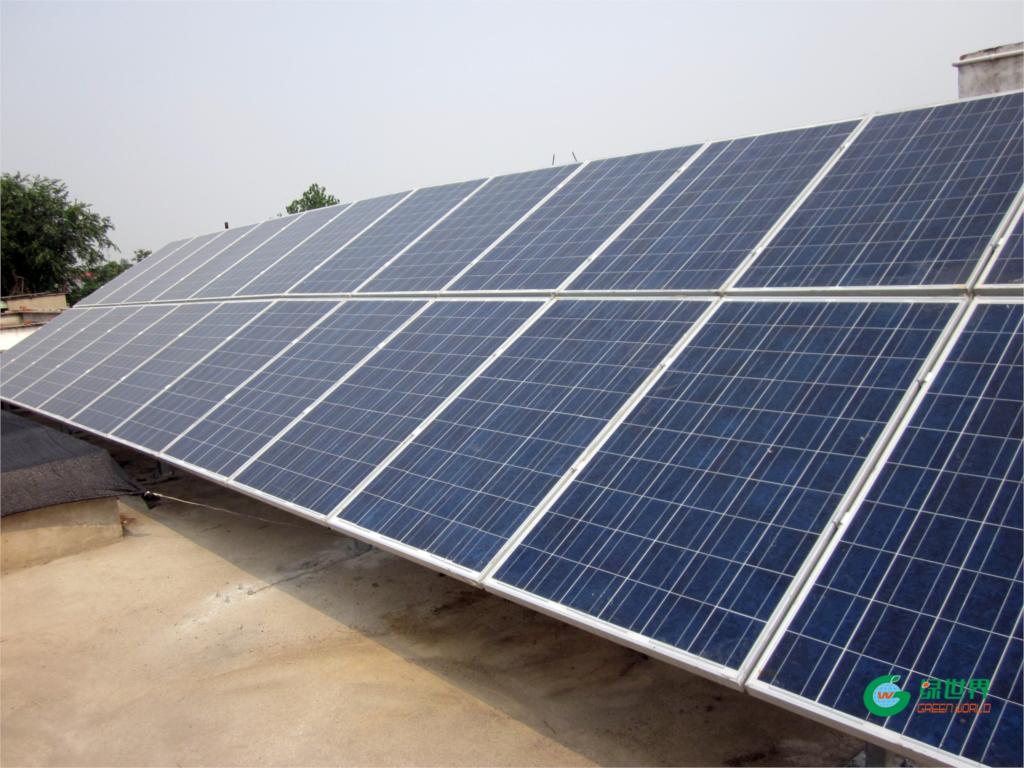
    Solar capacity surged to 19,400 megawatts-peak at the end of last year, accounting for 25 percent of total power capacity. This capacity came from over 100 farms and 101,000 rooftop constructions.

    Last year, authorities cut solar power by a total of 365 million kilowatt-hours after the Ninh Thuan and Binh Thuan grids were overloaded.

  • Samsung could release three Exynos chips this year

    Samsung could release three Exynos chips this year

    Samsung will unveil three Exynos chips this year, claims leaker Ice Universe. The 2021 lineup presumably includes a flagship SoC (Exynos 22xx), a mid-tier chip (Exynos 12xx), and an entry-level silicone (Exynos 8xx).

    The Exynos 22xx will likely succeed the Exynos 2100 that powers the European version of the Galaxy S21 series. It supposedly has the model number 9925 and it may feature an AMD GPU.

    The Exynos 12xx will apparently replace the Exynos 1080, and it will probably also swap out the Mali GPU for AMD’s graphics.

    The Exynos 8xx is new on the radar, and we wonder if it has anything to do with a chip recently spotted by Galaxy Club.

    The chip bears the model number S5E5515, which is not very telling, thanks to Samsung’s inconsistent naming convention.

    It does not seem to be a high-end SoC as the model number is not in line with recent flagship chips: Galaxy 10’s Exynos 9820 had the number S5E9820, Galaxy S20’s Exynos 990 had S5E9830, and Galaxy S21’s Exynos 2100 has S5E9840.

    S5E5515 is not consistent with recent mid-tier Exynos chips either. The Exynos 1080 is S5E9815, the Exynos 980 is S5E9630, and Exynos 850 is S5E3830.

    The publication has made a wild guess and believes that the S5E5515 is a lower-mid-tier chip that will sit between the Exynos 850 and Exynos 1080. It is also expected to have an integrated 5G modem.

    The SoC could also turn out to be a non-smartphone chip. Samsung is already believed to be working on a new processor for wearables like AR glasses.

  • Vietnam power utility unit to go public

    Vietnam power utility unit to go public

    A $2-billion power generation unit of state-owned utility Vietnam Electricity (EVN) will have an initial public offering on the country’s main bourse next month.

    The Power Generation Corporation 2 (EVNGENCO 2), based in the southern city of Can Tho, will issue nearly 580 million shares on the Ho Chi Minh City Stock Exchange, or nearly 49 percent of its charter capital, on February 8.

    The offering will have a reference price of VND24,520 ($1.05) per share.

    Tran Phu Thai, chairman of EVNGENCO 2, said at a forum Thursday that the company, wholly-owned by EVN, was valued at around VND46.1 trillion ($2 billion) as of January 1, 2019. No updated valuation was available at the time of publishing.

    The company, which has been operating for seven years, had an installed capacity of 4,421 megawatts by the end of last year, accounting for 15.1 percent of EVN’s output.

    It is also developing 59 megawatts of renewable energy.

    Over half of its non-renewable energy capacity comes from coal-fired plants, 30 percent from hydropower plants, and the rest from oil-fired plants.

    Last year, its profits exceeded the annual target by 59 percent at nearly VND3.93 trillion.

    The IPO is part of EVN’s effort to equitize its subsidiaries. It had earlier completed the equitization of EVNGENCO 3 and is in the process of equitizing EVNGENCO.

  • Vietnam to purchase more power from Laos

    Vietnam to purchase more power from Laos

    National utility Vietnam Electricity (EVN) has signed three memoranda to purchase power from Laotian companies amid expected energy shortages.

    EVN will buy power from two hydropower plants and one coal-fired power plant in neighboring country Laos starting 2024, according to the memorandums of understanding signed Sunday.

    The 84-megawatt Nam Yeuang hydropower plant and 300-megawatt Nam Phan coal-fired thermal power plant developed by Phongsubthavy Group are set to transmit electricity to Vietnam starting 2024 and 2025.

    Another hydropower plant, Nam Neun 1, with a capacity of 124-megawatt and developed by Kong Sup Hydro Development of Nam Neun 1 and Nam Neun 3, will also start delivering power to Vietnam in those two years.

    EVN in January signed five deals with two Laotian companies to purchase 1.5 billion kilowatt-hours of power each year in 2021 and 2022.

    The Ministry of Industry and Trade had earlier warned of power shortages of 3.7 billion kWh in 2021 and nearly 10 billion kWh the following year, as the construction of new thermal and gas-fired plants fall behind schedule.

    2023 will be the most stressful with the shortage expected to be around 15 billion kWh. From then on, it will decrease, with shortages expected to drop to 7 billion kWh and 3.5 billion kWh in 2024 and 2025 respectively.

    The ministry stated the only way out is to import more from Laos and China, although this is only a band-aid solution. In the long run, it would be necessary to speed up work on large power generation projects, it added.

  • Japan May Ban Sale Of New Petrol-Powered Vehicles In Mid-2030s

    Japan May Ban Sale Of New Petrol-Powered Vehicles In Mid-2030s

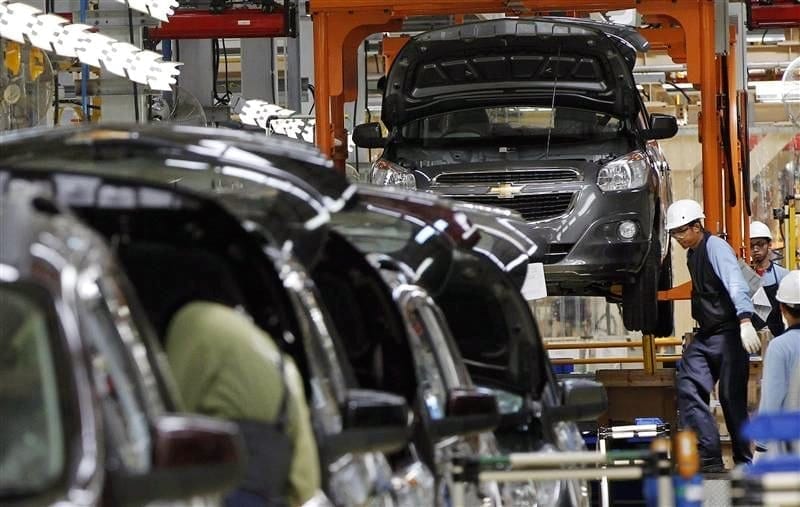
    Japan may ban sales of new petrol-engine cars by the mid-2030s in favour of hybrid or electric vehicles, public broadcaster NHK reported on Thursday, aligning it with other countries and regions that are imposing curbs on fossil fuel vehicles.

    The move would follow Prime Minister Yoshihide Suga’s pledge in October for Japan to slash carbon emissions to zero on a net basis by 2050 and make the country the second G7 nation to set a deadline for phasing out petrol vehicles in a little over two weeks.

    Japan’s industry ministry will map out a plan by the year-end, chief government spokesman Katsunobu Kato told a news conference on Thursday.

    Japan’s Prime Minister Yoshihide Suga pledge in October for Japan to slash carbon emissions to zero on a net basis by 2050.

    The likelihood of state interventions to lower carbon emissions is fuelling a technological race among carmakers to build electric cars and hybrid petrol-electric vehicles that will lure drivers as they switch from petrol models, particularly in the world’s two biggest auto markets, China and the U.S.

    Measures already in place in Japan mean Japanese automakers, particularly big ones such as Toyota Motor Corp with greater research and development resources, could use electric vehicle technology they have already developed at home.

    Nissan Motor Co chief operating officer Ashwani Gupta last month told Reuters his company was ready to respond to Britain’s decision to hasten a phase-out date for new petrol and diesel powered cars and vans by five years to 2030 because it was part of a global trend.

    Japan’s industry ministry is considering requiring all new vehicles to be electric, including hybrid vehicles, NHK reported earlier, adding the ministry would finalise a formal target following expert-panel debates as early as the year-end.

    Nissan says it’s ready to respond to Britain’s decision to hasten a phase-out date for new petrol and diesel-powered cars and vans by five years to 2030

    Japanese automakers for now are keeping quiet on what impact those measures could have on their businesses.

    Toyota, Honda Motor, Nissan and its alliance partner Mitsubishi Motors Corp declined to comment.

    In Japan, the share of electric vehicles is expected to increase to 55% in 2030, Boston Consulting Group said in a report on prospects for battery-powered cars.

    Globally, “the speed of expansion of the share of electric vehicles will accelerate due to the fact that battery prices are falling more rapidly than previously expected,” Boston Consulting said in the report.

    Japan, China and South Korea recently announced firm targets to end net emissions of carbon, which has given momentum for companies and banks to push for cutbacks to keep global warming in check.

    Apart from Britain, parts of the United States and Canada, Norway and Germany, are or plan to imposed curbs on fossil fuel cars. The wider European Union is expected to decide on future restrictions as early as this month.

  • Thai company buys Vietnam solar farm

    Thai company buys Vietnam solar farm

    Thai energy firm Gunkul Engineering Plc has acquired the 50-megawatt Phong Dien II solar power plant in the central Thua Thien Hue Province for $39.9 million.

    The plant is set to begin commercial power generation on December 15 with a feed-in tariff of 7.09 U.S. cents per kilowatt-hour for 20 years.

    The acquisition is part of the company’s plan to expand in Southeast Asia in the renewable energy sector, which it says has low risk and high growth potential

    Other Thai investors have also made moves to buy solar power plants in Vietnam, taking advantage of the country’s incentive feed-in tariffs to promote solar energy amid growing demand for electricity.

    Other Thai energy firms have also been busy in Vietnam.

    Gulf Group increased its ownership of two solar farms in the southern province of Tay Ninh from 49 percent to 90 percent during the second quarter of this year.

    Super Energy Corporation has invested $457 million in four solar power plants in southern Vietnam.

    Power production by Vietnam’s 100 odd solar plants surged 2.3 times year-on-year in the first 10 months to 7.95 billion kilowatt-hours, according to Vietnam Electricity.

  • National power utility faces financial crunch

    National power utility faces financial crunch

    Vietnam Electricity (EVN) will face increasing financial difficulties in the coming years as its payment obligations to independent power projects keep rising. National utility EVN’s gross margin fell from 15.1 percent in 2015 to 12.9 percent last year due to rising costs of payment to new coal-fired independent power projects (IPPs), a recent report by the Institute for Energy Economics and Financial Analysis (IEEFA) says.

    As EVN has to pay these projects a fixed price for their power, as more such plants come online, the sole power distributor in the country will experience a financial crunch. Between 2015-2019, EVN’s own generation capacity shrank from 61 percent to 52 percent of the total system, a ratio that IEEFA Vietnam expects to fall even more rapidly in comping years.

    It estimates that in the next three years, there will be on average 4.4GW of capacity addition annually from IPPs, significantly increasing EVN’s payment obligation. Payment for IPPs, which accounted for 42.7 percent of EVN’s total cost of sales last year, will likely rise to 60.1 percent in 2023, it says. This means the drop in EVN’s gross margin “will likely continue as more IPP capacity with fixed capacity payments comes online.”

    The solution is to increase tariffs, but this has become more difficult this year with the Covid-19 pandemic crippling key industries and cutting jobs.

    A plan to increase tariffs by the end of this year has been suspended as the government now focuses on protecting jobs and ensuring economic growth while keeping inflation below 4 percent.

    EVN also had to offer a 10 percent reduction in billings to customers from April to July, resulting in subtraction of VND6.8 trillion ($292 million) from its revenue.

    The national utility now “faces the risk that if tariff increases cannot keep pace, the new debt will be needed to help meet the company’s growing IPP payment obligations,” the report says.

    It cites credit rating firm Fitch as saying that EVN’s financial profile can be significantly affected if tariffs are not adjusted regularly as it faces major hydrology, currency, and demand risks.

    IEEFA forecasts that EVN could report a loss of VND14.5 trillion this year against a post-tax profit of VND9.7 trillion last year.

  • Vietnam to buy 1.5 billion kWh of power annually from Laos

    Vietnam to buy 1.5 billion kWh of power annually from Laos

    State power utility EVN will buy around 1.5 billion kWh of electricity a year from Laos for two years starting in 2021.

    Under contracts it signed on Saturday, Vietnam Electricity (EVN) will buy over 596 million kWh a year from two hydropower plants belonging to Phongsubthavy Group and 632 million kWh from two plants belonging to Chealun Sekong Group from 2022.

    From 2021 it will start buying 263 million kWh annually from another plant belonging to the latter company.

    The import was approved by the Vietnamese government to mitigate power shortages predicted to hit the country from this year.

    The Ministry of Industry and Trade estimates shortages of 3.7 billion kWh in 2021 and nearly 10 billion kWh the following year.

    2023 will be the most stressful with the shortage expected to be around 15 billion kWh. From then on it will decrease, with the shortage expected to come down to 7 billion kWh and 3.5 billion kWh in 2024 and 2025 respectively.

    The industry ministry has said not more than 5-8 percent of electricity can be conserved, and the only way out is to import more from Laos and China.

    But buying from neighboring countries is only a band-aid solution, and in the long run it is necessary to speed up work on large power generation projects, it stated.

  • Vietnam urged to stop building new coal-fired power plants

    Vietnam urged to stop building new coal-fired power plants

    A halt to investment in new coal-fired power plants is required to check the trend of increasing coal consumption, a report warns.

    The report, released on Monday by the Ministry of Industry and Trade in collaboration with Denmark’s Energy Agency, said the country needs early action to reduce future coal demand, which could include taxation on the use of coal or limits on new coal-based power generation.

    Vietnam’s coal imports could triple between now and 2030 as demand for power rises in lockstep with a rapidly growing economy, Jakob Stenby Lundsager, an adviser in Vietnam to the Danish Energy Partnership, said at the release of the Vietnam Energy Outlook Report 2019.

    The figure would rise eight times by 2050, meaning three-fourths of Vietnam’s energy needs would depend on imports, he said.

    Renewable energy could account for 10 percent of total supply by 2030 and 20 percent by 2050, but the country needs to invest in expanding its grid and transmission to absorb the new supply, he said.

    The report noted liquefied natural gas could be used instead of coal in the power sector through at a higher cost, but it would cause less pollution.

    Vietnam became a net importer of coal in 2015 and imports have been rising to meet electricity needs.

    Imports cost $2.27 billion last year, up 71.6 percent year-on-year, with coal bought mostly from Indonesia, Australia and Russia, according to the trade ministry.

    Since power shortages are expected from 2021, the country might need to import 3.6 billion kilowatt-hours of power in 2021 and 9 billion kWh in 2023 from Laos and China to meet demand, the ministry had said in July.

    The World Bank has estimated that Vietnam needs $150 billion for energy sector development by 2030, with electricity demand growing by 8 percent a year in the next decade.

  • Domino’s expands solar program nation-wide

    Domino’s expands solar program nation-wide

    Pizza retailer Domino’s has announced a renewable energy strategy that will see it roll-out solar power systems and energy controllers across all Domino’s stores across Australia.

    The strategy is aiming to reduce Domino’s operational impact on the environment, while reducing energy costs, in partnership with Construction, Supply & Service.

    Domino’s Australia and New Zealand chief executive Nick Knight said the business initially started the strategy with only one store – Domino’s Aspley, Queensland, in 2017 – which has seen a 34 percent reduction in energy usage, and a 48 percent saving in electricity costs.

    “We are really excited that Domino’s Aspley is now sourcing power from renewable energy and are thrilled with the results,” Knight said.

    “We are looking to implement this strategy in more stores across our network, with Domino’s Ballina, Noarlunga, and Kelso already operating with solar power systems and energy demand controllers.”

    According to Knight, Domino’s already has 70 stores with energy demand controllers installed, which de-energizes non-essential equipment during peak power usage, and has an additional seven stores currently in the works.

    Domino’s is not alone in turning to solar energy in order to cut down on energy costs, with Coles recently announcing it is constructing three solar plants in regional New South Wales which will provide 10 percent of Coles’ national energy electricity needs.

    Likewise, Woolworths is implementing solar into the redevelopment of its Adelaide regional distribution center – with 3500 solar panels to provide around one-fifth of the center’s needs.

    Vicinity Centres has also announced it is investing $75 million into a large scale solar program, which will see 22 of its centers fitted with rooftop solar panels, and will cut the group’s consumption from the national energy grid by up to 40 percent.

  • AI-powered retail store We9go opens

    AI-powered retail store We9go opens

    Accrelist-owned AI retail store We9go has fully launched after an eight-month trial.

    The Geylang Road shop uses AI, facial recognition and radio frequency identification to track inventory, collect data on shopper preferences, facilitate payment processes and recognise product movements.

    When it soft launched last October it was open only to invited customers, so as to test and demonstrate its features.

    Accrelist says it will now focus on strengthening AI solutions and facial-verification services.

    “The company intends to move beyond smart retail-technology solutions,” said Terence Tea Yeok Kian, Accrelist’s executive chairman and MD.

    “We aim to offer a wider range of smart-and-secure cloud-based solutions as a systems integrator through its collaboration with technology companies to broaden the group’s revenue stream.”

    After its full launch, the 24/7 We9go store has an AI-powered robot that greets shoppers and assists them with product information and availability.

  • ZTE debuts China’s first 5G smartphone

    ZTE debuts China’s first 5G smartphone

    ZTE has launched the first 5G smartphone in China, the ZTE Axon 10 Pro 5G. The vendor’s flagship 5G smartphone is ready for commercial use on China’s upcoming 5G networks.

    The device has achieved downlink speeds of 2Gbps under China’s 5G experimental network based on EN-DC technology in April, and achieved 100Mbps speeds over 5G at a launch event for the device yesterday.

    ZTE said the ZTE Axon 10 Pro 5G includes a number of innovations designed to overcome the technical challenges involved in supporting 5G networks, including liquid cooling technology and composite phase-change thermal materials to allow the CPU to operate at a high frequency for extended periods.

    In addition, the device includes innovations in electromagnetic compatibility, antenna design and power consumption.

    The device is the first commercial smartphone to use the Qualcomm Snapdragon 855 5G chipset with the chipmaker’s Snapdragon X50 5G modem. It sports up to 8GB of RAM and 256GB of ROM, runs on the Android P operating system and includes a large 6.47”, 2340×1080 AMOLED display.

    “ZTE is always active in promoting and accelerating the 5G end-to-end commercialization process. We have submitted over 3,500 5G patent applications, among which including thousands of terminal-related 5G patents,” ZTE Mobile Devices CEO Xu Feng said.

    “ZTE is keeping open in 5G ecosystem development by cooperation with leading carriers worldwide and industry-chain partners to let 5G happen in the near future.”

  • Mobile phone sales drive wireless power market

    Mobile phone sales drive wireless power market

    It used to be that wireless charging was a nice-to-have but not got-to-have feature. These days, however, high-end smartphones have started to pick up on the interest and including this as standard feature.

    So when IHS Markit made its forecasts of the wireless power market, the analyst made it clear that mobile phones were an important factor driving the growth in this segment in 2018, comprising 71% of all receiver units shipped.

    The latest IHS Markit Wireless Power Market Tracker report put annual unit shipments of wirelessly charged mobile phones up by nearly 40% in 2018, reaching 300 million units, mainly driven by flagship models. The growth is expected to build in the mid-range smartphone category, as mobile phone companies plan to extend the adoption of wireless charging in that price band.

    Fortified by the growth in the sales of wirelessly charged mobile phones, global shipments of wireless power receivers and transmitters across all applications and product segments grew by 37% in 2018 to 600 million units, compared to the previous year. Global shipments will continue to grow to approximately 2.1 billion units in 2023, according to HIS Markit.

    “Wireless power technology continues to evolve rapidly, with reach expanding beyond smartphones to wider applications and product segments,” said Dinesh Kithany, wireless power and power supplies analyst, IHS Markit. “Wireless power technology is also undergoing further sub-segmentation, with regard to wider power levels and distance range.”

    He noted that wireless charging feature is used as a market differentiator to promote flagship models. “For example, Huawei and Samsung both included some cool innovations in their smartphones, with features like reverse-charging, wireless power-sharing, multi-device charging and the introduction of NFC wireless charging,” Kithany said.

    Opportunity outside mobile

    Beyond the mobile ecosystem – which also includes smartwatches, wireless earphones, and wearables – wireless charging is expanding into computing devices, smart home devices, IoT sensors, medical devices, small home appliances, power tools, robots and drones, augmented reality and virtual reality devices, gaming applications, industrial sector, 5G applications, electric vehicles and public infrastructure.

    “This wireless charging expansion creates opportunities for emerging wireless power solutions such as high-frequency-based resonant and radio-frequency, infrared and other uncoupled solutions to gain entry into the overall wireless power market,” Kithany said.

    According to IHS Markit, the smart home devices market is an especially promising segment for wireless power, because of the opportunities it presents to manufacturers and the benefits that accrue to consumers. Led by smart speakers, the wireless charging enabled smart home market is expected to grow to more than 100 million units in 2028.

    “Smart thermostats, air-control devices, electronic door locks, garage-door systems, intruder alarms, video cameras, video doorbells and other smart home devices will follow,” Kithany said. “The IoT sensors market alone is expected to add more than one billion wireless charging devices to this market in the next five years.”

  • Vietnam electricity prices go up again after two years

    Vietnam electricity prices go up again after two years

    Vietnam’s power prices went up 8.36 percent Wednesday after remaining unchanged for two years. A senior official of the Ministry of Industry and Trade told that prices have gone up from VND1,720 (7.4 cents) per kWh to VND1,864 (8 cents), exclusive of VAT.

    The ministry had said earlier this month that the Prime Minister had approved an increase in power prices. Vietnam’s power consumption has been increasing by about 10 percent each year, but generation has not kept pace.

    The hike could lower Vietnam’s GDP this year by 0.22 percent and increase its consumer price index (CPI) by 0.29 percent, the ministry said. Vietnam’s CPI increased 3.54 percent in 2018. Vietnam’s electricity prices have almost doubled in the last decade, but the last time they were raised was in 2017.According to Vietnam Electricity (EVN), its overall production costs rose by VND5.48 trillion ($235.46 million) year-on-year in 2018 mainly due to exchange rate differences in electricity purchase contracts and gas price increases.

    The utility expects costs to rise by VND15.25 trillion ($655.34 million) in 2019. This is not to mention other expected increases in costs of production, as well as coal and electricity imports, EVN said. Hoang Quoc Vuong, Deputy Minister of Industry and Trade, had noted earlier that Vietnam’s electricity prices were 8.1 percent lower than that of China and India, 18 percent lower than Laos and 26.5 percent lower than Indonesia. Even with the latest increase, the prices would only be on par with China and India, he said.

    “The fact that Vietnam’s electricity prices are lower than other countries is also why foreign investors are not interested in investing in electricity projects here,” he said. Vietnam, one of Asia’s fastest-growing economies, has been struggling to develop its energy industry. World Bank country director for Vietnam Ousmane Dione said at a recent forum that Vietnam would need to raise up to $150 billion by 2030 to develop its energy sector. Dione added that electricity demand in the country is set to grow by about 8 percent a year for the next decade.