Tag: profit

  • Apple quietly buys ads for subscription apps as it profits from an arbitrage play

    Apple quietly buys ads for subscription apps as it profits from an arbitrage play

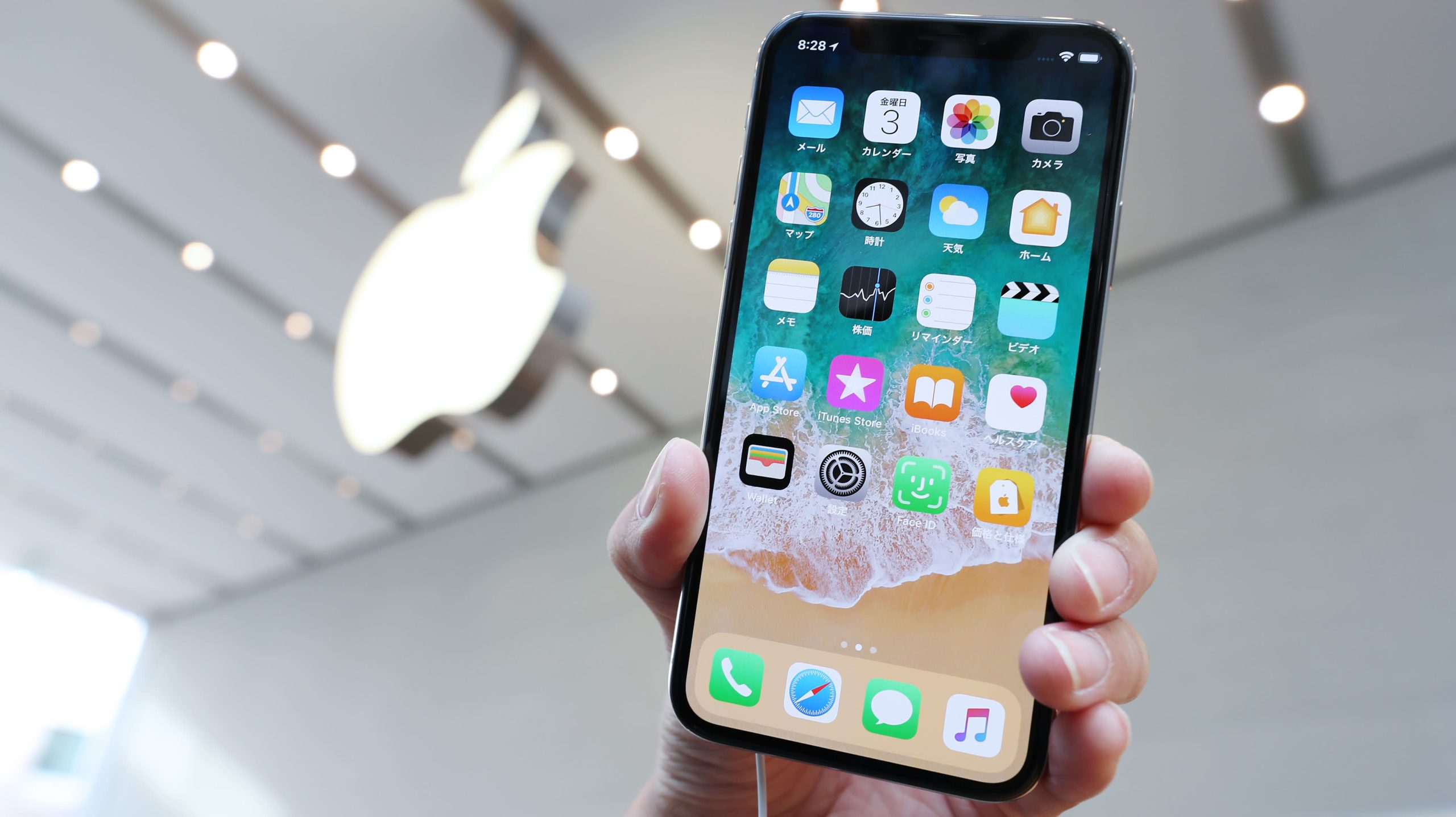
    Several app developers say that Apple is secretly purchasing Google ads for iOS subscription apps found in the App Store without approval from the apps’ developers. The report claims that Apple is doing this to help it collect millions of dollars in subscription revenue and calls it “ad arbitrage.” Arbitrage is the practice of making a hedged bet on Wall Street by buying and selling the same shares in different markets to profit from a small difference in price.

    What Apple is doing, according to Forbes, is paying its own money to advertise an app. Let’s say for example that Apple is paying to advertise HBO Max on Google, spending its own money. Now you might think that having Apple advertise your business would be great, but there is a catch. If the app in question allows subscribers to make their payments through Apple’s in-app payment process, the tech giant gets 30% of the subscription cost for the first year, and 15% for each subsequent year that the subscription runs for.

    Some subscriptions can cost users hundreds of dollars a year. Apple could be paying $5 to $10 for each ad that leads to a new subscription and the revenue could be $50 or more. One source said, “The customer doesn’t know, the user doesn’t know that $54 is going to Apple, not the developer.” And there is more. When a subscriber pays for a subscription through Apple’s in-app payment platform, they are considered Apple’s customers and Apple doesn’t reveal information about them making it hard for the developers to handle customer service.

    A marketing executive from one app developer pointed out the difference between dealing with a customer signed up through Apple and a customer whose subscription was processed by the developer. “The user experience is much worse. When you buy with the developer, they have a relationship with you … when you buy from Apple: sorry, you’re Apple’s customer, not ours, and if you have a problem with a subscription … we can’t really help them.”

    And this doesn’t take into account the hike in ad prices that Apple is causing when it bids for the same slots. While Apple is spending money on advertising HBO Max in order to get that percentage of subscription fees that run through its platform. This forces HBO to spend more than Apple to get the top ad slot so it can be noticed by consumers.

    Another source explains how Apple’s little arbitrage game is negatively affecting developers. “It hurts the advertiser LTVs (life-time value of a customer) are lower, so it doesn’t just cost more to advertise, but you can’t spend as much. Apple is not just making more money off developers, it’s hurting their business.”

    Some analysts have told clients that Apple’s App Tracking Transparency feature is a smokescreen to cover up Apple’s own advertising ambitions. As one source says, “Anyone that understands the basics of arbitrage could invent this. We all know what Apple’s doing for its privacy stuff is for its own pockets. It didn’t sit right that in the background they’ve been doing this to developers, it’s not ethical.”

    You can tell whether an ad for a subscription service was placed by Apple or the app developer by clicking the link. If it takes you to the App Store, the ad came from Apple. If the link takes you to the developer’s website, the ad came from the app’s developer.

  • StanChart Profits Rise from Improved Loan Impairments

    StanChart Profits Rise from Improved Loan Impairments

    Pre-tax profit at Standard Chartered rose in the first half and beat analyst estimates, resulting in the resumption of interim dividend payments.

    Standard Chartered registered $2.68 billion in pre-tax profit, according to its latest first-half results, marking a 37 percent increase compared to $1.95 billion in the same period last year.

    The bank’s $2.55 billion in statutory pre-tax profit beat its compailed average analyst estimate of $2.23 billion.

    Despite lower income (5 percent decrease) and higher operating expenses, Standard Chartered still saw profits rise due to improved loan impairments fuelled by the economic recovery.

    The bank posted a net release of $47 million in credit impairments – including a net release of $67 million in the second quarter – marking a $1.61 billion decrease year-on-year.

    The Asia-focused British lender also announced the resumption of interim dividend payments of $94 million – or 3 cents per share – alongside a $250 million share buyback.

    I am encouraged by our positive performance in the first half of 2021 despite an uneven recovery from Covid-19,» said Standard Chartered group chief executive Bill Winters.

    We are more confident in achieving our return on tangible equity targets and we are pleased to announce today an additional share buy-back program together with the resumption of our interim dividend payment.

  • Nissan Raises Earnings Outlook, Optimistic Chip Crunch Will Ease

    Nissan Raises Earnings Outlook, Optimistic Chip Crunch Will Ease

    Japanese automaker Nissan Motor Co on Wednesday raised its earnings outlook for the year, helped by a weaker yen and favorable demand in the United States and China, after reporting a surprise first-quarter operating profit. The company also warned that a global shortage of semiconductor chips will significantly hurt sales volume in the July-September quarter, but added that demand for its newly launched, pricier models will mitigate the impact on profits.

    Nissan hopes to make up for production and sales losses during the latter half of the fiscal year ending March 2022 and expects semiconductor shortages to ease during that period, Chief Operating Officer Ashwani Gupta told reporters.

    “Nobody has got a crystal ball. Nobody. But there are some assumptions,” he said, referring to an expected easing of the crisis, partly because a fire-hit Renesas Electronics chip plant in Japan is functioning again.

    Nissan, Japan’s No. 3 carmakers, maintained its global sales target of 4.4 million vehicles that it had set for the year in May.

    Nissan sold 1.048 million vehicles in April-June, up 63% from a year earlier, when global demand was hit by the COVID-19 pandemic. It sold 378,000 vehicles in North America (U.S., Canada and Mexico), up 70% from a year earlier, while sales in China totaled 352,000 vehicles, a 71% increase.

    Sales in the United States totaled 298,000 vehicles, up 68% from a year earlier.

    Chief Executive Makoto Uchida said Nissan will have to live with business uncertainties, including higher raw materials costs, for the remainder of the year.

    The auto industry has been grappling with a months-long shortage of semiconductor chips, which has forced them to cut production and delay car deliveries.

    Some companies such as Stellantis, owner of brands including Peugeot and Jeep, have said they expect the shortage to easily drag into next year.

    Some, though, like Taiwan chipmaker TSMC and Volkswagen said they are seeing some signs that the crunch is easing.

    Despite that, Nissan had a good start to the year, Gupta said, attributing the surprise first-quarter profit partly to the company efficiently managing supply chains and strategically using its chip stockpile, minimizing the impact of the shortage.

    Nissan reported an operating profit of 75.68 billion yen ($688.6 million) for the first quarter ended June 30. Analysts had expected a loss of 42.72 billion yen, according to Refinitive SmartEstimates.

    For the year ending March 2022, Nissan now expects an operating profit of 150 billion yen. In May, the company had forecast that it would break even in the period.

  • App Store billings and sales hit a whopping $643 billion last year

    App Store billings and sales hit a whopping $643 billion last year

    Based on an independent study of the App Store, the iOS app storefront generated $643 billion in sales and billings last year (which includes Apple’s cut of in-app purchases and ad sales), up 24% from the $519 billion that the App Store brought in during 2019. The study, titled “A Global Perspective on the Apple App Store Ecosystem,” reveals that not only did iOS app developers expand their business in 2020, they also expanded their customer base.

    It also turns out that since 2015, the number of small developers on the App Store has grown by 40%. The definition of a small developer is one with fewer than 1 million downloads and less than $1 million in earnings and 90% of App Store developers fit this definition. And of those small developers, 25% of them have managed to increase their earnings by 25% a year over the last five years.

    The report also shows that close to 80% of small developers have apps in App Stores across different countries. On average, App Store developers get paid from customers located in more than 40 countries. Overall, the App Store is available in more than 175 countries and regions, supports more than 40 different languages, 45 different currencies, and over 200 different payment methods.

    Apple CEO Tim Cook says, “Developers on the App Store proves every day that there is no more innovative, resilient or dynamic marketplace on earth than the app economy.” Cook adds that “The apps we’ve relied on through the pandemic have been life-changing in so many ways — from groceries delivered to our homes, to teaching tools for parents and educators, to an imaginative and ever-expanding universe of games and entertainment. The result isn’t just incredible apps for users: it’s jobs, it’s an opportunity, and it’s untold innovation that will power global economies for many years to come.”

    We should point out that the App Store has also generated conflict between Apple and developers because of the company’s in-app payment system under which Apple snags as much as a 30% cut of in-app transactions. And any developer that offers its own platform to compete with Apple and get around the 30% Apple Tax will find its app removed from the App Store. This is what happened with Epic Games and its popular Fortnite title.

    Last month Epic and Apple wrapped up a two-week trial and we expect the judge to announce her decision sometime during the third quarter. Apple and the App Store have been called anticompetitive since Apple doesn’t allow iOS and iPadOS users to install apps from any other app storefront outside of the App Store. This is one area where there is a big difference between iOS and Android since Android users are allowed to sideload apps from third-party app stores.

    Apple’s in-payment platform did get a thumbs up from the CEO of Snapchat parent Snap, Evan Spiegel. The executive said that Snap is “happy” to pay Apple’s 30% cut noting that Snapchat would not be around if it weren’t for Apple and the App Store. This is the minority view, but another developer has praised Apple’s app ecosystem.

    Wakeout! is an app that offers 1,500 exercises to keep users active and its founder, Andres Canella, called Apple’s in-app payment system “essential” for a small business. He states that “It’s enabled us to expand globally without having to worry about calculating things like local taxes or currency conversion. And using it is so transparent for our customers — we’re able to reach everywhere, China, France, you name it. We get all the benefits of selling globally without ever having to think about it, which is priceless.”

    Still, for every Snapchat and Wakeout! there is a Fortnite, a Netflix, or a Spotify that publicly attacks the App Store and Apple calling the setup a monopoly and anticompetitive.

  • Hanoi Stock Exchange earns record profit in 2020

    Hanoi Stock Exchange earns record profit in 2020

    The Hanoi Stock Exchange (HNX) posted VND399 billion ($17.3 million) in 2020 post-tax profit, a year-on-year increase of 28 percent.

    Its revenue rose 32 percent year-on-year to VND733 billion, 87 percent of which was from transaction charges.

    The exchange attributes its highest-ever revenue and post-tax profit earnings to the rise in corporate bonds issuance.

    According to HNX data, 2,408 corporate bond issues were registered last year, 92.5 percent of them successful. The value of bonds successfully issued by corporates in 2020 jumped 36 percent year-on-year to VND403.4 trillion.

    The exchange’s total assets were valued at VND1.35 trillion at end of 2020, up 6 percent year-on-year.

  • OCBC Posts Record High Quarterly Net Profit

    OCBC Posts Record High Quarterly Net Profit

    The quarter’s earnings were driven by broad-based income growth and lower allowances. OCBC Bank recorded a net profit of S$1.5 billion ($1.13 billion) for the January-March period, a jump of 115 percent from the same period last year (S$698 million), and 33 percent higher than the preceding quarter (S$1.13 billion), according to financial results posted on Friday.

    The bank said the record quarterly profit was driven by broad-based income growth and lower allowances. OCBC hit a new high in fee income (S$585 million), while making a far smaller allowance compared with the year-ago period (S$161 million vs. $657 million). Performance was also boosted by its insurance arm Great Eastern, which reported a twelvefold increase in profits this quarter.

    Income from wealth management, comprising insurance, premier and private banking, asset management and stockbroking, rose 40 percent to S$1.21 billion – 41 percent of the group’s total income.

    Assets under management at Bank of Singapore, its private banking arm, rose 1 percent from the previous quarter to reach $123 billion as at 31 March 2021.

    OCBC highlighted growing momentum from renewed market optimism across its businesses, as well as improved quarterly earnings from its overseas banking subsidiaries.

    While we remain watchful of the prevailing risks in the operating environment, our strong balance sheet and capital position will enable us to capitalize on opportunities arising from improved economic conditions, particularly in ASEAN and Greater China,» OCBC chief Helen Wong said.

    Earnings at Singapore’s «big three» local banks all beat analyst estimates (DBS: S$1.44 billion, OCBC: S$1.13 billion, UOB: S$891.4 million, according to Refinitiv).

    DBS, which announced its first-quarter results last week, also experienced a strong quarter, doubling its income from the quarter before to reach S$2.01 billion and posting record wealth management fees.

    UOB’s earnings grew to S$1 billion for the same period – up 46 percent on the back of strong fees, trading and investment income.

  • Indosat Ooredoo earns 11.6% cellular revenue growth in 2020

    Indosat Ooredoo earns 11.6% cellular revenue growth in 2020

    President Director and CEO Indosat Ooredoo, Ahmad Al-Neama said: “Despite the challenges created by the COVID-19 pandemic and pricing pressure, Indosat Ooredoo has continued to deliver on our three-year strategy and maintained growth momentum. We are grateful for the on-going support of our loyal subscribers that have encourage us to continue to invest in our 4G network and launch innovative new digital offerings to ensure that our customers have the best mobile experience possible.

    Our commitment to our customers and to provide simple and relevant products has contributed to an increase in our subscriber base and data traffic volume. This growth has translated into an above market increase in cellular revenue and a significant and accelerating gain in market share.”

    “Looking ahead, we anticipate that the shift to online lifestyles and remote working and learning, which have increased sharply by the pandemic, are here to stay. Indosat Ooredoo is fully committed to supporting our cellular and business customers adapt to the new normal by continuing to improve network performance to meet growing demand for data. We believe our new digital solutions will enrich and enable our customer’s digital lives. Through these initiatives we will support Indonesia’s digital transformation agenda and create value for all our stakeholders.”

    Indosat Ooredoo has recorded solid performance for the full year ended 31 December 2020, with total revenue increasing by 6.9% YoY to IDR 27.9 trillion, cellular revenue increasing by 11.6% YoY to IDR 23.1 trillion.

    EBITDA reaching IDR 11.4 trillion, an increase of 16% YoY due to resilient revenue growth and a focus on operational efficiencies. EBITDA margin increased by 3.2 ppt to 40.9%.

    Cellular subscriber numbers grew by 1.7% to 60.3 million by end of 2020, and Average Revenue per User (ARPU) increased to IDR 31.9 thousand from previously IDR 27.9 thousand, driven mainly by a substantial data traffic increase of 52.8% YoY.

    Indosat Ooredoo also delivered strong operational performance, including improving our video experienced by 55.8% YoY, doubling our 4G download speed, and significantly improving our upload speed by 88.4% YoY.

    During the year Indosat Ooredoo has successfully partnered with global digital players like Facebook, Google, Cisco and Ericsson to bring advanced technologies and capabilities to fast-track digitalization of the customer experience and deliver network improvements to Indonesia.

    We have continued to introduce new innovative products to help customers stay connected as well as business and education to continue to operate during the pandemic. Through IM3 Ooredoo we launched a new IMPreneur package, a business package specially designed for SMEs and through Indosat Ooredoo Business, we recently introduced the “iDo Voice” solution, which consists of 3 new voice services for corporate customers.

    Indosat Ooredoo’s investment in 4G network infrastructure and commitment to our customers continued to be recognized by prestigious international business awards. At the Opensignal Global Mobile Network Experience Awards 2020, we received the “Global Rising Star” award in Video Experience. We have also recently won the Corporate Excellence category in Telecommunications & ICT Industry at the Asia Pacific Enterprise Awards (APEA) 2020 Regional Edition.

    In 2021, Indosat Ooredoo will continue the upgrade and expansion of our network, focusing on 4G/LTE and the Video Grade Network capable of providing improved internet services to customers. Our networks enhancement is part of our effort to enable digital transformation of Indonesia, in-line with the digital economy plan of Indonesian government and to accelerate national economy recovery.

    “We are confident for our growth momentum to continue in 2021. However, due to uncertainties associated with the economic recovery from the pandemic, we are cautiously optimistic in guiding revenue growth to be in-line with the industry, EBITDA margin to be in the low 40s, and Capex at approximately IDR 8 trillion.”

  • Pharma industry growth slows down

    Pharma industry growth slows down

    The pharmaceutical industry’s revenues rose by just 3 percent in 2020, down from an average of 11.8 percent in the previous five years.

    But it was a notable year for mergers and acquisitions. According to analysts at SSI Securities, the total value of M&A was VND1.68 trillion ($73 million) last year and involved a number of foreign investors.

    In May, South Korean conglomerate SK Group, which makes anti-cancer and cardiovascular drugs and mental health medications, paid VND920 billion to acquire a 25 percent stake in Imexpharm Pharmaceutical Joint Stock Company.

    In August, Japan’s Aska Pharmaceutical acquired a 24.9 percent stake in Ha Tay Pharmaceutical Joint Stock Company (Hataphar).

    In December, German generic drugmaker Stada paid VND400 billion to increase its stake in Pymepharco by 6 percent to nearly 76 percent.

    SSI analysts estimated the pharmaceutical industry to grow by 15 percent in 2021 mainly due to a rapidly aging population and rising incomes.

  • Facebook reports strong Q4 and 2020 top and bottom line growth

    Facebook reports strong Q4 and 2020 top and bottom line growth

    Facebook reported its fourth-quarter and full-year earnings numbers today. The controversial social networking site reported advertising revenue of $27.19 billion for the fourth quarter running from October through December. That resulted in a 31% year-over-year gain from the $20.74 billion in advertising revenue that the company earned during last year’s fourth quarter. For all of 2020, Facebook grossed $84.17 billion, up 21% from 2019’s total of $69.66 billion.

    During the fourth quarter, Facebook garnered a total of $28.07 billion compared to the $21.08 billion it took in during the same quarter last year. If you’re counting, that is a 33% hike on an annual basis. For all of 2020, the company collected $86 billion dollars producing a 22% increase from 2019’s top line number of $70.70 billion.

    Let’s move on to the bottom line. For the period from October through December (yes, also known as the fourth quarter), Facebook earned $11.22 billion or $3.88 per share. Net income was up 53% from the previous year’s $7.35 billion while the per-share figure reflected a hike of 52% from the $2.56 per share figure attained during Q4 of 2019. For 2020, Facebook reported profits of $29.15 billion or $10.09 per share. That’s an annual gain of 58% and 57% respectively over 2019’s figures of $18.49 billion and $6.43 per share.

    Facebook achieved 1.84 billion Daily Active Users for December 2020, an 11% gain year-over-year. As of the end of last year, the number of Monthly Active Users amounted to 2.80 billion for a 12% annual gain.

    For the first half of 2021, Facebook expects revenue to be stable, or show a slight gain. CFO David Wehner said that Facebook expects some issues with ad targeting. As you might recall, Apple and Facebook are fighting each other over Apple’s change requiring iOS users to opt-in to receive targeted ads. Wehner says, “We also expect to face more significant ad targeting headwinds in 2021. This includes the impact of platform changes, notably iOS 14, as well as the evolving regulatory landscape. While the timing of the iOS 14 changes remains uncertain, we would expect to see an impact beginning late in the first quarter.”

    Besides owning Facebook, the company owns Facebook Messenger, WhatsApp and Instagram. It also runs VR headset producer Oculus and makes the Facebook Portal line of smart displays.

    The earnings report failed to excite Wall Street investors. During the regular trading session, Facebook (FB) shares closed down $9.91 or 3.51% to $272.14. After the report was released slightly after 4pm ET, Facebook dropped another $5.14 or 1.89% to $267.

  • Apple had strong App Store sales in 2020

    Apple had strong App Store sales in 2020

    The Apple App Store generated over $64 billion in revenue last year. That would be a 28% increase over the $50 billion that the iOS digital storefront collected in 2019; it would also represent a 3.1% hike over 2018’s revenue of $48.5 billion. Part of the reason for the surge in the top line has to do with the global pandemic which led businessmen working from home and children engaged in remote learning to download certain apps from the App Store. In addition, there were apps installed to help both kids and adults kill time. Mobile games come to mind as does the short-form video app TikTok used to create 15 seconds and 60-second videos

    The App Store is part of Apple’s Services division which garnered over $50 billion in gross for the first time ever in fiscal 2020. This helped the company achieve a major goal of doubling Services revenue from $25 billion to $50 billion over five years. Consider the businesses that are included in this unit and you’ll see why it is the fastest-growing business unit inside Apple. The Services division houses the App Store, Apple Pay, AppleCare+, Apple Music, Apple News+, Apple Arcade, iCloud, Apple TV+, Fitness+, Apple Books, and more. Apple Music has grown to 85 million subscribers in just five years which Loup Ventures says, “illustrates the power of services built on top of default apps.” Apple’s services sector grew by 16% last year to $53.7 billion in sales and Loup Ventures sees another 15% hike next year. And consider that the App Store makes up 35% to 40% of Services Revenue.

    Loup Venture’s Andrew Murphy sees Apple creating more services that would add new features to some of the tech giant’s existing or default Services platforms.  Some examples could include:

    • Stocks+ could allow Apple to provide trading and advisory services for users.
    • Maps+ could be monetized by Apple by suggesting destinations to users that would be based on input from them.
    • Mail+ would be a premium email service offering productivity, inbox management, scheduling and more.

    In 2019, Apple CEO Tim Cook explained that Apple’s Services sector had a goal to “help our customers get the most out of the products and to enrich lives” by making companion apps “more entertaining, more useful and more informative.” The original plan for the Services sector was to generate recurring revenue allowing Apple to collect flows of cash even in years when the iPhone just isn’t selling. These recurring revenues are high margin allowing Apple to bank large sums of money.

    Loup Ventures used Fitness+ for a case study noting that it adds value to Apple Watch users who can view biometric data on their watch screen. Besides integrating with the Apple Watch, it also integrates with the Apple iPhone, Apple TV, and AirPods.

    Based on revenue, Apple’s Services business is just about the size of a Fortune 50 firm. Would Apple ever decide to spin it off as a separate company? It is a possibility but nothing that is being looked at right now. During the holidays, App Store customer spending was up 27% year over year. In 2019, App Store customer spending was up 16% on an annual basis.

    Apple, as many of you know, takes a 30% cut of in-app purchases made using the App Store’s “in-app” platform. Because iOS is a closed system, Apple’s customers can’t sideload apps and are forced to buy paid apps through the App Store even if they can be purchased for less money from another app store. As a result, Apple is being investigated by some regulatory agencies for monopolistic behavior. Recently though, Apple dropped its cut to 15% for the purchase of apps created by developers with less than a $1 million in annual sales.

  • Bentley Posts Highest Ever Sales Numbers In 101 Years In 2020

    Bentley Posts Highest Ever Sales Numbers In 101 Years In 2020

    Bentley Motors announced total sales of 11,206 in 2020, an increase of 2 percent over 2019. Although the pre-COVID sales forecast was much greater, new model introductions fuelled this significant achievement which was the highest sales performance in any of the luxury British marque’s 101 years. Bentley’s production was shut down for seven weeks beginning in March, and running at a 50 percent output for a further nine weeks thereafter, as social distancing measures were

    The Americas remained Bentley’s number one region although a strong performance in China, posting an increase of 48 percent came in a close second. The Bentley Continental GT (24 percent) and GT Convertible (15 percent) together accounted for 39 percent of total sales. However, in spite of the run out of the previous generation model, and delays to market entry of the all-new Bentayga due to the COVID-19 pandemic, the SUV was still the biggest selling single model, accounting for 37 percent of total sales.

    The Americas region delivered 3,035 cars, an increase of four percent on the corresponding figure for 2019, 2,913. Placing the region as Bentley’s number one market, this strong performance was boosted by the introduction of the Flying Spur and a full year of sales of the Continental GT and GT Convertible luxury Grand Tourer.

    Bentley’s biggest growth was reserved for China, posting a sales increase of 48 percent, 2,880 cars, against 1,940, as the traditional sedan market welcomed the introduction of the all-new Flying Spur, with Bentayga sales remaining strong.

    Europe closed the year with the delivery of 2,193 cars, against a figure of 2,670 in 2019, a decrease of 18 percent with the region impacted because of the market entry delays of the all-new Bentayga.

    Bentley’s home market in the UK continued its consistently strong performance, recording sales of 1,160 cars. This represented a decrease of 22 per cent over the previous year. Bentley delivered 735 cars to the Middle East in 2020, against a total of 852 the previous year.

  • Dairy Farm announced difficult third quarter

    Dairy Farm announced difficult third quarter

    Dairy Farm International Holdings Limited today issues its Interim Management Statement for the third quarter of 2020. The Group’s overall performance in the third quarter improved relative to the first half.  While the Group’s results continued to be affected by the COVID-19 pandemic, the impact was partially offset by the receipt of government support.  Grocery Retail performance continued to be supported by operational improvements as part of the Group’s multi-year transformation program, as well as changing customer behaviors as a result of the pandemic. Reduced sales and profit in Health and Beauty and Maxim’s, however, continued to impact the Group’s overall performance.

    The Group’s Grocery Retail businesses reported strong like-for-like sales growth, which led to strong profit growth.  In Southeast Asia, changing customer behaviors, as well as the ongoing execution of the Group’s multi-year transformation plan, supported strong profit growth in Singapore and Malaysia.  Performance in Indonesia, however, was impacted in the period by government restrictions on movement and significantly reduced traffic into hypermarkets and malls.

    The Group’s Convenience businesses reported improved like-for-like sales performance compared to the first half of the year.  However, 7-Eleven Singapore continued to be impacted by reduced footfall.  Better sales performance drove higher profitability compared to the first half.

    The performance of the Group’s Health and Beauty businesses were significantly impacted by the effects of the measures taken by governments to counter the pandemic, as well as the continuing lack of custom from overseas tourists in Hong Kong.  In North Asia, whilst like-for-like sales performance improved compared to the first half, the profitability of Mannings continued to be materially impacted by the lack of tourists.  In Southeast Asia, like-for-like sales were affected by reduced footfall in malls which, in turn, impacted profitability.

    Sales in the Home Furnishings business were higher than the equivalent period last year and like-for-like sales improved compared to the first half.  Strong e-commerce growth and the annualization impact of new stores opened in the prior year more than compensated for the impact of pandemic-related measures on customer visits.  Profitability also improved compared to the equivalent period last year, as a result of lower pre-opening expenses and improved gross margins resulting from the lower cost of goods sold.

    The Group’s 50%-owned associate, Maxim’s, continued to be impacted by government restrictions on movement, as well as a reduction in the number of restaurant customers.  However, mooncake sales performance during the Mid-Autumn Festival was encouraging.  Yonghui’s underlying performance in the third quarter was impacted by reduced sales, while Robinsons Retail’s underlying performance was affected by government lockdown restrictions on its discretionary retail formats.

    The launch of Yuu Rewards, Hong Kong’s largest loyalty program, at the end of July was a significant milestone in driving the Group’s digital transformation.  The popularity of the program has exceeded the Group’s own expectations, with two million members joining in the first month.  High membership engagement has supported the performance of the program sponsors.

    On 16th October 2020, the Group announced it had signed an agreement to deepen its partnership with Philippines-listed multi-format retail group Robinsons Retail Holdings Inc. (‘RRHI’) and to build a leading pharmacy business in the Philippines by combining the Group’s interest in wholly-owned Rose Pharmacy Inc. with RRHI subsidiary South Star Drug Inc.  This transaction, which included the sale of Dairy Farm’s direct interest in Rose Pharmacy Inc, completed on 30th October 2020.

    The well-being of our employees and customers remains a top priority, and the Group continues to take a number of measures to mitigate the impact of the pandemic, including the adoption of a range of health and safety measures.  Given the extraordinary circumstances, we would like to express our deep gratitude for the continuing dedication and resolve of team members in putting customers first during these difficult times. 

    Dairy Farm remains committed to its multi-year transformation which is delivering sustainable improvements to the business over time and continues to pursue the strategic initiatives which will drive medium- to long-term growth.

    Dairy Farm is a leading pan-Asian retailer.  The Group, together with its associates and joint ventures, operates over 10,000 outlets – including grocery retail, convenience stores, health and beauty stores, home furnishings stores, and restaurants – employing some 240,000 people, and had total sales in 2019 exceeding US$27 billion.  Dairy Farm International Holdings Limited is incorporated in Bermuda and has a standard listing on the London Stock Exchange, with secondary listings in Bermuda and Singapore.  It is a member of the Jardine Matheson Group.

  • OCBC Earnings Drop Significantly

    OCBC Earnings Drop Significantly

    While the bank’s net interest income was impacted by lower market rates, its banking and wealth management businesses saw strong quarter-on-quarter fee-based growth, and its insurance franchise reported strong sales and new business growth.

    OCBC’s net profit for the third quarter of 2020 was S$1.03 billion ($760 million), up 41 percent from the previous quarter’s S$730 million and 12 percent lower compared to a year ago, according to financial results published by the bank on Thursday.

    The growth in profit was largely a result of a fall in allowances, OCBC said. The bank set aside S$350 million in allowances during the quarter, which included a management overlay of S$150 million, compared to S$750 million in the previous quarter.

    Net interest income declined 4 percent from last quarter’s S$1.42 billion from lower rates – an 11 percent decline from the same period in 2019. At the same time, non-interest income rose 6 percent to S$1.12 billion, led by higher trading income and insurance profit.

    The bank reported growth in wealth management fees of 24 percent on-quarter and 4 percent year-on-year to S$252 million.

    Assets under management at Bank of Singapore, OCBC’s private banking subsidiary, grew 3 percent from the previous quarter and 5 percent year-on-year to $116 billion (S$159 billion), underpinned by net new money inflows and better market valuations.

    At Great Eastern, OCBC’s insurance arm, total weighted new sales rose 51 percent quarter-on-quarter to S$433 million, supported by improved sales both in Singapore and Malaysia, while New Business Embedded Value was 47 percent higher at S$160 million, while the NBEV margin was 37 percent.

    OCBC said the full extent of the lagging economic impact of the crisis will only likely have more visibility next year. However, it said it is well-positioned for recovery and is focused on driving long-term sustainable value.

    With the outlook still uncertain, it is most important that we continue to strengthen our capital and balance sheet. This will position us well for the crisis and enable us to emerge well-prepared for new opportunities when the market recovers,» Samuel Tsien, OCBC group CEO, said in a statement.

    Singapore’s two other listed banks already reported their quarterly earnings – DBS saw its profits fall by 20 percent from the same period last year to S$1.3 billion, while UOB reported a 40 percent decline to S$668 million.

  • Profit up for Yum China despite Covid-19

    Profit up for Yum China despite Covid-19

    Yum China has reported a flat third quarter to September, with sales up 1 percent year on year to US$2.35 billion.

    The company said operations improved during the period, but sales were still impacted by reduced traffic at transportation and tourist locations, a delayed and shortened school-holiday season, and other lingering effects of the Covid-19 outbreak.

    “Dine-in volume has been recovering, while delivery and takeaway remained popular options,” the company said in a statement. “Our primary focus continues to be safety, efficiency, and driving traffic.”

    The fast-food company, which completed a secondary listing on the Hong Kong stock exchange during the quarter, said it has launched digital and membership campaigns offering strong value propositions to consumers to drive a recovery in sales post-pandemic.

    Yum China achieved productivity improvements and improved operating profits through trimming costs and improving productivity, however, the company now plans to increase staffing levels in the coming months to balance service and efficiency.

    Same-store sales declined 6 percent year on year, excluding foreign exchange, but the results included the consolidation of the Huang Ji Huang chain since April and a further 25 percent ownership of the Suzhou KFC operator since August.

    The company opened 312 new stores during the quarter taking its count to 10,150 at the end of September.

    Operating profit rose 86 percent from $300 million to $556 million (excluding foreign exchange impact), largely due to the gain from remeasuring the contribution of the Suzhou KFC business, of which Yum China now owns 72 percent. Net income increased 96 percent to $439 million.

  • Strong third quarter arrests LVMH’s sales decline for the year

    Strong third quarter arrests LVMH’s sales decline for the year

    Luxury items and liquor-retail group LVMH recorded a 21-per-cent decline in income throughout the first 9 months of this year in what it describes as a “very turbulent environment” in the wake of the Covid-19 pandemic.

    The decline in sales – 30.3 billion euros – largely occurred throughout the first two quarters of the three, with the decline recovering to an extra modest 7 percent in the third quarter, largely pushed by rebounding sales of cognac, vogue, and leather-based items. This was particularly sturdy in the US and Asia.

    Liquor sales fell 15 percent over the 9 months and three percent over the third quarter, whereas sales of vogue and leather-based items, led by Louis Vuitton and Dior, have been down by 11 percent for the full 9 months however surged at a double-digit rate in the third quarter. 

    Covid-19 noticed the suspension of the worldwide journeys and the closure of the group’s shops and manufacturing websites in most nations over an interval of a number of months.

    Sales in its watches & jewelry division led by Tag Heuer, Bulgari and Chaumet, declined by 30 percent in the first 9 months, however, a rebound in China throughout the third quarter was inadequate to arrest a general decline of 14 percent for the full interval.

    LVMH’s selective retailing division skilled a 31-per-cent drop in sales throughout the 9 months. The beauty-retail chain Sephora demonstrated “good resilience during the health crisis,” in keeping with the firm regardless of the closure of virtually all its shops globally for almost two months earlier than sales improved in the third quarter.

    Strong online sales noticed Sephora develop market share throughout its major markets. However, DFS predictably noticed a big decline in its exercise in most locations because of the suspension of a worldwide journey.