Tag: retail sales

  • GST, ringgit decline hit retailers causing 40% drop in sales, says employers group

    GST, ringgit decline hit retailers causing 40% drop in sales, says employers group

    Retailers have experienced a major drop in sales with some registering a more than 40% decline over festive periods in the second half of the year, the Malaysian Employers’ Federation (MEF) said today.

    MEF executive director Datuk Shamsuddin Bardan said retailers attribute the decline to the combined impact from the implementation of the goods and services tax (GST) in April and the ringgit’s depreciation against the US dollar. He added that consumers became more prudent in their spending after the GST came into effect and this was reflected in Hari Raya and Deepavali shopping in the second half of the year.

    The cost of goods were “seemingly” higher because the tax and the exchange rate had also affected all players in the retail sector, both big and small companies, he added. “The challenges are very high for the retail sector. The sector has very much to do with domestic market outlook, especially when the rakyat is very careful with their spending and choosy with their purchases.

    As such, the retail sector will be affected very much,” he told The Malaysian Insider. Poor consumer sentiment saw retailers grapple with a drop of more the 40% than the usual spending during the last two festive seasons in July and November.

    “You look at Hari Raya and Deepavali. Many retailers are saying that their sales were affected, some by more than 40%. “In this kind of revenue outlook, this sector has no choice but to actually restructure their manpower and, unfortunately, when they talk about restructuring, they are talking about retrenchment.”

    Shamsuddin said many retailers were struggling although MEF had yet to receive any reports on closures or retrenchments. The Edge Financial Daily last week reported that independent retail research firm, Retail Group Malaysia (RGM) has cut its forecast for retail sales this year for the fifth time, attributing it to poor figures in the second and third quarters of the year.

    The firm said the decision to revise its forecast downward was due to the weakening ringgit in the past few months, which led to higher import costs. RGM, however, forecasted that the Q4 (October to December) growth to 3.8% year-on-year is higher than Malaysia Retailers Association’s (MRA) forecast of 1.3% growth for the same period.

    This was because RGM believed that the higher cost of overseas travel would encourage domestic spending. MRA also said it did not expect its businesses to recover strongly for the period as they expected a 2.6% contraction in sales.

  • Hong Kong Retail to Reshuffle as Sales Remain Lackluster

    Hong Kong Retail to Reshuffle as Sales Remain Lackluster

    Hong Kong retailers are far from optimistic about sales during next month’s Lunar New Year holiday as retail sales fell for nine months in a row, with a 7.8 percent plunge last November compared to a year ago.

    At the same time, the tourism industry and retail sectors have been adjusting their strategies in the hope of finding a way forward.

    The year-end period is the traditional high season for retailers, however, the latest government data shows that in November last year, sales in most categories recorded a significant drop, with jewelry, watches and clocks, as well as high value gifts continuing to be the hardest to hit.

    This is in line with sluggish inbound tourism, which dipped by 10.4 percent over the same period.

    Hong Kong’s wholesale and retail lawmaker Vincent Fang believes it’s bound to affect employment and the retail landscape.

    “For example, is it possible that I just hire three salespersons instead of four? For chain stores, if the lease expires, and I cannot afford to keep five or six shops, maybe I’ll close one down.”

    Hong Kong Retail Management Association chairman Thomson Cheng is estimating a single-digit percentage sales drop during the coming Lunar New Year holiday.

    “If people in Hong Kong ask for two days off, they’ll have a nine-day holiday, I think they’ll travel overseas. So local consumption won’t be ideal. At the same time, The Hong Kong dollar remains strong, which also makes the price unattractive to tourists.”

    A total of 10 million Hong Kong dollars have been allocated to ten local attractions to help promote them to overseas markets during winter period, but according to tourism lawmaker Yiu Si wing, the measure is not proving effective.

    “The Retail sector has been through a hard time. Tourists from the mainland are selective when consuming, they have a smaller appetite for luxury goods, as well as high-end restaurants. The government is hoping to attract tourists with higher spending capability to fill the gap, but it seems that it is failing to achieve the desired results. ”

    But it is not all bad news. Skyrocketing rents in Hong Kong are declining following disappointing retail performance, which is enabling some stores to expand their network. Digital products and home appliance provider Hong Kong Suning Commerce Groups is one of them. Kim Li is the Operations Director of the company.

    “We have entered the retail winter, but property owners also realize that they cannot keep the current rent based on how many customers we receive. So they reduce rents significantly, some drop by 40 percent. We think we still have opportunity to develop and expand our market with lower costs.”

    To better protect tourists’ interest, Hong Kong’s Travel Industry Council has asked operators to take tour groups only to the pre-registered shops, but industry practitioners are not cooperating and some say they’ll boycott the list.

    For CRI, this is Li Jing in Hong Kong.

  • Hong Kong retail sales figures fall for 12th straight month

    Hong Kong retail sales figures fall for 12th straight month

    Hong Kong retail sales fell 7.8 per cent in November – a drop worse than expected that prompted retailers to draw parallels to 2003, when the city was hit by Sars.

    Thomson Cheng Wai-hung, the chairman of the Retail Management Association, predicted the full-year figure for 2015 would have fallen at least 3 per cent “for sure”.

    When severe acute respiratory syndrome hit in 2003, the city’s full-year retail sales decreased 2.3 per cent. The first 11 months of last year saw a drop of 3.1 per cent year on year.

    And retailers can see no light at the end of the tunnel.

    “We couldn’t see any positive signs that retail would turn around in 2016,” said Cheng. He said most members surveyed by the association expected single-digit declines this year.

    The Hong Kong government also expects a gloomy year ahead. A spokesman said the retail sector would remain weak due to low numbers of inbound tourists.

    Most retail categories saw sales fall in November, with only three areas recording growth.

    Jewellery, watches, clocks and valuable gifts ranked worst, with sales down 20.6 per cent. They were followed by department store goods and clothing, with sales declining 4.8 per cent and 8.6 per cent respectively.

    Supermarket sales did better, rising 1.4 per cent – a rise matched by food, alcoholic drinks and tobacco. Motor vehicles and parts saw a rise of 7.8 per cent.

    Cheng said tourists from the mainland were “crucial” to the city’s retail sector, as they spent substantial portions of their travel budgets on shopping.

    While there has been a steady increase in visitor arrivals from overseas in recent months, Cheng said foreign tourists spent more of their budgets on leisure activities such as sightseeing and food, rather than shopping.

    “They wouldn’t help much on retail sales,” said Cheng.

    Retailers at the Hong Kong Brands and Products Expo also received disappointing sales results yesterday, with total sales standing at HK$900 million, unchanged from last year’s figure.

    Sales at the popular Macau ­baker Koi Kei Bakery declined 20 to 30 per cent compared to last year, according to the man in charge of its booth, Arthur Lee. He said tourists from the mainland used to contribute one-third of the baker’s sales at the expo, but this year had been responsible for less than 10 per cent.

    Meanwhile, the number of visitors to Hong Kong during the Christmas and new year holidays shrank compared to last year. The Immigration Department said visitor arrivals for December 24-27 and December 31-January 3 dropped to 1.46 million, down 2.53 per cent from last year.

    Tourists from the mainland were down 5.45 per cent and overseas visitors fell 1.28 per cent.

  • Retail sales slumps 7.8 per cent in HongKong

    Retail sales slumps 7.8 per cent in HongKong

    Hong Kong retail is going on its year-long downturn, with an estimate of total retail deals drooping 7.8 percent to HK$38.1 billion last November contrasted to figures a year before. This is the most noticeable bad month to month execution since January previous year ago, denoting its twelfth consecutive month of turn down.

    The city’s once blasting retail area is on its voyage to record its most exceedingly bad year since 2003 when SARS hit as the value of retail sales in the initial 11 months a year ago fell by 3.1 percent contrasted to the same period in 2014.  Among all the retail classifications, jewellery, watches and clocks and other gifts positioned most exceedingly bad, with deals down 20.6 percent. They were trailed by commodities in retail chains and attire, with deals declining 4.8 percent and 8.6 percent for each.

    Most retail classifications saw sales retreat in November, with just three outlets recording growth: sales of grocery stores; food, mixed beverages and tobacco; and motor vehicles and parts. They extended 1.4 percent, 1.4 percent and 7.8 percent respectively. Alongside the estimation of retail deals, November volumes additionally diminished by six percent contrasted to a year before.  A government representative said the “distinctly” slack retail deals were for the most part tottered by the lull in inbound tourism. Local utilization conclusions were prone to be influenced by a troubling financial viewpoint and late securities exchange remedies, he said.

  • Koreans Embrace Mobile Shopping

    Koreans Embrace Mobile Shopping

    The total value of purchases made through mobile phones hit a record in November 2015.

    According data from Statistics Korea on Monday, the amount of mobile transactions surged 52.3 percent on year to W2.44 trillion (US$1=W1,190).

    That is almost half of the total online purchases in November, which also hit a record of W4.97 trillion, up 19.5 percent compared to the same month of 2014.

    Online purchases accounted for 15.4 percent of total retail sales.

    By product, purchases of office supplies and stationery surged 132.7 percent and 138 percent, respectively, perhaps ironically using new-generation technology to pay for the products it is gradually replacing.

    Sales of cosmetics and groceries also surged 38.2 percent and 35.4 percent.

    By retail sector, sales at convenience stores rose 33.8 percent compared to the average 4.2-percent rise in overall retail sales, while sales at supermarkets and department stores more or less stagnated.

  • Hong Kong retail sales worse than expected in November

    Hong Kong retail sales worse than expected in November

    Hong Kong’s retail sales by value declined for a ninth consecutive month in November, falling by a worse-than-expected 7.8% from a year earlier as inbound tourism slowed further, the Census and Statistics Department said Monday.

    The decline deepened from October’s 3.0% fall, and was more severe than the median forecast of a 6.5% decrease from three economists surveyed by The Wall Street Journal.

    Hong Kong’s 2015 retail sales are expected to suffer their biggest annual decline since the outbreak of severe acute respiratory syndrome, or SARS, in 2003. Retail sales by value for January-November fell 3.1% from a year earlier, steeper than the 2.3% decline recorded in 2003 when tourists shunned Hong Kong for several months during the SARS outbreak.

    Hong Kong’s retail sales by volume fell 6.0% in November from a year earlier, reversing October’s 1.2% rise, and worse than the survey’s median forecast of a 3.2% contraction.

    A government spokesman said retail sales dropped amid weak tourism. “The increased downside risks to the economic outlook and recent stock market corrections might also have resulted in more cautious local consumption sentiment,” the spokesman added.


  • Hong Kong Retail Slows as Mainland Tourists Stay Away

    Hong Kong Retail Slows as Mainland Tourists Stay Away

    Hong Kong, once a shopping mecca for mainland Chinese seeking Swiss watches and luxury handbags, is on track to record its biggest annual decline in retail sales since the outbreak of Severe Acute Respiratory Syndrome, or SARS, in 2003.

    The city may also post the first annual decline in mainland tourists since it started allowing individual visitors from China, also in 2003, prompting calls for extensive diversification of the tourism trade—a key pillar of the city’s economy.

    Chinese tourism spending has been the main driver of retail and commercial property-sector strength in Hong Kong in recent years, as the number of mainland tourists shot up. During the boom, long lines outside the city’s numerous Louis Vuitton, Chanel and Gucci shops were commonplace, as luxury goods sold in Hong Kong were up to 40% cheaper than in China.

    Those lines have largely disappeared as inflows of Chinese tourists slowed. The number of Chinese tourist arrivals was 15.4% lower in November compared with a year ago, the steepest decline all year, extending the year-to-date fall in Chinese visitors.

    Hong Kong’s tourism commission acknowledges that the city’s tourism industry has “entered a consolidation period” after a decade of growth, and says it is now targeting “high-spending overnight visitors” from other markets to help fill the city’s myriad shopping malls and hotel rooms.


    ENLARGE


    Meanwhile, retail sales in the formerly-bustling shopping hub have fallen for eight straight months on lower tourist spending, with total retail sales down 2.7% year-over-year for the first 10 months of 2015. That is steeper than the 2.6% decline recorded in 2003, when tourists shunned Hong Kong for several months during the SARS outbreak.

    In October, Hong Kong saw a 38.5% drop in sales of Swiss watches, said the Federation of the Swiss Watch Industry. Other brands, like Chanel, went the unusual route of slashing the price of an iconic bag by over 24% in Hong Kong, among other rare discount offers, in a sign of the trying times.

    “The ‘luxury supermarket’ image is no longer attractive” for Hong Kong, said Clement Kwok, chief executive at The Hongkong and Shanghai, owner of the city’s iconic Peninsula Hotel. The Peninsula Hotel saw occupancy rates drop 3% in the third quarter from a year earlier.

    “There is an urgent need for a new marketing campaign to rebrand Hong Kong as a dynamic, exciting and relevant modern city,” said Mr. Kwok.

    Luxury sales began their decline in late 2013 after Beijing started cracking down on corruption and conspicuous consumption. The slump has spread to mass market retailers this year as the Chinese economy slowed. Milan Station, a vendor of secondhand handbags, said revenue in its Hong Kong shops fell over 28% in the first half of the year, while cosmetic retailers Sa Sa and Bonjour reported revenue declines of 10.6% and 14.4% in the six months ended September and June, respectively.

    Though shop rents and retail prices have dropped, they are still some of the highest in the world and could continue diverting tourist shoppers away from Hong Kong to cheaper prices elsewhere.

    “The city has been very focused on Chinese tourists and shopping, and underinvesting in building new tourist attractions and experiences,” said Mariana Kou, an analyst at brokerage CLSA.

    “Hong Kong needs to transform into a more diversified tourist destination,” she said.

    China’s increasingly mobile and affluent middle class has meant big business for travel-related companies including airlines, travel agencies and luggage makers. And despite a slowing economy and a stock-market collapse this summer, they are projected to spend over $200 billion abroad for 2015.

    While many countries have relaxed visa requirements to attract Chinese tourists, Hong Kong this year tightened visa limits for Chinese visitors from neighboring Shenzhen to one rather than multiple visits a week, amid heightened tensions between the local population and Chinese tourists. Mass protests against Beijing’s encroaching rule last year also kept visitors away.

    The stronger U.S. dollar has also made traveling to Hong Kong more expensive, as the local currency is pegged to the dollar. Destinations with weaker currencies such as Japan and Europe have attracted Chinese vacationers there instead.

    For its part, the Hong Kong government plans to host more large-scale dining and sporting events to boost tourism. It has already committed billions of dollars to develop new cultural and arts venues, and plans new waterfront attractions. It is also in talks to build a second Disneyland theme park.

    But their construction could take years, and it could take a long time for the sites to attract a new, varied crowd. Until then, analysts say Hong Kong retail will likely continue its slump and companies will need new ways to attract business, as they can no longer depend on mainland tourists.

    When Gao Hang, 26, first visited Hong Kong in 2013 she found it a “flourishing, great city.” She visited again in 2014, but this year, the customer service professional from the port town of Dalian opted for a vacation in Europe instead.

    “There’s not that much to do in Hong Kong. One trip is really enough,” she said.

  • China retail sales to increase 10.7 per cent

    China retail sales to increase 10.7 per cent

    China’s retail sales, a key gauge of domestic consumption, is likely to post slower growth this year compared with 2014, commerce ministry said.

    Retail sales may expand around 10.7 per cent in 2015, Shen Danyang, spokesman at the Ministry of Commerce, told a news conference in Beijing today, without giving a reason. Retail sales rose 12 per cent last year.

    In the first 11 months of 2015, retail sales grew 10.6 per cent from a year earlier. In November, retail sales increased by an annual 11.2 per cent — the strongest monthly expansion this year.

    China’s external outlook remains gloomy. Chinese firms said global demand this year was worse than that during 2008-09 financial crisis, as per a recent survey by commerce ministry of more than 6,000 firms in 70 key industries.

    Subdued external demand, rising costs, slowing investment growth and the yuan’s appreciation have all weighed on China’s trade performance this year, Shen said.

    “Feedback from firms showed foreign trade was extremely difficult this year.”

    China’s net exports are likely to contribute around 12.3 per cent to the increase in the country’s GDP this year, he said, citing data from a research unit under his ministry.

    China’s trade remained weak in November with exports falling a worse-than-expected 6.8 per cent from a year earlier and imports tumbling 8.7 per cent.

  • Retail Sales Surge in China: Analysts Believe Domestic Demand Supporting Growth

    Retail Sales Surge in China: Analysts Believe Domestic Demand Supporting Growth

    In some positive news for the Chinese economy, it was reported today that retail sales in China rose unexpectedly last month. According to a report released by the National Bureau of Statistics of China, it was reported today that Chinese retail sales rose to an annual rate of 11.2 percent as compared to a reading of 11.0 percent in the preceding month. Analysts on the street had expected Chinese retail sales to rise to 11.1 percent last month. Retail sales are a closely watched gauge as it provides an insight into the inherent domestic demand.

    In other economic reports, it was reported industrial production in China rose unexpectedly last month. According to a report released by the National Bureau of Statistics of China, it was stated that Industrial Production rose to 6.2 percent as compared to a reading of 5.6 percent in the preceding month. Analysts on the street had expected the Chinese Industrial Production to come in unchanged at 5.6 percent last month. The sharp fall in commodity prices and plunge in global demand has meant that the industrial production in the world’s second largest economy continues to remain weak at the current moment.

    The report comes on the back of a report which showed that China’s urban fixed asset investment remained unchanged unexpectedly last month. According to a report released by the National Bureau of Statistics of China, it was reported that Chinese Fixed Asset Investment remained unchanged at a seasonally adjusted 10.2 percent as compared to a reading of 10.2 percent in the previous month. Analysts on the street had expected Chinese Fixed Asset investment to fall to 10.1 percent last month. Many analysts believe that the report is a clear indication that growth in the Chinese economy continues to remain subdued which is a huge cause for concern for economists and investors.

  • Hong Kong retail sales figures released

    Hong Kong retail sales figures released

    At last: some “relative improvement” in retail sales data to encourage embattled retailers.

    Hong Kong retail sales in October fell three per cent year on year, provisionally estimated at $37.2 billion.

    A government spokesman said retail sales showed “some relative improvement in October, helped mainly by the visible growth in the sales of certain consumer durable goods amid the launch of new smartphone models”.

    “Yet the fall in the sales of jewellery, watches and clocks, and valuable gifts remained notable, reflecting the drag from the slowdown in tourist spending.”

    October’s fall was less than half the revised estimate of September’s sales which were down 6.3 per cent.

    Year to date sales are down 2.7 per cent on last year.

    After netting out the effect of price changes over the same period, the volume of total retail sales in October increased by 1.2 per cent from a year earlier. The revised estimate of the volume of total retail sales in September decreased by three per cent. For the first 10 months of 2015, retail sales rose 1.1 per cent in volume year-on-year.

    As expected, it was the jewellery, watches and clocks sector, the most valuable category, which fell the hardest – down 17 per cent in October. Apparel sales were down 5.7 per cent, electrical goods by 10.9 per cent, medicines and cosmetics by 2.4 per cent, Chinese drugs and herbs by 5.9 per cent, furniture by 4.2 per cent and department store sales by 2.2 per cent.

    Supermarket sales rose 1.5 per cent, food, alcohol and tobacco by 3.7 per cent and miscellaneous consumer durables by 36 per cent.

    “The outlook for retail sales will likely be still constrained by the lacklustre performance of inbound tourism. The possible impacts of the dimmer global economic outlook on local consumer sentiment also need to be watched over,” the spokesman said.

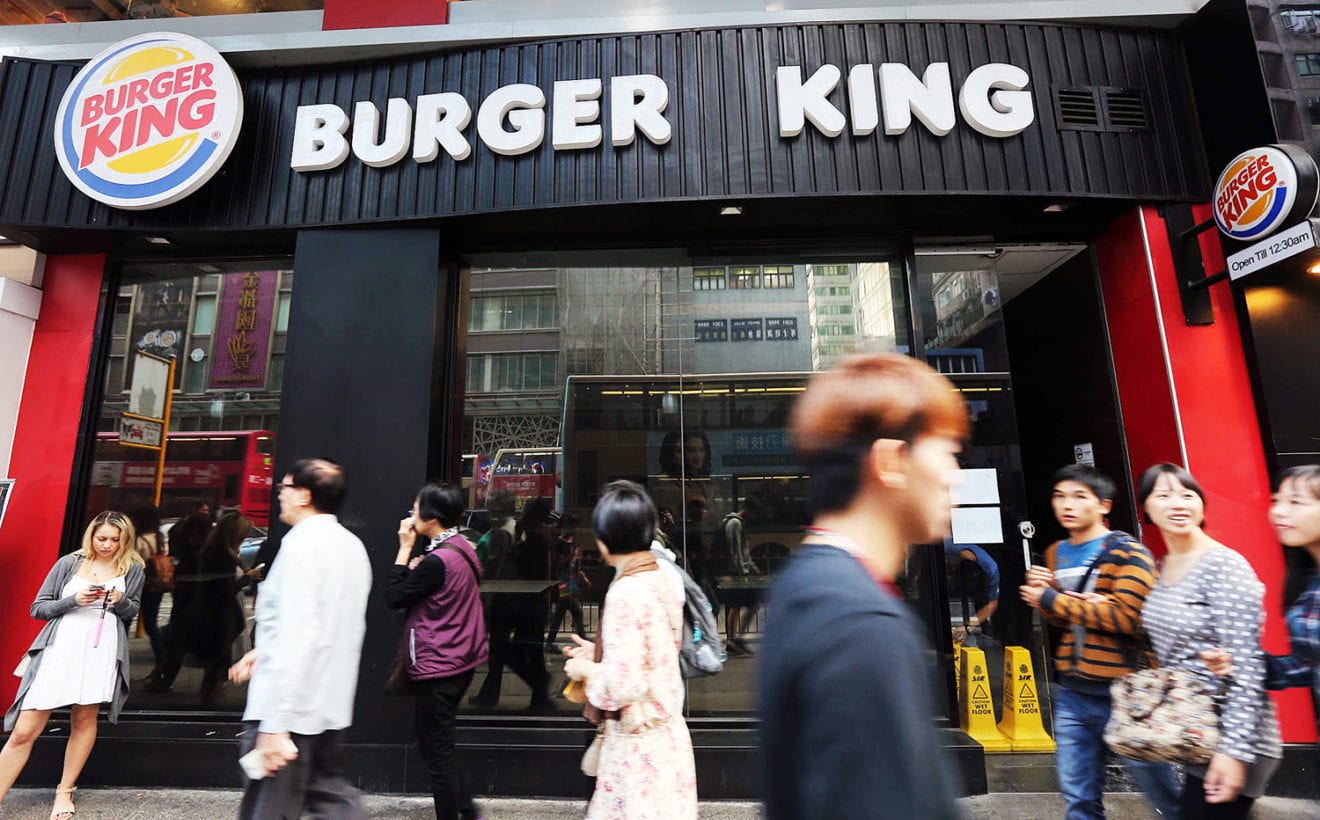
  • More Hong Kong shop closures likely, say retailers after Burger King outlets shut doors

    More Hong Kong shop closures likely, say retailers after Burger King outlets shut doors

    The franchisee of the five restaurants, Perfect Combo, was taken to court several times this year over unpaid rental payments and other fees involving several outlets. Two of them – in Tsim Sha Tsui and Yau Ma Tei – were located in tourist hot spots.

    “Conducting business in Hong Kong is not easy these days” said a manager of a medicine shop on Nathan Road, just 10 metres from the shuttered Yau Ma Tei Burger King outlet.

    Nathan Road, known for its numerous jewellery and medicine shops, has been one of the favourite shopping spots for mainland tourists.

    However, eight shops on a 500-metre stretch from Yau Ma Tei to Mong Kok are currently closed or vacant. The shops used to sell jewellery, watches, handbags, medicine and beef jerky, according to staff of nearby shops, and three closed just last month.

    Mr Hui, the manager of a medicine shop on Nathan Road, said his boss might close the shop next year if his rent is not cut enough.

    “This shop hasn’t made a cent in profit since it opened two years ago”, he said, “ Mainland tourists used to buy more health care products. Now they go for ordinary milk powder.” The shop makes more money from health care products.

    “Custom has dropped one-third after the protests against parallel trading earlier this year” Hui said.

    With Hong Kong’s GDP growth expected to slow to about 2.4 per cent this year, local consumers also tend to be more conservative in spending their hard-earned money.

    “It’s not just mainland tourists. Local consumers have also been buying less this year,” said Mr Ng, a salesman in a sports shoe shop on Nathan Road. Ng said the shop had been offering heavier discounts this year – with prices 10 to 15 per cent lower than in the same period last year.

    Other than shutting down stores completely, some retailers chose to cut the size of their shops to save rental costs. Zhongxing Watch, a Hong Kong luxury watch chain, cut the size of its Nathan Road store by one-third this year, said an employee of a nearby jewellery store. No one rents the vacant area.

    Hong Kong retail sales dropped 3 per cent in October year on year despite the National Day Golden Week holiday. In the first 10 months of this year, retail sales shrank 2.7 per cent from the same period last year.

  • Retail sales decline for eighth straight month in October

    Retail sales decline for eighth straight month in October

    Retail sales in Hong Kong dropped for the eighth consecutive month in October amid a decline in the number of mainland tourists.

    October sales fell 3 percent year on year to HK$37.2 billion, against an estimated decline of 5 percent, the Hong Kong Economic Journal reported.

    By volume, retailed sales edged up 1.2 percent, compared with a 3 percent drop in September.

    The improvement in the city’s retail sales volume was attributed to Apple’s launch of iPhone 6s and iPhone 6s Plus, which pushed up sales of consumer goods.

    However, sales of luxury goods such as jewelries, watches and accessories continued to slump.

    Thomson Cheng, chairman of the Hong Kong Retail Management Association, expects the weak trend in retail sales to persist for the remainder of the year as more Hong Kong people travel abroad during the festive season.


  • South Korean retailers binge on discounting

    South Korean retailers binge on discounting

    On top of seasonal sales and occasional promotions, major South Korean retailers have been holding a series of big discount events since summer to create an intense, promotion-heavy atmosphere through the Christmas season and beyond.

    The discount binge has indeed given a fillip to consumer spending here, but market watchers question its long-term effect as a slowdown in Asia’s fourth-largest economy has led to lower incomes for many people, prompting them to tighten their purse strings.

    Most recently, “K-Sale Day” kicked off last week to run for 26 days nationwide, led by major department stores and outlets that hope to grab shoppers’ attention ahead of the original Black Friday.’

    It came just a month after “Korea’s Black Friday”, a nationwide shopping campaign initiated by the government during the first two weeks of October to jack up the stagnant domestic consumption.

    The government-led event even overlapped with “Korea Grand Sale”, during which retailers knocked down prices from early September to mid-October to woo back both domestic consumers and Chinese travelers during the long-haul national holiday.

    One of the main reasons for the deluge of sales is the summer slump following the outbreak of Middle East Respiratory Syndrome (Mers) in late May, which poured cold water on domestic spending and dented tourist numbers.

    More fundamentally, however, the seemingly never-ending sale is seen as an early sign that South Korea is heading into a recession.

    “Although the domestic economy has long grappled with sluggish consumption, the government is ever more concerned about weak spending after exports showed signs of slowing,” says Ko Ga-young, a researcher at LG Economic Research Institute.

    “Exporters in the manufacturing sector had propelled the growth until the 2008 global financial crisis, but their prospects remain bleak due to slowdown in the Chinese economy and tougher global competition in the low-end manufacturing sector.”

    Although policy makers had expected that low oil prices and record-low interest rates would boost the economy this year, the fallout from the Mers outbreak prompted the government to lower its 2015 growth forecast from 3.8 per cent to 3.1 per cent in June.

    The retail discount events, held both online and offline, did not create much buzz like Chinese e-commerce giant Alibaba’s “Singles Day”, which recorded a blockbuster US$14.3 billion in sales on November 11, but the steep discounts did serve as the spending trigger for pent-up demand in a short period of time.

    According to the data compiled by the industry ministry, the 22 retailers that joined the Black Friday Korea campaign saw their sales rise 20.7 per cent on-year to 719.4 billion won (US$634.9 million) during the two-week period.

    While the government touted its “successful effort” in reviving the consumer sentiment, the market remained skeptical over the growth from last year’s low base during the extended holiday season.

    “Large department stores and discount chains face an unfavorable business environment because massive sales events and permanent discount policy produced a limited effect despite last year’s low base,” said Nam Sung-hyun, a researcher at Kiwoom Securities.

    Unlike a one-off factor like the viral disease, market watchers worry that the tight labor market and rising household debt could continue to discourage people from spending on concerns over their unstable future.

    The youth jobless rate reached the highest level in 15 years at 10.1 per cent in June with more college graduates landing at temporary positions, while the average consumption propensity dipped to a record low 71.5 per cent in the third quarter, according to Statistics Korea.

    “The consumption propensity is expected to further decline because households are managing their spending schedule in line with the bleak long-term growth prospect and extended life span,” Ko said.

    Bricks-and-mortar shops face an even dimmer outlook as more consumers are hunting for bargains from online marketplaces abroad.

    Traditional retailers not only have to compete with each other but also counter challenges from international online marketplaces stealing their customers with easier delivery and transaction procedures.

    “As more consumers learn they can easily buy products at a much cheaper price via online vendors, offline shops are more frequently conducting discount events to retain their customers,” said Jun Mi-young, a professor at Seoul National University and co-author of Trend Korea 2016.

    “The experience of buying foreign brands at discounted prices has created a healthy dose of cynicism about department stores’ pricing policy.”

    According to US No 1 retailer Walmart’s Black Friday advertisement, South Korean tech giant Samsung Electronics’ 55-inch HDTV was discounted to $498, less than half prices for similar models sold at Korean department stores.

    Some deals even raise questions over whether retailers set a higher price from the beginning to look like they are giving discounts.

    Lotte Department Store’s K-Sale Day promotional leaflet shows that the price of German kitchenware maker Henkel’s five-star knife block set was reduced from 550,000 won to 229,000 won.

    Sounds like a good deal. But you can buy the same product below 200,000 won at several online shopping malls on any given day.

    The desperate efforts to grab customers with lower prices, however, come at a price.

    As sales start earlier and last longer, they become less important and easier for consumers to ignore. When every day is special, none is.

    “I used to wait for the discount season to buy off-season clothes or other things at cheaper prices,” Lee Su-jin, a 35-year-old office worker in Seoul, said. “These days, I use mobile applications to buy refurbished products or find good deals at overseas websites.”

    While the discount pricing strategy is useful in driving traffic and sales for a short term, marketing professionals worry repeated sales could negatively affect the retail industry in the long run.

    To survive in the borderless digital commerce world, they advise bricks-and-mortar shops to come up with differentiated services to increase customer loyalty.

    ”As the rise of digital shopping has become an inevitable trend in the retail industry, offline sales channels should seek ways to provide better in-store experiences and quality service,” Jun said. “Squeezing margins is not a sustainable business model.”

    Experts emphasise the government’s role in setting a long-term policy to manage the record-high household debt and steer the economy clear of such economic uncertainties as China’s slowdown and market jitters over a US rate hike.

    “The government should control the pace of the household debt growth so it does not rise faster than the income growth, which could further contract spending,” Ko said.

    “Structural reforms are also needed to foster new value-added service sector for healthier growth.”
  • Guess? Inc. Beats the Retail Slump With Solid Results

    Guess? Inc. Beats the Retail Slump With Solid Results

    The retail industry has been a minefield lately, with many companies reporting tough results. Jeans specialist Guess? hasn’t been immune from the problems facing retail peers like Gap , and coming into its fiscal third-quarter financial report, Guess? investors were bracing for substantial declines in earnings and revenue. In the end, the company didn’t do nearly as badly as many had feared, and that helped to send the stock higher in relief. Let’s take a closer look at how Guess? fared and what its latest results mean for the industry going forward.

    Guess? remains under pressure but still held up well
    Fiscal third-quarter results for Guess? still had plenty of ugly numbers. Revenue fell 12% to $521 million, which was almost exactly in line with what most investors had expected to see from the jeans maker. On the bottom line, net income fell 40% to $12.4 million, but even though earnings of $0.15 per share were down substantially from year-ago levels, they were still $0.04 per share ahead of the consensus forecast among investors.

    As we’ve seen several times in recent quarters, Guess? took a hit from weak foreign currencies. The strong dollar cost the company $0.13 per share in earnings and pulled down overall revenue by about eight percentage points. Retail comparable sales including e-commerce fell 6% in dollar terms but only 2% on a constant-currency basis.

    Guess? saw considerable weakness throughout its business. The Americas retail segment suffered a 7% drop in sales, with Europe taking a 15% hit and Asia seeing sales fall 17%. Wholesale revenues in the Americas fell 12%. Even with the strong dollar, all four areas suffered declines in constant-currency terms. On the margin front, results were mixed, with operating margins improving in the Americas retail and Asia segments but falling in Europe and in the Americas wholesale business. The company continued its strategy of boosting initial mark-ups in its retail segments, but fixed costs offset some of the resulting margin gains.

    CEO Victor Herrero emphasized the positives, noting that overall results exceeded expectations and that comps in the European business were especially strong. “I am laser focused on driving the organization to raise the level of execution,” Herrero said, “as this will be a critical enabler of successful achievement of our strategies.” The CEO pointed to initiatives to boost sales and merchandising quality, build its business in Asia, and reinforce purpose and accountability within the company as having shown signs of success during the quarter.

    Can the jeans maker keep moving forward?
    Investors were also pleased with Guess?’s guidance. For the fiscal fourth quarter, the company expects revenue to fall 4% to 7%, with currency accounting for about 5.5 percentage points of the decline. Earnings of $0.53 to $0.62 per share would also be in line with what investors already expect from Guess? next quarter.

    For the full year, Guess? was more optimistic. The company narrowed its earnings guidance to the upper end of its previous range, now expecting $0.93 to $1.02 per share. Sales declines of 8.5% to 9.5% will look ugly, but they’re not inconsistent with the expectations that investors have for the company.

    What Guess? needs to execute on is its longer-term strategic plan. Investors want to see real progress for fiscal 2017, including stable revenue and rising earnings. That could prove difficult, especially in light of what rival Gap said in its recent report. Gap disappointed investors with its future guidance, including a 15% decline in earnings per share for its holiday quarter. Gap investors also expect it to have trouble rebounding in the coming fiscal year, calling for minimal sales growth and only about a 6% rise in earnings per share.

    Investors nevertheless remain optimistic about Guess?, sending the stock up more than 3% in the first hour of after-market trading following the announcement. As with most companies in the retail industry, Guess? will rely on solid holiday results in order to drive future growth in the months and years to come. If sales climb to finish the year, then Guess? could build further on its share-price gains.


  • China’s Slowdown Is Killing Its Luxury Market

    China’s Slowdown Is Killing Its Luxury Market

    Many investors are unfamiliar with the Chow Tai Fook Jewellery Group, but it is in fact the world’s largest publicly traded jewelry chain.

    The company reported its first half profit for 2015 plunged 42 percent due to weak demand in Hong Kong and Macau and an economic slowdown, Macau Daily Times noted.

    Chow Tai Fook’s net income fell to HK$1.56 billion ($201 million) for the six-month period ending in September. In the same period a year ago, the company’s net income was HK$2.69 billion. Sales for the six-month period fell 4.1 percent from a year ago to HK$28.1 billion, while same-store sales fell 18 percent in Hong Kong and Macau, but rose 0.1 percent in mainland China.

    The company warned investors back in early November that its profits are expected to decline due to the weakness in Hong Kong and Macau, along with an unfavorable sales mix of lower-margin gold products and unrealized hedging losses.

    Is Tiffany Winning Where Chow Tai Fook Is Failing?

    Tiffany & Co. reported its third quarter results on Tuesday. Commenting on the Asia-Pacific region, the company said that total sales rose 6 percent in the third quarter and comparable store sales rose 2 percent. Total sales and comparable store sales in the year-to-date period rose 6 percent and 4 percent, respectively.

    On a constant-exchange-rate basis, Tiffany said that it saw “healthy sales growth” in China, but sales declined again in Hong Kong and Macau.

    Tiffany also announced a total sales and comparable store sales growth in Japan of (FX-neutral) of 34 percent and 24 percent, respectively. According to a report by Bloomberg, Tiffany is “eating Chow Tai Fook’s breakfast” as Chinese tourists accounted for a “significant” portion of the growth Tiffany experienced in Japan.

    Bloomberg also noted that Chinese goods don’t have a “particularly good” reputation among Chinese shoppers, which might also explain why Tiffany is seeing success in a region where Chow Tai Fook “should be cleaning up.”