Tag: retail sales

  • Philippine retail sales surge

    Philippine retail sales surge

    Philippine retail sales soared 6.3 per cent in the last quarter of 2015 – more than three times faster than the same period a year earlier.

    According to data from the Philippine Statistics Authority, the retail trade growth was more than three times the rate of the same period of 2014, when sales rose 1.9 per cent.

    Thus, the retail sector has significantly contributed to the growth of overall trade in the country.

    Wholesale trade also accelerated to 9.0 per cent compared with the 8.9 per cent growth a year ago.

    The industry group that includes wholesale and retail trade accelerated to 7.0 per cent growth in the fourth quarter of 2015 from the 3.4 per cent posted in 2014.

  • Singapore Retail sales up 7.5% in January as car sales surge

    Singapore Retail sales up 7.5% in January as car sales surge

    Singapore’s retail sales increased 7.5 percent in January on a year-on-year basis, mainly due to a spike in sales of motor vehicles, said the Department of Statistics Singapore (SingStat) on Tuesday.

    On a month-on-month basis, retail sales dropped 1.2 percent in January. Excluding motor vehicles, retail sales decreased 0.5 percent.

    The total retail sales value in January was estimated at 4.1 billion Singapore dollars (3 billion U.S. dollars), higher than 3.8 billion Singapore dollars (2.8 billion U.S. dollars) in January in 2015.

    Compared to January 2015, retailers of motor vehicles, medical goods and toiletries and department stores recorded increases of between 11.9 percent and 50.9 percent in sales in January 2016. Similarly, retail sales of supermarkets, mini-marts and convenience stores, wearing apparel and footwear and optical goods and books rose between 1.4 percent and 7.9 percent.

    In contrast, retail sales of telecommunications apparatus and computers decreased 30.5 percent in January 2016 over January 2015. Retail sales of watches and jewellery, food and beverages, petrol service stations, recreational goods and furniture and household equipment also declined between 0.8 percent and 8.4 percent over the same period.

    The total sales value of food and beverage services in January 2016 was estimated at 685 million Singapore dollars (500 million U.S. dollars), lower than the 689 million Singapore dollars (503 million U.S. dollars) in January 2015.

    The Retail Sales Index and the Food and Beverage Services Index measure the short-term performance of retail and Food and Beverage service industries based on their sales records. The sales figures exclude taxes.

  • Indonesia Jan retail sales grow 12.5% year on year

    Indonesia Jan retail sales grow 12.5% year on year

    Indonesia’s retail sales in January grew 12.5 per cent from a year earlier, bolstered by information and telecommunication equipment especially electronics, a Bank Indonesia survey showed on Friday.

    December annual retail sales growth was revised up to 11.4 per cent from the previously reported 10.4 per cent.

    The survey of 700 retailers in 10 major cities predicted slower February retail sales growth of 11.9 per cent.

    Respondents were optimistic over retail sales in the next three months in line with higher demands ahead of and during the Muslim fasting month in June.


  • Lifestyle’s 2015 results have no impact on its ratings

    Lifestyle’s 2015 results have no impact on its ratings

    Moody’s Investors Services says that Lifestyle International Holdings Limited’s 2015 results have no impact on its Baa3 issuer rating.

    The rating outlook remains stable.

    “Despite the weak retail markets in Hong Kong and China, Lifestyle maintained stable revenue and operating profits in 2015. Combined with its flat debt leverage compared to a year ago, this resulted in a credit profile appropriate for its Baa3 ratings,” says Lina Choi, a Moody’s Vice President and Senior Credit Officer.

    “While the negative sales growth trend in the first two months of 2016 point to increased operating challenges, we expect Lifestyle will maintain credit metrics consistent with its Baa3 ratings in the next 12-18 months,” adds Choi, who is also the Lead Analyst for Lifestyle.

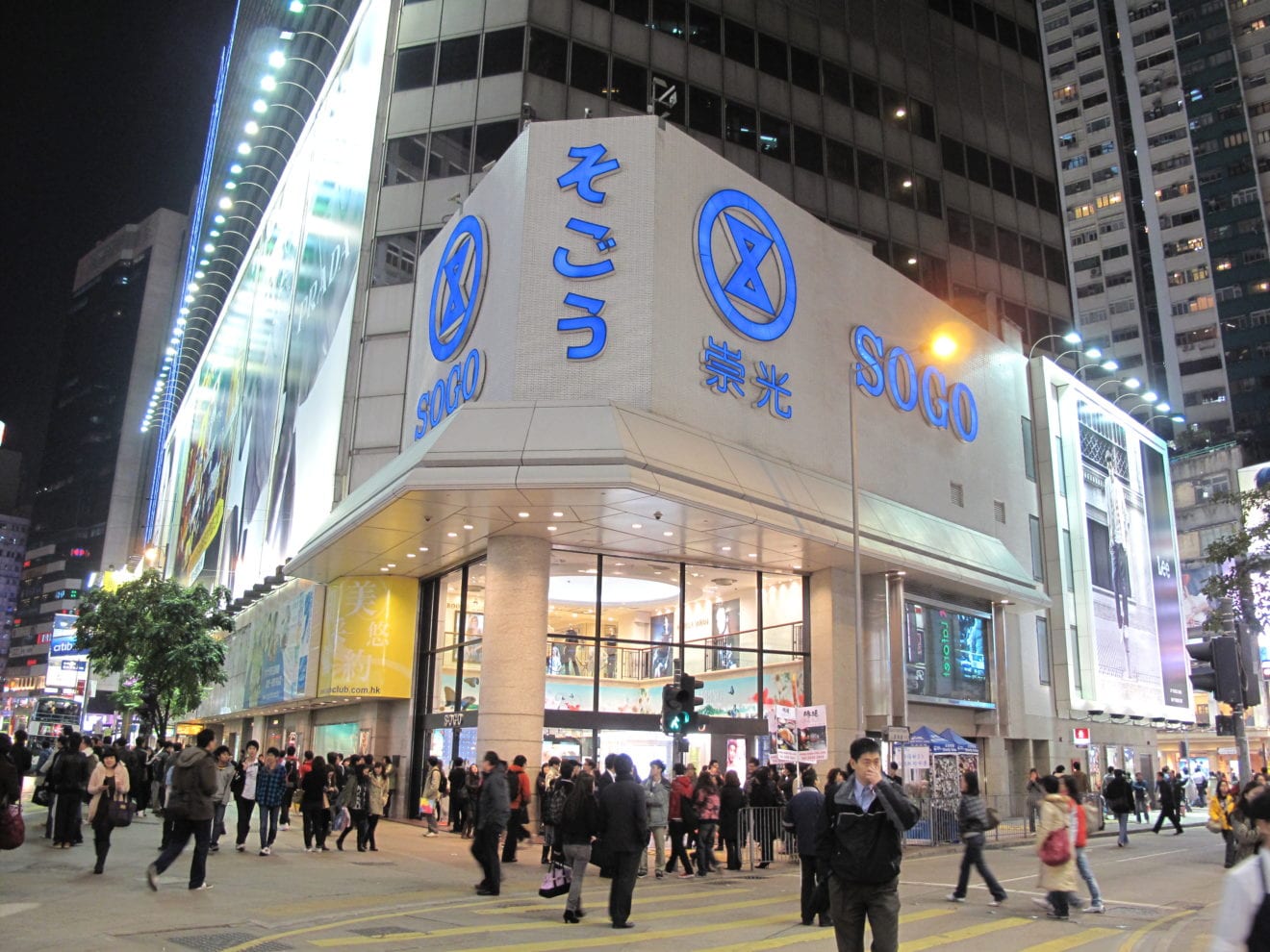
    Lifestyle recorded 1.6% year-on-year gross sales proceeds growth to HKD13.8 billion in 2015 from HKD13.6 billion in 2014. Driven by 2.3% revenue growth at SOGO Causeway Bay and SOGO Tsim Sha Tsui, Hong Kong and a strong performance in Shanghai Jiuguang, the group’s total revenue grew by 3.4% to HKD6.2 billion from 2014 levels.

    Gross sales proceeds declined by low-teen percentage points in the first two months of 2016 from the same period last year, pointing to increasing operating challenges. Lifestyle plans to lengthen promotion periods over the course of the year to avoid repeating the magnitude of revenue declines seen in January-February 2016.

    Meanwhile, Lifestyle’s adjusted EBITDA was around HKD3.1 billion in 2015, flat when compared with 2014 levels. Moody’s estimates the company’s profitability, as measured by adjusted EBITDA/gross sales proceeds, was 22%-23% in 2015, also largely stable from the above 20% reported since 2010.

    Moody’s expects the company’s adjusted EBITDA/gross sales proceeds ratio will remain above 20%, supported by the company’s established brand name and track record of effective cost control in down cycles.

    Although Lifestyle’s adjusted debt increased by around HKD2 billion to HKD14.3 billion at end-2015, this level remains within Moody’s expectation. Accordingly, 2015 adjusted debt/EBITDA for Lifestyle increased to around 4.8x in 2015, a level still appropriate for its Baa3 ratings.

    Moody’s expects the company’s leverage level to stay within 4.5x-5.0x in the next 12-18 months. This is based on the expectation that the company will pay down a HKD3.2 billion loan by mid-2017.

    Lifestyle’s liquidity remains solid. The company held HKD8.6 billion in cash on hand at end-2015, which is more than sufficient to cover its HKD3.2 billion debt due in the next 12 months.

    The principal methodology used in this rating was Retail Industry published in October 2015. Please see the Ratings Methodologies page on www.moodys.com for a copy of these methodologies.

    Listed on the Hong Kong Stock Exchange in 2004, Lifestyle International Holdings Limited is a Hong Kong-based retail operator that focuses on mid- to upper-end department stores, through its two retailer brand names, SOGO and Jiuguang. The company operated two SOGO stores in Hong Kong and three Jiuguang stores in China at end-2015.
     

  • China’s Retail Sector Emerged as a Bright Spot in Slowing Economy

    China’s Retail Sector Emerged as a Bright Spot in Slowing Economy

    China’s retail sector shines

    China is facing an economic downturn, but Chinese consumers are hopeful about its economy. According to Boston Consulting Group, China’s total retail sales are forecasted to grow by 50% to $6.5 trillion by 2020 with online transactions growing by nearly 25%.

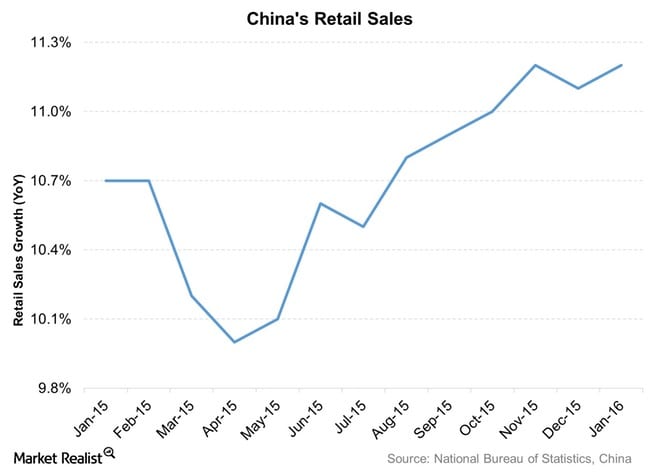
    Retail sales were up by 11.2% in January 2016 due to Lunar New Year holiday shopping. In 2015, retail sales grew by 10.7% YoY to 30.09 trillion yuan, slower than the 12.0% increase recorded in 2014. Urban retail sales of consumer goods were up by 10.5% YoY to 25.9 trillion yuan.

    Rural areas have become a major source of retail sales growth. Retailers are focusing on rural China to increase the penetration of e-commerce. In 2015, rural retail sales were up by 11.8% to 4.19 trillion yuan.

    Chinas Retail Sales 2016-02-28Enlarge Graph

    E-commerce played a major role in driving up retail sales. In 2015, the national online retail sales of goods and services grew 33.3% YoY to 3.88 trillion yuan, according to the National Bureau of Statistics of China. Some of the leading players in China’s e-commerce segment are Alibaba Group Holdings (BABA), Baidu (BIDU), JD.com (JD), NetEase (NTES), and 58.Com Inc. (WUBA).

    According to Fortune Character, a luxury product consulting firm, Chinese consumers accounted for 46% of global sales of luxury products in 2015.

    Transition from export-oriented economy to consumer-driven economy

    After a slowdown in demand and rising debt levels in the manufacturing sector and reduced dependence in the export business, China is shifting its focus to a consumption-driven economy. Although this transition would be painful in the near-term, it has the potential to deliver robust growth to China in the long term.

    Mutual funds such as the Templeton China World Fund (TCWAX) and the Fidelity Advisor China Region Fund – Class A (FHKAX) have exposures of 31.3% and 21.5%, respectively, to the consumer discretionary and consumer staples sector combined. These funds stand to gain immensely due to positive performance in the retail sector.

    After having a brief overview of China’s macroeconomic indicators, let’s begin our assessment of China-focused mutual funds.

  • Macau retail sales weaken

    Macau retail sales weaken

    Sales of watches and jewellery, which comprise a major segment of Macau’s retail business, fell 10.4 per cent last year, fuelling the territory’s first annual retail sales decline since 2000.

    Department-store goods and leather products were also hit, according to the latest Macau retail sales data from the Statistics and Census Service.

    Overall, retail sales volume was down 7.9 per cent for the year, with their value reaching nearly MOP60.9 billion (US$7611 million), says the survey. However, the drop was in double digits for watches, clocks, jewellery, department-store goods, leather products and footwear. The watches, clocks and jewellery segment accounted for 22.2 per cent of all retail sales value – a drop of 25 per cent year-on-year to MOP13.53 billion.

    Department store goods, the second-largest retail segment, had sales fall 13.7 per cent year-on-year to MOP8.93 billion.

    Meanwhile, cosmetics and sanitary articles as well as communication equipment had double-digit increases in sales for the year, reaching MOP2.36 billion and MOP1.68 billion respectively.

    Nearly half of the retailers covered in the survey anticipate a further drop in sales for the first quarter of this year compared with the same period last year, while nearly 40 per cent expect the sales volume to be stable.

    Retail sales for the fourth quarter of last year fell 10.5 per cent to MOP15.59 billion, with sales volume dropping 7.7 per cent. There were significant decreases in footwear (down 24.5 per cent), watches, clocks and jewellery (down 16 per cent), leather goods (down 11.3 per cent) and department store sales (down10 per cent).

  • Spring Festival retail gloom

    Spring Festival retail gloom

    Fortune seems to have favoured Macau over Hong Kong during last week’s Spring Festival.

    But both territories suffered from the ongoing change in Mainland Chinese travel habits.

    Data from the Macau Government Tourism Office showed 548,536 tourists arrived in Macau between February 7 and 10 – which equates to a 5.2 per cent increase over last year’s holiday season. Some 70 per cent of them came from Mainland China.

    However, anecdotal reports from Macau shopkeepers say the increased visitor numbers during the Spring Festival retail break did not translate into higher spending in stores.

    According to the Macau Daily Times “a majority” of retailers it spoke to reported “a drastic drop in business” from mainland visitors.

    One – a fireworks vendor – reported a 50 per cent decline in sales, and other retailers selling apparel and beauty products also reported a decline.

    One cosmetics retailer said sales rose 10 per cent, and snack food stores reported trading was on a par with last year.

    In Hong Kong, where retail sales estimates have yet to be reported, the number of Mainland Chinese visitors fell by about 10 per cent – and the number of groups by an alarming 70 per cent, to about 120 groups per day. So clearly, there will have been a negative impact on retail sales for the week.

    Shopkeepers in Mong Kok, where a violent riot erupted on Monday, reported far fewer tourists in the area.

    “From Monday till now, no one would like to come to this area,” one retailer told local news media.

    “There are more police than tourists. My business is not even half as good as last year, what can I do? What should I do after the holiday?”

    But on the mainland, Ministry of Commerce data shows retail sales rose 11.2 per cent during the Lunar New Year ‘Golden Week’ from February 7 to 13. According to the data, sales by retailers and catering firms grew to about 754 billion yuan, or US$114.879 billion.

  • Chinese New Year Holiday Retail Sales Spike 11.2%

    Chinese New Year Holiday Retail Sales Spike 11.2%

    China’s retail sales over the Spring Festival holiday rose 11.2 percent from the same vacation period a year earlier, with cinemas posting sharp increases in box-office sales, the country’s Ministry of Commerce said in a statement Saturday.

    Retail sales and restaurant receipts in the world’s second-largest economy totaled about 754 billion yuan ($115 billion) in the week-long holiday period that started Feb. 7, the eve of the Lunar New Year, according to the statement. This year’s growth was similar to the 11 percent increase posted in last year’s holiday period.

    Services for the first time generated more than half of China’s gross domestic product last year, at 50.5 percent. Higher household incomes allow families to embrace a middle-class life as the country’s leaders continue to engineer a shift toward services and consumption, and away from manufacturing and investment. Services generate more jobs per yuan of output than China’s factories, which is crucial as the country adjusts to a slower economic growth rate.

    Box-office sales at China’s cinemas over the first three days of the Lunar New Year surged about 80 percent from a year earlier, to nearly 1.7 billion yuan, the statement said. Total ticket sales over the first three days of this year’s Lunar New Year almost equaled the total for the whole week-long holiday last year, according to the statement.

  • Hong Kong retail sales plummet

    Hong Kong retail sales plummeted 8.5 per cent year on year in December, ending a dismal year for retailers.

    It followed a revised 7.8 per cent fall in November.

    For the full 2015 year, Hong Kong retail sales fell 3.7 per cent in value and 0.3 per cent in volume according to data released by the Census and Statistics Department (C&SD).

    The value of total retail sales in December 2015 was provisionally estimated at $43.7 billion.

    And a government spokesman, commenting on the data, warns there is little chance of respite in the short term.

    “Apart from the continued slowdown in inbound tourism, the uncertain economic outlook and asset market corrections may also have dented local consumption sentiment.

    “Looking ahead, the near-term outlook for retail sales will still be constrained by the weak performance of inbound tourism,” he said.

    “The negative spillovers on consumer sentiment from the consolidation of asset markets in recent periods, as well as from external headwinds including dimmer global economic prospects amid the US interest rate normalisation, also need to be closely watched.

    “The government will continue to monitor the performance of retail business and its repercussions on the wider economy and the job market.”

    After netting out the effect of price changes year on year, the volume of total retail sales in December decreased by 6.1 per cent. The revised estimate of the volume of total retail sales in November 2015 decreased by 6 per cent.

    Sales of jewellery, watches and clocks and valuable gifts decreased by 17 per cent. This was followed by sales of wearing apparel (down 12.1 per cent); commodities in department stores (down 12.3 per cent); medicines and cosmetics (down 7.5 per cent); electrical goods and photographic equipment (down 9.3 per cent); miscellaneous consumer durable goods (down 10.6 per cent); footwear, allied products and other clothing accessories (down 8.7 per cent); furniture and fixtures (down 3.3 per cent); books, newspapers, stationery and gifts (down 1.6 per cent); Chinese drugs and herbs (down 6.1 per cent); and optical shops (down 3.8 per cent).

    The only categories to improve year on year in December were groceries: Sales of commodities in supermarkets increased by 3.6 per cent and of food, alcoholic drinks and tobacco by 1.1 per cent.

    On a full year basis, the value of sales of jewellery, watches and clocks and valuable gifts decreased by 15.6 per cent. This was followed by sales of wearing apparel (down 7.2 per cent); commodities in department stores (down 4.1 per cent); medicines and cosmetics (down 1.9 per cent); footwear, allied products and other clothing accessories (down 4.1 per cent); books, newspapers, stationery and gifts (down 2.6 per cent); furniture and fixtures (down 1.8 per cent); Chinese drugs and herbs (down 5.5 per cent); and optical shops (down 3.6 per cent).

    Supermarkets sales rose 1.3 per cent; food, alcoholic drinks and tobacco rose 5.9 per cent; and electrical goods and photographic equipment by 3 per cent.

    The C&SD says the retail sales statistics measure the sales receipts in respect of goods sold by local retail establishments and are primarily intended for gauging the short-term business performance of the local retail sector. They cover consumer spending on goods but not on services (such as those on housing, catering, medical care and health services, transport and communication, financial services, education and entertainment) which account for about 50 per cent of the overall consumer spending. Moreover, they include spending on goods in Hong Kong by visitors but exclude spending outside Hong Kong by Hong Kong residents. Hence they should not be regarded as indicators for measuring overall consumer spending.

  • Japan retail sales tumble

    Japan retail sales tumble

    Japan retail sales fell more than expected in December, with data suggesting that sluggish household spending will keep fourth-quarter economic growth subdued.

    While analysts expect the Bank of Japan to hold off on any more monetary easing at its latest rate review, the weak data is expected to keep policy-makers under pressure to do more to help the fragile economy recover.

    Retail sales fell 1.1 per cent for the month compared with the previous December to mark the second straight month of declines, trade ministry data shows.

    “It seems households are tightening their purse strings because of rising food costs,” says SMBC Nikko Securities chief economist Junichi Makino.

    Japan’s economy has emerged from recession, but growth remains subdued with sluggish demand and a slow rate of growth rate for wages.

  • Korea retail sales slide

    Korea retail sales slide

    Korea retail sales took a surprise turn for the worst in December after three consecutive months of solid growth.

    Reported sales by department stores run by Hyundai Department Store, Lotte Shopping and Shinsegae Co show a 5.7 per cent fall year-on-year, according to figures released by the the Ministry of Trade, Industry and Energy on Tuesday.

    For the whole 2015 year, department store sales fell a modest 1.2 per cent, mainly due to the outbreak of Mers mid-year, and a rise in online shopping.

    The government attributed the December fall to warmer weather compared with the previous year, which may prompt one to speculate on January’s figures given the unusual cold snap hitting the country this month. The warmer climate meant fewer sales of winter clothing.

    Sales of luxury watches, jewellery and household electronics also fell.

    The December fall was the largest monthly year-on-year drop since 6.5 per cent last August. Sales rose by 1 per cent in November.

    Sales at South Korea’s major discount department stores fell 5.1 per cent, the third consecutive monthly decline and the largest since August.

    For the whole of 2015, discount department store sales fell 2.1 per cent.

    The Ministry said discounters’ December performance was affected by the warm weather and softening demand for food products.

  • Korea eyes nationwide sales event to boost consumption

    Korea eyes nationwide sales event to boost consumption

    South Korea will start another round of nationwide discount events later this month in a bid to boost domestic consumption around the Lunar New Year’s holiday, the finance ministry said Tuesday.

    The so-called Korea Grand Sale will begin on Jan. 25 and run through Feb. 7 across the nation before the holiday, with the participation of 300 local traditional markets, according to the Ministry of Strategy and Finance.

    For foreign tourists, the event will take place from Feb. 1 in duty-free shops and other retail stores to celebrate the start of the Visit Korea Year 2016-2018.

    The Lunar New Year, which shifts year to year, falls on Feb. 8 this year, with a five-day break.

    The ministry said the sales event is aimed at maintaining an uptrend in consumption that was seen in the third quarter of last year.

    Last year, the country hosted such events three times, including the K-Sale Day and Korea Black Friday, and saw local retailers post sharp sales increases, along with the government’s excise tax cut programs.

    The rise in sales helped push up the country growth to a five-year high of 1.2 percent in the third quarter, successfully escaping the sluggish mode stemming from the Middle East Respiratory Syndrome outbreak.

    “We’ve come up with plans to keep the pace of private consumption alive and revitalize domestic demand as a whole,” the finance ministry said in a release. (Yonhap)

  • Indonesia retail sales growth rebounds

    Indonesia retail sales growth rebounds

    Indonesia retail sales rose 10.2 per cent year on year in November, according to data from Bank Indonesia.

    The rise followed a lesser 8.7 per cent growth in October, a figure revised downwards by 0.1 per cent this week.

    But the bank predicts weaker growth in December – as little as 6.7 per cent – with retailers pessimistic despite expectations of increasing sales of recreational goods, cultural items and parts and accessories.

    Bank Indonesia surveys 700 retailers in 10 cities to compile the monthly trend data.

    Food, beverages and tobacco were the major drivers of November’s growth.

    The bank said the survey expected price pressures will cool off over the  next three months.

  • Vietnam’s retail sales jump 9.5% last year

    Vietnam’s retail sales jump 9.5% last year

    Viet Nam’s retail sales of goods and services rose 9.5 per cent this year, the largest increase since 2011, as low inflation and strong economic growth bolstered consumer confidence, data from the General Statistics Office (GSO) revealed.

    Sales were estimated at VND3,242 trillion (US$148 billion), GSO said. Vu Manh Ha, domestic trade economist of the GSO, attributed the significant rise in 2015 to the country’s 0.63-per cent CPI year-on-year rise, the lowest increase in the past 14 years.

    Ha said the low CPI increase meant stable prices for several essential products, adding that manufacturers and suppliers could sell their products without raising prices, which encouraged consumption.

    Retail sales growth was also triggered by the increasing number of newly-opened supermarkets and convenience stores throughout the countries, enhancing competition among product suppliers, Ha said.

    The government said on Saturday that Viet Nam’s gross domestic product grew 7 per cent in the forth quarter and 6.7 per cent in 2015, the biggest expansion in five years.

    According to GSO, retail sales of goods, which account for 76 per cent of the total sales, reached VND2,470 trillion ($112 billion), up 11 per cent from last year.

    Revenue in some sectors saw a handsome increase. Food and foodstuffs saw an increase of 15 per cent, household appliances rose 15 per cent, garments and textiles up 13 per cent and transport services are estimated to increase 10 per cent.

    Retail sales of accommodation, restaurant and catering services reached VND372.2 trillion ($17 billion), accounting for 12 per cent of the total revenue, posting a 5.2 per cent year-on-year increase.

  • Credit Suisse: Tough Days for Retailers Next Year as Weak Rupiah and Spending Linger

    Credit Suisse: Tough Days for Retailers Next Year as Weak Rupiah and Spending Linger

    Indonesian retailers could see tough days persisting next year as they wade through a storm of weak rupiah and waning consumer demands, analysts at Credit Suisse Securities Indonesia says.

    Retailers in the country have grappled with volatility in the rupiah this year — with an 11 percent decline to 13,872 against the US dollar year-to-date — which are hiking costs of imports as well as interest from dollar-denominated debt against the backdrop of a slower economy.

    Credit Suisse Securities Indonesia is now underweight on local retailers next year, especially those with high imported content such as fashion and lifestyle retailer Mitra Adiperkasa and household store operator Ace Hardware. Credit Suisse Securities Indonesia is the the sixth-biggest broker in total value in November taking some 4 percent of the trading, data from the local bourse authority showed.

    “I’m worried about retailers with a lot of imported content because the rupiah has weakened a lot, so their merchandise is becoming more expensive for the local population to buy,” Jahanzeb Naseer, head of research for Indonesia at Credit Suisse Securities Indonesia, told reporters in Jakarta on Monday.

    “The government is also expecting a lot of machinery and infrastructure-related imports next year that they may put pressure on consumption imports.”

    Consumer spending on discretionary items, such as electronic devices and apparel, is also unlikely to improve until the second half of next year due to higher prices, according to Naseer.

    Credit Suisse forecasts the rupiah to weaken by between 6 and 8 percent next year due to pressure from the US Federal Reserve’s monetary tightening as well as a possible rate cut by Bank Indonesia.

    Meanwhile, it sees the economy growing by 5.2 percent next year — roughly in line with the government’s 5.3 percent target — on the back of accelerated government spending as well as a potential rate cut of 75 basis points by Bank Indonesia.