Tag: retail sales

  • Real Singapore retail sales slide again

    Real Singapore retail sales slide again

    Real Singapore retail sales fell 3.1 per cent year-on-year in July according to official data.

    SG retail sales august

    Real sales, as Inside Retail Singapore defines it, excludes motor vehicles; with those included, year-on-year sales rose 2.8 per cent.

    Compared to June, real retail sales in July rose 3 per cent.

    The total retail sales value in July 2016 was estimated at $3.7 billion, higher than the $3.6 billion in July 2015.

    Smartphones and computers led the year-on-year decline, with sales down 18.8 per cent, suggesting there may be a turnaround in September, given the launch of the new Apple iPhone range and initial sales of the now-suspended Samsung Galaxy Note 7.

    Sales of watches & jewellery, food & beverages, recreational goods, optical goods & books, furniture & household equipment, wearing apparel & footwear and department stores declined between 0.7 per cent and 9.6 per cent in July 2016.

    The only winning categories were medical goods & toiletries, mini-marts & convenience stores and supermarkets which increased by between 0.3 per cent and 4.5 per cent over the same period.

    Month on month

    SG retail sales August 2

    Besides motor vehicles, food & beverages was the only category to post a sales decline over June, decreasing 1.3 per cent.

    After seasonal adjustment, retail sales of recreational goods increased 13.6 per cent. Medical goods & toiletries, optical goods & books, wearing apparel & footwear, computer & telecommunications equipment, watches & jewellery, petrol service stations, mini-marts & convenience stores, supermarkets, department stores; and furniture & household equipment rose by between 0.4 per cent and 8 per cent.

    Sales of food & beverage services

    Sales of food & beverage services consumer away from home (seasonally adjusted) increased by 3.6 per cent month-on-month in July and 3.5 per cent year-on-year.

    The total sales value of food & beverage services in July 2016 was estimated at $698 million, higher than the $675 million in July 2015.

    After seasonal adjustment, turnover of fast food outlets, restaurants and food caterers increased between 5.4 per cent and 11.5 per cent year-on-year. In contrast, sales of other eating places, such as cafes, declined 1.4 per cent.

    Year-on-year, sales of fast food outlets and other eating places increased 16.3 per cent and 4.8 per cent respectively in July. But, turnover of food caterers and restaurants declined 0.5 per cent and 0.2 per cent respectively.
  • Hong Kong retail sales plunge for 17th month in a row

    Hong Kong retail sales plunge for 17th month in a row

    HK retail sales 07 16

    Things are not exactly looking up.

    The bad news continues for Hong Kong’s downtown duty free and travel retailers such as DFS as the latest retail sales statistics show another month-on-month decline.

    July government data provisionally indicate that the value of total retail sales in July fell by -7.7% to $34.6bn/$4.46bn, compared with July 2015. This means that for the first seven months of 2016, the value of total retail sales decreased by -10.1% compared with the same period in 2015.

    The trend in department stores was slightly better: in July they fell by -6.9% and by -8.7% in the first seven months of the year.

    The graph above shows the rate of change on a monthly basis for all retail sales in Hong Kong and it suggests that since the second quarter of 2015 there has been continuous downward, negative pressure on sales [the spikes reflect the timings of Chinese New Year].

    HIGH-VALUE ITEMS HAMMERED

    By those product categories most relevant to duty free, the figures showed a very mixed performance in July. Value sales of jewellery, watches and clocks, and ‘valuable gifts’ took a beating, decreasing by -26.2% as did electrical goods and photographic equipment (-21.8%), while footwear, allied products and other clothing accessories held their ground at (-1.1%).

    The tourism trend this year looks worse than in 2015 which is a worry.

    The overall negative trend has been attributed to the depressed tourist traffic coming to Hong Kong, particularly from China. While the July figures are not yet available, in the half-year to June visitor arrivals fell by -7.4% to 27.16m, with mainland Chinese traffic falling by over -10%.

    This follows an inbound decline of -2.9% to 59.3m in 2015, but a spending decline of -7.5% to HK$332.3bn. Of the 59.3m, Mainland China continued to be the largest visitor source market accounting for 77% of total arrivals.

  • Retail sales up 0.9% on-year in June, boosted by vehicle sales

    Retail sales up 0.9% on-year in June, boosted by vehicle sales

    Retail sales in Singapore rose 0.9 per cent in June compared with the previous year, mainly due to a jump in sales of motor vehicles, the Department of Statistics (SingStat) said on Monday (Aug 15).

    However, excluding motor vehicles, retail sales dipped 3.0 per cent compared with the same period a year ago.

    On a month-on-month basis, retail sales were down 1.5 per cent in June. Excluding motor vehicles, retail sales dropped 3.7 per cent.

    The total retail sales value in Juune was estimated at S$3.6 billion, similar to a year ago.

    Retailers of motor vehicles recorded a sales increase of 17.1 per cent compared to the previous year, the highest increase of all sectors. The next best performing sector was furniture and household equipment, which saw a 5.8 per cent increase. The medical goods and toiletries sector also recorded an increase of 3.0 per cent.

    Other than the mini-marts and convenience stores section, which was unchanged, all other sectors were in the red.

    According to SingStat, the telecommunications apparatus and computers sector fell the most at 25.1 per cent, compared with the previous year. This was followed by petrol service stations, which fell 14.1 per cent, and recreational goods, which saw a 11.8 per cent dip.

    Sales of food and beverage services rose 0.4 per cent from the previous year. The total sales value of food and beverage services in June was estimated at S$649 million, higher than the S$646 million in June 2015.

    The Retail Sales Index and the Food and Beverage Services Index measure the short-term performance of retail and F&B service industries based on their sales records. The sales figures exclude taxes such as GST and COE.

  • Mainland China retail sales growth slows in July

    Mainland China retail sales growth slows in July

    Mainland China’s retail sales growth slowed sharply in July, statistics showed Friday, missing expectations in a disappointing sign for the world’s second-largest economy as the mainland China authorities look to consumer demand to push growth.

    Retail sales rose 10.2 percent in the month, the National Bureau of Statistics (NBS) said, a marked slowdown from June’s 10.6 percent increase and below the median forecast of 10.5 percent in a Bloomberg News poll of economists.

    Beijing is looking to retool the economy from a reliance on investment spending and exports to one driven more by consumer demand, but the transition is proving bumpy and gross domestic product growth is slowing.

    China is a key driver of the world economy but grew at its slowest rate in a quarter of a century last year, and has decelerated further since then.

    Industrial output in the Asian giant rose 6.0 percent in July over the year before, the NBS said, while fixed asset investment (FAI), a gauge of infrastructure spending, rose 8.1 percent in the first seven months of the year.

    Those figures also missed expectations of 6.2 percent and 8.9 percent respectively.

    Analysts were disappointed. Zhao Yang of Nomura called the figures an “across-the-board slowdown” that showed more weakness than expected. The investment figures were consistent with a deep contraction in imports that “points to sluggish domestic investment demand.”

    Looking ahead, factory output will face further downward pressures due to efforts to cut overcapacity, analysts with ANZ Research said in a note.

    Industrial production “may further dampen” this quarter, they added, as a result of flooding around the Yangtze River and suspended factory production in Zhejiang province, one of China’s most developed areas, due to a forthcoming G-20 summit in Hangzhou.

    Unswervingly Advance

    The NBS said in a statement China’s economy was “basically steady” in July but said that “serious disasters” from flooding and high temperatures in some parts of the country caused some indicators to slow.

    “However, overall economic development kept performing in a proper range with steady pace, as a result of stable employment and prices, deepened supply-side structural reform and accumulated new impetus,” it said.

    China should “unswervingly advance” supply-side structural reform and expand aggregate demand, it added.

    NBS spokesman Sheng Laiyun said it was “reasonable” for FAI growth to fall long-term as the economy shifts away from traditional heavy industries toward the service sector, which does not require as intensive investment.

    “The trend is good,” Sheng told a news conference. “Even though economic growth dropped slightly, the economy is stable and making steady progress, and the steady trend toward improvement has not changed.”

    Sheng acknowledged, however, that China faces “downward pressure” from weak global demand as Beijing carries out a marathon effort to nurture consumer-driven growth and reduce reliance on trade and investment.

  • China July vehicle sales rose 23 pct y/y – China Passenger Car Association

    China July vehicle sales rose 23 pct y/y – China Passenger Car Association

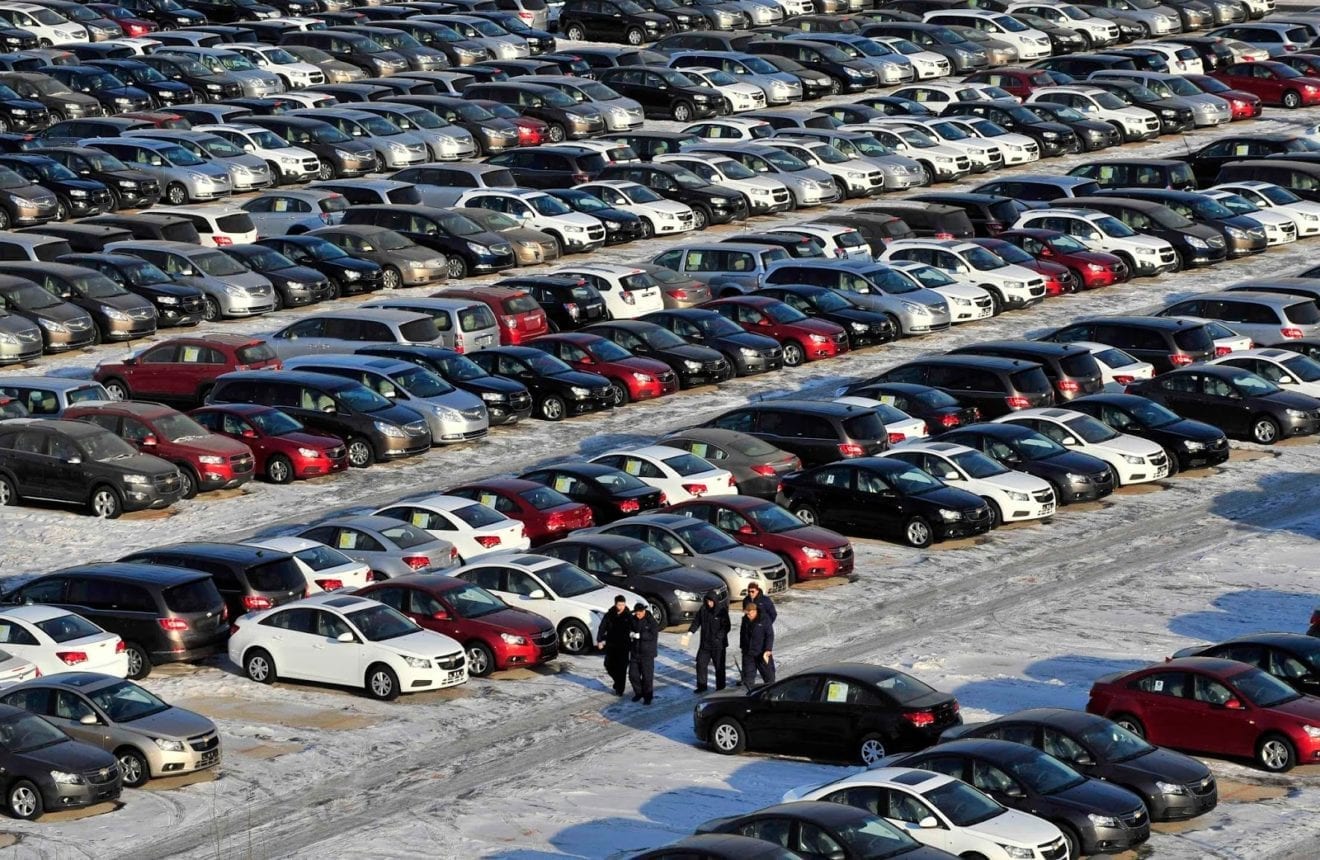
    Passenger vehicle sales in China to retail customers rose 23 percent in July from a year earlier, the China Passenger Car Association (CPCA) said on Tuesday.

    Auto retail sales totaled 1.6 million vehicles, CPCA said in a statement on its website. For January-July, passenger car sales rose 11 percent versus the same period in 2015, it said.

    The China Association of Automobile Manufacturers, whose statistics are generally viewed as the benchmark for the industry, is due to report wholesale data for July on Friday.

  • Vietnam retail sales growth slows

    Vietnam retail sales growth slows

    The growth rate of Vietnam retail sales is slowing, according to official data.

    The Vietnam General Statistics Office says retail trade and services revenue for the first half of 2016 was US$89.6 billion, 9.4 per cent higher than last year.

    But the rate of Vietnam retail sales growth is generally slower than that of the same period last year once inflation is excluded. The net increase would be 7.4 per cent compared to 8.3 per cent last year.

    Also, according to the records, retailing during the first quarter of 2016 was 7.9 per cent lower than last year; 8.3 per cent lower than for the first four months, and 7.8 per cent in the first five months.

    Analysts suggest a reason for the slowing growth could be linked to slowing accommodation bookings and tourist spending, which totalled US$11 billion (up 7.5 per cent). The decline was most evident in some Central provinces, and likely related to the mass death of fish in Nghe An and Ha Tinh.

    Retail sales of goods, on the other hand, were US$68.23 billion (76 per cent of total sales) and were 9.7 per cent higher than the period of January to July of last year.

    Food, household appliances and garments saw positive increases with 12.9 per cent, 10 per cent, and 12 per cent respectively.

    GSO director Nguyen Bich Lam said consumer concerns about food safety and environmental pollution partly affected the retail growth in accommodation and catering. Locals tended to have home-cooked meals and became more careful in spending their money on tourism services.

  • Burgers and beers lead Hong Kong restaurant industry growth

    Burgers and beers lead Hong Kong restaurant industry growth

    Restaurant industry analysts remain sceptical about the sector’s growth prospects despite promising year-on-year figures.

    Census and Statistics Department figures show restaurant receipts in Hong Kong increased 3.1 per cent year on year, at the end of the second quarter 2016.

    Fast food and bars did the best while Chinese restaurants saw fewer diners and lower spending, according to the figures.

    Fast food receipts increased 6.4 per cent year on year, bar sales increased 4.3 per cent, other drinking venues’ sales increased 3.9 per cent and Chinese restaurants increased 1.7 per cent.

    But the upwards trend for the local restaurant industry could be short lived, according to Simon Wong Ka Wo from the Federation of Restaurant and Related trades.

    There will be a 2 to 3 per cent “slight decrease” in the restaurant sector in terms of its overall performance for the whole year, Wong forecast. He warned that some Hong Kong restaurants might have to “suffer a little bit” over coming months, but the industry will bounce back in the fourth quarter.

    “The increase seems a little bit surprising to me as the performance of the economy for the past six months does not seem so promising,” Wong said.

    “The major reason is people tend to spend more on some middle to low-end restaurants like McDonald’s instead of high-end ones due to the stagnant economy, contributing to the increase in overall value of total receipts.”

    The optimistic figures come against a backdrop of slowing retail trade, which registered an 8.9 per cent decrease year on year.

    Professor Terence Chong Tai-Leung from the Chinese University of Hong Kong said rising incomes could help the city rebound from the retail slump.

    “As you can see from the low unemployment rate and the increased average income figure recently, Hong Kong people still have large purchasing power,” he reasoned.

  • Another bad month for Hong Kong retail sales

    Another bad month for Hong Kong retail sales

    Hong Kong retail sales slumped 8.9 per cent year-on-year by value in June to HK$33.7 billion.

    That’s marginally higher than May’s fall of 8.3 per cent, but a slower rate than the 10.1 per cent of the first six months of this year. It marks the 16th consecutive month of year-on-year decline.

    A spokesperson from the Census and Statistics Department said the fact sales were still notably lower than the year-ago level, reflected the fall in visitor spending and more cautious consumer sentiment amid subpar economic conditions.

    “Nevertheless, on a seasonally adjusted basis, retail sales improved moderately in the second quarter compared to the first quarter.”

    The HKRMA said in a statement that most of its member companies anticipate the downward trend to continue, but slow in the remainder of 2016, “taking into account a lower base recorded in the second half of 2015”.

    While sales of consumer durable goods posted the biggest decline – 37.2 per cent – the larger jewellery, watches and valuable gifts category caused much of the damage, falling 20.4 per cent. Department store sales were down 10.5 per cent, electrical goods and cameras by 25.7 per cent and optical shops by 5.5 per cent. The decline in apparel sales appears to be largely over with the category down just 0.6 per cent.

    Supermarket sales rose 1.9 per cent, food,liquor and tobacco sales by 2.9 per cent and cosmetics and medicines by 5 per cent.

    “Looking ahead, the near-term retail sales performance will still depend on the performance of inbound tourism as well as the extent to which consumer sentiment will be affected by the lingering uncertainties about the economic outlook,” said the C&SD spokesman.

  • Korean retail sales rise

    Korean retail sales rise

    Korea retail sales rose in June according to government data measuring major department stores and discount chains.

    The government said the year-on-year increase was fuelled by more holidays.

    The combined sales of three department stores – Hyundai, Lotte and Shinsegae – increased 11.8 per cent on-year in June, while those of major discount retailers – E-Mart, Lotte Mart and Home Plus – edged up 0.9 per cent during the same period, according to the data compiled by the Ministry of Trade, Industry and Energy.

    The ministry said sales went up as the number of holidays increased by one day from a year earlier.

    Sales at convenience stores jumped 18 per cent on-year last month, boosted by “a dramatic rise in food sales”, mostly of instant food. Convenience stores have retained double-digit growth rates since the last quarter of 2014 amid rising single-person households.

    The number of single-person households was estimated at 5.06 million in 2015, 7.7 times higher than the 661,000 households of 1985, according to the report by the state-run Korea Institute for Health and Social Affairs.

    Meanwhile, sales at hypermarkets, mostly run by large retailers, slid 7.8 per cent on-year.


  • Retail, food/beverage sales to rise in July: MOEA

    Retail, food/beverage sales to rise in July: MOEA

    On the back of rising demand for the upcoming Ghost Festival, the local retail sector is expected to see sales growth in July, at a time when many retailers have aggressively launched promotional campaigns, according to the Ministry of Economic Affairs (MOEA).

    In addition, continued high temperatures have boosted demand for beverages in the local market, the MOEA said, and this trend is expected to give an additional boost to the local retail sector, as well as the food and beverage sector, in July.

    The forecast was made by the ministry after it released data Friday showing that Taiwan’s retail sales for June stood at NT$335.8 billion (US$10.49 billion), up 0.2 percent from a month earlier and up 0.5 percent from a year earlier.

    The statistics indicate that revenue in the local food and beverage sector hit NT$36.3 billion in June, up 1.9 percent from a year earlier but down 3.0 percent from a month earlier.

    The Ghost Festival (中元節), the 15th day of the seventh month of the lunar calendar, will fall on Aug. 17 this year.

    Local people usually buy foods and other necessities ahead of the festival in preparation for the folkloric rituals.

    In addition, the Taipei Multi-Media Show, which was staged July 1 through July 4, was expected to boost sales of 3C products and eventually raise revenue of the local retail sector, the MOEA said.

    The MOEA said that the hot weather is expected to prompt more and more consumers to buy beverages to keep themselves cool, while the current summer vacation is a peak season for local people to travel, which is expected to boost sales for the local restaurant businesses.

    In June, sales posted by department stores, supermarkets, convenience stores and hypermarkets in the local retain sector gained 3.2 percent, 5.6 percent, 3.0 percent and 5.5 percent, respectively, from a year earlier, while sales of the auto/motorcycle business rose 3.5 percent from a year earlier, the MOEA data shows.

    However, sales of the information and home appliance business in the local retail sector fell 5.6 percent year-on-year in June, the data indicated.

    During the month, sales of the restaurant and beverage businesses in Taiwan rose 2.2 percent and 0.8 percent, respectively, from a year earlier, the MOEA said.

    The MOEA said that sales posted by the local wholesale sector for June gained 3.6 percent from a year earlier to NT$805.8 billion.

    In the first six months of this year, sales of the local retail and food/beverage sectors rose 2.0 percent and 2.6 percent, respectively, from a year earlier, while revenue posted by the wholesale sector fell 5.4 percent year-on-year, the MOEA said.


  • Rising sales at department stores suggest recovery of retail sector

    Rising sales at department stores suggest recovery of retail sector

    South Korea’s major department store chains saw their sales move up 2.4 percent in the first quarter from a year earlier, government data showed Sunday, indicating a recovery may be under way in the retail sector.

    According to the data compiled by the Ministry of Trade, Industry and Energy, South Korea’s top three department store brands — Lotte, Hyundai and Shinsegae — saw their sales improve in the January-March period from a year earlier, recovering from the 1.2 percent on-year drop posted for all of 2015.

    Last year, local department stores suffered a drop in performances due to the outbreak of the Middle East Respiratory Syndrome (MERS) here, which induced South Koreans to avoid crowded areas and stay indoors.

    The department stores also saw their sales advance 4.3 percent on-year in April. While sales dropped 2.7 percent on-year in May, they still were better than at large-sized supermarket chains, which suffered a 6.3 percent drop in sales over the cited period.

    Industry watchers said the recovery may give birth to a new department store branch with annual sales of 1 trillion won (US$879 million).

    Last year, only three branches managed to post annual sales above 1 trillion won, with two of them being Lotte and the other Shinsegae.

    “As the sales of large branches are recovering, and as department stores are aggressively rolling out renewal projects, it is believed that the number of the so-called 1 trillion-won club branches will increase,” an industry watcher said.


  • Real Singapore retail sales continue to decline

    Real Singapore retail sales continue to decline

    Real Singapore retail sales in May rose on April’s figures – but remain down year-on-year.

    According to Statistics Singapore, total retail sales (seasonally adjusted) increased 1.4 per cent in May 2016 over April. Excluding motor vehicles, retail sales increased an even better 2.3 per cent.

    But compared to May 2015, retail sales decreased 3.3 per cent after removing motor vehicle sales from the data. Including vehicles, total sales rose 3 per cent year-on-year.

    After seasonal adjustment, retail sales of watches & jewellery, furniture & household equipment, food & beverages, optical goods & books, department stores, apparel & footwear, medical goods & toiletries and petrol stations increased between 0.8 per cent and 6.5 per cent in May 2016 compared to April.

    Retail sale SG May 16

    In contrast, retail sales of recreational goods, mini-marts & convenience stores, phones & computers and supermarkets decreased by between 0.4 per cent and 6.3 per cent in May over April 2016.

    Year-on-year, retail sales of furniture & household equipment and medical goods & toiletries grew by 3.1 per cent and 1.9 per cent respectively.

    Conversely, retail sales of phones & computers and petrol service stations declined 17.3 per cent and 14.9 per cent respectively. Sales of recreational goods, optical goods & books, watches & jewellery, food & beverages, supermarkets, mini-marts & convenience stores, apparel & footwear and department stores also fee, by between 1.9 per cent and 8.7 per cent. .

    The total retail sales value in May 2016 was estimated at $3.7 billion, higher than the $3.6 billion in May 2015.

    Food & beverage service sales

    Retail sale SG FnB May 16

    Sales of food & beverage services (seasonally adjusted) increased 0.9 per cent in May over April.

    Compared to May last year, sales of food & beverage services increased 0.7 per cent.

    The total sales value of food & beverage services in May 2016 was estimated at $690 million, higher than the $685 million in May 2015.

    Year-on-year, sales by ‘other’ eating places grew by 6.7 per cent and by fast food outlets by 1 per cent.

    However, turnover of food caterers decreased 3.7, and of restaurants by 3.6 per cent.

  • Singapore economy grows 2.2% in Q2, beating expectations

    Singapore economy grows 2.2% in Q2, beating expectations

    The Singapore economy grew 2.2 per cent on a year-on-year basis in the second quarter, marginally higher than the 2.1 per cent expansion in the previous quarter and in line with analysts’ expectations, according to advance estimates from the Ministry of Trade and Industry (MTI) on Thursday (Jul 14).

    On a quarter-on-quarter, seasonally adjusted and annualised basis, the economy expanded 0.8 per cent, an improvement from the 0.2 per cent growth in the first quarter.

    The figures were in line with analysts’ forecasts, with economists in a Reuters poll predicting a 2.2 per cent year-on-year growth and a 0.9 per cent growth on a quarterly basis.

    The manufacturing sector expanded by 0.8 per cent on a year-on-year basis, a reversal from the 0.5 per cent decline in the previous quarter. Growth was supported by an increase in the output of the biomedical manufacturing and electronics clusters, MTI said. On a quarter-on-quarter basis, the sector grew at an annualised rate of 0.3 per cent, following the 18.4 per cent growth in the preceding quarter.

    The construction sector grew by 2.7 per cent, easing from the 4.5 per cent growth recorded in the previous quarter. The moderation in growth was largely due to a slowdown in private sector construction activities, the ministry said. On a quarter-on-quarter basis, the sector expanded at an annualised rate of 0.6 per cent, lower than the 3.5 per cent expansion in the preceding quarter.

    Growth in the services-producing industries came in at 1.7 per cent, the same pace of growth as in the previous quarter. Growth was driven mainly by wholesale and retail trade, and the transportation and storage sector. Within the retail trade sector, growth was supported by strong motor vehicle sales. On a quarterly basis, the industry grew by 0.5 per cent, reversing the 4.8 per cent contraction in the preceding quarter.

    The advance GDP estimates were computed largely from data in the first two months of the quarter – in this case, April and May. They are intended as an early indication of the GDP growth in the quarter, and are subject to revision when more comprehensive data become available, said MTI.

    The preliminary GDP estimates for the second quarter, including performance by sectors, sources of growth, inflation, employment and productivity, will be released next month.

    GROWTH IN LINE WITH EXPECTATIONS, BUT LIKELY TO DETERIORATE: ANALYSTS

    Mizuho senior economist Vishnu Varathan said manufacturing primarily drove the improvement for the second quarter.

    “Manufacturing snapped six consecutive quarters of year-on-year contraction, to come into an expansion. It’s a modest expansion, but nonetheless a poignant one,” he said.

    The improvement of the economy in the second quarter, after the numbers for the first quarter were upwardly revised from 1.8 per cent to 2.1 per cent, probably framed a “stabilisation story” in Singapore’s growth, if not a slight improvement, added Mr Varathan.

    However, economists told us the recovery is likely to be tentative, with the volatile pharmaceuticals unlikely to sustain the lift in industrial production, while sectors like transport engineering and petrochemicals continue to show signs of weakness.

    On the external front, the impact from UK’s vote to leave the European Union is likely to be felt in the coming months, said Mr Brian Tan, Nomura Singapore’s Southeast Asia economist.

    “The Singapore economy is so open, not just to trade, but also from the financial market channels because we’re an international financial centre, so both these channels could have a very negative impact on the Singapore economy once Brexit has happened,” Mr Tan said.

    He added the impact may possibly be apparent in the July and August trade data, saying that “because of this, we worry that the growth outlook for Singapore will deteriorate over the coming quarters, especially when we get into the third quarter when the impact of Brexit might be a bit more visible.” 

    Amid ongoing macroeconomic risks and currency market volatility, observers also said the Monetary Authority of Singapore is likely to actively review the need to weaken the Singapore dollar.

    For the full year, the Government’s forecast is for Singapore’s economy to grow by between 1 and 3 per cent.

  • Subdued tourism and weak retail sales likely to hurt Hong Kong economy

    Subdued tourism and weak retail sales likely to hurt Hong Kong economy

    In the first quarter of 2016, Hong Kong’s economy had contracted 0.4 percent on sequential basis and grew 0.8 percent on year-on-year basis. This was the first contraction since 2014 amidst weak retail sales and trade sectors, sluggish consumer demand and cautious business spending.

    Fewer visitors and subdued tourist expenditure further weighed on retail sales in April. Moreover weaker trade growth led to high jobless rate in the trade and wholesale sector. Downtrend in retail and tourism sector continue to be present because of fewer tourists and tepid spending and cautious consumer confidence.

    Hong Kong’s retail sales’ value dropped for the 14th consecutive month in April. It declined 7.5 percent year-on-year to HKD 35.2 billion. The retail sector continues to be in doldrums amidst fewer tourists and weaker tourists spending. The luxury segment has weighed majorly on the nation’s retail sales, with the sales value of watches and jewellery, declining for the 19th consecutive month by 16.6 percent in April.

    Given the dull outlook for the country’s retail sector, Hong’s Kong’s retail property market might drop further even as retail shop rentals and prices declined 1.3 percent year-on-year and 7.8 percent year-on-year respectively in March. Additional rental concession and higher vacancy rates in core business district might be likely, noted OCBC Bank in a research report.

    In April, jobless rate in the retail sector grew to 5.3 percent amidst subdued tourist activities and luxury consumption. This was disappointing as compared to an average of 4.4 percent in 2014. This is due to weak business performance in retail sales in the midst of contracting tourist spending. The Hong Kong’s retail sector is expected to be limited by subdued inbound tourism activities amidst downturn in Chinese economy and external uncertainties. This might be a drag on employment in the retail sector.

    “Overall, HK’s labor market may worsen further with unemployment rate expected to rise to 3.5 percent over 2016,” added OCBC Bank.


  • Hong Kong retail sales fall further

    Hong Kong retail sales fall further

    The latest Hong Kong retail sales data shows the rate of decline is continuing to slow this year.

    In May, according to information from the Census and Statistics Department released on the eve of Friday’s holiday, there was a year-on-year decline of 8.4 per cent to a provisionally estimated $35.7 billion. While that is a full percentage point higher than April’s decline, it is lower than the 10.8 per cent decline recorded for the first five months of the year, and the 11.4 per cent for the first four months.

    Based on the seasonally adjusted data, the value of total retail sales increased by 1.1 per cent in the three months ending May 2016 compared to the preceding quarter, while the volume of total retail sales increased by 0.3 per cent.

    Once again, falling jewellery and luxury goods sales brought the overall figures down, plunging nearly 20 per cent in May.

    A government spokesman said retail sales stayed weak in May, with many types of retail outlet still registering year-on-year declines in sales. “This was due partly to the drag from the slowdown in inbound tourism and partly to the more cautious local consumer sentiment amid the subpar economic conditions.”

    He said the near-term outlook for retail sales is still subject to a large degree of uncertainty, depending on the performance of inbound tourism as well as the extent to which local consumption sentiment will be affected by the increased external headwinds and heightened financial market volatility.”

    After netting out the effect of price changes over the same period, the volume of total retail sales in May 2016 decreased by 9 per cent compared with a year earlier. The revised estimate of the volume of total retail sales in April 2016 decreased by 7.7 per cent year-on-year and for the first five months of the year by 10.2 per cent.

    By broad retail category – in descending order of value – sales of jewellery, watches and clocks, and valuable gifts decreased by 18.7 per cent. This was followed by sales of commodities in department stores (down 5.9 per cent); apparel (down 5.7 per cent); electrical goods and photographic equipment (down 25.2 per cent); miscellaneous consumer durable goods (down 34.6 per cent); footwear and accessories (down 6.3 per cent); books, newspapers, stationery and gifts (down 6 per cent); furniture and fixtures (down 6 per cent); Chinese drugs and herbs (down 7.2 per cent); and optical shops (down 8.8 per cent).

    Sales of commodities in supermarkets increased by 1.5 per cent, medicines and cosmetics by 0.3 per cent; and food, alcoholic drinks and tobacco by 3.1 per cent.