Tag: Retail

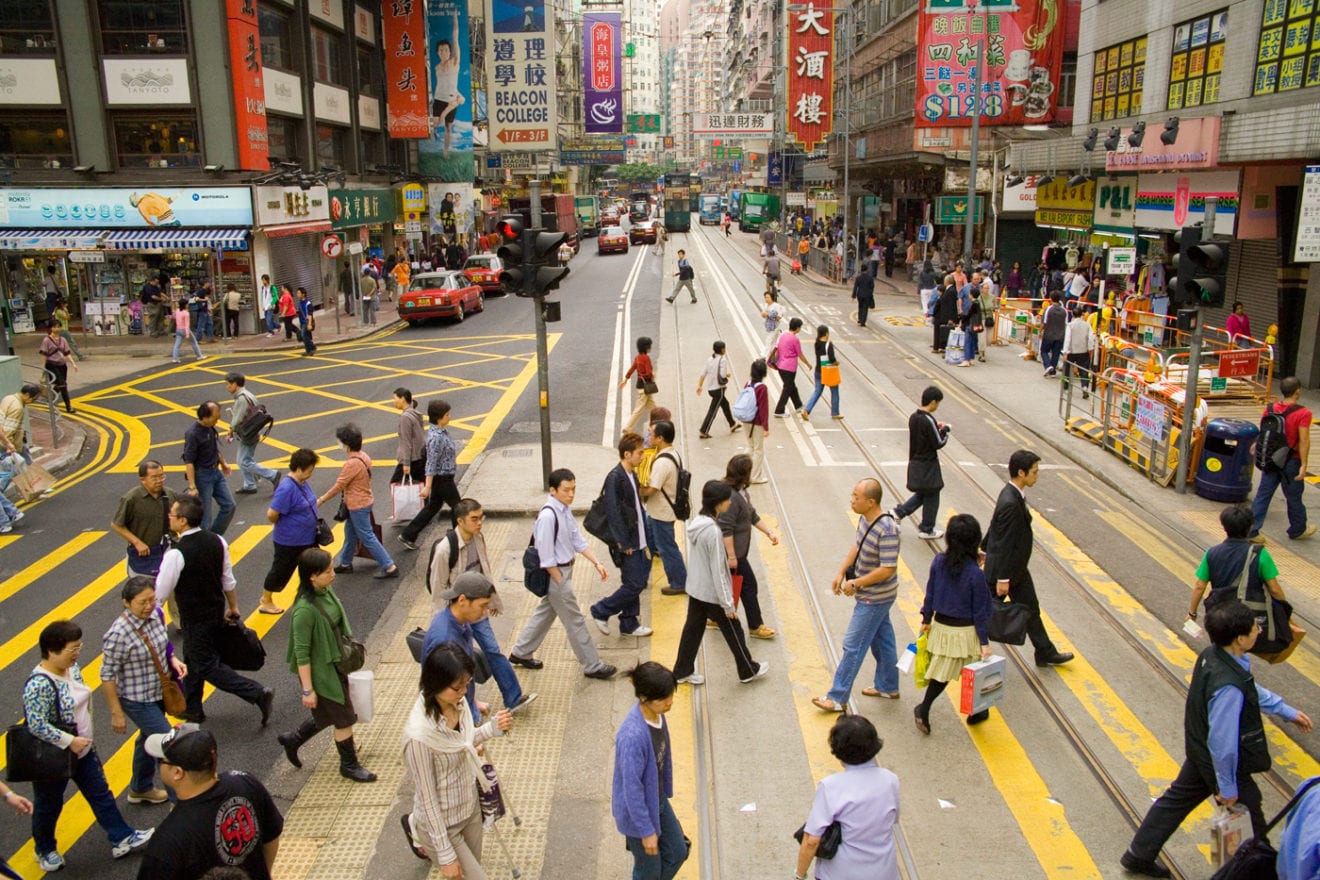
  • Hong Kong sees worst retail sales since 2003

    Hong Kong sees worst retail sales since 2003

    Retail sales fell 3.7 percent in value last year, the biggest decline since the SARS outbreak in 2003, Hong Kong Retail Management Association chairman Thomson Cheng said.

    Cheng also said the value of retail sales this year is forecast to fall by at least 3 percent, the Hong Kong Economic Journal reported on Wednesday.

    Last year’s figure was further dragged down by the abnormally warm weather in December when sales slipped back to the level four years ago, Cheng said.

    Sales in 2015 reached HK$475.2 billion, with the figure for December down 8.5 percent year on year to HK$43.7 billion, government data showed.

    For last year, sales of luxury items, including jewelry and watches, posted the biggest drop of 15.6 percent among all categories while consumer durables recorded the highest gain of 6.1 percent.

    Cheng also said Lunar New Year sales could see a high single-digit fall over a year ago.

    Nonetheless, downsizing, wage cuts and shop closures are not expected to be widespread after the holidays, he said.

  • Philippines’s Formoso new chairman of Asia-Pacific retail organization

    Philippines’s Formoso new chairman of Asia-Pacific retail organization

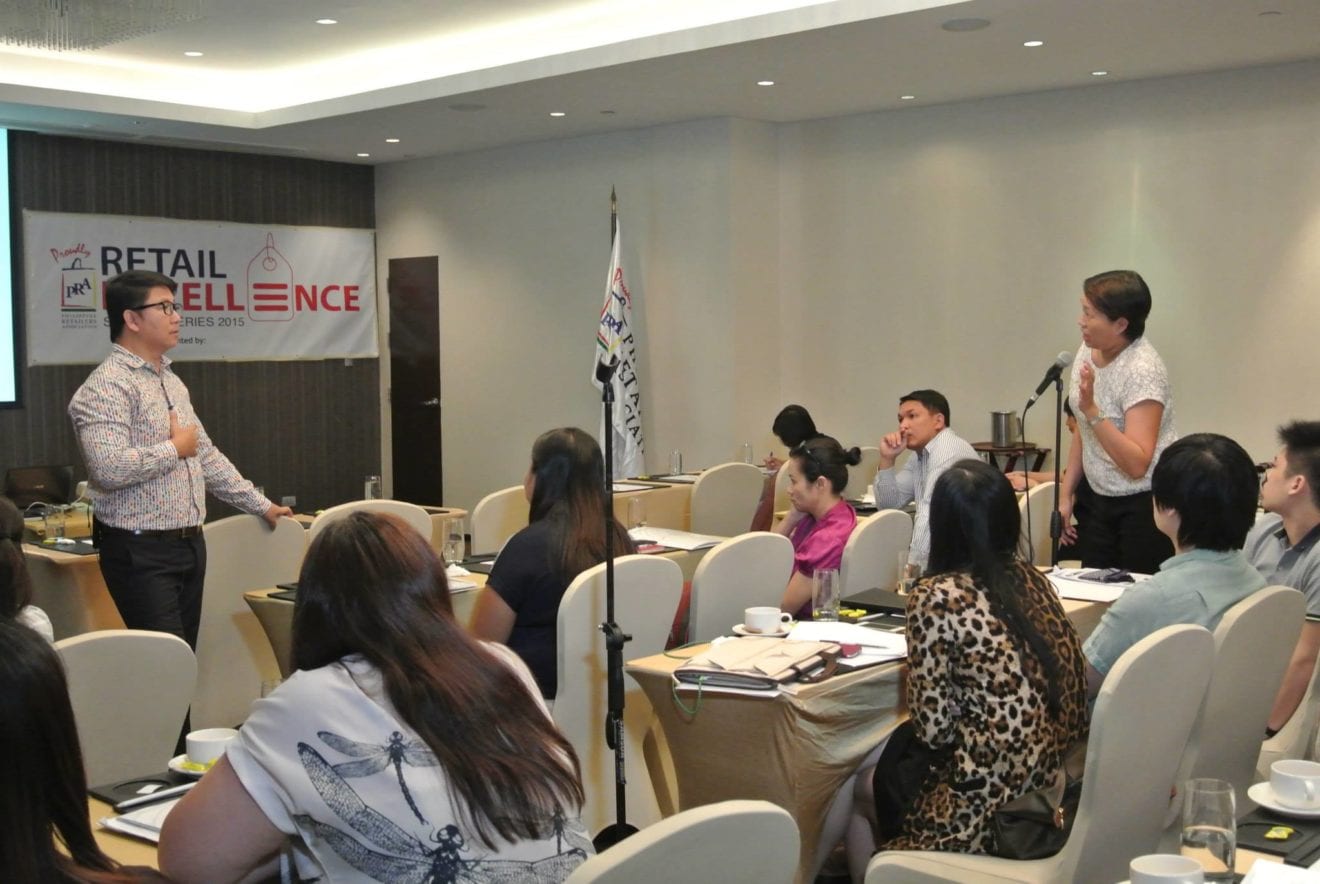
    The Philippines now takes the leadership role in charting the development direction of the Federation of Asia Pacific Retailers Associations (Fapra) in the next two years with the recent assumption of the Philippine Retailers Association (PRA) President Lorenzo C. Formoso as chairman of the Fapra.

    Formoso, COO of Duty Free Philippines, has assumed the Fapra chairmanship from Mehmet T. Nane, chairman of Turkish Council of Shopping Centers and Retailers, who formally turned over the federation’s leadership to him during ceremonies at the recently concluded Asia Pacific Retailers Convention and Exhibition (APRCE) 2015 that Manila hosted last October. The APRCE is the biggest and longest-running retail industry event in the region.

    The Fapra consists of the recognized national retail trade organizations in 18 member-economies—Australia, China, Chinese Taipei, Fiji, Hong Kong, India, Indonesia, Japan, Korea, Malaysia, Mongolia, Myanmar, New Zealand, the Philippines, Singapore, Thailand, Turkey and Vietnam.

    “As a veteran in the retail industry and being the concurrent president of PRA, we are confident Formoso’s chairmanship of Fapra would be very productive. We are sure he will guide the Fapra in the same way he ably shepherded the PRA,” the PRA Board said.

    Turkey held the Fapra chairmanship for two years—from 2013, the year it hosted the APRCE, to 2015, the year the Philippines hosted it.  The chairmanship of Fapra devolves to the immediate past host of
    the APRCE.

    The Philippines chairs the Fapra until 2017.

    The Fapra was founded in 1989. It has implemented various initiatives and programs designed to develop itself and promote information exchanges and sharing experiences and concerns toward the development of the retail industry and improving the retailers’ status and the welfare of their clients in the region.

    As new Fapra chairman, Formoso now presides over the federation’s policies and programs aimed at helping promote the growth and development of retailing in the Asia- Pacific region.

  • A New Breed of Museum Retail in Singapore

    A New Breed of Museum Retail in Singapore

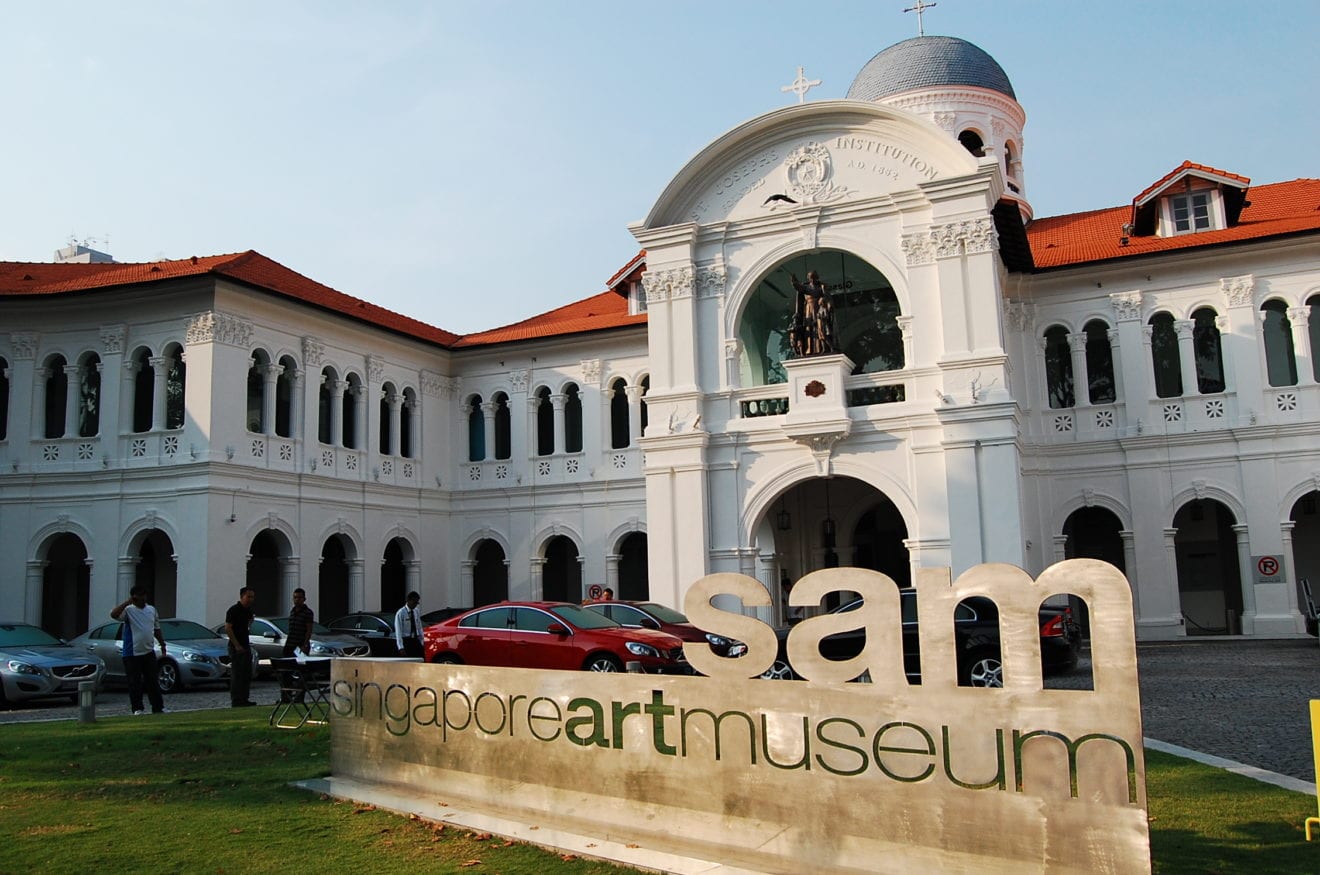
    Collecting things, it can be said, is the bane of modern living. So it is refreshing to see just how Gallery & Co. boldly eschews the easy materialism of museum retail. Modeled to offer visitors a curated experience of its bookstore, bar, cafeteria, café and museum store in one continuous space, the new design merchandise and dining venue opened at National Gallery Singapore on Thursday, taking up 8,800 sq ft space on the first floor of the Southeast Asian art-centric museum’s City Hall Wing.

    As a museum store, Gallery & Co. is quite unlike any other in Singapore to date, and understandably so, being the result of a partnership between the National Gallery Singapore and interdisciplinary collective & Co. The latter comprises industry movers and shakers in the form of hotelier and restaurateur Loh Lik Peng; creative designers Yah-Leng Yu and Arthur Chin, and Luxasia managing director Alwyn Chong.

    Heading the retail strategy is Chong, who worked with Yu to drive merchandising, brand curation and exclusive collaborations. The culinary direction is helmed by Loh; Yu and Chin lead the branding, space and product design.

    Across the varied categories of fashion, design collectibles, home decor, publications and more, all the objects elected as part of the store selection come with creative appeal. Brands carried in-store include Maison Kitsune, Smile Q&Q, Garance Dore, Marou, Supermama, General Object and Matter Prints. As Chong commented, nothing in this “living and evolving space” is permanent. “We do not want to be a museum store that just accumulates, but rather one that truly curates our offerings.”

    With the museum’s Southeast Asian art focus, the space will merge artisanal design with artistic encounters in the museum itself. Products inspired by current artworks on display, as well as of the heritage building’s architectural features, will be part of the retail offerings. Collaborations between regional and international creatives are in the pipelines; in the works are a capsule collection by Matter Prints and artwork-inspired candles by Mud Rock and Candles of Light.

    There are also plans to introduce limited run menus inspired by the museum’s blockbuster exhibitions at the all-day dining cafeteria. Not that the contemporary Southeast Asian menu by Restaurant Ember chef Sufian Zain — including the Green Curry Seafood Pasta and the Otah Stack, a sandwich with grilled mackerel fish cake — is lacking at all.

  • Martell embarks on Legendary Journeys in Asia Travel Retail

    Martell embarks on Legendary Journeys in Asia Travel Retail

    Martell has designed a limited edition gift box which contains Martell Cordon Bleu and a complimentary Martell XO miniature.

    The Martell Legendary Journeys gift box features a design which celebrates Martell Cordon Bleu’s heritage and will be available exclusively in Asia travel retail throughout January and February.

    Martell all around the world: the gift pack is available exclusively in Asia travel retail

    Created by graphic designer Neil Stevens, the gift pack features a map of the cities and countries linked with Martell Cordon Bleu’s history since its creation in 1912. Officially launched at Monte-Carlo’s grand Hotel de Paris, Martell Cordon Bleu is said to have proved an “immediate success”. Memorable moments in the product’s history include being served aboard the Queen Mary II on its maiden voyage in May 1936 and making its debut on Concorde in 1977 and the Orient Express in 1986.

    Key product showcases of Martell Legendary Journeys, priced at US$229, will take place in Hong Kong International Airport, Hong Kong Anway border shops, Singapore Changi Airport, Bangkok International Airport, Kuala Lumpur International Airport, Taipei Taoyuang Airport, Tokyo Narita Airport, Beijing Airport and Shanghai Airport.

  • Empty shops ahead, says DTZ Hong Kong

    Empty shops ahead, says DTZ Hong Kong

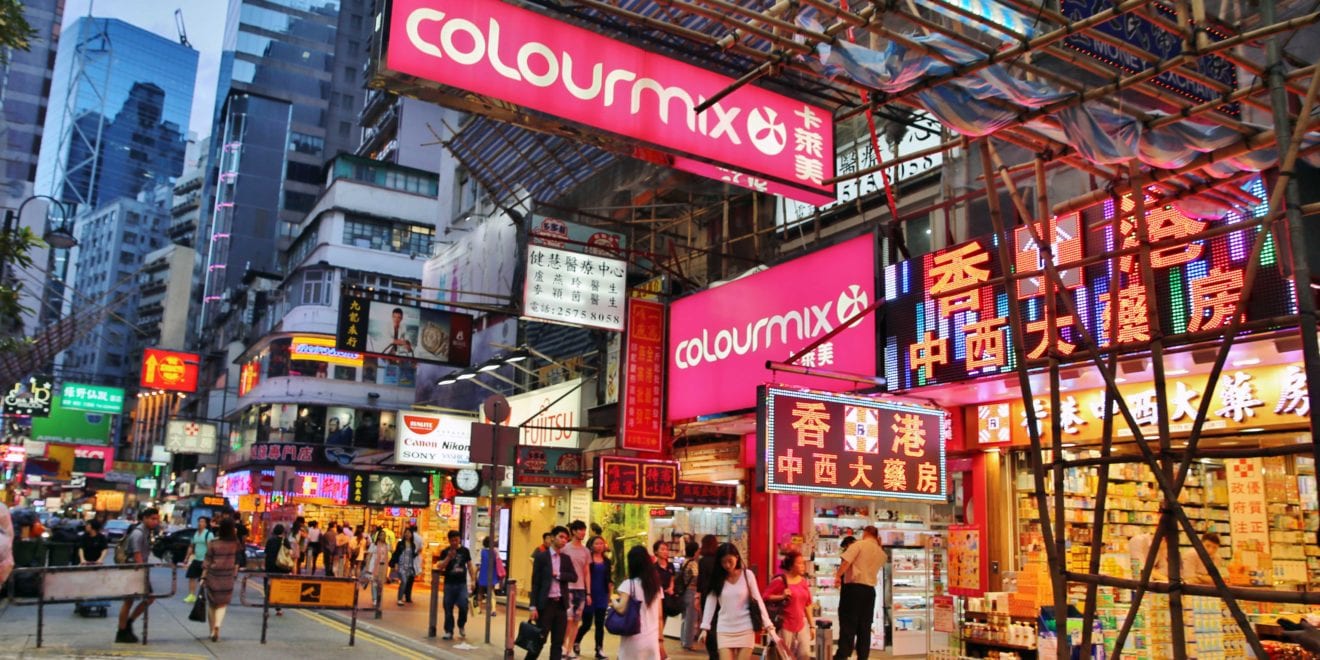
    Higher vacancy rates in prime retail sites in Hong Kong are expected after the Chinese New Year holidays, reports property consultancy DTZ.

    This could potentially lead to a 5 to 10 per cent drop in rental rates in the first half of this year, whereas rents are likely to rise for prime office space in the Central district.

    Vacancy rates of prime storefronts in the city’s four major districts – Causeway Bay, Tsim Sha Tsui, Central and Mongkok – are in the 2.4 to 6.8 per cent range, says DTZ Hong Kong head of business space Kevin Lam.

    He has told the Hong Kong Economic Journal that many short-term tenants will move out after the Chinese New Year.

  • Singapore rents dip, says DTZ Research

    Singapore rents dip, says DTZ Research

    First-storey rents throughout SIngapore have fallen by 1.2 per cent to about $30.50 a square foot, according to the DTZ Research South-east Asia fourth-quarter report on the retail sector.

    This is the third consecutive decline since the second quarter of last year, says the report, released today. For the whole of 2015, average first-storey rents fell at a faster pace (5.9 per cent) compared to the 0.3 per cent decline the previous year. The fall was mainly attributed to weakened consumer sentiments amid uncertain global economic conditions.

    Orchard Road rents were the most resilient. Average first-storey rents in Orchard and Scotts Roads saw a more gentle decline than other areas, falling by 1 per cent quarter-on-quarter and 5 per cent year on year to $38.05 a sq ft in the fourth quarter. The Orchard/Scotts Road rates were buoyant because of the likelihood of no new completions for the next four years. Only pockets of new retail spaces will be added through asset enhancement initiatives and other mixed-use projects.

    Average first-storey rents in suburban areas were relatively resilient, says the report, dipping by 1.2 per cent q-o-q and 5.7 per cent y-o-y to $30.70 a sq ft in the same period. In contrast, average first-storey rents in the other city areas had a greater decline – 1.4 per cent and 6.9 per cent to about $21.80 a sq ft, mainly because of the dependence on the weekday office crowd for sales volume.

    Although islandwide rental values have softened over the past year, occupancy rates stayed healthy for the first three quarters of last year as landlords become more flexible. In fact, according to the latest Urban Redevelopment Authority statistics, overall retail occupancy inched up 0.3 per cent to 92.1 per cent in the third quarter. Occupancy rates in Orchard/Scotts Road were unchanged at 92 per cent q-o-q in Q3, while rates edged up in the other city and suburban areas by 0.6 per cent q-o-q and 0.1 per cent y-o-y to 90.6 and 93.1 per cent respectively.

    Looking forward, says the DTZ report, expected completions this year coupled with consumer sentiment are expected to exert further downward pressure on rental values, especially in the other city areas. About 743,000 sq ft of net lettable area (NLA) of retail space (or 60 per cent of the 1.2 million sq ft of NLA in this year’s pipeline) will be added to the existing stock of retail space in other city areas. This is more than double the annual net demand (302,000 sq ft) for retail space in other city areas between 2009 and 2014. Retail developments heading for completion in the other city areas include OUE Downtown Gallery, The Heart at Marina One and Tanjong Pagar Centre, each a mixed-use development comprising more than 100,000 sq ft of retail NLA.

    “While the pending completions will pressure retail rents in other city areas to fall, the decline is likely to be temporary,” says DTZ director of research Dr Lee Nai Jia. “We anticipate retail rents will recover when the residential components in the mixed-use developments receive their temporary occupation permits. The increase in resident population in the other city areas will support the retail trade.”

    Despite many retail completions lined up for the new year, 2015 also saw the exit of such brands as Goods of Desire, Lowrys Farm and M)phosis because of the challenging operating environment within the retail sector. Additionally, big players like Isetan, FJ Benjamin and Metro also reported disappointing sales figures in the same period. In a bid to revitalise the retail scene, landlords have collaborated with online retailers such as Zalora and Love Bonito via pop-up stores to reignite consumer interest. During the year, brick-and-mortar retailers extended their market outreach by adopting omnichannel marketing amid competition from e-commerce.

    “With the softer market, landlords have certainly become more open to exploring new retail concepts,” says DTZ director of retail Anna Lee. “As landlords become more flexible, brick-and-mortar retailers have more leeway to experiment with new retail offerings to improve the overall shopping experience.”

    Anna Lee cites the launch of Café&Meal Muji in September at Paragon, next to its Muji store. After opening the F&B outlet, Muji recorded a y-o-y increase of about 40 per cent in its store sales. At the same time, lifestyle concept store Latulle also introduced a full-service cafe.

  • Singapore retail sales up 4.7% year-on-year, boosted by car sales

    Singapore retail sales up 4.7% year-on-year, boosted by car sales

    ONCE more, a massive double-digit surge in motor vehicle sales pulled up Singapore’s retail sales in November. In year-on-year terms, retail sales grew 4.7 per cent, according to data released by the Department of Statistics on Friday.

    Excluding the significant 59.7 per cent jump in car sales, retail sales would have actually fallen 2 per cent.

    The total retail sales value in November 2015 was estimated at S$3.5 billion, higher than the S$3.3 billion in November 2014.

    Apart from car sales, only two other segments – department stores and medical goods and toiletries – experienced growth. The former rose 1.3 per cent year-on-year in November, and the latter, 9.6 per cent.

    All other segments reported a slippage in retail sales, with the worst-performing category being petrol service stations, with a 15.8 per cent drop. Food and beverages followed, with a 11.4 per cent decrease.

    On a seasonally-adjusted basis, retail sales increased 1.4 per cent in November over the previous month.

    Excluding motor vehicles, however – sales of these fell 0.6 per cent month-on-month – retail sales would have increased a larger 1.9 per cent from October.

  • Suzhou selected to host China Retail Trade Fair

    Suzhou selected to host China Retail Trade Fair

    The China Retail Trade Fair, more commonly known as CHINASHOP, the benchmark and barometer of China’s retail industry, announced that following voting by exhibitors and followers, Suzhou International Expo Center, the convention and exhibition venue owned and operated by Suzhou Culture and Expo Center Co., Ltd., has been selected to host 18th edition of the event, CHINASHOP 2016, with 41% of votes.

    CHINASHOP rolled out a voting campaign on December 11, 2015, inviting exhibitors and followers to select the host venue for the 18th CHINASHOP by choosing between five cities: Haikou , Qingdao , Nanjing , Suzhou and Chongqing .

    Suzhou outrivaled other cities with 41 per cent of votes. Following a wide-ranging consultation with exhibitors and on-site investigation of the venue, the organizers announced that the event will be held at Suzhou International Expo Center between the 3rd and the 5th of November 2016.

    With the approval and support of China’s Ministry of Commerce, CHINASHOP is organized by China Chain Store & Franchise Association and Beijing Zhihe Lianchuang Exhibition Co., Ltd. With a 16-year track record under its belt, CHINASHOP has become China’s largest and the world’s second largest retail industry event and is regarded by retailers worldwide as a key annual gathering.

    The city’s unique advantages lend to Suzhou International Expo Center’s popularity

    Suzhou, located in the fast-growing Yangtze River Delta, is in close proximity to major commercial centers including Shanghai , Nanjing and Zhejiang and is, itself, a city which is seeing a rapid expansion in its commercial activities. Recent statistics show that dozens of large shopping malls and supermarkets opened their doors here in 2015 and that the local retail industry has been on the fast growth track.
    At the same time, Suzhou and the nearby cities of Shanghai , Wuxi and Kunshan are all home to China’s leading manufacturers of commercial shelves, logos and signs. CHINASHOP 2016 in Suzhou will not only allow purchasers to visit and inspect suppliers, but also reduce exhibitors’ labor and transportation costs. Jiangsu province is also a very active hub in terms of the development of China’s online businesses, giving exhibitors an opportunity to enter into face-to-face conversations with China’s leading Internet companies and further explore how to best be a part of the transformation of the traditional retail industry in the new consumption environment.

    Suzhou International Expo Center is located in Suzhou Industrial Park. The center has available 60 conference rooms of varying sizes, occupying a combined area of 50,000 square meters, as well as 100,000 square meters of indoor exhibition space and 60,000 square meters of outdoor space. Its 8,000 square meter column-free luxury banquet hall is among the best in Asia . Based in Suzhou, a city with deep historical and cultural roots, the center has a full range of support facilities in immediate proximity including hotels, restaurants, shopping malls and entertainment venues. At the same time, the center is conveniently located in terms of transportation, with proximity to airports and high-speed railway stations in Shanghai and Wuxi, facilitating access for exhibitors and visitors.

    “We are honored to provide the venue for CHINASHOP 2016,” said Yin Weidong , chairman of Suzhou International Expo Center. “We sincerely invite all to the center between November 3 and 5, 2016 , when we will offer exhibitors and visitors all over the world an international expo with the most advanced exhibition facilities, the most comprehensive support services and the most professional exhibition team.”

  • Apple on a roll with retail expansion in China as it announces 30th store

    Apple on a roll with retail expansion in China as it announces 30th store

    China’s current economic problems – share trading suspended for the second time in a week after stocks fell 7% – doesn’t seem to be impacting Apple’s retail store expansion program in the country. The company has announced the opening of its 30th retail store in China, the second one it is opening this month. Back in 2014, the company set a goal of opening 40 stores in the country by October of this year.

    The latest store is in Xiamen, a port city on the Taiwan Strait. Xiamen is home to one of the four Special Economic Zones established by the Chinese government back in the 1980s, to encourage foreign investment and trade.

    Unusually, the store opens on a weekday, with Apple’s website showing that it will open at 10am on Thursday 14th January. The store is located in the SM Lifestyle Center at 399 Jiahe Road, in the Siming District of the city. It opens just a few days after the 29th store in Shenyang.

  • Hong Kong Retail to Reshuffle as Sales Remain Lackluster

    Hong Kong Retail to Reshuffle as Sales Remain Lackluster

    Hong Kong retailers are far from optimistic about sales during next month’s Lunar New Year holiday as retail sales fell for nine months in a row, with a 7.8 percent plunge last November compared to a year ago.

    At the same time, the tourism industry and retail sectors have been adjusting their strategies in the hope of finding a way forward.

    The year-end period is the traditional high season for retailers, however, the latest government data shows that in November last year, sales in most categories recorded a significant drop, with jewelry, watches and clocks, as well as high value gifts continuing to be the hardest to hit.

    This is in line with sluggish inbound tourism, which dipped by 10.4 percent over the same period.

    Hong Kong’s wholesale and retail lawmaker Vincent Fang believes it’s bound to affect employment and the retail landscape.

    “For example, is it possible that I just hire three salespersons instead of four? For chain stores, if the lease expires, and I cannot afford to keep five or six shops, maybe I’ll close one down.”

    Hong Kong Retail Management Association chairman Thomson Cheng is estimating a single-digit percentage sales drop during the coming Lunar New Year holiday.

    “If people in Hong Kong ask for two days off, they’ll have a nine-day holiday, I think they’ll travel overseas. So local consumption won’t be ideal. At the same time, The Hong Kong dollar remains strong, which also makes the price unattractive to tourists.”

    A total of 10 million Hong Kong dollars have been allocated to ten local attractions to help promote them to overseas markets during winter period, but according to tourism lawmaker Yiu Si wing, the measure is not proving effective.

    “The Retail sector has been through a hard time. Tourists from the mainland are selective when consuming, they have a smaller appetite for luxury goods, as well as high-end restaurants. The government is hoping to attract tourists with higher spending capability to fill the gap, but it seems that it is failing to achieve the desired results. ”

    But it is not all bad news. Skyrocketing rents in Hong Kong are declining following disappointing retail performance, which is enabling some stores to expand their network. Digital products and home appliance provider Hong Kong Suning Commerce Groups is one of them. Kim Li is the Operations Director of the company.

    “We have entered the retail winter, but property owners also realize that they cannot keep the current rent based on how many customers we receive. So they reduce rents significantly, some drop by 40 percent. We think we still have opportunity to develop and expand our market with lower costs.”

    To better protect tourists’ interest, Hong Kong’s Travel Industry Council has asked operators to take tour groups only to the pre-registered shops, but industry practitioners are not cooperating and some say they’ll boycott the list.

    For CRI, this is Li Jing in Hong Kong.

  • Retail employees in Singapore set for 4.5% salary hike in 2016

    Retail employees in Singapore set for 4.5% salary hike in 2016

    If you’re presently working in the retail line in Singapore, you can expect a greater boost in your salary next year.

    According to new findings by global professional services firm Towers Watson, retail employees are on track for a 4.5 per cent pay increase in 2016, higher than the 4.1 per cent jump they got this year. This will also be the largest wage increment of any sector here in 2016.

    After retail, the next two sectors that will see healthy salary increases next year are the high-tech and professional services industries, which are expected to rise by 4.3 per cent and 3.9 per cent, respectively (up from 4 per cent and 3.7 per cent in 2015).

    These latest numbers come a week after Towers Watson released its latest Asia-Pacific salary budget planning report, a bi-annual survey conducted in July involving 2,000 responses from 22 countries in the region.

    Among the many sectors polled were automotive, chemical, financial services, energy and natural resources, media, pharmaceutical and health sciences.

    al Affairs powered in Calgary to support the development, installation and stewardship of our Aboriginal interactions beliefs and guidelines. Along with this, we formed an Aboriginal Relations Network of 24 people to encourage the sharing of best patterns in Aboriginal interactions across the company.

    Things You Might Not Like About Singapore

    Temperatures throughout the the day hover around 32 degrees Celsius while the humidity level at around 84%. To take care of this issue, most universal places while universal transport in Singapore are air-conditioned; as unless you are outdoors you hardly definitely feel the hot temperature.
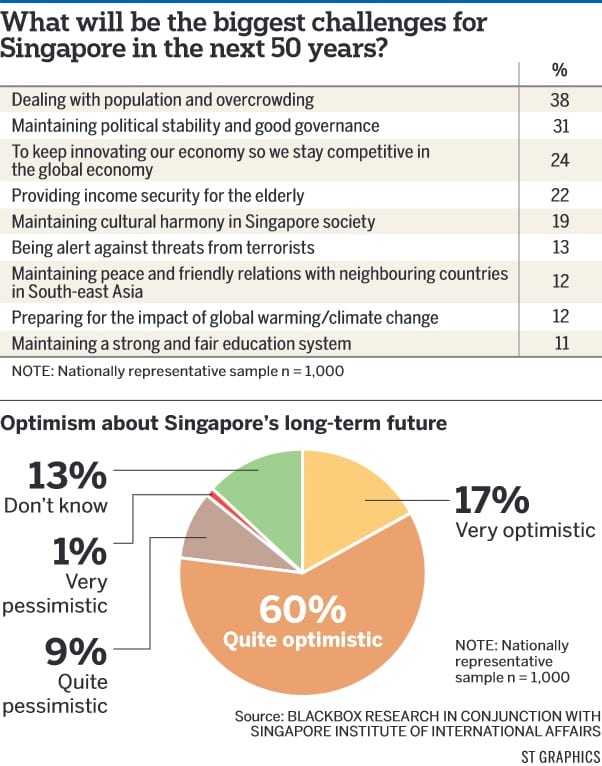
    Singaporeans high energy about country’s future

    Dr Khanna, any geopolitical strategist who co-wrote the SIIA submit with Mr Fang, said that for Singapore that will be resilient, the country should invest email diversifying its economy internally, once well once its economic and geopolitical relationships externally.


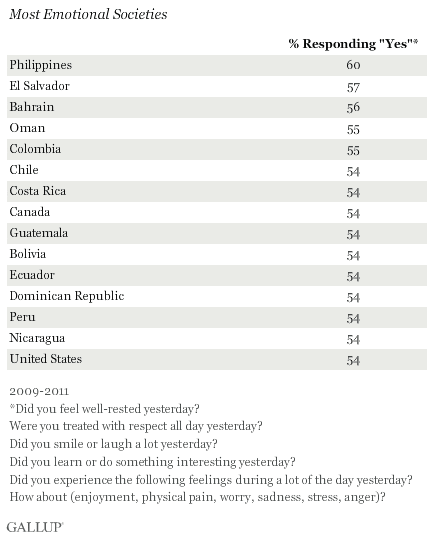
    Singapore Ranks as compared to Least Emotional Country in the World


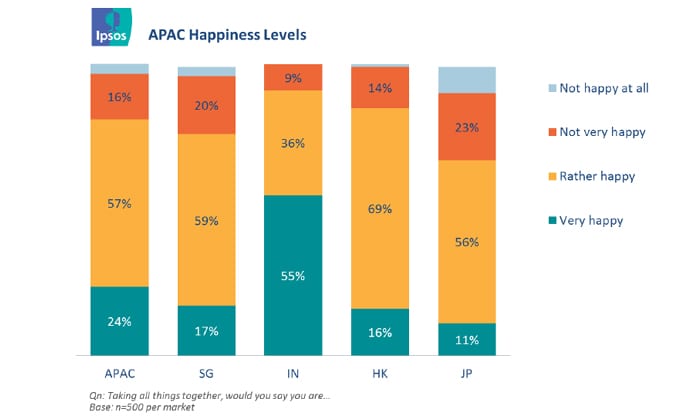
    Most Singaporeans ascribed their hopelessness on their personal financial rang (62%), health (38%) so spouse (35%). Finances so health were also the two factors which often came out on top as key hopelessness drivers across the region.


  • Olivia Burton launches first stand-alone retail presence in Hong Kong

    Olivia Burton launches first stand-alone retail presence in Hong Kong

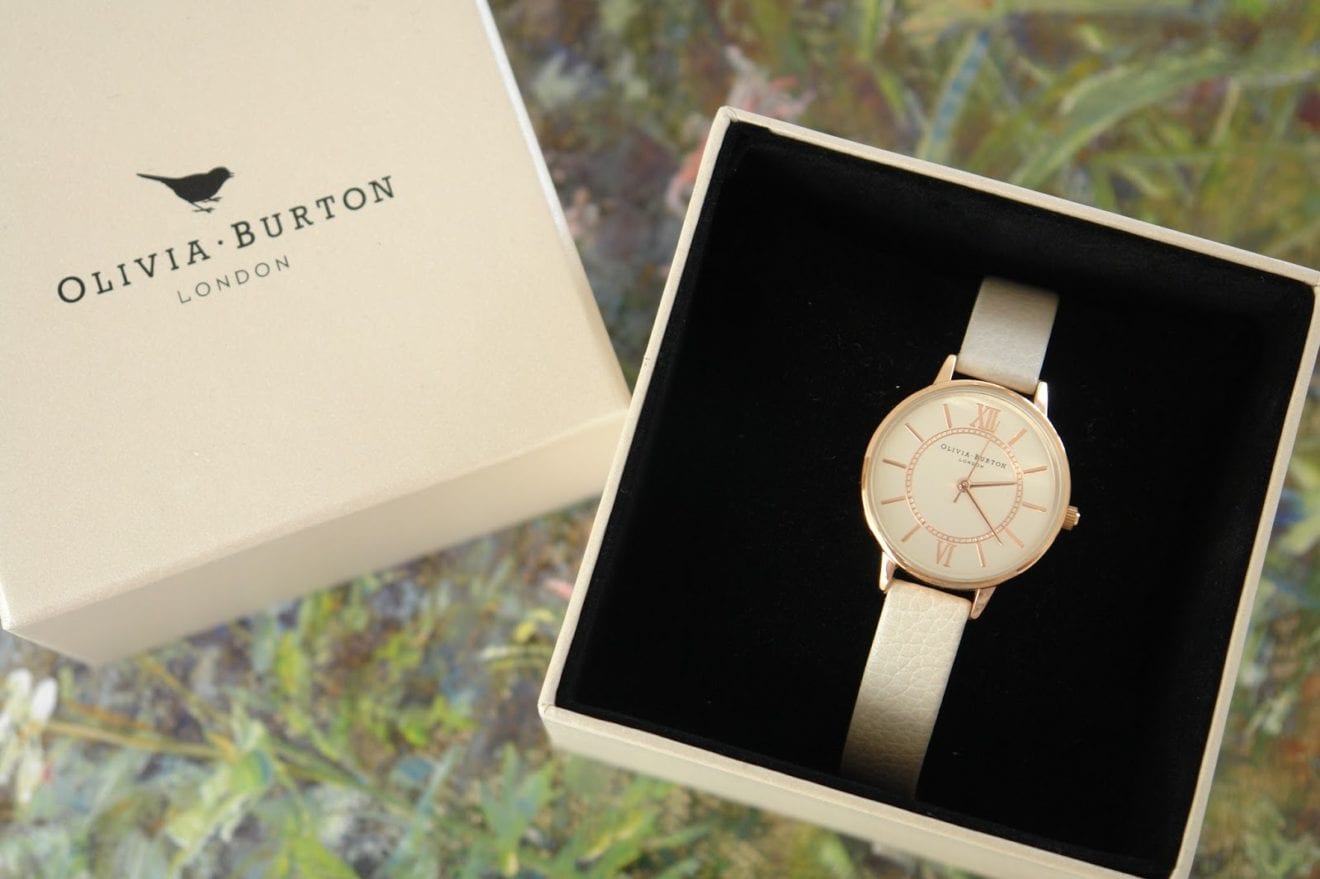
    British watch brand Olivia Burton has launched its first stand-alone retail presence in Hong Kong.

    The move comes as a partnership with the company’s Hong Kong distributor – Working Unit – and has seen three Olivia Burton-dedicated ‘watch corners’ open across the city in Kapok retail stores.

    The company said it launched the stores in December 2015 in an effort to capitalise on the Christmas shopping period.

    Located in prime locations that offer “high traffic and consumption”, the Olivia Burton watch corners are based in the LCX store in Tsim Sha Tsui, the apm mall in Kwun Tong and the New Town Plaza in Shatin.

    Jemma Fennings, brand founder and managing director of the brand, said the launch of the retail corners mark a “huge milestone” for the brand and its international presence.

    She said: “The label has proved extremely popular with the Asian market since we started trading internationally and to be able to offer a dedicated retail space that is designed and merchandised by our in-house team is really exciting.

    “We’re looking forward to increasing our brand awareness and product offering within the Asian market and hope to add additional retail spaces to the current portfolio in the coming year.”

    The stand-alone corners will stock a wide range of Olivia Burton styles and new collections will be added every two months.

  • Davao could be next retail hotspot

    Davao could be next retail hotspot

    With strong macroeconomic fundamentals driven by a burgeoning consumer market and supporting social infrastructure, Davao City is expected to be the Philippines’ next retail hotspot outside Metro Manila. A recent report by global real estate services group Cushman and Wakefield said such progressive environment has supported the recent expansion of retail space in the city and the influx of international brands.

    Cushman and Wakefield said Davao City exhibits the trends and qualities that make for a robust retail market.

    Some of these qualities are Davao’s increasing population, the city’s high income, massive regional consumer market, and strong tourism market.

    Cushman and Wakefield noted that the rapid influx of people into the city has turned it into the largest urbanized area in terms of population and land area outside Metro Manila. The city is estimated to have a population to date of about 1.63 million.

    It also said the uptrend in the city’s population is driven by the migration of people from other regions, mainly because of the incentives that Davao has to offer, such as good social
    infrastructure like easy access to quality schools, hospitals, and an international airport.

    The advent of the Information Technology-Business Process Outsourcing (IT-BPO) sector in the city has also served as a magnet for people to settle in Davao.

    “The outlook now is that we will be seeing retail integrated into workplaces and mixed-use township communities,” the report said.

    Citing the implementation of a stringent traffic management system, Cushman and Wakefield observed in Davao the absence of traffic and infrastructure woes that bug people in Metro Manila.

    “Further, complementing the population trend, we have seen housing subdivisions and residential options increase in urban Davao, encouraging people to choose to conveniently live in the city,” it added.

    Davao is also recognized as one of the top-five high-income cities in the country, according to data from the Bureau of Local Government Finance.

    The report said the economic gains of Davao City could also be gauged from the city’s transforming economic landscape, with buildings rising in every corner.

    “We see the emergence of infrastructure like high-rise residential buildings and mixed-use developments,” the report noted.

    Among the significant upcoming developments, it cited, are the mixed-township Davao Park District, Dusit’s luxury accommodations Dusit Thani Residences and DusitD2 Hotel, and the Lubi Plantation Resort.

    “Clearly, Davao City has proven and continues to prove to be an economically healthy emerging high-income city that offers the right incentives for business and investment,” Cushman and Wakefield said.

    The report cited that the city experienced a 16-percent increase in total capital from 2011 to 2014 alone.

    The report also said Davao City serves as the regional center of the entire Davao Region, which is known to be the fastest growing region in the country, exhibiting exceptional gross regional domestic product (GDRP) growth rate in 2014 at 9.4 percent from the 6.7 percent in 2013.

    The report said one of the main drivers of this growth is the region’s locational advantage as a financial and business hub in Southern Philippines, and with the emergence of IT-BPO parks in the region.

    “This motivated business expansion into the region, resulting in the increased demand for property in the form of offices and residential and retail spaces,” the report said.

    The report also pointed out Davao Region’s emerging signs of a maturing consumer market, even surpassing Metro Manila’s and the whole Philippines’ growth in terms of per capita spending.

    “Indicators show that purchasing power is increasing in the region and this presents ample opportunity for growth in retail,” the report said.

    It said the optimism toward Davao retail and developers’ consequent response of adding more retail spaces had ushered in an influx of retailers, including foreign brands.

    “We can now observe a very international mix of tenants, especially in the newer malls of Ayala and SM,” Cushman and Wakefield said. “This is a drastic departure from six years ago, when tenants were predominantly local brands.”

    The group noted that Davao’s biggest malls now have more international tenants, especially the established brands for general retail, 90 percent of which are fast fashion.

    Cushman and Wakefield said this is especially true for Ayala Abreeza and SM Lanang Premier, which post international tenant shares of 72 percent and 63 percent, respectively.

    Cushman and Wakefield said this is anticipated, as both Ayala Abreeza and SM Lanang Premier have always marketed themselves as the premier and upscale malls in Davao.

    The group said while there is no visible major shopping mall project in the city’s pipeline yet, future retail development is looking to take place in many of Davao’s mixed-use developments.

    “Major malls tend to evolve over time, more often not expanding retail space in the process,” Cushman and Wakefield stressed. “Many of the major mall developers in Davao, like SM and Ayala, have sizable land banks that allow for any form of expansion.”

    The group further noted that the rapid take-up of retail space in major malls is sure to keep occupancy rates at a high, with optimistic projections looking at close to 100-percent occupancy by 2016.

    A popular Philippine tourist spot, Davao breached the one-million tourist arrival benchmark in 2012, and has since been growing, even if 90 percent of the tourists were locals.

    “Domestic travelers have proven to be a strong market for retail tourism, as Filipino travelers tend to include shopping in malls in travel plans,” Cushman and Wakefield said.
    The firm said the past five years has been the most vibrant for Davao City in terms of retail, as retail developers see the opportunities for retail growth in the area.

    Some of the biggest shopping malls in Davao so far are: the Ayala Abreeza Mall by Ayala Land Inc.; Gaisano Mall of Davao by DSG Sons Group Inc; and SM City Davao and SM Premier Lanang both by SM Prime Holdings.

    “While Davao retail is already more dynamic, it will become even more vibrant, as new developers and retailers enter the market,” Cushman and Wakefield concluded. “With the right demographic fundamentals, the social infrastructure to support the demographic, and an energetic and fresh retail sector, Davao City is poised for further retail development and is surely a retail destination to look out for outside the capital.”

  • More retail-friendly bond issues in 2016

    More retail-friendly bond issues in 2016

    Singapore’s fixed-income market next year is tipped to be active, with more retail-friendly issuances. What’s more, perpetuals will continue to be popular even as financial conditions are likely to remain volatile. Retail bond demand is expected to stay healthy and there should be more deals done than in 2015 – thanks to higher yields, said Clifford Lee, DBS Bank head of fixed income.

    Four retail bonds with yields of 3.85 to 5.25 per cent were sold in 2015 by Perennial Real Estate Holdings, Oxley Holdings, Frasers Centrepoint and Aspial Corp. Investors could buy these bonds for as low as S$2,000 per lot, much cheaper than the minimum S$250,000 for most bonds sold here.

    Mr Lee said retail investors are not dumb, unlike your “mom and pop” investors. “The smaller caps have smaller subscription, indicating they do have discretion.”

    While the retail offerings were oversubscribed, he said the oversubscription was not massive – an indication that retail investors know what they are doing.

    The four retail bonds raised S$1.25 billion, against just one issue from CapitaMall Trust in 2014 worth S$350 million.

    “Of the four issuers this year, three may even be ‘high yield’ – although none are rated – which may spur further issuance from other mid-sized firms which could offer higher yields on their retail bond issues,” said Terence Lin, iFast’s regional research manager in the fixed-income division.

    Investors, especially financial institutions and real estate investment trusts (Reits), are expected to still like perpetuals – bonds with no fixed maturity – in 2016, as they did in 2015.

    Seven perpetuals were sold this year which raised S$3 billion, almost double the S$1.8 billion for 2014.

    Mr Lin indicated that issues such as the new Julius Baer, Ascendas Reit perps and FCL perps have so far been among the most heavily traded bonds in the SGD corporate bond market in 2015. “We think their popularity stems from the higher yields offered versus traditional fixed maturity bonds (given the additional maturity uncertainty), while most of the perpetual bonds are still expected to be called on their first call dates (which are usually less than 5 years away), making them good alternatives to traditional short duration bonds,” he said.

    Also, he added, many of the perpetuals are issued by higher-quality names, offering investors a level of comfort.

    While more bank perpetuals are expected to be launched, as banks look to build additional capital, as well as to refinance maturing/callable debt, many non-bank corporate perpetuals are also maturing.

    Firms such as Hyflux, Cheung Kong, Olam International, GuocoLand, Global Logistic Properties, Hotel Properties, Mapletree, Mapletree Logistics Trust and Genting Singapore are some of the existing issuers of perpetual SGD debt which are callable in 2016/2017, making them potential refinancing candidates/perpetual bond issuers come 2016.

    Tan Kee Phong, OCBC Bank’s head of capital markets, estimated that US$33 billion in loans and S$13 billion in SGD bonds are set to mature from syndicated loans in 2016 in Singapore. Yet nothing can be taken for granted, according to Elaine Ngim, Coutts’ he ad of fixed income in Asia. “Two key factors that may determine if 2016 is a bull’s or bear’s year are how fast Fed will hike rates and how slow will China economic growth be,” she said.

    “China’s growth story will be the larger factor for Singapore, as its economy is trade dependant on their growth. As a result, investors may become increasingly selective on quality of issuers and their industry,” said Ms Ngim.

    DBS’s Mr Lee also said China would have the biggest impact on the Asian bond markets, because it accounts for the lion’s share of the Asian G3 (USD, yen or euro) bond arena.

    China-linked issuance in 2015 was 54 per cent or US$91 billion of the US$169 billion Asian G3 bond market. But offshore funding costs have ballooned and a lot of Chinese companies are now opting to issue onshore, Mr Lee indicated.

    “If China continues to issue onshore next year, then it (Asian credit market) could get a kick in the stomach,” he said.

    The SGD bond market was pretty solid in 2015, especially compared with equities. This year has seen 161 deals worth S$22.7 billion done, slightly less than the S$23.5 billion raised in 2014. The highest was S$31 billion in 2012.

    “2015 was comparatively a better year for bonds in Singapore when compared to the STI index, with main drivers being corporate bonds, specifically statutory board issuers in the 5-7-year maturity bucket,” said Ms Ngim.

    Up to Dec 11, the Singapore Fixed Income Indices for 2015 outperformed the STI by 17.64 per cent (1.87 per cent vs. -15.77 per cent).

    Despite the year starting out somewhat jittery, there was no lack of higher risk issuers, Ms Ngim said.

    “Looking back at these issues, 2015 is categorised by several buckets, namely the real estate developers and Reits who are listed on the SGX, shipping and the offshore support vessels, and closing off the year with a few global financial issuers,” she said.

    Still, some have found 2015 a challenging year for the SGD bond market.

    “We believe credit quality of issuers, on average, declined, with particularly significant weakness seen in commodity linked companies and in the offshore marine sector, which is a sizeable part of the SGD bond market,” said Neel Gopalakrishnan, Credit Suisse, director, emerging markets bond analyst, private banking Asia Pacific.

    “Secondary market liquidity was another issue with no meaningful bids available especially for higher yielding bonds, making it almost impossible for bondholders to exit their positions if they were uncomfortable with the underlying issuer,” he said.

  • Are physical stores on their way out?

    Are physical stores on their way out?

    The signs are alarming for brick-and-mortar stores. Recent trends have shown shoppers here are increasingly taking care of their shopping needs online, drawn to the increasing convenience (especially during the dreaded festive seasons).

    Retailers such as Qoo10 and Lazada are a hit because of their wide variety of goods at relatively low cost and reliable delivery services. In fact, a recent survey by Blackbox Research of 800 Singaporeans and permanent residents aged 15 years and above revealed that the majority prefer shopping online.

    As far as this year’s Christmas shopping is concerned, 56 per cent of them said they preferred to do their shopping with online retailers versus the 44 per cent who opted for shopping at physical stores.

    Nevertheless, Retail News spoke to remain upbeat and confident about the value of physical stores, stressing that they have a place in the market, providing a human touch and at atmosphere that websites cannot rival.

    Katie Page, chief executive officer of Harvey Norman, agrees and scoffs at the idea of online stores eventually surpassing physical ones. “You can get information about the product online and the price, but that’s it,” she said, adding how physical contact with the product is crucial, especially with women shoppers. “Women like to see that physical aspect, they will go to the shops to see the product.”

    Stenders fills its store with colourful fresh flowers and prides itself on handcrafted body scrubs and soaps with real natural ingredients such as Lavender. — TODAY pic

    Page also stressed the importance of delivering a great shopping experience, pointing out how some retailers forget that. She added: “You need to invest in the brand, and for that, you need space. Some online stores are now opening brick-and-mortar outlets, right?”

    Agreeing, Christophe Cann, group chief executive officer of Robinsons Group (Asia), said although the company has plans to have an e-commerce function in the future, online shopping is “just another avenue for customers to make their purchase”.

    “We are not worried about the trend as we believe that brick-and-mortar business will remain relevant to customers,” he affirmed.

    “As long as Robinsons continues to entertain our customers and provide an enjoyable shopping experience … I believe we are here to stay.”

    This, he added, is achieved through initiatives such as designer trunk shows, exclusive beauty launches and meet-the-designer events that complement ongoing efforts to constantly bring in new brands and products.

    All about atmosphere and service

    Retailers are confident that nothing beats being at a physical store, as good experiences will ensure customers return.

    “We cultivate a friendly ambiance and treat our customers as friends,” said a spokesperson for skincare and cosmetics store Stenders, which prides itself on handcrafted body scrubs and soaps made with natural ingredients. “Most of our customers love coming back to test, try, and smell and feel the product, and interact with our store associates,” he continued.

    (To boot, customers will also receive a kaleidoscope, as part of its A Kaledoscopic Christmas campaign.)

    The obvious physical connection cannot be overemphasised, as much of the joy of retail, said Darellyn Lau, managing director of candy and gift store Sophisca Singapore, is in touching and feeling the merchandise.

    “The desire for instant gratification is still key with some buyers, who appreciate the ability to touch, feel and buy an item all in the same moment, which is only possible at a physical store.”

    Still, aware that online shopping is time-saving for people with busy schedules, she added that the company is offering free delivery services for purchases above S$250 (RM 760).

    Robinsons, too, said it has had to rethink its strategies to improve its services and in-store experiences.

    “It has motivated us, as brick-and-mortar retailers, to sit up and listen, to observe, learn and adapt … This new platform sheds light on what consumers are looking for, as well as the services they desire,” said Cann.

    Consequently, the company has made arrangements for delivery services with every S$200 nett spend and complimentary personal shopper services at its flagship store at The Heeren.

    “In this day and age … customers need a good reason to visit you,” he added.

    “Retail is not just about transactions but experiences. Hence, we constantly remind our staff from all departments about the company’s vision and mission to ensure that as an organisation, we always put the customer at the centre of everything we do.”

    Online complements, not threatens

    Some retailers say their online stores serve more as a complementary service to give consumers more options.

    Dominic Wong, chief operating officer of beauty-care chain Watsons, said while its new eStore (launched this year) is a quick and convenient option for busy customers, its physical stores “serve as a good platform for customers to discover and try new products, especially for make-up and beauty items”.

    Its in-house pharmacies also provide another touch point for customers who need health consultation and recommendations on supplements.

    This Christmas, it is also offering a free gift-wrapping service for purchases made.

    While the online store’s performance is “growing strongly”, the company “see(s) physical stores flourishing alongside online channels”, he continued, adding that it will continue to be on the lookout for new ways to improve and engage customers better.

    Its recently revamped Ngee Ann City and Bugis outlets, for instance, cater better to the demographics and buying patterns of customers in the area, and give clearer demarcation of the different product categories, said Wong.

    A Uniqlo spokesman, too, said the fast-fashion brand’s online store is an extension of its physical store, giving customers the option of shopping from home and on-the-go.

    However, its staff has been specially trained to provide assistance and recommendations by catering to the needs and queries its customers may have in store, she added.

    “We believe this personal touch is key to create an enhanced shopping experience and will keep customers coming back despite the convenience of online shopping.”

    Clearly, though, the advantages of both platforms remain complementary. “Shoppers are still basing their decision by checking online for reviews and information before stepping into the stores and vice versa. The relationship between off-line and online is, in fact, a symbiotic one … ,” said Publicist PR’s director, Cecilia Tan.

    Pointing out that physical retailers should focus efforts on creating a stronger in-store experience, Tan added: “As a PR and brand consultancy, we recommend that clients focus on their core group of customers … It is important to keep them close through customer perks and in-store activities.”

    She stressed that “retailers need to integrate their communication campaigns through both traditional PR and digital PR; that is the best way to ensure customers will want to visit a physical store, validate their choices, and ultimately (make a) purchase after researching about their brand online”.

    For other stores, online sales serve as a platform to reach out to more people. Men’s Grooming Store WhatHeWants has seen online sales more than double compared with three years ago. Online sales currently make up 30 per cent of its total sales.

    Its founder Tan Seng Hwee said he is excited about the online trend.

    “The online space is not limited to the space it occupies, unlike a physical store. Besides Singapore, my sales revenue comes from Malaysia, Australia and Indonesia,” he noted.

    “The trend of buying online is definitely making big waves with the increasingly tech-savvy crowd, and the widespread use of tablets and mobile phones. Coupled with lower prices and deliveries right to one’s doorstep, buying online definitely has many plus points,” he added.

    Pointing out that physical shops need to maintain a higher margin in order to cover rental and staff costs, he said prices in physical shops “can never be cheaper than online stores”.

    “In the past, retail businesses expanded by opening more physical shops.

    “However, in Singapore, the high rentals and labour crunch limits scalability. For a company to grow further, moving online is the only way to go,” he explained.

    “While retail stores are still important, the retail industry in Singapore has to learn how to adapt to the  new online world.”