Tag: Sales

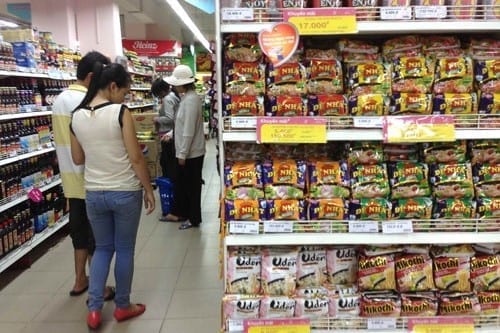
  • Vietnam’s love for instant noodles rises to near-boiling point

    Vietnam’s love for instant noodles rises to near-boiling point

    Vietnamese people consumed more than 4.9 million packs of instant noodles last year, behind China, Indonesia and Japan, new data shows.

    Vienam has held fourth spot since 2012 in the rankings compiled annually by the World Instant Noodle Associations (WINA).

    On a per capita level with a population of over 93 million, the average Vietnamese person gobbled 53 packs of instant noodles in 2016, higher than Indonesians at 49, Japanese at 44 and Chinese people at 38.

    WINA said Vietnam’s instant noodle market recovered last year thanks to more diverse products that offer a wider range of choices for customers.

    Kajiwara Junichi, CEO of noodle producer Acecook Vietnam, said that the company’s revenue from instant noodles rose 5-20 percent during the second half of this year.

    Meanwhile, Masan Consumer and Asia Foods have been suffering from falling revenue.

    The three firms are the three biggest instant noodle producers in Vietnam and make up 70 percent of the domestic market share.

    Last year, The Washington Post cited a South Korean study that pointed out how harmful instant noodles can be for the health.

    “Although instant noodles are a convenient and delicious food, there could be an increased risk for metabolic syndrome given [the food’s] high sodium, unhealthy saturated fat and glycemic loads,” said Hyun Shin, a doctoral candidate at the Harvard School of Public Health and a co-author of the study.

    Doctor Dang Huy Quoc from the Ho Chi Minh City Oncology Hospital told Tuoi Trenewspaper that no studies have concluded that instant noodles can cause cancer, but high consumption of fat and salt can cause cancer and other heart diseases.

    Other experts suggest that people should only eat one or two packs of instant noodles per week.

    Many Vietnamese people are well aware of the harmful effects of instant noodles, but it’s common in Vietnam for people to snack on a pack of instant noodles between breakfast, lunch and dinner.

    The noodles are popular among college students, who often live far from home and lack the facilities to cook themselves a proper meal.

  • L’Occitane growth and China’s contribution

    L’Occitane growth and China’s contribution

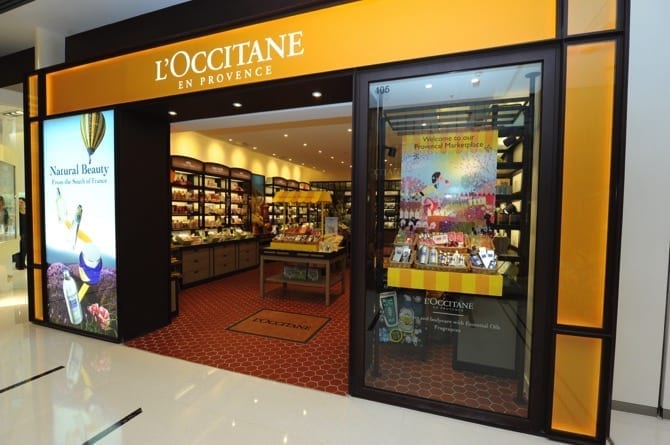
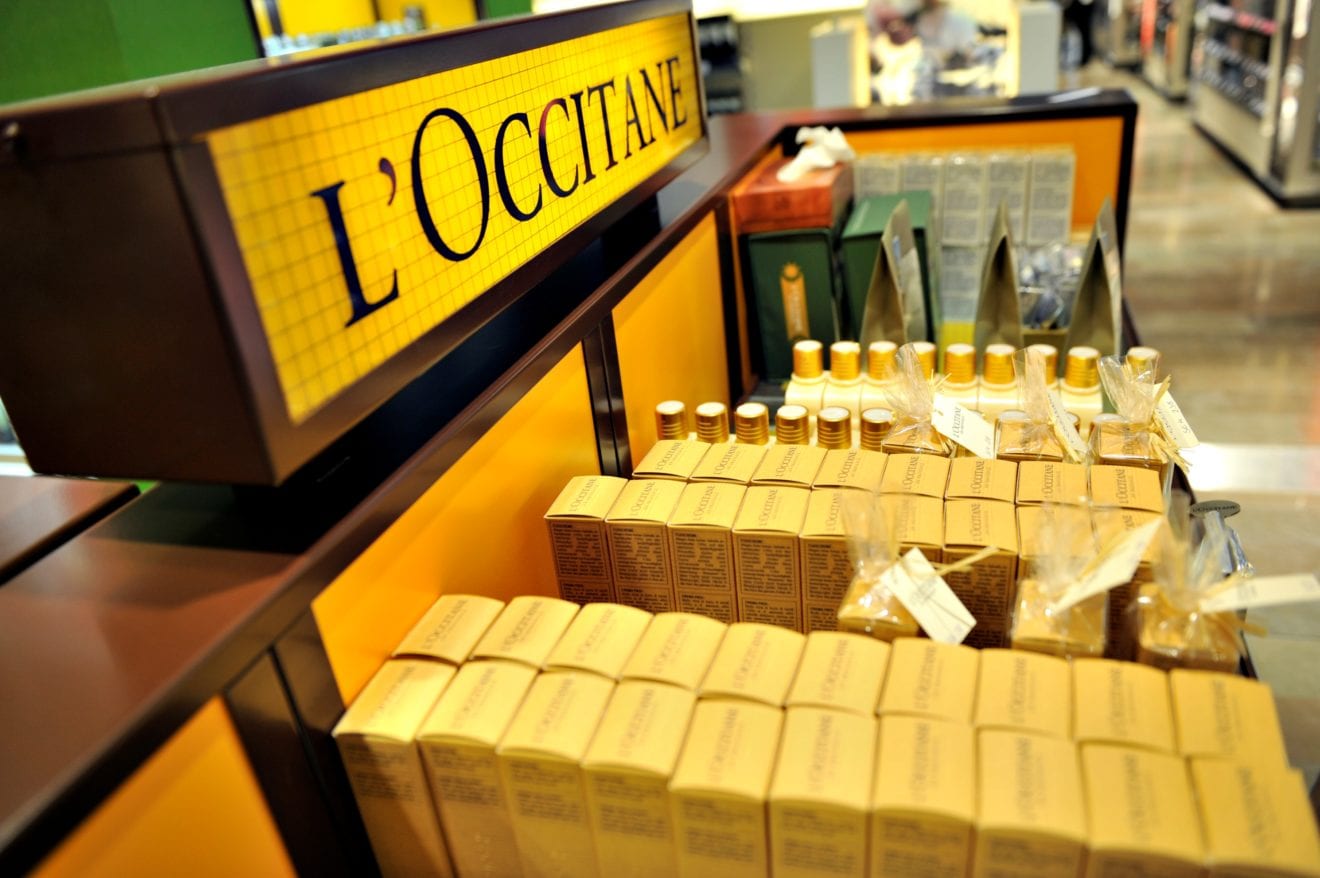
    China was among the fastest-growing markets for cosmetics and wellbeing products group L’Occitane International for the six months to September 30.

    Along with Japan and Hong Kong, it was among the key contributing countries to overall growth.

    China’s net sales rose 18.2 per cent year on year to €60 million (US$70 million), the group’s interim results show. At constant exchange rates, the growth was 22.7 per cent, driven mainly by same-store sales growth of 15.8 per cent. As well as the recovery of China’s retail market, the company says a marketing campaign featuring Chinese artist Lu Han continued to draw traffic both online and offline.

    T-mall sales continued to grow at triple digits and were ahead of plan, and B2B also delivered an excellent performance thanks to growing orders from independent hotels and the Shangri-La chain, says L’Occitane.

    In Hong Kong, net sales edged up 0.4 per cent to €51.1 million (2.6 per cent at constant exchange rates), growth being driven mainly by the travel retail channel. As well as duty free, this included airlines in China and Japan.

    The retail market was still sluggish, and two underperforming stores were closed. There were also some temporary closures for renovations.

    Hit by typhoons

    Typhoons forced store closures in Japan, where net sales fell 4.8 per cent (1.8 per cent at constant exchange rates) to €99.4 million. Same-store sales growth was 1.4 per cent. However, e-commerce showed low double-digit growth. Melvita remained the growth engine in Japan with new stores. At the end of September, Japan had 30 Melvita outlets.

    Same-store sales deteriorated by 7.9 per cent from the first quarter for Taiwan, where net sales for the six months dropped 3.6 per cent (71 per cent at constant exchange rates) to €15.3 million.

    “Retail sales were hindered by the less-generous summer promotion offered by department stores, a couple of mediocre launches and the timing difference in anniversary sales in department stores,” says L’Occitane.

    Nonetheless, sales of skincare products stayed strong, in particular the Immortelle and Reine Blanche ranges.

    Overall, despite a challenging retail backdrop, group net sales were €548.2 million, down 0.6 per cent (up 1.1 per cent at constant exchange rates), with like-for-like sales growth 2.3 per cent.

    Gross profit margin reached 82.8 per cent, 0.6 points higher, while operating margin fell by one point, mainly because of currency exchange headwinds. Profit for the period ended at €10.7 million.

    During the year the company disposed of Le Couvent des Minimes, and excluding this and a one-off deal for L’Occitane au Brésil in September last year, the group’s sales grew by 2.3 per cent at constant rates and 0.5 per cent at reported rates.

    Retail locations increased from 3037 at the end of March to 3104 as at September 30, while the group increased its own retail stores from 1514 to 1519.

  • GM’s Cadillac expects China sales to jump 60 percent in 2017

    GM’s Cadillac expects China sales to jump 60 percent in 2017

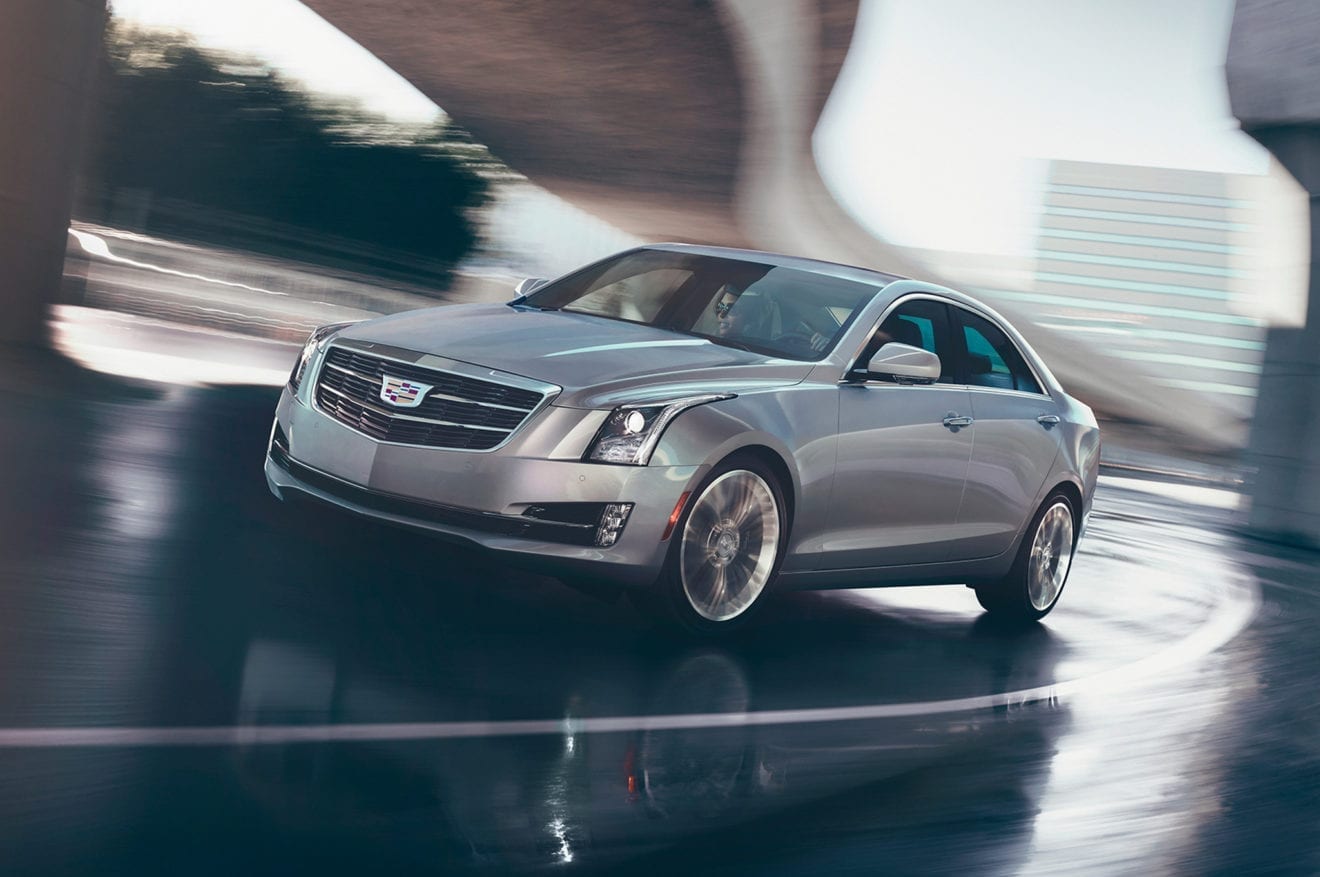
    General Motors’ Cadillac luxury brand expects its China sales to surge 60 percent in 2017, faster than it had projected at the start of the year, on strong demand from younger buyers, the brand’s country chief said.

    The GM premium brand, which saw a sharp spike in sales after it opened its first dedicated factory in the country last year, had said in January that China sales would continue growing at a double-digit rate but at a slower pace than the roughly 50-percent growth it posted in 2016.

    Cadillac, relatively late to introduce local production in the world’s biggest auto market, is among a second wave of luxury car brands in China that seek to take market share from established brands such as BMW (BMWG.DE), Daimler’s (DAIGn.DE) Mercedes-Benz, and Volkswagen’s (VOWG_p.DE) Audi.

    In order to sustain the momentum in Cadillac sales in China, the brand plans to double the number of retail stores over the next five years to more than 300, from the current 180.

    “A lot of younger people in China are looking for something different to stand out of the crowd. We have a very young target audience. That is a significant difference to the other countries in the world,” Cadillac’s China chief, Andreas Schaaf, told Reuters in an interview on Friday.

    The average age of Cadillac buyers in China is 33 years, compared to 50 years in Europe and the United States combined, Schaaf said.

  • L’Occitane ‘bullish’ on China

    L’Occitane ‘bullish’ on China

    L’Occitane International, the French cosmetics and personal-care products company, said it was optimistic on its outlook for mainland China, despite what it called a “challenging” global retail environment.

    “We are still very bullish on China,” Andre Hoffmann, vice chairman and managing director, said at a press conference in Hong Kong.

    “Today, China is the No. 3 market globally for the L’Occitane group,” Hoffman said. “We expect by the end of the fiscal year it could reach the No. 2 market status after Japan,” surpassing the U.S.

    The comments came as the Hong Kong-listed company reported a drop in fiscal first-half net income for the period ended 30 September 2017.

    Net sales in China for the first half were 60 million euros ($70.7 million), up 18.2% from a year earlier, boosted primarily by a 15.8% increase in same-store sales, the company said in a statement, adding that a marketing campaign featuring Chinese singer Lu Han “continued to draw traffic both online and offline.”

    While the company maintains its own e-commerce website in China, Hoffmann noted that “it really cannot compete in terms of traffic and awareness with the major marketplaces like [Alibaba Group Holding’s] Tmall.”

    “It is better that we focus our energy and investments to build up the brand through Tmall,” he said.

    L’Occitane said first-half net profit fell 59.4% to 10.7 million euros compared with 26.4 million euros in the same period a year earlier.

    Thomas Levilion, executive director and group deputy general manager of finance and administration, attributed the drop to unfavorable exchange rates, one-off costs and seasonal effects.

    Those included expenses related to the opening of two new flagship stores in London and Paris, marketing and promotional costs in preparation for the important Christmas shopping season, and a tax credit of 6.5 million euros in the year-earlier period.

  • Shiseido Japan and China sales jump, despite Q3 net loss

    Shiseido Japan and China sales jump, despite Q3 net loss

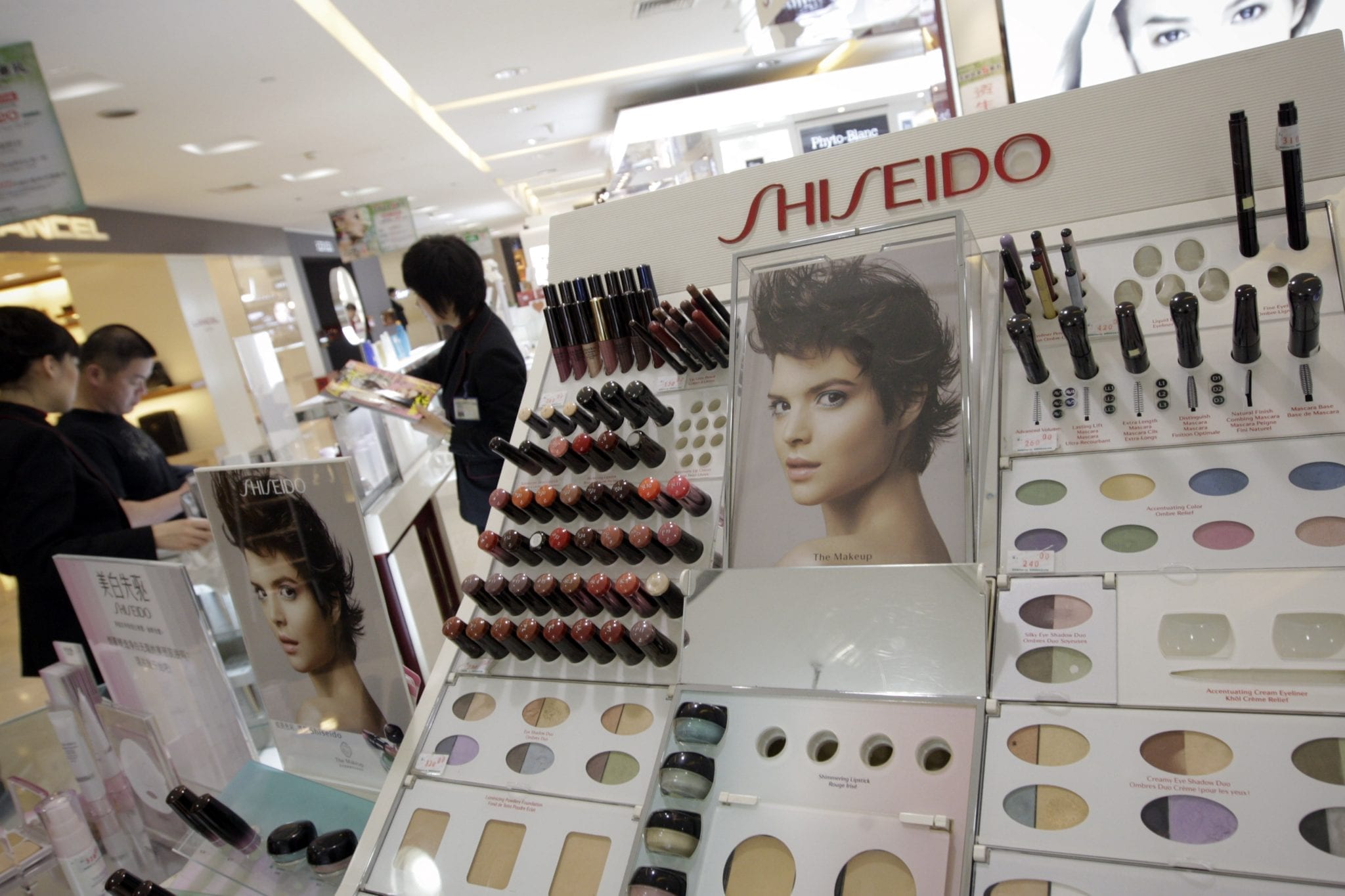
    Shiseido published a third quarter net loss, despite notable growth for the first nine months of 2017, pushed on by Asia revenues, particularly in Japan and China.

    The Japanese cosmetics group said combined turnover over the nine months rose 17.4% to 731.2 billion yen, close to 6 billion euros, according to a press release.

    However, depreciation of assets related to its struggling American subsidiary Bare Escentuals pushed Shiseido into a net loss of 17 billion yen over the nine months, compared to a net profit of 37.2 billion yen the year before,

    For the same period, operating profit jumped 82.4% to 70.7 billion yen over nine months (567 million euros), highlighting the US subsidiary sale’s negative impact on profits.

    Japan remained its strongest market, accounting for 44% of sales and revenues surged in China – which makes up 14% of total sales –as well as the rest of Asia, which continued to grow at a constant rate, said the press release.

    Conversely, European growth remained weak and sales slowed in the Americas, making up13.5% of total turnover.

    Looking ahead, Shiseido is predicting a modest annual net improvement of 5 billion yen (38 million euros).

    Earlier in the month, Shiseido relinquished firm Zotos— its Professional business division in North America to consumer goods firm Henkel for $485 million, saying at the time it plans to hone in on Asia’s professional market.

    Shiseido said in a press release the group would use the funds gained from the Zotos sales “to further pursue its strategic objectives of continuing to nurture its Prestige brands, reinforcing production capability and other activities.”

    Earlier in 2017, Shiseido appointed Nathalie Broussard to the newly created post of Scientific Communications Director EMEA, with the mission of bolstering relationships with the science and technology community in Europe, the Middle East and Africa.

  • Sales plunge for Salvatore Ferragamo

    Sales plunge for Salvatore Ferragamo

    Asia Pacific, particularly China, was best dressed for Italian luxury brand Salvatore Ferragamo as it foundered overall in negative territory for the nine months to the end of September.

    Asia Pacific was its top market, with revenues growing by 2.8 per cent (3.5 per cent at constant exchange rates), despite softness in South Korea through significantly reduced tourism from China, and ongoing negative performance in Hong Kong.

    Meanwhile, says its consolidated interim report, China recorded 8.1 per cent retail grown (15.5 per cent at constant exchange rates) for the period, while there was a 6.7 per cent (4 per cent) drop in the Japanese market.

    Ferragamo says a strategic rationalisation of its wholesale channel saw revenues drop 0.8 per cent to €1 billion (US$1.1 billion), while overall retail revenue rose 1.2 per cent. The wholesale channel was also penalised by political tensions in South Korea and a strategic rationalisation in Japan.

    Its gross operating profit (EBITDA) fell by 25.1 per cent to €162 million, and its net profit by 28.3 per cent to €79 million.

    Footwear sales were down by 1.2 per cent, and handbags and leather accessories by 0.6 per cent, while fragrance sales were up 3.2 per cent.

    At the end of September, the group’s retail network comprised 687 points of sales including 407 directly run stores and 280 third-party outlets in the wholesale and travel retail channel, as well as its presence in department stores and multi-brand specialty stores.

    With a positive net financial position of  €100 million compared to debt of €18 million at the same time last year, Ferragamo says the current year is a transition period for the group which will see the introduction of strategic initiatives.

  • Target US is recovering, slowly

    Target US is recovering, slowly

    With both total and comparable sales in positive territory, the latest results from Target US are undoubtedly another step in the right direction.

    Unfortunately, the pace at which the company is moving is slow, as attested to by the modest 0.9 per cent increase in same-store sales. It has also cost the company a great deal to travel even this short distance, with both operating profit and net income down sharply over the prior year. Sales reached US$16.67 billion in the quarter.

    All of this raises two questions. Is Target US on the right track? And, is the effort and expense of the company’s turnaround worth the potential reward? The answer to both queries is yes, albeit with some reservations.

    On the expense question, it is a fact that no retailer of Target’s scale and size can implement a quick turnaround in today’s retail market. The process of reinvention takes time, effort and money – all of which have to be expended before any eventual rewards are reaped. In Target’s case, pressure on the bottom line has come from increased staffing costs, lower prices, and improvements to stores and products. In our view, these things should not be seen as costs, but as investments in the future of the company. Without them, Target’s future would be bleak.

    The second question flows from this. If Target US needs to invest, is its current strategy going to deliver? Over the past few months, GlobalData Retail has undertaken extensive analysis on Target’s reinvention process, visiting new and refurbished stores, analysing sales patterns, surveying shoppers, and talking to staff. From this, we conclude that Target is making the right moves. However, we also recognise that there is room for improvement.

    One of the most significant blocks of investment is that directed at store refurbishment. Here, Target is completely reinventing the in-store experience by creating a more open format with improved visual merchandising and a more logical layout. Decor, fixture design, lighting, and signage are also being upgraded. The early results of this process are positive. A store like Talking Stick in Arizona has gone from being a dingy, down-at-heel shopping experience to an attractive, modern space which is pleasant and comfortable to shop.

    GlobalData Retail’s customer survey responses show shoppers have both recognised the transformation and are positive about it. Customer satisfaction for Talking Stick customers, for example, rose significantly after the conversion. Metrics like frequency of shop, amount of time spent in the store, and average basket size are all rising. However, they are doing so at a gradual pace which suggests the return on the improvement expense will only accrue over time. This is one of the reasons why store only comparables increased by a meager 0.1 per cent, with the rest of the increase coming from the digital operation.

    Brand direction

    Just as store improvements have been welcomed by customers, so too have Target’s new own brands. In apparel, Goodfellow & Co and A New Day are gradually attracting the attention of younger, fashion-conscious shoppers and clearly Target is starting to see better clothing sales as a result. However, this process is gradual: it is taking time to persuade people who have never bought clothing at Target to look again at the offer.

    One slight concern with the new brands is the execution in store, especially for the Project 62 home label. As much as the styling and positioning are solid, the assortment available in most shops is limited, and the way in which it is merchandised is poor. It is almost as if Target lacks the confidence to push this range heavily. Target needs to be bolder with these new brand assets if it is to attract more customers and improve sales.

    Pricing has been another area of expense, especially on the grocery side of the business. As much as this has helped to drive some sales, Target still lacks a comprehensive food strategy. This part of the operation will not see significant traction until Target comes up with much clearer points of differentiation – something that appears to be a long way off.

    As much as Target is making progress, we believe it needs to be bolder and more creative. Many legacy issues, such as a lack of stock control which leaves frequent gaps on shelves, also need to be resolved.

    All that said, the company is now in a much stronger position than it was at this time last year which bodes well for the holiday quarter and beyond.
  • Apple’s Asia Suppliers Rise on Forecast of Strong Holiday Sales

    Apple’s Asia Suppliers Rise on Forecast of Strong Holiday Sales

    Apple Inc.’s suppliers in Asia, including Hon Hai Precision Industry Co. and Wistron Corp., rose after Apple forecast revenue for the quarter ending in December that topped estimates amid strong demand for its 10th anniversary iPhone.

    Hon Hai, the main assembler of the iPhone X, rose as much as 1.8 percent in Taipei trading, while Wistron, another Apple assembler, rose as much as 4.3 percent. Quanta Computer Inc., Pegatron Corp. and Genius Electronic Optical Co. also rose.

    After concerns about production volumes this year, Apple signaled it’s fixing supply problems with the iPhone X and setting itself up for a better-than-expected holiday period. Supported by resurgent iPad and Mac sales, the 10-year anniversary iPhone will help push revenue to a record high of $84 billion to $87 billion in the quarter ending in late December, Apple said in a statement. Analysts had predicted $84 billion, according to data compiled by Bloomberg.

    Apple shares rose about 4 percent in late U.S. trading after the earnings report. The Cupertino, California-based company is the most valuable in the world with a market valuation of more than $850 billion.

  • New Look goes to the red zone

    New Look goes to the red zone

    Fashion retailer New Look’ has plunged into the red, posting a loss of £10.4 million in the half-year to September.

    Owned by South African investment firm Brait, New Look’s latest half-year result contrasts with a £59.3 million profit in the same period last year.

    Same-store sales fell 8.4 per cent, while total sales dropped 4.5 per cent to £686 million.

    While the company said it has “adequate liquidity and cash position to continue trading, it is reportedly in talks to renegotiate terms of a £1.2 billion debt burden.

    New Look’s former CEO Anders Kristiansen left suddenly in September and his interim replacement, executive chairman Alistair McGeorge, said the results reflected a “challenging retail environment on the UK high street”.

    “The immediate focus in this period of transition will be to deliver stability and get the business back to basics by reconnecting with the New Look customer and recovering our broad appeal. While we are not anticipating a reversal in fortunes overnight, I am confident we will implement the necessary changes to get the company back on track.”

    Like rival fashion retailers, New Look has been hit hard by the fall in the value of the pound following the Brexit vote, which has boosted import costs, fuelled inflation and dented consumer confidence.

  • Australia new vehicle sales dip in September, commercial still strong

    Australia new vehicle sales dip in September, commercial still strong

    Australian new vehicle sales took a dip in September after a run of record months, though continued strength in the commercial sector augured well for business spending in the economy.

    The Australian Federal Chamber of Automotive Industries’ VFACTS report out on Wednesday showed 100,200 new vehicles were sold in September, down 2.4 percent on the same month last year. Both months had the same number of selling days.

    Sales for the year to date were still running 0.2 percent ahead of the same period in 2016.

    Sales of passenger cars extended their long decline with a fall of 9.3 percent in September, and even the red-hot sports utilities sector took a breather with a dip of 1.3 percent.

    Yet demand for commercial vehicles showed no signs of waning with the light sector up 8.1 percent and heavy vehicles jumping 15.4 percent on September last year.

    Toyota Motor Corp retained first place on the sales ladder with a reduced share of 17.3 percent of the market, while Mazda Motor Corp made a strong showing by taking an unusually high 10.3 percent.

    Hyundai Motor held third spot with 8.1 percent, followed by Mitsubishi at 7.1 percent. The Holden unit of General Motors trailed with 6.9 percent, ahead of Ford at 6.8 percent.

  • Sales heat up for Uniqlo Japan

    Sales heat up for Uniqlo Japan

    Cool weather and strong advertising campaigns helped boost sales for Uniqlo Japan last month.

    It says same-store sales, including online sales, increased by 6.3 per cent year on year, while sales at its own stores grew by 5.5 per cent. Total sales increased by 6.9 per cent, says the Fast Retailing Group subsidiary.

    During the month, Uniqlo Japan opened four stores and closed two. It also opened its first store in Spain, Uniqlo Passeig de Gracia Store in Barcelona.

  • Vietnam retail sales soar this year

    Vietnam retail sales soar this year

    Vietnam retail sales soared 10.3 per cent in the first eight months of this year, according to figures released by the General Statistics Office.

    Even after the effects of inflation were removed from the data, sales were up by 8.9 per cent, total spending estimated at US$114.7 billion.

    The rise was higher than for the same period last year and underline the significant improvement in the local population’s disposable income levels.

    Excluding hospitality and catering sales from the data, Vietnam retail sales totalled $86.1 billion, three quarters of the total trade. Strongly performing categories included apparel, appliances and food, up 14 per cent, 11.6 per cent and 10.6 per cent respectively.

    Vietnam’s total retail market is forecast by the Association of Vietnam Retailers to reach US$179 billion by 2020.

  • Emerging APAC drives Q2 smartphone sales

    Emerging APAC drives Q2 smartphone sales

    Global smartphone sales grew 6.7% year-on-year during the second quarter to 366.2 million units, driven by demand for 4G handsets in emerging markets, according to Gartner.

    Greater China and emerging APAC markets collectively accounted for nearly half of global smartphone sales during the quarter, the research firm has estimated.

    But China’s share of the overall market has declined from 33.3% a year ago to 27.7% as of the second quarter of 2017, with total unit shipments falling from 114.2 million to 101.5 million over the same period.

    By contrast, emerging APAC’s share increased to 21.4% from 17.3% a year earlier, with shipments growing from 59.4 million to 78.2 million.

    “Although demand for utility smartphones remains strong, there is growing demand in emerging markets for 4G smartphones, with more storage, better processors and more advanced cameras. This is translating into higher demand for midpriced [$150 to $200] smartphones,” Gartner research director Anshul Gupta commented.

    Globally, Android increased its lead with a market share of 87.7%, compared to 12.1% for iOS, down from 12.9% a year earlier. Samsung meanwhile saw its sales grow 7.5% year-on-year after three consecutive quarterly declines associated with the recall of the Galaxy Note 7.

    But the Galaxy S8 and S8+ are bringing back high demand for Samsung smartphones. “Despite growing competition from Chinese brands such as Huawei, Oppo and Vivo, we expect Samsung to register growth in 2017,” Gupta said.

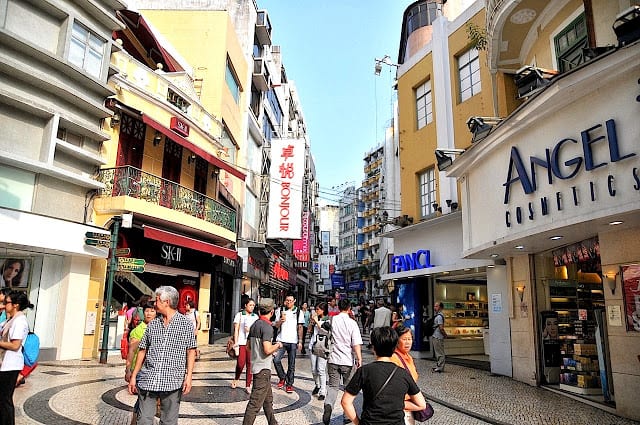
  • Macau retailers still cautious, despite better sales

    Macau retailers still cautious, despite better sales

    While retail outlets and dining establishments had better year-on-year sales in May, Macau retailers are still cautious about their business prospects, says the Macau Statistics and Census Service (DSEC).

    For its monthly business climate survey, the DSEC interviewed 167 dining enterprises that account for 53 per cent of the industry’s receipts, and 135 retailers that account for 70 per cent of trade.

    Despite their caution, 26 per cent of retailers expect a year-on-year increase in sales, up three points from May, while 38 per cent are less optimistic. During May, 36 per cent of the retail respondents indicated a year-on-year sales decline, a drop of two points.

    Experiencing better-than-expected results were adults’ clothing retailers and supermarkets, which exceeded forecasts by 40 and 33 points respectively.

    For June, 80 per cent of the respondents in the leather-goods area expect improved sales with all respondents having year-on-year increases in May.

    Watches, clocks and jewellery retailers had a 24-point rise in expectations for June, hitting 50 per cent, while department stores predict a 22-point increase to 56 per cent.

    Restaurants had a six-point drop from the previous month in the percentage of respondents reporting year-on-year growth, while those who had a year-on-year decline rose 10 points to 33 per cent.

    DSEC says the results were better than expected, as the April survey indicated only 18 per cent of respondents expected better sales figures.

    Expectations for last month are mainly pessimistic with 41 per cent of respondents expecting receipts to dip while while only 22 per cent expect a rise. Predicting increases are 27 per cent of Chinese restaurants, 25 per cent of Western restaurants and 18.8 per cent of Japanese and Korean restaurants.

    On the other hand, 60 per cent of Western restaurants foresee a drop.

  • Luxury goods group Hermes sales growth slows in Q2

    Luxury goods group Hermes sales growth slows in Q2

    French luxury goods group Hermes said on Friday (July 22) it expected first-half 2017 operating profitability to be close to the peak level of 33.9 per cent of sales achieved in the first half of 2016, thanks to foreign exchange gains.

    Hermes, known for its US$10,000 (S$13,679) Birkin bags and US$400 printed silk scarves, made the forecast after sales growth slowed in the second quarter, broadly in line with expectations, and reflecting mostly challenging year-ago comparables.

    Chief executive Axel Dumas told a conference call that sales momentum remained “quite good” with sustained demand for Hermes’ Birkin, Kelly, Constance and Lindy bags, robust demand for shoes, while the silk business continued to rebound.

    In China, Hermes sales were still growing in double digits in the quarter, while Europe benefited from a rebound in tourist flows, which was particularly strong in Italy and in London thanks to a weaker pound, he said.

    France was broadly flat, while growth in America also slowed due to high year-ago comparisons

    Hermes reported an 8.3 per cent rise in revenue at constant exchange rates to 1.361 billion euros (S$2.16 billion), compared with 11.2 per cent growth in the first quarter. Analysts had forecast about 9 per cent growth on average.

    Sales growth at its leather goods division, which makes up 50 per cent of group sales, slowed to 9.7 per cent from the 15 per cent rise achieved in the first quarter.

    The luxury industry has suffered in the past couple of years as demand in China slowed and attacks in France deterred some tourists from travelling to Europe.

    A recovery in tourism in Europe and stronger Chinese consumption are expected to lead a rebound in the luxury sector this year, the Bain consultancy predicted in May.