Tag: Sales

  • Huge iPhone 7 sales reported in Vietnam

    Huge iPhone 7 sales reported in Vietnam

    Vien Thong A retailer said they would do their best to meet demands for 8,000 orders. FPT Shop in HCM City said they about 4,000 devices should be sold in the morning when the shop started the ceremony to transfer the pre-ordered phones.

    Doan Van Hieu Em, CEO of The Gioi Di Dong Store in District 1 also said they had seen a surge in customers. Em said they wouldn’t hold the transfer ceremony but make sure that the service is fast.

    “We’ll hold a product introduction and customer appreciation programme for buying the iPhone 7 tonight,” he said. “We expected to sell 10,000 devices today.”

    Meanwhile the atmosphere at smaller retail shops such as Hnam Mobile or CellPhoneS was quieter. Big retailers had hoarded most of the products so there’s not much left for them. Major mobile network operators are also selling the iPhone 7. Viettel said they would transfer 3,000 pre-ordered phones to customers on November 11.

    Most retailers confirmed the popularity of Apple products, especially iPhone 7 Plus this year. 70% of their orders are for iPhone 7 and iPhone 7 Plus. According to FPT Shop, the order for iPhone 7 Plus in the first day was four times higher than the iPhone 6 Plus.

    Retailers are reporting a shortage of iPhone 7 in jet black. Customers also favour matte black colour followed by gold and rose gold.

    It is predicted that by the end of November, nearly 100,000 iPhone 7 and iPhone 7 Plus would be sold in Vietnam.

  • Chevrolet Sales Thailand Hands Out 500 One World Futbols

    Chevrolet Sales Thailand Hands Out 500 One World Futbols

    Chevrolet Sales Thailand recently donated 500 One World Futbols and numerous books to 25 schools within the province of Nakhon Pathom. The donations were facilitated through a coordinated effort with local dealership Chevrolet Chor Erawan Nakhon Pathom.

    Chevrolet Thailand and Chevrolet Chor Erawan Nakhon Pathom also coordinated a Chevrolet Play for Dreams corporate social responsibility (CSR) activity that saw two customers take delivery of brand-new Chevrolet Colorado pickup trucks.

    “Play is a fundamental human activity that can inspire children and adults alike. Thanks to the support offered by Chevrolet Chor Erawan Nakhon Pathom, we are able to engage with young students today, fueling their ingenuity and imagination for the future of Thailand,” said Wail Farghaly, Managing Director of GM Thailand and Chevrolet Sales Thailand.

    Chevrolet has thus far donated a total exceeding 24,000 One World Futbols throughout Thailand as part of its One World Play Project. The Play for Dreams event enabled students to get an up-close look at the new Colorado while receiving their futbols.

    Two of Chevrolet Chor Erawan Nakhon Pathom’s customers, Karun Khiaothongnoi and Prapas Bunpen, took delivery of their new Colorados in the presence of several executives, including Farghaly; Nataporn Jiramahapoka, Director of Sales and Network Development, Chevrolet Sales Thailand; Wiwat Chanwaowarm, Managing Director, Chir Erawan AutomobileNakhonpathom; Kanya Chanwaowarm, Assistant Managing Director, Chir Erawan Automobile Nakhonpathom; and Thanachart Chanwaowarm, Retail Operator, Chir Erawan Automobile Nakhonpathom.

    “We had a very successful launch of the new Colorado and have received many positive reviews from dealers, customers and the media. Today, we’re delighted to welcome Mr. Khiaothongnoi and Mr. Bunpen to the Chevrolet Colorado ownership family, and through a combination of the quality of the product, connectivity, and Complete Care program, we hope that they become customers for life,” Farghaly added.

  • Singapore banks lose up to 40 per cent of new product sales to competitors

    Singapore banks lose up to 40 per cent of new product sales to competitors

    The latest survey by management consulting firm Bain & Company found that Singapore retail banks lose up to 40 per cent of new product sales to competitors that are better at digital marketing, sales and service.

    In its seventh annual report on consumer banking behaviours, the consultancy said such “hidden defection” of consumers – purchasing a new banking product from a competing bank or financial technology firm – could get worse.

    “There are a lot of customers who frankly consider themselves prisoners in their own banks. They don’t switch their primary bank because it’s too much hassle to do so. But they’re going to go elsewhere for any new needs,” said Ms Chew Seow-Chien, partner and head of Bain’s Financial Services practice in Southeast Asia.

    The survey polled more than 137,000 consumers in 21 countries, including Singapore.

    The Singaporean customers polled indicated that they would buy new banking products from a competitor rather than their primary bank up to 40 percent of the time.

    About 30 per cent of them said they would switch their primary bank if it were easy to do so, the research showed.

    Bain noted that fintechs and technology companies are siphoning off customers seeking high-value products and services, such as credit cards, loans, insurance and investments.

    In its research, the consultancy found that deposits made up about 50 per cent of purchases from primary banks in Singapore over the last 12 months, versus just 22 per cent at competing banks.

    Meanwhile, insurance were the most purchased product at competing banks – 31 per cent of purchases – followed closely by credit cards.

    As younger, more plugged-in generations learn how to bank, their purchases of banking products through digital channels, especially online, will rise – making it important for banks to improve their digital offerings, simplify products lines and streamline user experiences.

    “By now, the digital disruption in banking should come as no surprise, and most banks clearly understand the importance of digital migration,” said Ms Chew.

    “The bigger challenge lies in how to organise the transition and instill the necessary changes, both at the frontline and in the back office, to improve how consumers do their banking.”

  • Hong Kong still suffering a retail slump, despite signs of recovery

    Hong Kong still suffering a retail slump, despite signs of recovery

    The retail downturn here is showing signs of recovery ahead of the holiday shopping season, but a further weakening of the Chinese yuan against the dollar could return to haunt the industry.

    Retail sales fell for 20 months in a row to reach 36.1 billion Hong Kong dollars ($4.65 billion) in October. However, the contraction in retail sales narrowed to 2.9% year on year, marking the smallest drop since July last year.

    Leading the decline were sales of electrical goods and photographic equipment, which plunged 21.7% on the year. Sales of luxury items such as watches and jewelry — popular among wealthy mainland spenders — edged down 0.1%, ending a streak of double-digit declines since September last year.

    Some brighter spots include supermarket sales, which were up 3.5% on the year, helped by stronger local consumption. But sales of clothing, as well as cosmetics and medicine, both dived back into negative territory, shrinking 5.1% and 1.8%, respectively.

    The government attributed the better-than-expected retail sales to improving tourist traffic. The number of mainland Chinese visitors to Hong Kong declined 3.5% year-on-year in October, against a 5% decline a month before. Overall tourist arrivals were down 2.4%, according to official statistics. “The stable job market and increasing household incomes also rendered support to local consumer sentiment,” a government spokesperson said on Thursday.

    Describing the October figures as “rays of hope” for the industry, Retail Management Association Chairman Thomson Cheng Wai-hung expected sales in the next three months to stabilize with the coming of high-spending holiday seasons such as Christmas and the Chinese New Year in late January.

    But Cheng said February will be a more critical time for the industry, referring to the impact of the yuan, which recently slid to an 8.5-year low. With the Hong Kong dollar’s peg to the stronger greenback, after the anticipated hikes in U.S. interest rates, “our goods would be more expensive for the mainlanders,” Cheng added. “It’s a big negative for us.”

    A positive dimension is that Hong Kong retailers that do sourcing in Asia are likely to benefit from the region’s weaker currencies resulting from the rate hikes, leaving them “more room” to counteract the currency impact with promotional discounts, Cheng said.

    Nonetheless, a turnaround might seem unlikely for some retailers. Hong Kong-listed French premium beauty brand L’Occitane saw Hong Kong as its worst-performing market across Asia-Pacific. Sales in the territory declined 11% on the year from April to September, little improved from the 12% slump reported in the same period in 2015.

    “Our Hong Kong business remains challenging, with a continued drop in mainland Chinese tourist traffic and heavy discounts offered by competitors,” said Chief Financial Officer Thomas Levilion on Tuesday, following L’Occitane’s announcement of a modest 1% increase in overall sales, which were helped by growth markets such as Brazil and Russia. With a net opening of 17 stores in Asia, the group shut down two stores in Hong Kong in the April to September period.

    Hong Kong mid-tier fashion retailer Bauhaus also closed four of its 80 stores at home and in Macau in the period, citing “stiff headwinds” in the retail market. Its net loss more than doubled to HK$60 million in the half year ended in September, dragged lower by an 18.5% fall in Hong Kong sales. The group slashed its headcount by nearly 14%, with the biggest reduction in Hong Kong.

    Bauhaus may also consider relocating some of its stores away from the prime shopping districts to trim costs. “More seriously, intensive discount-driven retail dynamics in recent years have gradually diminished the effectiveness of certain traditional promotional campaigns,” said Chairman Wong Yui-lam in a statement on Nov. 25, adding that there has yet to be “any significant indicator of a rebound in the near term.”

  • Ferrari boasts rising sales and profit

    Ferrari boasts rising sales and profit

    Italian luxury sports carmaker Ferrari has reported strong third-quarter results despite a challenging market environment. The company logged its steepest sales rise in China, while the rest of Asia proved difficult.Ferrari on Monday booked a record third-quarter profit of 113 million euros ($126 million), marking a 20-percent rise over the same three-month period a year earlier.

    The Maranello, Italy-based automaker said revenue in the quarter was up 8 percent to 783 million euros. It noted the success was attributable to its sales of 12-cylinder models, notably the F12df, the four-seat GTC4Lusso and the newly launched LaFerrari Aperta.

    The Italian carmaker reported shipments of 1,978 vehicles for the July-to-September period, emphasizing that its sales to China had increased by 15 percent.

    Rosy outlook

    Also picking up were sales to Europe and the Americas, while Asia outside of greater China proved a difficult market with shipments there decreasing due to logistical delays caused by a shipment carrier.

    Ferrari confirmed its forecast of shipments for the whole year at around 8,000 units, with revenues to pick up by 3 percent.

    The group revised its earnings guidance upward on the strong third-quarter results, saying that pre-tax profit would come in at above 850 million euros for 2016.

    In the past quarter, Ferrari also booked higher engine revenues on Maserati sales and rentals to other Formula 1 teams as well an increase in sponsorship and brand earnings.

  • India smartphone sales reach 32.3m in Q3

    India smartphone sales reach 32.3m in Q3

    India’s smartphone market crossed the 30 million unit shipments milestone for the first time in the third quarter, research firm IDC said.

    IDC’s Quarterly Mobile Phone Tracker shows that the 32.3 million units sold during the quarter represent 17.5% growth over the previous quarter.

    Karthik J, Senior Market Analyst, Client Devices, IDC India, attributes the growth to the channel preparation for the festive season, mega online sales and early import of smartphones owing to Chinese holidays in October.

    Online smartphone shipments increased to 31.6% with impressive 35% Quarter-on-Quarter (QoQ) growth due to a strong performance by key online players primarily from China-based vendors.

    IDC noted that the Lenovo Group, which accounts for almost one-fourth of total online smartphone shipments, continues to lead online channel followed by Xiaomi.

    Karthik said Lenovo’ sales were primarily driven by its K5 series and Motorola’s G4 series models. Meanwhile, Xiaomi’s Redmi Note 3 and newly launched Redmi 3S also fuelled the online shipments to a large extent.

    In addition, 4G smartphone shipments grew 24.8% over the previous quarter. IDC noted that 7 out of 10 smartphones shipped in Q3 were 4G enabled and 9 out of 10 smartphones sold by online retailers were 4G.

    Overall, despite the recall of Samsung’s flagship Note 7, the Korean handset manufacturer leads the Indian smartphone market with a 23% share, recording 8% sequential growth and 9.7% growth from the same period last year.

    The Lenovo Group (including Motorola) climbed to second place with 9.6% share of smartphones. Motorola’s volume almost doubled Quarter-on-Quarter driven by newly launched E3 Power and G4 models. K5 series continues to be lead runner for Lenovo accounting for over 40% of its total volume.

    Meanwhile, Xiaomi makes its debut in top 5 as its shipments doubled over the previous quarter. With the primary focus on online and minimalistic product portfolio, the company has grown more than 2.5 times over the same period last year.

    IDC expects 2016 to end with a higher single-digit annual growth, considering the smartphone performance in Q3.

    “The entry of the new vendors have extended the feature phone supply since past few quarters. However, with expected entry of Jio in the feature phone market, a category is expected to grow significantly. This, in turn, might further slow down the feature phone to smartphone migration,” commented Navkendar Singh, senior research manager, IDC India.

  • Jaguar Land Rover October sales up 11% at 46,325 units

    Jaguar Land Rover October sales up 11% at 46,325 units

    Tata Motors-owned Jaguar Land Rover (JLR) today reported 11 per cent increase in October retail sales of 46,325 units. The month’s performance has been driven by strong sales of the Land Rover Discovery Sport, Range Rover Evoque, Jaguar XF and the introduction of the Jaguar F-PACE, as well as strong year-on-year sales growth in China and Europe, JLR said in a statement.

    JLR Group Sales Operations Director Andy Goss said: “With our most engaging productline up to date, we are continuing to see positive sales momentum. Impressive performances across Europe and China have boosted our year-to-date sales to over 4,80,000 vehicles.”

    The company said its retail sales grew across majority of key regions in October year-on-year, with China up 39 per cent, Europe up 25 per cent, the UK and North America both up 8 per cent but other overseas markets were down 22 per cent.

    In the first ten months of 2016, JLR sold 4,80,349 vehicles, 23 per cent up on the same period in the prior year.

    The Jaguar brand recorded retail sales of 14,402 units in October, up 93 per cent on the previous year, reflecting the strong launch of the F-PACE and the introduction of the long- wheel base XFL in China, JLR said.

    Sales of the Land Rover brand however were down 6 per cent in October at 31,923 units. The company had ceased production of the Defender and Discovery in January 2016 and August 2016 respectively.

  • How Asia-Pacific is driving global online retail

    How Asia-Pacific is driving global online retail

    The world’s largest and most populous continent, Asia is made up of 48 countries and spans 44,579,000 square kilometres. With a widely diverse population of 5.096 billion people, the continent’s rich historical background offers a wealth of opportunities to explore, from the untouched steppes of Central Asia to the bustling economic centres of China and Japan. Iconic sights such as the Taj Mahal and the Temples of Angkor Wat may draw tourists from around the world, but strong economic growth and up-and-coming markets are providing new footholds for businesses and investors alike.

    The key e-commerce markets in the Asia region are China, India, Indonesia, Japan, Malaysia, Philippines, Singapore, South Korea, Thailand and Vietnam. Together, these countries represent 86 percent of all e-commerce turnover in the Asia Pacific region, a figure which rises to 90 percent when Oceanic countries such as Australia and New Zealand are excluded.

    E-commerce in Asia is flourishing – with $770 billion in transactions annually, the Asia-Pacific region leads the world. An expanding middle class, growing Internet penetration and improving infrastructure means the region will continue to drive global online retail over the next five years.

    Access to financial services is a key stimulus for e-commerce. A lack of banking infrastructure in many countries in the region is exacerbated by barriers caused by geographical and physical access to banking services. Increased Internet penetration will aid in removing these barriers, but with some areas having an account penetration of as low as 2 percent, many countries will continue to rely on cash as the main method of payment for some time to come.

    While, on average, 51 percent of the region’s population has access to an account with a financial institution, the extremely low income level of a significant proportion of the population results in a high overall percentage of unbanked people. In spite of its growing middle class, China’s traditional rural economy and vast territory results in the country accounting for more than 12 percent of the world’s unbanked population.

    The expanding middle class is making a significant contribution to the growth of e-commerce across the Asia region. This group is expected to reach 1.7 billion by the year 2020, with China, India and Indonesia experiencing the greatest growth. With the increase in the number of options that e-commerce brings, consumers are also showing marked personal preferences. This, in turn, is leading to increased competition, with traditional retailers moving to having an online presence (either individually, or by using an online marketplace), and local businesses experiencing pressure from regional and global brands which want a share of the growing sector’s profits. Again, China is a leading force in both the regional and global economy.

    Technology, naturally, is a major factor in changing economic patterns, with internet penetration playing a significant role. Notably, in spite of having the highest B2C e-commerce sales of any region in 2014, Asia has the lowest penetration of all regions globally (although Japan, Singapore and South Korea fall into the global top ten). As infrastructure becomes more ubiquitous, e-commerce will continue to experience high growth as a result; countries with a low penetration rate, such as India, with only 18 percent, are expected to drive future growth.

    The young are traditionally the first to embrace new methods of doing anything, and it is no different in Asia. Millennials are the most active group online, and use social media as their preferred form of communication – Facebook has more than 270 million active daily users in Asia alone. This familiarity with the online environment results in a willingness to embrace cashless payment methods, and this group exhibits different patterns of consumer behaviour to other demographics.

    The use of online payments varies throughout the region according to how developed the local market is. The more mature the market, the more likely it is that consumers in the country will use cards in order to pay for online purchases: for instance, in Japan and South Korea, 63 percent and 83 percent of online purchases respectively are paid by card. In contrast, emerging markets such as India and Malaysia continue to prefer cash based payment methods.

    In China, E-wallets are the most popular form of payment online, being used for 48 percent of transactions. Whereas, in Indonesia, e-wallets and other forms of payment are the least preferred methods, making up 5 percent and 3 percent of transactions respectively. There, bank transfer is used in 39 percent of e-commerce transactions, with card-based purchases accounting for 29 percent.

    The trend, though, we are seeing overall is that cash based payments are increasingly being displaced by electronic payment methods throughout the region.


  • Japan factory output and retail sales flat in September

    Japan factory output and retail sales flat in September

    Japan’s factory output and retail sales were flat last month, data showed Monday, painting a bleak picture for the world’s number three economy as the central bank kicks off a policy meeting.

    The lukewarm readings come on the heels of disappointing inflation figures last week and point to a tepid expansion in July-September economic growth, analysts said.

    Japan’s third-quarter growth figures are due later this month.

    The government data on Monday showed Japan’s industrial output for September was unchanged from the previous month, weighed by slower production of certain electronic components, according to the ministry of economy, trade and industry.

    That was well short of a market forecast for a 0.9-percent rise after an on-month expansion in August.

    Retail sales were also unchanged, missing forecasts of a 0.2-percent rise.

    The Bank of Japan kicked off a two-day meeting with a policy announcement expected on Tuesday.

    The BOJ has repeatedly pledged to continue monetary easing as needed until inflation reaches a two percent target, a cornerstone of Prime Minister Shinzo Abe’s economic revival policy.

    More than three years on, however, doubts are growing over Abe’s faltering bid to kickstart growth and conquer a long battle against deflation.

    Japan’s economy contracted in the last three months of 2015, before bouncing back in January-March with a 0.5 percent rise on-quarter and then a 0.2 percent expansion in April-June.

  • Volkswagen aims to sell 400,000 new energy vehicles a year in China by 2020

    Volkswagen aims to sell 400,000 new energy vehicles a year in China by 2020

    Volkswagen aims to boost new energy vehicle sales in China to 400,000 units a year by 2020, the automaker’s China chief Jochem Heizmann said, as Beijing pushes automakers to sell low-emissions cars via incentives and friendly regulations.

    It aims to eventually sell 1.5 million new energy vehicles (NEVs) annually by 2025, Heizmann told reporters ahead of the Guangzhou auto show, which opens on Friday.

    “We have to do more in the NEV area. The government is pushing, the general environment in China is pushing that,” Heizmann said.

    Overall sales of NEVs in China more than quadrupled last year with rapid growth continuing in 2016.

    Volkswagen will deliver its first locally produced NEVs, as battery electric and plug-in hybrid cars are referred to in China, under its Audi brand this year.

    Audi AG manufactures the vehicles in a joint venture with China FAW Group.

    Volkswagen also has a JV with SAIC Motor (600104.SS), and the two companies have plans to sell plug-in hybrid cars in China in the future.

    Global auto brands are only allowed to manufacture cars domestically in China through ventures with local partners, with automakers typically limited to two JV partners.

    Volkswagen said in September that it had signed a preliminary deal to explore making electric vehicles in a new joint venture with China’s Anhui Jianghuai Automobile.

    The deal is not final and is subject to approvals.

    “We are making good progress in our feasibility study with JAC,” Heizmann said.

    He said he was hopeful the government would allow what would be Volkswagen’s third JV in China, with the government pushing for less-polluting vehicles.

    “Normally the legal framework is you are only allowed to have two joint ventures. There is a special chance to have this additional joint venture just on pure battery cars,” Heizmann said.

  • The Hour Glass profits drops 14 per cent

    The Hour Glass profits drops 14 per cent

    Citing challenging business conditions and weakening consumer confidence, luxury-watch retailer The Hour Glass reports that its net profit for the second quarter ended September 30 fell 14 per cent year-on-year to S$8.32 million (US$5.88 million).

    Revenue declined 7 per cent to S$163.11 million for the period.

    For the six months to September 30, The Hour Glass profit slumped 18 per cent to $16.51 million and revenue was down 7 per cent at $311.3 million.

    The group says the death of the King of Thailand will have an impact on the performance of the group’s Thai associates as the country enters a prolonged period of mourning.

    While the retailer believes market conditions will continue to be challenging, it expects to remain profitable for the rest of the financial year.

  • VW’s Skoda Auto says October deliveries grew 10.6 percent

    VW’s Skoda Auto says October deliveries grew 10.6 percent

    Global deliveries of Skoda Auto, the Czech unit of Volkswagen, grew by 10.6 percent to 97,900 vehicles in October, boosted by growing sales in China and Europe, the company said on Thursday.

    In the January-October period, Skoda said sales had grown by 6.7 percent to 938,800 units.

    The company, the biggest Czech exporter, sold 1.06 million cars in 2015, the second year in a row it topped the 1 million mark.

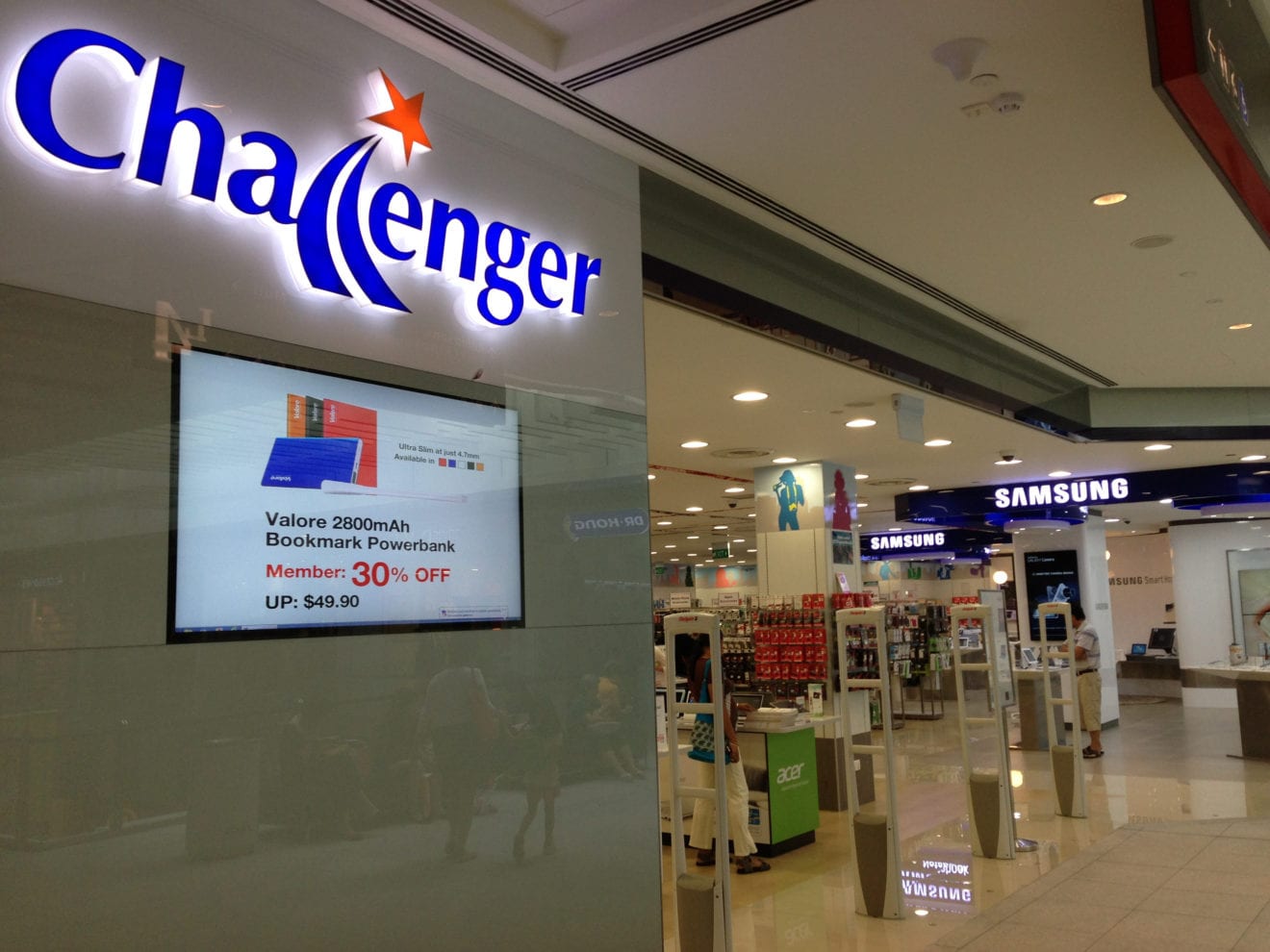
  • Challenger Technologies takes revenue hit

    Challenger Technologies takes revenue hit

    Challenger Technologies has experienced a significant slump in retail sales.

    While group revenue for the Singapore IT products and services provider remained flat at S$256 million (US$184 million) for the nine months to September 30, its third-quarter dropped 16 per cent to $74.4 million.

    This was mainly because of a decrease of $7.5 million in retail sales brought on by the weakened market, as well as a $5.6 million fall in corporate sales.

    CEO Loo Leong Thye says the company will continue to enhance its omnichannel offerings so it can reach offline and online customers faster.

    Net profit fell by about 16 per cent to $9.1 million for the nine months, and for the third quarter took a 49 per cent dive to $1.8 million. The company says this was caused by an impairment provision of about $1.2 million for investments in a last-mile delivery provider, which has since scaled down. Without this, net profit for the nine months and third quarter would have decreased by 6 and 17 per cent respectively.

    The rest of the decrease was because of lower gross profit from lower revenue, despite a marginal increase in gross profit margin.

    To date, the group has 44 stores in Singapore, comprising 25 Challenger superstores and 19 small-format stores.

  • Leonardo ready to expand helicopter sales to Indonesia

    Leonardo ready to expand helicopter sales to Indonesia

    Italian aerospace, defense and security company Leonardo-Finmeccanica sees an opportunity to expand its presence in Indonesia with sales of its helicopter products, company officials said here on Thursday.

    Head of Region for Leonardo Helicopters Lorenzo Pariani said here at the Indo Defense Expo 2016, Thursday, that Indonesia has a dynamic market to fill the needs of civilian and military users of Leonardos products.

    “Indonesia is a big archipelago. You have specific needs that we could develop together,” Lorenzo said.

    At the end of 2015, Leonardo had delivered an AW139 helicopter to the Indonesian Search and Rescue Agency (Basarnas) for humanitarian and rescue missions.

    Basarnas was Leonardos first Indonesian costumer in the form of a government agency.

    “This is like an ice breaker because we want to sell more of our helicopters,” Lorenzo said.

    The Indonesian Air Force has also chosen Leonardos AW101 helicopter, which serves as a multi-purpose helicopter, with sufficient haulage and is projected to conduct missions as a heavy-lift helicopter to increase the mobility of troops and logistics.

    Several private operators in Indonesia have also been using Leonardos helicopter such as Susi Air with AW109 and AW119, and Travira Air, which opted for a larger AW139.

    “Were also ready to have cooperation in transfer of technology with Indonesia,” Lorenzo said.

    Leonardo has sold more than 1,000 units of helicopters globally, while this year, the company has received 15 confirmed orders for helicopters from the Indonesian costumers, he said.

    Meanwhile, Leonardos Vice President of Market and Business Development, as well as Head of Region Southeast Asia, Bruno Bertella said that Leonardo and the Indonesian Military have been partners for around 20 years.

    Leonardo has provided the Indonesian armed forces with a sophisticated defense system, such as an electronic defense systems, torpedos, warship cannons in various calibres.

    “We hope to be able to provide a heavy weight torpedo for the Indonesian submarine which was recently built in South Korea,” Bruno said.

    The Indo Defense Expo and Forum 2016 is currently being held in Jakarta from Nov 2 to 5, in which a total of 844 companies, including 573 foreign companies and 271 domestic ones, are participating.

    Indonesias Defense Minister Ryamizard Ryacudu said the exhibition is expected to benefit not only the defense field but also the countrys economy and research and technology development.

  • Sales drop for Matahari Putra Prima

    Sales drop for Matahari Putra Prima

    Supermarket group Matahari Putra Prima (MPPA) of Indonesia recorded a net profit of RP32.6 billion (US$2.5 million) despite a drop in net sales to RP10.4 trillion for the nine months ended September 30.

    As expected, says the group in announcing its interim results, a change in date of the Lebaran national holiday from the third to the second quarter as well as economic conditions in Kalimantan and Sumatra had a negative impact.

    The gross margin was 16.3 per cent and operating expenses 15.4 per cent, while same-store sales growth for the period and for the third quarter fell by 2.9 and 8.9 per cent respectively.  Without store closures for renovation, MPPA says the figures would have been 1.3 per cent up and 2.9 per cent down.

    In the third quarter, MPPA changed its accounting methods, which is says will enable it to implement a more aggressive pricing strategy, better analyse profitability and increase control over margin and inventory productivity.

    “Although the third quarter was difficult, sales started to show improvement late in the quarter,” says CEO Noel Trinder. “Actions taken earlier in the year have produced a significant reduction in merchandise inventories to a sustainable level to support future growth”

    He says 15 stores were opened during the nine months.

    “Following an adjustment of quarter-four sales to reflect current conditions, MPPA is forecasting an EBITDA of RP250 billion, bringing the year’s guidance to RP585 billion.”

    As of September 30, MPPA had 294 stores in 68 cities across Indonesia (112 Hypermarts, 25 Foodmarts, 106 Bostons, 49 FMXs and two SmartClubs).