Tag: Sales

  • Alibaba momentum builds ahead of Singles Day

    Alibaba momentum builds ahead of Singles Day

    Despite its already significant scale, Alibaba continues to grow rapidly, thanks in part to its acquisitions of Chinese video site Youku Tudou and e-commerce business Lazada. Much like Amazon, the e-marketplace’s success this quarter was tethered by strong support from its cloud computing operations, which increased 130% year-over-year to RMB1,493 million (US $224 million).

    “Beyond the strong performance of our core commerce business, we are pleased with the continued rapid growth of our cloud computing business,” Alibaba Group CEO Daniel Zhang said in a statement. “We also see huge potential in our newly integrated digital media and entertainment unit. By combining engaging online experiences with highly relevant content, we delivered impressive financial and operational results in the quarter across the company.”

    The company said it will continue with acquisitions that it believes will contribute to its growth, and Alibaba Group executive vice chairman Joe Tsai told investors that Alibaba’s patience with such companies will eventually pay off, according to Alibaba spokesperson Erica Matthews. Alibaba’s investment in Lazada, and Lazada’s reported acquisition of RedMart, is part and parcel of that strategy.

    “The investment cycle for incubating businesses that eventually become massive value drivers can take seven to 10 years,” Matthews said. “This is a pattern that was repeated with Taobao, Alipay and Alibaba Cloud, all of which were developed organically in-house. We believe Alibaba’s ability to remain patient and invest with a long-term view is a huge competitive advantage.”

    The conglomerate’s strong quarterly results come just ahead of its blockbuster Singles Day event. While the online shopping bonanza won’t take place until Nov. 11, the e-commerce goliath rolled out deals three weeks early, much in the same way that retailers like Amazon have launched early Black Friday promotions well ahead of the holiday.
  • Nestlé aims to boost e-commerce contribution to revenue

    Nestlé aims to boost e-commerce contribution to revenue

    Nestlé (Malaysia) Bhd expects to increase its e-commerce contribution to its revenue from the existing one per cent to 10 per cent within the next three to four years. This 10 per cent, according to its managing director, Alois Hofbauer would translate to some RM500 million.

    “We are already the market leader within the nutritional, health and wellness segments in this country. Right now, it is not just about expanding but continuously strengthening our position,” he told Business Times on the sidelines of Lazada’s biggest online shopping event launch, the ‘Online Revolution’, this morning. “We already have our e-commerce platform, as well as ongoing partnership with Lazada and 11street.

    Going forward, we will be increasing our partnership numbers within this space.” He explained that the Nestlé Malaysia catalogue alone amounted to the hundreds but it is difficult for physical retailers to carry all of them. “With an e-commerce platform, we will be able to offer all our products and to all corners of Malaysia. It doesn’t matter if you’re in the Klang Valley or Terengganu outskirts, we will be able to provide our products for you,” said Hofbauer.

    He also stressed that this continuous increased demand would also mean a positive impact to all its stakeholders, from farmers who supply the raw products, to shareholders and to also the government as Nestlé is here for the long term. “We have seen some minor impact given the Goods and Services Tax (GST) and otherwise subdued economic landscape, but the foods and beverages (F&B) industry is resilient and we will continue to grow.”

    The company registered a total turnover of RM4.8 billlion in its 2015 financial year and has been growing at a rate of five per cent, beating the F&B industry’s overall growth of two per cent, also in 2015. Hofbauer was earlier part of the five-person panel alongside Lazada Malaysia’s chief executive officer, Hans Peter Ressel; L’Oréal Malaysia’s business head of consumer product division, Manashi Guha; Samsung Malaysia’s head of consumer electronics, Jimmy Tan and Vinda Group’s commercial director, Tony Sperrin in discussing the impacts of e-commerce on Southeast Asia’s retail landscape.

    “The growth in Malaysia in particular has been tremendous as we have seen a triple digit growth year on year on Lazada,” said Ressel. “We expect this momentum to continue because right now we are reaching further into the outskirts of Malaysia as we see a higher demand there versus Klang Valley. That being said, Malaysia will continue to be one our key markets.” The ‘Online Revolution’ on Lazada will run for a month from November 11 to December 14 and will feature the participation of over 1,000 brands and 55,000 international and local merchants.

  • Esprit Holdings’ sales decline is no surprise

    Esprit Holdings’ sales decline is no surprise

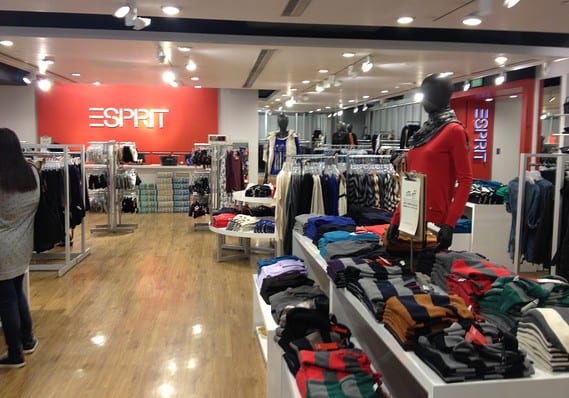
    In line with expectations, a first-quarter decline of 11.8 per cent in sales has been recorded by clothing, footwear, accessories, jewellery and housewares manufacturer Esprit Holdings.

    It says the results for the quarter ended September 30 were as expected following a reduction in operating costs and store footprint. The company reduced total controlled space (retail and wholesale) by 14.5 per cent, closing unprofitable stores. During the quarter it closed 9240 sqm of retail net sales area, (mainly concession counters in China), further reducing the group’s retail net sales area to 282,332 sqm.

    Because of structural pressure in its wholesale channel, its controlled space was also further reduced, by 13,304 sqm in the quarter to 343,448 sqm. Notwithstanding this, the decline in wholesale revenue was 11.4 per cent, reflecting an improvement in space sales productivity, Esprit said.

    While sales productivity continued to improve in July and at the beginning of August, this turned negative in line with general market developments. Since mid-August temperatures in Europe were far higher than during the same period last year, significantly impacting store traffic and initial sales of the autumn collections both offline and online.

    For the Asia Pacific, lower consumer traffic hit sales, as well as a strategic decision to restructure the company’s retail footprint and cut back on promotional activity. “As expected, these measures put short-term pressure on revenue, but they are crucial for Esprit to regain profitability in the mid-term,” said the group.

    “Despite the weak sales development in the first quarter, the group’s results remain on track and management stays focussed on the execution of the strategic plan: developing the vertical and omnichannel models; tackling the challenges in the wholesale channel and in Asia Pacific; and pushing the reduction of structural costs further in order to continue the recovery of the group’s overall profitability.”

  • Honda raises profit forecast on strong China sales

    Honda raises profit forecast on strong China sales

    Honda Motor Co lifted its full-year net profit forecast by 6 percent, betting that Chinese customers will keep buying its XR-V and Vezel SUVs and the popular Civic sedan after robust demand there boosted Asian sales sharply in the latest quarter.

    Japan’s third-largest automaker by sales said on Monday it expects full-year net profit to hit 415 billion yen ($3.95 billion), compared to its previous forecast of 390 billion yen. Honda upgraded its global sales forecast to reflect strong demand in China, the world’s biggest auto market and the company’s second largest.

    It also expects cost cuts and lower quality-related costs to offset the impact of a stronger currency and lift its bottomline this year, after taking a hit last year due to hefty provisions for costs to recall Takata (7312.T) air bag inflators.

    Strong demand in growing cities has pushed Honda’s Chinese sales up 26 percent higher year-on-year to 872,000 in the first nine months of 2016, boosted by a near doubling in sales for the Civic, which underwent a model change this year.

    This prompted it to lift the forecast for group vehicle sales in Asia by 11 percent on the year to 1.915 million for the year ending in March 2017, after overall Asian sales rose 22 percent on the year in the second quarter.

    As a result, it sees global sales rising by 5 percent from last year to 4.98 million cars.

    “We’re seeing a positive impact from our new models. The Civic is doing very well in North America, China, and South America,” Honda Executive Vice President Seiji Kuraishi told reporters at a briefing, adding that strong demand for the XR-V compact SUV crossover was also lifting Chinese sales.

    To keep up with rapidly growing demand for its sedans and SUVs in China, Honda is planning to build a new factory in the country with partner Dongfeng Motor Group Co (0489.HK), two people familiar with the matter told Reuters earlier this month.

    Honda sells roughly 40 percent of its global production in North America, but as growing demand in China drives Asian sales higher, the automaker expects sales in the two regions to be roughly the same this year.

    Despite the rosier profit outlook, Honda’s new profit forecast remains lower than the average 482 billion yen profit expected by 21 analysts polled by Thomson Reuters, and Honda said that its conservative outlook was largely due to global uncertainties.

    “At the moment we see uncertainties related to the U.S. elections, Brexit and a weaker sterling, and in Asia, the outlook for Thailand after the death of the country’s monarch,” Kuraishi said.

    “We haven’t seen the impact of these factors yet, but we’re taking a cautious approach to our forecasts.”

    Honda operates a plant in Britain, producing around 140,000 vehicles per year, including the CR-V crossover SUV and Civic sedan at its plant in Swindon. Half of its production is exported to the EU.

    Kuraishi said that the automaker had no plans at the moment to shift its production away from Britain, adding that it would consider factors including the value of sterling and the likely introduction of tariffs when deciding its future in the country.

    Honda is assuming an average rate of 103 yen to a dollar for the current year, against its earlier forecast of 105 yen.

  • McDonald’s Korea sale collapses

    McDonald’s Korea sale collapses

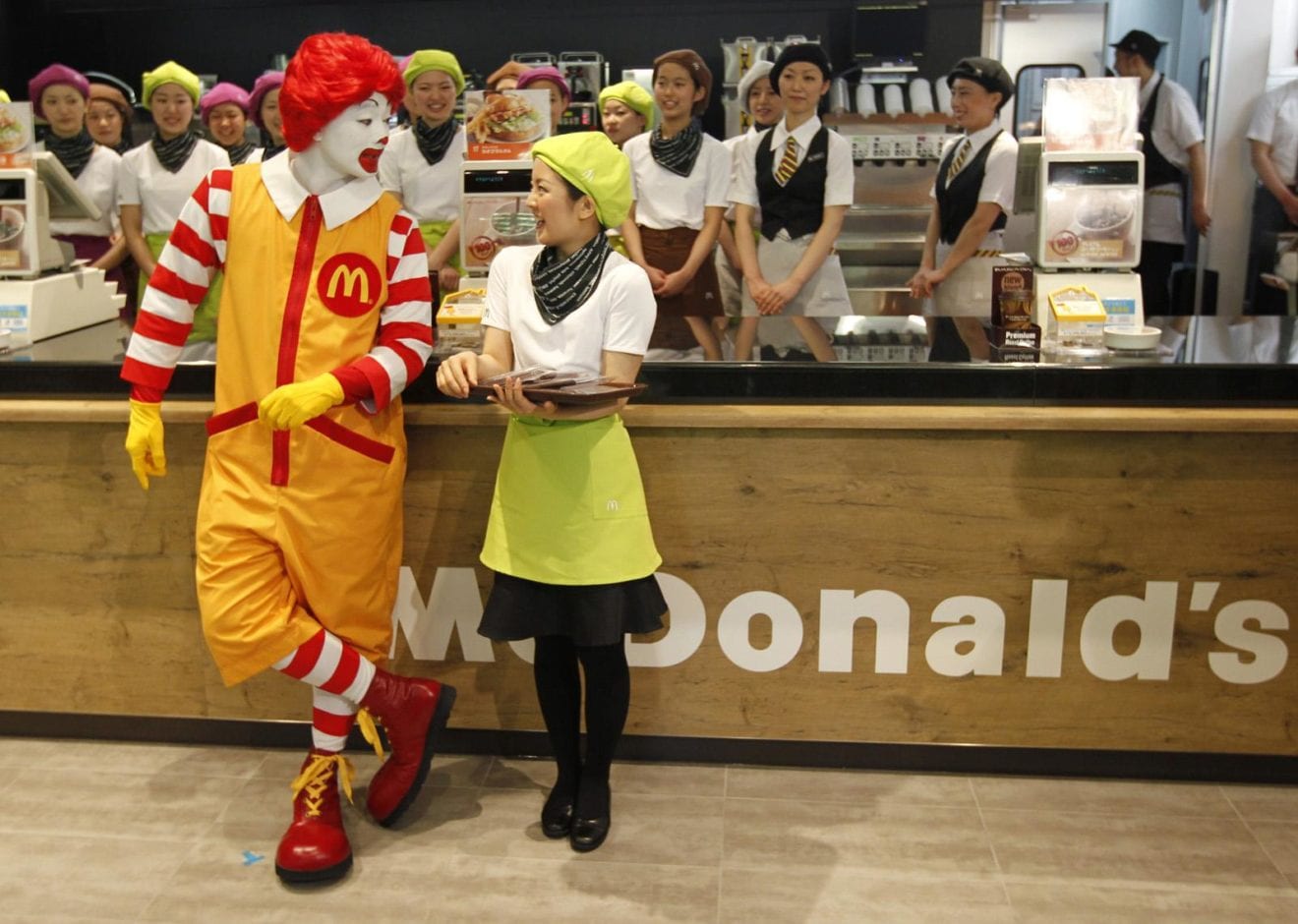
    And in the simultaneous divestment process for the 20-year McDonald’s China franchise rights, TPG Capital has reportedly withdrawn leaving two rival private equity firms in the race – Bain Capital and Carlyle Group – competing with two Chinese companies previously reported to be in the negotiations: retailer Wumart Stores and Sanpower Group.

    With Maeil Dairies Industry Co dropping out of the running for McDonald’s Korea, that sale process seems at best stalled.

    McDonald’s, which directly manages about 400 stores in South Korea, has been looking for local partners to run the Korean outlets as franchise stores that pay annual commissions instead. The deal initially drew interests from several investors, including CJ and NHN Entertainment, but they have nixed their plans.

    Maeil Dairies had formed a consortium with Carlyle Group, but pulled out after failing to agree on terms of contract, industry sources familiar with the matter told the Yonhap news agency.

    “We can’t verify the specific details as McDonald’s headquarters office is in charge of the bidding process, but the sales process is still under way,” an official at McDonald’s Korea said, without elaborating on the deal.

    Meanwhile, in China, TPG’s withdrawal was confirmed overnight by unidentified sources close to the matter and reported by several news networks.

    Carlyle Group has partnered with Citic Group and Bain with GreenTree Hospitality, a hotel group.

    McDonald’s is seeking as much as $3 billion for the China rights, which come with a 10-year expansion option.

    There are about 2400 McDonald’s restaurants in China and Hong Kong and the US company wants its master franchisee to expand that network rapidly to compete with rival Yum! China’s expansion plans.

    The ongoing presence of private equity bidders in the process is surprising, because McDonald’s has made it clear it is seeking a long-term partner rather than private equity firms, which typically cash out after a few years.

  • Asia to account for 50% of Prada sales

    Asia to account for 50% of Prada sales

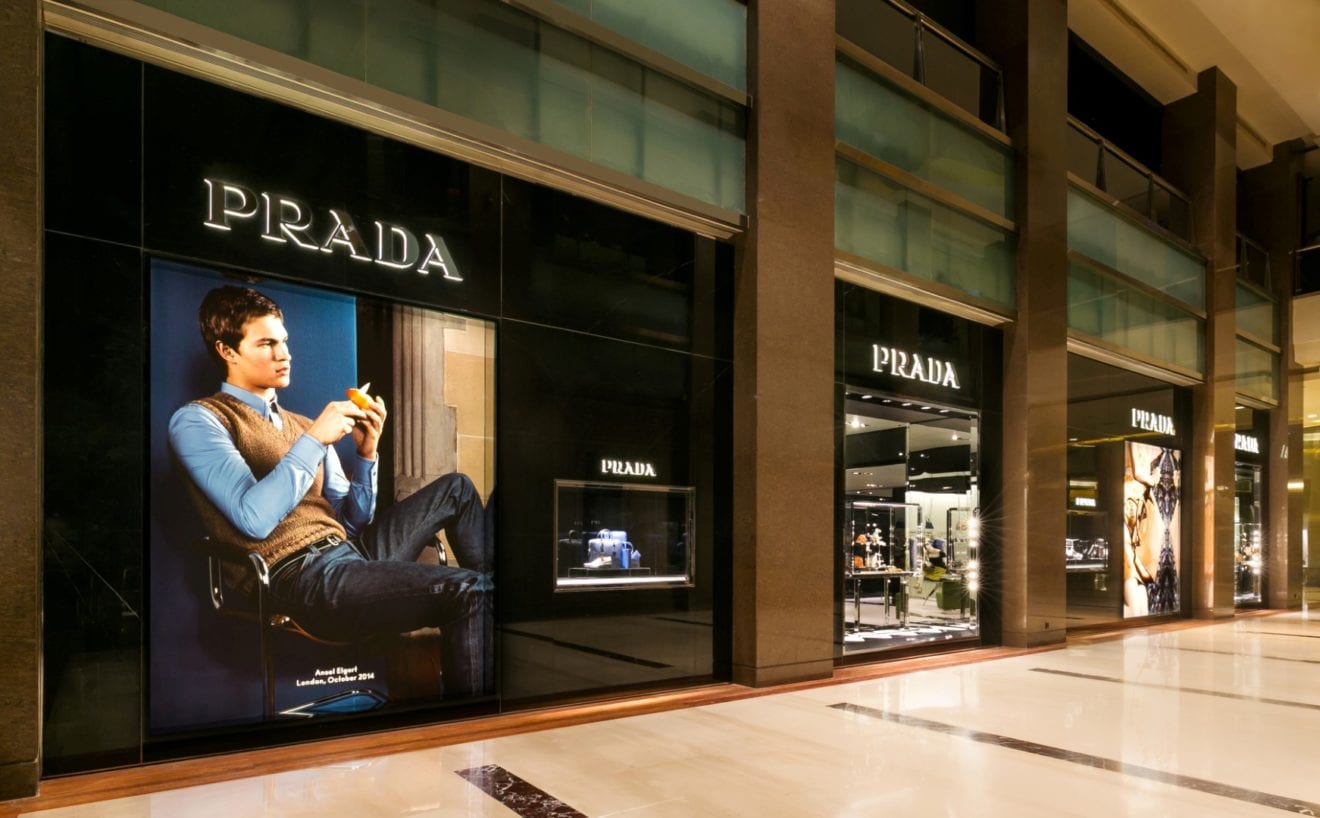
    Prada expects that its sales in Asia will account for half of its total sales within one year, while sales in China will be 3 times of current sales in the next 2-3 years.

    Deputy Chairman Carlo Mazzi said, “Currently 40 percent of our business comes from Asia, it will rise to 50 percent in the coming year, and I do not think China’s economy will be much affected by the current European economic crisis.”

    Prada Brand completed its listing at Hong Kong stock market in June 2011. It also held its spring and summer fashion show in January, 2011 in Beijing.

    The brand announced that its sales for the first six months of 2011 rose 38 percent year on year to €223 million.

    In addition to Prada Brand, other global fashion brands, such as Burberry, Christian Dior, Rebecca Minkoff are also keenly eyeing the Chinese market.

  • Holiday Season in Hong Kong: Good for Sales, Good for Theft

    Holiday Season in Hong Kong: Good for Sales, Good for Theft

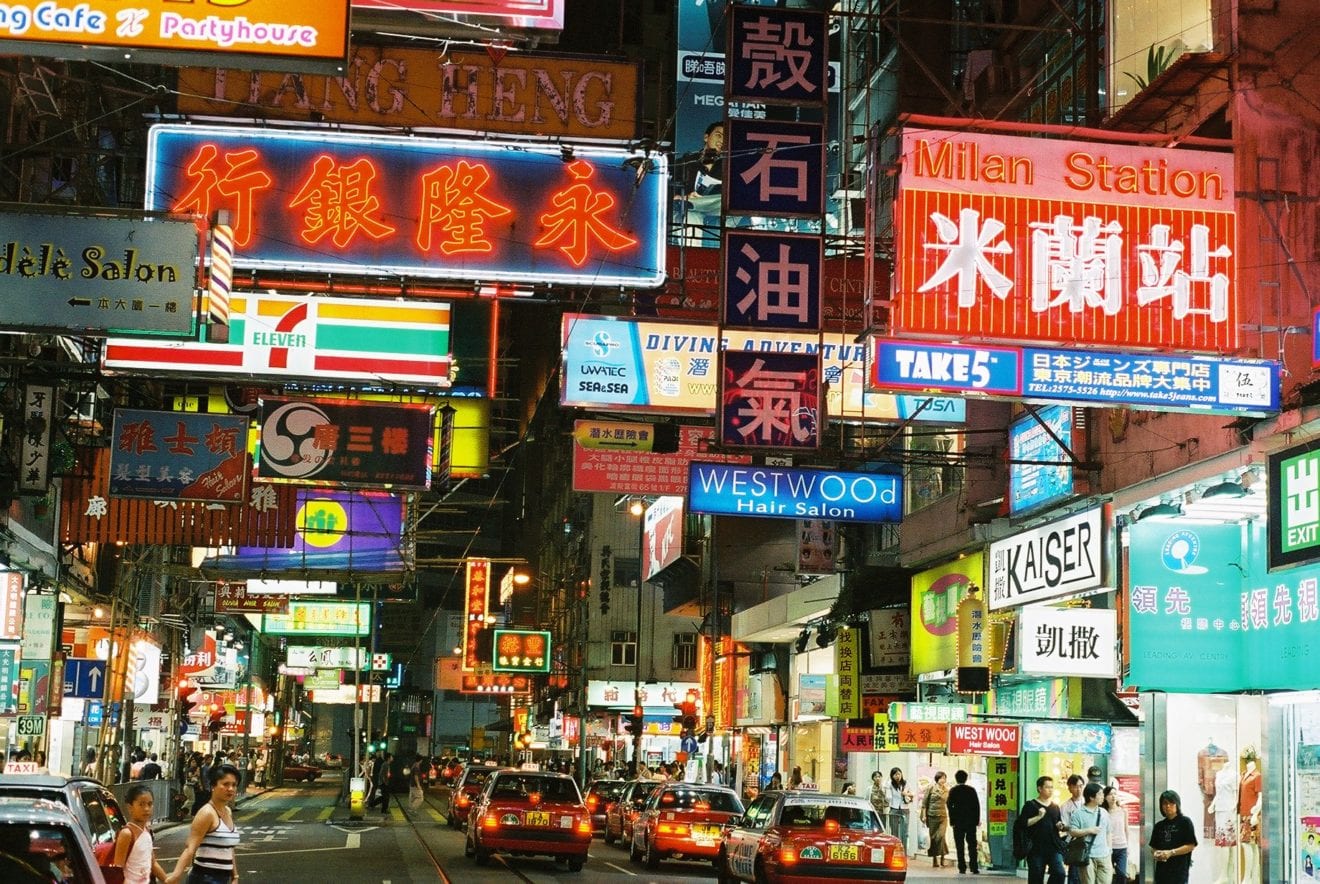
    With the holiday season fast approaching, a study report reveals that retailers around the world will experience both their highest sales and shrink distributions during this period. According to the 2016 Retail Holiday Season Global Forecast, 30% of the losses Hong Kong retailers incur due to internal and external theft will come during the holiday season, with apparel, children’s toys and electronics emerging the favourites among thieves.

    Theft from internal sources (primarily via employee theft and other sales reducing activities) and external factors (primarily via shoplifting/organized retail crime), which is referred to as shrink by retailers, is at its peak during the holiday season, which also sees 27% of annual retail sales of a retailer in Hong Kong .

    The study, underwritten by an independent grant from Checkpoint Systems , Inc., was carried out by Ernie Deyle , a retail loss prevention analyst, and provides an analytical view of business risks that major retailers face during this holiday season. The 13 markets covered in the report include North America , Europe and Asia , and include the U.S., Belgium , France , Germany , Italy , Netherlands , Portugal , Spain , UK, Australia , mainland China , Hong Kong and Japan .

    Mark Gentle , Vice President — Merchandise Availability Solutions Asia Pacific, Checkpoint Systems, said, “Building holiday inventories earlier and specifically for high-risk items may lead to increased sales reduction pressures, such as markdowns and shrink throughout the fourth-quarter. The report reveals that nearly 30% of sales reducing activities are incurred during this time period. This leads to increased shrink, and puts additional strains on brick-and-mortar retailers already reeling from an ongoing inhospitable retail market.”

    Even though Hong Kong has the lowest proportion of Q4 losses due to shrink of all the 13 markets surveyed, it is still significant and over 30% higher than during the first two quarters of the year.

    In addition, the cost of retail loss to Hong Kong shoppers in 2016, as absorbed or passed on from retailers, is expected to be HK$175 per person on average, of which HK$53 , or one-third, will be incurred during the holiday season. These increases in losses place an enormous burden on retailers and, ultimately, on honest consumers who pay for it in higher prices.

    “For most retailers, wholesalers and distributors, inventory — including the space to store it — is the largest single cost of doing business. While reducing inventory means lower costs, insufficient inventory leads to out of stock situations, lost sales and unhappy customers. Therefore balancing these two factors is critical to profitability and growth, particularly in omni-channel environments,” said Mr. Gentle.

    “The use of advanced data analytic tools, inventory management strategies, along with technologies such as RFID will provide retailers with enhanced visibility to track merchandise as it moves through the supply chain to distribution centers, retail backrooms and store shelves, helping retailers reduce losses due to shrink and other causes, ultimately increasing the financial contribution of each item.”

  • Fashion retailer French Connection’s shares jump on takeover hopes

    Fashion retailer French Connection’s shares jump on takeover hopes

    Shares in UK-based fashion retailer French Connection Group Plc rose more than 20 percent on Monday after a media report said overseas investors were looking to buy the lossmaking firm.

    The Telegraph newspaper had said on Saturday that interested buyers were thought to be a mix of European and U.S. private equity firms, as well as investment manager Neuberger Berman, and that French Connection had approached investment bank Moelis & Co (MC.N) for advice.

    French Connection and Moelis declined to comment. Neuberger Berman did not immediately respond to a request for comment.

    French Connection has struggled to compete in recent years against fast-fashion rivals such as ASOS, Forever 21 and Inditex’s Zara and has failed to report a pretax profit since the year ended Jan. 31, 2012 with critics saying it should ditch its 25-year-old FCUK logo.

    Private equity firms could be a natural fit for French Connection as they could push through operational changes to extract profit, and revive the company’s brand appeal, said Neil Saunders from retail consultant Conlumino.

    The retailer has been the source of takeover speculation in the past, and some industry experts said there was now more pressure on the company following years of underperformance and little sign of underlying issues being addressed, despite turnaround measures including store closures and the hiring of new management and design teams.

    Activist investment firm Gatemore Capital Management (GCM), which has an 8 percent stake in French Connection, would be supportive of running an open sales process, Liad Meidar, managing partner at GCM said in an emailed statement.

    GCM said it would be interested in a potential buyer looking to focus on increase the rate of store closures and improve gross margins in French Connection’s retail and wholesale business.

    French Connection needed to focus on fashion for 25- to 35- year-olds, said Gatemore, which last month urged the retailer to speed up its store closure program after its first-half results showed another loss.

    As of Friday’s close of 32.75 pence – a fraction of highs of more than 500p set in 2004 – French Connection had a stock market value of 31.5 million pounds.

    Any buyer will have to gain the backing of founder and executive chairman Stephen Marks, who still holds a 41.65 percent stake in the company as of March 15, according to Thomson Reuters data.

    British companies have become cheaper for overseas buyers in recent months as Britain’s vote to leave the European Union has driven the pound GBP= to its lowest in about three decades.

    French Connection shares were up 10 percent at 36p by 0721 ET on Monday.

  • Surge in Chinese tourist arrivals continues to boost South Korean duty free

    Surge in Chinese tourist arrivals continues to boost South Korean duty free

    Chinese visitor numbers to South Korea in August climbed by +70.2% year-on-year to 873,771, according to the Korea Tourism Organization. The figures are distorted by the 2015 MERS health crisis which ravaged inbound tourism in 2015, prompting a -32.3% year-on-year fall in arrivals last August. A better base comparison is the +15.2% growth in August 2016 over the same month in 2014, when Chinese arrivals reached 757,683.

    Chinese visitors are critical to South Korea’s travel retail sector (the world’s largest), representing 52.5% of total arrivals in the month.

    For the first eight months of 2016 Chinese arrivals rose by +48.8% year-on-year to 5,608,046.

    The importance of group tourists to the travel retail channel is underlined by the breakdown of Chinese visitor numbers (see table below) with 4,839,309 group travellers arriving in South Korea over the first eight months. Group tourists accounted for 86% of Chinese arrivals. Others (principally free independent travellers) represented just 731,731 arrivals, a 13% share, with business travellers and officials making up the balance.

    Attracting the FIT market is an increasingly important battleground in the fight between retailers to attract big-name luxury brands.

    However, arrivals by ‘others’ fell -7.0% year-on-year in the first eight months, while Chinese group tourist numbers surged +64.1%.

    Japanese arrivals grew -51.7% to 225,456 in August, a 14% share.

    The first eight months of 2016 saw a +23.5% rise in Japanese visitor numbers to 1,451,565, a 12.6% share.

    Korean departures increased by +12.5% in August to 2,064,241; and for the first eight months by +16.8% to 14,780,387.

    Visitor arrivals by gender for August; Source: Korea Tourism Organization

    Visitor arrivals by gender for August; Source: Korea Tourism Organization

    Accumulative visitor arrivals by gender for first eight months; Source: Korea Tourism Organization

    Accumulative visitor arrivals by gender for first eight months; Source: Korea Tourism Organization

    Visitor arrivals by purpose and nationality for August; Source: Korea Tourism Organization

    Visitor arrivals by purpose and nationality for August; Source: Korea Tourism Organization

    Accumulative visitor arrivals by purpose and nationality for first eight months; Source: Korea Tourism Organization

    Accumulative visitor arrivals by purpose and nationality for first eight months; Source: Korea Tourism Organization

    Outbound departures of Korean nationals by gender for the first eight months of 2016; Source: Korea Tourism Organization

    Outbound departures of Korean nationals by gender for the first eight months of 2016; Source: Korea Tourism Organization

    Outbound departures of Korean nationals by age for the first eight months of 2016; Source: Korea Tourism Organization

    Outbound departures of Korean nationals by age for the first eight months of 2016; Source: Korea Tourism Organization

  • Kurt Geiger sales soar despite ownership carousel

    Kurt Geiger sales soar despite ownership carousel

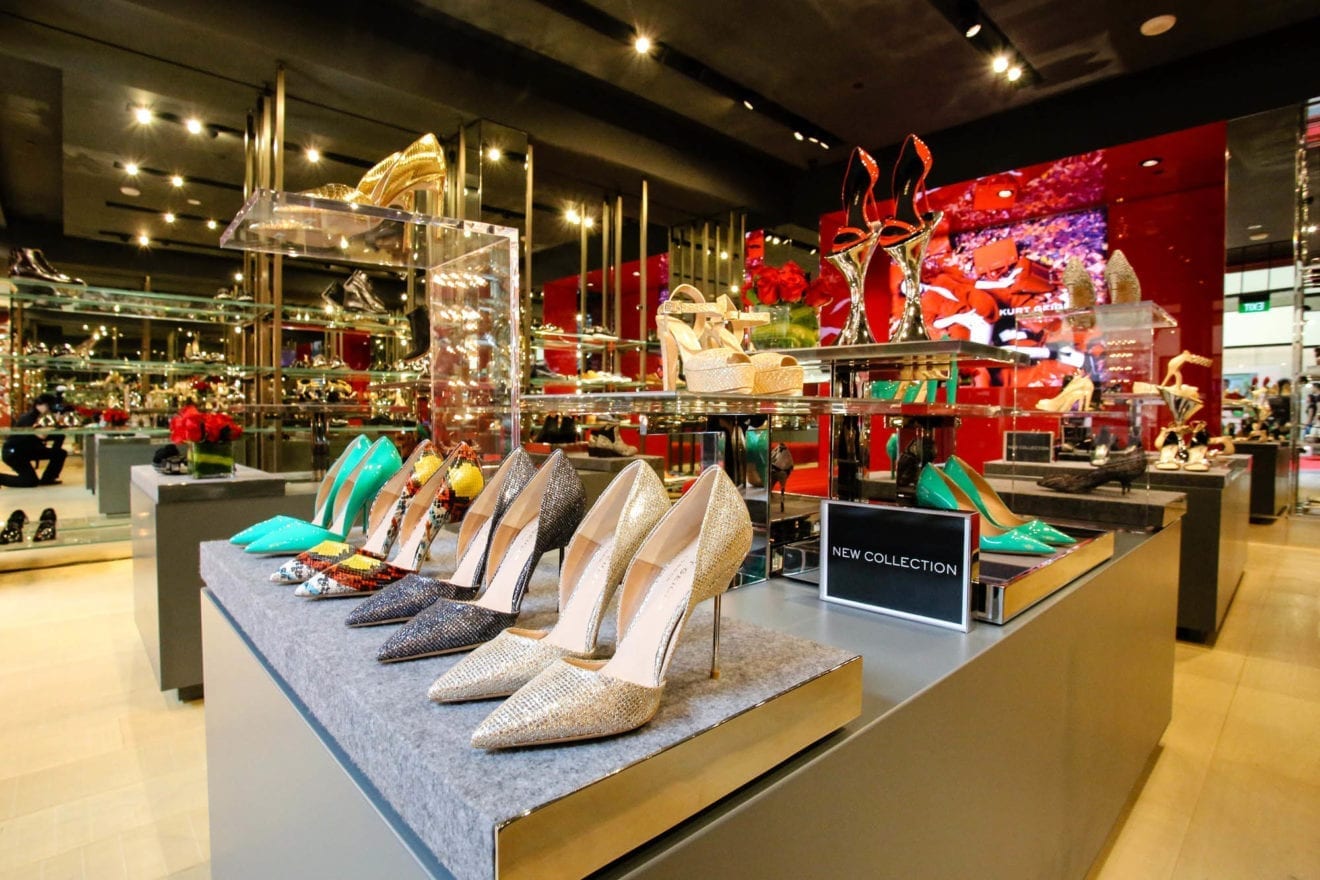
    Kurt Geiger should now be focusing on expanding internationally after a solid performance in 2015.

    Despite going round and round the carousel of ownership with three owners in the last four years, Kurt Geiger has maintained sales momentum and posted an impressive set of full year 2015 results, doubling operating profit and growing turnover to £281.6 million. The retailer’s fashion-led proposition, premium – yet accessible – price points and distinct design aesthetic is unrivalled on the high street, and has kept it top of mind of footwear shoppers.

    These results do not reflect its latest change of ownership, as it was sold to European private equity group Cinven in December 2015, and the footwear market in 2016 has been considerably less forgiving than that in 2015. Kurt Geiger has not been immune to the pressures of waning consumer confidence and volatile weather patterns, as evidenced by the fact that it has been discounting heavily over the last few months, even on new season A/W 2016 stock.  The retailer has to be careful to not dilute the Kurt Geiger brand too much, and ensure it remains aspirational and recognised for its quality and design credentials.

    Initiatives such as signing supermodel Karlie Kloss as the face of its brand for S/S 2016 and advertising its celebrity fan following on its website and social media channels through the ‘As Seen On’ function will continue to build its destination appeal and grow brand awareness. Given its robust product proposition and the continuing desirability of its brand, Kurt Geiger is in prime position to benefit from further investment from its new owners, whose focus must now be on nurturing the brand and expanding internationally as its domestic presence matures.

  • New Mitsubishi Distributor to Boost Sales Operations in Indonesia

    New Mitsubishi Distributor to Boost Sales Operations in Indonesia

    Mitsubishi Motors Corporation (MMC) and business partners Mitsubishi Corporation (MC), PT Krama Yudha (KY) and Mitsubishi FUSO Truck and Bus Corporation (MFTBC) reached a basic agreement on restructuring MMC-brand vehicle sales operations in Indonesia in order to strengthen their Indonesian operating base.

    Under the basic agreement, the current distributor PT Krama Yudha Tiga Berlian Motors (KTB) will be split into MMC and MFTBC brands and a new distributor dedicated to the MMC brand will be set up. The new distributor will enhance MMC’s passenger car sales organization in Indonesia through promoting areas such as branding, sales personnel training, improving the quality of after-sales services and building up the dealer network. The new company is due to start sales operations in April 2017.

    MMC, in partnership with MC and KY began automobile production and sales in 1970 and since then business has grown focusing mainly on commercial vehicle sales.

    To meet further expected growth in the Indonesian passenger car market, MMC is preparing to commence production in April 2017 in a new factory at Mitsubishi Motors Krama Yudha Indonesia (MMKI). In October 2017, MMC also plans to start production of a new compact MPV segment model for which there is a large demand in Indonesia.

    MMC will work to further expand profits in Indonesia through expanding its model lineup, moving its focus from small commercial vehicles to passenger vehicles, strengthening the sales aspect with the new MMC brand-focused distributor in addition to production through the new factory at MMKI and new product.

  • Chinese celebs promote ‘K-beauty’

    Chinese celebs promote ‘K-beauty’

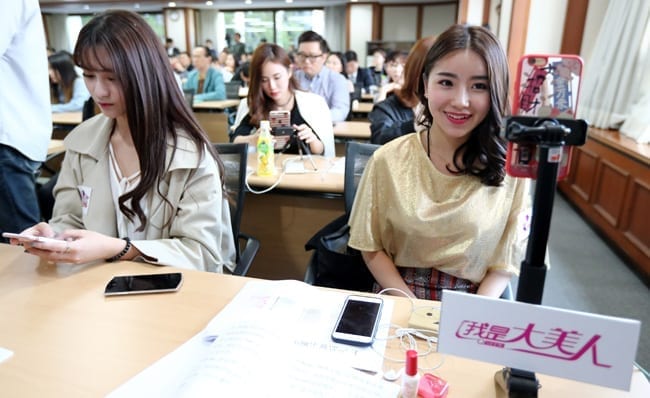
    Internet celebrities in China, known as “Wang Hong” there, have been in the limelight among Korea’s cosmetics and retail industry officials, amid a chilly relationship between the two countries. Bilateral relations have soured since Korea decided to deploy the Terminal High Altitude Area Defense (THAAD) missile system.

    The online stars, who have millions of followers on the internet, exert a strong influence over young Chinese people. According to CBN Data, a commercial data company affiliated with Alibaba, the “Wang Hong economy” is set to be worth 58 billion yuan ($8.7 billion) in 2016, more than China’s box office in 2015.

    Korea’s cosmetics industry officials have recently paid attention to them, as more have promoted K-beauty fever in China, evaluating or recommending Korean cosmetics online.

    Some cosmetics companies have even invited them to Korea to promote their products.

    AmorePacific invited some to Korea in March and September this year to promote its oriental herbal shampoo “Ryoe.” After the invitation, AmorePacific’s shampoo sales in China grew seven times year-on-year. LG Household and Health Care invited nine celebrities to Korea on Sept. 22 to promote its cosmetics brand SU:M37. The Face Shop invited five others and introduced their products to them earlier this year.

    Retail industry officials are looking for opportunities from the celebrities as well.

    Aekyung invited 10 in May to promote its cosmetics brand “Luna,” and HDC Shilla I’PARK Duty Free hosted an overnight trip for five to sightsee spots in Yongsan, central Seoul. Shinsegae broadcasted its “K-beauty fashion week” event to China through the channels of a few of the internet celebrities and Galleria Duty Free Shop employed two to promote the store in China through their social media.

    On Oct. 3, Minister of Culture, Sports and Tourism, Cho Yoon-sun said, “We would like you Wang Hongs, who lead the trend in China, to be a bridge between Korea and China,” meeting six celebrities at Jongno Hanok Village in central Seoul.

  • Smartphone sales growth continues to slow

    Smartphone sales growth continues to slow

    The global smartphone market is on track to grow just 4.5% during 2016, rocked by a decline in sales in the premium segment, Gartner predicts.

    The research firm estimates that premium smartphone sales will decline 1.1% for the year, with owners having less incentive to upgrade to the latest models.

    Overall smartphone sales are on track to reach 1.5 billion units in 2016. While the market is slowing as smartphones reach global saturation, Chinese vendors are stimulating sales in the Android segment of the market by offering more affordable premium devices.

    But Gartner expects the market for premium smartphones to return to 3.5% growth next year as stronger replacement cycles emerge.

    The predicted upswing is also in anticipation of Apple’s expected launch of a new iPhone with a new design and features attractive enough to convince smartphone owners to upgrade.

    Total mobile phone shipments are meanwhile on place to fall 1.6% in 2016, while tablet sales are set to decline from 196 million units in 2015 to 177 million in 2016.

    Worldwide combined device shipments – which also include PCs, laptops and related devices, are expected to decline for the second consecutive year, falling 3% to 2.34 billion units.

  • India auto sales soar 20% in September ahead of festive seasons

    India auto sales soar 20% in September ahead of festive seasons

    Demand is expected to slowdown in the coming months, however.

    During Sep-16, domestic sales of passenger vehicles rose 20% YoY and two wheelers grew 22% YoY, ahead of Diwali and Dussera in Oct-16.

    MayBank KimEng’s channel checks suggest the demand for automobiles is 10% more than in the previous two festive seasons.

    “We expect demand to normalize lower in Nov and Dec as dealers start cutting inventories,” it said in a report.

    The Society of Indian Automobile Manufacturers (SIAM) confirmed the uptrend by revising up its sales growth forecast to 10-12% for FY17 from 6-8%.

    “We will wait for two more months of retail sales data before deciding whether to revise up our growth forecasts,” said MayBank KimEng.

  • Ford Philippines retail sales up 32% in Q3

    Ford Philippines retail sales up 32% in Q3

    Retail sales of Ford Philippines surged to 8,244 units in the third quarter of 2016, up 32 percent from a year earlier.

    The demand for the EcoSport, Ranger, and Everest models helped grow the carmakers’s Philippine sales, Ford said in a statement on Thursday.

    Car sales stood at 24,993 units in the year-to-date, up 50 percent year-on-year.

    “Our full lineup of global Ford vehicles is contributing to another exceptional year of growth. EcoSport, Everest and Ranger continue to be the main drivers, but the rest of our showroom, including vehicles like Explorer, Fiesta and Mustang are helping build on the broad-based appeal for the Ford brand in the market,” said Lance Mosley, managing director of Ford Philippines.

    Ford Philippines is the local distributor of America’s Ford Motor Co.