Tag: Sales

  • Hong Kong Sees Signs of Improving Retail Sales

    Hong Kong Sees Signs of Improving Retail Sales

    The latest figures show retail sales in Hong Kong continued falling in March. However, signs of improvement are in sight, with sales of drugs and cosmetics rising slightly.

    However, the biggest question on the minds of many in Hong Kong is how long the overall downturn in Hong Kong’s economic fortunes is going to continue.

    Retail sales in Hong Kong have been suffering through a year-long contraction, the longest decline since 1999. Overall retail sales are down around 10 percent in March compared to a year ago. However, March’s figures are far better than the 20-percent drop in sales registered through February.

    Through the first quarter of this year, retail sales in Hong Kong have fallen 12.5 percent compared with the same period last year. The Hong Kong government attributes the severe drag on retail sales to the slowdown in inbound tourism.

    However, there are some signs of life for the struggling city. The just-concluded three-day May Day holiday saw tourism numbers from the mainland come in 10 percent higher than most observers had been forecasting.

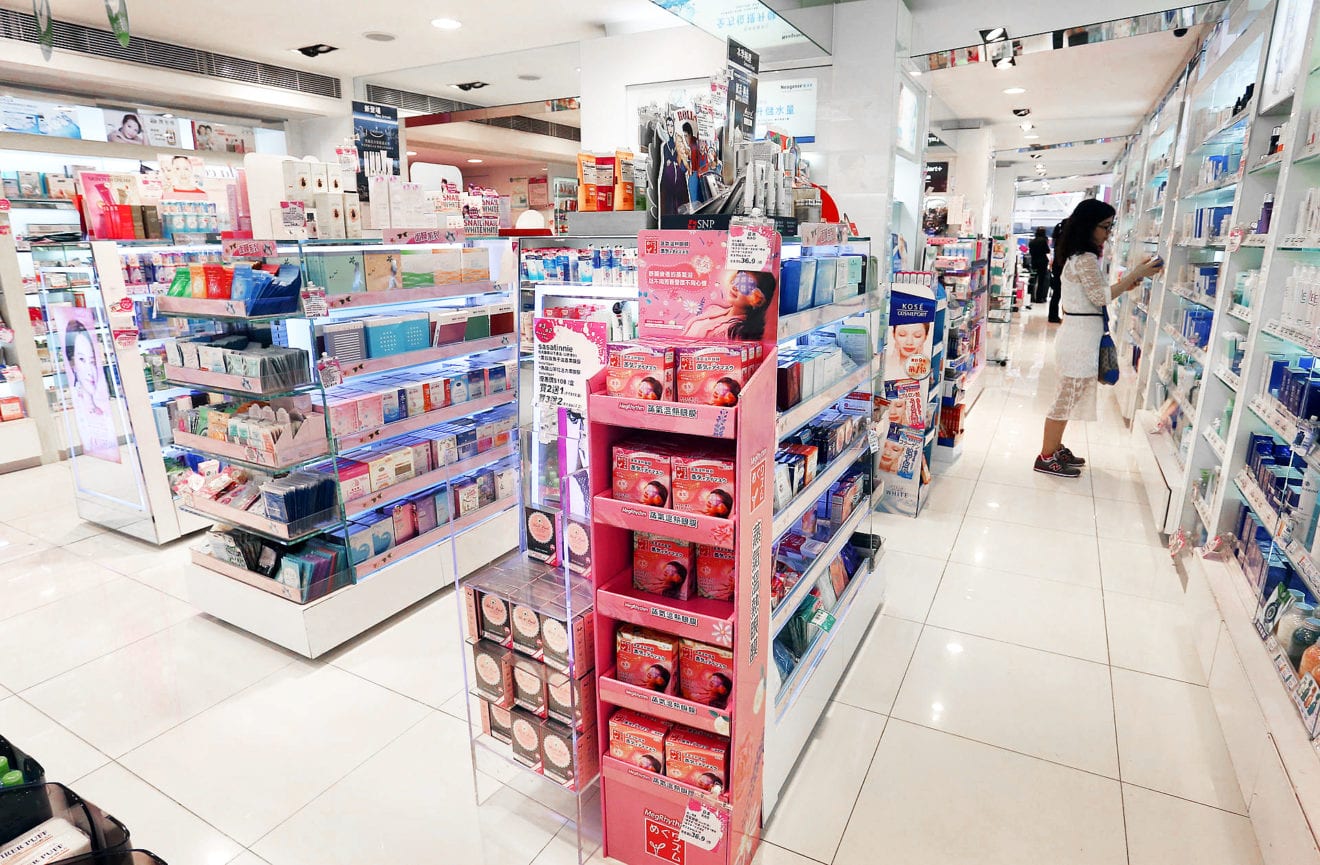
    At the same time, cosmetics firm Sasa has registered a slight growth in same-store sales. Cheng Wai Hung, Head of Hong Kong’s Retail Management Association, says even though there are signs of improvement, retailers still need to do more to keep people buying.

    “Retailers know it is hard to run businesses this year, so stores will start promotions earlier than usual to make up for the losses. It is likely that we will see sales starting from this month. Even some big brands will follow suit.” However, Banny Lam, co-Head of Research at Agricultural Bank of China International Securities, believes retail sales in Hong Kong are not likely to pick up in the short term.

    “I believe the rate of decline will narrow a little bit, but it won’t be a significant change, and sales won’t get back to positive territory any time soon. The current economic environment is rather weak, which has led to a sluggish overall retail performance. Another factor that’s worth noting is that the Disneyland in Shanghai is going to open soon. So the question is, is this going to affect Hong Kong’s tourism? ”

    At the same time, Deputy Director of Hong Kong Department Stores and Commercial Staff General Union, Tung Cheong Sing, says retailers in Hong Kong have to transform their business models to appeal to the changing demands of mainland tourists.

    “For example, stores should be selling middle or low-range priced watches, rather than luxury ones. Despite a decline in rents, many stores may have to close down some of their branches to adapt to the new environment.”

    Even though times have been tough for Hong Kong retailers, some are performing better than others.

    One store selling Japanese products has witnessed a 30 percent spike in sales through the first three months of this year.

    Store Manager Chuang Tin Chi says they’ve been able to keep their finger on the pulse of what’s been trendy this year.

    “There have been a number of movies released over the past couple of months which have featured a wide range of digital, video products or cell phone accessories. So to capitalize on that, we order in these products right away into Hong Kong from Japan, which has significantly increased our sales.”

    One bright spot for Hong Kong retailers has been the recent rise in the value of the renminbi to the US dollar, as the Hong Kong dollar remains pegged to the value of the greenback.

    This means mainland shoppers are getting a more favorable exchange rate when converting from the yuan into Hong Kong dollars, which may prompt more shoppers to cross the border.
     

  • Esprit sales flat

    Esprit sales flat

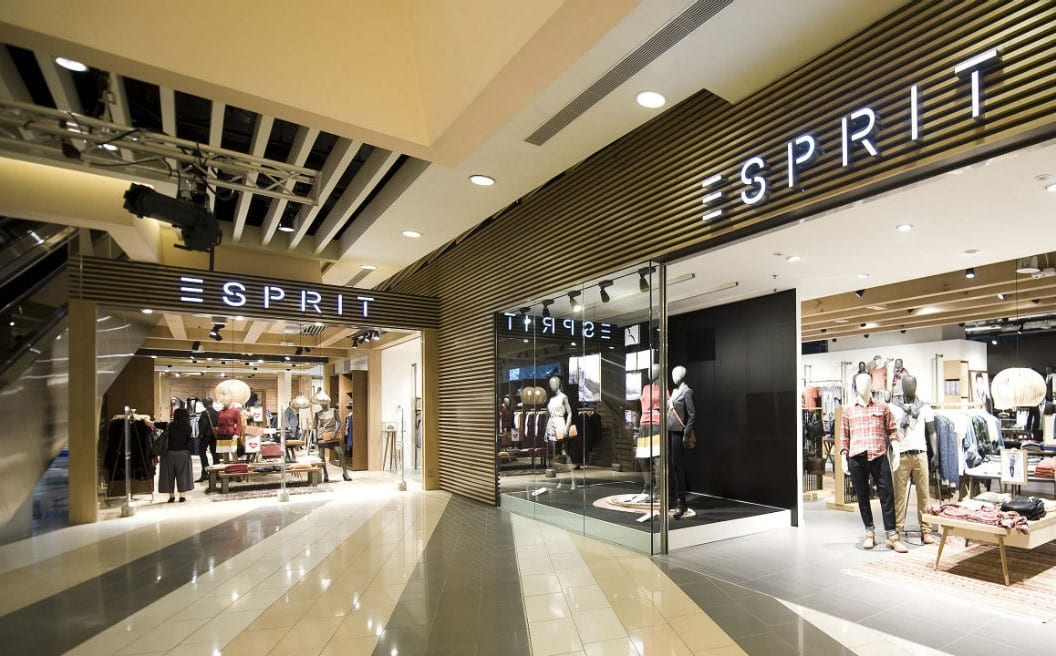
    Reporting “flat” revenue for its third quarter, Hong Kong-listed clothing retailer Esprit Holdings points the finger at negative growth in its Asia Pacific stores, as well as weakness in its wholesale channel.

    There was a marginal decline of 0.1 per cent in Esprit sales for the three months but the company continued to benefit from improved product performance, as well as improved marketing and channel operations.

    Retail revenue (63.3 per cent of the group’s income) grew 3.1 per cent year-on-year, primarily driven by the European region.

    Particularly encouraging for the group was the continuation of the positive trends in several areas. The women’s divisions (including Esprit and EDC branded products) had retail revenue growth of 6.6 per cent for the quarter; plus comparable stores sales growth (including online) was up 10.3 per cent; while online sales totalled HK$984 million (US$126.8 million) – 35.4 per cent of the group’s retail revenue and an increase of 11.7 per cent.

    Performance, meanwhile, was still weak in Asia Pacific (15.2 per cent of the group’s revenue), with revenue tumbling 15.3 per cent.

    Esprit says the performance of Asia Pacific continued to be undermined by a combination of unfavourable macro-factors, including volatility in the financial markets, weak consumer sentiment amid the slowdown of economic growth in China, and reduced tourist flow in the region.

  • Tourists invisible to Hong Kong retailers

    Tourists invisible to Hong Kong retailers

    While more tourists have been crossing the border for the ongoing Golden Week, there has not been much gold in it for Hong Kong retailers.

    Visitor numbers jumped more than 14.1 per cent on Saturday, the start of the holiday, according to the Hong Kong Immigration Department (IMMD).

    This has mainly been attributed to visitors from the neighbouring Guangdong province, with cheaper hotel rooms and convenient travel making Hong Kong an accessible choice, says the South China Morning Post.

    Statistics show that more than 200,000 visitors arrived on the first day of the national holiday, a jump from last year’s 177,000. But despite the rise, the visitors have been spending less – hardly good news for Hong Kong retailers, who have already been feeling the pinch. With Hong Kong no longer riding the wave as the first port of call for Chinese tourists, retailers were warned last month that they need to discount or die.

    For the new influx of visitors, their travel and buying patterns differ from previous mainland tourists as they are familiar with Hong Kong and tend to visit relatives, go sightseeing and buy from stores in residential areas. Family visitors and Shenzhen residents spiked more than 40 per cent on the first day of the holiday, while those crossing the border on the “L visa” dropped 5 per cent.

    Hong Kong retailers are already branding this the worst-ever Golden Week, with many reporting lower numbers of mainland tourists, fewer tour buses and less spending.

    However, Travel Industry Council executive director Joseph Tung Yao-chung says the divergence between tourist numbers and luxury sales is a “good sign”.

    “The city’s tourism sector is normalising,” he says, with high-quality individual tourists compensating for the loss in mainland tour groups, which have long been criticised for forcing visitors to buy high-priced products at designated shops.

  • Hermes sales rebound

    Hermes sales rebound

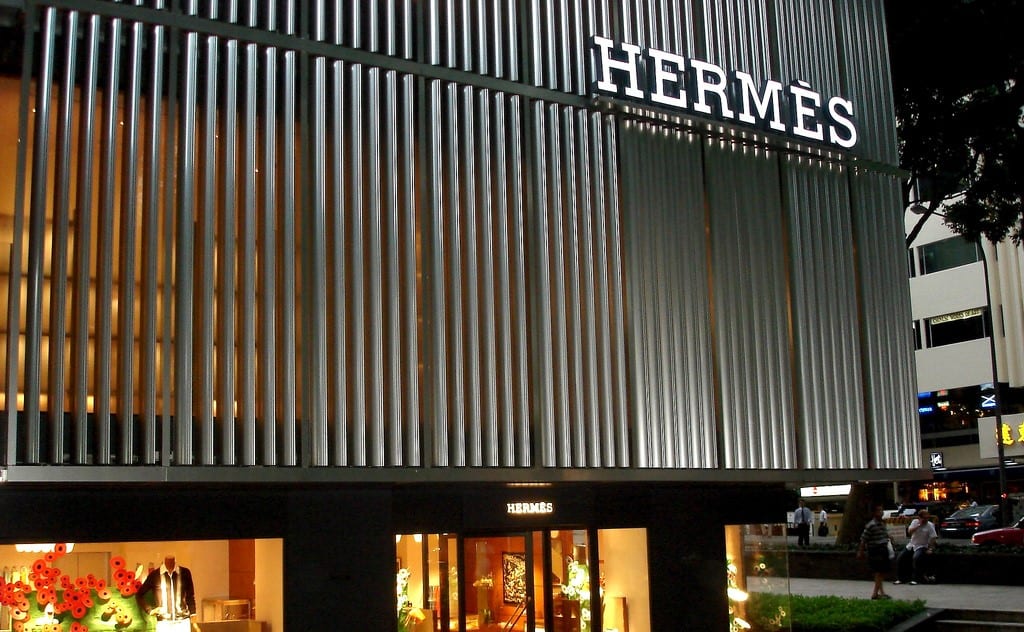
    Hermes sales rebounded globally in the first quarter of this year, exceeding analysts expectations.

    But the best news seems to be from Hong Kong where the French luxury goods label reported sales had “stabilised” after last year’s serious decline.  Sales fell in Macau, Hermes said, without providing further details.

    In the broader picture, the company saw respite in its home market after shoppers began to return to stores following the nervousness fuelled by the terror attacks late last year.

    Hermes sales for the quarter rose 6.2 per cent on a constant currency basis, to reach 1.19 billion euros (US$1.35 billion)

    CEO Axel Dumas said during an earnings call that the fallout from the terror attacks – in both Brussels and Paris – was still hurting luxury goods retailers. Footfall had returned to normal in Milan and London, but remained down in Paris, causing a 9.2 per cent drop in sales of ties and silk scarves in the quarter.

    Leather goods was the only category to show a rise in sales – a healthy 15 per cent.

    “There’s a lot of volatility,” Dumas said. “We have to adapt to circumstance.”

  • Amazon Q1 profits surge

    Amazon Q1 profits surge

    E-commerce giant Amazon.com posted its fourth straight profitable quarter, boosted by a 28 per cent sales increase and a surging growth in its Amazon Web Services division.

    Amazon reported a net income of $513 million for the first quarter, or $1.07 per share, compared with the net loss of $57 million, or $0.12 per diluted share, in first quarter 2015.

    The Seattle online retailer saw a 28 per cent increase in its net sales for the first quarter compared with the $22.7 billion in the previous corresponding period. Excluding the $210 million unfavourable impact from year-over-year changes in foreign exchange rates throughout the quarter, net sales increased 29 per cent compared to first quarter 2015.

    “Amazon devices are the top selling products on Amazon, and customers purchased more than twice as many Fire tablets than first quarter last year,” said Jeff Bezos, founder and CEO of Amazon.com.

    “Earlier this week, the $39 Fire TV Stick became the first product ever — from any manufacturer — to pass 100,000 customer reviews, including over 62,000 five star reviews, also more than any other product ever sold on Amazon. Echo too is off to an incredible start, and we can’t yet manage to keep it in stock despite all efforts,” Bezos said.

    Bezos added they are building premium products at non-premium prices, and they are thrilled many customers are responding to their approach.

    Amazon’s retail business saw a 31 per cent increase for the quarter to $20.5 billion, up from the $15.6 billion from the previous corresponding period.

    Amazon Web Services, with customers that include Netflix, Airbnb, Yelp and Expedia, saw a 63 per cent increase to $2.6 billion, up from the $1.6 billion from the same period the previous year.

    For the second quarter of 2016, the company expects its net sales to be between $28.0 billion and $30.5 billion, or to grow between 21 per cent and 32 per cent compared with the previous corresponding period. Operating income is expected to be between $375 million and $975 million, compared with the previous period’s $464 million.

  • Why Singapore is deemed as the failure market for Decathlon

    Why Singapore is deemed as the failure market for Decathlon

    French sporting house Decathlon is a relatively young player in the local retail scene, opening up its store earlier this year. The brand entered the retail scene at a point many established players were pulling out.

    The launch came after it had already established an e-commerce practice for nearly two and a half years to “painstakingly” understand and collect consumer data from the market. It is safe to say when Decathlon started up in Southeast Asia, the public did not really know it was a sports retailer.

    This, admits Clarence Chew (pictured) , head of marketing and communications at Decathlon, was one of the biggest problems.

    “E-commerce is not easy and was a struggle when you are selling products that people don’t actually need. People didn’t care about us. If they saw online that the product was too cheap, they would think it isn’t of quality; too expensive, and they wouldn’t want to spend. So our problem was how do we tell customers we are here?” he said, at a recent event hosted by OgilvyOne called “Delivering consumer value in an era of Disruption”.

    The brand decided to be part of the discovery process using a multi-channel approach. It was wherever consumers were looking and ensured it was part of the consumer journey.

    What also helped Chew in this process was the senior management was able to see e-commerce as part of the customer journey and not as a separate entity from the retail function. As such the goal was more synergistic.

    He added, “It wasn’t a push but rather a pull factor for us that drew customers.”

    Another big sigh of relief for Chew was when he was able to successfully convince the senior management to make Singapore a “failure market” for the brand and  use it as a test bed for all things new and shiny in the digital landscape. After all, failure is vital to any great discovery and innovation. He said:

    “In Singapore, I can do whatever I want with any budget I want. And I will not be blamed if it fails.”

    Chew explained the country was chosen for its dense and diverse population. The city-state structure worked to the brands’ benefit and there was a healthy mix of old and young and locals and expatriates. This helped the brand see the contrast between old school marketing tactics and new shiny toys and figure out what really works.

    “Singapore  is a nice drawing board. Chances are if it works here, all the other countries like Malaysia and Indonesia will all eventually embrace it,” he added. But for every other country, clarified Chew, he would still need to meet the regular KPIs and carry out customised marketing.

    Bringing change internally

    Another challenge Chew faces, is getting people on board to try new ideas. He said:

    “Even if you have a CEO willing to adopt stuff, you have many other people in the organisation who don’t know and don’t care or won’t agree.”

    Agreeing with him was panelist Tony Menezes, VP of Cognitive Solutions at IBM, who also added that the country’s safe nature helped companies come up with creative solutions and ideas without as high a fear of intellectual theft. Ultimately even if technology is available, companies need to be willing to embrace it.

    “Companies need to recognise the disruptive idea will come from day to day interaction with customers and employees. Figure out how to tap into that source,” Menez said.

    For IBM, even today, the company is holding a new contest cognitive bill where employees came up with ideas to make the company a cognitive company across industries. IBM has 50 ideas from it which will come down to 10 to potentially explore.

    Ultimately if the culture of innovation has to be embraced across all levels from top to front-line in a company. When asked by the audience if building relationship is tough in a disruptive world, he said:

    “Brands that have an affiliation with consumers and communicate clearly how they plan to protect personal data, will earn the trust of consumers.”

    He explained that the commonalities amongst the many brand hacks and online breaches in recent years show that leading companies address the problems head on and share a direct strategy  with consumers rather than sit idle.

    “If consumers know that when they opt in they will get something in return from the brand and the brand is clear about it, they will get more trust.”

    And sometimes the best way to do this is to ask. As Todd Kurie, VP of marketing at RedMart, who was also on the panel said:

    “Even relatively old-school tactics like surveys can go a long way to show you are listening”

    He added the brand is a huge believer in simply asking consumers what they want.

  • Hermes retail sales rose 8pc in Q1

    Hermes retail sales rose 8pc in Q1

    French leather goods maker Hermès Group’s revenue was up 6 percent in the first quarter of 2016, despite a challenging luxury landscape.

    Consolidated revenues for the house were 1.19 billion euro, or about $1.35 billion at current exchange rates. Even with the negative effects of the Paris terrorist attacks, Hermès’ European sales grew 9 percent compared to the same period the previous year, with strong performances of its brand-owned boutiques.

    Trying times
    Japan sales were up 13 percent compared to last year, which Hermès attributes to selective distribution. The rest of Asia saw sales rise 4 percent, with growth in China offset by challenges in Hong Kong and Macao.

    Hermès’ leather goods and saddlery business grew 15 percent in the quarter. The group has recently established new facilities for leather production, with the fifteenth opened on April 1 in Héricourt.

    All other areas of Hermès’ business saw a decline.

    With a slowdown in the United States, Asia and France, ready-to-wear and accessories sales were down 2 percent. Silk and textile sales were down 9 percent, attributed to the recent events in Europe.

    Perfume sales dipped 4 percent, while watches declined 3 percent.

    Its other business ventures, including silvermaker Puiforcat and bespoke shoemaker John Lobb, balked the trend, rising about 30 percent to about $65.6 million in sales.

    Hermes shoe fw 2014
    Hermès fall/winter 2014

    Hermès says that its goal of 8 percent revenue growth at constant exchange rates for 2016 may be out of reach due to economic, geopolitical and currency fluctuations.

    The brand is planning to celebrate the horse this year, with an effort that focuses on its longstanding connection to nature through equestrian arts.

    Other luxury brands are feeling the pinch of current events.

    French conglomerate Kering’s luxury sales in the first quarter of 2016 were buoyed by Western Europe, Japan and emerging markets, as it managed growth in a challenging environment.

    Bottega Veneta’s sales were down 7.6 percent as reported, or 8.3 percent on a comparable basis. The brand was mostly hurt by the strength of the U.S. dollar and by Asian tourists avoiding Europe and other parts of the globe following terror attacks

  • China blamed for Apple sales slump

    China blamed for Apple sales slump

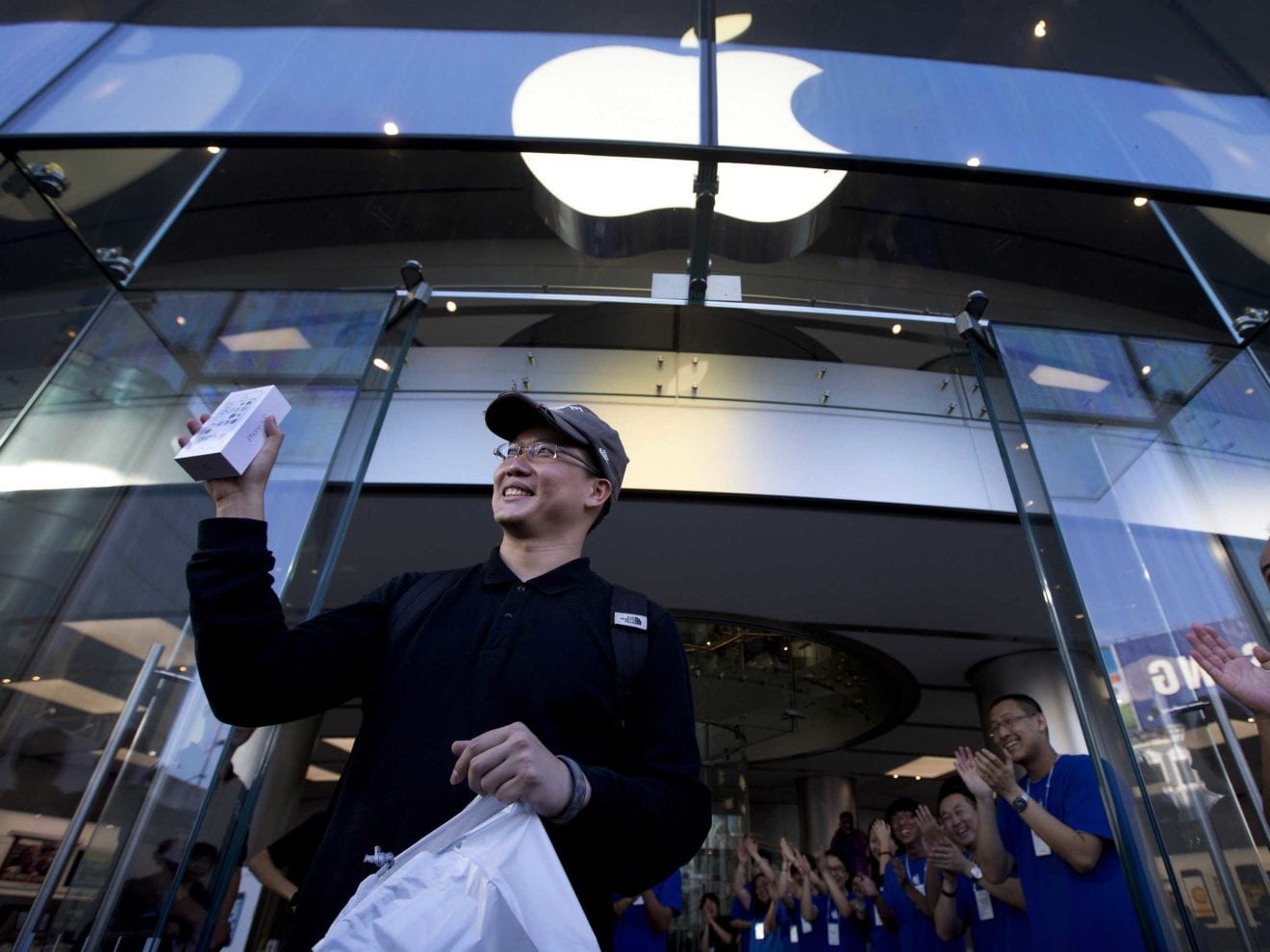
    Apple sales slumped 26 per cent in Greater China in the latest quarter, driving the tech giant to its worst result in 13 years.

    CEO Tim Cook said the Hong Kong market was largely to blame, due to its currency value being pegged to the US dollar. Sales in the mainland fell by a more modest (but still alarming) 11 per cent. Greater China sales totalled US$12.49 billion, equivalent to about 24.5 per cent of its global revenues.

    Cook added that a year ago Apple sales in China soared a remarkable 81 per cent year-on-year, suggesting that made for a tough benchmark for this quarter’s results.

    But Apple cannot blame all the company’s current woes on China: sales in its US home market fell 10 per cent as well.

    Globally, Apple sales totalled US$50.6 billion, down from the $58 billion of the previous corresponding period. Its quarterly net income fell from $13.6 billion to $10.5 billion and gross margin fell from 40.8 per cent to 39.4 per cent. International sales accounted for 67 per cent of the quarterly revenue.

    Despite the sales decline, Apple is showing no sign of slowing its aggressive expansion program in Greater China which it predicts will soon become its largest single market, overtaking the US.

    During the quarter the company opened seven more stores, with five more planned in the current quarter, taking the network of large format stores to about 40.

    The company will also take a hit from the Chinese Government’s decision last week to ban Apple’s iTunes music store and its Apple Bookstore – both selling digital content to Chinese customers who have invested in iPhones, iPads or Apple computers.

    The biggest drain on sales is the iPhone, which is now struggling to keep pace with a myriad of less expensive models offering similar technology at often vastly lesser prices. Apple sold more than 51.2 million iPhones in the first three months of 2016 – nearly 10 million fewer than during the same quarter of 2015.

  • Apple is losing its charm

    Apple is losing its charm

    In a sure sign that Apple is losing its mojo, the company’s second quarter results are unrelentingly gloomy with total revenue down strongly on an overall basis and across most regions.

    This, combined with a weaker gross margin outcome, has dinted net income which fell by almost a quarter over the prior year.

    While sales were blown off course by the strong dollar, which dampened the final results in regions like China and Europe, this was only part of the reason for the decline. The fact that revenue in Apple’s home market dropped by over 10 per cent, and that the volume of devices sold slipped by double digits, testifies to a larger truth: Apple is not innovating enough on the product front to drive sales.

    Apple’s last product unveilings were lacklustre and characterised a company that – while still on the cutting edge of technology – seems to have run out of radical new ideas. This was underlined by the fact that Apple has elected to chase lower-priced parts of the market with its smaller, cheaper iPhone.

    Although there is nothing wrong with this strategy, it is a tacit admission that the company is no longer churning out the kind of leading edge devices that command a hefty premium.

    All of this leads to a problem, especially in saturated markets like North America where device penetration is already high: new product is seen by many consumers as being good, but not quite good enough to justify upgrading. This applies to the iPhone, but especially to iPads where the new line up is rather confusing with little to differentiate the various versions now on offer.

    Admittedly Apple’s task is very challenging. It has for years been the market leader, not just in terms of share, but also in terms of innovation and thinking – and this is inevitably a very difficult pace to keep up. However, Apple needs to come up with a radical new innovation or product rather than just the current incremental improvements to existing products. This is the only way in which it will reinvigorate sales growth.

    None of this is to suggest that Apple is a failing company. Despite the decline, its revenue and profit numbers are still extremely healthy and its brand remains both popular and relevant. However, without pulling something new out of its hat it is likely that revenue will continue to decline as the company moves into its third and fourth quarters.

    One of the ‘party tricks’ of the late Steve Jobs was to always have a surprise up his sleeve – that “one last thing” that made audiences gasp and consumers ache with desire for the latest Apple innovation. As competent and passionate as current management is, it is this spirit which Apple is now lacking and desperately needs to get back.

  • Apple sales fall 26% in Greater China, optimistic on China and India

    Apple sales fall 26% in Greater China, optimistic on China and India

    Apple’s double-digit growth in Greater China, which has helped fuel the huge success of the iPhone over the past few years, came to a grinding halt last quarter, with revenue falling 26 per cent as iPhone demand softened.

    Sales in the Greater China region, which includes the mainland, Hong Kong and Taiwan, dropped to $12.5 billion in its fiscal Q2 ending 31 March. The region accounted for a quarter of Apple’s total revenue, down from 29 per cent a year ago.

    Revenue in mainland China, Apple’s second largest market after the US, fell 11 per cent (7 per cent in constant currency terms) – a year ago sales surged by 81 per cent.

    Apple yesterday reported its first-ever quarterly drop in iPhone sales,which dropped 16 per cent to 51.2 million units.

    Apple CEO Tim Cook said in the earnings call he doesn’t think China is as weak as everyone says. “In China we may not have the wind at our backs that we once did, but it’s a lot more stable than what I think is the common view. So we remain really optimistic on China.”

    He noted that it opened seven stores in China last quarter, taking its total to 35, and will open five more this quarter.

    Cook talked up its services businesses, which expanded 20 per cent last quarter and represented the company’s second largest revenue-generating category in Q2. But with Apple suspending its iBooks and iTunes Movies services in China last week after the country’s video and publishing regulator imposed stricter guidelines on online content, its growth prospect in services could be severely dampened.

    Beyond China
    The company faced declining sales across the Asia-Pacific region, with revenue falling 25 per cent in Asia Pacific (ex China and Japan) to $3.16 billion.

    Japan was the bright spot in the region, reporting a 25 per cent jump in sales to $4.13 billion.

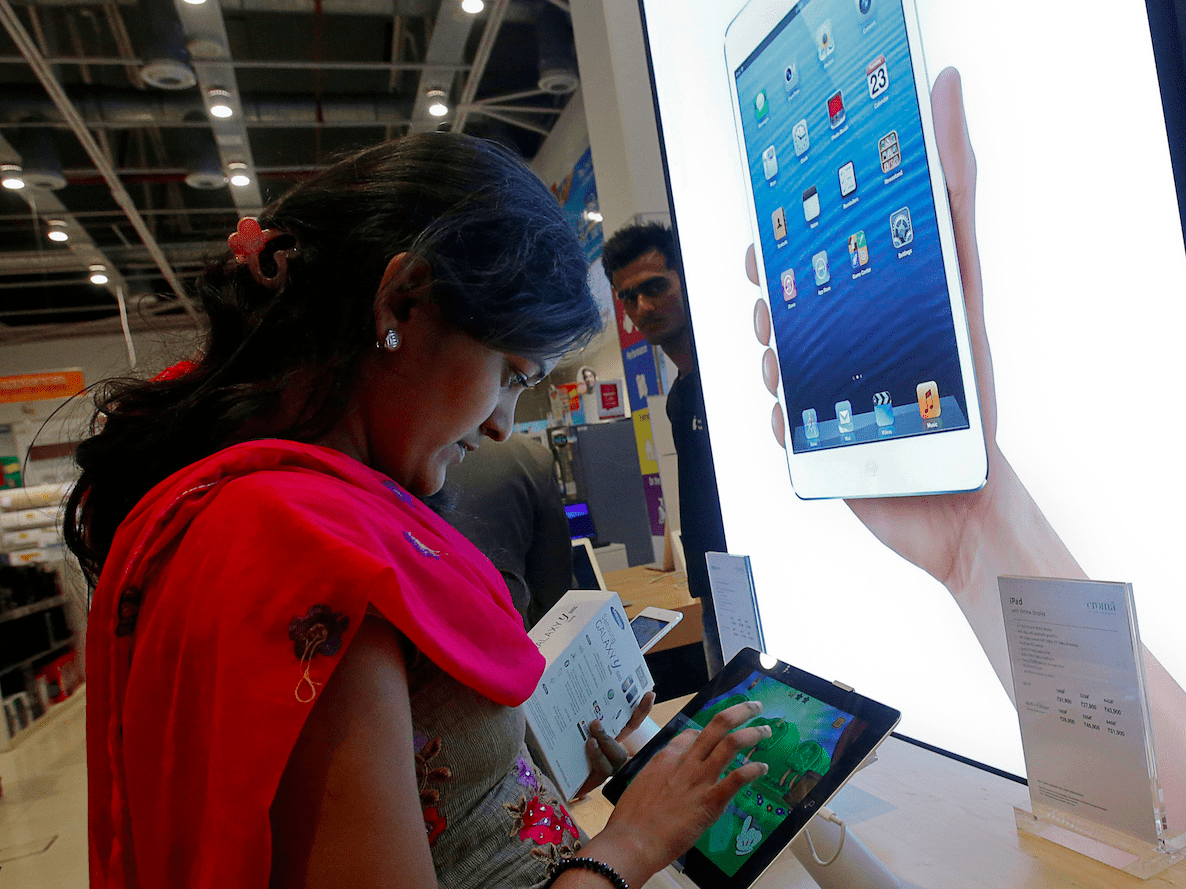
    Responding to a question about India, the third largest smartphone market in the world, Cook said infrastructure and sales channels will be key.

    The LTE networks being rolled out in the country will “unleash the power and capability of the iPhone in a way that an older network, a 2.5G or even some 3G networks, would not”, he said.

    He noted that unlike in the US, where operators sell the vast majority of phones, in India the operators in general sell virtually no phones. “So it’s through retail, and retail is many, many different small shops”.

    The company has been working on its sales channels for the last 18 months, and Cook said he is encouraged by the results that it’s beginning to see.

    “But because the smartphones that are working there are low end, primarily because of the network and the economics, the market potential has not been as great there. But I view India as where China was maybe seven to ten years ago, and I think there’s a really great opportunity there,” he said.

  • Starbucks China sales soar 18 per cent

    Starbucks China sales soar 18 per cent

    Starbucks China has recorded a massive 18 per cent increase in sales in the second quarter, fuelled by a 5 per cent increase in transactions.

    The Chinese boost was one of a string of highlights in the quarter in which Starbucks set a new sales record of US$5 billion globally, up by 6 per cent on a same-stores basis.

    The Seattle-based coffee giant served nearly 16 million more customer occasions worldwide in the three months to March 27, 12 million of those in the US where it is experiencing a resurgence.

    Earnings per share rose 18 per cent to a record 39 cents, with US and Americas comp-store sales up 7 per cent. Operating profit rose 11 per cent to a second quarter record $878 million, its operating margin up to 17.3 per cent.

    Starbucks boosted its worldwide store network by 350 to 23,921.

    CEO and chairman Howard Schultz described the Starbucks China performance as “stunning” and said the overall financials underscored the strength of the brand and the resilience of the global retail and consumer packaged goods business.

    “Loyalty, technology and innovation are continuing to fuel our digital flywheel and propel our business forward all around the world.”

  • New Shiseido Travel Retail division set ¥18.5 billion target for FY2016

    New Shiseido Travel Retail division set ¥18.5 billion target for FY2016

    Shiseido is set to create a new travel retail unit, based in Singapore, on 1 May, combining the skin care, make-up and fragrances arms of the Japanese beauty house’s worldwide travel retail business, according to a report published by Travel Retail Business.

    Shiseido Travel Retail has been set a sales target of ¥18.5 billion for the financial year, a considerable jump on the ¥17.2 billion achieved in 2015.

    The new unit will usher in a key account management system, with dedicated regional teams allocated to key customers as well as a new business development function to explore global growth opportunities.

    The new unit is part of the company’s wider 2020 strategy, which will see the company usher in a matrix management structure with six regional entities led by Philippe Lesné.

  • Taiwan domestic supermarket sales up almost 10 percent in March

    Taiwan domestic supermarket sales up almost 10 percent in March

    Sales posted by supermarkets in Taiwan rose almost 10 percent year-on-year in March, outperforming the retail sector as a whole, because of the expansion of their retail networks, according to the Ministry of Economic Affairs (MOEA).

    Efforts to promote fresh food in their stores also boosted supermarket sales compared with the same month a year earlier, the MOEA said.

    In a monthly report on the sales of the wholesale, retail and dining sectors in Taiwan, the MOEA said supermarkets saw sales of NT$14.8 billion (US$458 million) in March, up 9.2 percent from a year earlier, while the overall retail sector’s revenue rose only 1.1 percent year-on-year to NT$319.6 billion .

    The MOEA said that with PXMart, one of Taiwan’s leading supermarket chains, planning to add stores this year and next year, the supermarket segment could continue to see sales grow in the near future.

    PXMart has announced it will expand its network to 900 outlets in 2016 and 1,000 in 2017 from 794 at the end of 2015.

    Also in the retail sector, sales posted by department stores rose 3.6 percent in March from a year earlier to NT$21.9 billion as they introduced new products to consumers and added stores, the report said.

    Sales at hypermarts and convenience stores rose 4.4 percent and 1.4 percent in March from a year ago, respectively, to NT$13.8 billion and NT$24.5 billion, according to the report.

    The domestic retail sector also benefited from a 10.7 percent rise in online retail sales in March from a year earlier to NT$19.7 billion and aggressive promotional campaigns in the automotive industry that pushed the sector’s sales 5.3 percent higher to NT$52.8 billion.

    As for the wholesale sector, the MOEA said, revenue fell 5.3 percent from a year earlier to NT$785.7 billion during the month as notebook computer and LCD TV buyers from Japan continued to cut back their orders.

    Falling prices for flat panels and dynamic random access memory chips also affected wholesale sales in the month, the ministry said.

    Wholesale trade in beauty and health products bucked the downturn, however, posting a 4.7 percent year-on-year increase in revenue to NT$36.4 billion due to a flu outbreak and promotional activities ahead of Mother’s Day, the MOEA said.

    Meanwhile, revenue posted by the dining sector fell 1.8 percent in March from a year earlier to NT$33.6 billion, ending a 13-month streak of year-on-year gains. The MOEA said the decline was due to the high number of rainy days during the month, which kept families indoors.

    Within the dining category, restaurants saw their sales fall 1.7 percent in March from a year earlier to NT$28.5 billion, and beverage vendors saw revenues dip 3.6 percent year-on-year to NT$3.7 billion, the MOEA said.

  • Another Luxury Retail Brand Cites Tourism Spending as Reason for Slump

    Another Luxury Retail Brand Cites Tourism Spending as Reason for Slump

    French luxury-goods maker Kering SA reported first-quarter revenue that trailed analysts’ estimates as slowing tourism and the strong dollar weighed on demand for Gucci loafers and Bottega Veneta handbags.

    Sales climbed 2.7 percent to 2.72 billion euros ($3.07 billion), Paris-based Kering said in a statement after European markets closed Thursday. Analysts predicted 2.78 billion euros, according to estimates compiled by Bloomberg. Growth was 4 percent on a basis that excludes currency shifts, acquisitions and disposals, compared with the 5.6 percent gain anticipated by analysts.

    Gucci Chief Executive Officer Marco Bizzarri and creative director Alessandro Michele turned Kering’s largest brand around by the end of their first year in charge. Their next challenge is to keep momentum going as a slowdown in China, the strong dollar as well as terrorist attacks in Europe have crimped demand for handbags and garments. Those same headwinds hurt competitor LVMH, whose first-quarter sales also missed estimates.

    Gucci’s comparable sales rose 3.1 percent, slowing from the previous quarter’s 4.8 percent gain. With Michele’s designs accounting for about half of sales in the period, the second straight quarter of growth confirms the turnaround “is starting to get traction,” said Luca Solca, an analyst at Exane BNP Paribas. However, the slower pace shows “Rome wasn’t built in a day.”

    Trends Improved

    The company said in a conference call that sales trends at Gucci have improved since the end of March.

    The biggest disappointment was handbag maker Bottega Veneta, which reported another quarter of declining sales. Revenue fell 8.3 percent, more than twice the decline anticipated by analysts. The brand is suffering from overexposure to Hong Kong and high price gaps between Europe and Asia, along with a slowdown in tourism.

    Bottega may need “more creativity and innovation,” said Exane’s Solca. “Lacking that, the risk could be of appearing boring to consumers.”

    Yves Saint Laurent, which replaced its creative director this month, was again the best performer, posting a 27 percent increase in sales that beat analysts’ expectations.

    “We are confident that we can extend our growth trajectory over the full year,” Kering CEO Francois-Henri Pinault said in the statement.

    Kering’s shares fell 0.8 percent to 160.10 euros at the close in Paris.


  • Mobiles sold in India must have panic button from 2017

    Mobiles sold in India must have panic button from 2017

    India’s telecoms ministry will mandate that all mobile phones sold in the country from 2017 must include a ‘panic button’ providing easy access to emergency services.

    As part of the new norms phones sold from 2018 will also have to include GPS navigation systems.

    While it is not yet clear what form the panic button system will take, it is likely to allow customers to call emergency services by pressing or holding a single button or pressing the power button several times in a row.

    The regulation also applies to feature phones, and will likely be achieved by holding down a button on the keypad.

    The move forms part of a wider campaign to help ensure the safety of women in the wake of growing reports of violence including rape and molestation. Women’s safety has been a political priority since the high-profile fatal gang rape of a 23 year old student on a Delhi bus in 2012.

    While India currently lacks a central number for calling emergency services, the government is aiming to introduce one this year.

    Manufacturers selling devices in India – including international smartphone giants like Apple and Samsung – will need to be compliant with the new regulations from next year.