Tag: Sales

  • Samsung won’t like it, but Xiaomi is coming to South Korea

    Samsung won’t like it, but Xiaomi is coming to South Korea

    China’s Xiaomi is now expanding in a country where the competition is particularly tough: South Korea.

    The land of Samsung and LG isn’t an easy proposition, but Xiaomi isn’t doing it alone. The company has this month inked a number of deals with Korean suppliers and distributors to ensure that it will have a presence on the ground in the country.

    Xiaomi has reached an agreement with Youmi and Koma Trade, making the two Korean companies the only official dealers of Xiaomi products in the country.

    The two partners will sell a variety of Xiaomi products, including battery packs, headphones, the Mi Band fitness tracker, and the Ninebot “hoverboard.” Neither company will sell Xiaomi phones, but they will be able to repair the devices and provide support.

    The land of Samsung and LG isn’t an easy proposition, but Xiaomi isn’t doing it alone.

    The paper says the partners are “small companies whose core business has become providing services for Xiaomi. Xiaomi selected the two companies since they can devote all their energy to the Chinese tech giant.”

    In addition to building up its network in the land of Samsung, Xiaomi has also been working on ecommerce and online payments.

    On March 8, news broke that Xiaomi’s smart TVs would be sold in Korea by ecommerce giants Gmarket and Auction.

    Xiaomi has also inked agreements with a number of other Korean ecommerce marketplaces, including E-Mart, ZMI, and 11st. This isn’t exactly a surprise – Xiaomi has always emphasized ecommerce sales beyond its own website, with deals on Alibaba’s Tmall and Taobao in China. But in South Korea, where the ecommerce market is a bit more fractured, the company is spreading its resources around.

    The smartphone conundrum

    None of those stores, however, are selling Xiaomi phones – yet. Aside from the occasional short-lived sale online, it’s rare to see Xiaomi’s smartphones for sale in the country, other than second-hand or from random Chinese importers. Ecommerce market KT briefly sold Xiaomi phones in January, but had to close the sale after just two days citing “legal issues.” It’s not clear if Xiaomi officially backed those sales.

    But those “issues” haven’t scared Xiaomi away from the Korean market. Just today, the Korea Herald reported that Xiaomi has filed for a patent in South Korea for its Mi Pay epayments service – a phone-based service that can’t exactly be used with its battery packs or TVs.

    Xiaomi certainly has smartphone sales in Korea on its roadmap.

    The Mi Pay patent shows that Xiaomi certainly has smartphone sales in Korea on its roadmap. The Herald speculates what many have long expected – that Samsung and LG have put pressure on Korean retail companies and mobile carriers to keep Xiaomi out.

    But their embargo doesn’t look like it will last forever. Xiaomi has managed to find enough local partners to gain a solid foothold in the country, and it looks like it will only expand from here. Samsung and LG might not like it, but it looks like their Chinese competition will be hawking smartphones in their backyards any day now.

  • Esprit sales flat, as expected

    Esprit sales flat, as expected

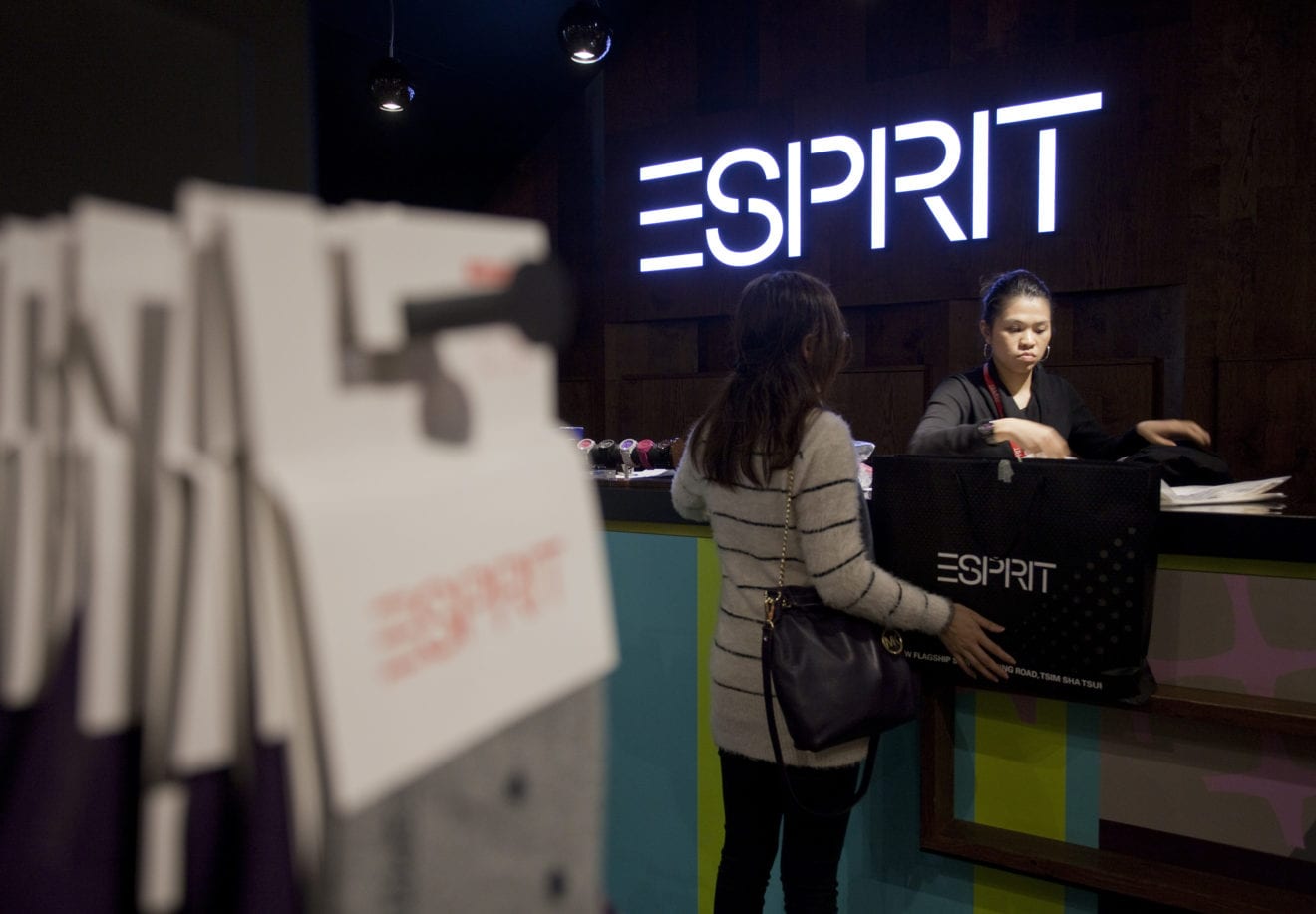
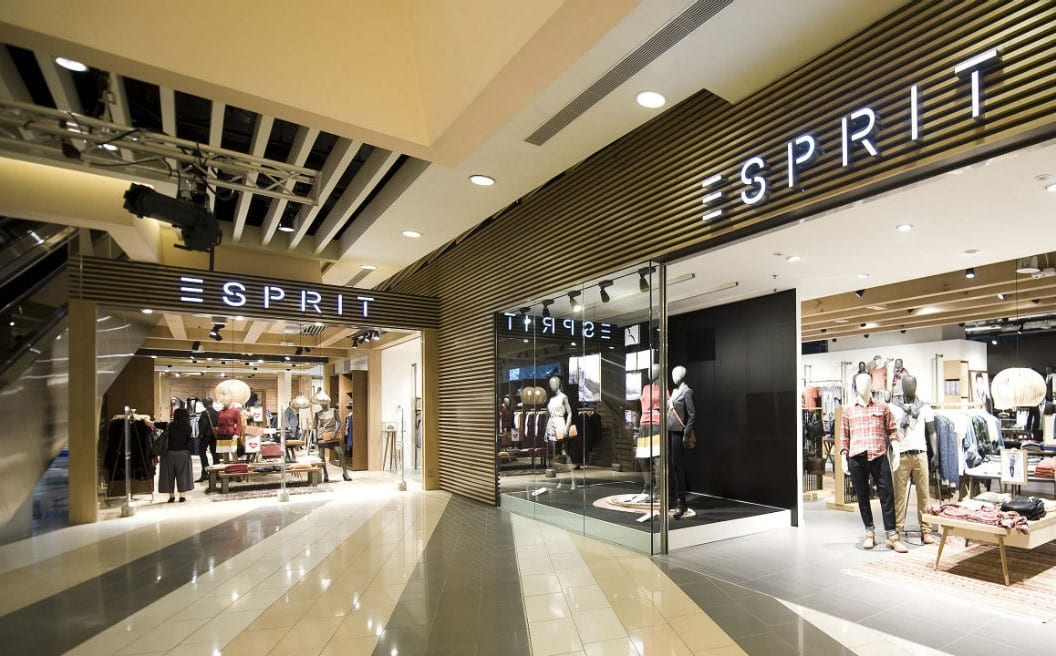
    Largely in line with expectations, Esprit sales were flat, the fashion brand says in its interim report for the six months to December 31.

    While its overall turnover was down 0.4 per cent overall, retail turnover grew 6 per cent while wholesale turnover fell 11.4 per cent.

    The gross profit margin for Esprit Holdings was stable at 50.5 per cent, while the net loss of HK$238 million was in line with expectations. The group had a healthy net cash position of HK$4.2 billion with zero debt.

    Unfortunately, positive retail sales growth in Europe was offset by continued weakness in the wholesale channel, and negative development in the Asia Pacific region. Asia Pacific turnover declined 6 per cent year-on-year, mainly dragged down by China with its 11.6 per cent drop. China represents 46 per cent of the region’s turnover.

    In its breakdown of turnover in Asia Pacific, China led with HK$655 million, 7 per cent of group turnover. Then came Hong Kong (HK$185 million, 2 per cent, down 0.4 per cent), Australia and New Zealand (HK$162 million, 1.7 per cent, up 0.3 per cent), Singapore (HK$129 million, 1.4 per cent, down 4.7 per cent), Taiwan (HK$98 million, 1.1 per cent, up 6.5 per cent), Malaysia (HK$97 million, 1 per cent, down 2.7 per cent), Macau (HK$56 million, 0.6 per cent, down 12.7 per cent) and others (HK$43 million, 0.5 per cent, up 6.2 per cent).

    In the previous financial year, the group moved towards vertical integration which resulted in more cost-efficient product development and supply chain processes, allowing product improvements in terms of design, quality and value-for-money.

    To maximise the selling potential of its improved products, this past year the group started pursuing an Omnichannel business model. In its early stages, this has led to improvements in growing its loyal customer base “Esprit Friends” and fully integrating the commercial activities of all sales channels.

    In September, the group launched an intensive brand-marketing campaign to strengthen and rejuvenate its image.

    Performance during the first six months of this financial year (between July and December) indicated that the vertical and omnichannel model was an effective basis to turn around its business, the company said.

    In its report, the company paid tribute to its co-founder, Doug Tompkins, who died in December, describing him as a “conservationist, outdoorsman, philanthropist, agriculturist and businessman”. He and his then wife, Susie Buell, formed the company in 1968. Esprit’s collections are available in 40 countries, in about 870 directly managed retail stores and through more than 7500 wholesale sales points including franchise stores and department-store outlets. The Group markets its products under two brands, Esprit and EDC.

    Listed on the Hong Kong Stock Exchange since 1993, Esprit has headquarters in Germany and Hong Kong.

  • Hyundai restyles 2017 Elantra to look like a luxury vehicle

    Hyundai restyles 2017 Elantra to look like a luxury vehicle

    Hyundai’s top-selling car in the United States, the Elantra, has been nicely restyled and upgraded to the point that its 2017 model could pass for a higher-priced luxury car.

    The new Elantra, which is already at dealerships, has a surprisingly refined ride and can be stocked with features like heated rear seats, driver-seat memory settings, automatic emergency braking with pedestrian detection and headlights that swivel to the side to illuminate roads during turns. The 2017 Elantra even has a hands-free trunk that opens on its own when a driver, perhaps laden with grocery bags, has the car’s proximity key fob in his or her pocket or purse and stands within 3 feet of the back of the vehicle for at least 3 seconds.

    It also comes with something that no luxury car has: Hyundai’s 10 years/100,000-mile warranty of coverage on the car’s powertrain and five years/unlimited miles of free roadside assistance.

    Starting manufacturer’s suggested retail price, including destination charge, is $17,985 for the base 2017 Elantra SE with six-speed manual and $18,985 with six-speed automatic — some $100 less than the starting retail prices for the base 2016 Elantras. The top 2017 Elantra — the Limited— has a starting retail price of $23,185, and prices can approach $28,000 when all luxury features are added.

    The Elantras have a new 147-horsepower, four-cylinder engine that generates 132 foot-pounds of torque at 4,500 rpm. It’s also lighter than its predecssors, even a loaded Elantra Limited weighs less than 3,000 pounds, according to Hyundai. As a result, the Elantra Limited test vehicle performed capably.

    The test vehicle impressed with its virtually vibration-free ride. The driver didn’t detect powertrain vibrations or any roughness, even when resting a hand on the Elantra’s gearshift lever when the car was idling. When the Elantra accelerated, some engine noise could be heard, but it was strong, not a buzzing sound.

    The restyled Elantra maximizes aerodynamics, which eliminate drag and help fuel economy. The test vehicle averaged nearly 29 miles per gallon in mostly city driving that was done primarily in Normal, not Eco, mode; with 14-gallon fuel tank, it could travel a noteworthy 400 miles in mostly city driving.

    The U.S. government rates the 2017 Elantra Limited at 28 mpg in the city and 37 mpg on highways for a combined 32-mpg average that makes the Elantra second best among gasoline-powered, non-hybrid sedans of its size.

    Inside, the Elantra is comfortable, particularly for front-seat passengers, who have up to 42.2 inches of legroom and nearly 39 inches of headroom. Back-seat passengers have 35.7 inches of legroom and 37.3 inches of headroom, which allows two adults to travel well. A nice touch is the pull-down rear-seat armrest with cupholders, which doesn’t flop loosely or rest at a downward angle.

    Rear seatbacks split 60/40 and fold down so that the Elantra’s 14.4-cubic-foot trunk can accommodate long items.

    Fit and finish of the Alabama-built Elantra tester was excellent, and the tactile feel of the car’s buttons and knobs was akin to a luxury car’s.

    However, the base Elantra SE doesn’t include a standard rearview camera nor does it have the hood-insulator material that comes on the Limited, meaning its interior isn’t as quiet as the Limited.

    A second Elantra engine — a turbo with 158 foot-pounds of torque — is due this spring, when the 2017 Elantra Eco debuts.

  • Online wine sales in China rising fast

    Online wine sales in China rising fast

    JD.com‘s head of wine business, Zhao Dabin, told in an exclusive interview that the retailer sold 400m yuan (US$61.5m) of wine direct to consumers in 2015. That figure is expected to triple in 2016, he said.

    JD also hosts pages for individual merchants, acting as a gateway to a new generation of mainstream wine consumers in China – beyond the gift-giving between government officials that has been significantly curtailed by the present regime.

    Wine sales through these JD.com-hosted, online ‘shopping malls’ for merchants are expected to hit 1.5bn yuan this year.

    His comments tally with those from several wine importers and merchants in China, which are freeing up investment for e-commerce.

    Total online retail sales of physical, consumer goods in China rose by 32% in 2015, to reach 3.2tn yuan, or US$492bn, according to Chinese government figures. Online sales of tobacco and liquor products increased by nearly 13% versus 2014, to 196bn yuan.

    JD is seeking to compete with larger players in the market, such as Alibaba‘s Tmall and Taobao platforms.

    In wine, JD’s Zhao sees a lot of potential. ‘Most of our wine consumers are still at entry level,’ he said. ‘Only 3% to 4% of our registered users buy wines at the moment. There’s still plenty of room to grow.’

  • Indonesia can become ASEAN`s automotive production hub

    Indonesia can become ASEAN`s automotive production hub

    Indonesia has the opportunity to become an automotive production hub for the ASEAN and gradually replace Thailand as a car production base, according to the Ipsos Business Consulting Firm.

    “This is evident from the output trend of vehicle production, policies, and infrastructure, which continue to undergo improvements followed by increasing production capacity, domestic consumption, and export volumes,” Marcus Scherer, head of the Global Automotive Sector of Ipsos Business Consulting, stated here on Wednesday.

    Marcus hoped that the policy makers and stakeholders as well as automotive producers would consider this aspect as it will have a major impact on the supplies of automotive spare parts in the future.

    So far, Thailand has been the largest automotive producer in Southeast Asia, with an annual production of some two million cars as compared to Indonesia, which produced only some 1.1 million units in 2015.

    Indonesia has not yet been able to be at par with Thailand in developing its export market. It exported only some 23 percent of its domestic production in 2015, while Thailand was able to export some 55 percent of its domestic production.

    In 2015, the production gap between the two countries was some 810 thousand units, but in 2020, the gap is expected to narrow to 464 thousand units only.

    In order to take over Thailands position as the number one car production center in the ASEAN, Indonesia should be able to overcome the production gap through various combinations of solutions, Marcus stressed.

    The solutions should encompass increasing the production capacity of factories. In 2015, Indonesia had a production capacity of two million units of which only some 62 percent was utilized. Therefore, Indonesia should increase its follow-up investment to nearly US$2.6 billion for constructing new factories or for increasing the production capacity of the existing factories based on the assumption that utilization would remain unchanged.

    The latest Ipsos report highlighted the fact that although the export performance this time had not been significant, yet Indonesia had high domestic growth potential. This could encourage investors to harbor expectations for solid sales growth once they are able to gain access to the right markets.

    Douglas Cassidy, the Ipsos Business Consulting Indonesia director, stated that the global automotive players who had not yet had significant production bases in Indonesia would question whether they have been placed in the correct position to obtain a market share in the ASEAN whose total population reaches 600 million.

    Moreover, these players would also question whether they could maintain the market segment they already owned as other companies will surely also expand their operations in Indonesia and Asia, in general.

    Chukiat Wongtaveerat, a senior consultant manager at Ipsos Bangkok, concurred with the analysis of Cassidy on the current market situation but opined that Thailand was still able to safeguard its automotive industries.

    Wongtaveerat noted that several leading automotive producers had announced strategic steps to pull out of the Indonesian market, particularly Ford Motor Company and General Motors.

    He remarked that other leading players such as Volkswagen, Hyundai, and Mazda were not yet able to communicate their clear strategies to safeguard their strong and profitable market shares in the two countries, particularly in Indonesia, which needed consistent regulations and sustainable and supporting automotive infrastructure development in the face of the current downward sales trend.

    He pointed out that the business climate in Indonesia had not yet yielded significant benefits to the automotive industries. Based on the World Banks ease of doing business index, Indonesia is ranked 109 among 198 countries, while Thailand comes 49th on the list.

    However, the Indonesian government has set a target to rise in the ranking to reach the 40th position in 2018. Such an improvement, if it has to be achieved, clearly needs constant focus of the policy makers.

    Scherer noted that the current conditions in Indonesia were showing a positive trend, such as the easing of regulations on foreign ownership through its revised negative investment list and simplified licensing procedures.

  • 7-Eleven Malaysia: more sales, lower profits

    7-Eleven Malaysia: more sales, lower profits

    Despite positive sales growth, 7-Eleven Malaysia’s profits have slumped by more than a fifth.

    Higher selling and distribution expenses from store expansion are blamed for 7-Eleven Malaysia Holdings net profit falling 22.21 per cent to RM13.94 million ($3.3 million) in the fourth quarter ended December 31, from RM17.93 million.

    Its revenue increased by 3.87 per cent to RM499.74 million from RM481.12 million for the same quarter the previous year, the group told the stock exchange.
    Its net profit also fell for the full year, by 11.53 per cent to RMB55.8 million from RM63.07 million, while revenue rose 5.98 per cent to RM2 billion from RM1.89 billion.

    7-Eleven Malaysia’s growth in revenue continued to be driven by introducing new stores, improving the merchandise mix and promotional activity, says the company.

    “This growth was achieved despite ongoing retail market negativity caused by the implementation of GST (on April 1, 2015) and weak consumer confidence and spending.”

    However, the group’s selling and distribution expenses for the quarter also increased by RM13.7 million, or 10.3 per cent, mainly because its new stores meant higher staff costs, rental costs, store depreciation expenses and maintenance costs.
    It believes trading conditions for the current quarter will stay challenging.
    “Despite this, we are positive of holding on to our market leading position, while our new store expansion plan remains on track,” says the company.

  • Macau retail sales weaken

    Macau retail sales weaken

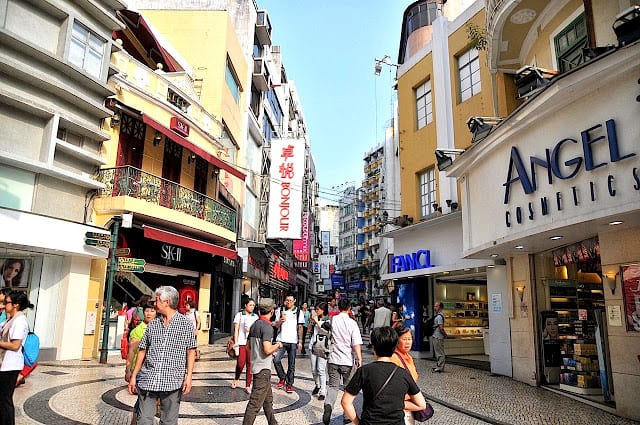
    Sales of watches and jewellery, which comprise a major segment of Macau’s retail business, fell 10.4 per cent last year, fuelling the territory’s first annual retail sales decline since 2000.

    Department-store goods and leather products were also hit, according to the latest Macau retail sales data from the Statistics and Census Service.

    Overall, retail sales volume was down 7.9 per cent for the year, with their value reaching nearly MOP60.9 billion (US$7611 million), says the survey. However, the drop was in double digits for watches, clocks, jewellery, department-store goods, leather products and footwear. The watches, clocks and jewellery segment accounted for 22.2 per cent of all retail sales value – a drop of 25 per cent year-on-year to MOP13.53 billion.

    Department store goods, the second-largest retail segment, had sales fall 13.7 per cent year-on-year to MOP8.93 billion.

    Meanwhile, cosmetics and sanitary articles as well as communication equipment had double-digit increases in sales for the year, reaching MOP2.36 billion and MOP1.68 billion respectively.

    Nearly half of the retailers covered in the survey anticipate a further drop in sales for the first quarter of this year compared with the same period last year, while nearly 40 per cent expect the sales volume to be stable.

    Retail sales for the fourth quarter of last year fell 10.5 per cent to MOP15.59 billion, with sales volume dropping 7.7 per cent. There were significant decreases in footwear (down 24.5 per cent), watches, clocks and jewellery (down 16 per cent), leather goods (down 11.3 per cent) and department store sales (down10 per cent).

  • Esprit remains confident despite first-half loss

    Esprit remains confident despite first-half loss

    A strategic plan is starting to yield results for Esprit, which is buoyant in its outlook despite a first-half loss weighted on by weakened demand in China.

    Net loss for the Hong Kong-listed fashion retailer amounted to HKD238m (£22m) for the six months to 31 December, compared to a profit of HKD47m (£4.3m) in the same period the year before.

    Esprit introduced a vertically integrated business model in its previous financial year, the same supply chain process used by high street giant Zara. Esprit said this, coupled with cost efficient product development, is enabling it to develop improved products in terms of design, quality and value-for money.

    “The performance during the first six months of this financial year gives us confidence that the implementation of our vertical and omnichannel model is an effective basis to turnaround our business,” said CEO Jose Manuel Martinez.

    “We remain confident that we are heading in the right direction and are laying the necessary foundation to restore competitiveness and long term growth for Esprit.”

  • Prada Asia fortunes wane

    Prada Asia fortunes wane

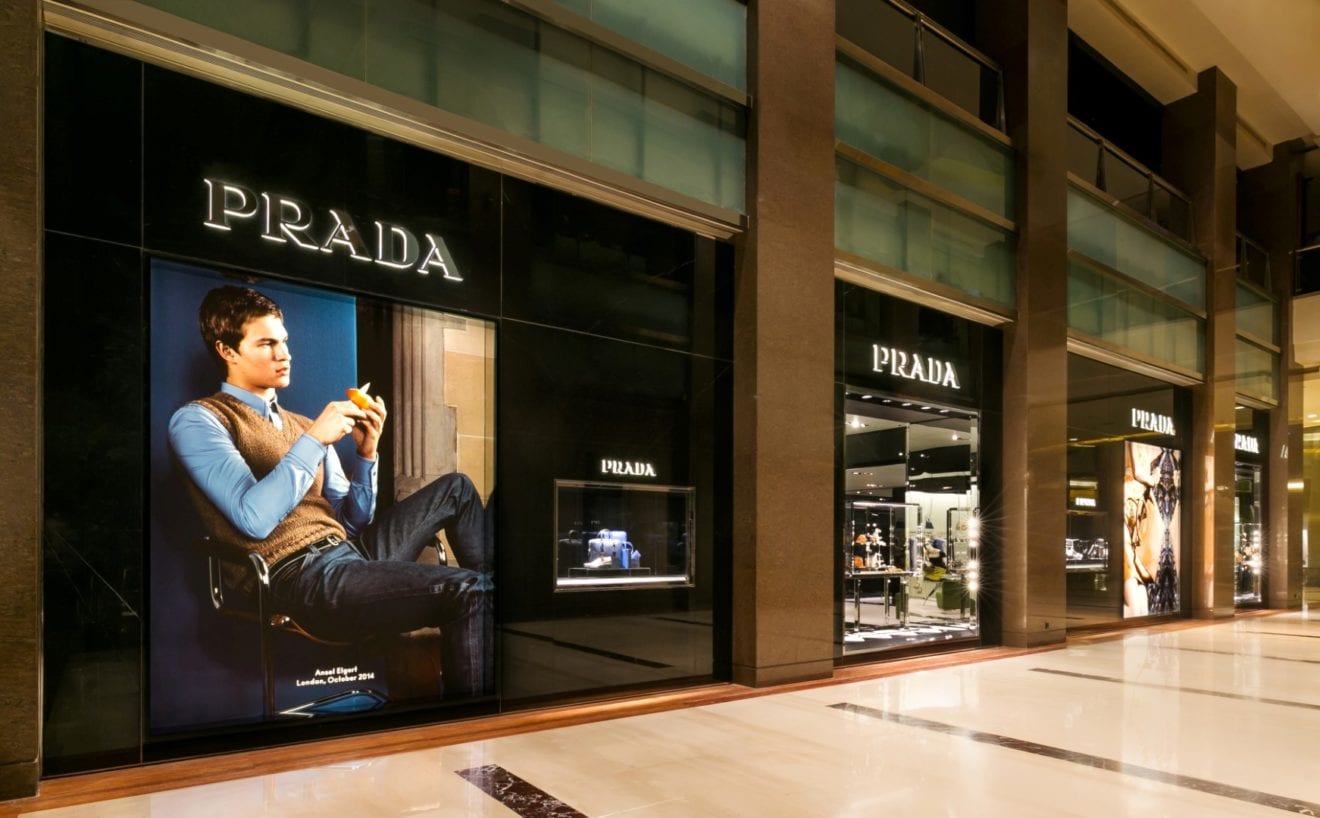
    Prada Asia is the Italian luxury label’s achilles heel with the company reporting  a 16 per cent decrease in sales in the region in the year to January 31.

    “The economic situation of the Chinese market remains negative although there was some improvement in the final quarter,” Prada said in its earnings statement.

    “Consequently, in the 2015 financial year, the entire Asia Pacific area (excluding Japan) recorded a 4 per cent revenue decrease at current exchange rates and a 16 per cent decrease at constant exchange rates.”

    Japan proved a better market, for the label: for the fifth consecutive year, sales rose, this time by  11 per cent at current exchange rates, or 4 per cent at constant rates.

    Global sales changed little – for the second year in a row – largely due to the strengthening US dollar.  Total revenue was 3.552 billion euros (US$3.96 billion) in 2015. Sales in the US fell 9 per cent excluding currency fluctuations.

    “Throughout 2015, we had to deal with an economic environment characterised by extreme volatility in currency markets, as well as by the deteriorating geopolitical situation in many world regions,” commented said CEO Patrizio Bertelli, in a clear reference to the falling demand for luxury goods in China and the Paris terrorist attacks.

    “These two factors have made prices fluctuate wildly and diverted tourist traffic in sudden and unpredictable ways. Our retail network – now truly global thanks to investment in recent years – enables us to keep developing a direct relationship with our ever more demanding customer all over the world. In the coming months, the group will be focusing its energies on the development of new commercial and marketing initiatives to sustain organic growth, also by means of an extensive digital project to strengthen dialogue with our customers. These actions, taken against the background of rigorous and disciplined cost control, will enable us to consolidate our market position with satisfactory margins and returns on investment.”

    Prada is listed in Hong Kong.

  • Hong Kong’s Chow Tai Fook, Sa Sa saw sales fall over Lunar New Year

    Hong Kong’s Chow Tai Fook, Sa Sa saw sales fall over Lunar New Year

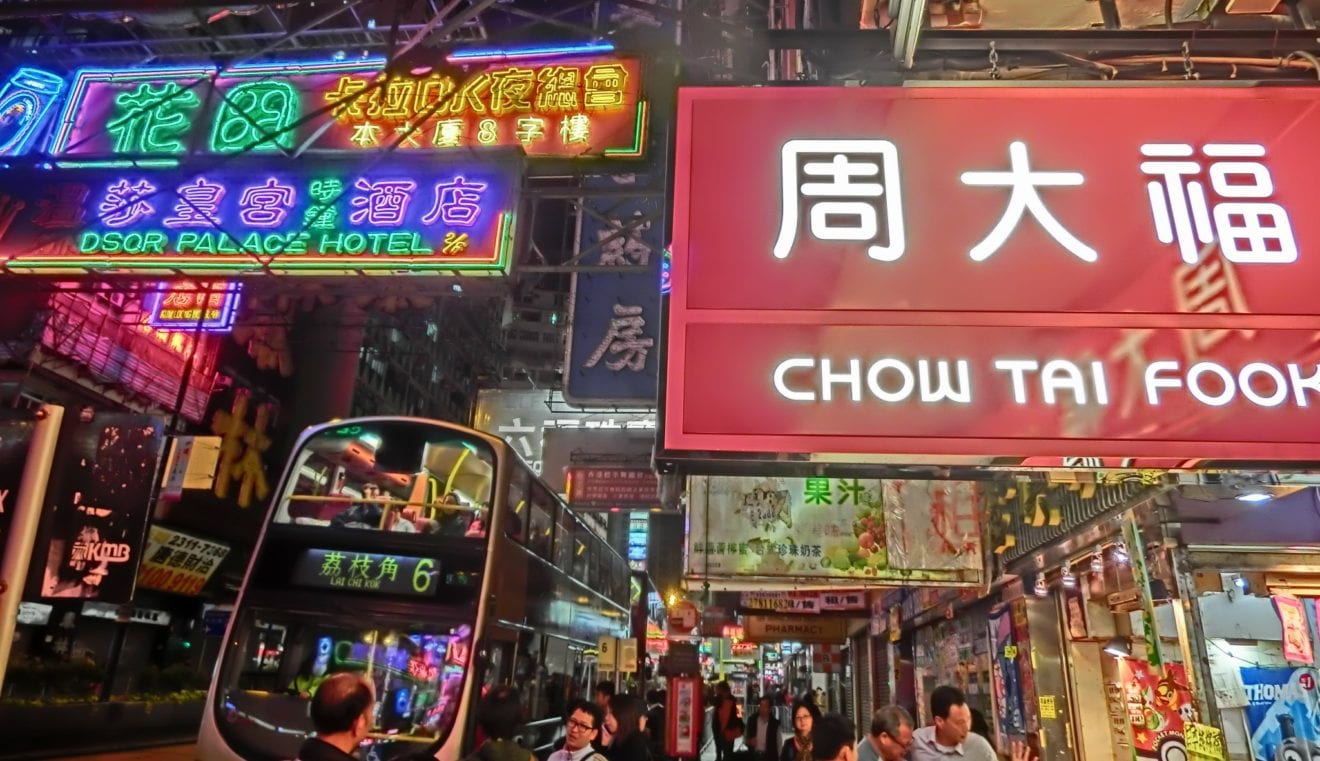
    Hong Kong’s top jewellery firm Chow Tai Fook and cosmetics retailer Sa Sa saw sales declines of at least 20 percent during the key Lunar New Year shopping season, as China’s slowing economy weighed on consumer spending.

    Chow Tai Fook Jewellery Group Ltd, Hong Kong’s largest jewellery firm by market value, saw its retail sales drop by almost a third in mainland China and by 23 percent in Hong Kong and Macau between Jan. 25 and Feb. 14, compared with the previous year’s Lunar New Year period. The buying spree usually happens a week or more before the start of Lunar New Year, which fell on Feb. 8 this year.

    Same-store sales were down 31 percent in mainland China and down 22 percent in Hong Kong and Macau, Chow Tai Fook said in a filing to the Hong Kong stock exchange on Wednesday.

    “The management anticipates the retail business environment will continue to be challenging for the fourth quarter and the sales performance will be worse than that of the third quarter,” the jeweller said.

    China’s economy, which posted the slowest growth since 2009 in the fourth quarter, and the government’s crackdown on corruption have stifled spending among Chinese consumers, who typically flock to Hong Kong to shop for everything from handbags to milk powder.

    On Wednesday, another prominent retailer in Hong Kong also reported dismal sales. Sa Sa International Holdings Ltd, which has a store in almost every corner of Hong Kong, posted a 20 percent drop in retail sales in Hong Kong and Macau over Feb. 8-14, compared with the previous year’s Lunar New Year period. Sa Sa’s same-store sales fell 19 percent over the same period, it said in a filing to the Hong Kong stock exchange. The announcements came after Hong Kong’s market closed on Wednesday. Chow Tai Fook’s shares ended 6 percent lower, while Sa Sa’s stock was down by 0.9 percent, versus the main Hang Seng index’s 1 percent fall.


  • Challenger’s net profit in 2015 up 22%, plans to open new online store in April

    Challenger’s net profit in 2015 up 22%, plans to open new online store in April

    IT products and services provider Challenger will establish a new online store to maintain its relevance in the retail market.

    Known as Hachi.sg, the portal, which will be unveiled in April 2016, will boast more products, an improved shopper interface and an online sales platform, Challenger said in a statement on Tuesday (Feb 16).

    Chief executive Mr Loo Leong Thye said: “Our strong network of offline stores will complement the online business so our customers can enjoy a true shop-anywhere, offline-to-online and vice versa experience.”

    On Tuesday, the SGX Mainboard-listed technology company also announced net earnings of $18.3 million in 2015, a 22 per cent increase from the $15 million profit recorded the year before.

    The IT retailer attributed the higher net profits to higher government grants received and lower operating expenses from the closure of its Malaysia retail operations.

    In the final quarter of 2015, net profit also increased by 50 per cent, $7.5 million more than the previous year.

    Meanwhile, earnings per share rose by 1.01 cents, from 4.28 cents in 2014 to 5.29 cents in 2015.

    However, it recorded a one per cent dip in revenue over the year from $355.1 million in 2014 to $352.2 million, due to lower contribution from retail revenue in Singapore.

    Looking at the year ahead, Mr Loo observed that 2016 will continue to be a challenging year for the retail industry.

    “Weak market sentiment from last year will spill over into 2016. Hence, retailers like us have to keep innovating to retain existing customers and attract new ones. On top of that, we will continue to focus on other hygiene factors like keeping operating costs low with better cost management and increasing productivity,” he said.

    Mr Loo added that Challenger is looking to build up to a stronger position by investing resources and manpower for the next three to five years towards its online business.

    Currently, Challenger has a total of 48 stores in Singapore. But it revealed last December that it would be closing its flagship megastore in Funan DigitaLife Mall, after it was announced that the mall will shut down this year for redevelopment.


  • Worst post-Lunar New Year sell-off in 22 years

    Worst post-Lunar New Year sell-off in 22 years

    The Hong Kong stock market saw the worst post-Lunar New Year session in 22 years on Thursday, a day after U.S. Federal Reserve chair Janet Yellen confirmed fears of a global slowdown in her testimony to Congress.

    Yellen raised the likelihood that U.S. interest rate hikes will be put on hold and possibly even cut over concerns about external risks to the U.S. economy and convulsions across stock markets worldwide.

    “Foreign economic developments, in particular, pose risks to U.S. economic growth,” said Yellen, referring to the debilitating effects of China’s economic slowdown, most remarkably, in dragging commodities prices down.

    On the back of those comments, the Hong Kong bourse reopened after a three-day break to a sharp sell-off, with the benchmark Hang Seng Index shedding 3.8% to close at its lowest level since June 2012 at 18,545.80. The Hang Seng China Enterprise Index of Hong Kong-listed mainland companies fell 4.9% to end at 7,657.92.

    The city’s blue chips fell almost across the board, with technology company Lenovo Group, which recently posted disappointing top-line growth, leading the decline with a 6.7% drop to 6.35 Hong Kong dollars.

    Financials and oil stocks bore the brunt of the selldown. China Life Insurance slumped 6.6% to HK$16.44. Other insurers such as Ping An Insurance Group and AIA Group lost 5.6% at HK$39.15 and 3.7% at HK$37.95, respectively.

    HSBC fell 5.44% to HK$49.50. Its Chinese counterparts Agricultural Bank of China, China Construction Bank, Bank of China, and Industrial and Commercial Bank of China all dropped about 4% over worries about a mounting credit crisis on the mainland.

    China’s largest oil refiner China Petroleum & Chemical (Sinopec) skidded 6.4% to HK$4.10, while other mainland energy giants, PetroChina, CNOOC and China Shenhua Energy slipped more than 5%.

    Of all the property stocks, China Vanke took the deepest plunge to close 8.92% lower at HK$1.58, while China Overseas Land & Investment was down 4.3% to HK$21.10.

    Consumer stocks such as Belle International, Hengan International and Tingyi Holding all lost around 6%. A fierce riot in Mongkok, one of the most popular shopping districts in Hong Kong, during the holidays has hurt sentiment toward the city’s already-battered retail sector.

    Mainland internet and telecom heavyweights such as Tencent Holdings and China Mobile were not able to escape the selling pressure, falling 5.4% to HK$136.10 and 3.1% to HK$82, respectively.

    Bad news from China also contributed to the sell-off. Before the holiday, the People’s Bank of China reported that the country’s foreign exchange reserve had fallen to $3.23 trillion in January, the lowest level since 2012, depleted by the central bank’s defense of both its currency and stock market.

    On Wednesday, Yellen’s comments were scrutinized for clues about future interest rate direction. She said that “monetary policy is not on a pre-set course,” suggesting that a rate cut could be considered if necessary. Overnight, the Dow Jones Industrial Average and the S&P 500 indexes ended slightly down, posting their fourth consecutive day of losses, while the Nasdaq ended three days of decline.

    Investors looking for safe havens in the risk-off environment pushed the spot gold price up to $1,207.6, the highest level since May 22.

    While mainland China and Taiwan markets remained shut for the Chinese New Year holiday until next week, most bourses across Asia faltered.

    South Korea, which also reopened after a long Lunar New Year break, saw its benchmark Kospi Index lose 2.9%. Singapore’s Straits Times Index and Thailand’s SET index dropped 1.7% and 1.84%, respectively. India’s Sensex Index closed 3.3% lower to its weakest level since May 2014.

    The Indonesian and Philippine markets were the only ones bucking the trend, rising 0.9% and 0.3%, respectively.

  • Ford pursues Philippines expansion after record January sales

    Ford pursues Philippines expansion after record January sales

    Automotive firm Ford Philippines is gearing for faster expansion this year to sustain its growth, which has gone to a record level during the month of January.

    A statement showed that the company was able to extend its positive performance up to month of January, recording an all-time high monthly performance after it sold 2,459 car units, a jump of 50 percent compared to the same period last year.

    As a result, Ford Philippines plans to continue the expansion of its nationwide dealer network to support its ongoing growth and fast-growing customer base.

    “Ford plans to continue enhancing its customer and ownership experience across the country this year. This includes the official inauguration of Ford Marilao in Bulacan later this month as it further expands its authorized dealer network to even more key locations across the Philippines,” the company said.

    Ford’s January performance in the Philippines was led by the all-new Everest, which delivered retail sales of 1,144 units, the second highest total ever for the nameplate.

    “It’s a fantastic start to 2016, and we’re extremely proud of how the Ford brand continues to connect with our fast-growing base of Filipino customers,” said Lance Mosley, managing director of Ford Philippines.

    The EcoSport compact SUV continued as one of Ford’s top-selling models in the Philippines with January sales of 551 units.  Built on Ford’s global B-segment platform, the EcoSport continues to delight customers with its combination of small-car practicality and agility of an SUV.

    Strong demand for the class-defining Ranger pickup, the second best-selling pickup truck in the Philippines last year, also helped the company achieve additional retail sales of 543 units.

    Ford Philippines’ lineup of North American SUVs available in the Philippines also contributed to the strong start to the year, including the premium Explorer which delivered sales of 95 units, while the sporty Ford Fiesta delivered sales of 71 units,

    The iconic Mustang, equipped with either a V8 5.0L or EcoBoost 2.3L variants engine, delivered January sales of 10 units.

    Ford Philippines is the local subsidiary of Ford Motor Company, a global automotive and mobility firm based in Dearborn, Michigan.

    With about 199,000 employees and 67 plants worldwide, the company’s core business includes designing, manufacturing, marketing, financing and servicing a full line of Ford cars, trucks, SUVs and electrified vehicles, as well as Lincoln luxury vehicles.

  • Downturn won’t dent H&M China confidence

    Downturn won’t dent H&M China confidence

    Despite feeling the pinch from an economic slowdown in China, Swedish fashion giant Hennes & Mauritz (H&M) says it plans to continue to bet big on the country.

    It blames an 11 per cent drop in quarterly net profit on adverse currency swings and mild November weather across several divisions, especially H&M China.

    This fell to 5.53 billion Swedish kronor (US$649 million) for the three months to November 30 from 6.22 billion kronor for the same period a year earlier. Revenue grew 14 per cent to 56.5 billion kronor in the fiscal quarter from 49.7 billion kronor. Excluding value-added tax, sales totaled 48.7 billion kronor.

    While acknowledging that sales growth in China has slowed dramatically – coming in a 4 per cent in local currencies for the quarter compared with 34 per cent – CEO Karl-Johan Persson says his faith in the country’s long-term prospect is unshaken.

    “We will open most new stores in China this year,” he says. The company plans 425 new stores globally in the fiscal year, with China and the US its main expansion markets.

    Persson says his confidence in China is based on the belief that the country will gradually pivot toward a consumer-driven economy, creating vast opportunities for retailers.

    Affluent shoppers 35 years and younger as well as internet users are still propelling the consumer market there, which is expected to jump to $6.5 trillion in sales by 2020, an increase of 54 per cent from last year, according to the Boston Consulting Group.

    H&M also plans to continue online expansion, with plans to open online stores in Japan and in eight other markets this year.

    The group’s gross margin has slipped to 57.5 per cent from 60.4 per cent, mainly because of the stronger dollar. H&M sources most of its clothes in Asia, where it pays in dollars.

  • Asia drives Jimmy Choo sales

    Asia drives Jimmy Choo sales

    Shoe label Jimmy Choo has reported a 7 per cent increase in 2015 sales – all on the back of strong Asian growth.

    The British-based shoemaker, which has been actively increasing its Asian footprint during the past year,  said it remains “confident” it can grow even faster in the market despite the slowdown in China’s economy.

    While a large share of the growth has come from Japan, the company says it does not expect a slowdown in China to affect its performance.

    Men’s footwear was the fastest growing category in the last quarter, but it still accounts for just 7 per cent of Jimmy Choo sales.

    The company’s net revenue rose 7 per cent to £318 million. Retail sales rose 9 per cent to £208million, while wholesale sales rose one per cent to £100 million on a constant currency basis.

    “Jimmy Choo continues to outpace the sector despite the challenging competitive environment,” said chairman Peter Hard.

    “The company successfully reversed the first half decline in wholesale revenues and is on track with growth forecasts in Asia and Japan where brand awareness continues to grow strongly.”