Tag: Singapore

  • Bossini reports Bossini $12m interim loss

    Bossini reports Bossini $12m interim loss

    Apparel brand Bossini International Holdings remains optimistic despite a slip in revenue and profit turning to loss for its six months to the end of December.

    It says growth is projected to continue rising in emerging markets and developing economies, supported by a favourable global financial environment and a concomitant recovery in advanced economies.

    “The regional picture is particularly encouraging as expansion in Mainland China and other parts of Asia remains solid, reflecting the strength of a broad-based upturn that saw global growth reaching its strongest rate since 2011. Mainland China is spearheading this long-overdue regional expansion, its economy having grown following two years of decline.

    “Hong Kong’s apparel retailing industry seems to have bottomed out after shrinking for consecutive years. Nonetheless, various downside risks remain evident, including geopolitical tensions, sudden capital outflows, policy indecisiveness and a sharp adjustment in Mainland China.”

    Bossini’s revenue for the six months fell by 5 per cent to HK$974 million (US$124 million), with gross profit slipping 1 per cent to $512 million.

    The group’s operating loss was $10 million with a -1 per cent operating margin, down from a positive 2 per cent a year earlier. Loss for the period attributable to the owners was $12 million, a switch-around from a $17 million profit 12 months earlier.

    Economic backlash

    Bossini says it weathered economic backlash from the China government’s “one trip per week” policy, more in-depth travel instead of retail shopping, and changes in tourist buying patterns. These factors hit retail sales in Hong Kong and Macau, which accounted for more than half of the group’s consolidated revenue.

    The drop in profit attributable to the owners was mainly because of the decrease in the profit derived from the retail and export franchising business in the Hong Kong and Macau segment. There was a 5 per cent drop in overall revenue and a 2 per cent decline in same-store sales for the period. However, same-store sales rebounded in the second quarter, particularly in China and Taiwan.

    Gross margin improved by two points to 53 per cent.

    Same-store sales in Hong Kong and Macau and Singapore declined by 4 per cent, an improvement over a 6 per cent decline the previous year, and 8 per cent (no change) respectively. Same-store sales in Mainland China and Taiwan grew 9 and 5 per cent (both had 2 per cent declines previously).

    Overall, same-store sales slipped by 2 per cent, an improvement on the previous period’s 6 per cent decline.

    At the end of the six months, the group had a presence in 29 countries and regions with  total 940 stores, the same as at June 30. The number of directly managed stores dropped by two to 282, while the number of franchised stores was 658, up two.

    Hong Kong/Macau remained the group’s core market and major contributor to the total revenue. A new outlet lifted the overall total number of stores to 41 while the export franchising business added five stores to the global network, taking the total to 656 across 25 countries.

    Mainland China had 166 stores (down two) comprising 164 directly managed stores and two franchises. Two non-performing stores in both Taiwan and Singapore were closed, giving both markets 16 outlets.

    During the six months, the group continued to launch its “on-the-go” collection to ride on the athleisure trend.

  • NEC Asia Pacific launches the NEC SL2100 Smart Communications System in Singapore

    NEC Asia Pacific launches the NEC SL2100 Smart Communications System in Singapore

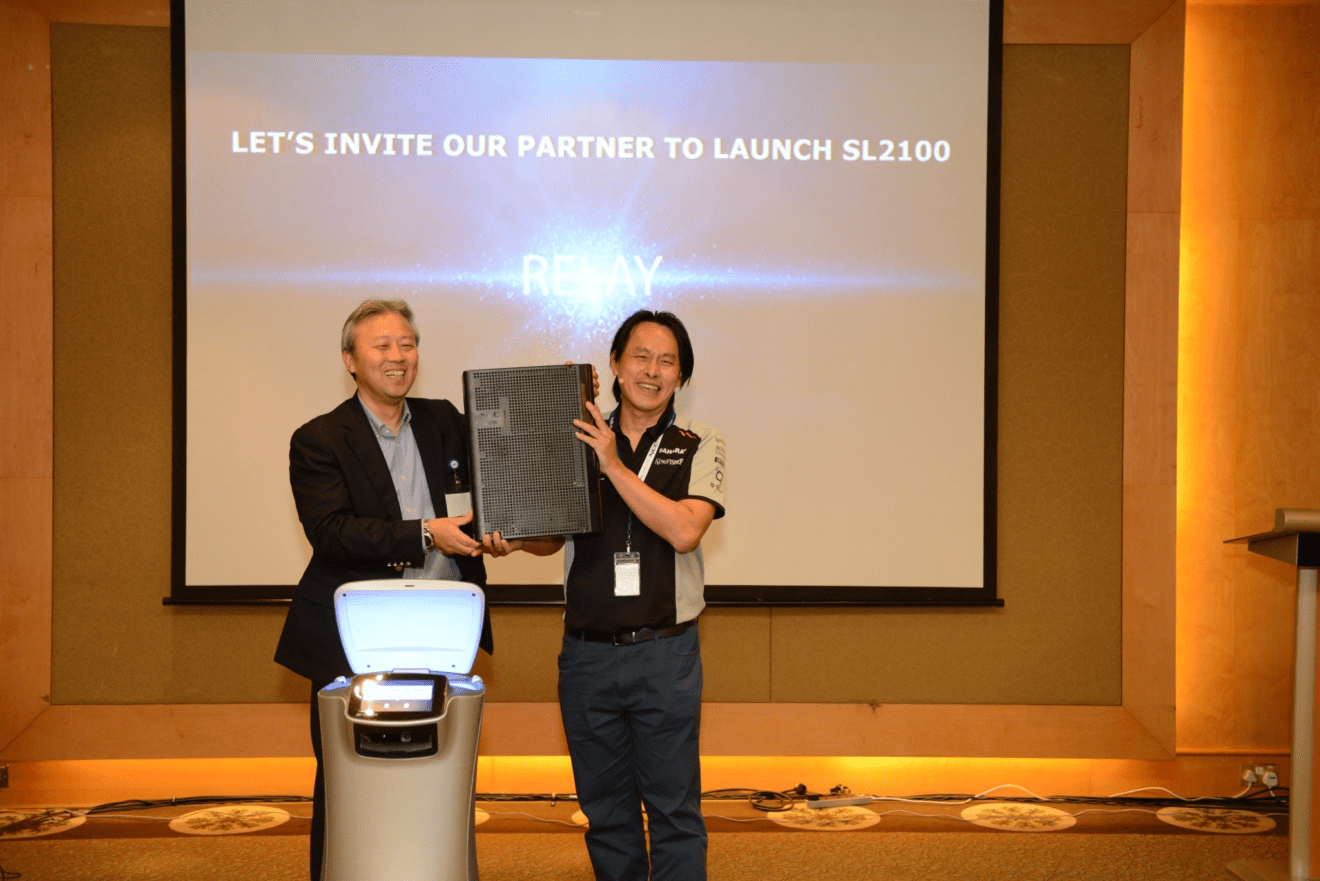
    NEC Asia Pacific held an event to officially launch the NEC SL2100 Smart Communications System in Singapore on 25 January 2018. The event was attended by over 70 participants consisting of partners and customers.

    The NEC SL2100 Smart Communications System is the newest and most advanced Server Message Block (SMB) communications platform that offers wide-ranging support for Voice over IP (VoIP), mobility and Unified Communications and Collaboration (UCC) features.

    “NEC’s new SL2100 offers industry specific features to meet the demands of small- and mid- sized businesses and to maintain high service levels. We are very excited to launch our Smart Communications System in the APAC region,” said Pablo Narata, Senior Manager, Global Platform Division, NEC Corporation.

    “NEC’s latest offering provides businesses with a powerful communication tool that is scalable and customized for each stage of the business. Through this launch event, we hope to influence more businesses to move to the Smart Enterprise Platform in order to generate a great customer experience,” said David Ooi, Vice President, Server and Networks Division, NEC Asia Pacific.


  • Time to get serious about saving energy

    Time to get serious about saving energy

    A tax will never be welcome, but it can be timely. The carbon tax that Singapore will levy on large polluters from next year is one such example.

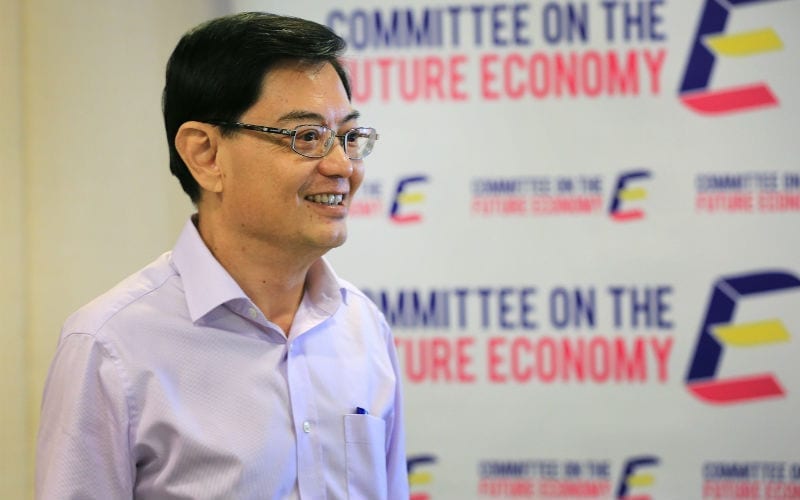
    The tax – details of which were announced yesterday by Finance Minister Heng Swee Keat – comes against a backdrop of rising temperatures and increasingly erratic weather.

    Last year was Singapore’s warmest year on record – excluding years influenced by El Nino, a weather phenomenon associated with hot and dry weather in this part of the world. The Republic is also experiencing more bouts of intense rainfall – such as the one on Jan 8 that led to flash floods in its eastern parts.

    That these effects can already be felt here highlights the urgent need for action. And a carbon tax is one direct way to tackle climate change – by trying to get large polluters to reduce the emission of greenhouse gases.

    Singapore’s introduction of a carbon tax is also in line with carbon pricing strategies adopted by other countries to reduce greenhouse gases.

    As Singapore marks its Year of Climate Action this year, its move to get ready for the roll-out of the carbon tax next year shows how serious it is in tackling the global threat of climate change.

    About 67 countries and jurisdictions, including China, the European Union and Japan, have implemented or announced plans to implement carbon pricing schemes, which incentivise emitters to reduce their greenhouse gas emissions and improve energy efficiency.

    In Singapore, the carbon tax will initially be set at $5 per tonne of greenhouse gas emissions until 2023, although the plan is to increase this to between $10 and $15 per tonne of emissions by 2030.

    This will be levied on the 30 to 40 companies responsible for the lion’s share of emissions here, but households will experience a knock-on effect – a 1 percentage point increase in total electricity and gas expenses on average, Mr Heng said.

    As the implementation of the carbon tax next year follows the full liberalisation of the retail electricity market in the second half of this year, households will be able to choose which retailer they wish to buy electricity from.

    Professor Euston Quah, head of the economics department at the Nanyang Technological University, said competition will put pressure on energy retailers to keep their prices competitive by not passing on the full cost of the carbon tax to consumers.

    The impact of the carbon tax will also be cushioned by the additional utilities rebates that eligible HDB households will get from next year to 2021.

    This gives consumers some time to form energy-saving habits, which could include turning off power at the socket when appliances are not in use, or using more energy-efficient appliances.

    The introduction of the carbon tax is a timely move which reminds both companies and individuals that it is time to get serious about saving energy.

  • The Macallan pursues ‘Quest’ with global travel retail rollout

    The Macallan pursues ‘Quest’ with global travel retail rollout

    The Macallan Quest Collection has launched in global travel retail following a month-long exclusive tie-up with DFS Group at Singapore Changi Airport.

    Quest, unveiled to members of the press during TFWA WE, initially launched across all four of Changi’s terminals in January and will now be available on-shelf at key airports globally.

    A giant, rotating bottle cut-out display housed in an illuminated diamond-shaped glass showcases Quest’s four different expressions at Changi.

    As part of the promotion, shoppers were taught more about the collection via interactive displays that emphasised the cask story and flavour of the four expressions.

    This twinned with food pairings and complimentary postcards to act as an additional incentive to purchase.

    Brooke Supernaw, Senior Vice President, Spirits, Wine & Tobacco at DFS Group, commented: “The Macallan Quest Collection embodies the innovation, storytelling and dedication to quality which have made The Macallan such a powerful brand in the single malt category.

    “This partnership and exclusive launch are especially significant for DFS, as we continue our own quest to offer fresh, engaging and exciting experiences to delight travelling customers at our airport and downtown stores around the world.”

  • ShopBack searching for Singapore’s biggest online shopaholic

    ShopBack searching for Singapore’s biggest online shopaholic

    E-commerce start-up ShopBack is teaming up with online social networking service LinkedIn to hunt for its Chief Shopping Officer.

    The Chief Shopping Officer will identify the best deals and shop for him or herself at any of ShopBack’s 500+ merchant partners, including Singapore Airlines, FoodPanda, Cathay Cineplexes, Grab and more.

    The online loyalty platform will provide SGD11,271 in shopping funds for the role, which will commence from 1 March – 30 April 2018. All purchases and cashback accumulated during the period of employment will be for the Chief Shopping Officer to keep thereafter.

    Applications for the temporary role will run for three weeks (ending on March 5, 2018) on LinkedIn and the Chief Shopping Officer will be officially announced on March 13, 2018.

    “There’s no better way for us to find out what our customers want than picking a Chief Shopping Officer from among them. Most of these customers do not necessarily have a professional background as a shopper and have regular day jobs. We wanted to tap professionals on LinkedIn, who may be a hardcore programmer by day, but an online bargain hunter at night,” said Vincent Wong, country head at ShopBack Singapore.

    ShopBack said it is looking for candidates who can work remotely with at least two to three years of online shopping experience with a knack for sniffing out the best online bargains. The role also requires some video editing skills and being on camera.

    Linda Lee, LinkedIn’s head of communications for South-east Asia and North Asia, added the company is seeing companies in Singapore and the Asia-Pacific region hire for more fun and unconventional roles on the website.

  • Products funded on Kickstarter sold in a store in Singapore

    Products funded on Kickstarter sold in a store in Singapore

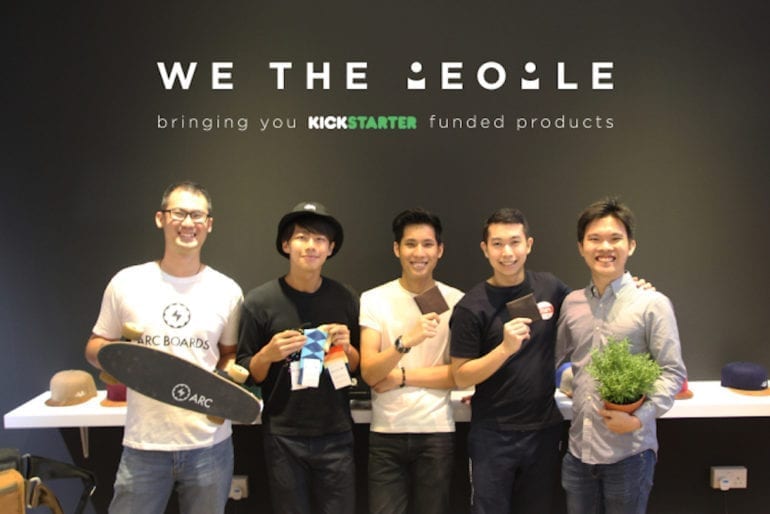
    We The People, a Singapore-based retail store, exclusively carries products that were developed through the online crowdfunding platform Kickstarter.

    It provides customers with a chance to buy Kickstarter products without having to wait or pay for shipping.

    We The People’s shop owner contacts the creators of campaigns and works with them to expand their products to the Asian market.

    All of the items in the store come with the backstory of the item, how much was raised in the crowdfunding campaign and the number of people who originally donated to the campaign.

    The We The People website also shows in-progress campaigns they would like to see fully funded.

    Four different We The People retail shops currently exist in Singapore, and the company plans to expand to other countries, such as Sweden and South Korea.

  • tomas maier and uniqlo collection to Debut in Early Summer 2018

    tomas maier and uniqlo collection to Debut in Early Summer 2018

    UNIQLO yesterday announced a new collaboration with the tomas maier brand, famed worldwide for its casual yet designed lifestyle concept. The new tomas maierand uniqlo collectionis for women and men, and it will be available in early summer at selected UNIQLOstores and online. The range infuses the time offand escapephilosophy of the tomas maier brand into LifeWear,which embodies UNIQLOs enduring commitment to top-quality fabrics, outstanding technology and functionality.

    Commenting on the announcement, Tomas Maier said, “The concept of my brand is based on simple, yet sophisticated designs. tomas maieris all about clothes for time off -a way for people to enjoy a much-needed escape from some of the complexities of modern living. I am confident that we wereable to incorporate UNIQLO’s remarkable technologies and expertise successfully into our collaboration line, which I hope can help people to relax and get away from the hustle and bustle of daily life.”

    Yuki Katsuta, Group Senior Vice President of Fast Retailing and Head of Global Research and Design at UNIQLO,commented that, “LifeWearembodies our belief that individualitycomes not from clothes, but the people wearing them. That’s why we devote our energies to creating clothes that people will enjoy and value for a long time. UNIQLO and the tomas maier brand share a long-held philosophy of including contemporary touches in casual clothes that are made fromqualityfabricsand are comfortableto wear. Our first resortwear collection marks a newstage in the evolution of LifeWear and adds a splash of summer fun to people’s lifestyles.”


  • Large emitters, observers welcome initial carbon tax rate of S$5 per tonne of greenhouse gas emissions

    Large emitters, observers welcome initial carbon tax rate of S$5 per tonne of greenhouse gas emissions

    Large emitters and environmental observers have welcomed the progressive implementation of the carbon tax, saying that it encourages companies to adopt energy efficiency measures while giving them the time to adapt to the changes.

    Singapore’s Finance Minister Heng Swee Keat announced in his budget speech that large emitters in Singapore will be charged S$5 per tonne of greenhouse gas emissions under the carbon tax that will be implemented next year.

    The tax rate will be reviewed by 2023, with the intention of increasing it to between S$10 and S$15 per tonne by 2030. The review will consider global climate change developments, the progress of Singapore’s emissions mitigation efforts and its economic competitiveness, Mr Heng said.

    Mr Yu Tat Ming, chief executive of PacificLight, a power generation company, welcomed the Government’s proposal to review the carbon tax over time.

    “The initial imposition of S$5 per tonne encourages industry to implement efficiency improvements and consumers to adapt their consumption pattern,” he said. “Future changes in the carbon tax can be made by the government depending on how close Singapore is to achieving its emission targets.”

    The carbon tax is just one in a range of measures aimed at reducing emissions intensity in Singapore by 36 per cent from 2005 levels by 2030 under the Paris Agreement.

    Likewise Mr Steven Fries, chief economist at Royal Dutch Shell, said the carbon tax represents an “important step” in meeting Singapore’s emission targets.

    “However, it is important to design this tax so that it will be an effective incentive to cut emissions and also support industry competitiveness, both of which are Government goals,” he added.

    To that end, Mr Yu said he still supports the setting of industry benchmarks based on “best in class” targets to encourage efficiency improvements without compromising future economic growth.

    “International experience has shown a good way to deliver on both objectives is for Governments to set an appropriate carbon ‘price’ on emissions which exceed an acceptable industry performance,” Mr Fries added.

    “This allows the government to set a carbon price high enough to incentivise companies to be more efficient, while safeguarding competitiveness by keeping the average carbon tax low.”

    Still, Ernst & Young tax analyst Chia Seng Chye believes the carbon tax is a “good start”.

    “It’s also about creating the right kind of behaviour, incentivising emitters who proactively manage their carbon emissions, rather than treating it purely as a source of additional tax revenue for the Government,” he explained.

    The progressive nature of the carbon tax also lets emitters warm up to it, he added. “So after 2030, when the rate is actually increased, they would not find it so prohibitive in terms of the cost.”

    Energy Studies Institute research fellow Melissa Low said the time frame of five years before the tax is reviewed is an “adjustment period” for companies to become more efficient.

    “The current fleet of power generators, such as turbines they have for example, is about 15 years of age, and the technology purchased by them is ‘locked-in’ for decades,” she explained.

    In addition, 2023 is also when countries – as part of the Paris Agreement – will do a global stocktake on what has been achieved so far, she pointed out.

    Therefore, that will be a good time for the Government to review whether the current carbon tax has worked in reducing emissions, as well as to review its suite of measures, she said.

    More importantly, Ms Low pointed out that unlike the European Union’s Emissions Trading Scheme which provides “free allowances” to certain emitters, Singapore’s carbon tax system does not exempt anyone.

    So while the carbon tax rate might be lower than the previously announced range of between S$10 and S$20, it still sends a price signal to companies, affecting their bottom lines, she added.

    Member of Parliament (MP) for Nee Soon GRC Lee Bee Wah said the carbon tax sends a “very clear” signal that reducing carbon emissions is an issue that needs to be dealt with.

    Dr Lee, who also sits on the Government Parliamentary Committee (GPC) for Environment and Water Resources, said the progressive nature of the tax gives companies the time and space to adapt.

    “As Minister Heng mentioned just now, he’s prepared to spend more than what he collects for companies to come up with innovative solutions, so it gives a balance,” she added.

    HOUSEHOLDS SHOULD PLAY PART

    Beyond what emitters can do, Mr Yu stated that achieving emissions targets would require a “concerted effort” from all parties.

    “On the demand side, the carbon tax must achieve the intended objective of encouraging consumers to adopt efficient practices and appliances,” he said.

    To that end, he noted that the carbon tax would likely impact customers, adding that it would cost his company an additional S$8.25 million a year.

    “As an electricity retailer, we shall do our part to cushion the impact on consumers,” he said. “For example, we encourage our customers to consume energy during off-peak hours, when electricity prices are likely to be lower and we can operate our plant more efficiently.”

    The carbon tax will make up about 1 per cent of total electricity and gas expenses on average, translating to a rise in electricity prices of about 0.21 cents per kWh, assuming the full tax is passed on to end-users.

    To help households adjust, the Government will provide additional Utilities-Save (U-Save) rebates from 2019 to 2021. During this period, each eligible Housing and Development Board household will receive S$20 more per year.

    MP for Holland-Bukit Timah GRC Liang Eng Hwa, who also sits on the Environment and Water Resources GPC, said the rebates would be “more than enough” in offsetting the increase in electricity bills.

    “I think these are schemes that have to be put in place to help mitigate the impact of all these tax increases,” he said.


  • Singapore to impose tax on digital services from 2020

    Singapore to impose tax on digital services from 2020

    Singapore’s Finance Minister Heng Swee Keat announced at the country’s Budget 2018 yesterday, Feb 19, that Goods and Services Tax (GST) will be imposed on businesses providing digital services from Jan 1, 2020.

    These services include mobile applications, and the streaming of music and shows. It is likely that firms affected by the measure to pass on the extra cost to consumers.

    The move is aimed at making tax system in Singapore “fair and resilient” in today’s digital economy, said Heng. “Today, services such as consultancy and marketing purchased from overseas suppliers are not subject to GST. Local consumers also do not pay GST when they download apps and music from overseas. This change will ensure that imported and local services are accorded the same treatment.”

    Measure will not apply to online sale of goods

    It is reported that according to a statement by the Ministry of Finance, this new measure will not affect online sale of goods.

    With regards to online retail, Mr Heng commented that international discussions are ongoing to see how taxes could be applied. There would also be a review before a decision is made.

  • Indonesia and Singapore to boost cooperation in investment and vocational education

    Indonesia and Singapore to boost cooperation in investment and vocational education

    Indonesia and Singapore have agreed to boost cooperation in investment and vocational education, especially in the industrial sector, with Indonesia offering the development of three industrial estates to Singapore.

    Indonesia’s Minister for Industry Airlangga Hartarto said on Monday (Feb 19) that Indonesia has encouraged Singapore to continue developing industrial parks in North Kalimantan, North Sumatra and North Sulawesi, with an integrated concept similar to that in Kendal Industrial Park in Semarang, Central Java.

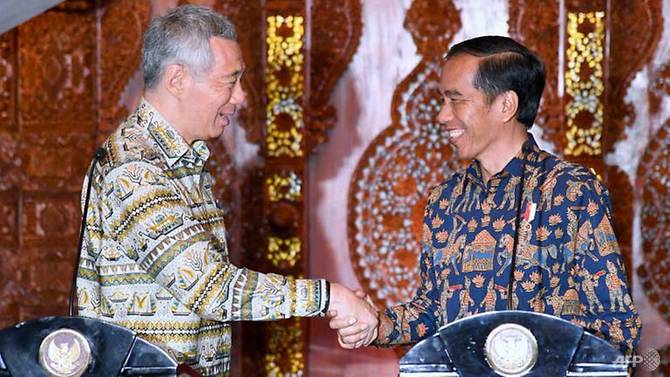
    The park, which was launched by Prime Minister Lee Hsien Loong and President Joko Widodo in 2016, has attracted 39 companies so far, with a total investment of US$360 million, and employed more than 1,950 people. It is a joint venture between developers from Singapore and Indonesia.

    The companies are from various industries – from furniture to food packaging. A polytechnic in the industrial park to produce trained workers to support the project is also almost completed.

    “Singapore is one of the neighbouring countries that have a strategic role towards the interests of Indonesia and the region,” Minister Airlangga was quoted as saying.

    His comments came after a visit by Singapore Foreign Minister Vivian Balakrishnan last week, where he met several officials, including his Indonesian counterpart, Retno Marsudi, Jakarta Governor Anies Baswedan and the Industry Minister.

    Minister Airlangga said that during the visit, he discussed the Bilateral Investment Treaty and negotiated a renewal of the Double Taxation Agreement with Dr Balakrishnan.


  • Singapore’s economy jumps by 3.6% in 2017

    Singapore’s economy jumps by 3.6% in 2017

    Goods producing industries push the growth with 5.7% increase.

    Singapore economy grew by 3.6% for the whole year of 2017, faster than 2.4% growth in 2016.

    Goods producing industries, which include manufacturing and construction, posted the highest growth with 5.7%.

    The manufacturing sector expanded by 10.1%, which is pushed by growth in the electronics and precision engineering clusters.

    The construction sector, on the other hand, shrank by 8.4% from 1.9% growth in 2016. The output was pulled down by 29.1% decline in private residential and private industrial construction works.

    Meanwhile, service producing industries grew by 2.8% driven by increase in the finance & insurance (4.8%), transportation & storage (4.8%), and wholesale & retail trade (2.3%).

  • Sunway Developments in bid to redevelop residential estate in Singapore

    Sunway Developments in bid to redevelop residential estate in Singapore

    Sunway Bhd’s unit Sunway Developments Pte Ltd (SDPL) and Singapore-based Hoi Hup Realty Pte Ltd have entered into a sale and purchase agreement with the collective majority owners of a 160-unit private residential estate in Clementi, Singapore for S$530.0 million (RM1.6 billion).

    According to a filing with Bursa Malaysia, SDPL, Hoi Hup and S C Wong Pte Ltd plan to set up a joint venture company to re-develop Brookvale Park, which sits on a 999-year leasehold land measuring 34,654 square meter, into a new private residential development with an allowed plot ratio of 1.6 times. The plan is subject to authorities’ approval.

    Hoi Hup, SDPL and S C Wong Pte Ltd will have 60% : 30% : 10% interests respectively in the joint venture.

    SDPL is expected to pump in about S$70.0 million or RM210.0 million into the venture.

    The proposed project is expected to contribute positively to the earnings of Sunway Group from the financial year ending Dec 31, 2019 onwards.

    The group’s share price closed down one sen at RM1.65 with some 921,500 shares changing hands last week.

  • Fendi opens Singapore ION flagship with pop-up attached

    Fendi opens Singapore ION flagship with pop-up attached

    Fashion house Fendi opened a flagship store in Singapore, marking the Italian firm’s fourth boutique in the city.

    Located in ION Orchard mall, the new store is Fendi’s most impressive to date in Singapore. Boasting a brightly-lit façade, the interior design of the Fendi retail outlet has been renewed and rolled out in Singapore, harking back to Fendi’s Roman roots.

    As for the products, ION Orchard offers women’s and men’s ready-to-wear, furs and accessories and collectible design pieces and furniture from a mix of heritage and new guard creators. Meanwhile, it the first Fendi store on Orchard Road to have a full men’s offerings including fashion, accessories and shoes.

    Fendi has created a Singapore exclusive Mini Peekaboo bag in velvet too, featuring a tapestry woven pattern and the signature Fendi whipstitch details.

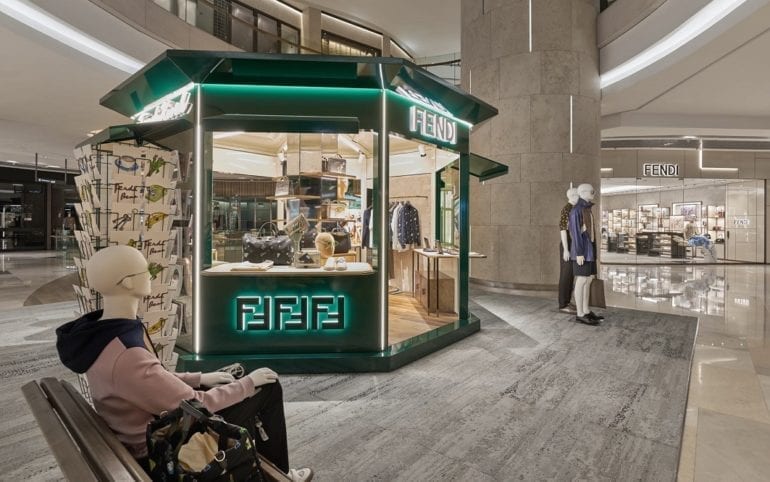
    Marking the store opening, a Fendi pop-up store has been set up at the entrance of the new physical store. Painted a lush forest green, the kiosk is designed to mimic heritage newsstands that one might find in a Piazza in Rome. The octagonal dark green structure features materials inspired by apartments in the city, such as brass, rosewood, velvet and parquet wooden floors.

    It stocks smaller items such as bag charms, small leather goods, sunglasses and t-shirts, as well as free Fendi postcards for guests.

    The ‘travelling’ kiosk opened until 18 February, before moving on to Siam Paragon mall, in Bangkok.

    Many international luxury brands have been doing the nomadic pop-up retail debut lately. Both Chanel and Louis Vuitton recently launched pop-up concepts in Singapore.

    Fendi is part of the French luxury conglomerate LVMH group. LVMH posted record revenues in 2107, with sales increasing overall by 29% last year.

  • Singtel Q3 profit falls 9%

    Singtel Q3 profit falls 9%

    Singtel has reported a 9% decline in profit for its fiscal third quarter to S$890 million ($671.7 million) as a result of declining voice revenues, higher costs and lower earnings from the operator’s regional mobile associates.

    Revenue for the December quarter grew 4% to S$4.6 billion as a result of higher earnings from Singtel’s wholly-owned Australian subsidiary Optus and strong contributions from the group’s digital businesses.

    Optus reported an 8% increase in revenue on the back of strong postpaid mobile and NBN customer growth. During the quarter, mobile revenue grew 4% and 125,000 new postpaid customers were added. Optus’ 4G population coverage meanwhile reached 96.6%.

    But Singapore consumer revenues fell 6% due to ongoing voice to data substitution and lower equipment revenues, partially offset by solid mobile data growth.

    Group enterprise revenue also fell 4% for the quarter, while Singtel’s Group Digital Life revenues more than doubled.

    Pre-tax earnings from Singtel’s network of regional mobile associates meanwhile fell 17.8% to S$523 million, largely as a result of the lower contribution from India’s Bharti Airtel due to the mobile termination rate cut and ongoing intense competition.

    Earnings also fell at Indonesia’s Telkomsel as a result of growing competition and at the Philippines’ Globe Telecom due to higher network investment related costs, but profit contributions from Thailand’s AIS rose due to solid revenue growth.

    “We see our investments in network infrastructure and spectrum as critical to our future growth and longer term returns in this digital world. Already, our transformation strategy is delivering with digital and ICT services accounting for 23% of our revenue this quarter,” Singtel group CEO Chua Sock Koong said.

    “Despite the current business headwinds, our regional associates’ markets remain attractive with strong mobile data growth. The ongoing consolidation in India will also pave the way for a healthier industry. We believe our associates’ investments in networks and spectrum, strategic partnerships and focus on innovation will pay off.”

    Singtel recently arranged to pay $412.6 million to indirectly increase its stake in Bharti Airtel to 39.5%.

  • Malaysians are more Save-vy than Singaporeans

    Malaysians are more Save-vy than Singaporeans

    ShopBack, the leading online Cashback platform in Southeast Asia, observes a stronger head start in 2018 for Malaysia as compared to Singapore.

    “Further to our positive performance in the Q4 2017, almost 20% more digital transactions went through ShopBack Malaysia compared to our Singapore counterpart last month. Looking at our January 2018 vs January 2017 data, ShopBack Malaysia has experienced more than twice the growth. Data shows that when it comes to savings, Malaysians are more aggressive and increasingly choose ShopBack as a convenient way to accumulate Cashback for every transaction,” said Alvin Gill, Country General Manager of ShopBack Malaysia.

    “Several factors such as the petrol price hike and subsequent increase in food cost has urged Malaysians to optimise their spending in every possible way, to which we are glad to be able to help more than 850K Malaysians in getting over RM25 million Cashback from their digital purchases, including Grab and Uber rides, in the past three years.”

    In 2017, more than 30 online merchants joined ShopBack Malaysia to provide Cashback as a form of loyalty reward to online shoppers, including Malaysia Airlines, 11street, Uniqlo Online and Kinokuniya. Currently, ShopBack collaborates with more than 500 merchants to offer up to 30% Cashback, and the Cashback percentage tends to increase during the festive period.

    “For example, there’ll be products on 100% epic Cashback sale during our birthday next week (22 February 2018). We will be giving away a total of RM18,000 to three lucky winners to spend on Lazada. Nike, Taobao, Booking.com, Photobook, Expedia, Hermo, Cotton-On, Sephora, ZALORA etc. are going to give out higher Cashback on that day too,” Alvin elaborated.

    Developing user centric features for better purchasing decisions

    While online Cashback still sounds new to locals, ShopBack is confident of its future as this concept has been introduced and is widely used by China, UK and US shoppers for more than a decade.

    “There is a bunch of loyalty programmes for offline retail in Malaysia but none comparable to ShopBack’s scale in the online retail space prior to our entry. We reward users in cash form, of which can be transferred into a bank account once it gets validated. What’s better is users are able to stack this on top of their credit card’s Cashback. On the other hand, online merchants see us as a valuable partner in promoting their business to the right target audience and retaining existing customers. We might earn less by sharing our commission with users as Cashback, but this triple-win model will help us go a long way,” Alvin said.

    To better support customers in their purchasing journey, ShopBack Malaysia extended its team to support live chat on web, mobile and app platform, as well as Facebook. It also upgraded its app to enable users access to purchase mobile reloads and internet packages offers within one tap, and implemented OTP (one-time-password) for a secure payout process.

    Recently, it also rolled out a ‘partial Cashback’ feature where a user can choose to withdraw any available Cashback amount (minimum RM10) from ShopBack to his/her bank account, or utilise it to settle phone bills (Maxis users only). The company is also looking to expand payout options via potential partnerships with popular brands and other loyalty programme providers.

    “Moving forward, we want ShopBack to be more than just Cashback. If you look at our app, there’s an exclusive function that allows our users to quickly compare rides and make a decision on the go. That is the kind of smarter way of living that we envision, and we hope to achieve greater milestones with our users in the near future.”