Tag: Singapore

  • Fewer sales, but more profit for Courts Asia

    Fewer sales, but more profit for Courts Asia

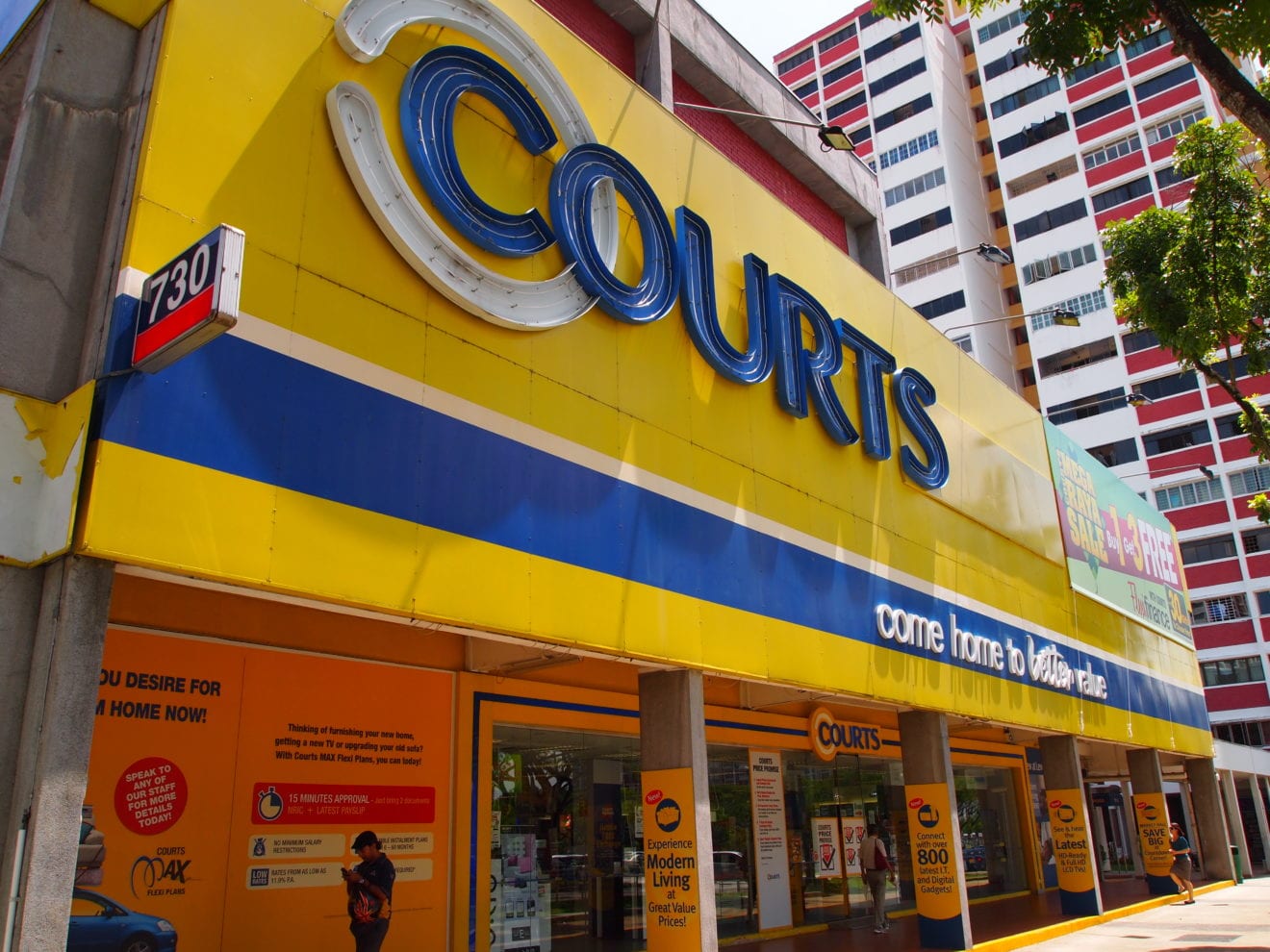
    Electrical, IT and furniture retailer Courts Asia reports 24.4 per cent growth in net profit to S$5 million (US$3.5 million) for the third quarter to December 31.

    This is despite revenue falling 8.6 per cent year-on-year to $187.2 million, attributed to lower corporate sales for digital products, coupled with the recall of the Samsung Note 7 smartphone.

    Courts Asia executive director/group CEO Terry O’Connor says the growth in profitability despite a lacklustre retail environment underscores the sustainability of the company’s cost-savings initiatives and productivity measures.

    “We were also able to achieve better gross profit margin of 33.1 per cent, compared to 29.7 per cent for the previous third quarter.”

    He says Singapore will lead the way for the group’s vision to be a regional omnichannel player by investing in the continuous improvement and innovation of its stores, both offline and online. “We will use Singapore’s e-store as the benchmark for improving the front-end experience and back-end capabilities for our Indonesia and Malaysia online stores.”

    Singapore revenue, which made up 66.8 per cent of Courts Asia’s top line in the quarter, slid 12.3 per cent. Revenue in Malaysia, which contributes 29.3 per cent of the group’s turnover, fell 5.9 per cent, while in Indonesia, still a relatively new market, there was a 104.3 per cent jump in revenue mainly because of new stores. O’Connor says Indonesia represents an “insignificant portion” of the group’s overall revenue at just 3.9 per cent.

    Group gross profit margins increased marginally to 33.1 per cent from 29.7 per cent the previous third quarter.

    Meanwhile, O’Connor says Courts Asia is seeking to achieve the right store portfolio balance in terms of number of locations or store format. In Malaysia, the company expects to increase its store base from 67 to 70 by the end of this financial year, while in Indonesia one store opened during the quarter, with its ninth outlet on track to open this year.

  • Hooters of Singapore leads Asia expansion

    Hooters of Singapore leads Asia expansion

    Hooters of Singapore – Marina Bay has opened in Marina Boulevard, led by franchisee Destination Properties Group.

    Hooters Marina Bay - Singapore 3

    Covering 2336 sqft (217 sqm) and close to Marina Bay Sands and Marina Bay Financial Center, the restaurant features more than 22 large-screen televisions. The US chain is known for its hostesses, wings and live televised sports.

    “The growth of Hooters locations in Asia is continuing its momentum,” says Destination Properties Group CEO Gary Murray.

    Hooters Marina Bay - Singapore 4

    Hooters Marina Bay - Singapore 5

    Hooters Marina Bay - Singapore 6

    Hooters Marina Bay - Singapore 7


    Hooters Marina Bay - Singapore 9

    Hooters Marina Bay - Singapore 8

    The new venue is part of a 35-location Southeast Asia development agreement between Hooters and the Singapore-based international franchisee. There are now 24 outlets in Asia, with plans to open more this year in Phnom Penh, Samui, Jakarta, Singapore (Fusionopolis), Taipei and multiple locations in Manila.

    Meanwhile, the brand is seeking further restaurant sites in Bali, Bangkok, Ho Chi Minh City, Hong Kong and Kowloon, Jakarta, Krabi, Kuala Lumpur, Macau, Manila, Cebu and Davao, Siem Reap, Singapore, Taipei and Yangon.

    Hooters plans to open more than 30 restaurants globally this year.

    Hooters Marina Bay - Singapore 1

  • Singtel Q3 profit grows 2% to $686.6m

    Singtel Q3 profit grows 2% to $686.6m

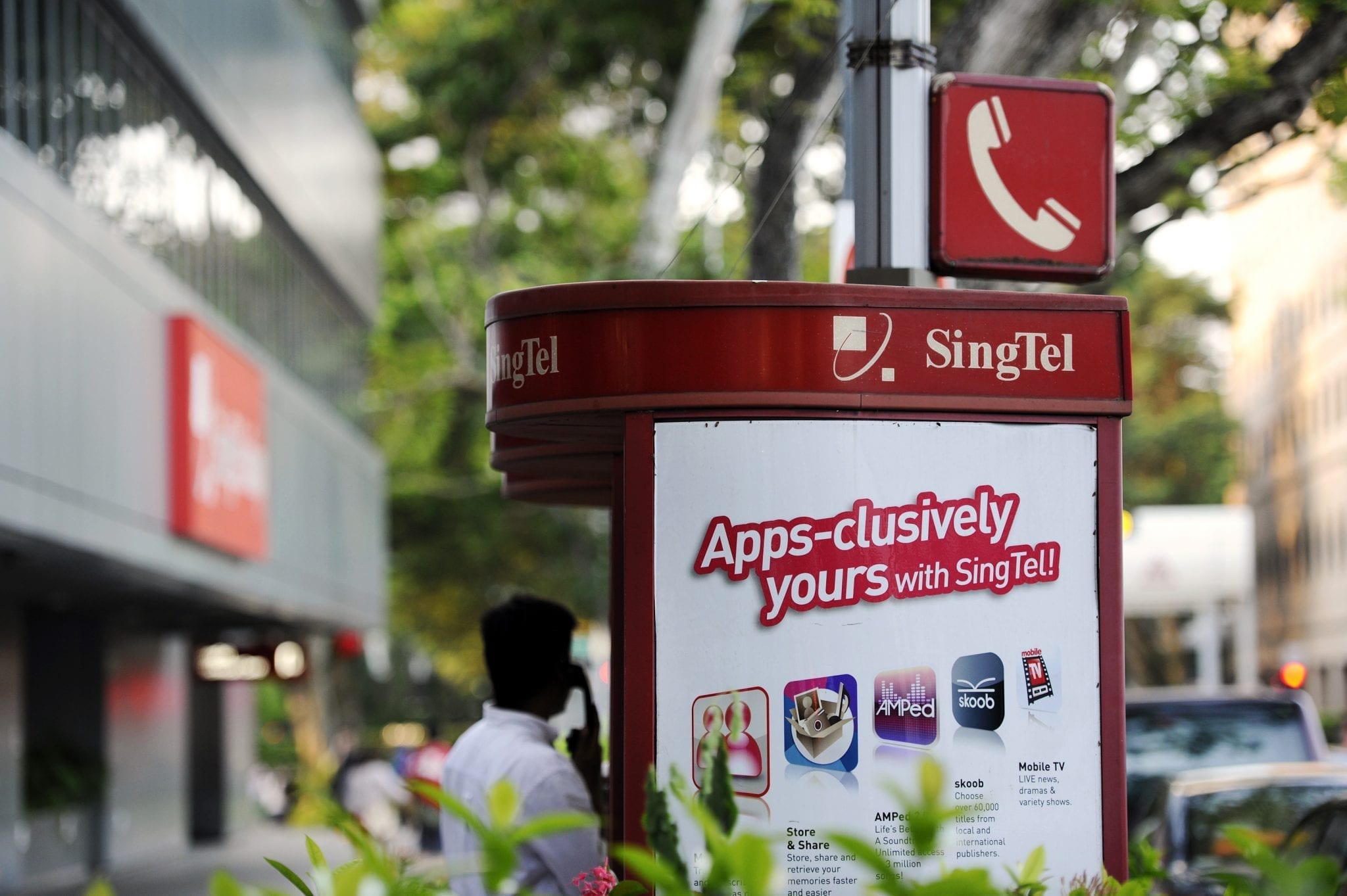
    Singapore’s Singtel grew its net profit for its fiscal third quarter by 2% to S$973 million ($686.6 million) in the face of declining operating revenue.

    Revenue fell 2% to S$4.41 billion as a result of a regulator-mandated reduction in mobile termination rates in Australia, the home market of Singtel’s wholly-owned subsidiary Optus.

    The reduction led to a 10% decline in group consumer revenue from Australia to A$1.81 billion ($1.38 billion), but consumer revenue from Singapore grew 4% for the quarter to S$657 million, as home services revenue increased by 7%.

    Group enterprise revenue was mostly flat at S$1.65 billion, with revenue from cybersecurity up 10% to S$113 million. Group digital life revenue meanwhile grew 22% to S$167 million, driven by a strong performance from digital marketing arm Amobee.

    Singtel’s share of pre-tax earnings from its regional mobile associates meanwhile grew 2% – or 0.6% in constant currency – to S$660 million. Indonesia’s Telkomsel delivered a strong performance with pre-tax profits up 31%, but Bhari Airtel’s pre-tax profits fell 27% due to the ongoing price war in India.

    Thailand’s AIS likewise saw its pretax profit decline by 28% due to spectrum and financing costs, reducing its contribution to S$89 million. The Philippines’ Globe’s contribution grew 18% to S$66 million.

    This quarter also included contribution from the company’s new 21% stake in Intouch, acquired in November. Intouch contributed a pre-tax profit of S$4 million.

    “This is a resilient set of results. We have managed to hold good ground against the backdrop of a slowing Singapore economy and more challenging business environment all around,” Singtel group CEO Chua Sock Koong commented.

    “While there are concerns of a global economic slowdown, the growth story in the developing markets where we are invested remains compelling as mobile data usage continued to grow across all our mobile associates.”

    The Singtel group’s total mobile customer base across its operations and those of its affiliates meanwhile grew another 2% during the quarter to 640 million.

  • Singapore-based ecommerce enabler Shopmatic is striving to get Indians sell their wares online

    Singapore-based ecommerce enabler Shopmatic is striving to get Indians sell their wares online

    It took just one year for Anurag Avula to realise that India is an investment market. “That’s the top learning from India,“ confesses cofounder and CEO of Singapore-based ecommerce enabler Shopmatic, which forayed into the country in January 2016. However, investment for Avula doesn’t mean pumping in millions of dollars. “You need to invest in people, educate them and consult them,“ he says.

    For an ecommerce enabler like Shopmatic–which helps people set up online stores–investment in human resource appears to be its biggest weapon in cracking a market where people are still apprehensive transacting online in spite of a big digital push by the government. Out of an estimated 51 million small and medium enterprises in India, only 10 mil lion are technology ready, according to a recent Google-KPMG report.

    “The opportunity is massive,“ says Avula, adding that the fledgling startup is not confining itself to small enterprises. The target could be anybody. Take, for instance, an aunty that makes pickle, a mom that bakes cake, a student that gives guitar tuitions, a working professional who is also a photographer, or a retired uncle who can offer math tutions.

    “While everybody wants to take their business online, they need a lot of handholding to overcome latent barriers,“ he reckons, informing that the startup has tied up with Confederation of All India Traders, representing over 6 crore merchants.

    From providing free domain names to templates for building stores, to uploading pictures and text, enabling payment and shipping with domestic and international partners, and even helping list on Amazon and eBay, Shopmatic is pushing the envelope to accumulate as many users as possible. Last November, it launched a mobile app GO that enables sellers to build online sites using their mobile phones in just 2 minutes. “We are already clocking over 50,000 downloads, just weeks after launch,“ he claims. While for a first-time merchant who is tentative about the online world, GO is the best option as it helps recruit newbies into the digital world for free; for others Shopmatic offers a subscription model of $20 per month.

    But why would a seller listed on a marketplace or with a page on Facebook page want a bespoke online store? Shenaz Bapooji, chief marketing officer of Shopmatic, contends there are reasons aplenty.

    Some players are tired of parting with high commissions and playing second fiddle to `other brands’ on a marketplace.For them, Shopmatic offers best value.Others consider social media as a catalogue service but have trouble getting closure because the mediums are not ecommerce enabled. There is another category, points out Bapooji, who have built sites through other ecommerce platforms but are switching to Shopmatic as they need to hire experts to manage their sites. “Indians are eager to embrace digital but are waiting for someone to show the way,“ she adds.

    Industry analysts attest to massive business possibilities in making Indians come online. “What is positive about Shopmatic is that it is taking a `handholding’ approach,“ says marketing expert Jessie Paul. When we say `go online’ in India, most businesses would translate that to sell on Facebook, Flipkart and Amazon or more recently on Paytm. They are not likely to look at a specific tool to achieve this and are unlikely to consider a standalone online property, as that requires a lot of brand-building and trust.

    However, the Achilles heel for Shopmatic could be lack of awareness.Unlike more aggressive rivals such as GoDaddy, which has been aggressively advertising on TV, Shopmatic has been under the radar. Avula concedes awareness might be an issue but doesn’t believe in going all guns blazing.

    “It is tempting to put a big burst of money behind TV, but it’s not always possible,“ he says. Shopmatic is instead opting to be efficient about its presence online, by on-boarding `non-digital’ audiences through road shows and market storming activities that help spread awareness.

    “Other companies don’t enable the ecosystem for selling online like we do,“ he claims, adding that he believes in playing a smart and longterm game. “India is a priority market for us and will stay so,“ he signs off.

  • Last Mile Fulfilment Asia returns for the third edition from 2 to 3 March 2017

    Last Mile Fulfilment Asia returns for the third edition from 2 to 3 March 2017

    Last Mile Fulfilment Asia (LMFAsia), the region’s premier trade show for the retail, ecommerce, logistics and parcel industries, returns with the third edition on 2 to 3 March 2017. Themed “Go Global, Deliver Local”, the event aims to drive and strengthen a borderless fulfilment process, where in-market industry players fortify their business locally whilst expanding their foothold in the region through perfecting the last mile beyond borders.

    Amidst a backdrop of economic uncertainties today, Southeast Asia ecommerce market continues to grow to 16 times and will reach $88 billion by 2025 . The two-day conference and exhibition, organised by SingEx Exhibitions will deep-dive into the need to tap on the potential growth of ecommerce, and optimise the cross border fulfilment and delivery processes.

    The multi-track conference component of the trade show will focus on evolutionary topics such as turning fulfilment challenges into opportunities, designing cross-border fulfilment solutions across Asia. In recognising that the last mile of the fulfilment process costs almost 28 per cent of total cost of moving goods , achieving cost efficiency through innovative logistics solutions will be key to amplify the ecommerce market that is already expanding at rapid speed in the region. According to Frost & Sullivan, the global B2B ecommerce market alone will reach US$6.7 trillion by 2020. The 2017 conference will feature a new track “The Future of ecommerce is B2B ecommerce”, in which industry speakers from renowned retail, ecommerce and logistics leaders will share keynotes, highlighting the potential wins of adapting a successful B2C model into the B2B segment to conduct ecommerce business in a similar fashion.

    Separately, the exhibition component of Last Mile Fulfilment Asia will offer a convenient business matching platform for innovative companies to meet potential business partners, and showcase products and technologies that add value in the delivery chain. There will be three thematic zones dedicated to specific solution categories ranging from last mile, fulfilment centres, warehousing to automation.

    Adrian Sng, general manager of SingEx Exhibitions said, “Industry giants from China and US are pursuing significant ecommerce market shares in Asia and it will be a challenging year with headwinds affecting many in the fulfilment business. In order for companies to gain a competitive edge, there is a need to leverage technology to advance and conquer the last mile. This year’s overarching objective will be to bring this to the forefront. Through our focused strategy of curating trade events in emerging markets and industries with high-growth potential, Last Mile Fulfilment Asia will be a driving force for change that will see ecommerce and the fulfilment business playing a much more significant role in the region.”

    Charles Brewer, chief executive officer of DHL eCommerce, who will be sharing during the conference on leveraging opportunities presented in cross-border ecommerce, acknowledges the game-changing benefits last mile fulfilment will bring. “Perfecting logistics is the key to delivering the best ecommerce experience and a great chance to deliver a smile in the last mile. I am looking forward to sharing and connecting with other ecommerce players at the conference to discuss latest trends in this very exciting industry.”

    Joseph Yuen, board chairman of the Hong Kong federation of ecommerce and managing director of China Post Trade Development Company Limited, will also be speaking during the conference on paving the way into doing business in China through “11.11” case study. “Technology brings businesses closer to each other and around the world, but successful cross border ecommerce does need a mastery in the difference in culture, trade practices, government policy and others. On this note, Last Mile Fulfilment Asia 2017 provides a great opportunity for industry stakeholders to catch up with the latest trends and solutions in cross-border ecommerce.”

  • iFashion Group reels in Megafash

    iFashion Group reels in Megafash

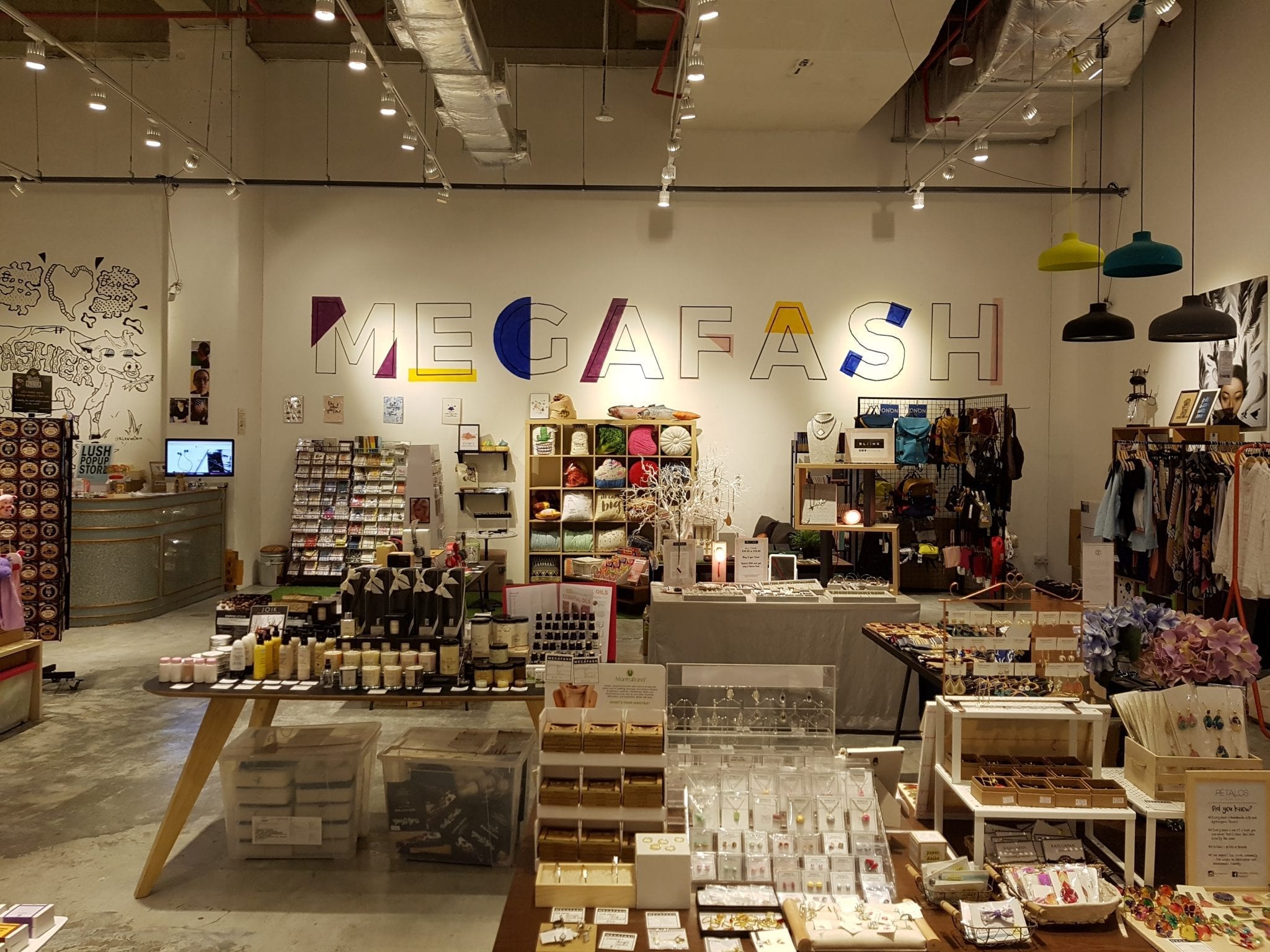
    Singapore fashion and lifestyle platform iFashion Group has acquired independent designer brands marketplace Megafash in a S$3.15 million (US$2.23 million) cash-and-shares deal.

    This follows iFashion’s purchase of lifestyle and fashion brands Dressabelle and Nose, as well as real-estate booking platform Invade.

    Megafash was launched in December 2015 with an eCommerce platform and three stores, and now has more than 15,000 sqft (1393.5 sqm) of retail space across seven stores. It also has a presence in Indonesia and Thailand and stocks more than 2000 international indie brands, with 30 per cent of its in-store brands being exclusive.

    Its annual revenue last year was reported to be $8 million.

    “In times of economic downturn, we are pleased to say our revenue grew five times from 2015,” says Megafash CEO/co-founder Jiawen Ngeow. “In December we received as many as 2000 orders a day.”

    iFashion has appointed Dressabelle CEO/founder Jeremy Khoo as new CEO, who will be responsible for driving the company to the next level.

    “Our acquisition of Megafash completes our line-up of brands for our IPO,” says iFashion Group VP of corporate affairs Jeneen Goh. The company is looking at going public at the end of April or May.

  • Shoppes at MBS share set at $4.9b

    Shoppes at MBS share set at $4.9b

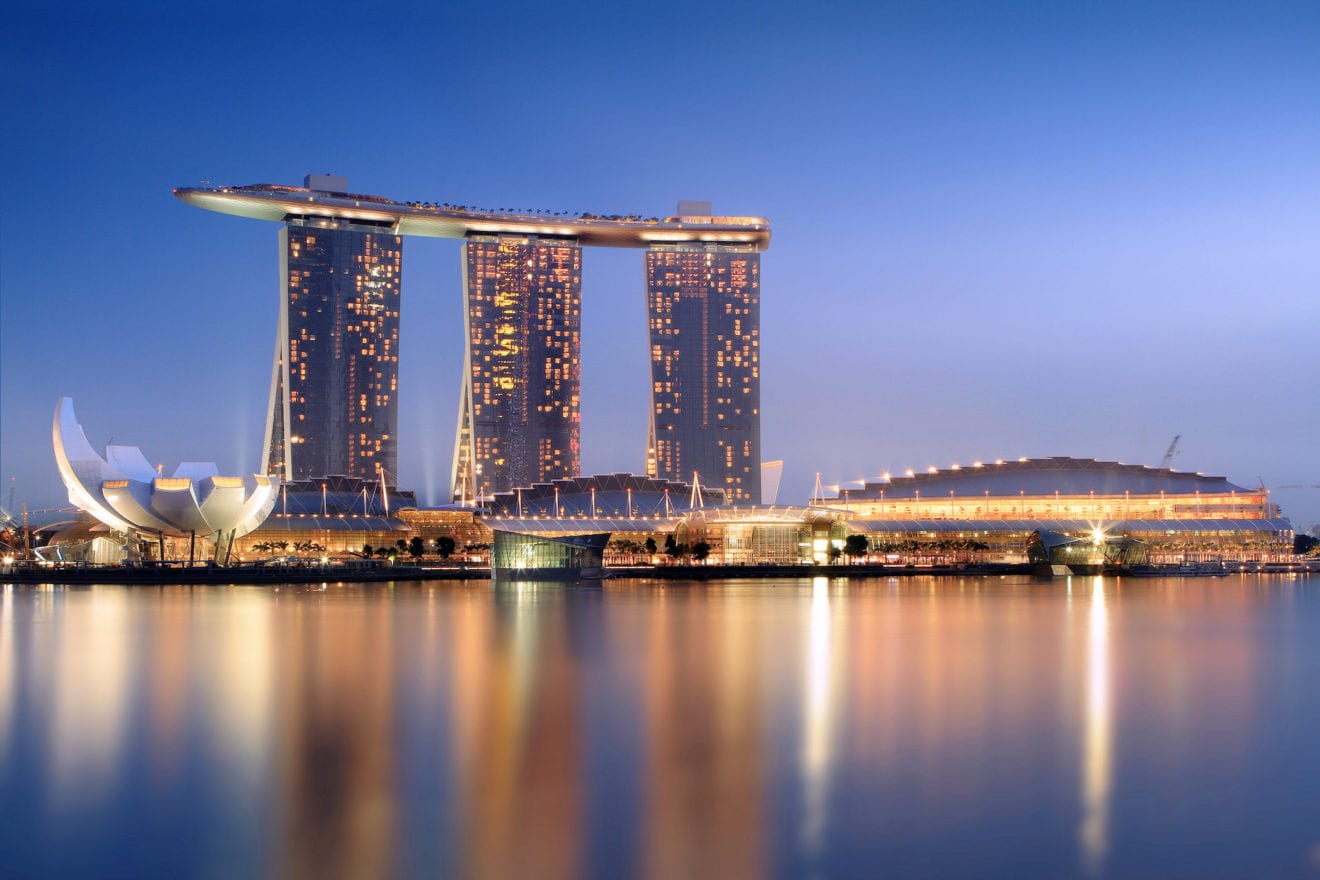
    Casino mogul Sheldon Adelson’s price tag of up to S$4.9 billion (US$3.5 billion) for a 49 per cent stake in Shoppes at Marina Bay Sands makes it the “most expensive mall in the world,” he says.

    However, sovereign wealth funds and private-equity giants may be willing to pay a massive premium to own a stake in such a high-profile asset, says real-estate consultancy firm Chesterton Singapore MD Donald Han.

    He says Singapore stacks up as one of Asia’s best property markets because its relatively strong dollar enables investors to preserve their capital.

    “The property has to be assessed based on yield or the operating income from the mall, and how it stacks up against market expectations…But buildings with a certain character or iconic stature that are one of a kind are also worth a premium.”

    Another selling point is that there are few quality malls on the market, and little prospect in the near term of more land being released for such large developments, says Savills Singapore research head Alan Cheong.

    Meanwhile, the proposed sale is subject to approval from the authorities, under an agreement that allowed US gaming giant and Marina Bay Sands parent Las Vegas Sands (LVS), as well as Genting Singapore, to have exclusivity in Singapore for 10 years. The agreement says LVS cannot sell any part of its 800,000 sqft (74,322 sqm) mall for that period, and then only after government approval. The 10-year duopoly, which also applies to Genting’s Resorts World Sentosa, expires next month.
    Adelson says the mall sale proceeds could be used in the firm’s next investment in Japan or South Korea.

  • Top 5 yogurt brands in Singapore

    Top 5 yogurt brands in Singapore

    A recent study by Kadence International, in Singapore, found that Meiji is the number 1 yogurt brand, in terms of number of consumers using it, followed closely by Marigold.

    In addition, nearly all Singaporeans are aware of Meiji (96%) and Marigold (97%). Just under half of consumers (49%) currently eat Meiji yogurt, and in second place is Margiold (46%).

    Top 5 brands:

    1. Meiji
    2. Marigold
    3. F&N Magnolia
    4. F&N Magnolia 0% fat
    5. Nestlé Natural

    These two brands dominate the yogurt market in Singapore, with F&N Magnolia and F&N Magnolia 0% Fat significantly behind, taking up the third (33%) and fourth spots (20%) respectively.

    Nestlé Natural rounds off the top five, with 14% of Singaporeans currently consuming it.

    The online study conducted by Kadence included 1,555 respondents in Singapore to understand their perceptions of different yogurt brands and the influence of health trends upon this.

    When asked what imagery comes to mind about the brand, Meiji was seen to represent great taste, a great choice of flavors and was most likely to be considered a brand consumers trust. In contrast, consumers were much less able to associate other yogurt brands with particularly imagery or perceptions.

    The strong association between taste and trust helps explain the success of Meiji, as these are the main factors consumers look for when they shop the category.

    Taste is the most important driver of consumption for yogurt, and an area where Meiji dominates. The strong brand awareness of 96% and 97% respectively also means that Meiji and Marigold get chosen from the retail shelves.

    Healthy lifestyles

    The study also looked into current healthy eating perceptions in Singapore. It is of no surprise that many consumers pursue a healthier lifestyle, which includes food consumption.

    Two-thirds of Singaporeans (66%) said they try to eat healthily, but sometimes fall short. Whereas a fifth (17%) said they always eat healthily. In contrast, 17% of Singaporeans responded that they do not endorse a healthy eating lifestyle.

    The fortunes of yogurt brands change dramatically when looking only at those healthiest 17% of Singaporean consumers. For those following a healthy diet and lifestyle, Meiji and Marigold are replaced as the most consumed brands of yogurt by Fage (68%) and Chobani (60%).

    In contrast, both brands had very low levels of consumption when it comes to all Singaporeans in general, only 1% and 3% respectively, suggesting both brands represent a niche yogurt territory targeted towards healthy consumers.

    Both brands focus on their health credentials, promoting their all-natural Greek strained yogurt and very low fat content.

    These messages give them clear brand differentiation and resonate with the healthiest segment of consumers, as perceptions of Chobani as a brand that helps maintain a healthy diet jumps by 30% between all consumers and the healthy focused.

    Consumers also felt strongly that Chobani is a good choice of yogurt for the whole family, although relatively lacking on having a wide range of taste and exciting flavors. Fage enjoys a similarly strong shift in perceptions when it comes to the health-conscious segment. However Fage shows more positive numbers in having exciting flavors and formats as well as a brand with a ‘buzz.’

    The importance of trust in a brand’s health credentials become more important when choosing a yogurt for the health focused consumer group, rising from eighth place for all consumers to second place for the health focused.

    Health priorities for professionals

    When looking into who makes up the healthiest consumers in Singapore, we find that there are few differences in terms of age and gender.

    However, there is one group that does stand out. Doctors, lawyers, accountants, bankers and engineers are all more likely to say they always eat healthily.

    In contrast, students are more likely to identify with an unhealthy lifestyle.

    Arguably, those in the professions are more aware of the importance and role of diet in maintaining a healthy lifestyle and general health benefits; especially compared to students. Similarly, students have a tendency to focus on price, and so put a lower emphasis on health versus value for money, in contrast to those who can afford to maintain a healthy lifestyle.

    Taste vs. health

    Looking at the study results, it seems that there is a perception taste and healthy ingredients do not coexist in most yogurt products out in the market today – and this would be an area for yogurt brands to develop their products further.

    Currently, however, each brand and products are positioned to target different consumer segments – consumers looking for rich flavor, health-conscious consumers, children and teens, and the elderly, to name a few.

    Chobani, Farmer’s Union and F&N Marigold 0% are all perceived as healthy product choices endorsed by health-conscious consumer groups, but they lack in the diversity of flavors available on the shelves.

    Meiji, Marigold and F&N Marigold all provide a wide selection for consumers, but are perceived as not being produced with the finest ingredients.

    Of course larger dairy producers such as F&N or Yoplait already have a range of products within their portfolio to meet different consumer demands. However, knowing both the general and niche demands and the latest consumer trends according to different target groups helps when it comes to brand positioning, regardless of whether a brand is big or relatively small.

  • StarHub Q4 profit falls 33.2%

    StarHub Q4 profit falls 33.2%

    Singapore’s StarHub revealed its fourth quarter profit fell 33.2% to S$54 million ($38.6 million), as a result of higher costs and growing competition.

    Revenue for the quarter stayed flat at S$634.8 million, but service revenue grew 1% year-on-year to S$567.1 million.

    Higher handset subsidies, a higher finance expense and other costs all contributed to the decline in profit during the quarter.

    Mobile revenue decreased slightly to S$311.8 million, with both postpaid and prepaid ARPU declining by S$2 year-on-year to S$70 and S$15 respectively. Pay TV revenue also decreased 6% year-on-year to S$93.9 million.

    Broadband revenue by contrast grew 4% year-on-year to S$54 million, with ARPU growing S$2 year-on-year to S$37. But residential broadband customers fell by 1% year-on-year to 473,000.

    Enterprise fixed line revenue also grew 10% year-on-year to S$107.2 million due to a higher take-up of data and managed services.

    For the full year, SartHub’s net profit fell 8.3% to S$341.4 million, with total revenue down 1.9% to S$2.39 billion. Mobile revenue was up 2% to S$1.2 billion, broadband revenue was 8% higher at S$216.6 million and enterprise fixed revenue increased 3.9% to S$400 million.

    “Despite increased competition, we have registered growth in key areas. Mobile, which accounts for half of our total revenue, showed resiliency as we saw an increase in subscriber base and data revenue. Momentum for our broadband revenue was maintained and we also witnessed a consistent revenue growth in our enterprise fixed business,” StarHub CEO Tan Tong Hai said.

    “In the new year, we remain focused on our customer-centric approach to deliver innovative solutions to both our consumer and enterprise customers.”

    Based on the current outlook, StarHub is currently projecting roughly flat service revenue for the current year. The operator has a capex target of around 13% of total revenue.

    The Singaporean mobile market is facing renewed competitive pressure due to the upcoming entry of Australia-based TPG Telecom as well as the impact of disruptive 4G MVNO Circles.Life.

  • Singapore Airlines looking to hire more overseas pilots

    Singapore Airlines looking to hire more overseas pilots

    Singapore Airlines (SIA) is reportedly expanding its search for cadet pilots beyond Singapore’s borders.

    This is part of an aggressive recruitment drive to hire more pilots to meet the needs of a growing fleet. The carrier had ordered 67 Airbus 350s, six of which arrived last year.

    Job advertisements recently posted on online pilot forums stated that all nationalities are welcome to apply.

    Previously, the airline tended to hire Singaporean Citizens or Singapore Permanent Residents (PRs) for its cadet pilot training programme, industry observers told.

    The cadet pilot training programme typically takes three years to complete.

    As a comparison, the carrier continues to seek Singaporeans or PRs for the direct entry second officer position, as posted on its website.

    More than 80% of its 2,000 cockpit crew are either Singaporeans or PRs.

    But SIA said it will continue to recruit mainly Singaporeans, according to spokesman Nicholas Ionides.

    “As an international airline, we do have employees of various nationalities, including pilots who must meet our stringent requirements. This policy has not changed.”

    Last year, SIA became the last Singapore airline to hire women pilots through its cadet pilot intake.

  • Singapore leads Asia by digital readiness

    Singapore leads Asia by digital readiness

    Singapore leads the way in Asia in terms of possessing the requrired building blocks to ensure business success in a connected world, according to the Economist Intelligence Unit.

    The EIU’s “Connecting Capabilities” report includes the first ever Asian Digital Transformation Index, a quantitative ranking of 11 Asian markets and three global comparators using 20 indicators across three key categories relevant to business performance — digital infrastructure, human capital and industry connectedness.

    The EIU has surveyed more than 850 businesses and 94% said a country’s infrastructure is important to their organization’s digital transformation, reinforcing the fact that access to high quality telecommunications and technology services is vital for business success.

    Singapore’s strong performance is primarily due to its well-developed digital infrastructure, as well as a highly supportive and coordinated set of government policies in support of infrastructure development, business use of technology and entrepreneurship.

    The city state ranks behind Japan in industry connectivity, which is broadly, the ability to draw on resources external to the organization such as digital partnerships with other companies, networks or communities.

    Recruiting the right talent is a challenge in Singapore, which ranked fourth on human capital. Building talent pools with advanced digital skills and expanding data sharing to enrich its firms’ digital partnerships are key areas for improvement.

    While several Asian countries are performing well, a comparison with the other three markets United States, Australia and the United Kingdom shows the region as a whole is behind when it comes to digital infrastructure and human capital.

    “In the EIU survey, 87% of companies globally agreed digital transformation will be important to their organization over the next three years, but if your business lacks access to the necessary infrastructure, skills and ideas, then it would be difficult to take full advantage of the opportunities created by digital technology,” Telstra group MD for international Paul Tyler said.

    “In this regard, 55% of companies in Singapore say the country has been only ‘somewhat successful’ in providing an environment for digital transformation,” said Tyler.

  • Singapore retail rents set to stabilise in 2017

    Singapore retail rents set to stabilise in 2017

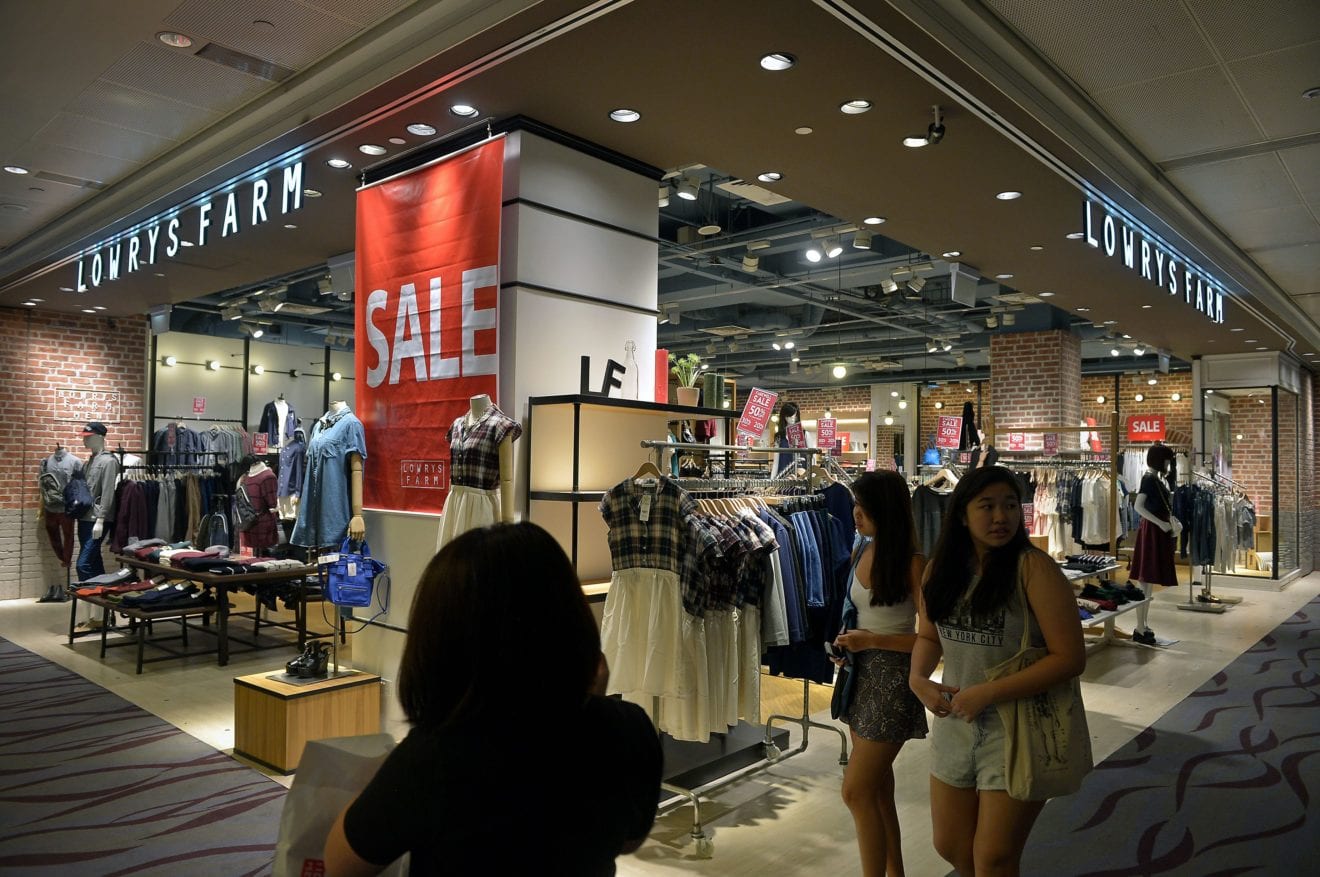
    Singapore retail rents slipped by 4.2 per cent in 2016 – an improvement on the 5.7 per cent decline of 2015, according to data from Edmund Tie & Company research.

    And they should remain resilient in the year ahead.

    The islandwide average monthly retail gross rent fell to about $29.25 per sq ft last year in what Edmund Tie describes as a “moderate decline”.

    Stabilising rents in the Orchard Road-Scotts Road precinct helped pare back the slide. While rents in Orchard/Scotts Road eased by 2.2 per cent in the first half of 2016, rents remained unchanged at $37.20 per sq ft per month in the second half.

    “The resilience in rents was attributed to limited supply in the prime shopping district, with only about 90,000 sq ft of retail net lettable area (NLA) expected to be completed over the next four years,” said Edmund Tie in a statement. “Moreover, there was strong demand for retail units in Orchard/Scotts Road, especially for those with a visible street frontage, as evidenced by the recent opening of several flagship stores and new-to-market brands.”

    During the third quarter of 2016, retailers absorbed some 112,000 sqft of new space in the precinct, a reversal from the negative net absorption of 99,000 sqft in the second quarter.

    “Hence, barring any unforeseen economic shocks, rents are anticipated to remain resilient in 2017.”

    Rents in the suburban areas were also stabilising, remaining unchanged quarter-on-quarter at $30.60 per sqft per month in the fourth quarter, after falling by 3.5 per cent during the first three quarters.

    Edmund Tie says rents are unlikely to decrease in 2017 as much as they did last year, with upcoming suburban malls reporting healthy pre-commitment rates.

    “In the third quarter, a positive net absorption of 314,000 sqft was recorded in the suburban areas, the highest in almost two years.”

    On the contrary, rents in the other city areas remained under pressure, falling by 1 per cent quarter-on-quarter to about $19.90 per sqft per month in the final three months. “This was the seventh consecutive quarter of decline and it took the total rental decline in the other city areas to 8.7 per cent in 2016.

    In addition, negative net absorption extended to -376,000 sqft in the third quarter from 25,000 sqft in the second. “Amid the impending supply of approximately 430,000 sqft of retail NLA in 2017, rents are likely to ease further in the first half of 2017, given a lack of crowds during the weekends due to the limited residential catchment. Nevertheless, the fall is likely to be transitory as retail demand will be supported by residents or guests of the residential, serviced apartment and/or hotel component in upcoming mixed-use developments such as DUO, OUE Downtown and Marina One.”

    2017 outlook

    “Overall, the decline in islandwide average rent is expected to moderate further in 2017,” predicted Edmund Tie. “To overcome competition from eCommerce and manpower constraints, more retailers are beginning to embrace technology, including NTUC FairPrice and Kopitiam. NTUC FairPrice currently offers the click-and-collect option for online shoppers, and self- checkout counters that are equipped to accept cash – which reduces its reliance on cashiers. Likewise, Kopitiam at the upcoming Hillion Mall will introduce the iCashbox payment system, as well as self-orderings kiosks and a rewards programme to encourage diners to “Return Tray for Reward”.”

    Dr Lee Nai Jia, Edmund Tie & Company’s Southeast Asia (SEA) head of research, noted: “Looking forward, it is possible that malls in the future will become fulfilment centres, where buyers go to the malls to collect their goods, or exhibition venues, where retailers attract buyers and deliver their purchases to their homes. Retail rents will not only reflect the location, but also the experiential effect of the mall.”

  • The outlook for Singapore’s real estate market in 2017

    The outlook for Singapore’s real estate market in 2017

    Singapore’s soft real estate market in Singapore was given a boost last year. Investment volume rose 34 percent year-on-year to US$9.4 billion, underpinned by major deals such as the sale of Asia Square Tower 1 and a series of transactions, including a top bid for the prime Central Boulevard white site in the Marina Bay area.

    “The Singapore property market is poised for a recovery in 2017. GDP growth and inflation are expected to pick up in 2017, driving stronger demand for real estate,” says Regina Lim, JLL’s National Director, Advisory and Research, Capital Markets. “In most sectors, we also saw an increase in transaction volumes, including residential property sales and office building transactions.”

    The Lion City is traditionally seen as a safe haven for property investment. It is likely that investment volume will hold up 2017 even as new supply continues to enter the market. Among them are Grade A buildings in the Central Business District, Marina One and Tanjong Pagar Centre. These new office buildings have attracted stronger than expected pre-commitments. And about 50 percent of the office space in buildings completed in 2016 to 2017 have already been leased.

    The sale of Central Boulevard at S$2.57 billion, or S$1,689 per square foot per plot ratio, which is the highest bid ever for a Government Land Sale site in Singapore, signals strong investor optimism – with projections that prime rents would rise over the next five years.

    Retail and residences
    “While demand for office, retail and food and beverage real estate slowed between 2012 and 2015, we believe this bottomed out in 2016 and we expect a modest recovery in the next couple of years,” says Chris Fossick, Managing Director, Singapore and Southeast Asia, JLL.

    Gross domestic product is expected to grow 2.3 percent in 2017, an increase from 1.8 percent in 2016.

    The stronger tourist arrival figures and slightly higher economic growth will help bolster retail assets. “We expect more retail malls to transact. Good quality, well-positioned retail assets are likely to be attractive to core investors as yields are still higher than office assets, and occupancies have always been resilient even in recessions,” adds Lim.

    Singapore’s prime residential market remains attractive for investors compared to other global cities. The latest data from JLL shows that prime residential prices are 126 percent higher in Hong Kong, 62 percent higher in New York and 22 percent higher in London.

    And based on JLL estimates in a report, luxury prime properties in Singapore have corrected on average 18 percent, while mass market prices have softened about 10 percent.

    Developers are keen to attract buyers and beat the deadline of selling units within two years of completion as mandated by the Residential Property Act by offering discounts and block deals. Nearly S$2 billion worth of residential units were sold via block deals or structured vehicles in 2016; more of such deals are expected in the next two years.


  • Las Vegas Sands Corporation may offload portion of Marina Bay Sands

    Las Vegas Sands Corporation may offload portion of Marina Bay Sands

    In Singapore, giant casino operator Las Vegas Sands Corporation is reportedly hoping to sell off a large stake in its shopping mall inside the Marina Bay Sands development before potentially using the proceeds to invest in future venues in Japan or South Korea.

    According to a report from The Straits Times newspaper, the Las Vegas-based giant wants to offload a 49% share in its 800,000 sq ft The Shoppes At Marina Bay Sands for up to $3.5 billion but first needs the approval of the city-state’s government.

    “We expect to receive a very significant price for the 49% we are willing to sell,” Sheldon Adelson, Chairman and Chief Executive Officer for Las Vegas Sands Corporation, reportedly told analysts during a conference call on Wednesday. “We are looking at potentially $3 billion to $3.5 billion. We’re in preparation with our bankers to prepare that property to sell. The interest we have is that it is the highest trophy mall there is in the world. We anticipate almost an unprecedented price to sell 49% of it.”

    Adelson also reportedly declared that the desired price would make The Shoppes At Marina Bay Sands “the most expensive mall ever sold in the world” although any transaction would not take place until April or May.

    Under the terms of its original licensing deal, which began in March of 2007, Las Vegas Sands Corporation was reportedly given a ten-year exclusivity period so that it could begin to recoup the billions of dollars it had spent to construct the Marina Bay Sands. A similar agreement was moreover inked by Genting Singapore for its nearby Resorts World Sentosa integrated casino resort complex and both firms would need official approval before offloading any portion of their Singapore developments once this privileged phase expired.

    “There are more noises coming out of [South] Korea now that Japan is legalizing casino gaming,” Adelson reportedly told analysts. “We will want to see what the development opportunities are. We can always get money to develop properties.”

    Chew Tiong Heng, Infrastructure Planning And Management Executive Director for the Singapore Tourism Board, told The Straits Times that Las Vegas Sands Corporation, which also operates The Parisian Macao, The Plaza Macao, Sands Macao, The Venetian Macao and Sands Cotai Central in Macau via its Sands China Limited subsidiary, has indicated that it may sell off a portion of Marina Bay Sands but had yet to make a formal request.

    “My guess is the government doesn’t want [Las Vegas Sands Corporation] to cut and run or become asset-light and just focus on gambling,” Alan Cheong from global real estate services provider Savills Singapore told The Straits Times. “It wants Las Vegas Sands [Corporation] to still have commitment to its investment in Singapore. On the other hand, Las Vegas Sands [Corporation] may also want to retain majority control because it wants to maintain the mall’s position in the retail market.”

    Although more than 60% of Las Vegas Sands Corporation’s current revenues come from Macau, its Marina Bay Sands development is still a prized asset with the development recently posting an 8% increase year-on-year in fourth-quarter net profits to $366 million. This was helped by a 2.8% rise in overall revenues $723 million while gaming turnover swelled by 5.6% to reach $563 million.

    In terms of The Shoppes At Marina Bay Sands, turnover for the final three months of 2016 climbed by 4.8% year-on-year to hit $44 million while Cheong additionally told the newspaper that potential buyers could include “sovereign wealth funds or a consortium of large private equity firms” as there is currently “a lack of available good-quality retail mall stock” in Singapore.

  • Check out which industry dragged Singapore’s retail sales in November

    Check out which industry dragged Singapore’s retail sales in November

    The said industry posted a 13.5% decline.

    Due to the 17% growth in motor vehicle sales, overall retail sales in Singapore posted a 1.1% spike. Without the said industry, retail sales would have slumped 2.1%. Guess which industry posted the heaviest drag.

    According to the Department of Statistics, retail sales of computer & telecommunications equipment declined 13.5% in November compared to last year.

    Likewise, retail sales of watches and jewellery, wearing apparel & footwear, furniture & household equipment, supermarkets, f&b, department stores, mini-marts & convenience stores, and petrol services fell between 1.1% to 6% during the said period.