Tag: Singapore

  • Use underground space to boost retail in Singapore

    Use underground space to boost retail in Singapore

    In land-scarce Singapore, land optimisation is a strategic thrust that is achieved by reclaiming land, intensifying land use upwards, and building downwards.

    However, there are limits to land reclamation and building upwards due to maritime and aviation constraints respectively.

    Therefore, unlocking underground space and synergising below and above-ground land use is the next frontier for Singapore.

    To facilitate the growth of an extensive underground pedestrian network, the Urban Redevelopment Authority (URA) developed an Underground Master Plan to guide the construction of underground walkways in the Central Area.

    INCENTIVE SCHEME

    While the government has the ability to finance public underground development, the commercial viability of an underpass is a significant consideration for building owners and developers.

    Consequently, URA implemented an incentive scheme in 2004 to co-fund the construction of strategic underground links in the Central Region, in particular Orchard Road.

    However, no developer on Orchard Road has voluntarily capitalised on the URA incentive scheme to construct underground connections.

    This provided the key impetus for this study, which focuses on the integration of underground walkways with existing buildings on Orchard Road.

    It evaluates the feasibility of an underpass from the perspective of developers, retailers, and the public.

    PERSPECTIVES OF DEVELOPERS, RETAILERS AND THE PUBLIC

    From a developer’s perspective, there are two motivations for an underpass.

    First, an underground walkway provides a seamless, all-weather retail experience.

    Second, an underpass enhances underground connectivity which could generate higher foot traffic, resulting in higher rents for landlords.

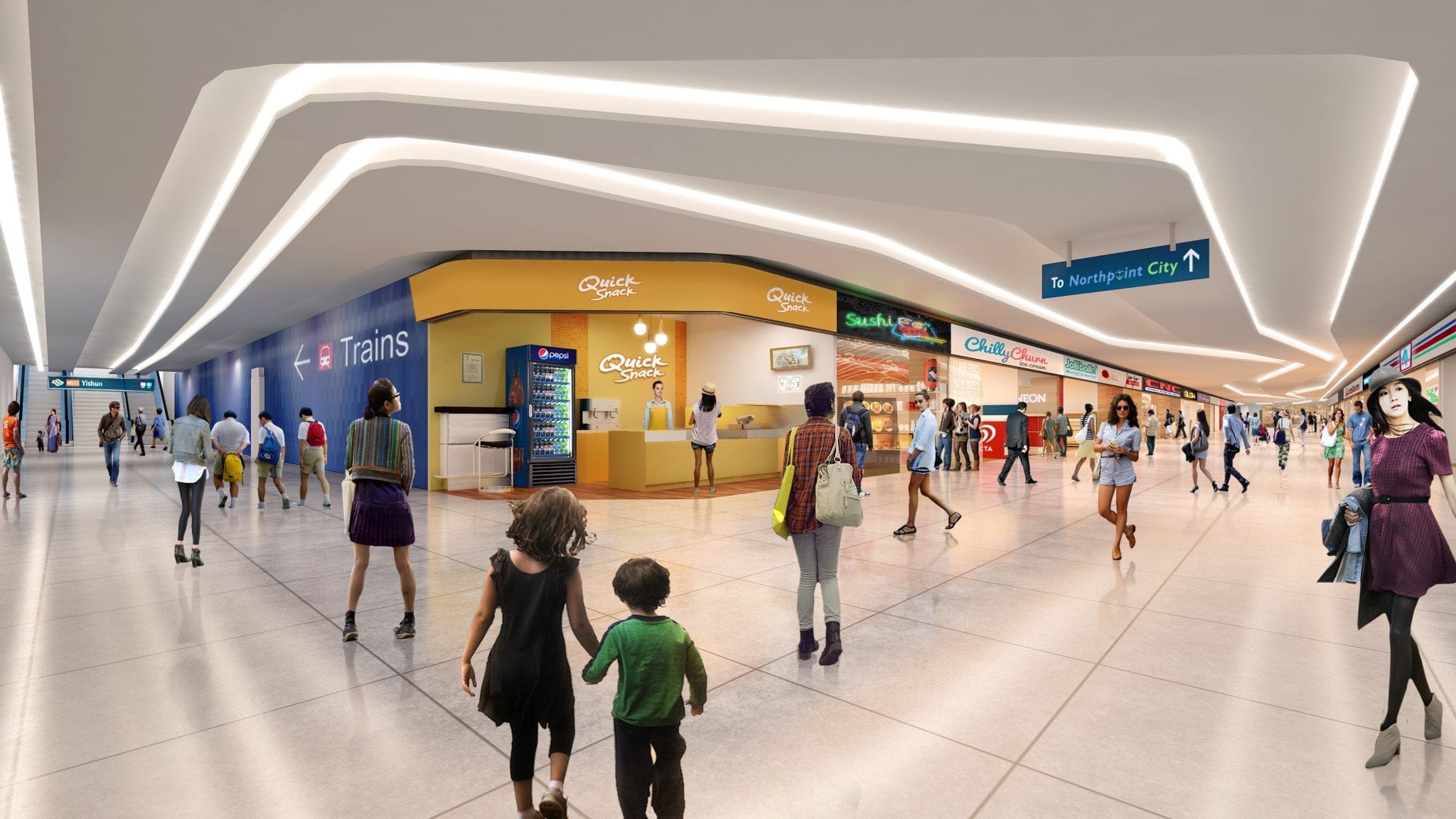
    Furthermore, we found that there are two tiers of underpass in terms of connectivity efficiency, whereby a primary underground linkway provides a direct connection between an MRT station and shopping mall, while a secondary underpass connects two adjacent shopping malls.

    However, there are six barriers to the development of an underground walkway, namely:

    • (a) high construction cost;
    • (b) subterranean land premium;
    • (c) extensive underground infrastructure beneath public roads;
    • (d) structural building limitations;
    • (e) loss of rental revenue during construction period; and (f) diversion of pedestrian traffic to competitors’ shopping malls.

    Consequently, the total development cost – comprising high construction cost and subterranean land premium – renders an underpass commercially infeasible.

    A robust tenant mix is central to the success of an underpass, and the demand for retail space along the link depends on the rent and trade mix.

    Generally, retail rent is contingent upon the location within a shopping mall, shop size, and the building’s proximity to transportation nodes.

    The rents are highest on the ground-level retail spaces fronting Orchard Road, while rentals in the basement levels are typically lower than those of levels one through three, except in cases with direct connectivity to an MRT station.

    Our study found that the suitable tenant mix for an underground walkway includes fashion, convenience, pharmacy and healthcare, food and beverage, and accessories.

    Furthermore, the tenant mix within an underpass is distinguished from those in the basement levels of a shopping mall.

    From a shopper’s perspective, one may use an underpass to commute, shop, or do both.

    It is dependent on the visibility and connectivity efficiency of an underpass.

    For instance, the primary underpass between Orchard MRT Station and Tangs Plaza is heavily utilised because it is not only highly visible, but it also serves as an efficient linear connection between the two shopping malls.

    Conversely, the secondary underpass between Orchard Central and The Centrepoint was previously underutilised due to a lack of both visibility and awareness of its existence.

    However, the completion of Orchard Gateway provided a more seamless underground connection between Somerset MRT Station and Orchard Central, generating higher traffic flow to The Centrepoint.

    RECOMMENDATIONS

    Our study proposes four recommendations to encourage the development of new underpasses:

    First, the government could undertake the construction of an underground linkway and sell the retail spaces to investors.

    The precedent was set by the sale of Tangs Underpass, connecting ION Orchard and Tangs Plaza, to joint-venture partners CapitaLand and Sun Hung Kai Properties.

    Today, the Tangs Underpass is lined with retail spaces on both sides of the walkway.

    Second, our study proposes further enhancement to the subsidy on public pedestrian walkways and an introduction of a subsidy for retail space under the URA incentive scheme.

    These refinements significantly reduce the construction cost of an underpass, thereby making it commercially viable for building owners and developers.

    Third, the government may consider the provision of feasibility studies and infrastructure support under the URA incentive scheme, which would benefit both the state and the market.

    From the state’s perspective, this would develop the underground database to aid future planning of subterranean space.

    Furthermore, it would provide the market with clarity on the physical conditions encompassing land parcels and technical requirements of an underpass.

    Additionally, infrastructure support could be offered in the form of cash subsidies to partially offset the high construction costs of underground tunnels on Orchard Road.

    Fourth, an increase in plot ratio could incentivise developers to undertake redevelopment or major addition and alteration works, leading to the construction of an underpass which is mandated by URA.

    The 2014 URA Master Plan allows up to a 15 per cent bonus in base plot ratio for land sites above 10,000 square metres in the Orchard Planning Area.

    Furthermore, there is a variety of space and design incentive schemes to maximise a site’s development potential.

    The upcoming Orchard Boulevard MRT Station in 2021 may motivate building owners to amalgamate land parcels in West Orchard and carry out redevelopment or major addition and alteration works, giving rise to the creation of new underground walkways.

    In conclusion, an effective incentive scheme entails a delicate balance between the objectives of the state in enhancing underground connectivity and the market, where profit matters.

    Ultimately, the exploitation of underground space has limitless potential in expanding Singapore’s physical space boundary vertically downwards and optimising land use through the seamless integration of below and above-ground activities.

  • Twelve Cupcakes sold to Indian tea company

    Twelve Cupcakes sold to Indian tea company

    Less than a month after celebrity couple Jaime Teo and Daniel Ong made their divorce public, it is now confirmed that Twelve Cupcakes, the cupcake chain they founded in 2011, has been sold to Kolkata-based Dhunseri Group, one of India’s largest tea producers, for S$2.5 million.

    Mr Mrigank Dhanuka, a member of the family that owns the Dhunseri Group, told: “We have acquired a 100 per cent stake in Twelve Cupcakes. The company, with a presence across 17 malls, helps us establish a strong footprint in the food & beverage (F&B) space in the Singapore market. We are looking at turning the business around, which is at just about cash break-even point at this juncture.”

    The sale was completed last December, following the divorce four months earlier of the former beauty queen and the radio deejay.

    The couple made the news of their divorce public on Dec 31 on their respective Instagram accounts.

    They have a six-year-old daughter, Renee, and they both said their focus is on giving her “as normal a childhood as possible”.

    “We have no comment on the story for now,” Mr Ong said in his response to queries about the sale of Twelve Cupcakes, which has expanded to more than 40 outlets across six countries in the region. Ms Teo did not respond by press time.

    The deal marks Dhunseri Group’s first foray into the F&B space in Singapore and the region. Mr Dhanuka has relocated to Singapore to head the operations locally, with plans to widen his firm’s presence in the F&B scene here. “We will be expanding our F&B portfolio under Twelve Cupcakes with new product launches in Singapore. We are also looking at expanding in the region post this acquisition. We continue to look for value deals here in the confectionery space,” he said.

    Dhunseri Group, which has been in the tea business for more than five decades, expanded its holdings to 10 estates in 2012-13 in Assam, from eight estates in 2003-04. The group also has a sizeable presence in the petrochemicals sector in India.

    The Twelve Cupcakes deal comes at a time when the retail industry in Singapore is struggling amid poor consumer sentiment, high costs, labour constraints and, above all, increased competition from e-commerce. The F&B segment has, however, remained largely resilient to the broader retail decline, and malls have increased the F&B share of their tenant mix sharply to attract footfall.

  • Soon, fly to Singapore, Bangkok, directly from Chandigarh

    Soon, fly to Singapore, Bangkok, directly from Chandigarh

    The Chandigarh international airport in Mohali will be spreading its wings by connecting two new international destinations and four new domestic stations with direct flights from here.While two more international direct flights to two most sought-after global tourist destinations – Singapore and Bangkok— will start taking off from Chandigarh in March, the direct flights to and fro from Goa, Pune, Chennai and Hyderabad will also start taking off in February and March.

    With this, Chandigarh will have four international flights (two international direct flights to Sharjah (thrice a week) and Dubai daily are already flying since September this year), while the number of domestic flights daily will go up to 25.Today, Chandigarh was connected directly to Leh with Air India (AI), launching a flight between Leh and Chandigarh. The first flight (AI-457) departed from Leh at 08:05 hours and arrived here at 09:00 hours. In the return journey, the flight (AI-458) took off from Chandigarh at 09:40 hours and landed in Leh at 10:20 hours.

    The flight, operated by an A-319 Airbus, will fly on Tuesday, Thursday and Saturday every week.Sharing the airport expansion plans for 2017 with The Tribune here today, the airport CEO, Suneel Dutt said besides adding more international and domestic flights, as per the demand and viability, a duty-free shop and more retail shops would also open at the international terminal in the coming days. Also, the international cargo and another aerobridge, which will be the third here, would begin operations in 2017. The domestic cargo and two aerobridges are already functioning here.

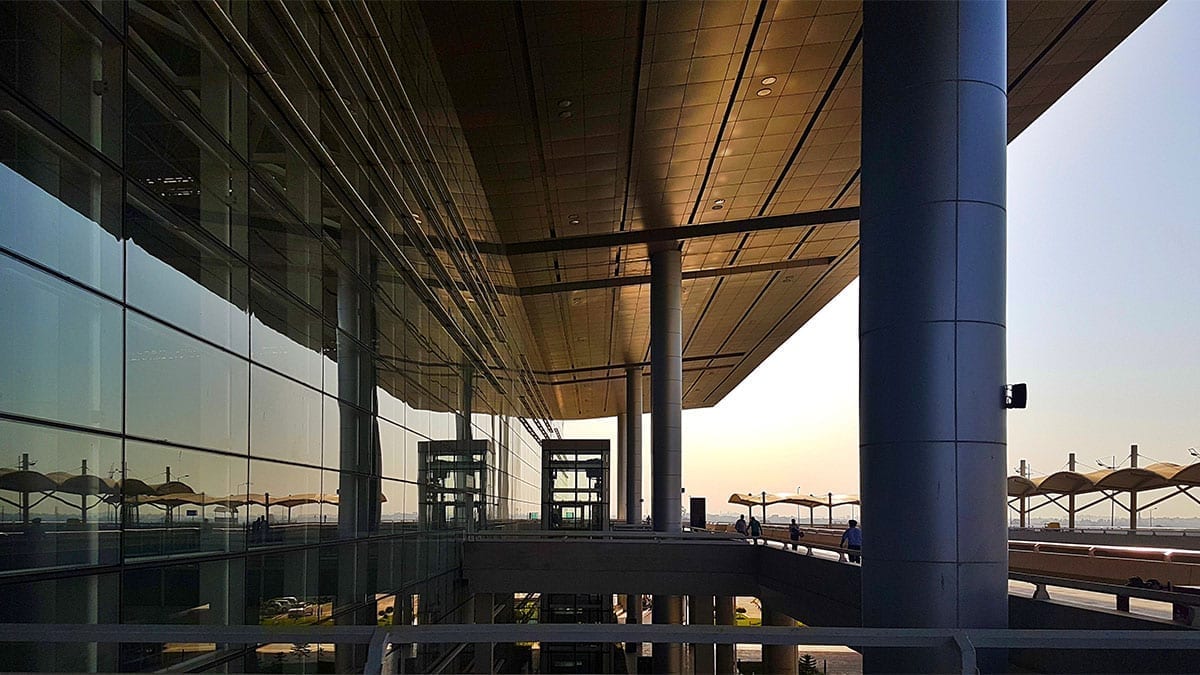
    The airport CEO said there are also plans to beautify the international airport terminal further with the expansion of its green belt in the New Year.The newly-constructed integrated terminal building of Chandigarh international airport had already bagged the prestigious Vishwakarma Award for best construction project.

    The new terminal had been awarded for being the best project for well-developed landscapes and interior with art, paintings and mural works. Inaugurated on September 11, 2015, the new international airport had taken off in September, 2016, with the operation of two international flights to Sharjah and Dubai.The terminal building can handle 1,600 passengers during peak hours, with an annual capacity of 4.5 million.

    Fully air-conditioned and equipped with modern facilities, the new building has the facility of three aerobridges, four baggage carousels, 14 elevators, six escalators and 48 check-in counters. The parking area has the capacity for 500 cars and a separate provision for VIP car park and bus parking. Aircraft parking main apron and the cargo apron has a capacity of 10 C-type aircraft and one E-type aircraft at a time. The interior of the airport is decorated with art and mural works depicting the heritage and culture of Punjab, Haryana and Chandigarh.

  • Dasin Retail Trust seeks Singapore IPO to raise at least $122.5m

    Dasin Retail Trust seeks Singapore IPO to raise at least $122.5m

    Dasin Retail Trust is seeking to raise at least 586.4 million yuan (S$122.5 million) through a Singapore initial public offering, according to a preliminary prospectus lodged with the Monetary Authority of Singapore on Wednesday (Dec 28).

    The trust, sponsored by Zhongshan Dasin Real Estate Co, will have an indicative market cap of S$439.7 million, based on its offer price which was not disclosed in the document.

    Dasin Retail Trust’s key investment mandate is to invest in, own or develop land, uncompleted developments and income-producing real estate in Greater China, mainly for retail use.

    The trust’s initial portfolio will comprise three retail malls in Zhongshan City – Xiaolan Metro Mall, Ocean Metro Mall and Dasin E-Colour – which have a total gross floor area of about 314,884.9 square metres. The portfolio was valued at 4.6 billion yuan as at June 30, 2016.

    Units will be offered to institutional investors under a placement tranche as well as a public offering here, subject to over-allotment options, said the trust manager Dasin Retail Trust Management in the preliminary prospectus.

    It added that Dasin Retail Trust will benefit in terms of acquisition growth in the Pearl River Delta region where the sponsor has an “active real estate presence”.

    The sponsor has been granted right of first refusal (ROFR) to the trust manager for 14 completed and uncompleted properties.

    In addition, the trust has also secured 120.8 million yuan (S$25 million) from two cornertone investors – China Orient Asset Management (International) Holding and Haitong International Investment Fund SPC.

    The sole financial adviser, global coordinator and issue manager for the offering is DBS Bank, which is also the joint bookrunners and underwriters, alongside Bank of China and Haitong International Securities.

  • If You Think Sports Retail in Singapore is Dead, Read This.

    If You Think Sports Retail in Singapore is Dead, Read This.

    The great debate — about whether or not eCommerce will nail the coffin on bricks and mortar retail shops — has droned on for as long as the Internet began cannibalizing sales.

    So asking a pertinent question — If retail stores are disappearing from the Singapore scene, why do new sports stores keep popping up? — is a logical one, particularly from the perspective of runners on ever-present searches for the latest gear and fashion.

    Can history unravel the mystery?

    The evolution of retail stores began when markets sprung up thousands of years ago across Asia, Europe and Africa. Ultimately open-stall, outside markets morphed into enclosed shops.

    As competition exerted influence, stores carrying a wide range of merchandise replaced speciality stores, though today, innovative small boutiques have managed to survive, and no niche is healthier than sporting goods stores kept alive by Singaporeans who are deeply invested in the nation’s fitness movement.

    Then, along came the Internet. Even chain and big-box stores suffered as eCommerce gobbled up shoppers. Even “Store-within-a-store” concepts, pioneered by Asian retailers could not stop the steady, ever-present incursion of online retail marketing, and nothing has prompted consumer dependency more than an ability to shop using smartphones and devices.

    Forrester Research reports that 56-percent of consumers use smartphones to shop.

    If You Think Sports Retail in Singapore is Dead, Read This.

    Specialty stores remain viable

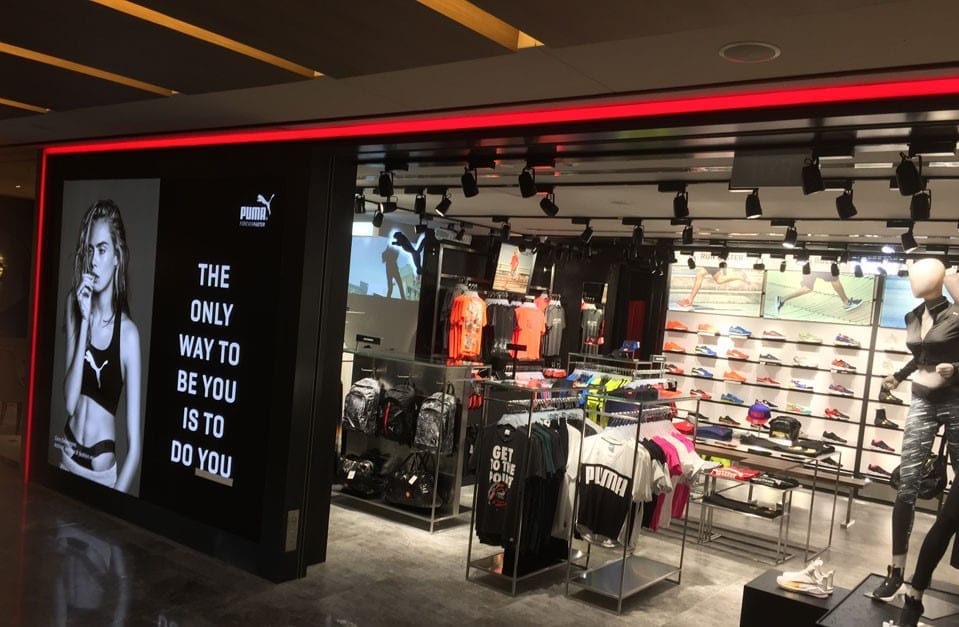
    PUMA recently opened two concept stores at Paragon and Bugis+, hoping to lure runners and sports enthusiasts away from their mobiles and computers.

    PUMA believes that dedicated store sections have the power to bring shoppers to these new locations because they’re strategically located within concentrated shopping areas that attract a youth market eager to find deals and promotions.

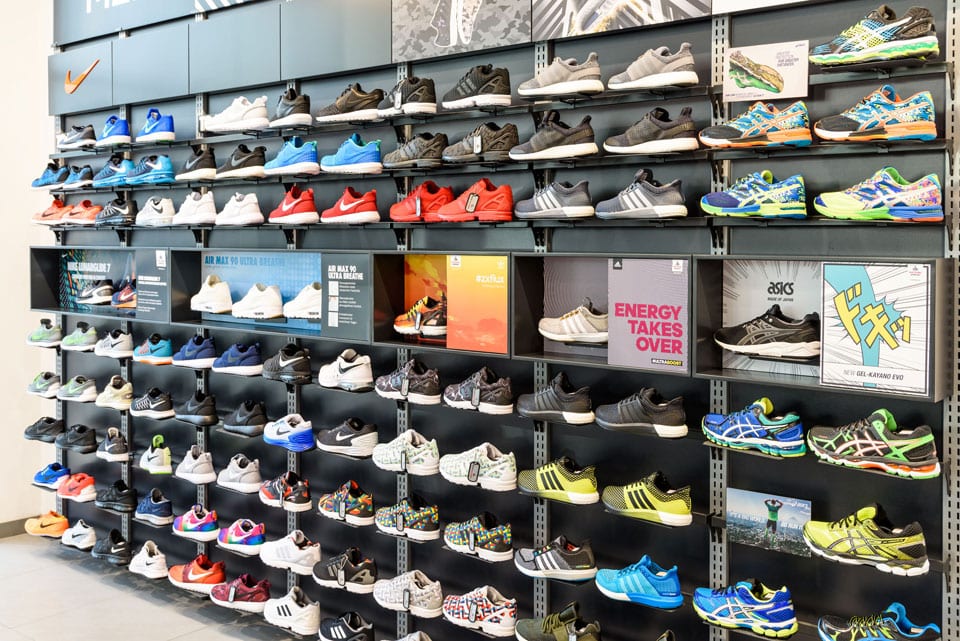
    Not to be outdone, ASICS saw an untapped market in northeastern Singapore and launched a stand-alone shop at the NEX shopping mall recently.

    ASICS believes that identifying an under-served populace is the key to in-person shopping. Their spacious new location is thoughtfully merchandised to encourage avid runners to browse the latest in ASICS innovations.

    Further, the new Under Armour presence at Vivo City Brings UA’s Singapore stores to five, including their new retail presence sprawling across 1,980 square feet of product display area and trendy décor touches.

    Under Armour has become an expansive presence throughout Southeast Asia and it’s considered by many athletes to be the coolest brand on the planet, even when measured against big dogs like Nike and adidas.

    Why is UA so cool? Because everything about their products is superior, starting with the brand’s quirky tagline: “It’s what you do in the dark that puts you in the light.”

    That light, of course, is a spotlight shining on the impeccable taste of runners who prefer to be seen wearing the UA logo on everything they own!

    Non-branded stores continue to open, too

    The space-age design of Running Lab’s two new locations — Marina Square and Tampines Mall — is reason enough for passionate runners to browse the retailer’s unique enclaves which are sorted by brand and gender, and there is no shortage of signature brands on display that are beloved by running enthusiasts and athletes.

    To drive traffic, Running Lab organises free runs throughout Singapore on Tuesdays and Thursdays, but they’re not the only show in town.

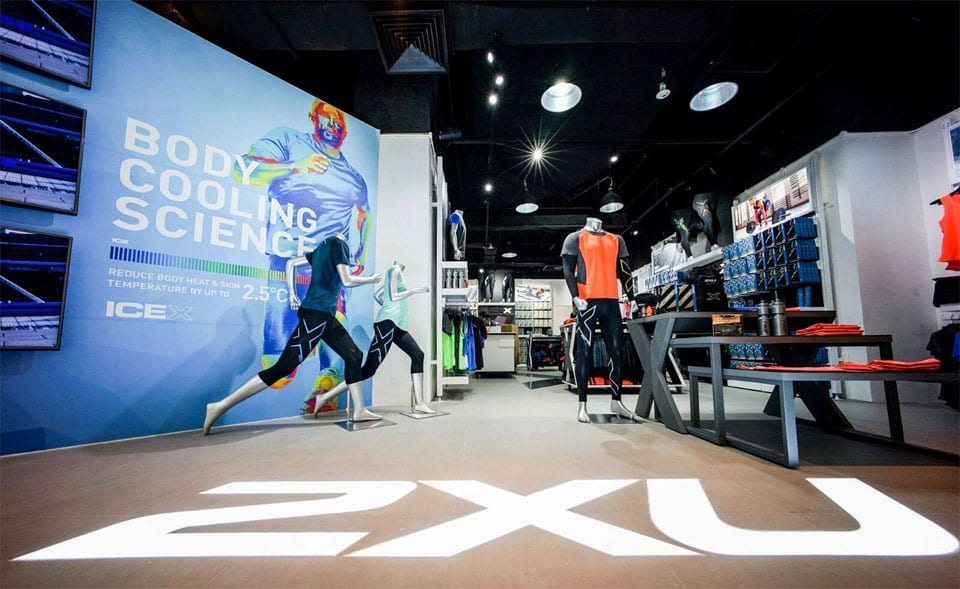
    The first 2XU Performance Centre opened just weeks ago at Suntec City Tower Three. Their ambitious marketing plan — to become the epicentre of performance compression wear — sets it apart from competitors because the niche alone has the potential to drive traffic into the store.

    If You Think Sports Retail in Singapore is Dead, Read This.

    Always a trendsetter, we toss the iconic Uniqlo into the mix. Uniqlo’s Orchard Central grand opening recently introduced Singapore to what can only be described as a sensory playground filled with wall-to-wall digital displays and rotating mannequins, while there’s a nice balance of innovative activity-related products, ideas and wares and the prestigious brands to which runners remain loyal.

    For Uniqlo, size matters. This 29,000-foot retail spot has become a destination unto itself, catering to sports-minded Singaporeans of every age group.

    It’s not all good news

    Common sense would lead one to believe that the opening of new sporting goods stores in Singapore portends good news for the future of retail, but business writers warn that, “what you see isn’t necessarily what you can believe.”

    In fact, a steady stream of popular stores continue to close because they have become unprofitable.

    Singapore economics played some part in this exodus, but not all blame-placing can be ascribed to fiscal decline due to online shopping and tech-savvy consumers continuing to find favour with cyber shopping.

    But the reality is this: retailers start every day in the red, supporting rental space, salaries, power bills, taxes and marketing expenses. Further, brands and stores refusing to track changing shopper behaviours aren’t likely to survive.

    What are solutions to this mystery?

    Absent a crystal ball, it’s obvious that Singapore retailers won’t survive without retooling their business models and no niche is worthier of emulation that the nation’s sports boutiques because the folks that run and manage them keep a pulse on Singapore’s vibrant fitness movement and watch trends like hawks.

    Further, a mindful balance of retail and online business practices keep shops afloat in addition to taking advantage of trend-tracking.

    Here’s why we think sporting goods stores have an advantage over other retailers:

    1. A shared retail/online presence has been the secret that has helped many sporting goods stores stay afloat.
    2. Management understands that athletes aren’t particularly crazy about the idea of having to return merchandise bought online and aren’t shy about using promotions and specials to a bring them in.
    3. More runners frequent sports stores for social reasons than analysts report. In-person shopping beats scrolling through screens of merchandise says TANGS Assistant Vice President of Communications Ms. Jocelyn Teo.
    4. Sporting goods shoppers are a different breed. Their performance depends upon the right shoe fit and gear choices, and while time-crunched athletes may turn to online shops for some purchases, retailers give athletes more reasons to show up in person, including incentives, promotions and deals.
    5. A CBRE Asia Pacific research study asked 11,000 Singapore consumers (ages 18 to 64) to weigh in on the online/in-person shopping debate, concluding: “… consumers are more comfortable with the traditional shopping format where they can touch and feel the products before purchasing.”
    6. Integrated shopping patterns are the wave of the future and savvy sporting goods retailers know this. The ability to switch back and forth between store and website drives traffic since returns, purchases, exchanges apply equally.
    7. Look for a more dynamic retailer consortium to cooperate on shared functions like integrated warehousing, shipping and order-fulfillment that can lower overheads resulting in merchandise price reductions.
    8. Common-sense changes — staying open more hours, sponsoring in-store events, offering a fully-integrated online/in-store experience and making sure employees behave more like concierges and less like clerks are but a few of the ways sporting goods stores will not only survive, but thrive.

    If you were forced to choose between online and in-store shopping and were required to pick just one, which would it be and why?

  • Christmas is over, but not the shopping

    Christmas is over, but not the shopping

    The shopping frenzy continues after Christmas as Orchard Road and neighbourhood malls lay on the post-Christmas sales to reel in the crowds.

    Mall tunes have been switched as well, as many people head out to shop for the Chinese New Year, on Jan 28 next year, or to stock up for the new school year.

    Ms Donna Tan, 33 , an administrative executive who was at the Nex shopping mall in Serangoon, said she was taking advantage of the current sales to get both Chinese New Year clothes and school shoes for her daughters, aged 10 and 14.

    She said: “There isn’t much time left for Chinese New Year shopping actually. The sales are also good now, so we took today and yesterday off to shop.”

    In total, she spent about $300 at Nex, Changi City Point and Tampines Mall over the past two days.

    Student Salwa Mayra, 19, waited for the post-Christmas sales to score better deals.

    Ms Salwa, who went shopping in Orchard Road and at Nex, said she bought clothes at Zara at half the usual price. Others, such as Ms Miki Chua, 40, a teacher, also decided to wait until after Christmas to beat the crowds.

    “I looked around during the Christmas period but it was too crowded, so I decided to come back now,” said Ms Chua, who had bags from Forever 21 and Etude House.

    Stores such as H&M and Robinsons continued to offer discounts of up to 70 per cent.

    Several malls and department stores reported healthy post-Christmas crowds and sales.

    A Tangs spokesman said the sales figures for Monday, the day after Christmas, were “quite encouraging”, without giving details. The sale at Tangs goes on till Jan 2.

    A spokesman for the orchardgateway shopping mall also said that the crowds on Monday were on the “positive side”.

    Takashimaya Singapore said that while there was just a 5 per cent increase in crowd figures on Boxing Day this year compared with last year, Takashimaya Department Store achieved a “double-digit increase in sales” over last year’s figures.

    Ms Stephanie Ho, general manager at Frasers Centrepoint Malls, said overall traffic at the company’s malls, which include Causeway Point and Waterway Point, was boosted by up to 20 per cent.

    “This may be attributed to promotions, including post-Christmas and back-to-school sales, over the long festive weekend,” she said.

    Despite healthy crowds, a survey conducted by e-commerce solutions company SAP Hybris that was released earlier this month found that only 39 per cent of shoppers still enjoy browsing in purely brick- and-mortar stores.

    More popular were stores with both a physical and digital presence, which 68 per cent of those surveyed cited as their top shopping option. Consumers were also less interested in more new-age services such as mobile payments through a digital wallet.

    Singapore Polytechnic senior retail lecturer Sarah Lim said that while an increase in transactions or crowds may not translate into an increase in sales due to marked- down prices, clearing stock is also important.

    “They have to make room for new stock, especially because Chinese New Year is coming soon. Also, crowds have the tendency to attract more crowds, who may end up buying,” she said.

  • 9 upcoming retail mall projects in Singapore

    9 upcoming retail mall projects in Singapore

    According to a Savills report, there are at least nine major mall projects in the pipeline from Q4 2016 to 2020, totalling around 6.2 million sq ft of retail supply.

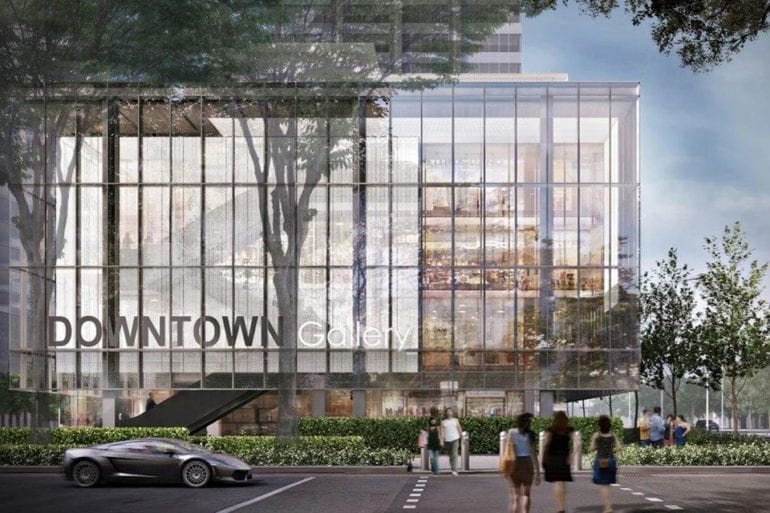
    The upcoming retail supply for 2016 is mainly from the new mixed-use developments in the Central planning region, mainly from two new integrated projects: Downtown Gallery and Tanjong Pagar Centre.

    From 2017 to 2020, approximately 6.2 million sq ft of new retail space is expected to enter the physical stock. Major developments consist of the new retail mall at Singapore Post Centre and The Heart at Marina One.

    Hillion Mall in the Bukit Panjang planning area is the only significant development in 2017 that is not located within the Central planning region.

    9 upcoming mall projects in Singapore

    1. Downtown Gallery
    Location: Shenton Way
    Estimated NLA (sq ft): 160,000
    Estimated completion: 2016

    2. Singapore Post Centre AEI
    Location: Eunos Road 8
    Estimated NLA (sq ft): 269,100
    Estimated completion: 2017

    3. Hillion Mall
    Location; Jelebu Road
    Estimated NLA (sq ft): 152,500
    Estimated completion: 2017

    4. Marina One (The Heart)
    Location: Marina Way/Straits View
    Estimated NLA (sq ft): 140,000
    Estimated completion: 2017

    5. Paya Lear Quarter
    Location: Paya Lear Road/Sims Avenue
    Estimated NLA (sq ft): 340,000
    Estimated completion: 2018

    6. Northpoint City
    Location: Yishun Central 1
    Estimated NLA (sq ft): 315,250
    Estimated completion: 2018

    7. TripleOne Somerset Podium AEI
    Location: Somerset Road
    Estimated NLA (sq ft): 88,500
    Estimated completion: 2018/9

    8. Jewel Changi Airport
    Location: Airport Boulevard
    Estimated NLA (sq ft): 576,000
    Estimated completion: 2019

    9. Funan
    Location: North Bridge Road
    Estimated NLA (sq ft): 324,000
    Estimated completion: 2019

  • Pop-up barber shop offers free shaves at Changi

    Pop-up barber shop offers free shaves at Changi

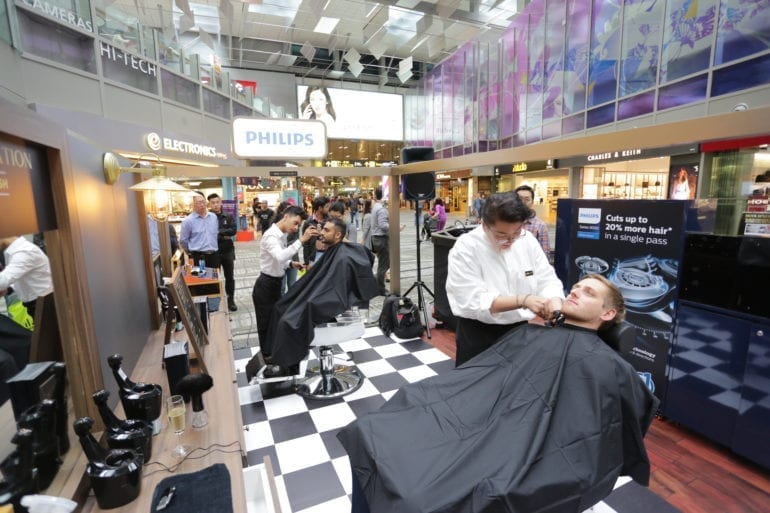
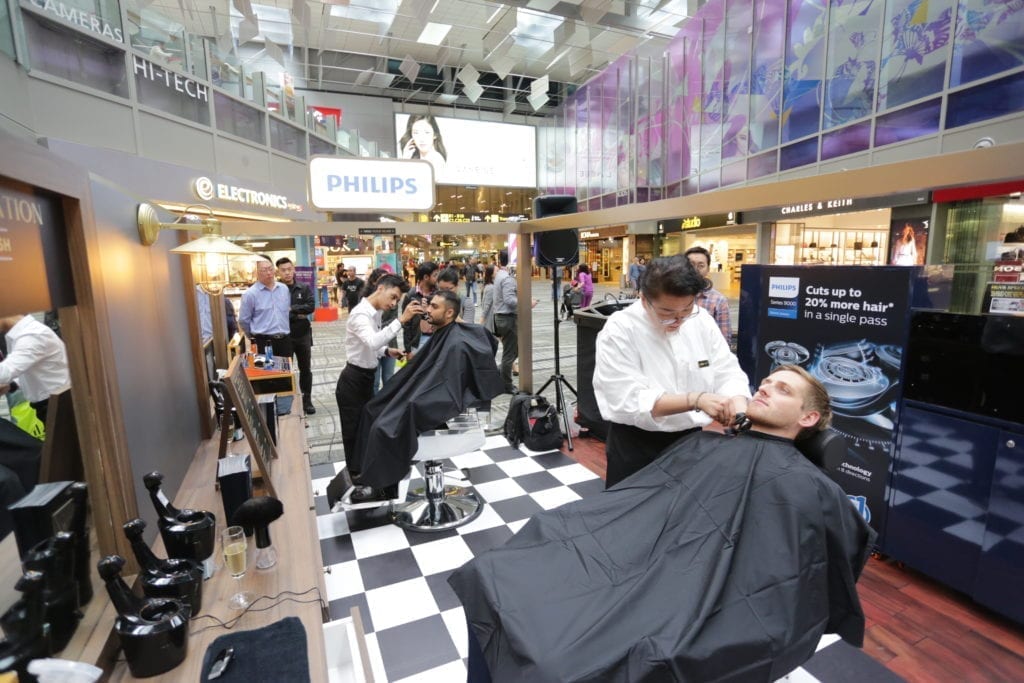
    Philips and L’Oréal Paris Men Expert have joined forces to launch a pop-up barber shop at Singapore Changi Airport.

    The Male Grooming Club initiative, in partnership with Changi Airport Group, The Shilla Duty Free and Sprint-Cass, is said to be the first-of-its-kind in an airport. The barber shop, open from 13 December to 24 January, offers male passengers in Terminal 3 a range of grooming services, products and promotions.

    Professional barbers use Philips’ range of premium shavers for a complimentary hot towel shave alongside head and face massages, finishing with the L’Oréal Paris Men Expert range to pamper skin. Individual consultations with a grooming adviser are also available to select the best shaver and skincare products suited to customers’ needs.

    The Male Grooming Club showcases Philips’ most advanced shavers featuring proprietary ContourDetect technology designed to maximise comfort and minimise cuts and irritation. Other male grooming tools available at the pop-up store include Philips hair clippers, beard trimmers and body groomers.

    Men in focus

    While more than 50% of travellers are male, they represent less than 10% of the total spend in airport cosmetic stores. Changi Airport said there is a huge opportunity in the travel retail space to target men specifically when it comes to their grooming needs.

    io8a5394
    Primed and ready to fly.

    The pop-up offers exclusive promotions such as S$50 (US$35) off selected Philips Shavers with any purchase of a L’Oréal Paris Men Expert gift set. Complimentary gifting services are also available along with a limited-edition gift bag with any purchase of a Philips male grooming tool or L’Oréal Paris Men Expert travel retail exclusive sets.

    Philips and L’Oréal Paris Men Expert product ranges are available at Sprint-Cass and The Shilla Duty Free. Complimentary male grooming services are available from 6am to 10am and 7pm to 11pm daily; while the Male Grooming Club will operate from 6am to 1am daily.

  • “Flying eye hospital” Orbis makes stop in Singapore

    “Flying eye hospital” Orbis makes stop in Singapore

    A plane arrived this week at Paya Lebar Airbase. But it is no ordinary aircraft. The Orbis plane, also known as the world’s only “flying eye hospital”, made its stop in Singapore this week to raise awareness about blindness.

    Orbis, an international non-profit organisation, is primarily a teaching hospital which trains medical professionals from developing nations in eye care. It has so far travelled to 92 countries, providing hands-on training to medical professionals and better access to quality eye care, among other areas.

    It also conducts operations for patients on board the aircraft while medical professionals watch and learn in an adjacent classroom through a live feed.

    Orbis’ visit to Singapore marks the first time that its latest plane model- a third generation MD-10 plane- has landed in the Republic after hundreds of aircraft experts retrofitted it. The whole effort took six years.

    The aircraft, which was open to the media on Friday, boasts a 46-seat classroom, an operating room as well as a patient care and laser treatment room, among other features.

    Apart from having a longer flight range of 6,000 nautical miles which will enable it to fly longer distances, the plane’s live broadcast capabilities will also better train doctors and nurses with live footage in 3D.

    According to the World Health Organisation, 285 million people in the word are visually impaired. Yet, about 80 per cent of these cases are preventable.

    Orbis has, in the last five years, trained over 115,000 doctors and other medical professionals. Over 340,000 eye surgeries have been performed for patients during that same period.

    “The Flying Eye Hospital plays a vital role in Orbis’ mission to bring the world together to fight blindness,” said Mr Paul Forrest, Chief Development Officer of Orbis International.

    “Our launch of this new third-generation Flying Eye Hospital not only marks a new chapter in our shared sight-saving journey, but also brings us a significant step closer to our dream of eliminating avoidable blindness forever.”

    Apart from helping to retrofit the plane, FedEx also announced in June this year that it was renewing its five-year US$5.375 million (S$7.66 million) commitment to Orbis. That includes providing aircraft services and sponsoring fellowships for ophthalmologists to study in leading global eye institutes.

  • Opening of Singapore first Apple Store gets pushed back indefinitely

    Opening of Singapore first Apple Store gets pushed back indefinitely

    Back in July, Singaporeans were thrilled by the news that our very first Apple retail store was set to open in November at Orchard Road’s Knightsbridge Mall.

    With Apple products only available to Singapore dwellers via authorised resellers (Nübox , EpiCenter) and Apple’s online store, the opening comes as a very welcomed surprise to both Apple fans and tech enthusiasts alike.

    The facade of the store, albeit still very much under renovation, was also observed by local Apple blog My Apple Singapore to potentially have the trademark front-facing glass panels that international Apple retail stores possess.

    What was also exciting, especially to us, were the possibilities of how an Apple retail store in Singapore would turn out, given that the company is known for designing its stores so as to “become one with the community [it is in]”.

    And it’s not just in the superficial – Apple stores in Japan are also known to participate in the Japanese New Year’s Fukubukuro (“lucky bag”) tradition, giving out bags containing random Apple products at highly discounted prices.

    At that point of time, we were a mere few months away from the unveiling of a shiny new store which could, pardon the reference, make shopping in Singapore great again, but the projected date (and month) has already come and passed…and we’re still far from picking out Apple products over the counters.

    From 31 Oct, To 30 Jan, To…

    Last month, The Straits Times came bearing the bad news that the store “will likely not open in time for Christmas this year”.

    The information board at the location showed an updated expected completion of Jan 30, 2017, and comes as a 3-month delay from the previously stated Oct 31, 2016.

    The store was also observed to be “still covered by white construction hoarding, with construction canvas draped over the exterior’s glass panels” – not exactly the most promising sign.

    Photo of the store’s information board in Nov 

    But that’s not the end of it.

    According to a report last week, the date has now been covered up, making the date of completion pretty much indefinite.

    After a check with workers and security guards at the site, the report found that the delays were “unavoidable after the site was issued with a three-week stop-work order in late October”.

    This was confirmed by the Ministry of Manpower (MOM), which revealed that the order was meted out on Oct 24 due to “unsafe conditions relating to work at height, traffic management, scaffolding, electrical installation and lifting operations that were observed during an inspection at the worksite”.

    Was The First Predicted Date Of Completion Too Optimistic?

    Given that a 3-week delay would’ve definitely caused a break in construction, the pushing back of the date of completion not once, but twice, might suggest that the first predicted date of completion (Oct 31) might have been a stretch in the first place.

    But then again, according to industry observers who has been interviewed, delays “are not uncommon [given] Apple’s emphasis on customer experience in its flagship stores”.

    Regardless, We do hope that the site is now much safer for the workers (given that this year has seen a rise in workplace deaths, and is an issue we shouldn’t ignore anymore), and that we also get an update soon.

    And this time, a more accurate one.

  • StarHub launches services over APG submarine cable

    StarHub launches services over APG submarine cable

    Singapore operator StarHub has announced the launch of services over the new Asia-Pacific Gateway (APG) submarine cable network, which connects nine countries in the region.

    The APG is a 10,900 kilometre cable network system with capacity exceeding 54Tbps, the highest of any similar network in Asia.

    It has connection points in Mainland China, Hong Kong, Japan, Korea, Malaysia, Singapore, Taiwan, Thailand and Vietnam.

    There are three landing points in China – Shanhgai Nanhui, Chongming and Hong Kong – operated by major Chinese providers.

    “Singapore is China’s largest foreign investor. To serve Singapore enterprises expanding to China, we are pleased to provide them with a new international connectivity on APG, catering for the growing economic activities between China and Southeast Asia,” Benjamin Tan, vice president of international business at StarHub, said in a media release.

    StarHub has partnered with operators in each country to provide services for its enterprise customers requiring international connectivity to any of these overseas markets.

    APG also enhances StarHub’s international connectivity by providing traffic routing diversity to submarine cable systems such as Asia-Pacific Cable Network 2 (APCN2), Asia Submarine-cable Express (ASE) and Asia-America Gateway (AAG).

    This will provide Singapore based enterprises more options to connect to other parts of Asia Pacific as well as minimise impact of any service disruption resulting from submarine cable damage, which can be caused by accidents or natural disasters.

  • Tencent Singapore office targets tourists

    Tencent Singapore office targets tourists

    Chinese-based online social media platform parent Tencent has opened a Singapore office to help drive Asian brands improve their reach to Chinese consumers.

    Tencent, which owns the WeChat messaging and browsing platform, has created an International Business Group charged with raising awareness of the opportunities offered by WeChat, especially targeting people who live outside China.

    While WeChat is as mainstream in the mainland as facebook is outside China, its takeup across the rest of Asia is limited.  The new Tencent Singapore team believes there are huge opportunities marketing to Chinese when they are travelling outside their home country.

    A growing number of luxury brands are establishing a presence on Wechat – Gucci even sells handbags worth several thousand US dollars on the platform, and BMW reaches out to prospective customers. Other consumer retailers like Hong Kong’s Sa Sa have developed extensive interactive eCommerce platforms which work across channel and drive customers in-store.

    Benny Ho, senior director of business development at Tencent, told The Drum that inbound marketing is a big opportunity in Singapore, especially.

    “These tourists are setting their own itinerary and they know precisely what store to buy from and in what colour before they arrive; they come to buy, not to shop. This means you need to build all the brand consideration and purchase intent way before they arrive and that is part of the core service we are trying to offer,” he said.

    WeChat alone has just over 800 million monthly active users.

    “That’s a huge number,” said Ho. “Every market we go to, we educate the market and tell them the numbers and it’s mind blowing. Our role is to make something that big [more] understandable.”

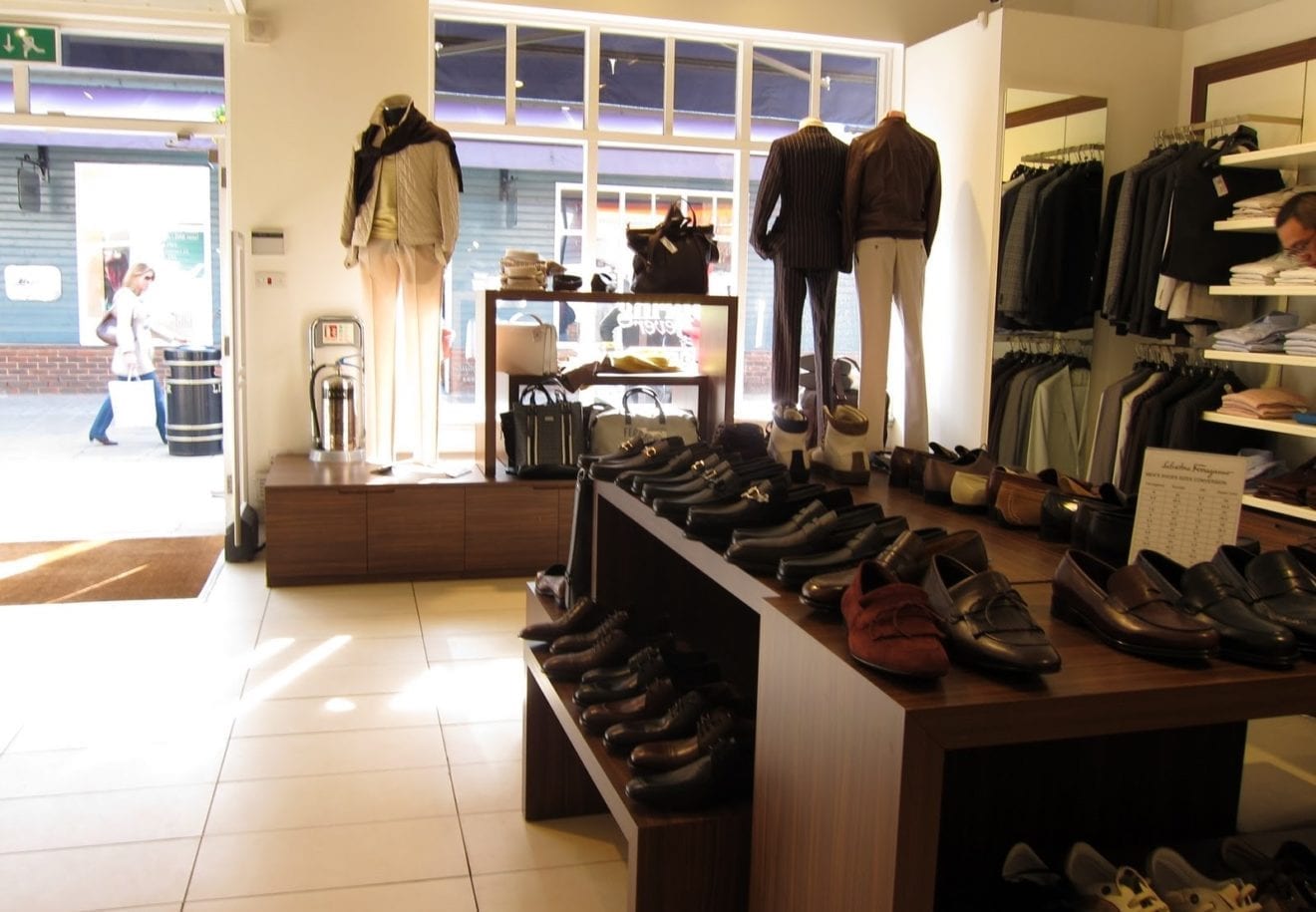
  • Salvatore Ferragamo changes the game in Asia

    Salvatore Ferragamo changes the game in Asia

    Italian fashion label Salvatore Ferragamo has taken over four JVs created in partnership with Trinity (Fung Group), which distributes the brand in South Korea and Southeast Asia.

    Ferragamo says it has bought the companies’ 20 per cent share, still owned by Trinity through Trinity Luxury Brands Holdings and Ferrinch. The value of the transaction has not been disclosed.

    Impacting Ferragamo Korea, Ferragamo (Malaysia), Ferragamo (Singapore) and Ferragamo (Thailand), the takeover follows an agreement signed in 2012. This included a purchasing option allowing for Salvatore Ferragamo to take full control of the JV companies.

    At the time, Ferragamo had already increased its stake in the four companies to 80 per cent.

    In the past few years, the Asia-Pacific region has become Salvatore Ferragamo’s main market, accounting for 35.5 per cent of its global revenue. At the end of September, the label’s sales in the region amounted to €360 million (US$375 million), equivalent to a 0.3 per cent decrease compared to the first nine months of the previous fiscal year.

    The label has 70 monobrand stores in the region.

  • Singapore Cruise Centre concession goes to DFS Group

    Singapore Cruise Centre concession goes to DFS Group

    Luxury travel retailer DFS Group has been awarded the master duty-free and general merchandise concession at Singapore Cruise Centre (SCC).

    Winning the public tender process announced in June, DFS has a five-year contract covering SCC’s HarbourFront and Tanah Merah ferry terminals, with a two-year extension option.

    It is the first time SCC has awarded a master duty-free concession, consolidating several contracts including liquor and tobacco, perfumes and cosmetics, fashion, travel accessories and confectionery into a single contract.

    DFS will start trading on April 1, being allocated commercial space spanning 6000 sqft (557 sqm) across seven outlets at the terminals. The deal involves a reconfiguration of the main retail space at the arrival and departure areas of both terminals.

    Singapore Cruise Centre CEO Christina Siaw says the tender process attracted participation from the world’s leading international duty-free concession companies. “We were highly impressed with the passion, innovation and attention to detail demonstrated by participants in the tender proposal and interview stages.”

    She says passengers at the SCC terminals will soon have access to more retail space with a new store concept as well as new brands, marketing activities and services.

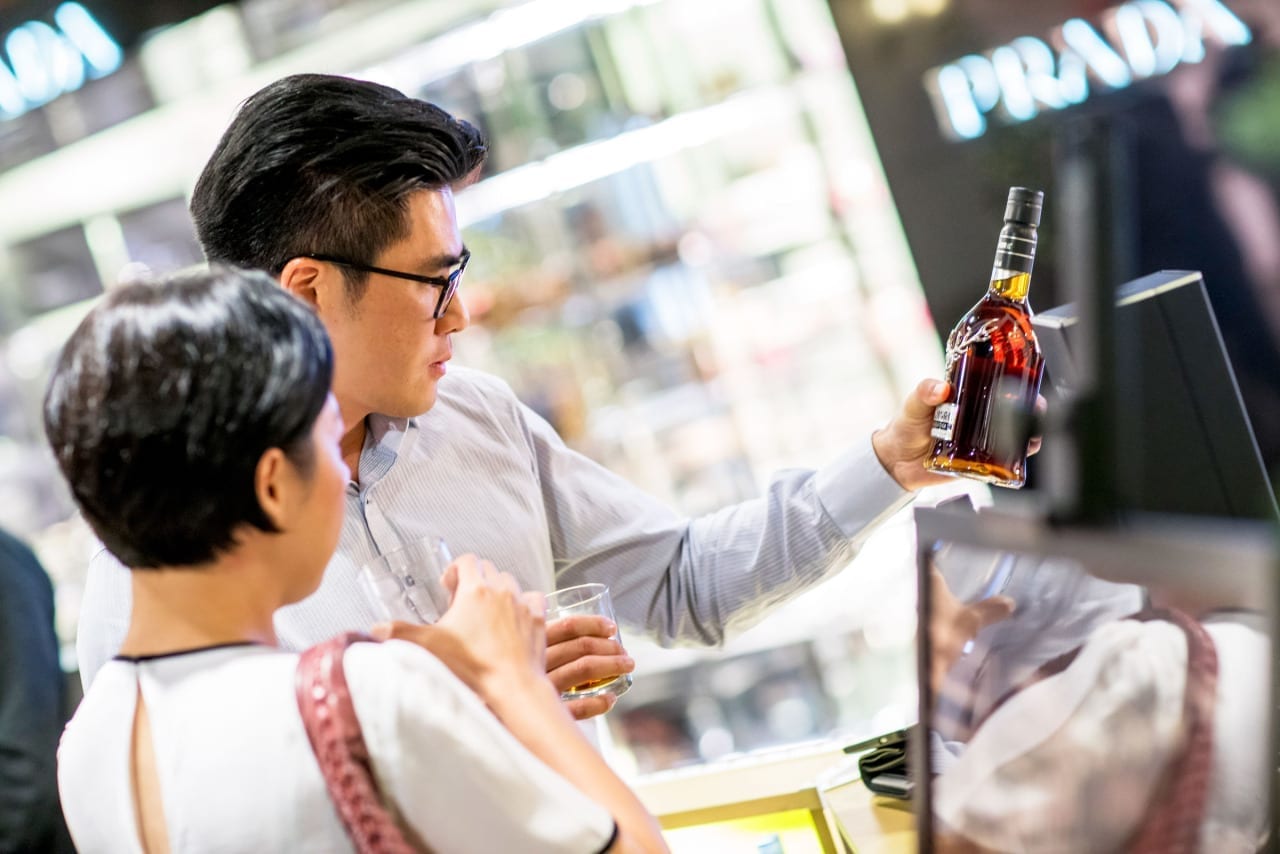
    DFS will offer products from more than 150 brands and introduce food and whisky-tasting stations as well as eCommerce, collection and home-delivery platforms.

    Outlets will undergo a phased renovation, introducing a revamped design inspired by the traditional seafront buildings nestled along Singapore’s coastline.

    More than 6.3 million ferry passengers and 560,000 cruise passengers pass through SCC’s terminals annually. DFS has had a presence at SCC for two decades.

  • Philips and L’Oreal Paris offer male passengers a close shave at Changi

    Philips and L’Oreal Paris offer male passengers a close shave at Changi

    Philips and L’Oréal Paris Men Expert have joined forces to launch a pop-up barber shop at Singapore Changi Airport. The Male Grooming Club initiative is a partnership with Changi Airport Group, The Shilla Duty Free and Sprint-Cass. The barber shop, open from 13 December to 24 January, offers male passengers in Terminal 3 a range of grooming services, products and promotions.

    Professional barbers use Philips’ range of shavers for a complimentary hot towel shave alongside head and face massages, finishing with treatment from the L’Oréal Paris Men Expert range. Individual consultations with a grooming adviser are also available.

    The Male Grooming Club showcases Philips’ most advanced shavers featuring its ContourDetect technology. Other male grooming tools available at the pop-up store include Philips hair clippers, beard trimmers and body groomers.

    L’Oréal Paris Men Expert offers a wide range of skincare products tailored to cover all major men skin concerns, such as anti-ageing and hydration.

    While more than 50% of travellers are male, they represent less than 10% of the total spend in airport cosmetics stores, noted the partners. Changi Airport said there is a huge opportunity in the travel retail space to target men and their grooming needs.

    The pop-up offers exclusive promotions such as S$50 (US$35) off selected Philips Shavers with any purchase of a L’Oréal Paris Men Expert gift set. Complimentary gifting services are also available along with a limited-edition gift bag with any purchase of a Philips male grooming tool or L’Oréal Paris Men Expert travel retail exclusive sets.

    Changi Airport Group Senior Vice President of Airside Concessions Division Teo Chew Hoon said: “We are excited to partner Philips and L’Oréal Paris Men Expert to introduce this unique pop-up concept at Changi Airport. With these complimentary grooming services, we hope to pamper our male travellers, making their Changi Experience a more memorable one this festive season.”

    Royal Philips Global Business Development Manager Travel Retail Steven van Dortmond commented: “Travelling long distances can be a tiring affair and Philips is pleased to be able to offer men a grooming experience that will refresh and recharge them for the journey ahead. With Philips’ premium male grooming range, travellers will arrive at their destinations well-groomed and ready to go.”

    L’Oréal Consumer Products Division Travel Retail APAC General Manager Barbara Bressand-Sussfeld noted: “We want to offer to male travellers and consumers a dedicated grooming environment by bringing together two of the number one worldwide brands – our skin care brand Men Expert and Philips electric shavers. All male travellers at Changi Airport will be able to enjoy a unique grooming experience at Terminal 3 and we look forward to welcoming them to the Male Grooming Club.”

    The Shilla Duty Free Head of Global Merchandise Division Raelene Johnson said: “As a leading travel retail cosmetics & perfumes operator, we are always looking to elevate travellers’ shopping experience. We are excited to work with our brand partner L’Oréal Paris Men Expert, and with Philips and Sprint-Cass to create an immersive and unique experience for travellers.

    “We hope that the experiential concept of the Male Grooming Club will provide male travellers with access to a wide range of male grooming services and products, bringing greater value to our customers.”

    Philips and L’Oréal Paris Men Expert product ranges are available at Sprint-Cass and The Shilla Duty Free. Complimentary male grooming services are available from 6am to 10am and 7pm to 11pm daily; while the Male Grooming Club runs from 6am to 1am daily.