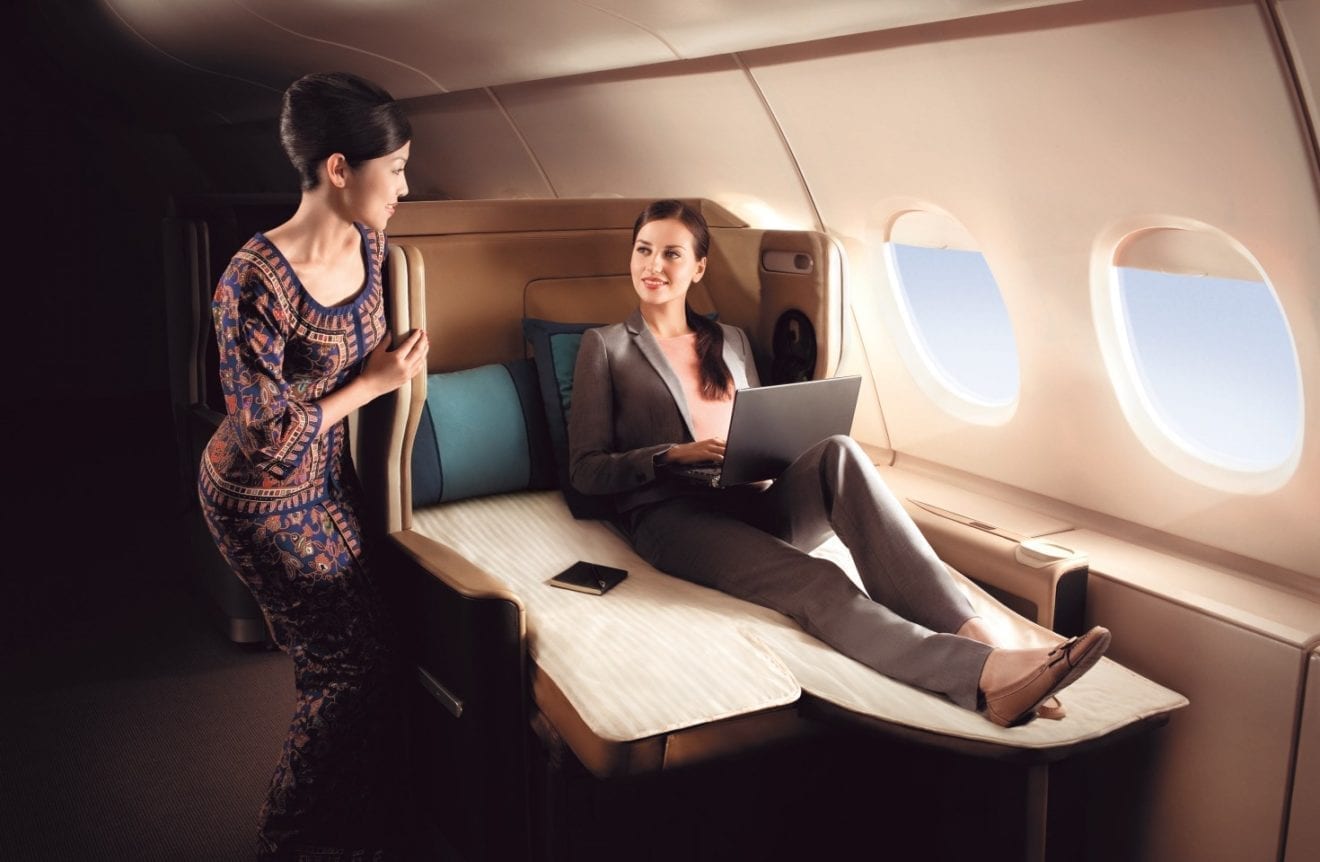
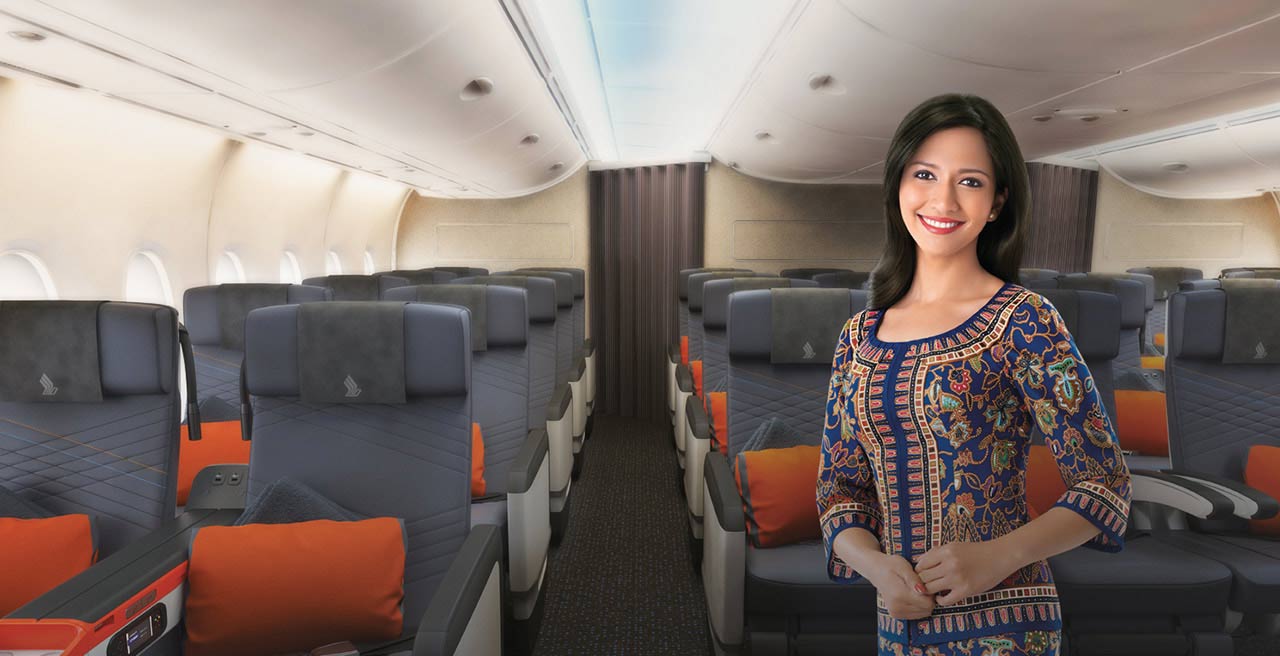
Mancunians will be able to sample Singapore Airlines (SIA) latest A350 from January 17. SIA’s new three-class (business, premium economy and economy) twin-jet enters enters service on the Singapore-Manchester-Houston route. It will replace the larger B777-300ER which currently plies the route.
But the B777-300ER had the advantage of providing first class which will be unavailable with the A350.
I cannot talk about Houston, but in the case of the UK regions there is not the same demand for a top premium cabin as there would be from London.
Mancunians now have non-stop access both to Singapore and Houston. (Previously the Manchester-Singapore service was one-stop service via Munich. Singapore-Houston previously operated via Moscow).
Both are hub airports so the canny traveller can fly onwards to Asia/Australasia (in the case of the former) and Texas and the Southern US in the case of the latter.
Interestingly, for Mancunians seeking fast flights to Perth/Australia, what SIA is offering out of Manchester takes away the advantage of Qantas’ non-stop London-Perth service which launches in 2018.
Why fly Manchester-London-Perth with British Airways/Qantas (with a Heathrow terminal change) when SIA can take you Manchester-Singapore-Perth ?
Schedules are daily except Monday and Thursday.
Flight SQ052 will depart Singapore at 0215 arriving into Manchester the same morning at 0840. Its flight continues to Houston at 1010 arriving in the Texas city at 1430.
Return flight SQ051 departs Houston at 1850 to arrive into Manchester the following morning at 0840. It then departs at 1110 and, after another overnight aloft, it arrives into Singapore at 0755.
Australian fixed line operator TPG Telecom has won the new entrant spectrum auction to become Singapore’s fourth mobile network operator.
TPG submitted the winning bid of S$105 million ($72.8 million) for a provisional allocation of 60 MHz of spectrum in the 900-MHz and 2.3-GHz spectrum bands.
TPG outbid MyRepublic to secure the new license and spectrum.
Final allocation of the spectrum will require payment of the relevant spectrum fees, and the commencement date of spectrum rights will be scheduled after the planned general spectrum auction to be held in the first quarter.
Regulator IMDA said the new spectrum rights are expected to commence on April 1 at the earliest. TPG will also be eligible to compete in the general spectrum auction if the operator so chooses.
As a condition of its bid, TPG will need to provide nationwide street level 4G coverage within 18 months of the new spectrum rights commencing, road tunnels and in-building coverage within 30 months and coverage of MRT underground stations and lines within 54 months.
Singapore MVNO Circles.Life, which launched earlier this year as the market’s fourth postpaid mobile service provider, has welcomed the move.
“Circles.Life welcomes IMDA’s on-going efforts to support competition and look forward to TPG Telecom’s entry into the telco space in Singapore… We hope TPG Telecom will continue to support our ambition to bring more innovation and choice to the market,” the company’s co-founder and director Rameez Ansar said.
“In the short-term, the impact may be limited until TPG Telecom enters the market in about two years from now after building the required infrastructure. Meanwhile, we are focusing on targeting the data savvy segment.”
Singapore Post subsidiary SP eCommerce has worked with lingerie brand Triumph to launch two optimised online stores, for Singapore and Malaysia.
The online stores have been redesigned and enhanced in areas such as product categorisation and recommendation to improve the shopping experience.
Triumph launched online shops two years ago, with the latest updates integrating the online stores with Instagram so buyers can share photos via on-site social feeds.
With custom extensions designed by SP eCommerce – including zip-code validation, redesigned navigation and SingPost PopStation deliveries – the revamped web stores make browsing of more than 5000 styles easier and faster.
Further improvements are about to be rolled out for the online stores’ product recommendation engine, including a wish list.
“Customer experience is our top priority,” says Triumph International Singapore/Malaysia commercial director Sheryl Wong. “Serving up a great brand experience has always been at the core of what we do, and that is only possible with a holistic focus on our shoppers’ experience.
“With SP eCommerce, we are pleased we are able to stay abreast with the latest digital trends, enabling us to provide our customers with an ever-enhancing online shopping experience.”
SP eCommerce offers end-to-end services covering enterprise-grade eCommerce technology, warehousing, delivery and returns management, web-store operations, and customer-care and performance marketing.
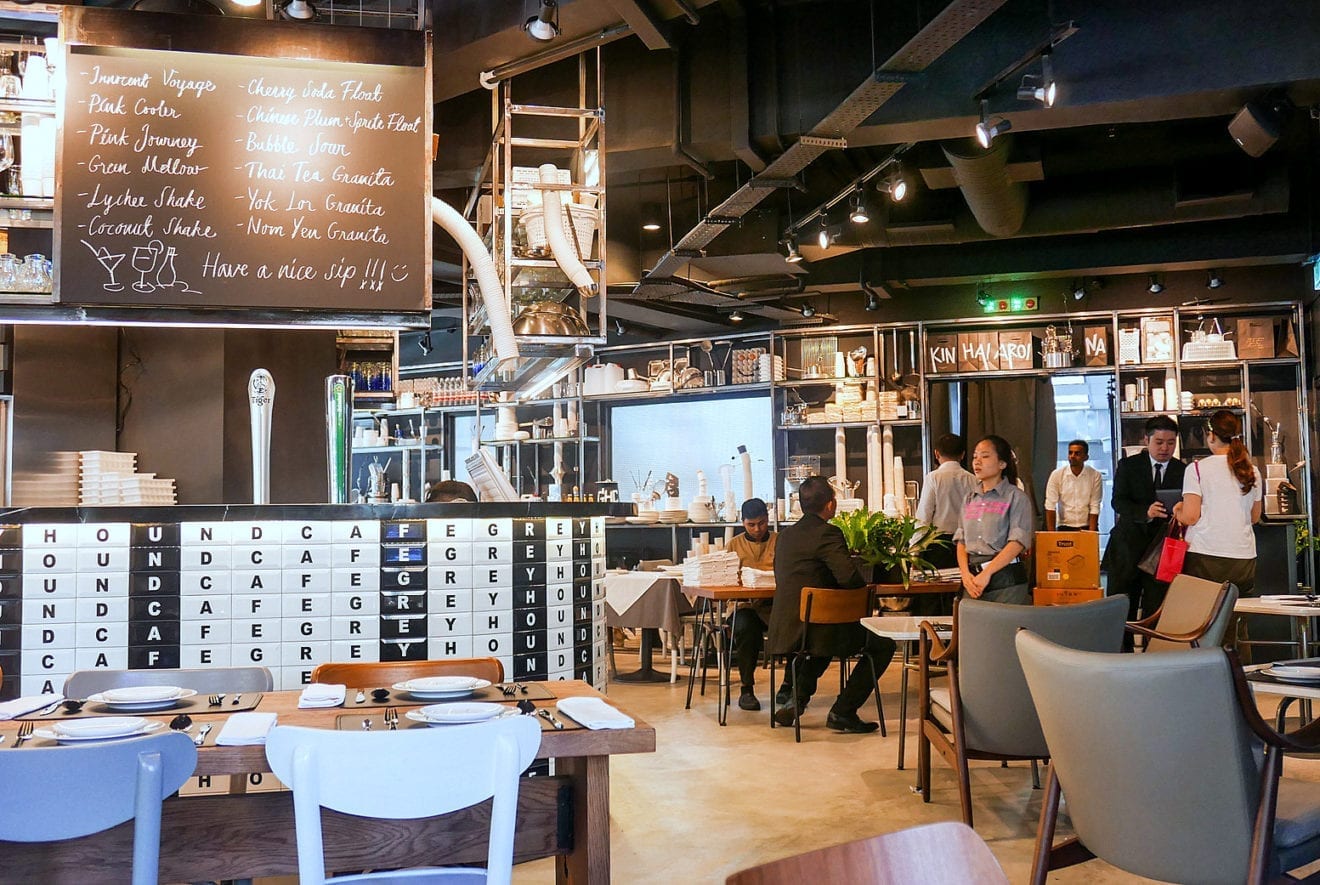
Thailand’s Greyhound Cafe has opened its 13th international outlet, marking its debut in Singapore.
It has 14 cafes in Bangkok plus outlets in Beijing, Hong Kong, Kuala Lumpur and Shanghai.
For Greyhound, the cafe was actually an afterthought to complement to brand’s fashion line. In 1997, founder Bhanu Inkawat was offered an empty unit next to Greyhound’s store at Emporium shopping complex in Bangkok to sell coffee and food.
“We had no knowledge about food, but we thought, ‘Let’s just do it’,” says Inkawat, who is also Greyhound’s executive creative director. “We served a full food menu from the beginning. Yes, we were ambitious.”
Now the cafe chain is more successful and recognisable than the brand’s fashion business.
Inkawat and his Thai team attended the opening of the 100-seat Greyhound Cafe at Paragon in Orchard Road, introduced by Singapore F&B company JC Global Concepts.
Greyhound’s menu is a collection of the childhood memories and travel experiences of the founders, based on old Thai recipes and ingredients. For example, Inkawat grew up eating the cafe’s Complicated Noodle, which involves diners wrapping minced pork and chilli sauce with noodle sheets and lettuce. The other signature item, Greyhound Famous Fried Chicken Wings, is based on a recipe from the grandmother of Greyhound Cafe’s MD Pornsiri Rojmeta.
Street food twist
“We know that no matter how beautiful your restaurant is, the food is important,” says Inkawat.
“In Bangkok we are known as a trendy cafe, so it doesn’t really matter what we serve as long as it is trendy. But when you open outside of Thailand and people know we are from Bangkok, they think we are a typical Thai restaurant. So we present Thai street food in a hip way, but it’s not your traditional Thai food.”
An exclusive dish to Singapore is the Crispy Pork Leg with Surprisingly Curry Paste, a German- style crispy pork leg marinated with Thai herbs and served with tamarind chilli paste, Jaew sauce (dipping sauce from northeast Thailand) and sticky rice.
Another four or five Greyhound Cafes will be opened in Singapore within the next five years, including a stand-alone. Hong Kong will gain a seventh outlet, and the company is considering new markets – Indonesia, Taiwan and London.
For now, there are no plans to expand Greyhound’s sister brands – Sweet Hound, Another Hound, and EverythingHound – beyond Bangkok.
Having established Datacloud as Europe’s foremost networking and deal-making forum for data center and cloud players, the widely acclaimed event is now scheduled to take place in the growth markets of Asia on February 23, 2017. BroadGroup, the consulting, publishing and professional events firm has announced the early programme for Datacloud Asia 2017, which includes experts from Asia, the US and Europe.
Set to be the first deal-making forum in the region, the event offers a valuable return on investment for attendees, uniquely bringing together data center operators with IT infrastructure leaders looking to deploy assets across the Asian region; colocation, hosting, cloud services, data center and vendor solution sales are all transacted at the event. Datacloud provides powerful content with an impressive line-up of guest speakers – and is the only event in Asia that attracts top leadership from operating companies.
The forum concludes with a celebration of the nominees for Asia’s inaugural Data Center & Cloud Awards. Seeking genuine innovation as well as on-going evolution and transformation already underway in Asia, the Datacloud Asia 2017 Awards* will be presented in a refreshing format with all-new award categories at a combined reception hosted by Digital Realty and awards dinner at the prestigious Capella Hotel & Conference Center on Sentosa Island, minutes from Singapore’s business district.
“Datacloud is unique,” commented Philip Low, chairman of BroadGroup. “You will not find a trade show, but you will find a highly structured networking forum for senior executives complemented by a far reaching programme covering hot topics such as China, blockchain, enterprise cloud strategies, agile infrastructure, finance and investment, location for data centers and more. With the addition of the Awards it makes for an exceptional event.”
“Asia hubs will be a central theme of this new event with a strong focus on investors, enterprises and doing deals. It also aims to offer inspiring insights for companies seeking a better way of hosting and colocating in the new reality of a data-driven and cloud-connected world,” says Low. “The forum promises to highlight the value of outsourcing data centre, cloud and IT infrastructure across the fast growing Asia region, and is designed to appeal to both users and outsourcers.”
Sponsors for the event include Schneider Electric, Digital Realty, Telin Singapore, Kingsland Data Center, Datwyler, Lamda Hellix Data Centers, and has a range of industry and media partners including Globeron, Asia Cloud Computing Association, iMiller Public Relations, techUK, European Data Centre Association (EUDCA), BICSI and WiredRE. Lead Media Partner is Data Economy (www.data-economy.com) and Intelligence Partner is Colocation Markets Quarterly (CMQ).
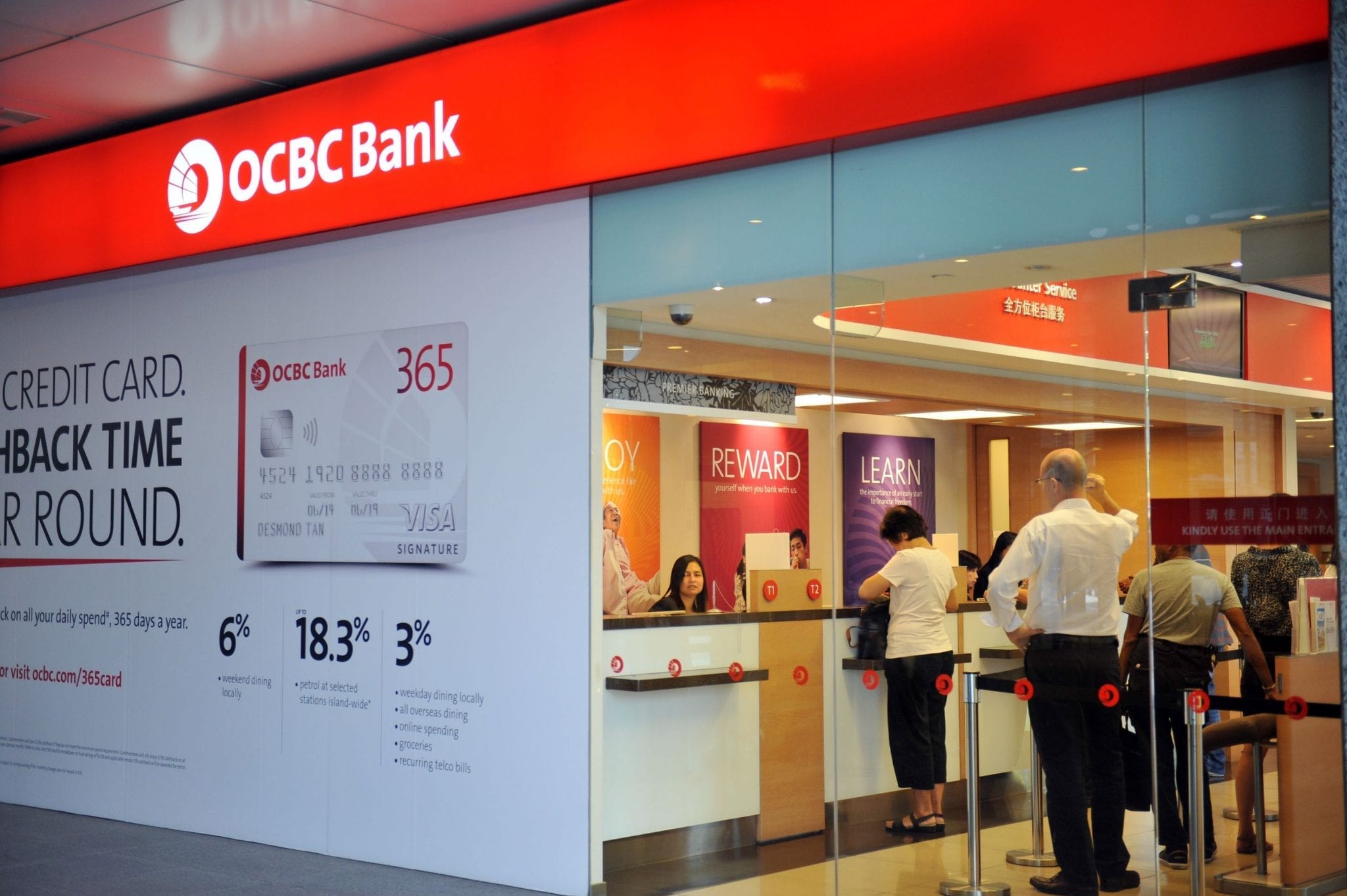
One of the five largest banks in Singapore has tested a blockchain-based payment service, with an eye to develop commercial products around the tech.
OCBC Bank used the tech to send funds between its operations in Singapore and Malaysia, as well as transmit money to the Bank of Singapore, a private banking business it owns. The bank said it worked with BCS Information Services, a local payments firm, to develop the prototype.
The test is the latest for Asia’s banking sector, the members of which have spent much of the past two years investigating use cases, investing in startups and pursuing commercial applications.
Praveen Raina, OCBC senior vice president, was quoted as saying:
“We hope this will be a catalyst for more banks to adopt the blockchain technology so that, together, we can achieve efficiency and cost effectiveness while delivering more high-value financial services to our consumers.”
Though the bank announced its move on its official group website, the details of that announcement appear to have been removed at press time.
The move comes as the Monetary Authority of Singapore (MAS), the city-state’s central bank, has moved to create a pro-fintech environment within the domestic finance sector. Earlier this month, MAS has forged relationships with regional interests on the tech, coming more than a year after the institution began developing and investing in projects of its own.
When it comes to Christmas shopping, Singaporeans prefer retailers with a physical store, coupled with both e-commerce and mobile app. Singapore shoppers want cross channel options more than new age services like digital wallets and augmented reality store experiences, according to the SAP Hybris Singapore Christmas Shopper survey.
More than 1,000 consumers in Singapore were surveyed to uncover their Christmas shopping habits.
When it comes to Christmas shopping, 68 percent of respondents said they prefer retailers with a physical store coupled with both e-commerce and mobile app, enterprise application software provider SAP said in a press statement on 8 December 2016.
In addition, 54 percent prefer those who offer self-pickup services at a physical store.
According to the results, 65 percent of respondents stated that retailers can improve their Christmas shopping experience by offering free shipping.
“Singaporeans are amongst the most tech-savvy spenders in Asia, and no strangers to e-commerce,” said Nicholas Kontopoulos, Global Vice President of Fast Growth Markets for SAP Hybris in the Asia Pacific region. “Despite that and reports of Singapore’s continuously challenging retail landscape, the brick and mortar stores are definitely not dead.
“In fact, the SAP Hybris survey found that 39 percent of Singaporeans still enjoy browsing through stores. This [shows that] Singapore is a truly multi-channel market, where most consumers are using a combination of devices in their online and offline shopping. In the future, offline and online shopping are no longer two separate business models. Singaporeans are demanding a seamless omnichannel shopping experience,” Kontopoulos concluded.
A challenging employment outlook persists into the first three months of 2017 (Q1) as Singapore’s net employment outlook stands at a modest +9%, after the data is adjusted for seasonal variation.
Of the 620 employers surveyed in the latest ManpowerGroup Employment Outlook Survey, 15% expect to increase staffing levels while 7% anticipate a decrease, and 71% foresee no change.
Linda Teo, country manager of ManpowerGroup Singapore, commented that while hiring prospects remain relatively stable, there is a growing mismatch between jobs and skills, expected to worsen if not addressed by workers and employers.
She added: “Lower skilled workers and PMETs with out-of-date skills will face the brunt of the recession – if it happens. With the slowing economy, unemployment figures for these groups of workers are likely to rise as employers put into action cost-saving measures.”
Domestic hiring sentiment by sector
Employers in six of the seven industry sectors surveyed expect to grow staffing levels during the first three months of 2017 [figure below]. The finance, insurance and real estate sector reports the strongest hiring sentiment with an outlook of +19%.
Employers in the transportation and utilities sector forecast steady hiring activity with an outlook of +11% while employers in the manufacturing sector disclose an outlook of +9%.
Elsewhere, employers in the public administration and education sector, and the services sector report outlooks of +8%. However, a decline in payroll for the wholesale trade and retail sector is foreseen as the outlook stands at -2%.
Asia Pacific hiring outlook for Q1 2017
Taiwan reports the region’s most robust Q1 hiring intentions with one of every four employers expect to add to their workforce. Opportunities for job seekers in Japan remain strong, with a quarter of all employers anticipate adding to their payrolls in the first quarter of 2017.
Despite an overall slowdown in retail and tourism activity in Hong Kong, services sector employers report the first quarter’s strongest outlook, and steady hiring in the mining and construction sector.
Employers in China remain cautiously optimistic with some payroll growth estimated in all industry sectors and regions.
Meanwhile in India, the hiring pace is projected to decelerate for the fourth consecutive quarter. However, an active labour market is expected to continue, with more than one in five Indian employers intending to add to their payrolls through the next three months.
Over in Australia, efforts to emphasise non-mining sectors of the economy seem to be maintaining traction. Employers across all sectors and regions expect varying degrees of payroll gains. Employer hiring plans are also uniformly positive in New Zealand, with the most activity forecast in the transportation and utilities, and mining and construction sectors.
Dover Street Market Singapore will debut at Tanglin Village early next year, marking the fashion brand’s fourth global site.
To be known as DSM Singapore, the hip Japanese concept will sell a curated range of labels.
Founded by 74-year-old Japanese fashion designer Rei Kawakubo, who also founded Comme des Garcons, the outlet follows stores in London, New York and Tokyo.
In the upmarket Dempsey area, DSM Singapore is expected to be a highlight of the Tanglin Village renovation project Como Dempsey, which takes over the space vacated by Chang Korean BBQ Restaurant and antique store Shang Antique. The complex will also house a concept restaurant and bar by French restaurateur Jean-Georges Vongerichten.
Research from HSBC shows a growing number of Chinese tourists visiting Singapore fuelled a 44 per cent increase in retail spending in the first half of this year, versus the same period last year. That put retail ahead of casinos in terms of tourist spending for the first time in five years.
The number of Singapore-bound Chinese tourists totalled about 2.1 million in 2016 – twice the number of 2009, the year before the country opened the first of its two casinos.
Erwan Rambourg, London-based global co-head of consumer and retail research with HSBC, said Chinese, Indonesian and Indian visitors were the top three spenders in the second quarter of 2016, accounting for 40 per cent of total tourist spending. A quarter of spending went on shopping – up from just 18 per cent in the same period last year.
Last year, Chinese spent S1.15 billion in Singapore stores – compared with just $175 million spent by Indians and $112 million by Japanese. But they spent less than any other nationality on food and accommodation.
When you think of Singapore Airlines, visions appear of cushy premium cabins, bespoke leather seats, and free-flowing Champagne poured by the carrier’s throwback “Singapore girls” flight attendants.
It’s all that, yes. But the luxury carrier is working hard to diversify with budget airlines under its corporate banner. It owns low-cost carrier Scoot; 49 percent of Vistara, a joint venture in India with Tata Sons Ltd.; and NokScoot, a low-cost Thai airline Singapore owns in a joint venture with Nok Airlines. This collection of airlines—plus a new “ultra long range” Airbus A350 variant scheduled to arrive in 2018—enables Singapore to explore a range of expansion plans, many of which are currently focused on North America.
It’s no coincidence that the region continues to be the runaway success story of airline profitability. It will provide roughly two-thirds of the industry’s projected $29 billion net income next year, according to estimates released Dec. 8 by the International Air Transport Association.
Singapore’s portfolio of carriers offers “a lot more nimbleness and flexibility in addressing the needs of the markets,” Chief Executive Officer Goh Choon Phong said during an interview Dec. 6 in New York.
Squeezed on all sides
Last month, Singapore reported a 70 percent drop in net income and warned that 2017 could be challenging as well. The airline has struggled amid the expansion of low-cost carriers in its home region, and moves by a trio of Middle East-based full-service airlines to encroach on its core franchise of premium business travelers.
“It’s not going to be business as usual,” said Goh, an M.I.T.-trained engineer in computer science who chose an airline career over academia. “These are structural changes; these are changes that are not going to go away.”
Into this environment, the CEO has prescribed a diversification of revenue, a renewed focus on cabin comforts for big spenders, and new markets.
A chief pillar of the company’s expansion rests on further long-haul expansion, driven by firm orders for 67 new Airbus A350s and 30 of Boeing Co.’s largest 787 variant, the -10. The newest 787 is scheduled to enter commercial service in 2018. Of its A350s, Singapore will take seven from Airbus in an “ultra long range” configuration, which includes software changes and modest modifications to the landing gear. Other A350-900s can be altered to the ULR version, which is able to fly 8,700 nautical miles.
“We have called it a game changer for us and there’s a reason for that,” Goh said, alluding to the growth opportunities the A350 affords.
With these new, more fuel-efficient planes, Singapore executives have been keen to resume the nonstop flights from the city state to New York and Los Angeles, which operated for nine years before ending in 2013 because of the route’s extreme fuel costs. The airline is also considering the potential for new U.S. destinations, having for years studied traffic flows in places like Boston, Chicago, and Miami, Goh said. Many weren’t feasible, given the mix of large seat counts and the range limits of its existing aircraft. But the new, more fuel-miserly A350 may well change the math for such an expansion. (In March, for example, Singapore is swapping the 777 it flies to Houston with an A350.)
“The U.S. is an important market for us,” Goh said, but technological limitations required a stop between American cities and Singapore. No more.
Gateway to India and Southeast Asia
The airline is envisioning a day when the new fleet allows its hub at Singapore’s Changi Airport to become a connection for U.S. and Canadian corporate travelers bound for places such as India, Malaysia, Indonesia, and Thailand. It sees a precedent in the operations Emirates Airlines and Qatar Airways Ltd. have built at their hubs in the Persian Gulf, particularly for traffic to and from India.
Yet beyond the moneyed travelers who want frills on long flights, Singapore’s Scoot budget airline is also keen to expand. In June, Scoot will commence its longest flight to date, to Athens, a city where Singapore has ended service with its flagship. Scoot is increasing its all-787 fleet to 20 over the next few years, and is likely to look to markets where premium-cabin traffic is insufficient for flights by the flagship Singapore brand, Goh said.
“Scoot might also look to some kind of operation to the U.S,” Goh said. “At some point in time they will look at the U.S. to see if it makes sense.”
On the premium side of their house, Singapore executives have been cagey about the cabin configuration for the A350-ULRs to be deployed on the new U.S. nonstops to Los Angeles and New York. The latter will reclaim its title as the world’s longest route, at 19 hours or more, depending on winds. The airline plans a two-class service, but has declined to reveal the cabin mix or how many seats the planes will carry. They will have fewer than the 253 seats now on the three-cabin aircraft Singapore currently flies, with a stop in Asia, en route to Singapore, Goh said.
“The beauty of it is that this aircraft is not too big,” he said. “We can size it to best fit the traffic number that makes sense.”
Beyond the U.S., Singapore has identified India as a top priority in terms of greater market access. Within a decade, the nation is projected to become the No. 3 international travel market after China and America. Singapore’s Vistara venture will benefit from the Indian government’s recently altered “5-20” regulation that required local carriers to fly at least 20 aircraft for five years before they could offer international service. The change abolished the five-year flight period, and should help Vistara expand internationally sooner. It now has 13 Airbus A320s, with plans to reach 20 by 2018.
Some day, if it makes sense for Vistara, Goh says, the airline may acquire long-haul aircraft and set out for Europe and North America with nonstop routes. That’s a proposition that Emirates, Qatar, and Etihad can’t offer. “Logically speaking,” Goh says, “you can imagine Vistara should have a lot of potential for growth.”
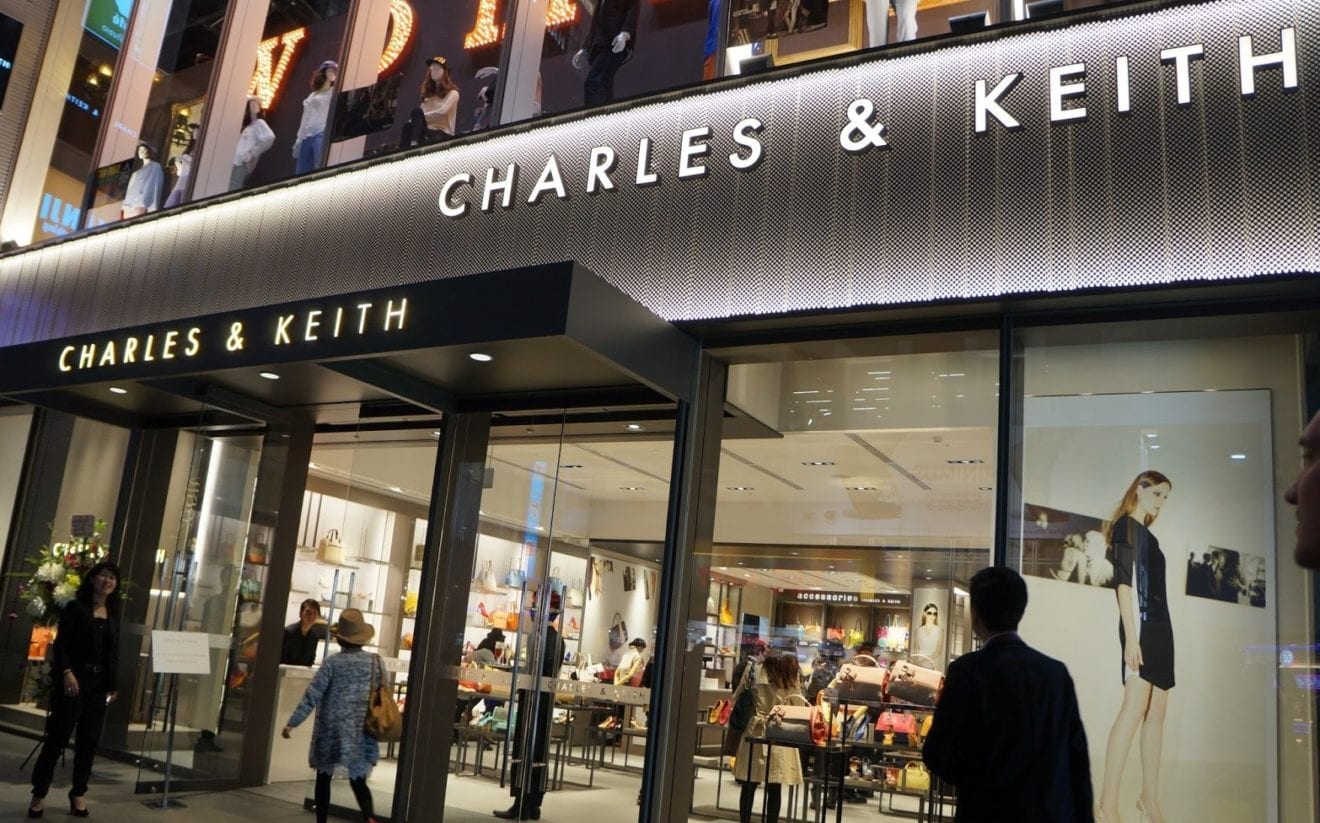
Singapore-headquartered footwear brand Charles & Keith says it will close all its Japanese locations.
According to a report published by Fashion Network, Charles & Keith Japan has already closed 13 stores in Tokyo, Osaka, Nagoya, and Hakata, with the flagship in Harajuku (pictured) scheduled to close on December 31.
The company reportedly wants to focus on its eCommerce offer and other Asian markets closer to home.
The Charles & Keith website is close for an overhaul on December 26 before being relaunched in Spring.
The brainchild of brothers Keith and Charles Wong, the 20-year old brand specialises in quality footwear at affordable pricing. It currently sells in Asia, Africa and Europe.
Hong Kong logistics startup Easyship has raised an undisclosed amount of pre-series A funding from 500 Durians, a fund managed by Silicon Valley’s venture capital major 500 Startups.
Easyship is an online platform providing crossborder logistics services for eCommerce companies, claiming to have access to more than 80 shipping companies and offering visibility on delivery time, cost breakdown, reliability and tracking.
To date, it has raised aggregate funding estimated at US$2.5 million. The latest round will help it expand into Southeast Asia via Singapore, following the validation of its business model and building of traction in the Hong Kong market.
Its expansion to Singapore provides strategic access to Southeast Asia and leverages off the city-state’s logistics infrastructure and networks – just as US eCommerce giant Amazon is establishing a presence there.
The venture originates from problems with international shipping encountered by co-founders Tommaso Tamburnotti and Augustin Ceyrac when they were trying to build the crossborder business of Rocket Internet’s Lazada, as reported. At the time, Lazada was trying to attract more vendors to its platform in China and Hong Kong selling into Malaysia, Singapore, Thailand, and the Philippines.
However, Lazada’s rapid sales growth was inhibited by a “very unstructured and fragmented” logistics industry. Easyship streamlines this process, providing an end-to-end process for packaging, labelling and tracking goods with couriers. It charges no fees for these services, with sellers paying the couriers. Revenue is generated from courier commissions.
Easyship claims its saves its 1000-plus clients in Hong Kong up to $20,000 a month on shipping fees.
Singapore’s Infocomm and Media development Authority (IMDA) has announced it will ban the sale of 2G-only mobile devices from January 1.
After this time, retailers and equipment suppliers will not be allowed to sell 2G handsets for use in Singapore, the regulator said.
Suppliers with a dealer’s individual license will be able to continue selling the devices, but only for export purposes or overseas use.
The order applies to devices in the GSM900 and GSM1800 frequency bands, and covers other cellular devices besides handsets including POS terminals and M2M equipment. Retailers and suppliers found to be in violation of the new rules could face financial penalties.
Singapore’s mobile operators will shut down their 2G networks from April 1 to allow IMDA to re-allocate spectrum for more advanced mobile services.
IMDA is working with operators to facilitate the migration of remaining 2G users to 3G or 4G networks, allowing subscribers to upgrade their devices while maintaining their plans and monthly subscription costs.
Singapore is on track to introducing a fourth mobile network operator. Last month, local fiber ISP MyRepublic and Australian fixed line operator TPG Telecom were pre-qualified to take part in a special auction for the fourth mobile license.
JCB, the international operations subsidiary of JCB, CIMB Bank Singapore (“CIMB”), and Wirecard AG (“Wirecard”) are pleased to announce their signing of a License Agreement to begin JCB merchant acquiring services in Singapore. Through the partnership, JCB card acceptance facilities will be available at CIMB merchants.
With its ASEAN footprint firmly in place, CIMB is a befitting partner with JCBI on both the local and regional front. Having established similar collaborations in Malaysia and Indonesia, this new License Agreement extends the collaboration into other parts of Southeast Asia and enhances cooperation in the region.
Tourism is a key contributor to the Singapore economy and the country is a popular destination for regional JCB cardmembers. This new merchant acquisition partnership with CIMB will bolster the JCB card acceptance network in the market and promote new merchants to JCBI’s rapidly expanding cardmember base from Asia during their stay in Singapore.
Vincent Ling, Managing Director of JCB International Asia Pacific Pte Ltd., commented, “As Singapore continues to be a key tourist destination for Asians including Japanese, Korean, and Chinese, a stronger JCB card acceptance will bring about enhanced convenience to JCB cardmembers. JCBI is pleased to collaborate with CIMB Bank Singapore and we look forward to working closely together to serve our cardmembers, merchants and business partners better.”
Mak Lye Mun, CEO of CIMB Bank Singapore and Country Head of CIMB Group Singapore said, “As a leading bank in ASEAN, CIMB Bank is proud to expand our payment acceptance offering with JCBI in Singapore. This partnership unlocks opportunities for our merchant acquiring business and I’m confident it will benefit both merchants and JCB cardmembers through greater card acceptance and increased payment options.”
CIMB Bank Singapore’s one-stop merchant solution is in partnership with Wirecard, a global leader in electronic payment and mPOS technology and infrastructure. Wirecard has been providing an integrated payment platform that supports eCommerce, mCommerce, mobile and traditional Point-of-Sale, to facilitate merchants’ real-time tracking of transactions across multiple sales channels as part of the partnership. Mr Jeffry Ho, Managing Director of Wirecard Singapore, Malaysia, Hong Kong and Australia A&I added, “We are delighted with another milestone of our partnership with CIMB Bank. We believe that the CIMB-JCB initiative will certainly provide a better payment experience for both merchants and JCB cardmembers in Singapore.”