Tag: Singapore

  • Furla to showcase FW16 collection in Singapore

    Furla to showcase FW16 collection in Singapore

    Italian luxury leathergoods supplier Furla will showcase its FW16 collection at the upcoming Tax Free World Association Singapore show in May.

    According to the company, the new Furla bags embody the rebellious spirit, typical of the music scene, from rock to pop and influenced by a metropolitan tribal beat in its more modern interpretation.

    The bags are decorated with laser cuts, which add 3D effects and create kaleidoscopic patterns, embellished with golden studs. The new Furla Loop bag, for example, has fringes emphasising movement and femininity.

    Shoulder straps, the season’s protagonists, recall guitar-like straps and are enriched with details and weave effects. The leathers are smooth, supple and soft and adapt to the body. Perfectly on-trend, charms convey a personal touch to each bag, making it special for every occasion.

    The colour palette is sharp and well-defined, veering from black to blues to army green with touches of deep red and metal sparkles.

    The Furla Valentina and Furla Club bags are characterised by a new and colourful camouflage pattern that becomes a manifesto of the fervent cultural mixes of big cities, especially when matched to the new tribe tattoo themed straps and tags.

    The Furla Metropolis bag has evolved into a “creative laboratory” where new dimensions, craftsmanship and materials are developed and enriched.

    Also being shown is the new travel-retail exclusive Furla bag, a limited-edition set of three crossbody bags in Saffiano leather, each with a smaller detachable pouch inside. Available in three colour combinations: Lampone & Magnolia, Onyx & Gold, and Cobalto & Silver, each bag has an adjustable and detachable strap.

    Furla global travel retail director Gerry Munday said: “Asia is extremely important to the Furla brand and accounts for 35% of our global business in travel-retail. We are seeing significant growth in all areas, with a 36% sales increase in 2015 thanks to our presence now in 48 countries with a total of 195 airport doors versus 174 in 2014. We also have some exciting projects being finalised which will be announced in due course.

    “I’m confident this growth will continue as we continue to bring out collections that break the mould in terms of innovation, design and styling. The FW16 collection has already received incredible feedback and, with the addition of our latest travel-retail exclusive, we are looking forward to a very successful and productive week in Singapore this year.”

  • Singapore telcos hit the road with transit NFC pay service

    Singapore telcos hit the road with transit NFC pay service

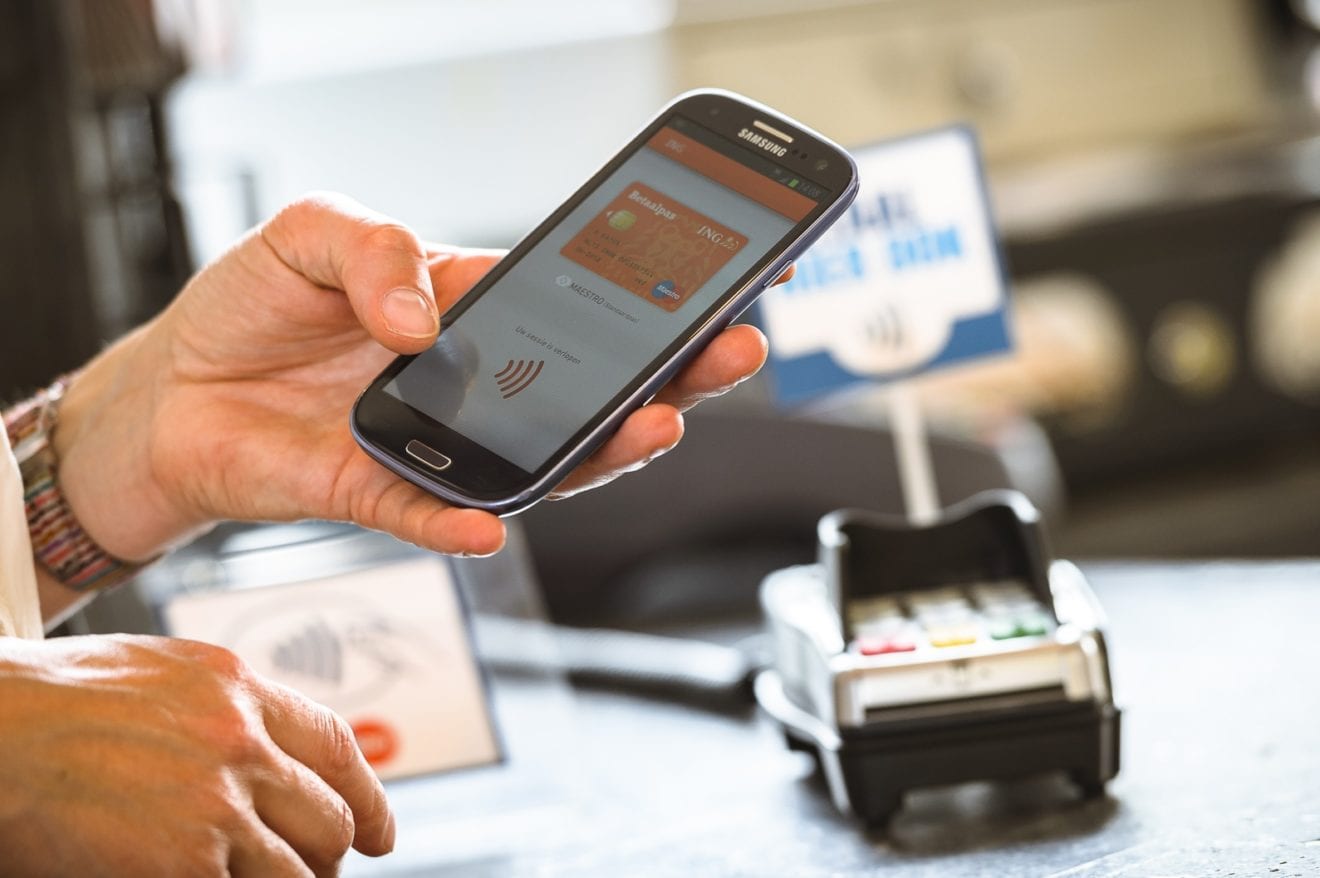
    Singapore’s three telcos have unveiled plans to offer NFC-enabled service for the country’s public transport network, enabling mobile users to pay for their fares using their smartphones.

    All three operators issued statements today, alongside a separate release from industry regulator Land Transport Authority (LTA), which announced the completion of a joint pilot conducted between the telcos and local public transport operators, as well as payment service provider EZ-Link. The latter’s contactless payment card currently is used by public transport commuters and as a payment option at more than 30,000 locations, including convenience stores, fast food outlets, retail stores, and taxis.

    Available today, M1’s service would be the first to allow its subscribers to swop their SIM cards for NFC-enabled chips that they could then use on buses and trains island-wide. They could do so at any of the telco’s retail outlets, but would need to have compatible devices for the NFC payment to work, including Samsung Galaxy Note Edge 4G+ and Sony Xperia Z. The Apple iPhone was not on the current list of approved devices.

    The NFC SIM cards are embedded with EZ-Link purse, which supports specifications under Singapore’s own standard Contactless e-Purse Application (CePAS). Upon activating the new SIM cards, mobile users would be able to top up or check the balance of their credit stored in the purse, as well as use their device to pay for other services that support ez-link payments.

    Singtel said sale of its transit NFC SIM cards would start in late-April, when subscriber would be able to purchase the chips from its retail stores. A S$5 registration fee for these SIM cards would be waived for a limited time, the operator said.

    M1 said its transit SIM card would cost S$37.45, with a service activation fee of S$9.10 that also would be waived until April 30.

    StarHub said its NFC transit chips would go on sale at its retail outlets from April 2 and would be priced at S$37.45 for a new SIM, or S$26.75 for a SIM replacement. It added that the “NFC ez-link purse fee” of S$5 would be waived “until further notice”.

    The telco’s head of business strategy Yeong Mun-Ling said: “This development is a step in the right direction towards stimulating digital commerce growth in Singapore. Our world is becoming increasingly digital and we are looking forward to meeting the needs of our mobile customers, who want to do more with their smartphones.”

    M1 CMO P. Subramaniam also noted: “Transit is the ‘killer phone app’ Singapore consumers have been looking forward to and we are pleased to be the first to offer customers the convenience of making payment with the one device that is always with them, their phone.”

  • TANGS names Kevin Dyson as new CEO

    TANGS names Kevin Dyson as new CEO

    TANGS has announce that Mr Kevin M. Dyson will be appointed Chief Executive Officer (CEO) with effect from 1 April 2016. He will also be appointed as a member of the Board of Directors of C.K. Tang Limited.

    According to a release from TANGS, effective 1 April 2016, Mr Foo Tiang Sooi will relinquish his duties as CEO, and will remain as a member of the Company’s Board of Directors. He will continue to be in the Company as Senior Director.

    As CEO, Kevin will be responsible for all aspects of the business and provide leadership in achieving TANGS’ vision as a world-class retailer.

    Here’s more from TANGS:

    Prior to joining TANGS, Kevin spent 25 years with Barneys New York, a leading luxury retailer in the USA, with extensive experience in store management, merchandising, and the expansion of stores across the USA.

    Mr Foo Tiang Sooi’s new role as Senior Director will be focused on the financial aspects of the business, providing support to the Chairman as well as the new CEO. He has been a member of the Board since 1994, before assuming the role of Chief Operating Officer (COO) in 1999, and being appointed as CEO in 2006.

  • eCommerce won’t dent Asian retail real estate demand

    eCommerce won’t dent Asian retail real estate demand

    Growing online sales will not undermine demand for Asian retail real estate, according to the last CBRE study of major international brands.

    For the seventh edition of How Active Are Retailers Globally?, the real-estate company looked at more than 150 major international brands based in Americas, Asia Pacific and EMEA (Europe, the Middle East and Africa) countries.

    China is the top target market in the Asia Pacific (APAC) and fourth-ranked globally, with 27 per cent of retailers looking to expand there. Hong Kong follows in sixth position (24 per cent), Japan in seventh (22 per cent) and Singapore in ninth (21 per cent). The top three globally were Germany (35 per cent), France (33 per cent) and the UK (29 per cent).

    China and Hong Kong maintained their placings, while Japan, Singapore and Australia (11th) all rose higher in the ranking, up from 13th, 18th and 15th positions respectively.

    “Hong Kong will remain a desirable market for retailers, particularly as it continues to serve as a popular shopping destination for mainland Chinese tourists,” says CBRE Hong Kong executive director for retail services Joe Lin.

    “The main difference is a shift from luxury to mid-range brands. This is forcing luxury retailers to consolidate their footprint, leading to a drop in rental cost in prime locations and therefore opportunities for non-luxury retail brands.”

    Most APAC markets saw increased interest for this year, with the exception of China and South Korea. Malaysia (10 per cent), Indonesia (9 per cent), Thailand, Vietnam and The Philippines (all 8 per cent) received more than double the interest they saw last year, when all markets secured between 1 and 3 per cent.

    Asked about the risk factors for the coming year, brands indicated that real-estate cost escalation (56 per cent) and unclear economic prospects (42 per cent) continue to be at the forefront of their minds.

    “We’re seeing more of a challenging economic environment, and concerns such as high operating costs and a lack of quality space means retailers are somewhat more wary this year,” says CBRE head of Asia Pacific research Dr Henry Chin. “However, even as markets such as China and Hong Kong are experiencing a slowdown, we see increasing numbers of opportunistic retailers looking to enter markets like Hong Kong, supported by strong underlying consumer demand.

    “Japan and Australia remain attractive, while Southeast Asia showed strong growth because of opportunities for retailers around an expanding middle class and stronger economic growth.” CBRE senior director and head of retailer representation for Asia Joel Stephen says there are still opportunities for retailers to grow their business in Asia, underscored by the region having four of the 10 most popular destinations. “The goal now for all brick-and-mortar retailers is to build an engaging offer that encourages people to stay longer and spend more.”

    The survey shows that 83 per cent of brands suggest their physical store expansion plans for this year will not be affected by the growth of eCommerce. From a retailer perspective, only 22 per cent of the brands see stiff competition from online retailing as a threat to their business.

    At the same time, retailers are cautiously optimistic on physical expansion. Of those canvassed, 17 per cent have large-scale ambitions, many of them looking to open more than 40 stores this year (up from 9 per cent last year), while 67 per cent plan to open up to 20 stores.

    “A physical store presence in key locations is still critical to the strength of a brand’s image,” says Stephen. “Customers still feel a need to go into stores, to physically touch a product and enjoy the feel-good factor associated with a particular brand experience. The store is integral to the shopping journey and can be used in different ways, such as to click and collect, research of the product or brand, or to test the product. It isn’t solely about the transactional side.”

    A new trend is brands looking to expand into travel hubs, such as airports and train stations, giving them access to high footfall in busy locations. But for APAC retailers, shopping malls are still the preferred destination by far, at close to 90 per cent.

    While globally the key concern for brands in negotiations for premises is lease length, APAC retailers are most concerned with turnover rent clauses (GP). They are also particularly concerned about changing consumer behaviour (40 per cent), which is higher than the global average (31 per cent).

  • StarHub TV features short-form content, telemovies

    StarHub TV features short-form content, telemovies

    Singaporean audiences can soon look forward to more exciting “Made in Singapore” content from as early as the third quarter of this year.

    StarHub’s new wave of Public Service Broadcast (PSB) lineup includes of travelogues shot in “the most exotic” corners of the world, kids infotainment shows and sports programs that shine the spotlight on the everyday superhuman athletes.

    For the first time, viewers who enjoy consuming content on the go, will also be able to view short-form content―each ranging from five to 15 minutes in duration.

    Local movie fans will also be treated to an array of locally produced telemovies centered on the kaleidoscopic facets of Singaporeans’ lives.

    PSB content is produced under the Media Development Authority of Singapore’s (MDA) Public Service Broadcast Contestable Funds Scheme (PCFS). The PCFS aims to extend the reach of PSB content to multiple broadcast platforms, as well as to bring more opportunities to local production houses to deliver creative, high-quality PSB content.

    Viewers will be able to catch StarHub’s exciting lineup of PSB content on its self-packaged channels, E City (StarHub TV Channel 111/825) and SuperSports Arena (StarHub TV Channel 112/205), as well as via its online streaming service, StarHub Go.

    In total, StarHub will be commissioning about 110 hours of original productions. These productions will incorporate PSB values, such as celebration of the Singapore’s culture and heritage, and promotion of the Singaporean identity, through innovative storytelling.

  • OCBC launches banking app for Apple Watch

    OCBC launches banking app for Apple Watch

    Singapore’s OCBC Bank has launched a new mobile banking app designed for the Apple Watch.

    With the app, users can have instant access to their personal banking information, including the full list of their balances – bank accounts, cards and investments, recent transactions, and the location of the nearest OCBC Bank branch or ATM, on their Apple Watch.

    Customers must first perform a one-time activation on their OCBC iPhone mobile banking app before using the Apple Watch app. Once activated, account information and recent transactions can be viewed on Apple Watch, without the need to login to mobile banking.

    This service is available for customers using mobile devices such as iPhone 5, iPhone 5S, iPhone 6, iPhone 6 Plus, iPhone 6S or iPhone 6S Plus operating on iOS 9 and Apple Watch devices running on WatchOS2.

    The service can only be activated on a single pair of Apple Watch and iPhone devices at one time and all account numbers displayed on the watch are partially masked with only the last four digits revealed. No information is stored on the phone or watch and for security purposes, customers can choose to set a passcode on their Apple Watch.

    Market intelligence firm IDC estimates the worldwide wearable device market will reach a total of 111.1 million units shipped in 2016, a strong 44.4% increase from the 80 million units shipped in 2015. By 2019, the five-year compound annual growth rate (CAGR) of wearable devices would be 28%, with Apple smart watch devices taking the lion’s share of the market.

    “Smartwatches represent the next generation of personal mobile devices, and our Apple Watch app will offer the convenience, security and choice that customers demand when it comes to everyday banking on-the-go,” said Aditya Gupta, OCBC Bank’s Singapore head of e-business, said.

    “We are confident the Apple Watch app will be a big hit with our fast-growing number of customers who are mobile and digitally-savvy.”

  • M1 launches 1Gbps fiber bundle for SOHOs

    M1 launches 1Gbps fiber bundle for SOHOs

    Singapore’s M1 has launched a range of bundled fiber and business communications plans tailored for small and home offices.

    The company’s new SOHO Fibre Broadband plan includes a symmetrical 1Gbps fiber connection as well as business services including web and e-mail hosting, unified communications and fixed voice services.

    M1 is marketing the service towards Singaporean entrepreneurs seeking to start and grow a business from home. SOHO stands for small office/home office.

    The service is priced at S$59 ($43.75) per month on a 24 month contract. This price also includes a 300Mbps mobile broadband service.

    In Malaysia meanwhile, Telekom Malaysia has added a 100Mbps connection option for its Unifi broadband services.

    The company is offering a 100Mbps downlink 50Mbps uplink plan bundled with IPTV, OTT video subscriptions and 600 minutes of free callsThe operator has also introduced a 100Mbps business broadband option.

    But the plans come at a hefty price of 299 ringgit ($77.37) per month for the consumer option and 379 ringgit per month for the business plan. This is a promotional price which will rise to 329 ringgit and 399 ringgit respectively after June 30.

    By comparison, rival Time charges 299 ringgit for a 500Mbps plan, but also has a far smaller coverage area.

  • UNIQLO to Open First Global Flagship Store in Singapore and in Southeast Asia Region

    UNIQLO to Open First Global Flagship Store in Singapore and in Southeast Asia Region

    UNIQLO today announces that it will open its first global flagship store in Singapore, and in the Southeast Asia region, in the autumn of this year. The new store, which will be the largest UNIQLO store in Singapore and in the region, will be located in the Orchard Central mall along Orchard Road, the fashion hub of Singapore for both local residents and international visitors.

    “We are very honored, and excited, to open our first UNIQLO Global Flagship Store in Singapore. Having been a member of the local retail scene since 2009, we remain committed toward contributing to the local community and being an integral part of Singapore’s growth and future,” said Taku Morikawa, UNIQLO Southeast Asia CEO. “We will continue our effort to design and create innovative clothes that enrich the daily lives of people, as a reflection of our LifeWear philosophy,” he added.

    The Singapore Global Flagship Store will provide an extensive range of the latest lines for women, men, kids and babies, in a sales area of approximately 2,700 square meters across three levels in the Orchard Central, the first and tallest vertical mall in Singapore. Modelled on highly successful UNIQLO flagship stores around the world, customers will enjoy the best that UNIQLO has to offer, in a truly unique retailing setting – from the product range to the store’s interior and layout.

    The opening of a Global Flagship Store in Singapore highlights its prominence in UNIQLO’s expansion plans worldwide and will add to global flagship stores in key locations today, including New York’s Fifth Avenue, London’s Oxford Street, and Ginza in Tokyo. Through its innovative, high-tech displays and extensive product lineup, the new Singapore Global Flagship Store will serve as a launch pad to display the brand’s LifeWear to a wider audience. The latest UNIQLO Global Flagship Store will create more than 300 jobs in Singapore.

    UNIQLO Singapore Global Flagship Store (official name to be announced at a later date)

    Opening Date: Autumn 2016 (Planned)
    Address: 181 Orchard Rd, #01-01, Singapore 238896
    Sales Area: Approx. 2,700 square meters across three levels

    About UNIQLO LifeWear

    Apparel that comes from the Japanese values of simplicity, quality and longevity. Designed to be of the time and for the time, LifeWear is made with such modern elegance that it becomes the building blocks of each individual’s style. A perfect shirt that is always being made more perfect. The simplest design hiding the most thoughtful and modern details. The best in fit and fabric made to be affordable and accessible to all. LifeWear is clothing that is constantly being innovated, bringing more warmth, more lightness, better design, and better comfort to people’s lives.

    About UNIQLO and Fast Retailing

    UNIQLO is a brand of Fast Retailing Co., Ltd., a leading global Japanese retail holding company that designs, manufactures and sells clothing under seven main brands: Comptoir des Cotonniers, GU, Helmut Lang, J Brand, Princessetam.tam, Theory, and UNIQLO. With global sales of approximately 1.6817 trillion yen for the 2015 fiscal year ending August 31, 2015 (US $13.88 billion, calculated in yen using the end of August 2015 rate of $1 = 121.18 yen), Fast Retailing is one of the world’s largest apparel retail companies, and UNIQLO is Japan’s leading specialty retailer.

    UNIQLO continues to open large-scale stores in some of the world’s most important cities and locations, as part of its ongoing efforts to solidify its status as a truly global brand. Today the company has a total of more than 1,700 stores in 17 markets worldwide including Japan, Australia, Belgium, China, France, Germany, Hong Kong, Indonesia, Malaysia, Philippines, Russia, Singapore, South Korea, Taiwan, Thailand, U.K. and the U.S. In addition, Grameen UNIQLO, a social business established in Bangladesh in September 2010, currently operates several Grameen UNIQLO stores in Dhaka. UNIQLO manages an integrated business model under which it designs, manufactures, markets and sells high-quality, casual apparel. The company believes that truly great clothes should be supremely comfortable, feature universal designs, are of high quality and offer a superb fit to everyone who wears them.

    With a corporate statement committed to changing clothes, changing conventional wisdom and change the world, Fast Retailing is dedicated to creating great clothing with new and unique value to enrich the lives of people everywhere. For more information about UNIQLO and Fast Retailing, please visitwww.uniqlo.com andwww.fastretailing.com.

  • ShopBack explores giving Cashback for everyday activities

    ShopBack explores giving Cashback for everyday activities

    In a bid to venture beyond its core offering of paying people to shop online, ShopBack Singapore has conducted a weeklong public polling exercise to find out what are the everyday activities that Singaporeans would like to get paid for.

    shopback 1

    Since ShopBack’s establishment in September 2014, the start-up has given almost SGD2,000,000 in Cashback to shoppers’ preferred bank or PayPal accounts. Currently, the Singapore market has a base of over 250,000 shoppers.

    “Apart from getting Cashback for shopping online at any one of our 500 over retailers, we’ve learnt that some of our customers hope to get paid for their daily actions as well,” said Ms. Josephine K Chow, Country Head, ShopBack Singapore. “So we ran a poll to consolidate the top actions that Singaporeans do, and really wanted to get paid for.”

    “One of the popular picks is getting Cashback for passing through Electronic Road Pricing (ERP) gantries. Perhaps Singaporeans will be more forgiving towards ERP, satellite-based or not, if there’s Cashback available?” she quipped.

    2

    A weeklong poll was conducted from 21 March 2016 to 28 March 2016. Over 300 responses have been captured.

    “We’re still in the midst of sorting out the results and discussing feasibility of giving Cashback for the suggested daily actions. The top five actions will be announced at 10.00AM this Friday,” said Ms. Chow.
    Other crowd favourites include getting Cashback for getting matches on dating apps, paying penalty for bringing durians on MRT and catching bosses for swearing.

  • Telstra, Singtel agree to build Perth-Singapore cable

    Telstra, Singtel agree to build Perth-Singapore cable

    Singtel, Australia’s Telstra and SubPartners have jointly entered an agreement to build a new subsea cable linking Australia and Singapore.

    The new APX-West cable will run between Perth on the west coast of Australia to Singapore. The two fiber pair cable will have a minimum design capacity of 10Tbps.

    Construction of the 4,500km cable is expected to commence at the end of July and scheduled for completion in 2018.

    APX-West will serve as an alternative to the SEA-ME-WE 3, the current data bridge between Signapore and Perth, and will help expand data connectivity and capacity between Singapore and Australia.

    “The APX-West cable will be a new data superhighway to expand data connectivity and capacity between Singapore and Australia, providing network redundancy and the lowest latency from Australia to Southeast Asia, the Middle East and Europe,” Singtel group enterprise VP for carrier services Ooi Seng Keat said.

    “With these capabilities, the Singtel Group, including Optus, can meet customers’ growing data requirements for bandwidth-intensive applications such as unified communications, enterprise data exchange, internet TV and online gaming.”

    Telstra is Australia’s largest operator by revenue, and Singtel operates Optus, Telstra’s main rival.

  • Singapore start-up betting on more luxury consumption

    Singapore start-up betting on more luxury consumption

    The global economic chill may have helped cool the runaway growth in luxury brands as consumers start to think twice before splurging. One e-commerce player, however, is hoping for an Indian summer.

    Daniel Lim, one of the co-founders of Reebonz, said the “aspirational middle class” – particularly in Asia – will underpin demand for personal luxury products.

    Reebonz sells new and pre-owned designer bags, shoes and other personal luxury items on its website and mobile app. It has a service, Reebonz Closet, available in selected markets, that lets users buy and sell directly to one another.

    Merchants from around the world are also able to list their items on Reebonz Marketplace, creating variety in selection. The company also has in-store presence in Australia and pop-up stores in Singapore.

    Aspiring toward luxury

    Lim’s forecasts come at a somewhat challenging time for personal luxury goods. A study by management consulting firm Bain & Company released in December showed the real growth in the global personal luxury, at constant exchange rates, was only 1 to 2 percent in 2015. This compared with a 3 percent growth in 2014 and 7 percent in 2013.

    Bain said in the report that a combination of currency fluctuations, contracted local spending, government reforms against graft, and tourist arrivals influenced regional performances in 2015.

    “Macroeconomic factors will always be there,” said Lim in an exclusive interview with CNBC. However, “luxury is one of the few classes of products, where people aspire to constantly upgrade,” he said.

    Erwan Rambourg, global co-head of consumer and retail research at HSBC echoed the sentiment, telling CNBC that luxury demand is “often driven by social, cultural and fashion trends rather than by mere financial means.”

    Unlike other purchases, luxury items have great resale value, the Reebonz co-founder added.

    Online shopping has seen rapid growth over the last several years, underpinned by emergence of e-commerce giants such as Amazon and Alibaba. Euromonitor data showed in 2015, internet retailing totaled $990.7 billion worldwide, up from $851.20 billion in 2014.

    Luxury players have been relatively slow to adopt e-commerce due to fear among brands of not being able to replicate the experience of in-store buying, according to Lim.

    Data from Bain showed online shopping currently comprises only 7 percent of the luxury market, with 93 percent of market share still resting with brick-and-mortar stores.

    But Lim expects more innovation to take place as more players explore online options and models to sell to customers. “We have only touched the tip of the iceberg,” he said.

    Since its foundation in 2009, Reebonz has expanded into several developed and developing markets in Asia Pacific, including Australia and Indonesia among others. While the company is still focused on Asia Pacific, it delivers to 30 countries worldwide, including the United States.

    Tackling China

    Last April, Reebonz entered Asia’s largest luxury consumption market: China.

    Lim said Reebonz’s decision to enter China was influenced by favorable cross border e-commerce tax policies, the huge market for luxury, and strong local partnerships the company has forged.

    Even though some of the tax policies that attracted his company to China are now being reversed, Lim remains unfazed.

    Last week, China announced it will charge imported retail items purchased online in the same way as any other imported goods, scrapping a provision that enabled e-commerce companies to import goods more cheaply, reported China’s Xinhua news agency. The changes will be effective from April 8, said Xinhua.

    The move will see many e-commerce retailers experience a cost increase through higher taxes, according to Yating Xu, an economist at IHS Global Insight. Xu told CNBC the tax reform is designed to level the playing field for traditional retailers, who have, in recent years, been hurt by the tax benefits enjoyed by e-commerce players.

    He acknowledged, however, the steep competition Reebonz faces from local players in China.

    Many luxury brands, such as Burberry, Estee Lauder, and Calvin Klein, have launched e-boutiques on Alibaba’s Tmall platform to penetrate broader areas of China, according to Hui Wan, research team lead at Euromonitor International.

    Other brands such as Alexander McQueen and Balenciaga have established official websites “to present their brand image, launch their new collections and sell products as well,” she said.

    Wan told CNBC, currently “Chinese consumers prefer to browse online but buy at the stores, especially for luxury goods purchases.”

    Lim is banking on Reebonz’s strong reputation for selling authentic products, wide range of options and good customer service to make headway into the biggest luxury market in Asia Pacific.

    “Penetrating China obviously will take a bit of time but I think we see a great opportunity there.”

  • Ted Baker Asia trading ‘a challenge’

    Ted Baker Asia trading ‘a challenge’

    Global fashion chain Ted Baker overcame an uncertain backdrop in Asia to boost profits by 18.6 per cent last year.

    Rebecca Marks, an analyst at Verdict Retail, said Ted Baker’s strong full year results demonstrate the strength of the brand, driven by its reaction to trends “and signature mix of quality and attention to detail”.

    Ted Baker reported a pre-tax, full-year profit of £58.7 million.

    But the company said while trading generally was in line with expectations, the Ted Baker Asia business trading environment “continues to be challenging”.

    “Whilst Asia currently represents a small part of our business at 3.4 per cent of revenue, we remain positive about the long term opportunities to develop the brand in this territory,” the company said.

    “In Asia, we remain focused on building brand awareness in this market where we are in the relatively early stages of investment. In line with our development strategy in this territory, we have opened another store in Beijing and we are opening further concessions in China and Japan.”

    Marks said the overall results showed Ted Baker was on track to establish itself as a global lifestyle brand.

    “The  investment in brand-building in newer markets paying off,” she said.

    “A strong performance in North America demonstrates the brand’s growing recognition, enhanced by 22 retail and wholesale openings in this market throughout this period. Closer-to-home, the brand is investing in a new distribution centre in the UK to service its European markets – a necessary move to support the growing popularity of its e-commerce platform, where its 45.8 per cent growth primarily reflected its performance in the UK.”

    While womenswear sales were up 15.9 per cent year-on-year, menswear collections outperformed with 20.1 per cent growth.

    “As the prevalence of celebrity and fitness culture continues to heighten male’s interest in fashion and personal appearance, Ted Baker opportunely responded to its typical 25-45 year old male shoppers’ growing demands for increased choice and style with its fashion-led quality collections justifying its premium price points,” said Marks.

    “A raft of planned store openings planned in the coming year, alongside continued investment in its eCommerce platforms and personalisation globally, will help ensure Ted Baker is positioned to enjoy another flourishing financial year ahead. Initial reactions to its Spring/Summer collections have been positive, tapping into the growing activewear market with its new contemporary collection of premium sportswear for women, Fit to a T.

  • Singapore Post Ramps Up China E-commerce Push

    Singapore Post Ramps Up China E-commerce Push

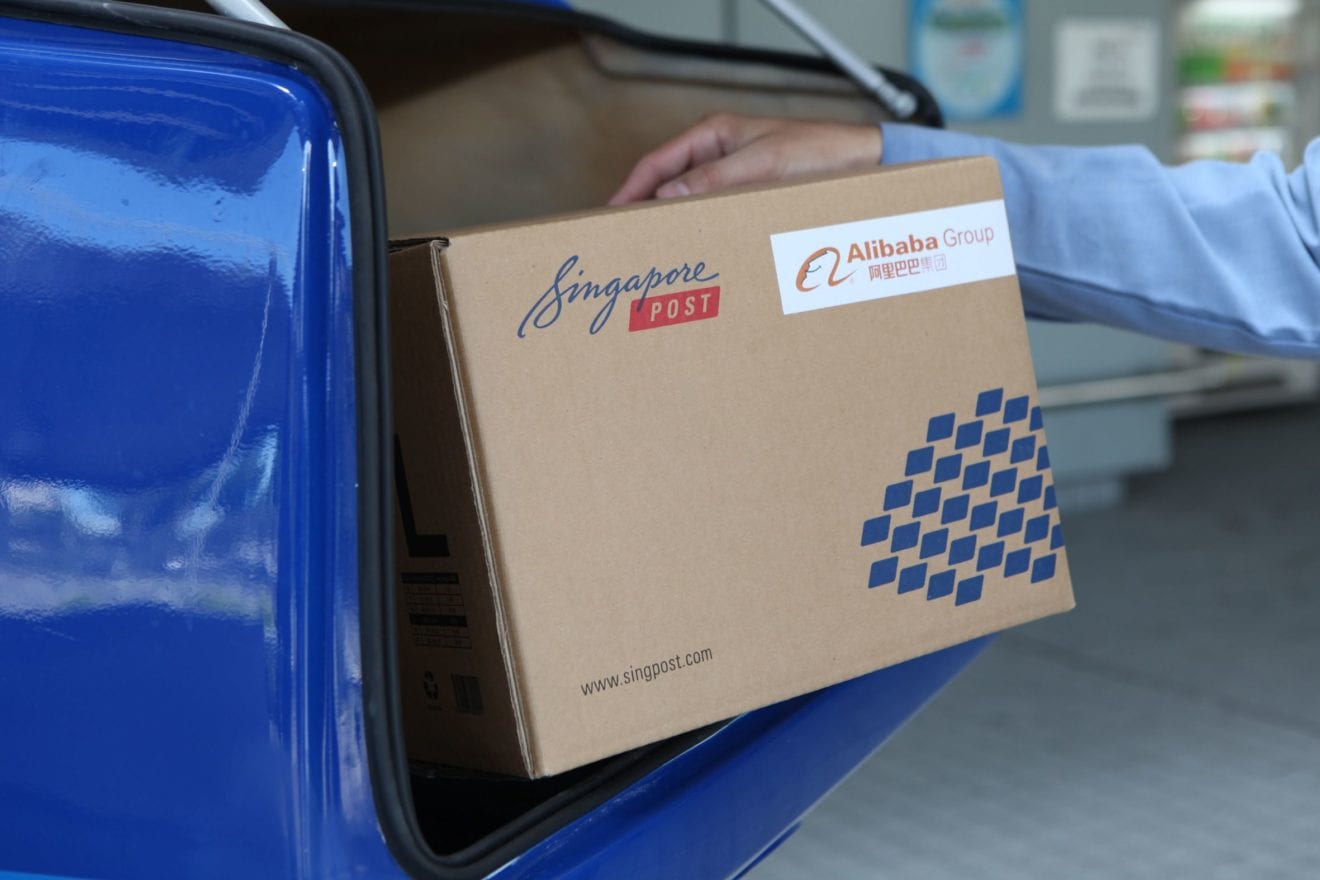
    Despite signs of a slowdown of imports into China, Singapore Post (SingPost) remains bullish on the prospects for e-commerce flows into Asia’s largest economy. The postal agency has upped its stake in Shenzhen-based e-commerce provider 4PX Information Technology.

    SingPost forked out US$25.6 million to acquire an additional 17.91% position in 4PX, one of China’s top e-commerce cross-border players, whose scope of services ranges from forwarding, express delivery and warehousing to software and consulting services for e-commerce vendors. The postal operator now holds a 36% stake in the Chinese firm.

    4PX runs warehouses in China, Australia, UK, Germany and the US, employing north of 2,600 staff. The company has over 20,000 customers in more than 50 locations in China and globally.

    “The additional investment in 4PX, with its extensive logistics capabilities in warehousing, express delivery and freight forwarding, is a key part of SingPost’s strategy to strengthen our integrated end-to-end e-commerce logistics solutions and to leverage on the rapid growth in China’s e-commerce activities,” said Goh Hui Ling, deputy CEO (international mail) of SingPost.

    With general cargo growth in the doldrums, logistics providers are keen on developing a footprint in e-commerce, which promises rich pickings and robust growth momentum. According to one estimate, global B2C volume is expected to reach US$2.26 trillion a year by 2020, with an annual growth rate of 15 to 20%.

    International carriers are particularly gung-ho on China, citing Chinese consumers’ rising cravings for international brands. Anselm Eggert, head of e-commerce at Lufthansa Cargo, stated that they are showing strong interest in European brands, especially health and beauty products.

    Freighter leasing firm Airborne Global Solutions invested US$16 million last September for a 25% stake in the nascent United Star Express, a new Chinese freighter operator that is expected to take to the skies halfway through this year. Its partners in the venture are Chinese Boeing 737 operator Okay Airways, a developer and an investment company, and Vipshop, the third-largest e-tailer in China, according to AGS president Rich Corrado.

    Postal agencies are pushing aggressively into this arena, their eagerness intensified by a need to make up for the ongoing shrinkage of their traditional letter mail business. With their delivery networks they have a strong advantage over competitors in the critical final-mile segment in their home markets, but they are also increasingly targeting international flows to other markets.

    Japan Post established its own website in China last autumn to offer Japanese merchandise to Chinese consumers. Orders are consolidated and moved by ocean vessel to Shanghai for overland distribution.

    China Post has been in hot pursuit of e-commerce business, which is reflected in the rapid growth of China Postal Airlines. According to one source, China Southern Airlines’ decision last year to bring two parked 747-400 freighters back into service was prompted by the Chinese postal agency.

    To develop its traffic from the postal agencies of Hong Kong and China, Cathay Pacific has implemented barcode scanning of mail at its stations in China and in Hong Kong. This enables the electronic transmission of departure, transit and arrival information. In a second phase, the airline is looking to integrate various IT interfaces – from booking to space management and mail warehouse transit management – to establish real-time data flow, said Mark Sutch, the airline’s general manager of cargo sales and marketing.

    For now many airlines view postal business as the biggest inroad into B2C e-commerce, but this will likely change. Eggert envisages greater involvement from carriers down the road. At this point Lufthansa is studying the market in order to be able to develop more targeted options later on.

    “I think in the future we will go beyond mail. I think the industry needs to think how to work together with partners,” Eggert said. This will require closer alignment, including some degree of IT integration. In light of the fact that the air cargo industry does not have a stellar track record in developing joint solutions, this will be a challenging avenue for operators to pursue, he added.

  • Indonesian shoppers flock to Singapore as rupiah surges

    Indonesian shoppers flock to Singapore as rupiah surges

    Tourist arrivals will spike this year.

    Buoyed by the resurgent rupiah, Indonesian holidaymakers are once again trooping to Singapore to shop and splurge, according to a report by Bloomberg.

    The rupiah has surged 9.9 percent against the U.S. dollar over the past six months, second only to Malaysia’s ringgit among emerging markets, as slowing inflation and a nascent commodity-price recovery lured money to the nation’s assets.

    “The rupiah has done really well this year and it makes things look cheaper elsewhere for Indonesians,” said Nizam Idris, head of foreign-exchange and fixed-income strategy at Macquarie Bank Ltd. in Singapore. “The currency will find support from decent yields and bottoming commodity prices.

  • Here’s why new NFC-enabled SIM cards may flop in Singapore

    Here’s why new NFC-enabled SIM cards may flop in Singapore

    The service is too costly. Singapore’s telco operators recently unveiled new NFC-powered SIM cards, which will allow commuters to pay fares using their mobile phones. The SIM cards will also be accepted at 30,000 ez-link terminals across the island.

    However, the new SIM cards might fail to gain enough popularity because of several stumbling blocks, according to a report by DBS.

    The report noted that the popularity of iPhones in Singapore is a big hurdle to the rise of the new SIM cards. The NFC-powered SIM cards are incompatible with iPhones, which only support Apple Pay and make up a third of mobile phone sales in the country.

    DBS also highlighted that ez-link is not accepted at 7-11 stores and many other retail outlets, which prefer NETS and credit cards.

    Apart from these hurdles, the cards are also extremely expensive at $37.50 apiece.

    “EZ-link is not widely popular for retail transactions even in Singapore. Plus NFC enabled payment is not adding any security feature to the ez-link card while “Apple Pay” adds security to credit card transactions. So we do not see that the NFC enabled SIM based payments will be widely used. Anyway, telcos may not get much commission out of the transactions, as the bulk may go to ez-link for its large customer base using it for buses and trains,” the report noted.