Tag: Singapore

  • Uniqlo to open flagship store in Singapore

    Uniqlo to open flagship store in Singapore

    Japanese clothing brand Uniqlo is set to open its first global flagship store in Singapore and the Southeast Asia region at Orchard Road by the second half of this year.

    The store, spanning across three levels at Orchard Central (a total area of 2,700 sqm), will generate more than 300 jobs here. It will be Uniqlo’s biggest outlet in Singapore and the region.

    “We are very honoured, and excited, to open our first UNIQLO Global Flagship Store in Singapore. Having been a member of the local retail scene since 2009, we remain committed toward contributing to the local community and being an integral part of Singapore’s growth and future,” said Taku Morikawa, CEO of Uniqlo Southeast Asia.

    Uniqlo fans can expect the flagship store to provide an extensive range of Uniqlo’s latest lines for women, men, kids and babies. The store will also serve as a platform to showcase the brand’s LifeWear collection.

    There are currently 13 global flagship stores around the world, including cities such as New York, London, Paris and Shanghai.

  • Standard Chartered opens Singapore innovation lab

    Standard Chartered opens Singapore innovation lab

    Standard Chartered Bank has opened a new innovation lab in Singapore to explore the use of emerging technologies and data sciences in support of the bank’s digital transformation strategy.

    The ‘eXellerator’ builds upon Standard Chartered’s established technology outpost in Silicon Valley, SC Studios, and is the bank’s first dedicated space for innovation in Asia, located at the heart of its main office building at Marina Bay Financial Centre.Anju Patwardhan, Standard Chartered’s global chief innovation officer, says: “This is where we can tap the depth of knowledge and talent, as well as work with local universities and research organisations, to help drive the bank’s innovation agenda.”

    The bank has secured the support of the Monetary Authority of Singapore (MAS) in establishing the facility. MAS has been actively encouraging the development of a ‘Smart Financial Centre’, in line with country’s ‘Smart Nation’ plan, and recently appointed a ‘chief fintech officer’, Sopnendu Mohanty, to co-ordinate its efforts.

    Says Mohanty: “The financial sector is an integral part of Singapore’s ambition to be a Smart Nation. A Smart Financial Centre with an open architecture and collaborative fintech community will promote innovation, application of technology advancements and talent development in financial services.”

    Standard Chartered has already laid the groundwork for the new lab through a multi-year collaboration agreement with A*Star’s Institute for Infocomm Research (I2R) – Singapore’s national information and communications technology research institute – to jointly work on data science research and experimentation by tapping the Institute’s network of data scientists and software engineers.

    It has also partnered with DBS Bank and Singapore’s Infocomm Development Authority (IDA) to successfully complete a proof of concept (PoC) on the application of distributed ledger technology in trade finance invoicing with the objective of reducing risk around duplicate invoice financing for banks while preserving client confidentiality.

  • Cruise business up 14% in Singapore last year

    Cruise business up 14% in Singapore last year

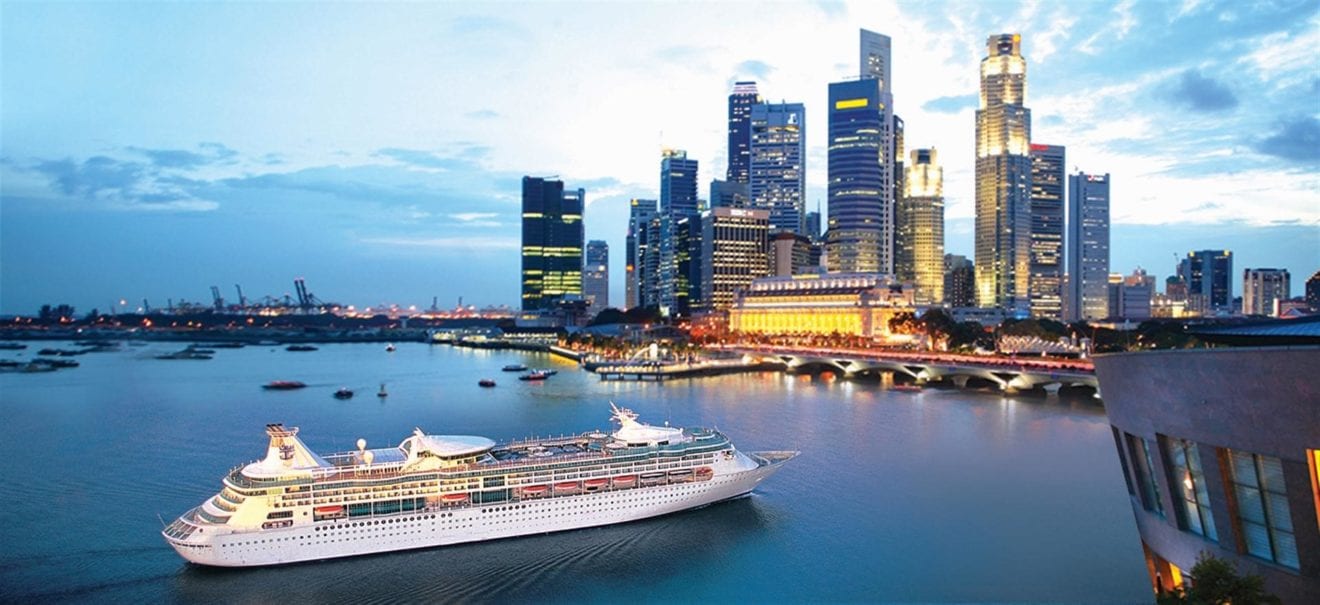
    The Singapore Tourism Board (STB) reports that the country witnessed encouraged growth in the cruise and business segments as the Singapore Cruise Centre (SCC) was named the number one cruise port in Asia in 2015.

    Interestingly, the cruise industry saw a 14% year-on-year increase in cruise passenger throughput last year to more than one million.

    In addition, the country welcomed a total of 385 cruise ships, including international cruise brands such as TUI cruises, and Royal Caribbean, as well as nine maiden calls – new to Singapore and Southeast Asia.

    GROWING CRUISE INCENTIVES…

    The STB added that Singapore also launched the inaugural unified Southeast Asia Cruise brand​ and forged MOUs with Vietnam and Thailand to develop the regional cruise business. ​

    The tourism body also manages the Cruise Development Fund (CDF) which actively supports the ‘home-porting’ of new cruise ships or extension in deployments of existing home-ported cruise ships out of Singapore, with the aim of growing Singapore’s cruise industry and tourism generally.

    Significantly, the Royal Caribbean International cruise company signed its first-ever multi-million dollar marketing collaboration with STB and the Changi Airport Group (CAG) last year to promote overseas fly-cruising out of Singapore.

    This tripartite agreement now operates between 2015 and 2018 and all parties are estimating it could attract an additional 170,000 overseas visitors to Singapore on Royal Caribbean cruises over this aforementioned period.

    DFS AND HEINEMANN

    All of which is good news for DFS Singapore, which operates the departure-transit and arrivals transit shops alongside Ocean Duty Free’s outlets at the Singapore Cruise Centre.

    Heinemann Asia Pacific opened its third and largest duty free shop (157sq m) in partnership with the Singapore Cruise Centre (SCC) at the Harbourfront Ferry Terminal last January. Around 5m passengers use this terminal each year-Ed.

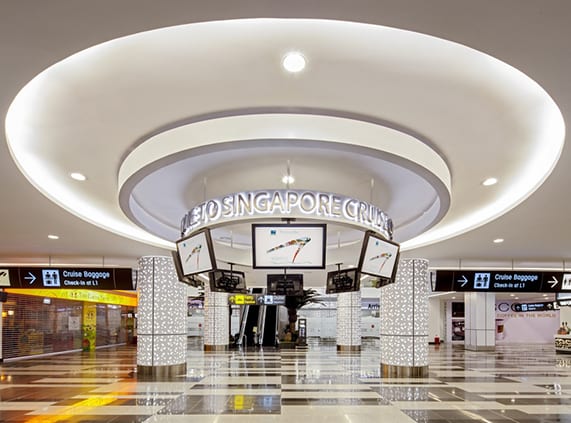
    The grand looking SCC

    The grand looking Singapore Cruise Centre.

    As reported, the STB is now forecasting that this year’s total tourism receipts will be between S$22bn and $22.4bn ($16bn to $16.3bn) representing a growth range between 0% and 2%. By contrast, it is forecasting international visitor arrivals of between 15.2m and 15.7m – a growth of between 0% to 3%. ​

    This follows a year when international visitor arrivals grew by 0.9% to 15.2m in 2015. However, tourism receipts declined by -6.8% to S$22bn ($16bn) with this attributed mainly to the decline in BTMICE visitor arrivals and spending. By contrast, leisure visitor arrivals grew by 2%.

  • Singapore’s SME retail exporters can now gain better access to US market

    Singapore’s SME retail exporters can now gain better access to US market

    The revised de Minimis Threshold increases the limit to the United States from US$200 to US$800.

    Web-based small and medium enterprises (SMEs) retail exporters in Singapore can now gain better access to the United States market with the revision of de Minimis Threshold.

    The revised de Minimis Threshold – the amount at which US import duties apply – increased the limit from US$200 to US$800. This means that sellers no longer need to pay the US import duties when the price of their products is under US$800.

    “The revised de Minimis Threshold provides a timely opportunity for local businesses to internationalise. The US is the number one export destination for eBay Singapore sellers with its strong consumer purchasing capacity and high expenditure in e-commerce,” said Teri Canayon, country manager of eBay Singapore Cross-Border Trade. “With a lower barrier for cross-border e-commerce for our Singapore SMEs, there will be even greater incentives to boost exports to the US market, ultimately driving greater growth.” 

    Sellers can also mail higher value products directly to the US market, which allows them to better manage their supply chain and inventory costs.

    In addition, the cost of products to American consumers is lowered. This encourages them to buy more overseas, which may eventually give Singapore businesses a better chance to grow sales in the US market.

  • Real Singapore retail sales rise

    Real Singapore retail sales rise

    Real Singapore retail sales recovered slightly in January, rising 1.4 per cent year-on-year.

    The headline figure widely reported by business media of a 7.5 per cent increase included motor vehicles.

    Real retail sales fell 0.5 per cent from December to January, and by 1.2 per cent with vehicles included.

    The total retail sales value in January 2016 was estimated at $4.1 billion, higher than the $3.8 billion in January 2015.

    Retail sales Jan 2016 Singapore

    Medical goods and toiletries and department stores showed the strongest year-on-year gains, while telecommunications goods and computers accounted for by far the largest fall.

    The accompanying charts show the sales trends by product category.

    Sales of food & beverage services (seasonally adjusted) increased 2.4 per cent month-on-month in January Year-on-year, they declined by 0.6 per cent in January.

    The total sales value of food & beverage services in January 2016 was estimated at $685 million.

  • 7 Tips for a Safe and Low-Priced Online Shopping Experience

    7 Tips for a Safe and Low-Priced Online Shopping Experience

    The possibilities for online shopping seem endless. To buy clothing, electronics and even your groceries you don’t have to leave the house anymore. Buying online is usually cheaper than buying in store too, because you can find really great discounts and deals online.

    But can you trust your mailman to deliver the package, won’t someone steal your package from your mailbox and how about the safety of online payments? Here we will share with you how to find discounts for your online shopping adventures and how to shop safely.

    1. Choose cash on delivery

    Well known webshops such as Lazada and Zalora give you the option to choose ‘cash on delivery’ (COD) as a payment method. In short, this means that you pay the delivery man in cash when he hands over the package to you on your doorstep. This way you only pay when you actually receive your package. Most of the time the delivery is free of charge. If you don’t want the hassle of staying at home until the postman arrives you can also let them deliver your package at work.

    2. Look at reviews

    Not too sure about the webshop you are about to order from? Get advice from others! You can check Trusted Company to view experiences per webshop from fellow shoppers.

    3. Check payment security systems

    Check if a webshop is Norton Secured and/or PCI DSS approved. The Norton Secure seal means that sensitive data is protected and the PCI DSS seal tells you that the security standards for account data protection are high. Your payment details are most likely to be secured when a webshop shows the two seals.

    4. Shop at international shops

    European and American shoppers have been shopping and paying online for ages already. They are not hesitating to pay online, simply because it always goes smoothly. Big international merchants, like Asos and The Body Shop are not trustworthy but also have good customer service. The only downfall is that international shipping will take longer.

    5. Use discount code websites

    Websites like Saleduck collect all discount codes and deals from webshops for you. When you are in the check-out process of a webshop and about to pay, a lot of webshops give you the option to fill in a discount code. If you don’t have a discount code, most of the time you can find one at a discount code website.

    6. Get in app discounts

    A lot of webshops really want to promote their app so they offer you a great discount when you download it. If you purchase something through their app for the first time, you can count on a nice discount, for example 15%.

    7. Use credit card discounts

    If you own a MasterCard, Citibank or CIMB Bank creditcard, you are in luck. A lot of webshops have special promotions for customers that pay with these cards. Discounts go up to an additional 25% off. Sometimes these offers are only valid on certain days, like MasterCard’s Monday promotions.

  • Esprit sales flat, as expected

    Esprit sales flat, as expected

    Largely in line with expectations, Esprit sales were flat, the fashion brand says in its interim report for the six months to December 31.

    While its overall turnover was down 0.4 per cent overall, retail turnover grew 6 per cent while wholesale turnover fell 11.4 per cent.

    The gross profit margin for Esprit Holdings was stable at 50.5 per cent, while the net loss of HK$238 million was in line with expectations. The group had a healthy net cash position of HK$4.2 billion with zero debt.

    Unfortunately, positive retail sales growth in Europe was offset by continued weakness in the wholesale channel, and negative development in the Asia Pacific region. Asia Pacific turnover declined 6 per cent year-on-year, mainly dragged down by China with its 11.6 per cent drop. China represents 46 per cent of the region’s turnover.

    In its breakdown of turnover in Asia Pacific, China led with HK$655 million, 7 per cent of group turnover. Then came Hong Kong (HK$185 million, 2 per cent, down 0.4 per cent), Australia and New Zealand (HK$162 million, 1.7 per cent, up 0.3 per cent), Singapore (HK$129 million, 1.4 per cent, down 4.7 per cent), Taiwan (HK$98 million, 1.1 per cent, up 6.5 per cent), Malaysia (HK$97 million, 1 per cent, down 2.7 per cent), Macau (HK$56 million, 0.6 per cent, down 12.7 per cent) and others (HK$43 million, 0.5 per cent, up 6.2 per cent).

    In the previous financial year, the group moved towards vertical integration which resulted in more cost-efficient product development and supply chain processes, allowing product improvements in terms of design, quality and value-for-money.

    To maximise the selling potential of its improved products, this past year the group started pursuing an Omnichannel business model. In its early stages, this has led to improvements in growing its loyal customer base “Esprit Friends” and fully integrating the commercial activities of all sales channels.

    In September, the group launched an intensive brand-marketing campaign to strengthen and rejuvenate its image.

    Performance during the first six months of this financial year (between July and December) indicated that the vertical and omnichannel model was an effective basis to turn around its business, the company said.

    In its report, the company paid tribute to its co-founder, Doug Tompkins, who died in December, describing him as a “conservationist, outdoorsman, philanthropist, agriculturist and businessman”. He and his then wife, Susie Buell, formed the company in 1968. Esprit’s collections are available in 40 countries, in about 870 directly managed retail stores and through more than 7500 wholesale sales points including franchise stores and department-store outlets. The Group markets its products under two brands, Esprit and EDC.

    Listed on the Hong Kong Stock Exchange since 1993, Esprit has headquarters in Germany and Hong Kong.
  • Hong Kong keeps close eye on Singapore’s moves

    Hong Kong keeps close eye on Singapore’s moves

    Faced with a cloudy economic outlook, Hong Kong is casting a keen eye on action taken in Singapore, a fellow open economy buffeted by external forces – and an old rival.

    Thursday offered a good look. Finance Minister Heng Swee Keat announced a Budget that includes government spending of $73.4 billion.

    It comes a month after Hong Kong’s Financial Secretary John Tsang announced its Budget with an expenditure of HK$490 billion (S$87 billion). The reaction here is that, at first glance, the two financial czars – both men coincidentally have a Master’s in Public Administration from Harvard – might have been studying the same playbook.

    Given tough times ahead, they announced near-term relief mainly in the form of tax rebates and loan schemes for small and medium- sized enterprises (SMEs), and handouts for people to help boost consumption. Buzzwords such as innovation, robotics, and research and development also liberally litter the duo’s respective long-term visions.

    Ernst and Young’s Hong Kong tax managing partner Tracy Ho puts it thus: “They (Singapore) watch us, and we are watching them too.”

    Hong Kong is facing headwinds from a mix of political tensions and economic trends. Its retail sales recently suffered the worst decline in 13 years. Tourist numbers are down. The economy will grow between 1 and 2 per cent this year, Mr Tsang has said. But a greater anxiety is over the city’s long-term prospects. One nagging worry is the lack of diversity in its economy, in terms of its dependence on China and in its industry mix. Hong Kong is heavily dominated by the financial, hospitality and other services sectors, with a negligible manufacturing presence.

    It is in this broader vision that Singapore’s Budget on Thursday offers takeaways for Hong Kong, say those interviewed. Businessman David Ting, past president of the Chamber of Small and Medium Business, laments that unlike in Singapore, Hong Kong SMEs “do not have a clear direction on where we should go”. In particular, he lauds the Singapore Budget for being “very focused”. The $4.5 billion Industry Transformation Programme offers targeted industries a road map for how they can grow.

    On why Hong Kong businesses, known for their entrepreneurial spirit, will need such guidance now, Mr Ting says the landscape has changed. With China closed off in the past, it was easier for businesses to suss out opportunities, he adds.

    Lawmaker Charles Mok, an IT entrepreneur, says that while there are superficial similarities between both Budgets, given the emphasis on R&D, there was a distinct difference in how it is to be applied. In Singapore, the focus is on how to reinforce the manufacturing industry by introducing automation, he says.

    “In Hong Kong, we talk of developing R&D. But who is it for? Factories in China? What about our domestic industry – how do we help them get restarted?” says Mr Mok.

    On the flip side, Singapore’s Silver Support Scheme to help the elderly does not go far enough, notes social work expert Nelson Chow. “It helps the bottom 20 per cent. But in Hong Kong, this is something we’re already doing. The next step is to introduce a universal pension.”

  • Whisky Magazine picks DFS’ Changi T3 duplex

    Whisky Magazine picks DFS’ Changi T3 duplex

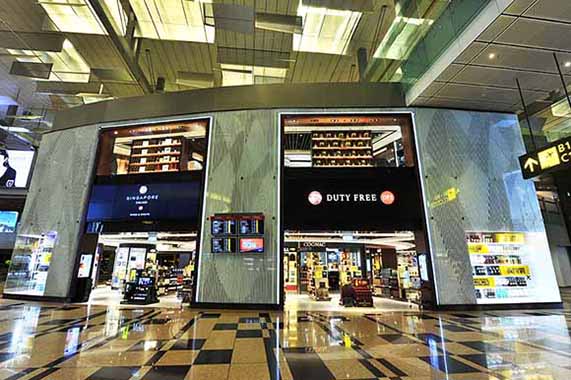
    DFS Group’s Singapore Changi Airport duplex duty free liquor and tobacco store in Terminal 3 was recently voted Travel Retailer of the Year in the 2016 ‘Icons of Whisky Awards by Whisky Magazine.

    As reported many times, the store was opened last May as part of an airport terminal-wide upgrade of the wines and spirits category, where the Civil Aviation Authority of Singapore raised the bar by encouraging contract bidders to push the envelope in terms of shop standards and quality.

    DFS’ May 7 2015 response was the long-anticipated opening of its $64m new terminal wide programme of stores over 85,350sq ft, including its 11,400sq ft dual-floor duplex Changi Airport T3 liquor and tobacco store – the largest single space for liquor and tobacco in any DFS store around the world.

    DFS Group’s flagship wines and spirits store at Singapore Changi Airport Terminal 3 is also the LVMH-owned company’s single biggest contract investment in wines and spirit to date. Prior to the opening, Michael Schriver [the then COO of DFS] described the project as ‘DFS most ambitious airport store ever’. At the same time, Ms. Lim Peck Hoon, EVP, Commercial at the Changi Airport Group described the L&T business as the single biggest commercial concession accounting for around 20% of total sales.

    According to DFS, Whisky Magazine receives nominations for its huge number of awards, which are subsequently shortlisted by its editorial panel and then finalized after a voting process online.

    DFS IS THRILLED…

    “We are absolutely thrilled that our DFS, Singapore Changi Airport store has been awarded Travel Retailer of the Year by Whisky Magazine and look forward to continuing to deliver innovative experiences and exceptional products for our customers in 2016,” said Brooke Supernaw, DFS Group’s Senior Vice President Wines, Spirits and Tobacco.

    “At each of our locations, our aim is to provide our customers with a surprising and delightful shopping experience where they can engage with the brands and products they love. We are particularly proud of DFS, Singapore Changi Airport which over the past year has expanded to become Asia Pacific’s largest assortment of single malts.

    DFS-Changi-L&T-tall-shot

    Click on picture above to enlarge:

    “From the duplex’s design to the interactive tastings held on site, our customers have loved this new approach to travel retail and we’re delighted the industry has fallen in love as well.”

    DFS adds that this is the first year the Icons of Whisky Awards have included a Travel Retail category, which was awarded at both the regional and global level.

    SEVERAL RIVALS COMPETED

    The retailer says it beat competitors from Ireland, England, Germany, the UAE and the Netherlands to receive Whisky Magazine’s Travel Retailer of the Year in the Rest of the World regional category award last in January.

    Following this it adds it is now pleased to have gone  head-to-head with rival entries from America and Scotland to secure the global title at the awards ceremony held in London last week.

  • M1 launches 10Gbps residential fiber service

    M1 launches 10Gbps residential fiber service

    Singapore’s M1 has joined rival SingTel in offering 10Gbps residential fiber broadband services.

    The operator has extended its 10Gbps XGPON service, launched for the corporate segment last August, to the consumer market.

    M1 is offering the service for S$189 ($134) per month on a 24-month contract, which includes termination point installation and ONT activation worth up to S$294.25 and a 1Gbps 4G mobile data line with a free 300Mbps of monthly data.

    The service does not come with a voice port due to technological limitations, and M1 likewise noted that no residential wireless routers currently support 10Gbps speeds.

    “Last August, we launched Singapore’s first 10Gbps XGPON service for the corporate segment. The service has been well-received, and since then we have been conducting network and equipment testing to ensure our service is ready for our residential customers,” M1 CMO P Subramaniam said.

    SingTel launched 10Gbps residential fiber services earlier this month following a successful trial conducted in  2015. This service is also priced at S$189 per month.

  • Online shopping will never defeat brick-and-mortar shops in Singapore: report

    Online shopping will never defeat brick-and-mortar shops in Singapore: report

    Store-based retailing will continue to rule.

    The rise of e-commerce will be insufficient to dethrone brick-and-mortar shops in Singapore, according to a report by RHB Research.

    RHB noted that even if the popularity of online shopping continues to grow, traditional shops will retain the upper hand because of their wider reach.

    “We think the e-commerce business is unlikely to impact retailers to a large extent. Based on Euromonitor’s 2015 data, non-store retailing made up a mere 6.2% of the overall retail market in Singapore. Given its small scale at the moment, we think it is unlikely for the e-commerce sector to make a dent on the brick-and-mortar stores domestically,” RHB said.

    Even if the e-commerce sector grows at a much higher rate, RHB reckons that traditional stores will continue to dominate.

    “If non-store retailing growth rates were to double Euromonitor’s assumption every year, brick-and-mortar stores would still dominate at least 88% of the market share, even after five years. Hence, this suggests that the e-commerce business is unlikely to result in any big changes within the domestic retail scene,” said the report.

  • SingTel suspends mobile app after user detail leak

    SingTel suspends mobile app after user detail leak

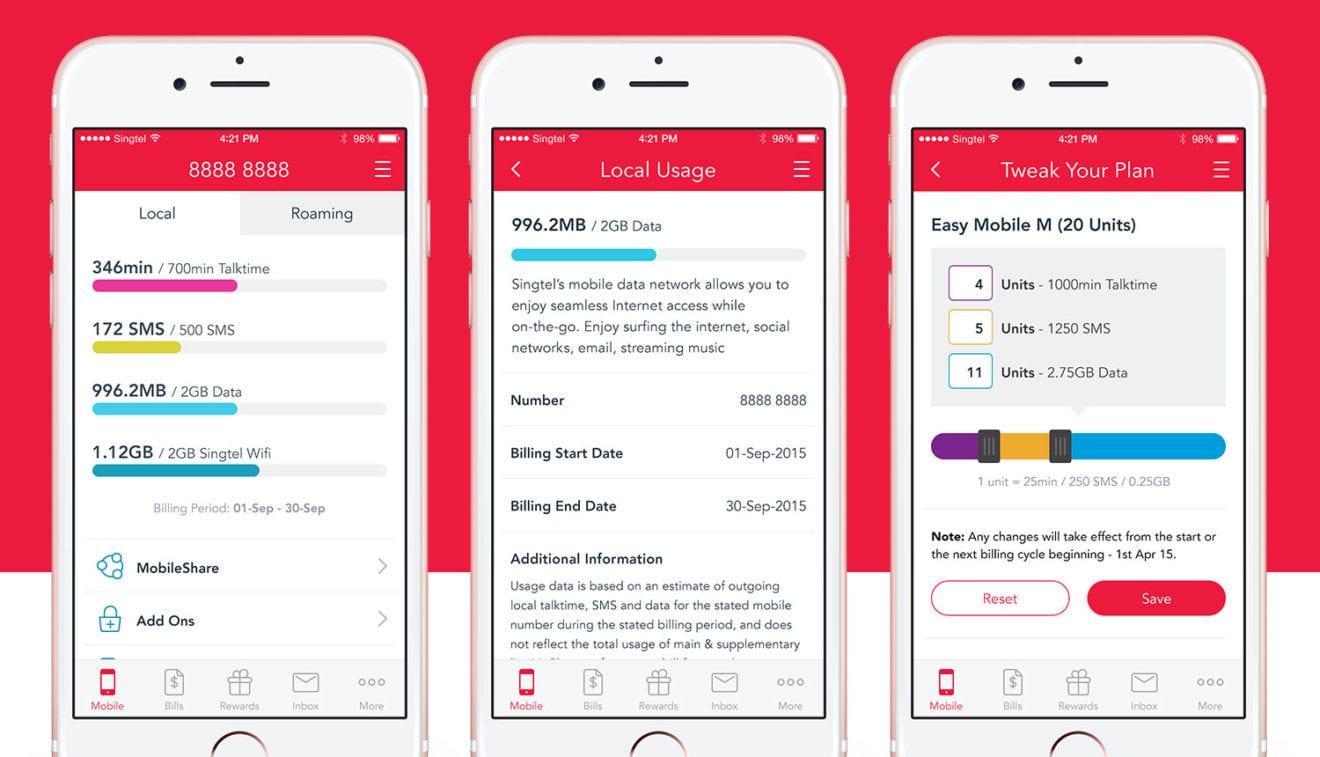
    SingTel was forced to temporarily suspend the functions of its mobile app after a software glitch resulted in users viewing the personal information of another account.

    Customers logging into the My Singtel app were able to view and the personal details of a different customer, and to modify the data field under account information to add their own messages.

    Multiple users reported encountering this glitch over social media, with a number expressing concerns that their account details had been compromised.

    SingTel suspended access to the app, commenting in a statement that the glitch exposing the customer information only affected one account.

    The statement added that SingTel is still trying to get in touch with with the customer to apologize or explain.

    As of Midday yesterday most functions of the app had been restored, but not the bills, rewards and e-appointment features.

    The company insisted that this is an isolated incident and ensured customers that their account security had not been compromised.

  • Price war in Singapore over mobile data

    Price war in Singapore over mobile data

    A price war has erupted in Singapore for the first time in four years, as operators seek to stay competitive by lifting their data allowances.

    SingTel recently introduced a new add-on plan giving customers the option of doubling their mobile data allowance for an extra S$5.90 per month.

    Both M1 and StarHub quickly followed suit, with M1 introducing a similar option to SingTel and StarHub offering an extra 3GB of mobile data for a promotional rate of S$3 per month, rising to S$6 from April.

    The offers mean the operators have effectively halved their mobile plan charges in some cases. The biggest discounts are for more high-end plans.

    The cuts follow the ISP seeking to become Singapore’s fourth mobile operator, that it plans to charge as little as S$8 for a mobile plan with 2GB of data, with value added services charged at market rates.

    MyRepublic also plans to offer an unlimited data plan for S$80 per month. The incumbent operators currently do not offer unlimited data options.

  • Analog TV signs off in Singapore in 2017

    Analog TV signs off in Singapore in 2017

    Analog television broadcasts in Singapore will stop by the end of 2017, according to the Ministry of Communications and Information.

    Public broadcaster Mediacorp converted all seven of its free-to-air (FTA) TV channels to the digital terrestrial transmission (DTT) format in December 2013, but continues to broadcast in analog. This will end next year.
    Minister Yaacob Ibrahim said that the freed-up spectrum will provide more capacity for mobile broadband and better support Singpaore’s Smart Nation development.

    Analog broadcasting in Singapore could be turned off before 2020. Viewers who want to continue watching FTA television channels after digital migration will need to buy either a new TV set with a built-in digital tuner or connect a digital set-top box (STB) and an indoor antenna to their existing TV sets.

    A label issued by the Media Development Authority (MDA) indicates whether the TV set or STB is compliant with Singapore’s digital format.

    The MDA also offers free digital STBs to low-income households, and says it has installed digital TV receivers to almost half of the 77,000 homes that automatically qualified for assistance.

  • TrueMove, StarHub and China Mobile enter in an alliance

    TrueMove, StarHub and China Mobile enter in an alliance

    StarHub has signed an MoU with China Mobile and TrueMove covering hand-in-Hand collaboration.

    Under the agreement, China Mobile Communications Corporation, the world’s largest telco, will play host to the collaboration in five areas: device collaboration on research initiatives for mobile network evolution technologies; strengthening complementary capabilities for data business services; enhancing mobile business through global roaming cooperation and information sharing; leveraging network resources to maximize efficiency; and co-developing new business opportunities in relation to innovation and the IoT.

    StarHub CEO Tan Tong Hai said the signing was an important milestone for StarHub, and a timely one as China embarks on its One Belt One Road project in which Singapore is well poised to facilitate the journey.

    Tan said that Singapore being the regional hub for Southeast Asia is the best place to build this bridge between Southeast Asia and China. He spoke of the investments China Mobile had made in submarine infrastructure linking the region to East China.

    The One Belt One Road project is the combination of the Silk Road and the Maritime Silk Road under a vision by Xi Jinping that focuses on connectivity and cooperation among countries primarily in Eurasia.

    Tan promised seamless cross-border experience for his China Mobile partners.

    “As part of this partnership, we will also look into other areas of collaboration such as data analytics, content, cyber security and Internet of Things,” he said.