Tag: Singapore

  • Singapore retail chains look to Muslim market

    Singapore retail chains look to Muslim market

    Amid the rows of blue jeans lining the walls of apparel chain Uniqlo are headscarves, baju kurung and kebaya — part of the Japanese retailer’s new section in Singapore that caters mainly to Muslim shoppers.

    While these garments are usually sold at niche stores in Geylang Serai and Kampong Glam, they can now be found at Uniqlo stores in town or at neighborhood centers.

    Uniqlo is one of the first mainstream retailers in Singapore to turn its focus to the Muslim market.

    The current selection is the second collection launched by Uniqlo following a successful initial run last July. The range is carried at five of its outlets — 313@Somerset, Causeway Point, Jem, One KM and Suntec City Mall — and its website.

    Another retailer that has jumped on the bandwagon is Singapore-based online store Zalora. Each month, it introduces about 50 to 60 products such as long and flowy tops and dresses under its “Zalia” collection. Managing director Dione Song described these as “trendy yet modest” pieces.

    The budding trend here mirrors the global boom in Islamic fashion in recent years. Muslims across the globe spent SG$266 billion (US$188.77 billion) on clothing in 2013 — more than the combined spending in Japan and Italy on fashion. This is set to almost double to SG$484 billion by 2019.

    Observers say the market potential in Singapore is large, with 15 percent of the resident population being Muslims. Also, unlike certain ethnic or cultural wear that is seasonal, such as the cheongsam, this clothing is everyday wear for a substantial proportion of Muslim women.

    Uniqlo said that it is discussing expansion plans for upcoming fashion seasons. It “acknowledges that there is a need among the markets where we are present for stylish and comfortable modest wear.”

    The collection is also retailing in Malaysia, Indonesia and Thailand.

    There is yet to be a major international clothing brand for Muslim wear, but over the past two years brands such as DKNY, Tommy Hilfiger, Zara and Mango have started to offer Muslim-oriented collections in their Middle Eastern stores.

    Major retailers here like H&M, Topshop, Topman and Dorothy Perkins say they have not rolled out any cultural or religious products.

    Although many here have welcomed the greater diversity of choice for consumers, a handful of netizens have voiced their displeasure about Uniqlo’s sale of religious and ethnic wear.

    Associate professor Ang Swee Hoon of the National University of Singapore’s business school said a secular chain offering religious wear could raise eyebrows.

    But Ustaz Firdaus Yahya, manager of an Islamic learning center, said it “reflects their acknowledgement of diversity, and those who do not welcome it may be ignorant or have their own personal bias.”


  • Trendsetter who fought shy of limelight

    Trendsetter who fought shy of limelight

    He stayed out of the limelight and shied away from the media, so few might know that Mr Jopie Ong Hie Koa was one of Singapore’s true trendsetters.

    The late managing director of Metro Group, who died suddenly on Tuesday night at age 75, was the first to introduce luxury brands such as Mont Blanc, Cartier and Gucci here, long before Singapore was considered a shopping destination.

    He was even the first to introduce a splash of colour to men’s fashion, recalled long-time business partner and friend Nash Benjamin, the chief executive of fashion and lifestyle group FJ Benjamin.

    “In the early 70s, Metro imported a line of shirts from Whitmont, an Australian brand. At the time, men’s shirts in Singapore were all white. But these Whitmont shirts were purple, mustard, red,” he said.

    “He brought me over and made me pick out one in each colour. So he started the trend of coloured shirts here. He was always on trend.”

    FASHION FORWARD

    In the early 70s, Metro imported a line of shirts from Whitmont, an Australian brand. At the time, men’s shirts in Singapore were all white. But these Whitmont shirts were purple, mustard, red… He started the trend of coloured shirts here. He was always on trend.

    MR NASH BENJAMIN, chief executive of fashion and lifestyle group FJ Benjamin, on Mr Ong spotting the latest fashion.

    Indeed, Mr Ong had a great talent for spotting the next big thing, not only in fashion but in the wider world of business.

    It was under his leadership that Metro grew from a two-storey shophouse at 72, High Street – a textile store founded by his father, Mr Ong Tjoe Kim, who hailed from Indonesia – into a retail behemoth and later, into a substantial property player with interests in China, Japan and Britain.

    Mr Ong joined Metro in 1964 and was appointed to the board in 1973, the same year he guided the firm to a listing on the Singapore Exchange, where, for many years, it was considered a blue chip.

    Metro had its heyday in the early and mid-1980s, when it became known as a purveyor of posh European brands such as Cartier, Burberry, Givenchy and Yves Saint Laurent, making it a haunt not only of wealthy tourists but also Singapore’s increasingly affluent, English-educated middle class.

    It had moved aggressively into Orchard Road, with four or five stores along the stretch. But by that time Mr Ong, always ahead of the curve, was looking at expanding his business interests further. In the early 1980s, thanks to an idea by Dr Jannie Chan, he entered into a joint venture with her and Mr Henry Tay to set up The Hour Glass, which specialises in quality Swiss brands such as Rolex and Patek Philippe.

    Then in 1985, he entered the auto industry, starting Komoco Auto, now Komoco Motors, with two partners. It started by distributing Hyundai cars.

    The move complemented Mr Ong’s own love of cars: His was apparently the first Lamborghini to be driven on Singapore’s streets and his collection of rare, luxury cars included several Ferraris and a gold Porsche sports utility vehicle.

    But it was also a shrewd decision that capitalised on Singapore’s then booming demand for affordable family vehicles.

    “He had the foresight to see ahead and was always searching, wherever it may be, for new business opportunities,” recalls Komoco managing director and co-founder Teo Hock Seng.

    “Singapore was in a recession when he came up with the idea to get into the auto trade.

    “We were supposed to be recession-proof and so we had to have prudence in our approach. And for the last 30 years we have been profitable. People accepted the product, which was value for money.”

    It was not long before Mr Ong was involved in yet another business project. By the early 1990s, even as Singapore was fast gaining a reputation for being a top-notch shoppers’ destination, Mr Ong could see that retail was not going to be as lucrative a business as it once was due to increasing rents and wages, so he started repositioning Metro as a property firm.

    He entered a joint venture with Ngee Ann Kongsi to build Ngee Ann City, from which Metro would earn a handsome rental income.

    Today, property is a core business for Metro alongside retail. The firm has interests in prime retail and office investment properties in first- tier cities in China, as well as residential and mixed-use development properties, held mainly for sale.

    It also has stakes in a mixed-use development in Manchester and a residential project, The Crest in Prince Charles Crescent, in Singapore.

    On the retail side, there are now only three Metro department stores in Singapore – at Paragon, The Centrepoint and Woodlands. The website lists nine in Indonesia. Metro also operates speciality shops for the Monsoon, Accessorize and M.2 brands here.

    Throughout the years, Mr Ong shied away from the media spotlight, so much so that when Metro held a press conference on its financial results in May 2008, it was the first time the company had done so in at least a decade. The fact that Mr Ong himself fronted the conference was as much news as the numbers he was there to announce.

    But away from the limelight Mr Ong lived large and generously. Friends recall not only his flashy cars and ceaseless smoking, but also the dinners held at his District 10 bungalow in Bishopsgate – monthly affairs that would include about 300 guests at a time and at which the host himself would often cook.

    A big fan of local hawker fare, he was known to whip up a mean nasi lemak, yong tau foo and leg of lamb.

    The twice-divorced Mr Ong leaves four children and four grandchildren.

    He also leaves a business in good shape – Metro’s net profit climbed 33 per cent to $142.4 million last year. His sister, Mrs Wong Sioe Hong, oversees the retail operations and the acting group chief executive is his right-hand man of many years, Mr Lawrence Chiang.

    Still, along with the rest of the retail and property industry, it faces a challenging business environment, especially as China, its key real estate market, is experiencing slowing growth.

    Without Mr Ong’s guiding hand to lead the ship, investors will likely be keen to see how the company steers through the choppy waters ahead.

  • Rakuten to shut Singapore website, cuts 30 local staff

    Rakuten to shut Singapore website, cuts 30 local staff

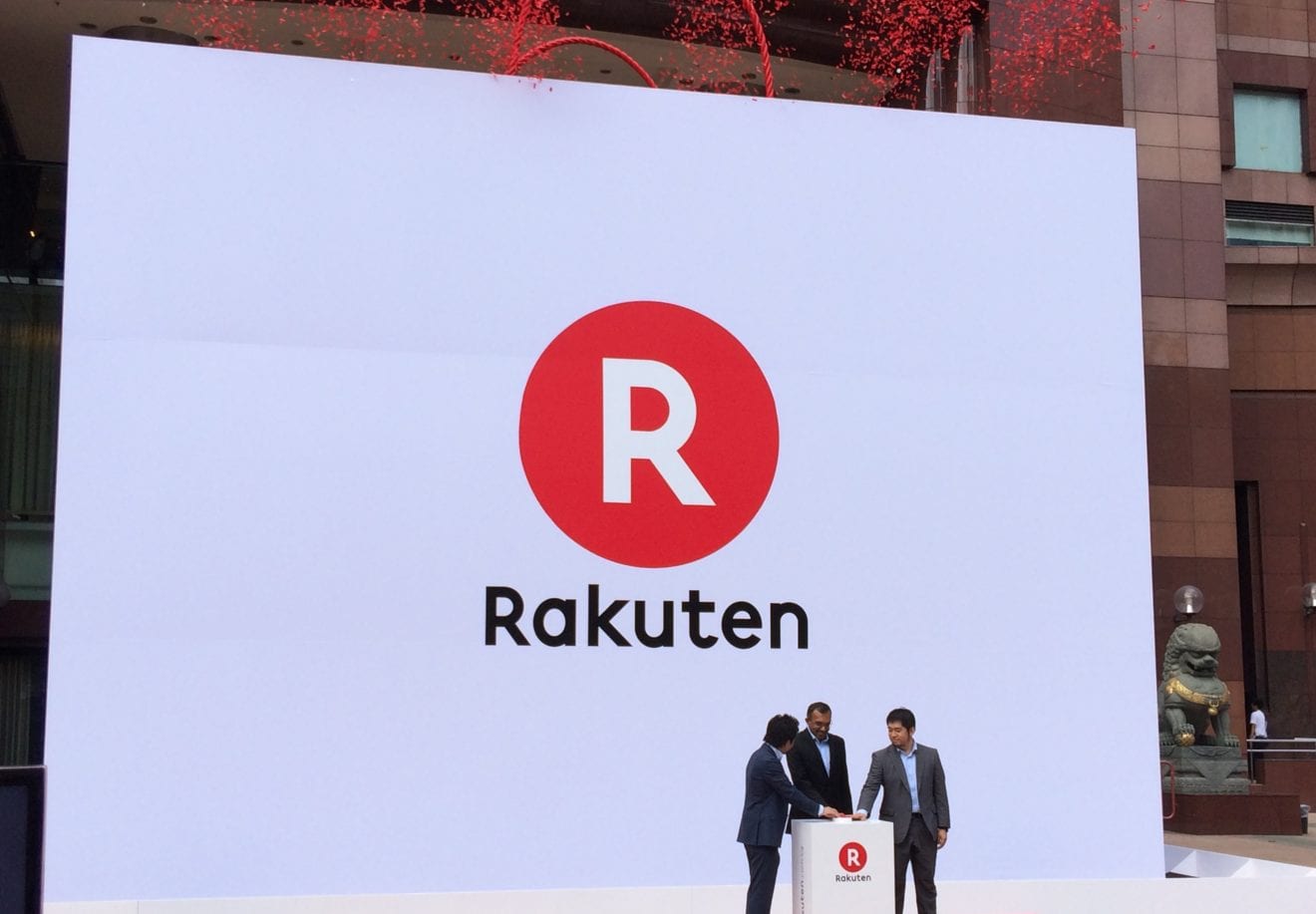
    Japan’s largest online retailer Rakuten is closing its Singapore website after two years, and trimming its staff.

    On Friday, the fifth day of Chinese New Year, about 30 local employees were given the pink slip .

    While the company will continue to keep its regional HQ here, a notice on the website posted on Friday evening said no new purchases can be made from its online portal from next month.

    Earlier that afternoon, around 30 staff at its Market Street office at Raffles Place were told that they would be laid off. They included sales, marketing and customer service staff who were directly involved in running the website.

    They were among the 150 employees who were laid off in Singapore, Malaysia and Indonesia. The company is closing its websites in the other two countries as well.

    Most of the Singapore staff were told to immediately return their staff passes, and their e-mail accounts were deactivated on the spot. They were escorted out of the office and told that they did not need to turn up for work any more, said a source.

    “All were in shock,” the source said. “They were told that Friday was their last day (of work).”

    A handful can continue to work until the end of the month, when the website finally goes offline.

    The Sunday Times understands that the individual severance packages are tied to how long the staff have worked there. The company will make the payouts only next month.

    When contacted yesterday, a Rakuten spokesman in Japan declined to give details of the Singapore retrenchments, but he said that the firm will compensate workers “above and beyond legal requirements” and help them find jobs.

    Rakuten Group, which is listed on the Tokyo Stock Exchange, announced in Japan on Friday a five-year business plan that includes overhauling its business model in South-east Asia by closing down its online retail websites and starting a customer-to-customer trading application.

    Experts were surprised that the retrenchments were carried out over the Chinese New Year celebrations that span 15 days.

    “We usually tell unionised companies to avoid retrenchments during festive seasons. This is good industrial relations practice,” said labour MP Patrick Tay, who chairs the Government Parliamentary Committee for Manpower.

    The firm is not unionised but the affected professionals, managers and executives can turn to the National Trades Union Congress (NTUC) for job placement help, said Mr Tay, who is NTUC’s assistant secretary-general.

    “The timing is a little brutal,” said Singapore Human Resources Institute president Erman Tan, adding that the speed at which retrenched staff were shown the door within hours was “very fast”.

    “This reflects the culture of the e-commerce sector. Things move very fast online and perhaps retrenchments too,” said Mr Tan.

    Association of Small and Medium Enterprises president Kurt Wee said the retrenchments signal the start of a phase of consolidation by companies as they respond to the global slowdown and local economic conditions.

    “When companies consolidate, some staff retrenchments are inevitable,” said Mr Wee.

  • HSBC setting up local subsidiary to handle retail and wealth business

    HSBC setting up local subsidiary to handle retail and wealth business

    HSBC’s Singapore branch is spinning off its retail banking and wealth management division into a local subsidiary.

    This locally incorporated unit, which will be operational from May 9, will oversee the running of all operations of the retail banking and wealth management business here.

    All other lines of business of HSBC in Singapore, which include commercial banking, private banking and global banking and markets, will continue to operate under the existing Singapore branch.

    Mr Guy Harvey-Samuel, HSBC’s chief executive officer for Singapore, said the move reflects the success of the bank’s retail business here.

    “More importantly, this move demonstrates HSBC’s strong and long-term commitment to the Singapore market,” he added.

    “Singapore is a top-seven priority country for the HSBC Group globally and we will continue to invest in our business here. We are excited about new opportunities to further expand our presence.”

    The move to locally incorporate the retail banking and wealth management business follows an announcement by the Monetary Authority of Singapore (MAS) in April last year that HSBC is considered one of seven domestic systemically important banks in Singapore.

    Such banks could have a significant impact on the Singapore financial system’s stability and the proper functioning of the broader economy.

    All banks here have to undergo an annual assessment of their systemic importance.

    Banks with a significant retail presence are required to locally incorporate their retail operations.

    In line with this, HSBC’s new subsidiary will be subject to additional MAS regulatory requirements aimed at strengthening the resilience of the banking system and boosting protection of retail customers.

    The subsidiary will hold a full bank licence with qualifying full bank privileges. These privileges include being able to open more branches than other foreign banks.

    Qualifying full banks are also allowed to conduct the full range of banking businesses permitted under the Banking Act, including taking retail deposits.

    Once the new subsidiary is up and running, it will be business as usual, HSBC said.

    Mr Matthew Colebrook, the head of retail banking and wealth management for HSBC in Singapore, added: “Our customers remain central to HSBC and we will ensure that the transfer of customer accounts to the subsidiary is a seamless and largely behind-the-scenes process.

    “More broadly, HSBC aims to be a primary bank for affluent and aspirant Singaporeans and those with international needs.”

  • Wing Tai’s Q2 net profit falls 85% to $1.08m

    Wing Tai’s Q2 net profit falls 85% to $1.08m

    Earnings plunged 85 per cent at developer Wing Tai Holdings in the second quarter due to the absence of a one-off gain in the corresponding quarter last year.

    The group had recorded a gain of $21.1 million on the disposal of a property subsidiary in Indonesia in the same period a year ago.

    Net profit this time came in at $1.08 million for the three months to Dec 31 while revenue fell 5 per cent to $120.6 million.

    The decline in turnover was due mainly to progressive sales of units recognised from The Tembusu, additional units sold at Le Nouvel Ardmore in Singapore, The Lakeview in China as well as contribution from Phase 2 of Jesselton Hills in Penang.

    The group’s share of profits from associated and joint venture companies fell by 25 per cent to $15.8 million, largely due to the lower contributions from Wing Tai Properties in Hong Kong.

    Distribution expenses fell 20 per cent to $22.2 million from $27.7 million due to lower rental and depreciation from its Singapore retail outlets. Administrative and other expenses rose 12 per cent to $23.8 million from $21.3 million a year ago due to the closure of Singapore retail outlets.

    Earnings per share tumbled to 0.40 cent from four cents, while net asset value per share rose to $4.09 as of Dec 31 from $4.07 as at June 30.

    No dividend was declared.

    The firm said the effect of the cooling measures will continue to weigh on market sentiment here this year while economic conditions in Malaysia will likely keep sales soft.

    In China, residential sales are expected to improve with the relaxation of home purchase restrictions in certain cities.

    Wing Tai shares closed 0.3 per cent or 0.5 cent up to $1.525 yesterday.

  • HSBC to locally incorporate its Singapore retail operations in May

    HSBC to locally incorporate its Singapore retail operations in May

    In order to follow new MAS regulations.

    HSBC will transfer its local retail banking and wealth management business, which is currently under the HSBC Singapore Branch, to a locally incorporated subsidiary, HSBC Bank (Singapore) Limited.

    The transfer of HSBC’s retail banking and wealth management business is expected to take effect on 9 May 2016, subject to the receipt of regulatory and court approvals.

    The move comes after Monetary Authority of Singapore tagged HSBC as one of seven domestic systemically important banks (D-SIBS). Under a new regulatory framework announced in April 2015, all D-SIBS should locally incorporate their retail operations to allow the MAS to set targeted and appropriate policy measures specifically for the systemically important banks.

    The other D-SIBS are DBS, OCBC, UOB, Citibank, Malayan Banking and Standard Chartered.

  • $100m deal for RedMart?

    $100m deal for RedMart?

    A $100 million investment aimed at funding pan-Asian expansion is on the cards for Singapore’s online grocer RedMart.

    Discussions involving the Series C investment are said to be at an advanced stage, reportsTechCrunch, citing two sources. While closure is expected in this first quarter, the grocery company has not issued any public comment on the development.

    Launched in late 2011 by Vikram Lupani, Rajesh Lingappa and Roger Egan, the venture introduced online and on-demand shopping in Singapore. So far, the company has raised $55.1 million from 19 investors. These include, according to Crunchbase, gaming company Garena, SoftBank Ventures Korea, Visionnaire Ventures and Facebook co-founder Eduardo Saverin.

    In August, RedMart raised a $26.7 million bridging round from its investors.

    Potential targets for RedMart’s expansion include Hong Kong and Jakarta, reports DealStreetAsia. However, the firm wants to establish its market leadership in Singapore, where Egan estimates the grocery market to be worth $16 billion a year. The company’s strategy is to maintain its own logistics system and warehouses so as to have greater control of the customer service cycle and enable rapid expansion later into other verticals.

    RedMart’s Asian competitors, HonestBee and HappyFresh, have raised significant equity financing and have adopted a model relying on third-party logistics and delivery services while expanding across South-east Asia and establishing a presence in Hong Kong and Taiwan, says DealStreetAsia.

  • GrabJobs Launches Singapore’s First Job Review App for Part-Timers

    GrabJobs Launches Singapore’s First Job Review App for Part-Timers

    Singapore’s tight labour market has resulted in Retail, F&B establishments and event organizers facing issues of inconsistent service levels.  To cater to the demand for reliable and capable part-timers, Emmanuel Crouy, Mark Melo and Ke Liang co-founded review app GrabJobs which was launched last month. A first in Singapore, GrabJobs’ objective is to offer a rating and review system for each part-timer that completes a job with a designated employer.

    “One of the major pain points of the F&B industry in Singapore is finding reliable staff,’ says Emmanuel Crouy, co-founder of GrabJobs who has investments in several F&B establishments and understands the predicament that the industry faces with regards to hiring part-timers. With this new app, every employer who engages a part-timer will review their performance once their assignment is completed.

    Job seekers can view available jobs in real time and filter them by type of industry, schedule, salary and location. Upon receiving applications for a job posted on the app, employers are able to filter out non-performing part-timers based on reviews and ratings, along with other filters such as years of experience and visa status.

    To incentivize part-timers to perform better, GrabJobs offers cash bonuses when part-timers complete five jobs that are rated positively. This is a unique feature of GrabJobs, which similar apps in the market currently do not offer.

    The system works for both employers and job seekers – not only does it enable employers to hire reliable staff quickly, but it also enables part-timers to make more money than they normally would when they perform well.

    Another key feature of the app is the automatic reposting of jobs when a staff cancels. “Another pain point for employers is staff not showing up for work” says Emmanuel Crouy. GrabJobs tackles this issue with regular notifications sent to hired Part-Timers reminding them of their upcoming job. In the event that they cancel it, the job is automatically reposted on behalf of the employer, allowing them to find an immediate replacement.

    There are currently over 6,000 restaurants in Singapore and this number is set to keep growing. Mark Melo, co-founder of GrabJobs says, “One of the major issues we see in the F&B and Events industries is staff retention and there isn’t an effective solution for the industry to resolve staffing issues. If a restaurant needed to resolve a staffing issue immediately, they would be limited to using a job board, which can get costly, or rely only on their own personal networks. In addition Job boards only work effectively if restaurants have lead-time in knowing they need extra manpower. It is this gap in the market that sparked the idea to create GrabJobs. “

    With the app now launched in Singapore, Emmanuel, Mark and Ke see big potential for it to grow regionally in countries such as Australia, Thailand, Malaysia, Indonesia and Hong Kong that have a vast and dynamic FB and Events scene.

    Singapore based companies and job seekers can now download the app for Android on the Google Play Store. The Apple iOS version is currently in development and launching in March.

    Statistics after 6 weeks of launch:

    Number of downloads: 2500+

    Part-Timers:

    • 1500 registered Part-Timers
    • Average age: 25 years old
    • 54% male / 46% female
    • 92 % Locals

    Employers:

    • 120 registered Employers
    • Famous brands: Starbucks, Salad Stop, Muddy Murphy’s Group, Brotzeit, Drinks & Co, Mex Out
    • Average response time from Part-Timers after a job is posted: 5 minutes


  • Uber strategy that will change retail face

    Uber strategy that will change retail face

    Isn’t it fascinating that the world’s largest accommodation provider doesn’t own a room, or that the world’s largest retailer doesn’t own a shop (for the time being) and here we have the world largest taxi company that doesn’t own a taxi.

    So what might some of the lessons of Uber show us as retailers? The past five years have seen the logistics and transport app, Uber, grow from a start up with big ambitions based out of San Francisco into a global disruptive business operating in more than 350 cities, 64 countries and over six continents. Such rapid unheralded growth, underpinned by technology disruption and adaptation and above all challenging the normal or established models and just being disruptive, yet focussed on one central competency.

    As a natural-born disruptor of the transport sector, of course Uber has naturally asked how do we build at transporting people? After all, Uber is not narrowly interested in transportation; instead, the company is building a logistics platform that captures and predicts supply & demand so well that it can be applied to many other commercial domains. However at the heart of the Uber offer is one common foundation offer – one great “glue” that transcends and links all their offers globally.

    We live in an on-demand economy, where consumer’s ‘need it now’ tendencies dictate the retail strategies of retailers around the world. Smart or “fit” businesses are partnering their offers in collaborative models as distinct from attempting to “be all things and to simply attempt to acquire”

    The horizontal integration model, in a world increasing without boundaries is becoming yesterday’s approach. Today’s Uber-like approach is to disrupt and collaborate with other specialists enabling global growth and far greater efficiencies in all forms of the business operations.

    So where does Uber sit in the future of the retail sector in Australia and how is partner collaboration showing the way forward?

    Last October Uber launched Uber Rush in Chicago, New York and San Francisco. An on-demand delivery service for retailers, and while it’s launch coincided with partnerships with some big name retailers such as Rent The Runway and Nordstrom, the potential this service offers to small retail businesses is huge.

    Entering this on-demand delivery market aligns Uber alongside logistics giant Amazon.com and in particular Amazon’s program Flex, which pays independent drivers to deliver orders locally.

    However it also aligns independent brick and mortar retailers alongside the big e-commerce giants. While in the past it may have seen like a long lost dream to small independent retailers to be able to compete on the same level as the e-commerce giants who own their own complex logistics models allowing for same day and next day delivery, Uber Rush makes this dream a reality at very little cost. Retailers signed up to Uber Rush are given their own merchant platform to book the cars or bike couriers live as the orders come in, and all they pay for is the trips they use.

    According to Jo Bertram, regional general manager for the UK, Ireland and Nordics at Uber at a WIRED retail conference in London last year, the goal of Uber Rush is to make getting anything in your city more convenient, affordable and reliable than picking it up yourself.

    UberRush is particularly exciting for small independent retailers, allowing them to cater to today’s consumer’s ‘need it now’ tendencies’, boost customer loyalty and satisfaction, and ultimately provide customers with the same cost effective and efficient shopping experience when shopping local that they would get online. This platform also provides the small retailers the opportunity to grow and scale by reaching customers further away than they may have been able to before.

    Research by Uber suggests 60 per cent of customers would pay more to get same day delivery. Add this to today’s consumer journey to a brand or retailer often beginning and ending on mobile, the potential growth and adoption of this service all around the world is huge.

    Retailers who understand this disruptive positioning coupled with smart partnering and who don’t define the market by geography, rather by customer catchments are trailblazing the new frontier of retail.

  • Multi-channel shopping gives malls a shake-up

    Multi-channel shopping gives malls a shake-up

    With the rising trend of consumers buying lower-value goods online, shopping malls are likely to attract higher-priced fashion and beauty brands, while malls that integrate digital-savvy retailers are likely to gain market share, research from property consultancy JLL has shown.

    Ms Regina Lim, national director, Advisory & Research, Capital Markets at JLL, said: “We expect to see more Singapore residents using multiple channels to shop over the next three years. Online purchases of non-experiential goods such as groceries, household and electronic goods are likely to grow exponentially.

    “Suburban malls may cut back on space for these trades while increasing the allocation to clothing/footwear, health/beauty, F&B, and gifts and toys. Well-managed suburban malls could do well in 2016, gaining market share in a challenging market. By pro-actively managing the tenant mix and attracting more higher-priced brands, suburban retail mall rents could remain healthy and grow,” she added.

    As more consumers shopped online, and with more Singaporeans shopping overseas while tourist retail spending dropped, retail sales growth in Singapore has slowed over the last three years, leading to islandwide retail rents falling by 4 per cent in 2015, said JLL.

    About 1.44 million Singapore residents shopped online in 2014, 30 per cent higher than in 2012, the property consultancy cited Infocomm Development Authority data as showing. The sharp increase came from shoppers over 35, as those in this group who used portable devices to access the Internet rose 50 per cent over two years. Over 70 per cent of those under 35 had already shopped online in 2012, showed the data.

    More shoppers buying groceries, computer equipment online

    Other than airline and movie tickets, Singapore residents are increasingly buying clothing, footwear and groceries, as well as household and electronic goods, online, according to the study by JLL. The number of shoppers buying groceries and computer equipment rose about 70 per cent in the last two years, it said.

    Online sales of groceries and electronic goods are expected to grow exponentially in the next three years, said JLL. Over 60 per cent of shoppers already buy some clothing/footwear online, and this seems to have stagnated. Increasingly, shoppers buy lower-value goods online and higher-value goods priced above S$500 in a physical store, it added.

  • J. Cort’s cements Part&Ma tie-up at CDG

    J. Cort’s cements Part&Ma tie-up at CDG

    Cigar house J. Cortès is intensifying its cooperation with commercial animation company, Part&Ma, at Lagardère Travel Retail stores at Paris Charles de Gaulle airport following good growth in 2015.

    This year, the partnership will reach a higher level to support the brands, J.Cortès and Neos, “with monthly reports and immediate interaction assuring that travellers will always find their products on the right spot, labelled with the right price” says Thomas Gryson, J. Cortès Travel Retail Coordinator.

    J.Cortès has invested in product training for Part&Ma staff (pictured) in Belgium where they had intensive and interactive sessions on the brand’s products and sales programmes. Later the group was taken to the cigar factory, Neos in Handzame, to see all aspects of the production of cigars/cigarillos.

    “J.Cortès Cigars is supporting its travel retail business by investing in many areas,” says Gryson. “One of the important is training the staff of airport shops and their partners. J. Cortès strongly believes that knowledge is the start of everything.”

    Last year the house invested in customised product and sales workshop for the staff of WDFG Queen Alia Airport, Jordan and for DFS staff at Changi, Singapore.

  • Singapore stocks end down 1.57 pct

    Singapore stocks end down 1.57 pct

    Singapore shares closed 1.57 percent lower on Wednesday, as investors were catching up with the fall in the U.S. stock market earlier this week amid a global sell-off.

    Trading resumed on Wednesday after the Lunar New Year break. Investors looked to U.S. Federal Reserve Chair Janet Yellen’s congressional testimony later on Wednesday for fresh cues on the policy outlook, which may provide some relief for markets.

    While Yellen is expected to defend the Federal Reserve’s first rate hike in a decade last year and likely insist that further increases remain on track, any signs of a departure from such a stance in the wake of global growth concerns could provide risk assets such as equities with a breather.

    Singapore’s benchmark Straits Times Index fell 41.11 points to 2,582.10 points. Trading volume was 802 million shares worth 1.2 billion Singapore dollars. Decliners outnumbered advancers 288 to 85, while 550 stocks did not move.

    United Engineers Limited fell 1.5 percent to 1.94 Singapore dollars. The engineering and property group said it was looking to dispose its indirectly-owned unit MultiFineline Electronix.

    The buyer is Shenzhen-listed stamping and sheet metal manufacturer, Suzhou Dongshan Precision Manufacturing. United Engineers will expect to realize an attributable net disposal gain of about 115.2 million Singapore dollars, and receive net proceeds of about 505.3 million Singapore dollars.

    Zhongmin Baihui Retail Group dived 25.7 percent to 1.30 Singapore dollars. The Singapore Exchange said it was reviewing trading in the counter, noting that a “small group of individuals” was responsible for more than 90 percent of the buy volume of the Chinese department store operator’s shares in the year to February 4 and that these individuals appear to be connected to one another. The bourse operator last Friday urged investors to exercise caution on trading shares of Zhongmin Baihui.

    Among the top gainers, Jardine Matheson rose 0.6 percent to 54.02 U.S. dollars, whereas UOB became one of the top losers by falling 1.7 percent to 17.56 Singapore dollars. (1 U.S. dollar equals to 1.39 Singapore dollars)

  • Slower sales for Chinese New Year goodies, say Chinatown retailers

    Slower sales for Chinese New Year goodies, say Chinatown retailers

    Food takes centrestage during Chinese New Year, like most festive celebrations. But in the lead up to the occasion this year, retailers selling festive goodies say business is more lacklustre compared to 2015.

    Family-run bak kwa (sliced barbecued pork) stall Bee Kim Heng has seen festive retail sales drop by 10 to 20 per cent compared to last year. Based at People’s Park Food Centre, Bee Kim Heng — which is run by Mr Teo Ah Thin, 81 — has been in operation for almost 50 years.

    “We suspect it’s the economy, (it’s) because of the retrenchments that are going around in the market,” said Mr Damien Teo, who helps his father out during busy periods like Chinese New Year.

    Mr Teo, who is in his 30s, added: “A lot of our business is very dependent on regular customers. Some of the regular customers, for example — in the year before, they’d buy 3kg, maybe 5kg. This year, some of them have cut down in terms of the quantity they buy. They just want to save up a bit, I guess.”

    Similarly, fruit and nut supplier Tian Ran has experienced a 30 per cent drop in sales for the festive period. “A lot of people are browsing and tasting, but fewer are buying. I think it’s due to the bad economic situation,” said a Tian Ran employee, who only wanted to be known as Mr Fang.

    Mr Fang has been selling peanuts and melon seeds — traditional Chinese New Year snacks – for the past eight years. While this year’s takings are poorer than last year, the 40 year-old said he feels things are not as bad as in the aftermath of the 2008 global financial crisis.

    Less than a few hundred metres away, in the annual Chinatown Festive Street Bazaar, employees running a temporary waxed meat stall also opined that buying sentiment is poor.

    “We’re mainly in distribution, but we have set up a stall at this bazaar for many years. This year, sales are down about 30 per cent,” said a stall employee, who only gave his name as Mr Liang.

    The 56-year-old who has been in the business for 30 years, believes that shoppers have held back due to the rainy weather, and a poorer economic climate.


  • SGX flags potential trading fraud in Zhongmin Baihui Retail Group

    SGX flags potential trading fraud in Zhongmin Baihui Retail Group

    Over 90% of trading volume came from a small group of investors.

    Singapore Exchange (SGX) urged investors and potential investors to exercise caution when dealing in the shares of Zhongmin Baihui Retail Group Limited (ZMBH).

    The SGX said that the share price of ZMBH remained steady from 26 October 2015 to 4 February 2016, despite a decline in the broad market. In particular, despite the STI falling 11.25% between 4 January 2016 and 4 February 2016 (relevant period), ZMBH’s share price remained relatively stable.

    SGX’s review of the trades in ZMBH shares during the relevant period showed that a small group of individuals was responsible for over 90% of the on-market buy volume of ZMBH shares. This group of individuals appears to be connected to each other.

    SGX is currently reviewing the trades in ZMBH shares and will take the necessary actions.

  • S-Reits are safe havens amid uncertainty

    S-Reits are safe havens amid uncertainty

    Amid the economic uncertainty caused by falling oil prices and slowing growth in China, Singapore-listed real estate investment trusts (S-Reits) are safe havens, DBS Group Research said yesterday.

    S-Reits have outperformed the local benchmark Straits Times Index and real estate developers so far this year, DBS analysts Derek Tan and Mervin Song wrote in a report.

    Like many sectors, S-Reits have fallen in value, but not as sharply as most others. S-Reit unit prices are down by about 3 per cent overall since the start of the year, while the STI has plunged by a much more dramatic 11 per cent.

    These trusts are likely to continue putting in a “firm” performance in the near term, the analysts wrote, especially as increasing expectations of a delay in further interest rate hikes by the United States Federal Reserve will have a positive impact on share prices in general.

    The Fed lifted interest rates in December for the first time since 2006, and the DBS forecasters expect the central bank to raise rates four times throughout this year.

    But the Fed has indicated that it has grown cautious after its December move, as the slump in oil prices has made it harder for it to meet its inflation targets, implying that the next rate hike could be delayed.

    The longer the Fed takes to raise rates, the better for Reits as it will keep their borrowing costs low.

    “While higher interest rates are a potential risk in the medium term, we remain comforted by S-Reits’ conservative capital strategies… which will mitigate the impact of higher refinancing costs when it occurs,” the DBS analysts said.

    On average, locally listed Reits have a gearing of 34 per cent, which is “manageable”, they noted.

    S-Reits are trading at attractive valuations, which make it a good time for investors to jump in and lock in some yields, they added, saying that S-Reits are trading at 0.9 time price to book and offer investors a yield of 7.1 per cent.

    “We believe current valuations are attractive re-entry levels and believe that large caps are likely to benefit as investors turn yield-hungry in a tepid growth environment,” they said.

    Their favourite S-Reits are “those with the opportunity to surprise on the upside through acquisitions or portfolio-specific catalysts”, the DBS analysts added.

    Their top picks are Ascendas Reit, Mapletree Greater China Commercial Trust, Mapletree Commercial Trust, Frasers Centrepoint Trust and CapitaLand Retail China Trust.