Tag: Singapore

  • Singapore’s electricity market to be fully liberalised in Q2 of 2018

    Singapore’s electricity market to be fully liberalised in Q2 of 2018

    Singapore’s electricity market will be fully liberalised in the second half of 2018, allowing households to have more choice in their power consumption, Minister of Trade and Industry (Industry) Mr S Iswaran said today (Oct 26).

    The announcement came during Mr Iswaran’s opening address at the Singapore International Energy Week 2015 held at the Sands Expo and Convention Centre at Marina Bay Sands earlier today.

    Energy Market Authority (EMA) hopes to achieve “full retail competition” which will enable 1.3 million consumers – mostly households – to “have flexibility and choice in their electricity consumption”.

    Earlier this year on July 1, lowering the contestability threshold from 4MWh to 2 MWh allowed commercial and industrial (C&I) consumers – from large users such as petrochemical companies to smaller users like coffee shops and kindergartens – to participate in the contestable market and better manage their energy costs by purchasing from a retailer instead of remaining on the regulated tariff with SP services.

    EMA will release more details on the plans for full retail competition soon.

    The government also plans to establish a Secondary Gas Trading Market (SGTM) to allow gas buyers and sellers to trade gas on a short-term basis domestically.

    With an SGTM, EMA hopes to “enhance Singapore’s position as a hub for LNG and gas trading activities.”

    EMA will issue a consultation paper later today to seek industry feedback on the design for a domestic SGTM.

    Furthermore, EMA intends to “put out more information on the projected growth on the longer term energy market outlook in Singapore”.

    This would include information on the projected growth of electricity system demand, as well as a mix of sources coming from gas plants, solar and electricity imports by 2030.

  • Singapore’s Land Transport Authority pilots wearable technology

    Singapore’s Land Transport Authority pilots wearable technology

    Singapore commuters may soon be able to enjoy greater convenience through wearable and mobile wallet technology.

    The country’s Land Transport Authority (LTA) – in collaboration with Singtel, Sony, EZ-Link, Nets and TransitLink – has launched a trial using mobile payments and the Sony SG50 SmartBand, which features near-field communication (NFC) technology, to pay fares.

    “Insights provided by the trial will help LTA assess the performance of fare transactions using the smartband and gather feedback in assessing the potential use of wearable technology in public transit,” said LTA CEO Chew Men Leong.

    Some 200 commuters are taking part in the trial which started in August 2015 and will end in February 2016.

    Participants wear the Sony SG50 SmartBand, which is encoded with a digital contactless e-purse application (CEPAS) card designed for contactless payments on public transit. They can establish a Bluetooth connection with the Singtel mWallet app to check their band’s stored value balance and transactions while on the move.

    In addition to public transit, commuters partaking in the trial are able to use their SG50 SmartBand to make retail payments at thousands of points across Singapore. They can also track their daily activities and sleep quality, and synchronise the measurements into their smartphones via Bluetooth for visual tracking and display.

    “Like any new e-payment applications for public transport fare transactions, [the trial] needs to demonstrate that [the technology] works, is convenient and provides added value to commuters. In this light, the payment application will be assessed based on its compliance to CEPAS, public demand and results of performance tests,” said an LTA spokesperson.

    Enhancing user experience

    According to IDC Asia-Pacific government insights programme manager Gerald Wang, wearable technology can be used as an extension to existing smart government initiatives and employed to enhance the mobile experience of users.

    But for wearable technology deployment success, he said, Association of Southeast Asian Nations (Asean) governments must clearly differentiate between experience enhancements and deployment of technology for the sake of deployment.

    “Ensure line-of-business officials are convinced; leverage on their improved productivity gains as well as enhanced service experiences to help government IT departments drive the adoption of these technologies organisation-wide,” said Wang.

    He also warned that the manageability of wearables must not be underestimated.

    “Continuously monitor wearables on the network,” Wang said. “Government enterprises need to ensure the collection of information from wearables is accurately collected, securely stored, effectively analysed and deliberately shared with relevant approved authorities in government operations.”

    Corporate data should have different levels of confidentiality, he added, with only selected or approved users allowed access to the data.

    Emerging trends

    According to Wang, mobile and wearable devices, and the sensors that power them, enhance operational manageability and can provide different electronic government services.

    “Though government agencies have not yet reached a tipping point for the mass adoption of enterprise mobility solutions coupled with the growing prevalence of wearables, there is definitely a growing hype toward being ready for the emerging era of internet of things,” he said.

    According to IDC’s government insights team, several Asean governments have begun conversations, while others are participating in pilot projects aimed at testing out the viability of wearable technologies.

  • Lazada promises ‘biggest ever’ online sale

    Lazada promises ‘biggest ever’ online sale

    eCommerce giant Lazada plans a month-long mega sale in six Southeast Asian countries under its now annual promotion ‘Online Revolution’.

    Lazada, part of Germany’s Rocket Internet group, says more than 10 million products will be offered to 550 million consumers in six countries, in partnership with a raft of international and local brands.

    The Online Revolution will launch in full scale in Singapore, Indonesia, Malaysia, the Philippines,Thailand and Vietnam on November 11 and culminate in a three-day finale ending on December 12.

    Brands and merchants in Southeast Asia and other international markets such as China, Hong Kong, the US and the UK will join the sale to offer goods across 13 categories. These categories include new additions such as groceries, liquor and automotive in some markets as well as current favorites such as electronics, home & living, health & beauty, fashion, kids & toys, and travel. Brands that have signed up include Microsoft, Xiaomi, Philips, Tefal, Pierre Balmain, Desigual, Spektre Sunglasses, Date Sneakers and Gas Jeans.

    “We are going to bring the most exciting selling month of 2015 to Southeast Asia. With flash sales, best deals, exclusive promotions and app-only incentives, Online Revolution will give plenty of reasons for consumers to tune in and stay engaged,” said Maximilian Bittner, CEO of Lazada Group.

    “It is a unique opportunity for brands and merchants to reach a large audience and accelerate their growth. We are thrilled to have the strong endorsement from thousands of partners – from sellers and service partners, to banks, and telecoms companies. And, we welcome more to join us in spreading the benefits of online shopping to consumers through Online Revolution,”  said Bittner.

    During the month-long Online Revolution campaign, Lazada will feature weekly product category highlights, a curated brands’ showcase and exclusive promotions with partner banks, on top of daily deals. Beyond online, it will run a TV advertising campaign to keep the Online Revolution branding on top of consumers’ minds.

    To help sellers maximise revenue, Lazada says it has been introducing new and improved services. Its ‘Fulfillment by Lazada’ (FBL) is a network of fulfillment centers, hubs, delivery fleet and service specialists that takes care of the fulfillment of a customer’s order through to delivery, efficiently. This lowers cost for the sellers and allows them to focus on marketing and boosting their business. Lazada, recently, also rolled out a Seller Center Android app. The app comes with enhanced search, notifications and language support, on top of all the Seller Center features to help marketplace sellers manage their business on-the-go.

    Small and medium business owners will also receive support through training, such as in stock planning and packaging capacity, to prepare them for a smooth operation with the expected spike in orders. Last year, sales from Lazada’s Online Revolution on December 12 alone hit more than 10 times that of a normal day.

  • Largest 3D printing factory in SEA opens in Singapore

    Largest 3D printing factory in SEA opens in Singapore

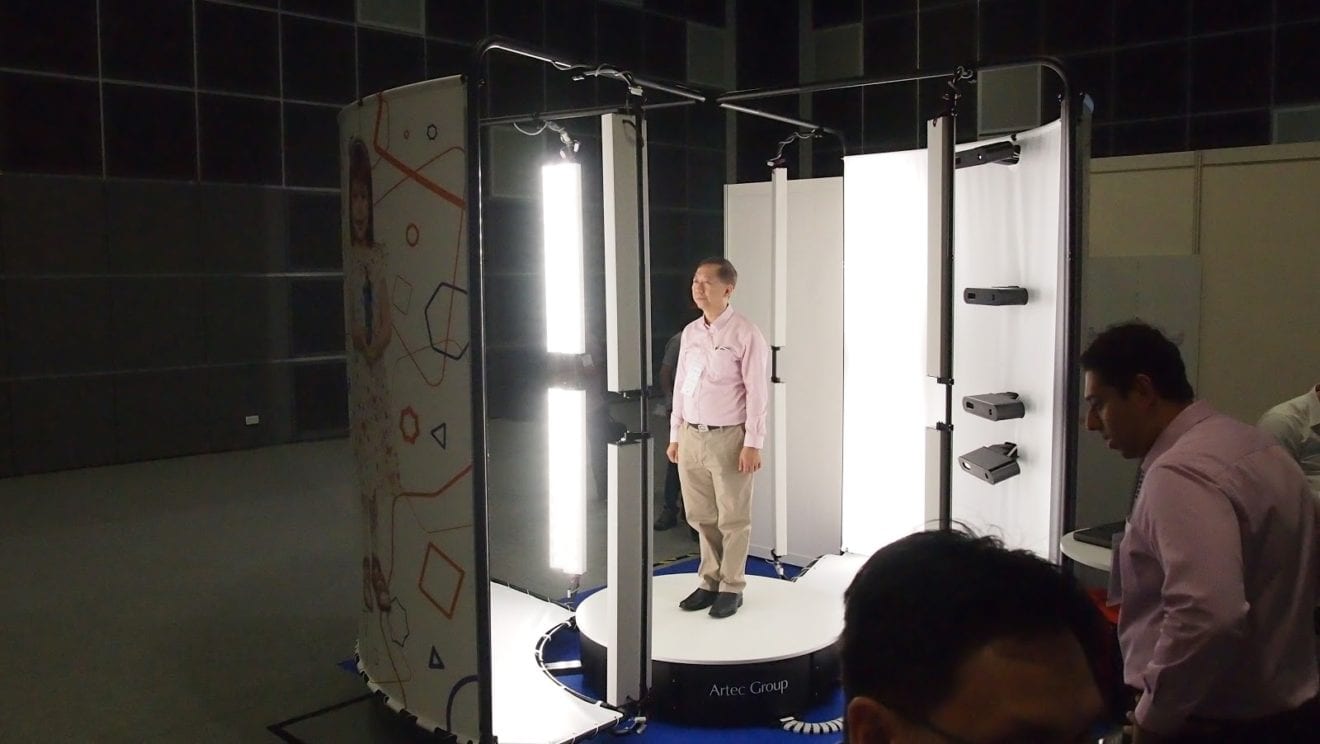
    The largest commercial 3D printing facility in South-east Asia opened in Singapore today (Sept 28), capitalising on the rising demand for such services.

    Launched by NASDAQ-listed ­Ultra Clean Asia Pacific (UCT), which develops and supplies systems for the semiconductor industry, the UCT Additive Manufacturing Centre will target business sectors such as the aerospace, dental and medical industries. It will also offer consumer services.

    The centre, which cost more than S$5 million to establish, has 15 sets of 3D printers. There are ­12 ­employees at the facility at present, with plans for that number to double by next year, UCT said.

    “The establishment of UCT’s ­additive manufacturing facility ­reflects Singapore’s progression ­towards advanced manufacturing and engineering,” said Mr Lim Kok Kiang, Assistant Managing Director of the Singapore Economic Development Board, which supports the facility.

    “Companies can tap on Singapore’s base of skilled engineering talent, ­industry-focused public research and development ecosystem … to ­develop better products and services to serve their growing Asian customer base.”

    The Singapore Government in 2013 announced plans to set aside S$500 million over five years to support a “future of manufacturing” programme, which includes 3D printing.

    Such 3D printing functions much like conventional 2D printing. But instead of printing a flat image, a 3D printer extrudes material through a nozzle, layer by layer, to create a physical ­object.

    Although it has been around since the late 1980s, technological improvements have made the service more affordable, driving up demand.

    In Singapore, ­retail shops have reported ­increased requests from consumers seeking to print products, from figurines to jewellery.

    Mr Lavi Lev, senior vice-president of the Asia Division at UCT, added that 3D printing allows individuals and companies to manufacture parts with no capital equipment investment.

    “It allows large corporations to ­increase their R&D pace through rapid prototyping. In particular, the medical and aerospace sectors are ­using 3D printing extensively,” he said.

    For instance, he explained, if someone breaks a bone, they can take an X-ray or CT scan of it, and 3D print a bone implant.

  • 7-Eleven store at Cineleisure no longer allowed to sell tobacco products

    7-Eleven store at Cineleisure no longer allowed to sell tobacco products

    The 7-Eleven retail store at Cineleisure Orchard is no longer allowed to sell tobacco products, after its employees were caught, for the second time, selling tobacco products to minors under the age of 18. The revocation of its tobacco retail licence took effect on July 31.

    Four other errant retail outlets have also had their tobacco retail licence suspended for six months after they were caught selling tobacco products to under-18 minors for the first time.

    The suspension for Nice Minimart at Tampines Street 32 takes effect today (Sept 28) until March 27 next year, while the suspension for Tastebud Foodcourt at Queen Street and J Plus Ten Mini Mart at Bukit Batok West Ave 6 started on July 31 and will last until Jan 30 next year. The suspension for Hwa Soon Heng Mini-Supermarket at Yishun Ring Road ended on Sept 15.

    The Health Sciences Authority (HSA) listed errant retailers and actions taken against them in a press release issued today. The HSA said they were caught via its ground surveillance and enforcement activities.

    In the last three years, 39 tobacco retail licences were suspended and 18 were revoked.

    The HSA reminded licensees that they are responsible for all transactions of tobacco products taking place at their outlets, as well as for the actions of their employees.

    Under the Tobacco (Control of Advertisements and Sale) Act, anyone caught selling tobacco products to persons below the age of 18 is liable, on conviction in Court, to a fine of up to S$5,000 for the first offence and up to S$10,000 for the second or subsequent offence. In addition, the tobacco retail licence will be suspended for 6 months for the first offence and revoked for the second offence.

    If any outlet is found selling tobacco products to under-18 minors in school uniform or those below 12 years of age, the tobacco retail licence will be revoked, even at the first offence.

    The HSA also reminded members of the public that anyone caught buying or acquiring any tobacco product for a person below the age of 18 years, is liable on conviction in Court, to a fine of up to S$2,500 for the first offence and up to S$5,000 for the second or subsequent offence.

    Anyone caught giving or furnishing a tobacco product to a person below the age of 18, is liable on conviction in Court, to a fine of up to S$500 for the first offence and up to S$1,000 for the second or subsequent offence.

    Between 2011 and August this year, 70 people have been caught for such offences.

  • Jysk’s first store in Singapore opened

    Jysk’s first store in Singapore opened

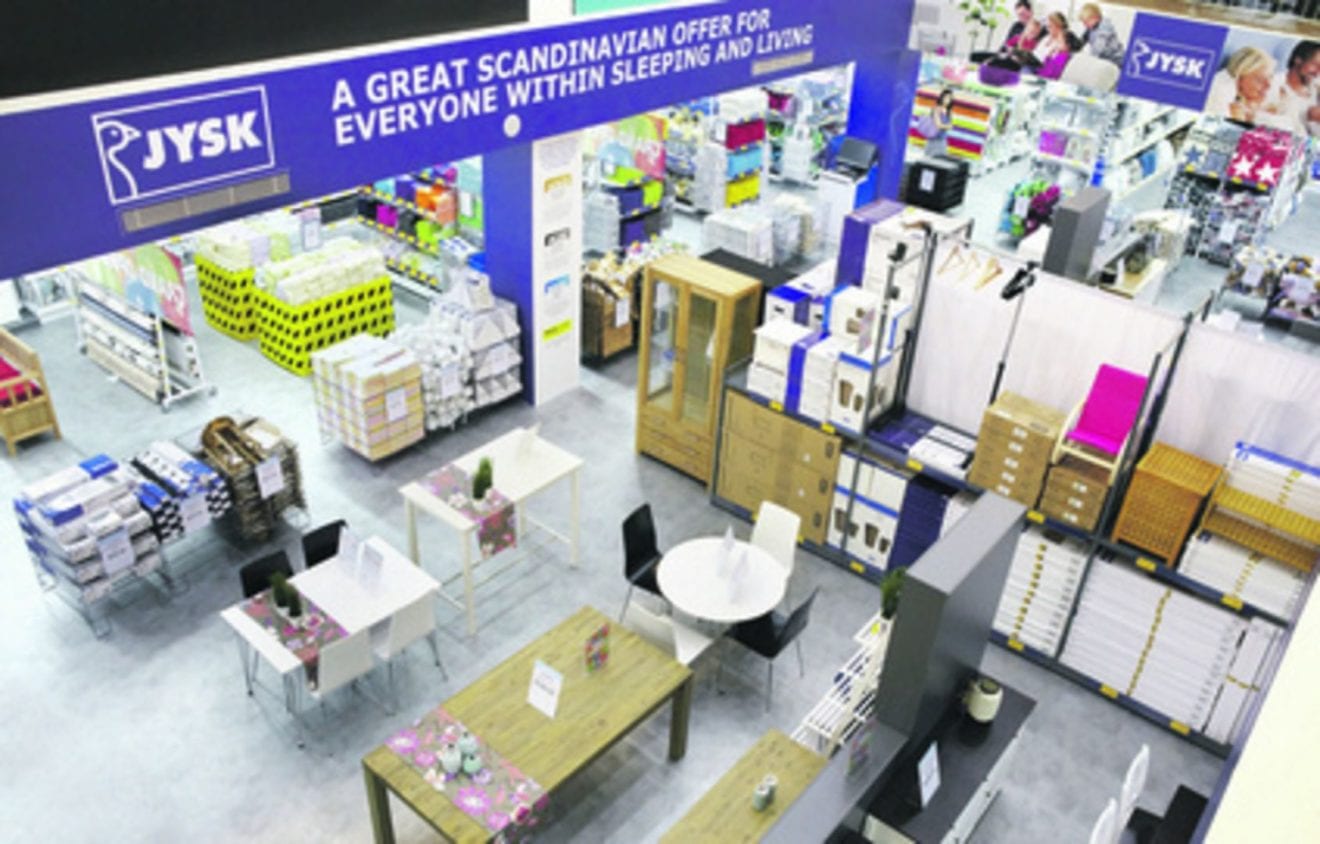
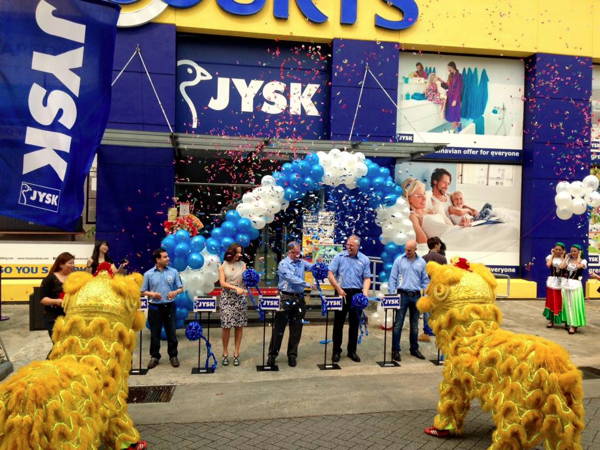
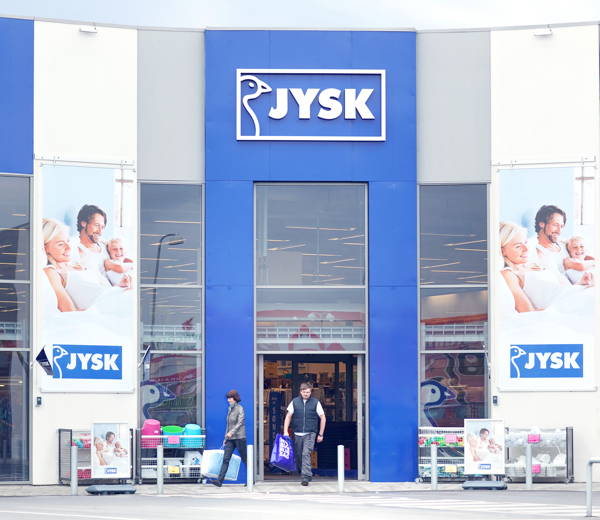
    On 26 September the very first JYSK store in Singapore (occupying 9,000 sq.ft. at the new Courts Bukit Timah store) opened its doors, with plans to open another 20 in the country within the next five years!

    Jysk-Singapore2

    JYSK, is an international retail chain from Denmark (with more than 2,200 stores across the world) that sells home necessities within the sleeping and living categories.

    JYSK in Singapore is operated through a franchise deal between JYSK and the furniture and electrical goods retailer Courts. Offering JYSK products means that Courts can expand its offers to its customers within interior design from now on.

    Singapore became JYSK’s 39th country to open a store in where the first outlet stocks about 1000 furniture and home wares items, designed in the popular minimalist Scandinavian style.

    Despite being Denmark’s largest international retailer, its Asian presence had been limited to China and Indonesia, where it trades under the JYSK Nordic brand.

    The Nordic brand is excited to be working with Courts.

    »Courts has 40 years of experience in Singapore and is already a very well-known brand in the country. JYSK can contribute with great offers and Scandinavian products, which are in high demand in Asia. There is no doubt that JYSK and Courts are a good match,« says Frederik Kroun, Franchise Director in JYSK.

    Courts executives first saw the home wares brand while in Indonesia scouting for locations for Courts stores and approached the brand’s head office to discuss a partnership in Singapore.

    Steve Church, Courts’ Group Furniture Firector, believes there is high synergy between the two brands.

    “We wanted to expand our portfolio by adding other brands into the mix, which would give consumers access to a more diverse and comprehensive range.”

    JYSK’s range is considered a massmarket offer, like Ikea, with a strong value proposition. JYSK stores in stores will be opened across the Courts Singapore network progressively over the next five years.

    Group CEO of Courts Asia, Mr Terry O’Connor, commented: “Homeowners’ tastes and needs are constantly evolving. Due to globalisation, there is now greater accessibility and therefore appreciation for global brands and their offerings. Joining hands with Ace Hardware and also with JYSK has allowed us to provide a more comprehensive suite of home solutions offerings to our customers and reach out to new customers, from DIY project enthusiasts to purveyors of design.”

    “In Singapore, where the cost of operations is high for a retailer, it is essential to find ways to innovate our offerings and improve overall productivity for our store bases,” he continued.

    Mr Jonas Schrøder, Communications Director, from JYSK, said: “Having a 40-year legacy in Singapore means that Courts has the industry know-how, network and rigor to shape the industry together with us. We are confident that combining our strengths with Singapore’s largest retailer will allow us to expand our business further while delivering a great Scandinavian offer for everyone within sleeping and living to customers.”

    JYSK Group has its origins in Scandinavia: the first store opened in Denmark in 1979. JYSK Group aims to establish a presence throughout the world, providing great offers to everyone.

  • Sim Lim Square scammers jailed

    Sim Lim Square scammers jailed

    Crooked retailers have been served a warning after a judge jailed four Sim Lim Square scammers.

    The freelance salesmen worked for the collapsed Mobile Air mobile phone shop for notorious conman Jover Chew Chiew Loon have been sent to jail for between four and 14 months for their part in duping customers of a proven $16,147 between April and October last year.

    Chew goes to trial next week.

    According to a Straits Times court report, the four convicted are Koh Guan Seng, 38, (14 months); Kam Kok Keong, 31, (11 months); Lim Hong Ching, 34, (six months); and Kelvin Lim Zhi Wei, 32 (four months).

    The newspaper reports they would lure unsuspecting customers with attractive pricing for new phones, then add hidden charges to extort additional cash from the customers. Such charges included bogus extended warranties

    Mobile Air is the store featured in footage which went viral on social media last November showing a Vietnamese tourist who used his life savings to buy his girlfriend a new phone begging for a refund after he could not pay an extra $1000 demanded for a ‘warranty’ before he could take the phone away.

    District Judge Toh Yung Cheong said that while they had been trained in how to dupe customers, the four convicted had made conscious decisions to offend.

    “In committing the offences, they behaved like thugs rather than sales assistants and they must bear personal responsibility for their conduct,” he said.

    Prosecutors said the victims were mostly foreigners on low wages and with limited English skills – thus easy targets for the conmen.

    The judge noted their actions had caused wider harm by damaging the reputation of Singapore as a tourist and shopping destination, apart from the impact on Singapore’s retail industry.

  • Singapore Jewellery & Gem Fair opens doors on 2015 showcase

    Singapore Jewellery & Gem Fair opens doors on 2015 showcase

    The four-day event, which is now in its third year, is open to casual shoppers, serious investors and trade buyers.

    As the most significant fine jewellery exhibition in the region, the event covers a space equivalent to 200 tennis courts. Around 100,000 pieces of fine jewellery will be on display across 10 product-themed and country pavilions.

    International fine jewellery exhibitors include manufacturers and wholesalers from Austria, Belgium, Germany, Hong Kong, India, Israel, Italy, Japan, Switzerland, Taiwan, Thailand and the US.

    The event is exclusively endorsed by the Singapore Jewellers Association (SJA) and the Diamond Exchange of Singapore (DES).

    The Singapore Jewellery & Gem Fair 2015 is open from October 22-25 at Sands Expo and Convention Centre, Halls A & B. Admission is free.

  • Singapore’s consumer prices improves slightly in September

    Singapore’s consumer prices improves slightly in September

    Singapore’s consumer price index (CPI) came in at -0.6 percent year on year in September, slightly improved from the 0.8 percent fall in August, largely on account of a stronger pickup in the prices of consumer services and retail items, a joint press release by the Ministry of Trade and Industry (MTI) and the Monetary of Authority of Singapore (MAS)said Friday.

    Services inflation rose to 0.8 percent in September from 0.5 percent in the previous month. This mainly reflected the rise in healthcare services fees and public road transport cost, as the dampening effects of enhanced medical subsidies and SG50-related price promotions dissipated.

    The overall price of retail items was 0.6 percent higher, reversing the 0.6 percent drop in the preceding month, largely due to more costly clothing and footwear and household durables.

    Food inflation edged down to 1.8 percent from 1.9 percent a month earlier, as the increase in the cost of prepared meals moderated slightly.

    Private road transport cost decreased by 3.2 percent, extending the 2.9 percent fall in August, owing to lower Certificate of Entitlement (COE) premiums and petrol pump prices.

    The MAS Core Inflation, which excludes the costs of accommodation and private road transport, increased to 0.6 percent from 0.2 percent in August. This mainly reflected the stronger pickup in the prices of services and retail items, MAS and MTI explained.

    Looking forward, the MAS said external sources of inflation are likely to stay generally benign, given ample supply buffers in the major commodity markets and weak global demand conditions.

    For the full year, core inflation is expected to come in at 0.5 to 1.5 percent in 2016, compared to around 0.5 percent in 2015, said MAS and MTI.

    CPI-All Items inflation could continue to be dampened by lower car prices and imputed rentals on owner-occupied accommodation, amid an expected increase in the supply of COEs and newly-completed housing units.

    Therefore, MAS expects it to be between -0.5 to 0.5 percent in 2016, compared to around -0.5 percent this year.

  • Flyspaces wants to be Southeast Asia’s Airbnb for office and retail spaces

    Flyspaces wants to be Southeast Asia’s Airbnb for office and retail spaces

    Flyspaces bills itself as “Airbnb for office and retail spaces.” The idea is to build a network of offices, meeting rooms, and commercial spaces that businesses and entrepreneurs can lease for short periods or whenever they need them.

    This concept isn’t new, of course. In the US, several startups like Liquidspace and Storefront are dealing with work and retail spaces. There’s also Breather, which lets users stay in quiet rooms where they can work in peace or just breath and chill out, as the name implies.

    But Flyspaces claims to be the first to bring this concept to Southeast Asia. “The idea is already a working model internationally. I just localized it to Southeast Asian markets. I decided to do it ‘cause I myself went through the pain of finding office spaces in Manila, Singapore, Kuala Lumpur, etc, and I’ve noticed the total lack of flexibility,” says founder and CEO Mario Berta.

    Mario, who comes from a sales background, served as regional CEO for Rocket Internet-backed Easy Taxi for 2.5 years and Nova Founders director for six months. He has been based in Asia for six years now, four of them in the Philippines.

    Cherry-picking tenants

    Flyspaces’ entry is timely as the region’s fast growth has heated up the real estate market.

    Citing a report by property consultancy firm Jones Lang Lasalle, Mario says some cities such as Manila and Jakarta have the lowest office vacancy rates in the world – below four percent.

    The huge demand for office spaces has made the market very “pro-landlord.”

    “Landlords can cherry-pick among possible tenants,” he says. “When I was working for Rocket Internet, I had to submit a company profile to every landlord in Manila and I kept being rejected just because the word ‘startup’ was in it. As landlords were afraid of defaulting tenants, they wanted a safe bet. I started labeling it an IT company and finally got a space.”

    As a precaution, commercial landlords would normally ask tenants to shell out six months’ worth of rent as deposit and pay another six months in advance. That lack of flexibility is a challenge for small enterprises and individual entrepreneurs who can’t afford to engage in costly long-term contracts.

    “We want to offer a complete and comprehensive selection of spaces to clients who need them on an hourly, daily, or monthly basis. These clients could be freelancers looking for a better internet connection than a coffee shop, or a company that needs meeting rooms for a couple of hours around town, or a satellite office or brand that is looking to set up a pop-up shop to test a product,” Mario explains.

    For realtors, Flyspaces also offers an attractive proposition: make money out of unutilized space that you need to maintain anyway.

    Expanding footprint

    Since its launch early this month, the company has signed up multinational office space company Regus on its site, as well as several startups providing co-working space in the Philippines, including Aspace, Acceler8, Bitspace, and Penbrothers.

    Apart from the Philippines’ capital Manila, Flyspaces is doing business in Cebu, the country’s second largest city. It will start expanding internationally to all Southeast Asian cities in December, says Mario.

    “We’ve had more than 500 sign-ups in the first seven days,” he said. “Most of these people do not have immediate need for space, but we’ve made a couple of hundreds of dollars in bookings so far.”

    Meeting rooms on the site can be rented for US$10 per hour to US$500 per hour, while offices are leased for US$100 per month per person to US$500 per month per person. Payments can be made via credit card, bank deposit, wire transfer, and soon Paypal. Just like Airbnb, Flyspaces takes a commission of 20 percent of each successful booking.

    Signing up should be a no-brainer for landlords who want to maximize their assets. The challenge for Flyspaces is how to educate the end-users about its service and have them use the platform instead of a normal phone call to landlords to inquire about rooms, says Mario.

  • Here’s a new tissue that could help wipe out deforestation

    Here’s a new tissue that could help wipe out deforestation

    Experts say bamboo offers enormous potential to protect the natural environment and biodiversity as well as mitigate climate change, given its strong root systems to combat soil erosion and capacity to lock up carbon dioxide from the atmosphere.

    There is a growing array of products made of bamboo in the market today – from bicycles to sunglasses – offering sustainable alternatives to timber and other forest products.

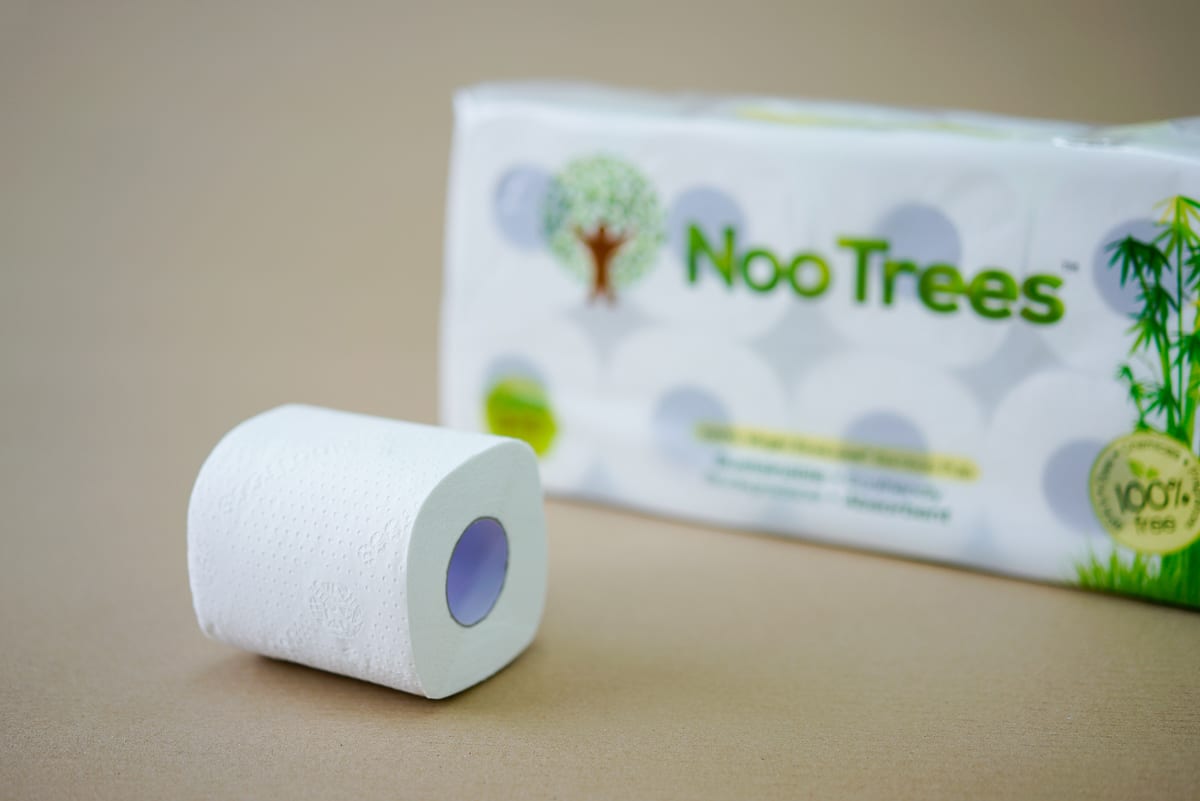
    Early this month, NooTrees, a new brand of sustainable consumer products wholly owned by Singapore-based luxury retail group FJ Benjamin, joined the movement and launched a series of biodegradable bamboo-based wet wipes and tissue paper products to supermarkets.

    The new line targets environmentally-conscious consumers looking for products that do not destroy natural resources while costing the same as traditional options. Tissue paper products are often produced from the virgin pulp of trees grown in timber plantations.

    The problem is that much of the land cleared for these plantations were once forest areas, which are rich in carbon stock and natural habitats for wildlife such as orangutans and tigers.

    NooTrees’s range of bamboo-fibre tissue paper and wet wipes presents a viable solution to the environmental problem of deforestation and also offers a skincare product that is hypo-allergenic, the firm said in a statement.

    The recent haze pollution caused by the burning of peatland and forested areas in Indonesia has increased awareness among Singaporean consumers of the implications of deforestation.   

    However, despite zero-deforestation pledges by pulp and paper companies, some pulpwood suppliers are still linked to illegal burning of plantations. These plantations are putting companies’s supply chain at risk of violating their own commitments – and thus, ending up selling products that could be linked with forest destruction and air pollution.

    Companies’s transparency is also called to question as the traceability of the raw materials is hampered by insufficient data. For example, sometimes nobody knows who or which company owns a patch of land that is burning.

    David Ward, who founded the brand in November last year and is general manager of NooTrees, said that he is confident that the brand will find a following in Singapore who are supportive of companies that truly make a positive impact on people’s lives.

    Experts advocating bamboo as an alternative source to timber and other forest products say the plants have enormous potential to protect the natural environment because of their strong root systems to combat soil erosion. The plant also grows fast and therefore, can lock up carbon dioxide from the atmosphere, helping mitigate climate change.

    Ward noted that scientists have been searching for alternative fibres for the tissue paper sector. “Bamboo consistently comes out as the best long-term alternative and best possible future material to match the growing future demands for toilet and tissue paper as the world population increases,” he explained.

    He told Eco-Business that NooTrees only works with bamboo pulp manufacturers that are certified by the Forest Stewardship Council and International Standards Organisation.

    There is continued interest in bamboo, which has now become a booming US$6 billion industry in China, Ward stressed. He added that the plant has a high regeneration rate and the ability to produce five to six times the amount of paper pulp per hectare compared to regular trees.

    NooTrees said its products’s biodegradability compared with conventional polyester-based wet wipes also addresses the issue of waste management. Because they biodegrade within 45 days in a landfill, they do not end up as waste that clogs wastewater pipes and recycling plants.

    “We are starting in Singapore as we want to make a positive impact to the people living here and then elsewhere across the region and the world,” said Ward.

    And yes, NooTrees confirmed that no critically-endangered wildlife, especially pandas, were deprived of their food sources in the making of these tissue products.

  • ViewQwest exports Singapore fibre broadband network design to Oman

    ViewQwest exports Singapore fibre broadband network design to Oman

    Singapore’s fibre broadband service provider ViewQwest has exported its local network know-how to Oman, which plans to bring fibre links to some 90 per cent of homes in its capital city of Muscat and 35 per cent of other governorates.

    This translates to some 225,000 homes in Muscat, which is expected to start trialing Internet surfing at speeds of up to 1Gbps – or 100 times faster than current technologies – on November 18.Commercial launch is scheduled for an unspecified date next year.

    Oman has 500,000 households in total.

    The architecture of Oman’s fibre broadband network is similar to that of the Singapore government-backed Next Generation Nationwide Broadband Network (NGNBN), from which ViewQwest leased wholesale fibre capacity to provide a retail service.

    In Singapore, fibre links are brought all the way to homes with a termination point installed within the home. Similarly, Oman’s government-owned Oman Broadband Company is bringing fibre links to just outside homes. When a customer places an order for broadband service, the fibre optic cable is then pulled into the home with the installation of a termination point.

    “We are inspired by Singapore’s strategic approach to the implementation of NGNBN and we hope to emulate that success in Oman as we connect homes and offices nationwide,” said Ghaith Al Darmaki, programme director of Oman’s sole fibre broadband service provider, Awasr.

    “Our network has been built using the same equipment and methods as ViewQwest,” he added.

    Said Vignesa Moorthy, chief executive officer of ViewQwest: “We are proud of our role in Singapore’s successful transition to a smart nation and look forward to creating a similar experience in Oman.”

    ViewQwest is not the only local fibre broadband provider which ventured overseas. Late last year, MyRepublic started its fibre broadband services for business users in New Zealand.

    The Infocomm Development Authority (IDA), which spearheaded Singapore’s NGNBN, said it is delighted that local companies are making waves overseas.

    “The learnings that these companies have picked up through their successes here will be instrumental in helping them address the global market opportunities to propel their international growth,” said IDA assistant chief executive Khoong Hock Yun.

  • Japanese beauty e-tailer takes slice of Vanitee

    Japanese beauty e-tailer takes slice of Vanitee

    The Japanese online beauty retailer @Cosme has bought a stake in Singapore website Vanitee, described as a “digital marketplace for beauty artists”.

    Neither the value of the investment, or the size of the stake acquired was disclosed by either party.

    Vanitee was founded just 12 months ago by Douglas Gan, Kuik Xiaoshi and Choy Peng Kong. It has already secured investment funding from Luxasia Group, amongst others, amounting to several million Singapore dollars.

    With a database of about 3000 customers already, Vanitee is now looking to expand further into Asia, especially in the north.

    @Cosme, a subsidiary of Japan’s istyle inc, has physical retail stores in Tokyo and Osaka and runs eCommerce websites and and an online spa guide. Besides its focus on the Japanese market, istyle is increasingly targeting customers in Greater China.

    CFO Kei Sugawara says the Vanitee investment marks the company’s first expansion into Southeast Asia

    “We are thrilled to work with Vanitee to stretch the @Cosme footprint beyond Japan. We will focus our efforts to revolutionise how consumers in Singapore and Southeast Asia purchase and experience cosmetics and beauty products and services.”

    Gan, who is Vanitee’s CEO, said the company has been successful in securing investment because of its ability to communicate its vision, and business goals.

    “[Investors] love entrepreneurs with big ideas who have the humility to get their hands dirty and get things done.”

  • Courts Indonesia to open second megastore

    Courts Indonesia to open second megastore

    Singapore-headquartered Courts says it will open a second megastore in Indonesia.

    The new 24,000 sqm store is already under construction on a 2.2 hectare site in Bumi Serpong Damai, southwest of the capital city Jakarta.

    Courts Indonesia CEO Roy Santoso told a media briefing the store will sell at least 12,000 items from 200 local and international brands. All the electronics and home appliances are local products.

    “The store spaces will be grouped into four segments: ‘Play’ for electronics, ‘Live’ for home appliances and accessories, ‘Sleep’ for beds and ‘Relax’ for furniture,” he said.

    Courts Indonesia will open the new store in December. It will be the retailer’s fourth store, little more than a year after it first opened in the market, and the company plans up to 12 by 2019, along with an eCommerce site which should be operational by the end of this year. Its investment in the market to date is now US$8 million.

    “In these kind of economic conditions, we have to have a sustainable development plan. To reach breakeven, we plan to open two to three smaller-sized stores within two years,” Roy said.

    “Our initial plan had been to have one megastore in each western and eastern part of Greater Jakarta. The eastern part is Bekasi and the western part is BSD. We can still have vast area to build a megastore in BSD,” Roy said.

    “Courts also targets various classes of income groups. In our stores we segment our products into good, better and best so that people can choose. And BSD is easily accessible for people with different income who live in Bintaro and Pondok Indah in South Jakarta and Karawaci in Tangerang, other satellite cities with high numbers of population.”

  • The Macallan pop up tours Asian cities

    The Macallan pop up tours Asian cities

    A 465 sqm pop up store promoting Macallan single malt whisky is touring major Asian cities.

    Designed by agency Fitch, the unique pop up is by day a shopping and exhibition area, open to any walk-in customers. In the evening, the space is transformed into a bar offering reserved tasting sessions. Guests have the opportunity to enjoy The Macallan, talk with whisky experts, and connect with like-minded connoisseurs.

    After a month inside Shanghai’s Jing An Kerry Centre, the pop up moves to Taipei’s Dunhua South Rd on October 21 for a month, and then on to Seoul and Singapore.

    Fitch says the pop up is designed to take guests “on a journey of discovery with The Macallan, through a highly interactive and sensorial experience”.

    Macallan’s regional brand director, Coral Gill, says the Toast The Macallan pop up is a regional consumer engagement program that serves as a distinctive platform for The Macallan to reach and connect with more consumers.

    “Toast the Macallan is into its second year in the region and this event in Shanghai was the first time this exclusive event was run for 30 days, allowing even more consumers to engage and share the experience with the brand.”