Tag: Singapore

  • Singapore retail rents tipped to slide up to 15 percent

    Singapore retail rents tipped to slide up to 15 percent

    The increased activity in Singapore’s retail sector hints at a bottoming out of rents by the end of this year or early next year, Knight Frank’s research team said in a report published on Friday (Oct 16).

    Overall retail rents are expected to fall by 10-15 percent for the whole of this year due to recessionary pressures and safe-distancing restrictions, according to the real estate consultancy.

    That being said, in the suburban region, rents of retailers will likely decline by just 7.5 percent or less.

    “As physical retail stores resumed operations, shopper traffic also returned to a greater extent in the suburban malls compared to the centrally located ones that are more reliant on the tourist dollar,” Knight Frank analysts wrote.

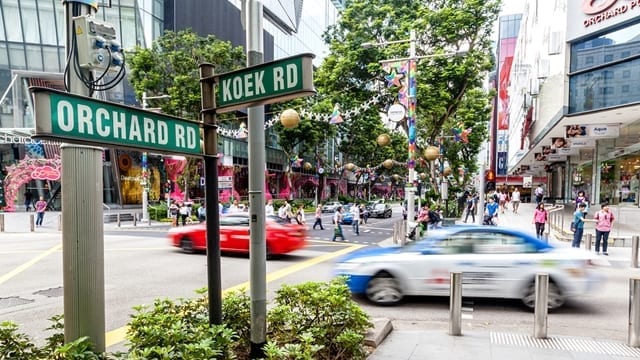
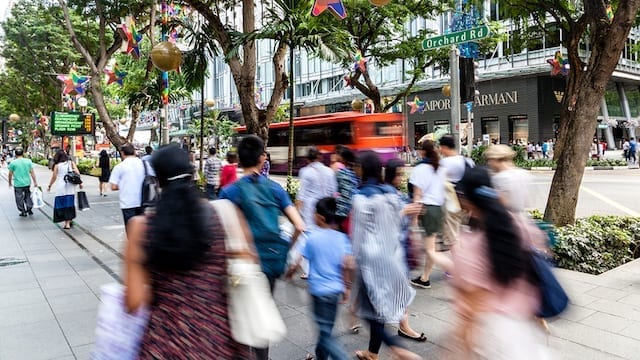
    Thus, the rental gap between suburban malls and those in Orchard will likely continue to narrow, given that the inflow of tourists into Singapore is still impeded by travel restrictions. Suburban retail rents are expected to recover sooner because they are supported by the domestic catchment resident population.

    In the third quarter this year, prime retail rents islandwide decreased by 10.3 percent year on year to average $27.40 per square foot (psf) per month, as safe-distancing measures and border controls remained in place.

    This drop was largely led by the 11 percent fall in gross rents for prime retail spaces along the Orchard Road shopping belt, as stores there continued to struggle with the absence of international tourists, Knight Frank noted.

    Prime spaces refer to rental-yielding units between 350 and 1,500 square feet with the best frontage, connectivity, footfall and accessibility in a mall. Such spaces are typically located on the ground level of a mall or the basement level of a mall that is linked to an MRT station or bus interchange.

    In the Marina Centre, City Hall and Bugis region, gross rents of prime retail spaces tumbled by 13.5 percent year on year to $25.40 psf per month on average for the third quarter.

    The city fringe, meanwhile, posted an 8.6 percent decline from a year ago, to $23.40 psf per month.

    Propping up the retail market was the suburban areas, where rents started to stabilize during the July-September period.

    “As more employees work from home, the malls located within residential population centers were visited by many for daily necessities and household sundries,” the analysts wrote.

    The suburban region recorded the smallest drop in gross prime retail rents during the quarter, slipping 6.9 percent on the year to average $26.60 psf per month.

    Quarter on quarter, rents of prime retail spaces in suburban areas also inched down by just 1.4 percent, compared to the bigger declines of 6.4 percent in Orchard, 7 percent in Marina Centre, City Hall, and Bugis, and 4.5 percent in the city fringe.

    While traditional retailers such as Topshop at VivoCity and Robinsons at Jem closed during the latest quarter, there were also newcomers to the scene. For instance, 100-year-old Hong Kong bakery Hang Heung opened its first Singapore outlet at Ion Orchard, Knight Frank noted.

    Other notable retail openings in the three months include store expansions such as Foot Locker at Orchard Gateway @ Emerald and Decathlon at The Centrepoint.

    In August, retail sales – excluding motor vehicles – fell by 8.4 percent year on year, according to figures released by the Department of Statistics last week.

    On a seasonally-adjusted month-on-month basis, total retail sales were higher by 1.4 percent in August. Excluding motor vehicles, sales edged up 0.1 percent on the month.

  • Singapore and Hong Kong to Create Air Travel Bubble

    Singapore and Hong Kong to Create Air Travel Bubble

    Travelers between the two cities will soon be able to make trips without the need for quarantine, stay-home notice or controlled itinerary.

    Singapore and Hong Kong have reached an in-principle agreement to establish an air travel bubble, following discussions between Hong Kong’s Commerce Secretary Edward Yau and Singapore’s Transport Minister Ong Ye Kung,

    While the bubble allows leisure trips, travelers must still produce negative Covid-19 test results and travel on dedicated flights, according to details announced by Singapore’s Ministry of Transport (MOT) in a press release on Thursday.

    It is a safe, careful but significant step forward to revive air travel, and provide a model for future collaboration with other parts of the world, Ong said about the agreement, which will be fleshed out in the coming weeks.

    Singapore has already set up reciprocal green lanes for essential and official travelers from Brunei, China, Japan, Malaysia and South Korea, although these require controlled itineraries. It has also opened its borders unilaterally to general visitors from Brunei, New Zealand, Vietnam and most of Australia.

  • Singapore Fintech Gears Up for Global Expansion

    Singapore Fintech Gears Up for Global Expansion

    To support its global ambitions, it has appointed a veteran entrepreneur to its board. Singapore insurtech BetterTradeOff (BTO) is preparing to expand globally through partnerships with major banks and insurance companies looking to offer their customers the benefits of BTO’s life-planning tool through a white-label enterprise solution.

    In addition, BTO plans to roll out both its direct-to-consumer «Up» life planning platform and «Up Adviser» software to new markets, following successful launches in Singapore. It also appointed Jeremie Bonnin to its board of directors, who will support its growth as it launches into new markets, the startup said in a statement on Thursday.

    Bonnin was a founding member of media and telco conglomerate Altice Group, which has recorded $25 billion in revenues across Europe and the U.S. He relocated to Singapore in 2018, where he served as senior advisor to Altice’s founder and management team, while mentoring and investing in Southeast Asian startups eyeing international expansion.

    With Covid-19 negatively impacting so many people, especially the poorest, we’re looking at partnerships that will allow us to make our solution available in more countries and to millions of more people, while bringing the power of sound financial planning to those who need it most, Laurent Bertrand, BTO co-founder and chief executive, said.

    BetterTradeOff was founded in 2015 and offers a software-as-a-service life planning solution that provides financial advisers with a collaborative digital platform for visualizing financial advice and building trust through transparency. It currently operates in Hong Kong, Singapore, Philippines, UAE, and Switzerland. The firm has raised $2 million in seed funding and has 15 staff based in Singapore.

  • Singapore Open to Virtual Shareholder Meetings

    Singapore Open to Virtual Shareholder Meetings

    Currently, companies are allowed to conduct their general meetings via alternate non-physical means until June 2021.

    The Monetary Authority of Singapore (MAS) and Singapore Exchange Regulation (SGX RegCo) are open to allowing hybrid or fully virtual shareholder meetings after social distancing measures are eased, post-Covid-19, if active participation can be ensured.

    The regulatory bodies are currently closely monitoring the experiences of issuers and investors during virtual meetings, Ong Chong Tee, MAS deputy managing director, said on Monday.

    What is important is that such new meeting formats should not compromise effective shareholder engagement, allow proper verification of attendees and voters, and facilitate accurate and secure voting processes, Ong said.

    Covid-19 safe distancing measures and travel restrictions have limited the conduct of physical meetings. In April, MAS, ACRA and MinLaw worked with SGX RegCo to fast-track legislation to provide legal certainty to listed issuers so that they may implement safe distancing measures imposed by the Ministry of Health and hold virtual general meetings.

    MAS also published a checklist of measures to ensure informed and effective participation, which include requirements for a live broadcast, proxy voting, allowing shareholders to ask questions and having them addressed ahead of the meeting.

  • Singapore Economy Rebounds in Q3

    Singapore Economy Rebounds in Q3

    The improvement came on the back of the phased re-opening of the economy, following the «circuit breaker» that was implemented between April 7 and June 1, 2020.

    Singapore’s gross domestic product (GDP) in the third quarter of 2020 grew by 7.9 percent from the quarter before, based on advance estimates released by the Ministry of Trade and Industry (MTI) on Wednesday.

    On a year-on-year basis, the economy contracted by 7 percent, an improvement from the 13.3 percent contraction in the second quarter, which was its worst quarter on record.

    The ministry did not revise its full-year GDP outlook, which predicts an overall contraction of 5 to 7 percent.

    The construction sector grew 38.7 percent from the previous quarter but was still down 44.7 percent on-year. Weak external demand, travel restrictions, and sluggish travel demand contributed to the 8 percent on-quarter decline in services-producing industries – still an improvement from the previous quarter’s 13.6 percent decline.

    The manufacturing sector reversed its 0.8 percent on-year decline in the second quarter of 2020 to grow 2 percent in the third quarter. Quarter-on-quarter, the sector grew by 3.9 percent, supported by growth in electronics and precision engineering output, which were in turn driven by robust global demand for semiconductors and semiconductor manufacturing equipment, MTI said.

    On Monday, Ravi Menon, chief executive of the Monetary Authority of Singapore said that up to 20 percent of the city-state’s trade-reliant economy faces «deep scarring» as a result of the Covid-19 pandemic, highlighting the aviation and tourism industries in particular.

    The full extent of the crisis has not been seen yet, Menon said, noting that more bank loans and bankruptcies are expected, and that capital will be more difficult to raise in this environment.

    In a funny sort of way, the pandemic has made us all a lot more sensitive and aware of how vulnerable we are to the forces of nature, Menon said.

  • Flipper’s pancake chain opening in Singapore

    Flipper’s pancake chain opening in Singapore

    Traveling to Japan for Flipper’s famous souffle pancakes isn’t an option right now but foodies can just head down to Orchard Road for their fluffy fix really soon.

    Flipper’s first outlet in Singapore will be opening at Takashimaya Shopping Centre in Ngee Ann City in November. It also has outlets in Seoul, Taiwan, Hong Kong, and New York.

    Best known for its “miracle” (or “kiseki” in Japanese) souffle pancakes that’s super soft you’ll need to use two forks to tackle it, the Japanese chain was founded in 2014 in Tokyo.

    Its Singapore outlet will be offering savory and sweet options – you’ll have a choice of having fruits with it or something more hardcore such as salmon, eggs, and bacon.

  • Singtel launches Singapore’s first 5G standalone trial network for enterprises

    Singtel launches Singapore’s first 5G standalone trial network for enterprises

    Singtel has deployed the nation’s first 5G standalone (SA) trial network at its 5G Garage testing facility. The network, which utilizes 3.5GHz spectrum and Ericsson’s advanced Massive MIMO (Multiple-input multiple-output) technology to deliver ultra-fast speeds and low-latency or response times, provides enterprises with early access to 5G to develop and trial 5G solutions.

    Mr Bill Chang, Chief Executive Officer of Group Enterprise at Singtel said, “COVID-19 has brought a new urgency to digital transformation for many sectors. Having unveiled our first 5G use case with our 24/7 unmanned pop-up retail store in September, our 5G SA trial network offers enterprises from across industries the opportunity to develop and test applications to accelerate automation and digitalization. With 5G’s low latency and scalability, enterprises can not only drive efficiencies and make better and more cost-effective decisions but also deliver richer customer experiences. The launch of this 5G SA trial network is also an important step as we get ready for commercial 5G SA. We welcome enterprises to harness the power of 5G to future-proof their businesses and catalyze their digital transformation at 5G Garage.”

    Global cloud gaming provider, Ubitus, is the first enterprise to use Singtel’s 5G SA network for a 5G cloud gaming trial. The trial demonstrated a 5G cloud gaming experience that consistently delivered 85% lower latency of between 8 to 11 milliseconds compared to cloud gaming on 4G. It was conducted on Singtel’s multi-access edge computing (MEC) platform which integrates 5G’s ultra-low latency and high bandwidth capabilities with powerful cloud computing performance. This allows rich graphics to be processed on dedicated servers and transferred directly to devices, significantly cutting lag times, which is critical to the gaming experience.

    “We are very excited about the potential of Singtel’s 5G SA and MEC to push the envelope on cloud gaming. The trials will inform our designs for exciting games which will test gamers’ reflexes and instincts. We will leverage the ultra-low latency of 5G and MEC to offer immersive, hyper-realistic gaming experience,” said Mr Wesley Kuo, Ubitus’ Chief Executive Officer.

    5G and MEC’s ability to integrate with technologies such as Internet of Things, analytics, robotics, artificial intelligence and augmented, virtual or mixed reality enables enterprises across industries to leverage the low latency in applications requiring little or no lag times. These include remote surgery, smart manufacturing, autonomous driving, remote robotic repair and maintenance and virtual reality-enabled live concerts. By removing the need for data to be sent all the way to public clouds to be processed and sent back, MEC is not only able to better serve mission-critical data connectivity, it also enables enterprises to optimize their total cost of ownership for hosting, dedicated link provisioning and data transfer.

    Since the launch of 5G Garage with Ericsson and Singapore Polytechnic in January 2019, Singtel has successfully developed ten 5G use cases together with more than 20 start-ups and enterprises in areas such as robotics, virtual reality, artificial intelligence and drones. Singtel has also collaborated with PSA to trial maritime 5G use cases to optimize port operations at the future Tuas Port. In addition, Singtel is working with the Agency for Science, Technology and Research’s Advanced Remanufacturing and Technology Centre, and JTC to enable enterprises to develop and test advanced 5G-powered manufacturing solutions.

    Singtel’s 5G SA cloud gaming trial follows the recent unveiling of UNBOXED, its 5G-powered unmanned pop-up retail store, and the launch of Singtel’s 5G NSA network trial that offers consumer and enterprise customers an early taste of ultra-fast 5G mobile speeds.

  • Revolut Singapore Partners Income to Offer Insurance

    Revolut Singapore Partners Income to Offer Insurance

    Both platforms see customer empowerment and digitally-enabled collaborations as key to supporting customer needs. Snack by NTUC Income (Income) and Revolut Singapore will work together to incorporate lifestyle-based insurance offerings on Revolut’s digital banking app to provide more flexibility and boost customer empowerment in money management.

    Snack, launched in June, is a stackable, micro-insurance offering that embeds the purchase of coverage into daily activities. Its partners include Visa, EZLink, FoodPanda and more.

    The partnership with Snack layers insurance protection over our Revolut’s existing money management features and allows our customers access to micro-insurance products that are underwritten by NTUC Income. Customers will have the ability to purchase insurance products such as Term Life, Critical Illness and Personal Accident, with more products to be launched going forward, the announcement said. As part of the partnership, Revolut Singapore customers will also receive a one-time complimentary insurance coverage of S$500 ($367) when they sign up for an account on the Snack app.

    Snack’s modular approach to bite-sized insurance reimagines how people obtain and consume insurance. This provides tremendous flexibility in tailoring solutions based on the needs of customers and integrating it with partners’ platforms to create a unique experience, Peter Tay, Income chief digital officer, said.

    Revolut has reached over 70,000 signups in the republic since its launch one year ago. It has expanded its footprint this year with launches in the U.S., Australia and Japan. In the coming weeks, Revolut will be introducing fast and free top-ups using bank accounts and a prepaid debit card for children aged 7-17 to teach children to better manage money digitally.

  • Deliveroo Singapore partners with barePack to curb  single-use packaging waste from food deliveries

    Deliveroo Singapore partners with barePack to curb single-use packaging waste from food deliveries

    Leading food delivery service Deliveroo Singapore today announced its new sustainability partnership with Singapore startup barePack to offer customers a returnable container system where customers can elect to use reusable containers for delivery and pick-up orders from over 50 best-loved restaurants across Singapore.

    Deliveroo customers can enjoy their meals in a sustainable way by looking for the “barePack” option in the Deliveroo app. Customers can then select from barePack’s reusable boxes and cups – FlexBox or KindCup – when placing their food orders. To ensure that the containers are safe for food use, barePack’s boxes are made from food-grade silicone and come with BPA-free polypropylene lids, while cups are made from stainless steel. Participating restaurants include large chains and family favourites such as Spizza, SaladStop! and Real Food.

    The new in-app feature will be available for both barePack members and non-members. Existing barePack members can order their food in reusable containers for free on Deliveroo by entering a One-Time Password (OTP) provided in their barePack app. For non-members, the reusable containers are available with a refundable deposit of S$6. Deposits will be refunded when customers return the box to any of the 100 restaurants in the barePack network, half of which are on the Deliveroo platform, across the city.

    barePack’s returnable container system not only leads to less unnecessary waste but also enables a 90% reduction in CO2 emissions compared to the most commonly used disposable alternatives. According to barePack, reusable products when used 50 times has a significantly positive impact on global warming potential. With the initiative, Deliveroo hopes to combat rising disposable packaging waste in the city-state as a result of movement restrictions, especially during the circuit breaker period.

    “As a socially responsible company, we are committed to helping our restaurant partners become more sustainable. We also want to encourage customers to make environmentally friendly choices. We believe amazing food shouldn’t cost the earth and our partnership with barePack marks the latest efforts in our mission to bring customers amazing food in the most sustainable way. We made plastic cutlery an opt-in in 2018, resulting in over 90% of meals now being delivered without disposable cutlery. We are confident that our customers will welcome this new feature and help us foster a reusable takeaway culture in Singapore,” said Sarah Tan, General Manager, Deliveroo Singapore.

    “barePack’s reusable containers are kinder for the planet, better for your food, and safer for your health. We are committed to replacing the millions of disposables used for F&B consumption every day, and this partnership with Deliveroo will go a long way in helping us reach a wider audience and achieve our goals. Great collaborations such as this are really key to achieving a more circular economy,” said Roxane Uzureau, Co-Founder of barePack.

    To ensure the health and safety of customers in light of COVID-19, Deliveroo and barePack have also implemented stringent safety protocols, ensuring that barePack’s reusable containers are collected away from the serving area and batch processed with used crockery. A new sanitised box or cup will also be issued to customers who purchase any of barePack reusable containers, thereby complying with standard vendor health and safety processes and regulations.

    Deliveroo Singapore’s partnership with barePack is part of the company’s ongoing commitment towards sustainability. Initiatives over the past 12 months include a partnership with BioPak, where Deliveroo offered sustainable packaging options to all restaurant partners with discounts to help them make the easy switch to eco-friendly packaging. Deliveroo has also signed the WWF’s (World Wide Fund for Nature) PACT (Plastic ACTion) pledge, committing to encouraging consumer behaviour change as well as restaurant partners to improve their packaging materials.


  • Singapore retail sales slip further down in August

    Singapore retail sales slip further down in August

    SINGAPORE retail sales dropped 5.7 percent on the year in August, an improvement from the 8.5 percent year-on-year decline recorded in July, according to the Singapore Department of Statistics (SingStat) on Monday.

  • Ella takes up role as Singapore’s first robotic barista

    Ella takes up role as Singapore’s first robotic barista

    She is a barista with a very strong arm. And “Ella”, Singapore’s first fully automated robot barista, will be serving customers their caffeine fixes at CityHub mall in Lavender from Saturday (Oct 3).

    Crown Coffee, the food and beverage arm of Crown Group, said the outlet was launched in an effort to push automation and reduce physical interaction in the light of the coronavirus pandemic.

    Ella, named after Crown Group founder and chief executive Keith Tan’s wife, served a range of hot drinks to Minister of State for Trade and Industry Low Yen Ling and members of the media at a launch event on Friday.

    In a speech at the event, Ms Low, who is also Minister of State for Culture, Community and Youth, emphasized the importance of digitalization and automation in navigating the pandemic and zoomed in on Ella as a solution that creates opportunity from chaos.

    “While Covid-19 has severely impacted our businesses and economy, it has also created the impetus for us to build stronger business capabilities and seek out new growth opportunities,” she said.

    Crown Coffee’s new robot barista is able to make up to 200 cups of coffee an hour. It joins a host of new innovations spurred on by Covid-19 such as cleaning robots.

    Ella brews and serves coffee behind a transparent screen in a contactless set-up. Users will have to download the Crown Coffee mobile app, through which they can order drinks, from $4 each.

    Developed by Crown Group’s technology arm, Crown Digital, Ella is Mr Tan’s response to the cost pressures of training and retaining human workers, and a pre-emptive response to digital disruption.

    “We need to disrupt ourselves, as opposed to waiting for things to change,” said the former wealth manager, who started Crown Group in 2016 to follow his passion for coffee.

    Ella has been in development since 2017, when the first prototype was built.

    Mr Tan, 40, said Ella is part of his company’s aim to serve consistent, barista-quality coffee to more people conveniently.

    He added: “Ella’s main application will be in high-traffic areas like MRT stations or airports. Imagine you’re on your way to work and you order your coffee from the mobile app and when you get to the station your coffee is waiting for you.”

    Crown Group is currently seeking funding to expand Ella across Singapore and beyond, said a spokesman.

    Asked about the costs involved compared to employing human baristas, Mr Tan said that it will take some time for any savings from automation to accrue.

  • Wirecard Ordered to Cease Activities in Singapore

    Wirecard Ordered to Cease Activities in Singapore

    The ability of its Singapore entities to continue providing payment services here has been affected, following its parent company’s insolvency filing in Germany.

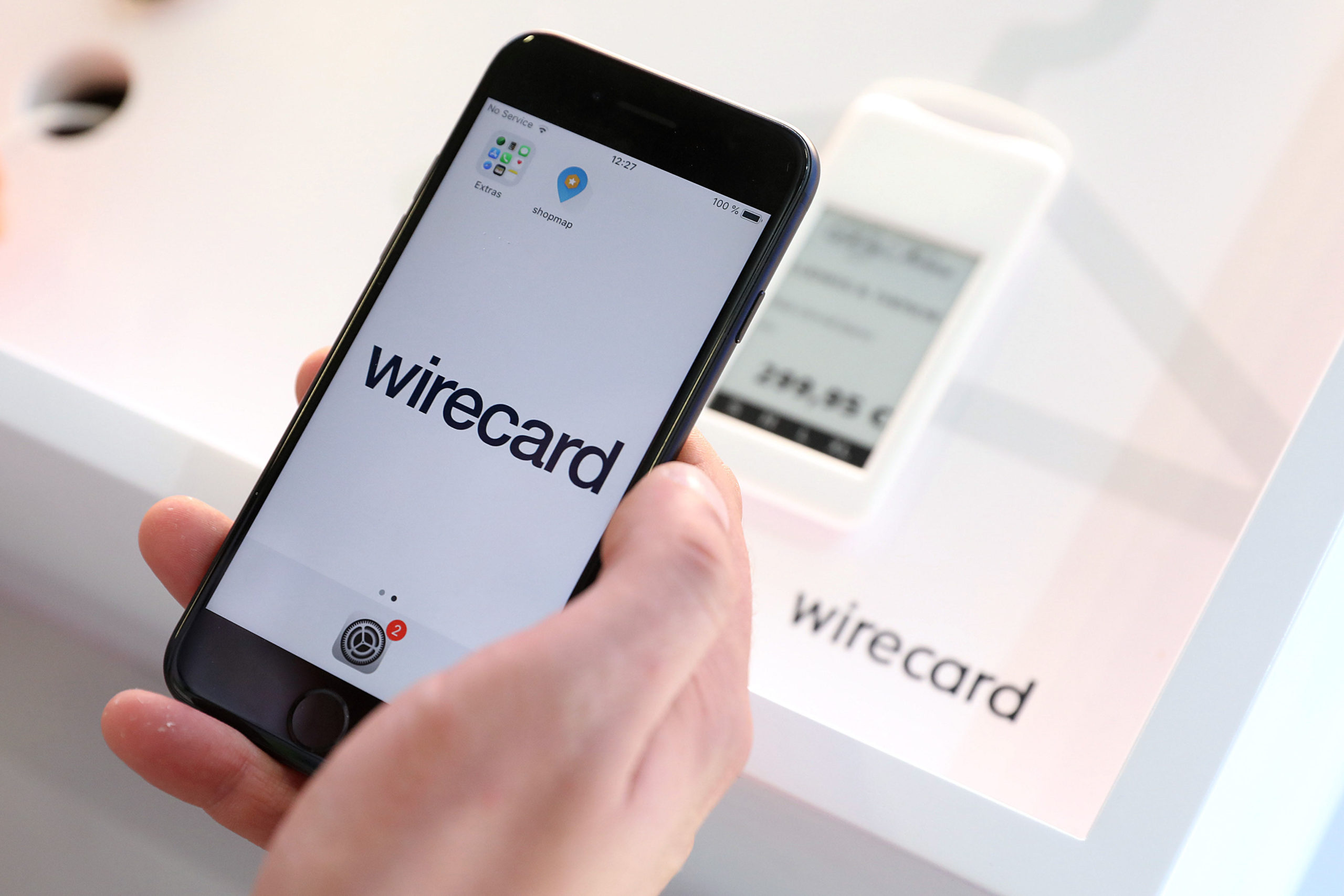
    The Monetary Authority of Singapore (MAS) has ordered Wirecard Singapore to cease payment services in the country and to return all customers’ funds by 14 October 2020, the regulator said in an announcement on Wednesday.

    As a result, Credit card payments at merchants using Wirecard Singapore’s services, as well as usage of pre-paid cards issued by Wirecard Singapore, will be affected, and customers are advised to look for alternative service providers.

    MAS has assessed that it is in the interest of the public for Wirecard SG to cease its payments services and promptly return all customers’ funds. This provides the greatest certainty to customers on their appropriate course of action, including seeking alternative service providers, the announcement said.

    The firm is at the center of one of the region’s biggest corporate accounting scandals in recent years, having admitted that €1.9 billion is missing from its financial accounts. The firm’s CEO Markus Braun as well as other top executives have been arrested, while former operating chief Jan Marsalek remains missing.

    The collapsed German fintech’s sacked operating chief went to an extreme – and adventurous – lengths to bamboozle auditors, according to a German report.

    So far, one Singaporean has been indicted – a director of a local accounting firm that allegedly helped Wirecard falsify letters about the funds held in its escrow accounts.

  • Goldman Sachs to Launch FX Platform in Singapore

    Goldman Sachs to Launch FX Platform in Singapore

    The platform is the company’s fourth global currency pricing, following others in London, Tokyo, and New York. Goldman Sachs will be launching a foreign-exchange (FX) trading and pricing engine in Singapore, planned for the first quarter of 2021, the company said in a statement on Tuesday.

    The platform aims to deliver improved low latency execution for clients and is built with the support of the Monetary Authority of Singapore (MAS), which aims to develop Singapore as a premier hub for foreign exchange trading in Asia Pacific.

    It makes perfect sense for us to be part of this initiative and to further develop the FX market ecosystem in Singapore, and Asia as a whole,» David Wilkins, Goldman Sachs global head of electronic FX distribution, said.

    The average FX daily trading volume in Singapore is the highest in Asia, trailing the U.S. and U.K. globally.

    We continue to actively develop our presence in Singapore and have seen consistent growth of our franchise here over a number of years in both FX and broader global markets,» E.G. Morse, Goldman Sachs Singapore chief executive, said in the statement.

    Goldman Sach’s FX engine follows similar moves by Standard Chartered, Citi, BNY Mellon, Barclays, BNP Paribas, J.P Morgan, Euronext, Jump Trading and XTX Markets, which have built their own regional trading infrastructure in the city-state.

  • Singapore’s market undervalued because of the problems in 2020

    Singapore’s market undervalued because of the problems in 2020

    Financial experts have noted that because of the fact that Singapore did pretty badly in 2020 for various reasons, it is undervalued and a lot of people do not pay attention to it. Even though it has been a bad period for the Asian Tiger, it is a good idea to buy the market in Singapore.

    This trend was not typical for Singapore only, as China and North Korea also experienced the same very heavily amid the coronavirus pandemic. Singapore’s Straits Times Index is among Asia’s worst performing indexes by far in 2020. It is still down more than 21% year to date.

    Huge allocation of funds from the government

    About 8 billion Singapore dollars ($5.8 billion) to support the economy to overcome the consequences of the coronavirus was allocated by the Singapore government, Deputy Prime Minister and Finance Minister Heng Swee Keat declared that on August 17.

    The minister said in a televised address that as a result of the damage brought by the coronavirus, the economic consequences were serious. He also added that “the global economy remains very weak,” and the recovery “will depend on how well countries are at containing the spread of the virus.”

    Because of the crisis in the country, the Forex industry was also affected and forex trading brokers in Singapore expressed their fears about the upcoming period as well.

    The government has allocated an additional S $187 million (US $136.5 million) in assistance to the airline industry; it also provides cash payments to unemployed Singaporeans or those who have lost significant income, as well as workers with low wages.

    Meanwhile, the new measures also include S $20 million in “travel loans” to Singaporeans to encourage domestic tourism.

    The Southeast Asian country last week reported a 13.2% decline in its gross domestic product in the second quarter compared to the same period last year, the worst ever, according to official statistics.

    According to official figures, the Singapore government expects the economy to contract 5-7% this year, the worst recession on record.

    Economic growth contracted 41.2% due to the coronavirus pandemic.

    Singapore’s economy plunged into recession in the second quarter. Economic growth contracted 41.2% from the previous quarter, according to the BBC.

    According to local authorities, this recession is one of the worst in the country’s history since independence from Malaysia in 1965. One of the reasons is the coronavirus pandemic, which has affected business and trade in the city-country.

    Official data show that Singapore’s GDP contracted 12.6% in the second quarter over the previous year. Before that, there was a drop in GDP in the first quarter by 2.2%.

    The coronavirus pandemic has significantly impacted the country’s trade, especially its exporters. The construction industry is also experiencing record rates of decline.

    Singapore is not the only Asian country to experience serious economic problems due to the coronavirus pandemic. Japan’s GDP in the second quarter contracted by 20% compared to the previous period. But the data for China indicate its return to economic growth.

    In Singapore, the total number of coronavirus cases was more than 56,000. The death toll stands at 27.


  • Amazon reveals Singapore date for Prime Day

    Amazon reveals Singapore date for Prime Day

    After a delay of a few months, Amazon has officially confirmed when its Prime Day shopping event is taking place. Amazon Prime Day 2020 will, once again, actually run for two days. Following a postponement from the usual mid-July period, the first discounts will launch at 00:01 on Tuesday, October 13, with offers running until 23:59 on Wednesday, October 14.

    It’s been confirmed that Prime Day will run on these dates in the UK, the US, Canada, Australia, Spain, Italy, Germany, France, the Netherlands, Belgium, Austria, Luxembourg, Singapore, UAE, Mexico, China and Japan. First-time Prime Day events in Turkey and Brazil will also run on October 13 and 14.

    The annual sale, which first happened in 2015, usually features a selection of spotlight deals running for either 24 hours or (as was the case for some products during 2019’s two-day event) 48 hours, plus shorter flash sales which may only last for a few hours. Discounts are available across a broad variety of departments – home, fashion, beauty, tech and much more.

    Prime Day is, as you’ve probably guessed from the name, exclusive to Amazon Prime members.

    An Amazon Prime subscription costs £7.99 per month, or £79 per year, for UK customers, and the perks that come with it include free delivery, Prime Video access (with content ranging from original TV shows like The Boys to selected live Premier League football games), unlimited music streaming, and Prime Reading, which features a regularly-rotating selection of books and magazines.

    This year, you can also take advantage of an offer where if you spend £10 with selected small businesses in the run-up to Prime Day, you can claim £10 credit to spend on October 13 or 14. Terms apply, and more details about the pre-Prime Day small business promotion are available here.

    It’s been a busy few days for Amazon, with the announcement of an all-new Echo range (including a sphere-shaped Echo Dot) and new Fire TV sticks.

    The company, which already owns Twitch, also recently unveiled its own gaming streaming service called Luna.